Gender and mathematics: pathways to
mathematically intensive fields of study in Australia
Helen Law
A thesis submitted for the degree of Doctor of Philosophy of The Australian National University
May 2017
Declaration
This thesis is my own original work, except where otherwise indicated and cited accordingly.
...
Acknowledgments
The gratitude I feel for the guidance and support that I have received from Dr
Joanna Sikora as the Chair of my supervisory panel is inexpressible. She has always
shown passion for my work. Although sometimes I struggle to cope with her critical
comments, they give me the motivation to bring my work to another level. Not only do I
greatly benefit from her expertise on research in gender inequalities in science
education, I am always inspired by having an intellectual discussion with her. In
addition, I am indebted to her for helping me to get adapted to the Australian culture
and education system throughout my PhD journey.
The other members of my supervisory panel, Professor Larry Saha and Dr Jenny
Chesters, have been important mentors. They have enriched my research experience
remarkably by giving me insights and suggestions on my work. Having a discussion
with them on research and social issues is always fruitful and inspirational. I also thank
Dr Gary Marks for providing feedback for my research project.
My heartfelt thanks go to Associate Professor Helen Keane and Anna
Tsalapatanis from the School of Sociology, who helped me with the administrative and
logistic issues when I needed to apply for study leave promptly because of my mother’s
illness. I am particularly grateful to Anna, who has always been there to explain the
Australian culture, share her life experience and give me writing advice since the
beginning of my study.
I am immeasurably grateful to my parents, Yuet Kai Law and Becky Kwok, who
provide me with unconditional support and care. Despite limited resources at home, my
to grow up in. Without their patience and encouragement, I would not have been able to
complete my PhD. I appreciate all they have done for me.
Editorial assistance was provided by Elizabeth Manning Murphy & Associates
(emma). Elizabeth Manning Murphy DE ([email protected]) and her
associate Dr Jon Rosalky ([email protected]) copy-edited according to the
guidelines set out in the Institute of Professional Editors Limited (IPEd) ‘Editing
research theses’ (http://iped-editors.org/About_editing/Editing_theses), and restricted to
Standards D and E of IPEd’s Australian standards for editing practice, covering
‘Language and illustrations’ and ‘Completeness and consistency’. Under these
guidelines, matters of content were not edited, but were flagged for attention. The
reference list was not included in the copy-edit. I take responsibility for any remaining
errors of English grammar and appropriate style. The corrections and suggestions made
by Elizabeth and Jon have always been useful for my thesis. Elizabeth and Jon not only
corrected my grammatical errors and typos, but also gave me suggestions on how to
write academic English more clearly and on the formatting of my thesis. In case I had
further questions on their comments, they were willing to answer them and clarify their
comments. I appreciated the high quality of their editing services.
This research was supported by the International Postgraduate Research
Scholarship (IPRS) from the Australian Government, the University Research
Scholarship from the Australian National University and a PhD top-up scholarship
provided by the National Centre for Vocational Education Research (NCVER) through
the National VET Research program, on behalf of the Australian Government
Department of Education and Training. The views and opinions expressed in this thesis
do not necessarily reflect the views of the Australian Government, State and Territory
Abstract
Women in Australia have gone from being under-represented to being
over-represented in university education, but they are still far less likely than men to engage
in mathematically intensive science fields including engineering, information
technology and the physical sciences. With a rapid growth of employment opportunities
in these fields, women need quantitative skills to become competitive in technologically
and science-oriented niches of the labour market. The persisting gender gap in
mathematically intensive fields is important also because it may reinforce the
stereotypical belief that males are naturally more talented in mathematics, abstract
thinking and technical problem solving. The prevalence of such a belief drives
adolescents to aspire to gender-typical occupations and thus reproduces gender
inequality. Given this, there is an urgent need to systematically examine the extent to
which socialisation influences and educational experiences in adolescence affect the
participation in advanced high school mathematics and mathematically intensive
university qualifications. The key question to consider is why engagement in advanced
mathematics and cognate disciplines remains so strongly segregated by gender.
This thesis offers a comprehensive examination of this issue in Australia by
drawing on the theories of gender stratification and educational psychology. The scope
of this examination is broader than any other Australian study of this issue to date. I
adopt a life course perspective to study the impact of teenage educational experiences
and occupational expectations on the gender differences in later pursuits of advanced
mathematics subjects in Year 12 and mathematically intensive fields at university. To
achieve this, I use multilevel logistic regression models to analyse the data from the
nationally representative sample of adolescents who turned 15 around 2003 and entered
the labour market in the following decade.
Occupational expectations are crucial in explaining why boys are considerably
more likely than girls to enrol in advanced mathematics subjects in Year 12. These
expectations, however, are less influential than the combined effect of self-assessed
mathematical competence of students and their achievement in mathematics. The
gender gap in Year 12 advanced mathematics enrolment would disappear completely
should we succeed in generating the same levels of self-assessed mathematical
competence and in fostering similar levels of early achievement in mathematics across
both genders. To achieve gender parity in the choice of a mathematically intensive
university major, we would also have to persuade teenagers of both genders to aspire to
similar careers and have similar confidence in their mathematical abilities.
Apart from individual micro-social characteristics of students, single-sex
schooling enhances the participation of girls in advanced high school mathematics and
related fields of study at university. The advantage of all-girls education is evident in
these analyses even after considering the pre-existing differences between single-sex
and coeducational schools in school resources, teacher quality and the policy of
selectivity in student admissions. These results suggest that all-girls secondary
education provides an environment that somewhat counters gender stereotypes and
Contents
Declaration... i
Acknowledgments ... ii
Abstract... iv
List of tables... viii
List of figures ... ix
Introduction ... 1
1.1 Research problem ... 1
1.2 Advantages of a stratification approach to explaining gender segregation in mathematics education ... 5
1.3 Early socialisation influences from the family ... 9
1.4 Gender-typed occupational expectations during adolescence ... 11
1.5 The impact of the school environment... 11
1.6 Outline of the thesis ... 13
Explaining the under-representation of females in advanced mathematics and related disciplines: a life course approach ... 15
2.1 Stratification theory of gender essentialism ... 19
2.2 Expectancy value theory: how gender shapes subjective values toward mathematically intensive fields ... 22
2.3 Gender identities: why engaging in mathematically intensive fields is regarded as equivalent to ‘doing masculinity’ ... 25
2.4 Early socialisation influences from the family ... 27
2.5 Gender-typed occupational expectations ... 30
2.6 Gender-biased self-assessment of mathematical abilities and career-related tasks ... 32
2.7 Gender differences in mathematics performance ... 35
2.8 Life course perspective: advanced mathematics and related course-taking in secondary education ... 36
2.9 The impact of the school environment – stratification theories ... 37
2.10 Summary ... 41
2.11 Research Questions ... 44
Mathematics and the transition from secondary to tertiary education ... 47
3.1 Students’ access to advanced mathematics in secondary school in Australia ... 48
3.2 Progressive devaluing of mathematics... 52
3.3 Mathematics curriculum in senior secondary school ... 52
3.4 Advanced mathematics and its relation to university admission ... 55
3.5 The importance of advanced mathematics and the consequences of not taking advanced mathematics ... 57
3.6 Summary ... 58
Data and methodology ... 59
4.1 Data: Y03 ... 59
4.2 Dependent variables... 61
4.3 Independent variables: student characteristics ... 62
4.4 Control variables at the school level for the comparison of single-sex and coeducational schooling ... 64
4.5 Use of weights to adjust for the sampling design of Y03 ... 66
4.6 Method ... 67
Gender differences in the choice of advanced mathematics in Year 12 ... 72
5.1 The importance of studying advanced mathematics in Year 12 ... 72
5.2 Gender differences in the choice of advanced mathematics in Year 12: a literature overview ... 73
5.3 Research questions... 78
5.4 Data ... 79
5.5 Variables ... 79
5.6 Method ... 81
5.7 Results ... 82
5.8 Summary of findings and discussion ... 93
Gender differences in the choice of a mathematically intensive bachelor’s degree program ... 97
6.1 What are mathematically intensive fields? ... 98
6.2 Gender segregation in tertiary fields of study: a literature overview ... 99
6.3 Research questions... 107
6.4 Data ... 108
6.5 Variables ... 108
6.6 Method ... 111
6.7 Results ... 112
6.8 Summary of findings and discussion ... 129
The impact of single-sex schooling on students’ engagement in mathematically intensive fields at secondary and tertiary levels ... 134
7.1 The impact of single-sex schooling on students’ engagement in mathematically intensive fields of study: a literature overview ... 135
7.2 Methodological issues in prior research on the impact of single-sex education ... 139
7.3 Research questions... 140
7.4 Data ... 140
7.5 Variables ... 142
7.6 Method ... 144
7.7 Does single-sex schooling narrow the gender gap in the choice of advanced mathematics in Year 12? ... 145
7.8 Does single-sex schooling narrow the gender gap in the choice of a mathematically intensive degree? ... 153
7.9 Summary of findings and discussion ... 158
Conclusion ... 161
8.1 Major findings ... 163
8.2 Implications ... 168
8.3 Directions for future research ... 171
Appendix 1 Coding of occupations ... 173
Appendix 2 Detailed statistical tables... 176
List of tables
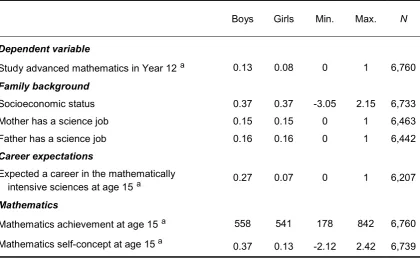
Table 5.1 Advanced mathematics subjects in Year 12 by state and territory (2003–2006) ... 80 Table 5.2 Student characteristics by gender: proportions and means ... 83 Table 5.3 Odds ratios and standardised coefficients from multilevel logit models for studying
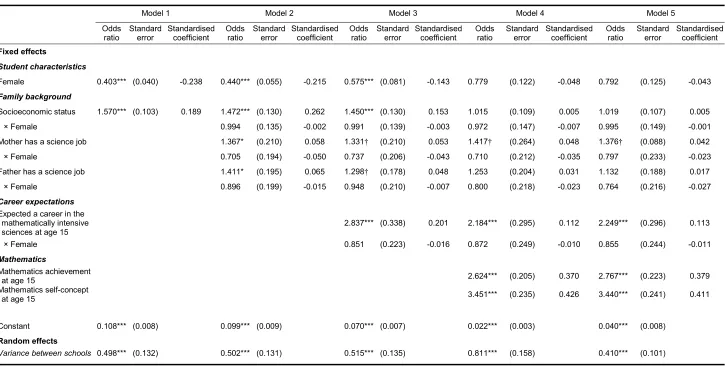
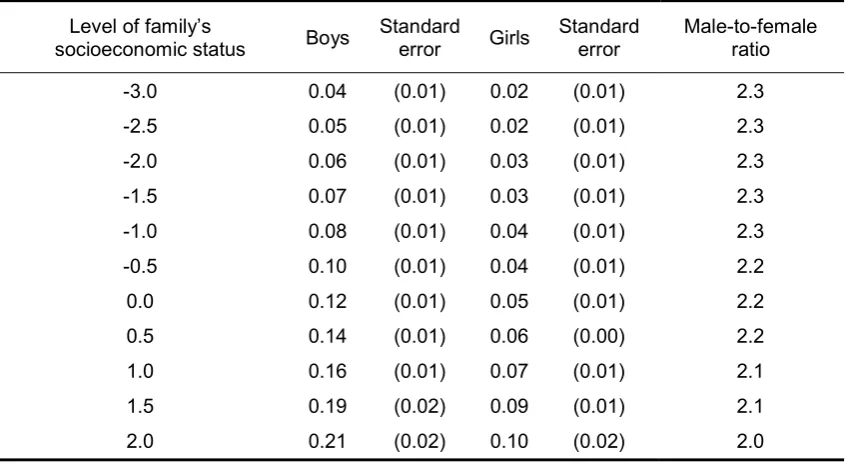
advanced mathematics in Year 12 ... 85 Table 5.4 Predicted probabilities of boys and girls studying advanced mathematics in Year 12 by the
family’s socioeconomic status ... 86 Table 6.1 Physical science subjects in Year 12 by state and territory (2003–2006) ... 111 Table 6.2 Respondent characteristics by gender: proportions and means ... 114 Table 6.3 Factors affecting enrolment in mathematically intensive university degree programs: odds
ratios and standardised coefficients from multilevel logit models ... 117 Table 6.4 Predicted probabilities of men and women enrolling in mathematically intensive degree
program and male-to-female ratios by occupational expectations at age 15 ... 124 Table 6.5 Predicted probabilities of men and women enrolling in mathematically intensive degree
program and male-to-female ratios by standardised mathematics achievement at age 15 . 125 Table 6.6 Predicted probabilities of men and women enrolling in mathematically intensive degree
program and male-to-female ratios by mathematics self-concept at age 15 ... 126 Table 6.7 Predicted probabilities of men and women enrolling in mathematically intensive degree
program and male-to-female ratios by subject choice in Year 12 ... 127 Table 7.1 Student characteristics by gender composition of school: proportions and means ... 146 Table 7.2 School characteristics by gender composition of school: proportions and means ... 147 Table 7.3 Odds ratios and standardised coefficients from two-level logit models predicting the study
of advanced mathematics in Year 12: school-level variables added as predictors... 150 Table 7.4 Respondent characteristics by gender composition of school: proportions and means ... 154 Table 7.5 Odds ratios and standardised coefficients from two-level logit models predicting the choice of mathematically intensive university education: school-level variables added as predictors ... 156 Table A1.1 ISCO-88 coding of science occupations ... 173 Table A2.1 Odds ratios and standardised coefficients from two-level logit models for studying
advanced mathematics in Year 12 – Model 5 in Table 5.3 ... 176 Table A2.2 Descriptive statistics of all student-level variables included in the analysis of Chapter 6
(Table 6.2) ... 178 Table A2.3 Factors affecting the choice of a mathematically intensive university degree program: odds
ratios and standardised coefficients from two-level logit models (Model 4 in Table 6.3) . 179 Table A2.4 Odds ratios and standardised coefficients from two-level logit models for studying
advanced mathematics in Year 12 with the inclusion of school-level variables in Table 7.3 ... 181 Table A2.5 Descriptive statistics of all student-level variables included in the analysis of the impact of
single-sex schooling on the choice of a mathematically intensive university study in Table 7.4 ... 183 Table A2.6 Odds ratios and standardised coefficients from logit models for the choice of
List of figures
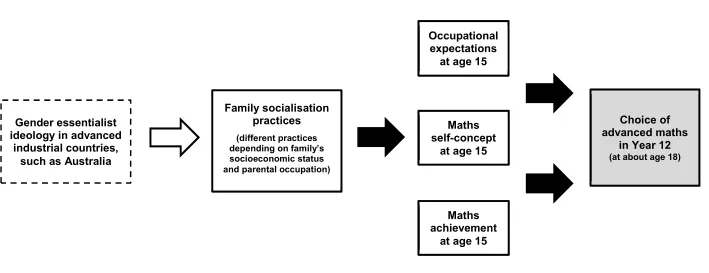
Figure 1.1 Vertical and horizontal dimensions of gender inequalities ... 6 Figure 2.1 Theoretical framework of my thesis ... 17 Figure 5.1 Sociocultural, family-related and motivational factors affecting a student’s choice of
advanced mathematics in Year 12 ... 74 Figure 5.2 Predicted probabilities of boys and girls studying advanced mathematics in Year 12 by
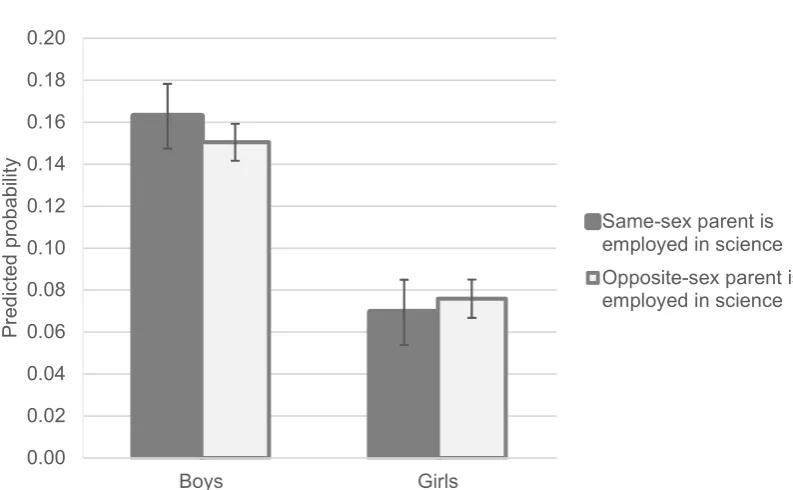
parental employment in science ... 88 Figure 5.3 Predicted probabilities of boys and girls studying advanced mathematics in Year 12 from
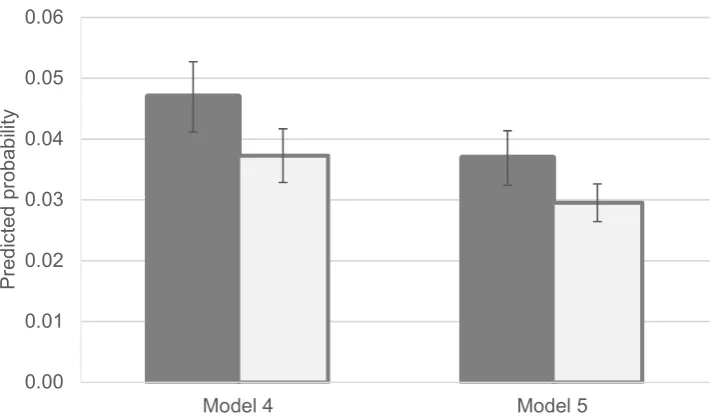
Models 1 to 3 ... 89 Figure 5.4 Predicted probabilities of boys and girls studying advanced mathematics in Year 12 from
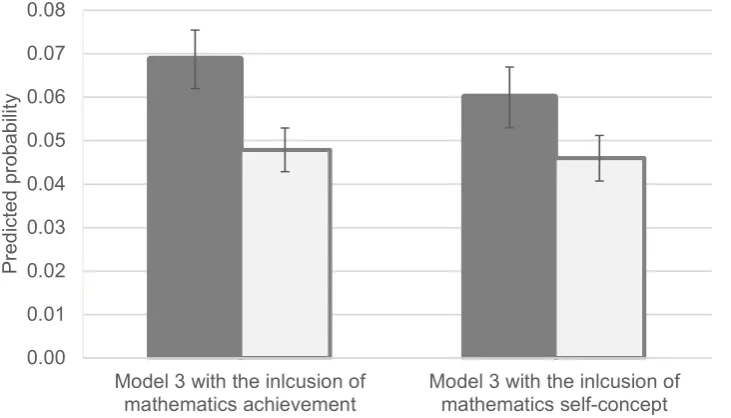
Models 4 and 5 ... 91 Figure 5.5 Predicted probabilities of boys and girls studying advanced mathematics in Year 12 with
the inclusion of mathematics achievement and self-concept ... 92 Figure 6.1 Sociocultural, family-related and motivational factors that influence a student’s chance of
choosing a mathematically intensive university major ... 101 Figure 6.2 Predicted probabilities of men and women enrolling in mathematically intensive degree
program by socioeconomic status ... 120 Figure 6.3 Predicted probabilities of men and women enrolling in mathematically intensive degree
program by parental employment in science ... 122 Figure 6.4 Predicted probabilities of men and women enrolling in mathematically intensive degree
program from Models 1 to 4 ... 128 Figure 7.1 The impact of single-sex schooling on students’ engagement in mathematics and related
disciplines ... 136 Figure 7.2 Predicted probabilities of boys and girls studying advanced mathematics in Year 12 in
single-sex and coeducational schools ... 152 Figure 7.3 Predicted probabilities of men and women choosing a mathematically intensive degree by
Introduction
1.1 Research problem
While women in Australia and overseas have been steadily increasing their
participation in tertiary education, men and women around the globe tend to concentrate
in different fields of study and employment (Charles and Bradley 2009; Charles and
Grusky 2004). In line with this trend, Australian education continues to be strongly
segregated by gender (Bell 2010; Marginson et al. 2013). In the 1990s and early 2000s,
there were more male than female enrolments in the highest level of school mathematics
that involves calculus (Forgasz 2006; Fullarton and Ainley 2000). Recent research has
also shown that women continue to be under-represented in mathematically intensive
science fields including engineering, information technology and the physical sciences
at the post-secondary level (Sikora 2014b; Sikora 2015). Given this, however, previous
studies have rarely examined, using nationally representative samples of Australian
students, the extent to which early educational experiences influence the decisions of
adolescent boys and girls to engage in advanced high school mathematics and related
fields of tertiary education.
The understanding of factors that facilitate participation in advanced
mathematics and cognate disciplines is more than desirable because the
under-representation of females in these disciplines has long-lasting and possibly unfavourable
consequences for both individuals and society. Firstly, subject choice has a direct
bearing on the occupational trajectories of men and women. Since the beginning of the
twenty-first century, employment opportunities in mathematically intensive fields have
professional occupations tend to require strong quantitative skills. Therefore, females’
under-representation in advanced mathematics in secondary school and related fields of
study at university may not only hinder them from taking up opportunities in the
thriving industries (Graduate Careers Australia 2014) but it may also contribute to the
pay gap between men and women (Brown and Corcoran 1997; Gerber and Cheung
2008; Mitra 2002; Paglin and Rufolo 1990). Across the world in the fields where
women are often over-represented, such as teacher training, education and humanities,
young workers carry a wage penalty (OECD 2014). Hence, less gender segregation in
fields of study may result in a step forward towards gender equality in the occupational
sphere (Smyth and Steinmetz 2008; Xie and Shauman 2003).
Secondly, gender segregation in fields of study may reinforce the beliefs in
innate gender differences, including the view that males are better at mathematics,
abstract thinking and technical problem solving. Such beliefs, when widely shared
across society, steer adolescents towards aspiring to gender-typical occupations (Charles
and Bradley 2009; OECD 2006). Stereotypes supported by such beliefs may in turn
affect adolescent confidence and interest in particular fields of education and career
(McMahon and Patton 1997). When girls and young women, particularly those who are
talented in mathematics, avoid advanced high school mathematics and related
disciplines because they perceive that those subjects are not appropriate for their gender,
their talents are under-utilised and their individual potentials are wasted.
Thirdly, the loss of individual talents and potentials is a problem for society that
has a great demand for skilled workers with quantitative skills. In Australia, the
mathematically intensive sciences constitute about 11 per cent of economic activity
directly and the industry continues to grow (Australian Academy of Science 2015).
Nevertheless, in a recent survey conducted by the Australian Industry Group, a majority
mathematics and science skills (Australian Industry Group 2013). Meanwhile,
enrolments in advanced high school mathematics and related fields of tertiary study
keep declining (Barrington and Brown 2014; Office of the Chief Scientist 2012). To
increase the participation of young people, particularly girls and young women, in
mathematics and related fields at the secondary and tertiary levels, the Australian
Mathematical Science Institute and the BHP Billiton Foundation launched Choose
Maths, a five-year national program, in 2015. In the same year, the Australian Academy
of Science started running the Science in Australia Gender Equity (SAGE) Pilot,
another national program aiming to promote gender equity and gender diversity in
mathematics and science, in partnership with the Academy of Technology and
Engineering. In summary, the governments, academics and industry experts are aware
of the continuing decline of young people’s participation in advanced mathematics at
the secondary and tertiary levels, in the context of the persisting gender gap, and they
are attempting to reverse the trend.
Although advanced mathematics subjects in Year 12 are not the necessary
prerequisites for the admission to mathematically intensive programs at university, they
act as a critical filter of intentions to study and engagement with those degree programs
(Ainley, Kos and Nicholas 2008; Varsavsky 2010). Nevertheless, many students,
especially girls, choose not to study advanced mathematics even though their schools
offer relevant subjects. Therefore, the questions that require answers are how and why
gender continues to act as a catalyst for the engagement with or withdrawal from
mathematically intensive fields.
This thesis aims to account for, from a life course perspective, a comprehensive
range of mutually reinforcing factors that facilitate or hinder engagement in advanced
mathematics and related disciplines in Australia. The life course perspective emphasises
that individuals’ behaviour and developmental processes are shaped by social structures
and cultural norms across life stages (Elder 1998; Giele and Elder 1998). Specifically,
individuals’ choices are subject to the opportunities and constraints of social structure
and culture over the life course (Elder 1998). By applying the life course perspective to
this thesis, the decisions of adolescent boys and girls to pursue advanced mathematics
and related fields of study are seen as contingent on the social structure and cultural
norms, particularly in relation to gender beliefs and stereotypes, which affect young
people from the day they were born.
A comprehensive analysis of the factors that affect students’ engagement in
advanced mathematics and related disciplines calls for high quality data that do not only
represent the entire cohort of young Australians but also account for the dynamics of
their educational experiences and occupational expectations. To this end, I use data
from the 2003 cohort of the nationally representative Longitudinal Survey of Australian
Youth (LSAY) (NCVER 2011). This cohort reached age 15 around 2003 and entered
the labour market in the decade that followed. Commencing my observations of youth
from the time when they were age 15 and describing their occupational expectations and
self-assessed mathematical competence at that time, I next account for the gender gap in
advanced mathematics enrolment in Year 12. Following that, I analyse factors that
facilitate the choice of a mathematically intensive major at university along the gender
divide. Because student preferences and specialisations may change during
post-compulsory education, my objective is to provide a life course account of historically
and institutionally situated individual choices which have led recent Australian students
1.2 Advantages of a stratification approach to explaining gender segregation in mathematics education
The educational and psychological literature rarely conceptualises gender
segregation in mathematics education as a form of social inequality. It tends to focus on
gender differences in school achievement in the early stages of life and to regard such
differences as the major cause of women’s under-representation in mathematics and
related fields at later stages of their educational careers (see, for example, Else-Quest,
Hyde and Linn 2010; Lubinski and Benbow 1992; Wai et al. 2010). However, gender
differences in mathematics achievement have narrowed considerably over the last few
decades (Baker and LeTendre 2005). In fact, recent studies in social stratification and
psychology have shown that such gender differences account for only a small share of
gender segregation in mathematics and related disciplines (Ceci and Williams 2010a;
Ceci and Williams 2010b; Charles and Bradley 2009; Riegle-Crumb et al. 2012).
As gender continues to differentiate participation in mathematics and cognate
fields strongly, even after achievement differences have been taken into account,
perceiving gender as a form of social inequality offers illuminating insights into the
causes behind gender segregation in mathematics education. Psychological research
often draws on Eccles’s expectancy value theory of achievement-related choices
(hereafter: expectancy value theory) to understand how males and females make
gendered educational and occupational choices (Eccles 2011). Although the expectancy
value theory stems from psychological research, it recognises the social and cultural
influences on facilitating gendered choices over the life course (Schoon and Eccles
2014).
In stratification research, gender inequalities are regarded as having a vertical
2004; also see Jonsson 1999). The vertical dimension refers to the hierarchical
differences between males and females in access to education, in the level of education
attained, as well as in occupational status, authority and pay (Blau, Brinton and Grusky
2006). This form of gender inequality has been significantly bridged in Australia where
women have been benefiting from the feminist movement and the relatively egalitarian
welfare policies since the 1970s (Aspalter 2003). The gender gap in education has
reversed with Australian women now outnumbering men in tertiary education (Marks,
McMillan and Ainley 2004; Marks and McMillan 2007). By contrast, horizontal
segregation in Australian education persists. The prime example of that is the
dominance of men in mathematically intensive areas and women in life science courses
which encompass significant biology, health and environment-related contents and
other fields of study, such as education, the humanities and the social sciences
(Fullarton and Ainley 2000; Sikora 2014b). As discussed in the previous section,
horizontal segregation in education is detrimental not only to individuals but also to
society.
Figure 1.1 Vertical and horizontal dimensions of gender inequalities
Note: Based on Charles and Bradley (2002), Charles and Grusky (2004), and Jonsson (1999).
Female dominated
Life sciences Education Humanities Social sciences
Male dominated
Advanced mathematics and mathematically intensive sciences
Access to education Educational attainment Occupational status Salaries
Vertical
Through incorporating a stratification approach to gender essentialism into the
expectancy value theory, I focus on how social structures, cultural norms and individual
characteristics interact to affect individual decisions and experiences over the life course
of students. In turn, the importance of individual characteristics that affect students’
engagement in mathematically intensive fields can and should be understood only in the
context of these cultural and structural factors. The gender essentialist hypothesis
proposes that men and women develop their individual identities under the influence of
widely shared cultural beliefs about innate gender differences (Charles and Grusky
2004). Recent cross-national research based on the gender essentialist hypothesis has
demonstrated how gender interacts with other social structures and cultural norms to
shape educational and occupational choices. Specifically, gender segregation in fields of
study persists and appears to be stronger in advanced industrial countries, including
Australia (Charles and Bradley 2009; Sikora and Pokropek 2012a).1 Many advanced
industrial countries have comprehensive education systems, which provide a wide range
of curricular options in tertiary education, that encourage students to specialise in fields
they are interested in. Meanwhile, the large service sectors in these countries offer
abundant employment options that allow young men and women to pursue gender-typed
vocational goals that conform to their traditional gender roles. Therefore, rather than
being seen as an issue of gender inequality, gender-typed educational choices are
generally viewed as manifestations of the widely shared cultural belief that men and
women are inherently and fundamentally ‘equal but different’ (Charles and Bradley
2002). As such the choices are not seen as a matter that needs intervention, but rather as
a desirable individual choice differentiation.
1 To be recognised as an advanced industrial country by Charles and Bradley (2009), a country must have
While the gender essentialist hypothesis focuses on the highly diversified
curricula in tertiary education, I argue that a comprehensive system in secondary
education that provides a wide range of subjects for students to choose from also
facilitates gender segregation in mathematics and related disciplines. Research in the
United States has shown that students who fail to study advanced mathematics in high
school are highly unlikely to pursue mathematically intensive fields of study at the
tertiary level (Correll 2001). Even though advanced mathematics is not required in
many Australian university courses, including those in science, it provides students with
the best start in mathematically intensive fields (Ainley, Kos and Nicholas 2008;
Fullarton et al. 2003). In Australia, Years 11 and 12 students are able to study different
levels of mathematics or even opt out of the subject. However, adolescent boys and girls
do not participate in each level of mathematics equally. In the 1990s and the early
2000s, Australian girls were less likely than boys to study advanced mathematics in
Year 12 (Forgasz 2006; Fullarton and Ainley 2000). Thus, gender differences in the
selection of advanced high school mathematics suggest that gender segregation in
tertiary mathematically intensive fields occurs earlier in the life cycle. In line with this
claim, Australian studies show that a majority of students start considering whether to
embark on education and a career in quantitative and science fields already during
childhood and adolescence (Jones, Porter and Young 1996; Tytler et al. 2008).
Previous Australian studies of the gender gap in advanced high school
mathematics enrolment often analysed samples from specific cities and regions (see, for
example, Lamb 1996; Lamb 1997; Watt 2006). Therefore, studies based on nationally
representative samples have been rare. Even though some related research adopted
samples from the national data, they seldom examined the subsequent engagement in
mathematics-related tertiary education of Australian youth (Forgasz 2006; Fullarton and
perspective using nationwide data how early educational experiences and occupational
expectations shape the choice of advanced mathematics in Year 12 and related
disciplines at university.
Longitudinal survey data are well suited to conducting a life course analysis.
Widely shared gender stereotypes, gender socialisation in the family and the school
environment are the crucial factors that affect students’ decisions to engage in specific
fields of study (see, for example, Legewie and DiPrete 2014a; Morgan, Gelbgiser and
Weeden 2013). However, most longitudinal studies that provide evidence for the
salience of these factors focus on the American context and they rarely explore how
other institutional arrangements may have an impact on gender segregation in fields of
study (Gerber and Cheung 2008; Xie and Shauman 2003). The 2003 cohort of LSAY,
also known as Y03, which began with the Programme for International Student
Assessment (PISA) 2003 of the Organisation for Economic Co-operation and
Development (OECD), is an excellent data source on adolescent choices that may lead
to engagement in mathematically intensive studies at university in a non-American
setting. Y03 comes from the only PISA wave that focused on mathematics and its data
collection has been completed up to now.
1.3 Early socialisation influences from the family
Researchers in sociology, education and psychology have long been interested in
two essential clusters of factors which affect gendered interest in mathematics and
related disciplines: family background and school experiences. The expectancy value
theory suggests that gender socialisation in the family may separate boys and girls into
different educational pathways at an early age (Eccles 2011). Although Correll (2001)
claims that differences in family structure and socioeconomic status do not contribute to
other countries have reached contrary conclusions. In Australia and the Netherlands, the
gender gap in mathematics course-taking is different across socioeconomic groups
(Lamb 1996; Lamb 1997; Van Langen, Rekers‐Mombarg and Dekkers 2006). In the late
1980s, Australian girls in families of higher socioeconomic status were less likely than
boys in families of the same status to study advanced mathematics, but they were more
likely to pursue advanced mathematics than boys in families of lower socioeconomic
status (Lamb 1996; Lamb 1997). It is plausible to assume that socialisation practices in
low-status families may be strongly gender-typed, whereas socialisation practices in
high-status families may be more egalitarian. Thus far, however, no systematic
investigation of this phenomenon has been conducted in Australia with the use of
nationally representative data. Therefore, using nationally representative samples from
the Y03 cohort, I examine whether the gender gaps in advanced high school
mathematics enrolment and in mathematically oriented university studies vary with the
family’s socioeconomic status.
Parental employment in science may bring an additional advantage to enhancing
students’ engagement in mathematics and related fields of study (Dabney, Chakraverty
and Tai 2013; Dryler 1998; Sikora and Pokropek 2012b). Recent Australian studies
demonstrate that students are more likely to participate in the physical science
disciplines in the last year of secondary school and university education if their parents
were employed in science (Sikora 2014b; Sikora 2015). These studies, however, do not
identify whether students are more likely to be influenced by their fathers or mothers.
According to the gender socialisation hypothesis (Marks 2008a; Marks 2008b), boys are
more likely than girls to perceive their fathers as role models while girls are more
inclined than boys to see their mothers as role models. I extend this line of reasoning
and examine whether parents’ employment in science stimulates the same-sex
1.4 Gender-typed occupational expectations during adolescence
The expectancy value theory proposes that socialisation processes in the family,
school and society, as well as students’ masculine and feminine identities, shape
students’ occupational expectations (Eccles 2011). These expectations also reflect the
students’ perceived opportunities and constraints, and the widely shared occupational
gender stereotypes as described by the gender essentialist hypothesis. During childhood,
boys and girls develop different occupational orientations and form
gender-differentiated career expectations (McMahon and Patton 1997; Tai et al. 2006). In
Australia and the United States, gender differences in occupational expectations channel
young men and women to different educational pathways (Legewie and DiPrete 2014b;
Morgan, Gelbgiser and Weeden 2013; Sikora 2014b). Up to now, however, the
Australian research on how adolescents’ occupational expectations affect their
engagement in advanced mathematics in high school and related fields of study at
university has received less than adequate attention. Therefore, in this thesis, I examine
whether aspiring to a mathematically intensive career increases the chance of choosing
advanced mathematics in Year 12 for male and female students. Then I continue this
line of investigation and consider how important such a career expectation is to the
chances of men and women engaging in mathematically oriented fields of study at
university.
1.5 The impact of the school environment
Beyond familial influences, the educational system and school environment also
play a crucial role in shaping adolescents’ educational and occupational choices
(Legewie and DiPrete 2014a; Sikora 2014a). Previous studies have concluded that
gender differences in subject choice are related to the following factors: the extent of
freedom in subject choice, methods of assessment and gender-segregated schooling
(Yazilitas et al. 2013). Among different features of the Australian school system, I pay
attention to gender-segregated schooling in my analysis. This is due not only to the long
history of such schooling in Australia, but also to the ongoing worldwide debate on the
extent to which single-sex schooling counteracts gender stereotypes (Signorella, Hayes
and Li 2013; Smithers and Robinson 2006). Although the proponents of single-sex
education argue that it promotes students’ engagement in gender-atypical disciplines,
many existing studies are criticised for confounding the advantage of single-sex
schooling with the pre-existing differences between single-sex and coeducational
schools (Halpern et al. 2011; Signorella, Hayes and Li 2013; Smyth 2010). Such
differences may appear in the socioeconomic status of the student population, teacher
quality and selective admission policies. The Australian research that takes similar
school characteristics into account has shown that in the late 1990s and mid-2000s,
students in single-sex schools were just as likely as students in coeducational schools to
study physical science subjects in Year 12 (Ainley and Daly 2002; Sikora 2014a).
However, whether this pattern holds also when one considers advanced mathematics
courses is a matter that needs empirical investigation of the type undertaken in this
thesis.
To avoid confounding the effects of single-sex schooling with the advantages of
private and selective schools, in this thesis I consider the pre-existing differences
between single-sex and coeducational schools with respect to the school sector,
selective admission policies and teacher quality. With an emphasis on single-sex
schooling, I explore how different school environments may act as an institutional
factor that leads boys and girls to pursue specific fields of study. Specifically, I examine
whether attending a single-sex school fosters the choice of advanced mathematics in
1.6 Outline of the thesis
Based on the expectancy value theory from educational psychology, I extend the
model with a stratification approach to gender essentialism. Chapter 2 begins with the
theory of gender essentialism that suggests how specific cultural forces and structural
features of the tertiary education system and the labour market in Australia organise
males and females into different science fields. The same chapter then reviews prior
research in Australia and other countries that demonstrates from a life course
perspective how early educational experiences, occupational expectations, socialisation
influences from the family and the school environment facilitate the gendered choices of
advanced mathematics and related disciplines in secondary and tertiary education. As
suggested by the theory of gender essentialism, comprehensive education systems offer
highly diversified curricula and encourage students to participate in the disciplines they
are interested in, while legitimising opting out of fields of study that students find
unappealing. In turn, such systems provide female students plenty of opportunities to
choose other fields of study than mathematics and related disciplines. Therefore, in
Chapter 3, I discuss why Australia is an internationally important case study of gender
segregation in mathematically intensive education. I also discuss how Australian
students’ access to advanced mathematics and related disciplines may reflect their own
socioeconomic backgrounds and those of the schools they attend. I describe the recent
trend in students’ enrolment in senior secondary school mathematics and whether there
are more girls than boys who opt out of school mathematics. In addition, I provide a
descriptive overview of Australia’s contemporary educational system with an emphasis
on the mathematics and science curricula in senior secondary school. In Chapter 4, not
only do I introduce the LSAY data, but I also discuss its advantages for this research
From Chapter 5, I shift the attention of this thesis to presenting the empirical
results of adolescent pathways to mathematically intensive fields in Australia based on a
life course perspective. Chapter 5 demonstrates how boys and girls in Australia differ in
their engagement in advanced mathematics in Year 12. The chapter examines how
gender interacts with the family’s socioeconomic status, occupational expectations and
self-confidence in mathematics to influence students’ decisions to study advanced
mathematics. Chapter 6 studies how young men and women differ in their choices of
mathematically intensive university studies. That chapter considers how the interaction
among gender, family’s socioeconomic status, occupational expectations,
self-confidence in mathematics and subject choice in Year 12 affects students’ chances of
choosing a mathematically oriented degree program. In Chapter 7, I focus attention on
single-sex education and examine its impact on students’ engagement in advanced
mathematics in Year 12 and related disciplines in university education. In Chapter 8, I
Explaining the under-representation of females in advanced
mathematics and related disciplines:
a life course approach
In the last three decades, Berryman’s (1983) introduction of the ‘leaky pipeline’
argument has been widely employed to explain the under-representation of women in
science (Blickenstaff 2005; Xie and Shauman 2003). According to the logic of this
argument, at different educational stages women have a higher chance of ‘leaking’ from
the mathematically intensive ‘pipeline’ than men. Already in high school, women have
a lower propensity than men to engage in advanced mathematics and related subjects.
This pattern is also evident in women’s tendency to select and complete tertiary
education in mathematically intensive fields and in their tendency to work in
mathematically intensive fields after attaining a relevant tertiary qualification. The
choice of a field of study in tertiary education is the most critical stage because once
young people commence tertiary training, women are as likely to stay in their fields of
study as men until graduation (Xie and Shauman 2003). Despite the many features the
‘leaky pipeline’ argument offers, it does not directly consider how the sociocultural
environment interacts with individual characteristics to contribute to the leakage of
females from the mathematically intensive pipeline. Therefore, other theories must be
called upon to understand why females’ participation in mathematically intensive fields
still falls short of the desired levels.
In the previous chapter, I situated the analysis undertaken in this thesis within
the stratification approach to gender essentialism (Charles and Bradley 2009; Correll
2001; Xie and Shauman 2003) and within the expectancy value theory (Eccles 2011).
social and cultural influences that shape the gendered educational and occupational
choices of males and females. In this thesis, I attempt to provide a comprehensive life
course account of why and how the under-representation of females in mathematics
persists over educational careers of youth and, by implication, may persist from
generation to generation. My account blends the gender stratification perspectives with
the psychological framework to emphasise the primacy of cultural factors and
institutional settings that enable or hinder the operation of individual level processes
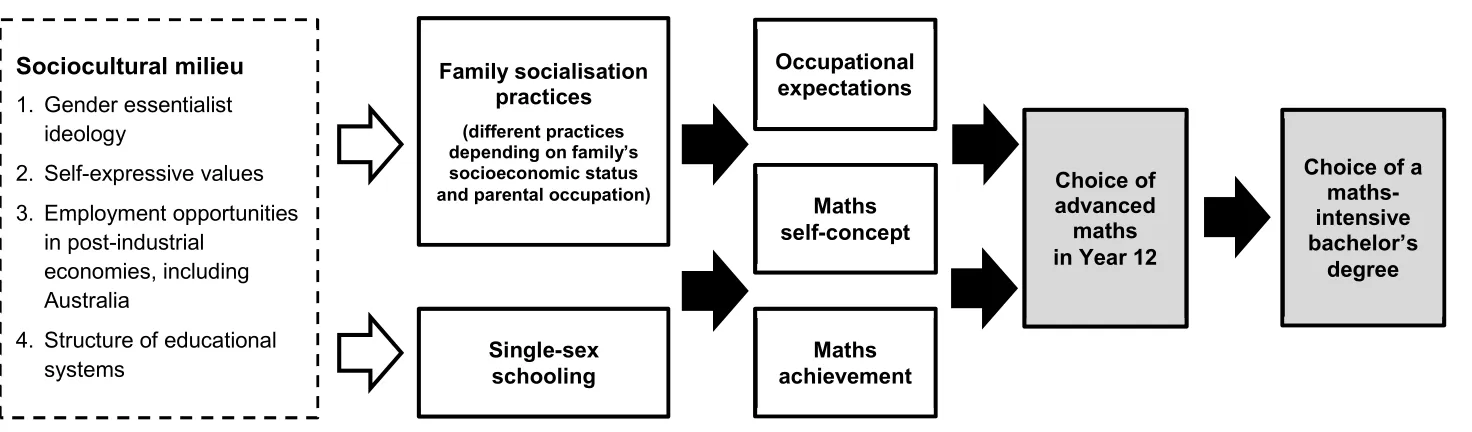
(Figure 2.1). With this framework, I argue that social structures, cultural norms and
individual characteristics interact over the life course of students and contribute to
gender differences in their occupational expectations and educational choices with
respect to mathematics.
In this chapter, I begin by reviewing the gender essentialist hypothesis (Charles
and Bradley 2009), which is a social stratification approach that focuses on the global
prevalence of cultural norms that facilitate gender segregation in mathematically
intensive fields of study (section 2.1). With the goal of reviewing gendered attitudes to
mathematics in psychological studies, in the next section I switch my attention to the
subjective task values emphasised by the expectancy value theory and discuss their
contributions to students’ engagement in mathematically intensive fields of study
(section 2.2). Then I explain the conceptualisation of gender identities in my research
and discuss how identity formation and enactment are manifested in adolescent
decisions to pursue or shun mathematics (section 2.3). The nearly uniform gender
polarisation of subjective task values of various mathematics-related goals suggests that
strong cultural underpinnings are reinforced through the socialisation processes within
Figure 2.1 Theoretical framework of my thesis
Note: I adapt this conceptual diagram from the expectancy value theory and integrate it with a stratification approach to gender essentialism to illustrate the factors that affect a student’s choice of advanced mathematics in Year 12 and of a mathematically intensive field of study at university. Boxes with solid lines contain the variables I include in my empirical analysis. Although I have not got the variables in boxes with dashed lines and do not model the causal relationships indicated by the white arrow, I discuss the contributions of these factors and the causal relationships based on prior research and theories.
Source: Charles and Bradley (2002; 2009); Charles and Grusky (2004); Correll (2001); Eccles (2011); Kerckhoff (1976; 1995; 2001); Schoon and Eccles (2014); Sikora (2014a; 2014b; 2015); Sikora and Pokropek (2012b); Smyth and Steinmetz (2008); Xie and Shauman (2003)
Sociocultural milieu
1. Gender essentialist ideology
2. Self-expressive values
3. Employment opportunities in post-industrial
economies, including Australia
4. Structure of educational systems
Family socialisation practices (different practices depending on family’s socioeconomic status and parental occupation)
Occupational expectations Maths self-concept Maths achievement Choice of advanced maths in Year 12
Therefore, in sections 2.4 to 2.9, I focus on the aspects of my theoretical
framework that shape the empirical part of my analysis and inform my research
questions answered with the analysis of LSAY data. I discuss the sociological and
psychological theories that emphasise the variables I include in my empirical analysis.
My starting point here is socialisation practices in the family that can have the
form of direct efforts of parents to instil particular attitudes towards mathematics and
science in their children (section 2.4). Alternatively, socialisation may take a subtler
form where children come to gain knowledge and develop attitudes towards their
parental professions, without any direct effort of their parents, just by being around
them as they grow up. Socialisation within the family, within the school and through
other channels is one set of processes that shape occupational expectations, which is my
next focal point in the discussion in this chapter (section 2.5). Vocational inclinations in
turn are closely related to students’ self-assessment of mathematical abilities (section
2.6), academic achievement in mathematics (section 2.7) and subject choice in high
school (section 2.8). These factors converge to channel boys and girls into specific
educational specialisations. Yet they do not operate in a social vacuum. Therefore, in
section 2.9, I discuss how selected features of school environments, in particular
single-sex schooling, may have the potential to bridge the gap in students’ engagement in
mathematics at both secondary and tertiary levels.
Although this thesis endeavours to study gender segregation in Australian
mathematics education, I review not only Australian research but also the relevant
studies from other advanced industrial countries. This is because the gender segregation
patterns in affluent economies with strong democratic values and comprehensive
hypothesis (Charles and Bradley 2009).2 I finish by summarising my theoretical
discussion in section 2.10 and listing my research questions in section 2.11.
2.1 Stratification theory of gender essentialism
As we enter the twenty-first century, a consensus seems to prevail among
academics and policymakers that males and females make their educational and
vocational decisions rationally based on the perceived opportunities and constraints, but
the rationality of this behaviour is conditioned by cultural beliefs and normative social
practices (Barone 2011). It is hard to deny that cultural coordinates vary from place to
place. Nevertheless, in a largely globalised and interconnected world one must note, as
the gender essentialist hypothesis points out, the symbiotic operation of two cultural
forces and two types of institutional settings. The two cultural forces are the ideology of
gender essentialism and the post-industrial emphasis on the primacy of self-realisation.
The structural institutional forces that operate in symbiosis with these cultural trends are
a comprehensive structure of contemporary educational systems in which students are
encouraged to select specialisations in line with their personal interests and strengths,
and service-oriented employment opportunities in the professions increasingly available
in post-industrial economies. Culturalists, including Charles and Bradley (2009) as well
as Barone (2011), argue that understanding how these forces operate in unison is
fundamental for an understanding of why gender segregation persists in fields of study.
The first cultural force, namely, the gender essentialist ideology involves the
widely shared cultural beliefs and stereotypes that men and women are fundamentally
and inherently different by nature (Charles and Bradley 2002; Charles and Bradley
2009; England 2010). These stereotypes, subtly communicated and omnipresent, seep
2 I explain in detail in section 2.1 why gender segregation patterns in mathematics education in advanced
into the minds of young people to facilitate an acceptance of the belief that women are
naturally good at inter-human communication and care while men excel at abstract
problem solving and in technology. Children internalise such gendered beliefs,
including the belief that it is only natural to expect males to surpass females in
mathematics. Such internalisation happens through socialisation, even against parental
efforts to instil gender-neutral values in their children and is likely to manifest itself in
gender-differentiated expectations and preferences (Blau, Brinton and Grusky 2006;
Charles and Grusky 2004). Mathematically intensive fields are generally perceived as
being more appropriate for men because more men currently work in these fields and
many people believe that they enter such employment due to natural abilities that
women simply do not have (Ceci and Williams 2010b). Such assumptions are often
taken for granted and never critically considered.
The second cultural force is the primacy of self-expressive values, that is, the
cultural emphasis on individual self-expression and self-realisation (Charles and
Bradley 2009). Mathematical and technical work is often depicted as abstract, rigid,
tedious and offering few opportunities for interacting with other humans and allowing
for an emphatic creativity or the expression of individual personalities into the work
process (Faulkner 2007; Osborne, Simon and Collins 2003). Thus the popular
perception of mathematical fields is that they are less likely than other work to be
perceived as enjoyable and self-expressive (Charles et al. 2014). Previous studies in the
United States have demonstrated that students who value people-oriented jobs and
working with other people rarely aspired to and entered male-dominated professions,
including mathematics (Cech 2013; Eccles 2007; Eccles and Wang 2016). As female
students tend to rate their level of people orientation higher than their male peers, the
In post-industrial societies career choice motivations have less to do with
material incentives than with the perceived compatibility of a future career with the
identity and personal preferences of an individual (Charles and Bradley 2009). This
kind of motivation for career choices might be more applicable to young women than
young men. In the 1980s, American girls were more likely than boys to value the
importance of self-expression and social interaction at work, and they were more likely
to pursue fields of study that offered ample opportunities for social interaction rather
than mathematics and related science (Frehill 1997). Similarly, in Germany, high school
graduates who entered college in 2010 had a lower chance of choosing a mathematically
intensive degree if they showed higher interest in careers that involved helping and
caring for others (Ochsenfeld 2016). Motivating career choices by good fit with
individual identity, that is ‘this job is me while that job is not me’ type of reasoning is
prevalent in post-industrialist societies among youth of both genders. Yet, the socialised
propensity of girls to embrace even more readily this self-expressive approach to career
choices may be seen as an additional element that contributes to the gender gap.
The gender essentialist hypothesis also suggests that, in addition to the two
cultural forces, the structural features of the educational system and the labour market in
Australia contribute to gender segregation in fields of study (Charles and Bradley 2002;
Charles and Bradley 2009). Australia has a comprehensive education system that offers
a wide variety of curricular options in tertiary education and in the last two years of
secondary education encourages students to pursue only fields of study they are good at
and interested in. The penalties associated with low numeracy skills in the local labour
markets might not be enough to offset this trend because the service economy in
Australia generates abundant job opportunities that involve human-centred services and
professional work, which are culturally constructed as feminine. The examples of such
the gender essentialist ideology and the system of self-expressive values converge, as is
arguably the case in Australia, the expected consequence is that females will be less
likely to pursue mathematically intensive fields when cultural stereotypes that link these
fields to self-expression and inter-human interactions are absent. Instead, abundant
female-labelled opportunities exist in areas other than mathematics in education and the
labour market. These opportunities attract young women’s attention also because they
are already dominated by other women.
In summary, cultural trends dominant in post-industrial societies, such as
Australia, would not be as prevalent as they now appear in different structural
conditions (Charles and Bradley 2009). However, the individualism of modern
comprehensive education and the expansion of female-labelled skilled service
employment create conditions in which individual processes can readily lead to
self-sorting of adolescents into different educational specialisations.
2.2 Expectancy value theory: how gender shapes subjective values toward mathematically intensive fields
The stratification theory of gender essentialism argues that gendered choices of
advanced mathematics and cognate disciplines are shaped by social structures and
cultural forces over the life course. The expectancy value theory, which stems from
psychology, focuses on explaining how gender socialisation influences educational and
occupational choices mainly through its impact on individuals’ expectations for success
and subjective task values (Eccles 2011).
Based on her prominent expectancy value theory, Eccles (2011) argues that one
of the two main reasons why young women are less likely to engage in advanced
mathematics and related disciplines is that they tend to place less subjective task values
career options. According to Eccles (2011), subjective task value is a domain-specific
construct that varies across fields of study and employment. It comprises four
components: attainment value, interest-enjoyment value, utility value and perceived
cost. Attainment value refers to the personally perceived importance of doing well in a
task, and it is closely related to one’s perception of how well the task fits in with
personal and social identities, including gender identities. Interest-enjoyment value
refers to the personal interest in and enjoyment of engaging in a task. Utility value refers
to the personally perceived usefulness of a task in achieving one’s short- and long-term
goals and attaining rewards. Finally, perceived cost refers to the anticipated effort and
loss required for undertaking a task. Students who place high subjective task values on
mathematics and related science fields tend to show interest in those fields, believe that
it is important for them to perform well in those fields, and perceive that those fields are
useful for their future.
Gender differences in the subjective task values towards mathematics and
science are prevalent. Among the highly competent Australian students in mathematics
and science, boys tend to show higher interest in the mathematically intensive science
subject, physics, whereas girls tend to declare higher interest in the life science subject,
human biology (Buccheri, Gürber and Brühwiler 2011). In the 1990s, among Years 8
and 9 students in two Australian cities, Sydney and Wollongong, boys were more likely
than girls to value the importance of mathematics and science for the future (Jones and
Young 1995).
The expectancy value theory points out that gender differences in subjective task
values are important mediators of gender differences in educational and occupational
choices (Eccles 2011). In the longitudinal studies of the educational choices and
occupational aspirations in Australia, Canada and the United States, gender differences
related fields of study were found to be partially mediated by gender differences in the
subjective task values attached to these fields (Eccles 2007; Watt et al. 2012).
The subjective task values students place on mathematically intensive fields has
a greater impact on their decisions to pursue related fields than other general values and
life goals. Using American student data from the early 1970s to 2000s, Mann and
DiPrete (2013) found that students’ concerns about work–family compatibility, values
toward the importance of money and success, and values toward the importance of
helping others only explained a small fraction of gender disparities in undergraduate
major choice. They also showed that male students did not notably differ from female
students in those general life goals and values.
Although the expectancy value theory and the gender essentialist hypothesis
offer explanations for the under-representation of females in advanced mathematics and
related fields of study, they have different emphases and they can complement one
another. The expectancy value theory provides a strong foundation for understanding at
the micro level how males and females make gendered educational and occupational
choices due to gender-specific socialisation and differential goals, motivations and
subjective task values, over the life course (Eccles 2011). Even though the expectancy
value theory addresses the influence of the sociocultural milieu, including the gender
role stereotypes and cultural stereotypes, it provides little explanation for the
cross-national variations in gendered choice patterns at the institutional and macro levels
(Yazilitas et al. 2013). Unlike the expectancy value theory, the gender essentialist
hypothesis does not speak to the differential psychological dimensions that lead to
gendered educational and occupational choices. Instead, the gender essentialist
hypothesis focuses on explaining how the structural features of a comprehensive
education system and a post-industrial economy provide an excellent environment for
gendered choices of mathematics education. In the present thesis, the gender essentialist
hypothesis complements the expectancy value theory by offering the theoretical
framework necessary for understanding why specific characteristics of an advanced
industrial country, such as Australia, offer favourable conditions for promoting
gendered choices of mathematically intensive fields of study.
2.3 Gender identities: why engaging in mathematically intensive fields is regarded as equivalent to ‘doing masculinity’
Socialisation affects students’ perceptions of mathematically intensive fields and
the gender roles expected of the students, and in turn, shapes their gender identities. In
sociology, gender identity refers to ‘the degree to which a person perceives the self to be
masculine or feminine, given what it means to be masculine or feminine in a given
society’ (Vantieghem, Vermeersch and Van Houtte 2014, p. 363). Masculine and
feminine identity constructions develop in response to the widely shared cultural beliefs
that men and women are different (Ridgeway and Smith-Lovin 1999). The concept of
gender identity connects with the sociological concept of ‘doing gender’ (West and
Zimmerman 1987). In everyday behaviour and social interactions, individuals ‘do
gender’; that is, ‘[create] differences between girls and boys and women and men,
differences that are not natural, essential, or biological.’ (p. 137) In other words,
individuals become males or females and affirm their gender identities by engaging in
culturally prescribed tasks and holding congruent beliefs. Importantly, they derive a
sense of satisfaction and fulfilment from ‘doing gender’.
Previous studies have used mathematics as an example through the lens of
feminist sociology to argue that males dominate mathematics because to engage in the
subject is a means of ‘doing masculinity’ and becoming truly male (Mendick 2005b).
females’ performances of popular femininity (Archer et al. 2013). When males ‘do
masculinity’, they undertake activities that are socially regarded as appropriate for
males and demarcate their distance from femininity. Mendick (2003) interviewed young
people who studied mathematics in post-compulsory secondary education in England
and found that some teenage boys construed mathematics as a means of proving their
masculine abilities to their peers and future employers. In doing so they perceived
mathematics as abstract, difficult, and indispensable for high-status occupations.
Mendick (2005a) further affirms that females must negotiate this cultural boundary
which makes it harder for them to engage and remain engaged, as well as to feel
competent and comfortable. Therefore, it is much easier for females to shy away from
mathematics and reaffirm their cultural femininity (Mendick 2006).
The expectancy value theory also describes the relationship between gender
identity and educational choices. If a student has a masculine identity and perceives that
it is important to engage in fields of study and careers that align with their masculine
identity, this student may place high subjective task values on mathematically intensive
fields because such fields are generally regarded as masculine (Eccles 2011). As
discussed in the previous section, having high subjective task values in mathematically
oriented fields increases one’s chance of pursuing those fields of study and career.
Other psychological studies have also conceptualised femininity and masculinity
on a continuum of attributes that everybody possesses to some extent; for example, a
German study has demonstrated that adolescent girls and boys who liked physics were
perceived by their peers as more masculine and less feminine (Kessels 2005). The same
study has also found that girls who excelled in physics felt unpopular with boys.
Mathematically intensive fields are generally not constructed as people-oriented and
nurturing, and therefore they have an uneasy and ambiguous relationship with the
If adolescent girls believe that being feminine is crucial to their identities, the avoidance
of mathematics to affirm femininity may be an attractive behavioural option for them
(Brown, Brown and Bibby 2008). These findings are not only consistent with the
expectancy value theory but are also in line with the sociological concept of ‘doing
gender’.
2.4 Early socialisation influences from the family
Although gender differences in field of study choices are shaped by multifarious
influences (Eccles 1994), both psychological and sociological research agree that the
role of family might be particularly worth attention because parents are the primary and
one of the most influential socialising agents in childhood and adolescence (Eccles
1993; Xie and Shauman 2003). Early studies in psychology have demonstrated that
gender-specific socialisation practices in the family differentiate the decisions of boys
and girls to engage in advanced mathematics and related disciplines (Eccles 2011).
Specifically, parents may overrate boys’ mathematical competence even when there are
no gender differences in mathematics performance (Tiedemann 2000). Regarding
mathematics learning, parents may have higher expectations for boys and tend to
believe that it is more crucial for boys to pursue high-level mathematics subjects at
school (Eccles and Jacobs 1986; Eccles, Jacobs and Harold 1990). When these
gender-specific socialisation practices exist in the family, girls are aware of the lower
expectations from their parents, particularly their mothers, and adjust their attitudes and
aspirations with regard to mathematics learning accordingly (Eccles and Jacobs 1986;
Jacobs and Eccles 1992). Consistent with the findings of these psychological studies,
recent stratification research has also found that parents may be more likely to
encourage their sons than their daughters to study advanced mathematics and
mathematically oriented science subjects in high school (Gabay-Egozi, Shavit and