CORE Organic Project Series Report
School catering supply chains: study on 5 cases
Editor: Roberto Spigarolo – DiProVe Milan, Italy
CORE Organic project no. 1881
July, 2010
The author(s)/editor(s) gratefully acknowledge the financial support for this report provided by the members of the CORE Organic Funding Body Network, being former partners of the FP6 ERA-NET project, CORE Organic (Coordination of European Transnational Research in Organic Food and Farming, EU FP6 Project no. 011716), which was finalised in September 2007.
The text in this report is the sole responsibility of the author(s)/editor(s) and does not necessarily reflect the views of the national funding bodies having financed this project.
This project is one of the eight research pilot projects selected in 2007 for transnational funding by the partners of the CORE Organic ERA-net project. The pilot projects, which are running in the period 2007 – 2010, are:
AGTEC-Org AGronomical and TEChnological methods to improve ORGanic wheat quality:
agtec.coreportal.org
ANIPLAN Minimising medicine use in organic dairy herds through animal health and welfare planning:
aniplan.coreportal.org
FCP Farmer consumer partnerships: fcp.coreportal.org
COREPIG Prevention of selected diseases and parasites inorganic pig herds – by means of a HACCP based management and surveillance programme: corepig.coreportal.org
iPOPY innovative Public Organic food Procurement for Youth: ipopy.coreportal.org
PathOrganic Risk and Recommendations Regarding Human Pathogens in Organic Production Chains:
pathorganic.coreportal.org
PHYTOMILK Potential improvement of the salutary effect of organic dairy milk by forage species and by supplementation: phytomilk.coreportal.org
QACCP Quality analysis of critical control points within the whole food chain and their impact on food quality, safety and health: qaccp.coreportal.org
For further information see: www.coreorganic.org
Authors:
Roberto Spigarolo, Marco Valerio Sarti, Stefano Bocchi, Giulio Giorgi DiProVe – State University of Milan, Italy
Contact person: Roberto Spigarolo [email protected]
2010, International Centre for Research in Organic Food Systems (ICROFS), P.O. Box 50, Blichers Allé 20, DK-8830 Tjele, Denmark, Phone: +45 89 99 16 75, Fax: +45 89 99 16 73. E-mail: [email protected]
Language editing: English
Photos by Amiqua (Associazione per il miglioramento della qualità della vita – Milan Italy): IT school canteens in Piacenza (left) Rome (centre) - Sesto San Giovanni (right)
A pdf can be downloaded free of charge from the Organic Eprints archive at www.orgprints.org
Index:
1 Introduction ...3
1.1 Framework and objectives of the study ...3
1.2 Modern school catering supply requirements ...3
2 Analysis ...4
2.1 Case study selection ...4
2.2 Methodology ...4
2.3 Results ...6
3 Concluding remarks...8
4 References ...9
Annex 1 - Checklists for other food supply chains ... 10
A1.1 Cereals and by products chain ... 10
A1.2 Meat and by-products chain ... 10
A1.3 Fruits and vegetables chain ... 11
A1.4 Procurement study ... 11
A1.5 Technological process of food preparation ... 11
A1.6 Other information ... 12
Annex 2 - Case studies results for the other supply-chains ... 13
A2.1 Meat and by-products ... 13
A2.2 Cereals and by-products ... 14
Abstract
This study presents accurate data on the school catering systems of five different municipalities which decided to invest on service quality and sustainable development. The aim is to provide a compendium to be considered by other local authorities and then used as an educational tool for drafting new templates for tender specifications. Regional laws as drivers for promoting organic consumption in school canteens and waste reduction through self service systems are two examples of interesting models for sustainable school food catering. This work does not present a unique best practice model but constellations of reference models for each different situation: in such way each municipality can consult the most fit case study and search the best solution according to specific variables.
1
Introduction
1.1
Framework and objectives of the study
Italian school catering has a long tradition: the first documents attesting a public catering system trace back to the 19th century (Bocchi et al., 2008). According to the latest trends for Italian public catering, the use of quality
food ingredients in school canteens has a major role in terms of overall assessment of the catering system. Among the ingredients provided to school canteens, those coming from conventional agriculture are significantly decreasing and progressively replaced by “controlled chain products” (filiera controllata). The latter category includes mainly organic products and certified ones, as typical or local products (labelled as Protected Designation of Origin/PDO and Protected Geographical Indication/PGI), products from sustainable agriculture, and fair-trade products (Spigarolo 2006).
In light of such scenario the research question of the present work is: “Is it possible to find any criteria which can identify the current needs of public school catering and help to compare some different school catering systems by using of measurable data?” The first objective of this work is to create a tool for Public Administration decision-makers in order to compare different supply chains included in canteen services. The other objective is to use such methodology to analyze 5 specific case studies in order to depict the relevant characteristics of the food supplied.
1.2
Modern school catering supply requirements
Why organic products are so important and which are the elements that made organic products popular? The link between organic and public catering food policies was done, explicitly, in 1999, when, in response to an increased public concern for healthy eating, the Italian Government issued the Finance Law 488. Quoting the section “Measures to facilitate employment and economic development “ the law states: “……to guarantee the promotion of organic agricultural production of “quality” food products, the public institutions managing school and hospital canteens will provide in the daily diet the use of organic traditional and typical products as well as those from denominated areas” (Morgan and Sonnino, 2005).
intended as an overall system of farm management and food production. This combines: the best environmental practices, a high level of biodiversity, the preservation of natural resources, the application of high animal welfare standards and a production method in line with the preferences of consumers for products, produced using natural substances and processes. Then the organic production plays a double social role: on one side it replies to the consumer demand for organic products, and on the other it delivers goods contributing to the protection of the environment and to animal welfare, as well as to rural development.
Besides organic food, local products have spread in school catering systems. This is because in Italy, the school meals are embedded in a food culture that is strictly related to local identity. The Italian Law 281 on the protection of customers’ rights, issued in 1998, confirms this relation between health promotion and cultural development.
On one hand the law provides the right to health, including all aspects related to individual growth and
development, by setting up high standards in relations to safety and quality of products and services for children. On the other hand, the above mentioned law underlines the importance to educate citizens to consumption also according local and cultural traditions (Morgan and Sonnino, 2006). Moreover, nowadays, the Italian Government started to evaluate the consumption of local products as a positive element for the environmental protection. This is due to the fact that the choice of introducing local products brings to a reduction of transportation distances and, consequently, a decrease of CO2 emission. That lower impact on the environment has been shown to be of considerable importance (Arachi, 2009) (8).
Although the trends described above are well defined and broadly shared by the Local Public Administration, there are no common laws nor voluntary standards for tender specifications regarding with specific data requirements and references. In Italy there are only few Regions (Emilia Romagna, Lazio, Friuli Venezia Giulia, Veneto, Marche and Basilicata) having issued specific laws. However, even such laws, apart from the Emilia Romagna Region, don’t state any figures or numbers of reference. This study is therefore important because it can capture accurate data on school catering systems of some Municipalities which can then be assessed by other local authorities and then used as an educational tool for drafting new templates for tender specifications.
2
Analysis
2.1
Case study selection
Then 5 case studies from the Municipalities of Turin, Rome, Sesto San Giovanni, Piacenza and Argelato have been chosen. The overview for the case study selection was gained throughout the examination of 100 Italian tender specifications undertaken in the iPOPY project framework. In particular, the reasons for the choices were:
Rome provides the greatest number of school meals (150.000 per day) and it is important to evaluate the management of such a large supply
Piacenza (5.000 meals per day) designed its canteen service in tight connection with the local resources.
Turin (55.000 meals per day) is a well-managed Municipality in terms of service quality and price.
Argelato (800 meals per day) is a small town outside Bologna purchasing only organic products, reflecting therefore a marked inclination towards green procurement.
Sesto San Giovanni (6000 meals per day) chooses to supply food with an high quality grade
2.2
Methodology
TABLE 1: Relationships among principles inspiring ingredient quality and related indicators and data PRINCIPLES GUIDING
THE RESEARCH INDICATORS DATA/ INFO / MEASURED ACTIVITIES Environmental
protection Raw materials production methods Organic product quantity
Food miles for raw materials until the
cooking centre Local and short chain products quantity
Raw materials quality Raw materials compliant with quality
standards Controlled chain products quantity (PDO, PGI, etc.)
Users’ involvement Canteen service activities Self-service, food and consumption education programs
There is a direct relationship between the above-mentioned variables: for instance, looking at environmental protection, the more organic/quality products, the more the principle is respected through its applications (reducing the environmental impact on agricultural soils and CO2 emissions).
Supply chains and their procurement systems have been analysed and compared in the 5 case studies. Data have been collected through checklists, interviews and technical documents. The study strategy has therefore been based on both qualitative and quantitative analysis (Bauer and Gaskell, 2000).
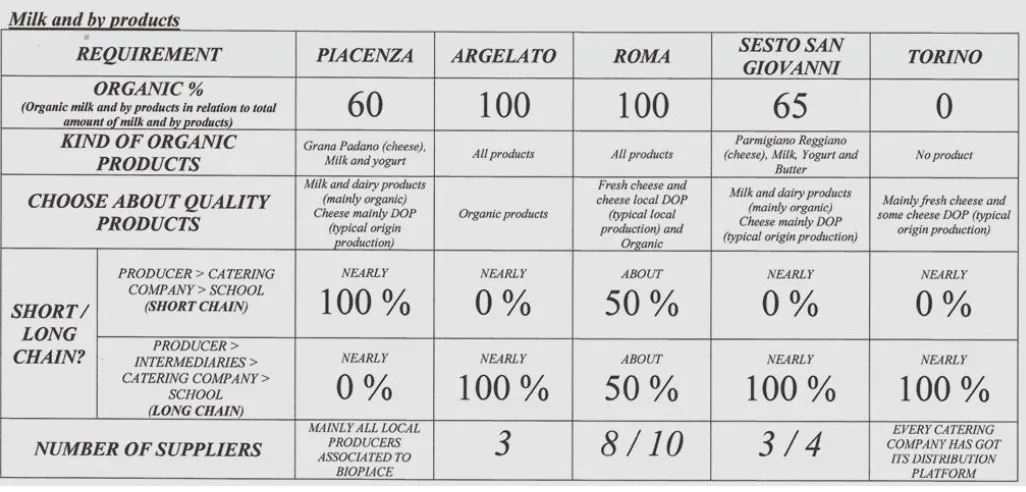
Table 2 is an example of checklist used for the milk and milk by-products supply chain, and the results of the checklist are presented in table 3, comparing the five different case studies. The other checklists and raw results are to be found in the appendix.
TABLE 2: Checklists for milk and by-products supply chains
QUESTION/EVALUATION ELEMENT
ANSWER/DATA
% organic milk and by products in relation to total amount of milk and by products
Which kinds of product are organic and which are not organic? Which are the
reasons of these chooses?
Which kind of policy and approach is used in the choosing of this supplying chain?
(just local cheese, mainly local cheese, DOP cheese in general, fresh cheese,
matured cheese, etc.)
Short chain or long chain? Do you have direct relation with producers or are there
other interlocutors in the chain? If yes, how many interlocutors between you and
producers?
How many suppliers have you got? Have you got a traceability system that let you
know the producers of raw materials (milk)?
TABLE 3: Case study results concerning milk and by-products supply chains
2.3
Results
Data from the five case studies about the organic products used in the catering supply chains are presented in tables 4, 5, 6, 7, divided according to type of product (in the appendix is to be found the raw result tables). In order to interpret the following data it’s useful to bear in mind the national average of organic products employed in school canteen menus (calculated only among the school catering services buying organic ingredients in their meals), corresponding to 40 % of the total product weight (ACU “Mangiare Fuori Casa”, 2006).
TABLE 4: Results for organic milk and milk by-products
Piacenza Argelato Roma Sesto San
Giovanni Torino % of organic milk and
dairy products in relation with the total weight of milk and dairy products procured in the service
60 % 100 % 100 % 65 % 0 %
Type of organic milk
and dairy products Grana Padano
cheese, milk and yogurt
All products All products Parmigiano Reggiano cheese, butter, milk and yogurt
None
[image:7.612.52.506.463.626.2]TABLE 5: Results for organic cereals and by-products
Piacenza Argelato Roma Sesto San
Giovanni Torino % of organic bread in
relation with the total weight of bread procured in the service
20 % 100 % 100 % 100 % 0 %
% of organic pasta in relation with the total weight of pasta
procured in the service
100 % 100 % 100 % 100 % 0 %
% of organic rice in relation with the total weight of rice procured in the service
100 % 100 % 100 % 100 % 0 %
Organic cereal and by-products, except for the case of Turin, are wide-spread; the municipality of Piacenza serves exclusively organic bread one day per week.
TABLE 6: Results for organic meat and by-products
Piacenza Argelato Roma Sesto San
Giovanni Torino % of organic meat in
relation with the total weight of meat
procured in the service
0 % 100 % 0 % 55 % 0 %
Argelato, which buys 100 % organic meat and meat by-products, and Sesto San Giovanni stocking up half of its meat provision from organic producers, are the only two cases investing in the organic meat sector.
TABLE 7: Results for organic fruit and vegetables
Piacenza Argelato Roma Sesto San
Giovanni Torino % of organic fruit in
relation with the total weight of fruit procured in the service
90 % 100 % 100 % 100 % 100 %
% of organic vegetables in relation with the total weight of vegetables procured in the service
90 % 100 % 100 % 90 % 100 %
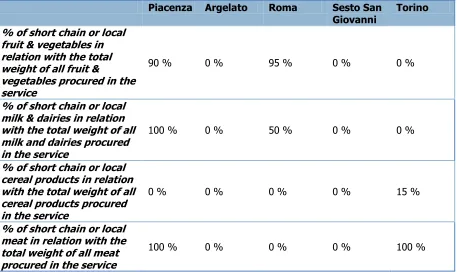
[image:8.612.52.508.465.592.2]TABLE 8: Results for local and short-chain products
Piacenza Argelato Roma Sesto San
Giovanni Torino % of short chain or local
fruit & vegetables in relation with the total weight of all fruit &
vegetables procured in the service
90 % 0 % 95 % 0 % 0 %
% of short chain or local milk & dairies in relation with the total weight of all milk and dairies procured in the service
100 % 0 % 50 % 0 % 0 %
% of short chain or local cereal products in relation with the total weight of all cereal products procured in the service
0 % 0 % 0 % 0 % 15 %
% of short chain or local meat in relation with the total weight of all meat procured in the service
100 % 0 % 0 % 0 % 100 %
Piacenza (90 %) and Rome (95 %) are the only ones buying local/short chain fruit and vegetables. Piacenza implements meat, milk and dairies procurement from local producers, so does Rome, in a more reduced percentage (50 %). Turin buys certain typical products (PDO, PGI) such as meat (Piedmont breed) and rice.
3
Concluding remarks
A2.4 Sum-up table for the 5 case studies main features in Appendix 2) is fragmented due to
inhomogeneous data; the lack of comparable parameters is due to variables such as local food culture, number of service users, raw material availability, and economic resources.
Nevertheless there are some major consideration which can be drawn from the results.
Regional laws, despite displaying several limits, are an important driver for promoting organic consumption in school canteens: municipalities benefiting of such laws are indeed facilitated in the organic and local food implementation process.
Raw material high quality has high costs due to ingredient availability. A tighter collaboration can be set up by local administration and specific working group in order to reach lower costs for a more rationalised supply chain management.
Catering companies adopting self-service systems well address the issue of waste reduction, impacting positively the service total costs.
Local food implementation should also be supported by short chain procurement systems in order to guarantee real short transportation distances and therefore an effective CO2 emissions reduction.
The studied cases have revealed that a best practice model for school catering, which could be applied in all real cases, does not exist. There are instead constellations of reference models for each different situation, and each municipality can search the best solution according to the above mentioned variables and then consulting the most fit case studies.
Last but not least, producers, catering staff and public decision-makers still work following separated logics, the lack of a holistic approach hampers long-run solutions, hindering a better environment protection/cost ratio and a more efficient resource management.
4 References
Bocchi S, Spigarolo R, Sarti M.V., Marcomini N, “Organic and conventional public food procurement for youth in Italy”, iPOPY discussion paper 3/2008, Bioforsk, Tingvoll (Norway), 19th on Fabruary 2008
Morgan K, Sonnino R, “Enpowering consumers: the creative procurement of school meals in Italy and the UK”, International Journal of Consumer Studies ISSN 1470-6431, 20
Arachi, A, “km 0, una legge sul cibo per tagliare la CO2 “ Corriere della Sera, 10 December 2009, 40 pages
Bauer M W, Gaskell G, (2000) “Qualitative researching with text, image and sound” A practical Handbook, SAGE Publications, London Thousand Oaks
Spigarolo R, Sarti M.V., (2010), “Organic foods in Italian school canteens: similarities and differences from a study of 100 contracts”, iPOPY discussion paper 2/2008, Bioforsk, Tingvoll (Norway), 19th on February 2008
Spigarolo, R. (ed.) 2006. Mangiare fuori casa - Progetto n. 157 Obiettivo ristorazione: tariffe, prezzi, qualità. Miglioramento della condizione informativa dei consumatori sui prezzi e servizi rapportati a standard di qualità predefiniti nel settore della ristorazione - Progetto cofinanziato dal Ministero delle Attività Produttive - Direzione Generale Armonizzazione del Mercato e Tutela del Consumatore - RELAZIONE SULL’INDAGINE RELATIVA ALLA RISTORAZIONE SCOLASTICA - analisi sincronica - anno di riferimento: 2005-2006
http://www.acu.it/progetti/mangiar/materiali/risultati%20indagine/Relazione%20ristorazione%20scolastica.pdf
Annex 1 - Checklists for other food supply chains
A1.1 Cereals and by products chain
QUESTION / EVALUATION ELEMENT
ANSWER / DATA
COLLECTED
% Organic bread
% Organic pasta
% Organic rice
% Organic legumes
Which are the reasons of these choices?
(just for rice, pasta and legumes)
Short chain or long chain? Do you have direct relations with producers
or are there other stakeholders in the chain? If so, how many actors
between you and producers?
(just for bread)
How is bread supplying? Is there a chain such as producers – school or
school – central kitchen – school?
Do you make any controls on producers? If so, which kind of controls?
Draw a representation of the rice supplying chainA1.2 Meat and by-products chain
QUESTION / EVALUATION ELEMENT
ANSWER / DATA
COLLECTED
% organic meat in relation to total amount of meat
% organic meat by-products in relation to total amount of meat by
products
Which kind of products are organic and which are not? Which are the
reasons of these choices?
(Just for meat)
Short chain or long chain? Do you have direct relations with producers or
are there other stakeholders in the chain? If so, how many actors
between you and producers?
A1.3 Fruits and vegetables chain
QUESTION / EVALUATION ELEMENT
ANSWER / DATA
COLLECTED
% organic vegetables in relation to total amount of vegetables
% organic fruits in relation to total amount of fruit
Which kind of policy and approach is used in choosing such chain? (for
example: only local and seasonal fruits, mainly local and seasonal fruits,
only local vegetables, frozen vegetables, etc.)
Short chain or long chain? Do you have direct relations with producers or
are there other stakeholders in the chain? If so, how many actors
between you and producers?
Do you make any controls on producers? If so, which kind of controls?
Draw a representation of the fruit supplying chainA1.4 Procurement study
QUESTION / EVALUATION ELEMENT
ANSWER / DATA
COLLECTED
How are the food raw materials managed?
Which criteria do you use to guarantee traceability of organic foods?
A1.5 Technological process of food preparation
QUESTION / EVALUATION ELEMENT
ANSWER / DATA
COLLECTED
How many schools have are there in your municipality? How many meals
do you provide every day?
Have you got a central kitchen? If so, how many central kitchens? Which
production capacity (meals per day) have they got? How many schools
does every kitchen provide? How many employers has each kitchen got?
Which kind of technologies are used? Cook & chill + warm up in the
school before the lunch? Cook and keep warm until the consumption?
Just cold lunch?
A1.6 Other information
QUESTION / EVALUATION ELEMENT
ANSWER / DATA
COLLECTED
Food catering service is contracted to a private society? Food catering
service is directly managed by public administration? Other management
solutions?
Assess your food catering service
What are Strengths of your service (low costs, mainly organic products,
mainly local and quality products, short chain, attention to nutritional
elements, etc.)?
Annex 2 - Case studies results for the other supply-chains
A2.1 Meat and by-products
REQUIREMENTS
PIACENZA
ARGELATO
ROMA
SESTO SAN
GIOVANNI
TORINO
ORGANIC %
(% of total organic meat related to total meat weight)
0 100 0 55 0
ORGANIC %
(%of total organic meat by-products related to total m. by-product weight)
0 100 0 0 0
QUALITY PRODUCTS Meat and by-products MAINLY LOCAL (Coppa e Salame) PDO(Prosciutto di Parma). ORGANIC products LOCAL meat, beef or lamb
PDO meat by-products Meat by-products PDO (Prosciutto di Parma) PGI (Bresaola) LOCAL meat (Razza Bovina Piemontese) SHORT CHAIN / LONG CHAIN PRODUCERS> CATERING COMPANY> SCHOOL> (SHORT CHAIN) APPROX.
100 % APPROX. 0 % APPROX. 0 % APPROX. 100 % APPROX. 0 %
PRODUCERS> OTHER CHAIN ACTORS> CATERING COMPANY> SCHOOL> (LONG CHAIN) APPROX.
A2.2 Cereals and by-products
REQUIREMENTS
PIACENZA ARGELATO ROMA SESTO SANGIOVANNI TORINO
ORGANIC %
(organic bread % related to total bread weight)
20
(1 day/week)
100
100
100
0
ORGANIC %
(organic pasta % related to total pasta weight)
100
100
100
100
0
ORGANIC %
(organic rice % related to total rice weight)
100
100
100
100
0
SHORT CHAIN / LONG CHAIN
PRODUCERS> CATERING COMPANY> SCHOOL> (SHORT CHAIN)
70 % 0 % 100 % APPROX.
25 % Rice and pasta are bought dir. From producers
APPROX. 15 % Rice bought from producers
PRODUCERS> OTHER CHAIN ACTORS> CATERING COMPANY> SCHOOL> (LONG CHAIN)
APPROX.
A2.3 Fruit and Vegetables
REQUIREMENTS
PIACENZA ARGELATO ROMA SESTO SANGIOVANNI TORINO
ORGANIC %
(organic FRUIT % related to total fruit weight)
90
100
100
100
100
ORGANIC %
(organic VEGETABLES % related to total
vegetables weight)
90
100
100
90
100
QUALITY PRODUCTS Mainly all
LOCAL products according to season All LOCAL products according to season Mainly all LOCAL products according to season Mainly all LOCAL products according to season All LOCAL products according to season SHORT CHAIN / LONG CHAIN PRODUCERS> CATERING COMPANY> SCHOOL> (SHORT CHAIN) 100 % (2 providers: one of them is an association of local producers)
APPROX.
0 % 100 %320 LOCAL PRODUCERS 100 % 3 LOCAL PRODUCERS APPROX. 0 % PRODUCERS> OTHER CHAIN ACTORS> CATERING COMPANY> SCHOOL> (LONG CHAIN) APPROX.
A2.4