THESES SIS/LIBRARY TELEPHONE: +61 2 6125 4631 R.G. MENZIES LIBRARY BUILDING NO:2 FACSIMILE: +61 2 6125 4063
THE AUSTRALIAN NATIONAL UNIVERSITY EMAIL: [email protected] CANBERRA ACT 0200 AUSTRALIA
USE OF THESES
This copy is supplied for purposes
of private study and research only.
Passages from the thesis may not be
copied or closely paraphrased without the
I --'
ASPECTS OF SOCIAL DEVELOPMENT IN NEW CO~~S:
IMPACTS OF U.I}ITGRATION ON NATION-BUILDING AND S'l'.II,TIG"':Oi.U.L)JION
by
Hirano bu Ki tao j i
a thesis submitted to
THE AUSTRALIAN NATIONAL UNIVERSITY
for the degree of
DOCTOR OF PHILOSOPHY
in
SOCIOLOGY
I hereby declare that this thesis has not been submitted in
the past in substance for any degree, that it is the result
of my own independent research, and that all authorities and
sources which have been consulted are acknowledged in notes,
I am indebted to a number of people for the completion of this thesis. Above all I am grateful to my supervisor Professor Frank Lancaster Jones for his encouragement and understanding during the entire five years. Without his diligent, constructive suggestions and criticisms, the work would have been far more difficult. I would also like to offer my sincere appreciation to Professor Leonard Broom for his assistance and encouragement during the entire period of my work. Dr Louis Sigel gave me invaluable aid at the crucial stage in the revision of the manuscript, by reading it thoroughly and making detailed comments.
Among the many others who provided important comments on the basis
of their own fields of special:±sat1.on, lwould particularly like to mention Professor W.D. Berrie, Professor Samuel D. Clark, Dr Alan Cubbon, Professor Robin Gollan and Professor Ralph Turner.
I would also like to express my thanks to Mrs Mutsuko Terasawa, Ms Rosamund Walsh and Ms Heather Beaton for the typing of the final draft.
Finally, I would like to note the valuable contribution made by
Yuriko Kitaoji, whose continuing intellectual stimulation, patient sacrifice, sensitive awareness, and sympathetic support helped make this thesis
Nation-building and state formation have been primary aspects of social development in New Countries; i.e., the United States, Brazil, Argentina, Australia, and Canada. Part of the reason for this is sought
in the retardation of ethnic and geographic integration, deriving from the fact that these five countries have large territories and relatively short histories of settlement. These two properties in combination distinguish
them from the rest of the world, particularly in respect to effects on social development. Moreover, as these countries have received the largest
\
volume of immigration recorded in history, the problem of the ethnic and
geographic integration involved in nation-building and state formation was reshaped during the mass immigration period of 1880 to 1930.
The distinctive characteristics of their social development from settlement colonies to modern states have frequently been referred to in the social science literature and in the historiography of New Countries,
but there has been little success in constructing a model of the social development in New Countries. Immigration studies, on the other hand, have been either too general or too specific to differentiate uniqueness from generality in the social effects of immigration in New Countries.
In the present study, the process of nation-building and state formation is not analysed in economic or social psychological terms but from a social structural perspective. Social demographic data are analysed
in conjunction with qualitative documents in order to explicate the inter-active patterns of social classes. The analysis of social demographic data was facilitated by the decomposition of the total soci:etal system into six dimensions of social differentiation: ethnic, regional, urban, family-role, industrial, and occupational. Special emphasis was given to
changes in the ethnic, regional and urban dimensions because these three dimensions are directly related to nation-building and .state formation
processes. However, changes in the other three dimensions are briefly discussed as well. The analysis of social demographic changes and changes generated by the interaction of social classes showed a parallelism in
nation-building and state formation in particular, and social development
Acknowledgements Abstract
Table of Contents List of Tables
CHAPTER I: NEW COUNTRIES: THE CONCEPT AND HISTORIOGRAPHIC THEMES
1.1. Views from the Old World 1.2. Frontier Thesis
1.3. Staple Theory
1.4. Theory of "Fragments"
1. 5. New Countries as a "Class of Nations
CHAPTER II: IMMIGRATION AND SOCIAL DEVELOPMENT
2.1. Colonisation of the New World and Early Theories of Unffiigration 2.2. Colonial Emancipation and Colonial Reforms
2.3. Modern Studies of Immigration
2.4. Immigration Restriction and Nation-building 2.5. An9lytical,Framework
CHAPTER III: IMMIGRATION AND ETHNIC DIFFERENTIATION
3.1. The Early Period: The Formation of Ethnic Dimension 3.2. The Staple Period: Ethnic Images and Nation-building
3.3. The Immigration Period: The Rise of Anti-Foreign Nationalism 3.4. The Industrial Period: The Struggles Towards Ethnic Integration 3.5. Conclusion
CHAPTER IV: IMMIGRATION AND GEOGRAPHIC REDISTRIBUTION OF POPULATION
I- 1 I- 4 I-ll I-18 I-26 I-33 II- 1 II- 4 II- 9 II-17 II-27 II-34 III- 1 III- 5 III-23 III-42 III-65 III-83 IV- 1
4.1. The Early Period: The Formation of Regional and Urban Dimensions IV- 8
4.2. The Staple Period: Centralism and Federalism IV- 35
4.3. The Immigration Period: Regionalism and Urban Growth IV- 59 4.4. The Industrial Period: Metropolitanisation and Geographic
Integration 4.5. Conclusion
CHAPTER V: SYNOPSIS OF SOCIAL DEVELOPMENT IN NEW COUNTRIES
IV- 83 IV-107
v- 1
5.1. Workforce Differentiation and Social Classes V- 3
5.2. The Dynamics of Social Differentiation Systems V-13
5.3. Social Development before the Beginning of Mass Immigration V-23
5.4. Social Development after the Mass Immigration V-30
5.5. Summary and Perspectives V-39
Censuses Referred Other References Cited
1/1 New Countries: Immigration 1821-1932, Area
&
Population 1960 I-12/i
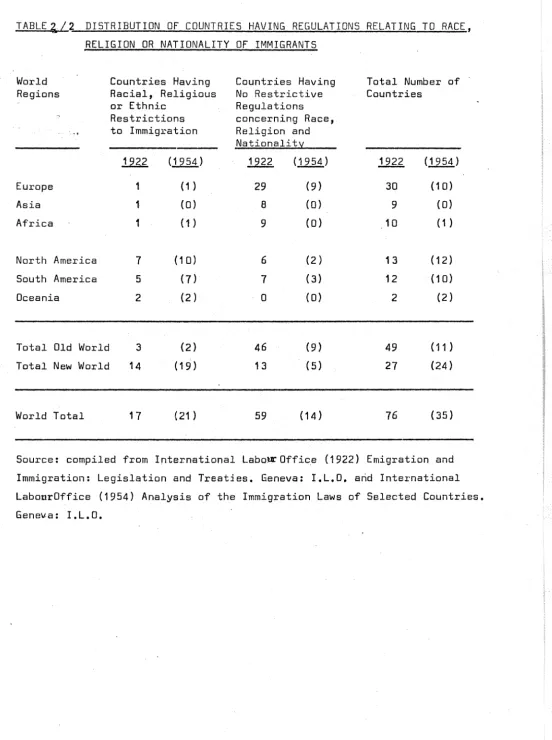
Annual Volume of Immigration to New Countries -1820-1960 II-22/2 Distribution of Countries Having Restrictions on Immigrants II-28
3/1 ·Jewish Population in 1962 III-3
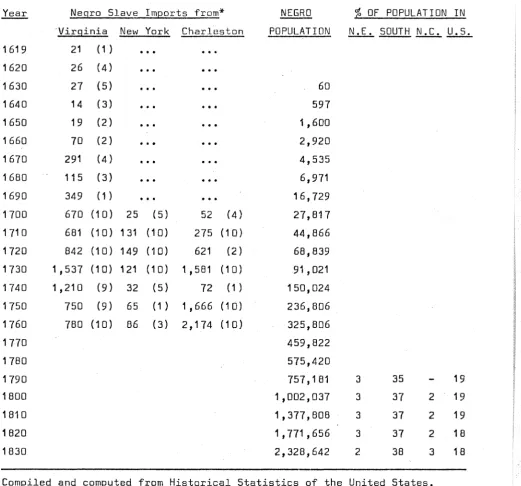
3/2 Slave Imports
&
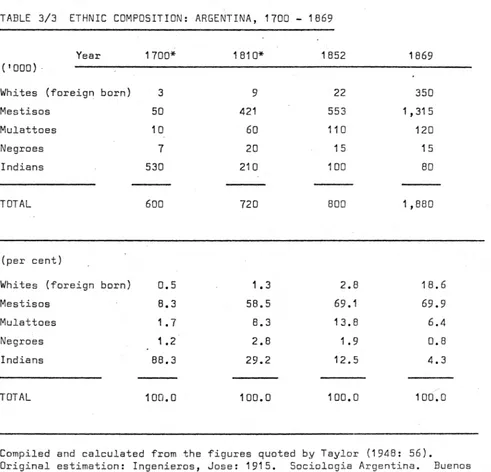
Negro Population, U. S. 1619-1830 III-83/3 Ethnic. Composition: Argentina 1700-1869 III-13
3/4 Settled Indians in New France, 1680-1698 III-20
3/5 Ethnic Composition: Maritime Colonies, 1767 III-22
. ' l
3/6 Racial Composition by Civil Status: Brazil 1585-1900 III-28
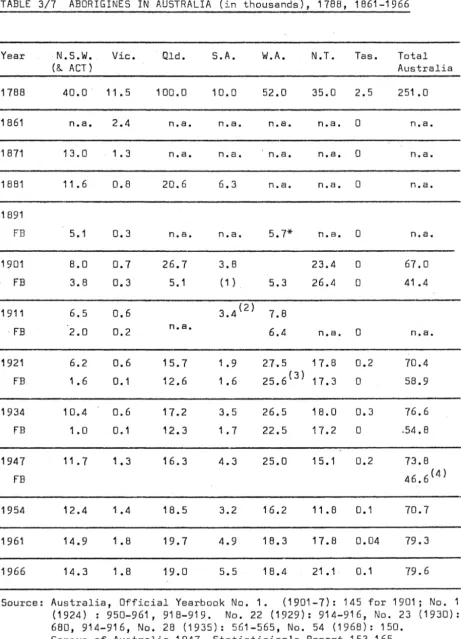
3/7 Aborigines in Australia, 1788, 1861~1966 III-37
3/8 Origin of Population: Canada 1842-44, 1851-52, 1860-61 III-38
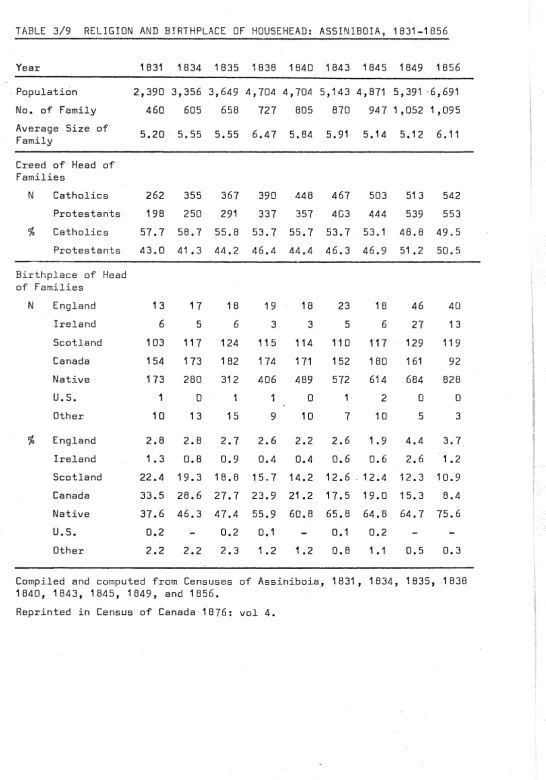
3/9 Religion
&
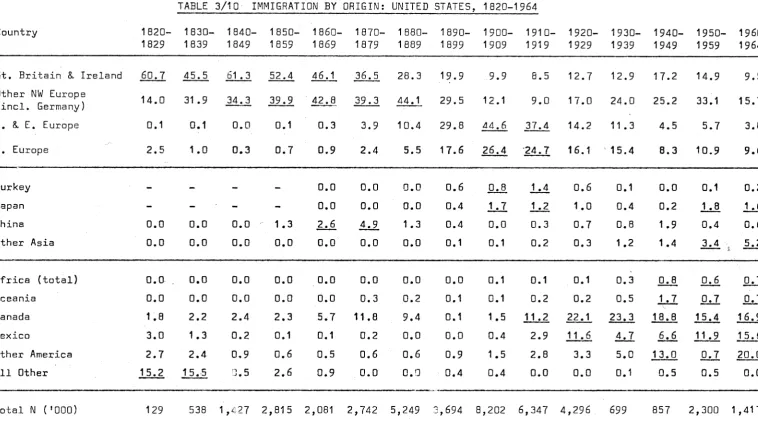
Birthplace of Household Head: Assiniboia, 1831-56 III~~93/10 Immigration by Origin: United States, 1820-1964 III-44
3/11 Ethnic Composition: United States, 1790-1960 III-45
3/12 Immigration Quotas: United States, 1921, 1924, 1929, 1952 III-47
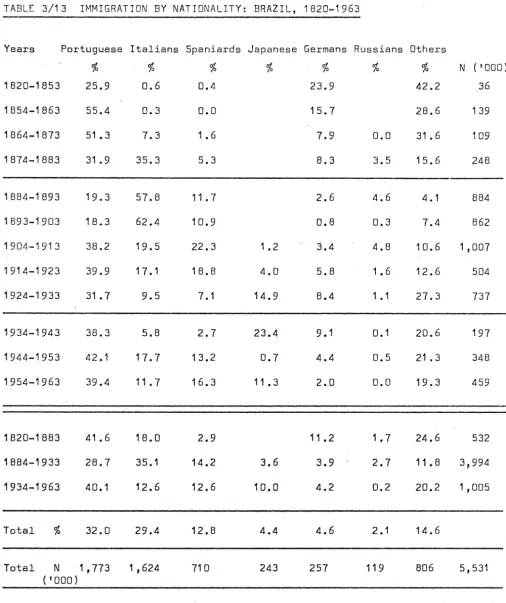
3/13 Immigration by Nationality: Brazil, 1820-1963 III-48
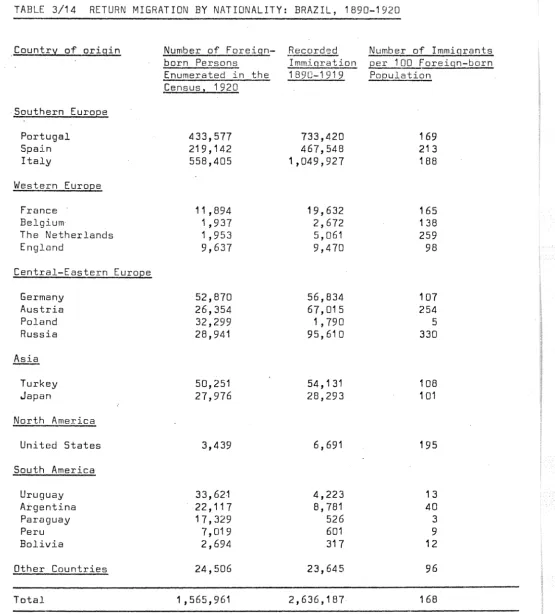
3/14 Return Migration by Nationality: Brazil, 1890-1920 III-49
3/15 InanigratiQn &. Return Migration by Nationality: Argentina,
1857·1950 · III-53
3/16 Immigration
&
Assisted Settler Arrivals: Australia, 1831-1970 III-57 3/l7 N'on-European&
Jewish Minorities: Australia,' 1841-1966 III-59 3/18 Birthplace of Australian Population: 1891-1966 III-603/19 Immigrants into Canada
&
Departure to U. S.: 1821-1940 III-61 3/20 Birthplace, Ethnic Origin&
Religion: Canada, 1842-1961 III-63 3/21 Canadians in U. S.&
Americans in Canada: 1850-1960 III-634/1 The Federal System of the World, 1970 IV-2
4/2a Population of Major Towns
&
Cities: United States, 1630-1800 IV-12 4/2b Regional&
Urban Dimensions: United States, 1630-1830 IV-13 4/2c Electoral Votes for President by Region: United States,1789-1828 IV-15
..
4/5 4/64/7
4/8 4/9 4/10 4/11 4/12 4/13. 4/14 4/15 4/16 4/17 4/18 4/19Regional
&
Urban Dimensions: United States, 1830-1960. Electoral Votes for President by Region: U.S., 1832-1876
Regional
&
Urban Dimensions: Argentina, 1869 Regional&
Urban Dimensions: Australia, 1788-1881Regional
&
Urban Dimensions: British North America& Canada,
1765-1881Population by City Size and Region: United States, 1920
Population Composition of Cities: United States, 1920
Population Composition by Region: United States, 1850-1950
Electoral Votes for President by Region: U.S., 1880-1928
Population by Region
& % Foreign-born in States: Brazil,
1872-1970Population by Community Size: Argentina, 1869-1960
Regional Population Distribution: Argentina, 1809-1960
Iriter-colonial & Inter-state Contrast: Australia, 1880-1966 Urban Dimension: Australia, 1881-1971
Commonwealth Ministries
&
Cabinet Seats by States: Australia, 1901-1930 IV-37 IV-38 · IV-47 IV,.. 53 IV-58 IV-61 IV-62 IV-63 IV-63 IV-67 IV-69 IV-70 IV-73 IV-74 IV-764/20 The House Elections, Seats
&
Votes by Region: Australia;l901-29 IV-774/21 Regional
& Urban Dimensions: Canada, 1881-1961
IV-794/22 Election Results by Party for Region: Canada, 1787-1930 IV-81
4/23 Electoral Votes for President by Region: U.S.·' 1932-68 IV-87
4/24 Urbanization by Region: Brazil, 1940-1970' IV-91
4/25 Metropolitan Areas;(l970)
& Major Municipios: Brazi1,1872-1970 IV-92
4/26 Regional Characteristics : : Argentina, 1869-1960 IV-94 ..
4/27 The House Elections, Seats & Votes by Region: Australia,l931-74 IV-101 4/28 Electorates
&
Party Preferences: Australia, 1949-724/29 Election Results by Party for Region: Canada, 1935-72
4/30 Metropolitan Areas (1961)
&
Urban Centr~s: Canada, 1871-1961IV-102
IV-106
CHAPTER I: NEW COUNTRIES: THE CONCEPT AND HISTORIOGRAPHIC THEMES
_ Between 1821 and 1932, there were about sixty million people who migrated overseas, and for almost ninety per cent of them, the country of destination was one of the following five countries: the United States, Argentina, Canada, Brazil and Australia (cf. Carr-Saunders 1936: 49). In addition to the fact that these five countries have received by far the largest number of immigrants, there are two common characteristics the combination of which distinguish them from all other countries: relatively recent history of settlement and vast territory.
These five countries comprise over a quarter of the total area of the world, but they held only one tenth of the world population as of 1960.
In contrast, the other three large countries of the world, the Soviet Union, China and India, held nearly half of the world population in their
territories which comprised a little less than a quarter of the world area (cf. Table 1/1).
Table 1/1 about here
Due to this short history of settlement, these countries which have received the largest number of immigrants in modern history have presented a characteristic pattern in the process of nation-building. Un-like the majority of so-called "artificial states" established through independence from colonial powers, these countries are inhabited mainly by people whose relatively recent origins are external to the continent; none of these countries has a foundation myth that explains the origin of
land and people and that is connected with the indigenous population. The symbolic force;of their integrating principles of nationhood is weaker
than, for example, Mexico and Peru, where there is a strong cultural heritage from the pre-Columbian civilisations and most people regard them-selves as the descendants of the original inhabitants in the national territory. On the other hand, the nation-building process in these
countries is also different from that of South Africa and Rhodesia, where states have been formed by the descendants of colonists through the
IMMIGRATION (1 ) AREA (2) POPULATIDN(J) 1000 % Pe:riod Covered Rank
%
of World % of WorldNEW COUNTRIES
United States 34,244 58 1821-1932 4 6.3 6,0
Brazil 4,431 7 1821-1932 5 5,7 2.3
Argentina 6,405 11 1856-1932 8 1,9 0.6
Austriillia 2,913 5 1861-1932 6 5.2 0,3
Canada 5,206 9 1821-1932 2 6.7 0.6
\ TOTAL NEW
53,199 .2Q 25,8 9.9
COUNTRIES
OTHER COUNTRIES
u.s.s.R. 1 15.0 7.8
China 3 6.5 22,8
India 7 2.2 14.6
Total of U,S.S,R,
n..J.
45.2China, India
The remainder §0.5 ~
TOTAL OTHER( 4 )
5,988 10 . COUNTRIES
..
WORLD TOTAL 59.187 1 DO 1
oo.o
100.0Notes:
(1} Carr-Saunders' study is based .on the investigation conducted by National Bureau of Economic Research (Willcox 1929, 1931 ).
(2) Total Area of World land surface: 148,822,000 km2 including Antartica which is 8,8% of the world surface area.
(3) Total inhabitants of the world 1960: 3,070,839,262.
Territorial size is also an important factor in distinguishing
these five countries from other countries jn the New World. In New Zealand, Uruguay and Costa Rica, "the European stock'' forms the majority, but the process of geographic integration was smoother. in the course of state formation, partly due to smaller territory. In fact, while these three countries have centralist politics, the United States, Argentina, Canada, Brazil and Australia are all federal states, demonstrating the difficulty in state formation at the time of establishment of the present polity.
Emphasis on such distinguishing spatia-temporal factors is common in social science literature. Early studies dealing with the social-structural differences between these European colonies in the New World \ and.their mother countries often stressed the impact of. the geographic
size and the "newness" of the overseas European settlement. Later, as the
United States experienced outstanding economic development compared with the rest, the dichotomous contrast between the New and the Old World became blurred and seemed to become less persuasive than it used to be for the history o~ modern civilisation. Instead, it became more popular to compare the institutional and cultural factors among mother countries in accounting for differential developments among former European colonies in the New World. In extreme cases, the emphasis on the uniqueness of the United States in its pattern of social, economic and political developments went so far as to reject any general explanatory framework in interpreting American social history, a tendency which was later labelled by Marxists as "American Exceptionism" (cf. Lipset 1963: vii).*
From an analytical point of view, a framework which is confined to particularlistic explanations defeats the purpose of sociological
generalis-ation. The United States is unique but so is any other country. In order to avoid this truism, emphasis on the uniqueness must be made in reference to a group of countries whose fundamental societal system properties are largely similar. In other words, emphasis on the differences can only be meaningful where there are enough similarities. This dilemma must be
reconciled by the establishment of a class of nations within which concrete historical events and social facts can be interpreted in relation to an analytical paradigm commonly applicable.
The purpose of this study is to establish a model of nation-building and state-formation (primary aspects of social development) in these five countries whose societal systems share fundamental spatio-temporal
properties. In order to facilitate a comparative analysis of the course
of social development in these countries, we shall review in this chapter the various theories and historiographic themes explaining the uniqueness of this group of countries, hereafter referred to as New Countries.* An operational definition of this term can be made either by the large volume of overseas immigration recorded in modern history, or by the combination of large territorial size and recent history of settlement in the New World. However, these criteria are not in themselves sufficient to suggest the heuristic value of the concept for the analysis of societal characteristics and patterns of social development. The review of the early literature on
the New World and the writings of the national historians of New Countries ' . . 1
will enrich the concept of New Countries and provide a perspective for approaching the study of- social development in New Countries.
1.1. VIEWS FROM THE OLD WORLD
1.1.1. Early Philosophers
The first systematic thinking on the modern European colony in the New World is found in the writing of Francis Bacon, who regarded European plantations in the New World as "the children of former kingdoms" (Bacon, 1625: 457). In this essay, he identified the kind of people who were considered suitable in terms of occupation, sex, and age for each stage of colonisation in order to obtain a desirable course of development. He also made suggestions on the kind of crops to be planted and industries to be established, on the preferable form of government and the degree of freedom to be allowed, on community health, and on relations with native inhabitants. He argued that since the "planting of countries" is like "planting wood", the profit from plantation should not be expected in a short period; plantation is a different process from "an extirpation", where original inhabitants were "displanted to the end in others". Bacon's
insightful account of plantation settlements was adopted in Hobbes's later work (1651).
During the eighteenth century, when European settlements on American continents were firmly established, the meaning of America in the history of civilisation became a major controversy among Enlightenment thinkers and the Encyclopaedists, as they tried to draw moral lessons from the colonisation of the New World. As Commager and Giordanetti (1967: 11-12) put it,
No question more importunate, none more fascinating, than this: was America a mistake? Was it a mistake to have discovered this strange new world? a mistake to have conquered it, if she was indeed conquered; a mistake to plant colonies on those alien shores? Everywhere the philosophers debated that, but nowhere more insistently
than in France.
The debates took the extremes: on the one hand, there were those who found the hope for the human race in the New World, and on the other, there were those who anticipated the degeneration of mankind in the New World,
including such significant figures like Comte de Buffon (1774-79/1812) and Guillaume Thomas Raynal (1776).
1.1.2. Adam Smith
and Republican Rome. He pointed out that the motivation of modern
colonisation was generated by a bullionist ~elusion, whereas colonies of Ancient Greece were established by citizens as city states (i.e. apoikia), and colonies of Republican Rome were acquired by landless freemen as new plantations (i.e. colonia). In spite of the wrong motivation, however, some modern colonies developed rapidly as they received more and more permanent settlers from Europe. This success was due to the difference in conditions between colonies of the modern and ancient types. His,. comparison of the con.ditions of colonies may be sunnnarised as follows.:
Ancient Republican Modern
Characteristic* Greek Roman European
Colonies Colonies Colonies
1. Original Inhabitants
thinly inhabited/fully inhabited
+
+
2. Process of Settlement
peaceful/by conquest
+
+
3. Size of New Territory
Pl.enty/not considerable
+
+
4.
Distance from Mother Count~iesfar/close
+
+
5. Relation with Mother Countries
independent/dependent
+
6. Military Force Furnished by
/
colonies/mother countries
+
7.
Revenue Furnished bycolonies/mother countries
+
On the basis of this comparison, Adam Smith attempts to explain how
these European colonies advanced "more rapidly to wealth and greatness than any other human society" (A. Smith 1776: 231-232). In axiomatic form, his argument is as follows: (1) Land is plenty and cheap. (2) It is thinly inhabited. (3) There is no rent and low land taxes. (4) Because of conditions (1) to (3), every colonist is eager to collect labourers.
(5) Because of conditions (1) to (4), every colonist is eager to reward labourers with the most liberal wages. (6) Isecause of conditions (1) to
(5), labourers soon leave the landlord to become landlords themselves. (7) Cycle (4), (5) and (6) continues. (8) Early marriage is encouraged and young couples leave their parents to become landlords themselves because of the first three conditions. In short, Adam Smith saw that the high price of labour was caused by the low price of land, lack of rent, and low tax which in turn encouraged rapid upward mobility and high fertility.
An emphasis on geographic conditions is apparent in Adam Smith's analysis of the rapid development of European colonies in the New World. Yet, he also points out the effect of political conditions and institutions
on the realisation of the fundamental economic laws guided by "the invisible hand". Thus the greater prosperity of the English colonies was due to four factors. First, English colonies were favoured because the engrossing of uncultivated land was limited in their colonial laws. Second, they had inheritance laws which enabled colonists to use more labour. Third,
moderate taxation enabled colonists to use more labour. And finally, there were more extensive markets for their surplus produce because the English government required a less strict monopoly over colonial trade, resulting in a higher proportion of non-enumerated commodities than that in other colonies.
1.1.3. Other Classical Economists
David Ricardo added the technological factor ~n explaining the rapid development of the New World. As he put it,
In the new settlements, where the arts and knowledge of countries far advanced in refinement are introduced, it is probable that capital has a tendency to increase faster than mankind; and if the deficiency of labourers were not supplied by more populous countries, this tendency would very much raise the price of labour. (Ricardo 1817: 53). In his criticism of Malthus's theory of population (cf. Malthus 1798), Ricardo referred to the situation in America. "In America," he stated, "population increases rapidly, because food can be produced at a cheap price and not because an abundant supply has been previously provided"
(Ricardo 1817: 400).
In fact, the American example was commonly used by contemporary critics of Malthus's theory of population, such as Godwin (1820) and Ravenstowe (1821). According to Hutchinson (1967: 338),
out that the Malthusian theory could not explain the large and almost uninhabited areas.
By analysing census data, Godwin further argued that the population growth of the United States was due largely to immigration and the high fertility of the immigrants. Ravenstowe (1821) made a more elaborate statistical analysis on the United States censuses of 1790 and 1810 and concluded
that the population of the United States had not increased as rapidly as the Malthusian formulae would predict.
In his essay titled "England and America: a Comparison of the Social and Political State of Both Nations", Wakefield concluded that American prosperity was due to (1) slavery, which maintained the labour force, (2) the system of selling land by auction, which deterred the acquisition of land by migrant labour, and (3) the tariff on manufactured goods, which protected the incipient colonial industry and thereby
prevented the dispersion of capital and labour into agriculture (Wakefield 1833a). His general principle of economic progress in New Countries was summarised by the interrelationships of three factors, i.e., the price of land, the level of wages, and profits of the colonists. If the wage level is too low, colonies will become unattractive to immigrants. If it is too high, colonies again suffer, first, from the difficulty in obtaining wage-labour because the wage-labour force will soon disperse into individual land ownership, and secondly, from the difficulty in obtaining capital as the profit of capitalists falls below what they can expect in their home
country (cf. Wak~field 1829).
Wakefield's view was largely ignored by orthodox writers, but the
inapplicability of ''orthodox economic laws'' in the New Countries became more and more evident. Merivale, in a series of lectures on colonisation and colonies at Oxford University during 1839-41, analysed the progress of society and wealth in modern European colonies, and departed from the principle of non-state intervention in free enterprise. As he put it in his later published lecture notes,
(In the colonies) the urgent desire for cheaper and more subservient labourers - for a class to whom the capitalist might dictate terms, instead of being dictated to by them •
••• In ancient civilised countries the labourer, though free, is by a law of Nature dependent on capitalists; in colonies this dependence must be created by artificial means. (Merivale 1861: Vol.II 235-314 passim; as quoted by Marx 1867: 770).
exploit industrial entrepreneurs, contrary to what happens in the Old World.*
1.1.4. Marx
Marx maintained that these apparent difficulties in applying economic laws to free colonies in the New World revealed more the short-comings of academic political economy than any essential difference between the two types of economic and social systems. He wrote in the last chapter of the first volume of ,Capital that "it is the great merit of E.G. Wakefield to have discovered, not anything new about Colonies, but to have discovered in the Colonies the truth as to the conditions of capitalist production in the mother country" (Marx 1867: 766). Marx's own view on the difference of the free colonies and their mother countries was stated as follows:
We have seen that the expropriation of the mass of the people from the soil forms the basis of the capitalist mode of
production. The essence of a free colony, on the contrary, consists in this - that the bulk of the soil is still public property, and every settler on it therefpre can turn part of it into his private property and individual means of production, without hindering the later settlers in the same operation. This is the secret both of the prosperity of the colonies and of their inveterate vice - opposition to the establishment of capital. (Marx 1867: 768).
Here, Marx refers to conditions before mass immigration.
Marx's concept of "real Colonies" is very close to our concept of New Countries: as he defined it, "virgin soils, colonised by free
immigrants" (Marx 1867: 765n). Later Engels, in a letter to Kautsky (Engels 1882: 340-341), distinguished two types of colonies: first, "the colonies proper", or the countries occupied by European population and, second, "the countries inhabited by a native population, which are simply subjugated", such as India and Algeria. Apparently, Engels's first
category corresponds to Marx's concept of real colonies.
However, Marx showed a similarity in economic roles between real colonies and other imperial possessions when he wrote
The United States are, speaking economically, still only a Colony of Europe. Besides, to this category belong also such
* Quoting this passage, Marx (1867: 77ln) commented:
Over yonder, in the colonies where the labourers are so "simple" as to "exploit" the capitalist, Mr. Molinari feels a strong
old plantations as those in which the abolition of slavery has completely altered the earlier conditions (Marx 1867: 765n).
Furthermore, Marx (1867: 753) pointed out that even some aspects of social life in colonies and plantations are similar:·
The treatment of the aborigines was, naturally, most
frightful in plantation-colonies destined for export trade only, such as the West Indies, and in rich and
well-populated countries, such as Mexico and India, that were given over to plunder. But even in the colonies properly so called, the Christian character of primitive accumulatipn did not belie itself. Those sober virtuosi of Protestantism, the Puritans of New England, in 1703, by decrees of their assembly set a premium of £40 on every Indian scalp and every captured red-skin: in 1720 a premium of £100 on every scalp; in 1744, after Massachusetts-Bay had proclaimed a certain tribe as rebels, the following prices: for a male scalp of 12 years and upwards £100 (new currency), for a male prisoner £105, for women and children prisoners £50, for scalps of women and children £50. Some decades later, the colonial
system took its revenge on the descendants of the pious pilgrim fathers, who had grown seditious in the meantime. At English instigation and for English pay they were tomahawked by red-skins. The British Parliament proclaimed blood-hounds and scalping as "means that God and Nature had given into its hand."
By the time of Marx, the systematic comparison of European settle-ments in Europe and in other areas gradually faded. New Countries were more commonly characterised eithet in terms of cultural heritage from
their respective mother countries or in terms of their unique "national character" for which no further explanation was given. This tendency can be seen even in the famous work of Alexis de Tocqueville (1835-40). He indeed made some general remarks on the basis of his observation of American society; e.g., increased social equality induces changes in political associations and egalitarianism leads to intense competition and stress on achievements.* However, he never tried to explain why there
~
was egalitarianism in America or how social equality was achieved there. The lack of a rigid class system was vaguely associated by de Tocqueville with American national character, whereas the judicial and political processes in America were explained in terms of the differences between the French and Anglo-Saxon cultural and institutional traditions. The late
. · ··,: i
nineteenth century sociologists who were generally inclined to make
typologies of human societies never attempted to make a systematic comparison between societal systems of ex-European colonies with those of their mother countries. Marxists, despite their concern with the regional variations of capitalistic development, made little effort to generalise on the societal characteristics and the economic structures of New Countries.* Characterisation of the societal system and culture of New Countries was left to the historians and economic historians of New Countries, whose ad hoc themes have been applied to one another •
* It is, in fact, surprising that classics in Marxists literature, such as Hilferding (1910), Luxemberg (1913), Lenin (1899a, 1916, 1917) and Kautsky (1899) contain very few remarks on the development of New
1.2. FRONTIER THESIS
1.2.1. Frontiers
One of the most influential attempts to formulate an explanatory framework for the analysis of developmental patterns of new settlements was Frederick Jackson Turner's frontier thesis, which was first presented
in 1893 as a paper for a Chicago meeting of the American Historical
Association. The main theme of the paper was that the frontier environment established American culture, which distinguishes its people and instit-utions from Europeans and European institinstit-utions. During the expansion of settlement over the continent which lasted three centuries, the behaviour patterns of settlers were altered by the frontier environment as most of
the customs and institutions developed in the thickly populated communities were inappropriate in a thinly populated frontier region. As Turner put it,
Too exclusive attention has been paid by institutional students to the Germanic origins, too little to the
American factors. The frontier is the line of most rapid and effective Americanization. The wilderness masters the colonist. It finds him a European in dress, industries, tools, modes of travel, and thought. It takes him from the railroad car and puts him in the birch canoe. It strips off the garments of civilization and arrays him in the hunting shirt and the moccasin. It puts him in the log cabin of the Cherokee and Iroquois and runs an Indian palisade around him. Before long he has gone to planting Indian corn and plowing with a sharp stick; he shouts the war cry and takes the scalp in orthodox Indian fashion
(Turner 1893/1966: 10-11).
In short, "a reversion toward primitivism" took place, as "governmental functions were simplified, economic activity reverted to self-sufficiency, and social organization eroded away" (Billington 1966: 1).
The American frontier was different from the European frontier,
which was "a fortified boundary line running through dense populations" (Turner 1893: 10). The difference also lay in the fact that the American frontier line was moving, expanding continuously. As the population increased in older frontier communities, new frontier settlements were made.
All peoples show development ••• In the case of most nations, however, the development has occurred in a limited area; and if the nation has expanded, it has met other growing peoples whom it has conquered. But in the case of the United States we have a different phenomenon. Limiting our attention to
primitive industrial society without division of labor up to manufacturing civilization. But we have in addition to this a recurrence of the evolution in each western area reached in the process of expansion. Thus American develop-ment has exhibited not merely advance along a single line, but a return to primitive conditions on a continually advancing frontier line, and a new development for that area. American social development has been continually beginning over again on the frontier. This perennial re-birth, this fluidity of American life, this expansion west-ward with its new opportunities, its continuous touch with
the simplicity of primitive society, furnish the forces dominating American character (Turner 1893: 10).
The formation of "a composite nationality for the American people" was also promoted by the frontier environment. "In the crucible of the frontier", Turner says, "the immigrants were Americanized, liberated, and fused into a mixed race, English in neither nationality nor character-istics" (Turner 1893: 12). The advance of the frontier meant "a steady movement away from the influence of Europe, a steady growth of independence on American lines" (Turner 1893: 11). Moreover, the advance of the frontier encouraged the growth of nationalism, the evolution of American political institutions, and the expansion of national power. At the same time, the frontier promoted democracy, individualism and resistance to the c.entralist control of government, as each frontier furnished "a new field of opport-unity, a gate of escape from the bondage of the past; and freshness, and confidence, and scorn of older society, impatience of its restraints and its ideas, and indifference to its lessons, have accompanied the frontier" (Turner 1893: 19).
Although his later essays and lectures, published as The Frontier in American History (1920), put further emphasis on American national character, and thus "contributed to a tendency to isolate the study of American history" (Gerhard 1959: 205), his original thesis facilitated "a number of efforts to test it in the context of other frontier societies such as Canada, parts of Latin America and Australia" (Lipset 1968a: 37). Belaunde's early attempt (1923) to apply the thesis to the Hispanic
American situation has been followed by such works as Aiton (1940), Zavala (1957) and Scobie (1964) for Argentina, and Wagley (1963), Moog (1964) and Morse (1965) for Brazil. Canadian and Australian historiography contains even more frequent reference to Turner's thesis, particularly in works by Burt (1940), Stanley (1940), Mcinnis (1942), S.D. Clark (1942, 1948, 1962) and Matthews (1962) for Canada, and Alexander (1947), Kershner (1953), G. Nadel (1957), Ward (1958) and Allen (1959) for Australia.
often emphasised the differences between these frontier societies without elaborating a common framework for analysis. This tendency is particularly noticeable in broader comparative studies; such as, Heaton (1946, 1955), Burt (1957), Webb (1952, 1957), Gerhard (1959), Mikesell (1960), and Billington (1956, 1959, 1965, 1966b, 1968). Turner's original intention was clearly to emphasise the geographic factor of the New World as opposed to cultural heritage from the mother country, but neither Turner nor his disciples have moved toward a generalization of the impact of the frontier in the histories of all New Countries.
1. 2. 2. Sections
Instead of pursuing a comparative perspective, Turner turned his attention to regional variations and associated conflicts between
"sections". As early as in 1892, Turner pointed out that the process of sectionalization deserves more attention from American historians, but his own work on the development of sectionalism in the United States came much later (cf. in particular 1908, 1922 and 1925). Like the frontier, American sectionalism moved westward: it started with the rivalry among
three sections on the Atlantic Coast; i.e., New England, Middle Colonies and the South; it later encompassed the West, "wherever found at different years" (Turner 1925/1961: 116). Turner (1908: 314) defined the relation-ship between the frontier and the section as follows:
The frontier is a moving section, or rather a form of a society determined by the reactions between the wilderness and the edge of expanding settlement; the section is the outcome of the deep-seated geographical conditions inter-acting with the stock which settled in the region.
The territorial size of the United States obviously contributed to the rise of sectionalism, as he stated,
We are apt to think of the United States as we might think of some one of the nations of the Old World, but the area of the Union is almost that of all Europe, and this vast country is gradually becoming aware that its problems and its difficulties are not altogether unlike those of Europe as a whole .••• We are led to wonder why the United States did not in fact become another Europe, by what processes we retain our national unity. (Turner 1922: 136)
Since territorial size is one of the common characteristics in the operation-al definition of New Countries used in this study, Turner's thesis of
all other New Countries, it is curious that his sectional thesis has not been applied to other national histories as the frontier thesis has.
1.2.3. Environmentalism vs. Cultural Heritage Thesis
Like the frontier thesis, the sectional thesis has been ~riticised as being empirically inaccurate. For example, it has been argued that "empirical tests" in American voting patterns have shown that class loyal-ties and ethnic divisions sometimes played more important roles. However, in spite of his apparent overemphasis on the frontier and sections, Turner's contribution to American historiography had a more fundamental meaning. As Gerhard (1959: 205) put it,
Historically Turner's proposition is part of a process of intellectual emancipation. It is an attempt to see
American history in its own setting, to explain American society and institutions as emerging "on native grounds". Before Turner, the institutional framework of America had been interpreted without sufficient attention to geographic factors. Charles A. Beard, who was apparently influenced Sy Turner in writing An Economic Interpretation of the Constitution of the United States (1913). classified schools of American historiography before Turner into three:
Broadly speaking, three schools of interpretation have dominated American historical research and generalization. The first of these, which may be justly associated with the name of Bancroft, explains the larger achievements in our national life by reference to the peculiar moral endowments of a people acting under divine guidance; or ••• it sees in the course of our development the working out of a higher
will than that of man. ·
The second school ••• may be called the Teutonic, because it ascribes the wonderful achievements of the English-speaking peoples to the peculiar political genius of the Germanic race. Without distinctly repudiating the doctrine of the "higher power" in history, it finds the secret to the "free" institutional development of the Anglo-Saxon world in innate racial qualities.
The third school ••• is not to be characterized by any phrase. It is marked rather by an absence of hypotheses. Its
representatives ••• have resolutely turned aside from "inter-pretation" in the larger sense, and concerned themselves with critical editions of the documents and with the "impartial" presentation of related facts.
The second school was represented by Turner's former teacher,
Herbert Baxter Adams. Hofstadter (1949/1966: 100-101) summarised Adams's thesis as follows:
like the Witanagemot, which could be traced back to the forest of Germany.
Compare this statement with the following passage of Turner, quoted by Stanley (1940: 105):
American democracy was born of no theorist's dream; it was not carried in the Susan Constant to Virginia, nor
in the Mayflower to Plymouth. It came out of the American forest and it gained new strength every time it touched a new frontier.
From this parallel, it seems clear that Turner's extreme emphasis on the local geographic factor was generated as a counterthesis to the cultural heritage thesis.
Emphasis on the environment still seems to be popular in the contemp-orary historiography of New Countries. To give just one example outside
th~ United States, Geoffrey Blainey starts his popular introduction to Australian history with the phrase, "Distance is as characteristic of Australia as mountains are of Switzerland" (Blainey 1966: viii). After discussing the effect of distance in the first part of the book, Blainey argued that historical changes in transportation technology reflected a conscious attempt to conquer distance. This type of argument would not lose its raison d'etre as long as the cultural heritage thesis does not disappear; in fact, it is still popular to explain the economic life of the United States in terms of Puritan ethical codes, "Brazilian racial harmony" in terms of the Portuguese national character, Canadian political behaviour in terms of its royalist tradition, and so forth. These ethical codes, national character, and political preferences are no less general or primitive as concepts than the particular institutional behaviour to be explained: the former is to be understood only because of the existence of the latter.
1.2.4. Lee and Handlin
Turner's thesis has been challenged from various directions. (See in particular, G.W. Pierson 1940 and Hofstadter 1949). One of the most frequently cited attacks was that of Everett S. Lee (1961) who argued that migration accounts for the characteristics of American democracy and
American character associated by Turner with frontier environment. As Lee put it,
the frontier, was developing a special case of a more general theory of migration. Most of the effects, desirable and un-desirable, that were attributed by Turner to the frontier can, with equal or better logic, be attributed to migration, and in addition, the migration theory does not collapse or depend upon tradition for its maintenance after the frontier is gone (Lee 1961: 66).
Although Lee was primarily concerned with internal migration, American
migration experience started from the arrival of migrants from overseas. As Oscar Handlin wrote, "Once I thought to write a history of the immigrants. Then I discovered the immigrants were American history" (Handlin 1951: 3). In fact, Handlin regarded the immigrant experience as the primary basis of American national character •
••• the immigrants made a decided contribution to American civilization. Their labor was an important factor in economic expansion. The foreign-born played a critical role in the growth of both American agriculture and American industry •••• Immigration also endowed the social structure with fluidity. In an expanding culture it was difficult to preserve fixed forms, to establish rigid class distinctions that might limit opportunities. Diversity and mobility became characteristic features of life in the United States
(Handlin 1951: 2-31.
What is significant i~ Handlin's thesis is that the national character of the United States is attributed neither to the cultural back-grounds of immigrant groups nor to the purely environmental factors, but to the dynamic, collective experience of migrants facing new institutional
and environmental frameworks~ As he stated,
The immigrants could not impose their own ways upon society; but neither were they constrained to conform to those
already established. To ~ significant degree, the newest Americans had a wide realm of choice (Handlin 1951: 5). In.practice, this choice was difficult for 11the uprooted", for whom immigration was only a part of a life-long experience of alienation
(Handlin 1951: 4). It started in their home country where they were torn from their land in the course of rapid urbanisation and industrialisation. Failing to be absorbed into the urban industrial sector, they were enticed by false promises and utopian illusions of endless opportunity in the New World. On arrival, 'they were surrounded by strange people, language,
Thus, for Handli~what was significant in American history was the disappearance of the frontier by the time the greatest volume of migrants arrived. Lee, on the contrary, maintained that the internal migration which continued even after the disappearance of the frontier effectively
provided opportunities and the experiences similar to the frontier as
1.3. STAPLE THEORY
1. 3 .1. Staples
Economic activities in newly settled regions are under various types of constraints. First of all, there are limitations caused by the lack of geological and geographic knowledge as to, for example, the type of soil, climatic conditions, and availability of extractive resources, including water, fauna, and flora. Secondly, there is a scarcity of available supplies, equipment and facilities. Thirdly, there is a limit-ation of local markets due to small popullimit-ation size. Fourthly, there is a l~itation based on the demand structure of export markets upon which the pioneer settlement is dependent as a source of various goods and for capital investment. Due to these limitations, there is usually very little choice as to the types of crops to be produced or the natural
resources to be exploited. According to staple theorists, these "staples", or bio-cultural and mineral products for export, characterised not only the pattern of economic development but social, political and cultural '
development as well.
The foundation of the staple theory is generally credited to Harold , A. Innis and his study of the fur trade in Canada, published in 1930. Even
in 1923, however, Innis had published a monograph on the Canadian Pacific Railway in which he linked geographic conditions, transportation systems and staple industries in the Canadian frontier situation. In the same
year, Mi:lckintosh (1923) stressed the geographic factor in the economic and social history of Canada. In this work, Mackintosh acknowledged Turner's frontier thesis as a source of inspiration. Besides, .the term
"staple" had been used in Callender's economic history of the United
States in 1909, and Williams had stressed the importance of wool and wheat production in the Argentine economic and trade structure. Although the
social and political implications of staple production were not fully explored in this early literature, staple theory has an origin not only in Canadian economic historiography but also in those of the United States and Argentina.
The intellectual origin of the staple theory can be traced back even further to the study of the effect of geographic isolation in shaping
economic, social and political structures. Daniel Defoe, one of the
developed in his earlier fiction was used as a basis of analysis of the real situation. A century later, Johan Henrich von Thunen established a
/ .
model of economic development in the "Isolated State" (1826). In this work he discussed the effect of spatial and communication factors in regional development and facilitated the later development of location theory and the theory of regional development. Yet staple theory is different from these general models established on hypothetical grounds, since it is based on empirical historical studies of economic development in New Countries.
In their colonial periods, New Countries were relatively isolated, but, more importantly, they were dependent on their mother countries
politically, economically, and culturally. Innis (1930: 383-384) asserted that settlers felt the need to maintain "the cultural traits" and "the social heritage" of their civilisation, even in the frontier environment:
The migrant is not in a position immediately to supply all his needs and to maintain the same standard of living as that to which he has been accustomed, even with the assist-ance of Indians, and extremely fertile imagination, and a benevolent Providence such as would serve Robinson Crusoe or the Swiss Family Robinson on a tropical island.
In order to secure goods from the home country, settlers searched for an exportable staple. "As a consequence", Innis argued, "energy in the colony was drawn into the production of the staple commodity both directly and indirectly" (1930: 385).
Faced with the necessity for trade, and with the shortage of labour and capital, entrepreneurs of the pioneer community tried to exploit the advantage of "relative plentifulness of resources" (Mackintosh 1936: 457). This inference is in accord with the Heckscher-Olin theorem which states that "trade depends upon relative factor endowment" (Ford 1963: 458; cf. Heckscher 1919; and Olin 1933). Staple theory, however, is more concerned with the impact of trade structure on the socio-economic development of a
country (Lougheed 1968: 101). Such an impact is discussed in historical terms rather than purely economic terms, and hence staple theory is also different from the classical Smith-Ricardian trade theory of comparative advantage, which explains the industrial specialisation caused by the increase of international trade (A. Smith 1776, Ricardo 1817).
According to the Leontief index (Leontief 1953), each staple
commodity has a certain proportion of factor input for optimum production. Thus a staple industry, once successfully established, tends to survive,
The original staple may create a social structure which is unattractive to the immigrant with skills suitable for the development of domestic economic activity. Where the staple is land-intensive, as is fur, the staple producers may find it in their own self-interest to discourage immigration and settlement.
The manner in which staple industries reflects certain societal features is illustrated in Baldwin's conceptual analysis of two hypothetical regions (Baldwin 1956). The first is the plantation case in which there is the dominant group with its rentier mentality on the one hand and on the other, there is the mass of slaves who are prevented from bettering themselves. Between these two groups a set of institutions develops as inimical to entrepreneurial activity as is to be found in any tradition-ridden society. In such regions, "business pursuits may be castigated as 'money-grubbing', education ••• is likely to be confined to the elite and to slight the development of technical and business skills; political activity tends to be devoted to the defence of the status quo" (Watkins 1963: 147). Plantation owners in the Old South of the United States, fazendeiros (the owner-operator of a large landed estate) in Brazil, estancieros (large livestock producer) in Argentina, and "pastoral aristo-crats" in Australia (Crawford 1960) would probably fit Baldwin's first type, although there is considerable variation in the level of land-intensiveness among their industries. These classes represented rural elites and organised a political machine that secured at least regional oligarchy at the height of staple production in each country. In Levin's term, they formed a class of "luxury importers" (Levin 1960). The second type in Baldwin's model is the family farm, "as in wheat areas, the more equal distribution of income can result in attitudes towards social
mobility, business activities, education and the role of government which are more favourable to diversified domestic growth" (Watkins 1963: 147).
McCarty (1964) classified staples historically. At the very beginning of the colonisation, fur and precious metals were exported
wheat, meat and base metals, were established (McCarty 1964: 5).
1.3.2. Staple vs. Export Commodities
The term "staple" is usually limited to primary industries, includ-ing mininclud-ing; North, for example, distinclud-inguishes staple commodities and export commodities as follows:
The term "staple" refers to the chief commodity produced by a region. It is customarily thought of as describing products of extractive industry. Since my concept of the export commodities of a region may include products of secondary or tertiary industry as well, I shall use the term "exportable commodities" (or services) to denote the individual items and the export base to denote collectively the exportable commodities (or services) of a region. In young regions, typically dependent on extractive industry, my exportable commodities and Innis' export staples are synonymous. (North 1955: 247-248).
North's concept of export base is derived from the economic base theory in regional science (North 1955: 247), where the role of the export section is generally regarded as the key to growth. According to Pfouts
(1960: 1),
During the inter-war period a theory of urban growth and development that was named the economic base theory arose and was accepted by city planners and administrators, urban geographers, Chamber of Commerce officials and other pro-fessional groups interested in urban development. This
theory may be characterized briefly by saying that it divides urban economic activity into two categories: ·exporting
industry that brings money into the community from the out-side world and non-exporting industries whose goods and services are sold within the community •••• It is also
contended in discussions of the theory that the exporting or basic industries provide the sources of urban growth; they are 'city building' industries.
The conceptual model of staple theory has important similarities with the two models of lower-level economies - economic base theory for
city growth and the theory of regional economic growth. They all make a distinction between the export sector and the domestic sector, attributing the role of the "engine of growth" to the former. However, these three theories have been attacked as defective as theories of economic growth. First, economic base theory has been "unanimously rejected by economists" on the ground that the magnitudes of the internal flow of goods and
North's generalisation of the growth patterns of new regions purely in terms of the development of an export base has been criticised (e.g. Fowke 1957; Buckley 1958; Caves and Holton 1959; Easterbrook 1959a, 1959b, 1960). N.G. Butlin's criticism of staple theory as a growth model for countries of recent settlement also focuses on the same point (Butlin 1964).
In spite of its well discussed defects as a growth model, the staple model provides an excellent key to understanding the social structure of New Countries characterised by "a favorable man/land ratio and an absence of inhibiting tradition" (Watkins 1963: 148). As Butlin
(1964a: 139) put ~t,
as static or comparative static propositions, they cannot explain how growth occurs. And I propose to suggest that the contributors to staple literature are not interested in the main issues of growth, in its dimensions, but primarily in the qualitative forms of social and economic activity.
Indeed, staple theory can "cast interesting light on some aspects of social and economic structure of new countries" (Butlin 1964a: 139).
1.3.3. Staple vs. Chief Products
A controversy raised in the economic history of the Ante-Bellum South of the United States may illustrate the influence of export
commodities on non-economic fields. The issue was raised when the so-called Vanderbilt school of economic historians proclaimed that corn was the chief "staple" in the Old South. For example, Paul W. Gates in his monograph The Farmers Age (1960: 99) wrote:
In the states of the upper south the staples of commercial agriculture were corn, wheat, tobacco, flax and hemp. The production and value of these staples stood in their order throughout the ante-bellum period. Corn, not cotton or tobacco, was the chief staple of the South, as is shown by the acreage planted to it, the amount produced, and the value of the product.
al~ost deliberately. As Gates himself commented "corn was not called 'king', or was any region called the corn kingdom; no journal was named the So~thern Corn Planter, and more recently, there has appeared no 'Corn Bowl'" (Gates 1960: 100). Ante-Bellum Southern planters depended on the European commodity market and thus on their staple export production. Negro slaves were brought, and corn was planted as the chief food for plantation slave workers. It is, then, probably most profitable for socio-logical purposes to restrict the term "staple" to exportable commodities and exclude products (or services) for the home market, no matter what their dominance in the acreage planted, the amount produced, and the value of the product.
The importance of this distinction may be again illustrated on the
question of the sheep raising industry in Australia during the 1820s. In relation to the comment by McCarty (1964) on Ker's article on the wool industry of New South Wales 1803-1830 (Ker 1962, 1963), a controversy occurred between Beever (1965, 1968, 1969) and Fogarty (1968, 1969). The conventional idea supported by Fogarty was challenged by Beever, who argued that export wool production during the early 1820s should not be
treated in isolation from other pastoral activities:
••• wool was only one element in a complex process of change and development, which involved not only the relative merits of meat and wool but of beef and mutton and of coarse wool and fine wool. For a long time it was not even an important element, receiving scant attention from the bulk of potential wool-growers •.•• Stock holders had little incentive to
produce fine wool so long as the less demanding and less un-certain production of meat for the local market, especially beef, remained profitable. If they exported·wool at all it was a coarse variety, a mere by-product of mutton production.
(Beever 1965: 93).
Although the controversy concentrated mainly on the technical problems in estimating the beginning of wool dominance in the economic history of New
South Wales, its implication is wider in terms of staple theory because meat production and wool production in the above context are parallel to corn and cotton production in the Ante-Bellum South.
1.3.4. Limitations of the Staple Model
In order to maintain the heuristic value of the staple model, it is necessary to make strict qualifications. The first three qualifications have been already discussed. The first is that the term staple production
second is that it should include only the primary sector including mining; in other words, staple products are raw materials with or without a
minimum amount of processing. The third qualification is that staple production should refer only to those specifically, if not exclusively, oriented for exports. Corn and meat production in the above examples are not to be taken as staple commodities as these items were primarily for local consumption in those specific contexts; however, they were significant in the economy in terms of land area used, labour and capital input, and amount of output.
The fourth qualification is that the staple model should only be applied to certain stages of economic development of New Countries. As Butlin (1964a: 141) suggested,
Staple theory is specifically limited in application to only one particular phase of growth of a new country. This is not merely a weakness; staple theory has helped to highlight the point that, at one stage, trade has peculiar importance. In stylized, but not unduly inaccurate, historical terms, new countries have gone through three phases. First, there has been an initial factor transfer to combine with newly dis-covered natural resources. Secondly, trade has developed to become a relatively large component of total gross product. Thirdly, trade has lagged over long periods behind gross product. Factor migration has been important and necessary in these three phases.
Nevertheless, the staple stage of economic development in New Countries has a lasting impact, not only on social and political structure, but on the trade structure itself. According to the survey made by Grotewold (1967: 105-108), New Countries comprised five of the top six non-Communist
Argentina, whose 922 million dollar exports consisted of 31% meat, 16% wheat and 11% wool.*
Staple industry did not always provide an impetus for the economic growth of the region in which the staple was produced. But a country as a whole accommodates changes in economic and social structures by the very
success of staple industries, Prosperity in the staple economy facilitated the growth of an urban economy in New Countries, first in the mercantile sector and then in domestic industrial and service sectors. The rising urban elites in the industrialising region sought an active immigration policy to satisfy the growing need for industrial workers, which, in turn,
altered the factor endowment and increased the domestic market in New Countries.. The analysis of the validity of staple theory for the social, economic and political development in New Countries thus brings to our
. \
attention, as was the case in the frontier thesis, the lag and rise of
immigration as a common and perhaps most decisive factor in understanding the history of New Countries.
*
In contrast, the biocultural trade of other major industrial countries was as follows (Grotewold 1967: 105, 108, 334):United Kingdom West Germany France
Japan Italy
Netherlands
Imports 6,340 3,395 2,322 1,668 1,330 1,022
Exports (in mill. US dollars) 516