DOI 10.1007/s00421-016-3418-7
ORIGINAL ARTICLE
Oral nitrate and citrulline decrease blood pressure and increase
vascular conductance in young adults: a potential therapy
for heart failure
Paige Alsop1 · David Hauton1
Received: 24 February 2016 / Accepted: 15 June 2016 / Published online: 22 June 2016 © The Author(s) 2016. This article is published with open access at Springerlink.com
Conclusion Both nitrate and citrulline supplementation
decreased vascular tone at rest but citrulline also altered sympathovagal balance to increase sympathetic tone. We suggest that both oral nitrate and citrulline may be suitable adjuvants for patients with heart failure to improve periph-eral tissue oxygenation.
Keywords Cardiac electrical activity · Nitrate · Citrulline · Vascular compliance
Abbreviations
BP Blood pressure DP Diastolic pressure GTN Glyceryl trinitrate HF Heart failure HR Heart rate
HRV Heart rate variability ISGE Isometric grip exercise
LF/HF Low frequency/high frequency ratio MAP Mean arterial pressure
MVC Maximum voluntary contraction NO Nitric oxide
NOS Nitric oxide synthase PP Pulse pressure RPP Rate-pressure product
SaO2 Oxygen saturation of haemoglobin (%) SP Systolic pressure
Δ Change
Introduction
Heart failure (HF) is characterised by reductions in cardiac output and a decrease in the ability to deliver oxygen to peripheral tissues. This occurs as a consequence of multiple
Abstract
Purpose Both inorganic nitrate and citrulline are known
to alter the arginine–nitric oxide–nitrate system to increase the bioavailability of nitric oxide with potential benefits in the treatment of heart failure. However, their effects on car-diac electrical activity, vascular compliance and peripheral conductance are less well understood. This study exam-ined the effect of nitrate and citrulline on cardiac electrical activity and blood flow.
Methods Young adult subjects (n = 12) were recruited to
investigate the effects of acute oral nitrate consumption (8 mg/ kg) and chronic citrulline consumption (3 g/day) on cardiac electrical activity measured by ECG recording and blood pres-sure. Blood flow and vascular compliance were measured by IR-plethysmography at the thumb and the hallux.
Results Nitrate (p < 0.05) and citrulline (p < 0.01)
con-sumption both decreased diastolic blood pressure but had no effect on either pulse pressure or rate-pressure product (NS for both). Citrulline also decreased systolic pressure (p < 0.01). Nitrate and citrulline both decreased vascular compliance (p < 0.05 for both) prior to isometric grip exer-cise, but this was increased for nitrate following exercise (NS). Citrulline decreased R–R interval 9 % (p < 0.05) at rest and increased heart rate (p < 0.05) in addition to sig-nificantly decreasing pulse transit duration (6 %; p < 0.05). QRS duration was also decreased by 5 % for citrulline (p < 0.05) with the reduction in R–R interval.
Communicated by Keith Phillip George.
* David Hauton [email protected]
factors, including a decrease in cardiac contractility leading to a decrease in cardiac output. Perhaps more insidious amongst the consequences of HF is the increase in sympathetic tone which leads to an increase in heart rate (HR) initially and also increased vascular tone. As a result, ventricular filling is decreased hence contributing to a diminished cardiac output.
Therapies that increase ventricular filling without alter-ing heart rate, therefore, have the potential to increase cardiac output without increasing cardiac oxygen demand through tachycardia. Acute exploitation of nitrate-releasing agents decreases heart rate, both systolic and diastolic blood pressures and, as a consequence, increases the left ventricu-lar ejection fraction (Battock et al. 1976). Disadvantages to such therapies include poor potential to maintain systemic blood pressure. Amongst the therapies exploited include the organic nitrates (e.g. glycerol trinitrate-GTN) releasing nitric oxide in the systemic circulation, reducing left ven-tricular filling pressure and increasing cardiac index sug-gesting improvement in cardiac performance (Franciosa et al. 1978) through decreasing both preload and afterload (Kelly et al. 1990). Indeed, arteriolar and venular compo-nents of the cardiovascular system have differing sensitivi-ties to GTN, with venous distension maximal at very low nitrate concentrations whilst arterial resistance shows lower sensitivities to GTN (Imhof et al. 1980). This holds the benefit for decreasing afterload whilst helping to preserve systemic arterial blood pressure. One shortcoming of such therapies is a gradual attenuation of the efficacy of organic nitrates (Leier et al. 1983).
More recently, inorganic nitrate found in certain fruit and vegetable juices has shown the potential to reduce blood pressure (Siervo et al. 2013) and for the improvement in cardiovascular parameters including vascular compliance (Lidder and Webb 2012). In addition, athletes have subse-quently found ergogenic benefit from nitrate consumption with the potential to decrease systemic blood pressure and decrease oxygen consumption for fixed workloads (Larsen et al. 2010; Bailey et al. 2009; Vanhatalo et al. 2010). In healthy normotensive subjects, inorganic nitrate increased vascular compliance without altering flow-mediated dilata-tion (Bahra et al. 2012). Recent experiments also suggest that inorganic nitrate may also offer the potential to ame-liorate disease; whilst consumption of nitrate-rich beetroot juice did not alter the exercise capacity of patients with COPD, oxygen consumption during exercise was decreased (Curtis et al. 2015). Furthermore, dietary nitrate improved endothelial function and decreased vascular stiffness in older adults (Rammos et al. 2014). All these effects have potential benefits in heart failure. Indeed, for patients with HF and preserved ejection fraction, nitrate supplementation increased exercise duration, total work and increased both peak oxygen extraction and cardiac output (Zamani et al.
2015).
Citrulline, the end product of arginine-mediated nitric oxide production, has shown the potential to increase plasma nitrate and NO availability (Schwedhelm et al.
2007; Morita et al. 2014). In addition, citrulline decreased blood pressure and does not demonstrate the desensitisation noted for GTN. Citrulline does not complex with haemo-globin and, therefore, decrease oxygen carriage, increases both plasma arginine and cGMP (Schwedhelm et al. 2007) and is free of side effects. In human subjects, citrulline decreased arterial stiffness in middle-aged men (Ochiai et al. 2012). Citrulline also attenuated the systolic pressure (SP) increase in response to the cold pressor test (Figueroa et al. 2010). More recently, citrulline has shown promise as an intervention for hypertension, reducing both blood pressure and cardiac augmentation index in obese pre- and hypertensive subjects (Figueroa et al. 2012). Together, these observations suggest that citrulline may also show benefit in human subjects for the improvement of oxygen delivery in heart failure. However, alterations to cardiac electrical activity and profound changes to blood pressure, heart rate or increases in tone of the sympathetic nervous system would preclude the use of citrulline.
We postulate that in healthy adults, both nitrate and citrulline supplementation will decrease blood pressure through peripheral vascular effects rather than decreasing heart rate. Nitrate and citrulline will also preserve cardiac electrical activity and will not alter sympathetic tone in response to acute increases in sympathetic nerve function, therefore, making citrulline a potential treatment for HF. We will examine the impact of nitrate and citrulline supple-mentation in young adults, measuring blood pressure and electrocardiogram characteristics. In addition, we will esti-mate peripheral blood flow parameters using infra-red (IR) plethysmography.
Materials and methods
Materials
Food grade salt petre (potassium nitrate) was purchased from Anglia Chemical Products (Ipswich, Suffolk, UK) and citrulline tablets were obtained from Source Naturals Inc. (Santa Cruz, CA, USA).
Methods
Ethical review
MEEC 14-028) and all studies complied with the Declara-tion of Helsinki. Young adults who were non-smokers were recruited to the experiments; criteria for exclusion included existing cardiac and kidney disease, diabetes, hypertension and Raynaud’s disease. All subjects gave their informed con-sent to participate in the experiments. Subjects attended the study facility on two separate occasions, separated by at least 1 week; all subjects were fasted overnight, well rested, had abstained from caffeine during the previous 12 h and had not undertaken vigorous exercise within the previous 24 h period.
Experimental protocol
Anthropomorphic measurements including height and body mass were recorded. Body composition was estimated using bioimpedance analysis scales (Omron Healthcare Inc., Bannockburn, Illinois, USA). Maximum Voluntary Contraction (MVC) isometric grip (ISGE) strength was estimated using digital hand-grip using the non-dominant hand. Briefly, maximum grip strength was estimated fol-lowing three maximum grip tests, a minimum of 30 secs apart. 30 % MVC was calculated from the mean of 3-maxi-mal contractions. Oxygen saturation of haemoglobin (SaO2) was estimated using pulse oximeter (Anapulse, Ana Wiz Ltd, Surbiton, Surrey, UK) and data expressed as %-haemoglobin saturation.
All subjects were then instrumented to record periph-eral pulse amplitude using IR plethysmograph attached to thumb and hallux (MLT-1020, AD Instruments, Oxford, UK). Blood pressure was measured using peripheral blood pressure cuff. ECG was recorded using 3-lead ECG record-ing equipment (Bio-Amp, AD Instruments, Oxford, UK) attached by adhesive electrodes to the inner surface of the dominant forearm, shoulder of the non-dominant arm and one ankle. All data were recorded via a datalogger (Pow-erLab 4/35, AD Instruments, Oxford, UK) to computer for further analysis. Subjects were seated in a relaxed position and spontaneously breathing.
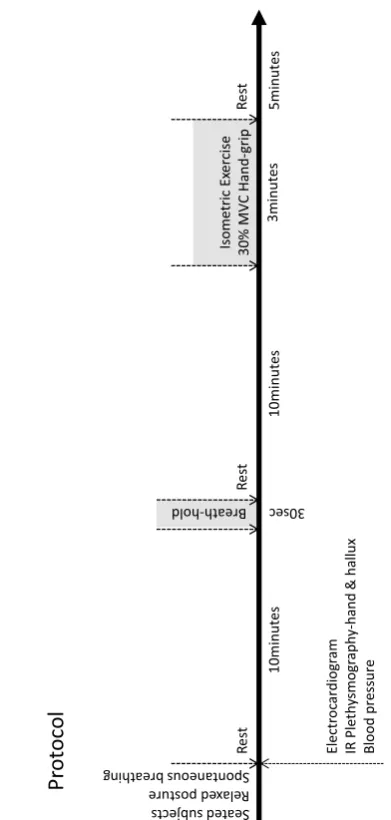
Blood flow and ECG were continuously recorded during 10 min rest period. Blood pressure was measured periodi-cally (5 min). At 10 min, following a maximal inhalation a 30 s breath-hold was undertaken (Fig. 1), followed by a return to spontaneous breathing for a further 10 min. Sub-jects were then asked to sustain a grip test using the non-dominant hand estimated at 30 % MVC for 3 min. Blood flow and ECG measurements were continued throughout (Fig. 1). Following a return to baseline measurements, sub-jects were provided with sugar-free fruit cordial containing a nitrate supplement (8 mg/kg body mass) and remained within the study facility for a further 2 h prior to repeating the above test protocol. Following this second test, subjects were supplied with citrulline tablets (3 g/day) and asked to consume tablets for 7 days, in one single dose. At 7 days,
subjects returned to the study facility to repeat the above test protocol (Fig. 1).
Data analysis
Using 30 s averages, heart rate (HR) HR maximum and minimum and HR range were estimated. Systolic (SP) and diastolic pressures (DP) were recorded, with mean arterial pressure (MAP) calculated (MAP = [SP − DP]/3 + DP) and rate-pressure product (RPP) calculated as systolic pressure x heart rate. Pulse pressure (PP) was calculated as PP = SP − DP. Heart rate variability (HRV) was esti-mated from ECG using proprietary software (Chart 8.0, AD Instruments, Oxford, UK). Optimal settings for well-defined R waves were as follows: range 2 mV, high pass 0.3 Hz, low pass 50 Hz, sampling rate 1 kHz. The trace was used
Breath-hold
Isometric
Ex
ercise
30% MVC Hand-grip
Re
st
Re
st
30sec
set
uni
m0
1
set
uni
m0
1
3minutes
Electr
oc
ardiog
ra
m
IR Plet
hy
smog
ra
ph
y-hand
& hallux
Blood pressure
Pr
otocol
Seat ed subjects xed po Rela stur e Spontaneous br eath ing
Re
st
5minutes
[image:3.595.318.514.53.464.2]to calculate (beats min−1) and R–R intervals (ms), as well as the relative duration of the cardiac cycle components (sampled at 1 kHz). A minimum of 500 consecutive heart beats were examined. Peripheral pulse wave analysis in the time domain was undertaken using proprietary software (Chart 8.0, AD Instruments, Oxford), as previously detailed (Korpas et al. 2009; Allen and Murray 2002). To estimate the time delay between contraction of the ventricle and pulse delivery to the thumb or hallux pulse time was meas-ured with regard to ECG. For 25 consecutive heart beats, pulse duration was measured as the duration between the R peak for an individual heart-beat and the pulse maximum for IR-plethysmograph recording for both thumb and Hal-lux. To estimate peripheral vascular compliance, the ratio of pulse amplitudes measured at the maximum and at the dicrotic notch was estimated for 25 consecutive heart beats at thumb (Klemsdal et al. 1996; Gunarathne et al. 2008).
Data are presented as mean ± SEM; statistical analysis was carried out using students ‘t’ test to examine the effects of nitrate or citrulline; analysis of variance (ANOVA) was used to quantify the effect of treatments with Bonferroni post hoc test to account for multiple comparisons.
Results
Anthropometry
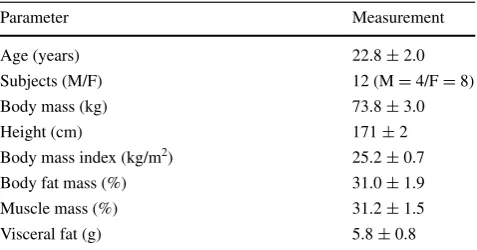
12 subjects (mean age 22.8 ± 2.0 years; Table 1) enrolled for the experiment and all subjects completed both the nitrate and citrulline arms of the experiments. Nitrate sup-plementation decreased systolic pressure 3 %, but this was not significantly different from untreated subjects (NS; Table 1). By contrast, citrulline decreased SP 6 % (p < 0.01; Table 2). Diastolic blood pressure (DP) was reduced 6 % (p < 0.05; Table 2) by nitrate whereas citrul-line decreased DP 14 % (p < 0.01; Table 2). By calcula-tion, mean arterial pressure (MAP) was decreased 5 % by nitrate treatment (p < 0.05; Table 2), whereas citrulline reduced MAP 10 % (p < 0.01; Table 2). Rate-pressure product (RPP) was unaffected by either nitrate or citrul-line treatment (NS for both; Table 2). Citrulline treatment decreased MVC by 7 % compared with untreated con-trols (p < 0.05; Table 2). Haemoglobin % oxygen satura-tion, measured by pulse oximetry, was unaffected by cit-rulline but was decreased 2 % by nitrate supplementation (p < 0.001; Table 2).
Electrocardiogram
For untreated subjects, breath-hold increased HR 7 % (NS; Fig. 2a) whilst isometric grip exercise increased HR 11 % (p < 0.05; Fig. 2a). This was accompanied by correspond-ing decreases in R–R interval followcorrespond-ing ISGE (p < 0.05; Fig. 2b). Nitrate supplementation led to an 11 % decrease in HR during breath-hold (NS; Fig. 2a) accompanied by a corresponding increase in R–R interval (NS; Fig. 2b). Cit-rulline increased HR 9 % (p < 0.05; Fig. 2a) and decreased R–R interval significantly (p < 0.05; Fig. 2b) for subjects
Table 1 Anthropometric characterisation of subjects
Parameter Measurement
Age (years) 22.8 ± 2.0
Subjects (M/F) 12 (M = 4/F = 8)
Body mass (kg) 73.8 ± 3.0
Height (cm) 171 ± 2
Body mass index (kg/m2) 25.2 ± 0.7
Body fat mass (%) 31.0 ± 1.9
Muscle mass (%) 31.2 ± 1.5
Visceral fat (g) 5.8 ± 0.8
Table 2 Effects of nitrate and
citrulline on cardiovascular parameters in human subjects
Measurements of cardiovascular parameters for subjects at rest. Data represent mean ± SEM for n= 12 subjects
ND not determined
Statistical significance represented as different from untreated subjects: * p < 0.05, ** p < 0.01, *** p < 0.001
Measurement Untreated Nitrate (8 mg/kg) Citrulline (3 g/day)
Systolic pressure (mmHg) 126.2 ± 3.3 122.1 ± 4.0 118.0 ± 3.7** Diastolic pressure (mmHg) 78.0 ± 4.0 72.9 ± 2.7* 67.6 ± 2.8** Mean arterial pressure (mmHg) 94.2 ± 3.3 89.3 ± 2.7* 84.4 ± 2.6**
Pulse pressure (mmHg) 48 ± 2 49 ± 4 50 ± 3
Heart rate (bpm) 76.9 ± 3.6 75.0 ± 3.0 78.0 ± 3.9
[image:4.595.51.290.365.490.2] [image:4.595.176.545.524.649.2]at rest. However, during both breath-hold and ISGE both HR (NS; Fig. 2a) and R–R interval (NS; Fig. 2b) were unchanged by citrulline supplementation.
Estimation of the domain-averaged durations for the cardiac events P, P-R, Q-T, Q-Tc, T, R-T, J-T and S-T was unchanged by either physiological intervention—breath-hold or ISGE—or by supplement—nitrate of citrulline (NS for all; data not shown). However, for subjects at rest, citrulline decreased QRS interval 5 % (p < 0.05; Fig. 2c), whilst QRS interval was unchanged following nitrate sup-plementation (NS; Fig. 2c).
Pulse interval
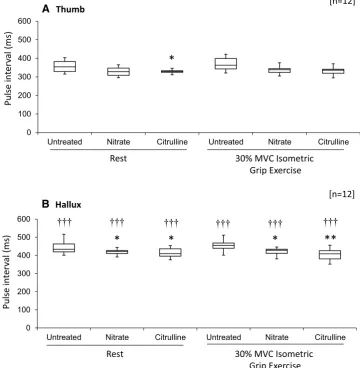
Pulse interval measured at the hallux was signifi-cantly greater than pulse interval measured at the thumb (p < 0.001; Fig. 3a, b). For subjects at rest, both nitrate and citrulline decreased pulse interval measured at the thumb 15 %, for nitrate treatment this did not reach statistical significance (NS; Fig. 3a), whereas for citrulline this was significantly different from untreated subjects (p < 0.05; Fig. 3a). For the hallux mean pulse interval was decreased 30 % by nitrate (p < 0.05; Fig. 3b) and decreased 35 % by
Fig. 2 Cardiac electrical
activity. Estimates of heart rate following nitrate and citrulline supplementation. Data represent maximum, 3rd quartile, median, 1st quartile and minimum HR (a). Estimates of cardiac R–R interval after nitrate or citrul-line at rest (b). Measured QRS complex duration in subjects following nitrate and citrulline supplementation (c). For further details see methods. Data represent mean ± SEM (n= 12 subjects). Statistical significance indicated as: different from untreated control: *p < 0.05: effect of isometric grip exercise †p < 0.05
0 20 40 60 80 100 120
Untreate
d
Nitrat
e
Citrulline Untreate
d
Nitrat
e
Citrulline Untreate
d
Nitrat
e
Citrulline Untreate
d
Nitrat
e
Citrulline
Control2
0 200 400 600 800 1000
Control1 Breath-hold Control2 30% MVC hand-grip Untreated Nitrate Citrulline
R-R Inte
rv
al
[image:5.595.207.545.58.533.2](ms)
[n=12]
[n=12]
[n=12]
0 10 20 30 40 50 60 70 80 90
Control1 Breath-hold Control2 30% MVC hand-grip Untreated Nitrate Citrulline
*
*
*
*
Heart
ra
te (bpm)
QR
S dur
aon
(ms)
p=0.055
B A
C
†
p ir g -d n a h C V M % 0 3 d
l o h -h t a e r B 1
l o r t n o C
citrulline (p < 0.05; Fig. 3b). Following ISGE, both nitrate and citrulline had no effect mean pulse interval measured at the thumb (NS for both; Fig. 3a) compared with untreated controls. However, mean pulse interval at the hallux was further decreased 35 % by nitrate (p < 0.05; Fig. 3b) and 55 % by citrulline (p < 0.01; Fig. 3b).
Peripheral IR plethysmography
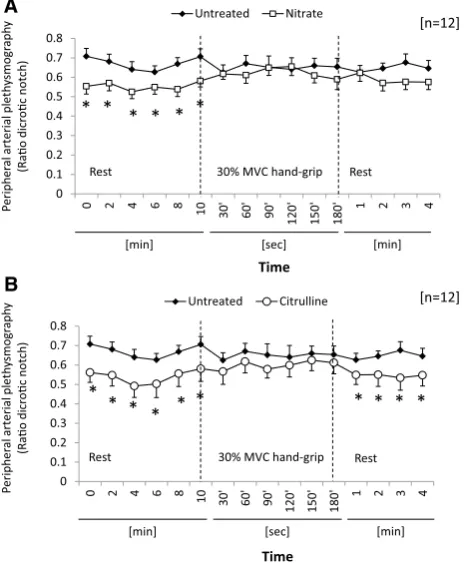
Compliance of the peripheral vasculature, estimated from relative peak height of the dicrotic notch to the peak pulse amplitude (pulse amplitude ratio-PAR), was calculated from peripheral pulse signal. For untreated subjects, PAR was unchanged as a result of 30 % MVC-ISGE (NS; Fig. 4a). Following nitrate supplementation, PAR decreased 15 % (p < 0.05; Fig. 4a) at rest (Time t= 0 to t= 10 min). How-ever, during ISGE this trend was lost (NS; Fig. 4a) and at completion of the exercise PAR showed a modest decrease to pre-exercise levels (NS; Fig. 4a). By contrast, citrulline supplementation significantly decreased PAR ~30 % during the rest period (p < 0.05; Fig. 4b); however, on the initiation
of isometric grip exercise at 30 % ISGE PAR increased rela-tive to untreated, such that it was not significantly different from the untreated controls (NS; Fig. 4b). During the sub-sequent recovery period, PAR declined following citrulline treatment and the significant difference from untreated sub-jects was restored (p < 0.05; Fig. 4b).
Heart rate variability
Heart rate variability (HRV) was estimated from ECG traces and data represented the balance of sympathetic out-puts as the ratio between low frequency and high frequency outputs (Fig. 5). For subjects at rest, nitrate treatment had no effect on sympathovagal balance (NS; Fig. 5); however, citrulline treatment increased LF/HF by one-third, imply-ing an increase in contribution from sympathetic nervous system (p < 0.05; Fig. 5). Irrespective of treatment, breath-hold increased sympathetic tone, measured as LF/HF ratio 4-fold (p < 0.001 for all; Fig. 5); however, neither nitrate nor citrulline had any additional effect on HRV estimates (NS; Fig. 5). ISGE at 30 % MVC did not increase measures
Fig. 3 Pulse interval for
periph-eral blood flow at thumb (a) and Hallux (b). Pulse interval was calculated as duration between R–R interval and peak peripheral pulse. (d). For further details, see methods. Data represent maximum, 3rd quar-tile, median, 1st quartile and minimum HR (n= 12 subjects). Statistical significance indicated as: different from untreated control: *p < 0.05, **p < 0.01: different from pulse interval at
the thumb †††p < 0.001 0 100 200 300 400 500 600
Untreated Nitrate Citrulline Untreated Nitrate Citrulline
0 100 200 300 400 500 600
Untreated Nitrate Citrulline Untreated Nitrate Citrulline
A Thumb
B Hallux
Rest 30% MVC Isometric
Grip Exercise
c ir t e m o s I C V M % 0 3 t
s e R
Grip Exercise
Pulse inte
rv
al
(ms)
Pulse inte
rv
al
(ms)
*
*
*
*
**
††† ††† ††† ††† ††† †††
[image:6.595.183.544.62.431.2]of sympathovagal balance compared with the correspond-ing controls; however, the one-third increase noted for cit-rulline compared with untreated subjects was preserved (p < 0.05; Fig. 5).
HR augmentation in response to exercise
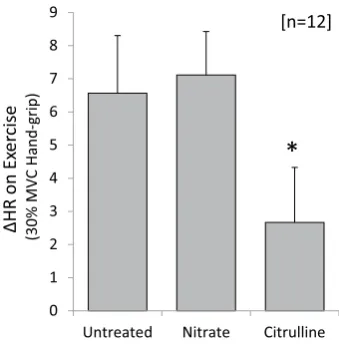
ISGE increased heart rate 6.6 ± 1.7 bpm for untreated subjects (Fig. 6). For nitrate-supplemented subjects, this increase was preserved, nitrate having no effect on HR
augmentation during exercise. By contrast, the increase in HR during exercise was 2.7 ± 1.7 bpm for citrulline-treated subjects and hence the augmentation in response to exercise was approximately halved by citrulline (p < 0.05; Fig. 6).
Discussion
Manipulation of the arginine–nitric oxide pathway has demonstrated the potential to improve cardiovascular func-tion (Wu and Meininger 2000) and we confirm that either acute nitrate supplementation or chronic citrulline supple-mentation decreased mean arterial pressure and diastolic pressure, implying a decrease in total peripheral resistance (Cowley et al. 1973). Despite the apparent hypotension, cardiac rate-pressure product (RPP) was unchanged sug-gesting that cardiac work was unchanged. For citrulline, the fall in blood pressure was of sufficient magnitude to induce tachycardia to preserve RPP. In addition, apparent blood flow velocity, measured at the hand and foot, was also increased. This occurred despite a decrease in blood pressure, implying an increase in peripheral vascular con-ductance (Levitt et al. 2015) and suggesting improved tis-sue oxygenation. We, therefore, accept our hypothesis for cardiovascular improvements following nitrate and citrul-line supplementation. Furthermore, assuming duplication of these effects in patients with HF we speculate that citrul-line may potentially increase peripheral oxygen delivery.
We note a decrease in haemoglobin oxygen saturation (SaO2) following nitrate consumption which we propose is a consequence of methaemoglobin (mtHb) formation (Pluta et al. 2011). In contrast, studies exploiting beetroot juice, rich in nitrate, note no metHb (Kapil et al. 2015) and we postulate that this may relate to the use of KNO3 salt in cordial removing any potential matrix effects of food products and increasing rates of uptake. The onset and reversal of mtHb formation were previously noted to be rapid following the start and termination of nitrate infusion (Pluta et al. 2011), suggesting that rates of nitrate assimila-tion may contribute to methaemoglobinaemia. Despite the 0
0.1 0.2 0.3 0.4 0.5 0.6
0.7 0.8
0 2 4 6 8 10
30
'
60
'
90
'
120' 150' 180' 1 2 3 4
Untreated Nitrate
0 0.1 0.2 0.3 0.4 0.5 0.6 0.7 0.8
0 2 4 6 8 10 30' 60' 90'
120' 150' 180' 1 2 3 4
Untreated Citrulline
A
B
* * * * * * *
* * *
Rest Rest
Rest Rest
30% MVC hand-grip
30% MVC hand-grip
[n=12]
[n=12]
Pe
ripher
al
arterial
plet
hy
smog
ra
ph
y
(Rao dicr
oc notch)
Pe
ripher
al
arterial
plet
hy
smog
ra
ph
y
(Rao dicr
oc notch)
Time
[min] [sec] [min]
Time
[min] [sec] [min]
* * * * * *
Fig. 4 Pulse Amplitude Ratio measured by infra-red
plethysmogra-phy. Effect of nitrate on pulse amplitude ratio (PAR) before and dur-ing isometric grip exercise (a). Effect of citrulline on PAR before and during isometric grip exercise (b). For further details, see methods. Data represent mean ± SEM (n= 12 subjects). Statistical signifi-cance indicated as: different from untreated control: *p < 0.05
Fig. 5 Estimate of
sympatho-vagal balance following nitrate and citrulline supplementation. Data represent heart rate varia-bility measurements made from ECG recordings for subjects at rest and during breath-hold and isometric grip exercise. For fur-ther details, see methods. Data represent mean ± SEM (n= 12 subjects). Statistical significance indicated as: different from untreated control: *p < 0.05
0 5 10 15 20 25
Rest Breath-hold Rest 30% MVC Hand-grip Untreated Nitrate Citrulline [n=12]
*
*
NS
*
Heart Rate
Va
riability
(L
F/
HF
ra
[image:7.595.54.288.60.342.2] [image:7.595.205.537.591.716.2]formation of mtHb, this reduction of SaO2 was asympto-matic (Pluta et al. 2011). Preservation of the pulse pressure despite decreases in diastolic pressure suggests that car-diac contractile performance, and hence stroke volume, is maintained and the decrease in MAP is a consequence of decreased peripheral resistance. Previous experiments dem-onstrated that both nitrate and citrulline supplementation induced acute vasodilatation in rodents (Chien et al. 2014), and increased nitric oxide production in vivo (Church-ward-Venne et al. 2014; Schwedhelm et al. 2007). Dietary nitrate decreased DP in as little as 3 days (Larsen et al.
2006) whilst citrulline use in humans decreased both SP and DP blood pressure following 14-days supplementation (Sanchez-Gonzalez et al. 2012; Figueroa et al. 2010). Fur-thermore, supplementation of citrulline in human subjects increased plasma arginine (Moinard et al. 2008, 2015) and enhanced the bioavailability of nitric oxide (Morita et al.
2014). Together these observations imply that both nitrate and citrulline have the potential to decrease BP through direct release of NO or the mobilisation of substrate for NOS. Perhaps critical for subjects with compromised car-diac performance, neither nitrate nor citrulline altered RPP suggesting that cardiac work was preserved; therefore, despite a decrease in R–R interval and the modest tachy-cardia noted for citrulline, the overall burden in tachy-cardiac mechanical performance was unchanged. Given that ‘rate work’ consumes more oxygen than increasing developed pressure (Hauton et al. 2015), indicates that citrulline may yield a modest increase in cardiac oxygen consumption.
Surprisingly, citrulline modestly decreased maximum voluntary contraction for ISGE. This was unexpected and
may result from the potential for excess nitric oxide to dis-rupt mitochondrial oxidative capacity (Bolanos et al. 1996; Clementi et al. 1998), but may also be a direct consequence of changes to blood pressure. Indeed, peak muscle blood flow is achieved at 30 % MVC-ISGE (Barnes 1980), and oxidative muscle performance is, in part, governed by blood pressure (Hobbs and McCloskey 1987).
Citrulline supplementation had only modest effects on cardiac electrical activity, including a small decrease in QRS interval duration for subjects at rest. Interestingly, when the apparent reduction in R–R interval is taken into account the QRS interval is preserved across all interven-tions, suggesting that our observations were a direct result of the modest tachycardia caused by citrulline. These obser-vations were in direct contrast to earlier studies showing a decrease in QTc interval (Kameda et al. 2011) following acute consumption of citrulline. Whilst exploiting the same citrulline dose as used in our current experiment, these observations were made after acute consumption of citrul-line (60 min) (Kameda et al. 2011) whilst our experiment demonstrates the effects of chronic citrulline consumption.
Estimates of blood velocity in the peripheral circulation measured from the pulse interval indicate that both exog-enous nitrate and citrulline increase the flow velocity meas-ured at both hand and foot. The origins of this increase in velocity may be different for both nitrate and citrulline. Nitrate, converted to nitric oxide, may increase the dilata-tion of vessels, decreasing the peripheral resistance. Evi-dence in support of this was the decreased diastolic pres-sure following nitrate consumption shown by ourselves and others (Levitt et al. 2015). The reduction in resistance with preserved cardiac performance, estimated as RPP, implies that flow and hence conductance have increased. Simi-lar observations have been made following arginine sup-plementation in HF patients implicating the production of exogenous NO in the reduction of systemic vascular resist-ance (Bocchi et al. 2000). By contrast, the modest tachy-cardia caused by consumption of citrulline may also con-tribute to increasing flow velocity. Previous experiments in an elderly male population suggest that citrulline had no effect on blood flow in skeletal muscle (Churchward-Venne et al. 2014), although these authors postulate that the lack of effect for citrulline noted in their experiment may result from an inability to mobilise sufficient arginine to boost NO production. Moreover, impaired arginine transport has also been noted in HF (Kaye et al. 2000). Given that cit-rulline also has the potential to cause vasodilatation, sec-ondary to an increase in plasma arginine (Moinard et al.
2008)—the substrate for nitric oxide synthase (NOS)—we cannot discriminate whether decreased vascular resistance or increased heart rate provides the greatest contribution to increases in flow velocity. Estimates of muscle oxygen utilisation measured using Near Infra-Red Spectroscopy
0 1 2 3 4 5 6 7 8 9
Untreated Nitrate Citrulline
HR
on Ex
er
cise
(30%
MVC Hand-grip)
[n=12]
*
Fig. 6 Augmentation in heart rate when transitioning from rest
[image:8.595.85.255.56.230.2](NIRS) have highlighted that both nitrate (Bailey et al.
2009) and citrulline (Bailey et al. 2015) may improve the efficiency of oxygen consumption during cycling exercise and, in consequence, may increase the time to exhaustion at fixed exercise loads. The origins of this improved effi-ciency (decreased oxygen extraction at fixed workloads) are unclear but may reflect a decrease in fractional oxygen extraction as a consequence of increased conductance, or increases in the efficiency of oxidative phosphorylation (Bailey et al. 2009, 2015).
The position of the dicrotic notch in the peripheral blood flow signal, estimated as PAR, reflected the general vas-cular tone in young adults (Klemsdal et al. 1996). Nitrate decreased the PAR at rest suggesting that a decrease in peripheral vascular tone (Bahra et al. 2012) was caused by nitrate or subsequent metabolites (Lund 1986). Previ-ous experiments demonstrate that this effect is dependent upon nitric oxide or potential metabolites as arterial infu-sion of nitric oxide synthase inhibitors blunted arterial elasticity that was restored by arginine infusion (McVeigh et al. 2001). Furthermore, infusion of GTN increased arte-rial compliance (McVeigh et al. 2001).This would, in part, support the observations of potential increases in flow velocity as a consequence of decreased flow resistance. Interestingly, this effect was lost on the initiation of hand-grip exercise raising the PAR to levels noted for untreated subjects. On relaxation, the PAR failed to return to pre-exercise levels suggesting that generation of nitric oxide from nitrate was not restored to pre-test levels. The origins of this are unclear, but given that the half-time for NO is dependent upon pH, tissue oxygenation and the availability of nitrate (Kelm 1999) we cannot exclude the contribution from isometric exercise burden to NO breakdown. Indeed, superoxide radicals produced as a consequence of intense exercise may directly remove NO (Li and Forstermann
2000; Silvestro et al. 2002).
By contrast, citrulline, whilst decreasing vascular tone before isometric exercise, went on to restore reduced vas-cular tone directly after exercise. Previous experiments indicate that citrulline supplementation at similar doses to those used for our experiment decreased arterial stiff-ness in middle-age men (Ochiai et al. 2012), implying that a greater effect may be provided by decreased resist-ance (Sanchez-Gonzalez et al. 2012; Figueroa et al. 2010). This dichotomy may be a consequence of differences in the mechanism of action for both nitrate and citrulline. Namely, citrulline is an allosteric inhibitor of arginase enzyme, hence preventing the endothelial enzymic break-down of arginine, the substrate for NOS, and raising the local arginine concentration (Berkowitz et al. 2006; Bailey et al. 2015) without increasing the plasma concentration of nitrate/nitrite (Hickner et al. 2006: Bailey et al. 2015). This may be less sensitive to prevailing effects of oxygen
tension, superoxide production and pH than non-enzymic reduction of nitrate.
Examination of the heart rate variability (HRV) to quan-tify the balance between sympathetic and parasympathetic tone, indicated by the LF/HF ratio, suggests that nitrate had no effect on the sympathovagal balance in young adults. By contrast, citrulline increased the level of sympathetic tone modestly at both rest and during exercise. Such changes may be responsible for the modest tachycardia we noted for subjects consuming citrulline. Similar observations were noted for previous experiments exploiting the same dose of citrulline measured after only 60 min, but no direct meas-ure of HR was made during these experiments (Kameda et al. 2011). Interestingly, the impact on sympathetic tone was modest as a challenge to strongly stimulate the sym-pathetic NS (a breath-hold) had no effect on the sympatho-vagal balance when compared with untreated subjects. The modest stimulus presented by isometric exercise confirmed the effect of citrulline on sympathetic tone and was cor-roborated by the lower augmentation in HR noted during exercise for citrulline-treated subjects.
Experimental shortcomings
Conclusions
We demonstrate that both nitrate and citrulline decrease systemic blood pressure and increase vascular conductance, with the potential to increase peripheral tissue oxygena-tion. These effects occur without altering cardiac electri-cal activity suggesting that they may be safe adjuvants to cardiac therapies for patients with heart failure. Citrulline modestly alters sympathovagal balance to increase sympa-thetic tone but this does not alter the vascular response to either citrulline or nitrate. Future experiments aim to inves-tigate the effects of both nitrate and citrulline on peripheral tissue oxygenation and exercise capacity in HF and deter-mine whether citrulline may perpetuate the increases in sympathetic tone noted in HF.
Acknowledgments The authors wish to acknowledge the generous contribution made to the study by all the volunteers who participated in the experiments. In addition, the financial support of the School of Food Science and Nutrition, University of Leeds is gratefully acknowledged.
Compliance with ethical standards
Conflict of interest The authors declare no conflict of interests.
Open Access This article is distributed under the terms of the Crea-tive Commons Attribution 4.0 International License ( http://crea-tivecommons.org/licenses/by/4.0/), which permits unrestricted use, distribution, and reproduction in any medium, provided you give appropriate credit to the original author(s) and the source, provide a link to the Creative Commons license, and indicate if changes were made.
References
Allen J, Murray A (2002) Age-related changes in peripheral pulse timing characteristics at the ears, fingers and toes. J Human Hypertens 16:711–717
Bahra M, Kapil V, Chosh PS, Ahluwalia A (2012) Inorganic nitrate ingestion improves vascular compliance but does not alter flow-mediated dilatation in healthy volunteers. Nitric Oxide 25:197–202
Bailey SJ, Winyard P, Vanhatalo A, Blackwell JR, DiMenna FJ, Wilk-erson DP, Tarr J, Benjamin N, James AM (2009) Dietary nitrate supplementation reduces the O2 cost of low-intensity exercise and enhances tolerance to high-intensity exercise in humans. J Appl Physiol 107:1144–1155
Bailey SJ, Blackwell JR, Lord T, Vanhatalo A, Winyard PG, Jones AM (2015) L-citrulline supplementation improves O2 uptake kinetics and high-intensity exercise performance in humans. J Appl Physiol 119:385–395
Barnes WS (1980) The relationship between maximum isometric strength and intramuscular circulatory occlusion. Ergonomics 23:351–357
Battock DJ, Levitt PW, Steele PP (1976) Effects of isosorbide dini-trate and nitroglycerin on central circulatory dynamics in coro-nary artery disease. Am Heart J 92:455–458
Berkowitz DE, White R, Li D, Minhas KM, Cernetich A, Kim S, Burke S, Shoukas AA, Nyhan D, Champion HC, Hare JM (2006) Arginase reciprocally regulates nitric oxide synthase activity and contributes to endothelial dysfunction in aging blood vessels. Circulation 108:2000–2006
Bocchi EA, De Moraes AV, Esteves-Filho A, Bacal F, Auler JO, Car-mona MJ, Belloti G, Ramires AF (2000) l-Arginine reduces heart rate and improves hemodynamics in severe congestive heart failure. Clin Cardiol 23:205–210
Bolanˇos JP, Heales SJR, Peuchan S, Barker JE, Land JM, Clark JB (1996) Nitric oxide-mediated mitochondrial damage: a poten-tial neuroprotective role of glutathione. Free Rad Biol Med 21:995–1001
Burke JH, Ehlert FA, Kruse JT, Parker MA, Goldberger JJ, Kadish AH (1997) Gender-specific differences in the QT interval and the effect of autonomic tone and menstrual cycle in healthy adults. Am J Cardiol 79:178–181
Chien SJ, Lin KM, Kuo HC, Huang CF, Lin YJ, Huang LT, Tain YL (2014) Two different approaches to restore renal nitric oxide and prevent hypertension in young spontaneously hypertensive rats: l-citrulline and nitrate. Trans Res 163:43–52
Churchward-Venne TA, Cotie LM, MacDonald MJ, Mitchell CJ, Prior T, Baker SK, Phillips SM (2014) Citrulline does not enhance blood flow, microvascular circulation, or myofibrillar protein synthesis in elderly men at rest or following exercise. Am J Physiol 307:E71–E83
Clementi E, Brown GC, Feelisch M, Moncada S (1998) Persistent inhibition of cell respiration by nitric oxide: crucial role of s-nitrosylation of mitochondrial complex I and protective action of glutathione. Proc Nat Acad Sci USA 95:7631–7636
Cowley AW, Liard JF, Guyton AC (1973) Role of the baroreceptor reflex in daily control of arterial blood pressure and other vari-ables in dogs. Circ Res 32:564–576
Curtis KJ, O’Brien KA, Tanner RJ, Polkey JI, Minnion M, Feelisch M, Polkey MI, Edwards LM, Hopkinson NS (2015) Acute die-tary nitrate supplementation and exercise performance in COPD: a double-blind, placebo-controlled, randomised controlled pilot study. PLoS One. doi:10.1371/journal.pone.0144504
Figueroa A, Trivino JA, Sanchez-Gonzalez MA, Vicil F (2010) Oral L-citrulline supplementation attenuated blood pressure response to cold pressor test in young men. Am J Hypertens 23:12–16. doi:10.1038/ajh.2009.195
Figueroa A, Sanchez-Gonzalez MA, Wong A, Arjmandi BH (2012) Watermelon extract supplementation reduces ankle blood pres-sure and carotid augmentation index in obese adults with pre-hypertension or pre-hypertension. Am J Hypertens 25:640–643. doi:10.1038/ajh.2012.20
Franciosa JA, Blank RC, Cohn JN (1978) Nitrate effect on cardiac output and left ventricular outflow resistance in chronic conges-tive heart failure. Am J Med 64:207–213
Gunarathne A, Patel JV, Hughes EA, Lip GYH (2008) Measurement of stiffness index by digital volume pulse analysis technique: clinical utility in cardiovascular disease risk stratification. Am J Hypertens 21:866–872
Hauton D, Winter J, Al-Shammari A, Gaffney EA, Evans RD, Eggin-ton S (2015) Changes to both cardiac metabolism and per-formance accompany acute reductions in functional capillary supply. Biochim Biophys Acta 1850:681–690. doi:10.1016/j. bbagen.2014.12.014
Hickner RC, Tanner CJ, Evans CA, Clark PD, Haddock A, Fortune C, Geddis H, Waugh W, McCammon M (2006) L-citrulline reduces time to exhaustion and insulin response to a graded exercise test. Med Sci Sports Exerc 38:660–666
Imhof PR, Ott B, Franhauser P, Hodler J (1980) Difference in nitro-glycerin dose-response in the venous and arterial beds. Eur J Clin Pharmacol 18:455–460
Kameda N, Okigawa T, Kimura T, Fujibayashi M, Asada T, Kinoshita R, Baba S, Morita M, Morishita K, Moritani T (2011) The effect of L-citrulline ingestion on ECG QT interval and autonomic nervous system activity. J. Physiol. Anthropol. 30:41–45 Kapil V, Khambata RS, Robertson A, Caulfield MJ, Ahluwalia A
(2015) Dietary nitrate provides sustained blood pressure low-ering in hypertensive patients. Hypertension 65:320–327. doi:10.1161/HYPERTENSIONAHA.114.04675
Kaye DM, Ahlers BA, Autelitano DJ, Chin-Dusting JPF (2000) In vivo and in vitro evidence for impaired arginine transport in human heart failure. Circulation 102:2707–2712
Kelly RP, Gibbs HH, O’Rouke MF, Daley JE, Mang K, Morgan JJ, Avolio AP (1990) Nitroglycerin has more favourable effects on left ventricular afterload than apparent from measurement of pressure in a peripheral artery. Eur Heart J 11:138–144
Kelm M (1999) Nitric oxide metabolism and breakdown. Biochim Biophys Acta 1411:273–289
Klemsdal TO, Mundal HH, Gjesdal K (1996) Effects of carvedilol and atenolol on arterial pulse curves (plethysmography) and finger temperature after hand cooling. Eur J Clin Pharmacol 50:483–489
Korpas D, Hálek J, Doležal L (2009) Parameters describing the pulse wave. Physiol Res 58:473–479
Larsen FJ, Ekblom B, Sahlin K, Lundberg JO, Weitzberg E (2006) Effects of dietary nitrate on blood pressure in healthy volunteers. New Eng J Med 355:2792–2793
Larsen FJ, Weitzberg E, Lundberg JO, Ekblom B (2010) Dietary nitrate reduces maximal oxygen consumption while maintain-ing work performance in maximal exercise. Free Rad Biol Med 48:342–347
Leier CV, Huss P, Magorien RD, Unverferth DV (1983) Improved exercise capacity and differing arterial and venous tolerance dur-ing chronic isosorbide dinitrate therapy for congestive heart fail-ure. Circulation 67:817–822
Levitt EL, Keen JT, Wong B (2015) Augmented reflex cutaneous vasodilatation following short-term dietary nitrate supplementa-tion in humans. Exp Physiol 100:708–718
Li H, Főrstermann U (2000) Nitric oxide in the pathogenesis of vascular disease. J Pathol 190:620–650. doi:10.1002/ (SICI)1096-9896(200002)190
Lidder S, Webb AJ (2012) Vascular effects of dietart nitrate (as found in green leafy vegetables and beetroot) via the nitrate-nitrite nitric oxide pathway. Br J Clin Pharmacol 75:677–696. doi:10.1111/j.1365-2125.2012.04420.x
Lund F (1986) Digital pulse plethysmography (DPG) in studies of the hemodynamic response to nitrates: a survey of recording meth-ods and principles of analysis Acta Pharmacol. Toxicol. 59:79– 96. doi:10.1111/j.1600-0773.1986.tb02551.x
McVeigh G, Allen PB, Morgan DR, Hanratty CG, Silke B (2001) Nitric oxide modulation of blood vessel tone identified by arte-rial waveform analysis. Clin Sci 100:387–393
Minson CT, Halliwill JR, Young TM, Joyner MJ (2000) Influence of the menstrual cycle on sympathetic activity, baroreflex sensi-tivity, and vascular transduction in young women. Circulation 101:862–868
Moinard C, Nicolis I, Neveux N, Darquy S, Bénazeth S, Cynober L (2008) Dose-ranging effect of citrulline administration on plasma amino acids and hormonal patterns in healthy subjects: the citrudose pharmacokinetic study. Br. J. Nutrition 99:855– 862. doi:10.1017/S000&114507841110
Moinard C, Maccario J, Walrand S, Lasserre V, Marc J, Boirie Y, Cynober L (2015) Arginine behaviour after arginine or citrul-line administration in older subjects. Br J Nutr. doi:10.1017/ S0007114515004638
Morita M, Hayashi T, Ociai M, Maeda M, Yamaguchi T, Ina K, Kuzuya M (2014) Oral supplementation with a combination of l-citrulline and l-arginine rapidly increases plasma l-arginine concentration and enhances NO bioavailability. Biochem Bio-phys Res Comm 454:53–57
Ochiai M, Hayashi T, Morita M, Ina K, Maeda M, Watanabe F, Morishita K (2012) Short-term effects of l-citrulline supple-mentation on arterial stiffness in middle-aged men. Int J Cardiol 155:257–261
Pluta RM, Oldfield EH, Bakhtian KD, Fathi AR, Smith RK, DeV-room HL, Nahavandi M, Woo S, Figg WD, Lonser RR (2011) Safety and feasibility of long-term intravenous sodium nitrite infusion in healthy volunteers. PLoS One 6:e14504. doi:10.1371/ journal.pone.0014504
Rammos C, Hendgen-Cotta UB, Sobierajski J, Bernard A, Kelm M, Rassaf T (2014) Dietary nitrate reverses vascular dysfunction in older adults with moderately increased cardiovascular risk. J Am Coll Cardiol 63:1584–1586
Sanchez-Gonzalez MA, Koutnik AP, Ramirez K, Wong A, Figueroa A (2012) The effects of short-term l-citrulline supplementation on wave reflection response to cold exposure with concurrent iso-metric exercise. Am J Hypertens. doi:10.1093/ajh/hps052 Schwedhelm E, Maas R, Freese R, Jung D, Lukacs Z, Jambrecina A,
Spickler W, Schulze F, Bőger RH (2007) Pharmacokinetic and pharmacodynamics properties of oral l-citrulline and l-arginine: impact on nitric oxide metabolism. Br J Clin Pharmacol 65:51–59 Siervo M, Lara J, Ogbonmwan I, Mather JC (2013) Inorganic nitrate
and beetroot juice supplementation reduces blood pressure in adults: a systematic review and meta-analysis. J Nutr 143:818– 826. doi:10.3945/jn.112.170233
Silvestro A, Scopacasab F, Olivaa G, de Cristofarob T, Iulianoc L, Brevettia G (2002) Vitamin C prevents endothelial dys-function induced by acute exercise in patients with intermit-tent claudication. Atherosclerosis 165:277–283. doi:10.1016/ S0021-9150(02)00235-6
Tannenbaum SR (1979) Nitrate and nitrite: origin in humans. Science 205:1334–1337
Vanhatalo A, Bailey SJ, Blackwell JR, DiMenna FJ, Pavey TG, Wilk-erson DP, Benjamin N, Winyard PG, Jones AM (2010) Acute and chronic effects of dietary nitrate supplementation on blood pres-sure and the physiological responses to moderate-intensity and incremental exercise. Am J Physiol 299:R1121–R1131
Wu G, Meininger CJ (2000) Arginine nutrition and cardiovascular function. J Nutr 130:2626–2629