1
Expert judgement in resource forecasting: insights
from the application of the Delphi method
Abigail Hird ([email protected]) University of Strathclyde, Glasgow
Laura Kreiling ([email protected]) University of Strathclyde, Glasgow
Abstract
Through application in a world-leading automotive business, this paper explores the practicalities of applying a new method for forecasting resource requirements in the absence of data. The method involves a one off effort to capture expert knowledge in a very structured fashion leading to the formation of regression equations for prediction. Creating such models creates a new conundrum: how can quantitative forecasting models, constructed through structured expert estimations, be validated and accepted in the absence of data? We employ Delphi and find that, with adaptation, it can lead to acceptance of the models generated using the new data-less method.
Keywords: Expert judgement, Delphi method, resource forecasting
Introduction
Resource forecasting methods are traditionally based on either estimations or forecasting models (Armstrong, 2005). Forecasting models, in all their various guises, offer significant advantages over estimation based methods. However, they are often either very generic in nature, inappropriate to scope or rely upon an abundance of legacy project data (Hird, 2015). Estimation-based methods on the other hand are subjective, prone to bias and errors, lack transparency and consistency and are expensive to generate and retain (Rush and Roy 2001, Hird et al 2015).
2
and quantity is rarely available in practice. Consequently, with no feasible alternative, managers and planners have been forced to rely upon unwieldy expert estimations.
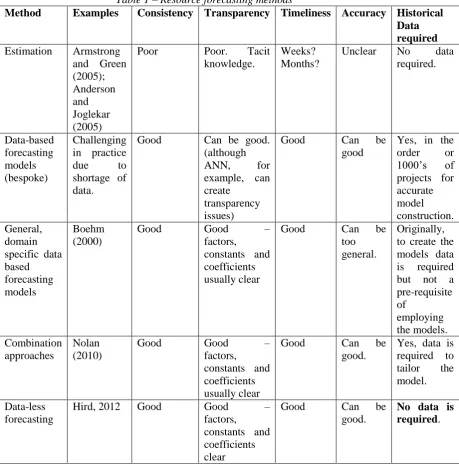
[image:2.595.93.553.161.630.2]Table 1 provides a summary of approaches to forecasting resource requirements.
Table 1 – Resource forecasting methods
Method Examples Consistency Transparency Timeliness Accuracy Historical Data required Estimation Armstrong
and Green (2005); Anderson and Joglekar (2005)
Poor Poor. Tacit knowledge.
Weeks? Months?
Unclear No data required. Data-based forecasting models (bespoke) Challenging in practice due to shortage of data.
Good Can be good. (although ANN, for example, can create
transparency issues)
Good Can be good
Yes, in the order or 1000’s of projects for accurate model construction. General,
domain specific data based forecasting models
Boehm (2000)
Good Good –
factors, constants and coefficients usually clear
Good Can be too general.
Originally, to create the models data is required but not a pre-requisite of employing the models. Combination approaches Nolan (2010)
Good Good –
factors, constants and coefficients usually clear
Good Can be good.
Yes, data is required to tailor the model.
Data-less forecasting
Hird, 2012 Good Good – factors, constants and coefficients clear
Good Can be good.
No data is required.
We have found that the data-less forecasting method leads to significant practical benefits. For example, planning time is reduced from an order of weeks to minutes and; improvements to accuracy, transparency, consistency and decision-making capability are realised.
3
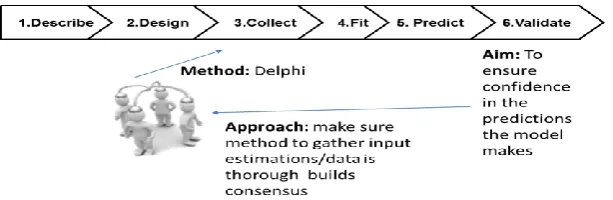
[image:3.595.146.453.124.224.2]for use in practice. An overview of the model building process and the context of the contribution offered by this paper is included in Figure 1.
Figure 1– This paper focuses on the approach and application of Delphi in Stage 3. Collect with a view to enabling confidence in model predictions (part of Stage 6. validation).
In order for the forecasting models to be accepted for use in practice, it was clear to the researchers that establishing confidence in the data used in the ‘collect’ phase was key and that a technique with the following criteria would have to be employed:
Allow for subjective opinion to be quantified, considered and discussed
Lead to consensus, understanding and agreement
Not too onerous or time consuming (resource is scarce and will be subject to multiple demands)
Allow for transparency and traceability (to help build confidence)
Low degree of technical knowledge required to replicate (so new models can be developed and existing models can be developed further by staff once the facilitator leaves the company).
To address the criteria listed above, techniques and methods in group decision processes and demand forecasting were reviewed, the Delphi method was selected. The Delphi method is supported by Meyer and Booker (2001) who emphasize the criticality of expert judgement in situations when other sources, for example legacy data, are unavailable.
Delphi is an established nominal group technique to aid judgement under uncertainty and makes best use of available information rather than creating new knowledge (Bolger and Wright 2011, Powell 2003). It has been used in applied research to develop, identify, forecast and validate (Skulmoski 2007). Consequently, the purpose of this research is to ensure that the models developed are accepted and perceived as valid and sensible by users.
4 Pre-intervention
Prior to the intervention, resource demand for each project was estimated manually by a single engineer. This could take five days of effort. The process occurs twice: first at project bidding stage (when information about the scope is relatively vague) and then again, demand estimations are reviewed and reworked, in instances where the contract is secured. This estimation process requires allocating resource requirements to each individual section of the vehicle and, for each section of the vehicle, against each activity. A template, referred to as ‘The Section Matrix’ is used to capture these estimations. Populating the section matrix manually takes approximately one week and involves the effort of several managers.
The proposed approach
Models will be created in what will be a one off effort (as the businesses change, intermittent updates may be required). The models, created using the approach developed by Hird (2012), are essentially regression models for resource demand based on project characteristics (the sort of characteristics considered during expert estimation). Each cell on the section matrix will be associated with a separate regression model. Although the variables within each model across the matrix are likely to be similar, the values for constants and coefficient’s vary significantly.
Rather than obtaining the unscrutinised estimates of one individual expert to construct the model, the plan was to use Delphi method to gather a range of estimations for each scenario and, through anonymous feedback of results and a process of iteration, establish consensus. The researchers would then create the predictive models and then present back to the group for further evaluation and adjustment. The models would be compared with any data available and confidence in model use would be agreed and established before the models would ‘go-live’.
Intended procedural steps
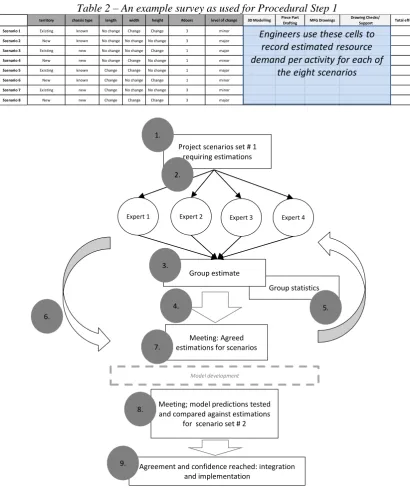
Each of the experts asked to provide estimations for hypothetical-scenario projects in the form of a survey. Separate scenarios generated for each set of bus sections. Estimations describe Mechanical Engineering resource in man weeks at an activity level. Activities are, for example, modelling, drafting, drawing, checks. An example survey is included in Table 2. Procedural steps are detailed in Figure 2.
Procedural steps:
1. Surveys emailed to experts who have been briefed on the expectations described in Table 2.
2. Individual responses received by the researcher. Files anonymised and stored. 3. When all responses received, a group estimate is generated. The group estimate
is the average from all individual responses. The median, minimum, maximum standard deviation and coefficient of variation calculated.
4. Feedback sent to all participants in an Excel file which contains their individual estimate, the group estimate and statistical data.
5. Participants given one week to confirm or revise their estimates.
6. When all responses received, a revised group estimate is generated and statistical data describing the range of responses is created as in step 4.
5
reached the final group estimations are used to develop predictive regression models.
[image:5.595.90.501.180.676.2]8. Meeting held with participating experts to apply the developed model to a second set of hypothetical project scenarios. Methods asked to estimate resource requirements for hypothetical project scenarios. These unaided estimations are compared with the predictions made using the models.
Table 2 – An example survey as used for Procedural Step 1
Figure 2 – The intended approach to ensuring agreement with, confidence in and acceptance of the models
An early adjustment – creating three sets of models
The original intention was to create one set of models for Mechanical Engineering resource but it quickly became apparent that within Mechanical Engineering three
territory chassis type length width height #doors level of change 3D Modelling Piece Part
Drafting MFG Drawings
Drawing Checks/
Support Total effort
Scenario 1 Existing known No change Change Change 3 minor
Scenario 2 New known No change No change No change 3 major
Scenario 3 Existing new No change No change Change 1 major
Scenario 4 New new No change Change No change 1 minor
Scenario 5 Existing known Change Change No change 1 major
Scenario 6 New known Change No change Change 1 minor
Scenario 7 Existing new Change No change No change 3 minor
Scenario 8 New new Change Change Change 3 major
Engineers use these cells to record estimated resource demand per activity for each of
the eight scenarios
Group statistics Project scenarios set # 1
requiring estimations
Expert 1
Group estimate
Meeting: Agreed estimations for scenarios
Expert 2 Expert 3 Expert 4 1.
2.
3.
4. 5.
6.
7.
Model development
Meeting; model predictions tested and compared against estimations
for scenario set # 2
Agreement and confidence reached: integration and implementation
6
different sets existed: one for each product platform. This emerged when establishing the variables for inclusion in the model: there was disparity between the three groups (this came as a surprise to the groups themselves as they had never previously reflected on the process or the fashion in which other people estimated). Not only the resource effort for vehicle sections and some sections themselves, but also the factors driving resource demand differs between each product platform. Consequently, separate models were developed for Mechanical resource in line with the differing expertise that is associated with each product platform. During estimation, it turned out that the three groups differed in terms of how they approached the model building process which will be discussed next.
Case study results
Models were constructed for each of the three product platforms independently. Only in the final stages of integration and training were the groups brought together. A summary of each of the cases is provided below.
Case A
Models for 14 separate vehicle sections were created with Group A.
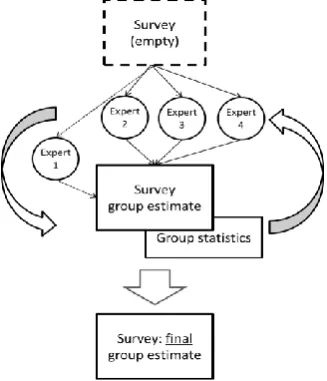
To begin Group A followed the procedure with either one or two rounds of Delphi estimation carried out before moving to model development. Directed by the team, focus was placed on Standard deviation in responses and the creation of a heat-map to determine whether the degree of consensus was acceptable or whether further revision was required.
Half way through the process Group A abandoned the individual estimation approach and created adjustments to individual estimations in meetings rather than undergoing additional rounds of Delphi.
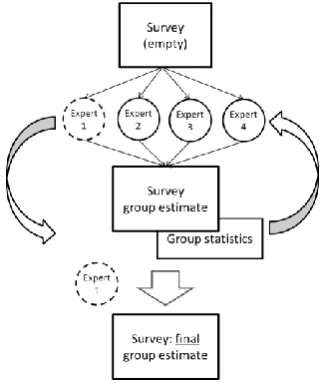
[image:6.595.216.377.553.745.2]Rather than generating estimations on an activity level, group A decided that it was most appropriate to estimate total resource required across activities and then divide using a ratio across each of the activities. This is a time saving measure but one which the team often use in practice. A summary of the steps for Group A is provided in Figure 3.
7
The availability of all Case A experts proved to be a challenge. Expert 1 line managed the other three experts and stepped in and out of the process. This wasn’t deemed to inhibit proceedings although the experts were perplexed by the anonymity of the process: the team associated with Case A pushed for open discussion around estimations. They were keen to be able to reflect more openly on what they had estimated and A pushed for open discussion around estimations
Case B
Models for 13 separate vehicle sections were created with Group B .
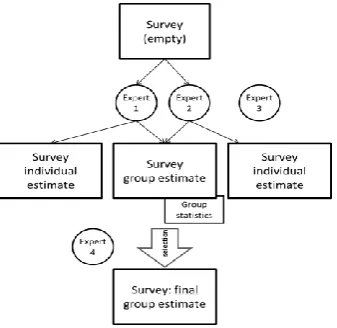
Group B adopted a fairly consistent approach across all the models developed and, adhered closely to the prescribed method. One or two rounds of Delphi were conducted and standard deviation and heat maps were used as the key means of establishing whether consensus had been reached or otherwise.
Group B adjusted the project scenarios presented. This can have detrimental effects on the underlying predictive modelling method but in this case, through negotiation with the researcher, a compromise was reached that protected the integrity of the method and allowed the Engineer’s to be comfortable in the estimations they were making.
[image:7.595.216.380.541.732.2]Expert 1 became engaged in other activities and consequently delayed progression for a period of time. Expert 3 was less engaged than the other experts and was slow to provide estimates in response to the hypothetical project scenarios. Group B were the only group to estimate on the activity level. Consequently, they were required to complete a larger volume of estimations and the whole process was relatively effort intensive for the participants. This seemed to have an effect on the levels of enthusiasm for model development within Group B and it wasn’t until the predictive model was created in the final stages of model building that confidence and commitment emerged. A summary of the steps followed for case B is provided in Figure 4.
8 Case C
Models for 14 separate vehicle sections were created with Group C.
In the case of Group C, the experts were extremely transient. Expert 1 and Expert 2 did not conduct estimations simultaneously. Expert 1, a long-serving engineer left the company shortly after the project started and Expert 2 only became engaged towards the end of the project. Expert 3 delayed the process: he was consistently commitment throughout but became distracted by other business priorities. Expert 4 did not participate in providing estimations but was involved in decisions concerning structuring the model, determining consensus and proceeding. The procedure followed by Group C was not recognisable as Delphi in any way. There was no iteration or sharing of anonymised information. Experts carried out estimations independently and these were reviewed (in discussions that didn’t always include them) in order to progress. Striving to complete the model building process amidst lively on-going business activity resulted in significant challenges but in this busy environment, having forecasting models to save time and effort is seen as particularly valuable. The positive results from other two groups of Mechanical Engineers (Group A and Group B) spurred this lagging team on. A summary of the steps followed for case B is provided in Figure 5.
[image:8.595.215.384.401.565.2]Similar to Case A, this team also estimated a total level rather than at an individual activity level, using a ratio to spread the total across activities.
Figure 5 – The approach adopted by Group C
Discussion
Although the methodology, as intended, was not strictly adhered to, the ethos of consensus allowed the development of a model which the Engineers and planning team have contributed to and thus ‘bought-in-to’. The bespoke development to suit the idiosyncrasies of each individual team means the models are a true reflection of how they think and plan. Each team is confident in and enthusiastic about employing the method in practice. Some responses are:
9
Engineer from Group B (during course of model review)
“The forecasting tool is coming out in the right ball park. I look forward to using it on the first live projects”
Engineer from Group A (during validation)
“It will help us so much going forward to get the enquiries out of the way faster”
Engineer from Group C
Building models in practice over a period of eleven months has brought additional challenges to bear.
Since the inception of the project, the company has undergone significant restructuring. ‘Experts’ from each Engineering group were often new in post or transferred out to another functional area during the project. Although this created challenges in terms of maintaining momentum and securing resource to generate estimations, the model building process itself helped integrate new members into teams by exposing them to discussions about what drives resource demand that wouldn’t have otherwise occurred. Similarly, the expertise of experts transitioning out of teams was captured in model form before they left. In addition to ‘just’ forecasting, we have found that the method developed by Hird (2012) offers significant knowledge capture capability.
Anderson and Joglekar (2005) postulate that resource information is central to all planning decisions in New Product Development. Despite this, generating resource information is traditionally labour intensive, inefficient and, in some cases, wildly inaccurate endeavour. We found that those responsible for planning associated a sense of futility with their efforts and rarely discussed or considered how the process as a whole could be improved. The exercise of model creation has simulated discussion and evoked endeavours towards improved process consistency and efficiencies. Engineers have appreciated the opportunity to transfer knowledge on planning techniques between teams.
Conclusions
A consensus based method has enabled the development of a forecasting tool which is accepted and useful. Furthermore, benefits that we did not anticipate have emerged including the ability to capture expert knowledge, to train new team members and to improve planning generally through discussion and openness. Rather than seeking to adopt a prescriptive Delphi method, in future interventions we will look to develop a similar consensus based approach idiosyncratic to each expert group.
10 References
Anderson, E.G. and Joglekar, N.R., 2005. “A hierarchical product development planning framework” Production and Operations Management, 14(3), pp.344-36 Armstrong J. C. and Green K. C., “Demand Forecasting: Evidence Based Methods”
(No. 24/05). Monash University, Department of Econometrics and Business Statistics
Boehm, B.W., Madachy, R. and Steece, B., 2000. Software cost estimation with Cocomo II with Cdrom. Prentice Hall PTR
Bolger, F. and Wright, G. (2011), “Improving the Delphi process: Lessons from social psychological research”, Technological Forecasting and Social Change, Vol.78, Iss.9, pp.1500-1513
Delany, S.J. and Cunningham, P., 1999. The limits of CBR in software project estimation. Trinity College Dublin, Department of Computer Science
Hird, A. (2012), A systems approach to resource planning in new product development, An Eng.D Thesis, University of Strathclyde, Glasgow.
Hird, A. et al (2015), “New product development resource forecasting”, R&D Management, first published online 12 May 2015.
Meyer M.A. and Booker, J.M. (2001), Eliciting and Analyzing Expert Judgement, Society for Industrial and Applied Mathematics
Nolan, A.J. and Abrahão, S., 2010. Dealing with cost estimation in software product lines: experiences and future directions. In Software Product Lines: Going Beyond (pp. 121-135). Springer Berlin Heidelberg.
Powell, C. (2003), “The Delphi technique: myths and realities”, Journal of advanced nursing, Vol.41, Iss.4, pp.376-382.
Rush, C. and Roy, R. (2001), “Expert judgement in cost estimating: Modelling the reasoning process”, Concurrent Engineering, Vol.9, pp.271-284.