Theses Thesis/Dissertation Collections
2012
Virtualization and shared Infrastructure data
storage for IT in Kosovo institutions
Gani Zogaj
Follow this and additional works at:http://scholarworks.rit.edu/theses
This Master's Project is brought to you for free and open access by the Thesis/Dissertation Collections at RIT Scholar Works. It has been accepted for inclusion in Theses by an authorized administrator of RIT Scholar Works. For more information, please [email protected].
Recommended Citation
AMERICAN UNIVERSITY IN KOSOVO
MASTER OF SCIENCE IN PROFESSIONAL STUDIES
Virtualization and Shared Infrastructure Data
Storage for IT in Kosovo institutions
“Submitted as a Capstone Project Report in partial fulfillment of a
Master of Science degree in Professional Studies at American University in Kosovo”
By
Gani ZOGAJ
2
ACKNOWLEDGEMENTS
First, I would like to thank God for giving me health for completing my Master’s Degree studies.
I would like to express my gratitude to my supervisor of capstone proposal, Bryan, for his
support and for giving me suggestions and recommendations throughout the Capstone Project
work.
Finally, I would like to thank my wife, Shkendije, and my lovely daughters, Elisa and
Erona, who I love so much, for their understanding while I was preparing the Capstone Project
3
Table of Contents
Figures and Tables……….……….……….……5
List of Acronyms………....………….……6
Executive Summary………..………...………8
Chapter 1………...……….11
1. Virtual Systems Globally………..……….11
1.1 Virtualization Approaches……….…….…..……..….11
1.2 Scope of virtualization deployment………..…….….………..…...12
1.3 Global Virtualization Services………..………..………..…...…13
1.3.1 State of the Storage Virtualization Market……….……..15
Chapter 2 ……….………..……17
2. Information and Communication Technology in Kosovo Institutions………..……...….17
2.1 Introduction……….………...…..17
2.2 Current Situation in MPA...18
2.2.1 ICT Regulation Law…..……….………..…....19
2.2.2 IT Systems Administered by DeGAP…………..………...19
2.2.3 Network Sector Administered by DeGAP/MPA………...……….……….…….……22
2.2.4 Web hosting………..24
2.2.5 Security……….…………..……..25
2.3 Current Situation in MF...26
2.3.1 ICT Regulation Law………..………..….27
2.3.2 IT systems Administered by Ministry of Finance………...…..27
2.3.3 The IT Systems Administered by Kosovo Tax Administration……….…...…..27
2.3.4 IT Systems Administered by Customs of Kosovo………....28
2.4 Current Situation in other institutions...28
2.5 Summary of ICT Systems in Institutions of Kosovo……….…..30
Chapter 3 ……….……..……32
3. Integration of ICT Systems………...………...32
3.1 National Data Center………..…..33
4
3.2 Disaster Recovery Center……….………..….38
Chapter 4 ……….….…39
4.Virtualization………..……….……….…..39
4.1 Virtualization Overview………..………..…..39
4.2 Virtualization of Servers……….……….…40
4.3 Virtualization benefits………..………..……….………...…..41
4.4 Virtualization product choices…………...………..……47
4.5 Virtualization in Kosovo Institutions………..…….……48
Chapter 5 ………...…50
5. Optimizing of Resources……….……...……50
5.1 Optimize resource use……….……….…....50
5.2 Consolidation of Information Technology in Institutions of Kosovo……….…...51
5.3 Centralizing of storage……….………….…..….52
5.4 Flexible storage architecture………..…..……53
5.5 Optimization resource use through virtualization and shared Infrastructure Data storage……….………...55
Chapter 6……….………..….…57
6. Financial savings……….….…..57
6.1 Financial savings of budget of Kosovo using virtualization of servers………...…..57
6.2 Servers and energy consumption……….………57
Chapter 7………..…..…………61
7. Final Discussion and Recommendations………..….61
7.1 Discussion and Summary……….…..…..61
7.2 Recommendations……….……...…65
8. List of references………...………….67
Appendix 1……….…………..………..68
5
Figures and Tables
Table 1 Financial savings statistics………..8
Figure 2: Cost savings using virtualization………..9
Figure 1.1 Virtualization solutions across all three continents………...….…..15
Figure 1.2 State of the Storage Virtualization Market Report in USA………....…..16
Figure 1.3 State of the Storage Virtualization Market Report in Europe….……….16
Figure 2.1 The replication sites………..………20
Table 2.2 IT devices administered by DeGAP……….……...21
Figure 2.3 The view of the server room………...………...22
Figure 2.4: The view of the network around Kosovo………23
Figure 2.5 The statistics for web hosting for Kosovo Institutions in percent………..…...25
Figure 2.6 The ICT departments Established within Kosovo Institutions……….……31
Figure 3.1 The view of Data Center design……….….……..…...…34
Figure 3.2 The view of sites………...……….…...…38
Figure 4.1 The Hardware Infrastructure before virtualization………...……43
Figure 4.2 The Virtualization Architectures after Hardware Infrastructure Virtualize……….…43
Table 4.3 Top virtualization product deployments………..…..47
Figure 4.4 Virtualization of servers in MPA………...48
Figure 4.5 VMs and PMs in MPA………..………...…48
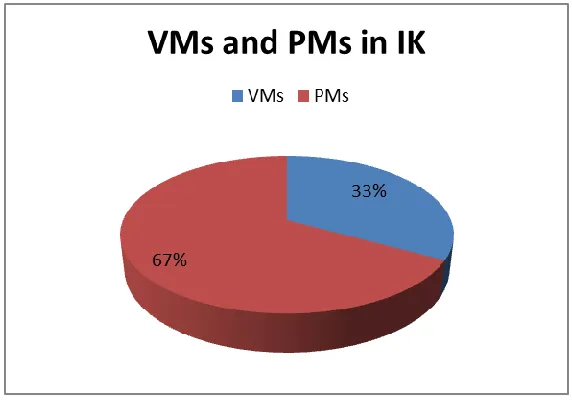
Figure 4.6 VMs and PMs in IK………..………...….…49
Figure 4.7 Virtualization of servers in IK……….………....….49
Figure 5.1 Optimizing of resources of servers which are virtualized……….…..….…50
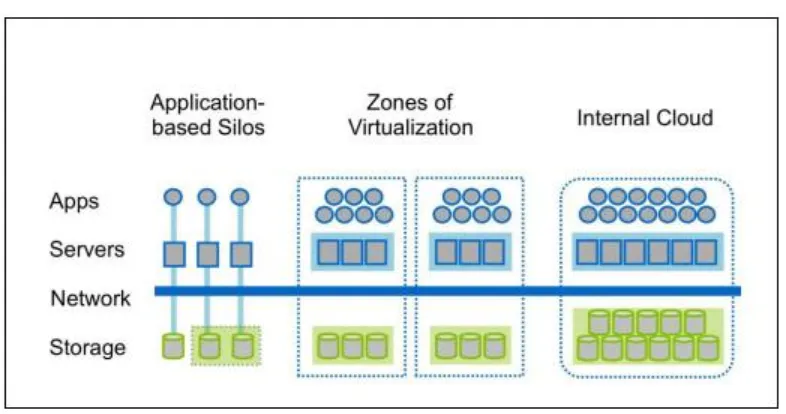
Figure 5.2 Transition from application-based silos to the cloud………...……52
Figure 5.3 Flexible storage architecture………...……...…..…54
Figure 5.4 Virtual infrastructure with virtual storage……….…..….56
Table 6.1 Financial savings statistics………...57&65 Figure 6.2 Processor utilization………...………..…58
Figure 6.3 Performance to power ratio……….………...…..59
Figure 6.4 Incremental power consumption……….…………...60
Figure 7.1 Virtual infrastructure with virtual storage………..………..63
6
List of Acronyms
The following is a list of acronyms and their meanings used throughout the text.
Acronym Complete Title
IK Institutions of Kosovo
MPA Ministry of Public Administration
DeGAP Department for electronic Governance and Administrative Processes
ICT Information and Communication Technology
RKS Republic of Kosovo
IT Information Technology
TIA Telecommunications Infrastructure Standard
IDC International Data Corporation
NASS National Agricultural Statistics Service
LAN Local Area network
NDC National Data Center
VMware Company providing virtualization software
CIO Chief Information Officer
VMs Virtual Machines
NTT Nippon Telegraph and Telephone
HP Hewlett Packard
IBM International Business Machines
DIT Department of Technology and Informatics
SAN Storage Area network
ESXi enterprise-level computer virtualization product offered by VMware
USA United States of America
CD Compact Disk
7
VMs Virtual Machines
NAS Network Attached Storage
UK United Kingdom
UPS Uninterruptible Power Supply
KIHSE Kosovo Institutions which have hosted web page somewhere else
KIDeGAP Kosovo Institutions which have hosted web page in DeGAP
LIHDeGAP Local Institutions which have hosted web page in DeGAP
CIHDeGAP Central Institutions which have hosted web page in DeGAP
MED Ministry of Economic Development
KCA Kosovo Cadastral Agency
KP Kosovo Police
MF Ministry of Finance
MIA Ministry of Internal affairs
KTA Kosovo Tax Administration
ISP Internet Service Provider
UNMIK United Nation Mission in Kosovo
MC Microwave
Mbps Mega bit per second
DMZ De-militarized Zone
8
Executive Summary
This capstone project addressed the need to strengthen the centralization and security of
the electronic data from various national institutions in Kosovo. Most of the electronic data in
Kosovo Institutions are separated in so many server rooms in different institutions and different
locations. The Republic of Kosovo institutions have different systems of data stored in different
physical spaces. Most of these data should be exchangeable in different systems and different
data bases. The country lacks physical security in the current system of data security and
professional staff for maintaining such data (databases, applications, and other electronic data).
The budget of Kosovo is making higher and unnecessary expenditure in the field of information
and technology. This project would be a good alternative in order to reduce budgetary
expenditure of Kosovo.
The percent of Servers virtualized Reducing budget costs
Actual Situations 15% € 55 thousand per year
Continuing on the same level of virtualization
100% € 360 thousand per year
Best practices-Recommended 100% € 720 thousand per year
Table 1 Financial savings statistics
Based on the data collected and according to the project, in the table 1 is a shown
financial savings statistics in the sector of information and technology. Based on those data in
Institutions of Kosovo 15 % of Physical Machines are virtualized. The average of virtual
machines installed in per Physical machine is three. The budget of Kosovo has reduced a costs
at least € 55 thousand per year. If would virtualize all physical machines the budget of Kosovo
would reduce a costs at least € 360 thousand per year. In order to reduce more budget costs it
would need to install more virtual machines per physical server. As is shown in figure 2 the cost
savings depend from the virtual machines installed per physical server. Based on Administrative
instruction No. 21/2009 on management of government property, the lifespan for computer is
four years while for device of IT is three years and it can impairment after this long time. The
9
This project describes the present situation of ICT systems of Institutions of Republic of
Kosovo and the main goals of the project which are reducing expenditure of budget of Kosovo,
increasing a security and secure business continuity. It also include the details of implementing
National Data center, using a shared infrastructure data storage, virtualization of hardware
infrastructure in NDC, Hardware Cost Savings, Reducing Energy consumption, security,
optimizing usage of existing hardware resources, flexible infrastructure and then discusses
different elements, which challenge the stakeholders on their way to achieve the goals of the
project. Executing the implementation plan developed in this project involve building the
National Data Center and replacing of old server rooms with National Data Center. It also
includes the collection of the data regarding preparation of specifications for design and site
preparation of the National Data Center. The project includes the purpose of accomplishing
standards in the field of e-governance and ICT, with all necessary bodies involved in IT within
institutions in order to harmonize their projects, namely planning, organization, coordination,
implementation and maintenance.
10
The outcome of this project provides recommendations in order to achieve the goals of
the project. The three main recommendations of the project are centralization, virtualization and
business continuity. In order to centralize the electronic data the project recommend
implementing of NDC and centralizing hardware resources of Institutions of Kosovo. The
second recommendation would recommend virtualizing of physical machines and infrastructure
data storage. Using a virtualization would facilitate a possibility of using shared infrastructure
data storage in order to optimize usage of hardware resources. Virtualization of servers decreases
the number of physical servers which does more than reduce the energy consumption of the
servers. This can result in reduced cooling load (the energy used to remove heat from the data
center), increased UPS backup time, and longer generator backup times. It will increase data
security and would reduce the expenditure of the Kosovo budget. The last recommendation
would be a data recovery center in order to secure business continuity. This recommendation will
be establishing a disaster recovery center in region of Peja and memorandum understanding
between Kosovo and Albania, in order to have an agreement between both states for hosting
storage devices. This would allow Institutions of Kosovo to host necessary and important data in
Albania and Institutions of Albania to host necessary and important data in Kosovo. This will be
needed in order to secure business continuity of IT services and prevent last of data in case of
natural disaster or any conflict.
11
Chapter 1 1. Virtual Systems Globally
1.1 Virtualization Approaches
While virtualization has been a part of the IT landscape for decades, it is only recently (in
1998) that benefits of virtualization are delivered to industry-standard x86-based platforms,
which now form the majority of desktop, laptop and server shipments. A key benefit of
virtualization is the ability to run multiple operating systems on a single physical system and
share the underlying hardware resources – known as partitioning.
Today, virtualization can apply to a range of system layers, including hardware-level
virtualization, operating system level virtualization, and high-level language virtual machines.
Hardware-level virtualization was pioneered on IBM mainframes in the 1970s, and then more
recently Unix/RISC system vendors began with hardware-based partitioning capabilities before
moving on to software-based partitioning.
Virtualization technology has been around for many years. Virtualization is rapidly
transforming the IT work environment and lets organizations run multiple virtual machines on a
single physical machine, sharing the resources of that single computer across multiple.
Virtualization allowed us to streamline LAN administration as these activities are able to be
performed by fewer, fully dedicated employees from a centralized location. Our security is
strengthened by reducing our physical locations containing servers and electronic Personally
Identifiable Information. Using virtualization potentially can provide high availability to
electronic data by having on-line data redundancy that was not available in the previous
environment. The consolidation and standardization of LAN services improves the Agency’s
operational efficiency by providing more integration, more streamlining, more standardization,
and more flexibility.
Since the tragedy of September 11, 2001, security has become a major concern within the
federal government in USA and has led to a movement to centralize rather than decentralize IT
systems and resources to protect them better by having fewer facilities to physically secure and
monitor. More recently, concerns about energy utilization have led to directives to consolidate
and centralize servers to save energy. President Obama’s administration has called for federal
12
federal operations. An executive order was signed by President Obama on October 5, 2009
requiring Agencies to adopt best practices to manage their servers in an energy efficient manner.
Prior to this initiative, our Field Office servers operate at about 20-30 percent utilization so
energy savings can be realized by consolidating our servers. The Department of Agriculture’s
Chief Information Officer has directed Agencies to migrate their servers to Data Centers. Due to
the need for NASS (National Agricultural Statistics Service) to maintain a strong degree of
independence as a federal statistical agency, the Department’s CIO has agreed to allow NASS to
continue to manage our LAN servers, but centralize our servers for security and energy reasons.
There are also mandates and initiatives to support telework and remote access to the Agency
network. Virtualization can play a role in meeting all of these overarching directives. With a
couple of exceptions, they chose to virtualize the entire desktop as opposed to the more common
technique of virtualizing individual applications to run from a server. They are using the Citrix
XenServer to virtualize the servers. They are consolidating the 94 Field Office servers into 44
servers with 22 virtualized servers located in Washington and 22 servers located in Kansas City.
Many organizations today rely on some degree of virtualization. Whether it is a few
virtual machines running on a single physical computer or a whole server farm across multiple
root servers, virtualization optimizes investment in hardware and network infrastructure by:
Increasing the utilization of underused hardware. Improving server availability.
Reducing IT costs.
Virtualization provides unmatched flexibility, performance, and utilization by allowing moving
server workloads from one virtual workspace to the next, maximizing server resources on the fly
based on business needs.
1.2 Scope of virtualization deployment
In 2011, SearchDataCenter.com released the Data Center Decisions 2011 survey to gauge
reader trends and get an understanding of the factors influencing data center evolution in the
enterprise. They received more than 1,000 responses from a range of professionals spanning
numerous IT roles. In this article, the second in a special report series, they examine survey
13
(article is based on SearchDataCenter.com released the Data Center Decisions 2011 survey data)
more organizations are deploying virtualization across a larger number of physical servers. In
2011, 43% of respondents deployed virtualization on up to 25% of servers, 28% deployed it on
26% to 50% of servers, 18% deployed virtualization on 51% to 75% of servers, and 11%
virtualized 76% to 100% of their servers. This is a shift from 2010, when far more respondents
deployed virtualization on fewer machines. As time goes on, virtualization should appear across
a larger percentage of data center ecosystems.
The number of virtual workloads deployed on each physical server has increased slowly
since last year. In 2011, 50% of respondents (according on SearchDataCenter.com released the
Data Center Decisions 2011 survey data) reported running fewer than 10 workloads per physical
server, 35% run 10 to 20 workloads per server, 10% run 21 to 30 workloads per server, and 5%
run more than 30 workloads per server. It’s important to note that a larger percentage of users are
running 10 to 20 VMs per server. This trend should continue as users become more comfortable
maximizing physical server utilization.
1.3 Global Virtualization Services
Central European governments are embracing virtualization and document management
as they scramble to manage records and documents, according to IDC. Two-thirds of Central
European government entities use virtualized servers as their default for new application
deployment, and more than half of their physical servers are virtualized, IDC reported. About
half the government IT decision makers in Central Europe which includes the Czech Republic,
Hungary, Poland, and Slovakia are using or planning to use cloud technologies, the same report
found.
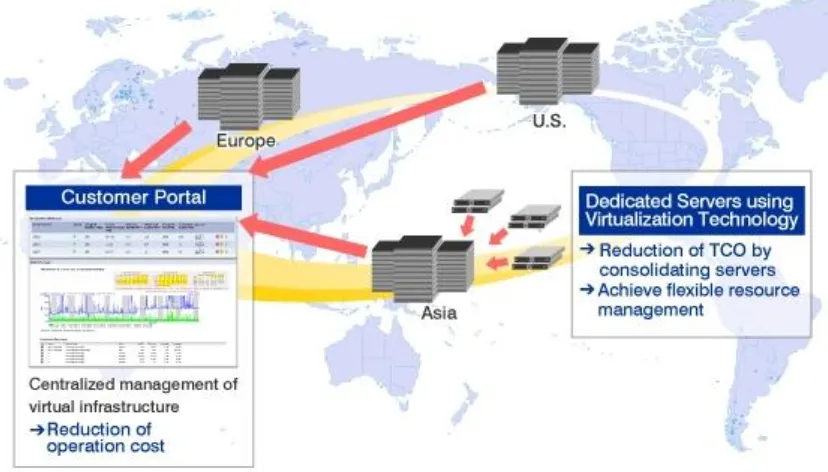
NTT Europe’s Global Virtualization Services offer enterprises a secure, high quality and
easy to manage environment in which enterprise applications can be quickly rolled out. A
comprehensive array of virtualized hosting services available in Europe, Asia and the US, allow
efficiency, cost control and growth management.
Reference: According on SearchDataCenter.com released the Data Center Decisions 2011
14
As a subsidiary of NTT Communications, NTT Europe offers access to a privately owned
and managed Tier-1 IP network and premium data centers across the globe.
This proposition is crucial to customers looking to serve new markets or to meet legal or
compliance requirements with regard to the physical location of the data being held. The Global
Virtualization Services are guaranteed under a single SLA which centralizes hosting with
one-stop management, support and billing.
NTT Europe’s web-based customer portal provides a self-service area for management of
virtualization solution across all three continents. Experienced technical architects and VMware
specialists are available to assist customers with design, installation, operation and maintenance.
This paragraph includes the study at the state of the storage virtualization market at the
start of 2008. There are engaged IT professionals at 324 companies in the United States and
Europe to participate in this evaluation. There is found the storage virtualization market is
poised for rapid growth over the next several years. Interest in cutting storage costs and
improving storage resiliency are the most important drivers. Based on this study, in the United
States, 21% of U.S. companies use storage virtualization. However, this is poised to more than
double, as 26% are either currently or planning on implementing storage virtualization (on
average within 6 to 12 months).
15
Figure 1.1 Virtualization solutions across all three continents
1.3.1 State of the Storage Virtualization Market
Based on this study, Europe is ahead of the United States: 37% currently use
storage virtualization, with 24% currently implementing or planning to implement (again, within
6 to 12 months on average). Thus, in Europe the market will grow from 37% to 61% (or by
24%).
[image:16.612.77.491.109.345.2]16
Figure 1.2 State of the Storage Virtualization Market Report in USA
Figure 1.3 State of the Storage Virtualization Market Report in Europe
17
Chapter 2
2. Information and Communication Technology (ICT) in Kosovo Institutions
This Capstone project describes the present situation of data and servers, server rooms
and other environment and IT devices were electronic data are saved in Kosovo Institutions. It
describes the level of the security of those data, annual growth rate of those data and
communication between institutions. The project focused mainly in capacity of electronic data
that are considered important for institutions, number of servers and server rooms.
2.1 Introduction
The Department of Electronic Governance and Administrative Processes is within
Ministry of Public Administration. Based on Regulation No. 02/2011 On the areas of
Administrative Responsibility of the office of the Prime minister and Ministries, Appendix 11,
section ix, the Ministry of Public Administration (MPA) shall have these competencies: To
develop standards for information technology services including E-Government for the
institutions of Kosovo, and coordinates the security of information technology services including
electronic governance and the basic electronic registers for the institutions of Kosovo.
The government of Kosovo has approved the “Electronic strategy governance 2009 to
2015”. The main role of this strategy is to set standard and to provide electronic services
effectively to all governmental institutions. This works based on the Department of Electronic
Government and Administrative Processes (DeGAP). The DeGAP manages and coordinates the
process of updating and continuous elaboration of the strategy at all government levels as
relating to investments in IT. These processes should be in line with needs and requirements of
central and local institutions. The DeGAP develops and sets standards and regulations on
hardware and software, data and voice communication, intercommunication of computerized
systems. The DeGAP provides reports on status, stages, analyses, concepts, studies, guidelines,
presentations, seminars, workshops and conferences on information technology. The DeGAP
also manages and supports systems and IT requests including e-governance, database center of
18
The DeGAP interacts with counterpart institutions of governments of regional countries
and wider for the purpose of creating synergy, attends national and international meetings
through its representatives, attends conferences and fairs related to e-governance and other topics
in IT. The purpose of those activities is establishing a contemporary communication and
cooperation environment. For the purpose of accomplishing standards in the field of
e-governance and ICT, it is necessary for all bodies involved in IT within governmental
institutions to harmonize their projects, namely planning, organization, coordination,
implementation and maintenance”. Each governmental institution should have an IT unit
responsible for developing and implementing strategy, implementing joint services and support
on ITC, acting in full compliance with legal norms adopted by respective bodies.
Many institutions of Republic of Kosovo have bought, build and develop own electronic
system without DeGAP consultation, which sometimes have unnecessarily increase costs of
Kosovo budget. Many institutions have their own physical networks independent from state
network. Integration of those networks in the governmental network would save a lot the Kosovo
budget.
For the purpose of accomplishing standards in the field of e-governance and ICT, it is
necessary for all bodies involved in IT within governmental institutions to harmonize their
projects, namely planning, organization, coordination, implementation and maintenance.
2.2 Current Situation in MPA
Main role in setting standards, coordination and provision of electronic services in all
governmental institutions is held by the Department of Electronic Governance and
Administrative Processes (DeGAP), Ministry of Public Administration. Under the auspices of
DeGAP in MPA, several coordination meetings were organized with all governmental
institutions in order to centralize the data and integrate the computer systems; however
19
2.2.1 ICT Regulation Law
Based on Regulation No. 02/2011 On the areas of Administrative Responsibility of the
office of the Prime minister and Ministries, Appendix 11, section ix, the Ministry of Public
Administration (MPA) shall have these competencies: To develop standards for information
technology services including E-Government for the institutions of Kosovo, and coordinates the
security of information technology services including electronic governance and the basic
electronic registers for the institutions of Kosovo.
Based on “Electronic strategy governance 2009 to 2015” approved by Kosovo
Government main role in setting standards and provision of electronic services in all
governmental institutions is held by the DeGAP, Ministry of Public Administration.
E-Government Strategy 2009-2015 approved by the E-Government of Kosovo, aims to significantly
transform and improve the way the Government provides services to its citizens and businesses.
The E-government Strategy comprises of several projects spread across a number of sectors
which has to be implemented by Ministry of Public Administration (MPA) in cooperation with
the line ministries and agencies.
2.2.2 IT Systems Administered by DeGAP
Most of the Kosovo Institutions using ICT system which is managed by DeGAP.
DeGAP within MPA provide some services which are network, web hosting, security, electronic
mail, domain, file sharing documents, internet access and electronic services (property,
e-archive, the system for managing of vehicle, e-health, e-businesses, e-Tourism, e-School,
application for driver license, Office Communicator, application of marital status, etc.). The
applications are hosted in the hardware resources which are located in the center of IT system.
The hardware devices are located in four different server rooms, because of deficiency of an
adequate server room (Data Center) with adequate environment. Two of them are located in a
same building, the third and fourth are located in different building. In these server rooms have
servers, core devices, routers, and IT security devices. There are two hardware infrastructure
system virtualized with VMware software (see Figure 2.1). There is primary site and recovery
site. The primary site is in production, while in the recovery site are saved backup of data. In
20
Figure 2.1: The replication sites
There are about 825 IT devices which are administered by DeGAP including stand-alone
servers, virtual servers, switches, routers and IT security devices. These IT devices are produced
by different producers. About 155 of them are servers including physical machines and virtual
machines, about 320 of them are switches, routers, ASA firewall in institutions which are located
in Pristina, about 60 switches and 60 routers are located in municipalities including connection
point of network and about 230 antennas for microwave connection.
The depreciation due to age some servers are out of use. Most of these servers that are out
of use are HP servers from second generation of production and others are Compaq Proliant. The
active stand-alone servers, switches which are used in center operation for backbone switching,
routers which are used in center operation for backbone switching and other IT security devices
21
IT Devices Quantity Location Total
Servers 155 Pristina
Swithshes&Routers 320 Pristina
Swithshes&Routers 120 Municipalities including
connection point of network
Microwave antennas 230 Municipalities including
connection point of network
IT Devices 825
Table 2.2 IT devices administered by DeGAP.
The condition of these server rooms are not according to the standards for server rooms
(standard TIA 942 for Data Center). They have a problem with air conditioning systems and
electricity power. These server rooms (Data Center) are not fulfilling the standards regarding the
physical security. The air condition system should be installed below IT devices and racks in the
raised floor. Otherwise the air system conditions installed in the ceiling Couse a potential
problem of acclimatization system can be derived water in IT equipment. This shall cause
damage in IT devices. Therefore air condition system should be installed below IT devices and
racks. There is no an uninterruptiblepower supply- UPS, (or uninterruptible power source) with
high capacity to supply equipment with electrical power. The IT staffs are using small UPS to
supply equipment with electrical power. In the figure 2.3 is shown one of the fourth server rooms
with air condition system in the ceiling administered by MPA.
Almost all institutions of Kosovo use internet. Most of the institutions have internet
access through IT System Center of DeGAP within MPA, while the rest use other systems or
22
Figure 2.3: The view of the server room.
2.2.3 Network Sector Administered by DeGAP/MPA
Most of the governmental institutions are linked in governmental network through optical
cable and microwave network. Many institutions have their own physical networks independent
from network managed by DeGAP within MPA. Integration of those networks in the
governmental network would save a lot of the Kosovo budget. In the Figure 2.4 is shown
network administered by DeGAP/MPA, which is spread across most of the institutions of
23
Network inherited from UNMIK Government Network MC
Government Network 80Mbps Optical Network
Government Network 64Mbps
24
2.2.4 Web hosting
The central Institutions of Kosovo which have hosted web pages in the servers
administered by DeGAP within MPA are: Ministry of Local Government Administration,
Ministry of Public Administration, Ministry of Economic Development, Ministry of Justice,
Ministry of Environment and Spatial Planning, Ministry of Labour and Social welfare, Official
gazette of the Republic of Kosovo, Kosovo Police Inspectorate, Costumes, Procurement Review
body, The Independent Oversight Board Civil Service of Kosovo, Public Procurement
Regulatory Commission of Kosovo, Office of auditor General, The competition commission,
Kosovo Academy for Public Safety. The list of web pages links for central Institutions which are
hosted in servers administered by DeGAP are in appendix1.
The local Institutions of Republic of Kosovo which have hosted web pages in the servers
administered by DeGAP within MPA are: Municipality of Kamenica, Municipality of Deçan,
Municipality of Dragash, Municipality of Gllogoc, Municipality of Ferizaj, Municipality of
Graqanica, Municipality of Hani I Elezit, Municipality of Junik, Municipality of Kaqanik,
Municipality of Klina, Municipality of Kllokot, Municipality of Leposaviq, Municipality of
Lipjan, Municipality of Mitrovica, Municipality of Partesh, Municipality of Podujev,
Municipality of Prishtina, Municipality of Shtime, Municipality of Viti, Municipality of Vushtri
a, Municipality of Zubinpotok, Municipality of Istog, Municipality of Gjilan , Municipality of
Gjakova, Municipality of Malisheva, Municipality of Peja, Municipality of Prizren, Municipality
of Rahovec, Municipality of Suharek and Municipality of Skenderaj. The list of web pages links
for local Institutions which are hosted in servers administered by DeGAP are in appendix1.
While other institutions which have hosted web pages in other locations are president Office,
Kosovo assembly, Prime minister Office, The Ministry of Agriculture, Forestry and Rural
Development, Ministry of European Integration, Ministry for the Security Forces, Ministry for
Community and Return, Ministry of education Science and Technology, Ministry of Finance,
Ministry of Culture, Youth and sport, Ministry of Internal Affairs, Ministry of Foreign affairs,
Ministry of Health, Ministry of Infrastructure, Ministry of Trade and Industry, Constitutional
Court, Anti-corruption Agency, Kosovo Police , Republic of Kosovo Ombudsperson, Legal Aid
Commission, Central Election Commission, Kosovo property Agency, Independent Media
25
Minerals, Privatization Agency of Kosovo, Kosovo Cadastral Agency, University Clinical
Center, Tax Administration of Kosovo etc. The list of web pages links for central Institutions
which are not hosted in servers administered by DeGAP are in appendix2.
Based on the data collected, there are 62% of Kosovo institutions which they have hosted
their own web pages in IT system administered by DeGAP, while 28% of Kosovo Institutions
have hosted their own web pages somewhere else.
2.2.5 Security
Physical protection of equipment is necessary to diminish the risk of unauthorized access
on data, and protection against loss or damage. Information System of the Government of
Kosovo is mainly implemented based on standards and recommendations of CISCO and
Microsoft. Various operating programs and applications were used for intrusion protection and
viruses. DeGAP within MPA invested in security of the network from external threats building
some security steps and applied the “Intrusion Prevention Systems” (IPS), while internal security
of the network is mainly supported by antivirus software with managed access by the system
center, thus there is the need for investing in strengthening internal security through IDS and IPS
26
Security in Kosovo Institutions of ICT system should increase in line with
implementation of security policies according to ISO 27002 standards.
Most of the Kosovo institutions lack due physical security of IT equipment and data security.
Project implementation without adhering to standards resulted in diminishing data security, thus
data were transmitted using memory devices (USB, CD, etc). Data security, respectively physical
security should be improved through centralized projects in compliance with policies in effect
and security standards of DeGAP/MPA.
Network security of all Kosovo Institutions which are linked with governmental network
is in higher level comparing to those which are not linked to governmental network.
Application of antivirus software through managing server notably optimized the computer
network. Security issue is primary issue for functioning of IT systems in general, especially on
electronic governance. As the part of the E-government strategy and along with the need for
higher reliability and availability of all critical government data and systems and disaster
recovery of Kosovo government IT services, the Government of Kosovo/MPA has launched a
project to establish a Data Center.
2.3 Current Situation in MF
Most of these Institutions have their independent systems for Information and
Technology. The important electronic data of Kosovo Institutions are separated in different
locations and different Information Technology systems. Most of those Information Technology
systems are not exchanging data between each other. As a result of this situation some of the data
and projects are not unique.
The IT department is established within Ministry of Finance without any ICT Regulation
Law base. There is also an IT Department established in Tax Administration of Kosovo within
Ministry of Finance, and an IT unit in Costumes of Kosovo. All these bodies have created own
separated IT systems which are not integrated. These IT systems have own Local Area network
(LAN) which are connected through state network administered by DeGAP. But they are using
this network just for some services. They have own local domain, mail system, own system for
internet access and other services.
27
2.3.1 ICT Regulation Law
The Department of ICT is established within Ministry of Finance, customs and Kosovo
Tax administration. Based on regulation No. 02/2011, “On the areas of Administrative
Responsibility of the office of the Prime minister and Ministries”, The Ministry of Finance shall
have no these competencies in IT field.
2.3.2 IT systems Administered by Ministry of Finance
The Ministry of Finance has independent IT system administered by their IT
Department. They have a server room with about 30 servers and about 17 IT network devices
including Network Security Firewall-Router, Distribution switch, Access switch etc. They have a
project for building server room which is ongoing. The servers are old and have limited capacity,
and the Ministry of Finance has planned to change them with new one. They have problem with
maintenance of system acclimatization and electricity of server room. The maintenance of
system acclimatization and electricity of server room is done by technical contractor company,
the same one is responsible for all technical issues in building. So, the contractor company has
not any expert regarding acclimatization system installed in server room and other relevant
issues. The maintenance of infrastructure non IT components of server room should be done by
adequate contractor company.
The staff of the Ministry of Finance administering the services which are hosted on their
servers such as Free Balance, electronic system for Kosovo budget, electronic system for
property tax, electronic system for program investment projects, mail system and internal
domain. The IT system in MF has no backup Internet Service Provider. They are using single
point of failure connection for internet access, because they do not have backup connection for
Internet access.
2.3.3 The IT Systems Administered by Kosovo Tax Administration
The Kosovo Tax Administration has an independent IT system administered by IT
Department within Kosovo Tax Administration Agency. They have a server room with about 26
28
Router , Distribution switch, VPN Firewall , Access switch etc. The 18 servers of the 26 total
servers located in their server room are in production. While 8 other servers are out of use.
They have problems with maintenance of system acclimatization and electricity of server
room. Sometimes they have a problem during generator starting. They do not a have
uninterruptible power supply- UPS, (uninterruptible power source) with high capacity to supply
equipment with electrical power. The IT staffs are using small UPS to supply equipment with
electrical power. They manage and administer those services which are hosted on their servers
such as electronic system for tax managing, Kosovo Tax Administration web Page, electronic
statements system, electronic declaration system, electronic system for fiscal cash, mail system,
internal domain, Microsoft Share point for generating of different reports, etc.
2.3.4 IT Systems Administered by Customs of Kosovo
The Customs of Kosovo has independent IT system administered by an IT unit within
Customs of KosovoAgency. They have a server room in headquarters customs. In each customs
office branch have a server which is in function. They plan to remove all these servers in order to
centralize system. The IT unit of Customs is managing 36 HP standalone servers and 22 blade
servers. They also administer own IT network system including 23 routers, 36 switches and other
firewall devices. They are using independent internet access through Private Internet Service
Provider. They are using location in Central Bank of The Republic of Kosovo for keeping the
backup of data, but they do not have recovery center.
2.4 Current Situation in other institutions
Other institutions involved in IT were also established. Based on “ Electronic
Governance Strategy 2009-2015”, each institutions should have an IT unit or IT officer
responsible for supporting users on ICT, implementing strategy and implementing joint services,
acting in full compliance with legal norms. Most of these institutions have own IT unit or IT
29
Based on Regulation No. 02/2011, “On the areas of Administrative Responsibility of the
office of the Prime minister and Ministries”, Appendix 17, sectioni, vi, and viii, the Ministry of
Infrastructure shall have these competencies: To develop work policies, draft and implement
legislation for the provision of services and facilities in the telecommunication and information
and communication technology. In the information technology sector, support information
technology and innovations, e.g. electronic commerce, promote access to technology and
encourage the development of training systems in the information technology. In the
telecommunications sector, to review compliance with European standards, which include fees
and taxes, service quality and technical standards, develop work policies to promote competition
and review needs of consumers.
Based on Regulation No. 02/2011, “on the areas of Administrative Responsibility of the
office of the Prime minister and Ministries”, Appendix 18, section Xiii, xviii, xix, xx, xxi,
xxii, xxiii, xxiv and xxvi. The Ministry of Economic Development shall have these
competencies:
To cooperate in drafting and implementing international agreements in the
telecommunications and information technology sectors;
To ensure compliance with European standards which include tax and tariffs in the area of telecommunications;
To ensure quality of services and technical standards in telecommunication; to develop a
working policy for the promotion of competitiveness in telecommunication;
To review the needs and request of consumers in telecommunication; to support
information technology and innovations, e.g. e-commerce; to support access to
technology for all citizens of Kosovo;
To encourage the development of information technology training systems;
To carry out other tasks and duties as defined by the applicable legislation on the overall
economic development in telecommunication, post services, information technology.
There is an IT department established within this ministry, which has been moved
from Ministry of Infrastructure. Department of ICT is established within Ministry of Internal
30
There is ICT department especially for Kosovo Police established within Ministry of
Internal affairs. This ICT department has independent IT system, which managing by staff
employed within this department. There is another ICT department established within
Ministry of Internal affairs. They Administers and maintains the central civil registry and
database. Based on regulation No. 02/2011, “On the areas of Administrative Responsibility
of the office of the Prime minister and Ministries”, The Ministry of Internal Affairs shall
have these competencies: Administers and maintains the central civil registry and database,
administers and maintains data based within its fields of responsibility.
Department of ICT is established within Kosovo Cadastral Agency. The department has
already created some independent IT systems including servers, data storage and other
electronic applications. Based on regulation No. 02/2011, “On the areas of Administrative
Responsibility of the office of the Prime minister and Ministries”, The Ministry of
Environment and Spatial Planning under which is Kosovo Cadastral Agency shall have no
these competencies in IT field.
Besides these Institutions, there are some other institutions which have own IT systems
including servers, data storage and other electronic applications such as Prime minister
Office, Ministry of foreign affairs, Ministry of Justice, Ministry of Labour and Social
Welfare, Ministry of Infrastructure, Ministry of health, General audit office, etc.
2.5 Summary of ICT Systems in Institutions of Kosovo
As we can see from the Regulation No. 02/2011, “On the areas of Administrative
Responsibility of the office of the Prime minister and Ministries, there are no clear responsibility
regarding ICT sector. For example, the responsibility to support information technology and
innovations (e.g. e-commerce) has ministry of Infrastructure and Ministry of Economic
Development. As it is shown the Ministry of infrastructure didn't has even ICT Department,
since the department has been moved in the ministry of Economic development.
As we can show there are three independent ICT systems within Ministry of Finance. In
31
DeGAP/MPA, ICT system administered by Kosovo Tax Administration, Customs, MF and ICT
department for Kosovo Police established within Ministry of Internal Affairs.
Based on Regulation No. 02/2011, “On the areas of Administrative Responsibility of the office of the Prime minister and Ministries”, some of these ICT department established has no
competencies and responsibility in ICT field.
Figure 2.5: The ICT departments Established within Kosovo Institutions.
Based on this situation, there are not any advantages, but there are some disadvantages.
The disadvantages of not having unique ICT System are: Increasing costs of Kosovo budget.
The need of Increasing employee for administer and maintenance of ICT systems. Decreasing level of data security and facilities virus infections.
Decentralization of data.
32
Chapter 3 3. Integration of ICT Systems
In order to find a better solution of ICT systems for Kosovo institutions, there is need to
focus on virtualization, centralization and security. Using these components, it is necessary to
decrease e costs of Kosovo budget, increase level of data security and facilities virus infections,
centralization of data, facilitate problems of interoperability.
The problem needs to be solved because the important data of the Kosovo institutions
have not enough security. The most of the software systems of Kosovo Institutions are in
different locations. In some cases there are firewalls networks between locations. Such ICT
infrastructures create a problem of the network communications between Kosovo Institutions.
Such infrastructures also increase problem of interoperability of IT systems instead creating an
infrastructure to facilitate interoperability. The ICT Infrastructure should be developed in order
that two or more software systems (IT systems) are capable of communicating and exchanging
data without any problems and easily. For example, when a trade company is registered, it
should register its activity in Ministry of Trade, and all other Kosovo institutions should use this
data as unique data source. In practical what is happening in Kosovo Institutions, when a
company registers its activity, it should register its activity in Ministry of Trade in Costumes and
in Tax Administration also.
Most of these server rooms do not fulfill requirements standards for server rooms,
including physical security, electricity, air conditions, fire protection, etc. Most of these server
rooms are not built specially for server rooms, but later one, there are adopted in order to locate
the servers and other relevant IT devices.
The Project would increase security and efficiency in the storage and maintenance costs
of government information and applications. This project would provide processing and
electronic capacity for all government bodies in Kosovo, thereby safeguarding the security of
government databases.
In order to integrate all ICT systems of Kosovo institutions and optimizing hardware resource
uses the project is dealing in detail with some main issues which are:
• Building National Data Center;
33
• Shared infrastructure data storage;
• Centralization of data.
3.1 National Data Center
To establish the most effective shared infrastructure data storage environment for the IRK
as it embraces cloud computing, it is necessary to examine all parts of the IT stack, including
enterprise storage. New best practices in shared infrastructure data storage can dramatically
improve the cost, flexibility, and environmental impact of an overall cloud architecture. The
centralizing of electronic data is using shared storage architecture which can also improve the
efficiency of traditional hard-drive-based storage and can virtualize legacy storage systems.
Today’s Datacenter and Telecommunication sites are the backbone of the business.
Downtime means frustrated customers, lost revenue and business opportunities. In order to avoid
costly downtime it is important to measure important parameters in the datacenter which could
affect its operation. By having an in-depth understanding of the (potential) risks in your
datacenter or telecommunication site, you are able to prioritize investments for improvement in
line with the risks in different areas.
The Data Center will be a national electronic repository for the accumulation,
management, dissemination and storage of data. The purpose of the project is to collect all
necessary data of the Republic of Kosovo, to facilitate the interoperability of different systems,
increase efficiency of delivery of electronic services, to centralize applications and databases,
and provide maximum security data.
The Data Center would be one of the key factors in the process of e-governance.
Hardware and software that enables the operation of the data center, focused on a single place,
shall respect the standards and will significantly reduce the cost of expenses. Data Center must
meet standards for location and building infrastructure, electrical infrastructure, network
infrastructure, hardware infrastructure, security infrastructure, air conditioning, fire protection
and recovery the data after risk.
E-Government Strategy 2009-2015 approved by the Government of Kosovo, aims to
significantly transform and improve the way the Government provides services to its citizens and
34
of sectors which has to be implemented by Ministry of Public Administration (MPA) in
cooperation with the line ministries/agencies.
As the part of the E-government strategy and along with the need for higher reliability
and availability of all critical data and IT systems, the Government of Kosovo has launched a
project to establish a Data Center. The new Data Center will have space around 300 square
meters, as is shown in figure below. The project is ongoing.
The data center space is 176 square meters (only for server room and other IT devices).
The data center would increase security and efficiency in the storage and maintenance costs of
government information and applications. This center would provide processing and electronic
capacity for all government bodies in Kosovo, thereby safeguarding the security of government
databases. The government data center would increase security and efficiency in the storage and
maintenance costs of government information and applications. This center would provide
processing and electronic capacity for all government bodies in Kosovo, thereby safeguarding
the security of government databases.
35
3.1.1 Project purpose of NDC
The main goals of the project are as follows:
To establish a shared, reliable, robust and secure infrastructure for hosting and managing
the e-Governance Applications of Kosovo Government Institutions and enable the
Government to deliver the services quickly and effectively to its stakeholders.
To facilitate consolidation of services, applications and infrastructure and provide much
functionality for Central data repository, Secure Data Storage, Online Delivery of
Services, Citizen Information/ Services Portal, State Intranet Portal, Remote Management
and Service Integration, etc.
To provide better operations/management control and to minimize overall cost of Data Management, IT management, deployment and other costs for all government
institutions.
To have a scalable Data Center to provide continuous growth of e-government
applications and to meet all requirements and demand of various government institutions.
To ensure the smooth operation and maintenance of the application system used by state authorities running on the ministry’s information infrastructure.
To host high performance transactions, distribution, registry and other systems requiring
high availability.
To host e-government websites, applications and databases pertaining to application
systems connected to the central modules of e-government.
1&2Data Center Room
3. Offices Operations Center, Support Rooms
4. Offices Operations Center, Support Rooms
5. Telecom Room
Key considerations for designing the Data Center are given below:
Scalab ility
All components of the Kosovo State Data Centre must support scalability to provide
36
ministry and various e-government applications. A scalable system is one that can handle
increasing numbers of requests without adversely affecting the response time and throughput of
the system. The Data Centre should support both vertical (the growth of computational power
within one operating environment) and horizontal scalability (leveraging multiple systems to
work together on a common problem in parallel). Scalability is important because new
computing component is constantly being deployed, either to replace legacy component or to
support new missions.
The plan for scaling up would be as under:
Racks: Initially 12 racks will be used
a. First year - 12 to 20 Racks
b. Second year- 20 to 25 Racks.
c. Third Year - 25 to 32 Racks
d. Fourth Year – 32 to 40 Racks
Avail abili ty
All the components of the Data Center must provide adequate redundancy to ensure high
availability of the e-Governance applications and other Data Center services. Designing for
availability assumes that systems will fail, and therefore the systems are configured to mark and
recover from component or server failures with minimum application outage, as the TIER 2
LEVEL specifications.
Interoperabi lity
The entire system/ subsystem should be interoperable, in order to support information flow
and integration. Operating systems and storage technologies from several vendors must interact
well with each other. These systems should support the open architecture solutions such as XML,
LDAP, SOAP, etc. where information/ data can be ported to any system, whenever desired.
Secu ri ty
The DC must provide an end-to-end security blanket to protect applications, services, data
and the infrastructure from malicious attacks or theft from external (through internet) and
internal (through intranet) hackers. Such attacks and theft should be controlled using Firewalls
37
The supplier is responsible for making of a security policy document in consultation with the
Department of Information Technology.
The DC layout should be divided into domains such as:
Inside Zone -is the secure zone which has a restricted access. This zone mainly consists of storage and database servers which are not directly accessible to the outside zone. The inside
zone is separated using strong access control and a firewall, which provides an additional level of
security to the infrastructure.
Outside Zone - includes the intranet and internet zones. The intranet users and internet users connect to the DC to avoid various active services. The outside zone is bifurcated by
placing a firewall which strengthens the security of the servers by restricting unauthorized
access.
De-militarized Zone - (DMZ) would be a "neutral zone" between DC's internal network and the outside extranet network. It would prevent extranet users from getting direct access to the
servers. In other words, this is a small network that lies between a trusted internal network (DC
LAN), and an un-trusted external network (such as the public Internet). Mostly the DMZ
contains devices accessible to Internet traffic, such as Web, FTP, SMTP and DNS servers.
Manageabili ty
The DC must be designed in an efficient way to ensure an easy maintenance. It must facilitate
ease of configuration, ongoing health monitoring, and failure detection that are vital to the goals
of scalability, availability, and security. The design must be able to match the growth of the
environment.
Storage
An assessment of the storage requirement for the entire DC environment should also be taken
into consideration. Supplier should design the storage solution (SAN/ NAS) keeping in mind the
relevant requirement and its usage in line with DC’s objective. The storage system should be
scalable enough to handle future requirements. The supplier should also adopt detailed System
and Data back-up processes and methodologies, using industry standard tools to provide long
38
3.2 Disaster Recovery Center
In order to have business continuity in the Field of ICT, the Kosovo Institutions should
have a plan to build disaster recovery Center. Disaster recovery is the process, policies and
procedures related to preparing for recovery or continuation of technology infrastructure critical
to an organization after a natural or human-induced disaster. Disaster recovery is a subset of
business continuity. While business continuity involves planning for keeping all aspects of a
business functioning in the midst of disruptive events, disaster recovery focuses on the IT or
technology systems that support business functions.
Disaster recovery planning is part of a larger process known as business continuity
planning and includes planning for resumption of applications, data, hardware, electronic
communications (such as networking) and other IT infrastructure. A business continuity plan
includes planning for non-IT related aspects such as key personnel, facilities, crisis
communication and reputation protection, and should refer to the disaster recovery plan (DRP)
for IT related infrastructure recovery / continuity. In the figure 3.3 are shown primary site and
two other sites. According to the project, the primary site is shown NDC, while Remote Site 1 is
shown disaster recovery site inside Kosovo and Remote Site 2 is disaster recovery site outside
Kosovo.
39
Chapter 4 4. Virtualization
4.1 Virtualization overview
Virtualization is the creation of substitutes for real resources that is substitutes that have
the same functions and external interfaces as their counterparts, but that differ in attributes, such
as size, performance, and cost. These substitutes are called virtual resources, and their users are
typically unaware of the substitution. Virtualization is commonly applied to physical hardware
resources by combining multiple physical resources into shared pools from which users receive
virtual resources. With virtualization, you can make one physical resource look like multiple
virtual resources. Virtual resources can have functions or features that are not available in their
underlying physical resources.
Virtualization provides the following benefits:
Consolidation to reduce hardware cost: – Virtualization enables to efficiently
access and manage resources to reduce operations and systems management costs
while maintaining needed capacity. Virtualization enables to have a single server
function as multiple virtual servers.
Optimization of workloads: – Virtualization enables to respond dynamically to
the application needs of its users. Virtualization can increase the use of existing
resources by enabling dynamic sharing of resource pools.
IT flexibility and responsiveness: – Virtualization enables to have a single,
consolidated view of, and easy access to, all available resources in the network,
regardless of location. Virtualization enables to reduce the management of
environment by providing emulation for compatibility, improved interoperability,
and transparent change windows. When thinking about applying virtualization to
current environment, it must think about consolidating logical resources rather
than physical resources into a system designed to support server, storage, and