FOR CANCER PATIENTS UPON THE KNOWLEDGE AND
PRACTICE OF NURSING STUDENTS
BY
G. MUTHURAM
A DISSERTATION SUBMITTED TO THE TAMIL NADU DR. M.G.R. MEDICAL UNIVERSITY, CHENNAI, IN PARTIAL FULFILLMENT OF THE
REQUIREMENTS FOR THE DEGREE OF MASTER OF SCIENCE IN NURSING
FOR CANCER PATIENTS UPON THE KNOWLEDGE AND
PRACTICE OF NURSING STUDENTS
Approved by the Dissertation Committee on : ____________________
Research guide : _____________________
Dr. Latha Venkatesan,
M.Sc (N)., M.Phil (N)., Ph.D. (N)., Ph.D (HDFS)., MBA (HM). Principal cum Professor, Apollo College of Nursing Chennai-600095.
Clinical guide : ________________________
Dr. Lizy Sonia.A, M.Sc (N).,Ph.D.(N). Vice Principal cum Professor
HOD, Medical Surgical Nursing , Apollo College of Nursing
Chennai-600095
Medical guide : _________________________
Dr.Naveen Ravel, MD.(Int Med), DM. (Med Oncology) Senior Consultant Medical Oncology
Apollo Cancer Institute, Teynampet, Chennai-600035
A DISSERTATION SUBMITTED TO THE TAMIL NADU DR. M.G.R. MEDICAL UNIVERSITY, CHENNAI, IN PARTIAL FULFILLMENT OF THE
REQUIREMENTS FOR THE DEGREE OF MASTER OF SCIENCE IN NURSING
I hereby declare that the present dissertation entitled “Effectiveness of Sensitizing Programme on Chemotherapy for Cancer Patients upon the Knowledge and Practice of Nursing Students” is the outcome of the original research work undertaken and carried out by me under the guidance of Dr. Latha Venkatesan, M.Sc.(N)., M.Phil.(N)., Ph.D.(N)., Ph.D.(HDFS)., MBA (HM)., Principal cum Professor, Apollo College of Nursing and Dr. Lizy Sonia. A, Ph.D.(N), Vice Principal, Professor cum Head of Medical Surgical Nursing Department, Apollo College of Nursing, Chennai. I also declare that the material of this has not found in any way, the basis for the award of
any degree or diploma in this university or any other university.
i
I thank God Almighty for showering a blessing upon me and guidance in my
entire endeavour and for clearly showing me the way to conduct my work, with a spirit of
joy and enthusiasm throughout my study.
I dedicate my heartfelt thanks and gratitude to our esteemed leader and my
research guide Dr. Latha Venkatesan, M.Sc (N)., M.Phil (N)., Ph.D. (N)., Ph.D (HDFS)., MBA (HM)., Principal cum Professor, Apollo College of Nursing for her tremendous help, continuous support, enormous auspices, valuable suggestions and
tireless motivation to carry out my study successfully.
I extend my earnest gratitude to my guide Dr.Lizy Sonia.A, M.Sc. (N)., Ph.D.(N), Vice Principal and Head of Medical Surgical Nursing Department, Apollo College of Nursing, for her elegant direction, encouragement and timely help.
I owe my special thanks to Dr. K. Vijayalakshmi, M.Sc (N)., M.A (Psy), MBA, Ph.D.(N)., Research Coordinator, Apollo College of Nursing for her prolonged patience and continuous guidance in completing my study.
I take this opportunity to express my great pleasure and deep sense of gratitude to Mrs.D.Sasikala, M.Sc.(N), Reader, Medical Surgical Nursing Department, Apollo College of Nursing, for her kind support, patience, valuable guidance, enlightening ideas and willingness to help at all times for successful completion of this research work.
My deep gratitude to Prof. Nesa Sathya Satchi, M.Sc (N), Course Coordinator for her constructive ideas and enormous concern. With the special word of reference, I
ii
Surgical Nursing, Head of all the Departments for rendering their valuable guidance and ideas in completing my study.
With special reference I thank Dr. Naveen Ravel, MD. (Internal Medicine), DM (Medical Oncology), Dept. of medical Oncology (Senior Consultant), Apollo Cancer Institute, Chennai for his elegant direction and worth full suggestions for performing the
study.
I would fail in my duty if I forget to thank my loved ones behind the scene. I am
grateful to my Parents Mr. P. Gopal and Mrs.R.Packialakshmi for their encouragement and blessing from the beginning of my life that made it possible for me to reach this
stage. My genuine thanks to my husband Mr. P. Balakrishnan, my daughter Dr.Abhinayalakhmi.B and my son Mr.B.Ajith for supporting me in all times of ups and downs, and for helping me to pursue my academic interest in nursing.
I extend my heartfelt gratitude towards Ms. Prabha and each of student nurses who participated in the study and extend their cooperation throughout the period of the
study. With a sense of deep gratitude, I acknowledge my classmates & seniors for their
iii
Statement of the Problem
A Pre-Experimental Study to Assess the Effectiveness of Sensitizing Program on
Chemotherapy for Cancer Patients upon the Knowledge and Practice of Nursing Students
at selected College of Nursing, Chennai.
Objectives of the Study
1. To assess the pretest and posttest level of knowledge and practice of nursing students on chemotherapy for cancer patients.
2. To determine the effectiveness of sensitizing program on chemotherapy for cancer
patients upon the knowledge and practice of nursing students by comparing their pretest and posttest knowledge and posttest only practice scores.
3. To assess the level of acceptability regarding the sensitizing program on
chemotherapy for cancer patients among the nursing students.
4. To find out the association between the selected background variables and the pretest and posttest level of knowledge and practice of nursing students on
chemotherapy for cancer patients.
5. To find out the correlation between the knowledge and practice of nursing students on chemotherapy for cancer patients.
The conceptual framework for this study is based on “Imogene King’s Goal
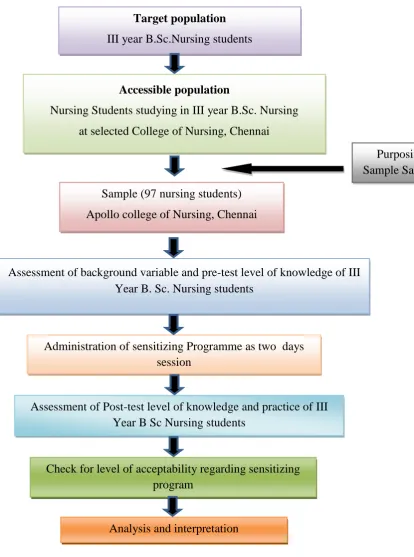
Attainment Model” (1989). A pre experimental one group pre-test and post-test for
knowledge and practice posttest only design was used for this study. The study included
97 Nursing students selected by purposive sampling technique. The present study was
conducted at Apollo College of Nursing, Chennai, Tamil Nadu. The variables of the study
iv patients (independent variable).
An extensive review of literature and guidance by experts laid foundation to the
development of demographic variable proforma of nursing students and structured
knowledge questionnaire regarding chemotherapy for cancer patients. The data collection
tools were validated and reliability was established. After two weeks of pilot study, then
data collection for main study was conducted.
Pretest assessment was done which included the background variables, and the
pretest level of knowledge on chemotherapy for cancer patients using structured
knowledge questionnaire. The sensitizing programme on chemotherapy for cancer
patients was conducted as two days programme. Demonstration on preparation,
administration of chemotherapy drugs, monitoring the patient on chemotherapy, disposal
of cytotoxic waste and nurses responsibility in caring the chemotherapy patients for B.Sc
(N) III year students through power point presentation, lecture cum discussions, skill
station with demonstration and return demonstrations done on 3rd January 2018. The posttest level of knowledge was assessed by structured questionnaire on 12th January 2018, level of practice was done on 16th January 2018 by OSCE (Objective Structured Clinical Examination) method. The level of acceptability was assessed on 17th January 2018 after the intervention. The data obtained was analyzed using descriptive and
inferential statistics.
Major Findings of the Study
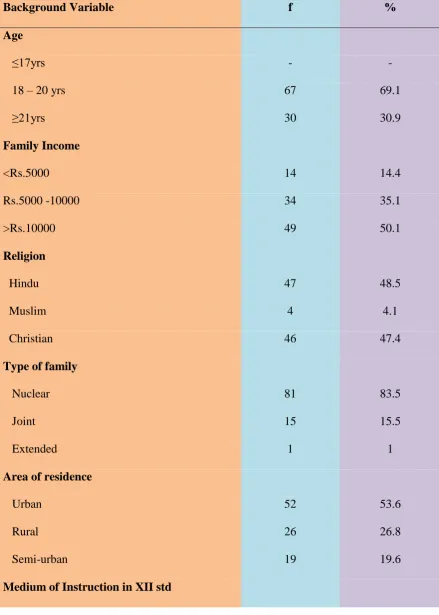
Majority of the nursing students were aged between 18-20 years (69.1%) and all of them were females (100%), half of them were having more than Rs.10,000/- of
v them studied in English medium (74.2%).
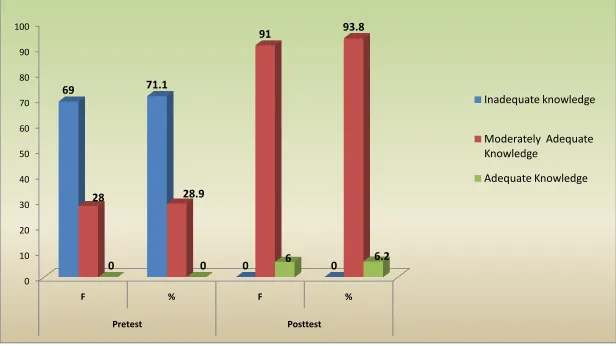
In Pretest, majority of the nursing students had inadequate knowledge (71.1%) while posttest assessment result revealed, most of them had acquired moderately
adequate level of knowledge regarding chemotherapy for cancer patients (93.8%).
Majority of nursing students had adequate level of practice in posttest with regard to preparation(98.96%), administration of chemotherapy drugs (98.96%),
Monitoring of the chemotherapy patients (94.84%), disposal of cytotoxic waste
(97.9%) and Nurses responsibility in handling chemotherapy (87.62%). The
majority of nursing students (78.35%) demonstrated overall adequate level of
practice after the sensitizing program on Chemotherapy.
Majority of nursing students had very high practice scores with regard to all aspects such as preparation (Mean = 44.08, SD = 2.45), administration (Mean =
9.57, SD = 0.73),monitoring (Mean = 9.33, SD = 1.11), disposal of cytotoxic
waste (M = 9.43, SD = 0.80) and nursing responsibility in handling chemotherapy
(Mean = 3.35, SD = 0.89). The students had very high total practice scores (M =
75.77, SD = 3.84) after the sensitizing program on Chemotherapy.
The mean and standard deviation of the posttest knowledge scores regarding chemotherapy for cancer patients (Mean=18.10, SD =1.84) was high compared to
the pretest knowledge scores (Mean =14.30, SD =2.78) among nursing students
(t = 10.54 significant at p<0.001). Majority of nursing students had very high
practice scores with regard to all aspects such as preparation (M = 44.08, SD =
vi
handling chemotherapy (M = 3.35, SD = 0.89). The students had very high
practice scores (M = 75.77, SD = 3.84) after the sensitizing program on
Chemotherapy.
Hence the null hypotheses H01 stating that “There will be no significant difference between the pretest and posttest knowledge and practice scores regarding chemotherapy for cancer patients among the nursing students” was
rejected.
There was no significant association between selected background variables such as age, religion, educational qualification, type of family, family income and
medium of education attending any programme and the level of knowledge
regarding chemotherapy for cancer patients among the nursing students. There
were no significant association between the level of practice such as age, medium
of education in XII standard and level of practice of nursing students regarding
chemotherapy for cancer patients (p>0.05). Hence the null hypotheses H02 stating that “There will be no significant association between demographic variables and
level of knowledge regarding chemotherapy for cancer patients among the nursing students” was retained.
There was no correlation between the posttest level of knowledge and practice of nursing students on chemotherapy for cancer patients. Hence the null
hypothesesH03 stating that “There is no correlation between the posttest level of knowledge and practice of nursing students on chemotherapy for cancer patients”
vii
Study findings revealed that the sensitizing programme was effective in improving
the knowledge and practice of nursing students regarding chemotherapy for cancer
patients. It underscores the need for empowering the nursing knowledge and practice by
conducting such educational programme. This type of sensitizing program is widely used
for evaluation of knowledge and practice among various groups of health care workers.
Therefore, in this study the investigator had conducted the sensitizing programme to
improve the knowledge and practice regarding the chemotherapy for cancer patients
viii
CHAPTER CONTENTS PAGE NO
I INTRODUCTION 01-14
Background of the Study 01
Need for the Study 03
Statement of the Problem 05
Objectives of the Study 05
Operational Definitions 07
Null Hypotheses 09
Assumptions 09
Delimitations 10
Conceptual Framework for the Study 10
Projected Outcome 14
Summary 14
Organization of Research Report 14
II REVIEW OF LITERATURE 15-35
Literature related to Chemotherapy for Cancer 15
Literature related to Side effects of chemotherapy and personal
protection
17
Literature related to Knowledge regarding chemotherapy for
cancer
21
Literature related to Practice regarding chemotherapy for cancer 27
Summary 28
ix
Research Approach 36
Research Design 37
Variables 39
Research Setting 39
Population, Sample, Sampling Techniques 40
Sampling Criteria 41
Selection and Development of Study Instruments 41
Intervention Protocol 44
Pilot Study 45
Protection of Human Rights 45
Data Collection Procedure 45
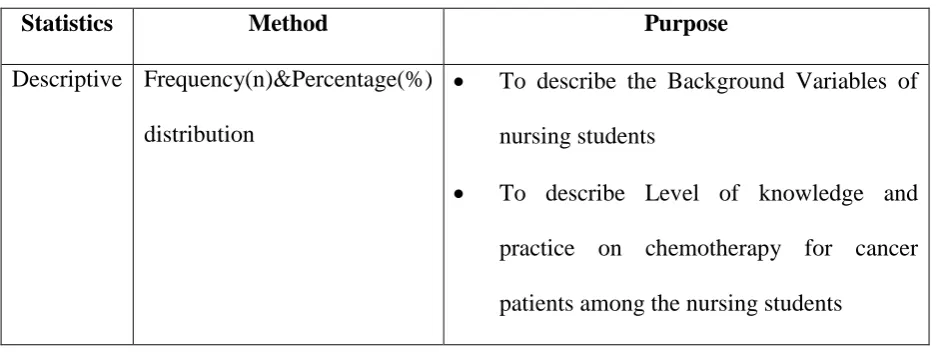
Plan for Data Analysis 46
Summary 47
IV ANALYSIS AND INTERPRETATION 48-60
V DISCUSSION 61-67
VI SUMMARY, CONCLUSION, NURSING IMPLICATIONS AND RECOMMENDATIONS
68-74
VII REFERENCES 75-79
x
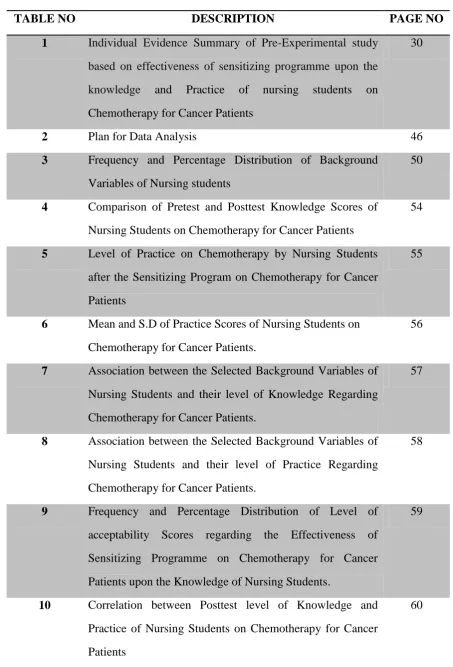
TABLE NO DESCRIPTION PAGE NO
1 Individual Evidence Summary of Pre-Experimental study based on effectiveness of sensitizing programme upon the knowledge and Practice of nursing students on Chemotherapy for Cancer Patients
30
2 Plan for Data Analysis 46
3 Frequency and Percentage Distribution of Background Variables of Nursing students
50
4 Comparison of Pretest and Posttest Knowledge Scores of Nursing Students on Chemotherapy for Cancer Patients
54
5 Level of Practice on Chemotherapy by Nursing Students after the Sensitizing Program on Chemotherapy for Cancer Patients
55
6 Mean and S.D of Practice Scores of Nursing Students on Chemotherapy for Cancer Patients.
56
7 Association between the Selected Background Variables of Nursing Students and their level of Knowledge Regarding Chemotherapy for Cancer Patients.
57
8 Association between the Selected Background Variables of Nursing Students and their level of Practice Regarding Chemotherapy for Cancer Patients.
58
9 Frequency and Percentage Distribution of Level of acceptability Scores regarding the Effectiveness of Sensitizing Programme on Chemotherapy for Cancer Patients upon the Knowledge of Nursing Students.
59
10 Correlation between Posttest level of Knowledge and Practice of Nursing Students on Chemotherapy for Cancer Patients
xi
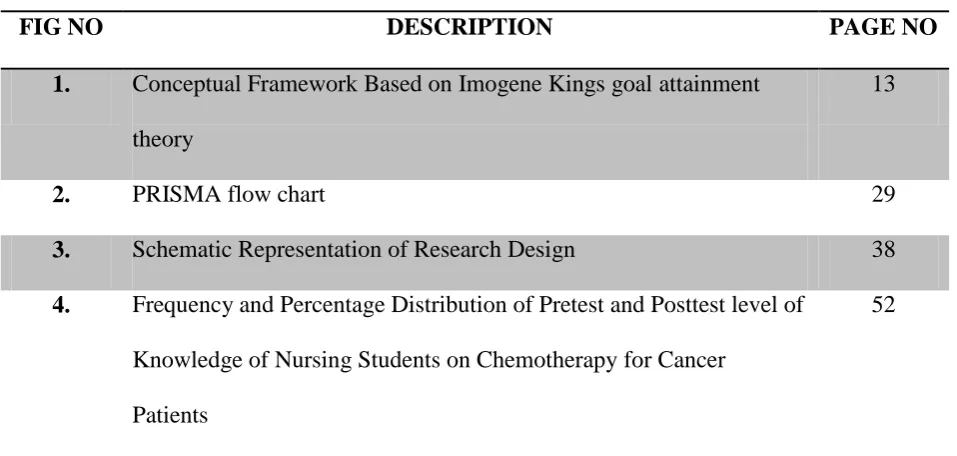
FIG NO DESCRIPTION PAGE NO
1. Conceptual Framework Based on Imogene Kings goal attainment theory
13
2. PRISMA flow chart 29
3. Schematic Representation of Research Design 38
4. Frequency and Percentage Distribution of Pretest and Posttest level of Knowledge of Nursing Students on Chemotherapy for Cancer
Patients
xii
APPENDIX TITLE PAGE NO
I Letter Seeking Permission to Conduct the Study xiii
II Letter Permitting to Conduct the Study xiv
III Ethical Committee Permitting Letter xv
IV Plagiarism Originality Report xvii
V Letter seeking Permission for Content Validity xviii
VI List of Experts for Content Validity xix
VII Letter seeking Consent from Participants xxi
VIII Certificate for English Editing xxii
IX
Rating scale on the Level of Acceptability of programme
by the Nursing students
xxiii
X
Structured Questionnaire for assessing knowledge and
practice
xxvi
XI
Module of teaching plan on chemotherapy knowledge and
practice
xxxix
XII Data code sheet lxx
1
CHAPTER I
INTRODUCTION
Background of the Study
“Knowledge without Practice is Useless. Practice without Knowledge is Dangerous”
-Confucius
Health is an ideal state of physical and mental wellbeing: something to strive for
but never to attain. Being healthy is very important to live happily and to run a family in
good way. Severe illness or injuries can have a very detrimental effect on the family. In
2008, approximately 12.7 million cancers were diagnosed and 7.6 million people died due
to cancer worldwide.
In 2012, there were 14 million new cases and 8.2 million cancer related deaths.
The number of new cancer cases increases to 22 million in the next two decades.
Worldwide cancer cases are projected to increase by 50% from 14 million to 21 million
and cancer deaths increase to 60% from 8 million to 13 million from 2012 to 2030.The
incidence of cancer in India is 70 – 90 per 100,000 population and the cancer prevalence
is established to be about 2.5 million with over 800,000 new cases and 5,50,000 deaths
occurring each year. (National Cancer Statistics, 2018).
Nurses are involved in caring for patients who are dying or have a terminal illness
and are faced with the process of dying. Working with these patients and their families
can be emotionally demanding and challenging. According to Birkholz et al. (2004) death is a personal issue for each nurse and each nurse‟s unique perspective can affect each
patient who dies under the nurse‟s care. Although they are not among the care members
of an oncology team, student nurses participate in giving care to cancer patients during
2
The treatment of cancer has undergone evolutionary changes as understanding of
underlying biological process has increased. Continuous innovation and development in
the vital fields have tremendous positive impact in the fight against cancer.
Chemotherapy may be given alone or with other treatments. The patients receiving
chemotherapy may have lot of side effects, some, or none at all. It depends on the type
and amount of chemotherapy administered and how the body reacts. There are ways to
prevent or control some side effects. Healthy cells usually recover after chemotherapy is
over, so most side effects gradually go away.
Despite positive developments and innovations in cancer treatment in recent
years, symptom control and quality of care for cancer patients remain challenging, and
complications are frequent. In cases where even professional nurses experience difficulty
in providing care to cancer patients, student nurses are typically unable to provide
adequate care, and sometimes develop negative attitudes or behaviors toward this group
of patients.
The International Council of Nurses stresses that the nurses‟ role is important
when dealing with terminally ill patients in reducing suffering and improving the quality
of life for patients and their families in the management of physical, social, psychological,
spiritual and cultural needs.
A study conducted by Sadala and da Silva (2009) in Brazil with fourteen
undergraduate nursing students, aimed to understand how they perceive themselves while
caring for terminal cancer patients and exposed the meaning of the experience they had.
Findings showed that informants perceived it as a painful experience that made them
confront their weaknesses and insecurities. They were feeling insecure and weak due to
3
their practical placement.The main objective being to help nursing students understand
and interpret their experience.
Need for the Study
The cancer is the leading cause of death worldwide. Based on the Globocan
(2012),about 12.7 million cancer cases and 7.6 million cancer deaths occurred in 2008.
56% of the cases and 64% of the deaths occurred in the economically developing world.
It is estimated that about 9 million cancer cases are diagnosed every year.
The Globocan survey conducted in Punjab, from October to December 2012, has
covered 2,64,84,434 people in 50,53,447 households in 12,603 villages and 217 cities and
towns. This is 97.78 per cent of the population of the Census data. While 23,874 cases of
people suffering from cancer have been detected, the numbers of persons complaining of
cancer symptoms were 84,453. In Punjab, cancer registry programme in 2004-2005 found
that whole Malwa region of a population of about 1.5 core, where ought to be about
12,000 cancer patients.
The landscape of cancer treatment has dramatically changed over last two
decades. The age when surgery and radiotherapy were the only effective way to fight the
tumor growth has ended. Depending on various factors, treatment options include
surgery, radiation, immunotherapy, chemotherapy, hormone therapy, or targeted local
therapy among others. The treatment plan will depend on the cancer type, the
chemotherapy drugs used, the treatment goal, and how your body responds. Hence
Nursing students and nurses need to have knowledge to handle the chemotherapy.
4
practice. Nursing students expressed the need for teaching and receiving support at the moment of a patient‟s death and at the bereavement period that follows. Informants felt
satisfied in relation to the knowledge and support gained from clinical mentors and nurses
prior to patient‟s death.
Based on the studies mentioned above and also with the practical experiences, the
researcher aimed to to explore the experiences of the undergraduate students when they
come face-to-face with cancer care during their clinical placements. Hence a sensitizing
program was developed for nursing students on chemotherapy for cancer patients.
Several studies in the literature have shown that student nurses have an almost
equal fear of cancer and death as their patients. Therefore, in nursing education, it is
important to train student nurses on how to form positive relations with cancer patients
and their families as well as how to approach the emotional problems of patients
concerning their ailments.
A number of studies recommend that nurses should be properly trained on cancer
patient care and treatment, including communication, psychosocial support, and caring
for terminal illnesses. Indeed, Sanford (2009). have shown that difficulties faced in
communicating with cancer patients and their families were significant among student
nurses practicing end of life care, and recommend that students be better trained to
overcome such challenges.
As cancer has become more chronic in nature, nursing faculty and clinical
educators must rethink how the education and clinical experiences of students must occur
throughout the trajectory of a cancer illness. The literature also suggests that nurses
5
may be brought about by communication difficulties with patients and their relatives,
conflict with team members, or psychological difficulties due to coping with a patient's
worsened state of health or death, all of which are common sources of stress and burnout.
Based on the investigator observations in hospital settings and experiences as clinical
instructor, believe that student nurses indeed have difficulty in working with cancer
patients. Examining student experiences with cancer patients and identifying the
problems, the sensitizing programme will help improve their preclinical training and
provide better care for cancer patients.
The investigator while working with the cancer patients, identified that the nursing
students during their clinical posting, expressed fear about the hazards due to
chemotherapy drugs and hesitation to handle the patients who were on chemotherapy.
Hence the investigator had an insight to sensitize the nursing students with the knowledge
and practice on cancer and chemotherapy in order to prepare them for the future nursing
role, this study was selected.
Statement of the Problem
A Pre-Experimental Study to Assess the Effectiveness of Sensitizing Program on
Chemotherapy for Cancer Patients upon the Knowledge and Practice of Nursing Students
at selected College of Nursing, Chennai.
Objectives of the Study
1. To assess the pretest and posttest level of knowledge and practice of nursing students on chemotherapy for cancer patients.
2. To determine the effectiveness of sensitizing program on chemotherapy for cancer patients upon the knowledge and practice of nursing students by comparing their
6
3. To assess the level of acceptability regarding the sensitizing program on chemotherapy for cancer patients among the nursing students.
4. To find out the association between the selected background variables and the pretest and posttest level of knowledge and practice of nursing students on chemotherapy for cancer patients.
5. To find out the correlation between the knowledge and practice of nursing students on chemotherapy for cancer patients.
Conceptual and Operational Definitions Effectiveness
Conceptual definition
Effectiveness is the degree to which something is successful in producing a
desired result success. (Oxford English Dictionary, 2016)
Operational definition
In this study effectiveness refers to outcome occurring by sensitizing programme regarding chemotherapy for cancer patients among the nursing students, in terms of
significant improvement in knowledge escore regarding chemotherapy for cancer patients
as measured by comparing their pretest and posttest knowledge score.
Sensitizing Program Conceptual definition
Sensitize means to make someone familiar with something. (English Dictionary).
Program means a set of related measures or activities with a particular long term aim.
7
Operational definition
In this study sensitizing programme refers to a structured educational programme
planned and designed by the investigator for the B.Sc Nursing III year students, to improve their knowledge related to Chemotherapy for Cancer Patients using AV Aids and power point presentations, lecture cum discussion methods, regarding basics about
cancer, common type of cancers, treatment modalities of cancer, drugs used in cancer and handling of chemotherapy emphasizing on personal protective equipment while handling the drug, common side effects of the chemotherapy and nursing care of the patients
undergoing chemotherapy.
Knowledge
Conceptual definition
Facts, information, and skills acquired through experience or education; the
theoretical or practical understanding of a subject.(Oxford English Dictionary, 2016)
Operational definition
In this study knowledge refers to awareness of information or level of
understanding regarding chemotherapy for cancer patients among the nursing students
studying in B.Sc. Nursing III year at selected college of nursing, as measured by
structured knowledge questionnaire developed by investigator
Practice
Conceptual Definition
Practice refers to the actual application or use of an idea, belief or method, as
8
Operational Definition
In this study Practice refers to the degree of compliance to the components
developed related to the skills demonstrated by the nursing students on chemotherapy that
includes preparation, administration, monitoring, disposal of chemotherapy waste and
nursing responsibility as measured by the observation checklist developed by the
investigator.
Nursing Students Conceptual definition
A nursing student is a student in a post-secondary educational program that leads
to certification and licensing to practice nursing. The title 'nursing student' usually applies
to students enrolled in an RN or practical nurse program.
Operational definition
In this study they are referred as the students who were doing bachelor degree
course in Nursing placed at the level of III year of the course.
Cancer Patients Conceptual definition
Cancer patient is a person who is receiving medical treatment for a malignant
growth or tumor. (English Dictionary)
Operational definition
In this study they are referred to as the patients who are diagnosed to have
developed cancer in any of their body tissue as evidenced by their histopathology or
9
Chemotherapy Conceptual Definition
Chemotherapy is the term used for describing the treatment of disease by the use
of chemical substances, especially the treatment of cancer by cytotoxic and other
drugs.(English Dictionary).
Operational definition
In this study it is the treatment given for the cancer patients using a single or a
combination of drugs and the procedures related to Preparation of Chemotherapy drugs,
Administration of Chemotherapy drugs, Monitoring of Patient on Chemotherapy,
Chemotherapy Waste disposal, and Nurses Responsibility in handling chemotherapy.
Null Hypotheses
H01 :There will be no significant difference between the pretest and posttest
knowledge and practice scores of nursing students on chemotherapy for cancer
patients.
H02: There will be no significant association between background variables and level of knowledge and practice of nursing students on chemotherapy for cancer patients.
H03:There will be no significant correlation between the posttest knowledge and practice of nursing students on chemotherapy for cancer patients.
Assumptions
An assumption is a principle accepted as being true based on logic or reason,
without proof (Polit and Beck, 2012).
The characteristics of the drugs that are used in chemotherapy have given rise to many issues, one of which is whether nurses are competent when working with
10
The level of knowledge, practice and capability of the nurse plays a crucial role in taking care of cancer patients.
The nurses are responsible for the safe and timely administration of Intravenous chemotherapy drugs to the cancer patients and for the prevention of complication.
Nurses should have adequate knowledge and competency in the field of chemotherapy
The success of Intravenous chemotherapy depends on the knowledge and the competency of the nurses regarding the administration of chemotherapy
Enlightening the nursing students with the knowledge and practice regarding chemotherapy for cancer patients, helps to lay a strong foundationof knowledge
and practice for their future.
Delimitations The study was delimited to
Study period was limited for 6 weeks only.
The study was limited to assess the knowledge and practice of nursing students.
The study was limited to III year B.Sc. Nursing students.
Conceptual Framework
A framework is a group of concepts and set of population that spell out the
relationship between them. Their overall purpose is to make scientific findings
meaningful and generalized. The conceptual framework deals with inter related concepts
that are assembled together in some rational schemes by virtue of their relevance to a
11
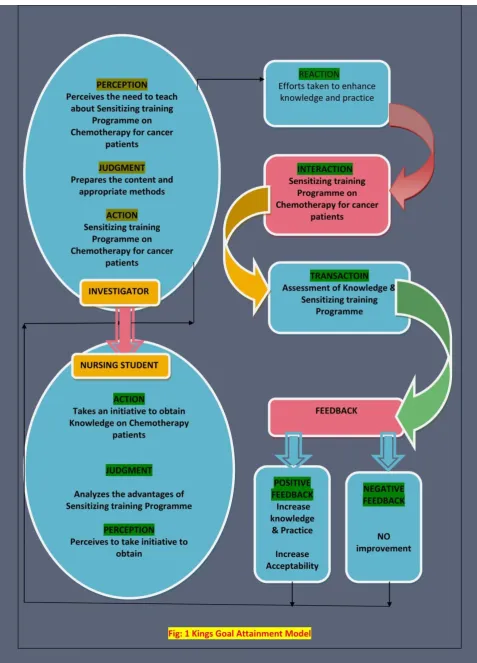
The conceptual framework for the study is based on Imogene King‟s Goal
Attainment Model (1989). The investigator has adopted this model for assessing
knowledge and practice of nursing students on Chemotherapy for Cancer patients.
Perception
A person gets energy imparted from the environment and stores it. The conceptual framework of the present study involves the interaction between the investigator and
nursing students, which includes perception and judgment on the part of the investigator as well as the nursing students.
The study assumes that nursing students as part of Health care provider. Thus the nursing students should have adequate knowledge on cancer and chemotherapy. Nursing
students deliver better care to the cancer patients with the improved knowledge and practice by undergoing the sensitizing program on chemotherapy for cancer patients.
When the knowledge improves, competency also improves and the nursing students will be able to handle the cancer patients who are on chemotherapy, with confidence.
Finally, the nursing students gained knowledge and practice through the sensitizing Programme regarding chemotherapy for cancer patients.
Judgment
In this study the investigator judges that the sensitizing program for nursing students on chemotherapy for cancer patients will be effective for the nursing students during their course.
Action
12
Reaction
Reaction refers to developed action on perceived choices for goal attainment. The
action of both investigator and nursing students leads to reaction. The investigator
organized to assess the knowledge and practice of the nursing students upon the
sensitizing Program on chemotherapy for cancer patients through pre-test and post-test
for disseminating the information.
Interaction
Interaction refers to verbal and nonverbal behavior between the individual and
environment or investigator. It involves goal directed communication between the
investigator and nursing students.
Transaction
Imogene King says that transaction is the mutually identified goals of two or more
individuals and the means to achieve them. They reach an agreement about how to attain
their goals and then set about to realize them.
The investigator and the nursing student have to mutually set goals in enhancing
the knowledge and practice upon the sensitizing program on chemotherapy for cancer
patients.
Feedback
The sensitizing program on the knowledge and practice of nursing students on chemotherapy for cancer patients made the students be confident in handling the cancer
13
14
Projected outcome
The projected outcome may increase the level of knowledge and practice of
nursing students regarding chemotherapy for cancer patients.
Summary
This chapter has dealt with the background, need for the study, statement of the
problem, objectives, operational definitions, assumptions, hypothesis, delimitations and conceptual framework.
Organization of Report
Further aspect of the study is presented in following five chapters. CHAPTER II : Review of literature
CHAPTER III : Research methodology includes research approach, research design,
setting, populations, sample and sampling techniques, tool description, content validity and reliability of tools, pilot study, data collection procedure and plan for data analysis.
CHAPTER IV : Analysis and interpretation of data CHAPTER V : Discussion
15
CHAPTER II
REVIEW OF LITERATURE
Review of literature helps the researcher to build on existing work he or she
should understand what is already known as topic (Polit and Beck, 2016).
The task of reviewing literature involves the identification, selection, critical
analysis and reporting of existing information on the topic of the interest. This chapter
will deal a review of published studies, unpublished research studies and from related
material for the present study. The review will help the researcher in building the
foundation of the study.
The studies gathered through the extended review where grouped into
Chemotherapy for Cancer
Side effects of chemotherapy and personal protection
Knowledge regarding chemotherapy for cancer
Practice regarding handling of chemotherapy for cancer
Chemotherapy for Cancer
Karlou (2018), used a mixed-methods design, including a survey among 72 nurses
in 7 oncology wards in 3 cancer hospitals in Attica, Greece, and a subsequent qualitative
focus group investigation. Caring behaviors were explored through the Caring Behavior
Inventory and content analysis of 3 focus group interviews. The results revealed 68.5%
response rate and 18 nurses participated in the focus groups. Knowledge on skills (SD=
0.7) was the most important caring behaviors. No significant association with nurses'
characteristics were noted, except for higher scores in caring behaviors in participants
16
provide holistic individualized care. These should be priorities for continuing education
and practice improvement initiatives.
Lizy (2016) conducted an experimental study on the effectiveness of holistic
nursing upon the knowledge and coping, QOL and compliance to therapeutic regimen
among 102 myelosuppressed patients during their first course of chemotherapy using
purposive sampling at tertiary care hospital. The results revealed that there was positive
correlation between knowledge and coping 0.47, coping and quality of life 0.34 and
quality of life and compliance 0.27 during posttest in the experimental group of patients
with myelosuppression after holistic nursing intervention when compared to the control
group significant at p<0.05.
Ashley (2011), conducted a prospective study on systems-focused clinical risk
assessment among 8 nurse lead multi-disciplinary teams for improving the standard of
chemotherapy administration in large urban hospitals in United Kingdom. It aims to
identify and generate remedial structure to counteract errors occurring during
chemotherapy administration. The process outcome revealed that nurses collectively
improved the procedure of chemotherapy administration.
A descriptive study was conducted by Nirenberg (2010), to describe oncology
nurses use of National Comprehensive Cancer Network Clinical Practice Guidelines for
chemotherapy induced neutropenia and febrile neutropenia among 309 Oncology Nursing
Society members. The findings gave an insight into workplace barriers to evidence based
practices in various settings.
A randomized study was conducted by Oostendorp (2007), among 128 cancer
17
to evaluate the safety and efficacy of Decision Aids (DA).The results revealed that 63%
were female, 73% had colorectal cancer 87% preferred treatment with chemotherapy and
subsequently commenced treatment with chemotherapy (86%). DA was associated with
stronger treatment preferences (3.0 vs. 2.5; p=0.030) and increased subjective knowledge
(6.7 vs. 6.3; p=0.022). Objective knowledge, risk perception and perceived involvement
were comparable between the groups.
Manias (2007), conducted a prospective study to determine how graduate nurses
use protocols in their medication management activities. Twelve graduate nurses involved
in direct patient care from a metropolitan teaching hospital participated in the study. The
results of the study showed that graduate nurses adhered to protocols if they felt
encouraged to make their own decision and if there was a decreased likelihood that
disciplinary actions would be involved.
A prospective study on revised standards set by the Association of Paediatric
Nurses (APON) was conducted by Bru (2004). Six standards referred to direct care of
patient than family, direct care of child and family and a final standard referred to the nurse‟s professional responsibility to maintain expertise as a specialist or competency as a
generalist.
Side Effects of Chemotherapy and Personal Protection
Kinsley and Pritchett presented a study on Liposomal Irinotecan (2018) Nursing
Considerations in an Outpatient Cancer Center about recent approaches in treating
pancreatic adenocarcinoma, include the use of liposomal Irinotecan as an option when
first-line therapy has failed. Liposomal Irinotecan is a newer therapy requiring
oncology nurses to obtain knowledge and skills for proper administrating, monitoring of
18
education. Nursing considerations when administering this drug include infusion time,
premedication, risk for hypersensitivity reactions and adverse events, and side effects.
The mean age of nurses was 33.60 ± 7.34 years and mean duration for oncology nursing
experience was 2.65 ± 0.91 years.
Nurses had correct information about the importance of selecting peripheral
venous catheter and choosing the placement area for chemotherapy administration
(63.6%), control of catheter before the administration (93.9%), influence of
chemotherapeutic agent on length of catheter (40.6%), and management of extravasation
(75.7%). Nurses also had correct information about the first use of port catheter (67.3%)
and checking the catheter whether it is working properly or not (75.8%).In
General, nurses' level of knowledge related to catheter is 50% and higher. It is
recommended to increase the knowledge of nurses about evidence-based information for
catheter care as a step to safe chemotherapy practice.
Polovich and Clark (2012) conducted a cross-sectional study, among 165 nurses
who were reported handling chemotherapy in oncology centres across the United States
using mailed survey method. The purpose was to examine relationship among factors
affecting nurses use of hazardous drugs, safe-handling precautions, identify the factors
that promote over interfere with the hazardous drug precaution use and determine
managers perspective on the use of hazardous drug safe handling precaution. The result
showed that circumstances in the work place interfere with the nurses to use precaution
during drug preparation.
In Turkey, Rizalar (2012), conducted a study among 73 nurses, to determine the
safety measures on personal and environmental protection taken by nurses during
19
The findings showed that nurses notwithstanding the rules and regulations pertaining to
chemotherapeutics. The results clearly pointed out the importance of need for regular
education programme and this study also revealed the necessity for improvement of the
working environment.
Kim (2011), conducted a descriptive study among 220 Korean nurses from seven selected hospitals by using convenient snowball sampling technique to assess nurses‟
perception of medication error. The study revealed that developing strategies for drug
administration and non-punitive reporting system reduces the medication error.
A total of 479 patients shared affirmative attitudes and overwhelmingly reported
positive experiences with engaging safety behaviour in a study conducted by Schwappach
(2011), in Switzerland to explore oncology nurses perceptions about involving patients in
prevention of chemotherapy administration errors. In this study, nurses acknowledged the
diverse need of patients and deliberately used different strategies to involve patients in
safety of chemotherapy administration. To successfully involve patients in medication error prevention, clinicians need to address their patients‟ beliefs and reduce barriers
through education.
One hundred and fifty-eight nurses participated in a descriptive study conducted
in Georgia by Jones &Treiber (2010) to describe nurses perception about how and why
medication errors occur and their personal experiences with medication errors. A survey
was mailed to a random sample of 202 registered nurses among them 158 nurses admitted
making medication errors. This study provided the perspective of front line nurses,
20
Gan (2010), conducted a study in Japan regarding safety issues of chemo drug administration handling by nurses from an occupational exposure view point and through visualization with contrast media for ophthalmic vasculature. The results showed spills all over in the procedure by nurses in the study, specifically splash to environment around the drug preparation area, contamination of needles which were used for drug preparation, contamination of environment as a result of priming with chemo agent. So it is considered that strict conformity to chemo drug administration procedure based on authorization guidelines is very important in addition to the standard of administration procedure in each facility.
A descriptive study was conducted by Niff (2009), to review the standards set by oncology nursing society for chemotherapy administration. The investigator also invited broad range of stakeholders to set standards for chemotherapy administration, mainly to standardize care because standardization of care reduces the risk of errors, increase
efficiency, and provide a framework for best practice.
Mahon (2009), conducted a descriptive study in St. Louis University Hospital to describe how 103 nurses from a local Oncology Nursing Society implemented
Occupational Safety and Health Administration Guidelines for handling cytotoxic drugs in their individual practices and to identify barriers to implement these guidelines. To conclude, barriers must be overcome and better safe handling practices need to be incorporated to ensure the safety of nurses.
The standardized approach dramatically improved ordering, dispensing, and administration chemotherapy. Along with that multidisciplinary verification and documentation of dose and schedule, helped to reduce chemotherapy-related errors in a study conducted by Opfer (2008), for developing, implementing and documenting
21
A descriptive correlational study was conducted by Martin & Larson (2008)
among 500 randomly selected members of the oncology nursing society who identified
their work settings as office, clinic, or outpatient private practice. The aim of the study
was to determine the current patterns of use of personal protective equipments among
oncology nurses while handling anti-neoplastic chemotherapeutic agents in outpatient and
office based settings. Findings revealed that use and availability of personal protective
equipment when handling chemotherapy have increased, but medical monitoring of
exposed employees are still neither widely practiced nor consistent with occupational
safety and health administration guidelines.
Maree and Potgieter (2007) conducted a qualitative study using purposive
sampling was conducted to describe the perspectives and experiences of 11 South
African nurses caring for patients receiving palliative chemotherapy. In-depth interviews
were conducted, participants experienced palliative chemotherapy positively, especially
when an improvement in the patients' quality of life or pain relief was evident. Fatigue
was highlighted as the major side effect. For them, the improvement in pain and quality of
life outweighed the side effects the patients experienced. The positive attitude
patients upheld while receiving this treatment encouraged them. Nurses should gain
more knowledge about the meaning, people living with advanced cancer, attach to hope
to prevent them from interpreting patients' hope as denial and false.
Knowledge Regarding Chemotherapy for Cancer
AlQadire (2018), conducted a cross-sectional design to survey 229 nurses working
in oncology units in three hospitals. Most participants were female (62.9%) between age
of 21-55 years, with a mean age of 29.9 years (SD=6.2). The mean overall knowledge
22
and vomiting (CINV), assessment and management were noted. The study concludes that
Oncology nurses' knowledge about the assessment and management of CINV is
inadequate, and improvements in knowledge are needed. An educational intervention is
recommended, which needs to be tested to ensure that it is both effective and feasible to
provide.
A study by Lavanya (2017), among nurses comprising of 15 staff nurses and 15
nursing students to assess knowledge regarding care of patients with chemotherapy . The
study revealed that the level of knowledge among staff nurses, 9(60%) had inadequate
knowledge, 4 (27%) had moderate knowledge and 2(13%) had adequate knowledge.
Among nursing students, 13(87%) had inadequate knowledge, 2(13%) had moderate
knowledge and none of them had adequate knowledge regarding chemotherapy. The
study concluded that staff nurses had better knowledge than nursing students on care of
Patients with Chemotherapy.
Supportive care from nurses and other health care professionals should
accompany cancer treatment. The goal is to relieve pain, other symptoms and to maintain
general health and improve quality of life and provide emotional, psychological and
logical support to patients and other families. Hence their need for effective
understanding regarding the management of patients with cancer among the nurses.
Health care professionals need to be sensitized and motivated regarding adverse drug
reactions (ADR) reporting. Many a times, nurses, being the first contact with patients
throughout the day, also need to be sensitized regarding the reporting culture. They
observe the effects and adverse reactions of medicines after implementation and take
23
Professional nurses are described as knowledgeable and competent; they know
what they are doing and convey their professional knowledge by explaining things.
Nurses also know about specialized cancer concerns. Professional knowledge can be
demonstrated by showing technical competence in starting IV lines, timing chemotherapy
drips, and giving useful answers to patients‟ questions.
Patients also identified competency in vein puncture as an aspect of effective
nursing care. Other aspects included providing pain relief or comfort, watching patients
closely, and checking whether patients were comfortable (Larrabe & Bolden, 2001). Professional knowledge is important for earning patients‟ trust. Trust is identified as a
chief value in the nurse-patient relationship and has been described by patients as
important for their well-being. When trust is established, patients feel confident, safe, and
less vigilant.
A non experimental descriptive research design was conducted by Virinder Singh
Chowdhary (2016) with Structured self-administered questionnaire schedule to assess the
knowledge on 50 staff nurses of convenience sampling technique from cancer hospitals of
Punjab. The results of the study shown that mean score of staff nurses regarding
knowledge was average (14.94) and mean score of their attitude comes out to be positive
(59.70). The association between knowledge and attitude with their selected
socio-background variables was calculated by chi square test and revealed statistically no
significant relationship (p>0.05). The intention of this study was to assess the knowledge
and attitude of nurses‟ on nursing care of cancer patients undergoing chemotherapy.
Overall, nurses appear to have average knowledge and a positive attitude towards nursing
care of cancer patients undergoing chemotherapy. So enhancement in knowledge aspects
is required and CNE program me or knowledge updating program me should be held time
24
Rajvinder Kaur (2016) conducted quasi-experimental, one group pretest posttest
design among parents of children receiving chemotherapy and the sample in the study
were 51 parents of children receiving chemotherapy at cancer research institute at
Himalayan hospital. Structured teaching programme in the form of intervention was
administered on the 7th day posttest was done by using same tool. The result was mean
post-test knowledge score of parents is 22.45 ± 1.73 which was significantly higher than
the pretest knowledge score 16.21 ± 1.99 there was a significant improvement in the
knowledge of parents regarding home management of side effects of chemotherapy. The calculated „t‟ value was 17.37 which is more than the table value 2.009 significant at
p<0.05. The study concluded that the structured teaching programme on home
management of side effects of chemotherapy was effective in increasing knowledge of
parents.
A descriptive study was conducted by Kapucu (2015), to determine the knowledge
levels of 165 oncology nurses about peripheral and central venous catheter during their
chemotherapy administration using a structured knowledge questionnaire and socio
background variable proforma e-mailed to the members of Turkish Oncology Nursing
Society. The data revealed that the mean age of nurses was 33.60 ± 7.34 years and mean
duration for oncology nursing experience was 2.65 ± 0.91 years. Nurses had correct
information about the importance of selecting peripheral venous catheter and choosing
the placement area for chemotherapy administration (63.6%), control of catheter before
the administration (93.9%), influence of chemotherapeutic agent on length of catheter
(40.6%), and management of extravasation (75.7%).
Nurses also had correct information about the first use of port catheter (67.3%)
25
concludes that, nurses‟ level of knowledge related to catheter was 50% and higher. Hence
evidence-based information for catheter care as a step to safe chemotherapy practice is
recommended to increase the knowledge of nurses.
A cross-sectional, observational study by Timmers (2014),among Health Care
Professionals (HCPs) in haemato-oncology settings in Belgium and the Netherlands using
a composite questionnaire that comprises total of 47 care activities listed and categorized
into eight domains. 208 HCPs were also asked about their perceptions of adherence
management on the items classified as insight into adherence, patients' communication,
capability to influence, knowledge of consequences and insight into causes. Validated
questionnaires were used to assess beliefs about medication (BMQ) and shared decision
making (SDM-Q-doc). Enhancing the awareness and perceptions of medication
adherence management of HCPs is likely to have a positive effect on care quality. Care
can be improved by addressing medication adherence more directly by questioning
patients about barriers and discussing strategies to overcome them, by asking for missed
doses and offering electronic reminders to support long-term medication.
Yu HY (2013), conducted a descriptive study among 203 nurses on knowledge of
chemotherapy by using a structured questionnaire. The results revealed that there was an
overall correct answer rate of 60.9%. Most of the respondents, 63.5%, had a score of less
than 70, and 77.3% hoped to undergo more training on chemotherapy. Their knowledge
of chemotherapy came mainly from consultation with colleagues (4.0 ± 0.8) and
in-hospital continuing education (3.9 ± 0.8). The evidence-based results suggested that
nurses have insufficient knowledge about chemotherapy, however, nurses need more
education about chemotherapy in nursing school and through in-hospital continuing
26
Cunningham (2013), conducted a study in London to explore student‟s
perceptions of their experience with cancer patients using a self-report questionnaire
among 152 pre-registration students enrolled on diploma / degree nursing programme and
follow up interviews with nine students. The majority of the informants (84.9%) described their experience as positive while the student‟s perceptions of their confidence
in practice (62.2%) were described as less positive. Similar data were reported in relation
to their preparation for their required nursing skills (53.9%) as well as the amount of
theory provided about cancer care before the clinical placements (38.2%). Student nurses
claimed that they were not feeling comfortable as far as their education of communicating
and supporting cancer patients. However, 93.3% of the informants were able to reflect on
their nursing practice, 88% stated that they were feeling accepted as a team member
whereas 81, 6% stated that they were being supported by their mentors in applying theory
and practice.
Gibson (2012), conducted a descriptive study to explore the knowledge, attitude
and beliefs of nurses who administer chemotherapy to children and young people, 286
nurses were the samples of study. The study showed that nurses new to chemotherapy
administration were initially anxious about their role and due to their anxious state makes
drug error. Education and support from colleagues appears to have had a positive effect
on reducing worry and increasing competence.
Brown (2010), conducted a prospective study to assess the value of oncology
nursing certification. A total of 940 Oncology nurses participated and completed a
background survey and the perceived value of certification tool. Most were Caucasian
women. 36% were staff nurses.19% were nurse managers and 10% were advance practice
27
valued certification. Increasing institutional reorganization and financial support could improve nurses‟ certification rates and ultimately result in improved patient care.
The inpatient oncology staff of St Elisabeth‟s hospital in Boston by Creaton et al
(2009). The programme consist of theoretical and practical component in which in-patient
oncology nursing staffs were highly motivated to expand their knowledge base for cancer
patient care and expressed interest in chemotherapy administration.
Verity (2008) conducted a descriptive study to explore the work of nurses who
administer chemotherapy. The study was conducted across 26 London hospitals providing
cancer services.244 nurses were the study participants, the findings highlighted the value
of formal educational preparation in chemotherapy prior to undertaking the aspect of
nursing. The result reinforced that coordinated education and training strategy for
chemotherapy practice is warranted to underpin safe and effective practice in this area.
Practice regarding handling of chemotherapy for cancer
An interventional study by Keat (2013), on 96 nurses, to assess the change of
nurses` safety-related knowledge as well as attitude levels and subsequently to assess the
change of cytotoxic drug handling practices in wards after a series of pharmacist-based
interventions with a before and after design consisting of the initiation of closed-system
cytotoxic drug reconstitution (CDR) services, courses, training workshops and guideline
updates. The study revealed that the interventions improved the knowledge, attitude and
safe practices of nurses in cytotoxic drug handling.
Guiyun Zhou(2010), conducted a cross sectional study, yielded a five-factor
solution for improving the attitudes and practice behavior portions with internal
28
moderately knowledgeable, but their advanced care planning practice was not routine.
This study emphasized on Validly assessing oncology Advanced Practitioners in nurses‟
knowledge, attitudes, and practice behaviors regarding advanced care planning which will
enable more tailored approaches to improve end-of-life care outcomes. Therefore, nursing
students who are future nurses need to be empowered on their role in handling
chemotherapy and side effects, hence this study was undertaken to assess the
effectiveness of the sensitizing programme regarding chemotherapy for cancer patients
among nursing students.
Alka Saxena (2006) conducted a study among the nursing personnel to evaluate
the effectiveness of planned teaching programme regarding knowledge, attitude and
practice on cancer chemotherapy and management of side-effects. The study found the
level of knowledge of the respondents on side-effects of chemotherapy was not up to
expectation, and emphasized that the nursing personnel working in cancer hospitals need
to provide supportive and educative services.
Summary
This chapter deals with the review of literature related to the problem stated. It
also enabled the researcher to design the study, develop the tool and plan the data
collection procedure to analyze the data. Twenty studies were reviewed from twenty
29
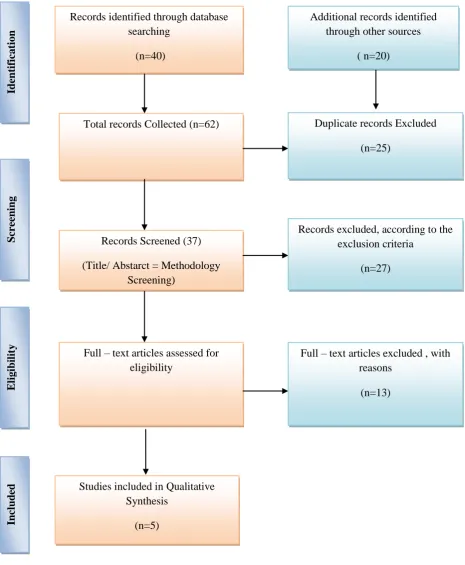
Fig.2. PRISMA flow diagram
Records identified through database searching
(n=40)
Additional records identified through other sources
( n=20)
Total records Collected (n=62) Duplicate records Excluded
(n=25)
Records Screened (37)
(Title/ Abstarct = Methodology Screening)
Records excluded, according to the exclusion criteria
(n=27)
Full – text articles assessed for eligibility
(n=18)
Studies included in Qualitative Synthesis
(n=5)
30
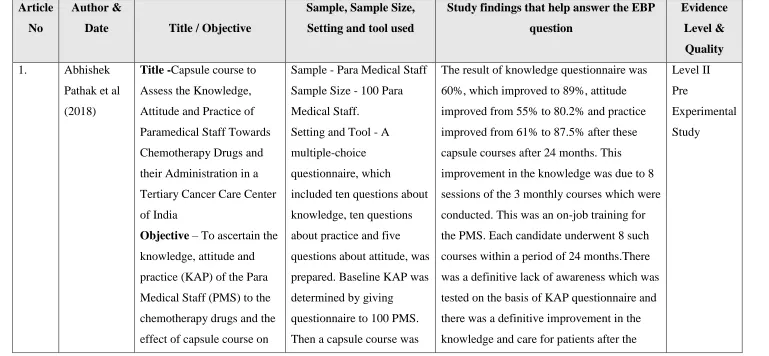
[image:45.842.44.813.153.509.2]EBP Question: Is the sensitizing programme on chemotherapy is effective to improve the knowledge and practice of nurses?
Table.1. Individual Evidence Summary of Pre-Experimental study based on effectiveness of sensitizing programme upon the knowledge and Practice of nursing students on Chemotherapy for Cancer Patients.
Article No
Author &
Date Title / Objective
Sample, Sample Size, Setting and tool used
Study findings that help answer the EBP question
Evidence Level &
Quality
1. Abhishek
Pathak et al (2018)
Title -Capsule course to Assess the Knowledge, Attitude and Practice of Paramedical Staff Towards Chemotherapy Drugs and their Administration in a Tertiary Cancer Care Center of India
Objective – To ascertain the knowledge, attitude and practice (KAP) of the Para Medical Staff (PMS) to the chemotherapy drugs and the effect of capsule course on
Sample - Para Medical Staff Sample Size - 100 Para Medical Staff.
Setting and Tool - A multiple-choice questionnaire, which
included ten questions about knowledge, ten questions about practice and five questions about attitude, was prepared. Baseline KAP was determined by giving
questionnaire to 100 PMS. Then a capsule course was
The result of knowledge questionnaire was 60%, which improved to 89%, attitude improved from 55% to 80.2% and practice improved from 61% to 87.5% after these capsule courses after 24 months. This improvement in the knowledge was due to 8 sessions of the 3 monthly courses which were conducted. This was an on-job training for the PMS. Each candidate underwent 8 such courses within a period of 24 months.There was a definitive lack of awareness which was tested on the basis of KAP questionnaire and there was a definitive improvement in the knowledge and care for patients after the
Level II Pre
31
Article No
Author &
Date Title / Objective
Sample, Sample Size, Setting and tool used
Study findings that help answer the EBP question
Evidence Level &
Quality the same. PMS are the main
set of health care worker who supplement and support the physicians or oncologists but are not specially trained or qualified as nurses.
conducted by medical, radiation and surgical oncologists. Re-evaluation was done to assess change in KAP every three monthly. All PMS were addressed in small groups of 25 each. The data gathering process continued till the required number of samples was achieved. The data collected was analyzed in terms of percentage
capsule course.
2. Rajvinder
Kauret al. (2017)
Title -A Study to Assess the Effectiveness of Structured Teaching Program on Knowledge Regarding“
Samples – 2,055 Oncology Nursing Society members completed an emailed survey.
The mean post-test knowledge score of parents is 22.45 ± 1.73 which was significantly higher than the pretest knowledge score 16.21 ± 1.99 there was a
Level II Quasi
32
Article No
Author &
Date Title / Objective
Sample, Sample Size, Setting and tool used
Study findings that help answer the EBP question
Evidence Level &
Quality Home Management of Side
Effects of Chemotherapy” among Parents
Objective-The first objective of the study is to determine effectiveness of structured teaching
programme on knowledge regarding home management of side effects of
chemotherapy among parents. The second objective of the study is to find association between the pretest knowledge levels of parents with selected background variables.
Sample size –51 parents of Oncology paediatric
patients.
Setting- Home Care setting Method – Quantitative research approach with Quasi experimental study and collected the data by using tool 1-(background variables) and tool-2 (structured knowledge questionnaire) interview schedule. Same day structured teaching
programme was given in the form of intervention. On the 7th day posttest was done by using same tool..