This is a repository copy of Optimization of the high-throughput synthesis of multiblock copolymer nanoparticles in aqueous media: Via polymerization-induced self-assembly.
White Rose Research Online URL for this paper: http://eprints.whiterose.ac.uk/137732/
Version: Accepted Version
Article:
Cockram, A.A., Bradley, R.D., Lynch, S.A. et al. (5 more authors) (2018) Optimization of the high-throughput synthesis of multiblock copolymer nanoparticles in aqueous media: Via polymerization-induced self-assembly. Reaction Chemistry and Engineering, 3 (5). pp. 645-657.
https://doi.org/10.1039/c8re00066b
[email protected] https://eprints.whiterose.ac.uk/
Reuse
Items deposited in White Rose Research Online are protected by copyright, with all rights reserved unless indicated otherwise. They may be downloaded and/or printed for private study, or other acts as permitted by national copyright laws. The publisher or other rights holders may allow further reproduction and re-use of the full text version. This is indicated by the licence information on the White Rose Research Online record for the item.
Takedown
If you consider content in White Rose Research Online to be in breach of UK law, please notify us by
1
Optimization of the high-throughput synthesis of multiblock copolymer
nanoparticles in aqueous media via polymerization-induced self-assembly
Amy A. Cockram†, Robert D. Bradley‡, Sylvie A. Lynch‡, Patricia C. D. Fleming‡, Neal S. J. Williams‡, Martin W. Murray‡, Simon N. Emmett‡, Steven P. Armes*†
†Dainton Building, Department of Chemistry, The University of Sheffield, Brook Hill, Sheffield, South Yorkshire S3 7HF, UK.
‡AkzoNobel Decorative Paints, Wexham Road, Slough, Berkshire SL2 5DS, UK.
Abstract. Over the past fifteen years or so, polymerization-induced self-assembly (PISA) has
become widely recognized as a powerful and versatile platform technology for the synthesis of
a wide range of block copolymer nanoparticles of controlled size, shape and surface chemistry.
In the present study, we report that PISA formulations are sufficiently robust to enable high
throughput experiments using a commercial synthesis robot (Chemspeed Autoplant A100).
More specifically, we use reversible addition-fragmentation chain transfer (RAFT) aqueous
emulsion polymerization of either n-butyl methacrylate and/or benzyl methacrylate to prepare
various examples of methacrylic multiblock copolymer nanoparticles using a poly(methacrylic
acid) stabilizer block. Adequate stirring is essential to generate sufficiently small monomer
droplets for such heterogeneous polymerizations to proceed efficiently. Good reproducibility
can be achieved under such conditions, with well-defined spherical morphologies at up to 45
% w/w solids. GPC studies indicate high blocking efficiencies but relatively broad molecular
weight distributions (Mw/Mn = 1.36-1.85), suggesting well-defined (albeit rather polydisperse)
block copolymers. These preliminary studies provide a sound basis for high-throughput
screening of RAFT-mediated PISA formulations, which is likely to be required for
commercialization of this technology. Our results indicate that such PISA formulations enable
the synthesis of diblock and triblock copolymer nanoparticles in high overall yield (94-99%)
within 1-3 h at 70 °C. However, tetrablocks suffer from incomplete conversions (87-96%
within 5 h) and hence most likely represent the upper limit for this approach.
Introduction
Reversible addition-fragmentation chain transfer (RAFT) polymerization is a widely-used
low-2
polydispersity block copolymers (Mw/Mn ≤ 1.20) using a wide range of functional vinyl
monomers. Moreover, RAFT polymerizations can be conducted in aqueous media,3 which is highly attractive from both a commercial and environmental viewpoint. Originally, the main
focus was on RAFT aqueous solution polymerization,4-9 but more recently there has been greater emphasis on RAFT aqueous emulsion polymerization10-28 (using water-immiscible
monomers such as styrene, methyl methacrylate or n-butyl acrylate) and RAFT aqueous
dispersion polymerization29-43 (using water-miscible monomers such as 2-hydroxypropyl
methacrylate). Such formulations can be used to synthesize a remarkably wide range of block
copolymer nanoparticles via polymerization-induced self-assembly (PISA)16, 31, 32, 36, 41-49 PISA enables the rational synthesis of diblock copolymer nanoparticles directly in water at relatively
high concentrations (≤ 50 % w/w).41, 50 Various block copolymer morphologies (e.g. spheres25, 31, 51, worms52, nanofibers,16 vesicles31, 53, framboidal vesicles38, monkey nuts28, jellyfish32 and
lamellae43) can be obtained, often simply by varying the mean degree of polymerization (DP) of the respective blocks.36, 42, 43, 45 In principle, such nanoparticles offer a wide range of potential applications, including use as flocculants54, novel hydrogels55, Pickering emulsifiers56, 57 and coatings58, 59.
Many important properties of the final block copolymer nanoparticles can be readily tuned by
choosing appropriate monomers, targeting suitable block DPs and adjusting the block order.18,
33, 36, 38, 44 Additional synthesis parameters such as copolymer concentration, solution pH,
polymerization temperature, reaction time, and RAFT agent/initiator molar ratio can also play
important roles in determining a successful outcome for a given PISA synthesis.17, 23, 25, 36, 43 Given this complexity, optimization of new PISA formulations can be a time-consuming and
laborious task, particularly if the construction of phase diagrams is desired.36, 41, 42, 60, 61 In
principle, this ‘bottleneck’ problem can be addressed by using a high-throughput strategy to
perform parallel syntheses of multiple reactions under similar conditions.62-64 For example, the
Chemspeed Autoplant A100 automated synthesizer (Figure 1) can perform up to twenty
parallel syntheses, which enables several parameters to be explored simultaneously. This
high-throughput approach has been successfully applied in many fields such as the pharmaceutical
industry, materials research, and polymer science.62, 63, 65-74 For example, pharmaceutical research has benefited from rapid screening of large libraries of potential lead compounds,
3
present study are high-throughput studies based on living radical polymerization.77-81 For example, a library of acrylic diblock copolymers was synthesized using the so-called
macromolecular design via the interchange of xanthates (MADIX) process.77 The RAFT solution polymerization of methyl methacrylate in toluene was successfully transferred to an
automated synthesizer (Chemspeed AcceleratorTM SLT00) to produce a series of well-defined
homopolymers.78 Such precursors were subsequently chain-extended in turn with various methacrylic comonomers to generate a range of well-defined AB diblock copolymers.79
Similarly, Hoogenboom and co-workers chain-extended poly(methyl acrylate), poly(n-butyl
acrylate), poly(methyl methacrylate) or poly(2-(dimethylamino)ethyl methacrylate) in turn
with 1-ethoxyethyl acrylate using the same equipment.80 The same team reported a standard
protocol for the parallel optimization of RAFT polymerizations.81 This body of prior work indicates that RAFT polymerizations are amenable to a high-throughput approach. However,
as far as we are aware, high-throughput RAFT polymerizations have not yet been performed
in water. Moreover, there appears to be no reports of the high-throughput synthesis of diblock
copolymer nanoparticles via RAFT-mediated PISA. In principle, coupling RAFT aqueous
emulsion polymerization with a high-throughput approach should enable the rapid, convenient
synthesis of a library of block copolymer nanoparticles. However, in addition to standard
deoxygenation protocols for these air-sensitive polymerizations, it is noteworthy that such
heterogeneous formulations require adequate stirring to ensure the formation of sufficiently
small monomer droplets for the efficient production of colloidally stable dispersions.82 Herein we demonstrate that successful PISA syntheses can be performed with good reproducibility
using a Chemspeed Autoplant A100, which is a commercial high-throughput robot synthesizer
(see Figure 1). More specifically, the RAFT aqueous emulsion polymerization of benzyl
methacrylate (BzMA) or n-butyl methacrylate (BMA) is conducted using a water-soluble
poly(methacrylic acid) (PMAA) chain-transfer agent to generate a series of sterically-stabilized
diblock, triblock and tetrablock copolymer nanoparticles at up to 45 % w/w solids.
Experimental Section
Materials. Methacrylic acid (MAA, 99 %), benzyl methacrylate (BzMA, 96 %), n-butyl methacrylate (BMA, 99 %) and 4,4-azobis(4-cyanovaleric acid) (ACVA, ≥ 98 %), THF
(HPLC, ≥ 99.9 %) and glacial acetic acid (≥ 99.85 %) were purchased from Sigma-Aldrich (UK) and used as received. The 4-cyano-4-(2-phenylethanesulfanylthiocarbonyl)sulfanyl-
4
and d8-tetrahydrofuran used for 1H NMR studies were purchased from Goss Scientific
Instruments Ltd. (Cheshire, UK). All other solvents were purchased from Sigma-Aldrich (UK)
or VWR Chemicals (UK) and used as received. Deionized water was used in all experiments.
Synthesis of Poly(methacrylic acid) (PMAA) Macro-CTA at 40 % w/w solids. PETTC RAFT
agent (21.77 g, 0.064 mol), MAA (230 g, 2.67 mol, target DP 50) and absolute ethanol
(≥ 99.5 %, 376.7 g, 40 % w/w) were weighed into a 1 L round-bottom flask. The flask was covered with a five-necked lid and fitted with a condenser, overhead anchor-type stirrer, N2
inlet and temperature probe. In a separate vial, ACVA (3.00 g, 10 mmol; CTA/initiator molar
ratio = 5.0) was dissolved in a small volume of ethanol (~10 mL). Both reaction mixtures were
degassed with nitrogen for 90 min while stirring at room temperature. After 90 min, the initiator
solution was injected into the round-bottom flask under a N2 atmosphere using a syringe. The
reaction mixture was further degassed for 20 min before being heated at 70 °C by immersion
in a pre-heated water bath. After 3 h, the flask was removed from the water bath, allowed to
cool, and its contents were exposed to air to quench the polymerization. The resulting PMAA
macro-CTA was then purified by precipitation into a five-fold excess of diethyl ether. The
crude polymer was collected by filtration and redissolved in the minimum amount of ethanol,
before a second precipitation into excess diethyl ether. The purified polymer was allowed to
dry overnight before being redissolved in the minimum amount of water, followed by
lyophilization. The mean degree of polymerization for this macro-CTA was calculated to be
56 by 1H NMR (see, Figure S1). GPC analysis of methylated PMAA56 macro-CTA (using THF
eluent containing 4 % v/v glacial acetic acid, against poly(methyl methacrylate) standards)
indicated Mn = 6,000 g mol-1 and Mw/Mn = 1.17, (see Figure 3).
Laboratory-Scale Synthesis of PMAA56-PBzMA500 Diblock Copolymer Nanoparticles at 20
% w/w Solids via RAFT Aqueous Emulsion Polymerization of Benzyl Methacrylate. A
typical protocol for the synthesis of PMAA56-PBzMA500 nanoparticles was as follows:
PMAA56 macro-CTA (0.1171 g, 0.02 mmol), ACVA (0.0013 g; 0.05 mmol,
macro-CTA/initiator molar ratio = 5.0) and water (8.47 g, 20 % w/w) were weighed into a 15
mL vial. The solution pH was adjusted to pH 5 using 1 M NaOH and BzMA monomer (2.00 g,
0.01 mol) was then added. The final mass of liquid reagents was ~10-11 g. A magnetic flea
was added and the reaction vial was sealed using a rubber septum. The reaction solution was
purged under N2 for 15 min and the vial was then placed in a pre-heated water bath at 70 °C
for 2 h, prior to its removal and exposure to air to quench the polymerization. In all the
5
Laboratory-Scale One-Pot Synthesis of Tetrablock Copolymer Nanoparticles via RAFT Aqueous Emulsion Polymerization. A typical protocol for the synthesis of
PMAA56-PBzMA500-PBMA500-PBzMA500 nanoparticles was as follows. PMAA56 macro-CTA
(0.1757 g, 0.03 mmol), ACVA (1.9 mg; 0.01 mmol, CTA/initiator molar ratio = 5.0) and water
(7.42 g, 30 % w/w) were weighed into a 25 mL round-bottomed flask. The solution pH was
adjusted to pH 5 using 1 M NaOH, followed by addition of BzMA monomer (3.00 g, 0.02 mol).
A magnetic flea was added and the reaction vial was sealed using a rubber septum. The reaction
solution was then purged under N2 for 20 min before placing the vial in a pre-heated water bath
at 70 oC for 120 min. A 1.0 mL sample of the diblock copolymer dispersion was removed using a syringe under a N2 atmosphere. Previously degassed BMA monomer (2.10 g, 0.02 mol) and
water (0.85 g, 40 % w/w) were then injected into the vial using a syringe under a N2
atmosphere. The second-stage polymerization was allowed to proceed for a further 180 min at
70 oC. A 1.0 mL sample of the triblock copolymer dispersion was removed using a syringe under a N2 atmosphere. Previously degassed BzMA monomer (2.24 g, 0.01 mol) and water
(1.58 g, 45 % w/w) were then injected into the vial using a syringe under a N2 atmosphere. The
third-stage polymerization was allowed to proceed for a further 18 h at 70 oC, before removing the vial from the water bath and exposing its contents to air to quench the reaction.
High-Throughput Syntheses of Diblock Copolymer Nanoparticles via RAFT Aqueous Emulsion Polymerizations using the Chemspeed Autoplant A100. A typical protocol for the
synthesis of PMAA56-PBzMA500 nanoparticles was as follows: Firstly, an aqueous stock
solution containing PMAA56 macro-CTA (38.3 mg dm-3) and ACVA initiator (0.40 mg dm-3)
was prepared and adjusted to pH 5 using 1 M NaOH. Up to twenty reactor vessels were then
charged with this stock solution (17.75 g). The monomer (BzMA, 5.12 g) was then added over
10 min, while further water was added (3.95 g) to adjust to the desired overall solids
concentration (20 % w/w). A stream of N2 gas was blown through all the reaction vessels for
20 min. The reaction vessels were then sealed and heated up to 70 oC. Each vessel was equipped
with an overhead stirrer. Either a propeller-type stirrer (at 350-650 rpm) or an anchor-type
stirrer (at 150-350 rpm) was used (see Figure 1). The stirring range used for each stirrer
geometry was selected to afford efficient mixing with minimal splashing, as judged by visual
inspection.The anchor stirrer generates significantly higher shear rates than the propeller stirrer
6
were also performed using BMA monomer. Batch sizes for the synthesis of PMAA56
-PBzMA-500 and PMAA56-PBMA500 were ~27 g and ~22 g respectively. In further experiments, these
syntheses were also conducted at a higher overall solids concentration of 30 % w/w.
High-Throughput Syntheses of Triblock and Tetrablock Copolymers via RAFT Aqueous Emulsion Polymerization using the Chemspeed Autoplant A100. Initially, the same protocol
as that described above for the diblock copolymer syntheses was employed. Then, at the end
of the 1 h reaction time, a second water-immiscible monomer (BzMA or BMA) was injected
into the reaction solution for the second-stage polymerization. Further water was also added to
adjust the overall solids concentration to 40 % w/w. The reaction solution was then held at
70 oC for 2 h. For the synthesis of tetrablock copolymer nanoparticles (45 % w/w solids), a third water-immiscible monomer (BzMA or BMA) and further water was added after
completion of the triblock copolymer synthesis. Each reaction vessel was then held at 70 oC for 2 h before cooling to room temperature and exposing to air to quench the polymerization.
Instrumentation and Copolymer Characterization
The Chemspeed Autoplant A100 high-throughput robot. This apparatus was equipped with a
four-needle head, 10 plant modules and 10 pump modules (see Figure 1). Each
mini-plant module can house two 100 mL steel reactors that can be heated and stirred independently
as well as connecting to a refluxing 80:20 water/ethanol mixture to allow reactor head
cooling. Stirrer blades were available with either anchor or propeller geometries and stirrer
speeds could be varied from 50 to 1000 rpm. Heating is controlled by individual
electrically-heated jackets around each vessel that can be individually electrically-heated from ambient temperature up
to 200 °C with valves connected to chilled fluid for cooling. The cooling fluid (silicone oil) is
provided by a dynamic temperature control system /circulation thermostat (Huber Unistat
Tango). An inert atmosphere was maintained by applying a 1.1 bar flow of N2 through all the
reactors, at a flow rate of 0.8 L min-1. With additional pump modules, the A100 can feed up to
three liquid materials to each reactor in parallel. The liquid feeding (dosing) is completed using
syringe pumps that are capable of continuous cycles of aspiration and dispensation (one 100
L syringe and two 50 L syringes).The software used to control the A100 was ‘Chemspeed Autosuite 1.11.2.24’.
1H NMR Spectroscopy. All 1H NMR spectra were recorded using a 400 MHz Bruker
7
Dynamic Light Scattering (DLS). Aqueous copolymer dispersions (0.20 % w/w) in disposable
plastic cuvettes were analyzed at 20 oC using a Malvern Zetasizer NanoZS instrument. Scattered light was detected at 173° and intensity-average hydrodynamic diameters were
calculated using the Stokes-Einstein equation. Data were averaged over three consecutive
measurements, comprising a minimum of ten runs per measurement. The particle diameter
standard deviations were calculated from the DLS polydispersities.
Transmission Electron Microscopy (TEM). Each sample was prepared by depositing 10 µL
(0.20 % w/w) of 0.1 % w/w aqueous copolymer dispersion onto a glow-discharged
carbon-coated copper grid for 20 seconds. The grid was then stained with 10 µL uranyl formate
solution (0.75 % w/w) for 10 seconds and carefully dried using a vacuum hose. TEM images
were recorded using a Philips CM100 instrument operating at 100 kV and connected to a Gatan
1 k CCD camera. ImageJ software was used to determine mean nanoparticle diameters from
TEM images (at least 100 nanoparticles were analyzed per sample). Standard deviations were
calculated using Microsoft Excel.
High-Performance Liquid Chromatography (HPLC) for Monomer Conversion
A stock solution was made up comprising both BzMA (0.100 g) and BMA (0.100 g) dissolved
in acetonitrile (100 mL). This stock solution was serially diluted to afford four calibration
solutions with concentrations ranging from 5.68 x 10⁻² mmol dm-3 to 1.41 mmol dm-3 for BzMA and from 7.03 x 10⁻² mmol dm-3 to 1.41 mmol dm-3 for BMA. Samples (0.100 g) were dissolved in acetonitrile (10 mL), before filtering through a 0.45 um filter. The experimental set-up
comprised an Agilent 1200 quaternary pump operating at a flow rate of 0.50 mL min-1 in series with an Agilent 1200 evaporative light scattering detector maintained at 40 °C, and a diode
array variable wavelength UV detector (set to wavelengths of 205 and 254 nm). The eluent
was initially 60:40 v/v acetonitrile/water (for 11 min) before being gradually increased
to 90:10 v/v acetonitrile/water over 4 min and then held constant for the final 5 min.
Linear calibration plots were obtained for both BMA and BzMA monomers using this
protocol (see Figure S2).
Gel Permeation Chromatography (GPC). THF GPC was used to determine copolymer
molecular weights and dispersities at 30 oC. For analysis of polymers synthesized via the high-throughput protocol the GPC set-up consisted of an autosampler, Viscotex 2001 GPC max
pump, PSS SDV analytical pre-column column (10 µm, 50 mm x 8.0 mm), 3 PSS SDV
8 Agilent 1260 Infinity II GPC/SEC systemfitted with an autosampler and two 5 M Mixed-B
columns connected to a refractive index detector. In both protocols, the mobile phase was
HPLC-grade THF containing 4.0 % v/v glacial acetic acid at a flow rate of 1.0 mL min-1. Molecular weights were calculated using a series of near-monodisperse poly(methyl
methacrylate) calibration standards.The PMAA56 macro-CTA and the block copolymers
synthesized on a laboratory-scale were modified by exhaustive methylation of its carboxylic
acid groups to render them THF-soluble. This was achieved by adding excess trimethylsilyldiazomethane dropwise to a solution of copolymer (20 mg) in THF (2.0 mL) until a persistent yellow coloration was observed. This reaction solution was then stirred overnight until all THF had evaporated, prior to GPC analysis.
Results and Discussion
For the RAFT aqueous emulsion polymerization formulations explored in this study, a
water-soluble poly(methacrylic acid) macro-CTA was dissolved in water at pH 5 and then
chain-extended using a water-immiscible monomer (either BzMA or BMA). This water-immiscible
monomer polymerizes to form a water-insoluble polymer, which leads to in situ self-assembly
of the propagating diblock copolymer chains to form sterically-stabilized nanoparticles via
PISA.10-28
Laboratory-scale syntheses of PMAA56-PBzMA500 diblock copolymer nanoparticles were
typically performed on a ~10–11 g scale using 15 mL glass vials. PMAA56 macro-CTA, ACVA
initiator and water were weighed into each vial and the solution pH was adjusted to pH 5 before
addition of BzMA monomer (according to Chaduc and co-workersthis pH is optimal for the
synthesis of PMAA-containing diblock copolymer nanoparticles via RAFT aqueous emulsion
polymerization).21, 23 The vial was then sealed and degassed in ice by bubbling N2 through the
reaction mixture for 15 min with continuous magnetic stirring at approximately 500 rpm, prior
to heating to 70 oC using an oil bath. In contrast, for the Chemspeed A100 automated synthesizer (Figure 1) each reaction must be performed on a 15 to 80 mL scale and stirred using
an overhead mechanical stirring unit (equipped with either an anchor or propeller stirrer).
Moreover, for such parallel syntheses it is not feasible to degas reaction mixtures within
individual vessels using a N2 sparge.
9
Scheme 1. Synthesis of a) PMAA56 macro-CTA via RAFT solution polymerization in ethanol and synthesis
of b) PMAA56-PBzMA500 and c) PMAA56-PBMA500 diblock copolymer nanoparticle via RAFT aqueous
10
For the successful transfer of such PISA formulations from individual lab-scale syntheses to
high-throughput syntheses, three essential differences need to be taken into consideration.
Firstly, weighing out four components and adjusting the solution pH in all 20 reaction vessels
is simply too time-consuming. Secondly, it is not possible to bubble N2 through the reaction
mixture contained in each of the twenty reaction vessels. Thirdly, using an overhead
mechanical stirrer instead of a magnetic flea should enable more efficient stirring, but
additional factors such as stirrer geometry may be important.
To avoid weighing out each reagent individually into all twenty reaction vessels, a stock
aqueous solution containing the PMAA56 macro-CTA, ACVA initiator and water (adjusted to
pH 5) was used to charge each reactor vessel. This stock solution comprised PMAA56
macro-CTA (38.3 g dm-3) and ACVA (0.40 g dm-3), giving a macro-CTA/initiator molar ratio of 5.0. A predetermined volume of the stock solution (5-20 mL) was injected into each reaction vessel
to produce the PISA formulation required for a given target diblock copolymer composition.
The monomer was then injected, along with further water (0-25 mL) to adjust the final solids
concentration.
RAFT polymerization is a type of reversible deactivation radical polymerization: the use of a
highly reactive chain transfer agent creates a rapid and reversible equilibrium between active
and dormant polymer chains.1 If oxygen is present, it can react with the polymer radicals and retard the rate of polymerization.84, 85 Hence thorough deoxygenation of the reaction solution is required for RAFT polymerizations. This is typically achieved by bubbling N2 gas directly
through the reaction mixture. However, this is not possible with the Chemspeed A100. Instead,
N2 gas was blown through the reaction chamber for 20 min (at 20 °C) while stirring the reaction
mixture at 200 rpm prior to initiation of the polymerization. Initial experiments confirmed that
this modified protocol provided sufficient protection from aerial oxygen to enable high
monomer conversions (> 94 %) to be achieved during RAFT aqueous emulsion
polymerization.
In conventional emulsion polymerization, it is well-documented that efficient stirring is of
critical importance.86, 87 Firstly, inefficient stirring can lead to the formation of relatively large
monomer droplets which can potentially act as the locus of polymerization. This leads to
11
Figure 1. Digital photographs showing (a) the Chemspeed A100 automated synthesizer, (b) a 100 mL reaction
vessel and stirrer module, (c) a propeller-type stirrer and (d) an anchor-type stirrer.
may influence both the rate of polymerization and the final particle diameter.88 Indeed, Charleux and co-workers reported that the stirring rate can have a significant impact on the
success of RAFT aqueous emulsion polymerization formulations.17 Moreover, colloidally
12
mixtures in laboratory-scale control experiments, see Figure S3. When using the Chemspeed
A100, reaction mixtures were mechanically stirred at 150 to 650 rpm using an overhead stirrer
unit with either anchor or propeller stirrers (Figure 1). Ideally, our high-throughput protocol
for RAFT aqueous emulsion polymerization should be applicable for a wide range of
formulations. Thus, two water-immiscible methacrylic monomers (BzMA and BMA, see
Scheme 1) were selected to have differing densities: BzMA is slightly more dense than water
(1.04 g cm-3 at 25 oC), whereas BMA is slightly less dense than water (0.89 g cm-3 at 25 oC).
Thus the former monomer droplets tend to sediment, whereas the latter tend to cream; ideally,
the stirrer type should be able to cope with this difference in droplet buoyancy. A PMAA56
macro-CTA was chain-extended using each monomer while targeting a mean core-forming
block DP of 500; all reaction conditions were kept constant while evaluating the two stirrer
geometries for a range of stirring rates. Each RAFT aqueous emulsion polymerization was
conducted on a 15 to 20 mL scale using a propeller stirrer at stirring speeds of 350, 450, 550
and 650 rpm and with an anchor stirrer at stirring speeds of 150, 250 and 350 rpm (see Table
1). For the former stirrer, only the lowestpropeller blade was immersed in the reaction mixture,
thus mimicking the stirring achieved with a magnetic flea. This set-up provided adequate
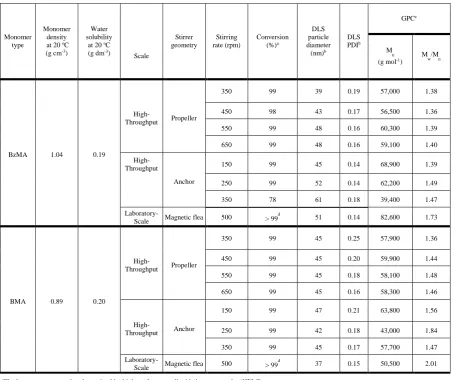
stirring and enabled more than 98 % conversion to be achieved for both monomers (BzMA and
BMA) at all stirring speeds, with both stirrer geometries (see Table 1). The single exception to
this was during the synthesis of PMAA56-PBzMA500 with the anchor stirrer at 350 rpm, where
significantly lower conversion (78 %) were observed (see Table 1). Furthermore, GPC analysis
indicated that reduced RAFT control was achieved (Mw/Mn = 1.39-1.84) with the anchor stirrer
compared to the propeller stirrer (Mw/Mn = 1.36-1.48), see Table 1.
Finally, the GPC data obtained for the laboratory-scale syntheses of these diblock copolymers
differ significantly from that obtained from the corresponding high-throughput syntheses, with
the latter giving narrower molecular weight distributions (see Table 1 and Figure S4). However,
it is worth emphasizing that these two data sets were analyzed using separate GPC instruments
with differing column sets. Moreover, the copolymers obtained from the laboratory-scale
syntheses were methylated using excess trimethylsilyldiazomethane, whereas those prepared
13
Table 1. Summary of the effect of stirrer geometry and stirring rate (rpm) on the synthesis of PMAA56-PBzMA500
and PMAA56-PBMA500 diblock copolymer nanoparticles via high-throughput RAFT aqueous emulsion
polymerization at 70 oC. All reactions were performed at 20 % w/w solids using a macro-CTA/initiator molar
ratio of 5.0.
Monomer type
Monomer density at 20 oC
(g cm-3)
Water solubility
at 20 oC (g dm-3)
Stirrer geometry Stirring rate (rpm) Conversion (%)a DLS particle diameter (nm)b DLS PDIb GPCc
Scale Mn
(g mol-1) M
w/Mn
BzMA 1.04 0.19
High-
Throughput Propeller
350 99 39 0.19 57,000 1.38
450 98 43 0.17 56,500 1.36
550 99 48 0.16 60,300 1.39
650 99 48 0.16 59,100 1.40
High- Throughput
Anchor
150 99 45 0.14 68,900 1.39
250 99 52 0.14 62,200 1.49
350 78 61 0.18 39,400 1.47
Laboratory-Scale Magnetic flea 500 > 99 d
51 0.14 82,600 1.73
BMA 0.89 0.20
High-
Throughput Propeller
350 99 45 0.25 57,900 1.36
450 99 45 0.20 59,900 1.44
550 99 45 0.18 58,100 1.48
650 99 45 0.16 58,300 1.46
High-
Throughput Anchor
150 99 47 0.21 63,800 1.56
250 99 42 0.18 43,000 1.84
350 99 45 0.17 57,700 1.47
Laboratory-Scale Magnetic flea 500 > 99 d
37 0.15 50,500 2.01
aFinal monomer conversion determined by high-performance liquid chromatography (HPLC). bParticle diameter determined by dynamic light scattering (DLS).
14
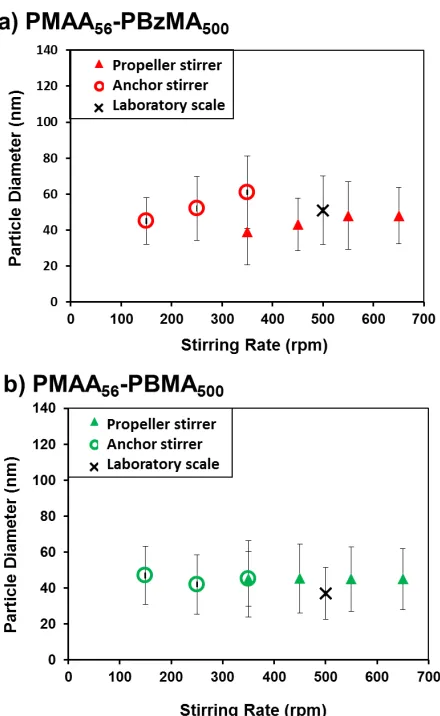
Figure 2. Summary of dynamic light scattering (DLS) data showing the effect of stirrer geometry and stirring rate
(rpm) on the intensity-average particle diameter (nm) for (a) PMAA56-PBzMA500 and (b) PMAA56-PBMA500
diblock copolymer nanoparticles prepared via high-throughput RAFT aqueous emulsion polymerization using the Chemspeed AutoPlant A100 synthesizer. Filled triangles indicate syntheses conducted using the propeller stirrer, open circles indicate syntheses performed using the anchor stirrer and crosses indicate laboratory-scale syntheses. Error bars indicate the standard deviations for each particle size distribution, rather than the experimental error.
For the BzMA polymerizations, some variation in the intensity-average diameter was observed
when adjusting the stirring rate for both stirrer geometries (Figure 2 and Figure S5). When
using the anchor stirrer, a modest increase in nanoparticle diameter from 45 to 61 nm was
observed as the stirring rate was increased from 150 to 350 rpm. A smaller increase in
nanoparticle diameter (from 39 to 45 nm) with stirring rate was observed for polymerizations
using the propeller stirrer. In contrast, the stirrer geometry and stirring rate had minimal effect
on the intensity-average diameter for BMA polymerizations (Figure 2 and Figure S4). In
addition, the particle size was comparable to those achieved during laboratory scale syntheses
of the PMAA56-PBzMA500 and PMAA56-PBMA500 diblock copolymer nanoparticles (which
afforded intensity-average diameters of 51 nm and 37 nm, respectively). Overall, it seems that
15
aqueous emulsion polymerizations and that the monomer density has little influence on the
formation of monomer droplets under shear.
The reproducibility of such high-throughput syntheses using the Chemspeed A100 was then
evaluated by preparing both PMAA56-PBzMA500 and PMAA56-PBMA500 nanoparticles five
times using precisely the same formulation in each case. These formulations were conducted
in randomized locations on the Chemspeed A100. The resulting diblock copolymer dispersions
were then analyzed by HPLC, DLS and TEM for comparison, along with THF GPC analyses
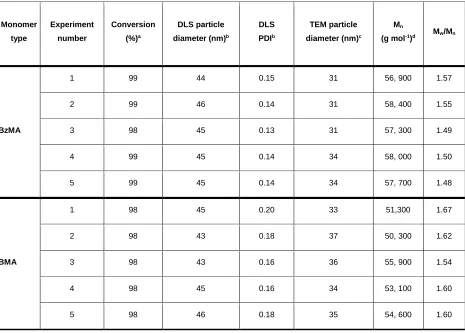
of the copolymer chains (see Table 2). All five PMAA56-PBzMA500 syntheses proceeded to
[image:16.595.75.540.352.685.2]high conversion within 1 h (> 98 %) while GPC analyses indicated comparable molecular
Table 2. Assessment of the reproducibility of the PISA synthesis of diblock copolymer nanoparticles via
high-throughput RAFT aqueous emulsion polymerization of either benzyl methacrylate (BzMA) or n-butyl
methacrylate (BMA) at 70 °C using a PMAA56 macro-CTA at pH 5.
Monomer type Experiment number Conversion (%)a DLS particle
diameter (nm)b
DLS
PDIb
TEM particle
diameter (nm)c
Mn
(g mol-1)d Mw/Mn
BzMA
1 99 44 0.15 31 56, 900 1.57
2 99 46 0.14 31 58, 400 1.55
3 98 45 0.13 31 57, 300 1.49
4 99 45 0.14 34 58, 000 1.50
5 99 45 0.14 34 57, 700 1.48
BMA
1 98 45 0.20 33 51,300 1.67
2 98 43 0.18 37 50, 300 1.62
3 98 43 0.16 36 55, 900 1.54
4 98 45 0.16 34 53, 100 1.60
5 98 46 0.18 35 54, 600 1.60
a Conversion determined by high-performance liquid chromatography (HPLC) b Intensity-average particle diameter determined by dynamic light scattering (DLS)
c Number-average particle diameter determined by transmission electron microscopy (TEM)
16
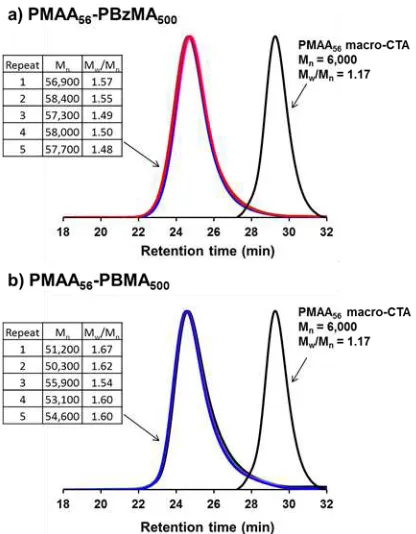
weight distributions in each case (Mn = 56 700 ± 500 g mol-1 and Mw/Mn = 1.48-1.57) (Figure
3a). Similarly, each of the five PMAA56-PBMA500 syntheses proceeded to 98 % conversion
within 1 h (Mn = 53 400 ± 2 100 g mol-1 and Mw/Mn =1.54-1.67, Figure 3b). THF GPC
chromatograms also confirm high blocking efficiencies and unimodal traces in all cases.
Moreover, there was generally minimal variation in the intensity-average particle diameter
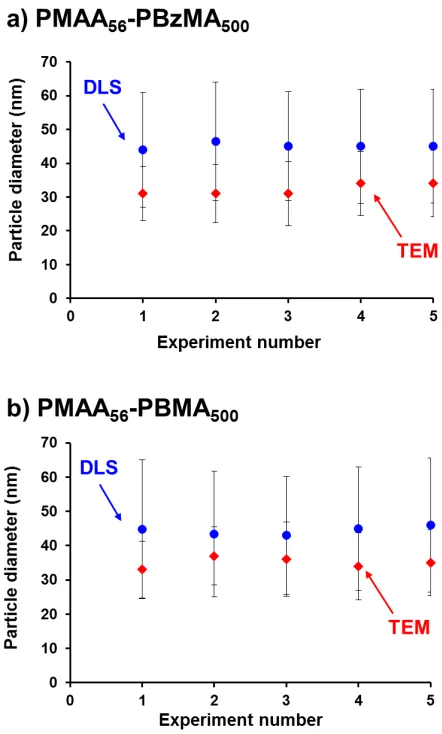
between the PMAA56-PBzMA500 series (44 nm to 46 nm) and the PMAA56-PBMA500 series(43
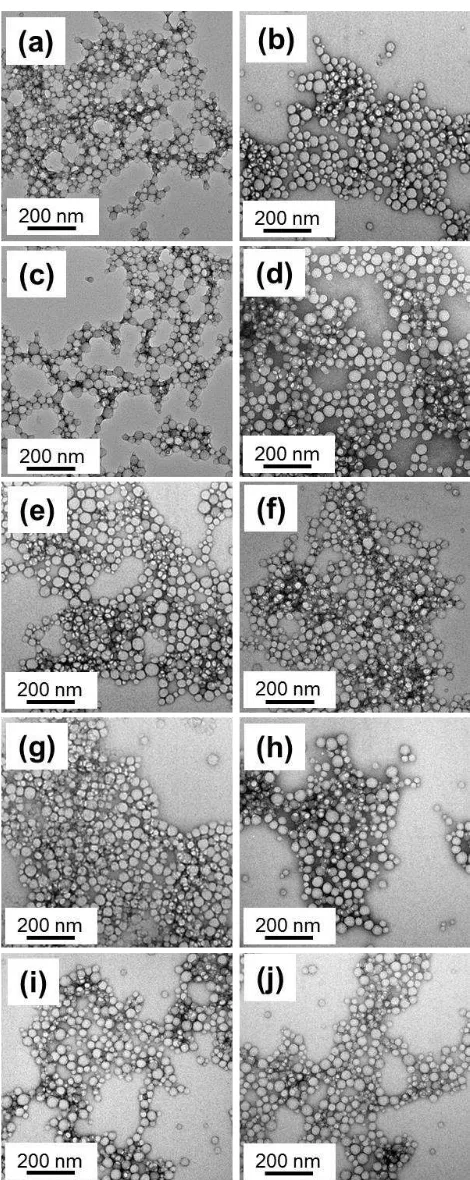
to 46 nm), see Figure 4 and Figure S6. However, TEM analysis (which is only sensitive to the
nanoparticle cores, and so underestimates relative to the hydrodynamic diameter reported by
DLS) indicated the formation of spherical nanoparticles with comparable particle diameters in
all cases, see Figure 5.
Figure 3. THF GPC chromatograms confirm that good reproducibility is achieved for molecular weight
distributions when targeting (a) PMAA56-PBzMA500 and (b) PMAA56-PBMA500 nanoparticles via
high-throughput RAFT aqueous emulsion polymerizations performed using the Chemspeed A100. Each synthesis was conducted five times and the corresponding chromatograms are overlaid. Tables summarize the Mn and Mw/Mn
[image:17.595.74.282.301.568.2]17
Figure 4. Particle size analysis of diblock copolymer nanoparticles synthesized via high-throughput RAFT
aqueous emulsion polymerization using the Chemspeed Autoplant A100 automated synthesizer: (a) PMAA56
-PBzMA500 and (b) PMAA56-PBMA500. Particle diameter as measured by DLS (blue circles) and by TEM (red
diamonds). Error bars indicate standard deviations for each particle size distribution, rather than the experimental error.
In summary, the observed minimal variation in conversion, molecular weight, dispersity and
mean particle diameter indicate rather good reproducibility for the high-throughput RAFT
[image:18.595.77.298.75.442.2]18
Figure 5. Representative TEM images of diblock copolymer nanoparticles synthesized via high-throughput
19
Having demonstrated reproducible RAFT aqueous emulsion polymerization syntheses for both
PMAA56-PBzMA500 and PMAA56-PBMA500 nanoparticles, the versatility of this optimized
high-throughput approach was assessed for the synthesis of methacrylic-based multiblock
nanoparticles.89 In a third series of experiments, various triblock and tetrablock copolymer nanoparticles were prepared via a one-pot protocol using sequential monomer addition.In this
case, the same PMAA56 macro-CTA was chain-extended with BzMA, followed by BMA and
then (in the case of the tetrablocks) BzMA, with a target DP of 500 for each block (Scheme2,
Route A). The sequence of the two core-forming blocks was then reversed; the PMAA56
macro-CTA was chain-extended first with BMA, followed by BzMA and finally with BMA (see
Scheme 2, Route B). These PISA syntheses were completed within 3 h in the case of the
triblock copolymer nanoparticles (40 % w/w solids; > 99 % overall conversion), see Table S1
and Figure S6. However, tetrablocks (45 % w/w solids) suffer from incomplete conversions
(87-96 % within 5 h) and hence most likely represent the upper limit for this approach, see
20
Scheme 2.Synthesis of diblock, triblock and tetrablock copolymers prepared via high-throughput RAFT aqueous
emulsion polymerization using the Chemspeed A100 robot synthesizer. A PMAA56 macro-CTA was
chain-extended with BzMA, followed by BMA and then (in the case of the tetrablocks) BzMA, with each insoluble
block having a target DP of 500. The sequence of the two core-forming blocks was also reversed; thus the PMAA56
macro-CTA was chain-extended first with BMA, followed by BzMA and then BMA. These multiblock syntheses
were performed at 70 oC using a PMAA
56 macro-CTA/initiator of 5.0, in aqueous solution at pH 5. A propeller
21
Figure 6. THF GPC chromatograms illustrating the monotonic increase in block copolymer molecular weight
achieved with each subsequent block addition during the high-throughput synthesis of diblock, triblock and tetrablock copolymer nanoparticles by RAFT aqueous emulsion polymerization using the Chemspeed A100. All Mn values are expressed relative to poly(methyl methacrylate) calibration standards.
THF GPC analysis indicated a progressive increase in molecular weight during the synthesis
of the tetrablock copolymer, see Figure 6. Clearly, the Mw/Mn values obtained throughout this
study (Mw/Mn = 1.35 to 1.85) are generally higher than those normally reported for RAFT
aqueous emulsion polymerization syntheses. However, there are a number of literature reports
that also report relatively broad molecular weight distributions for such PISA formulations. 16-18, 22, 23, 26 Frankly, we are not sure why relatively high M
w/Mn values are observed in the present
studies. Nevertheless, the GPC data shown in Figure 6 indicate unimodal distributions and high
blocking efficiencies. Thus well-defined, albeit relatively polydisperse, block copolymers are
obtained with minimal macro-CTA contamination. In summary, RAFT control is admittedly
imperfect in these PISA syntheses, but it is emphasized that there is no evidence for the
premature loss of chain-end functionality from the precursor poly(methacrylic acid) block,
[image:22.595.79.309.72.435.2]22
Finally, the GPC data obtained for the laboratory-scale synthesis of the tetrablock copolymers
differ significantly from that obtained from the corresponding high-throughput syntheses, with
the former giving broader molecular weight distributions (compare Figure S8 and Figure 6).
However, such discrepancies may well be attributable to differing GPC analytical protocols
and instrument set-ups, as noted earlier.
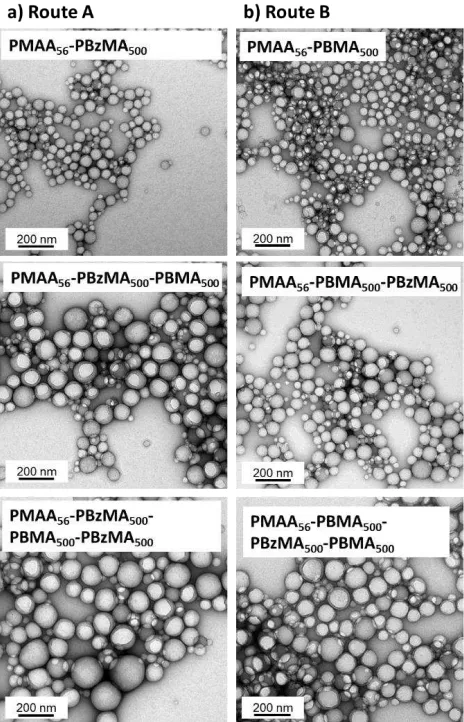
TEM and DLS studies confirmed that colloidally stable spherical nanoparticles were obtained
in all cases (see Figure7, Figure S9 and Figure S10). Owing to the larger (~30 mL) scale and
higher solids concentrations (30-45% w/w) used for these reactions, the stirring rate was raised
to 700 rpm for the diblock copolymer syntheses and to 900 rpm for the triblock and tetrablock
syntheses.
In summary, RAFT aqueous emulsion polymerization can be used for the synthesis of
methacrylic tetrablock nanoparticles at up to 45% w/w solids within 5 h, which is comparable
to industrial latex formulations based on conventional emulsion polymerization. However, the
latter technique cannot be used to access diblock copolymer architectures, so RAFT aqueous
emulsion polymerization may offer new potential applications in terms of nanoscale phase
separation.
Conclusions
We report optimized protocols for performing high-throughput RAFT aqueous emulsion
polymerizations using a commercial automated robot synthesizer (Chemspeed A100). In
addition to thorough deoxygenation of the reaction solution, reproducible formulations
required using a propeller-type stirrer at stirring rates of 550-900 rpm to produce sufficiently
small droplets of the water-immiscible benzyl methacrylate or n-butyl methacrylate monomer.
Various sterically-stabilized diblock copolymer nanoparticles could be prepared with final
monomer conversions of ≥ 95 % within 1 h. GPC studies indicated very high blocking
efficiencies but relatively broad molecular weight distributions (Mw/Mn≤ 1.70). TEM studies
confirm that a well-defined spherical morphology was obtained in each case but DLS analyses
indicated relatively broad size distributions. A library of various triblock and tetrablock
copolymer nanoparticles were also prepared via a convenient one-pot protocol using sequential
monomer addition. For the tetrablock copolymers, these latter PISA syntheses led to final
conversions of 87-96 % within 5 h at 70 °C and good colloidal stability being achieved even at
45 % w/w solids. GPC studies indicate high blocking efficiencies but relatively broad
molecular weight distributions (Mw/Mn = 1.36-1.85), suggesting well-defined (albeit rather
high-23
throughput screening of RAFT-mediated PISA formulations, which is likely to be required for
[image:24.595.75.307.138.499.2]commercialization of this promising technology.
Figure 7. Representative TEM images obtained for the synthesis of diblock, triblock and tetrablock copolymers
using the Chemspeed A100 automated synthesizer by RAFT aqueous emulsion polymerization. Spherical morphologies were obtained in all cases and an increase in mean nanoparticle diameter was observed by DLS and TEM with each subsequent block addition.
Author Information Corresponding Author
*E-mail [email protected] (S.P.A.)
ORCID
Steven P. Armes: 000-0002-8289-6351
24
Acknowledgments
EPSRC and AkzoNobel (Slough, UK) are thanked for funding a CDT PhD CASE studentship
for A.A.C. (EP/L016281/1). In addition, S.P.A. acknowledges an ERC Advanced Investigator
grant (PISA 320372). The authors are grateful to AkzoNobel for hosting A.A.C. during a
six-month placement at their Slough site, where most of this work was conducted. D. Anand,
S. Javed, K. Erdelyi-Brooks and D. Sanjuan are thanked for their technical advice regarding
the polymer syntheses. J. Pricopi performed all HPLC analyses and A. Szczygiel, S. Murray,
D. Pearce, A. Robinson and C. Baldassarri are acknowledged for their assistance and advice
regarding the NMR, GPC and TEM studies. AkzoNobel is also thanked for permission to
publish this work.
References
1. J. Chiefari, Y. K. B. Chong, F. Ercole, J. Krstina, J. Jeffery, T. P. T. Le, R. T. A. Mayadunne, G. F. Meijs, C. L. Moad, G. Moad, E. Rizzardo and S. H. Thang, Macromolecules, 1998, 31, 5559-5562.
2. S. Perrier, Macromolecules, 2017, 50, 7433-7447.
3. M. Semsarilar and S. Perrier, Nature Chemistry, 2010, 2, 811-820.
4. Y. Mitsukami, M. S. Donovan, A. B. Lowe and C. L. McCormick, Macromolecules, 2001, 34, 2248-2256.
5. M. S. Donovan, B. S. Sumerlin, A. B. Lowe and C. L. McCormick, Macromolecules, 2002, 35, 8663-8666.
6. C. L. McCormick and A. B. Lowe, Accounts of Chemical Research, 2004, 37, 312-325.
7. A. B. Lowe and C. L. McCormick, Progress in Polymer Science, 2007, 32, 283-351. 8. C. L. McCormick, B. S. Sumerlin, B. S. Lokitz and J. E. Stempka, Soft Matter, 2008,
4, 1760-1773.
9. A. York, S. Kirkland and C. McCormick, Advanced Drug Delivery Reviews, 2008,
60, 1018-1036.
10. S. W. Prescott, M. J. Ballard, E. Rizzardo and R. G. Gilbert, Aust. J. Chem, 2002, 55, 415.
11. C. J. Ferguson, R. J. Hughes, B. T. T. Pham, B. S. Hawkett, R. G. Gilbert, A. K. Serelis and C. H. Such, Macromolecules, 2002, 35, 9243-9245.
12. C. J. Ferguson, R. J. Hughes, D. Nguyen, B. T. T. Pham, R. G. Gilbert, A. K. Serelis, C. H. Such and B. S. Hawkett, Macromolecules, 2005, 38, 2191-2204.
13. S. Fréal-Saison, M. Save, C. Bui, B. Charleux and S. Magnet, Macromolecules, 2006,
39, 8632-8638.
14. M. Manguian, M. Save and B. Charleux, Macromolecular Rapid Communications, 2006, 27, 399-404.
15. M. F. Cunningham, Progress in Polymer Science, 2008, 33, 365.
16. S. Boissé, J. Rieger, K. Belal, A. Di-Cicco, P. Beaunier, M.-H. Li and B. Charleux, Chemical Communications, 2010, 46, 1950-1952.
25
18. X. Zhang, S. Boisse, W. Zhang, P. Beaunier, F. D’Agosto, J. Rieger and B. Charleux, Macromolecules, 2011, 44, 4149-4158.
19. W. Zhang, F. D’Agosto, O. Boyron, J. Rieger and B. Charleux, Macromolecules, 2011, 44, 7584-7593.
20. I. Chaduc, W. Zhang, J. Rieger, M. Lansalot, F. D'Agosto and B. Charleux, Macromolecular Rapid Communications, 2011, 32, 1270-1276.
21. I. Chaduc, M. Girod, R. Antoine, B. Charleux, F. D’Agosto and M. Lansalot, Macromolecules, 2012, 45, 5881-5893.
22. W. Zhang, F. D’Agosto, O. Boyron, J. Rieger and B. Charleux, Macromolecules, 2012, 45, 4075.
23. I. Chaduc, A. Crepet, O. Boyron, B. Charleux, F. D’Agosto and M. Lansalot, Macromolecules, 2013, 46, 6013-6023.
24. W. Zhang, F. D'Agosto, P.-Y. Dugas, J. Rieger and B. Charleux, Polymer, 2013, 54, 2011-2019.
25. V. J. Cunningham, A. M. Alswieleh, K. L. Thompson, M. Williams, G. J. Leggett, S. P. Armes and O. M. Musa, Macromolecules, 2014, 47, 5613-5623.
26. N. P. Truong, M. V. Dussert, M. R. Whittaker, J. F. Quinn and T. P. Davis, Polym. Chem., 2015, 6, 3865-3874.
27. J. Lesage de la Haye, X. Zhang, I. Chaduc, F. Brunel, M. Lansalot and F. D'Agosto, Angewandte Chemie International Edition, 2016, 55, 3739-3743.
28. A. A. Cockram, T. J. Neal, M. J. Derry, O. O. Mykhaylyk, N. S. J. Williams, M. W. Murray, S. N. Emmett and S. P. Armes, Macromolecules, 2017, 50, 796-802. 29. M. Save, Y. Guillaneuf and R. G. Gilbert, Aust. J. Chem, 2006, 59, 693-711. 30. Z. An, Q. Shi, W. Tang, C.-K. Tsung, C. J. Hawker and G. D. Stucky, J Am Chem
Soc, 2007, 129, 14493-14499.
31. Y. Li and S. P. Armes, Angewandte Chemie International Edition, 2010, 49, 4042-4046.
32. A. Blanazs, J. Madsen, G. Battaglia, A. J. Ryan and S. P. Armes, Journal of the American Chemical Society, 2011, 133, 16581-16587.
33. S. Sugihara, A. Blanazs, S. P. Armes, A. J. Ryan and A. L. Lewis, Journal of the American Chemical Society, 2011, 133, 15707-15713.
34. W. Shen, Y. Chang, G. Liu, H. Wang, A. Cao and Z. An, Macromolecules, 2011, 44, 2524-2530.
35. G. Liu, Q. Qiu, W. Shen and Z. An, Macromolecules, 2011, 44, 5237-5245. 36. A. Blanazs, A. J. Ryan and S. P. Armes, Macromolecules, 2012, 45, 5099-5107. 37. M. Semsarilar, V. Ladmiral, A. Blanazs and S. P. Armes, Langmuir, 2012, 28, 914. 38. P. Chambon, A. Blanazs, G. Battaglia and S. P. Armes, Macromolecules, 2012, 45,
5081.
39. L. P. D. Ratcliffe, A. J. Ryan and S. P. Armes, Macromolecules, 2013, 46, 769-777. 40. M. Semsarilar, V. Ladmiral, A. Blanazs and S. P. Armes, Langmuir, 2013, 29, 7416. 41. N. J. Warren and S. P. Armes, Journal of the American Chemical Society, 2014, 136,
10174-10185.
42. N. J. Warren, O. O. Mykhaylyk, D. Mahmood, A. J. Ryan and S. P. Armes, Journal of the American Chemical Society, 2014, 136, 1023.
43. J. Rieger, Macromolecular Rapid Communications, 2015, 36, 1458-1471.
44. B. Charleux, G. Delaittre, J. Rieger and F. D’Agosto, Macromolecules, 2012, 45, 6753-6765.
45. S. L. Canning, G. N. Smith and S. P. Armes, Macromolecules, 2016, 49, 1985-2001. 46. J.-T. Sun, C.-Y. Hong and C.-Y. Pan, Soft Matter, 2012, 8, 7753.
26
48. M. R. Hill, R. N. Carmean and B. S. Sumerlin, Macromolecules, 2015, 48, 5459-5469.
49. M. J. Derry, L. A. Fielding and S. P. Armes, Progress in Polymer Science, 2016, 52, 1-18.
50. M. Semsarilar, E. R. Jones, A. Blanazs and S. P. Armes, Advanced Materials, 2012,
24, 3378-3382.
51. B. Akpinar, L. A. Fielding, V. J. Cunningham, Y. Ning, O. O. Mykhaylyk, P. W. Fowler and S. P. Armes, Macromolecules, 2016, 49, 5160-5171.
52. A. Blanazs, R. Verber, O. O. Mykhaylyk, A. J. Ryan, J. Z. Heath, C. W. I. Douglas and S. P. Armes, Journal of the American Chemical Society, 2012, 134, 9741-9748. 53. C. Gonzato, M. Semsarilar, E. R. Jones, F. Li, G. J. P. Krooshof, P. Wyman, O. O.
Mykhaylyk, R. Tuinier and S. P. Armes, Journal of the American Chemical Society, 2014, 136, 11100.
54. N. J. W. Penfold, Y. Ning, P. Verstraete, J. Smets and S. P. Armes, Chemical Science, 2016, 7, 6894-6904.
55. I. Canton, N. J. Warren, A. Chahal, K. Amps, A. Wood, R. Weightman, E. Wang, H. Moore and S. P. Armes, ACS Central Science, 2016, 2, 65-74.
56. K. L. Thompson, C. J. Mable, A. Cockram, N. J. Warren, V. J. Cunningham, E. R. Jones, R. Verber and S. P. Armes, Soft Matter, 2014, 10, 8615.
57. M. J. Rymaruk, K. L. Thompson, M. J. Derry, N. J. Warren, L. P. D. Ratcliffe, C. N. Williams, S. L. Brown and S. P. Armes, Nanoscale, 2016, 8, 14497-14506.
58. M. Chenal, J. Rieger, C. Véchambre, J.-M. Chenal, L. Chazeau, C. Creton and L. Bouteiller, Macromolecular Rapid Communications, 2013, 34, 1524-1529.
59. M. Chenal, C. Véchambre, J.-M. Chenal, L. Chazeau, V. Humblot, L. Bouteiller, C. Creton and J. Rieger, Polymer, 2017, 109, 187-196.
60. L. D. Blackman, K. E. B. Doncom, M. I. Gibson and R. K. O'Reilly, Polymer Chemistry, 2017, 8, 2860-2871.
61. M. Williams, N. J. W. Penfold, J. R. Lovett, N. J. Warren, C. W. I. Douglas, N. Doroshenko, P. Verstraete, J. Smets and S. P. Armes, Polymer Chemistry, 2016, 7, 3864-3873.
62. R. Hoogenboom, M. A. R. Meier and U. S. Schubert, Macromol. Rapid Commun., 2003, 24, 15-32.
63. H. E. Tuinstra and C. H. Cummins, Advanced Materials, 2000, 23, 1819-1822. 64. M. A. R. Meier, R. Hoogenboom and U. S. Schubert, Macromolecular Rapid
Communications, 2004, 25, 21-33.
65. S. P. Rohrer, E. T. Birzin, R. T. Mosley, S. C. Berk, S. M. Hutchins, D.-M. Shen, Y. Xiong, E. C. Hayes, R. M. Parmar, F. Foor, S. W. Mitra, S. J. Degrado, M. Shu, J. M. Klopp, S.-J. Cai, A. Blake, W. W. S. Chan, A. Pasternak, L. Yang, A. A. Patchett, R. G. Smith, K. T. Chapman and J. M. Schaeffer, Science, 1998, 282, 737-740.
66. K. C. Nicolaou, A. J. Roecker, S. Barluenga, J. A. Pfefferkorn and G.-Q. Cao, Chem Bio Chem, 2001, 2, 460-465.
67. B. Jandeleit, D. J. Schaefer, T. S. Powers, H. W. Turner and W. H. Weinberg, Science, 1999, 268, 1738-1740.
68. X. D. Xiang, X.-D. Sun, G. Briceno, Y. Lou, K.-A. Wang, H. Chang, W. G. Wallace-Freedman, S.-W. Chen and P. G. Schultz, Science, 1995, 268, 1738-1740.
69. E. Danielson, J. H. Golden, E. W. McFarland, C. M. Reaves, W. H. Weinberg and X. D. Wu, Angewandte Chemie International Edition, 1997, 38, 2494-2532.
27
71. J. Wang, Y. Yoo, C. Gao, I. Takeuchi, X.-D. Sun, H. Chang, X.-D. Xiang and P. G. Schultz, Science, 1998, 279, 1712-1714.
72. P. G. Schultz and X.-D. Xiang, Current Opinion in Solid State and Materials Science, 1998, 3, 153-158.
73. S. M. Senkan, Angewandte Chemie International Edition, 1998, 40, 284-310. 74. M. T. Reetz, Nature, 1998, 394, 350-353.
75. T. R. Boussie, G. M. Diamond, C. Goh, K. A. Hall, A. M. LaPointe, M. Leclerc, C. Lund, V. Murphy, J. A. W. Shoemaker, U. Tracht, H. Turner, J. Zhang, T. Uno, R. K. Rosen and J. C. Stevens, J Am Chem Soc, 2003, 125, 4306-4317.
76. T. R. Boussie, G. M. Diamond, C. Goh, K. A. Hall, A. M. LaPointe, M. K. Leclerc, V. Murphy, J. A. W. Shoemaker, H. Turner, R. K. Rosen, J. C. Stevens, F. Alfano, V. Busico, R. Cipullo and G. Talarico, Angewandte Chemie International Edition, 2006,
45, 3278-3283.
77. P. Chapon, M. Catherine, L. Gilda and D. Mathias, Macromol. Rapid Commun., 2003,
24, 87-91.
78. M. W. M. Fijten, M. A. R. Meier, R. Hoogenboom and U. S. Schubert, Journal of Polymer Science Part A: Polymer Chemistry, 2004, 42, 5775-5783.
79. M. W. M. Fijten, R. M. Paulus and U. S. Schubert, Journal of Polymer Science Part A: Polymer Chemistry, 2005, 43, 3831-3839.
80. R. Hoogenboom and U. S. Schubert, Macromolecules, 2005, 38, 7653-7659.
81. C. R. Becer, A. M. Groth, R. Hoogenboom, R. M. Paulus and U. S. Schubert, QSAR & Combinatorial Science, 2008, 27, 977-983.
82. S. Boissé, J. Rieger, G. Pembouong, P. Beaunier and B. Charleux, Journal of Polymer Science Part A: Polymer Chemistry, 2011, 49, 3346.
83. M. Semsarilar, V. Ladmiral, A. Blanazs and S. P. Armes, Polymer Chemistry, 2014,
5, 3466-3475.
84. F. A. Bovey and I. M. Kolthoff, Chemical Reviews, 1948, 42, 491-525. 85. V. A. Bhanu and K. Kishore, Chemical Reviews, 1991, 91, 99-115.
86. J. W. Goodwin, J. Hearn, C. C. Ho and R. H. Ottewill, Colloid and Polymer Science, 1974, 252, 464-471.
87. S. Fathi Roudsari, R. Dhib and F. Ein-Mozaffari, Polymer Engineering & Science, 2015, 55, 945-956.
88. K. Matyjaszewski and T. Davis, Handbook of Radical Polymerization, Wiley, 2002. 89. There has been considerable recent interest in the synthesis of multiblock copolymers