GARCIA WORKING PAPERS
Workshops for early career
researchers: 12 SSH and STEM
test institutions
Edited by Marjolein Dennissen, Channah Herschberg,
Yvonne Benschop, Marieke van den Brink
!
GARCIA is an EU-Framework 7 funded project under topic SiS.2013.2.1.1-1
“Supporting changes in the organisation of research institutions to
promote Gender Equality”
Grant agreement n. 611737 • Project coordinator:University of Trento • Homepage: www.garciaproject.eu
2
Table of contents
General introduction 4
1. BELGIUM, by Grégoire Lits 5
1.1 Introduction 5
1.2 Set up of the task 6
1.2.1 SSH Department 6
1.2.2 STEM Department 10
1.3 Evaluation of the task 13
1.4 Conclusion 15
2. ICELAND, by Finnborg Salome Steinþórsdóttir, Gyða Margrét Pétursdóttir,
Þorgerður Einarsdóttir 16
2.1 Introduction 16
2.2 Set up of the task 16
2.2.1 STEM and SSH department 16
2.3 Evaluation of the task 18
2.3.1 STEM and SSH department 18
2.4 Conclusion 20
3. ITALY, by Francesca Fiore, Rossella Bozzon, Annalisa Murgia, Barbara Poggio 21
3.1 Introduction 21
3.2 Set up of the task 22
3.2.1 STEM department 23
3.2.2 SSH department 30
3.2.3 University level 34
3.3 Evaluation of the task 36
3.3.1 STEM department 36
3.3.2 SSH department 37
3.3.3 University level 38
3.4 Conclusion 39
3.5 References 39
4. TheNETHERLANDS, by Laura Berger 41
4.1 Introduction 41
4.2 Set up of the task 42
4.2.1 SSH department 42
4.2.2 STEM department 43
4.3 Evaluation of the task 45
4.3.1 SSH department 45
4.3.2 STEM department 46
4.4 Conclusion 48
3
5. SLOVENIA, by Polona Sitar 50
5.1 Introduction 50
5.2 Set up of the task 52
5.3 Evaluation of the task 56
5.4 Conclusion 58
6. SWITZERLAND, by Sabine Kradolfer 60
6.1 Introduction 60
6.1.1 Swiss context 60
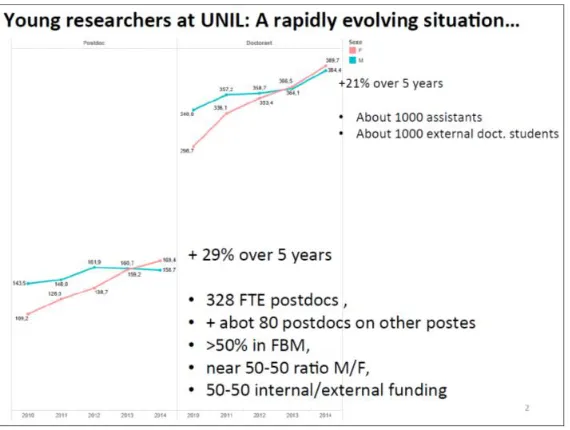
6.1.2 Situation of postdocs 63
6.1.3 Existing workshops for postdocs 68
6.2 Set up of the task 69
6.3 Evaluation of the task 71
6.4 Conclusion 71
4
GENERAL INTRODUCTION
This GARCIA Working Paper ‘Workshops for early career researchers: 12 SSH and STEM test institutions’ presents the collection of the reports on the workshops for early career
researchers that were organized in the six GARCIA beneficiaries: Belgium, Iceland, Italy, the Netherlands, Slovenia, and Switzerland. The workshops were organized in two disciplines: Science, Technology, Engineering and Mathematics (STEM) and Social Sciences and Humanities (SSH).
The workshops for early career researchers are part of work package 7 of the GARCIA project. The GARCIA Project – Gendering the Academy and Research: combating Career Instability and Asymmetries – is concerned with the implementation of actions in European universities and research centres to promote gender equality and to prevent gender stereotypes and discriminations. Work package 7 focuses on the revealing of gender practices in the construction of academic excellence in recruitment and selection procedures. The construction of academic excellence is especially salient for the early stages of a academic career, as the label of excellence can make the difference between the inclusion or exclusion of researchers in academia. Building on GARCIA working paper n. 2 on the gap between formal and actual criteria (Herschberg, Benschop, & Van den Brink, 2015), and working paper n. 10 on gender practices in the construction of excellence (Herschberg, Benschop, & Van den Brink, 2016), these workshops are developed for prospective candidates in the early stages of their academic career in order to inform them about the criteria for building an academic career.
The aims of the workshops with prospective candidates were threefold. First, to give candidates information about recruitment and selection criteria applied in the selection processes for early career researchers and how the formal criteria can differ from the actual criteria applied when a candidate is selected. Second, to raise awareness about the gendered construction of academic excellence and gender practices in recruitment and selection processes. And third, to discuss with early career researchers how to take the next step in building their academic career.
Workshops are thus designed to discuss the recruitment and selection criteria and processes for early career researchers and how gender practices can play a role in these processes. Each beneficiary reported on the organization, execution and evaluation of these workshops in their national and organizational context. They reported on the challenges and resistances that they encountered either during the organization of the workshop or during the execution of the workshop. Although the basis of the workshops was the same for every beneficiary, national and organizational context factors resulted in several differences between the beneficiaries. For example, in some beneficiaries it was not possible to carry out the workshops in the STEM and SSH department separately. However, these differences resulted in a valuable overview of what the organization of a workshop of this kind entails in different national and organizational contexts. This exemplifies that keeping in mind the context in which the workshop is to be organized is crucial for its effectiveness and success.
5
1. BELGIUM
1.1 INTRODUCTION
The objective of organizing reflexive working groups with prospective candidates is to give them some information about the current situation of recruitment in academia to help them to become aware of how recruitment selection processes work. We use two different settings to achieve this goal. We first organised two reflexive workshops, one in the STEM department (ELI) and one in the SSH department (IACCHOS). These workshops gathered a small amount of participants (3/4) that 1/ exchanged their experiences of recruitment as postdoc researcher or PhD student, and 2/ were given information coming from previous Garcia research conducted in UCLouvain about selection procedures.
A second setting was developed only in IACCHOS. We organised a presentation of some results of the Garcia project at destination of all young researchers of IACCHOS that attended a day of formation for young researcher organised by IACCHOS. This presentation reached between 30 and 40 young IACCHOS researchers.
UCL specific context of recruitment
Selection procedures at the postdoctoral level at UCLouvain can take different forms. Tenure-track recruitment procedures are particularly different from non-permanent postdoctoral research or teaching staff member recruitments. Tenure-track
recruitments (at the level of “chargé de cours” (assistant or associate professor) or
“chercheur qualifié” (research associate) are the most formal recruitment procedures. It
is the only stage of the career for which an official recruitment committee is constituted to assess the scientific quality of the candidates. Non-permanent post-doctoral position generally does not imply the constitution of a selection commission and are often directly conducted by the primary investigator of a research project himself.
Tenure-track recruitment procedures also depend on the scientific career paths that exist. Two career paths exist in Belgian universities: appointment as permanent professor at a university and appointment as permanent research associate at the FNRS (Belgian Funds for Scientific Research). Selection procedures as university professor or as permanent researcher at the FNRS are different.
6
by the local recruitment committee. Generally the candidate selected by the local commission is appointed, but, in some uncommon cases, the rectoral board can decide that the first-ranked candidate does not demonstrate sufficient scientific achievement and decide to close up the procedure and postpone the appointment to the next year.
1.2 SET UP OF THE TASK
1.2.1 SSH Department
Organization of the workshop
We launched a first round of invitations to PhD students, post-doctoral researchers or former PhD students (who graduated in the three last years) from IACCHOS. We contacted 15 people. 6 agreed to take part to the meeting, 5 were not available at the different dates proposed, 2 refused to participate (one because of a too heavy workload at this period, another didn’t wanted to address these topics with colleagues but gives
us the contact information of his girlfriend who also is a PhD student in IACCHOS and was interested), two did not responded to our invitation. Finally on the 6 who agreed to take part, two didn’t attended the meeting. One because of a too heavy workload, the
second was ill that day.
In this invitation we presented the Garcia project and explained that the aim of the workshop was to discuss the following issues: 1/ How to get a permanent academic job today? 2/ What are the different ways in engaging with work in research institutions? 3/ We wanted to discuss the difficulties and obstacles that participants to the meeting face in their career. 4/ We wanted to discuss the perceptions of research work environments that the participants have.
The workshop took place on March the 30th 2016.
The four participants have different profiles, they come from three disciplines: economy, sociology and history:
Participant 1, is a male former PhD student in his mid-thirties. He obtained his PhD in 2013 from UCLouvain. He is at the time of the meeting (and has been doing that since the end of his PhD) lecturer (pay per hour) in different institutions of Higher education (community colleges), director of a public observatory (50% employment contract) and free-lance researcher. He is currently looking for employment as assistant professor in a university. He has one child.
Participant 2 is a female post-doctoral researcher in his early-thirties. She obtained her PhD in 2012 in UCLouvain. Since then she obtained postdoctoral grants in two different universities (one abroad, and one in Belgium). She is currently invited (pay per hour) lecturer in UCLouvain and in France and consultant (pay per hour) for a prestigious university in the UK. She is in couple with a researcher also working abroad and she is childless.
7
Participant 4 is a male PhD student (in his mid-twenties), in the second year of his 4 year grant. He has a grant from a public organisation aiming at producing applied research that benefit the development of one of the Belgian regions. He is in couple, childless.
On the 15 invitations we launched, 10 were send to women. Rate of acceptance for women is 10%, while this rate is 60% for men. Even if we are not in a quantitative research settings, this difference in acceptance rate is worth noting.
Content of the discussions
We organized the discussion in three distinctive rounds. In the first one, we asked the participants to present themselves and to talk freely about the topic of this meeting (making an academic career). In the second one, we presented result from previous
Garcia investigation about four “relationships to the scientific career” that are four ideal -typical modalities of engaging with academic work. Based on interviews made with postdoc researchers in Louvain, we identified 4 types of engagement: “full engagement with work”, “optimistic engagement”, “ambivalent engagement”, and “distant engagement”. In the last round of discussion, we presented the results of another research about the conception of “academic excellence” realised at UCLouvain. Based on interviews made previously with recruitment committee members, we distinguished two different conceptions of what is scientific excellence at UCL. A first one we called
the “nomination set of criteria” and a second that we called the “competition set of criteria”. We then asked the participants to comment and discuss this distinction. We
asked them if they agreed with this analytical distinction between these two set of criteria that are used to evaluate the scientific quality of a candidate during recruitment procedures.
The first round of discussion was thus devoted to a presentation of the participant and a free discussion about what does it means to work in a university. The less that we can say is that the first two speakers (the two postdoctoral researchers) presented a very negative picture of their working conditions. They highlighted the high pressure they have to face, the numerous sacrifices they have made, and a strong pessimist view on their future possibilities in academia.
The opening speaker began by telling us a strong disappointment he had lived one week before the meeting. He applied for a position as assistant professor in a university, he went through the selection process and achieved to be ranked first by the recruitment committee. His profile was thus send to the central administration of the university where the final examination is done by the rectoral board. The rectoral board decided not to hire the candidate and to leave the position open for one more year. His profile was judged not excellent enough. This is below, how he explained this episode and how he linked it to what excellence is:
“As I understood it [this episode], excellence is very important, we have to be
international, and I could say that this university want more to be excellent
and to be in concurrence with Oxford, Harvard, MIT or I don’t know what,
that looking at the fact that she is anchored in a territory with an history. I
8
heard that I had not enough publications, but I have 7 articles in peer-reviewed journals plus 15 more in other journals or books. What I think about excellence? I’m sick of this excellence. [j’en ai ma claque de l’excellence]. What I see around me, there is a gender effect, but there is also an effect of this excellence seen as a unique pipeline. When you go through it, it crushes people. And I have often thought that the best [researchers] goes out. When I
talk to postdocs, there is a lot of people who tell me: ‘I do not want to do this anymore, to publish, to apply, to find a postdoc. Give me anything that I can
settle somewhere’. The game has become too much unidimensional” (Part. 1)
Directly after this first talk, the second postdoc researcher took the floor and went in the same direction:
“This resonate a lot with my own experience. It does not feel difficult to be a
women, this is not the first difficulty. It is very difficult to make its own place. I have known several disappointments. The argument of excellence, reduced to the dimension of publications has been used against me, but I think that this is an argument that is instrumentalised to justify other criteria that are more ideological. My work is perceived (and I have now a precise
confirmation of that) as too much subversive or too much out of the box. (…)
There is a lot of arguments based on the idea that excellence is assessed only through peer-reviewed publications, in which I finally engage myself (I have now four publications in major international journals), but now I do not want to apply to FNRS grants anymore. On another hand, teaching experiences and experiences outside university is totally downgraded. I have a huge experience of teaching, with excellent evaluations and this is not valorised at
all. I’m disillusioned. I’m considering quitting research despite the fact that I
love my job, and that my research topics are, I think, very important for the
society. (…) I’m discouraged, and it takes a lot to discourage me, but I have
enough to be oblige again and again to prove that what I make makes sense
and is important.” (Part. 2)
The two PhD students reacted to these two first statements:
“Something that strikes me [after three year as a PhD student] is the insecurity [précarité] of the job. Not regarding salaries or financial aspects, but regarding the efforts that are expected of us compared to the prospects that we can have. There is a gap there. There is maybe to many PhD students. The insecurity, people are asked to spend one year there, one other year there, international is compulsory. It looks like researcher are disembodied
person, out of a context: ‘go abroad for a year, it’s not difficult!’ as if researchers are unattached. (…) It is expected that researchers can contempt
themselves with six months of contract there and then some more months
there. It is striking and not pleasant. (…) I’m not against going abroad, it is
certainly very rewarding, but regarding the work perspective that we can have after all these efforts, if it is to be back to zero, which happens often, it
is a bit harsh.” (Part. 3)
“It is different for me as I’m not yet in a position where I will do career
9
funded by this administrative agency (…) They are not interested that I
publish peer-reviewed articles, they are not interested that I engage in my university, they want that I produce something that they can use for their politics. But I do a PhD, and it could bring me to the postdoc job market, but if I neglect this, I neither will be competent for the academic job market, nor for the job market outside academia. I try to be active on the two sides, not
knowing where I go. I find it quite dangerous to say: ‘I want to make an
academic career’, because it seems very uncertain. Not knowing where I go, I
try to make the two at the same time. It is a lot of work, and I even not sure that it could take the form of excellence in neither situation. (…) I have the
impression to be paid by the administrative agency because it is cheaper for
them to paid a PhD student that a real employee. I’m financed as a PhD
student but they do not really want me to do a PhD.” (Part. 4)
In the two last rounds of discussion, around the presentation of some results obtained in previous investigation conducted in UCLouvain for the Garcia project, the participants talked mainly about how they perceive what working in a university means. A first consensus emerged between the participants regarding the strong evolution that universities have known recently and the unpreparedness, or inexistence of support, vis-à-vis these transformations coming from senior professors.
“My PhD director belong to the old system. She was not at all aware of the ‘bibliometric imperative’. I was very naïve and very young. I have made my
thesis, because I loved my subject, but I have never thought strategically about my PhD. I heard that you used the expression [referring to what
another participant said] ‘to build my CV’, I have never done that. (…) My director transmit me very good values, but she said to me: ‘I feel sorry that I
never prepare you to make a career in the current system”. (Part. 2)
“My PhD director is very young, he has gone through all that and he is not anachronistic as older professors could be. (…) At the level of my research
centre the question of career is inexistent. We have a seminar where the young researchers of the centre talk about methodologies or concrete problems we could face. Senior professors comes by sometimes and when we address the question of research projects evaluation or other stuff, they seems even more lost that some PhD students. They do not know how to rise
the chances to get grants. (…) I do not have the impression to receive advice on how to act strategically.” (Part. 4)
“I think that in some senior professor there is a moral posture [against
excellence] but that goes along with a lack of understanding. They are
settled, and they do not understand what does not work now.” (Part. 4) They also criticized the “academic system” as it is perceived and have made some
recommendations:
“The system is not made to select the best it is made to select those who are the most ready to make sacrifices: family, a worthy life, to have other
10
“There is not really a graduate school for PhD students, I find that strange,
and it shows a certain vision of the importance of PhD students” (Part. 4) “We have no intellectual formation, no real intellectual formation during the PhD, (…) We have to gain 60 credits, we have three days of formations every year on history, art and archaeology, (…) but they go from Greek pottery to
medieval painting, this is interesting but this is not an intellectual formation.”
(Part. 3).
Organization of the conference (April the 13th, 2016)
The 13 of April 2016, the IACCHOS institute organised his first “workshop for young researcher”. This event was the first manifestation of a new interest in IACCHOS for the difficulties that young researchers can face. This topic of concern was raised at the IACCHOS board of director since several years by the representatives of the non-permanent researchers in the board. Last year this lead to the designation of a vice-president of IACCHOS responsible of organising activities for young researchers of the institute.
This one day long workshop was the first event organised by this “young researcher appointee”. Several topical sessions were organised. In the morning the topic was: How to valorise his research, through publication and in other ways? In the afternoon, the
topic was: “how to build an ‘attracting’ CV on the postdoctoral job market?”
We asked the organiser if we could integrate a presentation of some result of the Garcia project in this workshop, which she agreed. We were offered a 45 minute presentation at the end of that day.
During our presentation (attended by approximately 30-40 PhD students and researchers) we presented 20 PowerPoints slides presenting the main results of investigation conducted at UCLouvain about the leaky pipeline phenomenon, gender asymmetries in UCLouvain, the different ways of engaging in academic work we identified, and the different criteria that are used in recruitment committee at UCLouvain.
1.2.2 STEM Department
Organization of the workshop
It was more difficult to gather young researchers from ELI than it was the case for IACCHOS. We launched a first round of invitations using the official mailing list of the institute. This invitation was thus sent to all non-permanent researchers (phD students,
11
It was not possible to find a date that arranged all the 7 researchers interested, we finally achieved to gather 3 researchers on the 6th of June.
The three participants have different profiles, they come from two disciplines: physics and ecology:
Participant 1 is a female postdoc researcher. She is in her early-thirties. She got her PhD in the Nederland in 2011. She then got several post-doctoral grants in France and in the US and is now postdoctoral researcher at the FNRS in UCLouvain. She is in couple with one child.
Participant 2 is a male postdoctoral researcher in physics and climatology in his late twenties. He got is PhD from UCLouvain in 2015.
Participant 3 is a male postdoctoral researcher in physics and climatology in his early thirties. He got is PhD from UCLouvain in 2014 and previously studied in France.
Content of the discussions
As it was the case in IACCHOS, we organized the discussion in three distinctive rounds. In the first one, we asked the participants to present themselves and to talk about the topic of this meeting (making an academic career), but, and it was not the case in the IACCHOS workshop, we firstly presented some insight from the Garcia project about the
leaky pipeline phenomenon and the concept of “greedy institution”. In the second one, we presented result from previous Garcia investigation about four “relationships to the
scientific career” that are four ideal-typical modalities of engaging with academic work.
Based on interviews made with postdoc researchers in Louvain, we identified 4 types of
engagement: “full engagement with work”, “optimistic engagement”, “ambivalent engagement”, and “distant engagement”. In the last round of discussion, we presented the results of another research about the conception of “academic excellence” realised
at UCLouvain. Based on interviews made previously with recruitment committee members, we distinguished two different conceptions of what is scientific excellence at
UCL. A first one we called the “nomination set of criteria” and a second that we called the “competition set of criteria”. We then asked the participants to comment and discuss this distinction. We asked them if they agreed with this analytical distinction between these two set of criteria that are used to evaluate the scientific quality of a candidate during recruitment procedures.
We will not make a compressive account of the content of the discussion. But it is interesting here to emphasis the way in which these three postdocs explained how they feel about their current position. In this regard, the third participant (first speaker) totally agreed with the presentation we made about university being greedy institution. He explained us why he decided to stop research in short term. The second participant is sitting on the fence, and the third one also consider quitting quickly if she do not find a permanent position soon.
12
“This productivity system [in universities] is constantly in contradiction which
what is excellence. Unless you are a genius, and it is not everyone, this productive system makes that we degrade the quality of the science we produce. With my PhD, I published 5 papers. If I had kept the most important part to makes only one, it would have been very good. But we are constantly pushed to publish quickly, thus we publish things we are not satisfied with. It is a negative circle, if you are not satisfied with what you do, you loos
motivation. Finally I realize that this is still like that after the PhD. I’m in
postdoc. It was a test for me to know if it was going to have more appeal to
me that the PhD. And the answer is no. (…) for me excellence cannot be
achieved or, you are a genius and you can do everything, but I do not think that that is 80% of the researchers. This is the reason why I do not want to go on with research. My ambition, is to work for a living and not to live for my
work. (…) today, I’m almost disgusted by research. I even decided to not apply for a position as assistant professor, even if I love teaching, (…) and I know I had my chances for that position.” (Part. 3)
The second presented his own view.
“When I was PhD student, there was the graduation that was an incentive to do what I had to do, now, as postdoc, I confess that I’m less motivated to
come to work on week-end, because I know that my contract end in two
years and It will be up to me to “beg”, and it is a strong word, for other
funding to be able to continue. Normally if I do good work I could expect to be promoted, at least I think this is the case in the private sector, here every time, the fact to be good, only allows me to scrounge for funding.” (Part. 2)
The last one presented her experience:
“What I think is the main hurdle for me to continue in science now. Actually
there are several. Obviously the publication of course that I think is enormous. Even if you have publication in international journal, then the next
question of the committee will be: ‘well, what is going to be your next
publication?’ (…) They are not looking at what you have done, they are just
looking at the impact factor and that’s it. For me it seems that way. And then,
to get a permanent position, I think in Belgium. But also in the Nederland, not
in France actually, the teaching is also very important. (…) it’s difficult because when you do a postdoc you’re supposed to doresearch, you’re not
supposed to do teaching, but then when you are evaluated for a job they say:
‘yeah, but you do not have any teaching experience’. (…) Basically you need to
be able to do everything and it is simply not possible to do everything. I think when I was a PhD student I spent two years coming every week-end to the labs to do my experiments, we did really great things, and I was so happy
doing that. And still, I don’t mind sometimes coming the week-end, but now I
have a baby, so I’m not going to spend all my week-ends going to the lab. It
just not the same anymore.” (Part. 1)
“I applied to a lot of permanent positions. Like 20 applications in two years’ time. I got invited to a couple of interviews, which was very nice. (…) And
13
there on the same day to make your presentation. They had invited three younger researchers including me and two women, they are very for equal
opportunity in the UK, (…) I think that the person who got the job, she had 7
years more experience than me, of course she had postdocs and PhD’s so you
think: how is it even comparable? Competing with people it seems so
unrealistic.” (Part 1).
In the three case, the future is seen as very uncertain. The pressure on publication is perceived as enormous by these three postdocs, and this pressure is not seen as healthy nor for the individual life of the researcher (it pushes people to consider quitting science) or for the general functioning of science.
1.3 EVALUATION OF THE TASK
When performing the two workshops and the conference, our main objective was to create a learning environment by raising the awareness on evaluation criteria that are used in recruitment procedure. We decided to organise reflexive workshop where a lot of room was given to discussion between the participants and where they can share their experiences and perceptions of recruitment procedures.
We will now evaluate the two workshops with this objective in mind. We will identify 1/ what have worked when performing the working groups, 2/ what challenges and resistances we encountered, 3/ what learning points we gain from planning the working groups and 4/ The specificity of the UCLouvain context and what future action could be undertaken.
What worked when performing the working groups?
The way we structured the discussions, with three rounds of discussion around the presentation of previous research results of the Garcia project was very effective. It sparked fruitful discussions in both working groups (ELI and IACCHOS), and permitted to clearly to trigger exchanges of perception between the participants.
The format of the working groups: 4 participants, 2 hours, 3 members of the Garcia project to lead the discussions was plainly effective. The experiences conducted show that, as it was the case for the workshop we organized with committee members, 3 or 4 participants could be an efficient amount of participants for a two hours working groups. Every participant could talk approximatively 20 minutes and a sufficient amount of time was still available for a debate between participants. More crowded working groups would certainly have given less time for collective discussion.
14
directly people that would be interested in the workshop. We only send 15 invitations and got 13 answers. This is due to our proximity with this institute.
What challenges and resistances we encountered?
The most difficult challenge was to find a date for the workshop. Postdoctoral researcher have to face important workload and have to prioritize their activities. It seems, that for some of them, (and certainly a lot of them in ELI) participate to a workshop that is not directly linked to their research is not a priority. Moreover some of the researchers interested were abroad during the period.
Another difficulties is the language used to communicate information. In IACCHOS, the main language in use is French. Researchers that do not have an excellent command of the French language are very rare. It seems not to be the case in ELI. A possible explanation to the very low rate of interest in ELI is maybe located in the fact that some postdoctoral researchers do not speak French fluently and thus didn’t feel concerned by
this activity conducted mostly in French (however, in the Eli workshop, one of the participant spoke in English and it was not a problem as all participants and Garcia member were fluent in English).
Another challenge we faced lies in the fact that almost all the participants to our workshops had very pessimistic views on their future. Uncertainties are very high and it was thus difficult to address the question of good practices or of example of achievement in finding a permanent position. For our participants, it almost seems impossible to find one. The discussion were dominated by emotion like frustration,
disillusionment, disappointment, and even “disgust”. We can fear that these two
workshops have reinforced these feelings amongst participants seeing that other postdoctoral researchers have made the same experience and share the same negative perceptions.
What learning points we gain from performing the working groups?
Through the discussions, we gained strong and valuable insight on how postdoctoral researchers perceive their future. This is very interesting for our analytical objective, to see that the analysis of university as greedy institution, and on the evolution of universities toward new work rationalities were very in line with the way postdoc researchers and PhD students perceive there situation.
Through these workshop we could see that organizational transformation of universities have strong negative impact on the subjective life of young researchers. The main topics of concern were 1/the notions of uncertainties and 2/the pressure to productivity that seems somehow incompatible with those prevailing uncertainties. In the view of some researchers, pressure to productivity, if goal are achieved, should be linked to possible rewards or promotions, but in the current academic system, even if
15
What was specific for our context, which future working group leaders need to take into account?
We think that, beside the question of language used, the context of postdoctoral and PhD student in UCLouvain is not particular different of the context encountered in other institutions or in other European countries. This workshop setting could be easily duplicated in other context as a way to enhance the sharing of experience between young researchers.
1.4 CONCLUSION
The situation in ELI and in IACCHOS was to some aspect very similar. The young researchers we encountered faced strong uncertainties. Most of them think that they will leave science on a short term period, some feel strongly disappointed or even
“disgusted” by the system they are in.
The researchers of both institute criticize strongly what is conceived as “excellence” in
academia. Most agreed to say that the unidimensional view that excellence can be assessed through publication is not a good thing. In both institutes, researchers presented their experiences in recruitment procedures. And explained that for them, strategies aiming at enhancing his/her own CV, like publication strategies that emphasis the quantity of articles and not the quality of research, or the impact of a journal rather than the content of a research is not positive, nor for them or for science. The prevalence of this discourse on publication strategies even pushes some researchers to leave academia.
In both workshops it was felt that recruitment procedure were unfair. That when a candidate have strong research profile, selection committee ask them why they do not have sufficient teaching experience and on the opposite when they are very strong in teaching, it is perceived as non-important. Postdocs in our workshop have the
perception that they have to be “good in everything” and they feel (or they know) that this is not possible, excepted maybe for “geniuses”. That led one of the participant to say that: “he has not the good personality to be a researcher” (ELI, part. 2).
As these very critical stances on “excellence” were the main rationales that we
harvested from the researchers taking part to our workshops, it was very difficult to gives them tricks and tips on how to enhance their CV or on how to fulfil what they
perceive as the “expectations” hanging over them. All the postdocs that have
participated to our workshop are very aware of these strategies. At some point, even one young PhD student noted that, to his view he was more aware on the “new”
academic rules of the game that more senior professors of is research centre that show,
16
2. ICELAND
2.1 INTRODUCTION
The main objective of the workshop was to create awareness among PhD students on how to prepare for a career after completing a PhD degree and learn about the different career areas open for PhD graduates. There were three goals for the training, firstly to raise awareness that there are very few job openings within the University of Iceland and open up the discussion on opportunities outside of academia. Secondly, to assist PhD students who want to pursue an academic career to become aware of how the evaluation and selection processes and practices at the University of Iceland and train them to deal with those criteria. Thirdly, to guide PhD students in building flexible career capital and to prepare applications for job openings outside of academia.
The GARCIA team conducted the workshop in cooperation with the School of Social Science and the University of Iceland Student Counselling and Career Centre. The School of Social Sciences offers a similar workshop for its PhD students, with the main focus on skills that are useful for the progress of the students PhD programme. The workshops have been held monthly for the past years; however the workshop has not been running in the year 2015-2016 due to low attendance. To our best knowledge no similar workshops exist in the School of Engineering and Natural Sciences. The University of Iceland Student Counselling and Career Centre offers workshops on CV writing and on preparing applications for job openings. However, these workshops have first and foremost been aimed at students on bachelor and masters level. Hence, the Student Counselling and Career Centre was quite happy with the cooperation, and saw it as an opportunity to extend their services to the PhD students. The novelty of this workshop was the focus on preparing the PhD students for a career after completing a PhD degree, both within and outside of academia. This is a topic, especially the one regarding career outside of academia, that is on top of the mind of many PhD students but seldom discussed within the academic institution. In order to make the workshop sustainable it was important to cooperate with the University of Iceland Student Counselling and Career Centre, build on the existing knowledge, and make the workshop applicable to the other academic schools at the University of Iceland. Hence, it was considered good practice to design and conduct one workshop for the PhD students at the School of Social Sciences and the PhD students at the School of Engineering and Natural Sciences, which could be extended to other fields in the future. Furthermore, with the results of task 7.1 and 7.2 being similar for the School of Social Sciences and the School of Engineering and Natural Sciences it seemed fit for task 7.4.2 to bring together the PhD students of both Schools. This however results in a shorter report from the Icelandic GARCIA team.
2.2 SET UP OF THE TASK
2.2.1 STEM and SSH department: The School of Engineering and Natural Sciences and the School of Social Sciences
17
and Natural Sciences and 94 PhDs in the School of Social Sciences on April 12th 2016. An
reminder was sent on April 18th 2016 and information that the workshop would be
conducted in English, following a request from a PhD student in the School of Engineering and Natural Sciences. In attempt to attract PhD students the workshop was organised on a Friday afternoon, at 14:30 – 16:00, followed with a reception. In total 18 PhD students participated in the workshop, 15 from the School of Social Sciences and three from the School of Engineering and Natural Sciences. Majority of the participants were women (13 from SSH and 1 from STEM), but only four male PhD students attended the workshop (two from SSH and two from STEM).
The workshop was set up as a seminar with four presentation. The first presentation was on the outcomes of tasks 7.1. and 7.2, and the three following presentations were seen as training for the PhD students on how to build a career within and outside of academia. Questions and comments were taken after each presentation. However, few questions and comments were received at the workshop but a lively informal discussion took place in smaller groups in the reception afterwards. Lack of questions during the workshop could be explained with the workshop being conducted in English, while the informal conversation all took place in Icelandic.
Dr. Thamar M. Heijstra, an assistant professor working in the GARCIA project, presented the research results on academic recruitments. The aim of her presentation was to create awareness among PhD students on the criteria used in recruitment, selection and evaluation processes and the practices at University of Iceland. Dr. Heijstra presented the formal and the actual selection criteria in the selection process of assistant professor positions and demonstrated actual practices in the School of Engineering and Natural Sciences and the School of Social Sciences. In her presentation she raised awareness on
how evaluation criteria are not objectified truths, how evaluators’ conceptions of ‘quality’ differ, and how gender practices influence the selection process and the
selection criteria including conceptions of excellence. The PhD students did not ask questions during the presentation, even though they were encouraged to do so. However, they showed great interest in the results in the reception/social gathering afterwards, especially the subjectivity of the criteria and the gendered aspects of the selection processes. Furthermore, some students shared their gratitude on opening up the discussion on few career opportunities within the University of Iceland an issue that has up until now not been confronted within the academic institution.
Jónína Kárdal, from the University of Iceland’s Student Counselling and Career Centre
talked about transferable skills and professional reputation. Her presentation focused on CV-writing and how to prepare applications for job openings outside of academia. Ms. Kárdal encouraged the PhD candidates to identify their skills, map their strengths and work towards building a flexible career capital and transferable skills. Furthermore, she encouraged the PhD students to visit the Career Centre and use the services provided,
such as receiving a help from counsellors with writing CV’s, career portfolios and cover
18
Hulda Proppé is the Research Manager of the School of Social Sciences, her presentation focused on research opportunities for PhD graduates who want to work within academia and in research. The presentation was on the importance of producing and disseminating excellent research, gathering teaching experience, understanding the discipline, understanding the academic sector and understanding the labour market. Ms. Proppé gave the PhD students tips on how to make an impact within their discipline, by publishing, by aiming for quality not quantity, by having good references and start early to think about collaborations and interdisciplinary cooperation. She encouraged PhD student to set goals and mark out actions on how to achieve these goals. Furthermore, Ms. Proppé gave information on national and international funding opportunities open for PhD graduates and how to look for academic vacancies internationally. She stressed the importance of PhD students extending their network and mentions that it is essential for those who want an academic career, and shared tips and tricks on how a PhD student can extend his/her network.
Dr. Ásta Bjarnadóttir, Chief Human Resources Officer at Landspítali the University Hospital and PhD in Industrial and Organizational Psychology, gave a talk about post PhD career options in the private sector from her own experience. Because PhD holders from STEM, working outside of academia, are more visible than PhD holders from SSH it was considered very important to have a presentation from a successful PhD holder from SSH. In her inspirational talk Dr. Bjarnadóttir talked about the increasing opportunities outside of academia, both nationally and internationally, and that PhD candidates are very valuable assets for the labour market. She encouraged the PhD students to be confident about their skills, make those skills transferable and to think outside the box, and shared her experience of creating the jobs she has wanted. Dr. Bjarnadóttir received questions in relation to her position as a Chief Human Resources Officers on the
evaluation of the criteria ‘social skills’. In her view that criteria is highly important, and
she stressed the importance of addressing it and being candid if a candidate has encountered problems during his/hers PhD or career, such as a fallout with a supervisor.
2.3 EVALUATION OF THE TASK
2.3.1 STEM and SSH department: The School of Engineering and Natural Sciences and the School of Social Sciences
When considering what worked when planning and performing the working groups there were four main elements that made the task successful. First, it was important to focus on careers inside and outside of academia. The results of task 7.1 and 7.2 show that there are little chances for a full-time permanent position within the University of Iceland for PhD graduates from University of Iceland, therefor it was important to create awareness and prepare the PhD students to face this reality. Second, it was important to collaborate with the University of Iceland’s Student Counselling and Career Centre. We
19
outside of academia, did a presentation on tips and tricks concerning the labour market outside of academia. We believe that Dr. Ásta Bjarnadóttir was an inspiration for the early career academics and opened up possibilities that weren’t maybe visible for some
PhD Students before the meeting. Fourth, it was very positive to have Ms. Hulda Proppé give insight into the national and international funding market and international career opportunities for those early career academics that are aiming for a career within academia. We believe her tips and tricks will guide prospective candidates on how to make the most of their PhD programme and prepare them for the career that awaits them after graduation.
The PhD candidates described in informal conversation in the reception after the workshop that it was important to start a conversation about the low chances of a position for UI PhD graduates within the University of Iceland. The candidates were, however, very positive and saw the presentations as useful instruments on how to go on with their PhD programme and to build their careers. Furthermore, the PhD candidates were positive on the discussion on the gender practices and how excellence is constructed in the selection process. Some PhD students shared how the outcomes of task 7.1 and 7.2 fits their feelings about recent appointments within the University. Others saw these results as useful tips on how to make the most of their PhD programme and build a scientific career within the University of Iceland. This information is however built on informal conversations the GARCIA group had with the PhD students in the reception after the workshop. Future workshop leaders should get a more formal feedback from the PhD candidates, that can be done with a short online survey on the workshop.
Furthermore, we believe that it was a very positive to bring together the PhD students from the School of Engineering and Natural Sciences and the School of Social Sciences. The Schools are not only very similar in term of the construction of excellence in the selection process, but we think it is good for PhD students in both Schools to see their individual position in a bigger context. There is an idea an PhD programme in the School of Social Sciences should be a lone working process and even a lifetime’s work, while the
PhD programme in the School of Engineering and Natural Sciences is seen as being more pre-defined and based on co-operation, and therefor the programme can be finished in a relatively short time. We believe that the workshop can take part in deconstructing
ideas about the School’s PhD programmes, and that the candidates can compare and
contrast with each others and have a realistic expectations about their programmes. Some PhD candidates revealed their surprise on the matter in informal conversations after the workshop.
The biggest challenge in planning and performing the workshop was to get the PhD candidates to participate. In attempt to attract more participants, the workshop was arranged on a Friday afternoon, followed with a reception. It did, however, not result in good attendance. This reflects a reoccurring problem when it comes to PhD students, at least within the School of Social Sciences, where there is generally very poor attendance
to meetings and the monthly workshop for the School’s PhD students. This has resulted
20
preparing for this workshop we were in good contact with the student association at the School of Social Sciences.
Another challenge, that might be considered a common problem in Icelandic society, was to get the PhD students to take part in the conversation during the workshop. Future workshop leaders have to take that into account, find ways to make the workshop more interactive. A good example on this problem from the workshop was when Dr. Proppé started her presentation she asked the PhD students to raise their hand if they were considering a career in academia. The PhD students were very hesitant and very few raised their hands. The hesitation could, however, be explained with the PhD students being realistic or them being cautious about raising their own expectations. The low chances of getting a position, especially within SSH, is highly visible within the University of Iceland. The hesitation could furthermore be explained with the workshop being conducted in English. Most PhD students have Icelandic as a first language, and we have a feeling they are insecure with speaking up in English at meetings and workshop such as this one.
2.4 CONCLUSION
We see the workshop as a feasible instrument for the University of Iceland to raise awareness among the PhD students on their career opportunities after the termination of their PhD programme. The workshop can serve as a practical instrument for the PhD students on how to go on about their studies in relation to future aspirations, inside or outside academia, after the completion of their PhD program. The PhD students that are aiming for a career within academia are after a workshop like this one better prepared for the evaluation and selection processes and practices, more aware on where to seek opportunities after the completion of their PhD programme and able to aim at building a successful career based on what is known to be considered ‘excellent’. The PhD student
that see more opportunities outside of academia will gain access to specialists and instruments at the Career Centre and tips and trick on how to build a successful career. We believe that future workshop should be conducted by the the University of Iceland’s
21
3. ITALY
3.1 INTRODUCTION
The goal of this report is to describe and reflect on the implementation of the activities (workshops and individual colloquia) targeted to prospective candidates for tenured academic positions performed in the two GARCIA beneficiary departments – the Department of Sociology and Social Research (DSRS) and at the Department of Information Engineering and Computer Science (DISI) – at the University of Trento (UNITN).
At the DISI, we organised a workshop with postdocs, research fellows and PhD students conducted by three external consultants: Bianca Elzenbaumer from the Leeds College of Art; Fabio Franz from the Sheffield School of Architecture; and Maurizio Teli, who was postdoc at the DISI and currently works at the Madeira Interactive Technologies Institute. At the DSRS, we organised a workshop and individual colloquia with postdocs and PhD students, conducted by prof. Barbara Risman from the University of Illinois at Chicago and visiting professor at UNITN.
Moreover, at the University level, we collaborated with the Scientific Research and Technological Transfer Division of the University of Trento organizing a training course on the ERC Starting Grant selection procedures.
The aim of these interventions was to reflect on/to analyse: a) the evaluation criteria and practices adopted in academic selection/recruitment processes, b) the mechanisms that can foster the reproduction of gender inequalities, gender biases and disparities in academic career development, c) the mechanisms, events, features which can trigger the accumulation of advantages in career development in academia.
The report consists of two parts: the set-up, and the evaluation of each intervention.
Before moving to the presentation of the two interventions, we will provide a brief description of the specific context of the UNITN and of the two GARCIA beneficiary departments considering the gender unbalance along the career ladder and trends in the presence of postdocs and PhD students.
The UNITN is one of the Italian universities with the lowest presence of women among
its research and academic staff. In 2014, the proportion of women in the university’s
22
Considering the target population of the activities described in this report, the incidence of postdocs at the UNITN reached 34.4% of the university research staff, which is about 5 percentage points higher than the Italian average at the end of 2014. In the case of DISI the incidence of postdocs was 57% at the end of 2015, while at the DSRS the incidence of these positions were 35.5% of the department research staff.
Focusing on the gender composition of postdocs, at the DISI there are only 13 females out of 57 postdoc researchers at the end of 2015. Interestingly, the total number of the
DISI’s postdocs has almost doubled between 2012 and 2015, but this growth has been fed by the number of male postdocs, while the number of female postdocs has remained almost stable over time. In the case of the DSRS, female postdocs usually outnumber male of one of two units. At the end of 2015, out of 8 postdocs 5 were women.
The DISI has also an unusual high presence of PhD students. In 2015, they were 151, which means almost one fourth of the overall doctoral students hosted at the University of Trento in 19 doctoral programs. Some of the PhD grants are awarded by research foundations and companies. Given the high number PhD students, the Doctoral School’s
committee, made up of doctoral student advisors, consists of 60 participants from other Italian and foreign universities or research centres (Murgia et al 2015). However, the presence of women among PhD student is quite limited. In fact, female PhD students are only 38 (25.2%). On the contrary, the doctoral program in Sociology and Social Research counted 19 PhD students at the end of 2015 and the sex composition was quite balanced: 9 male and 10 female.
3.2 SET UP OF THE TASK
The main objective of this intervention was to empower early career researchers, and especially female researchers, in preparing applications for an assistant professor position. The principal aim was, thus, to create awareness among early career researchers on the criteria used in recruitment, selection and evaluation processes and practices in universities and train them to deal with those criteria.
More precisely, we wanted to create a learning environment by organising workshops for prospective candidates and non-tenure researchers to raise awareness on how gender practices influence the selection process and the selection criteria, including conceptions of excellence. In particular, part of our goals was also to raise awareness
that evaluation criteria are not objectified truths, and that evaluators’ conceptions of criteria differ.
The goal of training early career academics (PhD candidates and postdoctoral research fellows) was to help those researchers who want to pursue an academic career to become aware of how the recruitment and selection process works in their field and to better prepare them to face these practices.
The target group for this intervention wereprospective candidates for tenure-track or permanent positions of the GARCIA beneficiary departments at UNITN: DISI and DSRS.
23
internationalization (see: Bozzon et al. 2015; Peroni, et al. 2015; Murgia et al. 2016), two different actions were implemented with early stages researchers in the two GARCIA beneficiary departments at UNITN:
1) The first involved PhD candidates, postdocs and research fellows from the DISI and other STEM disciplines and it took place on May 24th, 2016.
2) The second involved as well PhD candidates, post docs and research fellows from the DSRS, and it took place in different moments: a workshop was organised on June the 13th, 2016 and then individual colloquia were realised between June 13th,
2016 and June 24th, 2016.
In the next paragraphs we will detail the set-up process of the two interventions.
3.2.1 STEM department (DISI)
In the case of the DISI, we decided to create a learning environment by organising a workshop with potential candidates and other key players from an international environment. The decision to implement this workshop involving a plurality of actors from different contexts, was led by the strong internationalised structure of the Department, whose primary aim is to develop knowledge in the areas of the ICT (Information and Communication Technologies) adopting interdisciplinary approaches and involving stakeholders from all over the world. Thus, due to the global context in which the department operates, it was important to involve early career researchers of the department and, at the same time, to place the discussion in consideration of the international job market dynamics. In such environment, we believed that it was very important to explore the precarization of work in academia and its intersections with the gender dimensions, analysing its significant consequences in terms of development
of a research line and of researchers’ wellbeing.
In organising the training, our main concern was to identify a period over the academic year not saturated by teaching and research duties in order to guarantee the participation of a consistent number of early career researchers. For this reason, in the organisational process, the workshop took place during COOP 2016 ‐ XII International
Conference on the Design of Cooperative Systems (http://www.coop2016.unitn.it/) –
24
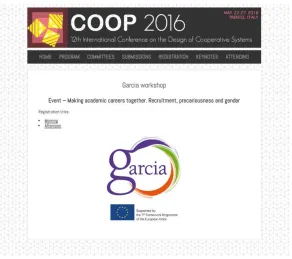
Figure 3.1. Screenshot of the description of the GARCIA session within the COOP conference website
As explained in the GARCIA working paper on “Reflexive working-group with committee
members” (Bozzon et al. 2016) during the conference we decided to organise three
different moments: a reflexive working groups with committee members, the workshop for prospective applicants and a plenary session in order to present all the results to the whole audience of the conference (more than 60 people belonging to the DISI department and the COOP conference attendees).
COOP is one of the key European conferences on Cooperative Systems, Computer Supported Cooperative Work (CSCW) and Collaborative Computing and it is affiliated to EUSSET – the European Society for Socially Embedded Technologies. COOP 2016 was the twelfth edition of this biennial conference and took place for the first time in Trento, Italy, organised by the DISI and the Fondazione Bruno Kessler (FBK). The COOP conferences promote the idea that cooperative systems design requires a deep understanding of collective activities, involving both artefacts and social practices, within a context.
This year, the programme intended to open up to the topic of collaborative design, with
a special emphasis on “Making together”. In our opinion it was a great opportunity to
involve the DISI community, in such an open environment, with an intimate setting, facilitating in-depth discussion and feedback in a multi-disciplinary community. The
[image:25.499.104.396.68.327.2]-25
making-academic-careers-together-recruitment-precariousness-and-gender-afternoon-session-23420158324).
The session involved PhDs, post‐docs and research fellow of the University of Trento, in
particular from the DISI and other STEM departments, and the COOP community. The target group for this intervention were prospective candidates for tenure-track or permanent positions of the participating departments. Our attendees were six female and two male early career researchers. Moreover, several people from the GARCIA project, belonging both the DISI and the DSRS departments, participated to the event.
The facilitators who led the workshop were:
Bianca Elzenbaumer, PhD in Design from Goldsmiths, University of London. She
currently works as research fellow at Leeds College of Art. In her practice‐led doctoral
thesis she explored precarious working conditions in the cultural industries. Since 2015, together with Fabio Franz, she has been running nomadic Precarity Pilot workshops throughout Europe in order to generate ideas for inventive yet feasible actions against precarization (www.precaritypilot.net).
Fabio Franz is a PhD candidate at the Sheffield School of Architecture. His practice‐led
research focuses on the role of design in making of commons and community economies. Since 2005, he has been working together with Bianca Elzenbaumer as the Precarity Pilot workshops and at the design research practice Brave New Alps
(www.brave‐new‐alps.com).
Maurizio Teli holds a PhD in Sociology and Social Research from the University of Trento. Then we moved, as postdoc, to the Department of Information Engineering and Computer Science of the same university. He is now assistant professor at the Madeira Interactive Technologies Institute. In his research, he investigates the political intersections between the social sciences and the participatory design of digital technologies.
In the workshop with early career researchers, organised in the afternoon, we wanted to use, as starting point, the criteria for the recruitment of assistant professors
identified by senior academics in the “Reflexive working group with committee members” realised the same day in the morning (Bozzon et al. 2016). The goal was to
use these criteria and put them at play and discussion in relation to the lived experience
of early‐career researchers. The main purpose was to question and enrich the
perspectives produced in the reflexive working group and to propose productive interventions.
Firstly, after an introduction about the GARCIA project and the concept of leaky pipeline, we divided the participants in two groups of 5 people to reflect on and map the conditions of their professional career path. The underling questions we suggested as possible guidelines of the discussion were:
What kind of production does your PhD/postdoc position encourage? What share of your work do you think is taking you closer to obtain a permanent position in academia?
26
Do you see differences between the working practices of male and female colleagues?
What aspects do you see as beyond your control?
How does looking for achieving the requirements affect your everyday life?
The main purpose was to identify processes and dynamics in their own professional development paths and institution.
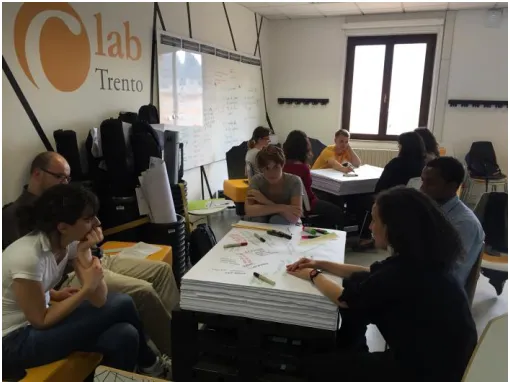
Figure 3.2. Picture taken during the workshop
The second activity consisted in working again in the same small groups, this time starting from the summary of the maps elaborated by professors in the reflexive working group with committee members. The main underling question was:
From what we have discussed so far, how would you suggest that these aspects should be tweaked, reformulated, dealt with – especially in relation to inclusiveness and wellbeing – in a gender perspective?
With this activity, our goal was – starting from the criteria suggested for the recruitment process pointed out in the morning by professors – to construct a dialogue and to elaborate different alternatives from the perspective of early career researchers, relevant and salient in the field of the STEM, which might have a positive impact on the situation.
[image:27.499.121.376.170.361.2]27
experiences, especially comparing female and male colleagues, it was discussed how strongly gender influences the academic career of individuals.
As a last activity, the attendees had been asked to discuss all together the outcomes of the group work and to formulate points for the creation of a shared document that could help to develop a better preparation and awareness of candidates for selection procedures. Moreover, the participants collectively elaborated a list of requests related to their everyday working life and to the recruitment process, to be discussed also with professors in the plenary session of the day after.
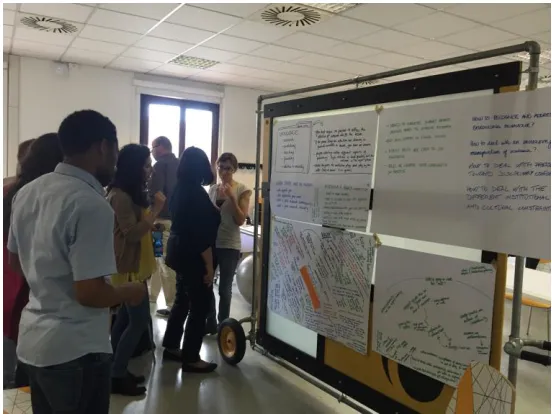
Figure 3.3. Attendees discussing the posters realised during the workshop
The main purpose of the workshop was spreading awareness of gender practices and how to counter them in the evaluation of excellence in academia. Moreover, we wanted to develop some dissemination guidelines on how to avoid biases in evaluating excellence at university. For these reasons we collectively decided to write the
“Manifesto for the future of precarious postdocs and PhD students”, titled “Making Visible”.
[image:28.499.110.386.174.381.2]