White Rose Research Online URL for this paper: http://eprints.whiterose.ac.uk/86967/
Version: Accepted Version
Article:
Ortmann, E, Besser, MW, Sharples, LD et al. (4 more authors) (2015) An Exploratory Cohort Study Comparing Prothrombin Complex Concentrate and Fresh Frozen Plasma for the Treatment of Coagulopathy After Complex Cardiac Surgery. Anesthesia and Analgesia, 121 (1). 26 - 33. ISSN 0003-2999
https://doi.org/10.1213/ANE.0000000000000689
[email protected] https://eprints.whiterose.ac.uk/ Reuse
Unless indicated otherwise, fulltext items are protected by copyright with all rights reserved. The copyright exception in section 29 of the Copyright, Designs and Patents Act 1988 allows the making of a single copy solely for the purpose of non-commercial research or private study within the limits of fair dealing. The publisher or other rights-holder may allow further reproduction and re-use of this version - refer to the White Rose Research Online record for this item. Where records identify the publisher as the copyright holder, users can verify any specific terms of use on the publisher’s website.
Takedown
If you consider content in White Rose Research Online to be in breach of UK law, please notify us by
An exploratory cohort study comparing prothrombin complex concentrate and fresh frozen plasma for the treatment of coagulopathy after complex cardiac surgery
1. Author: Erik Ortmann, MD, DESA.
Title: Dr
Affiliation: Department of Anaesthesia and Intensive Care, Papworth Hospital, Cambridge, UK
Email: [email protected]
Conflict of Interest: Papworth Hospital and EO received unrestricted project funding from CSL Behring.
Contribution: This author helped design the study, conduct the study, collect the data, analyze the data, and prepare the manuscript.
Attestation: Erik Ortmann has reviewed the original study data and the data analysis, and has approved the final manuscript.
2. Author: Martin W. Besser, MRCP, FRCPath
Title: Dr
Affiliation: Department of Haematology, Addenbrooke’s Hospital, Cambridge University Hospitals Foundation Trust, Cambridge, UK
Email: [email protected]
Conflict of Interest: MWB received educational funding support from CSL Behring and honoraria from GSK.
Contribution: This author helped design the study, and prepare the manuscript. Attestation: Martin Besser has approved the final manuscript.
3. Author: Linda D. Sharples, PhD
Title: Dr
Affiliation: MRC Biostatistics Unit, Cambridge, UK Email: [email protected]
Conflict of Interest: None
Contribution: This author helped analyze the data, and prepare the manuscript
4. Author: Caroline Gerrard
Title: Miss
Affiliation: Department of Anaesthesia and Intensive Care, Papworth Hospital, Cambridge, UK
Email: [email protected] Conflicts of Interest: None.
Contribution: This author helped collect the data, and prepare the manuscript. Attestation: Caroline Gerrard has approved the final manuscript.
5. Author: Marius Berman, MD, FRCS (CTh)
Title: Mr
Affiliation: Department of Cardiothoracic surgery, Papworth Hospital, Cambridge, UK Email: [email protected]
Conflict of Interest: none
Contribution: This author helped collect the data, and prepare the manuscript. Attestation: Marius Berman has approved the final manuscript.
6. Author: David P. Jenkins, BSc, MBBS, FRCS(Eng), MS(Lond), FRCS(CTh)
Title: Mr
Affiliation: Department of Cardiothoracic surgery, Papworth Hospital, Cambridge, UK Email: [email protected]
Conflict of Interest: DJ received honoraria from Bayer, Pfizer and GSK, and received travel funding from Medtronic, Bayer and GSK.
Contribution: This author helped prepare the manuscript. Attestation: David Jenkins has approved the final manuscript.
7. Author: Andrew A. Klein, MBBS FRCA
Title: Dr
Affiliation: Department of Anaesthesia and Intensive Care, Papworth Hospital, Cambridge, UK
Email: [email protected]
Conflict of Interest: AK is an investigator in a multi-center research study funded by CSL Behring.
Contribution: This author helped design the study, analyze the data, and prepare the manuscript.
*Results were presented in part at the Annual Spring Meeting of the Association of Cardiothoracic Anaesthetists (ACTA), June 2013, Cambridge.
Name of Department(s) and Institution(s):
- Department of Anaesthesia and Intensive Care, Papworth Hospital, Cambridge, UK
- Department of Haematology, Addenbrooke’s Hospital, Cambridge University Hospitals Foundation Trust, Cambridge, UK
- MRC Biostatistics Unit, Cambridge, UK
- Institute of Clinical Trials Research, University of Leeds, Leeds, UK
- Department of Cardiothoracic surgery, Papworth Hospital, Cambridge, UK
Short Title: Coagulopathy after pulmonary endarterectomy
Funding: Linda D. Sharples was supported by the Medical Research Council [Programme
number U015232027]
Corresponding Author:
Name Erik Ortmann
Department Department of Anaesthesia and Intensive Care Institution Kerckhoff Klinik Heart and Lung Centre
Mailing address Benekestrasse 2-8, D-61231 Bad Nauheim, Germany Phone 0049 6032 9962602
Fax
Email [email protected]
Did a Section Editor solicit this submission? No
IRB: Research and Development Unit
Papworth Hospital NHS Foundation Trust Papworth Everard
Cambridge CB23 3RE United Kingdom
Abstract
Background:
Administration of coagulation factor concentrates to treat bleeding after cardiopulmonary bypass
(CPB) might be a strategy for reducing allogeneic blood transfusions partricularly for those
treated with warfarin preoperatively. Our aim was to perform an exploratory analysison
whether the use of prothrombin complex concentrate is safe and effective compared with fresh
frozen plasma to treat coagulopathy after pulmonary endarterectomy surgery with deep
hypothermic circulatory arrest.
Methods:
Consecutive adult patients who underwent pulmonary endarterectomy surgery between January
2010 and September 2012 and received prothrombin complex concentrate or fresh frozen plasma
to treat coagulopathy were studied. Blood loss during the first twelve hours of intensive care unit
admission and patient outcomes were compared using propensity score adjustment.
Results:
A total of 351 patients underwent pulmonary endarterectomy surgery all of whom had warfarin
discontinued for up to 5 days prior to surgery; Bleeding complications requring transfusion of
blood products were observed in 108 (31%) patients. Of those, 55 received only fresh frozen
plasma and 45 received only prothrombin complex concentrate, whilst 8 received both. Blood
loss was significantly higher in the fresh frozen plasma group compared with the prothrombin
complex concentrate group after 12 hours (median, interquartile range [IQR], 650 ml [325-1075]
vs. 277 ml [175-608], p=0.008). However, there was no difference in the frequency of patients
the number of units of red blood cells transfused (median, [IQR] 2 [1-4] vs. 3 [1-5] units,
p=0.181). The final propensity score included preoperative INR, postoperative activated partial
thromboplastin time, and platelet count. After inclusion of the propensity score in the regression
analyses, there were no differences in the need for renal replacement therapy (odds ratio [OR]
2.39, 95% confidence interval [CI] 0.51 to 11.20, p=0.27), 30-day-mortality (OR 0.32, 95%CI
0.03 to 3.36, p=0.35), intracranial hemorrhage (0.73, 95%CI 0.14 to 3.89, p=0.71), hospital
(HR=0.77, 95%CI 0.50 to 1.19, p=0.24), or duration of intensive care stay (HR 0.91, 95%CI
0.59 to 1.40, p=0.66).
Conclusion:
These retrospective analysis suggest that prothrombin complex concentrate may be an alternative
to fresh frozen plasma in patients previously treated with warfarin who are coagulopathic after
major cardiac surgery. Randomized controlled studies powered to evaluate efficacy and
important postoperative outcomes for patients receiving prothrombin complex concentrate versus
Introduction
Bleeding is a majorcomplication after cardiac surgery using cardiopulmonary bypass (CPB) that
exposes patients to the risk of allogeneic blood transfusion and reoperation. Although there are
conflicting data, the use of wafarin anti-coagulant treatment before surgery may increase the risk
bleeding complications after CPB surgery2-4. In recent years, coagulation factor concentrates
have been increasingly used to reduce patient exposure to allogeneic blood components6. Four
factor prothrombin complex concentrates (PCC) contains a high concentration of lyophilized
clotting factors II, VII, IX, X and protein C and S. This compound is currently licensed in
Europe and the United States for the treatment of congenital or acquired deficiency of those
clotting factors and for the emergency reversal of vitamin-K antagonists, such as warfarinfor
patient’s who are bleeding or when urgent surgery is planned7. In some European countries,
PCCs have replaced FFP as the treatment for perioperative bleeding even though there are little
data on the efficay and safety of its use in this setting particularly the risk for prothrombotic
complicaitons8,9. The clinical demand for PCC may further increase given the questionable
efficacy of fresh frozen plasma in critically ill patients10, its coststhe potential of transmission of
prions* and other well described complications.
*Joint United Kingdom Blood Transfusion Services and Health Protection Agency Professional Advisory
Committee. Position statement: Creutzfeldt-Jacob disease; available at
http://www.transfusionguidelines.org.uk/docs/pdfs/dl_ps_vcjd_2012-11.pdf (last accessed 29 Feb 2014).
Pulmonary endarterectomy (PEA) is complex surgery to treat chronic thromboembolic
pulmonary hypertension that is performed under deep hypothermic circulatory arrest and
requires prolonged CPB (greater than five hours)11. The majority of patients undergoing PEA are
thi,s many patients do not have normalized prothrombin time at the time of surgery (i.e.
International Normalized Ratio [INR] > 1.5). Under these circumstances, clinicians may
transfuse FFP and/or PCCs for treating coagulopathic bleeding after CPB12,13. Transfusion of
large volumes of FFP is balanced by the competing demands of the treatment of right heart
failure, a common complication after long standing pulmonary hypertension, and the risk of
reperfusion injury to the lung after PEA surgery14. Prothrombin complex concentrates have a
smaller volume of administration than FFP for a similar concentration of coagulation factors,
making the former therapy attractive in this situation. However, patients undergoing PEA
surgery have underlying pro-thrombotic conditions and a high risk of ischemic neurological
complications11. There are few data on the safety and efficacy of PCC use for treatment of
coagulopathic bleeding after CPB particularly for patients undergoing PEA.
Our aim was to provide an exploratory analysis of the safety and efficacy of PCC
Methods
The Research and Development Department of Papworth Hospital NHS Trust (Cambridge, UK)
gave approval for this study and waived the requirement for individual consent. All adult patients
undergoing elective PEA surgery between January 2010 and September 2012 at our institution,
who received hemostatic therapy, were included. Data were collected from a dedicated
pulmonary hypertension database, and an institutional transfusion database. Patients were
classified based on whether they received only PCC or only FFP after PEA surgery. Patients who
received both or who received treatment more than 48 hrs after surgery were excluded from the
analysis.
The anesthetic and surgical management for PEA has been described9. In brief, all
patients received heparin 400 IU.kg-1 before CPB with additional doses given to maintain an
activated clotting time (ACT) above 400 sec throughout surgery. Tranexamic acid 1g was
administered before CPB and then as an infusion at 500 mg.hr-1 continued intra-operatively15
Upon adequate heparinization CPB was initiated and the patient’s body temperature lowered to
18°C to 20°C.Deep hypothermic circulatory arrest was then performed for periods of up to 20
minutes during which the PEA was performed. The patients temperature was then rewarmed to
37oC and then they were carefully weaned from CPB All patients received intra-operative cell
salvage and hemofiltration during CPB. Hemoglobin was maintained >6 g.dL-1 during the
hypothermic CPB phase and > 10 g.dL-1 during rewarmingfor separation from CPB and in the
postoperative period..
Thrombelastography (TEG®, Haemonetics, Nile, IL, USA) was performed when the
patient temperature reached 32 0C during rewarming, using a heparinase containing cup. After
given aiming for an ACT within 10% of baseline. After administration of protamine, blood was
sent to the laboratory to measure platelet count, prothrombin time, INR, activated partial
thromboplastin time, thrombin time, and fibrinogen concentration. . Transfusion of PCC or FFP
was considered if the INR was > 1.7 or the TEG R-time was > 10 mins, and excessive bleeding
was observed while the chest was open or if there were > 2 ml.kg-1.hr-1 chest drainage after chest
closure. 1 In the presence of these conditions PCC (15 IU.kg-1 to the nearest 250 IU vial) or FFP
(15 ml.kg-1) was given. The decision to administer FFP or PCC was at the discretion of the
clinical team in the operating room in collaboration with the hematologist.
Statistical Analysis
As this was an exploratory analysis, no formal sample size calculation was conducted
before the start of the study. The sample size of approximately 50 cases per group was large
enough to detect an effect size of one half of one standard deviation, with 2-sided type I error of
5% and power of 80%. The study is not powered to detect smaller effect sizes.
Initially patient and operative characteristics were summarized and unadjusted
exploratory comparisons between the two groups were performed. In this analysis we used the
student t-test for Normally distributed variables (age, weight, BMI, 6-minute walk distance, CPB
time, cross-clamp time, circulatory arrest time, INR, aPTT, platelet count, haemoglobin,
creatinine and fibrinogen levels), the Mann-Whitney test for skewed or other non-Normally
distributed variables (PVR, blood loss, ICU stay and hospital stay) or Chi-squared/ Fisher’s
exact test for categorical variables (sex, disease type, numbers undergoing transfusions, 30-day
mortality, incidence of other post-operative events and use of renal replacement therapy or
There is a high chance of bias in estimation of group differences in observational studies
due to systematic allocation of patients to the groups. In order to minimise this bias a propensity
score was developed using all variables that were considered related either to the outcome or to
the allocation to either PCC or FFP16 .Many of these variables were correlated with each other
and were grouped according to the size of this correlation. The propensity score was developed
using both statistical criteria (change in deviance associated with p-value < 0.1) and to ensure
that selected variables that had large amounts of missing data were replaced by correlated
variables that did not have missing data. The following variables were included in the final
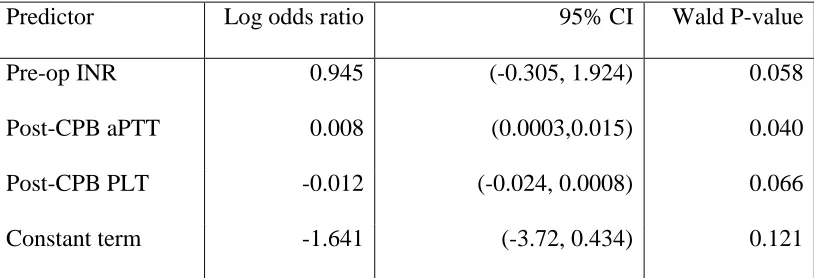
propensity score: pre-operative INR, post-CPB aPTT and post-CPB platelet count. No specific
methods for dealing with missing covariates were attempted due to the exploratory nature of the
studies and the number of variables recorded. Rather we excluded any covariates with a large
proportion of missing values.
Once the propensity score was developed the effect of PCC on binary outcomes (survival
at 30 days, reperfusion injury of the lungs, intra-cranial hemorrhage, renal impairment, renal
replacement therapy) was assessed using logistic regression models including PCC and
propensity score, where the logic of the estimated probability of having PCC was included in the
regression. For ICU and hospital stay a range of time-to-event models were assessed and final
models were based on Cox proportional hazards models after checking the proportional hazards
assumption using Schoenfeld residuals. PCC and logit(propensity score) were included in these
models. The linearity of the relationship between the outcome (after applying the appropriate
link function) and the logit(propensity score) was assessed by splitting the logit score into
estimated regression parameters was made and no major departures from linearity were seen.
Results
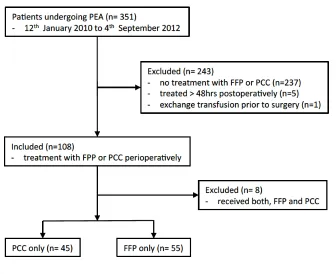
During the 33 months study period, 351 patients underwent PEA surgery, and 108 (31%)
suffered bleeding complications and received hemostatic treatment. Of the latter, 55 received
only FFP (51%) and 45 received only PCC (42%). Eight patients (7%) received both FFP and
PCC and were excluded from the analysis. A schematic diagram of the patients is shown in
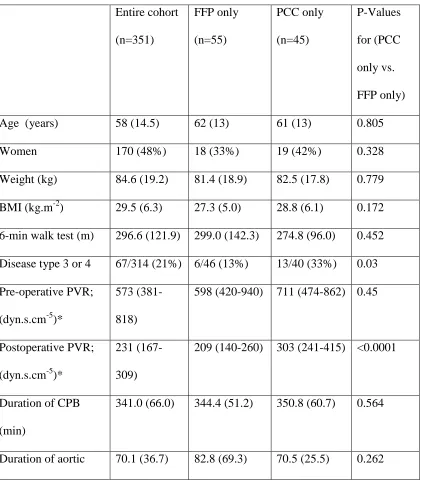
Figure 1. At baseline, there were significantly more patients with distal thromboembolic disease
(type III and IV) in the PCC group (Table 1)17. This was reflected by the higher pulmonary
vascular resistance (PVR) both pre-operatively and postoperatively in patients who received
PCC. Cardiopulmonary bypass and circulatory arrest times were similar between the two
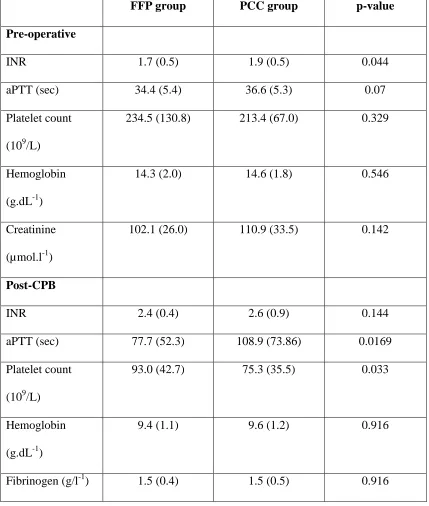
groups. Baseline INR and aPTT were higher in the PCC group, as was the aPTT after CPB
(Table 2). In the FFP group, patients received a mean (SD) 3.8 (1.8) units of FFP. In the PCC
group 33 patients (73%) were treated with Beriplex (CSL Behring UK Ltd, Haywards Heath,
UK) and 12 patients (27%) with Octaplex (Octapharma Ltd, Manchester, UK). The choice of
product was due to a change in the National Health Service procurement contract. The mean
(SD) dose was 14.8 (5.4) IU.kg-1.
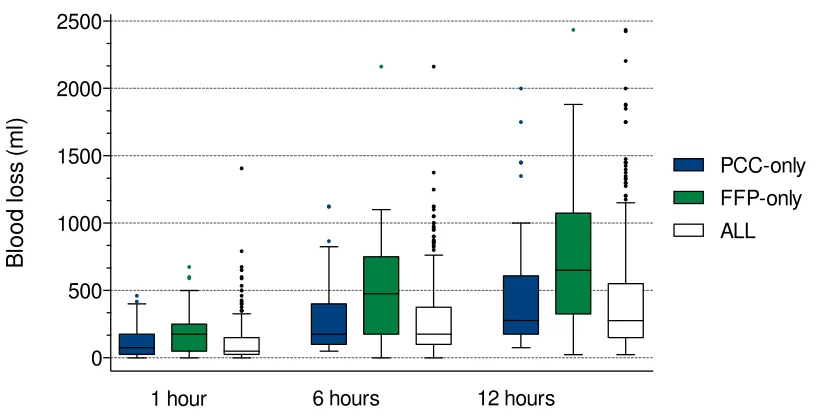
Cumulative blood loss in the immediate postoperative period was higher in the FFP
group compared with the PCC group one (p=0.027), six (p=0.002) and twelve (p=0.008) hours
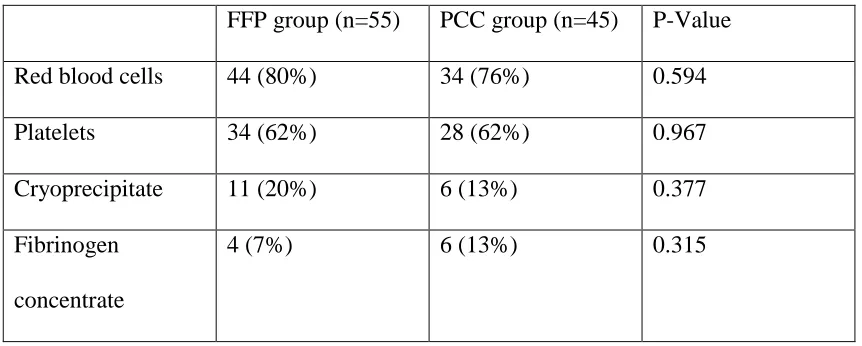
after surgery (Figure 2 and Table 3). Similar numbers of patients in the FFP and PCC groups
received a transfusion of , platelets, cryoprecipitate, or fibrinogen in the postoperative period
(Table 4). In addition, patients who received PCC received a similar number (median, IQR)
units of red blood cells as those receiving FFP (2, 1-4 vs. 3, 1-5 units, respectively, p=0.181).
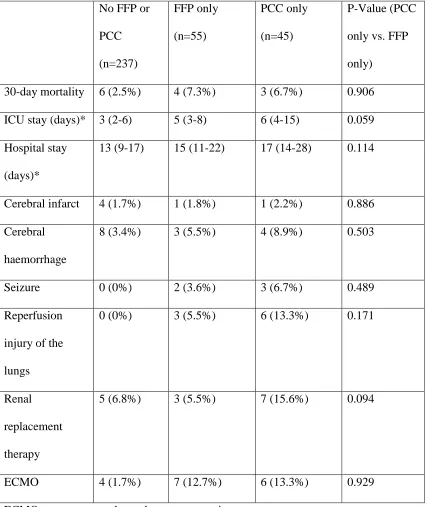
FThe 30-day mortality 4.6%, median (IQR) ICU stay 4 (2-7) days, and hospital stay 14
outcomes ( Table 5) between the FFP and PCC groups. No patient suffered deep vein
thrombosis, pulmonary embolism, or myocardial infarction in either group, and the incidence of
cerebral infarction and hemorrhage was low and similar between the two groups (Table 5).
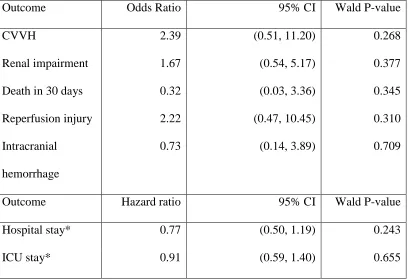
The final propensity adjusted risk model is listed in Table 6. Regression models that
included the propensity score did not identify any significant effects of PCC use on outcomes
compared with pateints receiving only FFP for treating coagulopathic bleeding after CPB (Table
7). Despite the adjustment for propensity to use PCC, these effects on outcomes are measured
Discussion
In our cohort of patients who underwent PEA surgery with deep hypothermic circulatory
arrest, those who received PCC had less chest tube drainage in the 12 hours after surgery
compared with patients given FFP. We did not find a difference between the PCC and FFP
groups in the number of patients transfused after surgery or in the number of transfused units of
packed red blood cells or other haemostatic products. Although, this preliminary analysis did not
find a difference in major patient outcomes between patients given PCC versus FFP for
coagulopathic bleeding after CPB the small sample size precludes drawing firm conclusions
regarding the safety of PCC versus FFP.
Fresh frozen plasma is administered to patients with coagulopathic bleeding after cardiac
surgery despite a paucity of data on the efficacy of this treatment18. There are many recognized
risks associated with the transfusion of FFP including transfusion related acute lung injury,
transfusion associated circulatory overload, transmission of bacterial and non-bacterial infection,
and multiple organ failure, which are independent of the effect of hemorrhage and transfusion19.
The time delay necessary to thaw the frozen blood product (up to 40 min) is another limitation of
the use of FFP. The dose of FFP most commonly prescribed in the UK is 15 ml.kg-1, therefore a
70kg patient would require more than a liter of plasma containing approximately 1 IU/ml of
hemostatic factors (around three to four units of FFP). Such a volume of fluid may lead to
circulatory overload, a particular issue in patients after PEA surgery as the right ventricle is
prone to failure and excessive fluid administration can predispose to or worsen pulmonary
reperfusion injury.
In contrast, PCC is stored as a powder for reconstitution and can be administered within
at the dose of 15 IU.kg-1 used in this study (1000 IU in a 70kg patient). PCC is approved for the
prophylactic administration before urgent or emergency surgery in patients with reduced levels
of Vitamin K-dependent clotting factors due to warfarin treatment. The manufacturer
recommended dose depends on the exact INR, and it is generally given for INR >2. The
patients in this study were receiving long-term warfarin treatment, but we did not correct an
elevated INR pre-operatively, preferring instead only to treat elevated INR in the presence of
excessive bleeding after CPB. PCC is also more expensive than FFP (820 USD for 1000 IU
compared to 190 USD for 3 units of FFP in the UK). Additionally, there is some concern that
PCC use may be associated with increased risk for thrombo-embolic events, which would be a
particular issue in our patients with chronic thromboembolic disease. A porcine laboratory study
found that 35 IU.kg PCC safely improved coagulation and attenuated blood loss21. However, at a
dose of 50 IU.kg-1 (very much higher than the 15IU.kg-1 administered in our study) PCC was
associated with an increased risk of thromboembolism in all animals when organs were
examined microscopically after death, and 44% of animals also developed disseminated
intravascular coagulation. A recent meta-analysis of 27 clinical studies involving 1032 patients
receiving PCC for emergency reversal of warfarin for bleeding or need of surgery revealed an
overall incidence of thromboembolism of 1.4% (95% CI, 0.8–2.1)22. Mortality in that study was
high at 11%, however death was only rarely attributed to the PCC itself. Analysis of a
pharmacolvigilance report after 15 years clinical use of a four factor PCC also showed a low risk
of thromboembolic events (1:31 000)23.
An explanation for the lack of difference in blood transfusion with PCC administration
pulmonary artery obstruction requiring more complicated surgery. Gorlinger et al. did report
retrospectively reduced blood transfusion when PCC was used as part of a point of care-guided
transfusion algorithm in more than 3800 patients, but most patients received multiple treatments
including fibrinogen, FFP and platelets, so it is very difficult to attribute any effect to PCC
alone24. Weber et al found a similar effect with PCC in a point of care-guided algorithm in a
randomized controlled study, compared to conventional treatment guided by laboratory
analysis25.
We did observe an increased requirement for renal replacement therapy in patients who
received PCC (Table 5); although this was not statistically significant, it remains a concern. This
may be related to the increased hemodynamic instability in this cohort of patients who had
higher residual pulmonary hypertension.
There are very few published studies comparing FFP and PCC in the peri-operative
period; most report observational data from cohorts of patients or case series. Arnekian et al also
showed decreased blood loss only in the first hour in patients treated with PCC compared to
FFP26. In comparison, we gave a slightly larger dose of PCC compared with Arnkian et al26 , and
found the lower chest tube drainage persisted for 12 hours. Demeyere et al randomized 40
patients to receive FFP or PCC before CPB for urgent surgery, but reported no significant effect
on blood loss27. Bruce et al reported data from 24 patients who received PCC following severe
hemorrhage during cardiac as well as other surgical procedures and reported a reduction in the
administration of other blood products28. A number of studies in non-cardiac surgical patients
have demonstrated the effectiveness of PCC in lowering the INR29-31. Other authors have raised
concerns about thromboembolic complications attributed to PCC administration, however none
clearly required to determine whether rapid reversal of the INR as a result of warfarin is indeed
offset by a potential increase of morbidity and mortality by thromboembolic events.
There are several limitations to our study. We included several outcomes and did not
make adjustments for the large number of statistical tests conducted. We think this is appropriate
since the study was designed to be exploratory and sensitive to any potential effects that might be
present. However interpretation of significant results should recognize this potential for false
positives. A further limitation of our study was the retrospective study design and the fact that
patients were not randomly assigned to a treatment group. Although we used propensity score
adjustment in an attempt to limit bias related to whether FFP or PCC therapy was chosen, this
method is only completely effective if all mediating factors are included in the score. This
assumption is unlikely as other important covariates that are not routinely recorded may have
influenced our findings. Thus there may be residual biases in these comparisons. Finally, the
number of patients in each group was relatively small so that power to detect important
differences in outcomes was low. This is shown in Table 6 in which there are important
estimated effects of PCC on, for example reperfusion injury, but very wide confidence intervals
ranging from a 53% reduction in odds over a ten-fold increase. Thus negative results are to be
interpreted with caution.
Our study is associated with some advantages as well. First, patient management was
standardized according to our institutional protocol. Management of bleeding was based on
results of TEG and/or laboratory data. However, there is some evidence that kaolin activated
TEG has a reduced sensitivity and specificity for identifying deficiency of vitamin K dependent
National Health Service procurement contract, which changed its preferred supplier at one point
for a period of one year. However, Octaplex has also been shown to be effective and safe and
the composition and quantity of clotting factors compared in both products is very similar37.
In conclusion, we have shown that PCC may be an alternative to FFP in patients who are
coagulopathic and bleeding after cardiac surgery, particularly when intravascular fluid
administration must be limited due to concerns of right ventricular dysfunction. We found that
PCC administration was associated with reduced blood loss 12-hours after surgery compared
with patients receiving FFP, but there were no differences in the frequency of blood transfusion
or number of other haemostatic products administered. These exploratory analysis support the
need for a propsectivley randomized controlled study of the safety and efficacy of PCC for
reducing bleeding after surgery using CPB.
Acknowledgements:
Tables
Table 1. Descriptive summary for baseline and surgical characteristics of entire cohort of
patients undergoing PEA and for those patients who received only fresh frozen plasma (FFP
only) or prothrombin complex concentrate (PCC only) for treating coagulopathy after
cardiopulmonary bypass. Values are mean (SD), number (proportion) or median (IQR)*.
Entire cohort (n=351) FFP only (n=55) PCC only (n=45) P-Values for (PCC only vs. FFP only)
Age (years) 58 (14.5) 62 (13) 61 (13) 0.805
Women 170 (48%) 18 (33%) 19 (42%) 0.328
Weight (kg) 84.6 (19.2) 81.4 (18.9) 82.5 (17.8) 0.779
BMI (kg.m-2) 29.5 (6.3) 27.3 (5.0) 28.8 (6.1) 0.172
6-min walk test (m) 296.6 (121.9) 299.0 (142.3) 274.8 (96.0) 0.452
Disease type 3 or 4 67/314 (21%) 6/46 (13%) 13/40 (33%) 0.03
Pre-operative PVR;
(dyn.s.cm-5)*
573
(381-818)
598 (420-940) 711 (474-862) 0.45
Postoperative PVR;
(dyn.s.cm-5)*
231
(167-309)
209 (140-260) 303 (241-415) <0.0001
Duration of CPB
(min)
cross clamp (min)
Duration of
circulatory arrest;
(min)
34.8 (11.2) 38.2 (11.3) 36.3 (12.1) 0.431
Table 2. Descriptive summaries for hematological data before and after cardiopulmonary bypass
(CPB) for patients who received either fresh frozen plasma (FFP) or prothrombin complex
concentrate (PCC) for treating coagulopathic bleeding. Values are mean (SD).
FFP group PCC group p-value
Pre-operative
INR 1.7 (0.5) 1.9 (0.5) 0.044
aPTT (sec) 34.4 (5.4) 36.6 (5.3) 0.07
Platelet count
(109/L)
234.5 (130.8) 213.4 (67.0) 0.329
Hemoglobin
(g.dL-1)
14.3 (2.0) 14.6 (1.8) 0.546
Creatinine
(µmol.l-1)
102.1 (26.0) 110.9 (33.5) 0.142
Post-CPB
INR 2.4 (0.4) 2.6 (0.9) 0.144
aPTT (sec) 77.7 (52.3) 108.9 (73.86) 0.0169
Platelet count
(109/L)
93.0 (42.7) 75.3 (35.5) 0.033
Hemoglobin
(g.dL-1)
9.4 (1.1) 9.6 (1.2) 0.916
Table 3. Observed cumulative blood loss at one, six and twelve hours after ICU admission. The
values are median (IQR).
Entire cohort
(n=351)
FFP only
(n=55)
PCC only
(n=45)
P-values for
(PCC only
vs. FFP
only)
1st hour (ml) 50 (25-150) 175 (50-250) 75 (25-175) 0.027
6 hours (ml) 175
(100-375)
475 (175-750) 175 (100-400) 0.0023
12 hours (ml) 275 (150 -
550)
Table 4. Comparisons of the number (percent) of patients given various blood transfusion
products for the patients treated with either only fresh frozen plasma (FFP) or prothrombin
complex concentrate (PCC) for coagulopathy after cardiopulmonary bypass.
FFP group (n=55) PCC group (n=45) P-Value
Red blood cells 44 (80%) 34 (76%) 0.594
Platelets 34 (62%) 28 (62%) 0.967
Cryoprecipitate 11 (20%) 6 (13%) 0.377
Fibrinogen
concentrate
Table 5. Comparisons of outcomes for patients treated with either only fresh frozen plasma (FFP
only), only prothrombin complex concentrate (PCC only) or neither (No FFP or PCC) for
coagulopathy after cardiopulmonary bypass. Values are number (proportion) or median (IQR)*.
No FFP or
PCC (n=237) FFP only (n=55) PCC only (n=45) P-Value (PCC
only vs. FFP
only)
30-day mortality 6 (2.5%) 4 (7.3%) 3 (6.7%) 0.906
ICU stay (days)* 3 (2-6) 5 (3-8) 6 (4-15) 0.059
Hospital stay
(days)*
13 (9-17) 15 (11-22) 17 (14-28) 0.114
Cerebral infarct 4 (1.7%) 1 (1.8%) 1 (2.2%) 0.886
Cerebral
haemorrhage
8 (3.4%) 3 (5.5%) 4 (8.9%) 0.503
Seizure 0 (0%) 2 (3.6%) 3 (6.7%) 0.489
Reperfusion
injury of the
lungs
0 (0%) 3 (5.5%) 6 (13.3%) 0.171
Renal
replacement
therapy
5 (6.8%) 3 (5.5%) 7 (15.6%) 0.094
ECMO 4 (1.7%) 7 (12.7%) 6 (13.3%) 0.929
Table 6. Variables included in the final propensity score for the use of prothrombin complex
concentrate (PCC).
Predictor Log odds ratio 95% CI Wald P-value
Pre-op INR 0.945 (-0.305, 1.924) 0.058
Post-CPB aPTT 0.008 (0.0003,0.015) 0.040
Post-CPB PLT -0.012 (-0.024, 0.0008) 0.066
Constant term -1.641 (-3.72, 0.434) 0.121
INR= international normalised ratio, CPB= cardiopulmonary bypass, aPTT= activated partial
thromboplastin time; PLT= platelet count.
Table 7. Outcomes for patients receiving only prothrombin complex concentrate (PCC) for
treating coagulopathic bleeding after cardiopulmonary bypass adjusted for propensity.
Outcome Odds Ratio 95% CI Wald P-value
CVVH 2.39 (0.51, 11.20) 0.268
Renal impairment 1.67 (0.54, 5.17) 0.377
Death in 30 days 0.32 (0.03, 3.36) 0.345
Reperfusion injury 2.22 (0.47, 10.45) 0.310
Intracranial
hemorrhage
0.73 (0.14, 3.89) 0.709
Outcome Hazard ratio 95% CI Wald P-value
Hospital stay* 0.77 (0.50, 1.19) 0.243
ICU stay* 0.91 (0.59, 1.40) 0.655
CVVH= continuous veno-venous hemofiltration; ICU=intensive care unit
Figures and Illustrations
Figure 2. Cumulative chest tube drainage for patients treated with prothrombin complex
concentrate (PCC) or fresh frozen plasma (FFP) for coagulopathic bleeding after
pulmonary artery endarterectomy. The data are reported as median (horizontal line)
and interquartile range (box).
0 500 1000 1500 2000 2500
B
lo
o
d
lo
s
s
(
m
l)
PCC-only
FFP-only ALL
Figure Legends
Figure 1. Flow diagram of the study population.
Figure 2. Cumulative chest tube drainage for patients treated with prothrombin complex
concentrate (PCC) or fresh frozen plasma (FFP) for coagulopathic bleeding after
pulmonary artery endarterectomy. The data are reported as median and interquartile
References
1. Besser MW, Klein AA. The coagulopathy of cardiopulmonary bypass. Crit Rev Clin Lab
Sci 2010;47:197-212
2. Biancari F, Myllyla M, Lepojarvi S, Kuttila K, Porela P, Laitio T, Ylitalo A, Jokinen V,
Luokkala A, Airaksinen KE. Preoperative warfarin treatment and outcome of coronary
artery bypass graft surgery. Ann Thorac Surg 2010;89:1139-45
3. Dietrich W, Dilthey G, Spannagl M, Richter JA. Warfarin pretreatment does not lead to
increased bleeding tendency during cardiac surgery. J Cardiothorac Vasc Anesth
1995;9:250-4
4. Airaksinen KE, Biancari F, Karjalainen P, Mikkola R, Kuttila K, Porela P, Laitio T, Lip
GY. Safety of coronary artery bypass surgery during therapeutic oral anticoagulation.
Thromb Res 2011;128:435-9
5. Gorlinger K, Shore-Lesserson L, Dirkmann D, Hanke AA, Rahe-Meyer N, Tanaka KA.
Management of hemorrhage in cardiothoracic surgery. J Cardiothorac Vasc Anesth
2013;27:S20-34
6. Sniecinski RM, Levy JH. Bleeding and management of coagulopathy. J Thorac
Cardiovasc Surg 2011;142:662-7
7. Levy JH, Tanaka KA, Dietrich W. Perioperative hemostatic management of patients
8. Tanaka KA, Szlam F, Dickneite G, Levy JH. Effects of prothrombin complex concentrate
and recombinant activated factor VII on vitamin K antagonist induced anticoagulation.
Thromb Res 2008;122:117-23
9. Sorensen B, Spahn DR, Innerhofer P, Spannagl M, Rossaint R. Clinical review:
Prothrombin complex concentrates--evaluation of safety and thrombogenicity. Crit Care
2011;15:201
10. Chowdary P, Saayman AG, Paulus U, Findlay GP, Collins PW. Efficacy of standard dose
and 30 ml/kg fresh frozen plasma in correcting laboratory parameters of haemostasis in
critically ill patients. Br J Haematol 2004;125:69-73
11. Vuylsteke A, Sharples L, Charman G, Kneeshaw J, Tsui S, Dunning J, Wheaton E, Klein
A, Arrowsmith J, Hall R, Jenkins D. Circulatory arrest versus cerebral perfusion during
pulmonary endarterectomy surgery (PEACOG): a randomised controlled trial. The
Lancet 2011;378:1379-87
12. Godier A, Susen S, Samama CM. Treatment of massive bleeding with prothrombin
complex concentrate: argument against. J Thromb Haemost 2010;8:2592-5
13. Tanaka KA, Szlam F. Treatment of massive bleeding with prothrombin complex
concentrate: argument for. J Thromb Haemost 2010;8:2589-91
14. Banks DA, Pretorius GV, Kerr KM, Manecke GR. Pulmonary Endarterectomy: Part II.
Operation, Anesthetic Management, and Postoperative Care. Semin Cardiothorac Vasc
Anesth 2014
endarterectomy surgery with hypothermia: review of 200 patients. Ann Thorac Surg
2010;90:1432-6
16. D'Agostino RB, Jr. Propensity score methods for bias reduction in the comparison of a
treatment to a non-randomized control group. Stat Med 1998;17:2265-81
17. Thistlethwaite PA, Mo M, Madani MM, Deutsch R, Blanchard D, Kapelanski DP,
Jamieson SW. Operative classification of thromboembolic disease determines outcome
after pulmonary endarterectomy. J Thorac Cardiovasc Surg 2002;124:1203-11
18. Johansson PI, Stensballe J. Effect of Haemostatic Control Resuscitation on mortality in
massively bleeding patients: a before and after study. Vox Sang 2009;96:111-8
19. Watson GA, Sperry JL, Rosengart MR, Minei JP, Harbrecht BG, Moore EE, Cuschieri J,
Maier RV, Billiar TR, Peitzman AB. Fresh frozen plasma is independently associated
with a higher risk of multiple organ failure and acute respiratory distress syndrome. J
Trauma 2009;67:221-7; discussion 8-30
20. Key NS, Negrier C. Coagulation factor concentrates: past, present, and future. Lancet
2007;370:439-48
21. Grottke O, Braunschweig T, Spronk HM, Esch S, Rieg AD, van Oerle R, ten Cate H,
Fitzner C, Tolba R, Rossaint R. Increasing concentrations of prothrombin complex
concentrate induce disseminated intravascular coagulation in a pig model of
coagulopathy with blunt liver injury. Blood 2011;118:1943-51
22. Majeed A, Eelde A, Agren A, Schulman S, Holmstrom M. Thromboembolic safety and
efficacy of prothrombin complex concentrates in the emergency reversal of warfarin
23. Hanke AA, Joch C, Gorlinger K. Long-term safety and efficacy of a pasteurized
nanofiltrated prothrombin complex concentrate (Beriplex P/N): a pharmacovigilance
study. Br J Anaesth 2013;110:764-72
24. Gorlinger K, Dirkmann D, Hanke AA, Kamler M, Kottenberg E, Thielmann M, Jakob H,
Peters J. First-line therapy with coagulation factor concentrates combined with
point-of-care coagulation testing is associated with decreased allogeneic blood transfusion in
cardiovascular surgery: a retrospective, single-center cohort study. Anesthesiology
2011;115:1179-91
25. Weber CF, Gorlinger K, Meininger D, Herrmann E, Bingold T, Moritz A, Cohn LH,
Zacharowski K. Point-of-care testing: a prospective, randomized clinical trial of efficacy
in coagulopathic cardiac surgery patients. Anesthesiology 2012;117:531-47
26. Arnekian V, Camous J, Fattal S, Rezaiguia-Delclaux S, Nottin R, Stephan F. Use of
prothrombin complex concentrate for excessive bleeding after cardiac surgery. Interact
Cardiovasc Thorac Surg 2012;15:382-9
27. Demeyere R, Gillardin S, Arnout J, Strengers PF. Comparison of fresh frozen plasma and
prothrombin complex concentrate for the reversal of oral anticoagulants in patients
undergoing cardiopulmonary bypass surgery: a randomized study. Vox Sang
2010;99:251-60
28. Bruce D, Nokes TJ. Prothrombin complex concentrate (Beriplex P/N) in severe bleeding:
experience in a large tertiary hospital. Crit Care 2008;12:R105
K antagonists presenting with major bleeding: a randomized, plasma-controlled, phase
IIIb study. Circulation 2013;128:1234-43
30. Schick KS, Fertmann JM, Jauch KW, Hoffmann JN. Prothrombin complex concentrate in
surgical patients: retrospective evaluation of vitamin K antagonist reversal and treatment
of severe bleeding. Crit Care 2009;13:R191
31. Pabinger I, Brenner B, Kalina U, Knaub S, Nagy A, Ostermann H. Prothrombin complex
concentrate (Beriplex P/N) for emergency anticoagulation reversal: a prospective
multinational clinical trial. J Thromb Haemost 2008;6:622-31
32. Samama CM. Prothrombin complex concentrates: a brief review. Eur J Anaesthesiol
2008;25:784-9
33. Kohler M, Hellstern P, Lechler E, Uberfuhr P, Muller-Berghaus G. Thromboembolic
complications associated with the use of prothrombin complex and factor IX
concentrates. Thromb Haemost 1998;80:399-402
34. Warren O, Simon B. Massive, fatal, intracardiac thrombosis associated with prothrombin
complex concentrate. Ann Emerg Med 2009;53:758-61
35. Koster A, Meyer-Jark T, Schirmer U, Sandica E. Fulminant Intraoperative Right Heart
and Pulmonary Artery Thrombosis Following Prothrombin Complex Concentrate
Infusion after Complex Open Heart Surgery with Cardiopulmonary Bypass. A&A Case
Reports 2014;2:89-91
36. Nascimento B, Al Mahoos M, Callum J, Capone A, Pacher J, Tien H, Rizoli S. Vitamin
K-dependent coagulation factor deficiency in trauma: a comparative analysis between
37. Riess HB, Meier-Hellmann A, Motsch J, Elias M, Kursten FW, Dempfle CE.
Prothrombin complex concentrate (Octaplex) in patients requiring immediate reversal of