R E V I E W
Open Access
Ascorbic acid, corticosteroids, and thiamine
in sepsis: a review of the biologic rationale
and the present state of clinical evaluation
Ari Moskowitz
1, Lars W. Andersen
2,3,4, David T. Huang
5,6, Katherine M. Berg
1, Anne V. Grossestreuer
2, Paul E. Marik
7,
Robert L. Sherwin
8, Peter C. Hou
9, Lance B. Becker
10,11, Michael N. Cocchi
2,12, Pratik Doshi
13, Jonathan Gong
14,
Ayan Sen
15and Michael W. Donnino
1,2,16*Abstract
The combination of thiamine, ascorbic acid, and hydrocortisone has recently emerged as a potential adjunctive therapy to antibiotics, infectious source control, and supportive care for patients with sepsis and septic shock. In the present manuscript, we provide a comprehensive review of the pathophysiologic basis and supporting research for each element of the thiamine, ascorbic acid, and hydrocortisone drug combination in sepsis. In addition, we describe potential areas of synergy between these therapies and discuss the strengths/weaknesses of the two studies to date which have evaluated the drug combination in patients with severe infection. Finally, we describe the current state of current clinical practice as it relates to the thiamine, ascorbic acid, and hydrocortisone combination and present an overview of the randomized, placebo-controlled, multi-center Ascorbic acid, Corticosteroids, and Thiamine in Sepsis (ACTS) trial and other planned/ongoing randomized clinical trials.
Keywords:Thiamine, Ascorbic acid, Corticosteroids, Metabolic resuscitation, Sepsis
Background
Sepsis is a common and highly morbid condition with an es-timated 1.7 million cases occurring in the United States each year, resulting in over 270,000 deaths [1]. Despite advances in critical care practices, sepsis remains the most common cause of death in non-cardiac intensive care units (ICUs) [2,3]. Even among sepsis patients who survive their hos-pital stay, residual organ dysfunction requiring ongoing treatment after discharge is common [4]. Despite this high level of mortality and morbidity, antibiotics and source control remain the only focused therapies for this condi-tion [5]. In a small, retrospective observational study of septic ICU patients, the combination of thiamine (200 mg every 12 h), ascorbic acid (1500 mg every 6 h), and hydrocortisone (50 mg every 6 h) was associated with a dramatic improvement in organ injury, time to shock
reversal, and mortality as compared to historical controls at the same hospital [6]. Each component of this combin-ation of therapies has been recently evaluated individually in septic shock patients. A prior pilot randomized trial found that the provision of thiamine to septic shock pa-tients with elevated lactate attenuated organ dysfunction (particularly renal dysfunction) and reduced lactate levels and potentially mortality in those patients with baseline thiamine deficiency [7,8]. In addition, two small random-ized trials of ascorbic acid vs placebo in sepsis have dem-onstrated improved clinical outcomes [9, 10]. Finally, while there have been mixed results with respect to the benefit of corticosteroids in septic shock generally [11, 12], the addition of corticosteroids to ascorbic acid may have a synergistic effect [6, 13–15].
In the present article, we review the biologic basis for and existing data supporting the use of thiamine, ascorbic acid, and corticosteroids in sepsis. We discuss the use of this drug combination in current clinical practice and the rationale for the currently enrolling Ascorbic Acid, Corti-costeroids, and Thiamine in Sepsis (ACTS) trial, as well as other clinical trials addressing this question.
* Correspondence:[email protected]; [email protected]
1
Beth Israel Deaconess Medical Center, Department of Medicine, Division of Pulmonary, Critical Care, and Sleep Medicine, Boston, MA, USA
2Beth Israel Deaconess Medical Center, Department of Emergency Medicine,
Boston, MA, USA
Full list of author information is available at the end of the article
Organ dysfunction in sepsis
The traditional paradigm of organ dysfunction in sepsis has focused on decreased systemic vascular resistance resulting in decreased organ perfusion, and ultimately im-paired oxygen delivery [16–18]. Numerous studies, how-ever, have shown that organ dysfunction can occur during sepsis and septic shock even in the absence of decreased perfusion [19–21]. Notably, histopathologic analyses of or-gans following death from sepsis often fail to demonstrate any substantial amount of ischemic injury, but rather re-veal remarkably preserved parenchyma or a predominant pattern of apoptosis, suggesting alternative mechanisms of organ dysfunction apart from hypoperfusion and inde-pendent of cellular oxygen delivery [21–23]. A number of such mechanisms have been proposed and include mito-chondrial dysfunction with resultant bioenergetic failure, a direct effect of the immune response to infection (related to pathogen-associated and damage-associated molecular patterns), microvascular abnormalities, endothelial dys-function, and inter-organ cross-talk [24,25].
Thiamine, ascorbic acid, and corticosteroids The current management of sepsis and septic shock largely focuses on improving oxygen delivery via a combination of intravenous fluid and vasoactive medications while treating the infection with antibiotics and source control [5]. The
combination of thiamine, ascorbic acid, and corticosteroids has been suggested as a potential adjunctive therapy tar-geted at non-oxygen delivery-dependent mechanisms of organ dysfunction (see Fig.1 for a summary of suggested mechanisms).
Thiamine
Thiamine (vitamin B1) is a water-soluble vitamin that is a key component of a number of cellular metabolic processes. In its phosphorylated form, thiamine pyro-phosphate, thiamine acts as a cofactor for pyruvate de-hydrogenase, the enzyme necessary for converting pyruvate to acetyl-coenzyme A for entry into the Krebs cycle. When thiamine levels are insufficient, pyruvate is unable to be converted to acetyl coenzyme A, resulting in impaired aerobic respiration and a compulsory shift to the anaerobic pathway, resulting in elevated serum lactate levels [26–28]. Thiamine also plays a role in the metabolism of branched-chain amino acids and is a crit-ical component of the pentose phosphate pathway, which is essential for the generation of NADPH and therefore glutathione cycling, an important anti-oxidant pathway [29–31]. A thiamine deficiency syndrome, beri-beri, bears a number of similarities to sepsis, including peripheral vasodilation, cardiac dysfunction, and elevated lactate levels [29].
Fig. 1Suggested mechanisms for the efficacy of thiamine, ascorbic acid, and corticosteroids in sepsis.PDHpyruvate dehydrogenase,ATPadenosine triphosphate,NADPHnicotinamide adenine dinucleotide phosphate,PP2Aprotein phosphatase 2,ROSreactive oxygen species,BH4tetrahydrobiopterin,
[image:2.595.57.540.417.684.2]Thiamine deficiency is not rare in critically ill popula-tions and may be associated with increased mortality in some cases [7, 29, 32, 33]. Further, thiamine levels are depleted during the course of critical illness and the administration of thiamine during critical illness may improve organ dysfunction [34–36]. In a mouse model of cardiac arrest, the provision of thiamine improved mitochondrial function, reduced histologic signs of brain injury, and improved neurologic outcomes [37]. In a canine model of septic shock, thiamine pyrophosphate improved lactate clearance, oxygen consumption, and arterial pressure irrespective of thiamine deficiency sta-tus [38]. In the only randomized trial of thiamine in hu-man septic shock, 88 patients were selected for increased risk of symptomatic thiamine deficiency based on a serum lactate > 3 mmol/L after volume resuscita-tion. In that study, there was no effect overall of thiamine on the primary outcome of median lactate level at 24 h, though there was a statistically significant differ-ence when evaluating lactate levels at serial timepoints in the first 72 h. In a pre-defined subgroup of patients with thiamine deficiency (35% of the cohort), however, the administration of thiamine reduced lactate levels and improved mortality [7]. In a post hoc analysis of that study, patients without baseline end-stage renal disease who were given thiamine had better renal outcomes than those randomized to placebo [8]. Thiamine supple-mentation has not been shown to be associated with sig-nificant adverse effects, even at high doses [39]. Overall, these results suggest a role for thiamine supplementation as a low-risk and potentially high reward intervention for some patients with septic shock and increased base-line risk of thiamine deficiency.
Ascorbic acid
Like thiamine, ascorbic acid is a water-soluble vitamin es-sential for a number of processes in the human body. As an anti-oxidant, ascorbic acid is an electron donor that directly scavenges free radicals, prevents the generation of new free radicals through its suppressive effects on the NADPH oxi-dase (NOX) pathway, and assists in the recycling of other anti-oxidants [40–42]. The anti-oxidant effect of ascorbic acid results in reduced endothelial permeability, improved microvascular and macrovascular function, and attenuated cellular apoptosis in pathological states [41, 43, 44]. In addition, ascorbic acid has a number of effects on the im-mune system, including regulation of macrophage function, reduction of inflammatory mediators, and even a direct bacteriostatic effect at high concentrations [45–47]. Lastly, ascorbic acid is essential in the generation of endogenous vasopressors and may be important in maintaining vascular vasopressor responsiveness [41,48].
Prior studies have found that plasma and cellular levels of ascorbic acid decline rapidly during critical illness
[49–51]. Similar to thiamine, ascorbic acid deficiency syn-drome (scurvy) bears a number of similarities to sepsis, in-cluding malaise, coagulation abnormalities, and endothelial wall breakdown [49]. While interest in ascorbic acid for the management of critical illness has recently been reinvigo-rated, it is not new. The potential benefit of ascorbic acid for reducing resuscitation fluid requirements in burn pa-tients and organ dysfunction in critically ill surgical papa-tients was suggested over a decade ago [52, 53]. More recently, small randomized trials in sepsis have shown promise. In one study, 24 septic patients were randomized in a 1:1:1 ra-tio to receive high dose ascorbic acid (200 mg/kg), low dose ascorbic acid (50 mg/kg), or placebo. In that study, no ad-verse effects were related to the ascorbic acid and patients who received ascorbic acid had more rapid reduction in measures of organ injury, inflammation, and procalcitonin. There also appeared to be a dose–response relationship, with patients who received higher dose ascorbic acid having more rapid clinical improvement [9]. In a more recent study, 28 patients with vasopressor-dependent septic shock were randomized to 25 mg/kg of ascorbic acid every 6 h or placebo [10]. Those in the ascorbic acid arm required lower vasopressor doses and had lower mortality.
While the high doses of ascorbic acid given in the above clinical studies were not associated with any identified harms specific to the drug, one theoretical concern regard-ing the routine use of ascorbic acid in sepsis is the potential for increased oxalate excretion and the development of ox-alate renal calculi [54]. Thiamine pyrophosphate is a key co-enzyme necessary for the function of glyoxylate amino-transferase, which catalyzes the breakdown of glyoxalate to carbon dioxide instead of oxalate. Thiamine deficiency states, therefore, may predispose to increased oxalate excre-tion [54, 55]. It should be further noted that short-term, intravenous ascorbic acid—even at high doses—has not been found to increase the risk of renal calculi in controlled trials to date [41, 43]. Other potential adverse effects of vitamin C include abdominal pain/bloating, increased iron absorption, hemolysis in patients with G6PD enzyme defi-ciency, and false negative results on fecal occult blood test-ing [56]. At very high doses, ascorbic acid may act as a pro-oxidant, although this has not been found to be the pri-mary effect in vivo [41,57]. Finally, high doses of ascorbic acid may falsely elevate glucose level readings when mea-sured with certain point-of-care glucometers employing glucose dehydrogenase-pyrroloquinoline quinone ampero-metric methods [58].
Corticosteroids and ascorbic acid
ventilator-free days), but there have been mixed results with respect to mortality [59–62]. Whether the routine adminis-tration of hydrocortisone to patients with septic shock should be standard remains a matter of debate [11,12].
The biologic basis for the inclusion of hydrocortisone in the drug combination, however, is based on potential synergy between ascorbic acid and hydrocortisone. Glucocorticoid binding to glucocorticoid receptors is negatively affected by oxidizing molecules. This may be reversed by the administra-tion of ascorbic acid, which has been shown to restore gluco-corticoid receptor function [13]. The cellular uptake of ascorbic acid is mediated by the sodium-vitamin C trans-porter (SVCT2), which is downregulated during inflamma-tory states. The administration of glucocorticoids has been shown to increase expression of the transporter [14,15]. In a study examining the barrier function of human lung micro-vascular epithelial cells, the combination of ascorbic acid and hydrocortisone showed a synergistic barrier-protective effect after lipopolysaccharide exposure—above the combined effect of either agent when given alone [15].
Thiamine, ascorbic acid, and corticosteroids
The combination of thiamine, ascorbic acid, and corticoste-roids has been studied in two, single center, before-and-after cohort studies [6, 63]. In addition to the above-referenced study by Marik et al., a recent study performed in South Korea compared 53 patients with severe pneumonia admit-ted to the ICU who received the thiamine, ascorbic acid, and hydrocortisone combination to historical controls. In that study, patients who received the thiamine, ascorbic acid, and hydrocortisone combination had a substantial mortality benefit (adjusted odds ratio 0.15, 95% CI 0.04–0.56). Al-though there were baseline imbalances in the‘control’and
‘treatment’groups wherein patients in the‘treatment’group were more likely to have been receiving vasopressor and renal replacement therapy, the mortality benefit persisted after propensity-adjustment and propensity-matching. While these studies were the first to explore the drug combination in severe infection, their observational methodology, inclu-sion of non-consecutive and non-concurrent‘control’arms, small sample sizes, and single center nature represent sig-nificant limitations and preclude broad conclusions regard-ing the efficacy of this drug combination in sepsis.
Ascorbic acid, corticosteroids, and thiamine for the treatment of sepsis in current practice
As detailed above, scientific support for various elements of the thiamine, ascorbic acid, and hydrocortisone drug com-bination has existed for decades. Enthusiasm for this drug combination in sepsis has grown rapidly since 2016 due to the aforementioned paper by Marik et al. and the signifi-cant exposure it has received in both specialty medical blogs and the lay press [64–68]. Reactions in specialty med-ical blogs were mixed, with some physicians supporting the
incorporation of the ascorbic acid, corticosteroids, and thiamine drug combination into routine sepsis manage-ment [66] and others arguing for more rigorous testing of the drug combination [67,68]. Arguments for more imme-diate uptake include the perceived low risk and relatively low cost of the intervention, biologic plausibility, and sup-port from present literature, within the limitations that they represent. Arguments against include a long history of promising sepsis interventions that failed more rigorous scientific testing (e.g., activated protein C [69]), the un-known safety profile of high-dose ascorbic acid in critically ill populations (and in combination with corticosteroids and thiamine), and a general concern regarding the generalizability of results from single center observational studies. At present, our discussions with critical care leaders at a number of academic and community centers have found that practice patterns are mixed, with some clinicians opting for routine administration of the drug combination, others only administering the drug combin-ation in sepsis patients who are decompensating despite traditional management, and others who do not adminis-ter the drug combination at all.
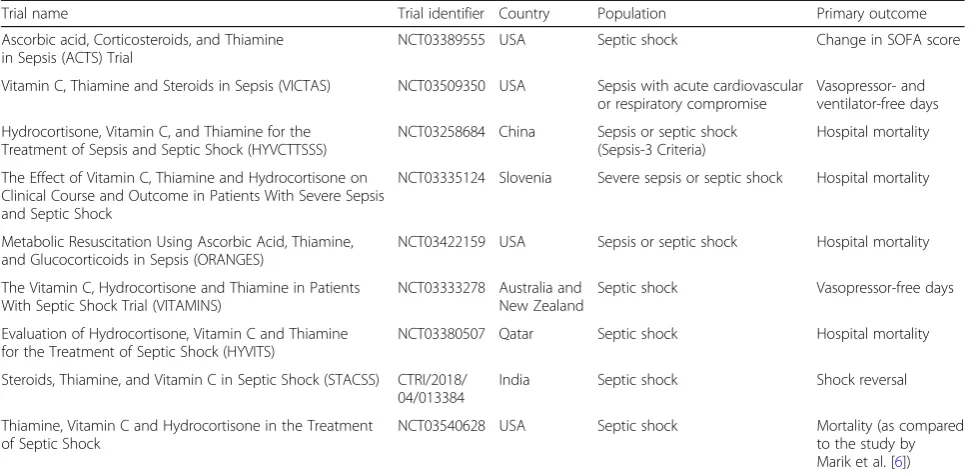
The Ascorbic Acid, Corticosteroids, and Thiamine in Sepsis (ACTS) trial and other ongoing clinical trials The lack of adequate data exemplified by mixed practice patterns suggests a state of scientific equipoise has devel-oped regarding the risk/benefit ratio of the routine adminis-tration of ascorbic acid, corticosteroids, and thiamine in sepsis. Randomized clinical trials are urgently needed to as-sess the effect of this drug combination on clinically import-ant outcomes in sepsis. As of July 1st, 2018, a review of the World Health Organization International Clinical Trials Registry Program (which includesclinicaltrials.gov) revealed nine ongoing or planned clinical trials of ascorbic acid, corti-costeroids, and thiamine in six different countries (Table1). These trials differ somewhat with respect to study popula-tions (septic shock only vs sepsis or septic shock), control group interventions (the VITAMINS trial using hydrocorti-sone and the remainder choosing saline placebo), and pri-mary outcomes, but all explore the intervention and daily doses proposed in the study by Marik et al [6]. Of note, the Vitamin C Infusion for Treatment in Sepsis Induced Acute Lung Injury (Citrus-ALI), a 170-patient trial of 200 mg/kg/ day of ascorbic acid vs placebo in sepsis-induced acute lung injury, has completed enrollment, although results of this study are not yet available.
currently enrolling. The trial is supported by the Open Phil-anthropy Project (https://www.openphilanthropy.org/). Pa-tients are randomized in a 1:1 ratio to receive thiamine (100 mg), ascorbic acid (1500 mg), and hydrocortisone (50 mg) or matching placebo four times daily for 4 days. The primary outcome is change in the Sequential Organ Failure Assessment (SOFA) score from baseline to 72 h, with key secondary outcomes including the incidence of renal failure and 30-day mortality. The primary outcome of 72-h SOFA score was selected to reflect the anticipated beneficial effects of thiamine, ascorbic acid, and corticoste-roids on organ function. As organ dysfunction is a defining element of sepsis and a major determinant of survival, this outcome is patient centered and the attenuation of organ dysfunction may be practice changing. Further, the SOFA score can be measured early in a patient’s hospital course and is therefore less impacted by downstream elements of hospital care than overall mortality.
The ACTS trial, in combination with the other trials de-scribed above, may provide important validation of the re-sults found by Marik et al. Should those rere-sults be replicated, the potential benefit in terms of lives saved world-wide annu-ally from sepsis could be measured in the hundreds of thou-sands. Even if the results from Marik et al. are not replicated, the ACTS trial and other trials of thiamine, ascorbic acid, and corticosteroids will provide important scientific data re-garding the effect of metabolic resuscitation in sepsis that may guide future studies in this area. Given concerns about reproducibility in science [70], replication of results in differ-ent patidiffer-ent populations is crucial to demonstrating a true, generalizable effect. The multiple ongoing trials testing this drug combination creates a rare scenario in critical care
medicine research where multiple, independent investigators are exploring the effects of a single intervention in unique patient cohorts. Further, a prospectively planned patient-level metanalysis combining data from the ACTS trial and the VICTAS trial would provide increased power and an ability to better explore the effect of thiamine, ascorbic acid, and hydrocortisone in certain patient subgroups [71].
Conclusions
The combination of thiamine, ascorbic acid, and corticoste-roids is a promising new therapy for sepsis resuscitation but currently lacks robust evidence to support its wide-spread use. The potential effectiveness of this medication combination is rooted in biologic plausibility and supported by small clinical trials of the various individual components. Randomized data to confirm or refute the observational evidence for the drug combination are needed, and several clinical trials are ongoing or planned in the near future. We therefore anticipate a timely answer to the question of whether thiamine, ascorbic acid, and corticosteroids will play a role in the evolution of sepsis therapies.
Abbreviations
ACTS:Ascorbic acid, Corticosteroids, and Thiamine in Sepsis; ICU: Intensive care unit; NOX: NADPH oxidase pathway; SOFA: Sequential organ failure assessment
Acknowledgements
ACTS Clinical Trial Investigators (not listed on main author line).
[image:5.595.56.543.99.337.2]Dr. Ronny Otero. Dr. Junior Uduman. Dr. Jessica B. McCannon. Dr. Mark Hershey. Dr. Maksim Korotun. Dr. Ayelet Hilewitz. Dr. Hyung K. Kim.
Table 1Ongoing and planned clinical trials of thiamine, ascorbic acid, and corticosteroids, in sepsis
Trial name Trial identifier Country Population Primary outcome
Ascorbic acid, Corticosteroids, and Thiamine in Sepsis (ACTS) Trial
NCT03389555 USA Septic shock Change in SOFA score
Vitamin C, Thiamine and Steroids in Sepsis (VICTAS) NCT03509350 USA Sepsis with acute cardiovascular or respiratory compromise
Vasopressor- and ventilator-free days
Hydrocortisone, Vitamin C, and Thiamine for the Treatment of Sepsis and Septic Shock (HYVCTTSSS)
NCT03258684 China Sepsis or septic shock (Sepsis-3 Criteria)
Hospital mortality
The Effect of Vitamin C, Thiamine and Hydrocortisone on Clinical Course and Outcome in Patients With Severe Sepsis and Septic Shock
NCT03335124 Slovenia Severe sepsis or septic shock Hospital mortality
Metabolic Resuscitation Using Ascorbic Acid, Thiamine, and Glucocorticoids in Sepsis (ORANGES)
NCT03422159 USA Sepsis or septic shock Hospital mortality
The Vitamin C, Hydrocortisone and Thiamine in Patients With Septic Shock Trial (VITAMINS)
NCT03333278 Australia and New Zealand
Septic shock Vasopressor-free days
Evaluation of Hydrocortisone, Vitamin C and Thiamine for the Treatment of Septic Shock (HYVITS)
NCT03380507 Qatar Septic shock Hospital mortality
Steroids, Thiamine, and Vitamin C in Septic Shock (STACSS) CTRI/2018/ 04/013384
India Septic shock Shock reversal
Thiamine, Vitamin C and Hydrocortisone in the Treatment of Septic Shock
NCT03540628 USA Septic shock Mortality (as compared
Funding
The ACTS trial is supported by a grant from the Open Philanthropy Project. Dr. Cocchi is funded by a grant from the American Heart Association (15SDG22420010). Dr. Moskowitz and Dr. Berg are supported by grants from the National Institutes of Health (K23GM128005–01 & 1K23HL128814–01, respectively). Dr. Grossestreuer is supported by a KL2/Catalyst Medical Research Investigator Training award (an appointed KL2 award) from Harvard Catalyst |The Harvard Clinical and Translational Science Center (National Center for Research Resources and the National Center for Advancing Translational Sciences, National Institutes of Health Award KL2 TR001100) Dr. Hou is supported by a grant from the National Institutes of Health (UO1HL122989–03).
Availability of data and materials
Data sharing is not applicable to this article as no datasets were generated or analyzed during the current study.
Authors’contributions
All authors made substantial contributions to the concept and design of the manuscript. Authors AM and MWD created the initial draft the manuscript, after which all authors provided critically important intellectual content and reviewed the final manuscript prior to submission. All authors read and approved the final manuscript.
Ethics approval and consent to participate
Not applicable.
Consent for publication
Not applicable.
Competing interests
The authors are currently conducting the Ascorbic Acid, Corticosteroids, and Thiamine in Sepsis (ACTS) clinical trial.
Publisher’s Note
Springer Nature remains neutral with regard to jurisdictional claims in published maps and institutional affiliations.
Author details
1Beth Israel Deaconess Medical Center, Department of Medicine, Division of
Pulmonary, Critical Care, and Sleep Medicine, Boston, MA, USA.2Beth Israel Deaconess Medical Center, Department of Emergency Medicine, Boston, MA, USA.3Research Center for Emergency Medicine, Aarhus University Hospital, Aarhus, Denmark.4Department of Anesthesiology, Aarhus University Hospital, Aarhus, Denmark.5Department of Critical Care Medicine, University of Pittsburgh, Pittsburgh, PA, USA.6Department of Emergency Medicine, University of Pittsburgh, Pittsburgh, PA, USA.7Department of Internal Medicine, Eastern Virginia Medical School, Norfolk, VA, USA.8Department of Emergency Medicine, Wayne State University School of Medicine/Detroit Receiving Hospital, Detroit, MI, USA.9Division of Emergency Critical Care Medicine, Department of Emergency Medicine, Brigham and Women’s Hospital, Boston, MA, USA.10Department of Emergency Medicine, Donald and Barbara Zucker School of Medicine at Hofstra/Northwell, Hempstead, NY, USA.11Feinstein Institute for Medical Research, Manhasset, NY, USA. 12
Department of Anesthesia Critical Care, Division of Critical Care, Beth Israel Deaconess Medical Center, Boston, MA, USA.13Department of Emergency Medicine and Internal Medicine, University of Texas Health Science Center at Houston, Houston, TX, USA.14Donald and Barbara Zucker School of Medicine at Hofstra/Northwell, Northwell Health System, New Hyde Park, NY, USA. 15Department of Critical Care Medicine, Mayo Clinic, Phoenix, AZ, USA.16Beth
Israel Deaconess Medical Center, Emergency Medicine, One Deaconess Rd, W/CC 2, Boston, MA 02215, USA.
Received: 9 August 2018 Accepted: 3 October 2018
References
1. Rhee C, Dantes R, Epstein L, Murphy DJ, Seymour CW, Iwashyna TJ, et al. Incidence and trends of sepsis in US hospitals using clinical vs claims data, 2009-2014. JAMA. 2017;318(13):1241–9.
2. Mayr FB, Yende S, Angus DC. Epidemiology of severe sepsis. Virulence. 2014; 5(1):4–11.
3. Stevenson EK, Rubenstein AR, Radin GT, Wiener RS, Walkey AJ. Two decades of mortality trends among patients with severe sepsis: a comparative meta-analysis. Crit Care Med. 2014;42(3):625–31.
4. Alobaidi R, Basu RK, Goldstein SL, Bagshaw SM. Sepsis-associated acute kidney injury. Semin Nephrol. 2015;35(1):2–11.
5. Rhodes A, Evans LE, Alhazzani W, Levy MM, Antonelli M, Ferrer R, et al. Surviving Sepsis Campaign: international guidelines for management of sepsis and septic shock: 2016. Crit Care Med. 2017;45(3):486–552. 6. Marik PE, Khangoora V, Rivera R, Hooper MH, Catravas J. Hydrocortisone,
vitamin C and thiamine for the treatment of severe sepsis and septic shock: a retrospective before-after study. Chest. 2017;151(6):1229–38.
7. Donnino MW, Andersen LW, Chase M, Berg KM, Tidswell M, Giberson T, et al. Randomized, double-blind, placebo-controlled trial of thiamine as a metabolic resuscitator in septic shock: a pilot study. Crit Care Med. 2016; 44(2):360–7.
8. Moskowitz A, Andersen LW, Cocchi MN, Karlsson M, Patel PV, Donnino MW. Thiamine as a renal protective agent in septic shock. a secondary analysis of a randomized, double-blind, placebo-controlled trial. Ann Am Thorac Soc. 2017;14(5):737–41.
9. Fowler AA 3rd, Syed AA, Knowlson S, Sculthorpe R, Farthing D, DeWilde C, et al. Phase I safety trial of intravenous ascorbic acid in patients with severe sepsis. J Transl Med. 2014;12:32.
10. Zabet MH, Mohammadi M, Ramezani M, Khalili H. Effect of high-dose Ascorbic acid on vasopressor's requirement in septic shock. J Res Pharm Pract. 2016;5(2):94–100.
11. Rochwerg B, Oczkowski SJ, Siemieniuk RAC, Agoritsas T, Belley-Cote E, D'Aragon F, et al. Corticosteroids in sepsis: an updated systematic review and meta-analysis. Crit Care Med. 2018;46(9):1411–20.
12. Rygard SL, Butler E, Granholm A, Moller MH, Cohen J, Finfer S, et al. Low-dose corticosteroids for adult patients with septic shock: a systematic review with meta-analysis and trial sequential analysis. Intensive Care Med. 2018;44(7):1003–16.
13. Okamoto K, Tanaka H, Makino Y, Makino I. Restoration of the glucocorticoid receptor function by the phosphodiester compound of vitamins C and E, EPC-K1 (L-ascorbic acid 2-[3,4-dihydro-2,5,7,8-tetramethyl-2-(4,8,12-trimethyltridecyl)-2H-1-benzopyran-6 -yl hydrogen phosphate] potassium salt), via a redox-dependent mechanism. Biochem Pharmacol. 1998;56(1):79–86. 14. Fujita I, Hirano J, Itoh N, Nakanishi T, Tanaka K. Dexamethasone induces
sodium-dependant vitamin C transporter in a mouse osteoblastic cell line MC3T3-E1. Br J Nutr. 2001;86(2):145–9.
15. Barabutis N, Khangoora V, Marik PE, Catravas JD. Hydrocortisone and ascorbic acid synergistically prevent and repair lipopolysaccharide-induced pulmonary endothelial barrier dysfunction. Chest. 2017;152(5):954–62. 16. Schrier RW, Wang W. Acute renal failure and sepsis. N Engl J Med. 2004;
351(2):159–69.
17. Landry DW, Oliver JA. The pathogenesis of vasodilatory shock. N Engl J Med. 2001;345(8):588–95.
18. Honore PM, Jacobs R, De Waele E, Diltoer M, Spapen HD. Renal blood flow and acute kidney injury in septic shock: an arduous conflict that smolders intrarenally? Kidney Int. 2016;90(1):22–4.
19. Legrand M, Dupuis C, Simon C, Gayat E, Mateo J, Lukaszewicz AC, et al. Association between systemic hemodynamics and septic acute kidney injury in critically ill patients: a retrospective observational study. Crit Care. 2013;17(6):R278. 20. Langenberg C, Bagshaw SM, May CN, Bellomo R. The histopathology of
septic acute kidney injury: a systematic review. Crit Care. 2008;12(2):R38. 21. Maiden MJ, Otto S, Brealey JK, Finnis ME, Chapman MJ, Kuchel TR, et al.
Structure and function of the kidney in septic shock. A prospective controlled experimental study. Am J Respir Crit Care Med. 2016;194(6):692–700. 22. Takasu O, Gaut JP, Watanabe E, To K, Fagley RE, Sato B, et al. Mechanisms of
cardiac and renal dysfunction in patients dying of sepsis. Am J Respir Crit Care Med. 2013;187(5):509–17.
23. Kosaka J, Lankadeva YR, May CN, Bellomo R. Histopathology of septic acute kidney injury: a systematic review of experimental data. Crit Care Med. 2016; 44(9):e897–903.
24. Lelubre C, Vincent JL. Mechanisms and treatment of organ failure in sepsis. Nat Rev Nephrol. 2018;14(7):417–27.
26. Manzanares W, Hardy G. Thiamine supplementation in the critically ill. Curr Opin Clin Nutr Metab Care. 2011;14(6):610–7.
27. Frank RA, Leeper FJ, Luisi BF. Structure, mechanism and catalytic duality of thiamine-dependent enzymes. Cell Mol Life Sci. 2007;64(7–8):892–905. 28. Andersen LW, Holmberg MJ, Berg KM, Chase M, Cocchi MN, Sulmonte C, et
al. Thiamine as an adjunctive therapy in cardiac surgery: a randomized, double-blind, placebo-controlled, phase II trial. Crit Care. 2016;20:92. 29. Mallat J, Lemyze M, Thevenin D. Do not forget to give thiamine to your
septic shock patient! J Thorac Dis. 2016;8(6):1062–6.
30. Gioda CR, de Oliveira Barreto T, Primola-Gomes TN, de Lima DC, Campos PP, Capettini Ldos S, et al. Cardiac oxidative stress is involved in heart failure induced by thiamine deprivation in rats. Am J Physiol Heart Circ Physiol. 2010;298(6):H2039–45. 31. Pacal L, Tomandl J, Svojanovsky J, Krusova D, Stepankova S, Rehorova J, et al. Role of thiamine status and genetic variability in transketolase and other pentose phosphate cycle enzymes in the progression of diabetic nephropathy. Nephrol Dial Transplant. 2011;26(4):1229–36.
32. Cruickshank AM, Telfer AB, Shenkin A. Thiamine deficiency in the critically ill. Intensive Care Med. 1988;14(4):384–7.
33. Corcoran TB, O'Neill MA, Webb SA, Ho KM. Prevalence of vitamin deficiencies on admission: relationship to hospital mortality in critically ill patients. Anaesth Intensive Care. 2009;37(2):254–60.
34. Donnino MW, Carney E, Cocchi MN, Barbash I, Chase M, Joyce N, et al. Thiamine deficiency in critically ill patients with sepsis. J Crit Care. 2010;25(4):576–81. 35. Nuzzo E, Berg KM, Andersen LW, Balkema J, Montissol S, Cocchi MN, et al.
Pyruvate dehydrogenase activity is decreased in the peripheral blood mononuclear cells of patients with sepsis. A prospective observational trial. Ann Am Thorac Soc. 2015;12(11):1662–6.
36. Donnino MW, Cocchi MN, Smithline H, Carney E, Chou PP, Salciccioli J. Coronary artery bypass graft surgery depletes plasma thiamine levels. Nutrition. 2010;26(1):133–6.
37. Ikeda K, Liu X, Kida K, Marutani E, Hirai S, Sakaguchi M, et al. Thiamine as a neuroprotective agent after cardiac arrest. Resuscitation. 2016;105:138–44. 38. Lindenbaum GA, Larrieu AJ, Carroll SF, Kapusnick RA. Effect of cocarboxylase in dogs subjected to experimental septic shock. Crit Care Med. 1989;17(10):1036–40. 39. Donnino MW, Vega J, Miller J, Walsh M. Myths and misconceptions of
Wernicke's encephalopathy: what every emergency physician should know. Ann Emerg Med. 2007;50(6):715–21.
40. Mortensen A, Lykkesfeldt J. Does vitamin C enhance nitric oxide bioavailability in a tetrahydrobiopterin-dependent manner? In vitro, in vivo and clinical studies. Nitric Oxide. 2014;36:51–7.
41. Oudemans-van Straaten HM, Spoelstra-de Man AM, de Waard MC. Vitamin C revisited. Crit Care. 2014;18(4):460.
42. Wu F, Tyml K, Wilson JX. iNOS expression requires NADPH oxidase-dependent redox signaling in microvascular endothelial cells. J Cell Physiol. 2008;217(1):207–14.
43. Amrein K, Oudemans-van Straaten HM, Berger MM. Vitamin therapy in critically ill patients: focus on thiamine, vitamin C, and vitamin D. Intensive Care Med. 2018. 44. Kc S, Carcamo JM, Golde DW. Vitamin C enters mitochondria via facilitative glucose transporter 1 (Glut1) and confers mitochondrial protection against oxidative injury. FASEB J. 2005;19(12):1657–67.
45. Victor VV, Guayerbas N, Puerto M, Medina S, De la Fuente M. Ascorbic acid modulates in vitro the function of macrophages from mice with endotoxic shock. Immunopharmacology. 2000;46(1):89–101.
46. Armour J, Tyml K, Lidington D, Wilson JX. Ascorbate prevents microvascular dysfunction in the skeletal muscle of the septic rat. J Appl Physiol. 2001; 90(3):795–803.
47. Carcamo JM, Pedraza A, Borquez-Ojeda O, Golde DW. Vitamin C suppresses TNF alpha-induced NF kappa B activation by inhibiting I kappa B alpha phosphorylation. Biochemistry. 2002;41(43):12995–3002.
48. Carr AC, Shaw GM, Fowler AA, Natarajan R. Ascorbate-dependent vasopressor synthesis: a rationale for vitamin C administration in severe sepsis and septic shock? Crit Care. 2015;19:418.
49. Marik PE, Hooper MH. Doctor-your septic patients have scurvy! Crit Care. 2018;22(1):23.
50. Wilson JX. Mechanism of action of vitamin C in sepsis: ascorbate modulates redox signaling in endothelium. BioFactors. 2009;35(1):5–13.
51. Carr AC, Rosengrave PC, Bayer S, Chambers S, Mehrtens J, Shaw GM. Hypovitaminosis C and vitamin C deficiency in critically ill patients despite recommended enteral and parenteral intakes. Crit Care. 2017;21(1):300. 52. Tanaka H, Matsuda T, Miyagantani Y, Yukioka T, Matsuda H, Shimazaki S.
Reduction of resuscitation fluid volumes in severely burned patients using
ascorbic acid administration: a randomized, prospective study. Arch Surg. 2000;135(3):326–31.
53. Nathens AB, Neff MJ, Jurkovich GJ, Klotz P, Farver K, Ruzinski JT, et al. Randomized, prospective trial of antioxidant supplementation in critically ill surgical patients. Ann Surg. 2002;236(6):814–22.
54. Marik PE. Vitamin C for the treatment of sepsis: the scientific rationale. Pharmacol Ther. 2018;189:63–70.
55. Hoppe B, Beck BB, Milliner DS. The primary hyperoxalurias. Kidney Int. 2009; 75(12):1264–71.
56. Levine M, Rumsey SC, Daruwala R, Park JB, Wang Y. Criteria and recommendations for vitamin C intake. JAMA. 1999;281(15):1415–23. 57. Spoelstra-de Man AME, Elbers PWG, Oudemans-Van Straaten HM. Vitamin C:
should we supplement? Curr Opin Crit Care. 2018;24(4):248–55. 58. Flannery AH, Bastin MLT, Magee CA, Bensadoun ES. Vitamin C in sepsis:
when it seems too sweet, it might (literally) be. Chest. 2017;152(2):450–1. 59. Venkatesh B, Finfer S, Cohen J, Rajbhandari D, Arabi Y, Bellomo R, et al.
Adjunctive glucocorticoid therapy in patients with septic shock. N Engl J Med. 2018;378(9):797–808.
60. Annane D, Sebille V, Charpentier C, Bollaert PE, Francois B, Korach JM, et al. Effect of treatment with low doses of hydrocortisone and fludrocortisone on mortality in patients with septic shock. JAMA. 2002;288(7):862–71. 61. Annane D, Renault A, Brun-Buisson C, Megarbane B, Quenot JP, Siami S, et
al. Hydrocortisone plus fludrocortisone for adults with septic shock. N Engl J Med. 2018;378(9):809–18.
62. Sprung CL, Annane D, Keh D, Moreno R, Singer M, Freivogel K, et al. Hydrocortisone therapy for patients with septic shock. N Engl J Med. 2008; 358(2):111–24.
63. Kim W-Y, Jo E-J, Eom JS, Mok J, Kim M-H, Kim KU, et al. Combined vitamin C, hydrocortisone, and thiamine therapy for patients with severe pneumonia who were admitted to the intensive care unit: Propensity score-based analysis of a before-after cohort study. J Crit Care. 2018;47:211–8. 64. Harris R. Doctor turns up possible treatment for deadly sepsis NPR2017.
Updated 3/23/2017. Available from:http://www.npr.org/sections/ healthshots/2017/03/23/521096488/doctor-turns-up-possible-treatment-for-deadly-sepsis. Accessed June 18 2018.
65. Harris R. Did an IV cocktail of vitamins and drugs save this lumberjack from sepsis. National Public Radio; 2018. Podcast.https://www.npr.org/sections/ health-shots/2018/02/21/583845485/did-an-iv-cocktail-of-vitamins-and-drugs-save-this-lumberjack-from-sepsis. Accessed June 28 2018.
66. Farkas J. Metabolic sepsis resuscitation: the evidence behind vitamin C 2017 Available from:https://emcrit.org/pulmcrit/metabolic-sepsis-resuscitation/. Accessed June 30 2018.
67. Mallemat H. The Marik protocol: have we found a“cure”for severe sepsis and septic shock? 2017. Available from: http://rebelem.com/the-marik-protocol-have-we-found-a-cure-for-severe-sepsis-and-septic-shock/. Accessed June 28 2018. 68. Faust J. The skeptics guide to EM; 2017. Podcast. Available from:http:// thesgem.com/2017/04/sgem174-dont-believe-the-hype-vitamin-c-cocktail-for-sepsis/. Accessed June 28 2018.
69. Ranieri VM, Thompson BT, Barie PS, Dhainaut JF, Douglas IS, Finfer S, et al. Drotrecogin alfa (activated) in adults with septic shock. N Engl J Med. 2012; 366(22):2055–64.
70. Ioannidis JP. Why most published research findings are false. PLoS Med. 2005;2(8):e124.