R E V I E W
Open Access
Conformational HIV-1 Envelope on particulate
structures: a tool for chemokine coreceptor
binding studies
Maria Tagliamonte
1, Maria Lina Tornesello
1, Franco M Buonaguro
1, Luigi Buonaguro
1,2*Abstract
The human immunodeficiency virus type 1 (HIV-1) external envelope glycoprotein gp120 presents conserved
binding sites for binding to the primary virus receptor CD4 as well as the major HIV chemokine coreceptors, CCR5
and CXCR4.
Concerted efforts are underway to understand the specific interactions between gp120 and coreceptors as well as
their contribution to the subsequent membrane fusion process.
The present review summarizes the current knowledge on this biological aspect, which represents one of the key
and essential points of the HIV-host cell interplay and HIV life cycle. The relevance of conformational HIV-1
Envelope proteins presented on Virus-like Particles for appropriate assessment of this molecular interaction, is also
discussed.
Introduction
The molecular interaction between HIV-1 gp120, in its
trimeric conformation, and the CD4 receptor on the
host cell surface represents the first step of the HIV
infection cycle. Upon this interaction, the
co-receptor-binding site on the gp120 is exposed, enabling the
bind-ing to HIV chemokine coreceptors (mainly CCR5 or
CXCR4) expressed on the surface of a subset of CD4+
lymphocytes. The binding to the coreceptors is followed
by fusion of the viral and host cell membranes mediated
by the HIV gp41 transmembrane glycoprotein [1-6].
Dissecting the structural changes which HIV external
envelope glycoprotein gp120 molecule undergo upon
molecular interactions with its cognate cellular receptor
and coreceptors, provide essential information to the
development of HIV-1-specific drugs, targeting the viral
entry step [7-16], as well as of vaccines [17-20].
Gp120 binding to chemokine coreceptors
The HIV-1 Envelope is synthesized as the polyprotein
precursor gp160, which undergoes oligomerization,
dis-ulfide bond formation and extensive glycosylation in the
endoplasmic reticulum [21]. The full post-translational
processing and maturation lead to proteolytical cleavage
of precursor gp160 into the surface gp120 and
trans-membrane gp41 subunits by furin-like endo-proteases in
the Golgi network [22-24]. The two subunits will
assem-ble into a trimer consisting of three gp120 molecules
associated non-covalently with three gp41 subunits.
The molecular interaction of HIV gp120 with the CD4
receptor and, subsequently, with the CCR5 or CXCR4
coreceptor leads to the insertion of the hydrophobic
gp41 N-terminal region (fusion peptide) into the host
cell membrane. In particular, the gp41 ectodomain
tri-mer acquires the six-helix bundle configuration which
drives in close contact the viral and cell membranes,
ultimately resulting in their fusion [1,2,4,25,26].
There-fore, the binding of HIV envelope to cellular coreceptors
dramatically influence the strength of viral-cell
interac-tion and promote the conformainterac-tional changes in the
gp41 required to overcome the energy barrier and
induce pore formation and membrane fusion.
Within the CCR5 and CXCR4 amino acid residues
interacting with the gp120, most of the cysteine residues
are involved in disulfide bonds formation and play a key
functional role. In particular, the N-terminal and second
extracellular domain (ECII) of both coreceptors seem to
be critical for gp120-CD4 complex binding [27-35].
* Correspondence: [email protected]1
Lab. of Molecular Biology and Viral Oncogenesis & AIDS Reference Center, Istituto Nazionale Tumori“Fond. G. Pascale”, Naples, Italy
Full list of author information is available at the end of the article
The role of coreceptors in the conformational changes
of the HIV transmembrane gp41 to facilitate virus-cell
membrane fusion has not yet been fully clarified, mainly
due to the lack of the CCR5 and CXCR4 crystal
struc-ture and, therefore, their absence in high resolution
X-ray structures solved for CD4-bound gp120 [17]. The
currently accepted theory proposes that, upon the
core-ceptor binding to the gp120-CD4 complex, the gp41
acquires the thermostable, six-helix bundle structure
that brings the two membranes together and results in
fusion pore formation [36,37].
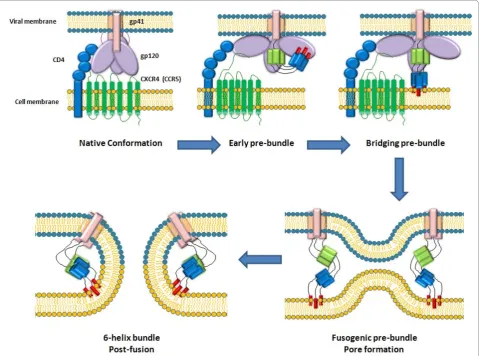
The first step is the exposure of the hydrophobic fusion
peptide at the N terminus of gp41 which interacts with
the target cell membrane, generating an intermediate,
pre-hairpin state bridging the virus and cell membranes.
The pre-hairpin then refolds into the stable, six-helix
bundle core structure [38,39], releasing sufficient energy
to overcome the kinetic barrier [40,41] and catalyzing the
fusion of the two membranes [42]. Whether the fusion
can occur with the free energy liberated during refolding
of one or several trimers, is still debated [40,43] (Fig.1).
In the described stepwise process, the pre-hairpin state
shows a relatively long half-life [44], representing a
favorable target for inhibitory peptides [45,46] as well as
neutralizing antibodies specific for the gp41 HR1 and
MPER regions [47-50].
Several data about the envelope/receptor interactions
have been generated also for the simian counterpart of
HIV (Simian Immunodeficiency Virus, SIV). Indeed,
SIV
macis the natural etiological agent of the AIDS-like
syndrome in Rhesus Macaques, which is the only
avail-able animal model for obtaining relevant information
on AIDS pathogenesis [51-54] as well as for testing
efficacy of antiviral therapeutics and vaccine candidates
[55,56].
[image:2.595.59.540.357.713.2]Similarly to HIV-1, SIV infection starts with the
high-affinity interaction of the gp120-gp41 envelope
glycopro-tein (Env) complex with CD4 on the target cell surface
[57,58]. However, in contrast to HIV-1, different strains
of SIV preferentially use CCR5 and not CXCR4 as
coreceptor for entry [59-61], although they may show
promiscuity in coreceptor usage, engaging alternative
coreceptors GPR15 and CXCR6/STRL33 with high
effi-ciency [62,63].
Moreover, SIV strains have been shown to infect
tar-get cells via a CD4-independent pathway, directly
inter-acting with CCR5 or CXCR4 coreceptor [64,65]. It has
been proposed that Env protein of such strains contains
multiple amino acid substitutions leading to the
consti-tutive exposure of coreceptor binding site [66,67],
simi-larly to what described for CD4-independent HIV-1
envelope proteins [68,69]. As consequence,
CD4-inde-pendent viruses acquire a broader cell tropism, being
able to infect also CD4 negative or low-expressing cells,
such as macaque macrophages [70,71].
The molecular interaction of SIV envelope protein
with the CD4 receptor and coreceptors leads to
confor-mational changes in the gp41 ectodomain trimers and
exposure of the fusion peptide which closely resemble
what described for the HIV-1 counterpart [72,73].
Role of coreceptors post-translational modifications in
HIV-1-mediated cell fusion
The effectiveness of CCR5 and CXCR4 as HIV
corecep-tors depends on the several possible conformations
which may significantly influence their ability to support
viral entry in different cells [74,75].
Furthermore, post-translational modifications of HIV
coreceptors and, in particular, of the extracellular
domains (including the N-terminal, EC I
–
III) and
intracellular loops, may modulate the receptor turnover
as well as the binding efficacy to the HIV gp120. In
general, extracellular domains may undergo N-linked or
O-linked glycosylation and tyrosine sulfation, while
modifications of intracellular loops include
palmitoyla-tion, phosphorylapalmitoyla-tion, and ubiquitination [76-79].
CCR5.
The CCR5 N-terminal is relevant for the role
as HIV-1 coreceptor [27,29,30] and contains several
tyrosine residues which may be modified by sulfation,
contributing to binding to natural ligands (MIP1-
a
,
MIP1-
b
) as well as HIV-1 gp120-CD4 complexes
[80-82]. In particular, sulfation of Tyrosines at position
10 and 14 seems to be a requisite for the CCR5 binding
efficacy [83,84]. Moreover, CCR5 is also modified by
O-linked glycosylation, preferentially on Ser-6 [85,86],
although it does not seem to affect the role of CCR5 in
the HIV entry [86].
As most chemokine receptors, the CCR5
carboxyl-terminus contains one or more cysteine residues
compa-tible with receptor palmitoylation, typically located 12 to
25 amino acids away from the plasma membrane
boundary [87]. Cysteine residues at amino acid positions
321, 323, and 324 undergo to palmitoylation, facilitating
the CCR5 transport to the plasma membrane as well as
ligand-stimulated endocytosis and affecting its ability to
initiate intra-cellular signalling pathways [88-90].
However, the biological role of improved localization of
CCR5 to lipid rafts for HIV entry into host cells is still
disputed [88-92].
CXCR4.
Similar to CCR5, also CXCR4 undergo
post-translational modifications contributing to its function.
CXCR4 is sulfated at three tyrosine residues in the
N-terminus, with Tyr21 accounting for the majority of
sulfate incorporation, although this modification doesn
’
t
appear to modulate the CXCR4 coreceptor function for
HIV-1 [83].
In contrast to CCR5, the extracellular domain of
CXCR4 is post-translationally modified by N-linked
gly-cosylation in two potential sites, Asn11 and Asn176
[93,94], although only Asn11 appears to be glycosylated
in mammalian cells [94]. Mutation of Asn11 does not
impair the CXCR4-mediated HIV-1 infection [95,96];
however, a Asn11-to-Glu11 mutation leads to enhanced
binding of both CXCR4-specific and dual-tropic (CCR5
and CXCR4) HIV-1 isolates [78,96].
HIV-1 Envelope-coreceptor signaling
The binding of the gp120-CD4 complex to chemokine
coreceptors not only mediates HIV entry but also
acti-vates intracellular signaling cascades, mimicking
chemo-kine signaling induced by binding to cognate receptors
[97,98] (reviewed in [77,99,100].
However, in addition to signaling pathways mediating
cell migration, transcriptional activation, cell growth and
differentiation [101-106], binding of gp120-CD4
com-plex to CCR5 or CXCR4 coreceptor has also been
shown to trigger the activation of proline-rich tyrosine
kinase (Pyk2), phosphoinositide 3-kinases (PI3K)
[107,108] and CD4/CXCR4-dependent NFAT (nuclear
factor of activated T cells) nuclear translocation [109].
Furthermore, gp120 was demonstrated to mediate
che-motaxis, actin cytoskeleton rearrangement [108], and
the activation of an actin depolymerization factor,
cofi-lin, to increase the cortical actin dynamics in resting
CD4 T cells [110]. (For a more comprehensive
descrip-tion of gp120-triggered chemokines coreceptor signaling,
refer to Cicala and Arthos in this same supplement).
Stable trimeric forms of human immunodeficiency
virus recombinant gp140
cytoplasmic domains and named gp140) which are
con-sidered to preserve or mimic the structure of functional
Env complexes [111-114]. Considering the close
struc-tural similarity of these molecules to native trimeric
HIV Envelope proteins, this can represent a relevant
tool also for receptor and chemokines coreceptor
bind-ing studies.
Mutations in the furin cleavage site at the gp120
–
gp41
junction inhibit the dissociation between the two
envel-ope subunits [114-117], but cleavage-defective gp140
Env proteins seem to be antigenically different from
fully processed Env [118-120]. In order to express
pro-cessed and stable trimers of gp140, an intermolecular
disulfide bond has been introduced between the gp120
and gp41 subunits to form a complex called
“
SOS
”
gp140 which, although still predominantly monomeric,
strongly reacts with the broadly neutralizing b12mAb
[118]. An isoleucine-to-proline substitution introduced
at position 559 in the N-terminal heptad region of gp41
has been shown to increase the stability of SOS gp140
(SOSIP gp140), leading to a fully cleaved and trimeric
structure with optimal antigenic properties [121,122].
Moreover, cleavage-defective gp140 Env proteins have
been further modified at the C-terminus to improve
trimer formation and stabilization, fusing different
heterologous trimerization motifs. In particular, a
32-amino-acid form of the GCN4 transcription factor
(GCN), a 27-amino-acid trimerization domain from the
C-terminus of bacteriophage T4 fibritin (T4F), or a
solu-ble trimerization domain of chicken cartilage matrix
(CART) protein have been employed, showing enhanced
binding to broadly neutralizing b12 and 2G12 mAbs
[115,116,123]. More recently, the effectiveness of the
catalytic chain of aspartate transcarbamoylase (ATCase)
as trimerization domain for the HIV gp140 has been
described [124,125].
Exploiting the VLP model
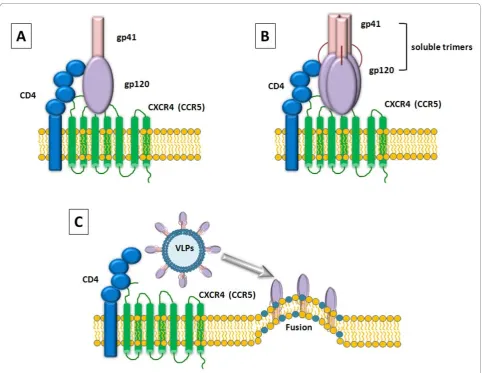
In addition to soluble forms, HIV gp140 trimeric
com-plex can be presented on membrane structures
includ-ing liposomes, inactivated viruses and virus-like particles
(VLPs) or pseudovirions, to mimic as close as possible
the native conformation [126-131].
In particular, Virus-like particles (VLPs) represent a
complex structure based on viral capsid proteins which
self-assemble into particulate structures closely
resem-bling immature virus particles [132-135]. VLPs are
replication as well as infection incompetent, lacking
reg-ulatory proteins as well as infectious genetic material,
and can be considered nanoparticles and employed
to deliver antigenic structures as well as DNA molecules
to antigen presenting cells, for enhanced induction of
immune responses against co-administered plasmid
DNA-based immunogens [136-140].
VLPs have been produced from a broad spectrum of
non-enveloped and enveloped viruses [140]. In
particu-lar, the particle structure of non-enveloped VLPs can be
based on single or multiple capsid proteins without a
surrounding cell membrane. Examples of such VLPs are
those formed by the expression of the major capsid
pro-tein of papillomaviruses, parvoviruses and
polyoma-viruses [135,141-143] or by multiple interacting capsid
proteins of Reoviridae family [144]. Alternative strategy
for generating non-enveloped virus-like-particles (VLPs)
is based on the assembly of the capsid protein derived
from RNA bacteriophages [145-147].
Alternatively, enveloped VLPs are based on assembled
capsid proteins surrounded by cell membrane and have
been developed for enveloped viruses such as hepatitis B
and C virus (HBV & HCV), influenza A and
retro-viruses, including HIV-1 [129,132,133,148-152].
The different forms of VLPs have distinct properties
for displaying antigens, given that only enveloped VLPs
may display full-length monomeric or multimeric
conformational proteins on their surface through
trans-membrane domains [129-131,153]. Non-enveloped
VLPs, on the contrary, may be employed to present
mainly short peptides or protein sequences. This has
been achieved either generating chimeric capsid proteins
expressing foreign epitope in frame (eg. Gag:V3)
[154-157], or chemically linking the foreign epitope to
the assembled capsid protein [158], although HIV-1 Gag
proteins fused to full-length HIV Reverse Transcriptase
(RT) protein, without loosing the capability of
assem-bling into VLPs, have been recently reported [159]. The
conformational structure of full-length proteins possibly
expressed on non-enveloped VLPs, however, remains to
be proven.
As consequence, at present, only enveloped VLPs
displaying full-length conformational proteins on their
surface may be a suitable experimental model for studies
on binding and interaction between HIV envelope and
cellular receptor/coreceptors. They, indeed, represent
the closest particle structure to native virus.
Conformational HIV Envelopes presented on particulate
structures
described to express trimeric forms of HIV-1 gp140
molecules on the surface of Pr55gag-VLPs [130,131].
Comparative studies showed that specific
trans-membrane domains induced optimal incorporation of
gp140 Env trimers onto VLP surface, retaining
con-served epitopes and undergoing conformational changes
upon CD4 binding [131] (Buonaguro et al., submitted).
Considering the biological and structural properties of
HIV gp140 trimers presented on the VLP surface, they
can be even more strategic for binding studies,
provid-ing an invaluable tool for evaluatprovid-ing and dissectprovid-ing the
whole virus-host cell interaction leading to and ending
with membrane fusion [163,164] (Fig. 2).
Conclusions
The interaction between HIV particles and target host
cells is a defined temporally sequential stepwise process,
characterized by the binding of surface gp120 Envelope
protein to CD4 receptor and subsequent binding of the
gp120-CD4 complex to chemokines coreceptors. This
will ultimately lead to membrane fusion and host cell
infection.
Studies aimed at dissecting the sequential steps of this
process have been and will be instrumental not only to
fully understand the strategies adopted by HIV to hijack
host cells for its own replication but also to develop
HIV-1-specific drugs and vaccines.
[image:5.595.57.540.321.694.2]The development of novel and improved molecular
tools, mimicking as close as possible native Envelope
tri-meric structures expressed on non-infectious particulate
structures (i.e. VLPs), will expand the armamentarium
for HIV-host cell interaction studies. This will help in
shedding further light on such a key moment of the
HIV infection as well as pathogenesis.
Acknowledgements
The study was supported by the European Community’s Seventh Framework Programme NGIN (FP7/2007-2013) under grant agreement n 201433. MT was supported by the EU NGIN project.
This article has been published as part ofJournal of Translational Medicine Volume 9 Supplement 1, 2011: Differential use of CCR5 vs. CSCR4 by HIV-1. Pathogenic, Translational and Clinical Open Questions. The full contents of the supplement are available online at http://www.translational-medicine. com/supplements/9/S1.
Author details
1
Lab. of Molecular Biology and Viral Oncogenesis & AIDS Reference Center, Istituto Nazionale Tumori“Fond. G. Pascale”, Naples, Italy.2Institute of Human
Virology, University of Maryland School of Medicine, Baltimore, MD, USA.
Competing interests
The authors declare no competing financial or other interests.
Published: 27 January 2011
References
1. Doms RW, Moore JP:HIV-1 membrane fusion: targets of opportunity.
J Cell Biol2000,151:F9-14.
2. Jones PL, Korte T, Blumenthal R:Conformational changes in cell surface HIV-1 envelope glycoproteins are triggered by cooperation between cell surface CD4 and co-receptors.J Biol Chem1998,273:404-409.
3. Sattentau QJ, Moore JP:Conformational changes induced in the human immunodeficiency virus envelope glycoprotein by soluble CD4 binding.
J Exp Med1991,174:407-415.
4. Sullivan N, Sun Y, Sattentau Q, Thali M, Wu D, Denisova G, Gershoni J, Robinson J, Moore J, Sodroski J:CD4-Induced conformational changes in the human immunodeficiency virus type 1 gp120 glycoprotein: consequences for virus entry and neutralization.J Virol1998,
72:4694-4703.
5. Zhang W, Canziani G, Plugariu C, Wyatt R, Sodroski J, Sweet R, Kwong P, Hendrickson W, Chaiken I:Conformational changes of gp120 in epitopes near the CCR5 binding site are induced by CD4 and a CD4 miniprotein mimetic.Biochemistry1999,38:9405-9416.
6. Wyatt R, Sodroski J:The HIV-1 envelope glycoproteins: fusogens, antigens, and immunogens.Science1998,280:1884-1888.
7. Jacobson JM, Saag MS, Thompson MA, Fischl MA, Liporace R, Reichman RC, Redfield RR, Fichtenbaum CJ, Zingman BS, Patel MC, Murga JD, Pemrick SM, D’Ambrosio P, Michael M, Kroger H, Ly H, Rotshteyn Y, Buice R, Morris SA, Stavola JJ, Maddon PJ, Kremer AB, Olson WC:Antiviral activity of single-dose PRO 140, a CCR5 monoclonal antibody, in HIV-infected adults.
J Infect Dis2008,198:345-1352.
8. Pett SL, McCarthy MC, Cooper DA, MacRae K, Tendolkar A, Norris R, Strizki JM, Williams KM, Emery S:A phase I study to explore the activity and safety of SCH532706, a small molecule chemokine receptor-5 antagonist in HIV type-1-infected patients.Antivir Ther2009,14:111-115. 9. Lalezari J, Yadavalli GK, Para M, Richmond G, Dejesus E, Brown SJ, Cai W,
Chen C, Zhong J, Novello LA, Lederman MM, Subramanian GM:Safety, pharmacokinetics, and antiviral activity of HGS004, a novel fully human IgG4 monoclonal antibody against CCR5, in HIV-1-infected patients.J Infect Dis2008,197:721-727.
10. Dorr P, Westby M, Dobbs S, Griffin P, Irvine B, Macartney M, Mori J, Rickett G, Smith-Burchnell C, Napier C, Webster R, Armour D, Price D, Stammen B, Wood A, Perros M:Maraviroc (UK-427,857), a potent, orally bioavailable, and selective small-molecule inhibitor of chemokine receptor CCR5 with broad-spectrum anti-human immunodeficiency virus type 1 activity.Antimicrob Agents Chemother2005,49:4721-4732. 11. Wood A, Armour D:The discovery of the CCR5 receptor antagonist,
UK-427,857, a new agent for the treatment of HIV infection and AIDS.Prog Med Chem2005,43:239-271.
12. Hendrix CW, Collier AC, Lederman MM, Schols D, Pollard RB, Brown S, Jackson JB, Coombs RW, Glesby MJ, Flexner CW, Bridger GJ, Badel K, MacFarland RT, Henson GW, Calandra G:Safety, pharmacokinetics, and antiviral activity of AMD3100, a selective CXCR4 receptor inhibitor, in HIV-1 infection.J Acquir Immune Defic Syndr2004,37:1253-1262. 13. Stone ND, Dunaway SB, Flexner C, Tierney C, Calandra GB, Becker S, Cao YJ,
Wiggins IP, Conley J, MacFarland RT, Park JG, Lalama C, Snyder S,
Kallungal B, Klingman KL, Hendrix CW:Multiple-dose escalation study of the safety, pharmacokinetics, and biologic activity of oral AMD070, a selective CXCR4 receptor inhibitor, in human subjects.Antimicrob Agents Chemother2007,51:2351-2358.
14. Princen K, Hatse S, Vermeire K, Aquaro S, De CE, Gerlach LO, Rosenkilde M, Schwartz TW, Skerlj R, Bridger G, Schols D:Inhibition of human immunodeficiency virus replication by a dual CCR5/CXCR4 antagonist.
J Virol2004,78:12996-13006.
15. Tagat JR, McCombie SW, Nazareno D, Labroli MA, Xiao Y, Steensma RW, Strizki JM, Baroudy BM, Cox K, Lachowicz J, Varty G, Watkins R: Piperazine-based CCR5 antagonists as HIV-1 inhibitors. IV. Discovery of 1-[(4,6-dimethyl-5-pyrimidinyl)carbonyl]- 4-[4-[2-methoxy-1(R)-4-(trifluoromethyl) phenyl]ethyl-3(S)-methyl-1-piperaz inyl]- 4-methylpiperidine (Sch-417690/Sch-D), a potent, highly selective, and orally bioavailable CCR5 antagonist.J Med Chem2004,47:2405-2408.
16. Baba M, Takashima K, Miyake H, Kanzaki N, Teshima K, Wang X, Shiraishi M, Iizawa Y:TAK-652 inhibits CCR5-mediated human immunodeficiency virus type 1 infection in vitro and has favorable pharmacokinetics in humans.Antimicrob Agents Chemother2005,49:4584-4591.
17. Kwong PD, Wyatt R, Robinson J, Sweet RW, Sodroski J, Hendrickson WA:
Structure of an HIV gp120 envelope glycoprotein in complex with the CD4 receptor and a neutralizing human antibody.Nature1998,
393:648-659.
18. Dey B, Svehla K, Xu L, Wycuff D, Zhou T, Voss G, Phogat A,
Chakrabarti BK, Li Y, Shaw G, Kwong PD, Nabel GJ, Mascola JR, Wyatt RT:
Structure-based stabilization of HIV-1 gp120 enhances humoral immune responses to the induced co-receptor binding site.PLoS Pathog2009,5:e1000445.
19. Dormitzer PR, Ulmer JB, Rappuoli R:Structure-based antigen design: a strategy for next generation vaccines.Trends Biotechnol2008,26:659-667. 20. Zhou T, Georgiev I, Wu X, Yang ZY, Dai K, Finzi A, Do KY, Scheid J, Shi W,
Xu L, Yang Y, Zhu J, Nussenzweig MC, Sodroski J, Shapiro L, Nabel GJ, Mascola JR, Kwong PD:Structural Basis for Broad and Potent Neutralization of HIV-1 by Antibody VRC01.Science2010.
21. Earl PL, Moss B, Doms RW:Folding, interaction with GRP78-BiP, assembly, and transport of the human immunodeficiency virus type 1 envelope protein.J Virol1991,65:2047-2055.
22. Freed EO, Myers DJ, Risser R:Mutational analysis of the cleavage sequence of the human immunodeficiency virus type 1 envelope glycoprotein precursor gp160.J Virol1989,63:4670-4675.
23. McCune JM, Rabin LB, Feinberg MB, Lieberman M, Kosek JC, Reyes GR, Weissman IL:Endoproteolytic cleavage of gp160 is required for the activation of human immunodeficiency virus.Cell1988,53:55-67. 24. Hallenberger S, Bosch V, Angliker H, Shaw E, Klenk HD, Garten W:Inhibition
of furin-mediated cleavage activation of HIV-1 glycoprotein gp160.
Nature1992,360:358-361.
25. Melikyan GB, Markosyan RM, Hemmati H, Delmedico MK, Lambert DM, Cohen FS:Evidence that the transition of HIV-1 gp41 into a six-helix bundle, not the bundle configuration, induces membrane fusion.J Cell Biol2000,151:413-423.
26. Moore JP, Doms RW:The entry of entry inhibitors: a fusion of science and medicine.Proc Natl Acad Sci U S A2003,100:10598-10602. 27. Chabot DJ, Broder CC:Substitutions in a homologous region of
extracellular loop 2 of CXCR4 and CCR5 alter coreceptor activities for HIV-1 membrane fusion and virus entry.J Biol Chem2000,
275:23774-23782.
28. Alkhatib G, Locati M, Kennedy PE, Murphy PM, Berger EA:HIV-1 coreceptor activity of CCR5 and its inhibition by chemokines: independence from G protein signaling and importance of coreceptor downmodulation.
Virology1997,234:340-348.
29. Doranz BJ, Lu ZH, Rucker J, Zhang TY, Sharron M, Cen YH, Wang ZX, Guo HH, Du JG, Accavitti MA, Doms RW, Peiper SC:Two distinct CCR5 domains can mediate coreceptor usage by human immunodeficiency virus type 1.J Virol1997,71:6305-6314.
30. Dragic T, Trkola A, Lin SW, Nagashima KA, Kajumo F, Zhao L, Olson WC, Wu L, Mackay CR, Allaway GP, Sakmar TP, Moore JP, Maddon PJ: Amino-terminal substitutions in the CCR5 coreceptor impair gp120 binding and human immunodeficiency virus type 1 entry.J Virol1998,72:279-285. 31. Kuhmann SE, Platt EJ, Kozak SL, Kabat D:Cooperation of multiple CCR5
32. Chabot DJ, Zhang PF, Quinnan GV, Broder CC:Mutagenesis of CXCR4 identifies important domains for human immunodeficiency virus type 1 X4 isolate envelope-mediated membrane fusion and virus entry and reveals cryptic coreceptor activity for R5 isolates.J Virol1999,
73:6598-6609.
33. Brelot A, Heveker N, Adema K, Hosie MJ, Willett B, Alizon M:Effect of mutations in the second extracellular loop of CXCR4 on its utilization by human and feline immunodeficiency viruses.J Virol1999,
73:2576-2586.
34. Kajumo F, Thompson DA, Guo Y, Dragic T:Entry of R5X4 and X4 human immunodeficiency virus type 1 strains is mediated by negatively charged and tyrosine residues in the amino-terminal domain and the second extracellular loop of CXCR4.Virology2000,
271:240-247.
35. Zhou N, Luo Z, Luo J, Liu D, Hall JW, Pomerantz RJ, Huang Z:Structural and functional characterization of human CXCR4 as a chemokine receptor and HIV-1 co-receptor by mutagenesis and molecular modeling studies.J Biol Chem2001,276:42826-42833.
36. Golding H, Zaitseva M, de RE King LR, Manischewitz J, Sidorov I, Gorny MK, Zolla-Pazner S, Dimitrov DS, Weiss CD:Dissection of human
immunodeficiency virus type 1 entry with neutralizing antibodies to gp41 fusion intermediates.J Virol2002,76:6780-6790.
37. Eckert DM, Kim PS:Mechanisms of viral membrane fusion and its inhibition.Annu Rev Biochem2001,70:77-810.
38. Chan DC, Fass D, Berger JM, Kim PS:Core structure of gp41 from the HIV envelope glycoprotein.Cell1997,89:263-273.
39. Weissenhorn W, Dessen A, Harrison SC, Skehel JJ, Wiley DC:Atomic structure of the ectodomain from HIV-1 gp41.Nature1997,387:426-430. 40. Harrison SC:Mechanism of membrane fusion by viral envelope proteins.
Adv Virus Res2005,64:231-261.
41. Chernomordik LV, Kozlov MM:Protein-lipid interplay in fusion and fission of biological membranes.Annu Rev Biochem2003,72:175-207.
42. Melikyan GB, Markosyan RM, Hemmati H, Delmedico MK, Lambert DM, Cohen FS:Evidence that the transition of HIV-1 gp41 into a six-helix bundle, not the bundle configuration, induces membrane fusion.J Cell Biol2000,151:413-423.
43. Magnus C, Rusert P, Bonhoeffer S, Trkola A, Regoes RR:Estimating the stoichiometry of human immunodeficiency virus entry.J Virol2009,
83:1523-1531.
44. Munoz-Barroso I, Durell S, Sakaguchi K, Appella E, Blumenthal R:Dilation of the human immunodeficiency virus-1 envelope glycoprotein fusion pore revealed by the inhibitory action of a synthetic peptide from gp41.J Cell Biol1998,140:315-323.
45. Wild CT, Shugars DC, Greenwell TK, McDanal CB, Matthews TJ:Peptides corresponding to a predictive alpha-helical domain of human immunodeficiency virus type 1 gp41 are potent inhibitors of virus infection.Proc Natl Acad Sci U S A1994,91:9770-9774.
46. Furuta RA, Wild CT, Weng Y, Weiss CD:Capture of an early fusion-active conformation of HIV-1 gp41.Nat Struct Biol1998,5:276-279.
47. Luftig MA, Mattu M, Di GP, Geleziunas R, Hrin R, Barbato G, Bianchi E, Miller MD, Pessi A, Carfi A:Structural basis for HIV-1 neutralization by a gp41 fusion intermediate-directed antibody.Nat Struct Mol Biol2006,
13:740-747.
48. Corti D, Langedijk JP, Hinz A, Seaman MS, Vanzetta F, Fernandez-Rodriguez BM, Silacci C, Pinna D, Jarrossay D, Balla-Jhagjhoorsingh S, Willems B, Zekveld MJ, Dreja H, O’Sullivan E, Pade C, Orkin C, Jeffs SA, Montefiori DC, Davis D, Weissenhorn W, McKnight A, Heeney JL, Sallusto F, Sattentau QJ, Weiss RA, Lanzavecchia A:Analysis of memory B cell responses and isolation of novel monoclonal antibodies with neutralizing breadth from HIV-1-infected individuals.PLoS One2010,5: e8805.
49. Dimitrov AS, Jacobs A, Finnegan CM, Stiegler G, Katinger H, Blumenthal R:
Exposure of the membrane-proximal external region of HIV-1 gp41 in the course of HIV-1 envelope glycoprotein-mediated fusion.Biochemistry 2007,46:1398-1401.
50. Frey G, Peng H, Rits-Volloch S, Morelli M, Cheng Y, Chen B:A fusion-intermediate state of HIV-1 gp41 targeted by broadly neutralizing antibodies.Proc Natl Acad Sci U S A2008,105:3739-3744.
51. Letvin NL, Daniel MD, Sehgal PK, Desrosiers RC, Hunt RD, Waldron LM, MacKey JJ, Schmidt DK, Chalifoux LV, King NW:Induction of AIDS-like
disease in macaque monkeys with T-cell tropic retrovirus STLV-III.Science 1985,230:71-73.
52. Estes JD, Gordon SN, Zeng M, Chahroudi AM, Dunham RM, Staprans SI, Reilly CS, Silvestri G, Haase AT:Early resolution of acute immune activation and induction of PD-1 in SIV-infected sooty mangabeys distinguishes nonpathogenic from pathogenic infection in rhesus macaques.J Immunol2008,180:6798-6807.
53. Jacquelin B, Mayau V, Targat B, Liovat AS, Kunkel D, Petitjean G, Dillies MA, Roques P, Butor C, Silvestri G, Giavedoni LD, Lebon P, Barre-Sinoussi F, Benecke A, Muller-Trutwin MC:Nonpathogenic SIV infection of African green monkeys induces a strong but rapidly controlled type I IFN response.J Clin Invest2009,119:3544-3555.
54. Silvestri G:Naturally SIV-infected sooty mangabeys: are we closer to understanding why they do not develop AIDS?J Med Primatol2005,
34:243-252.
55. Shedlock DJ, Silvestri G, Weiner DB:Monkeying around with HIV vaccines: using rhesus macaques to define‘gatekeepers’for clinical trials.Nat Rev Immunol2009,9:717-728.
56. Van Rompay KK:Evaluation of antiretrovirals in animal models of HIV infection.Antiviral Res2010,85:159-175.
57. Kestler HW III, Naidu YN, Kodama T, King NW, Daniel MD, Li Y, Desrosiers RC:Use of infectious molecular clones of simian
immunodeficiency virus for pathogenesis studies.J Med Primatol1989,
18:305-309.
58. Naidu YM, Kestler HW III, Li Y, Butler CV, Silva DP, Schmidt DK, Troup CD, Sehgal PK, Sonigo P, Daniel MD:Characterization of infectious molecular clones of simian immunodeficiency virus (SIVmac) and human immunodeficiency virus type 2: persistent infection of rhesus monkeys with molecularly cloned SIVmac.J Virol1988,62:4691-4696.
59. Chen Z, Zhou P, Ho DD, Landau NR, Marx PA:Genetically divergent strains of simian immunodeficiency virus use CCR5 as a coreceptor for entry.J Virol1997,71:2705-2714.
60. Edinger AL, Amedee A, Miller K, Doranz BJ, Endres M, Sharron M, Samson M, Lu ZH, Clements JE, Murphey-Corb M, Peiper SC, Parmentier M, Broder CC, Doms RW:Differential utilization of CCR5 by macrophage and T cell tropic simian immunodeficiency virus strains.Proc Natl Acad Sci U S A1997,94:4005-4010.
61. Kirchhoff F, Pohlmann S, Hamacher M, Means RE, Kraus T, Uberla K, Di MP:
Simian immunodeficiency virus variants with differential T-cell and macrophage tropism use CCR5 and an unidentified cofactor expressed in CEMx174 cells for efficient entry.J Virol1997,71:6509-6516. 62. Deng HK, Unutmaz D, Kewalramani VN, Littman DR:Expression cloning of
new receptors used by simian and human immunodeficiency viruses.
Nature1997,388:296-300.
63. Edinger AL, Hoffman TL, Sharron M, Lee B, O’Dowd B, Doms RW:Use of GPR1, GPR15, and STRL33 as coreceptors by diverse human immunodeficiency virus type 1 and simian immunodeficiency virus envelope proteins.Virology1998,249:367-378.
64. Dehghani H, Puffer BA, Doms RW, Hirsch VM:Unique pattern of convergent envelope evolution in simian immunodeficiency virus-infected rapid progressor macaques: association with CD4-independent usage of CCR5.J Virol2003,77:6405-6418.
65. Reeves JD, Hibbitts S, Simmons G, McKnight A, zevedo-Pereira JM, Moniz-Pereira J, Clapham PR:Primary human immunodeficiency virus type 2 (HIV-2) isolates infect CD4-negative cells via CCR5 and CXCR4: comparison with HIV-1 and simian immunodeficiency virus and relevance to cell tropism in vivo.J Virol1999,73:7795-7804.
66. Puffer BA, Altamura LA, Pierson TC, Doms RW:Determinants within gp120 and gp41 contribute to CD4 independence of SIV Envs.Virology2004,
327:16-25.
67. Pohlmann S, Davis C, Meister S, Leslie GJ, Otto C, Reeves JD, Puffer BA, Papkalla A, Krumbiegel M, Marzi A, Lorenz S, Munch J, Doms RW, Kirchhoff F:Amino acid 324 in the simian immunodeficiency virus SIVmac V3 loop can confer CD4 independence and modulate the interaction with CCR5 and alternative coreceptors.J Virol2004,
78:3223-3232.
68. Hoffman TL, LaBranche CC, Zhang W, Canziani G, Robinson J, Chaiken I, Hoxie JA, Doms RW:Stable exposure of the coreceptor-binding site in a CD4-independent HIV-1 envelope protein.Proc Natl Acad Sci U S A1999,
69. LaBranche CC, Hoffman TL, Romano J, Haggarty BS, Edwards TG, Matthews TJ, Doms RW, Hoxie JA:Determinants of CD4 independence for a human immunodeficiency virus type 1 variant map outside regions required for coreceptor specificity.J Virol1999,73:10310-10319. 70. Bannert N, Schenten D, Craig S, Sodroski J:The level of CD4 expression
limits infection of primary rhesus monkey macrophages by a T-tropic simian immunodeficiency virus and macrophagetropic human immunodeficiency viruses.J Virol2000,74:10984-10993.
71. Mori K, Rosenzweig M, Desrosiers RC:Mechanisms for adaptation of simian immunodeficiency virus to replication in alveolar macrophages.J Virol2000,74:10852-10859.
72. Gustchina E, Hummer G, Bewley CA, Clore GM:Differential inhibition of HIV-1 and SIV envelope-mediated cell fusion by C34 peptides derived from the C-terminal heptad repeat of gp41 from diverse strains of HIV-1, HIV-2, and SIV.J Med Chem2005,48:3036-3044.
73. Malashkevich VN, Chan DC, Chutkowski CT, Kim PS:Crystal structure of the simian immunodeficiency virus (SIV) gp41 core: conserved helical interactions underlie the broad inhibitory activity of gp41 peptides.Proc Natl Acad Sci U S A1998,95:9134-9139.
74. McKnight A, Wilkinson D, Simmons G, Talbot S, Picard L, Ahuja M, Marsh M, Hoxie JA, Clapham PR:Inhibition of human immunodeficiency virus fusion by a monoclonal antibody to a coreceptor (CXCR4) is both cell type and virus strain dependent.J Virol1997,71:1692-1696.
75. Babcock GJ, Farzan M, Sodroski J:Ligand-independent dimerization of CXCR4, a principal HIV-1 coreceptor.J Biol Chem2003,278:3378-3385. 76. Zaitseva M, Peden K, Golding H:HIV coreceptors: role of structure,
posttranslational modifications, and internalization in viral-cell fusion and as targets for entry inhibitors.Biochim Biophys Acta2003,1614:51-61. 77. Oppermann M:Chemokine receptor CCR5: insights into structure,
function, and regulation.Cell Signal2004,16:1201-1210.
78. Wang J, Babcock GJ, Choe H, Farzan M, Sodroski J, Gabuzda D:N-linked glycosylation in the CXCR4 N-terminus inhibits binding to HIV-1 envelope glycoproteins.Virology2004,324:140-150.
79. Sloane AJ, Raso V, Dimitrov DS, Xiao X, Deo S, Muljadi N, Restuccia D, Turville S, Kearney C, Broder CC, Zoellner H, Cunningham AL, Bendall L, Lynch GW:Marked structural and functional heterogeneity in CXCR4: separation of HIV-1 and SDF-1alpha responses.Immunol Cell Biol2005,
83:129-143.
80. Simpson LS, Zhu JZ, Widlanski TS, Stone MJ:Regulation of chemokine recognition by site-specific tyrosine sulfation of receptor peptides.Chem Biol2009,16:153-161.
81. Farzan M, Mirzabekov T, Kolchinsky P, Wyatt R, Cayabyab M, Gerard NP, Gerard C, Sodroski J, Choe H:Tyrosine sulfation of the amino terminus of CCR5 facilitates HIV-1 entry.Cell1999,96:667-676.
82. Lam SN, Acharya P, Wyatt R, Kwong PD, Bewley CA:Tyrosine-sulfate isosteres of CCR5 N-terminus as tools for studying HIV-1 entry.Bioorg Med Chem2008,16:10113-10120.
83. Farzan M, Vasilieva N, Schnitzler CE, Chung S, Robinson J, Gerard NP, Gerard C, Choe H, Sodroski J:A tyrosine-sulfated peptide based on the N terminus of CCR5 interacts with a CD4-enhanced epitope of the HIV-1 gp120 envelope glycoprotein and inhibits HIV-1 entry2.J Biol Chem2000,
275:33516-33521.
84. Cormier EG, Persuh M, Thompson DA, Lin SW, Sakmar TP, Olson WC, Dragic T:Specific interaction of CCR5 amino-terminal domain peptides containing sulfotyrosines with HIV-1 envelope glycoprotein gp120.Proc Natl Acad Sci U S A2000,97:5762-5767.
85. Farzan M, Mirzabekov T, Kolchinsky P, Wyatt R, Cayabyab M, Gerard NP, Gerard C, Sodroski J, Choe H:Tyrosine sulfation of the amino terminus of CCR5 facilitates HIV-1 entry 3.Cell1999,96:667-676.
86. Bannert N, Craig S, Farzan M, Sogah D, Santo NV, Choe H, Sodroski J:
Sialylated O-glycans and sulfated tyrosines in the NH2-terminal domain of CC chemokine receptor 5 contribute to high affinity binding of chemokines.J Exp Med2001,194:1661-1673.
87. Venkatesan S, Petrovic A, Locati M, Kim YO, Weissman D, Murphy PM:A membrane-proximal basic domain and cysteine cluster in the C-terminal tail of CCR5 constitute a bipartite motif critical for cell surface expression.J Biol Chem2001,276:40133-40145.
88. Blanpain C, Wittamer V, Vanderwinden JM, Boom A, Renneboog B, Lee B, Le PE, El AL, Govaerts C, Vassart G, Doms RW, Parmentier M:Palmitoylation of CCR5 is critical for receptor trafficking and efficient activation of intracellular signaling pathways.J Biol Chem2001,276:23795-23804.
89. Percherancier Y, Planchenault T, Valenzuela-Fernandez A, Virelizier JL, renzana-Seisdedos F, Bachelerie F:Palmitoylation-dependent control of degradation, life span, and membrane expression of the CCR5 receptor.
J Biol Chem2001,276:31936-31944.
90. Kraft K, Olbrich H, Majoul I, Mack M, Proudfoot A, Oppermann M:
Characterization of sequence determinants within the carboxyl-terminal domain of chemokine receptor CCR5 that regulate signaling and receptor internalization.J Biol Chem2001,276:34408-34418. 91. Steffens CM, Hope TJ:Mobility of the human immunodeficiency virus
(HIV) receptor CD4 and coreceptor CCR5 in living cells: implications for HIV fusion and entry events.J Virol2004,78:9573-9578.
92. Popik W, Alce TM, Au WC:Human immunodeficiency virus type 1 uses lipid raft-colocalized CD4 and chemokine receptors for productive entry into CD4(+) T cells.J Virol2002,76:4709-4722.
93. Berson JF, Long D, Doranz BJ, Rucker J, Jirik FR, Doms RW:A seven-transmembrane domain receptor involved in fusion and entry of T-cell-tropic human immunodeficiency virus type 1 strains.J Virol1996,
70:6288-6295.
94. Chabot DJ, Chen H, Dimitrov DS, Broder CC:N-linked glycosylation of CXCR4 masks coreceptor function for CCR5-dependent human immunodeficiency virus type 1 isolates.J Virol2000,74:4404-4413. 95. Brelot A, Heveker N, Montes M, Alizon M:Identification of residues of
CXCR4 critical for human immunodeficiency virus coreceptor and chemokine receptor activities.J Biol Chem2000,275:23736-23744. 96. Thordsen I, Polzer S, Schreiber M:Infection of cells expressing CXCR4
mutants lacking N-glycosylation at the N-terminal extracellular domain is enhanced for R5X4-dualtropic human immunodeficiency virus type-1.
BMC Infect Dis2002,2:31.
97. Weissman D, Rabin RL, Arthos J, Rubbert A, Dybul M, Swofford R, Venkatesan S, Farber JM, Fauci AS:Macrophage-tropic HIV and SIV envelope proteins induce a signal through the CCR5 chemokine receptor.Nature1997,389:981-985.
98. Davis CB, Dikic I, Unutmaz D, Hill CM, Arthos J, Siani MA, Thompson DA, Schlessinger J, Littman DR:Signal transduction due to HIV-1 envelope interactions with chemokine receptors CXCR4 or CCR5.J Exp Med1997,
186:1793-1798.
99. Busillo JM, Benovic JL:Regulation of CXCR4 signaling.Biochim Biophys Acta2007,1768:952-963.
100. Wu Y, Yoder A:Chemokine coreceptor signaling in HIV-1 infection and pathogenesis.PLoS Pathog2009,5:e1000520.
101. Sotsios Y, Whittaker GC, Westwick J, Ward SG:The CXC chemokine stromal cell-derived factor activates a Gi-coupled phosphoinositide 3-kinase in T lymphocytes.J Immunol1999,163:5954-5963.
102. Vicente-Manzanares M, Rey M, Jones DR, Sancho D, Mellado M, Rodriguez-Frade JM, del Pozo MA, Yanez Mo M, de Ana AM, Martinez A, Merida I, Sanchez-Madrid F:Involvement of phosphatidylinositol 3-kinase in stromal cell-derived factor-1 alpha-induced lymphocyte polarization and chemotaxis.J Immunol1999,163:4001-4012.
103. Vicente-Manzanares M, Cabrero JR, Rey M, Perez-Martinez M, Ursa A, Itoh K, Sanchez-Madrid F:A role for the Rho-p160 Rho coiled-coil kinase axis in the chemokine stromal cell-derived factor-1alpha-induced lymphocyte actomyosin and microtubular organization and chemotaxis.J Immunol 2002,168:400-410.
104. Ganju RK, Brubaker SA, Meyer J, Dutt P, Yang Y, Qin S, Newman W, Groopman JE:The alpha-chemokine, stromal cell-derived factor-1alpha, binds to the transmembrane G-protein-coupled CXCR-4 receptor and activates multiple signal transduction pathways.J Biol Chem1998,
273:23169-23175.
105. Porcile C, Bajetto A, Barbieri F, Barbero S, Bonavia R, Biglieri M, Pirani P, Florio T, Schettini G:Stromal cell-derived factor-1alpha (SDF-1alpha/ CXCL12) stimulates ovarian cancer cell growth through the EGF receptor transactivation.Exp Cell Res2005,308:241-253.
106. Barbero S, Bonavia R, Bajetto A, Porcile C, Pirani P, Ravetti JL, Zona GL, Spaziante R, Florio T, Schettini G:Stromal cell-derived factor 1alpha stimulates human glioblastoma cell growth through the activation of both extracellular signal-regulated kinases 1/2 and Akt.Cancer Res2003,
63:1969-1974.
107. Francois F, Klotman ME:Phosphatidylinositol 3-kinase regulates human immunodeficiency virus type 1 replication following viral entry in primary CD4+ T lymphocytes and macrophages.J Virol2003,
108. Balabanian K, Harriague J, Decrion C, Lagane B, Shorte S, Baleux F, Virelizier JL, renzana-Seisdedos F, Chakrabarti LA:CXCR4-tropic HIV-1 envelope glycoprotein functions as a viral chemokine in unstimulated primary CD4+ T lymphocytes.J Immunol2004,173:7150-7160.
109. Cicala C, Arthos J, Censoplano N, Cruz C, Chung E, Martinelli E, Lempicki RA, Natarajan V, VanRyk D, Daucher M, Fauci AS:HIV-1 gp120 induces NFAT nuclear translocation in resting CD4+ T-cells.Virology2006,345:105-114. 110. Yoder A, Yu D, Dong L, Iyer SR, Xu X, Kelly J, Liu J, Wang W, Vorster PJ,
Agulto L, Stephany DA, Cooper JN, Marsh JW, Wu Y:HIV envelope-CXCR4 signaling activates cofilin to overcome cortical actin restriction in resting CD4 T cells.Cell2008,134:782-792.
111. Burton DR, Desrosiers RC, Doms RW, Koff WC, Kwong PD, Moore JP, Nabel GJ, Sodroski J, Wilson IA, Wyatt RT:HIV vaccine design and the neutralizing antibody problem.Nat Immunol2004,5:233-236. 112. Schulke N, Vesanen MS, Sanders RW, Zhu P, Lu M, Anselma DJ, Villa AR,
Parren PW, Binley JM, Roux KH, Maddon PJ, Moore JP, Olson WC:
Oligomeric and conformational properties of a proteolytically mature, disulfide-stabilized human immunodeficiency virus type 1 gp140 envelope glycoprotein.J Virol2002,76:7760-7776.
113. Srivastava IK, VanDorsten K, Vojtech L, Barnett SW, Stamatatos L:Changes in the immunogenic properties of soluble gp140 human
immunodeficiency virus envelope constructs upon partial deletion of the second hypervariable region.J Virol2003,77:2310-2320.
114. Yang X, Lee J, Mahony EM, Kwong PD, Wyatt R, Sodroski J:Highly stable trimers formed by human immunodeficiency virus type 1 envelope glycoproteins fused with the trimeric motif of T4 bacteriophage fibritin.
J Virol2002,76:4634-4642.
115. Yang X, Florin L, Farzan M, Kolchinsky P, Kwong PD, Sodroski J, Wyatt R:
Modifications that stabilize human immunodeficiency virus envelope glycoprotein trimers in solution.J Virol2000,74:4746-4754.
116. Yang X, Farzan M, Wyatt R, Sodroski J:Characterization of stable, soluble trimers containing complete ectodomains of human immunodeficiency virus type 1 envelope glycoproteins.J Virol2000,74:5716-5725. 117. Earl PL, Broder CC, Long D, Lee SA, Peterson J, Chakrabarti S, Doms RW,
Moss B:Native oligomeric human immunodeficiency virus type 1 envelope glycoprotein elicits diverse monoclonal antibody reactivities.J Virol1994,68:3015-3026.
118. Binley JM, Sanders RW, Clas B, Schuelke N, Master A, Guo Y, Kajumo F, Anselma DJ, Maddon PJ, Olson WC, Moore JP:A recombinant human immunodeficiency virus type 1 envelope glycoprotein complex stabilized by an intermolecular disulfide bond between the gp120 and gp41 subunits is an antigenic mimic of the trimeric virion-associated structure10.J Virol2000,74:627-643.
119. Moore PL, Crooks ET, Porter L, Zhu P, Cayanan CS, Grise H, Corcoran P, Zwick MB, Franti M, Morris L, Roux KH, Burton DR, Binley JM:Nature of nonfunctional envelope proteins on the surface of human immunodeficiency virus type 1 3.J Virol2006,80:2515-2528. 120. Pancera M, Wyatt R:Selective recognition of oligomeric HIV-1 primary
isolate envelope glycoproteins by potently neutralizing ligands requires efficient precursor cleavage.Virology2005,332:145-156.
121. Sanders RW, Vesanen M, Schuelke N, Master A, Schiffner L, Kalyanaraman R, Paluch M, Berkhout B, Maddon PJ, Olson WC, Lu M, Moore JP:Stabilization of the soluble, cleaved, trimeric form of the envelope glycoprotein complex of human immunodeficiency virus type 1.J Virol2002,
76:8875-8889.
122. Beddows S, Schulke N, Kirschner M, Barnes K, Franti M, Michael E, Ketas T, Sanders RW, Maddon PJ, Olson WC, Moore JP:Evaluating the immunogenicity of a disulfide-stabilized, cleaved, trimeric form of the envelope glycoprotein complex of human immunodeficiency virus type 1.J Virol2005,79:8812-8827.
123. Selvarajah S, Puffer BA, Lee FH, Zhu P, Li Y, Wyatt R, Roux KH, Doms RW, Burton DR:Focused dampening of antibody response to the
immunodominant variable loops by engineered soluble gp140.AIDS Res Hum Retroviruses2008,24:301-314.
124. Chen B, Cheng Y, Calder L, Harrison SC, Reinherz EL, Skehel JJ, Wiley DC:A chimeric protein of simian immunodeficiency virus envelope glycoprotein gp140 and Escherichia coli aspartate transcarbamoylase.J Virol2004,78:4508-4516.
125. Du SX, Idiart RJ, Mariano EB, Chen H, Jiang P, Xu L, Ostrow KM, Wrin T, Phung P, Binley JM, Petropoulos CJ, Ballantyne JA, Whalen RG:Effect of trimerization motifs on quaternary structure, antigenicity, and
immunogenicity of a noncleavable HIV-1 gp140 envelope glycoprotein.
Virology2009,395:33-44.
126. Grovit-Ferbas K, Hsu JF, Ferbas J, Gudeman V, Chen IS:Enhanced binding of antibodies to neutralization epitopes following thermal and chemical inactivation of human immunodeficiency virus type 1 3.J Virol2000,
74:5802-5809.
127. Grundner C, Mirzabekov T, Sodroski J, Wyatt R:Solid-phase
proteoliposomes containing human immunodeficiency virus envelope glycoproteins 1.J Virol2002,76:3511-3521.
128. Race E, Frezza P, Stephens DM, Davis D, Polyanskaya N, Cranage M, Oxford JS:An experimental chemically inactivated HIV-1 vaccine induces antibodies that neutralize homologous and heterologous viruses 3.
Vaccine1995,13:54-60.
129. Buonaguro L, Buonaguro FM, Tornesello ML, Mantas D, Beth-Giraldo E, Wagner R, Michelson S, Prevost M-C, Wolf H, Giraldo G:High efficient production of Pr55gag Virus-like Particles expressing multiple HIV-1 epitopes, including a gp120 protein derived from an Ugandan HIV-1 isolate of subtype A.Antiviral Research2001,49:35-47.
130. Crooks ET, Moore PL, Franti M, Cayanan CS, Zhu P, Jiang P, de Vries RP, Wiley C, Zharkikh I, Schulke N, Roux KH, Montefiori DC, Burton DR, Binley JM:A comparative immunogenicity study of HIV-1 virus-like particles bearing various forms of envelope proteins, particles bearing no envelope and soluble monomeric gp120.Virology2007,366:245-262. 131. Wang BZ, Liu W, Kang SM, Alam M, Huang C, Ye L, Sun Y, Li Y, Kothe DL,
Pushko P, Dokland T, Haynes BF, Smith G, Hahn BH, Compans RW:
Incorporation of high levels of chimeric human immunodeficiency virus envelope glycoproteins into virus-like particles.J Virol2007,
81:10869-10878.
132. Gheysen D, Jacobs E, de Foresta F, Thiriart C, Francotte M, Thines D, De Wilde M:Assembly and release of HIV-1 precursor Pr55gagvirus-like particles from recombinant baculovirus-infected insect cells.Cell1989,
59:103-112.
133. Delchambre M, Gheysen D, Thines D, Thiriart C, Jacobs E, Verdin E, Horth M, Burny A, Bex F:The GAG precursor of simian immunodeficiency virus assembles into virus-like particles.EMBOJ1989,8:2653-2660. 134. Miyanohara A, Imamura T, Araki M, Sugawara K, Ohtomo N, Matsubara K:
Expression of hepatitis B virus core antigen gene in Saccharomyces cerevisiae: synthesis of two polypeptides translated from different initiation codons.J Virol1986,59:176-180.
135. Kirnbauer R, Booy F, Cheng N, Lowy DR, Schiller JT:Papillomavirus L1 major capsid protein self-assembles into virus- like particles that are highly immunogenic.Proc Natl Acad Sci USA1992,89:12180-12184. 136. Takamura S, Niikura M, Li TC, Takeda N, Kusagawa S, Takebe Y, Miyamura T,
Yasutomi Y:DNA vaccine-encapsulated virus-like particles derived from an orally transmissible virus stimulate mucosal and systemic immune responses by oral administration.Gene Ther2004,11:628-635. 137. Malboeuf CM, Simon DA, Lee YE, Lankes HA, Dewhurst S, Frelinger JG,
Rose RC:Human papillomavirus-like particles mediate functional delivery of plasmid DNA to antigen presenting cells in vivo.Vaccine2007,
25:3270-3276.
138. Touze A, Coursaget P:In vitro gene transfer using human papillomavirus-like particles.Nucleic Acids Res1998,26:1317-1323.
139. Xu YF, Zhang YQ, Xu XM, Song GX:Papillomavirus virus-like particles as vehicles for the delivery of epitopes or genes.Arch Virol2006,
151:2133-2148.
140. Buonaguro L, Tornesello ML, Buonaguro FM:Virus-Like Particles as Particulate Vaccines.Curr HIV Res2010.
141. Fernandez-San MA, Ortigosa SM, Hervas-Stubbs S, Corral-Martinez P, Segui-Simarro JM, Gaetan J, Coursaget P, Veramendi J:Human papillomavirus L1 protein expressed in tobacco chloroplasts self-assembles into virus-like particles that are highly immunogenic.Plant Biotechnol J2008,6:427-441. 142. Lopez de Turiso JA, Cortes E, Martinez C, Ruiz de YR, Simarro I, Vela C,
Casal I:Recombinant vaccine for canine parvovirus in dogs.J Virol1992,
66:2748-2753.
143. Brautigam S, Snezhkov E, Bishop DH:Formation of poliovirus-like particles by recombinant baculoviruses expressing the individual VP0, VP3, and VP1 proteins by comparison to particles derived from the expressed poliovirus polyprotein.Virology1993,192:512-524.
145. Kozlovska TM, Cielens I, Dreilinna D, Dislers A, Baumanis V, Ose V, Pumpens P:Recombinant RNA phage Q beta capsid particles synthesized and self-assembled in Escherichia coli.Gene1993,
137:133-137.
146. Peabody DS, Manifold-Wheeler B, Medford A, Jordan SK, do Carmo CJ, Chackerian B:Immunogenic display of diverse peptides on virus-like particles of RNA phage MS2.J Mol Biol2008,380:252-263. 147. Klovins J, Overbeek GP, van den Worm SH, Ackermann HW, van DJ:
Nucleotide sequence of a ssRNA phage from Acinetobacter: kinship to coliphages.J Gen Virol2002,83:1523-1533.
148. Yamshchikov GV, Ritter GD, Vey M, Compans RW:Assembly of SIV virus-like particles containing envelope proteins using a baculovirus expression system.Virology1995,214:50-8.
149. Baumert TF, Ito S, Wong DT, Liang TJ:Hepatitis C virus structural proteins assemble into viruslike particles in insect cells.J Virol1998,72:3827-36. 150. McAleer WJ, Buynak EB, Maigetter RZ, Wampler DE, Miller WJ, Hilleman MR:
Human hepatitis B vaccine from recombinant yeast.Nature1984,
307:178-180.
151. Kang SM, Song JM, Quan FS, Compans RW:Influenza vaccines based on virus-like particles.Virus Res2009,143:140-146.
152. Wagner R, Deml L, Fliebbach H, Wanner G, Wolf H:Assembly and extracellular release of chimeric HIV-1 Pr55gagretrovirus-like particles. Virology1994,200:162-175.
153. Deml L, Kratochwil G, Osterrieder N, Knuchel R, Wolf H, Wagner R:
Increased incorporation of chimeric human immunodeficiency virus type 1 gp120 proteins into Pr55gag virus-like particles by an Epstein-Barr virus gp220/350-derived transmembrane domain.Virology1997,
235:10-25.
154. Tobin GJ, Li GH, Fong SE, Nagashima K, Gonda MA:Chimeric HIV-1 virus-like particles containing gp120 epitopes as a result of a ribosomal frameshift elicit gag- and SU-specific murine cytotoxic T-lymphocyte activities.Virology1997,236:307-315.
155. Griffiths JC, Harris SJ, Layton GT, Berrie EL, French TJ, Burns NR, Adams SE, Kingsman AJ:Hybrid human immunodeficiency virus Gag particles as an antigen carrier system: Induction of cytotoxic T-cell and humoral responses by a Gag:V3 fusion.J Virol1993,67:3191-3198. 156. Dale CJ, Liu XS, De Rose R, Purcell DF, Anderson J, Xu Y, Leggatt GR,
Frazer IH, Kent SJ:Chimeric human papilloma virus-simian/human immunodeficiency virus virus-like-particle vaccines: immunogenicity and protective efficacy in macaques.Virology2002,301:176-87.
157. Weber J, Cheinsong-Popov R, Callow D, Adams S, Patou G, Hodgkin K, Martin S, Gotch F, Kingsman A:Immunogenicity of the yeast recombinant p17/p24:Ty virus-like particles (p24-VLP) in healthy volunteers.Vaccine 1995,13:831-834.
158. Schmitz N, Dietmeier K, Bauer M, Maudrich M, Utzinger S, Muntwiler S, Saudan P, Bachmann MF:Displaying Fel d1 on virus-like particles prevents reactogenicity despite greatly enhanced immunogenicity: a novel therapy for cat allergy.J Exp Med2009,206:1941-1955.
159. Halsey RJ, Tanzer FL, Meyers A, Pillay S, Lynch A, Shephard E, Williamson AL, Rybicki EP:Chimaeric HIV-1 subtype C Gag molecules with large in-frame C-terminal polypeptide fusions form virus-like particles.Virus Res2008,
133:259-268.
160. Buonaguro L, Racioppi L, Tornesello ML, Arra C, Visciano ML, Biryahwaho B, Sempala SDK, Giraldo G, Buonaguro FM:Induction of neutralizing antibodies and CTLs in Balb/c mice immunized with Virus-like Particles presenting a gp120 molecule from a HIV-1 isolate of clade A (HIV-VLPAs).Antiviral Research2002,54:189-201.
161. Buonaguro L, Visciano ML, Tornesello ML, Tagliamonte M, Biryahwaho B, Buonaguro FM:Induction of systemic and mucosal cross-clade neutralizing antibodies in BALB/c mice immunized with human immunodeficiency virus type 1 clade A virus-like particles administered by different routes of inoculation.J Virol2005,79:7059-7067.
162. Buonaguro L, Devito C, Tornesello ML, Schroder U, Wahren B, Hinkula J, Buonaguro FM:DNA-VLP prime-boost intra-nasal immunization induces cellular and humoral anti-HIV-1 systemic and mucosal immunity with cross-clade neutralizing activity.Vaccine2007,25:5968-5977. 163. Triyatni M, Saunier B, Maruvada P, Davis AR, Ulianich L, Heller T, Patel A,
Kohn LD, Liang TJ:Interaction of hepatitis C virus-like particles and cells: a model system for studying viral binding and entry.J Virol2002,
76:9335-9344.
164. Buonaguro L, Tornesello ML, Tagliamonte M, Gallo RC, Wang LX, Kamin-Lewis R, Abdelwahab S, Kamin-Lewis GK, Buonaguro FM:Baculovirus-derived human immunodeficiency virus type 1 virus-like particles activate dendritic cells and induce ex vivo T-cell responses.J Virol2006,
80:9134-9143.
doi:10.1186/1479-5876-9-S1-S1
Cite this article as:Tagliamonteet al.:Conformational HIV-1 Envelope on particulate structures: a tool for chemokine coreceptor binding studies.Journal of Translational Medicine20109(Suppl 1):S1.
Submit your next manuscript to BioMed Central
and take full advantage of:
• Convenient online submission
• Thorough peer review
• No space constraints or color figure charges
• Immediate publication on acceptance
• Inclusion in PubMed, CAS, Scopus and Google Scholar
• Research which is freely available for redistribution