White Rose Research Online URL for this paper:
http://eprints.whiterose.ac.uk/195/
Article:
Birkhead, T.R. and Pizzari, T. (2002) Postcopulatory sexual selection. Nature Reviews
Genetics, 3 (4). pp. 262-273. ISSN 1471-0056
https://doi.org/10.1038/nrg774
[email protected]
https://eprints.whiterose.ac.uk/
Reuse
Unless indicated otherwise, fulltext items are protected by copyright with all rights reserved. The copyright
exception in section 29 of the Copyright, Designs and Patents Act 1988 allows the making of a single copy
solely for the purpose of non-commercial research or private study within the limits of fair dealing. The
publisher or other rights-holder may allow further reproduction and re-use of this version - refer to the White
Rose Research Online record for this item. Where records identify the publisher as the copyright holder,
users can verify any specific terms of use on the publisher’s website.
Takedown
If you consider content in White Rose Research Online to be in breach of UK law, please notify us by
population and the fate of additive genetic variation (for example,REF. 9). In addition, because the maternal
genome in the offspring of promiscuous females com-bines with the genomes of several males, there are important implications for sibling conflict10and for the evolution (and the study) of maternal genetic (including within-genotype and among-genotypes epistasis11) and environmental12effects. Postcopulatory sexual selection, arising from sexual promiscuity, is also a potent broker of rapid molecular evolution, high inter-sexual specialization and population divergence. In particular, post-insemination sexual selection can create the potential for conflict between the sexes, favouring the spread ofSEXUALLY ANTAGONISTIC GENES, the sex limitation of their expression and sex-biased con-trol of their transmission.
In this review, we discuss, first, the causes and conse-quences of male and female promiscuity; second, male aspects of postcopulatory sexual selection (sperm com-petition); and third, female aspects (cryptic female choice). We finish by identifying some of the major genetic and evolutionary issues still to be resolved in this active area of research.
Sexual promiscuity
Evolutionary biologists have examined the issue of promiscuity primarily from an adaptive standpoint, Sexual selection is the evolutionary process that
favours the increase in frequency of genes that confer a reproductive advantage. Darwin1 thought of this process as exclusively precopulatory because he assumed females to be sexually monogamous. Only in the past 30 years has it become apparent that females are far from monogamous, and more recently it has been shown that females of many species actively seek multiple copulation partners2,3. Female promiscuity, or polyandry, has important biological implications: it means that sexual selection persists after copulation up to the point of fertilization, and in some cases beyond4. Postcopulatory sexual selection comprises both male–male competition in the form of sperm compe-tition, and cryptic female choice. Sperm competition is the competition between the sperm of different males to fertilize the ova of a female5–7. Cryptic female choice is the ability of a female to bias the fertilization success of the males that copulate with and inseminate them8. It is ‘cryptic’ because the choice takes place hidden in the female reproductive tract. Both forms of postcopu-latory sexual selection create powerful, if subtle, evolu-tionary forces, and have important consequences at both a population level and a molecular level. For example, the fact that female promiscuity results in offspring of mixed paternity is likely to affect gene fre-quencies over generations, the genetic diversity of a
POSTCOPULATORY SEXUAL
SELECTION
Timothy R. Birkhead* and Tommaso Pizzari
‡The female reproductive tract is where competition between the sperm of different males takes
place, aided and abetted by the female herself. Intense postcopulatory sexual selection fosters
inter-sexual conflict and drives rapid evolutionary change to generate a startling diversity of
morphological, behavioural and physiological adaptations. We identify three main issues that
should be resolved to advance our understanding of postcopulatory sexual selection. We need to
determine the genetic basis of different male fertility traits and female traits that mediate sperm
selection; identify the genes or genomic regions that control these traits; and establish the
coevolutionary trajectory of sexes.
*Department of Animal and Plant Sciences, University of Sheffield, Sheffield S10 2TN, UK.
‡Section of Ethology,
Department of Animal Environment and Health, Swedish Agricultural University, Skara, PO Box 234, SE-532 23, Sweden. Correspondence to T.R.B. e-mail:
[email protected] DOI: 10.1038/nrg774
SEXUALLY ANTAGONISTIC GENE
A gene whose expression or the effect of whose expression is beneficial in one sex but harmful in the other.
ANISOGAMY
The condition in which the male and female gametes are of different sizes.
ones are ova or eggs, and they are produced by females. In other words, sperm competition had a fundamental role in the evolution of the state of ANISOGAMYand the evolution of the sexes. Sperm com-petition has persisted ever since, in both externally and internally fertilizing species, and is now recog-nized to be almost ubiquitous across the animal king-dom3. Its botanical equivalent, pollen competition, is also widespread21. Sperm competition results in con-flicting selection pressures on males, simultaneously favouring both the ability to usurp any sperm previ-ously inseminated by other males, and also the ability to prevent any female they inseminate from being inseminated by other males6. These opposing aspects of sperm competition, referred to as ‘offence’ and ‘defence’, are nicely illustrated by Drosophilaspecies. When male fruitflies inseminate females they do so with sperm in a cocktail of seminal substances that include prohormones, peptides and modification enzymes, which are released from the accessory glands of males. Among their other functions, these sub-stances deactivate sperm that are already stored in the reproductive tract of the female (offence), and act as an anti-aphrodisiac, discouraging the female from copulating with other males (defence)22. Sperm com-petition therefore results in intense male–male competition and strong selection on male fertilizing ability. Sperm competition also creates potential for the evolution of the ability of females to discriminate between the ejaculates of different males (cryptic female choice) and generates a conflict between indi-vidual partners over which male fertilizes the ova of a female. In mating systems in which females can be coerced into mating, most females will typically be inseminated by several males, precluding any overt mate choice by females, and so favouring females that can discriminate between, and manipulate the ejacu-lates of, different males. As soon as females adapt to restore some control over who fertilizes their ova, there will be selection on males to evolve counter-strategies. In addition, sperm competition can result in the evolution of traits that increase male fertilizing efficiency at the expense of female fitness, thereby cre-ating an evolutionary conflict between the sexes. Evolutionary biologists are now interested in under-standing the underlying mechanisms of insemination, sperm use and fertilization, as well as the evolutionary implications of sexual conflict. For example, an exten-sive expressed sequence tag (EST) screen has identi-fied many of the accessory gland products (Acps) produced by male Drosophila melanogaster and
Drosophila simulans. One of the identified Acps, Acp26Aa, has been shown to stimulate female ovula-tion, possibly by acting at the base of the female ovary, where changes in exocytosis and levels of signalling molecules occur after insemination23. Increasing the number of eggs produced by a female might increase male reproductive success by diluting the intensity of sperm competition. However, increasing egg produc-tion beyond an optimal level might reduce female longevity and ultimately lower her lifetime reproductive asking why it is advantageous for each sex to have
sev-eral copulation partners during a single reproductive cycle. The answer for males is obvious: ever since Bateman’s classic Drosophilaexperiments13, it has been clear that the more females a male inseminates, the more offspring he fathers, and the greater is his reproductive fitness. The benefits of promiscuity to females are less obvious, and until relatively recently it was assumed either that females were coerced into copulating with multiple males or that female promis-cuity was a non-adaptive by-product of the positive selection for promiscuity genes in males14(but see also REF. 15), and so females had little to gain. More
recently, it has been shown that females actively seek inseminations from several males, indicating that they might benefit from doing so16. Sexual selection is assumed to operate more intensively on males than on females because the reproductive potential of males is so much greater than that of females6,17–19; nevertheless, it is now clear that this does not preclude the possibility that females benefit from multiple cop-ulation partners. These benefits might be direct or indirect (genetic) (BOX 1).
Sperm competition has its origins in the evolution of sex itself20. If gametes had originally shown a nor-mal distribution of sizes, selection would have been disruptive, favouring either large or small ones and the fusion of unlike types. Small, highly mobile gametes, which could be produced in large numbers, had a competitive advantage in seeking and fertilizing larger ones that, in turn, were immobile but had large energy stores that facilitated their survival20. Small gametes are what we now call sperm, and the individ-uals that produce them are defined as males; the large
Box 1 |Potential benefits of polyandry
The benefits to females of copulating with more than one male are usually divided into direct (those that a female obtains for herself) and indirect (benefits that a female obtains for her offspring).
Direct benefits are uncontroversial, and include the following:
• nutrient acquisition through courtship or nuptial feeding, in which females trade food for copulations;
• fertility benefits — for example, adequate sperm supply is a common reason for female polyandry among insects106, 107;
• change in partner, in which females use copulations as part of pair formation to obtain a new (and better) partner;
• reduced risk of sexual harassment. Indirect benefits include the following:
• offspring diversity — the production of genetically diverse offspring;
• offspring attractiveness — females copulate with several males and the most attractive sperm fertilize her eggs and produce sons with attractive sperm (see also BOX 3); • offspring viability — females copulate with several males and the sperm from the most
viable male fertilize most eggs and produce viable offspring;
• compatibility between sperm and either the female reproductive tract or the ova — females copulate with several males to find the most genetically compatible sperm/partner.
they would be selected to allocate sperm to females in a strategic manner. The most obvious form of strategic sperm allocation is the allocation of ejaculates that con-tain more sperm in the presence of sperm competition, as occurs in crabs28and birds29–30(T. Pizzari et al., unpub-lished data). More is not always better, however, and theory predicts that, once the intensity of sperm compe-tition becomes very high, as it does with some externally spawning fish, it pays individual males to invest fewer sperm in individual ejaculates, because for each male the probability of fertilization is reduced; this is exactly what is observed31. Sperm allocation can also result in sexual conflict: in the bluehead wrasse Thalassoma bifasciatum, territorial males are visited by spawning females throughout the day and males carefully allocate sperm to maximize the number of females they can spawn with. To achieve this, males reduce the number of sperm they release at each spawning, resulting in a fertilization suc-cess of only 95–98% of eggs, and hence the wastage of some of the female’s eggs32.
In addition to selecting for sperm numbers, sperm competition selects for sperm form and function. Across species, sperm vary enormously in design, from the amoeboid sperm ofCaenorhabditis elegans, the immotile disc-like sperm ofPROTURANS, to the more typical ‘tadpole-like’ sperm of vertebrates. Sperm size, which varies from a few micrometres in some insects to the giant sperm (>5 cm) of certain Drosophila
species33, seems to be directly related to sperm compe-tition in certain taxa. In Caenorhabditisspp., larger sperm are more competitive34, and a comparative study of birds revealed that longer sperm occur in species with more intense sperm competition35. Sperm ‘quality’ also seems to be sexually selected. Polyandrous insects, for example, produce a higher proportion of live sperm than monandrous species36. Moreover, within species, individual males show consistent and repeatable differences in the fertilizing efficiency of their sperm, which predicts fertilization success when there is sperm competition37. Individual males show considerable variation in sperm morphology within their ejaculates. This variation has traditionally been explained in terms of ‘production errors’, but it might also be adaptive. In the Drosophila pseudoobscura
species group, males produce two or more sperm sizes38, and, in molluscs and lepidopterans, males pro-duce both nucleate and anucleate (non-fertilizing) sperm whose role seems to be a form of paternity defence: by cheaply filling the sperm store of the female, she is discouraged from remating, therefore reducing the likelihood that the male’s sperm will have to compete with those of others39. Human ejaculates comprise a diverse mixture of sperm ‘types’ and it has been suggested that some of these are ‘kamikaze’ sperm, which are designed to destroy themselves and the sperm of rival males40; however, there is little evi-dence to support this41.
The outcome of sperm competition can be predicted from sperm numbers (FIG. 1), the fertilizing ability of sperm, and the timing of inseminations relative to each other (FIG. 2a)and to when a female ovulates (FIG. 2b). success24,25. One outcome of research in this field is
that many previously unexplained behavioural, physi-ological or anatomical traits now make evolutionary sense in the light of sperm competition and/or cryptic female choice and the process of inter-sexual coevolu-tion that these generate. For example, the promiscu-ous tortoise beetle Chelymorpha alternans has an extraordinarily long penis, and the female has an extraordinarily long and convoluted spermathecal duct: it has been proposed that such extreme features evolved in response to continuing sexual conflicts as each sex attempted to retain control over fertilization8. Such coevolution between the sexes results in the rapid evolution of extreme traits26,27and might drive extreme specialization in the opposite sex, leading to population divergence, reproductive isolation and, ultimately, speciation (BOX 2).
Sperm competition
An early prediction of sperm competition theory was that, in species or situations in which sperm competition was intense, it would pay males to produce ejaculates that contain more sperm5,6. The subsequent discovery that, across a wide range of taxa including mammals, birds, butterflies and fish, species that experience more sperm competition had relatively large testes is entirely consistent with this theory3. Theory also predicted that because males of all species experience sperm depletion, CLADE
A lineage of organisms or alleles that comprises an ancestor and all its descendants.
PROTURANS
(or Protura). Minute soil-inhabiting insects (hexapods) that are characterized by a lack of eyes and antennae, a 12-segmented abdomen and development by the indefinite addition of segments at each moult.
Box 2 |Post-insemination sexual selection and speciation
Post-insemination sexual selection drives the evolution of many male and female reproductive traits. Because a certain degree of cooperation between partners is required in sexual reproduction, the evolution of sexual traits in one sex typically triggers an evolutionary response in the other, generating a process of inter-sexual coevolution that leads to increased inter-sexual specialization. In addition, the discrepancy in the phenotypic optima of males and females can generate
antagonistic coevolution between the sexes, whereby the spread of alleles that allow one sex to approach its phenotypic optimum by driving away the other sex from its own optimum are counteracted by the spread of alleles with opposite effects. One consequence of inter-sexual coevolution might be reproductive isolation between populations, resulting in prezygotic isolation, population divergence and, ultimately, speciation.
Scathophaga stercorcaria, one of the best-studied insects in terms of sperm competition, last-male sperm prece-dence is mediated through a male–female interaction44 (FIG. 3). In Drosophila, sperm competition is mediated by Acps in the seminal fluid, which determine the ability to displace and neutralize previously stored sperm. Acps result in (i) a reduced female receptivity to future copu-lations24,45, and (ii) a reduced hatching rate of eggs that are fertilized by previous males46, as well as inducing oogenesis and ovulation. The effect of some seminal fluid products, such as the glycoprotein Acp36DE, on sperm displacement is stronger when both the protein However, the mechanisms of sperm competition differ
across taxa, as expected. In many insects (and in birds; see FIG. 2a), the second of two or the last of several males
fertilizes most eggs, a phenomenon referred to as last-male sperm precedence. The sheer number of insect species means that a great diversity of mechanisms exists; at the simplest level (for example, in dragonflies42), males use a specially modified penis to remove any previously stored sperm before introducing their own; or repeatedly inseminate a female between the laying of successive eggs to ensure that only their sperm are used for fertilization43. In the yellow dungfly
SPERM CAPACITATION
The state of physiological readiness to fertilize an ovum. Freshly ejaculated mammalian sperm are incapable of fertilization and require a period of time in the female tract to acquire this ability.
90
80
70
60
50
40
30
20
10
0 0.0
1 2 3
Week of rut
Probability of siring ( )
Paternities assigned (histogram)
4 5
0.1 0.2 0.3 0.4 0.5
0.6 Socially
[image:5.668.186.593.102.273.2] [image:5.668.186.592.511.637.2]dominant males Lower- status males
Figure 1 |Sperm numbers influence the outcome of sperm competition in Soay sheep.During the first half of the rut, socially dominant males sire most offspring, but later in the season (during weeks 4 and 5) socially dominant rams become sperm depleted, allowing lower-status males (with more available sperm) to gain paternities132. Photo courtesy of Ian Stevenson, University of Stirling, UK.
Ovulation and fertilization
a b
1 2 Time
Inseminations Time relative to ovulation (h)
Ovulation
Sperm dying
1
–18 –12 –6 0
2 3 4 Insemination
Full capacitation
Number of sperm in female tract
Percentage of sperm
able to fertilize
blocks spermatid activation by encoding for a trans-membrane protein that might be important in the sig-nalling cascade system activated by signals from the seminal fluid51.
Cryptic female choice
Until recently, the idea that, in sexually promiscuous species, female choice continues after insemination through cryptic female choice had received relatively lit-tle attention. Several factors contributed to the reluc-tance to investigate cryptic female choice. First, female choice is typically more subtle and less obvious than male–male competition and, therefore, mechanisms of female choice are often masked by male-driven processes and are harder to detect. Second, in species with internal fertilization, post-insemination mecha-nisms of sexual selection are difficult to study and often have to be inferred from indirect measures (for exam-ple, variation in paternity or number of sperm stored in the female sperm-storage organs). These measures are often ambiguous and difficult to interpret, so exacerbat-ing the problems of explicitly showexacerbat-ing cryptic female choice52–55. In addition, the idea that females had an active role in sexual selection was historically regarded with some scepticism, as was the idea that females actively chose their copulation partners and solicited copulations from several males. A cultural bias therefore discouraged an initial interest in cryptic female choice. Although first proposed in 1983 (REF. 56, but see REF. 57), the catalyst for the current interest in cryptic female choice was the extensive review by Eberhard8, which explored the potential mechanisms that females could adopt to bias sperm storage and use in favour of certain males and against others. In many taxa, female sperm-storage organs are complex, are highly differentiated structurally and functionally, and rapidly coevolve with sperm or ejaculate traits, which indicates that they allow females some control over sperm use and fertiliza-tion58–60. However, copulation, insemination and the subsequent performance of an inseminated ejaculate depend on the complex interaction between male-driven and female-male-driven processes, the effects of which are difficult to disentangle. In some species, male copu-latory behaviours condition the biased use of sperm by the female, as in the red flour beetle Tribolium castaneum. Males rub their legs on the lateral edges of the female wing cases; the intensity with which a male carries out this behaviour is positively associated with the fertilizing success of his ejaculate when in competi-tion with the ejaculate of a control male61. Therefore, because cryptic female choice can be manipulated or conditioned by males, at a functional level it is impor-tant to establish not only which sex directly controls sperm use and fertilization, but also which sex gains from this control. In general, the conditions for the evo-lution of female choice at a post-insemination level are most favourable when (i) choice of partners is costly, and (ii) female choice is based not only on male pheno-type, but also on the compatibility of the genotypes of their partners. Cryptic female choice can result in direc-tional or non-direcdirec-tional sexual selection.
[image:6.668.186.378.97.274.2]and sperm are inseminated, which indicates coopera-tion between sperm and Acps to displace the ejaculate of another male47. An interaction between sperm and sem-inal fluid products to displace the sperm of other males is also observed in the nematode C. elegans, in which a group of genes (spe) controls spermatogenesis. Spermatogenesis-defective male mutants have abnor-mal sperm–egg interactions, but their sperm are able to displace hermaphroditic sperm in hermaphrodites48. Furthermore, the interaction between the seminal fluid (but not the sperm) of these mutants and the hermaph-roditic sperm of normal males results in an increase in fertilizing efficiency49,50, which indicates that seminal fluids might promote fertilizing efficiency through mechanisms not necessarily related to sperm displace-ment. The spe group of genes, and in particular spe-12, Figure 3 |Sperm competition and cryptic female choice in the yellow dungfly Scathophaga stercorcaria.
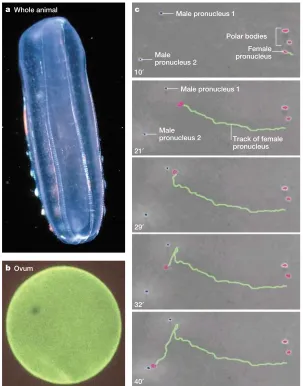
self-fertilization is typically high63. A striking example of cryptic female choice is the selection by the female pronucleus of sperm pronuclei in the comb jelly Beroë ovata64(FIG. 5). Similarly, some examples of differential fertilizing ability that are related to the interaction with the partner’s genotype, rather than to the partners’ geno-types as such, indicate that non-directional cryptic female choice might be a widespread (but not ubiqui-tous65,66) process67,68; it might be particularly relevant in DIOECIOUSspecies in which the risk of inbreeding is associ-ated with the expression of detrimental recessive alleles4. How females identify the genotype of their partners from their sperm is unknown. Prime candidates are non-recombining regions of the genome, such as the major histocompatibility complex, a gene complex that is responsible for disease resistance and immune func-tion4. Members of this complex might be expressed on the surface of spermatozoa69, which facilitates a differen-tial response by the female or egg to sperm of different male genotypes. It is also possible that sperm haplotypes are sometimes expressed70–72. A more complex situation might exist in the yellow dungfly S. stercoraria, in which the last male to inseminate a female has a fertilizing advantage73(FIG. 3).
Unresolved evolutionary issues
Despite the recent interest in the mechanisms of post-insemination sexual selection, our knowledge of the evolutionary implications of these mechanisms is lim-ited. In particular, the following issues must be addressed: (i) the relationship between mechanisms of sexual selection that occur before and after copulation, (ii) the interactions between different mechanisms of postcopulatory sexual selection, and (iii) the rate of evo-lutionary change caused by mutualistic or antagonistic inter-sexual coevolution driven by postcopulatory sex-ual selection.
Pre/postcopulatory sexual selection. The fact that
episodes of pre-insemination sexual selection continue after insemination indicates that the phenotypic and genetic relationship between pre-insemination and post-insemination mechanisms might have profound repercussions on the way in which sexual selection affects variation in reproductive fitness and the way in which it changes gene frequencies over generations. Pre-insemination sexual selection typically favours the reproductive success of a subsample of the male popula-tion. It favours genes that confer an advantage in male copulation success (for example, through aggression and/or competitive ability, and/or through attractive-ness to females) and the ability to select copulation part-ners in females. Promiscuity means that fertilization is biased in favour of certain males within this subsample, which then enjoy disproportionate genetic representa-tion in the next generarepresenta-tion. Post-inseminarepresenta-tion sexual selection mainly targets genes that convey a fertilizing advantage in males (for example, testes mass and the competitive ability of ejaculates), and the ability to dis-criminate between, and differentially use, the ejaculates of different males in females (for example, number and Directional cryptic female choice.In directional
cryp-tic female choice, the criteria by which a female chooses her partner are predicted to be consistent with the criteria of cryptic female choice. In other words, we expect females to bias sperm use in favour of the male phenotypes that are also favoured in part-ner choice. To the extent to which the traits targeted by female choice are underlined by additive genetic variance, cryptic female choice is expected to generate directional sexual selection that favours the spread of the attractive alleles. Very few examples are consistent with directional cryptic female choice. In feral fowl,Gallus gallus domesticus, females prefer socially dominant copulation partners, but cannot avoid some inseminations from subdominant males (FIG. 4). They can, however, expel ejaculates immediately after insemination, and the probability of sperm ejection by females is significantly and negatively correlated with the social status of a male62. Directional cryptic female choice has the advantage of reducing the costs of partner choice, but it might be a less effective way of avoiding some of the costs that are associated with an insemination (for example, toxins and pathogens in seminal fluid, ecological and physiological costs of copulation, and the risk that some sperm of the unwanted male might escape female selection and achieve fertilization).
Non-directional cryptic female choice.In non-directional cryptic female choice, females are predicted to favour the sperm of the males with compatible genotypes regard-less of their phenotype. This process is expected to result in non-directional sexual selection and might buffer the effect of the selection that occurs before insemination (see below). Several mechanisms that result in non-directional cryptic female choice have been described in sessile hermaphroditic organisms in which the risk of DIOECIOUS
[image:7.668.80.379.97.289.2]Species in which the sexes are in separate individuals.
Figure 4 |Gallus gallus domesticus.Feral fowl provide an example of directional cryptic female choice. Although Gallusfemales cannot avoid some inseminations from subdominant males, they can expel the ejaculates of these lower-ranking males immediately after insemination. Photo courtesy of Charles Cornwallis, University of Sheffield, UK. Reproduced with persmission from
favoured in post-insemination sexual selection62,75. In this model, the different component of fertilizing effi-ciency (that is, traits that influence copulation success and traits that influence the fertilizing ability of inseminations) are expected to be under positive cor-relational selection76, and become genetically and phe-notypically integrated77.
Postcopulatory mechanisms.Different fertility traits
can be prevented from genetic integration, and pre-insemination and post-pre-insemination mechanisms of sexual selection often operate in different directions. For example, the defensive and offensive abilities of
Drosophila ejaculates are controlled by different genomic regions23,25. Similarly, sexual promiscuity can provide unattractive males (that is, males of pheno-types that are disadvantaged in pre-insemination episodes of sexual selection) with the opportunity to compensate for impaired attractiveness or impaired competitive ability through the production of more competitive ejaculates. In many species, males can adopt alternative reproductive strategies: they can either invest in (i) competitive ability and attrac-tive traits (for example, ornaments, visual, acoustic and olfactory displays), therefore securing privileged access to numerous females, or (ii) the production of highly competitive ejaculates, therefore decreasing copulation success but increasing the fertilizing effi-ciency of any inseminations they achieve. In some species, male alternative reproductive strategies are condition dependent19and possibly maintained by selection for genes that allow phenotypic plasticity. However, in other species, different male genotypes result in strikingly different reproductive tactics78–80. The fitness pay-offs of the different strategies are fre-quency dependent, and genetic polymorphism is maintained by the fact that when different strategies reach an evolutionarily stable proportion in a popula-tion they result in similar fitness pay-offs. In this model, post-insemination sexual selection might be fundamental to the maintenance of genetic polymor-phism. To this end, it is crucial to establish the genetic and phenotypic relationship between male traits that are favoured under pre-insemination and under post-insemination episodes of sexual selection. Investigating the link between male phenotypic traits that are selected by pre-insemination sexual selection, and fertilizing efficiency selected by post-insemina-tion sexual selecpost-insemina-tion, has been the focus of consider-able research in evolutionary biology (see BOX 3). Part
of the interest stems from the need to investigate the adaptive significance of female choice of partners: an association between the preferred male phenotype and fertilizing efficiency would indicate that the evo-lution of female choice might be driven by the pursuit of fertility, as predicted by the phenotype-linked hypothesis (BOX 3)and/or by the production of sons with superior fertilizing efficiency, as predicted by the sexually selected sperm hypothesis (BOX 3). Both hypotheses are based on the assumption that females benefit from having their eggs fertilized by the most morphology of sperm-storage organs). When
pre-insemination and post-pre-insemination mechanisms oper-ate in unison, sexual promiscuity might function as a catalyst in the selection of male phenotypes and of the genes associated with different male phenotypes. For example, in many socially monogamous but sexually promiscuous species (as in many birds), females prefer to establish a pair bond with males of a particular phenotype. However, those females that obtain social partners of suboptimal phenotypic quality can seek copulations outside the pair bond (extra-pair copula-tions) with more attractive males74. Similarly, in some polyandrous species, males that are favoured by female choice and in competition over copulation opportunities can produce ejaculates that are
10′
Track of female pronucleus Male pronucleus 1
Female pronucleus Polar bodies
21′
29′
32′
40′
Male pronucleus 2
Male pronucleus 1
Male pronucleus 2
bOvum
[image:8.668.78.381.97.483.2]c a Whole animal
control of one sex25,81. For example, mitochondrial genes, which are exclusively maternally transmitted in many species, can be selected for their expression in females but not in males. Consistent with this is the observation that mtDNA and maternally transmitted symbionts, such as
Wolbachiaspp., are responsible for male infertility, femi-nization and the maintenance of additive variation in the fertilizing ability of sperm25,86,87. In addition, sexually antagonistic interactions between mitochondrial and nuclear genes have been theoretically predicted and experimentally shown in D. melanogaster88. Sex-biased transmission therefore stems from, and interferes with, inter-sexual coevolution and might limit the ability of one sex to counteract sexually antagonistic alleles that benefit the opposite sex25. Another factor that contributes to buffer the effect of pre-insemination sexual selection is the fact that post-insemination mechanisms might not generate directional selection. Non-directional cryptic female choice is driven by genetic incompatibility between partners4,53; it might interfere with selection act-ing on different male genotypes and might contribute to the maintenance of genetic polymorphism at a stable equilibrium89. For example, in some flowering plants, the fertilizing efficiency of pollen depends on pollen tube growth, which in turn is determined by the Ga/Ga alleles of both the pollen grain and the female style90. Furthermore, most discussions of post-insemination sex-ual selection ignore the potential for competition among the different sperm genotypes that are present in the ejac-ulate of a single male. However, it is possible that the sperm haplotype not only might be expressed but also might influence the outcome of both sperm competition and cryptic female choice, which could have important fertile male genotype. However, theoretical work81and
recent experimental studies24,82–84have indicated that this need not be so.
Rate of evolutionary change.Intense post-insemination
sexual selection is a powerful generator of inter-sexual conflict. A divergence in the reproductive interests of males and females can trigger rapid inter-sexual coevolu-tion based on antagonism (for example, female resistance and male coercion) rather than on cooperation (for example, female choice of beneficial male genotype). Either way, when post-insemination sexual selection acts directionally and in unison with other selective episodes (that is, natural and pre-insemination sexual selection), or is more intense and therefore overrides other mecha-nisms, rapid inter-sexual coevolution occurs23,59,60,84, which can lead to population divergence, reproductive isolation and possibly speciation (see BOX 2). For example,
D. melanogasterand D. simulansAcps have dispropor-tionately high rates of molecular sequence evolution, which is consistent with rapid adaptive evolution85. Mean heterozygosity at REPLACEMENT SITESis considerably higher for Acp genes than for control non-Acp genes85. Similarly, and crucially, the divergence between D. melanogasterand
D. simulansis much higher at replacement sites of Acp rather than non-Acp genes, which indicates that molecu-lar divergence between species is also associated with high levels of within-species polymorphism85. This process of rapid evolution can be constrained by the sex-biased inheritance of the genes that are targeted by post-insemi-nation sexual selection. Precisely because these genes might be sexually antagonistic they find an ideal reservoir in regions of the genome that are under the preferential REPLACEMENT SITE
Any position within a gene at which a point mutation alters the encoded amino-acid sequence.
Box 3 |The ‘sexually selected sperm’ and the ‘phenotype-linked fertility’ hypotheses
These two interrelated hypotheses are concerned with the evolution of sexy sperm and sexy males — that is, sperm and males that females find attractive.
The sexually selected sperm hypothesis
This117 provided an explanation for female promiscuity, by proposing that it evolved to increase the likelihood of females producing sons with superior fertilizing ability. The hypothesis predicts that promiscuous females will produce sons whose fertilizing ability is high relative to those whose mothers are monogamous. This is a difficult hypothesis to test and so far there is limited support for it. However, the prediction is complicated by two factors: (i) sex-biased transmission of traits in male efficiency in fertilizing, and (ii) sexual antagonism. In fact, if traits in male efficiency in fertilizing are inherited maternally and/or have detrimental effects on females they might not increase female fitness. However, both sex-biased mechanisms and sexual antagonism might help to explain the maintenance of genetic variance and selection potential of fertilizing efficiency.
The phenotype-linked fertility hypothesis
QUANTITATIVE TRAIT LOCUS
(QTL). A genetic locus that is identified through the statistical analysis of complex traits (such as plant height or body weight). These traits are typically affected by more than one gene and also by the environment.
post-insemination sexual selection, in particular: (i) to determine the genetic basis of different male fertility traits and female traits that mediate sperm selection, (ii) to identify the genes or the genomic regions that control these traits, and (iii) to infer microevolutionary and macroevolutionary patterns (BOX 4).
Assessing the genetic basis of traits that are selected by post-insemination sexual selection is often diffi-cult. Many of these traits are likely to be sex linked or exclusively under the genetic control of one sex25. For example, sperm efficiency can be inherited through exclusively maternally transmitted mitochondrial genes86,92. In addition, inbreeding, which can covary with the degree of sexual promiscuity and therefore with the intensity of post-insemination sexual selec-tion in a populaselec-tion93, can also confound estimates of genetic variance that underlie traits selected by post-insemination sexual selection94. Restricted maximum-likelihood (REML) analysis provides a promising sta-tistical tool for overcoming these problems, using an animal model to partition phenotypic variance across its components of additive genetic value and to include random and fixed effects95. REML analysis is considerably more powerful than more conventional ANOVA (analysis of variance) models because it allows researchers to use all known pedigree relation-ships between individuals and because it can be used to analyse highly unbalanced data sets95, which pro-vides estimates of components of variance that are unbiased by population size or by inbreeding in sub-sequent generations96. Although REML analysis is a powerful tool for disentangling maternal and paternal genetic effects, it is becoming increasingly obvious that environmental effects and particularly environ-mental maternal effects might have profound reper-cussions on the phenotypic variance of sexually selected traits97. Experiments should be designed to test for these effects — for example, by exposing full-sibs to different environmental conditions (see, for example,REF. 98) and by comparing the progeny of the
same female with different males.
The genetic and molecular dissection of post-insemination sexual selection traits has been greatly improved by the establishment of many DNA poly-morphic markers in several species, providing the potential for finding trait loci by linkage analysis, whole-genome scanning and QUANTITATIVE TRAIT LOCUS (QTL) analysis (see, for example,REFS 99,100). In
addi-tion, the development of ESTs and cDNA libraries in mice and humans might allow comparative mapping through fluorescent in situhybridization to study regions of conserved synteny between humans or mice and other organisms100. However, the identifica-tion of genes does not reveal their funcidentifica-tion; neither does it reveal how such genes act at an organismal and molecular level. Moreover, epistasis between QTL might also have important — if little-known — effects101. A promising breakthrough in identifying both the genes that underlie traits targeted by post-insemination sexual selection and their function is the use of model species, such as C. elegansand implications for the evolution of conflict between the
male and the sperm genotypes and between different sperm haplotypes70–72,91.
Genetics and the future
Genetic and molecular tools will be increasingly important in advancing our understanding of
Box 4 |Microevolutionary and macroevolutionary patterns
Molecular studies need to address five main issues to further our understanding of postcopulatory sexual selection, by doing the following tests.
• They must test whether substitution rate is relatively high in regions that control traits targeted by post-insemination sexual selection, as predicted by both mutualistic and antagonistic models of inter-sexual coevolution driven by post-insemination sexual selection.
• They must test whether high substitution rates are due to Darwinian selection rather than to high mutation rate. Several studies have shown recently that both male and female reproductive proteins that are important determinants of reproductive fitness at a post-insemination level evolve rapidly122–125, possibly as a result of positive Darwinian selection124.
• They must determine the fitness consequences for the other sex of traits favoured by post-insemination sexual selection in one sex. In other words, they must assess the potential for sexual antagonism generated by post-insemination sexual selection. Intra-locus sexual antagonism can be tested for by showing the negative genetic inter-sexual correlation of post-insemination fitness components. This was elegantly achieved by Chippindale et al.126, who cloned most of the haploid genomes of Drosophila melanogaster (chromosome IV excluded). They have also shown127a negative genetic correlation between adult fitness of males and females: genotypes that produced males with high reproductive success also produced females with impaired adult fitness, and vice versa. The demonstration of inter-locus sexual conflict is based on the analysis of the fitness consequences of sex-limited traits for the opposite sex. The use of male mutant D. melanogasterthat were unable to produce specific accessory gland products allowed researchers to show that some accessory gland products are responsible for increased female mortality in this species24,128. To this end, it is also important to establish the relative evolutionary rate of male and female reproductive traits. Post-insemination models of sexual selection based on inter-locus conflict (see, for example,REF. 108) assume that females can counteract female-detrimental/male-beneficial mutations. However, the mutation rate in males might be higher than in females owing to a higher number of cell divisions during spermatogenesis than in oogenesis129, and this could have important consequences for the coevolutionary trajectories of the sexes.
• They must investigate the origin of chromosomal regions that are responsible for traits selected by post-insemination sexual selection. Theory predicts that sexually antagonistic genes should accumulate on sex-linked regions of the genome (see, for example,REF. 130). Molecular studies of different genes might shed light not only on the current location of different genes promoted by post-insemination sexual selection, but also on the region of their origin. For example, the closest paralogues of male fertility genes on the Y chromosome ofD. melanogasterare autosomal rather than X linked, indicating that, at least in this species, autosomal, male-beneficial genes tend to move and accumulate on the Y chromosome131. • Finally, an additional challenge is to apply molecular techniques to establish the
level of gametic haploid expression in species in which the gametic phenotype is generally assumed to depend mainly on the diploid genome. Not only is this crucial for an understanding of the mechanisms that drive the evolution of gametic traits, but also it has important evolutionary implications (see section entitled
Conclusions
Generating directional testable predictions of the evolutionary response that is triggered by post-insemination sexual selection will require quantita-tive information on the following: (i) the intensity of individual episodes of post-insemination sexual selection; (ii) the selective mechanisms with which post-insemination mechanisms interact, namely nat-ural and pre-insemination sexual selection; (iii) the degree of cooperation and conflict between male-driven and female-male-driven processes (for example, the degree of toxicity of traits that affect the fertilizing efficiency of males, the direction of sperm competi-tion and cryptic female choice); (iv) the efficiency of individual post-insemination mechanisms (for example, the efficiency of male genotypes in maximizing fertilization success under sperm compe-tition, of female storage organs in separating the ejaculates of different males, and of the female repro-ductive tract in ejecting or neutralizing unwanted ejaculates); and (v) the selection potential and the mode of genetic transmission of genes that are targeted by post-insemination sexual selection (for example, autosomal transmission and sex-biased transmission). Only by measuring these parameters in individual populations can we further our under-standing of post-insemination sexual selection, the coevolutionary trajectories of the sexes and the evo-lution of reproductive traits and strategies.
D. melanogaster, in which mutants can be isolated that show specific defects in post-insemination performance due to the knockout of specific genes22,102,103. This allows the identification of genes that are associated with post-insemination fitness and, crucially, of their specific func-tions. However, care must be taken when inferring the causal relationship between particular genes and specific traits from gene knockout data, because of the pleiotropic effects and overlapping functions of different genes, for example104. Identifying the proteins that are encoded by mutated genes can shed light on the mechanisms that mediate individual genetic effects. This can be achieved by testing whether phenotypic defects in mutants can be rescued by cell-by-cell expression of cloned wild-type cDNA in the mutants during the development of specific traits102. Determining the biochemical activity of specific proteins in the cell is often complicated by the fact that identified proteins produced by mutated genes are novel, but this can be addressed either by searching for partner proteins with known functions that interact directly with these proteins or by isolating second-site mutations that strengthen or weaken the mutant phenotype, which allows the identification of genes that encode upstream or downstream, or of partner elements that contribute to the encoding of these proteins105. The molecular analysis and comparisons of different genes will also shed light on how post-insemination sexual selection drives molecular evolution, and ultimately on the evolution of male fertil-ity and female selectivfertil-ity (BOX 4).
1. Darwin, C. The Descent of Man and Selection in Relation to Sex(John Murray, London, 1871).
2. Smith, R. L. Sperm Competition and the Evolution of Animal Mating Systems(Academic, London, 1984).
3. Birkhead, T. R. & Møller, A. P. Sperm Competition and Sexual Selection(Academic, London, 1998). A comprehensive review of postcopulatory sexual selection across the animal kingdom, together with a chapter on pollen competition and several conceptual chapters.
4. Tregenza, T. & Wedell, N. Genetic compatibility, mate choice and patterns of parentage: invited review. Mol. Ecol.9, 1013–1027 (2000).
5. Parker, G. A. Sperm competition and its evolutionary consequences in the insects. Biol. Rev.45, 525–567 (1970).
6. Parker, G. A. in Sperm Competition and the Evolution of Animal Mating Systems(ed. Smith, R. L.) 1–60 (Academic, London, 1984).
7. Parker, G. A. in Sperm Competition and Sexual Selection
(eds T. R. Birkhead & A. P. Møller) 3–54 (Academic, London, 1998).
8. Eberhard, W. G. Female Control: Sexual Selection by Cryptic Female Choice(Princeton Univ. Press, Princeton, New Jersey, 1996).
9. Coltman, D. W., Pilkington, J. G., Kruuk, L. E., Wilson, K. & Pemberton, J. M. Positive genetic correlation between parasite resistance and body size in a free-living ungulate population. Evolution55, 2116–2125 (2001). 10. Hurst, L. D. Embryonic growth and the evolution of the
mammalian Y chromosome. l. The Y as an attractor for selfish growth factors. Heredity73, 223–232 (1994). 11. Wolf, J. B. Gene interactions from maternal effects.
Evolution54, 1882–1898 (2000).
12. Pizzari, T. Sexual selection: separating genes from imprinting. Trends Ecol. Evol.14, 399 (1999). 13. Bateman, A. J. Intra-sexual selection in Drosophila.
Heredity2, 349–368 (1948).
14. Halliday, T. R. & Arnold, S. J. Multiple mating by females: a perspective from quantitative genetics. Anim. Behav.35, 939–941 (1987).
15. Ketterson, E. D. et al.The relative impact of extra-pair fertilizations on variation in male and female reproductive success in dark-eyed juncos (Junco hyemalis). Ornithol. Monogr.49, 81–101 (1997).
16. Birkhead, T. R. Promiscuity: An Evolutionary History of Sperm Competition and Sexual Conflict(Faber & Faber, London, 2000).
17. Trivers, R. L. in Sexual Selection and the Descent of Man 1871–1971(ed. Campbell, B.) 136–179 (Aldine–Atherton, Chicago, Illinois, 1972).
18. Clutton-Brock, T. H. & Vincent, A. C. J. Sexual selection and the potential reproductive rates of males and females.
Nature351, 58–60 (1991).
19. Andersson, M. Sexual Selection(Princeton Univ. Press, Princeton, New Jersey, 1994).
20. Parker, G. A., Baker, R. R. & Smith, V. G. F. The origin and evolution of gamete dimorphism and the male–male phenomenon. J. Theor. Biol.36, 529–553 (1972). 21. Delph, L. & Havens, K. in Sperm Competition and Sexual
Selection(eds Birkhead, T. R. & Møller, A. P.) 150–173 (Academic, London, 1998).
22. Chapman, T. Seminal fluid-mediated fitness traits in
Drosophila. Heredity87, 1–11 (2001).
An overview of the effect of male seminal proteins on the female reproductive process. Seminal protein genes are expressed only in males but it remains to be discovered how and why they affect female reproduction.
23. Swanson, W. J., Clark, A. G., Waldrip-Dail, H. M., Wolfner, M. F. & Aquadro, C. F. Evolutionary EST analysis identifies rapidly evolving male reproductive proteins in Drosophila.
Proc. Natl Acad. Sci. USA98, 7375–7379 (2001). 24. Chapman, T., Liddle, L. F., Kalb, J. M., Wolfner, M. F. &
Partridge, L. Cost of mating in Drosophila melanogaster
females is mediated by male accessory gland products.
Nature373, 241–244 (1995).
25. Pizzari, T. & Birkhead, T. R. The sexually selected sperm hypothesis: sex-biased inheritance and sexual anatagonism.
Biol. Rev.(in the press).
A detailed review of traits that influence male reproductive success at a post-copulatory stage and of the mechanisms of their inheritance. Reproductive traits are likely to have sex-biased inheritance and sexually antagonistic effects.
26. Swanson, W. J. & Vacquier, V. D. Concerted evolution in an egg receptor for a rapidly evolving abalone sperm protein.
Science281, 710–712 (1998).
Compares cDNA sequences of a sperm protein, lysin, which mediates fertilization, with that of its egg receptor, VERL, in several species of marine molluscs (such as abalone and Haliotissp.). Proteins evolve in unison and at a high rate, providing molecular evidence that postcopulatory sexual selection drives rapid intersexual specialization, leading to reproductive isolation and possibly speciation. 27. Palumbi, S. All males are not created equal: fertility
differences depend on gamete recognition polymorphisms in sea urchins. Proc. Natl Acad. Sci. USA96, 12632–12637 (1999).
28. Jivoff, P. & Hines, A. H. Female behaviour, sexual competition and mate guarding in the blue crab, Callinectes sapidus. Anim. Behav.55, 589–603 (1998).
29. Hunter, F. M., Harcourt, R., Wright, M. & Davis, L. Strategic allocation of ejaculates by male Adélie penguins. Proc. R. Soc. Lond. B 267, 1541–1545 (2000).
30. Nicholls, E. H., Burke, T. & Birkhead, T. R. Ejaculate allocation by male sand martins Riparia riparia. Proc. R. Soc. Lond. B 268, 1265–1270 (2001).
31. Stockley, P., Gage, M. J. G., Parker, G. A. & Møller, A. P. Sperm competition in fish: the evolution of testis size and ejaculate characteristics. Am. Nat.149, 933–954 (1997). 32. Warner, R. R., Shapiro, D. Y., Marcanato, A. & Petersen, C. W.
33. Pitnick, S., Spicer, G. S. & Markow, T. A. How long is a giant sperm? Nature375, 109 (1995).
34. LaMunyon, C. W. & Ward, S. Evolution of sperm size in nematodes: sperm competition favours larger sperm. Proc. R. Soc. Lond. B 266, 263–267 (1999).
35. Briskie, J. V., Montgomerie, E. & Birkhead, T. R. The evolution of sperm size in birds. Evolution51, 937–945 (1997).
36. Hunter, F. M. & Birkhead, T. R. Sperm viability and sperm competition in insects. Curr. Biol.12, 121–123 (2002). 37. Birkhead, T. R., Martinez, J. G., Burke, T. & Froman, D. P.
Sperm mobility determines the outcome of sperm competition in the domestic fowl. Proc. R. Soc. Lond. B 266, 1759–1764 (1999).
38. Snook, R. R. & Karr, T. L. Only long sperm are fertilization-competent in six sperm-heteromorphic Drosophilaspecies.
Curr. Biol.8, 291–298 (1998).
39. Cook, P. A. & Wedell, N. Non-fertile sperm delay female remating. Nature397, 486 (1999).
Shows that non-fertilizing (apyrene) sperm in a butterfly serve as a ‘cheap filler’ of the female’s sperm store and hence delay remating, decreasing the risk of sperm competition for males.
40. Baker, R. R. & Bellis, M. Human Sperm Competition
(Chapman & Hall, London, 1995).
41. Moore, H. D. M., Martin, M. & Birkhead, T. R. No evidence for killer sperm or other selective interactions between human spermatozoa in ejaculates of different males in vitro.
Proc. R. Soc. Lond. B 266, 2343–2350 (1999). 42. Waage, J. K. Dual function of the damselfly penis: sperm
removal and transfer. Science203, 916–918 (1979). 43. Smith, R. L. Repeated copulation and sperm precedence:
paternity assurance for a male brooding water bug. Science
205, 1029–1031 (1979).
44. Hosken, D., Meyer, E. & Ward, P. Internal female reproductive anatomy and genitalic interactions during copula in the yellow dungfly Scathophaga stercoraria
(Diptera: Scathophagidae). Can. J. Zool.77, 1975–1983 (1999).
45. Chen, P. S. et al.A male accessory gland peptide that regulates reproductive behaviour of female D. melanogaster.
Cell54, 291–298 (1988).
46. Prout, T. & Clark, A. G. Seminal fluid causes temporarily reduced egg hatch in previously mated females. Proc. R. Soc. Lond. B 267, 201–203 (2000).
47. Chapman, T., Neubaum, D. M., Wolfner, M. F. & Partridge, L. The role of male accessory gland protein Acp36DE in sperm competition in Drosophila melanogaster. Proc. R. Soc. Lond. B 267, 1097–1105 (2000).
48. Singson, A., Hill, K. L. & L’Hernault, S. W. Sperm competition in the absence of fertilization in Caenorhabditis elegans. Genetics152, 201–208 (1999).
49. L’Hernault, S. W., Shakes, D. C. & Ward, S. Developmental genetics of chromosome I spermatogenesis-defective mutants in the nematode Caenorhabditis elegans. Genetics
120, 435–442 (1988).
50. Shakes, D. C. & Ward, S. Mutations that disrupt the morphogenesis and localization of a sperm-specific organelle in Caenorhabditis elegans. Dev. Biol.134, 307–316 (1989).
51. Nance, J., Minniti, A. N., Sadler, C. & Ward, S. spe-12
encodes a sperm cell surface protein that promotes spermiogenesis in Caenorhabditis elegans. Genetics152, 209–220 (1999).
52. Briskie, J. V. & Montgomerie, R. Sperm size and sperm competition in birds. Proc. R. Soc. Lond. B 247, 89–95 (1992).
53. Birkhead, T. R. Cryptic female choice: criteria for establishing female sperm choice. Evolution52, 1212–1218 (1998). 54. Birkhead, T. R. Defining and demonstrating postcopulatory
female choice — again. Evolution54, 1057–1060 (2000). 55. Pitnick, S. & Brown, W. D. Criteria for demonstrating female
sperm choice. Evolution54, 1052–1056 (2000). 56. Thornhill, R. Cryptic female choice and its implications in the
scorpionfly Harpobittacus nigriceps. Am. Nat.122, 765–788 (1983).
57. Childress, D. & Hartl, D. L. Sperm preference in Drosophila melanogaster. Genetics71, 417–427 (1972).
58. Hellriegel, B. & Ward, P. I. Complex female reproductive tract morphology: its possible use in postcopulatory female choice. J. Theor. Biol.190, 179–186 (1998).
59. Pitnick, S., Markow, T. & Spicer, G. S. Evolution of multiple kinds of female sperm-storage organs in Drosophila.
Evolution53, 1804–1822 (1999).
60. Presgraves, D. C., Baker, R. H. & Wilkinson, G. S. Coevolution of sperm and female reproductive tract morphology in stalk-eyed flies. Proc. R. Soc. Lond. B 266, 1041–1047 (1999).
61. Edvardsson, M. & Arnqvist, G. Copulatory courtship and cryptic female choice in red flour beetles Tribolium castaneum. Proc. R. Soc. Lond. B 267, 559–563 (2000). 62. Pizzari, T. & Birkhead, T. R. Female fowl eject sperm of
subdominant males. Nature405, 787–789 (2000). 63. Bishop, J. D. D., Jones, C. S. & Noble, L. R. Female control
of paternity in the internally fertilizing compound ascidian
Diplosoma listerianum. II. Investigation of male mating success using RAPD markers. Proc. R. Soc. Lond. B 263, 401–407 (1996).
64. Carré, D. & Sardet, C. Fertilization and early development in
Beroë ovata. Dev. Biol.105, 188–195 (1984). 65. Stockely, P. No evidence of sperm selection by female
common shrews. Proc. R. Soc. Lond. B 264, 1497–1500 (1997).
66. Cunningham, E. J. A. & Cheng, K. M. Biases in sperm utilization in the mallard: no evidence for selection by females based on sperm genotype. Proc. R. Soc. Lond. B 266, 905–910 (1999).
67. Wilson, N., Tubman, S. C., Eady, P. E. & Robertson, G. W. Female genotype affects male success in sperm competition. Proc. R. Soc. Lond. B 264, 1491–1495 (1997).
68. Prout, T. & Clark, A. G. Polymorphism in genes that influence sperm displacement. Genetics144, 401–408 (1996).
Addresses the issue of what maintains genetic variation in sperm displacement despite directional postcopulatory sexual selection. A single locus model shows that genetic polymorphism can be evolutionarily stable when alleles that control sperm displacement have pleiotropic effects on fecundity and mating ability.
69. Martin-Villa, J. M., Longas, J. & Arnaiz-Villena, A. Cyclic expression of HLA class I and II molecules on the surface of purified human spermatozoa and their control by serum inhibin B levels. Biol. Reprod.61, 1381–1386 (1999). 70. Catalano, R. D., Hillhouse, E. W. & Vlad, M. Developmental
expression and characterization of FS39, a testis complementary DNA encoding an intermediate filament-related protein of the sperm fibrous sheath. Biol. Reprod.
65, 277–287 (2001).
71. Dahle, M. K., Reinton, N., Orstavik, S., Tasken, K. A. & Tasken, K. Novel alternatively spliced mRNA (1c) of the protein kinase A RIα subunit is implicated in haploid germ cell specific expression. Mol. Reprod. Dev.59, 11–16 (2001).
72. Uchida, K. et al.Cloning and characterization of a complementary deoxyribonucleic acid encoding haploid-specific alanine-rich acidic protein located on chromosome-X. Biol. Reprod.63, 993–999 (2000). 73. Simmons, L. W., Stockley, P., Jackson, R. L. & Parker, G. A.
Sperm competition or sperm selection: no evidence for female influence over paternity in yellow dung flies
Scatophaga stercoraria. Behav. Ecol. Sociobiol.38, 199–206 (1996).
74. Kempenaers, B. et al.Extra-pair paternity results from female preference for high quality males in the blue tit.
Nature357, 494–496 (1992).
75. Matthews, I. M., Evans, J. P. & Magurran, A. E. Male display rate reveals ejaculate characteristics in the Trinidadian guppy Poecilla reticulata. Proc. R. Soc. Lond. B 264, 695–700 (1997).
76. Lande, R. & Arnold, S. J. The measurement of of selection on correlated characters. Evolution37, 1210–1226 (1983). 77. Cheverud, J. M. Developmental integration and the
evolution of pleiotropy. Am. Zool.36, 44–50 (1996). 78. Lank, D. B., Smith, C. M., Hannote, O., Burke, T. & Cooke,
F. Genetic polymorphism for alternative mating behaviour in lekking male ruff Philomachus pugnax. Nature378, 59–62 (1995).
79. Shuster, S. M. & Sassaman, C. A. Genetic interaction between male mating strategy and sex ratio in a marine isopod. Nature388, 373–377 (1997).
80. Shuster, S. M. & Wade, M. J. Equal mating success among male reproductive strategies in a marine isopod. Nature
350, 608–610 (1991).
81. Parker, G. A. in Sexual Selection and Reproductive Competition in Insects(eds Blum, M. S. & Blum, N. A.) 123–166 (Academic, New York, 1979).
82. Rice, W. R. Sexually antagonistic male adaptation triggered by experimental arrest of female evolution. Nature381, 232–234 (1996).
83. Holland, B. & Rice, W. R. Experimental removal of sexual selection reverses intersexual antagonistic coevolution and removes reproductive load. Proc. Natl Acad. Sci. USA96, 5083–5088 (1999).
A spectacular demonstration that sexual selection drives the evolution of male traits that are detrimental to females. This could be mediated by seminal fluid products, which determine male postcopulatory performance but have toxic effects on females. 84. Hosken, D. J., Garner, T. W. J. & Ward, P. I. Sexual conflict
selects for male and female reproductive characters. Curr. Biol.11, 1–20 (2001).
85. Begun, D. J., Whitley, P., Todd, B., Waldrip-Dail, H. & Clark, A. G. Molecular population genetics of male accessory proteins in Drosophila. Genetics156, 1879–1888 (2000). 86. Frank, S. A. & Hurst, L. D. Mitochondria and male disease.
Nature383, 224 (1996).
87. Ruiz-Pesini, E. et al.Human mtDNA haplogroups associated with high or reduced spermatozoa motility. Am. J. Hum. Genet.67, 543–548 (2000).
88. Rand, D. M., Clark, A. G. & Kann, L. M. Sexually antagonistic cytonuclear fitness interactions in Drosophila melanogaster. Genetics159, 173–187 (2001). 89. Ward, P. Cryptic female choice in the yellow dungfly
Scathophaga stercoraria(L.). Evolution54, 1680–1686 (2000).
90. Ottaviano, E. & Mulcahy, D. L. Genetics of angiosperm pollen. Adv. Genet.26, 1–65 (1989).
91. Haig, D. & Bergstrom, C. T. Multiple mating, sperm competition and meiotic drive. Genetics121, 129–138 (1995).
92. Froman, D. P., Pizzari, T., Feltmann, A. J., Castillo–Juarez, H. & Birkhead, T. R. Sperm mobility: mechanisms of fertilizing efficiency, genetic variation and phenotypic relationship with male status in the fowl, Gallus g. domesticus. Proc. R. Soc. Lond. B 269 (in the press). 93. Snook, R. R. Conflict, kindness and chicanery. Curr. Biol.
11, R337–R341 (2001).
94. Hughes, K. A. Quantitatuve genetics of sperm precedence in Drosophila melanogaster. Genetics145, 139–151 (1997).
95. Lynch, M. & Walsh, B. Genetics and Analysis of Quantitative Traits(Sinauer Associates, Sunderland, Massachusetts, 1998).
96. Van der Werf, J. H. J. & der Boer, I. J. M. Estimation of additive genetic variance when base populations are selected. J. Anim. Sci.68, 3124–3132 (1990). 97. Sheldon, B. C. Differential allocation: tests, mechanisms
and implications. Trends Ecol. Evol.15, 397–402 (2000). 98. David, P., Bjorksten, P., Fowler, K. & Pomiankowski, A.
Condition-dependent signalling of genetic variation in stalk-eyed flies. Nature406, 186–188 (2000).
99. Takahashi, J. S., Pinto, L. H. & Vitaterna, M. H. Forward and reverse genetic approaches to behavior in the mouse.
Science264, 1724–1733 (1994).
100. Andersson, L. Genetic dissection of phenotype diversity in farm animals. Nature Rev. Genet.2, 130–138 (2001). 101. Mackay, T. F. C. Quantitative trait loci in Drosophila. Nature
Rev. Genet.2, 11–21 (2001).
102. Yamamoto, D. & Nakano, Y. Genes for sexual behaviour.
Biochem. Biophys. Res. Commun.246, 1–6 (1998). 103. Singson, A. Every sperm is sacred: fertilisation in
Caenorhabditis elegans. Dev. Biol.230, 101–109 (2001). 104. Pfaff, D. Precision in mouse behavior genetics. Proc. Natl
Acad. Sci. USA98, 5957–5960 (2001). 105. Karim, F. D. et al.A screen for genes that function
downstream of Ras1during Drosophilaeye development.
Genetics143, 315–329 (1996).
106. Ridley, M. Mating frequency and fecundity in insects. Biol. Rev.63, 509–549 (1988).
107. Simmons, L. W. & Siva-Jothy, M. T. in Sperm Competition and Sexual Selection(ed. Birkhead, T. R. & Møller, A. P.) 341–434 (Academic, London, 1998).
108. Rice, W. R. Male fitness increases when females are eliminated from gene pool: implications for the Y chromosome. Proc. Natl Acad. Sci. USA95, 6217–6221 (1998).
109. Parker, G. A. & Partridge, L. Sexual conflcit and speciation.
Phil. Trans. R. Soc. Lond. B 353, 261–274 (1998). 110 Gavrilets, S. Rapid evolution of reproductive barriers driven