Recommendations for Best Evidence Based Practice Responses for Parental Alienation: A Psychological and Legal Perspective
Kate Templer PGrad Dip (Psychology)
A report submitted in partial requirement for the degree of Master of Psychology (Clinical) at the University of Tasmania
ii Statement
I declare that this research report is my own work and that, to the best of my knowledge and belief, it does not contain material from published sources without proper acknowledgement, nor does it contain material which has been accepted for the award of any other higher degree or graduate diploma in any university.
……… ………
iii
Acknowledgements
A thesis and Masters degree can only be completed with the assistance and support of others. I am extremely grateful for the ongoing help of my supervisor, Dr Mandy Matthewson, who was always available to answer questions and who
provided gentle encouragement, support and invaluable assistance throughout. I am also eternally grateful to my external supervisor Dr Georgina Cox (and her family, Sam and Miles) from Orygen Youth Health Research Centre, who answered a
ridiculous amount of questions about systematic literature reviews and who managed to (unsurprisingly) juggle her own intense research commitments at the same time. I am also very thankful to Stephanie Gough, for all her efforts and assistance with painstaking amounts of formatting. I also thank the faculty for creating a
community-like environment for the students which enabled us to get through. I have made amazing like-minded friends along the way, and need to thank my peers for being there for the late night lab discussions, endless weekends of study, and three-minute dance parties, as well as their friendship, support, and organisation of social events to help keep me sane. I further thank my friends in Melbourne for their visits, their cheering, and their love from across the Bass Strait.
iv
Table of Contents
Abstract ... 1
Introduction ... 2
The Nature of Parental Alienation ... 4
The Legal Response ... 6
The Psychological response ... 8
Rationale and Aims ... 10
Method ... 11
Design ... 11
Ethical Considerations ... 12
Procedure and Search Strategy ... 12
Study Inclusion Criteria ... 12
Data Extraction ... 13
Results ... 13
Characteristics of Included Studies ... 14
Changes in Custody and Individual or Family Therapy/Mediation ... 15
Reunification Programs/Retreats/Workshops/Camps ... 21
Custodial Transfer Only ... 30
v
Parallel Group Therapy ... 36
Discussion ... 39
Proposed Recommendations………...40
Changes in Custody/Court Arrangements ... 41
Family Therapy with Court Interventions ... 42
Implications of the Review ... 43
Limitations of the Review and Directions for Future Research ... 44
Summary and Conclusions ... 46
References ... 47
vi List of Tables
Table 1...16 Results for Interventions Relating to Change in Custody and Individual or Family Therapy
Table 2...23 Results for Interventions Relating to Reunification Programs/ Retreats/ Workshops/ Camps
Table 3...31 Results for Interventions Relating to Custodial Transfer Only
Table 4...34 Results for Interventions Relating to Multi-Modal Family Intervention
vii List of Figures
Abstract
Parental alienation occurs when a child is unreasonably influenced by a parent’s unwarranted views of the other parent, leading to unnecessary refusal or resistance of a relationship with the targeted parent (Garber, 2011). The child will align
themselves with the preferred parent without justification, with their behaviour often driven by false beliefs (Bernet & Baker, 2013). There is a current lack of literature regarding effective practice to aid psychologists and courts in terms of supporting the alienating parent, targeted parent, and child. A systematic literature review was undertaken which aimed to identify evidence based practices in response to parental alienation and to develop a set of best practice recommendations for professionals working with families affected by parental alienation with a psychological and a legal perspective. Medline, PsycInfo and Embase academic databases were searched from their inception until August 2015. The Cochrane Central Register of Controlled Trials, and conference abstracts were also searched. Articles published in English reporting outcomes relating to an intervention for parental alienation were included. A total of nine articles met criteria for the current review. Broadly, interventions fell into five different categories: change in custody and individual or family
therapy/mediation; custodial transfer only; multi-modal family intervention; parallel group therapy; and reunification programs/ retreats/ workshops/ camps.
Recommendations suggest that changes in custody to the targeted parent are effective in restoring relationships, and that where there is court involvement, a family therapy approach further helps to reduce distress and improve child-parent relationships.
Recommendations for Best Evidence Based Practice Responses for Parental Alienation: A Psychological and Legal Perspective
Parental alienation occurs when a child is unreasonably influenced by one parent’s critical views of the other parent, leading to the child refusing or resisting a relationship with the targeted parent and aligning strongly with the other (Bernet, Von Boch-Galhau, Baker & Morrison, 2010; Garber, 2011). The child often aligns themselves with the alienating parent without justification, with their behaviour often driven by false beliefs about the targeted parent (Bernet & Baker, 2013). Garber argues that this is in contrast to when negative reactions are proportionate to real threat, constituting estrangement (Garber, 2011). Ellis (2008) has outlined 15 indicators of parental alienation in children. These include the child expressing negative views about the targeted parent, adopting extreme positive views of the alienating parent, denial of positive regard for the targeted parent and expressing an extreme fear response toward the targeted parent (Ellis, 2008). The issue of parental alienation is both one of concern and relevance as it generally results in a loss of a once positive relationship or attachment, usually occurring in the context of conflict or divorce (Bernet & Baker, 2013; Meier, 2009).
According to Garber (2011), parental alienation can result in the corruption of a once healthy parent-child role. Garber suggests that there are three kinds of processes which can occur within the enmeshed dyad including ‘parentification’, ‘adultification’ and ‘infantilisation’. Parentification occurs when the child takes on the role of the parent to fulfil different needs such as household chores, or to provide consolation and advice (Valleau, Bergner & Horton, 1995). This is born out of the alienating parent’s desire to be cared for in the context of dependency and is
may develop where the child is enlisted by the alienating parent to become their ally or friend, sharing practical and/or emotional responsibilities as if it were a
partnership (Burton, 2007; Garber, 2011). Often children are exposed to adult knowledge and roles prematurely (Burton, 2007). This mostly occurs in the context of high conflict and divorce (Bernet & Baker, 2013; Meier, 2009), and it has also been documented among lower socio economic status families and among victims of domestic violence (Garber, 2011).
Thirdly, infantilisation can be defined as when the alienating parent rejects and impedes age appropriate growth and independence of their child, so that they continue to ‘need’ them. Gardner (2011) has likened this dyad to factitious disorder by proxy whereby the child’s health needs are used as a way of withholding contact from the other parent.
Leading parental alienation researcher, Richard Gardner coined the term ‘parental alienation syndrome’ (PAS) in 1985 and has suggested that children with PAS display eight characteristics or behaviours which can be classed as mild, moderate or severe (Bernet et al, 2010; Gardner, 1998). These include ongoing denigration of the targeted parent; weak, poor or unrealistic rationalisations; an inability to display ambivalence around such denigration; claiming resistance against the targeted parent derives from their own thinking (‘independent-thinker
phenomenon’); instinctively aligning with the alienating parent during conflict; a lack of guilt regarding their treatment of the targeted parent; existence of false and/or distorted accounts of events involving the targeted parent (borrowed scenarios); and attempts to influence views of extended family and/or friends of the targeted parent (Gardner, 2002).
alienation a ‘syndrome’ or ‘disorder’ for inclusion in the Diagnostic and Statistical Manual for Mental Disorders - Fifth Edition (DSM-5: Bernet, Von Boch-Galhau, Baker & Morrison, 2010; Bernet & Baker, 2013). Controversially, the diagnosis would be given to the child rather than the parent (Walker & Shapiro, 2010) as it has been argued that it is the children themselves that present with symptoms consistent with such a syndrome, therefore warranting a diagnosis (Bernet et al, 2010; Gardner, 2002).
On the other hand, other literature suggests that there is not enough evidence to warrant inclusion of PAS in the DSM-5, and that there is the potential for the label to be misused and dangerous in cases of actual physical abuse (Bernet & Baker, 2013; Kelly & Johnston, 2001; Meier, 2009; Walker & Shapiro, 2010). Ellis (2008) explains that some researchers avoid the use of the term ‘syndrome’ due to a lack of data regarding rates of incidence, intergenerational trends, development of the issues over time, gender differences or prognosis. Due to the controversy surrounding the debate, and the focus of the current study, this research will refer to parental alienation as a cluster of parental behaviours, rather than a syndrome or symptoms manifested by the child.
The Nature of Parental Alienation
A range of common parental alienation tactics have been identified in the literature, including ‘bad mouthing’ the targeted parent to the child and/or restricting contact with them, convincing the child the other parent does not love them,
disorder) tend to co-exist alongside parental alienation (Baker et al, 2011; Garber, 2011).
Research suggests that parental alienation is an outcome of parental conflict rather than one of marital or relationship status, as it has been found to occur in separated or divorced families, intact families and in non-litigious families (Meier, 2009). Although causes of parental alienation are unclear, Garber (2011) suggests that it is rarely due to one parent being malicious toward the other, rather the child’s rejection of another parent may develop following exposure to multiple conditions. These conditions may include exposure to denigration of the targeted parent as well as the child’s enmeshed relationship with the alienating parent (Garber, 2011).
Although there is no data on the exact number of cases, some studies suggest high prevalence rates of parental alienation, with Clawar and Rivlin (1991) finding parental alienation behaviours in 80% of 700 divorce cases examined and Baker (2010) reporting childhood prevalence in a quarter of 253 adults. Such exposure has been purported to have lasting negative psychological effects for the alienated child into adulthood such as low self-esteem, depression, substance misuse, relationship issues or even alienation from their own children (Baker, 2005; Baker 2010; Baker & Ben-Ami, 2011; Baker & Chambers, 2011; Ben-Ami & Baker, 2012; Bernet et al, 2010).
argue that such reactions may lead the child to being influenced further by the alienating parent, as they excessively rely on them for guidance and/or approval. It has been argued that parental alienation could be considered a form of child abuse as the features of both issues tend to overlap, such as psychological maltreatment, low self-esteem, depression and insecure attachment styles (Baker & Ben-Ami, 2011; Meier, 2009).
The Legal Response
Parental alienation is regularly a central issue among child custody cases, with Baker (2010) noting the cluster of behaviours being justified too often as indications of the parent’s loving and natural desire to protect their child from the targeted parent. Meier (2009) argues that parental alienation cases are dominating the court system, with individuals using the cluster of behaviours as a defence or way to deny or trivialise true abuse. Meier further suggests that alienating parents often allege abuse against the targeted parent as a form of punishment to ensure custody in cases of parental alienation (Meier, 2009). Additionally, Darnall (2011) suggests that children attending court are often expected to publicly reject the targeted parent, placing pressure on the child. While no official guidelines appear to exist, Sullivan and Kelly (2001) suggest that alienation cases require both legal and clinical management, with roles of legal and mental health professionals clearly outlined in order to enable families to function more effectively.
the alienating parent) while attempting individual and family psychotherapy (Sullivan & Kelly, 2001), whereas others have recommended ordering parents to follow strict visitation schedules, making threats around court sanctions to motivate parents, changing custody arrangements, or giving custody to the targeted parent (Darnall, 2011; Gardner, 2001). On the other hand, some professionals have decided to do nothing and see whether it spontaneously resolves, or let the child decide who they want to have custody (Bernet et al, 2010; Darnall, 2011; Darnall & Steinberg, 2008).
In an American setting, Sullivan and Kelly (2001) suggest that one Judge be assigned to the family to ensure continuity regarding intervention, assessment and treatment. It is important to note that this may not always be possible in an
Australian setting depending on the number of applications made to court. Darnall (2011) and Sullivan and Kelly (2001) argue that another important factor in
realigning relationships is ensuring both parents have access to the child to prevent further entrenchment of alienation. If there are legitimate safety concerns, supervised visits may be recommended in conjunction with therapy or a court-ordered
intervention, however they also present a risk of consolidating the child’s belief the targeted parent is dangerous (Darnall, 2011). Darnall (2011) and Sullivan and Kelly (2001) further suggest that a parenting coordinator or custody evaluator (family consultant in Australia) assigned by the court can be an impartial person who has the role of monitoring progress and ability to make limited decisions or suggest
recommendations around modifying custody access where there are court orders in place. Additionally, it is crucial that court orders are enforced where parents may attempt to ignore or sabotage them (Sullivan & Kelly, 2001).
the impact of the child’s adjustment to a change in family arrangements, many legal professionals struggle without guidance in deciding whether a change in custody arrangements is in the best interests of the child (Darnall, 2011). Gardner (2001) recommended a change in custody for cases of parental alienation he deemed as severe in his own work. In his follow up research, Gardner discovered that from 99 children, 22 reported a reduction or elimination of symptoms of parental alienation following the transfer of custody to the target parent (Gardner, 2001). Sullivan and Kelly (2001) recommend basing changes in custody to the targeted parent on factors which may lead to removal of contact such as clinical pathology in the alienating parent, neglect or abuse, or refusal to comply with court orders. They further recommend avoiding changes in custody in cases where the child appears to be generally functioning well (Sullivan & Kelly, 2001). Where the child has an unhealthy attachment to the alienating parent, shared physical custody is
recommended before transitioning to giving sole legal custody to the targeted parent (Sullivan & Kelly, 2001). According to Sullivan and Kelly (2001), a basis for doing so would be to consider psychological dysfunction in the child.
The Psychological Response
interventions, psychological treatment should be based on degrees of alienation (mild; moderate; severe).
Gardner (1998) suggests that in mild cases of parental alienation, a
psychotherapeutic approach may not be effective and may resolve following changes in custody orders by the court. Gardner (1998) further recommends that in order to provide effective outcomes, the court and the therapist need to provide a joint effort. Although challenging, specific therapeutic interventions have been identified for cases of moderate or severe alienation including Reunification Therapy (Darnall, 2011), which has been suggested to be effective in most high conflict cases, and involves all parties in an attempt to restore family functioning. A reunification team usually involves a Guardian Ad Litem or parenting coordinator (this role may be consistent with what is known as an Independent Children’s Lawyer and a family consultant in Australia) who is usually a legal or mental health professional
appointed by the court to represent the rights of the child (Darnall, 2011). Visitation centre staff, a reunification therapist and other professionals the court identifies as playing an important role may also be assigned (Darnall, 2011). Darnall (2011) recommends that the reunification therapist explain that there is no protection of confidentiality between parties. In cases of severe parental alienation, Darnall (2011) suggests that reunification therapy approaches focusing on the child may not always be effective as the child may blame the targeted parent and may refuse participation. Additionally, the alienating parent may attempt to sabotage therapy and any gains made (Darnall, 2011). In these circumstances, therapy is suggested to be between both parents, with a family approach (Darnall, 2011).
alienation and it incorporates multiple interventions (e.g., individual psychotherapy, family therapy, coaching, case management, education) to suit the context and often relies on court intervention. MMFI utilises assessment of factors contributing to the child’s refusal with treatment often aimed at modifying beliefs and behaviours (Friedlander & Walters, 2010). Given the family approach, MMFI aims to restore relationships as well as further understand and address the effects of alienation on the child, and teach coping strategies (Friedlander & Walters, 2010). Successful MMFI may be recognised when the relationships between family members either restore to their best capacity, or begin to build new relationships (Friedlander & Walters, 2010).
While in line with restoring relationships, a slightly different suggested intervention includes parallel group therapy (Toren et al, 2013) with weekly sessions for children, targeted parents and alienating parents. Toren et al (2013) conducted research with the aim to reduce distress, anxiety or depression and improve familial relationships in participants where parental alienation is evident (Toren et al., 2013). Intervention elements included cognitive behaviour therapy, interpersonal skills training and coping techniques to assist in changing child attitudes and emotions toward the targeted parent.
Rationale and Aims
Little is known about what practices are effective in aiding psychologists and courts in terms of supporting the alienating parent, targeted parent and the involved child, or children. While a number of legal and psychological interventions for parental alienation have been described in the literature to date, it is unclear what the evidence base is for each intervention reported. It is further unclear which
alienation. This study aims to systematically review all available evidence based literature to determine what the evidence based practices are in response to parental alienation and to develop best practice recommendations, with a psychological and a legal perspective. Specifically, it asks: ‘What interventions are available when parental alienation occurs and to what degree are they effective in restoring relationships, or in reducing psychological symptoms?’ It further aims to examine therapeutic skills and interventions required; effects on all parties; helpful actions the court could take and how any presenting psychological disorders could be addressed. It is understood that this is the first time a systematic literature review has been conducted in this area. These recommendations aim to be relevant for Western English speaking countries such as Australia, which have similar legal and psychological structures.
Method Design
A systematic literature search was conducted, following the Preferred Reporting Items for Systematic Reviews and Meta-Analyses methodology (PRISMA: Moher, Liberati, Tetzlaff, & Altman, 2009). These guidelines were selected as they are considered appropriate for systematic literature reviews, including evaluations of interventions (Moher et al., 2009).
Ethical Considerations
This project was exempt from ethical review by the Human Research Ethics Committee (Tasmania) Network, as it is a systematic literature review and does not involve human participation as defined by the National Health and Medical Research Council (NHMRC).
Procedure and Search Strategy
Literature searches were conducted through the following academic
databases: Medline, Embase, and PsycINFO from their inception to August 2015. The Cochrane Central Register of Controlled Trials (The Cochrane Library to 2015), and conference abstracts were also searched. The following search string formed the basis of the search, and was adapted as needed for each database:
(parental alienat* OR “parental separation” OR “parental conflict”) AND (disorder* OR family OR reject* OR treatment OR therap* OR interven* OR outcome OR court OR custody OR divorc* OR depress* OR self-esteem OR anxi* OR well*).
Key authors in the literature on parental alienation were contacted for additional information regarding any unpublished research. Additionally, reference lists of all included full text literature were hand-searched in order to locate any additional studies that may have been missed by the database searches.
Study Inclusion Criteria
There were no exclusion criteria around the study design, however articles describing hypothetical cases or that were directly relating to divorce with no reference to parental alienation were not considered directly relevant.
Data Extraction
Data for included papers was independently extracted by one of the study researchers (KT, GC, and MM), and double checked by another, with any
discrepancies discussed with a third researcher. For each included study, data pertaining to the design; inclusion/exclusion criteria; participants; setting/context; specific intervention; time points; study outcomes and results was extracted. Data was examined regarding the types of interventions discussed, with consideration given to the quality of studies in terms of limitations, handling of missing data, biases, or withdrawals (see Appendix).
Results
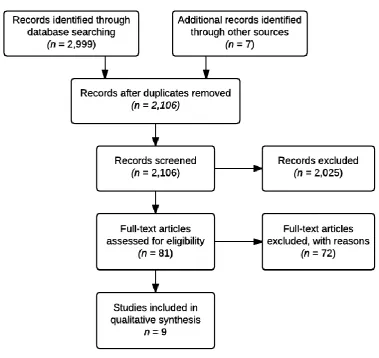
Search results are summarised below in the Prisma Flow Chart in Figure 1. One researcher (KT) retrieved a total of 3,006 results, removed 900 duplicates and screened the remaining 2,106 records by title and abstract for relevance. At this stage, 2,025 results not meeting inclusion criteria were excluded. Full text publications were retrieved for the remaining 81 references, which were
subsequently double screened by a second member of the research team (MM) with any discrepancies discussed with a third researcher (GC). Of these, 72 were excluded for the following reasons: 37 did not refer to a specific intervention pertaining to parental alienation (recommendations or suggestions only); 13 did not refer to an outcome; 8 were published languages other than English; 7 were secondary
Following this, 9 separate studies met inclusion criteria and were subsequently included in this current review.
Figure 1. PRISMA Flow Diagram
Characteristics of Included Studies
A total of 9 studies met the inclusion criteria for the review, with publications between the years 1990 and 2015. The majority of articles were published between 2010 and 2014 (44.44%), in the United States of America (77.78%), Canada (11.11%) and the United Kingdom (11.11%). The interventions fell into five different categories outlining different approaches to parental alienation
custody and individual or family therapy/mediation; and reunification
programs/retreats/workshops/camps. The remaining interventions included custodial transfer only; MMFI; and Parallel Group Therapy.
Changes in Custody and Individual or Family Therapy/Mediation Three studies reported outcomes associated with a change in custody
arrangements and individual or family therapy/mediation. All three papers appear to be reporting findings resulting from private clinical research where participants meet ‘criteria’ for symptoms of PAS. These studies report differing findings in regard to the effectiveness of interventions. Lowenstein (1998) observed poor family
16 Table 1
Results for Interventions Relating to Change in Custody and Individual or Family Therapy Study Inclusion/
Exclusion
Participants Setting/ context
Specific Intervention Time points
Outcomes Results Dunne &
Hedrick (1994) Case Series
Inclusion: One child in the family required to display intense rejection of a parent on the basis of Richard Gardner’s (2002) 14 criteria for PAS.
Exclusion: Not reported.
N= 16 families (26 children; 14 females, 16 males) with children meeting criteria for PAS. 21 children involved in
alienation dynamic with a parent (12 females; 9 males). In 14 cases the mother had custody and was the AP.
In 1 case the non-custodial mother was the AP; and in 1 case the non-custodial father was the AP.
Private community research
1. In 3 cases, a change in custody to the TP was implemented
2. In 13 cases, interventions were a) individual and/or combined therapy for parents; b) therapy between the child and alienated parent; c) therapy between the child and TP; and d) the assignment of a Guardian Ad Litem. Duration: Not reported Delivered by: Study authors, psychiatrist and psychologist Not reported Self-Report and Clinical Observations of: Reduction in PA; changes in relationships between parent (s) and child/ren
1. Change in custody: eradicated PA, with an improvement in overall functioning as
measured by self-report and clinical observation 2. Therapeutic
17 Study Inclusion/
Exclusion
Participants Setting/ context
Specific Intervention Time points
Outcomes Results Lowenstein
(1998) Individual case studies
Inclusion:
Cases with a pure adversarial approach to treatment of PA. Cases which relied on mediation for treatment of PA. Exclusion: Not specified.
16 cases with a purely adversarial approach (16 families, 49 children, n = 32). 16 cases which relied almost solely on mediation (52 children, 32 parents, n = 32).
Private community research
Adversarial approach to PA= if the two parties are in dispute over custody, a court appointed expert may decide to bring the case before the court for a legal decision. This often involves the use of two expert
witnesses, one acting for each parent to represent their “camp”. If a lack of cooperation exists, the court may order a mental health clinician to seek a solution for the court to implement.
Mediation approach to PA= using a court appointed expert to seek reconciliation by focusing on positive aspects of the relationship and Over a 10 year period. Clinical and Legal Observations of:
1. Time taken by adversarial and mediation approach to achieve a solution in PA cases
Self-Report: 2. Degree of ultimate satisfaction by children and parents after mediation 3. Degree of ultimate satisfaction among children and parents where mediation was not used.
1. No cases taking an adversarial approach were resolved in less than 2-3 years.
Majority of adversarial cases (n=5) were resolved between 4-5 years. One case was reported to continue for 7-8 years and was ultimately settled by mediation.
18 Study Inclusion/
Exclusion
Participants Setting/ context
Specific Intervention Time points
Outcomes Results provide
psychoeducation. Each parent is seen
separately initially to engage in solution focused discussions. Duration:
10 year period Delivered by: Study author, psychologist
following mediation; followed by 14 children and 9 parents reporting that they were
‘satisfied’. A small number of children (n=5) and parents (n-1) reported to be ‘less than satisfied’. Nil participants reported feeling ‘very
unsatisfactory’.
19 Study Inclusion/
Exclusion
Participants Setting/ context
Specific Intervention Time points
Outcomes Results
being ‘very unsatisfied’ without mediation approaches. Rand, Rand & Kopetski (2005) Case Series Not reported, however all cases appeared to meet criteria for PAS
N= 45 children from 25 families, who were
subjected to PA and identified as meeting criteria for PAS.
Interrupted Alienation Outcome Group: 20 children from 12 families Mixed Outcome Group: 11 children from 5 families Completed Alienation Outcome Group: 14 children from 8 families
Private clinical research
A follow up study on the evaluation of the efficacy of structural and therapeutic
interventions for severe cases of PA provided by study author
Kopetski over a period of 20 years.
Children were allocated to one of three outcome groups depending on information provided at follow up.
1. Interrupted
Alienation: Children who had a strong bond with the TP, and no longer influenced by the AP.
Participa nts had been evaluate d by one of the authors over the past 20 years since the time of the study. Specific lengths of times between evaluati on and follow up for families were not Clinical Observations and Self-Report of: Efficacy of interventions (e.g., custody or therapy orders) as measured by child adjustment and relationships with both parents at follow up compared to baseline (time of evaluation).
Children in the
Interrupted Alienation Outcome Group, or the Mixed Outcome Group who had court ordered visitation with the target parent, or who were in the care of the target parent
maintained
20 Study Inclusion/
Exclusion
Participants Setting/ context
Specific Intervention Time points
Outcomes Results Ages ranged
between 3-16 years.
In 18 families, the mother was identified as the AP, and the father in 7.
Cases ranged from ‘moderate’ to ‘severe’. Five parents were reported to have abducted the child and 10 made false allegations of sexual abuse.
2. Mixed Outcome: Families of two or more children where PA affected at least one child; or an only child family with mixed outcomes resulting from ineffective interventions. These children presented with attenuated relationships with the TP.
3. Completed Alienation: Families where alienation was ‘completed’ for each child, with a display of PAS symptoms. Duration: Not reported Delivered by: Study author, psychologist
reported. emancipating from the
AP and reported greater social and emotional difficulties.
Compared to structural interventions, therapy was shown to be ineffectual, or to have worsening effects.
Reunification Programs/Retreats/Workshops/Camps
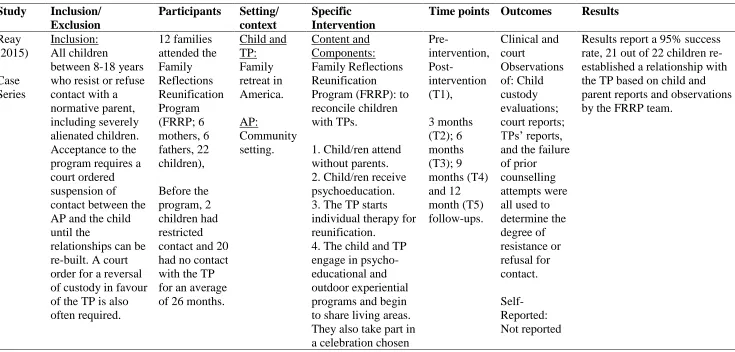
Three papers reported outcomes following attendance of a four to five day family based retreat, camp or workshop. Structural differences were noted between interventions. For example, some families were grouped together at a camp
(Sullivan, Ward & Deutsch, 2010), whereas in other interventions, participants attended a workshop or retreat as a single family structure (Reay, 2015 & Warshak, 2010). Additionally, two studies reported a whole family approach with both parents attending the camp or workshop (Sullivan et al., 2010; Warshak, 2010), where one required the targeted parent only to attend, with the alienating parent receiving individual therapy in the community (Reay, 2015).
Further, many similarities between interventions were noted. All
interventions included participants with children resisting or refusing contact with a parent during ongoing legal disputes or arrangements such as a change in custody or court orders. All studies reported a requirement that participants had previously attempted other interventions without success prior to attending (Reay, 2015; Sullivan et al., 2010; Warshak, 2010). Additionally, all interventions contained elements of psychoeducation, parenting skills, therapy/clinical treatment with activities aimed at reunification between the child and targeted parent, as well as plans for ‘aftercare’ (Reay, 2015; Sullivan et al., 2010; Warshak, 2010).
In terms of outcomes, all studies utilised a follow up assessment and report a change in access arrangements, with an increase in functioning. Reay (2015)
23 Table 2
Results for Interventions Relating to Reunification Programs/ Retreats/ Workshops/ Camps Study Inclusion/
Exclusion
Participants Setting/ context
Specific Intervention
Time points Outcomes Results Reay (2015) Case Series Inclusion: All children
between 8-18 years who resist or refuse contact with a normative parent, including severely alienated children. Acceptance to the program requires a court ordered suspension of contact between the AP and the child until the
relationships can be re-built. A court order for a reversal of custody in favour of the TP is also often required. 12 families attended the Family Reflections Reunification Program (FRRP; 6 mothers, 6 fathers, 22 children), Before the program, 2 children had restricted contact and 20 had no contact with the TP for an average of 26 months.
Child and TP: Family retreat in America. AP: Community setting. Content and Components: Family Reflections Reunification Program (FRRP): to reconcile children with TPs.
1. Child/ren attend without parents. 2. Child/ren receive psychoeducation. 3. The TP starts individual therapy for reunification.
4. The child and TP engage in psycho-educational and outdoor experiential programs and begin to share living areas. They also take part in a celebration chosen
Pre-intervention, Post-intervention (T1), 3 months (T2); 6 months (T3); 9 months (T4) and 12 month (T5) follow-ups. Clinical and court Observations of: Child custody evaluations; court reports; TPs’ reports, and the failure of prior counselling attempts were all used to determine the degree of resistance or refusal for contact. Self-Reported: Not reported
24 Study Inclusion/
Exclusion
Participants Setting/ context
Specific Intervention
Time points Outcomes Results Exclusion:
Children who are realistically estranged due to abuse/neglect; trauma due to exposure to
domestic violence; parental history of imprisonment, substance abuse, or major untreated mental or medical illness.
by the child. 5. The AP seeks counselling with a FRRP trained
therapist in their area. 6. A continuing care plan is developed. Children and TPs: attended the FRRP for 4 days and 5 nights.
AP:
Undertook therapy (structure not reported) with a certified FRRP therapist in their area. Duration:
4 days, 5 nights (times not specified). Delivered by:
25 Study Inclusion/
Exclusion
Participants Setting/ context
Specific Intervention
Time points Outcomes Results multi-disciplinary backgrounds. Sullivan, Ward & Deutsch (2010) Case Series
An intake process screened parents for issues which may contraindicate camp participation. The following characteristics of included families were reported. 1. Both parents were still pursuing legal processes. 2. There were significant
differences in views of the parents. The AP may hold a protective stance relating to the TP’s access, alleging abuse, poor parenting/neglect and/or domestic Five families attending two camp programs in 2008 (pilot) and 2009, with ten families in total.
In 2008, nine children were in one group aged 11-17 years. In 2009, the children were divided into two groups; five children in a 7-11 year old age group and six in a 12-14 year old age group. Camp setting in Vermont, USA. This included a dining room/indoor activity centre, a bathhouse, cabins, staff space and common space. The program was piloted in 2008 with five families for 3 days and in 2009 the program ran for 5 days. Content and Components: Evaluation of Overcoming Barriers Family Camp (OBFC), combining psychoeducation and clinical interventions for families who present with a child who is resisting or refusing contact with a parent.
Separate groups were ran with TPs, APs and children. The clinical team provided a 3-hour psycho-educational group for parents and children; conducted co-parenting
sessions; and
6-9 month follow up for camps in 2008 and 1 month follow up for camps in 2009. Self-Report: Exit and follow up interviews were conducted by either an observer or a psychologist of five families attending two camp programs. Clinical Observations: Not reported
Parents from both camp years (n=21) provided various rating on a scale of 1 (very poor) to 5 (very good) at the time of an exit interview.
Rating of the experience were positive, with five out of eleven participants in 2008 rating the program 5 out of 5, and six rating it a 4. In 2009, nine of the ten adult
participants rated the camp experience a 5, with one rating it a 4.
Both years rated the morning group activities a 5, with two rating it a 4 in 2008.
26 Study Inclusion/
Exclusion
Participants Setting/ context
Specific Intervention
Time points Outcomes Results violence. The TP
asserts they are the victim of alienation by the AP who has been attempting to remove the child by carrying out
malicious agendas or that they are impaired by mental illness or have spiteful motives to gain advantage. 3. The child presents with varying degrees of denigration, fears, anxieties, and distress, as well as extreme resistance or total refusal of contact with the TP. Preference may be displayed for the AP. The families who participated were reported to have
between 1 and 3 children. All families except one were court-ordered to attend the OBFC over the objection of the AP. Several children were reported to have issues including mild autism, learning issues, attention deficit designed and provided interventions to reconnect TPs with their child during the camp experience in the afternoon and evenings. These included camp activities or intensive clinical interventions such as family meetings. After care plans were also developed prior to exiting.
Duration:
The program ran for 5 days and 4-nights With morning groups between 9am and 12pm daily. Delivered by: Groups were facilitated by three
In 2008, four participants rated the interactions with
psychologists a 4, five rated it a 5, and two rated it 4.5. In 2009, eight out of ten rated sessions with a psychologist a 5, and one a 4.
Follow up:
Six-nine months after the 2008 camp one family was reported to have a joint access
27 Study Inclusion/
Exclusion
Participants Setting/ context
Specific Intervention
Time points Outcomes Results 4. The intensity and
severity of the rejection by the child appear exaggerate and out of proportion. 5. All families have experienced
ineffective traditional psychological interventions. 6. The child’s rejection was determined by neutral evaluation and the court to be a response to a pervasive pattern of alienation on the parent of the AP. 7. Several families acknowledged inadequate
parenting with fears and/or concerns around safety,
disorder, social and behaviour issues as well as diet, allergy and somatic symptoms. Stepparents were also invited. experienced clinical psychologists and an aide.
28 Study Inclusion/
Exclusion
Participants Setting/ context
Specific Intervention
Time points Outcomes Results leading to
overprotection of the child(ren) by the other parent. Warshak
(2010) Case Series
Inclusion: 1. The child’s views of the TP appear unrealistic 2. The child refuses contact or displays extreme reluctance with the TP
3. The family requires assistance adjusting to court orders.
Exclusion: 1. Cases where rejection is reasonable or warranted
2. Cases where it is in the best interests of the child remain with the AP
23 Children in 12 families with prior negative or unhelpful experiences of counselling. Majority attended the Workshop following custody trials
Community Content and Components: ‘Family Bridges: A Workshop for Troubled and Alienated Parent-Child Relationships’ where the custody has been awarded to the TP, with contact between the child and AP suspended. The workshop aims to help adjust to the change.
Children and the rejected/TP attend as one family.
Orientation and risk assessment upon Post-intervention (camp conclusion), follow up between 2 to 4 years
post-intervention for 19 of the children, and closer to
publication for further 4 children.
Self-report, Clinical and Court
Observations of: Degree of the child’s alienation based on custody evaluations, court findings, parent reports, duration of estrangement and alienation, the failure of prior attempts to repair relationships, and author and facilitator
22 out of the 23 children reported to have positively restored relationships with TP post intervention, with gains maintained at follow up for 18/22 children These gains were maintained at follow up for 18 of the 22 children (79% successful restoration).
29 Study Inclusion/
Exclusion
Participants Setting/ context
Specific Intervention
Time points Outcomes Results 3. Families where
children spend most of their time away from the rejected parent or only spend short amounts of time with them. 4. Cases where insufficient efforts have been made to attempt other approaches.
arrival Four phases:
1. Basic concepts and information
2. Divorce related concepts and integration of learning
3. Application of learning
4. Communication and conflict-resolution skills, followed by conclusion and aftercare planning. Duration:
Approximately four days
observations, discussions and
interactions with the family.
Custodial Transfer Only
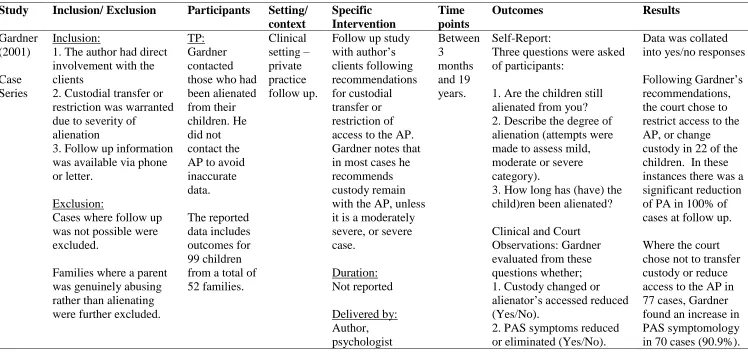
One study reported outcomes relating to outcomes following a change in custody only. Gardner (2001) contacted 52 families with 99 children of whom he had direct contact with, between 3 months and 19 years after he made recommendations to the court for custodial transfer to the targeted parent, or a restriction of access with the alienating parent. Gardner (2001) reported that where the court accepted these recommendations, a reduction in PAS symptoms in 100% of the 22 cases was
31 Table 3
Results for Interventions Relating to Custodial Transfer Only Study Inclusion/ Exclusion Participants Setting/
context
Specific Intervention
Time points
Outcomes Results
Gardner (2001) Case Series
Inclusion:
1. The author had direct involvement with the clients
2. Custodial transfer or restriction was warranted due to severity of
alienation
3. Follow up information was available via phone or letter.
Exclusion:
Cases where follow up was not possible were excluded.
Families where a parent was genuinely abusing rather than alienating were further excluded.
TP: Gardner contacted those who had been alienated from their children. He did not contact the AP to avoid inaccurate data. The reported data includes outcomes for 99 children from a total of 52 families. Clinical setting – private practice follow up.
Follow up study with author’s clients following recommendations for custodial transfer or restriction of access to the AP. Gardner notes that in most cases he recommends custody remain with the AP, unless it is a moderately severe, or severe case. Duration: Not reported Delivered by: Author, psychologist Between 3 months and 19 years. Self-Report:
Three questions were asked of participants:
1. Are the children still alienated from you? 2. Describe the degree of alienation (attempts were made to assess mild, moderate or severe category).
3. How long has (have) the child)ren been alienated? Clinical and Court Observations: Gardner evaluated from these questions whether; 1. Custody changed or alienator’s accessed reduced (Yes/No).
2. PAS symptoms reduced or eliminated (Yes/No).
32 Study Inclusion/ Exclusion Participants Setting/
context
Specific Intervention
Time points
Outcomes Results
Multi-Modal Family Intervention (MMFI)
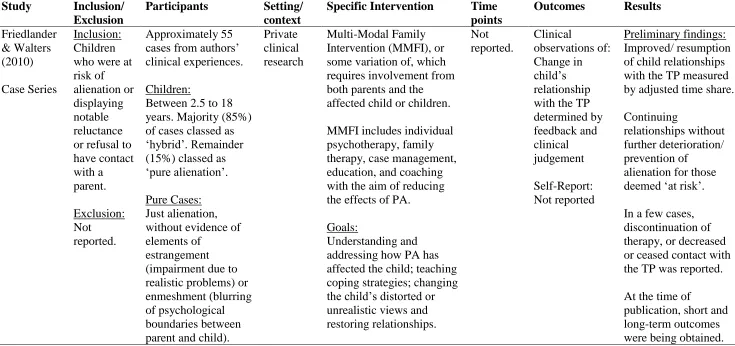
34 Table 4
Results for Interventions Relating to Multi-Modal Family Intervention Study Inclusion/
Exclusion
Participants Setting/ context
Specific Intervention Time points
Outcomes Results Friedlander & Walters (2010) Case Series Inclusion: Children who were at risk of alienation or displaying notable reluctance or refusal to have contact with a parent. Exclusion: Not reported. Approximately 55 cases from authors’ clinical experiences. Children:
Between 2.5 to 18 years. Majority (85%) of cases classed as ‘hybrid’. Remainder (15%) classed as ‘pure alienation’. Pure Cases: Just alienation, without evidence of elements of
estrangement (impairment due to realistic problems) or enmeshment (blurring of psychological boundaries between parent and child).
Private clinical research
Multi-Modal Family Intervention (MMFI), or some variation of, which requires involvement from both parents and the affected child or children. MMFI includes individual psychotherapy, family therapy, case management, education, and coaching with the aim of reducing the effects of PA. Goals:
Understanding and addressing how PA has affected the child; teaching coping strategies; changing the child’s distorted or unrealistic views and restoring relationships. Not reported. Clinical observations of: Change in child’s relationship with the TP determined by feedback and clinical judgement Self-Report: Not reported Preliminary findings: Improved/ resumption of child relationships with the TP measured by adjusted time share. Continuing
relationships without further deterioration/ prevention of
alienation for those deemed ‘at risk’. In a few cases, discontinuation of therapy, or decreased or ceased contact with the TP was reported. At the time of
35 Study Inclusion/
Exclusion
Participants Setting/ context
Specific Intervention Time points
Outcomes Results Hybrid Cases:
A combination of alienation,
estrangement and enmeshment elements.
Parallel Group Therapy
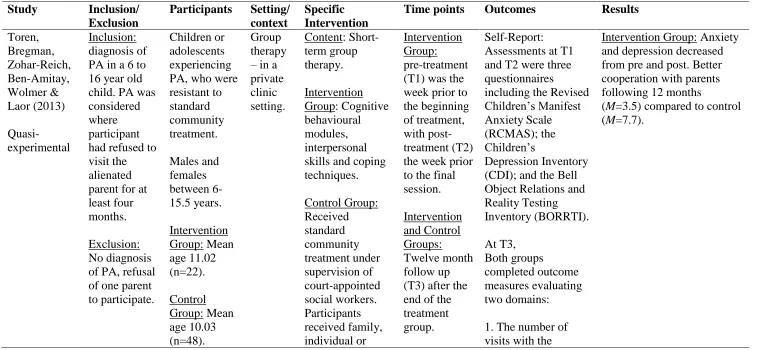
One study reported outcomes following an experimental Parallel Group Therapy intervention in a private clinical setting. Toren et al (2013) conducted 16 weekly 90 minute group therapy sessions for approximately four months. The group was aimed at families with children ranging from six to sixteen years of age who had been refusing or resisting contact with a parent for at least four months (Toren et al., 2013). Participants were allocated to three parallel groups including two parent groups with equal numbers of alienated and non-alienated parents, and a child group. Those allocated to receive the intervention received cognitive behaviour therapy modules, interpersonal skills and coping techniques. Those allocated to the control group received standard community treatment including family or individual
therapy, or supervised visits by a court appointed social worker (Toren et al., 2013). Results revealed that those receiving the intervention reported a decrease in
37 Table 5
Results for Interventions Relating to Parallel Group Therapy Study Inclusion/
Exclusion
Participants Setting/ context
Specific Intervention
Time points Outcomes Results Toren, Bregman, Zohar-Reich, Ben-Amitay, Wolmer & Laor (2013) Quasi-experimental Inclusion: diagnosis of PA in a 6 to 16 year old child. PA was considered where participant had refused to visit the alienated parent for at least four months. Exclusion: No diagnosis of PA, refusal of one parent to participate.
Children or adolescents experiencing PA, who were resistant to standard community treatment. Males and females between 6-15.5 years. Intervention Group: Mean age 11.02 (n=22). Control Group: Mean age 10.03 (n=48). Group therapy – in a private clinic setting. Content: Short-term group therapy. Intervention Group: Cognitive behavioural modules, interpersonal skills and coping techniques. Control Group: Received standard community treatment under supervision of court-appointed social workers. Participants received family, individual or Intervention Group: pre-treatment (T1) was the week prior to the beginning of treatment, with post-treatment (T2) the week prior to the final session. Intervention and Control Groups: Twelve month follow up (T3) after the end of the treatment group.
Self-Report: Assessments at T1 and T2 were three questionnaires
including the Revised Children’s Manifest Anxiety Scale (RCMAS); the Children’s
Depression Inventory (CDI); and the Bell Object Relations and Reality Testing Inventory (BORRTI). At T3, Both groups completed outcome measures evaluating two domains: 1. The number of visits with the
Intervention Group: Anxiety and depression decreased from pre and post. Better cooperation with parents following 12 months
38 Study Inclusion/
Exclusion
Participants Setting/ context
Specific Intervention
Time points Outcomes Results Parents took
part in parallel group therapy.
supportive interventions including supervised visitations. Duration: 16 weekly 90 minute group sessions (4 months). Delivered by: 2 senior
child/adolescent psychiatrists; 1 psychologist & 3 social workers.
alienated parent over previous year. 2. The level of cooperation between the parents
concerning their child. ** Domains sig correlated and
summed. Clinical
Observations: Not reported
Discussion
This systematic review aimed to identify and consolidate current knowledge around evidence based interventions for treating parental alienation to determine best practice approaches and recommendations with a psychological and legal
perspective. While much research has focused on characteristics and approaches to parental alienation, to our knowledge, this is the first paper to review the
effectiveness of interventions in a systematic way. Given the varying methodological approaches used in parental alienation research, a meta-analysis was considered inappropriate due to the nature of the existing literature. A comprehensive search strategy using PRISMA guidelines (Moher et al., 2009) was applied to
systematically gather the evidence based literature in order to develop best practice recommendations for both psychologists and legal professionals requiring guidance for their clients. From the literature searched, nine studies met criteria, with five main interventions identified: change in custody and individual or family
therapy/mediation; custodial transfer only; multi-modal family intervention; parallel group therapy; and reunification programs/retreats/workshops/camps.
findings and a high likelihood of study bias/weaker evidence due to the study designs. Further, research by Lowenstein (1998) and Toren et al (2013) did not report the methodology/design or allocation method, respectively.
It should be noted that most of the research had a lack of independent raters or were by authors following up on their own clients, therefore increasing the risk of outcome bias (Dunne & Hedrick, 1994; Friedlander & Walters, 2010; Gardner, 2001; Lowenstein, 1998; Rand et al., 2005; Warshak, 2010). Further, of the nine articles, eight did not utilise or report validated outcome measures, instead providing qualitative descriptions of their outcomes such a change in custody or observed improvement in relationships (Dunne & Hedrick, 1994; Friedlander & Walters, 2010; Gardner, 2001; Lowenstein, 1998; Reay, 2015; Rand et al., 2005; Sullivan et al., 2010; Warshak, 2010).
Finally, while Toren et al (2013) appeared to be the single experimental study found in the literature, outcome data at pre and post times were only collected for the intervention group, with a partial control group completing 12-month follow up data only. While this research reports use of both descriptive outcomes and validated outcome measures (BORRTI: Bell, Billington & Becker, 1986; CDI: Kovacs, 1985; RCMAS: Reynolds & Richmond. 1987), authors note that these were limited to assist with study compliance to increase the likelihood of completion (Toren et al., 2013).
Proposed Recommendations
mental health, or legal professionals.
Changes in Custody/Court Arrangements. Despite previous suggestions (Darnall & Steinberg, 2008), none of the evidence based literature recommended waiting for spontaneous resolution, or letting the child decide who they want to have custody. Additionally, included articles did not suggest to leave the child with the alienating parent as described by Sullivan and Kelly (2001). Instead, according to the literature included in this review, there is a consistent finding that changes in custody arrangements or an increase in access to the targeted parent is effective in improving child-parent relationships and reducing distress in the child (Dunne & Hedrick, 1994; Gardner, 2001; Rand et al., 2005). This is in line with previous research suggesting that courts implement strict visitation schedules, changes in custody to the targeted parent or changes in child and target parent access arrangements, as well include as the involvement of a Guardian Ad Litem as an independent person to monitor progress and make recommendations to the court (Darnall, 2011).
In sum, given the current research, key authors appear to suggest that a change in custody arrangements or an increase in access to the targeted parent is effective when parental alienation is evident (Dunne & Hedrick, 1994; Gardner, 2001; Rand et al., 2005). Further, it is argued that individual therapy may be detrimental in achieving improved child-parent relationships and reducing distress. (Dunne & Hendrick, 1994; Rand et al., 2005).
Family Therapy with Court Interventions. The strongest theme from the included literature in the current review appears to suggest that family therapy during adversarial approaches/legal disputes is most effective in dealing with children resisting or refusing contact with a parent (Friedlander & Walters, 2010; Reay, 2015; Sullivan et al., 2010; Toren et al., 2013; Warshak, 2010). Despite previous literature outlining reunification therapy as an intervention for parental alienation (Darnall, 2011), none of the included studies labelled their interventions as such. However, all included studies with a therapy approach all had the same aim as reunification therapy – to restore functioning as a family.
Included articles suggest that providing family therapy where previous interventions may not have been effective, can result in improvement in the relationships of children with the targeted parent as well as a reduction in
2013)
Current findings are in line with Sullivan and Kelly’s (2001) suggestion that interventions for parental alienation should include both a legal and clinical aspect to allow restoration of functioning. It is further consistent with Gardner’s (1998)
recommendation that high conflict cases of parental alienation classed as moderate or severe require a joint effort between the court and therapists.
To summarise these suggestions, where a child/children may be resisting or refusing contact with a parent, key authors suggest using a family approach in therapy with inclusion of all members, alongside legal interventions (Friedlander & Walters, 2010; Lowenstein, 1998; Reay, 2015; Sullivan et al., 2010; Toren et al., 2013; Warshak, 2010).
Implications of the Review
The current study took a systematic approach in reviewing and consolidating all available evidence based literature regarding parental alienation interventions in order to develop best practice recommendations with a psychological and legal perspective. To our knowledge, this is the first time the research has been produced in this way, both in Australia and internationally.
Majority of parental alienation articles excluded from our review provided steps to take for treatment, assessment for PAS and recommendations, without reporting/detailing a specific intervention or outcomes. Further, some articles
screened by title and abstract and excluded in the initial stages referred to attachment theory and types of identifiable alienation behaviours or symptoms. The current study furthers the existing literature with nine included articles directly pertaining to parental alienation interventions with outcomes regarding changes in custody
1994; Friedlander & Walters, 2010; Gardner, 2001; Lowenstein, 1998; Reay, 2015; Rand et al., 2005; Sullivan et al., 2010; Toren et al., 2013; Warshak, 2010).
The review found that adversarial approaches can be effective in reducing the effects of parental alienation, when custody arrangements are altered in favour of the targeted parent. It further found that where other approaches fail, a family systems approach to therapy during ongoing court or legal proceedings can be effective in restoring relationships and reducing levels of distress. Therefore, the current study has potential to have large implications as it aims to guide professionals such as psychologists, family therapists and lawyers, to better understand and use the most helpful and effective evidence based strategies in the context of parental alienation. Limitations of the Review and Directions for Future Research
It is important to acknowledge that the current research is the first to
systematically review all available evidence based literature around interventions for parental alienation. However, there are some limitations around both this review and the existing literature which should be considered. While a thorough systematic search strategy was developed, psychological databases rather than predominantly legal databases were selected as they were deemed to be peer reviewed and to have enough scope to capture correct topics by study authors. Despite using academic databases, searching the Cochrane Library and screening conference abstracts and books, grey literature was not searched so to capture peer reviewed research only.
Further, while no restrictions were placed on the search, articles not
published in English may have been missed. There were a limited number of articles reporting parental alienation outcomes found, with nine meeting our inclusion
ethical approval, rather than a flaw in the current study. Further, some of the
literature excluded from the review may have not reported effects of an intervention. As current results revealed, there is a need for more research, with a lack of evidence based scientifically rigorous literature available, making it difficult to provide clear and specific recommendations.
Additionally, due to a lack of evidence based literature and the nature of the setting of included articles, there may be limited generalizability in their application. For example, many reported outcomes of a retreat, workshop, camp (Reay, 2015; Sullivan et al., 2010; Warshak, 2010), or single studies using MMFI (Friedlander & Walters, 2010) and parallel group therapy (Toren et al., 2013), rather than treatments in a clinical setting. Further, adversarial based articles did not identify specific approaches taken (Dunne & Hedrick, 1994; Gardner, 2001; Lowenstein, 1998; Rand, 2015). In order to provide further recommendations for professionals, there is a need for greater research in both psychological and legal settings which can outline evidence based steps for treating parental alienation in the wider population.
resulted in 95% of the children re-establishing relationships with the targeted parent (Warshak, in preparation).
There is a clear need for further research around interventions for parental alienation, with just nine studies included from over 3,000 screened. In particular, more outcome studies are required with higher numbers of participants and applicability to the general population. There is a further need for greater research among the legal arena, so to add to the existing literature and guide professionals in their recommendations. With more research, particular types of interventions may emerge which can be applied where parental alienation is present in order to provide evidence based treatment and contribute to a better understanding in the literature.
Summary and Conclusions
References
Baker, A.J.L. (2005). The long-term effects of parental alienation on adult children: A qualitative research study. American Journal of Family Therapy, 33, 289-302. doi:10.1080/01926180590962129
Baker, A.J.L., & Ben-Ami, N. (2011). To turn a child against a parent is to turn a child against himself: The direct and indirect effects of exposure to parental alienation strategies on self-esteem and wellbeing. Journal of Divorce and Remarriage, 52, 472-489. doi: 10.1080/10502556.2011.609424
Baker, A.J.L., & Chambers, J. (2011). Adult recall of childhood exposure to parental conflict: Unpacking the black box of parental alienation. Journal of Divorce and Remarriage, 52, 55-76. doi: 10.1080/10502556.2011.534396
Bell, M., Billington, R., & Becker, B. (1986). A scale for assessment of object relations: Reliability, validity and factorial invariance. Journal of Clinical Psychology, 42, 733-741. Retrieved from
http://web.a.ebscohost.com.ezproxy.federation.edu.au/ehost/detail/detail?vid
=3&sid=8a16ebc8-d29f-43ce-855b-9fdd77df8d2f%40sessionmgr4005&hid=4209&bdata=JnNpdGU9ZWhvc3Qt bGl2ZSZzY29wZT1zaXRl#AN=15846311&db=a9h
Bernet, W., Von Boch-Galhau, W., Baker, A.J.L., & Morrison, S.L. (2010). Parental alienation, DSM-V, and ICD-11. The American Journal of Family Therapy, 36, 76-187. doi: 10.1080/01926180903586583
Bernet, W., & Baker, A. (2013). Parental alienation, DSM-5, and ICD-11: Response to critics. Journal of the American Academy of Psychiatry and the Law, 41, 98-104. Retrieved from http://www.jaapl.org/content/41/1/98.full.pdf
A conceptual model. Family Relations, 56, 329-345. doi: 10.1111/j.1741-3729.2007.00463.x
Clawar, S., & Rivlin, B.V. (1991). Children held hostage. Chicago: American Bar Association
Darnall, D. (2011). The psychosocial treatment of parental alienation. Child and Adolescent Psychiatric Clinics of North America, 20, 479-494. doi: 10.1016/j.chc.2011.03.006
Darnall, D., & Steinberg, B.F. (2008). Motivational models for spontaneous reunification with the alienated child: Part I. American Journal of Family Therapy, 36, 107-115. doi: 10.1080/01926180701643131
Dunne, J., & Hedrick, M. (1994). The parental alienation syndrome: An analysis of sixteen selected cases. Journal of Divorce and Remarriage, 21, 21-38. doi: 10.1300/J087v21n03_02
Ellis, E. (2008). A stepwise approach to evaluating children for parental alienation syndrome. Journal of Child Custody: Research, Issues, and Practices, 4, 55-78. doi: 10.1300/J190v04n01_03
Friedlander, S., & Walters, M.G. (2010). When a child rejects a parent: Tailoring the intervention to fit the problem. Family Court Review, 48, 98-111. doi:
10.1111/j.1744-1617.2009.01291.x
Garber, B. (2011). Parental alienation and the dynamics of the enmeshed parent-child dyad: Adultification, parentification, and infantilization. Family Court Review, 49, 322-335. doi: 10.1111/j.1744-1617.2011.01374.x
Gardner, R.A. (1998). Recommendations for dealing with parents who induce a parental alienation syndrome in their children. Journal of Divorce and Remarriage, 28, 1-23. doi: 10.1300/J087v28n03_01
Gardner, R.A. (2001). Should courts order PAS children to visit/reside with the alienated parent? A follow up study. American Journal of Forensic Psychology, 19, 61-106. Retrieved from
http://search.proquest.com.ezproxy.utas.edu.au/psycinfo/docview/619630745 /5976D9EB512047FAPQ/1?accountid=14245
Garg, A.X., Hackam, D., & Tonelli, M. (2008). Systematic review and meta-analysis: When one study is just not enough. Clinical Journal of the
American Society of Nephrology, 3, 253-260. doi: 10.2215/CJN.01430307 Johnston, J.R. (2005). Children of divorce who reject a parent and refuse visitation:
Recent research and social policy implications for the alienated child. Family Law Quarterly, 38, 757–775. Retrieved from
http://ezproxy.utas.edu.au/login?url=http://search.proquest.com/docview/222 877172?accountid=14245
Johnston, J.R., Walters, M.G., & Friedlander, S. (2001). Therapeutic work with alienated children and their families. Family Court Review, 39, 316-333. Retrieved from
http://ezproxy.utas.edu.au/login?url=http://search.proquest.com/docview/233 098900?accountid=14245
Kelly, J., & Johnston, J. (2001). The alienated child: A reformulation of parental alienation syndrome. Family Court Review, 39, 249-266. doi: 10.1111/j.174-1617.2001.tb00609.x
Bulletin, 21, 995-998
Lowenstein, L.F. (1998). Parent alienation syndrome: A two step approach toward a solution. Contemporary Family Therapy: An International Journal, 20, 505-520. doi: 10.1023/A:1021632200655
Meier, J.S. (2009). A Historical Perspective on Parental Alienation Syndrome and Parental Alienation. Journal of Child Custody, 6, 232-257, doi:
10.1080/15379410903084681
Moher D, Liberati A, Tetzlaff J, Altman D. (2009). Preferred reporting items for systematic reviews and meta-analyses: The PRISMA statement. Annals of Internal Medicine, 151, 264-269. doi: 10.7326/0003-4819-151-4-200908180-00135
Popay, J., Roberts, H., Sowden, A., Petticrew, M., Arai, L., Rodgers, M., Britten, N., Roen, K. & Duffy, S. (2006). Guidance on the conduct of narrative synthesis in systematic reviews. Final report, Institute of Health Research, Lancaster: ESRC Methods Programme
Rand, D., Rand, R., & Kopetski, L. (2005). The spectrum of parental alienation syndrome part III: The Kopestski follow-up study. American Journal of Forensic Psychology, 23, 15-43. Retrieved from
http://search.proquest.com/psycinfo/docview/620676379/832E5AA0169C4A 91PQ/1?accountid=14245
Reay, K.M. (2015). Family reflections: A promising therapeutic program designed to treat severely alienated children and their family system. The American Journal of Family Therapy, 43, 197-207. doi:
10.1080/01926187.2015.1007769