“ I hereby declare that I have read through this report entitle “Correlation Between Resistivity And Dielectric Performance Of Polymeric Material Insulation Under Standard Test Procedure” and found that it has comply the partial fulfilment forwarding the degree of Bachelor of Electrical Engineering (Industrial Power)”
Signature :
Supervisor’s Name : DR AMINUDIN BIN AMAN
Correlation Between Resistivity And Dielectric Performance Of Polymeric Material Insulation Under Standard Test Procedure
NUR NABILA BINTI NOOR AZMAN
A report submitted in partial fulfilment of the requirement for the degree of Bachelor of Electrical Engineering (Industrial Power)
Faculty of Electrical Engineering
UNIVERSITI TEKNIKAL MALAYSIA MELAKA
I declare that this report entitle “Correlation between resistivity and dielectric performance of polymeric material insulation under standard test procedure” is the result of my own research except as cited in the references. The report has not been accepted for any degree and is not concurrently submitted in candidature of any other degree.
Signature : ………
Name : NUR NABILA BINTI NOOR AZMAN
ACKNOWLEDGEMENT
Firstly, my biggest thanks to Allah S.W.T who gave me opportunity in doing this project and always giving me hope and ways in completing the tasks.
My great appreciation goes to my supervisors, Dr. Aminudin Bin Aman for his guidance, skill, knowledge, and patience in helping his final year students for the two semesters.
I also want to give my appreciation to other lecturers, technicians, and friends who are wiling to help me whether directly or indirectly in completing this final year project. Their good deed will always been remembered.
CORRELATION BETWEEN RESISTIVITY AND DIELECTRIC STRENGTH
PERFORMANCE OF POLYMERIC MATERIAL INSULATION UNDER
STANDARD TEST PROCEDURE
NUR NABILA BINTI NOOR AZMAN
This report is submitted in Partial Fulfillment of Requirements for the Degree of
Bachelor of Electrical Engineering (Industrial Power)
Faculty of Electrical Engineering
UNIVERSITI TEKNIKAL MALAYSIA MELAKA
II
ACKNOWLEDGEMENT
Firstly, my biggest thanks to Allah S.W.T who gave me opportunity in doing this project and always giving me hope and ways in completing the tasks.
My great appreciation goes to my supervisors, Dr. Aminudin Bin Aman for his guidance, skill, knowledge, and patience in helping his final year students for the two semesters.
I also want to give my appreciation to other lecturers, technicians, and friends who are wiling to help me whether directly or indirectly in completing this final year project. Their good deed will always been remembered.
III
ABSTRACT
IV
TABLE OF CONTENTS
CHAPTER TITLE PAGE
ABSTRACT iii
TABLE OF CONTENTS iv
LIST OF TABLES viii
LIST OF FIGURES ix
1 INTRODUCTION 1
1.1 Introduction 1
1.2 Project Background 2
1.3 Problem Statement 2
1.4 Objective 3
1.5 Scope of Work 3
2 LITERATURE REVIEW 4
2.1 Introduction 4
2.2 Degradation and Breakdown 4
2.2.1 Electrical Field Stress 4
2.2.2 Solid Breakdown 5
2.2.3 Electrical Breakdown 5
2.2.4 Short Term Breakdown 5
V
2.2.6 Accelerated Aging Test 6
2.3 Selection Material 7
2.3.1 Polypropylene (PP) and Glass 7
2.4 Type and Shapes of Electrode 8
2.5 Classification of Resistivity 10
2.5.1 Volume Resistance 10
2.5.2 Volume Resistivity 10
2.5.3 Surface Resistivity 10
2.6 Review of Electrical Properties Test 11
3 METHODOLOGY 12
3.1 Introduction 12
3.2 Flow Chart of Methodology 13
3.3 Standard Test Procedure 14
3.3.1 Electrodes and Specimen 14
3.3.2 Test Perpendicularly 14
3.3.3 Number of Tests 14
3.3.4 Volume Resistivity Test Specimen 14
3.3.5 Surface Resistivity Test Specimen 14
3.3.6 Conditioning before Test 15
3.3.7 Mode of Increase Voltage 15
3.3.8 Voltage Source 15
3.3.9 Criterion of Test Specimen 16
VI
3.3.11 Experiment Set Up for AC Test 17
3.3.12 Apparatus of High Voltage Test 18
3.3.13 Procedure of Dielectric strength 19
3.3.14 Safety 20
3.3.14.1 User Safety 20
3.3.14.2 Faraday cage with interlock cage 21
3.3.15 Resistivity Test 21
3.3.15.1 Procedure of Resistivity for Volume 21 3.3.15.2 Procedure of Resistivity for Surface 22
3.4 Project Gantt chart
23
3.4.1 Gantt chart
23
4
RESULTS
24
4.1 Introduction 24
4.2 Test Conditions of Dielectric Strength Test and Resistivity Test 25
4.3 Result of project 26
4.3.1 Breakdown of specimens 26
4.3.2 Resistivity of specimens 26
4.4 Discussion 27
4.4.1 Breakdown voltage of polymer using equal and unequal electrode 27
4.4.2 Breakdown Voltage of Glass 27
4.4.3 Breakdown Voltage of Polymer Propylene 28
VII
5 CONCLUSION 31
5.1 Conclusion 31
5.2 Recommendation 32
6 REFERENCES 33
VIII
LIST OF TABLES
TABLE TITLE PAGE
2.1 Important Properties and Minimum Requirement of Polymeric Insulation 11
3.4.1 Gantt Chart 23
4.1 Comparison between Ceramic and Polymeric Insulation 24
4.2
Condition of Specimen under Test
25
4.3
Breakdown Voltage of Specimens
26
IX
LIST OF FIGURES
FIGURE TITLE
PAGE
2.1
Diagnostic Test to Determine The Ageing
7
2.2
Electrode Arrangement of Unequal Electrode
8
2.3
Actual Arrangement of Unequal Electrode
9
2.4
Electrode Arrangement of Equal Electrode
9
2.5
Actual Arrangement of Equal Electrode Diameter
10
3.1
Unequal electrode
17
3.2
Equal electrode
17
3.3
Schematic Diagram of AC Test Set Up
17
3.4
Electrode set up to comply with BS EN 60243-1
18
3.5
High Voltage Control and Measurement Equipment
19
3.6
Dielectric Strength Test set up
19
3.7
Actual set up for AC Test
19
3.8
Breakdown occur at Test set up
20
3.9
Resistivity Test for Volume
21
3.10
Resistivity Test for Surface
22
4.1
Captured AC wave during Breakdown Voltage of Glass
28
4.2
Captured AC wave during Breakdown Voltage of Polymer Propylene
28
4.3
Captured AC wave during Breakdown Voltage of Tile
29
4.4
Graph Breakdown Voltage of Different Materials in kV/mm
29
CHAPTER 1
INTRODUCTION
1.1 Introduction
Insulation plays a big part on the performance and life expectancy of high voltage equipment. The dielectric strength and electrical field are the main elements that lead to failure of insulation [1]. The dielectric breakdown behaviors of an insulation material depend on the electrical stress conditions, chemical structures and their implementation environment [2]. Polymer traditional porcelain and glass are used in this project [3, 4]. An assemble of studies has been carried out to review on polymer material for electrical application [5, 6]. Polypropylene (PP) is chosen because this material is widely used in the high insulating system as it has high performance electrical properties [7]. Our foregoing breakdown review shows that the breakdown voltage drops approximately as the square root of the gap for metal surfaces with gap 2 and 8 mm [8]. To be specific, this project determines the resistivity insulation and dielectric strength of insulation applied [9, 12].
2
1.2 Project Background
Nowadays, a lot of high voltage test has achieve to investigate withstands voltage or other review courses. However, these tests demand following standard to get reliable results, by using the standard test procedure behavior of insulating material in actual implementation can be determined. The result of the testing for observe changes can be used to determine the characteristic of processing variables, aging condition and other manufacturing or environmental situation in high voltage polymeric insulation application. A part from that, by using this standard test procedure, the testing laboratory identify for safety, the outcome of the testing polymeric material is valid, and used for benchmarking of performance. Therefore, the standard test according to international standard is vital to be compiled for use by polymeric insulation, material research and a safety need for high voltage implementation.
1.3 Problem Statement
A mass research has been right on the electrical properties of high voltage insulation materials. Generally, there are two types of test can be conducted, the standard test used for product test and non-standard test for research work. On previous reviews, the test has been impart to determine volume resistivity and surface resistivity of solid electrical insulating and the dielectric strength of flat polymer material where the breakdown test are conducted to investigate the dielectric strength. Both tests are to analysed performance of polymeric insulation properties. In this modern era, this high voltage testing is going to be used to determine the voltage breakdown and method resistivity of material using flat shape of electrode and analyse the characteristic of electrical breakdown beside volume and surface resistivity. Since the experiment generates high voltages, compulsory handling steps and safety precaution need to be taken when handling the equipment.
3
for outdoor use under HV stress PD IEC/TR 62039.2007 [10]. The minimum dielectric strength to be fulfilled for outdoor high voltage polymeric insulation shall not be less than 10 kV/mm while minimum volume resistivity isΩm. In order to do testing on the dielectric strength of the polymer insulation, the international standard BS EN 60243-1:1998 and for surface and volume resistivity test used BS 6233:1982.
1.4 Objectives
The objectives for this project are stated as below:
i. To determine volume resistivity and surface resistivity of polymeric and non-polymeric material.
ii. To investigate relationship between resistivity and dielectric strength of material under standard test procedure
iii. To compare the dielectric strength of material under test based on their resistivity.
1.5 Scope of research
The research scope is limited to:
i. Used Polypropylene (PP) and glass as insulation specimen
ii. The parameter to be studied are volume, surface and dielectric strength
CHAPTER 2
LITERATURE REVIEW
2.1 Introduction
Insulation plays a vitally important in determining the performance and lifetime of high voltage equipment. This chapter covers all correlated study the characteristic of polymer insulator and electrodes used. It also characterized the development of polymeric insulation, Reviews of Electrical Properties Test, appropriate tests, detection of surface features, standard correlated to methods.
2.2 Degradation and breakdown
2.2.1 Electrical field stress
5
2.2.2 Solid breakdown
If the solid insulating material is truly homogenous and is free from imperfections, its breakdown stress will be high as 10kV/mm. Nonetheless, in practice, the breakdown fields achieved are very much lower than this value where the breakdown results over the surface than in the solid itself [1]. The breakdown of insulation can result due to mechanical failure caused by mechanical stress produced by the electrical fields. The termed is “electromechanical breakdown”. Breakdown can also results due to chemical degradation caused by heat generated due to dielectric losses in the insulating material [2]. When the conducting path is developed, it is called “tracking”, and results in degradation of the material. Surface flush over normally results when the solid insulation is absorbed in a liquid dielectric. Surface flash over, as already mentioned, is the most frequent cause of trouble in practice. Porcelain insulations for use on transmission line must accordingly be design to have a long path over the surface. The failure of solid insulation by discharges which may the internal voids and cavities of the dielectric, called “partial discharges” is receiving much attention today, mostly because it determine the life versus stress characteristics of the material [7].
2.2.3 Electrical breakdown
Strict loss of the insulating properties of test specimen while exposed to dielectric stress, which causes the current in the test circuit to operate an appropriate circuit breaker [6].
2.2.4 Short term breakdown
Electrical field due to the very high stress may not result in the second or quickly without damaging the insulation surface before failure [6].
2.2.5 Long term breakdown
6
i. Aging and breakdown due to partial discharge
ii. Aging and breakdown due to changes in surface insulation
2.2.6 Accelerated aging test
7
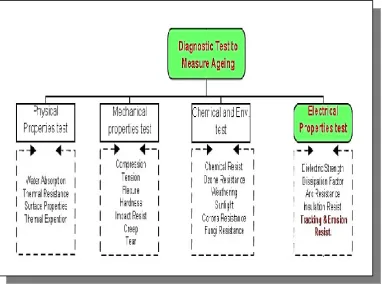
Figure 2.1: diagnostic test to determine the ageing 2.3 Selection material
For this study polymeric material to be studied are Polyvinyl Chloride (PVC), Polypropylene (PP), and high density Polyethylene (HDPE). For this project the thermoplastic polymeric material has been selected in Polypropylene (PP) and stainless steel electrode with flat end shaped.
1. Polypropylene (PP)
8
2. Glass
Glass is an organic compound that consists of a complex system oxide (SiO2). Glass dielectric strength varies from 3000-5000kV/ cm and decrease with increasing temperature, reaching half its value at 100ᵒC. glass is typically created as a tool of protection and internal support in electrical bulb, X-ray equipment, capacitors and insulation on the phone. The glass insulations have strong chemical stability to resist ageing, which means it has a high surface energy. With high surface energy, glass is easily wetted as well as surface adhesion of contaminants and can lead to flashover at contaminated area. It does not perform well under polluted conditions [1].
2.4 Type and shape of electrode
Since the standard test assured the stainless steel is the most reliable electrode to be used in the experiment, flat-end shaped electrode is prepared.
a. Flat-end
i. Unequal diameter electrode
The electrode shall consist of two metal cylinders with the edges rounded to give a radius of 3mm ± 0.2mm. One of the electrode shall be 25mm ± 1mm in diameter and approximately 25mm high. The other electrode shall be 75mm ± 1mm in diameter and approximately 15mm high. These electrodes shall be arranged coaxially within 2mm as shown in figure 2.2 and figure 2.3 shows the actual arrangement of this electrode.
9
Figure 2.3: actual arrangement of unequal electrode ii. Equal diameter electrode
If a fixture is employed, which accurately aligns upper and lower electrodes within 1.0 mm, the diameter of the lowest electrode may be reduced to 25mm ± 1mm, the diameters of the electrodes differing by no more than 0.2 mm. the results obtained will not necessarily be the same as those obtained with the unequal electrodes. Figure 2.4 and figure 2.5 shows the electrode arrangement for equal diameter test.
[image:24.595.164.482.431.628.2]