UNIVERSITI TEKNIKAL MALAYSIA MELAKA
STUDY ON EFFECT OF INTAKE AIR FILTER SYSTEM ON
ENGINE PERFORMANCE ON NATURALLY ASPIRATED
ENGINE
This report submitted in accordance with requirement of the Universiti Teknikal Malaysia Melaka (UTeM) for the Bachelor Degree of Engineering Technology
(Automotive Technology) (Hons.)
by
NUR AJEERAH BINTI JUSOH B071310300
910710-03-5404
BORANG PENGESAHAN STATUS LAPORAN PROJEK SARJANA MUDA
TAJUK: Study on Effect of Intake Air Filter System on Engine Perfromance on Naturally Aspirated Engine
SESI PENGAJIAN: 2016/17 Semester 1
Saya NUR AJEERAH BINTI JUSOH
mengaku membenarkan Laporan PSM ini disimpan di Perpustakaan Universiti Teknikal Malaysia Melaka (UTeM) dengan syarat-syarat kegunaan seperti berikut:
1. Laporan PSM adalah hak milik Universiti Teknikal Malaysia Melaka dan penulis. 2. Perpustakaan Universiti Teknikal Malaysia Melaka dibenarkan membuat salinan
untuk tujuan pengajian sahaja dengan izin penulis.
3. Perpustakaan dibenarkan membuat salinan laporan PSM ini sebagai bahan pertukaran antara institusi pengajian tinggi.
4. **Sila tandakan ( )
SULIT
TERHAD
TIDAK TERHAD
(Mengandungi maklumat yang berdarjah keselamatan atau kepentingan Malaysia sebagaimana yang termaktub dalam AKTA RAHSIA RASMI 1972)
(Mengandungi maklumat TERHAD yang telah ditentukan oleh organisasi/badan di mana penyelidikan dijalankan)
Alamat Tetap:
Lot 1700 Perkampungan
Tanah Putih A 18300 Gua Musang, Kelantan.
Tarikh: ________________________
Disahkanoleh:
Cop Rasmi:
Tarikh: _______________________
iv
DECLARATION
I hereby, declared this report entitled “Study on effect of intake air filter system on engine performance on naturally aspirated engine” is the results of my own research
except as cited in references.
Signature : ………
Name : Nur Ajeerah binti Jusoh
v
APPROVAL
This report is submitted to the Faculty of Engineering Technology of UTeM as a partial fulfillment of the requirements for the degree of Bachelor of Engineering Technology (Automotive Technology) (Hons.). The member of the supervisory is as follow:
vi
ABSTRAK
vii
ABSTRACT
viii
DEDICATION
ix
ACKNOWLEDGMENTS
First of all, I express my deepest thanks and gratitude to Allah S.W.T who has given me the spirit and the soul throughout the duration of my final year project. I have completed this project even though there are many difficulties and hardship along the way.
x
TABLE OF CONTENT
DECLARATION ... iv
APPROVAL ... v
ABSTRAK ... vi
ABSTRACT ... vii
DEDICATION ... viii
ACKNOWLEDGMENTS ... ix
LIST OF ABBREVIATIONS, SYMBOL AND NOMENCLATURE ... xvii
CHAPTER 1 ... 1
1.0 Introduction ... 1
1.1 Problem Statement ... 2
1.2 Objective ... 3
1.3 Project Scope ... 3
CHAPTER 2 ... 4
2.0 Naturally Aspirated Engine ... 4
2.1 Major System in Internal Combustion ... 5
2.2 Intake system ... 5
2.3 Air Filter ... 6
2.3.1 Drop in Air Filter ... 8
2.3.2 Open Pod Air Filter ... 8
2.4 Standard Air Filter Vs Performance Air Filter ... 9
xi
2.7 Performance Parameter ... 15
2.7.1 Horsepower and Torque ... 16
2.7.2 Exhaust Emission ... 16
2.7.3 Fuel Economy ... 18
2.8 Dynamometer ... 18
2.8.1 Engine Dynamometer... 19
2.8.2 Chassis Dynamometer ... 20
2.8.3 Dynamometer Features and Function ... 20
CHAPTER 3 ... 23
3.0 Introduction ... 23
3.1 Flow Chart ... 24
3.2 Material Selection ... 25
3.2.1 Filtration Media ... 25
3.2.2 Drop in Air Filter ... 26
3.2.3 Proton Perdana V6 Specification ... 27
3.3 Area of Testing ... 29
3.4 Approach Toward Experiment Testing ... 29
3.4.1 Engine Test Run and Data Collection ... 29
3.5 Experimental Testing ... 30
3.6 Exhaust Analyzer ... 31
xii
3.6.2 Dyno-Max Pro Software ... 34
CHAPTER 4 ... 36
4.0 Introduction ... 36
4.1 Experiment Result ... 36
4.2 Clogged Air Filter ... 39
4.2.1 Horsepower ... 39
4.2.2 Torque ... 41
4.2.3 Torque & Horsepower vs Speed ... 43
4.3 New OEM Air Filter ... 44
4.3.1 Horsepower ... 44
4.3.2 Torque ... 46
4.3.3 Horsepower & Torque against Speed Engine ... 48
4.4 Performance Air Filter ... 49
4.4.1 Horsepower ... 49
4.4.2 Torque ... 51
4.4.3 Torque & Horsepower vs Engine Speed ... 53
4.5 Exhaust Analyzer ... 54
4.5.1 Hydrocarbon (HC) ... 55
4.5.2 Carbon Dioxide (CO₂) ... 57
4.5.3 Nitrogen Oxide (NOx) ... 58
4.5.4 Carbon Monoxide (CO) ... 60
xiii
5.0 Introduction ... 63
5.1 Conclusion ... 63
5.1.1 Performance ... 64
5.1.2 Exhaust Emissions ... 65
REFERENCES ... 67
xiv
LIST OF FIGURES
CHAPTER 2
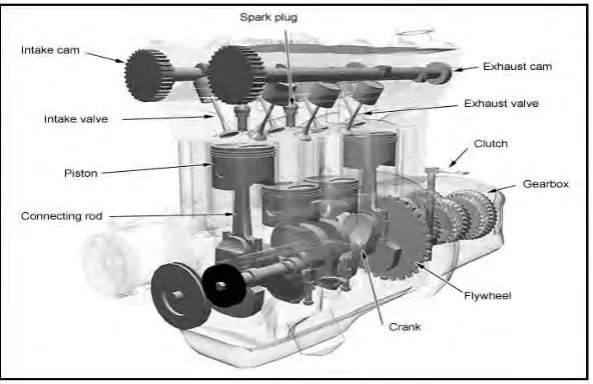
Figure 2-1 - Basic four stoke internal combustion ... 4
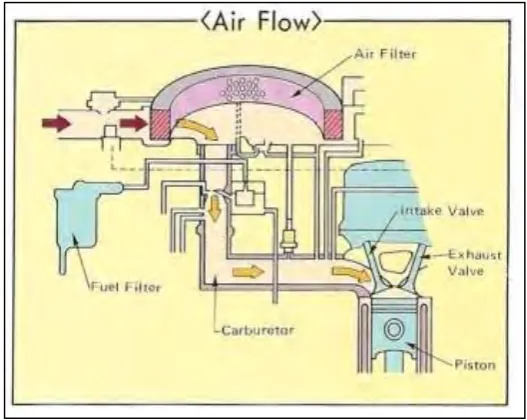
Figure 2-2 - Air Flow Intake System ... 7
Figure 2-3 - Drop-In Air Filter ... 8
Figure 2-4 - Open Pod Air Filter ... 9
Figure 2-5 - (Nik Rosli Abdullah, 2014) ... 11
Figure 2-6 - (Nik Rosli Abdullah, 2014) ... 12
Figure 2-7 - A paper filter (Clayton,pp 87) ... 13
Figure 2-8 - Cotton gauze filter (Clayton, pp 90) ... 14
Figure 2-9 - Foam Filter (Clayton, pp 87)... 14
Figure 2-10 - Operation of an oil bath filter (Heisler, pp 409) ... 15
Figure 2-11 - General illustration of the dynamometer ... 19
Figure 2-12 - Engine dynamometer ... 19
Figure 2-13 - Chassis dynamometer ... 20
CHAPTER 3 Figure 3-1 - Air Filter X ... 27
Figure 3-2 - Gas Exhaust Analyzer ... 32
Figure 3-3 - Example of data taken from Gas Exhaust Analyzer ... 32
Figure 3-4 - Chassis dynamometer ... 34
Figure 3-5 - DynoMax Pro software on laptop ... 35
CHAPTER 4 Figure 4-1 - Performance Air Filter ... 37
Figure 4-2 - New OEM Air Filter and Clogged Air Filter ... 37
Figure 4-3 - Chassis Dynamometer Machine ... 37
Figure 4-4 - Exhaust gas analyzer ... 38
Figure 4-5 - Graph of horsepower vs engine speed ... 40
Figure 4-6 - Graph of torque vs engine speed for clogged air filter ... 42
Figure 4-7 - Graph of torque and horsepower vs engine speed on clogged air filter . 43 Figure 4-8 - Graph of horsepower vs engine speed on new OEM air filter ... 45
xv
... 48
Figure 4-11 - Graph of horsepower vs engine speed on new OEM air filter ... 50
Figure 4-12 - Graph of torque vs engine speed on performance air filter... 52
Figure 4-13 - Graph of torque and horsepower vs engine speed on performance air filter ... 53
Figure 4-14 - Graph effect of types air filter on hydrocarbon ... 55
Figure 4-15 - Graph effect of types air filter on carbon dioxide ... 57
Figure 4-16 - Graph effect of types air filter on nitrogen oxides ... 58
Figure 4-17 - Graph of effect types air filter on carbon monoxide ... 60
Figure 4-18 - Graph of effect types air filter on air fuel ratio ... 62
xvi
LIST OF TABLE
CHAPTER 2
Table 2-1 - Gas and Effect ... 17
Table 2-2 - Dynamometer features ... 21
Table 2-3 - Dynamometer Type Advantages and Disadvantages ... 22
CHAPTER 3 Table 3-1 - Proton Perdana V6 specification ... 28
Table 3-2 - Example of test run data table ... 30
CHAPTER 4 Table 4-1 - Data for clogged air filter on horsepower ... 39
Table 4-2 - Data for clogged air filter on torque ... 41
Table 4-3 - Data new OEM air filter on horsepower ... 44
Table 4-4 - Data for new OEM air filter on torque ... 46
Table 4-5 - Data for performance air filter on horsepower ... 49
Table 4-6 - Data for performance air filter on torque ... 51
xvii
NOMENCLATURE
AFR - Air/fuel Ratio
HP - Horsepower
OEM - Original Equipment
PPM - Part Per Million
RPM - Revolution Per Minute
HC - Hydrocarbon
CO₂ - Dioxide
NO₂ - Nitrogen Oxide
1
CHAPTER 1
INTRODUCTION
1.0 Introduction
The air filter intake system is an appliance that is constituted of fibrous matter which removes solid particle and microorganisms from the air that prevent any matter from enter the engine cylinder. Air intake systemsare the first point in the process that makes the engine produces the power that moves the vehicle. One of the main parts an intake system in a vehicle's is air filters which affect a vehicle performance, horsepower, fuel economy and exhaust emission. In order to improve combustion efficiency to enhance engine performance, introducing more the air into the air fuel mixture is an effective way(Nik Rosli Abdullah, 2014). However, the bad condition of air filter like clogged air filter will make the engine performance less which reduce the fuel economy and acceleration(Kevin Norman, 2009). Then the capacity to filter function of air into the engine is reduced when air filter become clogged. A clean air filter will increase engine life, better acceleration, lower emission and improved engine performance. Not only does an air filter clean the air entering on engine but also prevent debris from entering on the engine, and causing damage.
2 allowing air circulation and cannot used for a long time. Different with a performance air filter, which are high performance and also more efficient in allowing maximum of air circulate in an engine which is that turbo engine used. The stock filter will offer good enough airflow and overall performance when it’s new and clean, but will become worse very quickly when it clogs up. Differs with performance air filter that is reusable through washing it and improve engine horsepower and also enhance fuel consumption.
1.1 Problem Statement
Generally, the NA engine uses the stock standard air filter that some research show the standard air filter cannot stay for a long time, also cannot be reused where waste money and less performance. While, performance air filter can offer better airflow and better filtration of the air that entering the engine. The performance aftermarket air filter of filtration can increase air intake pressure by high speed on the engine where increase performance engine, increase air flow due to increasing acceleration and increase fuel economy. This is because of the type of material used in developing a good air filter.
3
1.2 Objective
To study the effect of type air filters on the engine in terms of performance and exhaust emission by using chassis dynamometer and an exhaust gas analyser.
To compare the result between using clogged air filter, new OEM air filter and performance air filters.
1.3 Project Scope
4
CHAPTER 2
LITERATURE REVIEW
2.0 Naturally Aspirated Engine
[image:20.595.173.470.476.668.2]A naturally aspirated engine is an internal combustion engine where the air intake depends merely on atmospheric pressure and which does not depend on forced induction through a turbocharger or a supercharger. Heat engine can divide into two types it is external combustion engine and an internal combustion engine. In external combustion, a heat engine in which ignition occurs outside the chamber in which heat is converted to mechanical energy. There are two categories of external combustion, which is steam system and turbine. Secondly, internal combustion (IC) consists of two types, petrol engine and diesel engine. Internal combustion engine is a heat engine that change chemical energy that keep in a fuel into mechanical energy, usually made on a rotating output shaft.
5
2.1 Major System in Internal Combustion
Every car had several systems for internal combustion in order to carry out specific activity and perform each duty for running engine perfectly. There are list the major system that include in internal combustion engine:
i. Intake system ii. Exhaust system iii. Lubricating system iv. Electrical system
v. Cooling system vi. Fuel system vii. Hydraulic system viii. Drive Train system
2.2 Intake system
An intake system is a set of part that essentially let an internal combustion engine to breathe in, in the same way that the exhaust system allows it breathe out. The intake system designed to increase engine performance, whether for power and torque which is air admission system are created to replace the OEM air-box of the car.
6 are the factor engine can run smoothly or not also affect the performance of the engine. An engine needs a perfect mixture fuel and air to engine the cylinder for combustion. Every air need to enter intake air filter for dirt and any particle dust to be filtration. This catches foreign particles in the air are important to maintaining the performance engine and preventing dirt from entering the system and possibly damaging the engine (B.Payan Kumar Goud, 2014).
Mass Air Flow Sensor second main part of intake system that function to relay a signal to the engine control unit (ECU) and detects the amount of air drawn into the engine. Then, the proper amount of fuel to deliver to the engine was calculated by the signal.
Thirdly is throttle body. Throttle is a valve that directly controls the amount of air entering the engine. Simply it means throttle body is to control the intake air flow in an internal combustion engine to avoid engine from various problems. It also indirectly controlling the charge (fuel + air) burned on each cycle due to the fuel-injector or carburettor sustain a relatively constant fuel/air ratio.
2.3 Air Filter
A filter is a permeable membrane that gas or liquid is move through in order to split out the matter. Filters are important in automotive because they remove contaminants that get into mechanical and lubrication systems. Air is a type of pollution surround with all kinds of contaminant particles such as smog, fumes and others where these particle are usually not visible with the eye, but they are harmful to the engine and can lead to some damage of components (Albert K.Sunnu, 2013) . Without proper filtration, these contaminants would cause significant damage to mechanical components. It means air filter is a device to the appliance of fibrous material which removes particulates and prevents abrasive particulate matter from entering the engine cylinders.
7 placed outside the air intake. In an automotive intake system, the air filter always sits ahead of the throttle body and mass air flow sensor and for old vehicle its location at above carburetor or throttle body. The air filter in an air intake system permanently removes unknown particles such as dust and sludge from the intake air, thereby maintaining the performance of the engine and protecting it from damage. A spotless air channel results in enhanced gas mileage, better speeding up, expanded engine life, lower discharges and general enhanced motor execution. Not just does an air channel clean the air entering the engine, however, it additionally keeps flotsam and jetsam from entering the engine and bringing about harm. As an air channel gets to be filthy, the limit for it to channel the air going into the engine is diminished (De Amaral, 2013). Once the air filter become clogged it will affect engine to work properly like emission control systems of the car; reducing air flow and causing a too rich air-fuel mixture which can foul the spark plugs also drivability problem. Two types of air filter that are available in a market which are open pod air filter and drop in air filter.
8 Drop in air filter is easily to in term of replacement. This type is simple and can swap OEM air filter without modification necessary. Even the filtration not as good but for air intake is generally better than standard OEM air filter. The advantages of this air filter are less noisy, unusual appearance and more fuel efficient. However, disadvantage is it hinders the movement of wind, normal power or increased slightly for the drop in performance air filter.
Figure 2-3 - Drop-In Air Filter
2.3.2 Open Pod Air Filter