Self-structure and discrimination: implications for coping and wellbeing
Dora Fox Sharpe-Davidson
A thesis submitted for the degree of Doctor of Philosophy (Clinical Psychology) at The Australian National University
Declaration
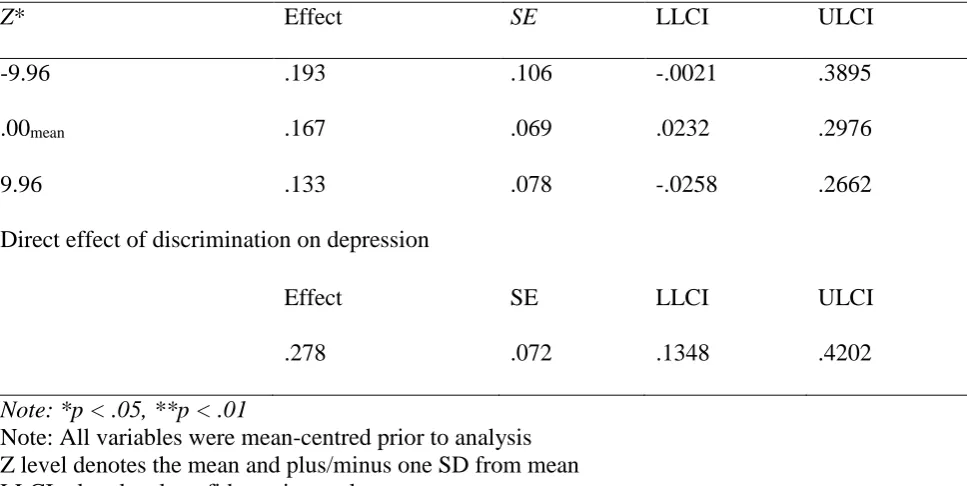
I declare that this thesis is the product of my own work carried out under the supervision of Professor Kate Reynolds and Dr Ken Mavor. Where other authors were involved in the work I declare that I have clearly stated my contribution. I affirm that this thesis is in accordance with The Australian National University Guidelines for higher degree research.
____________________________ Dora Sharpe-Davidson
Abstract
Substantial research demonstrates the negative effects of discrimination on the psychological wellbeing of stigmatised groups. While the ultimate goal should be to reduce occurrences of discrimination, in the interim it is important to identify resiliency factors which may reduce the impact of discrimination. Given that being the victim of discrimination is likely to be experienced as a form of stress, research from the stress and coping literature can be used to inform knowledge in this area. In line with this literature, we examine self-concept structure as a resiliency factor. Self-concept structure refers to how people organise their self-beliefs and incorporates: (a) the number of different identities they subscribe to, (b) the degree to which they see their identities as similar or different, (c) the coherency and stability of self-beliefs and (d) the degree to which people can recognise and articulate their self-self-beliefs. In order to explore the role of self-concept structure in the context of discrimination we employ three surveys and two experiments, with a total of 577 participants from multiple stigmatised groups including women, international students and same-sex attracted people. Using regression models we examine two forms of self-structure (self-complexity and self-clarity) and whether they mediate and/or moderate the relationships between discrimination, stress, depression and anxiety symptomology. The findings indicate that having clear, coherent and stable self-beliefs may reduce the negative impact of discrimination on depressive
Acknowledgements
There are many people I am grateful to for supporting me to complete my thesis. Firstly, I would like to the expertise of my co-supervisors Professor Kate Reynolds and Dr Ken Mavor. In particular, thank you to Ken for your inspiration and your feedback in helping to shape this project. Also, a big thank-you Kate for giving in and taking me on as a student even though you had lots of students and my research was outside your current main research projects! Additionally, I am grateful to Dr Lillian Smyth for her generous assistance and for the support of my other panel members, Dr Daniel Skorich and Professor Michael Kyrios.
Table of Contents
Declaration ...2
Abstract ...3
Acknowledgements ...4
Table of Contents ...5
List of Tables ...9
List of Figures ...11
CHAPTER 1: Defining the research problem and overview of the thesis……….14
Defining the research problem………14
Overview of the current thesis………16
CHAPTER 2: Discrimination and psychological wellbeing: An overview Context statement……….19
Discrimination………...19
Operationalising discrimination and wellbeing………20
Theoretical relationship between discrimination and wellbeing………..22
Empirical relationship between discrimination and wellbeing……….22
Mechanisms through which discrimination impacts wellbeing………24
Self-structure and the discrimination-wellbeing relationship………..28
CHAPTER 3: Self-structure: Implications for stress and wellbeing Clinical cognitive models of self-structure………..30
Rationale for selection of self-structure theories………..34
Self-complexity……….36
Self-clarity……….39
Current thesis and hypotheses regarding self-complexity and self-clarity………41
Theoretical framework for self-structure………...42
Clinical implications for self-structure………...45
Conclusions……….47
CHAPTER 4: The protective properties of self-concept structure in response to discrimination-related stress Context statement……….48
Abstract……….49
Study 1………..49
Method………..58
Results………...61
Discussion……….69
Conclusion……….72
CHAPTER 5: Acculturative stress and self-structure in international students Context statement……….73
Abstract……….73
Method………83
Results………85
General discussion………..100
Conclusion………..102
CHAPTER 6: Dealing with discrimination: Gender and self-structure Context statement……….104
Abstract……….104
Study 3………..105
Method……….110
Results………..114
Discussion……….118
Conclusion……….120
CHAPTER 7: Self-clarity and resiliency in Australian LGBTI Context statement……….124
Abstract……….124
Study 4………..125
Method………..132
Results………135
Discussion………..143
CHAPTER 8: Contribution and implications of research programme………148
Limitations………..156`
Future research………158
Practical implications of the current research……….160
Conclusions……….161
References………...163
List of Tables
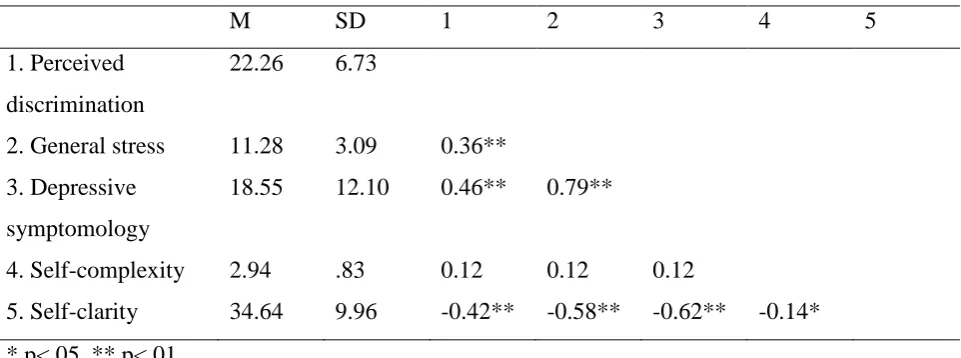
Table 1. Correlations between the variables of interest (study 1)……….62
Table 2. Summary of output from Hayes [6] Process macro (study 1) ………63
Table 3. Summary of output from Hayes’ [58] Process macro (study 1)……….……67
Table 4. Conditionalindirect effect of discrimination on depression at values of self-clarity (study 1)……….………68
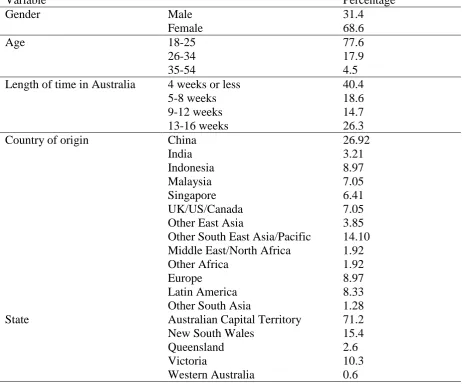
Table 5. Participant demographics (n = 155) at time 1 (study 2)………..86
Table 6. Correlations between variables of interest at time 1 (study 2)……….87
Table 7. Multiple-step mediation analyses on discrimination, acculturative stress, self-clarity, self-complexity and depression (study 2)……….89
Table 8. Multiple-step mediation analyses on discrimination, acculturative stress, self-clarity, self-complexity and anxiety for model 2 (Study 2)………..91
Table 9. Multiple-step mediation analysis for model 3 (study 2)………..93
Table 10. Multiple-step mediation analysis for model 4 (study 2)……….95
Table 11. Moderated mediation analysis for model 5 (study 2)……….97
Table 12. Moderated mediation analysis for model 6 (study 2)……….97
Table 13. Moderated mediation analysis for model 7(study 2)……….98
Table 14. Moderated mediation analysis for model 8 (study 2)………99
Table 15. Pre- and post-test differences in affect, self-esteem and collective-esteem (study 3)………..115
Table 17. Moderation effect of self-clarity on the relationship between
pre-affect and post-affect (study 3)………..117
Table 18. Moderation effect of self-complexity on the relationship between pre-affect and post-affect (study 3)………..118
Table 19. Model for effect of pre-affect on post-affect, mediated by self-clarity (study 3)………118
Table 20. Model for effect of pre-affect on post-affect, mediated by self-complexity (study 4)………119
Table 21. Mediation analyses for model 1 (study 4)………..136
Table 22. Moderation analyses for model 2 (study 4)………138
Table 23. Conditionaldirect and indirect effects of discrimination on depression at values of the moderator (study 4)………138
Table 24. Means and standard deviations for pre- and post-clarity scores (study 4)………139
Table 25. Results from factorial ANCOVA (study 4)……….142
Table 26. Summary of results from One-Way ANOVA (study 4)………..142
List of Figures
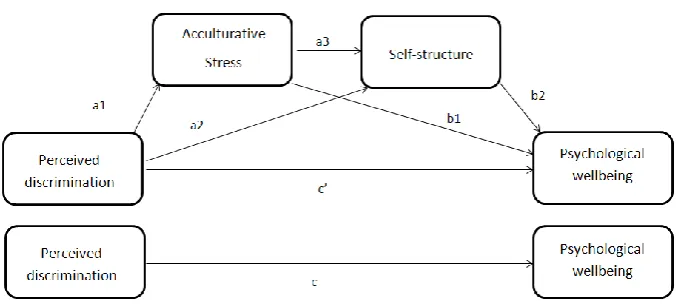
Fig 1. Mediation model depicting discrimination having a direct impact on psychological wellbeing and an indirect impact via stress (Introduction, Chapter 2)………..25
Fig. 2 Hypothetical self-concept for a person named Jane (Introduction, Chapter 3)…..45
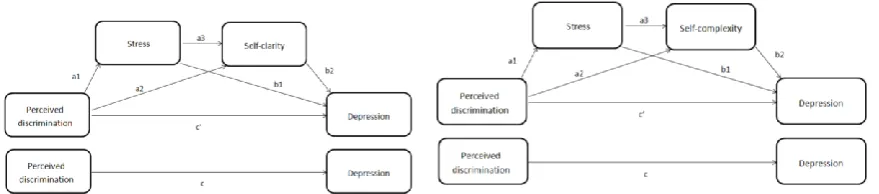
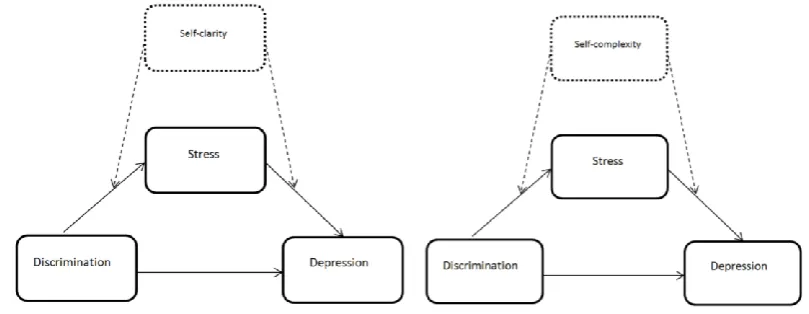
Fig 3. Model 1: Self-clarity mediates the relationships between discrimination-wellbeing and stress-wellbeing (study 1)……….57
Fig 4. Model 2: Self-complexity mediates the relationships between discrimination-wellbeing and stress-wellbeing (study 1)………..57
Fig. 5. Model 3: Self-clarity moderates the relationships between discrimination, stress and wellbeing (study 1)………..58
Fig. 6 Model 4: Self-complexity moderates the relationships between discrimination, stress and wellbeing (study 1)………58
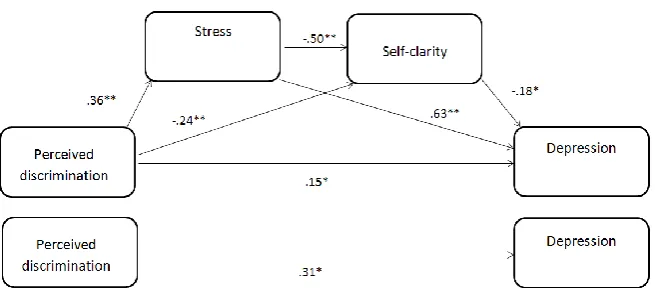
Fig 7. Model 1. Relationship between perceived discrimination and depression, mediated by stress and self-clarity (study 1)………64
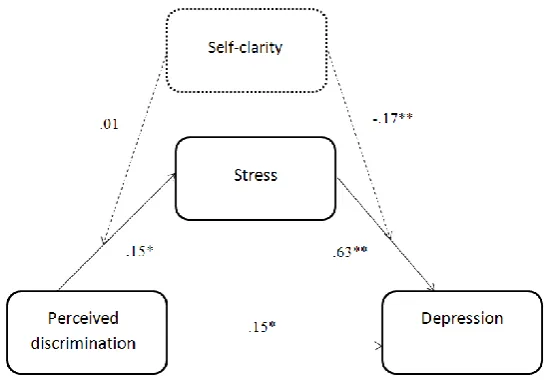
Fig 8. Model 3. Moderated mediation model with the relationship between discrimination and depression mediated by stress and self-clarity moderating the relationship between
discrimination and stress and between stress and depression (study 1)...67
Fig. 9. Slopes reflecting the interaction between stress and self-clarity on depression in Model 3 (study 1)………66
Fig 11. Moderated mediation model with the relationship between discrimination and depression mediated by acculturative stress and self-structure moderating the relationship between discrimination and acculturative stress and between acculturative stress and
depression (study 2)………82
Fig. 12. Model 1. Relationship between discrimination and depression mediated by
acculturative stress and self-clarity (study 2)………89
Fig. 13. Model 2. Relationship between discrimination and anxiety mediated by acculturative stress and self-clarity with standardised coefficients (study 2)……….91
Fig. 14. Model 3. Relationship between discrimination and depression mediated by
acculturative stress and self-complexity with standardised coefficients (study 2)………….93
Fig. 15. Model 4. Relationship between discrimination and anxiety mediated by acculturative stress and self-complexity using standardised coefficients (study 2)………95
Fig 16. Change in affect scores by condition (study 3)……….116
Fig 17. Model 1. Self-clarity mediates the relationship between discrimination and depression (study 4)………128
Fig. 18. Model 2. Self-clarity moderates the relationship between discrimination and
depression (study 4)………130
Fig 19. Model 1. Standardised scores for mediated model with the self-clarity mediating the relationship between discrimination and depression (study 4)……….136
Fig 20. Model 2. Standardised scores in moderated model with self-clarity moderating the relationship between discrimination and depression (study 4)……….137
CHAPTER 1: Defining the research problem and overview of the thesis
Defining the research problem
A strong body of research has established that perceived discrimination is associated with a host of adverse psychological wellbeing outcomes (e.g., Paradies, 2006; Pascoe & Smart Richman, 2009; Schmitt, Branscombe, Postmes, & Garcia, 2014; Williams, Neighbors, & Jackson, 2003). Furthermore, this relationship is likely to be causal, with longitudinal studies providing support for discrimination preceding a reduction in wellbeing, when initial wellbeing levels are controlled for (for a review, see Schmitt et al., 2014). With a view to reducing the impact of discrimination, the focus of research has shifted away from
demonstrating the prevalence of negative wellbeing indicators and towards the identification of mechanisms through which discrimination compromises wellbeing. Current conceptual models view discrimination as a form of stress which can have a direct impact on wellbeing and an indirect impact on wellbeing via increased perceptions of stress (Pascoe & Smart Richman, 2009; Schmitt et al., 2014). Although widely accepted, this model fails to account for individuals who report significant discrimination in the absence of psychological health problems (Major, Quinton, & McCoy, 2002; Schmitt & Branscombe, 2002).
experiences such as discrimination (Min, 1995). However, research demonstrates mixed support for existing moderating and mediating factors, suggesting that the current knowledge of resiliency factors is far from complete (Kaiser, Major, & McCoy, 2004; McCoy & Major, 2003; Miller, Rote, & Keith, 2013; Schmitt & Branscombe, 2002; Schmitt et al., 2014). The aim of the current research is to extend knowledge in this area by examining how self-structure may inform this relationship.
On this basis, we chose to examine the utility of two of the most empirically supported self-structure theories; self-complexity (Linville, 1987; McConnell, 2011) and self-clarity (Campbell et al., 1996). These theories have potential to inform our knowledge of the relationships between discrimination, stress and wellbeing. Specifically, we sought to examine whether self-complexity and self-clarity would moderate or mediate the effects of discrimination on psychological wellbeing. Importantly, integrating these bodies of work on (a) discrimination, stress and well-being and (b) self-structure as a moderator or mediator of the discrimination-wellbeing relationship provides a novel approach as previous literature has considered these two bodies of work separately. In this way, the current thesis makes a unique contribution to the current literature.
Overview of the current thesis
The current thesis begins with an examination of the relationship between
discrimination and psychological wellbeing in more detail, given its centrality to the current topic. We review the key meta-analyses from the last decade and the methodological
difficulties in this area. We conceptualise stress as a mechanism through which discrimination impacts wellbeing and review previously examined moderators and mediators of the
discrimination-wellbeing relationship. We identify the need for further investigation of relevant mediating and moderating factors and the potential utility of self-structure in this context.
Following this, we examine the construct of self-structure and a theoretical framework for understanding the mechanisms through which it informs the relationship between stress and wellbeing in chapter 3. We review the empirical literature on clarity and self-complexity (Constantino et al., 2006; Lee-Flynn et al., 2011; Linville, 1985, 1987;
We critique the evidence, strengths and limitations for both self-structure theories. Finally, we examine their application to the discrimination and wellbeing relationship.
Chapters 4 to 8 represent empirical chapters in which we explore the role of self-structure as a predictor of wellbeing in the context of discrimination and as a potential mediator or moderator in the relationships between perceived discrimination and wellbeing. Using three surveys and two experimental designs, we investigate these relationships across a total of 577 participants from multiple stigmatised populations, including international
In chapter six, we use an experimental design to examine whether self-structure has an impact on affective states in the context of gender discrimination. Mood is argued to be a more immediate wellbeing outcome relative to depression and a possible precursor to depression. However, we do not find support for our hypotheses and we explore possible reasons for this. Chapter 7 addresses some of the limitations of the research design of study 3 outlined in chapter 6 and also includes a values affirmation exercise which seeks to apply the findings from the earlier chapters to foster resiliency in a LGBTI population by increasing self-clarity. While no support was found for our prediction that the value affirmation exercise would increase self-clarity, we show that the value affirmation exercise reduced the impact of reading discriminatory articles on mood. This suggests that value affirmations may have utility for increasing resiliency in stigmatised populations. Additionally, this chapter also provides further evidence for self-clarity as a moderator of the relationship between discrimination and depression.
CHAPTER 2: Discrimination and psychological wellbeing: An overview The relationship between discrimination and psychological wellbeing has been extensively studied. While a review of this research in its entirety is beyond the scope of the current project, we provide an overview of the theoretical and empirical relationship between discrimination and wellbeing. Additionally, we operationalise psychological wellbeing as it will be used in the current project in recognition that there are multiple ways of measuring this construct in the literature. On the basis of scrutinising existing work it becomes clear there are gaps in current understandings of discrimination and psychological wellbeing which the current thesis attempts to address.
A core underexplored issue concerns the factors which may moderate this relationship as the negative impact of discrimination on wellbeing is not uniformly experienced. We review previously researched moderating factors, with a particular focus on individual difference variables given that these have the potential to inform resiliency building interventions with stigmatised populations. It is concluded that there is mixed support for current moderating factors and the case for more research in this area is outlined. We suggest that existing knowledge of moderating factors in the relationship between general life stress and psychological wellbeing may inform the relationship between discrimination and wellbeing, given that discrimination also represents a form of stress. We conclude by introducing the construct of self-structure as a variable that has been previously shown to moderate and mediate the relationship between stress and wellbeing and suggest its utility to contribute usefully to the relationship between discrimination and wellbeing.
Discrimination
can include being called names, being physically threatened or receiving poorer service on the basis of one’s group membership. Stigmatised group memberships reflect groups which are viewed as inferior to the majority or dominant groups in society and can include women (Schmitt, Branscombe, Kobrynowicz & Owen, 2002), African Americans (Branscombe, Schmitt & Harvey, 2009) and international students (Schmitt, Spears & Branscombe, 2003).While discrimination can also be experienced by members of valued social groups, research demonstrates that it is particularly harmful to stigmatised group members (Schmitt & Branscombe, 2002; Schmitt, Branscombe, & Postmes, 2003; Wang, Leu, & Shoda, 2011). One explanation for this phenomenon is that members of valued groups to attribute
discrimination to isolated events, while stigmatised group members may attribute
discrimination to pervasive social conditions that they are likely to re-experience in the future (Branscombe, Fernández, Gómez, & Cronin, 2012). Discrimination reflects a pattern of unfair treatment which tends to be justified by beliefs and is expressed via interactions between individuals and institutions, while intended to maintain the privileges of the dominant groups (Krieger, 1999). Discrimination can be based on a range of characteristics, including
sexuality, appearance, gender, religion, disability, age, culture, ethnicity and social class. It can be initiated both at the interpersonal level (i.e. an employer making a derogatory statement about an employee’s ethnicity) and by institutional policies, procedures or laws which serve to disadvantage a certain group (Krieger, 1999).
Operationalising discrimination and wellbeing
The measurement of discrimination in the literature has tended to focus on ‘perceived discrimination,’ which reflects subjective perceptions of discrimination, as distinct from objective encounters with discrimination (Paradies, 2006). In line with previous research, the current thesis focuses on ‘perceived discrimination,’ as it allows us to place the current
the self is perceived as a target of discrimination. This process is particularly relevant to the current topic which considers the relationship between perceived discrimination and self-concept structure.
In relation to the measurement of wellbeing in the current thesis we make two points. First, previous literature has considered the relationship between discrimination and both physical (body) and psychological (mind) wellbeing. As this is a clinical psychology thesis rather than a health psychology thesis, our focus is on the psychological rather than the physical health of those who experience discrimination. Secondly, the measurement of wellbeing in the psychological literature more commonly defines wellbeing as the absence of negative mental health indicators, for example depression and anxiety (Paradies, 2006a). However, this practice of using negative wellbeing indicators is inconsistent with broader conceptualisations of psychological wellbeing which consider it to comprise positive indicators such as life satisfaction and happiness (Dodge, Daly, Huyton, & Sanders, 2012). Existing reviews indicate that discrimination is more strongly associated with negative wellbeing indicators, which may explain why negative wellbeing outcomes are commonly used (Schmitt, Branscombe, Postmes, & Garcia, 2014). In line with previous
conceptualisations of wellbeing in the discrimination literature, the current thesis utilises the definition of wellbeing as the absence of mental health symptoms. There is also a distinction in the literature between longer term psychological wellbeing outcomes (i.e. depression and anxiety) which are often used in cross-sectional and longitudinal designs and immediate wellbeing outcomes (i.e. positive and negative affect) which are typically used in experimental designs. In line with this, we employ both long term and immediate
Theoretical relationship between discrimination and wellbeing
Conceptually, discrimination is typically viewed as a threat to the psychological wellbeing of stigmatised people on both an individual and a group level. Early theorising on the impact of discrimination on the individual was highlighted in the seminal work of
Goffman (1963). Specifically, Goffman used a symbolic interactionist approach to argue that since the self-concept is developed via social interactions, the self-concept of stigmatised individuals is threatened by the discriminatory views of others. Later theorists propose that discrimination threatens wellbeing because it compromises the fulfilment of basic human needs such as acceptance and belonging (Wirth & Williams, 2009). For example, a review by Baumeister and Leary (1995) documents a substantial body of evidence which shows that human behaviour, emotion and cognition are influenced by the motive to obtain acceptance and avoid rejection from others. This motive is theorised to have evolutionary implications, whereby developing cooperative social relationships and group memberships facilitates survival and reproduction. In this way, not achieving a sense of acceptance and belonging is held to have immediate effects on behaviour, emotion and cognition which over time will result in long-term negative effects on psychological wellbeing. This analysis is also consistent with social identity theory, in which individuals are theorised to be motivated to achieve positive distinctiveness and have their group identities accepted and valued within society (Tajfel & Turner, 1979). Given that discrimination towards certain group members is likely to undermine the need for group acceptance, perceived discrimination would be expected to harm psychological wellbeing.
Empirical relationship between discrimination and wellbeing
A considerable body of work has documented a negative relationship between
established across multiple stigmatised groups, including females (Barreto, Ryan, & Schmitt, 2009), diverse sexual orientations (Herek, Gillis, & Cogan, 1999), indigenous Australians (Paradies, Harris & Anderson, 2008) and international students (Schmitt, Spears, & Branscombe, 2003). This relationship is also supported by recent reviews on the
discrimination and wellbeing literature (Paradies, 2006; Pascoe & Smart Richman, 2009; Schmitt et al., 2014; Williams, Neighbors, & Jackson, 2003). One limitation of many studies in the field which is identified by most reviews, concerns the large number of correlational studies which limit our ability to infer causality. While it is often assumed that discrimination precedes a reduction in psychological wellbeing indicators, it may also be the case that certain negative psychological wellbeing indicators lead people to perceive discrimination. In
particular, depression and anxiety represent common indicators of wellbeing in the literature which are underpinned by cognitive biases which could lead individuals to attribute more ambiguous situations to discrimination (Beck, 1979). For example, depression is characterised by the presence of negative beliefs about the self, others and the world in general, while anxiety is related to the over-estimation of danger and the tendency to catastrophise (Brewin, 2006). It is plausible then that depression and anxiety can be associated with the attribution of more ambiguous events to discrimination. Being a member of an already stigmatised group could lead to the same outcome where there is an expectation of discrimination which affects the number and type of events perceived in this way.
distress or depressive symptoms during the early data waves and reports of discrimination one year later, indicating that poor mental health does not predict perceived discrimination
(Brown et al., 2000). Furthermore, in a meta-analysis of 21 longitudinal studies which controlled for wellbeing levels prior to discrimination, Schmitt et al. (2014) showed that the mean weighted effect size of relationship between discrimination and wellbeing was
significantly negative. Overall, these results provide support for the hypothesis that discrimination has a casual impact on psychological wellbeing.
Mechanisms through which discrimination impacts wellbeing
Research on discrimination and wellbeing has shifted from documenting the prevalence of the impact of discrimination on wellbeing, towards understanding the
mechanisms through which this process occurs. This shift reflects an important step towards reducing the prevalence of discrimination-related health problems. Discrimination is typically conceptualised as a form of psychological stress which impacts wellbeing through two
the 18 relationships identified, 89% showed that perceived discrimination was related to negative psychological stress responses, suggesting that perceived discrimination may trigger a negative stress response. Finally, a substantial body of work has investigated the stress-mental health pathway and there is evidence for the onset of depressive and anxiety symptoms following higher levels of significant stressors (for a review, see Brown & Harris, 1989; Hammen, 2005).
However, while the conceptual model described above is widely accepted, it fails to account for individuals who do not report compromised psychological wellbeing, despite significant discriminatory experiences (Major, Quinton, & McCoy, 2002; Schmitt & Branscombe, 2002). Previous research has attempted to account for individual variation in wellbeing outcomes through the identification of individual and contextual factors which moderate the relationship between discrimination and psychological wellbeing (Ellemers & Barreto, 2015; Pascoe & Smart Richman, 2009; Schmitt et al., 2014). Exploring this second pathway, a number of theoretical moderators have been identified and investigated and are generally categorised as either contextual moderators or personal moderators which describe individual difference factors.
Contextual moderators
While several contextual factors have been proposed to moderate the relationship between discrimination and wellbeing, research demonstrates the most consistent support for two factors which concern the degree to which a stigma is concealable and controllable. First, the degree to which a stigma is concealable (e.g. being gay) versus visible (e.g. being obese) is theorised to have differing implications for wellbeing in the context of discrimination. Specifically, the concealability of stigmas has been demonstrated to moderate the relationship between discrimination and psychological wellbeing, with concealable stigmas strengthening this relationship (Schmitt et al., 2014). One explanation for this is that because people with concealable stigmas have the choice of hiding their stigma from society, they may have less contact with stigmatised others, which is an important source of social support (Chaudoir, Earnshaw, & Andel, 2013). In the absence of such support it is more likely that being a target of discrimination will negatvely impact on well-beng.
Individual moderators/mediators
In contrast, evidence for individual level moderators and mediators is mixed, suggesting that our knowledge in this area is far from complete (Kaiser, Major, & McCoy, 2004; Miller, Rote, & Keith, 2013; Schmitt & Branscombe, 2002; Schmitt et al., 2014). Key individual factors which have been investigated include identification with a stigmatised group identity, social support and engagement coping strategies. First, having a strong connection to a stigmatised social or group identity may protect an individual from the stress of discrimination by preventing negative stereotypes from infiltrating an individual’s self-concept (Branscombe, Schmitt, & Harvey, 1999). Early research by Branscombe, Schmitt and Harvey (2009) supported a mediating effect of identification, whereby discrimination
increased identification with other stigmatised group members which in turn enhanced psychological welbeing. Social identity captures the social connections between two or more people where there is a sense of shared similarity and commonality (group membership) and distinctiveness from other collectivities. Such groups are important for self-definition (they have cogntive and emotional significance) and serve as a reference for self with respect to attitudes and behaviour (Tajfel, 1972; Turner, 1982, 1985). Group identification is the level of belonging or connection to a particular collectivity. However, reviews show that the majority of tests of group identification have produced non-significant results, although those that are significant show more support for identification having a protective effect on wellbeing rather than an exacerbating effect (e.g. Pascoe & Smart Richman, 2009; Schmitt et al., 2014).
Social support describes the emotional or instrumental assistance from friends, family and social networks (Branscombe et al., 2014) and has also been theorised to protect
wellbeing from the effects of discrimination (Clark, 2003). While multiple positive functions of social support have been proposed, in the context of stigma it may fulfil needs for
studies do not find a moderating effect of social support (e.g. Pascoe & Smart Richman, 2009; Schmitt et al., 2014). However, one explanation for this may be that a sense of shared identity is needed for individuals to recognise certain actions as social support and in this way social support in the absence of a shared identity may not be recognised as such (Haslam, Jetten, Postmes & Haslam, 2009).
Additionally, research using a stress and coping framework (e.g. Lazarus & Folkman, 1984) suggests that the strategies people use to cope with a stressor influence the degree to which their wellbeing is compromised by stress. Within the discrimination literature,
engagement coping has been suggested as a protective factor, while disengagement coping is generally considered to be less protective. Specifically, engagement coping refers to attempts to modify the stressor or one’s reactions to it, while disengagement describes efforts to avoid the stressor or avoid thinking about it (Varni, Miller, McCuin, & Solomon, 2012). However, a review of the literature by Schmitt et al. (2014) found that while engagement coping was associated with better wellbeing than disengagement coping, the evidence was weak at best (Schmitt et al., 2014).
Self-structure and the discrimination-wellbeing relationship
Given that discrimination represents a form of stress, the stress and wellbeing
literature may help progress current knowledge of resiliency factors which may moderate the effects of stress on psychological wellbeing and can therefore be applied to discrimination and wellbeing. In line with this goal, we explore concept structure (also known as
self-structure) as a potential moderator or mediator of the relationship between discrimination and wellbeing. Self-structure refers to how information about the self is organised within a
cognitive framework (McConnell, 2011) and to our knowledge it has not been examined within the context of discrimination.
We argue that since discrimination communicates negative information about the self and whether others respect and value or like the self, how self-knowledge is structured is likely to have implications for the development of psychopathology in response to
discrimination-related stress. Specifically, how the self-concept is structured is theorised to influence the accessibility of beliefs (Brewin, 2006). Negative and maladaptive self-schemas developed early in life remain dormant until activated by significant stressors which facilitate access to them and make an individual vulnerable to the development of
psychopathology (Beck, 1967). Additionally, particular forms of self-structure may also facilitate better coping to discriminatory events, such as having a large number of distinct self-representations. In line with this theoretical approach, the implications of self-structure will be described in detail in Chapter 3.
In conclusion, discrimination represents a significant risk factor which may undermine the wellbeing of stigmatised group members. Current research has shifted towards
We seek to contribute to this area by examining self-structure in Chapter 3 as a potential moderator or mediator of the relationship between discrimination and wellbeing.
CHAPTER 3: Self-structure: implications for stress and wellbeing
Recent theorising about the concept suggests that in addition to containing self-content (i.e. information perceived to be true about oneself), the self-concept also has a structural component (Feinstein, Davila, & Yoneda, 2012; McConnell & Strain, 2007). This component, known as self-structure, refers to the organisation of knowledge about the self (i.e. self-representations) in memory within a cognitive framework (McConnell, 2011). Importantly, self-structure is theorised to influence accessibility to self-content and as such, has implications for how individuals respond to stress (Brewin, 2006; Showers, Zeigler–Hill, & Limke, 2006). Clinical cognitive theories of self-structure propose that vulnerable
individuals hold negative and maladaptive self-representations, which may be triggered by stressful life events and contribute to the onset of depression and anxiety (e.g. Beck, 1967; Brewin, 2006; Dozois & Dobson, 2001). However, social cognitive theories of self-structure suggest that certain elements of self-structure may also moderate individual affective
responses to stress in non-clinical populations (e.g. McConnell, 2011; Showers et al., 2006). In this chapter, we investigate the theoretical and empirical basis for self-structure and how it might inform the relationship between discrimination related stress and psychological
wellbeing. We review evidence from the stress and coping literature which highlights self-structure as a factor which contributes to individual resiliency by moderating or mediating the relationship between general life stress and wellbeing and we highlight how these findings may also be applicable to the discrimination-wellbeing relationship. Finally, we link self-structure to a theoretical framework by Brewin (2006) which provides a basis for
Clinical cognitive models of self-structure
Current understandings of self-structure have been largely informed by clinical
cognitive models (e.g. Bower, 1981; Bower, 1987; Brewin, 2006; Ingram, 1984). Common to these theories is the assumption that individuals have multiple self-representations and that these are represented as nodes within a larger associative network in memory. Similar to other information stored in memory, only a small subset of self-representations is accessible in working memory at any one time and these are held to influence affect, cognition and behaviour (Andersen & Chen, 2002). Nodes that contain stored information can be activated by both external cues (e.g. context) and internal cues (e.g. mood, thoughts), while the
activation of a particular node is thought to activate related nodes. These models account for the development of psychopathology via the activation of maladaptive and negative self-representations in memory. Nodes are activated through stressful life events and negative mood states, with negative self-representations taking precedence over more positive and adaptive representations (e.g. Brewin, 2006).
140 undergraduate students, McConnell et al. (2009) found that on average participants identified 4.23 self-representations (which included what could be classified as social identities that are tied to a sense of similarity to others; Turner & Onorato, 1999), while less than 3% identified only one representation. While there are clear limits to
self-descriptions as a measure of self-representations (e.g. introspective access, self-presentation), other researchers have found it to measure self-knowledge that is predictive of behaviour (Linville, 1985; Showers, 1992).
Second, the idea that self-structure influences the accessibility of self-representations is also consistent with theoretical and empirical research. For example, according to an associative network account, the accessibility of one item should also increase the accessibility of self-representations which share related features while reducing the accessibility of items which do not share related features. This describes the encoding specificity principle (Tulving, 1979), in which the activation of one item also increases the accessibility of items which share overlapping features. This principle is a core component of theories of depression, whereby negative mood is argued to trigger the retrieval of negative memories, which in turn increase negative mood (e.g. Ingram, 1984). It is also consistent with the idea of functional antagonism as described in self-categorization theory (SCT; Turner, Hogg, Oakes, Reicher, & Wetherell, 1987). This principle states that as the salience of one self-categorisation or self-representation increases, the salience of others will tend to subside. For example, if an individual becomes more aware of their unique goals or qualities, the salience of their personal identity will be amplified, while the salience of their social identity is reduced.
Empirical evidence that structure influences the accessibility of
returned several weeks later for what appeared to be an unrelated, three-part study. In the first and third parts of the study, participants were given identical lexical decision tasks in which the target words matched the attributes in the self-concept task. In between the lexical
decision tasks, participants wrote for five minutes about one of their self-aspects. Importantly, participants were relatively faster with lexical judgments about attributes that were related to the self-aspect they wrote about, while they were not faster for attributes associated with other self-aspects.
Limitations of clinical cognitive models
Clinical cognitive models that draw on self-structure theory and research provide a useful framework for understanding the development, maintenance and treatment of psychopathology, particularly depression, although a smaller body of work has examined their role in anxiety disorders (e.g. Stopa, Brown, Luke, & Hirsch, 2010). However, if self-structure does contribute to the accessibility of self-representations, this may also have implications for the wellbeing of non-clinical populations who sit outside the scope of clinically focused models. In line with this, the focus of clinical cognitive models is on the dysfunctional self-concept (i.e. one that is characterised by negative and maladaptive beliefs). However, it is possible that certain types of self-structure may in fact facilitate positive wellbeing and coping in the face of negative mood and stress. Finally, cognitive models assume the presence of clearly articulated self-representations (that can be recognised and communicated), yet many models of psychopathology, including social anxiety, borderline personality disorder and narcissistic personality disorder, describe an unclear sense of self as a central feature (Fuchs, 2007; Morf & Rhodewalt, 2001; Stopa, 2009)
articulated self-representations is addressed by self-clarity which is a social psychological self-structure theory that provides a link between unclear self-representations and
psychological wellbeing (Campbell et al., 1996). On this basis, the current thesis aims to further current knowledge by the use of a social-cognitive model.
Rationale for selection of self-structure theories
Several social theories have attempted to address the self-structure elements which may contribute to resiliency and coping, with clear distinctions arising between theories. One distinction in the literature relates to theories of pluralism and theories of unity (Campbell, Assanand, & Paula, 2003). Pluralism theories suggest that having multiple distinct self-representations is important because it allows individuals to contain the impact of a negative stressor to the relevant cognitive structure. In contrast, unity proponents suggest that having integrated cognitive structures is important because it provides individuals with a sense of continuity and self-integrity which are essential to positive wellbeing. Importantly, the relationships between unity and pluralism theories indicate that they are conceptually distinct (i.e. high unity does not relate to low pluralism) and therefore both theories may hold benefits for stress management (Bigler, Neimeyer, & Brown, 2001; Campbell et al., 1996; Constantino et al., 2006). On this basis, the current thesis employs a representative model from each of the unity and pluralism ‘camps’ to advance knowledge of the relationships between
discrimination, stress and wellbeing.
Consequently, an individual’s self-concept can become influenced by social identity in more collective situations via a process known as depersonalisation, whereby the self is perceived as similar to and interchangeable with other in-group members (Tajfel, 1978). Given that stressful life events often occur within a social context, proponents of SCT have demonstrated the benefits of identifying with multiple group identities for wellbeing in the context of major life transitions (Yer et al., 2009; Jetten et al., 2015).
One critique of this line of research is that it typically only asks participants to rate the degree to which they identify with prescribed self-representations (i.e. social group
memberships) (McConnell, 2011). In contrast, other research in the self-structure literature allows participants to spontaneously generate their own self-representations (e.g. McConnell, 2011; Linville, 1985; Showers & Kling, 1996). Analyses of the self-representations generated by participants show that people typically report a mix of personal and socially oriented self-representations (McConnell, 2011). Additionally, studies using this methodology also demonstrate wellbeing benefits of self-structures containing a mix of personal and socially oriented self-representations (e.g. McConnell, 2011; Linville, 1985; Showers & Kling, 1996).
Self-complexity
Self-complexity theory, developed by Linville (1985) considers self-structure to be composed of two components; the number of selves (termed ‘self-aspects’) a person has and the degree to which they perceive their self-aspects to be similar or overlapping with each other. For example, an individual with low overlap might see themselves as caring and warm when they are a mother, but ambitious and cold when they are an employee. In contrast, an individual with highly overlapping self-aspects might use similar attributes to describe themselves as a mother and an employee. High self-complexity reflects a specific
combination of these two components, whereby an individual has a high number of distinct self-aspects. Alternatively an individual with low self-complexity has similar self-aspects and fewer of them. Differences in self-complexity are theorised to have implications for
wellbeing, with high self-complexity individuals coping better with stressful life events than those who are low in self-complexity (Linville, 1985, 1987).
in a particular event. In this way, individuals with lower self-complexity are expected to have more difficulty adapting to stressful life events as the impact on their self is significantly larger than for those with high self-complexity. Linville (1985; 1987) also developed the buffering hypothesis, whereby high self-complexity is predicted to buffer the effects of general life stress on wellbeing, by allowing parts of a person’s self-concept to remain largely unaffected by stressful life events (Linville, 1987). In this way, self-complexity is considered a pluralism theory because it describes the benefits of a divided self-concept. Specifically, pluralism proponents argue that having distinct self-representations allows for the impact of stressful life events to be contained to the relevant self-representation. (Campbell et al., 2003).
Measurement of self-complexity
The assessment of self-complexity developed by Linville (1985) employed a trait-sorting task, in which participants are asked to sort a set of cards with traits into meaningful groups which describe different selves. Card traits are both positive and negative and
Empirical evidence for self-complexity
Using the H statistic, Linville (1985) demonstrated support for her affective extremity hypothesis, in her initial study whereby individuals with lower self-complexity reported more negative affect following a manipulated failure experience, relative to high self-complexity participants. In a second study, Linville also showed that low self-complexity participants demonstrated greater variability in their emotions than their high complexity counterparts (Linville, 1985). In a separate study, Linville also found support for her buffering hypothesis, whereby individuals with high self-complexity reported fewer depression symptoms and higher self-esteem in response to stressful life events over a two week period than individuals with low complexity (Linville, 1987).
While a large number of studies have been conducted on self-complexity following Linville’s original studies, support for the original findings has been mixed. This conclusion is reflected in a review by Rafaeli-Mor and Steinberg (2002) in which twelve studies
demonstrated support for the stress buffering hypothesis, while seven found that high self-complexity was associated with more negative wellbeing outcomes. The stress-exacerbating effect of self-complexity also has informed the development of an alternative hypothesis in which self-complexity is predicted to promote poorer wellbeing because the process of
prospective design fits with the theoretical underpinning of self-complexity in which the benefits of self-complexity are theorised to be occur in response to a significant life stressor.
It has also been suggested that the H statistic does not accurately measure self-complexity (Luo & Watkins, 2008). Support for this was demonstrated by Rafaeli-Mor and Steinberg (2002) who showed that in some cases the number of aspects a participant reported correlated negatively with complexity, when in fact it should be positively related to self-complexity. Other authors (e.g. Constantino et al., 2006) have dealt with this issue by
examining the two components of self-complexity (i.e. number of self-aspects and the degree to which they overlap) and their relationships to wellbeing separately, however this signals a move away from Linville’s original conception of self-complexity. Despite these issues, several authors continue to utilise the H-statistic in self-complexity research (e.g. McConnell et al., 2009) and have found it to be a valid measure of self-complexity. In line with this, the current thesis employs the H statistic as a measure of self-complexity.
Self-clarity
This construct describes the extent to which self-content is represented consistently across self-aspects, is clearly and confidently defined and is stable across time (Campbell et al., 1996). clarity is measured using a twelve item self-report scale, known as the Self-Concept Clarity Scale. Previous studies show that scores from this scale are internally
consistent, test-retest reliability measures suggest it is reliable over time and there is evidence of its convergent and divergent validity (Wu, Watkins, & Hattie, 2010).
self-beliefs (Sedikides, 1993). In contrast, individuals with low self-esteem are more likely to seek both positive knowledge (i.e. reflecting an enhancement bias) and negative
self-knowledge (i.e. reflecting a bias to be consistent), thereby resulting in unclear, unstable and incoherent beliefs (DeMarree & Rios, 2014). However, beyond its relationship to self-esteem, self-clarity has emerged as a predictor of positive psychological wellbeing outcomes in its own right (Guadagno & Burger, 2007), including less negative affect, fewer depressive symptoms, anxiety symptoms, less perceived stress and higher life satisfaction (Bigler et al., 2001; Campbell et al., 1996; Constantino et al., 2006; Lee-Flynn et al., 2011; Ritchie et al., 2011). Prospective and longitudinal designs also provide evidence that self-clarity has a direct effect on depression (Constantino et al., 2006; Lee-Flynn et al., 2011). Furthermore, in one study, self-clarity was shown to mediate the relationship between general life stress and life satisfaction, with stress reducing self-clarity and self-clarity directly enhancing life
satisfaction (Ritchie et al., 2011). While additional studies are needed to replicate this finding, it suggests that stress may have a negative impact on the self-system, while self-clarity may have the potential to directly increase psychological wellbeing.
In contrast to self-complexity, the mechanisms through which self-clarity impacts wellbeing are less clearly articulated and this likely reflects its development from the esteem literature as opposed to a unique construct. However, as a unity approach to self-structure, the importance of a coherent self-system is assumed to be essential to psychological functioning (Campbell et al., 2003). Theoretically, having a coherent sense of self is proposed to contribute to psychological functioning in several ways. For example, individuals with high self-clarity are held to cope better with stress because they are more resistant to modifying their self-beliefs (Swan & Ely, 1984), because they are more likely to refer to the self to make decisions (Setterlund & Niedenthal, 1993) and because they have access to clear and
The importance of the coherent self is also reflected in clinical conceptualisations of psychopathology which describe an incoherent or unstable self as pathological. For example, in Erikson’s highly influential stages of psychosocial development, he makes a case for knowing oneself and experiencing continuity of self as critical for psychological wellbeing (Erikson, 1968). This concept is also reflected in more recent conceptualisations of
psychopathology in the Diagnostic and Statistical Manual of Mental Disorders (5th ed.,
DSM-5; American Psychiatric Association, 2013). For example, in borderline personality disorder, a key symptom is identity disturbance which describes an unstable self-image or sense of self. Additionally, under the umbrella term of dissociative disorders, the DSM-5 describes a
condition by which having multiple distinctly different identities causes clinical distress and impairment to functioning.
Current thesis and hypotheses regarding self-complexity and self-clarity
Firstly, given the evidence relating to self-complexity as a buffer against general life stress, the current project sought to test whether self-complexity would moderate the effects of discrimination as a stressor on wellbeing. Consistent with Linville’s original theory, we predicted that self-complexity would weaken the relationship between discrimination and wellbeing. Additionally, we sought to test whether self-complexity would mediate the relationship between discrimination and wellbeing. While the existing literature does not test this proposal, we draw on evidence from the broader self-structure literature which suggests that stress can have a direct impact on self-structure, leading to poorer wellbeing (e.g. Lee-Flynn, Pomaki, DeLongis, Biesanz, & Puterman, 2011; Ritchie, Sedikides, Wildschut, Arndt, & Gidron, 2011).
Secondly, we also seek to test self-clarity as a mediator and a moderator of the relationship between discrimination and psychological wellbeing. With regard to the
that self-clarity may be a mechanism through which the effects of stress on psychological wellbeing are reduced. We seek to test whether this mediation relationship still holds for discrimination-related stress. Additionally, we seek to test self-clarity as a moderator. While two previous studies have tested self-clarity as a moderator of the relationship between stress and wellbeing and have shown no support for moderation (Constantino et al., 2006; Lee-Flynn et al., 2011), we argue that it is important to examine self-clarity as a moderator
because perceived discrimination may have a different impact than other general negative life stressors examined by previous authors. In line with this argument, Wei, Ku, Russell,
Mallinckrodt, and Liao (2008) propose that discrimination is distinct from general stressors because it denies access to resources needed for adapting to other stressors, because it can be initiated by both individuals and institutional policy and finally because the combination of individual and institutional discrimination may reflect a more potent form of stress than isolated incidences of general life stress. Existing evidence also demonstrates support for the hypothesis that perceived discrimination uniquely predicts negative outcomes which are distinct from perceived general stress (Dion, Dion, & Pak, 1992; Pieterse & Carter, 2007).
Theoretical framework for self-structure
2000). Similar to Beck’s cognitive theory of depression (Beck, 1967), Brewin (2006) theorises that vulnerability to psychological disorders is influenced by negative
self-representations which are activated by stressful events and serve to maintain negative mood. However, Brewin’s theory extends Beck’s by articulating the ways in which these
representations are retrieved in memory. He proposes that similarly to other items in memory only a small subset of self-representations is active in working memory at any one time (Andersen & Chen, 2002; Markus & Wurf, 1987). In this way self-representations are held to compete for memory retrieval via the same mechanisms that other items compete, including the degree to which the item is rehearsed, the external or internal cues present at recall and the distinctiveness and valance of the item. Additionally, Brewin suggests that the self-structure has important implications for understanding how cognitive behavioural therapy (CBT) works, as the frontline psychological treatment for multiple forms of psychopathology (Butler, Chapman, Forman, & Beck, 2006). Specifically, he theorises that effective CBT is based on developing positive self-representations and increasing their activation while also decreasing the activation of negative self-representations. In this way, Brewin’s account is particularly attractive in that it has clinical implications which may be applied to working with stigmatised populations.
Of particular relevance to the current thesis is the degree to which a self-representation is rehearsed. Specifically, self-representations which are accessed more frequently (i.e.
when external sources are likely to negatively impact wellbeing. For example, several studies have demonstrated that self-clarity is negatively related to the internalisation of societal standards of attractiveness (Cahill & Mussap, 2007; Humphreys & Paxton, 2004; Vartanian & Dey, 2013), which may in turn predict body image and eating disturbances (Shroff &
Thompson, 2006). Similarly, low self-clarity is associated with self-stigma, whereby an individual endorse negative societal views towards themselves and their group, which is also related to depression (Feinstein et al., 2012).
Furthermore, the degree to which external or internal cues present at recall influence retrieval is also of relevance to the current thesis. First, the external context or internal thoughts and feelings are theorised to influence the accessibility of self-representations, with self-representations relevant to the external context or internal cues being more accessible, while non-relevant self-representations become less accessible (Brewin, 2006; Turner et al., 1987). Second, the accessibility of items is also theorised to be influenced by the accessibility of other items which share related features. This describes the encoding specificity principle (Tulving, 1979), in which the activation of one item also increases the accessibility of items which share overlapping features.
A visual depiction of the current framework is provided in Figure 1, which shows a hypothetical self-concept for a person named Jane. Jane has seven self-representations as indicated by the boxes on the second line which mainly depict social identities (e.g. mother, wife). The bottom line describes the attributes that Jane sees herself as embodying in each of the self-representations (i.e. as a mother she is kind and passive). The boxes in grey depict self-representations and attributes which share self-content, while the boxes in white represent distinct self-representations and attributes which do not share content. The dotted line
between the boxes ‘lesbian’ and ‘unsure’ depict a self-representation which is less clearly articulated than the other self-representations which have clear black lines.
Fig. 2 Hypothetical self-concept for a person named Jane
Clinical implications for self-structure
After determining the elements of self-structure which are beneficial to wellbeing and coping, an additional goal of the current thesis is to determine whether these forms of self-structure may be increased and the mechanisms through which this could be achieved. If this is the case, it is possible these mechanisms could be developed as part of a broader
individuals who participated in a values affirmation exercise reported higher self-clarity scores after the exercise, relative to the control group who wrote about an unimportant value. Value affirmation exercises involve identifying relevant values and writing about a top value and in this way they may also function to enhance self-clarity. Value affirmations are
theorised to facilitate a more global sense of integrity, whereby one’s perceived self-worth is no longer anchored to the self-representation which is related to the source of stress (Steele, 1988). Within the broader value affirmation literature, this process has been shown to buffer the effects of multiple forms of stress on wellbeing, however this has not been
examined in relation to discrimination based stress (Creswell et al., 2007; Creswell et al., 2005; Koole, Smeets, Van Knippenberg, & Dijksterhuis, 1999; Sherman et al., 2009). On this basis, we seek to examine the utility of value affirmation as a means to increase self-clarity and reduce the impact of discrimination related stress on wellbeing.
Conclusions
The current project seeks to contribute to the empirical research regarding the relationship between discrimination and psychological wellbeing in several ways. First, we seek to address whether more adaptive forms of self-structure identified in the general stress literature (i.e. high self-clarity and self-complexity) also are related to better psychological wellbeing under conditions of discrimination related stress. Second, we aim to contribute to the broader literature on the moderating and mediating factors of the relationship between discrimination and psychological wellbeing by examining the impact of self-structure on this relationship. Third, we seek to contribute to knowledge regarding clinical interventions to increase resiliency and reduce psychological problems in stigmatised populations by
CHAPTER 4: The protective properties of self-concept structure in response to discrimination-related stress
Authors: Sharpe-Davidson, D., Mavor, K.I., Smyth, L., Skorich, D. & Reynolds, K.
Status: Submitted for publication, December 2015
Journal: Self & Identity
Context statement
In chapter 3, it was suggested that self-structure may moderate or mediate the relationship between discrimination and psychological wellbeing. The following chapter investigates two key elements of self-structure, namely self-clarity and self-complexity. The effects of self-structure are investigated using a multiple mediation model and a moderated mediation model. We measure general perceptions of discrimination as this is the first study of its kind and it was unclear up until this point in the literature if self-structure would be implicated in the relationship between discrimination and wellbeing. The aim of this chapter is to explore the relationships between discrimination, stress, depression and self-structure and to ascertain whether self-structure might contribute to our understanding of individual resiliency in stigmatised populations.
Candidate’s contribution
The following study was conducted by the candidate under the supervision of
for the results section and Mavor, Reynolds, Skorich and Smyth contributed feedback to improve the final draft.
Abstract
As research continues to show the impact of discrimination on health, it is important to understand the factors which might mediate or moderate this relationship, in order to inform clinical interventions for stigmatised populations. As discrimination can be understood as a form of stress, resiliency research from the general stress literature may inform our
understanding of these factors. Both the moderating and mediating effects of self-concept structure have been observed in the relationship between general life stress and wellbeing; however their utility for discrimination-related stress is relatively unexplored. We sought to test whether self-concept structure would either moderate or mediate the relationships between discrimination, stress and depression. An internet sample (n = 221) was used to assess the relationships between discrimination, general stress, depression and self-structure variables (self-complexity, self-clarity). Regression analyses showed that self-clarity
moderated the relationship between stress and depression, with higher self-clarity being associated with fewer depression symptoms. Self-clarity also mediated the relationship
between stress and depression and the relationship between discrimination and depression. No mediating or moderating effects for self-complexity were observed. Implications for
therapeutic interventions will be discussed, including possible links to Acceptance and Commitment Therapy.
Keywords: discrimination, stress, self-organisation, self-concept, depression
Introduction
physically threatened or receiving poorer service) on the basis of one’s group membership (Williams & Mohammed, 2009). However, although some studies demonstrate the negative effects of discrimination on wellbeing (e.g. (e.g. Paradies, 2006; Schmitt, Branscombe, et al., 2003; Williams et al., 2003), others show that perceiving oneself as a target of discrimination does not uniformly reduce psychological wellbeing (e.g. Major et al., 2002; Schmitt & Branscombe, 2002).
Recent reviews attempt to reconcile these contradictory findings through the
identification of individual and contextual factors which moderate the relationship between discrimination and psychological wellbeing (e.g. Ellemers & Barreto, 2015; Pascoe & Smart Richman, 2009; Schmitt, Branscombe, Postmes, & Garcia, 2014). We seek to advance this line of research by examining self-concept structure as an individual factor that may either moderate or mediate the relationships between perceived discrimination and psychological wellbeing. To our knowledge, self-concept structure has not been investigated in this context.
More generally, in the stress and coping literature, self-concept structure has been shown to both moderate and mediate the relationship between general life stress and
psychological wellbeing (e.g. Brown & McConnell, 2009; Lee-Flynn et al., 2011; Ritchie et al., 2011). Empirical evidence supports stress as a mechanism through which perceived discrimination may compromise psychological wellbeing, with discrimination triggering perceptions of stress, leading to poor psychological wellbeing, such as increased depressive and anxiety symptomology (e.g. Mewes et al., 2015; Pascoe & Smart Richman, 2009). In addition to having a direct negative effect on psychological wellbeing, perceived stress may also affect psychological wellbeing by reducing an individual’s self-control resources, leading to participation in unhealthy behaviours such as alcohol and substance abuse (Bennett, Wolin, Robinson, Fowler, & Edwards, 2005; Martin, Tuch, & Roman, 2003).
psychological wellbeing. To do this we will draw on theories of self-concept structure, stress and wellbeing.
Self-concept structure
Self-concept structure refers to how information about the self is represented within a cognitive framework in memory (McConnell, 2011). This is distinct from self-concept content which refers to one’s self-beliefs and self-evaluations (Campbell et al., 2003). While the self-concept was historically conceptualised as a singular entity, it is now widely viewed as a collection of multiple selves which are also known as “self-aspects” (e.g. Linville, 1985; Linville, 1987; McConnell, 2011; McConnell, Brown, & Shoda, 2013). Self-structure theories consider individual differences in self-concept structure, including the number of self-aspects people report and the degree to which they share content (Linville, 1985, 1987; McConnell, 2011), the integration or compartmentalisation of positive and negative self-content across self-aspects (Showers, 1992; Showers & Kling, 1996) and the degree to which self-aspects are clearly articulated, internally consistent and stable across time (Campbell, 1990).
Similarly to self-concept content, the structure of the self-concept is also theorised to have implications for psychological adaptation to stress. However, self-structure theories are divided on which structural features are most important for psychological wellbeing.
Contemporary theories and research on self-concept structure can be broadly categorised into either theories of pluralism or theories of unity (Campbell et al., 2003). Pluralism proponents maintain that individuals with a high degree of self-concept pluralism exhibit multiple specialised self-aspects which enable them to respond quickly and flexibly to stressful circumstances. In contrast, unity proponents argue that individuals with a high degree of self-concept unity fare better across stressful circumstances because of their coherent and
offer benefits for wellbeing (Bigler et al., 2001; Campbell et al., 2003; Constantino et al., 2006). Given there is empirical evidence for both theories, we will examine the utility of theories from both sides and their potential to inform our understanding of the relationships between discrimination, stress and wellbeing.
Self-clarity
Self-clarity is a unity driven theory which describes the extent to which self-content is is consistent across self-aspects, clearly and confidently defined and temporally stable
(Campbell, 1990). The unity approach to self-concept structure assumes the importance of a coherent self-system in maintaining wellbeing and this is also emphasised within clinical psychology. For example, Erikson’s stages of psychosocial development argue that knowing oneself and experiencing continuity of self is essential to psychological wellbeing (Erikson, 1968). The unity approach also represents the antithesis of identity disturbance which characterises borderline personality disorder (Diagnostic and Statistical Manual 5th edition; American Psychiatric Association [APA], 2013).
represents a form of stress, we predict that self-clarity will mediate the relationship between discrimination and wellbeing.
Self-clarity has also been proposed as a moderator of the relationship between stress and wellbeing, with high self-clarity buffering the effects of stress on wellbeing. Lee-Flynn et al. (2011) suggest that individuals with high self-clarity may respond more effectively to stressors perceived as threatening and uncontrollable because they have stable and clear aspects of the self to refer to. In contrast, individuals with low self-clarity lack effective and consistent information on how to behave which may be associated with more extreme reactions to stress (Kernis et al., 2000). It has also been suggested that self-clarity may influence wellbeing through the internalisation of negative self-views. For example,
![Table 2 Summary of output from Hayes’ [6] Process macro](https://thumb-us.123doks.com/thumbv2/123dok_us/8034254.219648/65.595.82.474.136.737/table-summary-output-hayes-process-macro.webp)
![Table 3 Summary of output from Hayes’ [58] Process macro](https://thumb-us.123doks.com/thumbv2/123dok_us/8034254.219648/67.595.91.472.242.454/table-summary-output-hayes-process-macro.webp)