A STUDY TO ASSESS THE EFFECTIVENESS OF STRUCTURED
TEACHING PROGRAMME ON KNOWLEDGE REGARDING
ANTIPSYCHOTIC DRUGS AMONG CARE GIVERS OF PSYCHIATRIC
PATIENTS IN A TERTIARY CARE SETTING, COIMBATORE
G. IDAH THEBORAL
A Dissertation submitted to TheTamil Nadu Dr.M.G.R. Medical University,
Chennai, in partial fulfillment for the requirement of the degree of
Master of Science in Nursing
Branch V Mental Health Nursing
A STUDY TO ASSESS THE EFFECTIVENESS OF STRUCTURED
TEACHING PROGRAMME ON KNOWLEDGE REGARDING
ANTIPSYCHOTIC DRUGS AMONG CARE GIVERS OF PSYCHIATRIC
PATIENTS IN A TERTIARY CARE SETTING, COIMBATORE
Proposal presentation on:11.05.2017
Approved by the dissertation committee on: 16.08.2017
Signature of the Clinical ………. Specialty Guide Prof. Meera Saravanan., M.Sc (N).,
Professor,
Department of Mental Health Nursing, PSG College of Nursing.
Peelamedu,
Coimbatore-641 004.
Signature of the Medical Guide ………. Dr.Raghuthaman.G, MD, DPM, DNB., Professor,
Head of theDepartment of Psychiatry, PSG Hospitals,
Peelamedu,
Coimbatore-641 004.
Signature of the Principal ………. Prof. Dr. A. Jayasudha, M.Sc (N), Ph.D., Principal
PSG College of Nursing
Peelamedu
Coimbatore-641004.
CERTIFICATE
Certified that “A STUDY TO ASSESS THE EFFECTIVENESS OF STRUCTUREDTEACHING PROGRAMME ON KNOWLEDGE REGARDING ANTIPSYCHOTIC DRUGS AMONG CARE GIVERS OF PSYCHIATRIC PATIENTS IN A TERTIARY CARE SETTING, COIMBATORE” the bonafied work of IDAH THEBORAL .G, PSG College of Nursing, Coimbatore, and submitted in partial fulfillment for the requirement of the degree of Master of Science in Nursing toThe Tamil Nadu Dr. M.G.R Medical University, Chennai under the register number 301630701.
College Seal
Signature of the Principal ………. Prof. Dr. A. Jayasudha, M.Sc (N), Ph.D., Principal
PSG College of Nursing
Peelamedu
ACKNOWLEDGEMENT
„„I will praise you, lord, with all my heart.,
I will tell of all your wonders‟‟
My heartfelt praises to God almighty for his enriched blessing and abundant grace and mercy which encircled me through every step of this work and convert this work into reality and without whom it would not have been possible. I think him exceedingly for giving the required courage from the beginning till the end.
I have been fortunate in having received the cooperation and guidance of many peoples in completing this research. I consider it a privilege to acknowledge here the help and guidance extended by each one of them.
I wish my sincere thanks to our Managing Trustee for all the facilities which has been provided to us in the institution.
With deep sense of gratitude, I express my sincere thanks to Dr. A. Jayasudha, Principal and Dr. Malarvizhi.G,Vice Principal PSG College of Nursing. The words of appreciation and encouraging support given by them kindled my spirit and enthusiasm to go ahead and to accomplish this study successfully.
I wish to extend my whole hearted thanks to my subject guide Prof. Meera Saravanan, HOD of Mental Health Nursing, PSG College of Nursing. Thank you madam for your motherly attitude, dexterous and expert guidance, valuable suggestions, affectionate enduring support, timely motivation and enthusiastic words which kept me working towards the completion of this successful dissertation. I feel extremely privileged to have her as my guide.
I would like to thank Mr.Baskaran M.,M.Sc (N), Associate Professor, Mental Health Nursingfor his valuable guidance,encouragement and instructions.
I would like to thank Mrs. Maheswari T. M.Sc (N), Assisstant Professor, Mental Health Nursing for her valuable guidance,encouragement and instructions.
I extend my sincere thanks to Mrs. Anuradha, Nursing superintendent, of PSG Hospitals I would like to express my sincere, respectful and wholehearted gratitude to Faculty of Mental Health Nursing department for their unstinting support and guidance during the writing of this project.
I proudly and honestly express my grateful thanks to The Entire Faculty of PSG College of Nursing for their valuable feedback and suggestions for the study.
I submit my extreme gratefulness to my Statistician Dr. Karthikeyan, Assistant professor for his excellent advice and support in analyzing the data of my study and giving immense correction and clarification.
I express my sincere gratitude to the Ethical committee of the PSG Institution for their valuable suggestion and approval for the study being conducted.
I express my sincere thanks to all library staffs for rendering all facilities and support during the time of this study.
I also acknowledge and appreciate the work of Mr. Mohan, cool blue, Coimbatore for his patience and cooperation in typing and timely help throughout my study.
I take this opportunity to express my thanks to All My Classmates who have been a source of encouragement and support during the course of this work.
Above all, I desire to place record My Husband Mr.Issac Arputharaj.P, my brother in law Mr.Ranjith. P and my loveable daughters for their constant support, inspiration, prayers, encouragement and help in every walk of my life which I considered so precious.
LIST OF CONTENTS
CHAPTER NO.
TITLE PAGE
NO. ABSTRACT
CHAPTER I INTRODUCTION 1
1.1 Background of the study 1
1.2 Need for the study 4
1.3 Statement of the problem 7
1.4 Objectives 7
1.5 Assumption 7
1.6 Hypothesis 8
1.7 Delimitation 8
1.8 Operational definition 8
1.9 Projected outcome 9
1.10 Conceptual framework 9
CHAPTER II REVIEW OF LITERATURE 12
2.1 Studies related to knowledge of family members on antipsychotic drug therapy
12
2.2 Studies related side effects of antipsychotic drug therapy 14 2. 3 Studies related to impottance of education regarding
antipsychotic drug therapy
16
CHAPTER III MATERIALS AND METHODS 19
3.1 Research approach and design 19
3.2 Variables of the study 19
3.3 Setting of the study 20
3.4 Population and sampling 20
3.5 Instruments and tools for data collection 21
3.6 Ethical approval 25
CHAPTER IV DATA ANALYSIS AND INTERPRETATION 27 4.1 Frequency and percentage distribution of Demographic
variables among care givers of patients on antipsychotic drugs
28
4.2 Frequency and percentage distribution of demographic profile of patients on antipsychotic drugs
30
4.3 Assessment of over all knowledge of caregivers about antipsychotic drugs
33
4.4 Assessment of knowledge of care givers about antipsychotic drugs area wise
34
4.5 Comparison of pre test and post knowledge score of caregivers regarding antipsychotic drugs
36
4.6 Frequency and percentage distribution of level of knowledge care givers about antipsychotic drugs
37
4.6.1 Frequency and percentage distribution of level of knowledge of care givers about action of antipsychotic drugs.
37
4.6.2 Frequency and percentage distribution of level of knowledge of care givers about side effects and its management of
antipsychotic drugs.
38
4.6.3 Family member role of antipsychotic drugs 40 4.7 Association between pretest knowledge regarding antipsychotic
drugs among care givers with selected demographic variables
41
CHAPTER V RESULTS AND DISCUSSION 43
5.1 Demographic variables among care givers of patients on antipsychotic drugs
43
5.2 Demographic profile of the patients on antipsychotic drugs 43 5.3 Assessment of overall knowledge of care givers about
antipsychotic drugs
44
5.4 Assessment of knowledge of care givers about antipsychotic drugs area wise
5.5 Comparison of pre test and post knowledge score of caregivers regarding antipsychotic drugs
45
5.6 Level of knowledge of care givers about side effects and its management of antipsychotic drugs.
46
5.7 Association between pretest knowledge regarding antipsychotic drugs among care givers with selected demographic variables
47
CHAPTER VI SUMMARY AND CONCLUSION 48
6.1 Major findings of the study 48
6.2 Conclusion 50
6.3 Nursing implications 50
6.4 Limitations 52
6.5 Suggestion 52
6.6 Recommendations for future study 52
BIBLIOGRAPHY 53
LIST OF TABLES
TABLE NO. TITLE PAGE NO.
4.1 Frequency and percentage distribution of Demographic variables among care givers of patients on antipsychotic drugs
28
4.2 Demographic profile of patients on antipsychotic drugs 30 4.3 Assessment of over all knowledge of caregivers about
antipsychotic drugs
33
4.4 Assessment of knowledge of care givers about antipsychotic drugs area wise
34
4.5 Comparison of pre-and post-test knowledge score of caregivers regarding antipsychotic drugs.
36
4.6 Frequency and percentage distribution of level of knowledge care givers about antipsychotic drugs
37
4.6.1 Frequency and percentage distribution of level of knowledge of care givers about action antipsychotic drugs.
37
4.6.2 Frequency and percentage distribution of level of knowledge of care givers about side effects and its management of antipsychotic drugs.
38
4.6.3 Family member role of antipsychotic drugs 40 4.7 Association between pretest knowledge regarding
antipsychotic drugs among care givers with selected demographic variables
LIST OF FIGURES
FIGURE NO.
TITLE PAGE NO.
1.1 Conceptual framework: modified Imogene King’s goal attainment theory
11
3.5.3 Schematic representation of data collection procedure
24
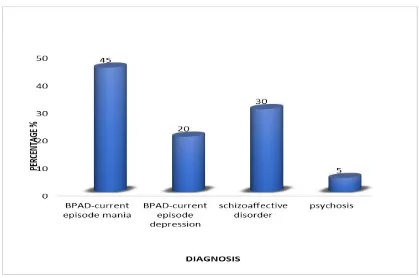
4.2.1 Cylindrical diagram shows the diagnosis of patients onantipsychotic drugs
31
4.2.2 Cone diagram shows the duration of illness
32
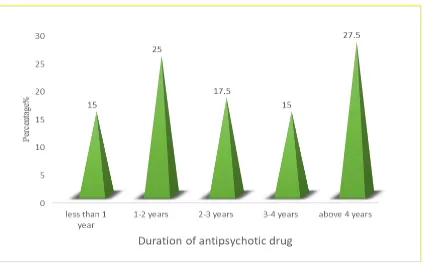
4.2.3 Pyramidal diagram shows the Duration of antipsychotic drug32
4.3 Clustered column diagram shows the overall knowledge of care givers about antipsychotic drugs
35
LIST OF ANNEXURES
ANNEXURE NO.
TITLE PAGE NO
I Permission letter 57
II Institutional human ethics committee letter 59
III Consent form 61
IV Tool 66
V Structured teaching programme 82
ABSTRACT
A study to assess the effectiveness of structured teaching programme on knowledge regarding
Antipsychotic drugs among care givers of psychiatric patients in a tertiary care setting, Coimbatore
Background of the study: Antipsychotic medications are powerful, mind-altering drugs that are
prescribed to control psychotic symptoms. Right attitude of caregivers towards antipsychotic drugs is very important. It is also necessary to have a proper understanding of the expected side effects of atypical antipsychotics especially for the caregivers to develop positive attitude, as they are the people who should encourage and ensure that the patient is taking medications. Thus the relapse of the condition can be prevented, which will eventually improve the prognosis.
Methods: The research design adopted was pre-experimental design, one group pre-test- post-test
design.Totally 40 care givers were selected by purposive sampling method.The study was conducted in psychiatric ward and new psychiatric ward in PSG Hospital.The data was collected through self-administered knowledge questionnaire.Subsquently structured teaching programme regarding antipsychotic drugs was given for 15-20 minutes.The post test was conducted by the same knowledge questionnaire after 7 days. The data collected was analysed by using descriptive statistics. Paired ‘t’ test and chi-square analysis.
Result of the study: During pretest, none of them had adequate level of knowledge. 3 (7.5%) had
moderately adequate knowledge and 37 (92.5%) had inadequate knowledge about antipsychotic drugs. After the structured teaching programme, the knowledge level of care givers after 7days of post test showed that 35 (87.5%) had adequate knowledge, and 5 (12.5%) had moderately adequate knowledge. There was significant difference found between before and after structured teaching programme. The over all pre test mean with SD was (11.90±2.06) and post test mean with SD was (25.30±1.16). Thus the result showed that structured teaching programme regarding antipsychotic drug was highly effective. There was a marked difference in knowledge score of care givers (t =35.8) after the structured teaching programme on antipsychotic drugs.
Conclusion: The study concludes that the structured teaching programme was effective in enchancing the
knowledge of care givers about antipsychotic drugs.
CHAPTER-I
INTRODUCTION
1.1 Back ground of the study
“Medicines are nothing in themselves, if not properly used, but the very hands of the Gods, if employed with reason and prudence”
- (Herophilus) Mental illness is defined as any disturbance of emotional equilibrium, as manifested in maladaptive behavior and impaired functioning, caused by genetic, physical, chemical, biologic, psychologic, or social and cultural factors. Mental illness is a major problem all over the world. Studies from developed countries have reported a prevalence rate of 15 per 1000 population. In India, the reported rate is 73 per 1000 population. Organic psychosis (0.4), schizophrenia (2.7) and affective disorders (12.3) contribute to a rate of 15.4 for psychosis. The prevalence rate for mental retardation (6.9), epilepsy (4.4), neurotic disorders (20.7), alcohol/drug addiction (6.9) and miscellaneous group (3.9) were estimated. Different treatment modalities such as drugs, electro-convulsive therapy, counselling, psycho-surgery and psychotherapy are used in the treatment of mental illness. (Ganguli H C., 2000)
Antipsychotics are those psychotropic drugs, which are used in the treatment of psychosis and psychotic symptoms. The original drugs used to treat psychosis are called “typical or conventional” neuroleptic drugs. Since their discovery in the 1950s, these drugs revolutionized the treatment of schizophrenia and other psychotic disorders. With the discovery of the newer antipsychotic drugs (called “atypical” antipsychotic drugs) in the 1990s, the treatment of these debilitating brain disorders has been revolutionized. While there are advantages and disadvantages to both classes of these antipsychotic drugs, the atypical offer a different pharmacological mechanism of action, an expanded spectrum of therapeutic efficacy, and a more acceptable side effects profile. Thus, they are considered first-line therapy for the treatment of persons with psychosis. (Shives L R., 1994)
doses recommended for persons with intellectual disability should start at half or one-quarter of doses recommended for normal individuals. Dose adjustments should occur about every week unless there are reasons to more rapidly increase the dose for typical starting doses and maximum doses.
Providing care for a member of the family with mental illness is a progressively overwhelming experience for caregivers. They are the people who are always with the patients and their role is very important. Many of the caregivers are ignorant about the importance of medication, side effects and the continuity of follow-up. They are unprepared to care for their relatives who are just discharged from hospital or who need a long-term treatment and supervised care. Relatives are usually involved in caring for the patients who are receiving antipsychotic drugs. Thus, it is essential that all caregivers understand the medication, side effects, precautions and the caregiver‟s role. Investigators have proved that educating caregivers on the importance of compliance to antipsychotic drugs, side effects and their role in caring for mentally ill patients can reduce relapse. Caregiver‟s stress, burden and sense of being overwhelmed by the care giving roles have been linked to patient‟s persistent behavioral problems and caregiver‟s perceived or actual inability to handle them. Hence their role is important in caring for their mentally ill relatives. (Sussman N., 2000)
Tardive dyskinesia can emerge as a physical withdrawal symptom, and may either gradually abate during the withdrawal phase, or become persistent. Withdrawal-related psychosis from antipsychotic is called "super sensitivity psychosis", and is attributed to increased number and sensitivity of brain dopamine receptors, due to blockade of dopaminergic receptors by the antipsychotic, which often leads to exacerbated symptoms in the absence of neuroleptic medication. (Michael Gelder., 2011)
Psycho-educational interventions with caregivers of patients with schizophrenia have a well-established literature support. Behavioral family management is effective in reducing relapses and readmission rates. Family interventions reduce burden of care, improve patient‟s functioning in social areas and are cost effective. Research has proved the effects of family intervention in managing treatment resistant patients in the community setting. (Sheela S, 2014)
The nurse is in a pivotal position to educate the patient and the family caregivers about medication. This includes teaching complex information to the patient, so that it is understood, discussed and accepted. The caregivers and patient should be well informed about each drug, be well educated about the expected benefits and potential risks, and know what to do and whom to contact if there is a question or problem. Medication education is the key to effective and safe use of antipsychotic drugs, patient collaboration in the treatment plan and patient adherence with drug treatment regimens. (Jeffrey S Jones., 2013)
Health education is one of the most cost-effective interventions. Many diseases could be prevented with a little medical intervention if people were adequately informed about it and encouraged to take necessary precautions in time. Recognizing this truth, the WHO Constitution has stated that the extension to all people of the benefits of medical, psychological and related knowledge is essential to the fullest attainment of health. (Sheela S., 2014)
1.2 Need for the study
Antipsychotic medications are powerful, mind-altering drugs that are prescribed to control psychotic symptoms. A person with psychiatric disorder is unable to differentiate between the reality and his thoughts. The two major symptoms of psychosis are hallucinations and delusions. A delusion is a fixed false belief. Hallucinations are sensory perceptions that are not real, e.g., hearing voices, seeing things, feeling bugs on your skin, when no such sensory stimuli are present. (Richard., 2005)
Antipsychotic drugs are chemicals that affect the brain and nervous system alter feelings, emotions and consciousness in various ways and are frequently used therapeutically in the practice of psychiatry to treat a broad range of mental and emotional illness. In the mid-1950s about 500,000 patients were hospitalized in the United States for mental illness. By 1973 that number had fallen to 250,000 largely due to the use of psychoactive drugs. Psychopharmacology is the “Gold Standard” in the treatment of neuro-biological illness. However, drug therapy is not viewed as a quick fix or miracle pill. It is used to treat specific symptoms of neuro-biological illnesses with significant effectiveness. Side effects and adverse reactions of drug therapy require expertise and sound clinical judgement. (Reedy M V., 1998)
The prevalence of usage of antipsychotic drugs in the USA was reported at 13.9% among individuals aged 40 years and older. Global estimates for 2001 showed that worldwide, approximately 10 million people suffered from dementia; 8 million are with Parkinsonism, 6 million suffering with Alzheimer‟s disease and overall 24.3 million people are suffering with neuropsychiatric disorders and 60.1% of all people with dementia lived in developing countries. (Richard E., 2005)
antipsychotic medications depends upon the reason for using the drugs. Patients with schizophrenia or manic depressive illness may require long-term treatment, i.e., years to decades. (Richard E., 2005)
Patients who develop psychosis as a part of a health problem may tolerate dose reduction in four to six weeks following the resumption of normal behavior. The value of medication treatment should be re-evaluated every three to six months by comparing the benefit to the side effects and cost. Medications are continued when the patient exhibits improvement based on self-reports, family reports, or behavioral monitoring.
Many of the caregivers are ignorant about the importance of medication, side effects and the continuity of follow-up. They are unprepared to care for their relatives who are just discharged from hospital or who need a long-term treatment and supervised care. Relatives are usually involved in caring for the patients who are receiving antipsychotic drugs. Thus, it is essential that all caregivers understand the medication, side effects, precautions and the caregiver‟s role. Investigators have proved that educating caregivers on the importance of compliance to antipsychotic drugs, side effects and their role in caring for mentally ill patients can reduce relapse. Caregiver‟s stress, burden and sense of being overwhelmed by the care giving roles have been linked to patient‟s persistent behavioral problems and caregiver‟s perceived or actual inability to handle them. Hence their role is important in caring for their mentally ill relatives. (Lauriello J., 2014)
Schizophrenic patients have high rate of noncompliance to antipsychotic drugs. Along with the patient‟s disbelief of having an illness combined with some adverse effects of antipsychotic drugs has a high rate of noncompliance. To reduce the relapse rate of schizophrenia, strict adherence to maintenance therapy is essential. Nevertheless, the estimated adherence rate taking oral antipsychotics for the patients with schizophrenia is less than 60%. (Painuly N., 2004)
health care utilization of those patients was increased including inpatient costs, mean number of visits to emergency room, number of claims to outpatient department and the total number of prescription claims. (Offord S. et al., 2014)
Among the clients with psychotic disorders, nonadherence to pharmacological treatment is a known issue. It is also very important to adopt a “holistic approach” which implies the cooperation of patients, family and the community in the management. The experiences of patients with antipsychotic drugs describe that the drugs are helpful to them. Consequently, it also has negative experiences with the side effects. The need for more information and advice is required for solving the practical challenges. “Need for dialogue,” needing someone to talk and express the difficulties and emotions is needed. Not having an opportunity to talk and express precipitates the pressure of emotions, thoughts and agitations. (Lorem GF et al, 2014)
Right attitude of caregivers towards antipsychotic drugs is very important. Greater understanding of concepts also leads to positive attitudes. Very little research has been conducted on the knowledge of antipsychotic drugs among caregivers. In continuation with the research has been done in this area, the purpose of this study was to determine the knowledge of the caregivers on antipsychotic drugs. It is also necessary to have a proper understanding of the expected side effects of antipsychotics especially for the caregivers to develop positive attitude, as they are the people who should encourage and ensure that the patient is taking medications. Thus, the relapse of the condition can be prevented, which will eventually improve the prognosis. (Somerville J et al., 2001)
There is a misconception that people with mental illness are violent, which contributes to the significance of mental illness. The majority of people with mental illness are not violent, and the majority of violent acts are conducted by person who is not mentally ill. (Gaebel W, Baumann A, et al., 2010)
Knowledge of attitudes and their functioning is of interest both theoretically and practically. No theory of social behavior can be complete without incorporation of attitude functioning, and it is doubtful that complex social behavior can be predicted without knowledge of attitude. (Potdar N, Shinde M, et al., 2014).
Due to short hospital stay and the involvement of the family in the care of the patient, the contact of the patient with healthcare personnel is minimal. It is the family which stays with the patients for 24 hours of the day helping the patient meet his/her needs. So, it is very important that caregivers receive sufficient knowledge as to how to care for their relatives who are on antipsychotic drugs. (Shinde M & Anjum S, et al, 2015)
1.3 Statement of the problem
A Study to Assess the Effectiveness of Structured Teaching Programme on Knowledge regarding Antipsychotic drugs among care givers of Psychiatric Patients in a tertiary care setting, Coimbatore.
1.4 Objectives
1. To assess the knowledge of care givers regarding Anti psychotics drugs.
2. To evaluate the effectiveness of structured teaching programme on knowledge regarding antipsychotic drugs.
3. To find out the association between pretest knowledge score with selected socio demographical variables.
1.5 Assumptions
1.6 Hypothesis
H1: There is a significant difference between pretest knowledge score with the posttest
knowledge score of care givers about antipsychotics.
H2: There will be a significant association between pre-test scores of caregivers with selected
demographic variables. 1.7 Delimitation
The study is delimited to
the caregivers of psychiatric patients receiving antipsychotics drugs. psychiatric wards only
care givers staying for a minimum of 15 days. 1.8 Operational definitions
1. Knowledge: In this study, it refers to the awareness of caregivers of psychiatric patients regarding psychotropic drugs which is assessed by using structured questionnaire.
2. Effectiveness: In this study, it refers to the outcome of structured teaching programme in term of improving knowledge regarding psychotropic drugs among care givers of psychiatric patient as measured by structured questionnaire.
3. Structured Teaching Programme: In this study, it refers to systematically planned and organized teaching activities regarding antipsychotic drugs action, side effects and its management and its family member role with the intention of improving the knowledge on psychotic drugs among the care givers of psychiatric patient.
4. Caregivers: In this study, it refers to a care taker in the family who is constantly involved parent, spouse, son or daughter in the care of psychiatric patients.
1.9 Projected outcome:
Care givers of psychiatric patients will gain adequate knowledge regarding antipsychotic drugs after giving structured teaching programme.
1.10 Conceptual Framework / Model Used
Imogene King‟s model was used to assess the effectiveness of structured teaching programme on knowledge regarding Antipsychotics among care givers of psychiatric patients in a Tertiary care setting, Coimbatore.
Conceptual frame work refers to interrelated concepts or abstractions that are assembled together in some rational scheme by virtue of their relevance to a common theme. (Polit and Hungler, 1999)
A conceptual framework or a model which is made up of concepts which are the mental images of the phenomenon. These concepts are linked together to express the relationship. A model is used to denote the symbolic representation of the concepts.
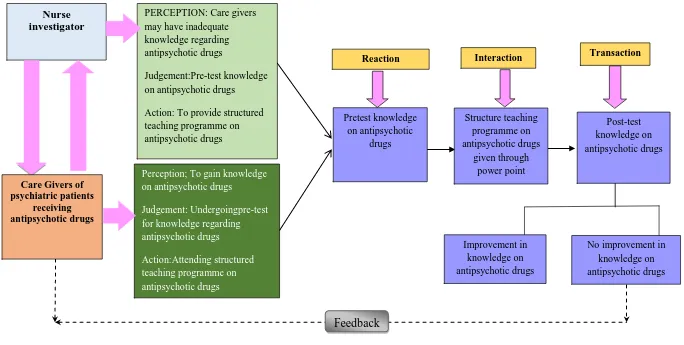
The conceptual frame work used in this study is Imogene King‟s goal attainment theory. It is based on the personal and interpersonal system including interaction, perception, communication, transaction, stress, growth and development, time and space.
According to this theory, two people meet in some situation, perceive each other, make judgement about the other, take some mental action and react to each one of these. Since these behaviours cannot be directly observed, one can make inferences about same. The next step in the process is interaction, which can be directly observed. The last step in this model is transaction, which is dependent upon the achievement of the goal.
The six major concepts of the phenomenon are described as follows; 1. Perception
Perception is a process in which data obtained through senses and from memory are organised, interpreted and transformed, which are related to past experience, concept of self and educational background. Perception is universal, yet highly subjective and unique to each person. It is not observable, but it can be inferred. Here the investigator‟s perception that the care givers may have inadequate knowledge regarding on antipsychotic drugs.
2. Judgement
The investigator decided to do a pretest knowledge on antipsychotic drugs among caregivers of psychiatric patients, and to reinforce their knowledge on antipsychotic drugs. 3. Action
Action refers to mental or physical activity to achieve the goal what the individual perceive. The investigators action in the study was to plan for structing teaching programme for the caregivers on antipsychotic drugs and the caregivers‟ action is willing to attend and improve their knowledge.
4. Reaction
In this study, the investigator‟s and caregiver‟s reaction are setting mutual goal. The investigator planned to assess the knowledge regarding antipsychotic drugs using pretest questionnaire.
5. Interaction
Refers to the verbal and nonverbal behaviour of individual and the environment between two or more individual. In this study, the investigator interacts with the caregivers by structured teaching programme.
6. Transaction
Fig 1.1 Conceptual Framework based on modified Imogene King’s Goal Attainment Theory (1981)
Nurse investigator
Care Givers of psychiatric patients
receiving antipsychotic drugs
PERCEPTION: Care givers may have inadequate knowledge regarding antipsychotic drugs
Judgement:Pre-test knowledge on antipsychotic drugs Action: To provide structured teaching programme on antipsychotic drugs
Perception; To gain knowledge on antipsychotic drugs
Judgement: Undergoingpre-test for knowledge regarding antipsychotic drugs
Action:Attending structured teaching programme on antipsychotic drugs
Reaction Interaction Transaction
Pretest knowledge on antipsychotic drugs Structure teaching programme on antipsychotic drugs given through power point Post-test knowledge on antipsychotic drugs Improvement in knowledge on antipsychotic drugs
No improvement in knowledge on antipsychotic drugs
CHAPTER-II
REVIEW OF LITERATURE
Review of Literature is a key step in research process. Nursing research may be considered as continuing process in which knowledge gained from earlier studies is an integral part of research in general. In review of literature a researcher analyses existing knowledge before dealing in to a new study and when making judgment about application of new knowledge in nursing practice. The literature review is an extensive, systematic, and critical review of the most important published scholarly literature on particular topic.
The review of literature for this study was done in the following headings.
2.1. Studies related to knowledge of family members on antipsychotic drug therapy. 2.2. Studies related to the side effects of antipsychotic drug therapy.
2.3. Studies related to importance of structured teaching programme regarding antipsychotic drug therapy.
2.1. Studies related to knowledge of family members on antipsychotic therapy
A quasi experimental study was conducted to assess the effectiveness of informational booklet for caregivers regarding care of patient receiving antipsychotic drugs in Mansik Arogya sala, Mental Hospital, Gwalior. 30 samples were selected by using convenient sampling technique. Data were collected by administering a structured knowledge questionnaire. This study revealed that the mean post-test knowledge score (x = 24) was higher than the mean pre-test knowledge scores (x = 16). The „t‟ value computed („t‟ = 13.38; P < 0.05) showed a significant difference suggesting that the informational booklet was effective in increasing the knowledge of caregivers. There was no association found between the pre-test knowledge scores and selected variables like education, religion, income and previous experience in caring for mentally ill patients. (Sharma Dinesh Kumar, 2016)
A descriptive study was conducted to assess the knowledge, attitude and practice of family members of client with mental illness among Medicaid patient with schizophrenia, at community setting of California. A size sample of 100 family members were selected with purposive sampling technique. Data was collected with structured questionnaires with four modules. The study result shows that 78% could identify a cause or precipitating the onset of illness, 97% of that mental illness is curable with medication. 80% of them allowed the mentally ill client to attend the social gathering or visit places, 25% of the participants objected to marrying family member of a mentally ill person. The mean score was statistically higher among those with secondary level of education (M=16.6, SD=4.9) in comparison with those with primary level of education (M=13.9,SD=4.5). Family members of urban area scored significantly higher (M=17.2, SD= 4.5) than those from rural area (M= 4.3, SD=4.8). (Thomas P, et al., 2016).
A study was conducted to assess the effectiveness of clozapine in treatment resistant to schizophrenia in Beijing, China. Twenty-two patients were selected as sample by using simple random sampling technique. They are evaluated using the positive and negative syndrome scale. The results showed that 60% of the study group responded to clozapine therapy during the observation period. The researcher concluded that clozapine has therapeutic efficacy in treatment resistant schizophrenia (Xiang Y T., 2011)
2.2. Studies related to the side effects of antipsychotic therapy
Cross sectional descriptive study was conducted to assess the awareness and practice on management of side effects of antipsychotic drugs among patients receiving maintenance Treatment at Unde Hospital, Srirampur.100 patients were selected as a samples. The self-prepared dichotomous questionnaires and checklist was used. The study results showed that mean score of awareness on side effects of antipsychotic drugs and its management was 54.62 with SD ±3.33 and mean score on practice was 52.94 with SD ±2.70 which indicated that patients receiving maintenance treatment had average level of awareness. The researcher concluded that those patients doing regular follow up should have knowledge regarding side effects of antipsychotic drugs (Bire Rohidas S., et al, 2018)
A descriptive study was conducted to assess the knowledge regarding adverse effects of selected antipsychotic drugs among the caregivers of patient receiving antipsychotic drugs in Belgaum, Karnataka. 30 samples were selected by using convenient sampling technique. Data was collected by means of a Standardized Structured Knowledge Questionnaire. The study findings revealed that majority of caregivers 24 (80%) had average knowledge, 5 (16.66%) had good knowledge, 1 (3.33%) had poor knowledge about adverse effects of antipsychotic drugs. There was a significant association found between demographic variables with knowledge score regarding adverse effects of antipsychotic drugs (p<0.05). (Sheela S, Ranbhise., 2014)
A Comparative study was done in German speaking cantons of Switzerland to measure caregiver attitudes to antipsychotic drugs and their adverse side effects and comparing these with the attitudes of the general population. Analysis and comparison of two representative samples were taken, one comprising 100 care givers and the other 791 individuals randomly selected from the general population. Results showed significantly more positive attitudes towards anti-psychotic drugs than the public. It was concluded that effective management of side effects play a vital aspect of patient career and caregivers need to be aware that their mentally ill patients are likely to be confronted with extremely negative public attitudes towards antipsychotic medication and with strong pressure to stop taking their medication in the event of side-effects. (Pierre J M., 2014)
A study was conducted about “what can we do about acute extra pyramidal symptoms” in Health Services Research Department, Calcutta. Antipsychotic drug is most effective treatment for psychiatric disorders such as schizophrenia. They are known to cause a range of side effects including acute extra pyramidal symptoms that are both distressing and disabling. Mental health nurses play a critical role in both detection and the management of these symptoms. A review of literature was conducted to identify strategies for measuring acute EPS. The literature suggests that logical prescribing and rapid detection and management of acute EPS will result in a substantial reduction in the incidence of these disabling side effects. (Pope A., 2012)
A longitudinal prospective observational study was conducted to ADRs of atypical antipsychotic drugs at Rajkot. Totally 93 ADRs were selected. Majority of the ADRs were seen with risperidone and olanzapine, as they were the commonly prescribed drugs. Weight gain, dizziness, sleep disturbance and appetite disturbance accounted for nearly 78% of the total events. With risperidone (at 4–6 mg/day) and olanzapine (at 10–15 mg/day), gastrointestinal and sleep disturbance were observed in the initial (within 7 days to 2–3 months after treatment) course of treatment, while EPS, fatigue, seizure, increased frequency of micturition and dizziness were observed after long-term (3–9 months) use. The present study adds to the existing information on the prevalence of adverse effects of atypical antipsychotic drugs. Role of active surveillance in post-marketing phase is also emphasized. (Kiran G., 2011)
2.3 Studies related to importance of education regarding antipsychotic drugs
brief interactive psycho-education for caregivers of schizophrenic patients was effective to decrease family care burden (Triatmi Dyah Wahyuning et al., 2018)
A quasi experimental study was conducted to assess the effect of psycho education program on antipsychotic drug compliance at selected hospital in Mangalore, Karnataka. 70 sample were selected using purposive sampling technique. Simple random sampling technique was used to allocate the sample in group I (clients using both antipsychotics and hypoglycemic agents) and group II (clients using only antipsychotics) were compared among themselves with their experimental and control group. The structured questionnaire was used to as a tool. This study indicated that there was a significant in the posttest compliance status of experimental group I and II after psychoeducation program. There is also significant association between the pretest compliance scores and the religion, family income, occupation, monthly expenditure for medicine of the subjects. (Honey George., 2016)
A quasi experimental study was conducted to evaluate the effectiveness of psycho education among caregivers of patients with schizophrenia. Non-randomized with pre-tests and post-tests were used. While the patients in both the intervention and the control group received treatment as usual (TAU), only the caregivers in the study group were offered two sessions of psycho education a week for one month with a total of eight sessions. Effectiveness of the psycho education given was evaluated by comparing scores of Perceived Family Burden Scale (PFBS) and Positive and Negative Syndrome Scale (PANSS) obtained before and three months after delivery between the intervention and the control groups. It was found that psychoeducation offered to the caregivers along with TAU offered to patients might resulted in diminished perceptions of burden among care givers and enhanced improvement in the clinical course of patients as a result of psycho education offered to caregivers. (Muge Bulut., 2016)
after two months post test 2 were conducted for both the groups. The scores of burden of caregivers' before and after psycho education were showed statistically significant relationship in psycho-education and burden level. The researcher found that psycho-education was targeting the caregivers of patients with schizophrenia should resulted in successful treatment, regular follow-ups and rehabilitation of their patients and also helps them to control and manages their stress and burnout. (Sunanda G T., 2013)
An experimental study was conducted to assess the effectiveness of family psycho-education in reducing patients‟ symptoms and on family caregiver burden Iranian. Seventy caregivers were randomly allocated to the experimental (n=35) and control groups (n=35). The psycho-educational program consisted of ten 90 min sessions held during five weeks (two session in each week). Each caregiver attended 10 sessions (in five weeks). At baseline data was collected immediately after intervention, and one month later. Brief Psychiatric Rating scale and family Burden questionnaires were used to assess patients‟ clinical status and caregiver burden. The study findings revealed a significantly reduced symptom severity and caregiver burden both immediately after intervention and one month later. These results suggest that even need based short-term psycho-educational intervention for family members of patients with schizophrenic disorder which will improve the outcomes of patients and their families (Farkhondeh Sharif et al., 2012)
Conclusion:
CHAPTER-III
MATERIALS AND METHODS
Research design provides the glue that holds the research project together, to show how all major parts of the research project linked. This study is designed to promote the knowledge on antipsychotic drugs among family members of psychiatric patient. It includes the research design, setting, population and sampling, sample size, determination, instruments and tools for data collection, variables of the study and techniques of data collection, methods of data analysis and interpretation of the study.
3.1 Research Design
The research design selected for this study is pre-experimental design, one group pre-test and test design. Here the test acts as a measurement tool for the evaluation of effect on post-test. This is a straight forward design in which there is only pre-assessment and one post assessment with only one set of intervention. The level of knowledge of family members was assessed through structured teaching programme improve the knowledge about antipsychotic drugs.
Research Methodology
Research Design: Pre-experimental, one group pretest and post-test only design.
3.2 Variables of the study 3.2.1 Independent variable
The independent variables in this study is structured teaching programme.
O
1x
O
1Structured teaching programme of antipsychotic drugs Pre test assessment
of antipsychotic drugs
Post test assessment of antipsychotic
3.2.2 Dependent Variable
The dependent variables in this study is knowledge regarding antipsychotic drugs among care givers of psychiatric patients.
3.3 Setting of the study
The study was conducted in Psychiatric Ward, New psychiatric ward at PSG Hospitals, Peelmedu, Coimbatore. The Hospital in a multi specialty hospital and research Centre with bed strength of 1315 which caters multi lingual patients from various parts of the country. The PSG Hospitals has an outpatient facility whereby around 1000 patients take medical advice every day. This is the first teaching hospital in Tamilnadu and the third teaching hospital in India to get certified by National Accredited Board for Hospitals and Health Care Providers (NABH). The study was conducted in the Psychiatric Ward and New Psychaiatric ward for care givers of psychiatric patients.
3.4 Population and sampling
The population consists of care givers of psychiatric patients who are receiving antipsychotic drugs at PSG Hospitals, Coimbatore. The total number of patients receiving antipsychotic drugs from 2016 to 2017 were 855. Sample size was calculated by using power analysis method.
3.4.1 Sampling technique and sample size
Sample sizeand calculation
N= size of population n = size of sample e = acceptable error
SDp = standard deviation of a population
Z = standard variation at a given confidence level
n = (1.96)2 x 856 x (10)2 / (855 – 1) x (3)2 + (1.96)2 x (10)2 n =328704 / 8079
n = 40.6 which is rounded to 40 3.4.2 Sampling criteria
3.4.2.1 Inclusion Criteria
Caregivers of patients receiving antipsychotic drugs.
Caregivers who are spouse, parent, grandchildren from the age of 17 years Those who can read English or Tamil.
Person who are willing to participate in the study. 3.4.2.2 Exclusion Criteria
Care giver not available during study period. Siblings of psychiatric patient who are children.
3.5 Instrument and Tool for Data Collection The tool consists of two sections Section-A: Demographic variable.
Section-A: Demographic variable
Base line profile such as age, sex education status, occupational status, family income, previous information about antipsychotic drugs, relationship with the patient, diagnosis, duration of illness, duration of antipsychotic drugs.
Section B: Structured teaching programme
It consists of 30 questions which includes knowledge regarding antipsychotics drugs‟ action, indication, side effects and its management and family member role.
Area wise of antipsychotic drugs questionnaire with its scores
S.NO Level of knowledge Score
Inadequate knowledge (< 50%)
Moderately knowledge
(50-75%)
Adequate knowledge (76-100%) 1
Action of
antipsychotic drugs 6 0-2 3-4 5-6
2
Side effects and its management of antipsychotic drugs
18 0-6 7-12 13-18
3 Family member role 6 0-2 3-4 5-6
Over all knowledge
30 0-14 15-22 23-30
Each item had four alternative response. Correct response was given one score and incorrect answer scoring was zero.
Score Interpretation
3.5.1Validity and reliability of tool Validity of the tool
Validity is an instrument. The term validity refers to which a test measures what it claims to measure. The content validity of the tool was obtained from experts in psychiatry and psychiatric nursing department. The experts gave their opinions, clarity and appropriateness of the tool.
Reliability of the tool
Reliability of the tool was computed by using „t‟ test method. It was computed using Karl Pearson coefficient method. The reliability obtained for structured antipsychotic drugs knowledge questionnaire was (r = 0.88). The tool was found to be highly reliable and feasible for the study.
3.5.2 Techniques of Data collection:
Data collection procedure
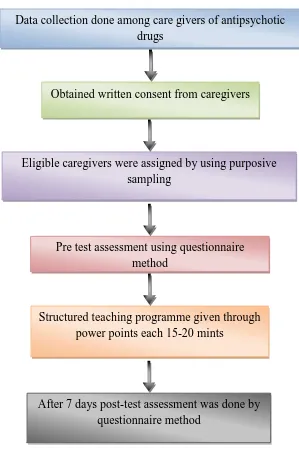
Figure 3.5.3 Schematic representation of data collection procedure Data collection done among care givers of antipsychotic
drugs
Obtained written consent from caregivers
Eligible caregivers were assigned by using purposive sampling
Pre test assessment using questionnaire method
Structured teaching programme given through power points each 15-20 mints
3.6 Ethical approval
The proposal was submitted to the Institutional Human Ethics Committee, PSG Institute of Medical Science and Research reviewed the proposal approved the study to conduct. Consent was obtained from care givers. After getting clearance from Institutional Human Ethics Committee data collection was done.
3.7 Pilot study report
Pilot study was conducted to test the practicability of the tool and feasibility of tool for conducting the main study. It was conducted for a period of one week from 30-10-2017 to 05-11-17 in psychiatric ward and new psychiatric ward of PSG hospitals. Ten samples were selected, pre-test was conducted by using structured teaching on antipsychotic drugs.There after intervention was given by using power point presentation. After 7th day post test was given by using same questionnaire to analyse their improvement.The data was collected by the questionnaire method. The data was tabulated and analyzed using descriptive and inferential statistics. By using paired „t‟ test data analysis was done and the paired „t‟ test value was during pre-test12.1, post-test 24.2 which is significant at the level of (p<0.05). The result revealed that there is significant improvement in the knowledge of the care givers regarding antipsychotic drugs (r=0.88).Through the pilot study, the reliability and practicability of the tool and feasibility of the study has been found.
3.7.1 Changes Brought After Pilot Study
After pilot study, modifications and additions were done. Tool was refined wih subheading action and side effects its management,family member role .
3.8 Data analysis plan
The data was analysed using descriptive and inferential statistics. Descriptive statistics
Mean and standard deviation will be used to describe the level knowledge regarding antipsychotic drugs.
Inferential statistics
Paired „t‟ test was used to assess the significant differences in post-test level of knowledge regarding antipsychotic drugs.
CHAPTER-IV
DATA ANALYSIS AND INTERPRETATION
Data analysis is the process of analyzing the data in such a way that the research question can be answered (Hungeler and Polit, 2004). This chapter deals with analysis and interpretation of data collected from patients of PSG Hospitals Coimbatore. The study was intended to assess the level knowledge among the care givers of psychiatric patients regarding the antipsychotic drugs. This results are to be evaluated and interpreted by researchers with the consideration to the overall aim of the project. In this study data was collected from 40 caregivers in psychiatric ward in PSG Hospital . Data collected were analyzed and presented tables and graphs.
This chapter is organized under the following sections:
Frequency and percentage distribution of demographic variables among care givers of patients on antipsychotic drugs.
Frequency and percentage distribution of demographic profile of the patients on antipsychotic drugs
Assessment of overall knowledge of care givers about antipsychotic drugs Assessment of knowledge of care givers about antipsychotic drugs area wise
Comparison of pretest and posttest knowledge of care givers about antipsychotic drugs through paired „t‟ test
Frequency and percentage distribution of level of knowledge of care givers about action antipsychotic drugs.
Frequency and percentage distribution of level of knowledge of care givers about side effects and its management of antipsychotic drugs.
Frequency and percentage distribution of level of knowledge of care givers about family member role of antipsychotic drugs
4.1 Demographic profiles of the care givers of patients on antipsychotic drugs.
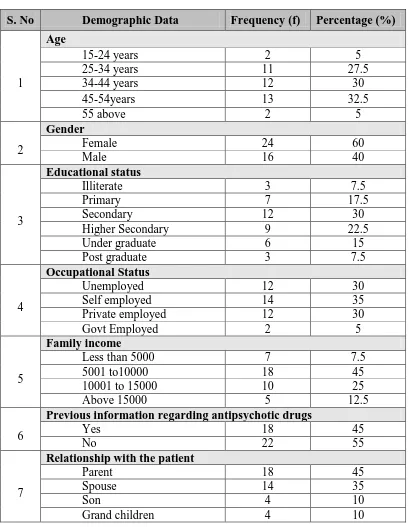
Table 4.1. Frequency and percentage distribution of Demographic variables among care givers of patients on antipsychotic drugs
n = 40
S. No Demographic Data Frequency (f) Percentage (%)
1 1
Age
15-24 years 2 5
25-34 years 11 27.5
34-44 years 12 30
45-54years 13 32.5
55 above 2 5
2 2
Gender
Female 24 60
Male 16 40
3 3
Educational status
Illiterate 3 7.5
Primary 7 17.5
Secondary 12 30
Higher Secondary 9 22.5
Under graduate 6 15
Post graduate 3 7.5
4 4
Occupational Status
Unemployed 12 30
Self employed 14 35
Private employed 12 30
Govt Employed 2 5
5 5
Family income
Less than 5000 7 7.5
5001 to10000 18 45
10001 to 15000 10 25
Above 15000 5 12.5
6 6
Previous information regarding antipsychotic drugs
Yes 18 45
No 22 55
7 7
Relationship with the patient
Parent 18 45
Spouse 14 35
Son 4 10
[image:40.612.103.512.145.672.2]The above table reveals that majority of the care givers of antipsychotic drugs were in the age group 34-44 years.13(32.5%)female were 24 (60%,). Regarding the educational status secondary education 12 (30%), higher secondary 9(22.5%), had primary, post graduate education 3(7.5) had primary education 7(17.5 %)had under graduate education 6(15%).
4.2 Demographic profile of patients on antipsychotic drugs
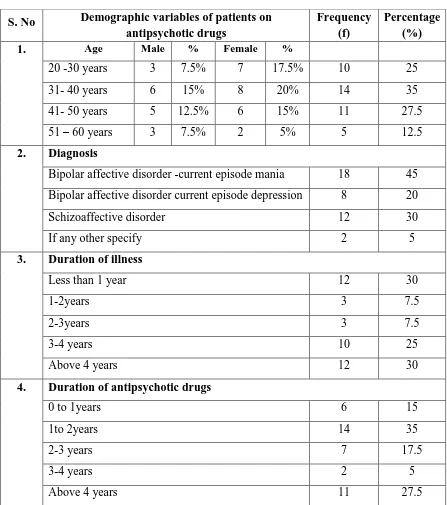
Table 4.2 Demographic profile of patients on antipsychotic drugs
n=40 S. No Demographic variables of patients on
antipsychotic drugs
Frequency (f)
Percentage (%)
1. Age Male % Female %
20 -30 years 3 7.5% 7 17.5% 10 25
31- 40 years 6 15% 8 20% 14 35
41- 50 years 5 12.5% 6 15% 11 27.5
51 – 60 years 3 7.5% 2 5% 5 12.5
2. Diagnosis
Bipolar affective disorder -current episode mania 18 45 Bipolar affective disorder current episode depression 8 20
Schizoaffective disorder 12 30
If any other specify 2 5
3. Duration of illness
Less than 1 year 12 30
1-2years 3 7.5
2-3years 3 7.5
3-4 years 10 25
Above 4 years 12 30
4. Duration of antipsychotic drugs
0 to 1years 6 15
1to 2years 14 35
2-3 years 7 17.5
3-4 years 2 5
In the present study, among 40 patients were in the age group of 20-30 years 10(25% ) in which 3(7.5%) were males and 7(17.5%) were females and 14( 35%) were in the age group of 31-40 years in which 6(15%) were male and 8(20%) were females and 11(27.5%) were in the age group of 41-50years in which 5(12.5%) were males and 15%(6) were females 14 and 51-60years 5(12.5%) in which 3 (7.5%) were males and 2(5%) were females. Regarding the diagnosis most of them 18 (45%) were diagnosed as bipolar affective disorder current episode of mania and 8(20%) were diagnosed as BPAD-current episode depression. Considering the duration of illness less than 1 year 12 (30%), above 4 years 12(30%), 3 to 4 years10 (25%) whereas less numbers in 1-2 years and 2-3 years. In relation to the duration of antipsychotic treatment 35%(14) had been taking antipsychotic drugs between 1-2years, whereas 5% (2) were on antipsychotic treatment less than 3-4 years.
Figure 4.2.2 Cone diagram shows the duration of illness
[image:44.612.96.519.395.662.2]Table 4.3 Assessment of overall knowledge of care givers about antipsychotic drugs n=40
S. No
Level of Knowledge (Score and percentage)
Pre-Test level of knowledge of care givers
Post Test level of knowledge of care givers Frequency
(f)
Percentage (%)
Frequency (f)
Percentage (%) 1.
Adequate knowledge (>75%)
0 0 35 87.5%
2. Moderately knowledge (50-75%)
3 7.5 5 12.5%
3. Inadequate knowledge (< 50%)
37 92.5 0 0
Table 4.4 Assessment of knowledge of care givers about antipsychotic drugs area wise n=40 S. No Level of Knowledge
Pre-test Post-test
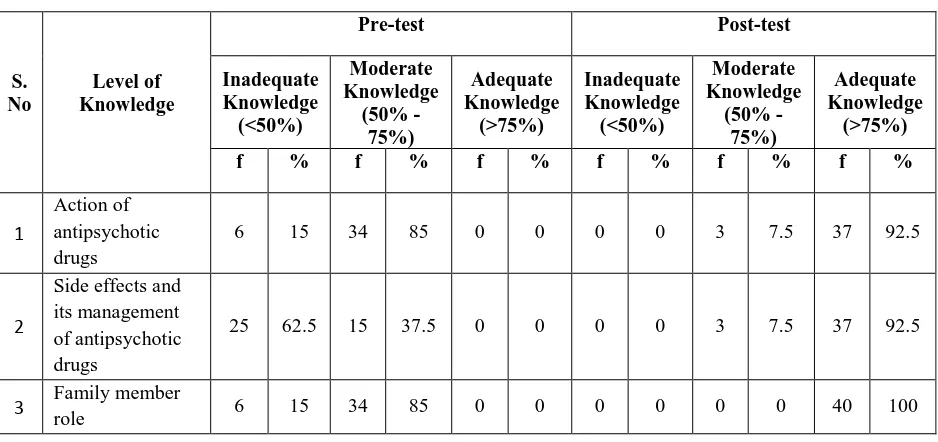
Inadequate Knowledge (<50%) Moderate Knowledge (50% - 75%) Adequate Knowledge (>75%) Inadequate Knowledge (<50%) Moderate Knowledge (50% - 75%) Adequate Knowledge (>75%)
f % f % f % f % f % f %
1
Action of antipsychotic drugs
6 15 34 85 0 0 0 0 3 7.5 37 92.5
2
Side effects and its management of antipsychotic drugs
25 62.5 15 37.5 0 0 0 0 3 7.5 37 92.5
3 Family member
role 6 15 34 85 0 0 0 0 0 0 40 100
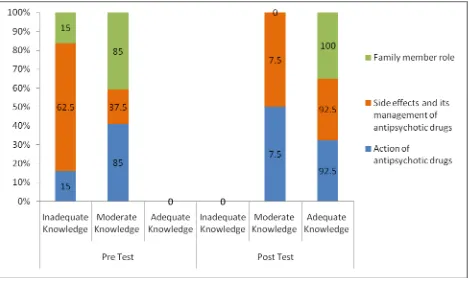
In table 4.4, the data revealed that pretest knowledge of action of antipsychotic drugs among most of the care givers had 34 (85%) moderately adequate knowledge, 6 (15%) inadequate knowledge and none of them had adequate knowledge. Side effects and its management of antipsychotic drugs half of the care givers 25(62.5%) had inadequate knowledge,15(37.5%) had moderately adequate knowledge. Family member role regarding antipsychotic drugs most of the care givers 34 (85%) had moderately adequate knowledge, 6 (15%) inadequate knowledge and none of them had adequate knowledge before the structured teaching programme on antipsychotic drugs.
Fig 4.3. Clustered column diagram shows the overall knowledge of care givers about antipsychotic drugs
[image:47.612.74.543.403.684.2]Table 4.5 Comparison of pre-and post-test knowledge score of caregivers regarding
antipsychotic drugs. n = 40
H0: There will not be a significant difference between pretest knowledge score with the posttest
knowledge score of care givers about antipsychotics
S.
No Level of Knowledge
Pre-Test Mean ± SD
Post Test Mean ± SD
‘t’ value
Table Value 1 Action of antipsychotic
drugs 3.10 ± 0.71 5.63 ± 0.63 16.18* 2.02
2
Side effects and its management of antipsychotic drugs
6.10 ± 1.61 14.30 ± 1.24 25.89* 2.02
3 Family member role 2.83 ± 0.78 5.50 ± 0.60 17.91* 2.02 4 Over all knowledge of
antipsychotic drugs 11.90 ± 2.06 25.35 ± 1.23 35.01* 2.02 Note: *statistically significant p<0.05
4.6 Frequency and percentage distribution of level of knowledge of care givers about antipsychotic drugs
Table 4.6.1 Frequency and percentage distribution of level of knowledge of care givers about action antipsychotic drugs. n=40
S.No Action of Antipsychotic drug
Pre-test Post-test
f % f %
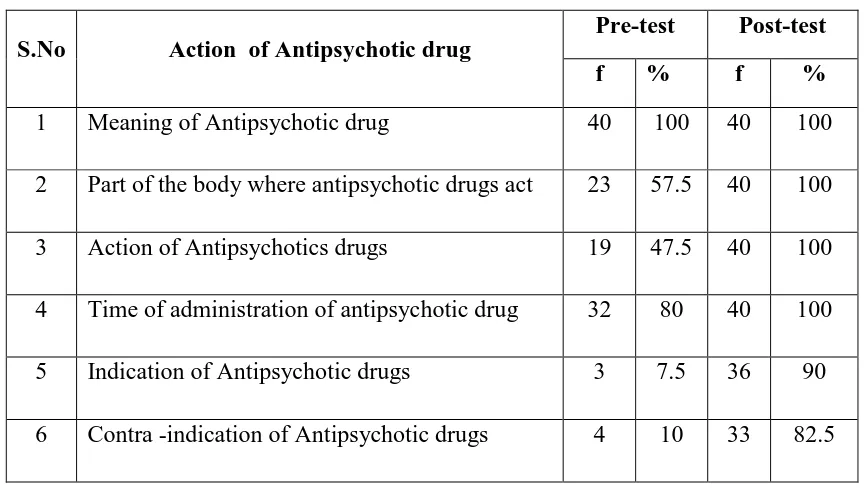
1 Meaning of Antipsychotic drug 40 100 40 100 2 Part of the body where antipsychotic drugs act 23 57.5 40 100 3 Action of Antipsychotics drugs 19 47.5 40 100 4 Time of administration of antipsychotic drug 32 80 40 100 5 Indication of Antipsychotic drugs 3 7.5 36 90 6 Contra -indication of Antipsychotic drugs 4 10 33 82.5
Table 4.6.1 shows in posttest scores from that of pretest along the section of action of antipsychotic drugs. It was found that majority participants fell under the category of inadequate knowledge level regarding indication 3 (7.5%),contraindication of antipsychotic drugs 4(10%). Participants responded at the level of moderately adequate knowledge level part of the body where antipsychotic drugs act 23(57.5%) as well as time action of antipsychotic drugs 19(47.5%). All participants had adequate knowledge for the meaning of antipsychotic drugs.
[image:49.612.90.523.170.417.2]Table 4.6.2 Frequency and percentage distribution of level of knowledge of care givers about side effects and its management of antipsychotic drugs.
n=40
S.No Side effects and its management of Antipsychotic drugs
Pre-test Post-test
F % F %
1 Guidance at the time of palpitation 13 32.5 38 95 2 Decision making regarding nausea, vomiting and
diarrhea 28 70 37 92.5
3 Care during giddiness 14 35 36 90
4 Handling at the time of seizure 10 25 29 72.5 5 Hormonal effects of drug on men 1 2.5 27 67.5 6 Hormonal changes in women due to drug 26 65 7 Role of care giver while shaky arms 12 30 35 87.5 8 Role of care giver when restless 12 30 30 75 9 Care during uncontrollable movement of face or body 5 12.5 27 67.5 10 Action when slow walking than usual 20 50 35 87.5 11 Handling during blurring of vision 4 10 28 46.6 12 Care at the time of dry skin 9 22.5 40 100 13 Decision making while excessive salivation from the
mouth 9 22.5 36 90
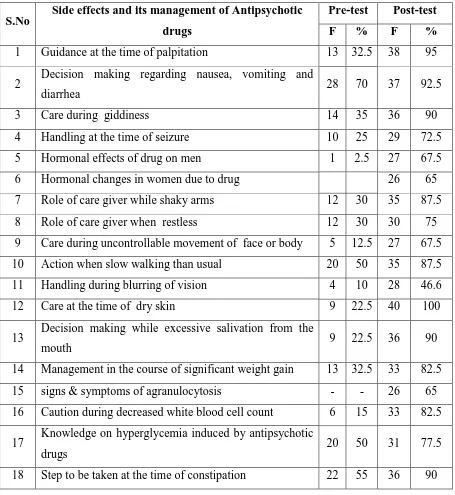
14 Management in the course of significant weight gain 13 32.5 33 82.5 15 signs & symptoms of agranulocytosis - - 26 65 16 Caution during decreased white blood cell count 6 15 33 82.5 17 Knowledge on hyperglycemia induced by antipsychotic
drugs 20 50 31 77.5
[image:50.612.80.535.135.630.2]Table 4.6.2 shows increase in post test scores from that of pre-test. It was found that majority participants file under the category of inadequate knowledge regarding care during giddiness 14(35%),handling of seizure 10 (25%), hormonal changes in men due to drug1(2.5%) hormonal effects on women, role of care giver while shaky arms12(30%),role of care giver when restless12 (30%), care during uncontrollable movement of face or body 5(12.5%), handling during blurring of vision4(10%),care at the time of dry skin 9(22.5%), decision making while excessive salivation from the mouth 9(2.5%), Management in the course of significant weight gain 13(32.5%),caution during deceased white blood cell count 6(15%). Participants responded at the level of moderately adequate knowledge level Decision making regarding nausea, vomiting and diarrhea 28(70%), action when slow walking than usual 20(50%), Knowledge on hyperglycemia induced by antipsychotic drugs 20(50%), Step to be taken at the of constipation on 22(55%).
4.6.3 Frequency and percentage distribution of level of knowledge of care givers about family
member role regarding antipsychotic drugs. n=40
S.No Family member role of antipsychotic drugs
Pre-test Post-test F % F % 1 Care when sleepy during day 6 15 28 70 2 Continuing medication even if patient is doing well 8 20 36 90 3 Forgot to give a dose of medicine 10 25 36 90 4 Administration drug without prescription 14 35 40 100 5 Alcohol consumption during antipsychotic drug
therapy 40 100 40 100
[image:52.612.99.518.118.335.2]6 Carrying of identification card 40 100 40 100
Table 4.7.3shows an increase in post test scores from that of pre-test along the section of family member role in antipsychotic drugs. It was found that majority of the participants fell under the category of inadequate knowledge level regarding family member role. Care when sleepy during the day 6 (15%), Forgot to give a dose of medicine 10 (25%) and continuing medication even if patient is doing well 8 (20%). Participants responded at the level of moderately adequate knowledge in drug administration without prescription 14(35%). All the participants had adequate knowledge regarding alcohol consumption during antipsychotic drug therapy and carrying identification card were 40 (100%).
Table 4.7 Association between pre-test knowledge regarding antipsychotic drugs among care givers and their selected demographic variables
H0: There will not be a significant association between pretest scores of caregivers with selected
demographic variables. n=40 Inadequate Knowledge f (%) Moderate Knowledge f (%) Degree of freedom Calculated χ2 value Tabulated value Age in years
15-24 years 1(0.25%) 1(0.25)
4 1.76
(NS)
9.48 25- 34 years 8(20%) 3(0.75)
35-44 years 10 (25%) 3 (7.5%) 45 -54 years 10 (25%) 2(5%) 55 above 1 (0.25%) 1(0.25%) Gender
Male 5(50%)
1 0.01
(NS) 3.8
Female 4(10%) 1(0.25%)
Education
Illiterate 2(5%) 1(0.25%)
3 0.26
(NS) 7.81
Primary 5(12.5%) 2(5%)
Secondary 9(22.5%) 3(7.5%) Higher secondary 6(15%) 3(7.5%)
Diploma 4(10%) 2(5%)
Under graduate -
Post graduate 2(5%) 1(0.25%)
Any other specify - -
Occupational status
Unemployed 10(25%) 2(5%)
2
0.96
(NS) 5.99 Self Employed 10(25%) 3(7.5%)
Govt. Employed 1(0.25%) 1(0.25%) Private Employed 8(20%) 4(10%)
Any other - -
Family income
Less than 5000 9(22.5%) 3(7.5%)
3 1.08
(NS)
5.99 5000 to10000 6(15%) 4 (10%)
10000 to 15000 10(25%) 3(7.5%) Above 15000 4 (10%) 1(0.25%)
Relationship with the Patient
Parent 12(30%) 6(15%)
2
1.9
(NS) 5.99
Spouse 11(27.5%) 3(7.5%)
Son or daughter 2(5%) 1(0.25%) Grand children 1(0.25%) 1(0.25%) In-law
Duration of illness
Less than 1year 4(40%) 1(10%)
2 0.635
(NS)
5.99
1-2years 2 (20%) 1 (10%)
2-3 years 1(10%) 1(10%)
3-4 years - -
Above - -
Note- NS: Non-significant at the level of p<0.05
CHAPTER-V
RESULTS AND DISCUSSION
This chapter presents a detailed discussion based on the major objectives, corresponding findings and observation during the conduct of the study.The present study was conducted to assess the effectiveness of structured teaching programme on knowledge regarding antipsychotics drugs among care givers of psychiatric patients.The study finding was compared with the findings and observation of similar studies.
5.1 Frequency and percentage distribution of demographic variables among care givers of patients on antipsychotic drugs
The present study shows that among 40 care givers 24(60%) were females, 18 (45%) family income between 10001 to 15000.
These findings are similar to another study on effectiveness of planned tea