
From environmental sustainability to sustainable development? : Making concepts tangible in structural funds programmes
92
0
0
Full text
(2) European Policies Research Centre University of Strathclyde Graham Hills Building 40 George Street Glasgow G1 1QE United Kingdom Tel: +44 (0) 141 548 3339 Fax: +44 (0) 141 548 4898 E-mail: [email protected] [email protected] www.eprc.strath.ac.uk/eprc/default.cfm www.eprc.strath.ac.uk/iqnet/default.cfm. June 2008 The University of Strathclyde is a charitable body, registered in Scotland, number SC015263.
(3) From environmental sustainability to sustainable development in Structural Funds programmes?. PREFACE The research for this paper was undertaken in preparation for the 24th IQ-Net meeting in Śląskie, Poland, on 28-30 May 2008. The paper was written by Martin Ferry, Carlos Mendez and John Bachtler. This paper is the product of desk research and fieldwork visits during Spring 2008 to national and regional authorities in Member States (notably partners in the IQ-Net Consortium). The field research team comprised: •. Stefan Kah (Austria). •. Frederike Gross (Belgium, France). •. Marie Macešková (Czech Republic). •. Prof. Henrik Halkier (Denmark). •. Heidi Vironen (Finland, Sweden). •. Dr. Sara Davies (Germany). •. Maria-Amalia Vergoula, Eleftherios Antonopoulos (Greece). •. Rosella Vitale (Italy). •. Dr. Martin Ferry (Poland). •. Carlos Mendez (Portugal, Spain). •. Damjan Kavaš (Slovenia). •. Rona Michie, Dr. Martin Ferry (United Kingdom). This paper was revised following the Śląskie meeting in line with the comments of the partners and the substance of discussions at the meeting. EPRC thanks all those who participated in the research. EPRC also gratefully acknowledges the financial support provided by participating regions, whose contributions are co-financed by technical assistance from the European Regional Development Fund. The report is, however, the responsibility of the authors alone. A current list of IQ-Net Partners and their organisations is as follows: Austria. •. State Government of Niederösterreich, Economic and Tourism Department. •. State Government of Steiermark, Economic Policy Department. Belgium •. Agency for the Economy of Vlaanderen, Europe Economy. Czech Republic • Ministry for Regional Development Denmark. Finland. •. Danish Enterprise and Construction Authority. •. Keski-Suomi Alliance. •. Ministry of Employment and the Economy. IQ-Net Thematic Paper 22(2). i. European Policies Research Centre.
(4) From environmental sustainability to sustainable development in Structural Funds programmes?. France • Germany •. Greece Italy. Délégation interministérielle à l’amenagement et à la compétitivité des territories (DIACT) Nordrhein-Westfalen, Ministry of Economy, SMEs and Energy, EU Affairs Unit. •. Sachsen-Anhalt, Ministry of Finance. •. CSF Management Organisation Unit, Ministry of Economy and Finance. • •. Lombardia Region, Presidency, Central Directorate for Integrated Programming Ministry of Economic Development and Institute for Industrial Promotion (IPI). •. Śląskie Voivodeship (Marshal’s Office). Poland. Portugal •. Financial Institute for Regional Development (IFDR). Spain • Slovenia • Sweden •. País Vasco, Provincial Council of Bizkaia, Department of Economy and Finance Government Office for Local Self-Government and Regional Policy, EU Cohesion Policy Department NUTEK, Swedish Agency for Economic and Regional Growth. United Kingdom • Department of Communities and Local Government • One North East • Scottish Government • Welsh European Funding Office For further information about IQ-Net, and access to the full series of IQ-Net Papers, please visit the IQ-Net website at: www.eprc.strath.ac.uk/iqnet/default.cfm. Disclaimer: It should be noted that the content and conclusions of this paper do not necessarily represent the views of individual members of the IQ-Net Consortium.. IQ-Net Thematic Paper 22(2). ii. European Policies Research Centre.
(5) From environmental sustainability to sustainable development in Structural Funds programmes?. FROM ENVIRONMENTAL SUSTAINABILITY TO SUSTAINABLE DEVELOPMENT? MAKING CONCEPTS TANGIBLE IN STRUCTURAL FUNDS PROGRAMMES. TABLE OF CONTENTS 1.. INTRODUCTION .............................................................................. 1. 2.. EU COHESION POLICY AND SUSTAINABLE DEVELOPMENT........................... 3 2.1 What is sustainable development?........................................................... 3 2.2 The EU and sustainable development....................................................... 3 2.3 EU Cohesion policy and sustainable development ........................................ 4 2.3.1 1988-1993 ..................................................................................... 5 2.3.2 1994-1999 ..................................................................................... 6 2.3.3 2000-2006 ..................................................................................... 7 2.3.4 2007-2013 ..................................................................................... 9. 3. 3.1 3.2 3.3. INTEGRATING SUSTAINABLE DEVELOPMENT IN THE DESIGN OF NSRFS AND OPS ............................................................................................... 11 Broad consultation with partners ...........................................................12 Partner involvement in programming bodies .............................................13 Specialist input – strategic environmental assessments.................................15. 4.1 4.2 4.3 4.4 4.5. OBJECTIVES OF THE PROGRAMMES ................................................... 21 Conceptualising SD in the NSRFs and OPs .................................................21 Integrated SD approaches....................................................................22 Defining SD with reference to domestic/international strategies.....................24 SD equated with environmental sustainability ...........................................26 Different environmental sustainability agendas..........................................28. 5.1 5.2 5.3 5.4 5.5. WHAT IS BEING ASSISTED? PRIORITIES & INTERVENTIONS ........................ 31 Sustainable energy ............................................................................31 Environmental protection and risk management.........................................35 Bio-diversity, nature protection and natural assets .....................................41 Sustainable transport .........................................................................44 Sustainable urban development ............................................................48. 6.1 6.1.1 6.1.2 6.2 6.2.1 6.2.2 6.3. DELIVERING ON SD COMMITMENTS: PROGRAMME IMPLEMENTATION ........... 55 Project generation and selection ...........................................................55 Project generation .........................................................................55 Project selection ...........................................................................59 Monitoring and evaluation ...................................................................62 Monitoring ...................................................................................62 Evaluation ...................................................................................68 Partnership .....................................................................................70. 4.. 5.. 6.. 7.. CONCLUSIONS.............................................................................. 73. IQ-Net Thematic Paper 22(2). iii. European Policies Research Centre.
(6) From environmental sustainability to sustainable development in Structural Funds programmes?. 7.1 7.2 7.3 7.4 8.. Integrating SD in the design of NSRFs and OPs ...........................................73 SD objectives in NSRFs and OPs .............................................................73 Priorities and interventions in NSRFs and OPs ............................................74 Integrating SD in the implementation process............................................75 ANNEX....................................................................................... 77. IQ-Net Thematic Paper 22(2). iv. European Policies Research Centre.
(7) From environmental sustainability to sustainable development in Structural Funds programmes?. FROM ENVIRONMENTAL SUSTAINABILITY TO SUSTAINABLE DEVELOPMENT? MAKING CONCEPTS TANGIBLE IN STRUCTURAL FUNDS PROGRAMMES. EXECUTIVE SUMMARY. EVOLUTION OF SUSTAINABLE DEVELOPMENT IN EU COHESION POLICY Sustainable Development (SD) is a prominent theme in EU and domestic policy discourses. There is increasing recognition that, for sustainable, long-term growth and prosperity, the ‘three pillars’ of social, economic and environmental policies must be integrated and mutually reinforcing. Structural Funds (SF) regulations acknowledge the importance of SD for economic and social cohesion. Commission regulations for the current programme period make it clear that the framework of SD is a binding principle for all funding objectives, confirming it as an integral theme for 2007-13 programmes. Sustainable development needs to be seen ‘in the round’, as a combination of economic, social and environmental objectives throughout the phases of programme design and implementation. However, for several reasons, integrating SD into programmes is a challenging process: defining SD is not straightforward as there are a range of interpretations; integrating SD into strategic objectives and priorities may mean linking interventions across a wide variety of policy themes and project types; and, the progress and impact of SD-related interventions may be difficult to disaggregate and measure, or may be intangible at least during the lifetime of the programme. The aim of this paper is to assess the response of programme managers to these challenges. It looks at: the integration of SD in the design of National Strategic Reference Frameworks (NSRFs) and Operational Programmes (OPs); approaches to the conceptualisation of SD in these documents; SD-related themes in specific NSRF and OP priorities and interventions; and, how SD considerations are reflected in OP implementation processes. The final section draws together the concluding points to emerge.. INTEGRATING SD IN THE DESIGN OF NSRFS AND OPS In terms of design, NSRFs and OPs are gradually moving away from perceptions of SD as either an expensive addition to the main focus or outcome of programmes, or as a series of individual projects or initiatives. In particular, there is evidence of SD experts or organisations being involved in the design of several NSRFs and OPs in a more integrated and iterative way. This reflects the aim of (some) programme managers to develop a clearer understanding of the SD agenda from the start of the programming process. However, it should be noted that this was not universal: in many programmes, SD continues to be interpreted through the (narrower) lens of environmental sustainability, which is. IQ-Net Thematic Paper 22(2). v. European Policies Research Centre.
(8) From environmental sustainability to sustainable development in Structural Funds programmes?. reflected in ‘SD inputs’ to the NSRFs and OPs being allocated to environmental ministries and agencies, NGOs and experts. SD-RELATED OBJECTIVES IN THE NSRFS/OPS Turning to the strategic objectives of NSRFs and OPs, SD is clearly on the agenda in all of these documents. In keeping with guidance from the Commission and a broad convergence of national policy approaches dealing with the issue, NSRFs and OPs generally include SD in the discussion and formulation of policy goals and strategic objectives. However, there is considerable variation in the conceptualisation of SD, associated with different programming environments and domestic policy contexts. Some documents draw on domestic, EU or international strategies to develop an inclusive, multi-strand interpretation of sustainability along the lines suggested by EU guidance. Where SD is a relatively new policy area, or where the priority attached to SD in Cohesion policy programmes compared to other issues is limited, NSRFs and OPs devote less space to setting out their interpretation of SD and define the issue mainly with reference to other strategies. Other documents set out a narrow conceptualisation of SD, focusing on a particular component (usually environmental sustainability) and incorporating it either as a distinct strategic priority or as a component of horizontal or cross-cutting themes. This can reflect the perception of environmental sustainability as a particularly important priority in some programme areas. It can also illustrate the assumption that the economic and social objectives of SD are automatically pursued in programmes and that the inclusion of environmental sustainability as a horizontal theme can integrate all three pillars. It is also important to note that differences in the objectives of NSRFs and OPs can influence interpretations of environmental sustainability under the SD heading.. SD-RELATED PRIORITIES AND INTERVENTIONS IN THE NSRFS/OPS. Looking in more detail at the priorities and interventions included in IQ-Net partner NSRFs and OPs, there are frequent commitments to sustainable development and, specifically, the Community goal of protecting and improving the environment. On average, IQ-Net programmes are allocating around one quarter of total funding to the following investment themes: environmental protection and risk management; sustainable energy; sustainable transport; sustainable urban development; and bio-diversity, nature protection and natural assets. A general distinction can be drawn between Convergence programmes, some of which have allocated as much as 45 percent of resources to these themes, and some RCE programmes where allocations of less than 15 percent of total funding to these types of investment are planned. In part, this reflects the strong Lisbon-orientation adopted in many RCE regions and the fact that many SD-related categories (though not all) are excluded from the earmarking exercise. There is also wide variation across programmes in the emphasis placed on specific investment themes. Here, it is useful to look at the main investment areas with direct. IQ-Net Thematic Paper 22(2). vi. European Policies Research Centre.
(9) From environmental sustainability to sustainable development in Structural Funds programmes?. relevance to sustainable development in Community regulations. Again, these focus largely on environmental sustainability. •. Within the theme of environmental protection and risk prevention, support for basic infrastructure relating to water and waste is prominent in some Convergence programmes, while the focus elsewhere is on support for environmentally-friendly products and production processes in SMEs.. •. The promotion of sustainable energy is prioritised across the majority of IQ-Net partner OPs, some giving more attention to energy efficiency than to renewable energies.. •. Concerning sustainable transport, the most commonly supported investments are multi-modal transport, intelligent transport systems, urban public transport and cycle tracks, although expenditure on railways is apparent, particularly in Convergence countries and regions.. •. Investment in sustainable local and urban development is also included in most IQNet partner OPs. Support for integrated urban or rural regeneration projects account for very significant shares of funding in a Member States/regions, although not in all.. Among all the main investment areas reviewed, the category that receives least attention is the promotion of promotion of biodiversity and nature, in part because the rural development programmes under the EARDF will be funding these interventions. On the other hand, support for natural assets and the protection and development of natural heritage does feature more heavily in some IQ-Net programmes.. INTEGRATING SD IN THE IMPLEMENTATION OF PROGRAMMES The systems for generating, appraising and selecting projects for Structural Funds support play a crucial role in integrating SD in OP interventions. Setting obligations and criteria that inform the generation, design and selection of projects can facilitate changing interpretations of SD. It is through the implementation processes that awareness of SD issues can be raised and where a more ‘holistic’, three-pillar approach to project generation, selection and appraisal can be developed. The integration of SD in these processes clearly varies across IQ-Net programmes, reflecting different national systems for project generation and selection, the wider national and regional emphasis placed on SD, and the specific capacities of programme actors. Nevertheless, some general trends can be identified. First, building on experiences from the previous programme period, programme managers have placed greater emphasis on developing an explicit definition of SD and setting out what sort of tangible, SD-related impacts projects could be expected to have. Second, setting clear, SD-related criteria and providing guidance for applicants is helping to inform the design of projects. The aim is to introduce SD considerations into projects at the. IQ-Net Thematic Paper 22(2). vii. European Policies Research Centre.
(10) From environmental sustainability to sustainable development in Structural Funds programmes?. earliest possible stage and to provide a foundation for integrating SD throughout the implementation stages. Third, the complex, multi-faceted nature of SD means that monitoring its impact remains challenging. Programme managers are attempting to overcome these obstacles by developing more detailed and sophisticated indicators, drawing on expert advice and domestic and international frameworks and guidance. Many have also chosen to focus on the SD pillar of environmental sustainability. The inclusion of related criteria and indicators ensures that the environmental impact of all projects are designed, assessed and monitored, thus integrating environmental concerns in projects dealing with economic or social dimensions. Fourth, most OPs plan to launch thematic evaluations of SD-related issues during the programme period. Finally, OPs are maintaining or extending their use of partnership structures in implementation as a means of informing the SD-content and also as a way of increasing knowledge and awareness of the issue. However, in some cases there may be a limited number of partners with the capacity to participate. Elsewhere, changes in programming arrangements can reduce the scope for partnership working.. CONCLUSIONS This paper reveals an increased level of integration of SD in Structural Funds programmes in the current programme period. The importance attached to the issue in Commission and Member State policy discourses is reflected in more structured approaches to incorporating SD considerations into the design, strategic content, objectives and priorities of programmes and in arrangements for their implementation. Most NSRFs and OPs refer to comprehensive SD definitions, drawing on social, economic and environmental dimensions. Nevertheless, a review of SD-related priorities, interventions and funding allocations reveals a continued emphasis on environmental sustainability. SD is a complex issue. While SD-related themes and objectives can be identified in all programmes, the ongoing challenge is in developing an integrated approach to interventions which can cover a potentially wide range of policy fields and project types.. IQ-Net Thematic Paper 22(2). viii. European Policies Research Centre.
(11) From environmental sustainability to sustainable development in Structural Funds programmes?. FROM ENVIRONMENTAL SUSTAINABILITY TO SUSTAINABLE DEVELOPMENT? MAKING CONCEPTS TANGIBLE IN STRUCTURAL FUNDS PROGRAMMES. 1.. INTRODUCTION. Sustainable Development (SD) is a fundamental objective of the European Union and is an overarching concept that underpins all EU policies, strategies and actions. 1 The basis of the concept is that sustainable, long-term growth and prosperity requires the ‘three pillars’ of social, economic and environmental policies to function in a mutually reinforcing way. The strategic reference framework is provided by the EU’s Sustainable Development Strategy, launched in Gothenburg in 2001 and renewed in 2006. The importance attached to SD in EU Cohesion policy has increased in recent years, and environmental sustainability was a horizontal theme in the 2000-06 programme period. For 2007-13, Article 17 of the general regulation makes the framework of SD a binding principle for all funding objectives, confirming it as a cross-cutting or horizontal theme for the 200713 period: “The objectives of the Funds shall be pursued in the framework of sustainable development and the Community promotion of the goal of protecting and improving the environment as set out in Article 6 of the Treaty”. The objective of this paper is to analyse how Structural Funds programmes are supporting the integration of SD in the 2007-13 period. It is based on a mix of documentary and fieldwork research carried out on IQ-Net partner programmes in Spring 2008. The research included a critical review of National Strategic Reference Frameworks and Operational Programmes, as well as interviews with national government officials, programme managers and SD experts. The research covered both Convergence and Regional Competitiveness & Employment programmes in 15 Member States. The paper is structured in seven further sections. It begins in Section 2 by exploring the origins of the concept of sustainable development, its incorporation into EU treaties and its progressively increasing importance for Cohesion policy. Section 3 reviews the process of preparing the National Strategic Reference Frameworks and Operational Programmes, identifying whether and how SD perspectives were incorporated into the process and the role of Strategic Environmental Assessments. Section 4 examines the objectives of the NSRFs and OPs, in particular their conceptualisation of SD. In Section 5, the planned allocation of funding to SD-relevant themes is analysed, based on the categorisations of expenditure by programmes. Section 6 assesses the various processes of programme implementation – project generation and selection, monitoring, evaluation, partnership – and Section 7 draws together the concluding points to emerge from the paper.. 1. Article 2 of the Treaty on European Union. IQ-Net Thematic Paper 22(2). 1. European Policies Research Centre.
(12) From environmental sustainability to sustainable development in Structural Funds programmes?. IQ-Net Thematic Paper 22(2). 2. European Policies Research Centre.
(13) From environmental sustainability to sustainable development in Structural Funds programmes?. 2.. EU COHESION POLICY AND SUSTAINABLE DEVELOPMENT. 2.1. What is sustainable development?. The definitional starting point for the concept of sustainable development (SD) is often attributed to the World Commission on Environment and Development’s report ‘Our Common Future’, commonly referred to as the ‘Brundtland Report’. 2 This landmark report defined SD as “development that meets the needs of the present without compromising the ability of future generations to meet their own needs.” Although open to criticism, 3 this definition forms the basic reference that is commonly employed by the United Nations and other international institutions. The key feature of the definition is the explicit recognition of long-term temporal dynamics and trade-offs in development, which lies at the centre of the notion of sustainability. In unpacking the concept, it is generally accepted that sustainable development deals with three dimensions or ‘pillars’: the environment, the economy and social equity. The basic idea is that these three pillars must be mutually reinforcing in order to ensure sustainable, long-term growth and prosperity. Sustainable development is also increasingly seen as a procedural concept, that is, as a learning process and a factor to inform the decisionmaking process.. 2.2. The EU and sustainable development. Sustainable Development is a fundamental EU objective and is an overarching concept that underpins all EU policies, strategies and actions. 4 The origins can be traced back to the adoption of the Single European Act in 1986, which provided the EU with a legal basis for environmental policy in its own right under a specific chapter, essentially codifying the principles and practices which had evolved through three successive EU Environmental Action Programmes since 1972. It was also stated that other Community policies should take environmental protection into consideration. The Maastricht treaty in 1992 amended Article 2 to state that Community activity would “promote…sustainable and non-inflationary growth respecting the environment…”. The treaty also required other Community policies to incorporate an assessment of the implications for the environment. Following this, the Member States and the Commission were involved in the United Nations Conference on Environment and Development (UNCED) meeting in Rio de Janeiro and its commitment to sustainable patterns of development worldwide, and the Fifth EC Environmental Action Programme was adopted by the Council. 2 WCED (World Commission on Environment and Development) (1987) Our Common Future, Oxford University Press, Oxford. 3. An overview of the academic literature on the conceptualisation of sustainable development is available in the Washington State University Sustainable Development Sourcebook: http://www.wsu.edu:8080/~susdev/General_Issues.html 4. Art 2 of the Treaty on European Union. IQ-Net Thematic Paper 22(2). 3. European Policies Research Centre.
(14) From environmental sustainability to sustainable development in Structural Funds programmes?. of Ministers in 1993. 5 The EAP, entitled ‘Towards Sustainability’, incorporated the principle of ‘sustainable development’ in line with the Brundtland Report definition. Also of note during this period, was the adoption of legislation for nature protection through the creation of a network of protected areas (Natura 2000) under the 1992 Habitats Directive and for the protection of Europe’s water resources. The first formal reference to ‘sustainable development’ was subsequently added to the Treaty of Amsterdam in 1999 by including it as one of the EU’s overriding objectives. More specifically, the Treaty’s preamble was modified to note the signing parties’ determination to “promote economic and social progress for their peoples taking into account the principle of sustainable development” and Article 2 mentions among the tasks of the Community, the promotion of a “harmonious, balanced and sustainable development of economic activities”. Further on, Article 6 specified that “Environmental protection requirements must be integrated into the definition and implementation of the Community policies and activities […] in particular with a view to promoting sustainable development”. A major turning point in the EU’s commitment to sustainable development came about at the Gothenburg European Council of June 2001 by adding the environmental dimension to the Lisbon strategy (agreed in March 2000) as a ‘third pillar’ to complement economic and social reform. This committed the EU to a number of targets, including halting biodiversity loss by 2010. The basic reference document here is the EU Sustainable Development Strategy, launched in Gothenburg in 2001 and renewed in 2006. It identifies seven key challenges and corresponding targets, operational objectives and actions: climate change and clean energy; sustainable transport; sustainable consumption and production; conservation and management of natural resources; public health; social inclusion, demography and migration; and, global poverty and SD challenges. The other part of the strategy revises the way that policies are made. It calls for a collaborative, integrated approach to policy-making to ensure that the EU’s economic, social and environmental policies mutually reinforce each other. 6. 2.3. EU Cohesion policy and sustainable development. These developments at EU level have progressively raised the importance accorded to SD and the environmental dimension in EU Cohesion policy over time. The 1988 Structural Funds reforms included an environmental dimension in the regulations, but the requirements were relatively weak and largely ignored in practice. The 1993 reforms strengthened these requirements and explicitly recognised the concept of sustainable development for the first time. Although this led to a more pro-active approach, several shortcomings of the previous period remained. The third major Structural Funds reform in 1999 mainstreamed environmental sustainability as a horizontal principle and provided more stringent obligations across the various stages of programming and implementation. Evaluation findings concluded that the effectiveness of SD integration in programme. 5 CEC (1993) Towards sustainability: A European Community Programme of policy action in relation to the environment and sustainable development, Official Journal of the European Communities, C 138, vol. 36, 17 May 1993, Brussels 6. CEC (2007) Progress Report on the Sustainable Development Strategy 2007, SEC(2007)1416. IQ-Net Thematic Paper 22(2). 4. European Policies Research Centre.
(15) From environmental sustainability to sustainable development in Structural Funds programmes?. documents, management arrangements and project appraisal and selection systems was relatively poor, particularly in comparison to environmental integration. The latest regulatory reforms for 2007-2013 have further strengthened the framework of SD by making it a binding principle for all funding objectives.. 2.3.1 1988-1993 Under the landmark Structural Fund reforms of 1988, the environmental dimension was acknowledged in three main ways. First, the purpose of the Structural Funds was defined as providing instruments to fund measures or projects in the Community to meet common objectives, such as regional economic development and employment promotion, but also environmental protection, energy conservation and new sources of energy. 7 For instance, the scope of assistance identified for each fund included, among the priority categories of assistance, productive investment and investment in infrastructure aimed at environmental protection (ERDF) and measures to preserve and safeguard the landscape and countryside (EAGGF). Second, the Community Support Frameworks were required to provide a statement on the coordination of and compliance with other Community policies, including environmental protection. Lastly, following the adoption of the regulation, the Commission issued a series of communications, one of which outlined the rules governing assessment of the environmental impact of the plans, programmes and projects. The first round of Structural Funds programmes documents did not place environmental concerns high on the agenda of the priority areas for Community assistance. 8 In particular, ideas of ‘sustainable development’ had not yet been integrated: programmes were perceived as economic and social strategies with limited environmental aspects. Consequently, job creation and economic development took precedence over environmental protection. Few programmes integrated the environment in the sense of using its protection or improvement as a development objective. Where programmes did address environmental issues, it generally occurred either within infrastructure programmes (where the level of integration varied substantially) 9 or in contexts where environmental protection issues were already a part of day-to-day national and regional development processes. 10. 7. Commission of the European Communities (1989) Guide to the Reform of the Structural Funds, Office for Official Publications of the European Communities: Luxembourg, p8. 8. Clement K and Fitzgerald R (1997) Regional Environmental Integration: Changing Perceptions and Practice with Objective 2 Programmes, IQ-Net Thematic Paper 2(3), European Policies Research Centre, University of Strathclyde, Glasgow; Taylor S, Polverari L and Raines P (2001) Mainstreaming the Horizontal Themes into Structural Fund Programming, IQ-Net Thematic Paper 10(2), European Policies Research Centre, University of Strathclyde, Glasgow. 9. Woodford J (1991) Conflict or Convergence? Environmental Priorities and the Structural Funds Environmental Policy Discussion Paper No.1, European Policies Research Centre, University of Strathclyde, Glasgow. 10 Bachtler J and Taylor S (1999) Objective 2: Experiences, Lessons and Policy Implications, report to DG XVI of the European Commission, European Policies Research Centre, University of Strathclyde, Glasgow.. IQ-Net Thematic Paper 22(2). 5. European Policies Research Centre.
(16) From environmental sustainability to sustainable development in Structural Funds programmes?. 2.3.2 1994-1999 The 1993 revision of the regulations acknowledged the major developments in Community policies towards environmental protection, including the principle and goals of sustainable development for the first time. The main regulatory response was a requirement for regional development plans under Objectives 1, 2 and 5b and the Community Support Frameworks to include an appraisal of the environmental situation and an evaluation of the environmental impact of the proposed strategy and measures in terms of sustainable development. The Member States were also required to provide information on the involvement of environmental authorities in the preparation and implementation of Community operations and, as in the previous period, to ensure compliance with Community environmental rules. The creation of the Cohesion Fund added further impetus to the environmental dimension of EU Cohesion policy. Targeted on the least prosperous Member States (Greece, Portugal, Spain and Ireland) the fund provided an important source of resources to finance projects in the fields of transport and the environment (e.g. protection and management of water resources, as well as the collection, treatment and recycling of waste). Lastly, the Commission issued notes for guidance for Objective 2 regions in the second programme period (1997-1999), and these notes specifically listed ‘Environment and Sustainable Development’ among the new priorities. Acknowledging the complementary nature of the environment and regional development, the guidance stated that the horizontal character of the environment needed to be borne in mind in the definition and implementation of other Community policies and especially in the Structural Funds programmes. The new regulatory framework led to a more pronounced, but still modest, response in the programmes launched in 1994. 11 The programmes showed improvements in integrating environmental concerns, although not yet under the heading of a sustainable development approach. As required by the new regulations, the programmes examined the state of the environment, reporting, environmental impact, environmental gain and environmental integration. Nonetheless, the level of effective integration of the issue and of impact assessment remained low. The focus of environmental aspects was on the environment per se rather than on sustainable development in its broader sense. The majority of programmes included environmental profiles, and while programmes made considerable progress with the identification of impacts, there was a tendency to focus primarily on environmental measures. Most programmes approached the environment from a horizontal perspective, with environmental issues appearing within sub-strategies or within priorities and strategic objectives.. 11. Clement and Fitzgerald (1997) op.cit; Taylor et al. (2001) op.cit.. IQ-Net Thematic Paper 22(2). 6. European Policies Research Centre.
(17) From environmental sustainability to sustainable development in Structural Funds programmes?. 2.3.3 2000-2006 The progressive developments described above set the context for a more interventionist approach for the 2000-06 programme period. The 1999 revisions to the Structural Funds Regulations made environment sustainability one of the horizontal themes (along with equal opportunities) that should be integrated or mainstreamed in the programmes. This was reflected in a more systematic treatment of the environment and sustainable development across the various headings addressed by the Regulations, including the partnership principle, programme preparation, content, monitoring, evaluation, and information and publicity. In addition, a Vademecum and other Commission Working Papers and Technical Documents provided further specification of the regulatory requirements and suggested methods for compliance with the horizontal themes, including a handbook on environmental assessment of regional development plans and EU Structural Funds programmes. The first official thematic evaluation of sustainable development in the 2000-2006 period was published in 2002. 12 The study had four main aims: to develop methods, indicators and approaches for the evaluation of regional SD, particularly through the development of a ‘four-capitals’ evaluation model; to identify ways throughout the delivery systems for Structural Funds to generate better projects promoting SD; and, to identify the main policy trade-offs being made in regional development policies either explicitly or implicitly. The GHK analytical framework was based on a modification of the three pillar conceptualisation of SD into a model with four types of capital (the so-called ‘four-capitals’ model), comprising: manufactured or man-made capital (essentially economic infrastructure); natural capital (eco-systems and natural resources); social capital (social trust, norm and formal/informal networks); and human capital (human productivity based on health, innovation, talents and skills). The categorisation allows issues dealing with individuals (e.g. education and health, skills, innovation and entrepreneurship) to be isolated from the economic and social pillars. The potential for sustainable development lies in the trade-offs between the various forms of capital and the degree to which a decline in one form of capital breaks a critical SD threshold or whether a decline in capital is compensated for by increases in other forms. In this context, the key trade-offs identified in the case study regions with regards to regional development policies included: the impact of road building on land use and emissions; the impact of greenfield development on biodiversity and on emissions through increased transport; the impact of increased tourism on natural habitats; the impact of agricultural development on water use and pollution; and, in some cases, the impact of increased employment and wealth on increasing income disparities and social exclusion. In examining the evidence of the contribution of the Structural Funds to SD in strategic terms, the main conclusion of the GHK evaluation was that the existence of domestic SD strategies or objectives was a key conditioning factor. In regions where such. 12. GHK, PSI, IEEP, CE (2003) The Thematic Evaluation of the Contribution of the Structural Funds to Sustainable Development DG Regio, European Commission, Brussels.. IQ-Net Thematic Paper 22(2). 7. European Policies Research Centre.
(18) From environmental sustainability to sustainable development in Structural Funds programmes?. strategies/objectives did not exist (e.g. Nordrhein-Westfalen, Sachsen, Vastra Gotaland, Antwerpen and Norte) or where they did but were not linked to general economic development strategies (e.g. West Midlands, Nord Pas de Calais, Midi Pyrenees, Navarra, Catalonia, Campania, Calabria), the strategic approach to SD under the Structural Funds was considered to be generally weak. By contrast, in regions with a strong regional SD strategy linked to other regional development strategies, the strategic approach to SD was considered to be stronger, (e.g. the Structural Funds strategies of Andalucia and Thessalia). However, domestic SD strategies were generally considered to lack clear, consistent and explicitly weighted SD objectives or an explicit treatment of SD trade-offs, and were therefore of limited value in the delivery of SD. At the level of projects or measures, consistency with domestic regional development policies, spatial development or territorial planning strategies and instruments were also reported to play an important contribution. Several weaknesses were identified regarding the integration of SD into programme management arrangements. First, there was limited participation or influence by actors or organisations representing SD-related issues in the design of the strategies. Second, effective representation by SD actors in Monitoring Committees was hindered by a lack of resources and the infrequent nature of the meetings. Third, very few programmes had set up formal SD advisory groups or managers to support the various stages of programme implementation. Project generation and selection systems were also criticised. The integration of SD into project generation activities was generally hindered by a lack of strategic vision, a lack of awareness and resources amongst project applicants, and the prioritisation of financial absorption over project quality. Project scoring and appraisal procedures often lacked transparency or were not always applied, e.g. for certain big or pre-selected projects. More specific problems relating to the scoring of projects included: insufficient weighting to horizontal criteria, no penalties for negative scores on environmental or social criteria, an arbitrary focus on non-horizontal selection criteria and no or low minimum thresholds for horizontal themes. Other research, focusing on the integration of the environmental and SD integration in the Nordic Structural Funds, also found that the effectiveness of SD integration in programme documents was relatively poor, particularly when compared to environmental integration. 13 Only three of the 26 programmes were assessed as performing well, and these were all INTERREG programmes. In explaining these outcomes, it was reported that the high profile of the environment in these countries had, quite perversely, served to undermine the emphasis on SD within the Structural Funds framework, rather than strengthen it. This was mainly attributed to the lack of effort to clarify or define SD. Moreover, programmes did. 13. Clement K, Bradley K and Hansen M (2004) Environment and Sustainable Development Integration. in the Nordic Structural Funds: An Appraisal of Programming Documents. Stockholm: Nordregio Report 2004:7; Clement, Keith. "Structural Fund Programmes as Instruments for Sustainable Regional Development a Review of Nordic Effectiveness." Innovation: The European Journal of Social Science Research 17, no. 1 (March 2004): 43-61.. IQ-Net Thematic Paper 22(2). 8. European Policies Research Centre.
(19) From environmental sustainability to sustainable development in Structural Funds programmes?. not often clarify the hierarchy between SD and the environment, tending to conflate the two terms. As a result, SD tended to be viewed through an environmental or ecological sustainable development lens, thus focussing only on the environmental pillar.. 2.3.4 2007-2013 The latest Cohesion policy reform for 2007-13 has further strengthened the regulatory framework for SD. Under a specific article, the general regulation makes SD a binding principle for all funding objectives, confirming it as a cross-cutting theme: “The objectives of the Funds shall be pursued in the framework of sustainable development and the Community promotion of the goal of protecting and improving the environment as set out in Article 6 of the Treaty” (Article 17). Article 3 of the regulations notes that “action taken under the Funds shall incorporate, at national regional level, the Community’s priorities in favour of sustainable development by strengthening growth, competitiveness, employment and social inclusion and by protecting and improving the quality of the environment”. The integration of environmental issues remains a crucial aspect of SD. As in the previous period, this is articulated around a comprehensive framework with environmental considerations featuring under most of the main headings addressed by the regulations. The requirements for Strategic Environmental Assessment of policies and programmes and environmental impact assessment of major projects for 2007-13 have strengthened this commitment. The scope of eligible investment under the Funds attaches priority to the environment and risk prevention, and there is an increased focus on SD-related areas, such as sustainable modes of transport and renewable energies and energy efficiency. This is also reflected in the broader scope of eligible investment under the Cohesion Fund. However, regulations leave a large degree of flexibility in how SD is defined and how the principle is integrated into programmes. The remainder of this paper examines how the regulatory requirements and the Commission’s guidelines are being translated into practice.. IQ-Net Thematic Paper 22(2). 9. European Policies Research Centre.
(20) From environmental sustainability to sustainable development in Structural Funds programmes?. IQ-Net Thematic Paper 22(2). 10. European Policies Research Centre.
(21) From environmental sustainability to sustainable development in Structural Funds programmes?. 3.. INTEGRATING SUSTAINABLE DEVELOPMENT IN THE DESIGN OF NSRFs AND OPs. Article 17 of the General Regulation makes it clear that the framework of SD is a binding principle for all funding objectives, confirming it as an integral theme for the 2007-13 period. Sustainable development needs to be seen ‘in the round’ as a combination of economic, social and environmental objectives throughout the phases of programme design and implementation. In terms of design, a basic concern of the European Commission has been to avoid the perception of SD as an expensive addition to the focus or objectives of programmes, or as a series of individual projects or initiatives. Against this background, the following section reviews approaches to integrating SD in the design of NSRFs and OPs. The fundamental difficulty for Managing Authorities is that SD is a complex concept which has a range of definitions. On the one hand, this definitional variability provides flexibility and scope for interpretations and applications in different national contexts. On the other hand, the variability can make it difficult to achieve clarity in implementing the concept. 14 Clearly, the challenge for those seeking to develop ambitious frameworks – where Sustainable Development is integrated at all levels and at every stage of programming - is the need to build ‘ownership’ based on common understanding and values. At an abstract level, IQ-Net partners found there was often consensus on the importance of the ‘umbrella’ concept of sustainable development. However, these ideas became more difficult at the point of translating the concept into actions and transactions. It is here that the mobilisation of different groups and experts – with perspectives on, or interests in SD - in the drafting of the NSRFs and OPs was potentially important, not only covering the preparation of the strategy but laying the foundations for further partnership in the implementation, monitoring and evaluation of programmes. The drafting of NSRFs and OPs was complex and interactive, potentially involving a variety of actors at different levels. With respect to the programming of SD, two factors were important. One was the implementation of the partnership principle: across Member States, there were different approaches to the inclusion of partners in strategy development, and this affected the degree to which different bodies (and perspectives) were involved. A second factor was the priority attached to SD and its conceptualisation at the start of the programming process and the degree to which this was seen to require particular types of expertise or the involvement of specific bodies at different stages. As a generalisation, it appears that incorporating SD into the programming process was seen as a particular responsibility of environmental ministries, agencies, NGOs, networks or other bodies. Although this did not necessarily reflect a fully integrated or holistic approach to SD programming, it did ensure that the ‘traditional’ economic and social orientation of programme development had a strong environmental dimension, thereby broadening the approach in the direction of ‘three pillars’. While it was often questionable whether the. 14. COWI, ECA and S Wilson (2004) Evaluation of Approaches to Integrating Sustainability into Community Policies, European Commission Secretariat General, Brussels. IQ-Net Thematic Paper 22(2). 11. European Policies Research Centre.
(22) From environmental sustainability to sustainable development in Structural Funds programmes?. three-pillar approach was achieved in practice, the programming for 2007-13 did mark a stronger involvement of environmental interests (and SD rhetoric) than in previous periods.. 3.1. Broad consultation with partners. At the most basic level, the drafting of the NSRFs everywhere involved a process of institutional and/or public consultation, which included representatives of environmental interests within and outside government. While useful, particularly for giving environmental NGOs and non-profit organisations an opportunity to comment on the SD approach in NSRF drafts, it could be argued that broad consultation events provided less scope to inform and strengthen the SD orientation of NSRFs than more targeted and iterative approaches. Conferences, seminars and workshops organised in some Member States as part of the drafting process often targeted SD-related themes (e.g. Austria, France). Although these were often organised mainly for information dissemination purposes, they could also have an impact on the drafting process. •. Belgium – Vlaanderen: A draft of the NSRF was disseminated for consultation, notably within sub-regional partnership structures, but also to the Vlaanderen Environment and Nature Council (MiNa-Raad). Changes were made based on the MiNa-Raad’s suggestion to include a reference to the Vlaanderen SD strategy and to specify the relationship with the rural OP and the Life + programme. Furthermore, the possibilities to carry out energy efficiency interventions were clarified.. •. Italy: Preparation of the NSRF included a seminar on ‘Environment and Energy for Sustainable Development’, involving a wide range of participants from regional government, regional and national environmental authorities, academia and consultancy. The conclusions were used to inform the contents of Priority 3 ‘Energy and Environment: Sustainable and efficient use of resources for development’ in the NSD.. •. Slovenia: The Sustainable Development Council, the governmental central consultancy body, played an important role in organising a public consultation process with SD groups in civil society before and after the presentation of the draft NSRF. Key issues from the targeted discussion involved: the inclusion of environmental dimension in rural development; the inclusion of development activities to ensure quality public transport; the involvement of national minorities in development activities; the inclusion of the demographic issue; and, more concrete inclusion of contents of life-long learning.. •. Spain: The Environmental Authorities’ Network fosters collaboration and exchange of experiences between environmental bodies and Cohesion policy programme managers and implementation bodies. The network held numerous conferences during the period of NSRF formulation, reflecting on issues such as sustainable development, the environment and strategic environmental assessment in new period. The NSRF notes that the network played an important role in the incorporation of sustainability into all the priority axes described in the NSRF.. IQ-Net Thematic Paper 22(2). 12. European Policies Research Centre.
(23) From environmental sustainability to sustainable development in Structural Funds programmes?. As with the design of the NSRFs, the organisation of periodic meetings or workshops was a commonly used method of engaging SD partners in the process of OP design. •. Italy - Lombardia: A large number of environmental actors and stakeholders were included in the stages of programme and environmental report preparation which involved consultation between authorities with competencies in the environmental field (i.e. various regional DGs, the regional Environmental Authority, and the directorate in the region of the national ministry for cultural and natural assets), as well as the unions of provinces, municipalities and mountainous municipalities. The process also included programme stakeholders with environmental competencies (i.e. representatives of the universities located in the region, of research institutions with environmental competences, and of environmental and consumers associations represented at the regional level).. •. Poland - Śląskie: The process of drafting the ROP, involved a series of thematic events, including an environmental meeting. This involved representatives of the Regional Environmental Fund, scientists and national and regional level programme managers. Several of the meeting’s recommendations were integrated into the ROP under the Environment priority.. •. UK - Scotland: The new OPs (which were predominantly drafted by the Scottish Executive) were informed by partner comments at workshops held on environmental sustainability.. 3.2. Partner involvement in programming bodies. In some Member States, partnership working groups played a more prominent role in the design of NSRFs and OPs than in previous periods. This supported a structured, iterative approach where inputs could be made at different stages of the process by different groups of partners, including environmental organisations. The Swedish and Finnish cases are interesting for allocating responsibility to a single individual to ensure an integrated ‘SD approach’. •. In Sweden, the NSRF was developed in a working group, where one person was specifically responsible for SD issues throughout the NSRF drafting stage. This individual, from the regional growth unit at the Ministry of Enterprise, Energy and Communications, focused on the integration of the three dimensions of SD.. •. Similarly, in Finland, a specific individual (from the Ministry of the Environment) took responsibility for SD-related issues in the NSRF development phase. The representative was part of the Working Group led by the Ministry of the Interior, and as such took an integral part in the NSRF development process.. A different approach was to constitute specific partnerships groups dedicated to SD-related issues, although these tended to focus primarily on environmental aspects. In the Czech Republic, for instance, experts on the issues of environment protection were integral parts of a Working Group for Horizontal Themes. In Italy, the Ministry of the Environment and the network of regional environmental authorities made an input into the drafting process IQ-Net Thematic Paper 22(2). 13. European Policies Research Centre.
(24) From environmental sustainability to sustainable development in Structural Funds programmes?. (although the increasing focus on environmental issues in sectoral programmes rather than as a horizontal theme changed the emphasis somewhat). In Germany, environment ministries at federal and Land levels plus environmental NGOs who were represented on the monitoring committees in 2000-06 were also involved in drafting the NSRF. Issues related to the horizontal themes of environment and sustainable urban development were discussed in a working group on environmental monitoring. The use of specific individuals or partnership groups enabled a high(er) profile to be given to environmental issues and potentially promoted a more integrated approach. However, a possible drawback of such an approach is that environmental issues are seen as being externally promoted. In some IQ-Net countries/regions, the approach to environmental issues (and SD) was based on structures (e.g. existing bodies which combine economic, social and environmental interests), which facilitated an ongoing and targeted SD focus. Such structures increased the profile of SD-related issues and provided continuity and coherence to the way they were addressed. In the best cases, ‘multi-sectoral structures’ brought together programme actors and thematic experts, and strengthened the integration of specialist knowledge and the knowledge of the mainstream economic development professionals involved in programme development. •. For example, in Finland an SD approach was based on legislation – the requirements of the domestic SOVA law 15 - under which sustainable development (particularly the environmental dimension) was an important perspective to be taken into consideration in the OP programming process. In Länsi-Suomi, programming (led by the Regional Council of Pirkanmaa) was undertaken by the structural policy working group of the West Finland Alliance which included representatives from the regional environmental administration 16 , and which had an opportunity to provide comments on the OP and the SEA throughout the drafting process (i.e. as an integral part of the programming team).. •. In Sweden, the drafting of the OPs by the County Administrative Boards 17 often drew on internal environmental expertise. Due to their broader role in regional development, they often have experts covering environmental and equality issues,.. •. In Kentriki Makedonia, environmental issues were included in thematic units created for the drafting of the ROP. Relevant work was undertaken by a programme drafting team which comprised a representative of the region on environmental issues (from the Directorate of Environment and Physical Planning), a person from. 15. SD perspective is an integral part of the domestic SOVA law. The SOVA law requires authorities to evaluate environmental impacts of all programmes and plans, whose implementation may have a significant impact on humans, nature and its diversity, built environment, landscape or natural resources. The results of the evaluation contribute to the SEA.. 16. There are 13 regional environmental administrations in Finland operating under the Ministry of Environment. They are one of the regional implementing authorities (alongside Regional Councils, T&E Centres, road administration, State Provincial Office). 17 A County Administration Board is a Government appointed board of a County in Sweden. The CABs led on programming as the changeover to Nutek (the MA for the 2007-13 ERDF programmes) had not yet taken place. IQ-Net Thematic Paper 22(2). 14. European Policies Research Centre.
(25) From environmental sustainability to sustainable development in Structural Funds programmes?. the managing authority which had the responsibility of programming and drafting the OP and an advisor for the planning of the whole programme who, in this case, was an environmental expert. Thus, environmental experts were an integral part of the programming team mostly through the presence of experts from the relevant Directorate. •. 3.3. In North East England, the OP drafting process was managed by the Government Office and the RDA, with periodic reporting to the ‘Project Board’ – an extended version of the existing Strategic Programme Management Group – which was made up of 12 programme partners. The Project Board was supplemented by representatives from regional interests, including the environmental sector.. Specialist input – strategic environmental assessments. Specialist input was a prominent feature in incorporating SD (environmental) issues into the design of several NSRFs and OPs. To a certain extent, this was based on the requirement to carry out Strategic Environmental Assessments at least at OP level. However, it also reflected the aim of (some) programme managers to develop a clearer understanding of the SD agenda at the earliest stage of the programming process. NSRFs were not formally obliged to include Strategic Environmental Assessments, although it was regarded as ‘good practice’. For example, in Slovenia, a strategic impact assessment on sustainable development launched for the National Development Plan 2007-2013 (NDP) informed the development of the NSRF. In Austria, the SEA was seen as an integral part of the process of designing the NSRF. The evaluators were involved in a continuous feedback process, although the evaluation did not make any major proposals for changes to the NSRF. In Poland, the Environmental Protection Institute assessed a preliminary draft of the NSRF in 2006 and made some recommendations for the final draft concerning the need for stronger set of indicators to measure the impact of actions on the natural environment that was taken into account in the final NSRF version). However, these exercises were obviously limited to the environmental component of sustainable development. Some OPs sought expert input to ensure that SD environmental issues were taken into account in the drafting process. Expertise was drawn from within the Managing Authorities or from external sources. •. In Nordrhein-Westfalen, various SD experts were involved in the design of the OP, both from within the Land administration (the Ministry for the Environment, Nature protection, Agriculture and Consumer Protection) and from the external environmental community.. •. In the Czech Republic, the Regional Operational Programme for Moravskoslezský used an external environmental expert as an integral member of the drafting team from the beginning of the process. An external SD expert was also brought in to assist programme managers in meeting Commission`requirements on SD. The value of engaging consultants with a solid grasp of the complex SD issue, in terms of their contribution to workshops and focus groups and their direct inputs into the drafting. IQ-Net Thematic Paper 22(2). 15. European Policies Research Centre.
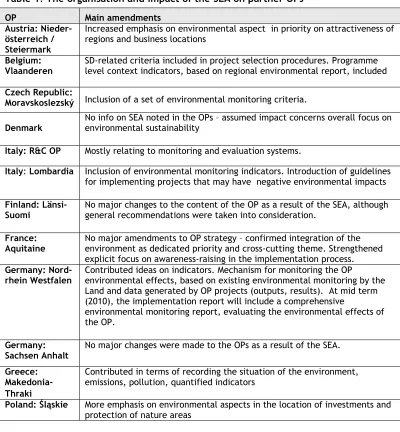
(26) From environmental sustainability to sustainable development in Structural Funds programmes?. process, was apparent where experience in this field was limited or where there was a lack of time and human resources. As noted above, all OPs were obliged to carry out Strategic Environmental Assessments (SEAs), and this clearly increased the scope for expert input at this level. The value attached to the SEA process and its impact on OPs varied in different programming contexts. For some OPs, the SEA process could be seen as part of the overall effort to comply with Commission regulations and as a testing administrative exercise to assess an issue that could only have very limited impact. This could apply to Regional Competitiveness & Employment OPs with limited funding and a narrow focus on economic growth or to Convergence OPs administering a significant level of funding and pursuing a wide range of actions. Nevertheless, in all cases, the execution of Strategic Environment Assessments had some basic value (see Table 1). Table 1: The organisation and impact of the SEA on partner OPs OP Austria: Niederösterreich / Steiermark Belgium: Vlaanderen. Main amendments Increased emphasis on environmental aspect in priority on attractiveness of regions and business locations SD-related criteria included in project selection procedures. Programme level context indicators, based on regional environmental report, included. Czech Republic: Moravskoslezský. Inclusion of a set of environmental monitoring criteria.. Denmark. No info on SEA noted in the OPs – assumed impact concerns overall focus on environmental sustainability. Italy: R&C OP. Mostly relating to monitoring and evaluation systems.. Italy: Lombardia. Inclusion of environmental monitoring indicators. Introduction of guidelines for implementing projects that may have negative environmental impacts. Finland: LänsiSuomi. No major changes to the content of the OP as a result of the SEA, although general recommendations were taken into consideration.. France: Aquitaine. No major amendments to OP strategy – confirmed integration of the environment as dedicated priority and cross-cutting theme. Strengthened explicit focus on awareness-raising in the implementation process. Contributed ideas on indicators. Mechanism for monitoring the OP environmental effects, based on existing environmental monitoring by the Land and data generated by OP projects (outputs, results). At mid term (2010), the implementation report will include a comprehensive environmental monitoring report, evaluating the environmental effects of the OP.. Germany: Nordrhein Westfalen. Germany: Sachsen Anhalt. No major changes were made to the OPs as a result of the SEA.. Greece: MakedoniaThraki Poland: Śląskie. Contributed in terms of recording the situation of the environment, emissions, pollution, quantified indicators More emphasis on environmental aspects in the location of investments and protection of nature areas. IQ-Net Thematic Paper 22(2). 16. European Policies Research Centre.
(27) From environmental sustainability to sustainable development in Structural Funds programmes?. Spain: País Vasco Sweden Norra Mellansverige OP, Mellersta Norrland OP UK: North East England. UK: Scotland UK: Wales. Facilitated the identification of common environmental project selection criteria and a uniform monitoring system Coverage of environmental issues extended, notably by including more environmental targets, project selection criteria and monitoring indicators. Amendment to strategy to refer to human resource actions under the priority for Enhancing and Exploiting Innovation, reference to BREEAM standard added to implementing provisions, rewording of programme objective to reflect sustainability commitment by including reference to disadvantaged areas. Extended scope of eligible activity, strengthened use of environmental theme in monitoring criteria (see case study box). A number of aims and indicative actions were added relating to resource efficiency, reductions in air emissions, improved quality of life through urban development and access to employment.. Source: EPRC research. At the very least, the SEA guaranteed some focus on environmental related issues in the drafting process. In Denmark, the conclusions of the SEA had limited impact on the ERDF programme but the process helped to maintain and perhaps increase the focus on environmental sustainability. The SEA process was also regarded as a useful tool in helping programmers to develop their understanding of SD issues and how they could be integrated into the programmes. This applied, for instance, to the County Administration Boards in Sweden, (although the shift of implementation competences for 2007-13 to a new MA, NUTEK, means that a new round of training in implementing SD issues is planned). The SEA process also ensured that SD-related issues were part of the agenda of broader programme partnership groups. In the Austrian and German programmes, external experts involved in the SEA participated actively at workshops and meetings of OP working groups. In Vlaanderen and Aquitaine, a focus of the programmes is on raising awareness and promoting SD-related initiatives, and SEA consultation processes made an important early contribution in this respect. Thus, even where the results of SEA merely confirmed the broad approach to SD and the core SD interventions of the OPs, the process itself had value. The impact of the SEA process depended on a range of factors that applied to the broader evaluation approach. Issues such as synchronicity were important: delays in carrying out the SEA could obviously lead to it being responsive to changes of the ROP and not vice versa (as was the case for some Greek OPs). In contrast, in some OPs, SD and environmental experts, including evaluators for the SEA, worked in parallel to programme drafting, ensuring a more integrated process (see Box 1).. IQ-Net Thematic Paper 22(2). 17. European Policies Research Centre.
(28) From environmental sustainability to sustainable development in Structural Funds programmes?. Box 1: Scotland: SEA as an integral part of programme design In Scotland, the SEA process was iterative and fed into the programmes as they developed.. Under both OPs, SEA recommendations led to the scope of eligible activity being extended to provide positive support for issues such as: support for environmental audits and carbonfootprint approaches for enterprises (Highland and Islands of Scotland Priority 1, Lowlands and Uplands of Scotland P2); support for resource and energy efficiency initiatives by enterprises (Highlands and Islands of Scotland Priority 1, Lowlands and Uplands of Scotland P2); support for ‘green design’ and higher-than-required construction standards for building/transport projects in support of sustainable communities (Highlands and Islands of Scotland Priority 3, Lowlands and Uplands of Scotland Ps 3 and 4). In addition, monitoring has been informed by the SEA, and the OPs will measure the following on an on-going basis: number of energy-saving and resource-efficiency projects; number of renewable energy projects (e.g. the number of renewable energy research projects in Priority 1 of both OPs).. In some cases, there are plans for this involvement to continue into later programme phases. In Wales, SEA conclusions will also be used on a continuing basis in that, when projects are going through the approval process, the SEA risk assessment will be used as a reference point. In Lombardia, the SEA has been designed as an ongoing process, following the whole life of the programme and informing all the phases. This is considered the main innovation with regard to the experience 2000-2006, where the assessment of the programme’s positive environmental effects and trade–offs was confined to specific occasions (e.g. ex ante, mid tem evaluation; project appraisal etc.). Beyond this, it is possible to identify some basic trends concerning the use of SEAs in the OPs. First, most SEAs focused on environmental sustainability, rather than incorporating a broader, ‘three-pillared’ sustainable development perspective. This is understandable given the SEA remit. The SEA could be perceived as implicitly supporting a comprehensive approach to sustainable development by ‘environment-proofing’ the social cohesion and economic growth interventions of OPs. For instance, the SEAs of the Swedish OPs provide no specific definition of SD. Rather, they state that the aim is to integrate relevant environmental aspects into the programmes so that sustainable development is promoted. The Niederösterreich OP outlines the aim of the SEA process in terms of ensuring the balance between economic, social and environmental aspects: “a high standard of environmental protection and the consideration of environmental aspects at an early stage – of the same value as economic and social interests”.. IQ-Net Thematic Paper 22(2). 18. European Policies Research Centre.
(29) From environmental sustainability to sustainable development in Structural Funds programmes?. Second, the evaluation culture and capacity in different programming contexts had an impact on the SEA process. The capacity to utilize evaluations and assessments as programme management tools rather than as basic regulatory requirements varies. Third, given time and funding constraints, for several OPs, the SEA was an obligation based on the regulations, not an instrument for the integration of sustainable development with the ROP. However, there were some exceptions. For instance, in Länsi-Suomi the SEA was carried out at the priority level and focused on social, ecological, cultural, economic and equality impacts. 18 The first three impacts (social, ecological and cultural) were required to be carried out as part of the domestic legislation, whereas the latter two (economic and equality) were simply considered to be important for the OP. As a result, the OP contains detailed discussion of environmental synergies and trade-offs. Fourth, where SEAs had an impact on OPs, this tended to be on arrangements for management and implementation rather than content. In several cases (e.g. NordrheinWestfalen, Moravskoslezský, Aquitaine and País Vasco) the OP was adapted to include a stronger emphasis on the environmental theme in monitoring arrangements. In this way, SEAs can be seen as part of a process where SD-related themes have become less abstract and more operational in the current programme period. In summary, assessing the overall integration of SD in the design of NSRFs and OPs, two basic themes can be identified. •. The predominance of environmental ministries and agencies, NGOs and experts in SD-related inputs into the NSRF, reflects continued conflation of SD with narrower environmental concerns.. •. There is evidence that, in some cases, SD interests were incorporated into the drafting process in an integrated way from the inception to approval stage. Elsewhere, however, there was still a tendency to look at SD issues only through ‘one off’ consultations and in isolation at some stage of the drafting process. This approach made it difficult to achieve the ultimate SD objective of pursuing economic development, social inclusion and environmental protection as interconnected, mutually reinforcing elements of a development strategy.. 18. The assessment focused on five impact areas, including: social impacts (health, living conditions); ecological impacts (soil, water, air, climate, vegetation, diversity of nature); cultural impacts (urban structure, built environment, landscape, cityscape, cultural heritage); economic impacts (utilisation of natural resources, employment, education, economic development, competitiveness, expenditure, image); equality impacts (regional equality).. IQ-Net Thematic Paper 22(2). 19. European Policies Research Centre.
(30) From environmental sustainability to sustainable development in Structural Funds programmes?. IQ-Net Thematic Paper 22(2). 20. European Policies Research Centre.
Figure
+7



Related documents