Anticipating bias
Fayen Ke-Xiao d’Evie
A thesis submitted for the degree o f
Doctor o f Philosophy o f
The Australian National University
This thesis is entirely the result of my own original work, except where indicated otherwise.
Although a Ph.D. requires independent research, the process of undertaking that research is far from an individual pursuit. There are many people that I must express thanks to for the varying contributions they have made to enable me to produce this thesis. Firstly, I would like to thank my supervisory panel: Steve Dovers, whose suggestions spurred many of my key arguments in this thesis, and whose attentiveness to the role of supervisor has been highly appreciated; Anna Carr for her critical thinking and steadfast encouragement that this topic was significant; Helen Ross for valuable discussions about my case study and for patient and detailed editing; and Tony Jakeman for providing challenging counter-arguments, and for first introducing me to the notion that the Centre for Resource and Environmental Studies (CRES) could offer a
stimulating and challenging base for my PhD. Many others have provided helpful suggestions and advice about the content of this thesis and the process of PhD research, particularly John Taylor and Jacqui Tracey. Special thanks are due to Henry Nix for his unwavering support and personal concern.
Thankyou to those who so willingly participated in my case study, and whose
experiences, thoughts and reflections are an intricate part of this thesis, including Tony Jakeman, Helen Ross, Brendan Mackey, Chris Buller, Samjamjarus Rajani, Kam Trisophon, Prathuang Narintarangkul Na Ayuthaya, Boonrawd Supaudomlerk, Chaithawat Saowapon, Penpom Janekamkij, Sompom Sangawongse, Varapom Punyawadee, Pichart Wattanaprateep, Andrew Walker, Michelle Scoccimaro, and Claude Dietrich. During my fieldwork in Thailand, many people contributed to my research by inviting me into their home and work environments, including many of the staff of the Department of Land Development and Office of Highland Development. I thank you all for enriching both my research and my personal experiences of Thailand. Particular thanks are due to Samjamjarus Rajani for his warmth, generosity, and valuable insights into the politics of highland decision-making.
Many of the general and academic staff at CRES have provided practical, emotional and intellectual support, humour, and friendly conversation, especially George Fletoridis, Sue Kelo, and Fred Ghassemi. Thanks to past and present students of CRES: those who inspired me to begin; those who kept me company; and those whose own PhD
submissions reminded me that there is a light and an exciting post-thesis future at the end of the tunnel. Thanks especially to Jon Barnett, Heidi Ellemor, Jason Evans, Andre Zerger, and Phil Gibbons.
Thanks to Toni Bailey, Stuart Bailey, and Anna Gilfillan for their friendship and support which has ensured that the past few years will always be looked back on fondly.
Special thanks to Oliver Rose for his constant encouragement, editorial and production assistance, and unwavering humour and sensitivity in the face of apparent crises. Thanks also to my housemates and pseudo-housemates who have cheerily made countless cups of tea and put up with my escalating stress in the final stages of preparation of this thesis.
This thesis concerns the effectiveness of computer-based Decision Support Systems (DSS) to assist integrated environmental management (IEM). The conventional rationale for DSS, based on positivist epistemology, argues that the objectivity, expertise and efficiency of these systems frames an indispensable role for DSS in enabling stakeholders to cope with the demands of modem environmental decision making.
Drawing on theory of the construction of knowledge, this thesis challenges the purported objectivity of DSS, and argues that bias is an inescapable feature of DSS. Bias implies that the use of the technology systematically promotes (elements of) one perspective over another, either because the output of the technology systematically promotes one perspective over another, or because use of the technology limits the opportunities of certain actors to participate in environmental decision-making. A taxonomy of bias relevant to environmental DSS is proposed. Challenging the purported expertise of DSS, I draw on contemporary development, adaptive management and other literature to argue that, like knowledge, interpretations of expertise are also multiple and socially constructed. Alternative approaches to DSS development are explored which respond to the democratisation of expertise. Each of these approaches is presented as political processes in which validation of the structure, form and content of the DSS is enmeshed in systems of power. Consequently, I argue that regardless of the DSS development approach adopted, a commitment to equity and transparency dimensions of the IEM paradigm demands critical appraisal of the systems of power engaged during development, and their implications for bias. Addressing the purported efficiency of DSS, I further argue that the interrogation of potential biases during DSS development is imperative for effective - and efficient - delivery of decision support.
In response to recognition of the constructedness of knowledge and the partiality of science, this thesis proposes a reorientation of the processes of development and use of DSS to better recognise and manage the potential for bias. A new theoretical
framework is proposed which reconstitutes DSS development as reflexive,
precautionary practice. Drawing on the taxonomy of bias, an analytic framework is proposed to facilitate an interrogation of bias by developers and users of DSS to enable the anticipation, avoidance and minimisation, both prior to and during DSS design and development, of potential biases likely to interact transformatively with the decision making environment.
To test the theoretically-derived frameworks in practice, the frameworks are used to guide reflexive DSS development in a joint Thai-Australian project which is developing a DSS to assist Integrated Land and Water Resource Assessment and Management (IWRAM) in the highlands of Northern Thailand. Firstly, the analytic framework is used in conjunction with a review of the highland environmental history and the
Contents
Statement of originality i
Acknowledgments ii
Abstract iii
1. Introduction 6
1.1 Supporting integrated environmental management 6
1.2 Research focus and approach 7
1.3 Key concepts 8
1.4 Thesis structure 11
2. Methodology 14
2.1 Introduction 14
2.2 Philosophy and approach 14
2.3 Forming and framing the inquiry 16
2.4 Data collection 18
2.5 Data analysis: Relating data and theory 24
2.6 Credibility, dependability, transferability and confirmability 26
2.7 Confronting reflexivity: Role of the researcher 27
2.8 Sensitive research 30
2.9 Limitations of the methodology 30
2.10 Summary 31
3. Environmental decision support systems 33
3.1 Introduction 33
3.2 Conventional environmental DSS 33
3.3 DSS, objectivity and bias 34
3.5 DSS as conditional expertise 47
3.6 From (in)efficiency to effective decision support 55
3.7 Conclusions 58
4. From critique to progress: Reorienting DSS development 60
4.1 Introduction 60
4.2 Reflexivity: Probing the frame 60
4.3 Precautionary practice: Managing bias 61
4.4 Learning through reflection on practice 63
4.5 Collaborative learning 64
4.6 Critical dialogue to interrogate biases 67
4.7 Weaving the threads: A new theoretical framework for DSS development 68
4.8 Analytical framework: Anticipating and interrogating bias 69
4.9 Conclusions 71
5. Locating the decision-making environment 74
5.1 Geographic profile 74
5.2 Highland environmental history: Politics and pressures 76
5.3 Political culture of environmental decision-making 95
5.4 DSS for the Northern Highlands 99
5.5 Locating the IWRAM project 100
5.6 Politics of highland decision support: Anticipating bias 103
5.7 Conclusions 108
6. Framing environmental decision support and anticipating biases 111
6.1 Introduction 111
6.2 The unfurling of the IWRAM project and DSS 112
6.3 Testing the analytical framework with the Australian team 119
6.5 Confronting divergence? Meeting of the two teams 148
6.6 Postscript 153
6.7 Conclusions 153
7. Probing the frames 156
7.1 Introduction 156
7.2 Framing environmental decision support: Tensions 156
7.3 Shaping the DSS: Contributing factors 168
7.4 Effective reorientation? Assessing the frameworks 172
7.5 Conclusion 175
8. Conclusions and discussion 179
8.1 Environmental decision support: Anticipating bias 179
8.2 Implications for DSS development 183
8.3 Implications for integrated research 185
8.4 Limitations of the research: Opportunities for future research 185
8.5 Reorienting environmental DSS: A critical future... 187
Appendices
Appendix 1 Questionnaires for Part A of Australian trial of frameworks 189
Appendix 2 Interview guide for Thai trial of frameworks 196
Appendix 3 Agenda for Thai group dialogue, November 1997 197
Appendix 4 Coding frame for analysis of transcripts 198
List of Boxes
Box 2-1 Excerpts from field notes 22
Box 2-2 Analysis of modes of framing 25
Box 4-1 From the precautionary principle to precautionary DSS development 62
Box 5-1 Highland development projects: Non-coordination and non-participation
revealed 87
Box 6-1 Framing the IWRAM project and the DSS: February 1996 115
Box 6-2 Framing the IWRAM DSS: September 1996 118
Box 8-1 Contributions of this thesis to theory, method and practice 179
List of Figures
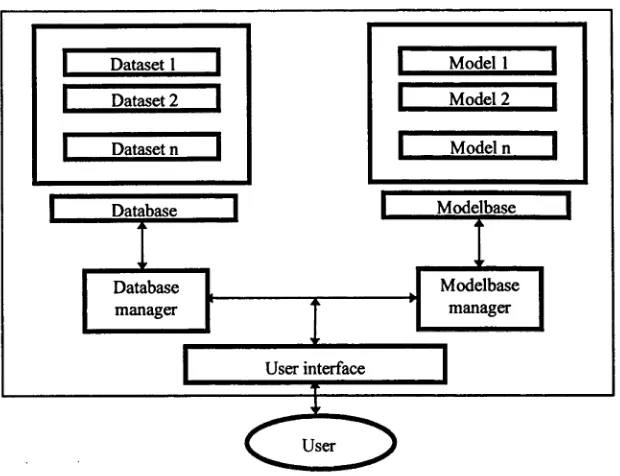
Figure 1-1 Generic DSS architecture (adapted from Sprague (1980:24)) 10
Figure 1-2 Structure of this thesis 12
Figure 2-1 Evolution of the research design 19
Figure 5-1 Northern Thailand (Source: Kanok and Benjavan 1994:4) 75
Figure 5-2 Selected state agencies with an interest in highland natural resource
management 98
Figure 5-3 Procedural framework of the IWRAM project 103
Figure 6-1 Collaborators in the IWRAM research project referred to in narrative 112
Figure 6-2 Distinguishing a DSS research component, August 1996 118
Figure 6-3 Framing the DSS: Australian project leader, August 1997 129
Figure 6-4 Framing the DSS: Australian DSS leader, December 1997 151
Figure 6-5 Framing the DSS: Australian sociocultural leader, February 1998 152
Figure 7-1 Amstein’s (1969) ladder of participation 165
Figure 7-2 Thai team’s conceptions of participation and the DSS 165
Figure 7-3 Potential participation in DSS development 170
List of Tables
Table 2-1 Dimensions of research philosophy and approach 15
Table 2-2 Data collection methods 20
Table 3-1 Taxonomy of bias associated with environmental DSS 46
Table 3-2 Taxonomy of ignorance: Smithson (1991) (Abbreviated) 46
Table 4-1 Framework for anticipating bias in DSS 72
Table 5-1 Spatial disparities in per capita income in Thailand (baht/yr) 85
Table 7-1 Divergent framings: Comparing DSS-for-research and DSS-for-practice 157
Table 7-2 Alternate framings of the DSS: Differing construing of stakeholder
relationships 161
Table 7-3 Disciplinary within Australian team: Framing decision-making scales 167
Introduction
1. Introduction
1.1 Supporting integrated environmental management
In the 1950s, the dramatic social advancements enabled by new technological
innovations led to a widespread public euphoria about the seemingly limitless capacity of humans to use science and technology to progress towards a modernised, utopian world. During the 1960s, several seminal critiques, notably Carson (1962), Mumford (1967), and Ehrlich (1968), highlighted the failings of the prevailing technocentric approach, including its role in instigating and exacerbating environmental crises. Over the ensuing two decades, public recognition increased of the threats that resource depletion and environmental degradation pose to human survival, and calls intensified for a radical change in approaches to dealing with environmental problems. A particular focus for critical attention was the fragmented nature of traditional state responses to environmental management, an administrative manifestation of the scientific
reductionist belief that complex problems are best solved through disaggregation into their component parts. Critics argued that fragmented approaches were inadequate given the increasing complexity of modem environmental problems, and that they obscured the interrelationships among ecological, cultural, political and economic spheres in shaping environmental problems (Caims and Crawford 1991, Bartlett 1990). In response to dissatisfaction with the management outcomes of disjointed, narrowly focussed environmental management, a shift was proposed towards a more holistic and integrated approach (Margerum and Bom 1995, Bom and Sonzogni 1995). Within this context, Integrated Environmental Management (IEM) gained support in both political and academic discourse as a better framework to guide environmental management (Lundquist et al.. 1985, Easter et al.. 1986, Lang 1986, Caims 1991, Burke 1994, World Commission on Environment and Development 1987, United Nations 1992).
Under the rubric of IEM, environmental decision-makers now face an increasing torrent of information which they are expected to consider and analyse if they are to produce ‘good’ decisions. For example, Chapter 8 of Agenda 21 discusses the need to make systematic and simultaneous use of social, economic, developmental, ecological and environmental data, and to adopt comprehensive analytical procedures for prior and simultaneous assessment of the impacts of decisions (United Nations 1992:65,66). Accordingly, decisionmakers must monitor, process, assess, validate and analyse larger quantities of complex information, often within shorter time periods and more
constrained financial resources. Perceiving some decision-makers to be drowning under the enormity of comprehending and managing the information deluge, developers of computer-based Decision Support Systems (DSS) have offered their systems as tools to navigate through the complexity of the incoming information. Advocates point to the potential efficiency, expertise and objectivity gains to be made through the use of DSS. On the surface, their arguments are compelling, and place DSS as an indispensable tool if we are to cope with the demands of modem environmental management. As a result, the past decade has witnessed escalating enthusiasm for, investment in, and
However, from both academic and management spheres, an alternate perspective suggests that computer-based DSS may be more of a burden than a blessing. Some claim that, far from enhancing objectivity, DSS have been used to bolster particular political positions while invalidating alternate perspectives. Justifying their reluctance to incorporate DSS within their decision-making, other targeted users have argued that the DSS developed for them has failed to present as either expert or efficient. By attending to these latter concerns, this thesis will explore the (in)effectiveness of DSS to assist integrated environmental management.
1.2 Research focus and approach
This thesis will use the concept of bias (See Section 1.3.3) to argue that the
effectiveness of conventional DSS to assist IEM has been undermined by the modernist and positivist underpinnings of DSS development and use. This research grew from a critical concern with exaggerated claims about and faith in environmental DSS, and a practical interest in a constructive reorientation of DSS to reconcile this concern. The thesis thus represents an attempt to link critical and reconstructive theory and practice. Broad aims of this thesis are:
1) Drawing on post-positivist theory, to develop a critique of the conventional
rationale for environmental DSS.
2) In response to this critique, to reconstruct the process of DSS development.
3) To trial the proposed reconstruction in practice.
As will be detailed in Section 2.2, this thesis has followed an evolutionary approach. As each of the general research aims above were addressed, themes and concepts emerged which refined subsequent aims. In particular, while addressing Aim 1, the notion of bias emerged as having explanatory power, and thus Aim 2 was amended to include development of theoretical and analytical frameworks which would guide an
interrogation of bias. Aim 3 was consequently revised to include trialing these theoretical and analytical frameworks in practice.
As will also be detailed in Section 2.2, the focus of this research evolved through a dynamic interplay between theoretical concerns and practical experience as part of a joint Australian-Thai project which is developing a DSS to assist Integrated Water
Resource Assessment and Management (IWRAM) in the highlands of Northern Thailand. To achieve Aim 3, the IWRAM project provided a case study to trial my reconstruction of DSS development. The case study research aims were:
3.1) To gain an understanding of the decision-making environment of the highlands of Northern Thailand.
3.2) To catalyse and facilitate IWRAM researchers to engage in an
interrogation of bias guided by the proposed theoretical and analytical frameworks.
3.3) To gain insight into how different IWRAM researchers and other highland stakeholders construe decision support.
3.5) To assess the effectiveness o f the proposed theoretical and analytical frameworks.
Drawing on the experience o f the IWRAM case study, two further general research aims emerged:
4) By drawing on the trial o f the proposed frameworks in practice, to feedback to and refine the proposed frameworks.
5) By drawing on the trial o f the proposed frameworks in practice, to evaluate the potential for the frameworks to be used in other contexts.
To fulfil the preceding research aims, I drew on both theoretical literature and
substantive, grounded insights. As no single discipline emerged as having sole claim to the focus o f this research, a transdisciplinary approach to both theoretical review and methodology was adopted. Literature discussing DSS is almost exclusively the domain o f mathematicians, computer programmers, cognitive scientists and organisational decision theorists. My integrative approach to this inquiry, which drew on a variety o f sociopolitical bodies o f literature which are relevant to environmental decision support, but which have traditionally been neglected by DSS literature, enabled a new
perspective on DSS development.
i.3 Key concepts
1.3.1 Integrated Environmental Management
Whilst environmental management literature notes diverse conceptualisations o f the philosophy and process o f IEM (for instance, Hufschmidt 1986, Bom and Songozni
1995, Mitchell and Hollick 1993), general consensus has emerged as to several essential substantive dimensions. Underpinning IEM is an ecological sustainability ethic which connotes a commitment to favour management o f the environment for long-term sustainability over exploitation o f natural resources for short-term profit. Another cornerstone o f IEM is an adherence to systems philosophy which emphasises
interdependence between critical elements and processes o f the ecosystem and focuses on those complex interrelationships, rather than solely on the behaviour o f discrete individual components (Radosevich 1987). Consequently, a holistic, inclusive or comprehensive approach is promoted which directs the consideration o f all relevant issues, variables and perspectives (Margerum and Bom 1995). Due to emerging criticism o f holism as inapplicable in practice, many recent IEM approaches replace the holism principle with a strategic or pragmatic focus on crucial issues, variables and goals, and their linkages (Mitchell 1990). Another fundamental component o f IEM is
integration among the multiple and often conflicting environmental perspectives o f the stakeholders that comprise the community o f interest within the management system (Margerum 1995). This yields an emphasis on participatory decision-making achieved through co-operation and collaboration instead o f competition (Wallis and Robinson
1991:32). Reflecting its sustainability roots, principles o f equity (including
1.3.2 Decision support systems
The concept of Decision Support Systems (DSS) emerged during the early 1970s as computer-based systems designers began to explore how direct interaction with data and analysis models might help business managers cope more effectively with ill-structured problems (Sprague and Carlson 1982, Gorry and Scott-Morton 1971). An ill-structured problem implies that formulation of the problem (including the structure, constraints, scope and objectives) and of potential solutions are difficult to determine, uncertain and may change during investigation (Konsynski et al. 1992, Abel et al. 1996:1). The term 'Decision Support Systems' was coined to differentiate these endeavours from electronic data processing, management information systems (MIS) and operations research (OR) which deal with well-structured problems. Over the past two decades, the application of DSS has expanded beyond business spheres into broader arenas of decision-making, including medical diagnostics (Hudson et al. 1995), legal judgements (Nagel 1993), and military strategy (O’Neill 1998), as well as environmental management. Amongst numerous other natural resource decision-making problems, DSS have been developed to: support ecosystem and watershed management (Laacke 1995); perform
environmental impact assessment for water resources development projects (Fedra 1995:10); manage environmental flows (Young et al. 1995); optimise crop production efficiency (Reddy and Pachepsky 1997:1143); manage forest stands (Nute et al. 1995); and forecast the spread of crop viruses (Morgan et al. 1997:1128).
While there is not a single, universal architecture for DSS (Wu 1996:9), several elements common to conventional systems may be distinguished. Sprague (1980:24) identifies three principal components of a decision support system: a database
management or ‘knowledge’ system; a model base management or ‘problem-solving’ system; and a software system to manage the interface between the user and the system (Figure 1.1). Although a variety of alternate, more recent descriptions have been proposed (Kersten and Michalowski 1997:5), Sprague’s classic description provides the essential conceptual elements.
To summarise the basic procedure, a decisionmaker interactively, via the user interface, accesses data stored in the database, generates alternatives using an appropriate model and arrives at a solution (Wu 1996:4). Data incorporated in a DSS might include electronic text documents, statistical data, tables of numerical data, rule-based representations of the knowledge of relevant experts, digitised maps or other
electronically scanned images. The database manager processes and manipulates data to enable comparison, contrast, classification, and deduction. The model base may
Figure 1-1 Generic DSS architecture (adapted from Sprague (1980:24))
Although DSS were intended as a move away from MIS and OR, conventional DSS design and development has been strongly influenced by these traditions. A legacy of the influence of these disciplines on the field of DSS has been the inheritance of an instrumental techno-rational approach to decision-making, which emphasises
quantification, rationality and computational efficiency (Angehm and Jelassi 1994:269). Accordingly, the dominant model of decision-making adopted throughout DSS
literature is Simon’s (1957:60) ‘intelligence-design-choice’ rational theory, which is used both “to explain the process of decision-making and to derive the characteristics of computer-based systems aimed at supporting this process” (Angehm and Jelassi
1994:269). Adherence to Simon’s model prescribes that effective decision-making entails: amassing optimal knowledge about the problem environment; selecting and ordering decision-relevant factors into a logical and transparent problem structure; generation, analysis and comparison of decision alternatives which satisfy specified decision criteria; and finally, selection of the optimal decision solution (Lein 1997:95, Kersten and Michalowski 1997:2). A further legacy of the historical context of the emergence of DSS has been inheritance of the traditional approach to computer systems development, whereby “a system is designed by computer specialists, in accordance with the technical and economic criteria set by management, but with little reference to current and future users; this design is then ‘implemented’ - with limited scope for modification” (Williams 1987:77). This approach is echoed within conventional environmental DSS design, where DSS tend to be “developed by groups of technical experts, quite separate from the ‘hoped-for’ end-users” (Ewing et al. 1997:3).
1.3.3 Bias
In this thesis, which takes the ontological position that knowledge is socially
constructed, bias is conceptualised as a relative, political term, indicating promotion of one perspective over another. A DSS is described as biased if the use of that technology is perceived to systematically promote (elements of) one stakeholder perspective over another, either because the content or output of the technology are perceived to promote (elements of) one stakeholder perspective over another, or because the use of the
technology is perceived to limit the opportunities of certain stakeholders to participate in decision-making relative to before the introduction of the technology.
Conceptualising bias in these terms recognises that bias, like knowledge, is socially constructed and negotiated, and that perceptions of bias will differ depending on the standpoint of the stakeholder who is attributing bias (cf Smithson 1989).
Within the positivist paradigm, ‘bias’ is defined as distortion from the true reality. Good research is deemed to be that which is non-biased. Thus, conventional usage of the term ‘bias’ often invites negative connotations. This thesis seeks to overturn an automatic interpretive alliance between ‘bias’ and ‘substandard research’. As will be elaborated in Chapters 3 and 4 ,1 argue that bias is inherent in DSS development, and that reflexive treatment of bias may enhance decision support.
1.4 Thesis structure
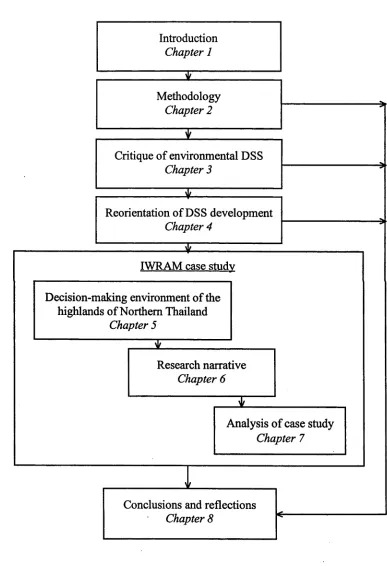
The structure of this thesis is illustrated in Figure 1.2.
Chapter 2 outlines the philosophical approach and methodology of the thesis.
The initial part of Chapter 3 outlines the conventional rationale (objectivity, expertise and efficiency) for the development and use of DSS to assist integrated environmental management. The latter and substantive part of the chapter challenges the assumption that the conventional approach to the development of DSS yields innately objective, expert decisions. Instead, it is argued that bias is an inescapable feature of DSS. A taxonomy is proposed which identifies sources of bias relevant to the development and use of environmental DSS. Chapter 4 describes a new theoretical framework for the development of environmental DSS which emphasises precautionary practice and critical learning via the discursive interrogation of bias. Based on the taxonomy of bias, an analytical framework is proposed to guide interrogation of potential and existing biases associated with a particular DSS.
To test the potential of the frameworks proposed in Chapter 4 to inform DSS development, Chapters 5, 6 and 7 present a case study of the frameworks with the IWRAM project. Chapter 5 locates the case study analysis within the decision making environment of the Highlands of Northern Thailand. Note that to introduce and visually locate the highland environment, each of the chapter cover pages features images from the highlands of Northern Thailand. Chapter 6 presents a narrative of the evolution of the IWRAM project and the development of the IWRAM DSS, focussing on
research are advanced. Limitations of the research are canvassed, and future research directions are suggested.
Figure 1-2 Structure o f this thesis
Analysis of case study
Chapter 7 Research narrative
Chapter 6
Reorientation of DSS development
Chapter 4
Conclusions and reflections
Chapter 8
Methodology
Chapter 2
Introduction
Chapter 1
Critique of environmental DSS
Chapter 3
Decision-making environment of the highlands of Northern Thailand
Chapter 5
[image:16.523.81.468.151.717.2]Methodology
Over the past century, the northern highlands o f Thailand have been subject to extensive clearing, particularly fo r agriculture, including opium cultivation. This site, in a remote area o f the highlands, cleared o f all vegetation and on an
2. Methodology
2.1 Introduction
This chapter discusses the philosophy, approach and methods of this thesis. In much research, the process of inquiry is packaged as a neat hypothesis-testing study which has proceeded linearly according to its initial ideal research design. In this chapter, I have chosen an alternate style of presentation which reflects a commitment to transparency. I have aimed for an honest description of the research design as it evolved, including recognition of the unanticipated frustrations, opportunities, and insights which
continually shaped the character and conduct of the research. This mode of presentation emphasises that the iterative (re)construction of knowledge manifested in this thesis occurred in a dynamic environment and was socially mediated by my relationship with my research participants (Steier 1991:4).
Section 2.2 discusses philosophical and epistemological assumptions that guided this inquiry and characterise key dimensions of my research approach. Section 2.3 recounts the narrative of the evolution of my research design. Sections 2.4 and 2.5 describe my data collection and analysis methods. Section 2.6 discusses the credibility,
dependability, transferability and confirmability of these methods. Section 2.7
examines my role as a researcher, including my interactions with the participants in the IWRAM research team which emerged as the case study for this inquiry. Section 2.8 explores the sensitivity of this research topic. Finally, Sections 2.9 and 2.10 summarise the limitations and strengths of my methodology.
2.2 Philosophy and approach
The twentieth century, particularly since the 1950s, has been witness to multiple and mounting attacks on the dominance and validity of positivistic empirical inquiry. Critiques of the foundations and aims of positivism, and the practice of positivist research, have featured within numerous social research discourses, notably
hermeneutics (Winch 1958), Marxism (Adorno 1967), feminism (Harding 1986), and communicative reconstruction (Habermas 1979, 1988). Among the new paradigm alternatives to positivist methodology which have been advanced are constructivism (Gergen 1985, Reason and Rowan 1981), naturalistic inquiry (Lincoln and Guba 1985, Erlandson et al. 1993) and deconstructionism (Derrida 1982).
Underlying and intertwined with both the research content and methodology of this thesis are ontological and epistemological themes common to many post-positivist approaches. Firstly, the positivist concept of a single external and tangible reality is replaced by the notion that there are multiple socially constructed realities.
Methodologically, the acceptance of multiplicity and complexity encourages integration between and among different sociocultural perspectives, including conventional
judgements. Consequently, the positivist emphasis on demonstrating absolute neutrality or objectivity is displaced in favour of a concern for self-interrogation and transparent communication of subjective influences. The research process may thus be regarded as a circular or spiralling process constituted and guided by social and self-reflexivity1. Accordingly, evolving, flexible research designs are emphasised. The reflexive, inter- subjective model of research leads to another common feature of post-positivist approaches: a tendency to view research as a collaborative exchange, rather than research on a passive subject.
Of the suite of post-positivist approaches, contemporary critical theory, in particular, captures several philosophical threads underlying the content and methodology of this thesis. Firstly, my interest in critiquing conventional approaches to DSS development, articulated in Chapter 3, has parallels with a prevalent theme within critical theory of deconstructing the conventional scientific enterprise. Secondly, this thesis shares critical theory concerns about “the ways social relations also mediate power relations to create various forms of alienation and inhibit the realisation of human possibilities” (Morrow 1994:10), as well as an emphasis on the importance of the social context of production and implementation of technology. Thirdly, informing my research design has been a commitment to aim for constructive, useable research rather than purely abstract theory, echoing the critical theory contention that “a theory has no real value unless it can be demonstrated to have practical implications” (Habermas 1979). However, this thesis is not situated strictly within either critical theory or any other particular post-positivist approach. As no single theoretical or empirical field could have had sole claim to inform this inquiry, I searched widely for illuminating constructs from multiple bodies of literature. This integrative approach was not eclectic, however, as the concerns of the thesis privileged certain strands of literature. For example, situated learning theory and social and personal constructivism informed both my theoretical framework, presented in Chapter 4, and the methodology I selected for application of my analytical framework. To inform my analysis of the development of DSS by the IWRAM research team for the Northern highlands of Thailand, I reviewed literature treating the power dimensions of knowledge creation and negotiation in cross- cultural rural extension and development.
Reality construed as: multiple, constructed realities
Knowledge construed as: personally and socially constructed
Values: transparency, pragmatism, critical thinking
Role of researcher: catalyst, participant within research
Research approach: integrated, reflexive, interpretive
Adapted from Carr 1994, Scoones and Thompson 1992, M orrow 1994
Table 2-1 Dimensions of research philosophy and approach
[image:19.523.65.449.537.703.2]Although the rest o f this chapter focuses on my case study methodology, it should be emphasised that my research approach and philosophy, summarised in Table 2.1, applies both to my interactions with the case study and to the theoretical dimensions o f this thesis, as the concept o f the reflexive research spiral implies.
2.3 Forming and framing the inquiry
I began this research in m id-1995 as a core member o f the IWRAM project which provides the case study for this thesis. At that stage, my intention was to conduct PhD research on integrated environmental assessment o f the water resources o f the Chao Phraya Basin, Thailand. My initial research focussed on literature reviews o f the theory and practice o f integrated environmental management, particularly watershed or
catchment management, water resource conflicts associated with the Chao Phraya, and methods o f integrating biophysical, sociocultural and economic analyses. Based on these literature reviews, I refined my topic to exploring the usefulness o f different tools, particularly an operational framework and a computer-based modelling system, to guide integrated environmental assessment and management.
In October 1995, members o f the Australian team proposing the IWRAM project ran a workshop in Laos on Integrated Water Resources Management for South-East Asia. At this workshop, I co-presented a paper outlining the intended methodology for the
proposed IWRAM project. An invited Australian academic in the audience later wrote a paper critiquing the IWRAM approach (Hinton 1996). An anthropologist who had undertaken extensive research in Northern Thailand, he suggested that the IWRAM approach downplayed, perhaps even neglected, the political dimensions o f resource use and management in Thailand:
“...the model has difficulty in allowing for the fact that the small farmer has infinitely less capacity to realise his or her ‘vision’ than the cashed up, well connected logger, or narcotics dealer. There is also the unrecognised fact that the model is itself being produced by actors in the regional drama, for the people who develop IWRAM are not detached scientific observers: by professional
background and career experience they have an interest in promoting technocratic nostrums and will naturally tend to associate with similarly minded institutions... within the region” (Hinton 1996:6).
H inton’s warnings resonated with several ethical issues regarding transfer o f knowledge that I had been reflecting on during the previous months. After forays into dystopian, post-modern and community development critiques o f technocracy, I had become concerned that conventional operational and modelling frameworks to assist integrated environmental assessment and management, based on Western conceptions of
sustainability, m ay be unsuccessful in Northern Thailand, in terms o f being supported by local actors, if those actors perceived the assumptions underlying the frameworks to be irrelevant in the local context. I proposed to interview key stakeholders in highland environmental management to elicit their different perceptions o f sustainability and resource use, and to develop alternate operational and modelling frameworks which would better incorporate these perspectives.
for the IWRAM project2. This latter role primarily involved liaising between the Thai and Australian teams, and negotiating and strengthening relationships with potential project collaborators. This experience impressed upon me the extent to which meaningful research integration seemed to depend largely upon the effort placed on sustaining and improving the fragile network of communication among researchers. During my field work, I also became aware of widespread negative sentiments towards previous foreign development and research projects in the highlands of Northern
Thailand. The failure of these projects to achieve their objectives was often attributed to the imposition of Western solutions and approaches which later proved inappropriate in the political, cultural, and economic environment of the Northern highlands. I became concerned whether an environmental decision support system developed in Australia for generic application to Asian river basins could ever pay adequate attention to the local context. I was particularly concerned that attempts by developers to incorporate ‘the local perspective’ in the DSS (as I had proposed earlier) would prove cursory, and would fail to confront possible deep-seated divergence between the developers’ normative assumptions, embedded within the form and content of the DSS, and users’ worldviews. With Hinton’s (1996) warnings in mind, I was also concerned that those best situated to participate in development of (and ultimately use) the DSS would tend to be the more powerful and wealthy, which would have significant equity implications, and potentially create a tension with distributional and participatory dimensions of IEM theory.
My fieldwork experience led me to conclude that my topic should be reframed. Although I had gone to Thailand searching for the keys to achieving integration in an external decision-making environment, my field work experience had provided critical insights into the difficulties and complexity of attempting integration within my own and the IWRAM project’s practice. Instead of seeking to construct an integrated DSS myself, I decided to concentrate on the process of development of a DSS for IEM. My interest lay in exploring whether it was possible to facilitate a more reflexive DSS development process which would provide a more effective tool for IEM by better recognising the potential for embedded biases and biases in access. Both Australian and Thai researchers involved in the IWRAM project expressed a willingness to participate in this research, and the IWRAM DSS development process became my case study. A case study involves an in-depth, multifaceted investigation of a single social phenomenon in its natural, rather than an experimental, setting (Orum et al. 1991:2). Beyond providing a descriptive overview of the social context, a case study “entails an effort to discern and articulate the linkage between the phenomenon of interest and the actual social world in which it is embedded and sustained or reproduced” (Snow and Anderson 1991:154). Initially, I considered a comparative case study approach, contrasting the experiences of the IWRAM DSS development with alternate DSS development processes. However, because of difficulties in gaining sufficient access to other DSS development teams, I decided that an examination of those processes would be too superficial. Consequently, I decided to focus on the IWRAM project as a single, intensive case study. This decision accorded with the intensive research design
approach encouraged by both critical theory and action research. Intensive research
designs emphasise “explicating the operations of causal processes and meaning structures in a single or limited number of cases” (Morrow 1994:250).
My supervisors at that time, both members of the IWRAM research team, advised me to explore action research as a potential method. Action research is a methodology
popularised by Lewin (1946) which emphasises improvement of personal practice through self-reflective inquiry (McNiff 1988:1-3). Within action research, the subject of research is not external phenomena but professional practices (Robottom 1987:111). I drew on action research principles in my framing of my thesis topic in that a key motivation was to improve the practice of integration and DSS development within the IWRAM project which I had been participating in through interventionist experiential learning (Argyris and Schon 1991:86).
Participatory action research is “a form of action research that involves practitioners as both subjects and coresearchers” (Argyris and Schon 1991:86). I incorporated
participatory action research principles in this research in the sense that I did not seek to reform the IWRAM DSS development process by imposing my perspective of progress. Instead, I framed my role as catalytic. Thus, I focussed on facilitating and highlighting participants’ construing of biases associated with the DSS and also potential actions that might be taken to manage those biases. However, this thesis does not follow a strict participatory action research model. Firstly, from the point at which I reframed my thesis, I ceased to be directly involved in the DSS development. Furthermore, the need to preserve the academic independence I believed necessary to acquire a PhD for this research meant that I maintained control over the topic and direction of this research. Thus, the research was not a collaborative project driven by the negotiated agendas and concerns of the community of practice involved, as a participatory action research study would demand.
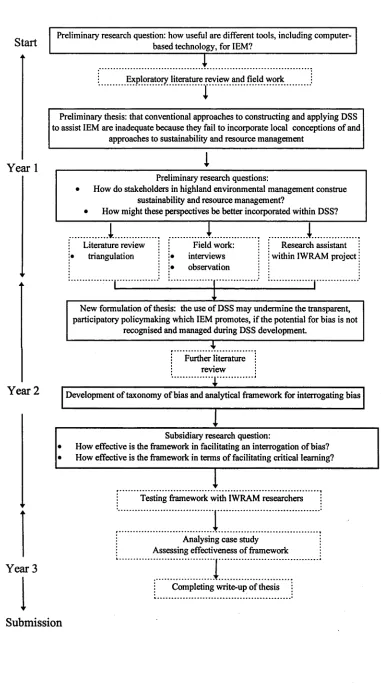
The evolution of the research design is illustrated in Figure 2.1.
2.4 Data collection
I employed multiple qualitative methods to elicit data to inform my research aims, illustrated in Table 2.2.
2.4.1 The decision-making environment o f the Northern highlands
Figure 2-1 Evolution of the research design
Preliminary research question: how useful are different tools, including computer- based technology, for I EM?
... I... ;
: Exploratory literature review and field work •
... i...
Year 1
Year 2
Year 3
Preliminary thesis: that conventional approaches to constructing and applying DSS to assist I EM are inadequate because they fail to incorporate local conceptions of and
approaches to sustainability and resource management
1
Field work: interviews observation Literature review
triangulation
Research assistant within 1WRAM project
Further literature review
Development o f taxonomy of bias and analytical framework for interrogating bias New formulation of thesis: the use of DSS may undermine the transparent, participatory policymaking which IEM promotes, if the potential for bias is not
recognised and managed during DSS development.
Subsidiary research question:
How effective is the framework in facilitating an interrogation of bias? How effective is the framework in terms of facilitating critical learning?
Preliminary research questions:
How do stakeholders in highland environmental management construe sustainability and resource management?
How might these perspectives be better incorporated within DSS?
Testing framework with IWRAM researchers
Analysing case study Assessing effectiveness of framework
: Completing write-up of thesis
R e sea rch aim s D a ta co llec tio n m eth o d s
T o gain an understanding o f the con text o f ap p lication o f the D S S , n a m ely the d ecisio n m akin g environm ent o f the highlands o f Northern Thailand
• d ocu m ent analysis
• interview s: casual conversations; unstructured, sem i-fo cu ssed interview s; sem i-structured, fo cu ssed in terview s
T o gain in sigh t into h o w different IW R A M researchers and other highland stakeholders frame d im en sio n s o f d ecisio n support
• participant-observation
T o ex p lo re the im plication s o f these differing m o d es o f fram ing for the anticipation o f bias a sso cia ted w ith the D S S
• participant-observation
• fram ew ork for anticipating bias: questionnaires, group d ialogu es, sem i-structured and i-structured in terview s
T o a sse ss the u sefu ln e ss and relevance o f m y fram ew ork for anticip atin g and reflecting on bias
• participant-observation
• an alysis o f fram ew ork application
Table 2-2 Data collection methods
whereby an interviewee would suggest other people who would be useful to interview, and so on. Those people who emerged as key informants were generally reinterviewed, often over the course of several social engagements, such as lunches, dinners, and informal parties. Interviews were mostly conducted with English-speaking
stakeholders. However, the perspectives of key non-English speaking participants in Thai environmental management were also sought. On each occasion, a translator was engaged with whom both I and the interviewee had already established rapport and trust. A tape recorder was not used during interviews because consultation with a range of interviewees suggested that the tape recorder would be invasive and would inhibit frank and open conversation. Instead, I recorded interviewees’ responses in a field notebook. Insights gained into the decision-making environment are presented in Chapter 5 as a narrative of the highland environmental history and the political culture of highland decision-making. They also inform an interrogation of potential biases associated with introduction of DSS into the highland decision-making environment, Section 5.6.
2.4.2 Modes o f framing decision support
Personal construct theory emphasises that “one need not actually adopt or share the constructs of another person (or culture) in order to understand them, but must be capable of construing what they are construing” (Ross 1996:181, Kelly 1955). To explore the different ways that IWRAM researchers were framing decision support, I needed to construe the IWRAM researchers construing of decision support. To this end, I engaged in participant observation. Observation has long been regarded by qualitative researchers as a fundamental method for understanding another cultural setting
(Silverman 1993:9). Participant-observation presupposes that a researcher who
[image:24.523.54.490.59.283.2]My participant-observation mainly took place at the Centre for Resource and
Environmental Studies, where most of the Australian IWRAM researchers and myself were based. For approximately three years, I participated in and observed project meetings, workshops and everyday interactions between project personnel and other stakeholders. I took annotated minutes during formal and informal meetings and
workshop discussions. Many critical insights emerged during the times I was employed by the project as a research assistant. This role is described in Section 2.7.
I also engaged in participant-observation with Thai IWRAM researchers and other stakeholders in highland environmental decision-making. I spent approximately six months, spread over five trips, on fieldwork in Thailand, mainly based in Chiang Mai at the Office of Highland Development (OHD)3. I observed work patterns and priorities, and talked informally with Thai project personnel and other stakeholders about the highlands. I observed and often participated in meetings involving Thai IWRAM researchers. On occasion, where language difficulties arose, a tape recorder was used to check written notes on meetings. I accompanied OHD workers on field trips into the highlands and observed the way they related to the landscape and other stakeholders. These field trips provided opportunities to gain insight into the complexities and paradoxes of the highland decision-making environment. These insights contributed to the circumtextual frame (MacLachlan et al. 1994:4) which shaped and informed my constructions and interpretations of the Thai IWRAM researchers’ personal and social interests and commitments. Box 2.1 reproduces excerpts from one field trip.
Other opportunities to gain an alternate perspective on the highland environment came in the form of social interactions, including being invited on a number of family holidays in the highlands with Thai collaborators in the IWRAM project. For example, I was invited by a Department of Land Development (DLD) official to drive with him and his daughter to a wedding in Chiang Rai and then to tour the Golden Triangle region. During the journey, we visited his lychee farm, had a meal with his friend who runs one of the DLD regional field stations, and, at the apex of the golden triangle, discussed the stark differences between the Lao, Burmese and Thai approaches to highland development and management. As with the field trips, these social
interactions provided valuable insights which would otherwise have been inaccessible. Through personal field notebooks, I kept an ongoing record of my participant-
observation experiences. I detailed observations of and reflections on activities pertaining to the case study. I also noted conceptual or practical difficulties I
experienced, as well as substantive redefinitions or refinements of my research. As a visual reminders of events, informants and the environment, I incorporated photographs and slides in my notebooks.
Participant observation ranges across a continuum from full participant through
participant-as-observer and observer-as-participant to full observer (Glesne and Peshkin 1992:40). During my early involvement with the ANU-RPF project, my role was as a full participant in that I was an integral functioning member of the project team. From the point at which I decided to focus on the ANU-RPF project as a case study, my role oscillated between a participant-as-observer (primarily reflection on intensive
interaction with the project) and an observer-as-participant (primarily observation o f the project and limited interaction with the project).
To complement m y observations, I created a chronological archive o f email and other correspondence with different IWRAM researchers which I had collected since my first interactions in 1995 with the IWRAM project. Throughout the course o f my research, many o f the IWRAM researchers routinely copied their email correspondence about the DSS to me, and provided me with their personal notes and sketches o f the DSS. These were added to the archive and have provided an invaluable source o f information detailing the different researchers’ perspectives on the DSS over time.
5 November 1997 - Hmong village in Pha Yao province
We have driven fo r fo u r hours to get to this Royal Project station. [X] is here to brief the new Governor o f Pha Yao about his land use plans fo r the three villages in this area. [X] got in trouble with the last Governor because he agreed that the villagers could grow a small plot o f opium fo r the elderly addicts so they didn’t turn to heroin. [X] told the Governor about it and the Governor agreed - then turned the situation into a campaign stunt by storming up to the village with army in
tow, pretending to ‘discover ’ the ‘illegal ’ stash.
The new Governor arrived with an entourage o f about 25 officials, 5 policemen and 5 soldiers with AK47s. The Hmong villagers watch us unsmiling from behind tall grasses. This place is surrounded by land mines which the dirt road traverses carefully between. I interviewed the Governor briefly. He wants to help the highland people to raise their income by growing organic fruit and flowers, so they won't grow opium. He said he would help market their crops in Pha Yao. He also said he supported the use o f computer technology because it leads to more effective decisions. This place makes it clear how much land use depends on the ability to market crops - the incorporation into the market economy.
The headman moved here about 20 years ago from higher on the mountains where he grew opium and hunted hawks, deer and other birds. Now he has about 20 rai* and grows rice, com and flowers. He showed me his land. His flowers this year weren’t successful because he picked them too late - the blooms had opened already. His favourite crop is flowers because o f the money they collect. He prefers this place to his old village on the mountains because it has a road and it is easier fo r him to take his crops to the town to sell. He has a pickup now which he bought from his profits. He hesitated when I asked him what he liked to spend his money on - said finally that his wife likes to buy new clothes. Only one o f his four sons live in the village - one works in Singapore and two are studying in Chiang Mai, supported by monks. When I asked i f there was anything about the village he would like to change, he couldn't think o f anything - he said he leaves that up to the
Royal Project people.
* 6.25 rai = 1 hectare
Box 2-1 Excerpts from field notes
2.4.3 Framing decision support: Implications fo r bias
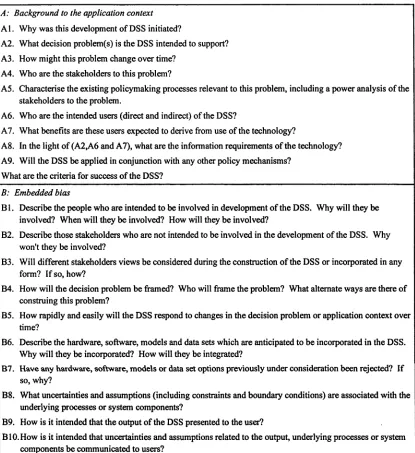
I decided to divide my testing of the framework into sessions pertaining to each of the three sections of the framework: (A) Background; (B) Embedded bias; and (C) Biased access. My initial plan was that each participant would complete a questionnaire on these themes, then the participants would meet and engage in a group dialogue about their responses to the questionnaire. I selected structured but open-ended questions in order to elicit participants’ responses in their own words, see Appendix 1. According to their preference, the participants filled out the questionnaires either in writing or in an interview. Generally, the participants chose to fill out their questionnaires in my presence and to provide me with a running commentary of their responses. The questionnaires provided a comparative source of data to establish participants’
individual positions prior to the group dialogue, as well as a point of triangulation for interview and observation notes. I selected group dialogues to provide insight into whether and how interaction between participants might promote learning in terms of exposing convergences or divergences in perspective.
The three Australian leaders of the biophysical, sociocultural, and DSS components of the IWRAM project agreed to participate in a trial of my framework for anticipating and interrogating bias. Other researchers in the Australian team had yet to be appointed. In May 1997, the Australian biophysical, sociocultural and DSS leaders engaged in a facilitated set of interviews concerning Part A of the framework. To keep the costs of participation in terms of time expended to a minimum, the group dialogue was limited to an hour.
The methods used for Part A had two key limitations. Firstly, participants tended to restrict their interaction to reading their prepared questionnaire responses rather than engaging in discussion. Secondly, the demands of facilitation hindered my note-taking. Consequently, for Part B, which was tested in July 1997, methods were altered. In order to stimulate greater debate, 1 prepared a set of discussion prompts based on issues which had emerged from the participants’ responses to the Part B questionnaire. Each
participant was provided with a handout which comprised the collated responses so that they could view the diversity of responses. A tape recorder was used to complement my notes.
As Chapter 7 discusses, Part C of the framework was not trialed with the Australian team because they felt it was too premature to reflect on issues of biased access. I had initially intended to test the analytical framework with the Thai researchers involved in the IWRAM project in parallel with the Australian application. Because of a lack of finances to fund field trips to Thailand, I attempted to interact with Thai researchers via e-mail. However, it soon emerged that e-mail was not an effective means of communicating, partly due to pragmatic reasons. For example, a single e-mail account was often shared by an entire department, leading to frequent instances of messages being lost, and computer-time tended to be rationed to around ten hours per month for a whole department, so communications were infrequent and brief.
(Appendix 2). As English was not the Thai participants’ first language, I simplified some of the questions, and reworded others in more everyday rather than academic English. Consultation with each of the Thai participants as to their preferred mode of interview and level of participation also led to alterations in the methodology from the Australian experience. For example, although most participants felt comfortable with a semi-formal interview, others preferred to respond to my questions over the course of several informal, and often more social, interactions.
I had originally intended that following the individual interviews with the Thai participants, I would co-facilitate a workshop in which issues emerging from the interviews could be discussed, in a similar fashion to the Australian group dialogues. However, several Thai participants advised that a formal workshop was likely to be consumed by protocol pleasantries, and that an informal meeting was more likely to result in frank discussion. In addition, the interviewees suggested that it would be better in terms of group politics if I arranged and facilitated the meeting alone, rather than seeking to co-facilitate. Consequently, I convened an informal meeting and sent each interviewee an agenda, Appendix 3, which comprised issues which I had distilled from the interviews as significant. The meeting was mostly conducted in Thai, and various participants translated the discussion where my Thai proved inadequate for me to comprehend the responses. As further checks on my comprehension of the meeting’s discussion, I asked the DSS leader to prepare a report of the meeting, and spent an afternoon with the GIS researcher discussing the dialogue and outcomes of the meeting. During January and February of 1998,1 also facilitated a trial of the analytical
framework, following the single interview guide method developed during the Thai case study, with four new members of the Australian team.
2.4.4 Assessing the framework for anticipating bias
The methods of participant-observation, individual interviews and group dialogues described above were also used to yield data which would allow assessment of the framework for anticipating bias. In addition, for the Australian trial of the framework, I provided participants with evaluation questionnaires following each group dialogue. This enabled insight into participants’ own appraisal of the practicality and effectiveness of the analytical framework in terms of catalysing learning and revealing convergences or divergences in perspective.
2.5 Data analysis: Relating data and theory
The process of analysing data and comparing emergent patterns and themes with my theoretical concerns was ongoing and iterative throughout this research. Thus, although I am presenting data analysis as distinct from data collection, it should be emphasised that these processes were intertwined.
2.5.1 Dealing with transcripts
To analyse interview and group dialogue transcripts, I adopted a thematic analytical approach (Sadique 1996:28). Each of the interviews and group dialogues was
transcribed into Microsoft Word. To begin coding interview and dialogue transcripts, I first selected and read one of the transcripts, noting broad themes that emerged from the data. I then printed out as many copies of the transcript as themes identified. For each theme, I examined the transcript, highlighting instances when that theme arose, and noting how each highlighted quote related to the theme. As I worked with the
transcript, further themes emerged which were treated in the same manner. I repeated this process for the other transcripts, then compared the themes which had emerged in the light of my research focus. I realised that the themes accorded with three
hierarchically linked categories: biases; the DSS and DSS development; and the decision-making environment.
I next constructed a table within Microsoft Word. Each transcript was copied in its entirety into the table. Cell breaks were inserted according to changes in theme. Each quote was thus coded according to theme, and then tagged with the identification label of the participant, the date of the interview or questionnaire, the theme, and the question number. Where a cell corresponded to more than one theme, the cell was copied and double-coded. Where existing themes proved inappropriate, the cell was coded as ‘Other’. Recurring themes within the ‘Other’ category were promoted to their own category and sorted into the overarching hierarchical categories. Thus, coding
categories emerged from the data, shaped by my theoretical concerns. The final coding frame is reproduced in Appendix 4. Sorting the data table by identification label, then date, then theme allowed examination of the evolution one participant’s perspective over time. Sorting the table according to date, then theme allowed comparison of different participants perspectives on a particular issue at a particular time.
2.5.2 Analysing quotes
Once the cells had been woven thematically into a chronological narrative, presented in Chapter 7, each quote was reanalysed in terms of the mode(s) of framing it portrayed, Box 2.2. During this iterative process, I noted patterns emerging from the data which suggested interests and personal or social commitments which shaped the modes of framing, including assumptions about the decision-making environment, particularly relationships between stakeholders, and assumptions about the best way to approach problem-solving including issues of scale. Each quote was then reanalysed in terms of these themes.
How is the DSS framed? How is DSS development framed?
• purpose • purpose
• form • form
• content • biases
• biases
2.5.3 Analysing documents and observations
Throughout the research process, I intermittently reviewed my archive of documents and notebooks of observations to compare them to theory and insights from literature. I reviewed the archive more intensively once different participants’ modes of framing or approaching biases, DSS development and the decision-making environment began to emerge. Text, diagrams and observations pertaining to different participants’ modes of framing were highlighted. The chronological nature of the archive allowed me to compare these with the dated, coded quotes. This provided me with a richer picture of participants’ construing of biases, DSS development and the decision-making
environment, and a means of gauging how issues raised during interviews or group dialogues may have affected the IWRAM project’s practice.
2.6 Credibility, dependability, transferability and confirmability
Within the positivist paradigm of research, reliability and validity must be established to legitimise inquiry. Thus, Kidder (1981:7) argues that: “Research is valid when the conclusions are true. It is reliable when the findings are repeatable. Reliability and validity are requirements for both the design and the measurement of research. At the level of design, we examine the conclusions and ask whether they are true and
repeatable. At the level of measurement, we examine the scores of observations and ask whether they are accurate and repeatable”. However, as articulated most convincingly by Lincoln and Guba (1985), this stance is problematic if a constructivist position is adopted. Firstly, internal validity conventionally refers to the extent to which the data of an inquiry represents the reality it is claimed to represent. This positivist definition presupposes the existence of a single objective reality which the researcher can
determine. Lincoln and Guba (1985:296) suggest that if multiple constructed realities are assumed, then the credibility of the findings of an inquiry should rest instead on the extent to which the researcher’s reconstructions of realities are perceived as credible interpretations of the original multiple realities.
Several strategies suggested by Lincoln and Guba (1985) to establish credibility were employed in this thesis. Firstly, prolonged engagement with the IWRAM project and persistent participant-observation of daily events within the project enhanced my ability to understand and interpret these events in context. Secondly, triangulation of
information about events and relationships illuminated similarities and differences in constructions. This was achieved through: conducting multiple interviews, including interviews with highland stakeholders not participating in the project; and comparing individuals’ verbal statements with observations and project documentation (draft proposals, meeting minutes, emails, conference papers). I also reviewed my perceptions and analyses with other researchers both within and outside the project to explore alternate constructions. In the case of IWRAM researchers, I discussed my findings informally, and asked participants to verify my written case study narrative and analysis. In Chapter 6, where researchers argued for an alternate reconstruction of events or themes, these are footnoted.
attributed not only to error but also to reality shifts” (Erlandson 1993:34). Promoting the dependability of the research thus necessitates detailed communication of the research process and setting in such a way that future researchers may assess likely sources of variance between research settings (Lincoln and Guba 1985:299). To this end, I have made a conscious effort to describe both my methodology and the IWRAM project in sufficient detail in this thesis to facilitate future comparison. I have also maintained an archive of documentation, questionnaires, interview notes, participant- observations, and several reflective journals relating to my research.
External validity pertains to the generalizability of research findings. The constructivist paradigm does not seek to develop generalizable results, as it is assumed that “all observations are defined by the specific contexts in which they occur” (Erlandson et al.
1993:32). However, this does not imply that knowledge gained in one context is regarded as irrelevant to other contexts. Instead, the constructivist paradigm maintains that transferability of theoretical concepts between contexts is possible if the contexts possess similar characteristics (Marshall and Rossman 1989:146). Hence, the
significance of this study is not limited to the IWRAM project, but instead yields insights relevant to the theory and practice of both DSS development and integrated research. In Chapter 8 ,1 draw links between my findings and broader theoretical concerns, and suggest lessons for DSS development and integrated research. If one accepts that objectivity is an illusion because the researcher can never be completely disengaged from the methodology they select and construct, then the credibility and trustworthiness of research findings also rests on the extent to which a reader may interrogate the biases of the researcher. As Bruner (1990:25) notes,
“Constructivism’s basic claim is simply that knowledge is ‘right’ or ‘wrong’ in light of the perspective we have chosen to assume... The best we can hope for is that we be aware of our own perspective and those of others when we make our claims of
‘rightness’ and ‘wrongness’”. To communicate the partial and positioned character of research, I have drawn on techniques of self-reflexivity, and emphasised transparency of method, data and analysis in presentation of this thesis. In Sections 2.3 and 2.7 of this chapter, I explore how my role as a researcher has influenced the conduct and outcomes of this inquiry. In particular, I attempt to illuminate how my interactions with and reflections on the IWRAM project, as well as my constructions of meaning, interpretations, emotions and actions may have influenced both my own and the
IWRAM project’s research process. Meanwhile, in the case study chapters, I have used interviewees’ quotes liberally so that readers may assess my interpretations and analysis of their verbal constructions for bias.
2.7 Confronting reflexivity: Role of the researcher