UNIVERSITY OF SOUTHERN QUEENSLAND
PARTICIPATORY ACTION LEARNING:
AN APPROACH TO GENERATIVE CURRICULUM
DEVELOPMENT OF PARENTING EDUCATION
PROGRAMMES
A Dissertation submitted by
Win Aung, B. Ed., M.A. (Ed.)
In partial fulfillment of the award of
Doctor of Education
People's participation in social and political transformation is the central issue of our time. This can only be achieved through the establishment of societies which place human worth above power and liberation above control. In this paradigm, development requires democracy, the genuine empowerment of the people. When this is achieved, culture and development will coalesce an environment in which all are valued and every kind of human potential can be realized.
Aung San Suu Kyi
ABSTRACT
The study explores an approach where professionals work with people in the communities for the development of a parenting education programme for mothers to enhance their early childhood care practices. The focus of the study is the process of generative curriculum development, applying participatory and dialogic pedagogical principles and practices which facilitate empowering and emancipatory learning in the parenting education programmes. Accordingly, the literature review is concerned with two areas: the first is on the concept and practices of early childhood care and development with some highlights on parenting education; and the second on the theory and practice of empowering and emancipatory adult education with reference to the Generative Curriculum Development approach to blend local knowledge and academic/professional knowledge on early childhood care and development.
Since the focus of the research is the process for change in child care practices of the mothers as well as the pedagogic practices of the adult educators, participatory action research was considered an appropriate research methodology and participatory action learning as a learning approach. There were two action learning circles involved in the research: the parenting education action learning circle and the pedagogic action learning circle. Parenting action learning circles dealt with enhancement of early childhood care practices of mothers while the pedagogic action learning circle explored more effective pedagogic practices of parenting educators. Data were collected from both circles and data analysis was done in a continuous and progressive manner, along with the repeated cycles of participatory action learning using the constant comparative method based on the grounded theory methodology (Glaser & Strauss, 1967).
CERTIFICATION OF DISSERTATION
I certify that the ideas, results, analyses and conclusions reported in this dissertation are entirely my own effort, except where otherwise acknowledged. I also certify that the work is original and has not been previously submitted for any other award, except where otherwise acknowledged.
__________________________ __________________
Signature of Candidate Date
ENDORSEMENT
__________________________ __________________
Signature of Supervisor Date
__________________________ __________________
ACKNOWLEDGEMENTS
My doctoral journey has taken an unusually long time for various reasons but my immediate and extended family have all shown their understanding and faith in what I have been doing. I would like to express my heart-felt thanks to them for their strong faith in me and support of my study. Particularly, I owe a lot to my wife, Pyone, for her sacrifices during my ten year doctoral journey. She has been supportive to my commitment in life-long learning. Thank you, Pyone, for being you.
I am deeply indebted to my colleagues from the Ministry of Education and the partner Non Governmental Organization (NGO) as they have enthusiastically and voluntarily joined me in conducting this study as co-researchers and co-learners in spite of their enormous work responsibilities. I also would like to express my sincere thanks to my colleagues from my office who have provided invaluable comments and suggestions during both the research process and the analytical writing stage of the dissertation. Particularly I am very grateful to my “critical friend”, Linda Jenkinson, for her insightful comments and provocative questions when developing the draft.
Similarly, I would like to express my deep appreciation to my supervisors, Dr. Dorothy Andrews and Dr. Jon Austin for their patience, understanding and encouragement as well as invaluable guidance and advice in my study in the USQ. There are many other people at USQ to whom I would like to express my earnest thanks for their assistance and guidance in my study for the Doctor of Education degree there. Particularly, my sincere gratefulness goes to the Faculty of Education for awarding the Scholarship for my enrolment in Semesters One and Two of 2009. Without that assistance, it would be extremely difficult for me to continue the study and complete this dissertation.
TABLE OF CONTENTS
Abstract ... iii
Certification of Dissertation ...v
Acknowledgement. ... vi
List of Figures ... xi
List of Tables ... xii
Glossary of Terms ... xiii
CHAPTER ONE: INTRODUCTION TO THE RESEARCH STUDY ... 1
1.1 INTRODUCTION ... 1
1.2 BACKGROUND TO THE STUDY... 1
1.3 CONTEXT OF THE STUDY ... 4
1.4 THE RESEARCHER IN THE RESEARCH ... 8
1.5 RATIONALE FOR THE STUDY ... 9
1.6 SIGNIFICANCE OF THE STUDY ... 12
1.7 THE RESEARCH PROBLEM AND QUESTIONS ... 15
1.7 COMPONENTS OF THE STUDY... 16
1.9 OVERVIEW ... 19
CHAPTER TWO: LITERATURE REVIEW - EARLY CHILDHOOD CARE AND DEVELOPMENT; AND EMPOWERING ADULT EDUCATION ... 22
2.1 INTRODUCTION ... 22
2.2 EARLY CHILDHOOD CARE AND DEVELOPMENT ... 23
2.2.1 Global commitments for young children ... 25
2.2.2 Importance of early years... 28
2.2.3 Early childhood care framework ... 31
2.2.4 Culture and context in early childhood care for development... 35
2.2.5 The role of parents in early childhood and the need for parenting education ... 39
2.3 EMPOWERING ADULT EDUCATION ... 43
2.3.1 Adult education in development programming context ... 44
2.3.2 Empowering and emancipatory adult education ... 46
2.3.3 Praxis: repeated cycle of action and reflection ... 49
2.3.4 Power relationship in empowering and emancipatory education 50 2.3.5 Emancipatory education and active learning methodologies ... 52
2.3.6 Generative curriculum development ... 55
2.4 CONCLUSION ... 58
CHAPTER THREE: RESEARCH DESIGN AND PROCESS ... 62
3.1 INTRODUCTION ... 62
3.2 DETERMINING METHODOLOGY ... 62
3.3 ACTION RESEARCH ... 66
3.4 ACTION LEARNING ... 69
3.5 RESEARCH PROCESS ... 73
3.5.2 Research participants ... 74
3.5.3 Research phases ... 76
3.6 DATA COLLECTION METHODS ... 77
3.6.1 Participatory Learning and Action (PLA). ... 78
3.6.2 Reflective journals ... 82
3.6.3 Observations. ... 83
3.6.4 Focus group discussions and interviews ... 84
3.7 DATA ANALYSIS ... 86
3.7.1 Analysis of data on child care practices ... 87
3.7.2 Analysis of data on pedagogical practices ... 90
3.8 VALIDITY AND RELIABILITY ... 94
3.9 ETHICAL ISSUES ... 97
3.10 CONCLUSION ... 98
CHAPTER FOUR: RESEARCH EXPERIENCES: WORKING WITH COMMUNITIES FOR GENERATIVE CURRICULUM DEVELOPMENT ON PARENTING EDUCATION ... 100
4.1 INTRODUCTION ... 100
4.2 PHASE ONE: EXPLORING COMMUNITY KNOWLEDGE AND PRACTICES ON EARLY CHILDHOOD CARE AND DEVELOPMENT ... 101
4.2.1 Community context ... 102
4.2.2 Perceptions, beliefs, and expectations of parents and communities regarding children's development ... 107
4.2.3 Childcare practices and patterns ... 115
4.2.4 Coping with child care problems and challenges ... 125
4.2.5 Key issues that emerged... 128
4.3 PHASE TWO: PLANNING AND DEVELOPING A PROGRAMME OF ACTION FOR EARLY CHILDHOOD CARE ………..…….131
4.3.1 Themes and topics for the parenting education programme ... 132
4.3.2 Content and language ... 134
4.3.3 Pedagogical approach for conducting parenting education sessions ... 137
4.4 PHASE THREE: MERGING COMMUNITY WISDOM AND PROFESSIONAL KNOWLEDGE IN PARENTING ACTION LEARNING CIRCLES……….……… … 138
4.4.1 Setting the ground for learning ... 139
4.4.2 The learning process ... 140
4.4.3 Taking action for change ... 151
4.5 CONCLUSION ... 153
CHAPTER FIVE: PRAXIS IN THE ADULT EDUCATION ACTION LEARNING CIRCLES – REFLECTIONS ON PEDAGOGIC PRACTICES ... 155
5.1 INTRODUCTION ... 155
5.2 ADULT EDUCATORS AS LEARNERS IN THE GENERATIVE CURRICULUM DEVELOPMENT PROCESS ... 155
5.2.2 Reflections on the Factors Facilitating Learning from the
Communities ... 161
5.3 FACILITATING LEARNING IN EDUCATION FOR EMPOWERMENT AND EMANCIPATION ……….165
5.3.1 Creating conducive learning environment ... 166
5.3.2 Structuring learning activities ... 169
5.3.3 Using authentic contents and materials ... 174
5.3.4 Exercising authority and delegating responsibility ... 176
5.3.5 Creating a "third idiom" for all ... 179
5.4 PROMOTING PARTICIPATORY ACTION FOR CHANGE IN ADDRESSING CHILD CARE ISSUES ... 182
5.4.1 Emancipatory learning: prerequisite for genuine participation.. 182
5.4.2 Empowering mothers for participatory action for change ... 185
5.5 CHALLENGES IN EMANCIPATORY AND EMPOWERING EDUCATION FOR MOTHERS ... 187
5.6 CONCLUSION ... 191
CHAPTER SIX: DISCUSSION ON FINDINGS ... 193
6.1 INTRODUCTION ... 193
6.2 REFLECTIONS ON THE GENERATIVE CURRICULUM DEVELOPMENT MODEL ... 194
6.3 WORKING WITH PARENTS AND COMMUNITIES ON THEIR CHILD CARE ISSUES ... 198
6.3.1 Recognising existing strengths and challenges ... 199
6.3.2 Building confidence and competence among the caregivers/ mothers……… … 203
6.3.3 Generating solutions, alternatives and choices ... 206
6.4 PEDAGOGICAL PRACTICES IN EMPOWERING AND EMANCIPATORY EDUCATION ... 208
6.4.1 Development of the curriculum for the parenting education programme ... 208
6.4.2 Delivery process of the parenting education programme ... 211
6.4.3 The role of learners in empowering education ... 214
6.4.4 Characteristics and quality of empowering adult educators ... 216
6.5 EMPOWERING PEOPLE TO GENUINELY AND MEANINGFULLY PARTICIPATE IN THE DEVELOPMENT OF A PARENTING EDUCATION PROGRAMME ... 218
6.5.1 Emancipation ... 218
6.5.2 Empowerment. ... 221
6.5.3 Participation. ... 225
6.6 CONCLUSION ... 229
CHAPTER SEVEN: CONCLUSION AND RECOMMENDATIONS ... 232
7.1 INTRODUCTION ... 232
7.3 SUMMARY OF FINDINGS ... 235
7.3.1 Contributions to the understanding of Freirean pedagogical theory ... 235
7.3.2 Contributions to the advancement of pedagogical practices ... 238
7.4 GENERAL IMPLICATION FOR DEVELOPMENT EDUCATION, ADULT EDUCATION AND PARENTING EDUCATION IN BURMA (MYANMAR)... 240
7.4.1 Early childhood care and development ... 240
7.4.2 Professional development in adult education in Myanmar (Burma) ... 242
7.4.3 Participatory approach to development programmes ... 243
7.5 LIMITATION OF THE STUDY ... 245
7.6 IMPLICATIONS FOR FUTURE RESEARCH ... 247
7.7 GENERAL CONCLUSION ... 249
REFERENCES ... 251
LIST OF FIGURES
FIGURE 1.1: ECCD Network Project Activities in the Communities ... 7
FIGURE 1.2: Dynamics and Relationships among Research Participants .. 17
FIGURE 2.1: Emerging View of Nutrition, Health and Psycho-social Wellbeing ... 29
FIGURE 2.2: Early Childhood Care Model ... 34
FIGURE 2.3: Developmental Niche Framework ... 37
FIGURE 3.1: Reflection Types ... 77
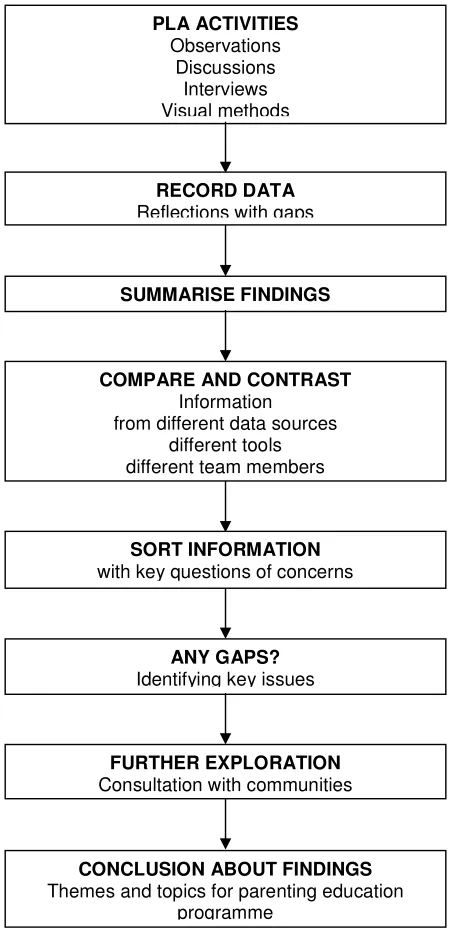
FIGURE 3.2: Flow Diagram for the Analysis of Findings from Participatory Learning and Action (PLA) Exercises ... 89
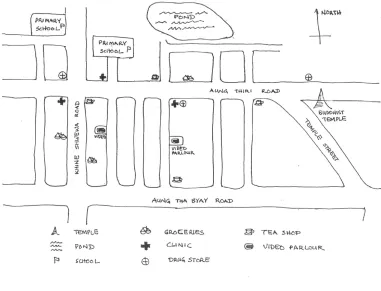
FIGURE 4.1: A Community Map Drawn by a Mothers Group ... 103
FIGURE 4.2: Milestones of Child Development Identified by a Group of Mothers... 109
FIGURE 4.3: Daily Routines of a Working Mother's Household and Child Care Activities ... 118
LIST OF TABLES
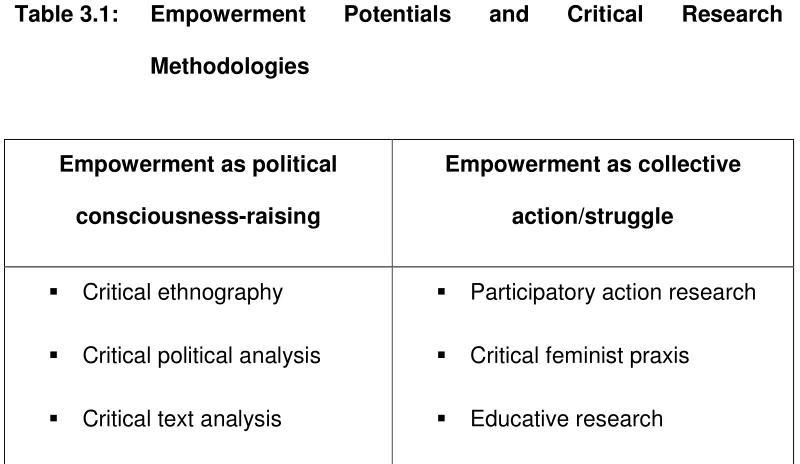
TABLE 3.1: Empowerment Potentials and Critical Research
Methodologies ... 64
TABLE 3.2: Participatory Learning and Action (PLA) tools ... 80
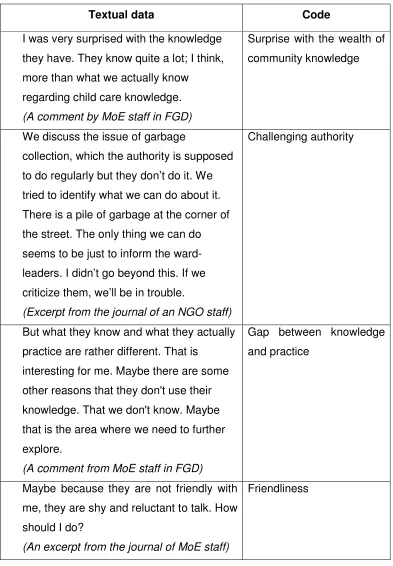
TABLE 3.3: Examples of Coding ... 92
TABLE 4.1: Wealth Ranking by Participants in a Community... 105
TABLE 4.2: Community Perception on Children's Needs in Early Childhood ... 111
TABLE 4.3: Problems and Challenges for Child Caring Identified by a Mothers Group ... 126
GLOSSARY OF TERMS
critical democratic dialogue a communicative interaction between the educator and learners as well as among learners to reflect
together on the meaning of their knowledge, experiences and
actions. This term is used to put emphasis on the critical and
democratic nature of the interaction, contrasting it from the mere
conversation/discussion among participants.
generative curriculum development a curriculum development process in which curriculum objectives, content, materials and
methodologies are grounded in learners' own knowledge and
experiences, and generated by themselves.
informal learning the way people learn things in their every-day life, without predetermined, and pre-structured learning objectives,
procedures, materials and methodologies, and formal facilitation.
informal education provision of education without any specifically structured learning programmes; e.g., educating people through
media.
naturalistic learning a form of learning organized in such a way that people engage in the learning process as closely as possible to
how they learn naturally in every-day life.
Participatory Action Learning (PAL) an approach to generate
repeated cycles of action, reflection and reaction upon the issues
of their concerns and interests.
Participatory Action Research (PAR) a form of collective and collaborative self-reflective enquiry undertaken by a group of
people in a repeated spiral cycles of action and observation,
critical reflection, and reaction to improve their own social and
educational practices, as well as to enhance their understanding
about these practices.
Participatory Learning and Action (PLA) a qualitative research
methodology, which derives from the rapid assessment methods
such as Rapid Rural Appraisal (RRA) and Rapid Assessment
Procedures (RAP), involving communities from the outset through
the entire process of research, and helps them analyze their own
situation and make decisions regarding actions to solve their
CHAPTER ONE
INTRODUCTION TO THE RESEARCH STUDY
1.1 INTRODUCTION
Research is a politically sensitive activity in Myanmar (Burma), and
opportunity to do research in a genuine and authentic sense is extremely
limited. This particularly applies to the field of critical social research.
However, I feel that there is a need for us as socially responsible educators
to manoeuvre opportunities and initiate efforts to conduct the kind of
research that will help field development workers address social issues. With
this view in mind, I have attempted the action research on Participatory
Action Learning: An approach to generative curriculum development of
parenting education programmes. This chapter will highlight the context of
research, its rationale and significance, and the objectives and related
research questions.
1.2 BACKGROUND TO THE STUDY
Since I was first involved in United Nations Children Fund (UNICEF)
supported education programmes in 1994, I have been facilitating various
training and education programmes for educators, school administrators,
teachers and parents. As the term “participation” has become a “buzz word”
for any development programme, participatory processes and participatory
learning has been the centre piece of any discussion among development
possible to promote genuine or authentic popular participation in a country
like Myanmar (Burma), which has had a deep-rooted culture of highly
centralised authoritarian governance for many decades. Then I came across
a statement by Windham (1993) in one of my readings:
Centrist planners, no matter how much discretionary power they have,
never determine the actual outcomes of a policy. They can only set in
action forces which they anticipate will have certain effects. The
effects themselves are the results of the millions of micro-decisions
made by individuals (p. 25).
This statement has made me realise that individuals, no matter what their
circumstances, make their decisions and choices based on their capacity
and opportunity to take them. Obviously I am also aware of the fact that
there are a number of driving forces that put pressure on individuals to make
unwanted and unwilling decisions. Yet I am still convinced that there must be
ways to empower people to be able to make informed decisions and choices
even in a highly authoritative society. Thus, promoting popular participation
in development efforts has been a learning programme for me during my
more than 10 years work in UNICEF.
In 1998 I was assigned as a Project Officer for the Early Childhood Care and
Development (ECCD) programme, and one of my responsibilities was to
develop a programme for parents, particularly for mothers, on early
childhood care and development. At that time parenting education in early
with parenting education apart from some health education activities
delivered by basic health staff. The project team also explored early
childhood care and development programmes reported in available
documents such as reports, manuals and modules on parenting education
from various countries. ECCD partners also made study visits to
neighbouring countries such as Bangladesh, Sri Lanka, Nepal and India to
observe and learn community-based and family-focused programmes with
an emphasis on parenting education. Based on what we have learned from
the documents we have studied and what we have observed, we developed
a parenting education programme where community facilitators were trained
as volunteers to conduct semi-formal parenting education sessions.
After a few years experience with the ECCD programme, I felt that the
programme did not seem to have the impact on the situation which may
have been expected. The programme was driven by messages from outside
professionals on recommended so-called "appropriate care practices" and
very little was taken into account on the existing “grass-roots” practices and
situations of families and their communities.
The approach we adopted was like a "deficit" model where we looked at
things parents did not have or do, but disregarded their current good
knowledge and achievements. This also made me recognise the gap
between our rhetorical discussions and real actions in relation to popular
participation. At that time I had started thinking of exploring an alternative,
innovative and participatory approach to the development of a culturally
genuine participation of parents and communities bridging the two views of
both external professionals and communities in the development process.
Subsequently, I came across some articles about the Partnership
Programme of the First Nation Communities, the University of Victoria,
Canada, which employed the "Generative Curriculum Model," to empower
communities and families with deep engagement about questions,
necessitating and celebrating dialogue among diverse perspectives (Ball,
2004; Ball & Pence, 1999; Pence & Ball, 1999). This Model sounded like
what I was looking for. Therefore, I had a discussion with my colleagues
from partner agencies on the idea of development of a similar type of model
and process, and we collectively decided to do a case study of an action
research on how the participatory process could be promoted through a
“Generative Curriculum Development” model while exploring an alternative
parenting education programme for early childhood care and development.
1.3 CONTEXT OF THE STUDY
Expansion of early childhood care services is one of the commitments made
by Myanmar (Burma) to meet Education For All (EFA) goals set in its
National Action Plan (NAP) (Ministry of Education, 2003). However, the
importance of early childhood development is not widely recognised, and the
evolvement of early childhood care and development programmes is
relatively new. There is a lack of understanding of the broad sense of the
holistic and comprehensive nature of early childhood care for the
In Myanmar (Burma) less than 10% of 3 - 5 year old children have access to
early childhood care services (Save the Children, 2004). The majority of
them are in urban areas, and not accessible for disadvantaged families as
the direct cost for those services is high. Moreover, most of the available
child care services do not integrate health, nutrition, and psychosocial care
and stimulation but put more emphasis on formal teaching and learning such
as memorisation of the alphabet rather than addressing the dire needs of the
healthy growth and holistic development of the children in the early years.
There is virtually no child care service available for children under three. The
care for that age group is primarily provided by the home and family. Yet,
there is no support mechanism for the families to facilitate their care
responsibilities.
In order to address these issues, a local NGO launched the Early Childhood
Care and Development (ECCD) Network Project in collaboration with the
Ministry of Education (MoE) and with the support of UNICEF. The overall
goal of the project was to introduce ECCD practices which would promote
those conditions of care, socialisation and education in the home or
community that enhance a child’s total development. This was done through
interventions programmed to create an enabling environment which would
ensure the support needed for the whole and healthy growth and
development of the young child. The target population of the project was 0 -
5 year old children and their parents from disadvantaged families of
The ECCD Network project strategy was to mobilise local communities to
take quick and decisive actions to organise community-based interventions
which would provide integrated child care and development services,
particularly to those children from the disadvantaged families (UNICEF,
2001c). Parent-Teacher Associations and newly established
community-based ECCD Support Committees played a critical role in planning,
implementation and monitoring of project activities. The strategy highlighted
the efforts to empower communities, especially mothers, through capacity
building and creating opportunities for participation in the whole process of
the development of community-based ECCD interventions.
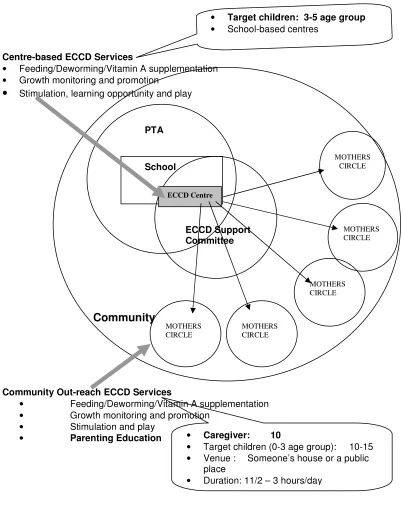
The Network project had two main components. The first was the
establishment of ECCD centres attached to basic education schools. The
second was the establishment of the Community Outreach programme
through home-based Mothers’ Circles. Integrated early childhood care
services, which included supplementary feeding and nutrition
supplementation, growth monitoring and promotion, providing opportunities
for learning and socialisation, were provided through these two channels:
school-based ECCD Centres and the Community Outreach Programme (see
Figure 1.1).
The school-based ECCD Centres were basically similar to typical preschools
in the country, running from 9 a.m. to 3 p.m. and providing services for
children aged 3 to 5. Despite the integrated nature of services, including
nutrition supplementation and growth monitoring, the focus of these centres
• Caregiver: 10
• Target children (0-3 age group): 10-15 • Venue : Someone’s house or a public
place
[image:21.612.132.535.99.604.2]• Duration: 11/2 – 3 hours/day
Figure 1.1: ECCD Network Project Activities in the Communities
Centre-based ECCD Services
• Feeding/Deworming/Vitamin A supplementation • Growth monitoring and promotion
• Stimulation, learning opportunity and play
PTA
School
ECCD Support Committee
Community
Community Out-reach ECCD Services
• Feeding/Deworming/Vitamin A supplementation • Growth monitoring and promotion
• Stimulation and play • Parenting Education
Note: The school based ECCD centers are very much like the conventional Kindergartens, pre-schools and day care centers. However, these are not the concern of the proposed participatory action research. Mothers’ Circles are the focus of the research. Source: adapted from UNICEF, (2004), p. 33.
ECCD Centre
MOTHERS CIRCLE
MOTHERS CIRCLE
MOTHERS CIRCLE
MOTHERS CIRCLE • Target children: 3-5 age group
• School-based centres
On the other hand, the Community Outreach programme involved the
establishment of Mothers’ Circles in the communities through community
mobilisation efforts of Parent Teacher Associations (PTAs) of the
participating schools. The purpose was to provide integrated early childhood
care services to the younger aged children (0 - 3 year olds) through the
Mothers’ Circles, which were grass-root level action groups informally
organised for participatory social change.
In the context of the Early Childhood Care and Development (ECCD)
Network project, the action research on action learning with generative
curriculum development for parenting education was conducted. It was
carried out as a part of the second component of the project: Community
Out-reach through Mothers’ Circles, with a particular reference to one of the
activities of those Circles, the parenting education programme for mothers.
1.4 THE RESEARCHER IN THE RESEARCH
Since the ECCD Network project was funded by UNICEF, the principal
researcher as the Project Officer for the UNICEF supported ECCD
programme was responsible to plan, manage and monitor the
implementation of the project in collaboration with the Ministry of Education
(MoE) and the NGO.
The project team responsible for the overall management of the ECCD
Network project comprised the professionals from the MoE and the staff from
the NGO. The MoE professionals were adult educators who designed
workshops for capacity building of various actors such as teachers, PTAs,
community volunteers and parents of the project communities. The staff from
the NGO were the community facilitators who encountered day-to-day
interaction with communities to implement project activities.
While undertaking the responsibilities of the overall management of the
project, and as part of the technical capacity building of the team, the
principal researcher quite often facilitated the training programmes for the
adult educators from the MoE and the community facilitators from the NGO.
At the same time, the project team was responsible for monitoring what was
going on in both centre-based ECCD programmes and community-outreach
ones.
In order to carry out the research, the principal researcher formed the
research team with selected colleagues from the project team including both
MoE and NGO staff. There were five professionals from the MoE and four
community facilitators from the NGO, who participated as co-researchers in
the research project.
1.5 RATIONALE FOR THE STUDY
Parenting education has been used as an alternative and complementary
strategy to improve the situation of early childhood care for development in
both developed and developing countries. It is now becoming more popular
in developing countries as a cost-effective way of strengthening and
programmes around the world use a "deficit" model, focusing on the
"professional" view of what people lack and stressing the need for parents to
be educated without recognising and respecting families' and communities'
achievements and resourcefulness in raising their children (Arnold, Bartlett,
Hill, Khatiwada, & Sapkota, 2000; Evans, 2000a, 2000b).
In order to have a programme which is family-focused and
community-based, it is vital to understand and value local child care practices and build
on the existing strengths – the positive things that people are already doing.
The traditional and existing child care practices should be recognised as a
foundation to be built on in strengthening childrearing capabilities of parents
and families. Blending of traditional practices with modern knowledge should
be the approach for developing family-focused and community-based ECCD
programmes. Fals-Borda (1991) has stated that a combination of academic
knowledge and popular knowledge could result in total scientific knowledge
which reflects a more accurate picture of reality. The process advocated by
Fals-Borda will require a clear understanding of perceptions, beliefs, patterns
and practices of parents and communities regarding childrearing. However,
that understanding alone will not help the professionals to develop a
successful programme unless there is an opportunity created for genuine
popular participation through meaningful dialogue between professionals
and communities.
Despite the rhetoric among professionals about popular participation in the
process of development of culturally and contextually appropriate
genuine participation of people in the entire process of programming,
especially in those as seen in the field of early childhood care and
development (Arnold et al., 2000; Myers, 1995). Many of the programmes
are generally designed and controlled by outsiders without adequate
consultation with, and/or participation of communities in making decisions
that affect their lives. That was the case for the parenting education
programme that the project team initially developed and implemented.
The parenting education programme, as initiated in the Mothers’ Circles of
the ECCD Network project, was implemented with prescriptive modules and
lessons traditionally developed by outside-experts based on the
pre-determined sets of knowledge and information for parents (see appendix 1a
and 1b for example modules). Through engagement with parents and
communities, the project team realised many of the messages and
information that we were providing them were not new to them; they have
been receiving those messages from various sources, and yet there was
very little change in their daily child care practices. This situation confronting
the project team then made them think about the real source of the problem.
After reflection on the initial experiences of implementation, the principal
researcher, as the responsible project officer, and some of the project team
members had an enthusiasm to explore an alternative, innovative and
participatory approach to the development of a parenting education
programme. This alternative would be culturally grounded and contextually
In developing a culturally grounded alternative it would be critical to create
opportunities to have inputs from the communities on what the current
practices of the parents are, what strengths these current practices have and
what the communities really need in relation to caring and nurturing of their
children. Therefore, the learning outcomes would be jointly generated and
be the result of their own learning, rather than something imposed by outside
professionals.
The project officer and the team felt that through action research they could
explore in what ways parents, particularly mothers, could be empowered
through genuine popular participation. Therefore, it was decided to do a
case study of an action research on participatory action learning through a
“Generative Curriculum Development” model.
1.6 SIGNIFICANCE OF THE STUDY
In the development field, efforts have been shifted from
economic-growth-oriented to social-economic-growth-oriented equity-led sustainable growth strategy through
people centred development alternatives. This shift is reflected in a UNICEF
report (1991) in which David Korten has expressed that "development is a
process by which the members of society increase their personal and
institutional capacities to mobilize and manage resources to produce
sustainable and justly distributed improvement in their quality of life
consistent with their own aspiration" (UNICEF, 1991, p. 19).
Consequently, more and more attention has been given to popular and/or
empowering process of active engagement of people in making decisions
that affect their lives and increasingly taking ownership of the development
efforts to be sustainable in the long run. With this people-centred approach
to sustainable development, the participatory action research on generative
curriculum development for parenting education on early childhood care and
development has been carried out through active engagement and reflective
dialogue between parenting education professionals and parents. This
empowering and emancipatory intent is the most significant aspect of the
research as it could be the first research with critical social perspectives in
Myanmar (Burma). In general terms, it is hoped that the lessons learned
from this research will significantly contribute to the understanding and
practices of the development work, in particular, on how development
workers can work with people using emancipatory and empowering
processes of education.
In the field of early childhood care and development, professionals at
different levels have been paying attention to the importance of the role of
parents as the first teachers and the primary socialising agents in their
children's lives, and the need to strengthen their roles and responsibilities in
childrearing. Increasingly, emphasis has been given to using the traditional
and existing child care practices of parents as the foundation to build a
programme. However, adequate exploration has not been done on how
external/academic knowledge and local wisdom could be blended through
participatory processes of learning with people to have a sound and
provide early childhood development practitioners with an insight on how to
translate the rhetoric of partnership with, and participation of parents into
daily forms of interaction to change their care practices through a process of
learning that offers an opportunity for reflection on their own practices.
As explained before, the research has been conducted as a process of
empowering education, where both adult educators from external agencies
and adult learners from communities have worked together to enhance their
knowledge and practices to address their respective concerns and issues.
By participating in the research, the adult educators/development workers
have an opportunity to advance their pedagogical practices by changing
themselves into transformative and empowering adult educators. Meanwhile
parents from those communities have also gone through a process for
empowerment to analyse their situation, reflect upon it, and take appropriate
and necessary actions for their own destiny.
As empowerment itself is seen as a process of a long-term effort, the
programme could not see the absolute empowerment as an immediate
outcome of the research. However, it is hoped that through active
engagement of "praxis-based learning", a repeated cycle of learning through
action with reflection, parents will break the "culture of silence" (Freire, 1970)
where people are kept quiet as passive objects and prohibited to take part in
transformation of their society. Accordingly, they will have the opportunity to
gradually start to look at their world with critical consciousness and actively
participate in transforming, creating and recreating of their world. When
be seen as a seedling of empowerment, which could be gradually nurtured
over time.
As the research has been conducted with critical and Freirian pedagogical
frameworks, the experience and results of the research will be a contribution
to the knowledge base and theory building of critical pedagogy and libratory
education. Very few studies have been done on the pedagogical practices of
adult education in Myanmar (Burma), and none has been done in the critical
pedagogy paradigm. Therefore, the results and experiences of this research
could be used as a basis for further learning to alter and advance pedagogic
practices of adult educators with an emphasis on emancipatory and
empowering education in the country.
1.7 THE RESEARCH PROBLEM AND QUESTIONS
There seems to be a huge gap between the rhetoric and the realisation
among professionals regarding popular participation in the process of
development of culturally and contextually appropriate programmes. Many of
the programmes are generally designed and controlled by outsiders without
adequate consultation with, and/or participation of communities in making
decisions that affect their lives. Therefore, the purpose of the participatory
action research on generative curriculum development was to explore an
approach where professionals can work with the people in the communities
for advancement of their lives through a process of participatory action
learning for empowerment and emancipation. Accordingly, the focus of the
What contribution can a participatory action learning approach make to the process of change in pedagogic practices of professionals in emancipating and empowering communities for greater and genuine participation?
Hence, the research also attempted to answer the following questions:
1. How can the professionals and community facilitators learn to enhancetheir pedagogic practices through the PAL process?
2. In which way can outside professionals work with parents and communities to advancetheir child care practices?
3. How can people be empowered to genuinely and meaningfully participate in the development of a parenting education programme?
1.8 COMPONENTS OF THE STUDY
In order to answer the afore-mentioned research questions, a three-phase
research process with three different but intertwined components was
conducted. The three components of research referred to the Parenting
Education Action Learning Circles, the Pedagogic Action Learning Circle and
the overall Participatory Action Research (PAR) process. On the other hand,
the three phases were the three different stages of the PAR cycle:
•••• Phase one as the Reconnaissance Stage of the PAR cycle, where
Sub-Project A Parenting Action Learning Circles
Sub-Project C Participatory Action
Research Sub-Project B
Pedagogic Action Learning Circle
practices of the participating communities as well as the situation of
childcare in those communities.
•••• Phase two as the Planning Stage of the PAR cycle, where the team
generated ideas, issues and concerns with the people, and made
action plans for the parenting education programme
•••• Phase three as the Stage for Action and Subsequent Action cycle
where the team facilitated the parenting education sessions for the
mothers
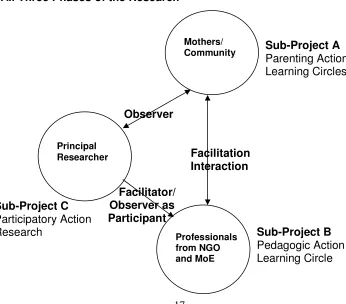
These three phases involved all three research components; therefore,
these could be identified as sub-projects of a larger Participatory Action
[image:31.612.147.493.447.751.2]Research project (see Figure 1.2).
Figure 1.2: Dynamics and Relationships among Research Participants in All Three Phases of the Research
Observer
Facilitation Interaction Facilitator/
Observer as Participant
Mothers/ Community
Professionals from NGO and MoE Principal
Sub-project A was conducted in Parenting Action Learning Circles on the Generative Curriculum Development Process where the research team and
the communities, particularly mothers, jointly explored their own existing
child care knowledge and practices, identified key themes or issues to be
explored more, and then went through a learning process to address those
issues. This process was facilitated by the professionals (adult educators)
from MoE and the community facilitators from the NGO. The principal
researcher was an observer on any event under this project.
Sub-project B was conducted among the research team in the Pedagogic
Action Learning Circle to reflect and act on their pedagogic practices they
had employed while working with the communities. During the course of
research, the team regularly met to reflect on their experiences in
implementing activities, discuss the issues they encountered and plan new
activities for the next round of dialogue with the mothers. In this reflective
learning process, the principal researcher acted in the facilitating role as well
as an observer.
Sub-project C was the overall participatory action research project, where the principal researcher with rotating roles of facilitator, participant and
observer attempted to explore and learn to answer the research questions
while working with both groups of research participants. The relationship
1.9 OVERVIEW
The research was conducted using three components in three phases.
Phase 1 was the reconnaissance stage where the research team explored
current child care practices using Participatory Action Learning
methodologies. Phase 2, the planning stage, involved reflection on the data
on child care practices by the research team and the subsequent
development of plans for parenting education. In Phase 3, the action stage,
the research team, community facilitators and mothers went through
repeated learning and research cycles of action and reflection to address the
issues of child care in those communities. While working with communities,
the research team also organised reflective action learning sessions
throughout the three phases on their pedagogic practices to explore more
effective approaches to the pedagogy of parenting education. The
organisation of this thesis thus reflects the experiences of these three
phases.
Chapter Two provides literature review relevant to the study, which includes
two main parts. The first part is on the concept and practice of early
childhood care and development with some highlights on the care framework
and environment, the role of culture in early childhood, and issues that have
emerged out of the experiences of various parenting education programmes
around the world. The second part is on the theory and practice of
empowering and emancipatory adult education with reference to the concept
education approach to blend local and academic knowledge on early
childhood.
Chapter Three describes the details about the methodology adopted for this
research. The chapter clarifies the two basic terms of the Participatory Action
Research (PAR) and Participatory Action Learning (PAL). Then the chapter
provides some highlights on the accounts of research phases including
research participants and specific research methods used in different
phases. The use of Participatory Learning and Action (PLA) methodologies
as specific research methods for the initial phase of the research is also
highlighted. The processes and procedure for the analysis of the qualitative
data are explained and some considerations of validity and ethical issues are
discussed in the last part of the chapter.
Chapter Four presents the experiences of sub-project A, where the research
team worked with communities through the three phase process of
generative curriculum development: how the content, approach and
methodologies of parenting education sessions emerged out of the
participatory learning process. In Chapter Five, reflections on pedagogical
practices in the action learning circle under sub-project B are discussed with
reference to Freirean adult education theories. The constraining factors
affecting both facilitators and participants to have a genuine dialogic learning
process are also highlighted.
Chapter Six provides discussion on the overall findings of the entire action
research while explaining the limitations of the research. It also highlights the
implications of the findings on adult education in developing countries in
general and parenting education in particular, and gives recommendations
for further research in the fields of participatory social development, adult
education and parenting education for early childhood care and development
CHAPTER TWO
LITERATURE REVIEW: EARLY CHILDHOOD CARE AND
DEVELOPMENT; AND EMPOWERING ADULT EDUCATION
2.1 INTRODUCTION
The research problem addressed in this dissertation concerns developing a
parenting education programme on early childhood care and development
(ECCD) within the framework of empowering and emancipatory adult
education. To address the research questions outlined in Chapter One, it is
necessary to review the literature on both early childhood care and
development and empowering adult education. This literature review
includes two main parts: the first part is on the concept and practice of early
childhood care and development with some highlights on parenting
education and the second on the theory and practice of empowering and
emancipatory adult education with reference to the generative curriculum
development approach.
The first part initially attempts to define the term “early childhood care and
development (ECCD)” explaining the comprehensive and holistic nature of
child care and development. Then it reiterates the global commitment made
in various international forums to pay more attention to, and investment for
ECCD. The importance of early years of a child’s life, the care framework
and environment for those years, and the role of culture in early childhood
experiences of various parenting education programmes around the world
are considered.
The second part reviews the literature on empowering and emancipatory
adult education with reference to the issues of purpose, content and process
of education including the use of active learning methodologies, as well as
the role of, and relationship between the learner and the teacher in the
dynamics of education. Finally, the review looks into the concept of
generative curriculum development and its application as an empowering
education approach to blend local and academic knowledge on early
childhood care and development.
2.2 EARLY CHILDHOOD CARE AND DEVELOPMENT
The term “early childhood care and development (ECCD)” refers to the
practices, programmes and policies that address the rights and needs of
children from birth to eight years of age as defined by the Consultative
Group on Early Childhood Care and Development (Consultative Group,
1993). Other organisations use other terms and acronyms: early childhood
development (ECD) by UNICEF and the World Bank, early childhood care
and education (ECCE) by UNESCO, and early childhood education and care
by OECD (UNICEF, 2001a). Despite slight variations in the terminology they
use, there is general recognition of the importance of a holistic approach to
support children’s survival, growth, development and learning – including
health, nutrition and hygiene, and cognitive, social, physical and emotional
For many decades, ECCD programmes have focused on two functions:
either preparing children for entry into primary schools or relieving families
from the burdens of child care during working days. In recent years, attention
has been increasingly given to the third direction which is the very basis and
the heart of ECCD – the total well-being and holistic development of the child
(Consultative Group, 1993; Evans, Myers & Ilfed, 2000; UNESCO, 1998
UNICEF, 1993). ECCD programmes are no longer limited to children's
cognitive and psychosocial development only, but more broadly defined to
include survival, healthy growth and holistic development of the young child,
covering the period from conception to early schooling years. Evans et al.
have explained the comprehensive and holistic nature of ECCD:
Early childhood care for development includes all the supports
necessary for every child to realize his/her right to survival, to
protection, and to care that will ensure optimal development from birth
to age eight (p. 2).
In the new conceptualisation of ECCD, care is the key factor in promoting
children’s optimal development. Although the term “care” has been used by
many organisations with limited sense, it is now being broadly defined as the
integrated set of actions or behaviours that promote survival, growth and
development of a child (Evans et al., 2000; Myers, 1995; UNICEF, 1993).
Care is also a process of creating an enabling environment, which can
promote synergy among different forms of support and responses to the
Consequently, there is an increasing call for development of more integrated
and comprehensive ECCD programmes.
2.2.1 Global Commitments for Young Children
Recent arguments for investing in early childhood development have not
only highlighted the comprehensive and holistic nature of early childhood
care and development but also emphasised the right of the child to have
optimal care for her/his development to the fullest potential (Consultative
Group, 1993; Evans, et al., 2000; Myers, 1990, 1991, 1995; UNICEF, 1989,
1993). These advocates have asserted several influential lines of social and
economic arguments, which provide a powerful basis for early childhood
programmes to go for more comprehensive and integrated approaches.
These arguments include:
• the right of the child to develop fullest potential,
• the transmission of moral and social values at earliest life,
• the potential of programmes to promote social equity,
• the economic benefits gained through increased productivity and cost
savings, and
• the effectiveness of programming through integration of services
(UNICEF, 1989).
As the advocates of ECCD are continuously and consistently trying to
convince the governments and policy-makers, the global community has
recently shown increased interest in early childhood development. There
early childhood, namely the World Conference on Education for All (WCEFA)
held in Jomtien, Thailand in March 1990 and the World Summit for Children
(WSC) in New York in November 1990. The declarations made at those
events have clearly articulated the acknowledgement by state parties on the
importance of early years of children, and their commitment for investment in
caring and nurturing of young children (UNESCO, 1994; UNICEF, 1990).
The World Conference on Education for All acknowledged the importance of
early childhood by incorporating the expansion of early childhood care and
developmental activities as one of the goals set in the Framework for Action
to meet basic learning needs (UNESCO, 1994). This goal was reiterated in
the Dakar Framework of Action adopted by the World Education Forum held
in Dakar, Senegal in 2000 emphasising the comprehensive nature of care,
especially for the most vulnerable and disadvantaged children (UNESCO,
2000).
The World Summit for Children organised by the United Nations in
September 1990 also endorsed the expansion of early childhood
development activities as its first basic education goal for the 1990s, and
urged for concerted national action and international cooperation for the total
wellbeing of all children (UNICEF, 1990). It was again reinforced in "A World
Fit for Children," the outcome document adopted by the UN General
Assembly at the twenty-seventh special session for children held in May
2002 (UNICEF, 2002). In line with the global commitment made in the World
Education Forum in Dakar in 2000, the outcome document has reaffirmed
education especially for the most vulnerable and disadvantaged children as
their survival, protection, and development in good health and with proper
nutrition is the essential foundation of human development.
The Convention on the Rights of the Child (CRC) adopted by the General
Assembly of the United Nations in November 1989 established the rights of
all persons under 18 for their survival, protection, development and
participation (UNICEF, 1990). This global commitment also indicates the
need to pay increased attention to early childhood development. The CRC
not only affirms the responsibility of the state but also articulates the concept
of joint and shared parental responsibility for the development of children to
their fullest potential. Accordingly, the CRC has been increasingly used as
an advocacy tool at different levels for convincing various stakeholders to
invest more in early childhood in many developing countries including
Myanmar (Burma).
Myanmar (Burma), as a signatory for both EFA and WSC declarations, has
expressed its commitment to expand early childhood development services
in the National Programme of Action for the Survival, Protection and
Development of Myanmar’s Children in the 1990s (Government of Myanmar,
1993). Later the commitment was reinforced in the Education for All
National Action Plan (EFA NAP) which was developed in response to the
Dakar Framework for Action adopted in the World Education Forum, 2000
(Ministry of Education, 2003). In the Myanmar EFA NAP, the importance of
parental education to increase awareness and knowledge of parents and
support child development at home, at the centre, and in the community was
also highlighted.
2.2.2 Importance of Early Years
As explained earlier, there are good reasons for both global and local
commitments on the expansion of ECCD programmes. One underlying
principle for such commitment is the importance of early years of a child’s
life. It is widely accepted that children’s experiences in the first years of their
lives have a long-lasting and profound impact on their overall development,
setting life-long patterns for physical, cognitive, social and emotional
development (UNESCO, 1998; UNICEF, 1989, 2001a). To lay this
foundation, critical inputs for the young child during early years include
proper feeding, quality health care and adequate psychosocial stimulation.
Children who receive good quality care and education in their early years
perform well in school as well as in their later lives. It is now increasingly
advocated that the interventions need to focus on the very early years of the
child and address the issues of survival, growth and development in an
integrated and comprehensive manner.
The synergistic relationship among different forms of care has been
highlighted by many scholars (Engle, Menon & Haddad, 1997; Levinger,
1996; Myers, 1990, 1991, 1995; UNICEF, 1993; WHO, 1999). There is an
emerging view on the interplay among nutrition, health and psychosocial
well-being as a two-way effect between different components of the early
Referring to different bodies of research on interactive relationship between
health and nutritional status on the one hand, and social, emotional and
cognitive development on the other, Levinger (1996) has also argued that
there is a delicate interplay between psychosocial and physical aspects of
child development. She has asserted that the patterns of children’s
development are the byproducts of their health, nutrition and psychosocial
status. WHO (1999) has reviewed a number of research documents on the
critical link between interventions for physical growth and psychological
development, and concluded that "combined interventions to improve both
physical growth and psychological development have been of greater impact
in disadvantaged populations at risk of malnutrition" (p. 2). Various
experiences in developing countries have also supported this view of a need
for a more comprehensive and integrated agenda of child survival, growth
and development (Grantham-McGregor, Fernald & Sethuraman, 1999).
At the same time, research findings in neuroscience have supported the
argument of creating synergy among different interventions during early Nutrition
Psycho-social wellbeing
[image:43.612.163.489.69.215.2]Health
Figure 2.1: Emerging View of Nutrition, Health and Psycho-social Wellbeing
nutrition, and experiences and opportunities of early stimulation and learning
significantly influence a child’s brain development (UNICEF, 2001a). There is
a growing consensus that during early childhood the brain is developing with
a speed that will never be again equalled. Loving care and nurture children
receive in their first years or the lack of these critical experiences leave
lasting impacts on their later life (Eliot, 1999; UNICEF, 1993, 2001a).
Besides, the plasticity of the brain is so vulnerable to the environment that
the stressful or traumatic experiences, whether physical or psycho-social,
can directly undermine brain development, and in some cases, impair the
brain function (Shore, 1996).
New knowledge about brain functions reveals that the interplay between
nature (an individual’s genetic endowment) and nurture (the nutrition, various
forms of care, surroundings, stimulation, and teaching that are provided or
withheld) is critical to development of a human-being. Neuroscientists
indicated that the early years of life are important for brain development,
when most of the brain circuitry is being formed through inputs from her/his
environment (Eliot, 1999; UNICEF, 2001a). This period was initially called
“critical period” referring to the first three years of life as the circuitry wiring of
most of critical brain functions were assumed to be completed during that
period. Later, the "critical period" concept was criticised by many educators
as a neuromyth and instead the term "sensitive period" or "window of
opportunity" has been used to refer to that period (Hall, 2005). Despite the
criticism, there is still an agreement among the practitioners on the
importance of early years because "both brain architecture and developing
scaffolding for more advanced circuits and skills over time" (National
Scientific Council, 2007, p. 7).
The two arguments of synergistic relationship among the various facets of
early childhood development and the sensitive period for brain development
of a young child have become vital rationales to draw the attention of all
stakeholders to early childhood care and development (UNICEF, 2001a & b).
At the same time, the stakeholders have shown more and more interest in
the quality of care since the kind of care a child receives in early life is critical
to optimal development of that young child, and it also has a major influence
on later child and adult health and life-long development. The experiences
and interactions with parents and other caregivers influence the way the
child’s brain develops with as much impact as such factors like adequate
nutrition and good health (UNICEF, 2001a).
2.2.3 Early Childhood Care Framework
As indicated earlier, the term “care” becomes the key ingredient in ECCD
programming, and increased attention has been given by researchers across
different disciplines to the notion of care, and its framework and quality.
Caring means responding to basic needs of development, which goes
beyond the provision of food, health care and protection to include the need
for affection, interaction and stimulation (Engle & Lotska, 1999; Meyer,
1991). An enabling environment will respond to those needs to support the
the basic needs for a child will be again defined differently, and will be given
different priorities by different cultures.
Myers (1995) has provided a review of different child care frameworks of
various disciplines such as epidemiology, nutrition, demography, economics,
sociology, psychology and anthropology. Despite differing disciplinary origins
of the frameworks and their related focus of attention, all have illustrated a
process of redefinition of child care in which child survival, growth and
development can be seen with a view of:
• processes rather than states or conditions
• multidimensional and integrated nature rather than isolated
emphasis on individual dimension
• two-way interactive relationship rather than one-way
• the child as actor rather than passive recipient and
• culturally relative and sensitive rather than universal definition.
The review of the frameworks has also highlighted the importance of
biological and environmental factors in the developmental process, and the
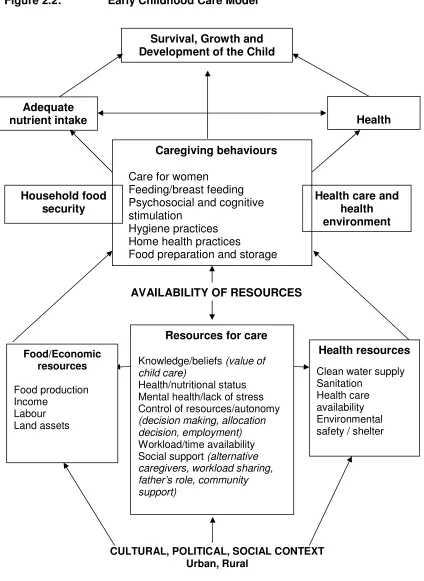
dynamic interplay between the child and the environment. Thus the new
perspectives on child care led to the development of a new care framework
(Engle, Menon, & Haddad, 1997) which focuses on the “whole child” in a
Figure 2.2: Early Childhood Care Model
CULTURAL, POLITICAL, SOCIAL CONTEXT Urban, Rural
Survival, Growth and Development of the Child
Caregiving behaviours Care for women
Feeding/breast feeding Psychosocial and cognitive stimulation
Hygiene practices Home health practices
Food preparation and storage Household food
security Health care and health
environment
Resources for care Knowledge/beliefs (value of child care)
Health/nutritional status Mental health/lack of stress Control of resources/autonomy
(decision making, allocation decision, employment)
Workload/time availability Social support (alternative caregivers, workload sharing, father’s role, community support)
AVAILABILITY OF RESOURCES
Source:Engle, Menon & Haddad, (1997). p. 5
Health Adequate nutrient intake Food/Economic resources Food production Income Labour Land assets Health resources Clean water supply Sanitation