R E V I E W
Metabonomics and intensive care
David Antcliffe and Anthony C. Gordon
*Abstract
This article is one of ten reviews selected from the Annual Update in Intensive Care and Emergency medicine 2016. Other selected articles can be found online at http://www.biomedcentral.com/collections/ annualupdate2016. Further information about the Annual Update in Intensive Care and Emergency Medicine is available from http://www.springer.com/ series/8901.
Background
Metabonomics is “the quantitative measurement over time of the metabolic responses of an individual or population to drug treatment or other intervention” [1], such as a disease process, and provides a ‘top‐ down’ integrated overview of the biochemistry in a complex system. The metabolic profile is determined by both host genetic and environmental factors [2]. As such, metabonomics has great potential for inten-sive care medicine, where patients are complex and understanding the relationship of host factors, disease and treatment effects is key to improving care. Approaches that focus on single or small sets of bio-markers may fail to capture this complexity, so meta-bonomics may have advantages for both understanding diseases and improving diagnostics and treatment monitoring.
Spectroscopic techniques, including nuclear mag-netic resonance (NMR) spectroscopy and mass spec-trometry, have been used to determine the global metabolic profiles of numerous types of biological samples. Most commonly, blood and urine are ana-lyzed but any biological specimens, including tissue, cerebrospinal fluid or exhaled breath condensate, can be used [3–6]. Metabonomic methods have been used to evaluate numerous clinically‐significant conditions including trauma [7, 8], acute kidney injury (AKI) and
* Correspondence:[email protected]
Department of Surgery & Cancer, Charing Cross Hospital / Imperial College London, Section of Anaesthetics, Pain Medicine & Intensive Care, London, UK
monitoring of dialysis [9–11], subarachnoid hemorrhage [12], and acute lung injury (ALI) [13].
The two broad analytical platforms, NMR and mass spectrometry, each have their own strengths and weak-nesses and together give complementary information. Data can be acquired that either provides non‐targeted global metabolic information, which is useful for initial biomarker discovery, or can be targeted to obtain de-tailed information on a specific class of metabolites or metabolic processes.
Nuclear magnetic resonance spectroscopy
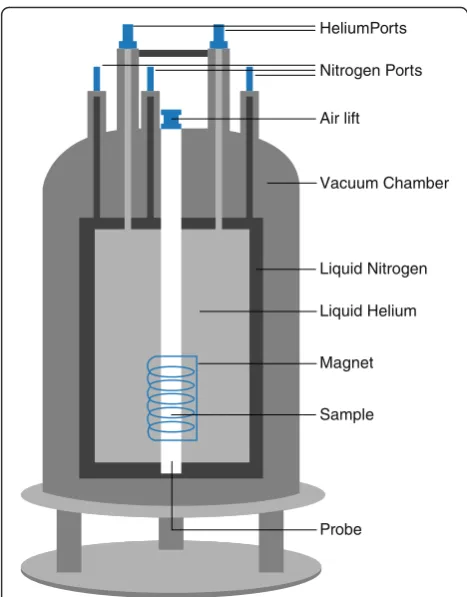
NMR spectroscopy harnesses the magnetic properties of certain nuclei that possess spin, for example1H and13C. Commonly in metabonomics, 1H or proton NMR is used. NMR spectrometers use superconductors to gener-ate a strong magnetic field (Fig. 1). A spinning charge placed in such a magnetic field produces two spin states: one up, aligned with the magnetic field; and one down, aligned against the magnetic field. The energy difference between the two spin states is influenced by the local electron environment, which acts to shield the nucleus. When a sample containing these nuclei is excited with a radio frequency pulse, those nuclei in the lower energy spin state excite into the higher energy state and the subtle differences in the resonances gen-erated can be used to give information regarding chemical structure. Resonances are reported in rela-tion to a reference signal, such as 3‐(trimethyl‐silyl) propionic acid (TSP) or tetramethylsilane (TMS), and in order to account for magnetic fields of different strengths these values are given as chemical shifts in parts per million (ppm).
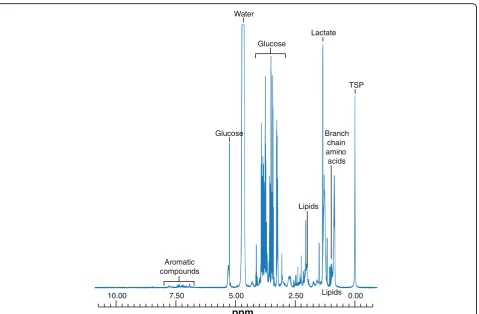
Chemical shifts are predictable based on the local elec-tron shielding and give information about the structure of the molecule. The magnitude or intensity of NMR resonance signals is displayed along the vertical axis of a spectrum, and is proportional to the concentration of the sample.
Typically,1H NMR spectra of urine contain thousands of narrow, low molecular weight metabolites, whereas those from serum and plasma contain a mixture of low
and high molecular weight compounds (Fig. 2). Experi-mental pulse sequences can be chosen to selectively suppress particular spectral features; for example, the Carr‐Purcell‐Meiboom‐Gill (CPMG) sequence will sup-press large molecular weight metabolites revealing those of a smaller weight. Common to all experiments is the need to suppress the large water peak and this is achieved with a solvent suppression pulse sequence.
For the purposes of metabonomics,1H NMR has sev-eral strengths. Little sample preparation is required, and the technique is relatively non‐destructive, quantitative, and non‐invasive. Data obtained from NMR experiments are reproducible [14] and robust. Concentrations of metabolites are detectable down to micromole/l concen-trations and analysis is relatively quick, taking as little as 3–4 min per sample.
Mass spectrometry
Mass spectrometryis a technique that aims to identify metabolites within a sample based on the detection of the mass‐charge ratio (m/z) of ions produced by the ionization of chemical compounds. Molecules in a sam-ple are vaporized before being ionized by bombardment with either electrons or other ions. The molecule is thus broken into charged fragments which can be sorted
based on their m/z ratio and detected by a device cap-able of detecting charged particles. Several techniques exist to separate and detect molecular fragments; an ex-ample is separation by accelerating ions and subjecting them to an electric or magnetic field (Fig. 3). The re-corded data can be displayed as a spectrum of the rela-tive abundances of the various ions with the same m/z ratios.
In order to improve mass separation, mass spectrom-etry is often coupled to chromatographic techniques. Such techniques include gas chromatography‐mass spec-trometry (GC‐MS), where a gas chromatogram is used to separate molecules in gaseous phase before they are fed into the ion source. Liquid chromatography‐mass spectrometry (LC‐MS) and high performance liquid chromatography‐mass spectrometry (HPLC‐MS) simi-larly separate molecules in a sample in a liquid mobile phase using a liquid chromatogram with a combination of organic solvents prior to ionization.
Mass spectrometry‐based platforms have the advan-tage of greater sensitivity compared to NMR; however, some substances, such as sugars and amino acids, are difficult to analyze with this method due to their polarity and lack of volatility [15]. Mass spectrometry requires reasonably extensive sample preparation and, with long chromatographic times, can take longer to process than NMR. Also, because of the need to vaporize and ionize the sample, mass spectrometry is a more destructive analytical technique than NMR.
Data analysis
Analytical techniques used in metabonomics generate data sets that are unlike those produced in many other scientific fields. Whereas there would often be many more subjects than variables, metabonomics generally produces thousands of variables, several of which may correlate, and many may not be normally distributed. These features pose problems for regular statistical methods so analysis is generally performed using multivariate statistics. Broadly speaking multi-variate methods can be split into unsupervised tests, where no class information is supplied to the model, and supervised tests, designed to look for group sep-aration based on class information. Unsupervised tests are good at finding natural clustering within the data sets and at identifying outliers. Supervised tests, on the other hand, look for variation between predefined groups or classes and are able to build predictive models.
Principal component analysis
Principal component analysis (PCA) is a common method of unsupervised multivariate analysis used in metabonomics. It is used to elucidate the covariance HeliumPorts
Nitrogen Ports
Air lift
Vacuum Chamber
Liquid Nitrogen
Liquid Helium
Magnet
Sample
Probe
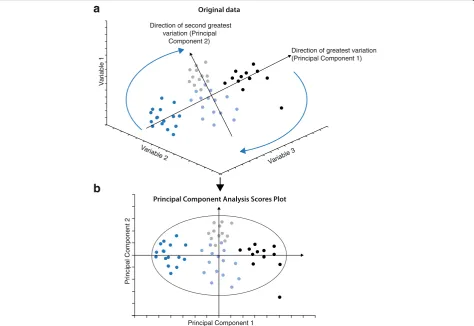
[image:2.595.56.290.85.384.2]structure of the data set by representing the data along new axes based on the direction of the maximum vari-ation, the principal components. The first principal com-ponent is the direction of greatest variation and the second principal component is that with the second
largest value that is orthogonal to the first (Fig. 4). This method of analysis allows data reduction. Some compo-nents will contain very little variation and those with low magnitudes, which contain little information, are discarded. The data can then be re‐displayed using the
Fig. 3A schematic diagram of the component parts of a mass spectrometer
10.00 7.50 5.00 2.50 0.00
ppm
Lipids Lipids
Aromatic compounds
Glucose Branch
chain amino acids
TSP Lactate Water
Glucose
Fig. 2Example of a1H nuclear magnetic resonance Carr
[image:3.595.61.541.85.399.2] [image:3.595.60.538.531.711.2]principal components as a new set of axes, giving a PCA scores plot (Fig. 4).
An approximation to the Student’s t‐test, called the Hotelling’s ellipse, can be projected onto the scores plot. This gives an indication of a 95 % confidence interval within which 95 % of observations should fall. Data points lying outside of this ellipse can be considered as outliers and can be examined in more detail.
Supervised analysis
Supervised multivariate analysis is aimed at finding the variation in the data matrix that explains predefined classifications. One of the underlying methods of super-vised analysis is the partial least squares analysis (PLS). PLS determines the underlying relationship between two data matrices, one that contains the sample data and a second containing class information. This method finds the fewest variables that account for the differences in the class matrix. Overall, the goal is to predict cases and controls from metabolic data. Extensions of the PLS occur with orthogonal partial least squares (OPLS), which works in a similar fashion to PLS. However, in
this method the variation in the data is divided into that which explains class separation and that which is or-thogonal to it and does not explain class. For clinical studies, supervised analysis allows large metabonomic data sets to be reduced to variables that are important in separating cases and controls without losing predictive power.
To assess the predictive capacity of a model, cross val-idation can be carried out. A number of methods exist to do this but a commonly utilized approach is to leave out every nthrow in the data matrix and build a model based on the remaining data. The remaining data can then be predicted by the model and the results com-pared to the expected outcome. This process can then be repeated until all of the data has been left out once. After cross validation it is possible to derive two descrip-tive metrics for the models. The first is known as the R2 and explains the amount of variation between the classi-fication groups that is explained by the model. This value ranges from 0 to 1.0 with values approaching 1.0 explaining almost all of the variation in the model and lower values suggesting that much of the variation in the
Direction of second greatest variation (Principal
Component 2)
Direction of greatest variation (Principal Component 1)
Variable 3
Variable 2
V
a
riable 1
P
rincipal Component 2
Principal Component 1
[image:4.595.62.537.89.415.2]data is irrelevant or noise. The second value is the Q2, which represents the predictive capacity of the model, again ranging from 0 to 1.0. The expected values of both R2and Q2are dependent on the type of data being ana-lyzed but in general should ideally be no more than 0.2 apart; for biological systems a Q2 of 0.4 represents a reasonable predictive accuracy. However, the ideal way to test a model is to challenge it with a com-pletely new set of data from a validation cohort of samples that have not been used to generate the model in the first instance.
Metabonomics and intensive care
Metabonomics work relevant to critical care has mainly focused on sepsis and infection. A range of studies has been carried out attempting to use metabonomic tech-niques to explore infection. Cells, animals and human subjects have been used, with both NMR and mass spec-troscopy, allowing over 500 metabolites and pathways to be implicated in infective processes.
Several animal models have been used, testing differ-ent biofluids including blood [16–20], broncheoalveolar (BAL) fluid [16] and lymph [18] as well as tissue, such as lung [16, 17], liver [17, 21], kidney [22] and spleen [17, 22]. Infections as diffuse as cerebral mal-aria [22], influenza [23], tuberculosis [17], peritonitis [16, 18, 24] and Escherichia coli sepsis [20] have been investigated. Metabolites including amino acids, those involved in energy and carbohydrate metabolism, fatty acids and those associated with mitochondrial dys-function have all been identified in these models.
In human subjects, several clinical infections have been subject to metabonomic investigation. A number of studies has been carried out examining urinary tract infection using NMR of urine samples [25–29] with an attempt to identify specific causative organisms, po-tentially allowing for rapid diagnosis and targeted treatment. Other specific infections investigated with metabonomics have included cerebrospinal fluid analysis to distinguish various forms of meningitis and ventriculitis [30] and sepsis from various causes in both adults [31–34] and children [35, 36].
Pneumonia remains a common cause for admission to critical care units and a small amount of work has been carried out investigating this condition using metabo-nomics. Animal studies have found elevated lipoproteins, triglycerides, unsaturated and polyunsaturated fatty acids, ω‐3 fatty acids, lactate, 3‐hydroxybutyrate and creatinine and reduced glucose, choline, phosphocholine and glycer-ophosphocholine levels in the plasma of rats infected
with Klebsiella pneumoniae compared to controls [37].
Mice with pneumonia caused byStaphylococcus aureus
or Streptococcus pneumoniaehave been separated from
control animals based on urine metabolic profiles [38].
Human studies have focused on community‐acquired pneumonia (CAP). A study using mass spectroscopy analysis of plasma from children in Gambia with pneu-monia found elevated uric acid, hypoxanthine and glu-tamic acid and reduced tryptophan and adenosine diphosphate levels in infected individuals [39]. Another study looking specifically at patients withS. pneumoniae pneumonia found 33 urinary metabolites used to sep-arate cases from controls including citrate, succinate, 1‐methylnicotinamide, several amino acids, glucose, lactate, acetone, carnitine, acetylcarnitine, hypoxanthine and acetate, most of which were increased in those with infection [40]. This study also aimed to address several po-tential confounding factors associated with this type of investigation by comparing cases to several control groups, such as those with other types of lung disease, those with other types of pneumonia and those with other acute illnesses. In almost all cases, metabolic profiling was able to distinguish cases of pneumonia from controls.
and amino acids were increased and a component of sur-factant decreased in those with ARDS compared to healthy controls [44].
The studies outlined above demonstrate that, although only a small number of studies have been conducted in intensive care patients to date, common to all are the finding that a large number of metabolites and metabolic pathways are deranged in critical illness. These range from energy and lipid metabolism to amino acid and steroid hormone synthesis, most of which are not cur-rently routinely measured. Not only are a range of path-ways involved in critical illness but specific elements of these may be up‐ or down‐regulated in different con-texts, even within different individuals with similar diseases. At present, it is still too early to draw firm conclusions regarding the role of metabonomics in diag-nosis, prognostication or monitoring of treatment effect within ICU patients. However, from the limited work done already, the ability of metabonomics to monitor such a diverse range of markers makes it an attractive approach for biomarker discovery and for understanding the subgroups or phenotypes of patients admitted to critical care. The ability of metabonomics to simultan-eously measure several metabolites from a range of metabolic processes allows some understanding to be gained, not only about the impact of critical illness on individual pathways, but the interaction of many meta-bolic processes during illness. A further understanding of these complex interactions may aid in the identifica-tion of phenotypes of patients that are currently not clinically apparent and that may respond to treatments differently, previously termed stratified medicine but now referred to as precision medicine. Further metabo-nomic research within critical care should focus on addressing current challenges, such as monitoring treatment effect with the early identification of non‐ responders, identifying phenotypes of sepsis and ARDS that may respond differently to treatment or ventilation strategies and assisting in making challen-ging diagnoses such as early identification of ventila-tor‐associated pneumonia (VAP).
Conclusion
Metabonomics is a relatively new scientific discipline that aims to explore the changes in global metabolic profiles in response to exogenous influences such as dis-ease states or treatments as well as host factors. Broadly two analytical methods are employed, NMR and mass spectroscopy, to measure a vast array of metabolites that require specialist multivariate statistics for analysis. So far only a limited amount of work has been carried out in intensive care patients. However, from these studies, perturbation in a number of metabolic pathways has been implicated in critical illness. The ability to explore
several metabolic processes simultaneously, and their in-teractions, is an exciting prospect for intensive care medi-cine. The complexity of this group of patients and the growing understanding that subgroups of patients may re-quire tailored treatments suggests that metabolic profiling or phenotyping may help to improve diagnostics or target treatment strategies in clinical trials and clinical practice.
Competing interests
The authors report no competing interests in relation to this article.
Authors’contributions
Both authors drafted, read and approved the final manuscript.
Declarations
Publication of this article was funded by Imperial College’s Open Access fund.
References
1. Holmes E, Wilson ID, Nicholson JK. Metabolic phenotyping in health and disease. Cell. 2008;134:714–7.
2. Nicholson JK, Lindon JC. Systems biology: metabonomics. Nature. 2008;455:1054–6.
3. Nicholson JK, Connelly J, Lindon JC, Holmes E. Metabonomics: a platform for studying drug toxicity and gene function. Nat Rev Drug Discov. 2002;1:153–61.
4. Nicholson JK, Lindon JC. Systems biology–metabonomics. Nature. 2008;455:1054–6.
5. Beckonert O, Keun HC, Ebbels TM, et al. Metabolic profiling, metabolomic and metabonomic procedures for NMR spectroscopy of urine, plasma, serum and tissue extracts. Nat Protoc. 2007;2:2692–703.
6. Sofia M, Maniscalco M, de Laurentiis G, Paris D, Melck D, Motta A. Exploring airway diseases by NMR-based metabonomics: a review of application to exhaled breath condensate. J Biomed Biotechnol. 2011;2011:403260. 7. Cohen MJ, Serkova NJ, Wiener-Kronish J, Pittet JF, Niemann CU.
1H-NMR-based metabolic signatures of clinical outcomes in trauma patients– beyond lactate and base deficit. J Trauma. 2010;69:31–40.
8. Mao H, Wang H, Wang B, et al. Systemic metabolic changes of traumatic critically ill patients revealed by an NMR-based metabonomic approach. J Proteome Res. 2009;8:5423–30.
9. Sato E, Kohno M, Yamamoto M, Fujisawa T, Fujiwara K, Tanaka N. Metabolomic analysis of human plasma from haemodialysis patients. Eur J Clin Invest. 2011;41:241–55.
10. Beger RD, Holland RD, Sun J, et al. Metabonomics of acute kidney injury in children after cardiac surgery. Pediatr Nephrol. 2008;23:977–84.
11. Al-Ismaili Z, Palijan A, Zappitelli M. Biomarkers of acute kidney injury in children: discovery, evaluation, and clinical application. Pediatr Nephrol. 2011;26:29–40.
12. Dunne VG, Bhattachayya S, Besser M, Rae C, Griffin JL. Metabolites from cerebrospinal fluid in aneurysmal subarachnoid haemorrhage correlate with vasospasm and clinical outcome: a pattern-recognition 1H NMR study. NMR Biomed. 2005;18:24–33.
13. Stringer KA, Serkova NJ, Karnovsky A, Guire K, Paine R, Standiford TJ. Metabolic consequences of sepsis-induced acute lung injury revealed by plasma (1)H-nuclear magnetic resonance quantitative metabolomics and computational analysis. Am J Physiol Lung Cell Mol Physiol. 2011;300:L4–L11. 14. Dumas ME, Maibaum EC, Teague C, et al. Assessment of analytical
reproducibility of 1H NMR spectroscopy based metabonomics for large-scale epidemiological research: the INTERMAP Study. Anal Chem. 2006;78:2199–208.
15. Lenz EM, Wilson ID. Analytical strategies in metabonomics. J Proteome Res. 2007;6:443–58.
16. Izquierdo-Garcia JL, Nin N, Ruiz-Cabello J, et al. A metabolomic approach for diagnosis of experimental sepsis. Intensive Care Med. 2011;37:2023–32. 17. Shin JH, Yang JY, Jeon BY, et al. (1)H NMR-based metabolomic profiling
18. Li Y, Hou M, Wang JG, et al. Changes of lymph metabolites in a rat model of sepsis induced by cecal ligation and puncture. J Trauma Acute Care Surg. 2012;73:1545–52.
19. Steelman SM, Johnson P, Jackson A, Schulze J, Chowdhary BP. Serum metabolomics identifies citrulline as a predictor of adverse outcomes in an equine model of gut-derived sepsis. Physiol Genomics. 2014;46:339–47. 20. Langley RJ, Tipper JL, Bruse S, et al. Integrative“omic”analysis of
experimental bacteremia identifies a metabolic signature that distinguishes human sepsis from systemic inflammatory response syndromes. Am J Respir Crit Care Med. 2014;190:445–55.
21. Antunes LC, Arena ET, Menendez A, et al. Impact of salmonella infection on host hormone metabolism revealed by metabolomics. Infect Immun. 2011;79:1759–69.
22. Ghosh S, Sengupta A, Sharma S, Sonawat HM. Metabolic perturbations of kidney and spleen in murine cerebral malaria: (1)H NMR-based metabolomic study. PLoS One. 2013;8:e73113.
23. Chen L, Fan J, Li Y, et al. Modified Jiu Wei Qiang Huo decoction improves dysfunctional metabolomics in influenza A pneumonia-infected mice. Biomed Chromatogr. 2014;28:468–74.
24. Xu PB, Lin ZY, Meng HB, et al. A metabonomic approach to early prognostic evaluation of experimental sepsis. J Infect. 2008;56:474–81.
25. Lam CW, Law CY, To KK, et al. NMR-based metabolomic urinalysis: a rapid screening test for urinary tract infection. Clin Chim Acta. 2014;436:217–23. 26. Lam CW, Law CY, Sze KH, To KK. Quantitative metabolomics of urine for
rapid etiological diagnosis of urinary tract infection: evaluation of a microbial-mammalian co-metabolite as a diagnostic biomarker. Clin Chim Acta. 2015;438:24–8.
27. Gupta A, Dwivedi M, Mahdi AA, Khetrapal CL, Bhandari M. Broad identification of bacterial type in urinary tract infection using (1)h NMR spectroscopy. J Proteome Res. 2012;11:1844–54.
28. Gupta A, Dwivedi M, Mahdi AA, Gowda GA, Khetrapal CL, Bhandari M. 1H-nuclear magnetic resonance spectroscopy for identifying and quantifying common uropathogens: a metabolic approach to the urinary tract infection. BJU Int. 2009;104:236–44.
29. Nevedomskaya E, Pacchiarotta T, Artemov A, et al. (1)H NMR-based metabolic profiling of urinary tract infection: combining multiple statistical models and clinical data. Metabolomics. 2012;8:1227–35.
30. Coen M, O’Sullivan M, Bubb WA, Kuchel PW, Sorrell T. Proton nuclear magnetic resonance-based metabonomics for rapid diagnosis of meningitis and ventriculitis. Clin Infect Dis. 2005;41:1582–90.
31. Su L, Huang Y, Zhu Y, et al. Discrimination of sepsis stage metabolic profiles with an LC/MS-MS-based metabolomics approach. BMJ Open Respir Res. 2014;1:e000056.
32. Langley RJ, Tsalik EL, van Velkinburgh JC, et al. An integrated clinico-metabolomic model improves prediction of death in sepsis. Sci Transl Med. 2013;5:195ra195.
33. Mickiewicz B, Duggan GE, Winston BW, Doig C, Kubes P, Vogel HJ. Metabolic profiling of serum samples by 1H nuclear magnetic resonance spectroscopy as a potential diagnostic approach for septic shock. Crit Care Med. 2014;42:1140–9.
34. Schmerler D, Neugebauer S, Ludewig K, Bremer-Streck S, Brunkhorst FM, Kiehntopf M. Targeted metabolomics for discrimination of systemic inflammatory disorders in critically ill patients. J Lipid Res. 2012;53:1369–75. 35. Fanos V, Caboni P, Corsello G, et al. Urinary (1)H-NMR and GC-MS
metabolomics predicts early and late onset neonatal sepsis. Early Hum Dev. 2014;90 Suppl 1:S78–83.
36. Mickiewicz B, Vogel HJ, Wong HR, Winston BW. Metabolomics as a novel approach for early diagnosis of pediatric septic shock and its mortality. Am J Respir Crit Care Med. 2013;187:967–76.
37. Dong F, Wang B, Zhang L, Tang H, Li J, Wang Y. Metabolic response to Klebsiella pneumoniae infection in an experimental rat model. PLoS One. 2012;7:e51060.
38. Slupsky CM, Cheypesh A, Chao DV, et al. Streptococcus pneumoniae and Staphylococcus aureus pneumonia induce distinct metabolic responses. J Proteome Res. 2009;8:3029–36.
39. Laiakis EC, Morris GA, Fornace AJ, Howie SR. Metabolomic analysis in severe childhood pneumonia in the Gambia, West Africa: findings from a pilot study. PLoS One. 2010;9:5.
40. Slupsky CM, Rankin KN, Fu H, et al. Pneumococcal pneumonia: potential for diagnosis through a urinary metabolic profile. J Proteome Res. 2009;8:5550–8.
41. Seymour CW, Yende S, Scott MJ, et al. Metabolomics in pneumonia and sepsis: an analysis of the GenIMS cohort study. Intensive Care Med. 2013;39:1423–34.
42. Blaise BJ, Gouel-Cheron A, Floccard B, Monneret G, Allaouchiche B. Metabolic phenotyping of traumatized patients reveals a susceptibility to sepsis. Anal Chem. 2013;85:10850–5.
43. Rogers AJ, McGeachie M, Baron RM, et al. Metabolomic derangements are associated with mortality in critically ill adult patients. PLoS One. 2014;9:e87538.