FORMULATION, EVALUATION AND PROCESS
VALIDATION STUDIES OF ACARBOSE TABLETS
Dissertation submitted to
THE TAMIL NADU Dr. M.G.R. MEDICAL UNIVERSITY Chennai - 600032
In partial fulfilment of the requirements for the award of the Degree of
MASTER OF PHARMACY In
PHARMACEUTICS
Submitted by
S.RAMA ADHITYA SRIKAR.V
(Register No: 26114511)Under the Guidance of
Miss.P.KAVITHA,M.Pharm.,
ASSISTANT PROFESSOR
DEPARTMENT OF PHARMACEUTICS
K.K. COLLEGE OF PHARMACY GERUGAMBAKKAM, CHENNAI - 600122
Prof. A.MEENA, M.Pharm, (Ph.D),
PRINCIPAL,
K.K. COLLEGE OF PHARMACY,
CHENNAI–600 122.
CERTIFICATE
This is to Certify that the dissertation entitled “FORMULATION,
EVALUATION AND PROCESS VALIDATION STUDIES OF ACARBOSE
TABLETS” is a bonafide and genuine research work carried out by Mr. S.RAMA
ADITHYA SRIKAR.V , during the academic year 2012-2013 under the supervision of
Miss.P.KAVITHA, M.Pharm., Assistant professor, K.K. College of Pharmacy,
Chennai - 600122. This dissertation submitted in partial fulfilment for the award of
degree of Master of Pharmacy (Pharmaceutics) by The Tamil Nadu Dr. M.G.R
Medical University, Chennai–600032.
Prof. Dr. V. VAIDHYALINGAM, M.Pharm., Ph.D.
DIRECTOR
K.K. COLLEGE OF PHARMACY
CHENNAI. 600 122.
CERTIFICATE
This is to Certify that the dissertation entitled “FORMULATION, EVALUATION
AND PROCESS VALIDATION STUDIES OF ACARBOSE TABLETS” is a
bonafide and genuine research work carried out by Mr.S.RAMA ADITHYA
SRIKAR.V, during the academic year 2012-2013 under the supervision of
Miss.P.KAVITHA,M.Pharm., Assistant professor, Department of Pharmaceutics, K.K.
College of Pharmacy, Chennai 600122. This dissertation submitted in partial fulfilment
for the award of degree of Master of Pharmacy (Pharmaceutics) by The Tamil Nadu
Dr. M.G.R Medical University, Chennai–600032.
Prof. Dr. K. SENTHIL KUMARAN, M.Pharm., Ph.D.
HEAD OF DEPARTMENT
DEPARTMENT OF PHARMACEUTICS
K.K. COLLEGE OF PHARMACY
CHENNAI . 600 122.
CERTIFICATE
This is to Certify that the dissertation entitled “FORMULATION, EVALUATION
AND PROCESS VALIDATION STUDIES OF ACARBOSE TABLETS” is a
bonafide and genuine research work carried out by Mr. S.RAMA ADITHYA
SRIKAR.V, during the academic year 2012-2013 under supervision of Miss
P.KAVITHA, M.Pharm., This dissertation submitted in partial fulfilment for the award
of degree of Master of Pharmacy (Pharmaceutics) by The Tamil Nadu Dr. M.G.R
Medical University, Chennai–600032.
Miss P.KAVITHA,M.Pharm,.
ASSISTANT PROFESSOR,
INSTITUTIONAL GUIDE
DEPARTMENT OF PHARMACEUTICS
K.K. COLLEGE OF PHARMACY
CHENNAI . 600 122.
CERTIFICATE
This is to Certify that the dissertation entitled “FORMULATION, EVALUATION
AND PROCESS VALIDATION STUDIES OF ACARBOSE TABLETS” is a
bonafide and genuine research work carried out by Mr. S.RAMA ADITHYA
SRIKAR.V, during the academic year 2012-2013 under my supervision. This
dissertation submitted in partial fulfilment for the award of degree of Master of
Pharmacy (Pharmaceutics) by The Tamil Nadu Dr. M.G.R Medical University,
Chennai–600032.
ACKNOWLEDGMENT
The work of some unknown person makes our lives easier every day. I believe it is
appropriate to acknowledge all of those unknown persons, but it is also necessary to
acknowledge those people I Know who have directly shaped my life and work.
I am deeply indebted to Prof.K.R.ARUMUGAM, M.Pharm, CHAIRMAN,
K.K.COLLEGE OF PHARMACY,CHENNAI for his help and support.
I wish to express my deep sense of gratitude and sincere thanks to Mrs.A.MEENA,
M.Pharm, PRINCIPAL, K.K.COLLEGE OF PHARMACY,CHENNAI for her help and
support throughout my work.
I now take this opportunity to express my deep gratitude to
Prof.Dr.V.VAIDHYALINGAM, M.Pharm., Ph.D., DIRECTOR, K.K.COLLEGE OF
PHARMACY,CHENNAI for his help and support throughout these two years of my post
graduation course. I would like to thank him for his hearty cooperation and valuable guidance
through out these two years.
I owe a debt of gratitude to Prof.Dr.K.SENTHILKUMARAN, M.Pharm., Ph.D., HEAD,
DEPARTMENT OF PHARMACEUTICS for his valuable guidance and providing
facilities during the course of my work.
I Profusely express my undying gratitude towards my guide Miss P.KAVITHA,M.Pharm.,
Assistant Professor, Department of Pharmaceutics K.K.COLLEGE OF PHARMACY who
stood by me throughout the project work and for spending her valuable time for giving me
I am deeply indebted to the teaching staff of the department who were always a source of
knowledge and inspiration to me. I would like to thank Mrs.Rajarajeswari Hariharan,
M.Pharm, Mrs.Preetha,M.Pharm., for their guidance and prompt assistance and
cooperation.
I express my sincere thanks to Mr.Shanmuganathavel, Plant head M/S ORCHID
HEALTH CARE (A DIVISION OF ORCHID CHEMICALS AND
PHARMACEUTICALS LTD) for his valuable guidance, dynamic approach, innovative
advices, technical and moral support given to me throughout the course of this dissertation
work.
I would like to thank Mr.M.S.MURTHY, General manager ORCHID CHEMICALS
AND PHARMACEUTICALS LTD for giving me the opportunity to work in this esteemed
organization.
I express my special thanks to the LibrarianMrs.USHA and other non teaching staff for their
constant help and support through these two years of M.Pharm course.
I take this opportunity to thank my friends A.SENTHIL KUMAR, A.AMUL RAJ,for their
support and encouragement.
I would to thank my roommates T.KARTHIK, N.NARESH, B.P.SRIKAR for their support
and encouragement throughout my project work.
I owe a depth of love to my father Mr.V.JAGANNADHA RAO, my mother
Mrs.V.SATYAVATHI ,to my younger brother V.S.S.SIVARAM for their encouragement,
faith and love which made my dreams come true.
My hearty thanks to the lab technicians of Department of Pharmaceutics K.K.COLLEGE OF
PHARMACY for their support throughout the M.Pharm course.
I would like to thank all my classmates, friends and to all those helped me in making this
DEDICATED
TO
MY
LIST OF ABBREVIATIONS USED
1. RMG - Rapid Mixer Granulator
2. QC - Quality Control
3. DQ - Design Qualification
4. IQ - Installation Qualification
5. OQ - Operational Qualification
6. PQ - Performance Qualification
7. USFDA - United States Food & Drug Administration
8. WHO - World Health Organization
9. MOC - Material Of Construction
10. cGMP - Current Good Manufacturing Practice
11. ICH - International Conference on Harmonisation.
12. SVC - Site Validation Committee
13. QA - Quality Assurance
14. VRA - Validation Risk Assessment
15. URS - User Requirement Specification.
16. VP - Validation Plans.
17. SOP - Standard Operating Procedure
18. MVP - Master Validation Plan.
19. API - Active Pharmaceutical Ingredient
20. CTD - Common Technical Document.
21. MedDRA - Medical Dictionary for Regulatory Activities.
22. ISPE - International Society for Pharmaceutical Engineering. 23. QbD - Quality By Design.
25. CAQ - Critical Quality Attributes.
26. CDER - Centre For Drug Evaluation And Control.
27. EU - European Union.
28. EMA - European Medicines Agency.
29. FTIR - Fourier transform Infrared Spectroscopy.
30. HbA1c - Glycated hemoglobin or glycosylated hemoglobin.
31. G.I.T - Gastro Intestinal Tract.
32. HDPE - High-density polyethylene (HDPE) or polyethylene high-density.
33. LOD - Loss On Drying.
34. R.P.M - Rotations Per Minute.
35. USP - United States Pharmacopeia.
36. HPLC - High Performance Liquid Chromatography.
37. M.S.D - Mean Standard Deviation,
38. R.S.D - Relative Standard Deviation.
39. NLT - Not Less Than.
LIST OF TABLES
S.NO LIST OF TABLES PAGE NO
1 Authorities of Validation 12
2 List of Equipments 54
3 List of Materials 55
4 Formula for Acarbose 57
5 Flow Properties 64
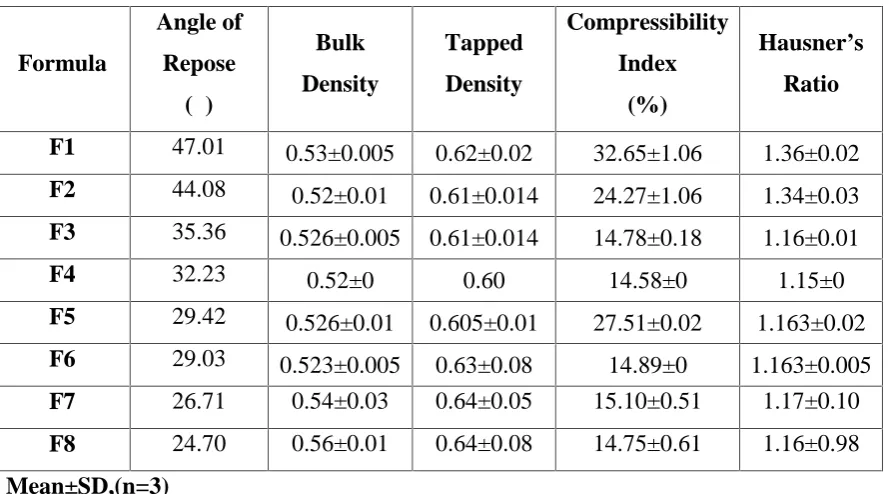
6 Limits of Weight Variation 64
7 Process Steps, Control Variables and Measuring Response 68
8 Pre-Compression Parameters 80
9 Port-Compression Parameters 81
10 Assay of Acarbose During Dry Mixing(10 min) 83
11 Assay of Acarbose During Dry Mixing(20 min) 84
12 Assay of Acarbose During Dry Mixing(30 min) 85
13 LOD of Acarbose 86
14 PARTICLE SIZE DISRTIBUTION 86
15 Compression Data of Acarbose Batch A 87
16 Compression Data of Acarbose Batch B 88
17 Compression Data of Acarbose Batch C 89
18 Coating Data of Acarbose 90
19 Coating Data of Acarbose 91
LIST OF FIGURES
S.NO LIST OF TABLES PAGE.NO.
1 SIMPLIFIED VALIDATION PATH 18
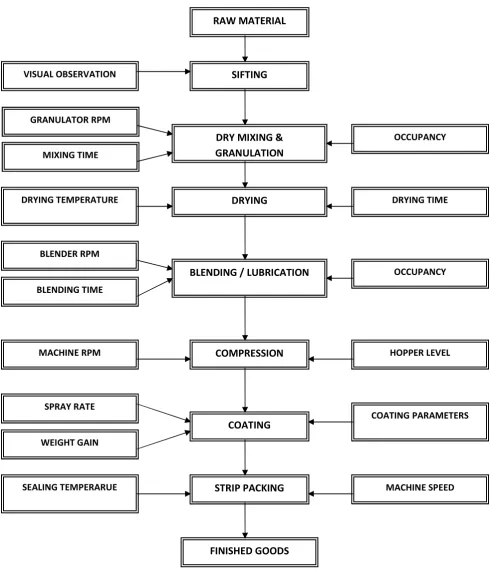
2 PROCESS VALIDATION FLOW CHART 67
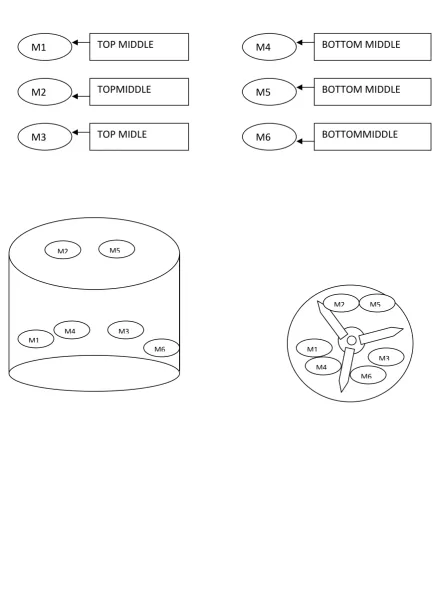
3 SAMPLING LOCATION IN R.M.G 74
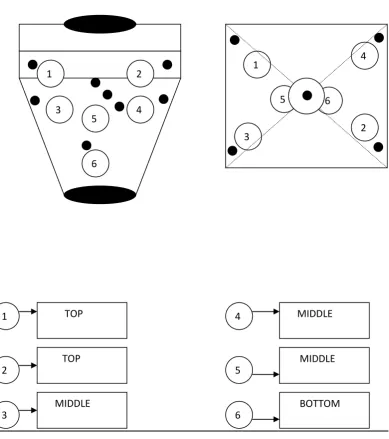
4 SAMPLING LOCATION IN CAGSE BLENDER 76
5 FTIR GRAPH OF ACARBOSE STANDARD 93
6 FTIR GRAPH OF ACARBOSE SAMPLE 94
7 FTIR OF COMPARISON OF SAMPLE WITH STANDARD 95
8 HPLC CHROMATOGRAM OF F 3 STD 1,2 96
9 HPLC CHROMATOGRAM OF F4 STD 1,2 96
10 HPLC CHROMATOGRAM OF F 3 SPL 1,2 96
11 HPLC CHROMATOGRAM OF F4 SPL 1,2 97
12 HPLC CHROMATOGRAM OF F5 STD 1,2 98
13 HPLC CHROMATOGRAM OF F4 SPL 1,2 99
14 HPLC CHROMATOGRAM OF F6 STD 1,2 100
15 HPLC CHROMATOGRAM OF F5 SPL 1,2 100
16 HPLC CHROMATOGRAM OF F6 SPL 1,2 100
17 HPLC CHROMATOGRAM OF F7 STD 1,2 102
18 HPLC CHROMATOGRAM OF F7 SPL 1 103
19 HPLC CHROMATOGRAM OF F7 SPL 2 104
20 HPLC CHROMATOGRAM OF STD OF BATCH A 105
21 HPLC CHROMATOGRAM OF SPL OF BATCH A 106
22 HPLC CHROMATOGRAM OF STD OF BATCH B 107
23 HPLC CHROMATOGRAM OF SPL OF BATCH B 108
24 HPLC CHROMATOGRAM OF STD OF BATCH C 110
CONTENTS
CHAPTER
TITLE
PAGE.NO
1
INTRODUCTION
1
2
LITERATURE REVIEW
34
3
AIM AND OBJECTIVE OF WORK
39
4
PLAN OF WORK
40
5
DRUG PROFILE
41
6
EXCIPIENTS PROFILE
45
7
MATERIALS AND METHODS
54
8
RESULTS AND DISCUSSIONS
80
9
ANNEXURES
93
INTRODUCTION
Oral solid dosage form1,2
:-The oral route of drug administration is the most important method of administering drug for systemic effects. Except in certain cases the parental route is not routinely used for self administration, e.g. insulin. The topical route of administration has only recently been employed to deliver drugs to the body for systemic effect. The parental route of
administration is important in treating medical emergencies in which the subject is comatose or cannot swallow. Nevertheless it is probably that at least 90% of all drugs used to provide systemic effect are administered by oral route. When a new drug is discovered one of the first question a pharmaceutical company asks is if the drug can effectively administered for its intended effect by oral route. Drugs that are administered orally, solid oral dosage forms represent the preferred class of product. Tablets and capsules represent unit dosage forms in which usual dose of drug has been accurately placed.
Tablets and capsules represent unit dosage forms in which one usual dose of drug has been accurately placed. By comparison liquid forms such as syrups, suspensions, emulsions, solutions and elixirs are usually designated to contain one medication in 5-30 ml, such as dosage measurements are typically error by a factor ranging from 20-50%, when the drug is administered by patient.
Tablets3,4
:-In 1843, the first patent for a hand operated device used to form a tablet was granted. Tablets are defined as solid dosage forms each containing a single dose of one or more active
ingredients, obtained by compressing uniform volumes of particles. They are intended for the oral administration, some are swallowed whole, some after being chewed. Some are
dissolved or dispersed in aqueous phase before being administered and some are retained in
the mouth, when the active ingredients are “liberated”.
Tablets are used mainly for systemic drug delivery but also for local drug action. For systemic use drug must be released form tablet that is dissolved in the fluids of mouth, stomach and intestine and then absorbed into systemic circulation by which it reaches its site of action.
this is necessary to ensure dissolution of the API. Superdisintegrants are sometimes used to greatly speed up the disintegration of the tablet. Additional ingredients may also be added such as colouring agents, flavouring agents and coating agents. Formulations are designed using small quantities in a laboratory machine called a powder compaction simulator. This can prove the manufacturing process and provide information.
Advantages1:
They are unit dosage forms and they offer the greatest capabilities of all oral dosage forms for the greatest dose precision and the least content variability
Their cost is lowest of all oral dosage forms.
They are the lightest and most compact oral dosage forms.
They are in general the easiest and cheapest to package.
Product identification is potentially the simplest and cheapest, requiring no additional processing steps when employing an embossed or monogrammed punch face.
They may provide the greatest ease of swallowing with the least tendency for “hang
-up” above the stomach especially when coated provided the tablet disintegration is not excessively rapid.
They lend themselves to certain special release profile products such as enteric or delayed release products.
They are better suited to large scale production than other unit oral forms.
Disadvantages1:
Some drugs resist compression into dense compacts, owing to their amorphous nature or flocculent, low density character.
Drugs with poor wetting, dissolution properties, intermediate to large dosages, optimum absorption high in the gastrointestinal tract or any combination of these features may be difficult to impossible to formulate and manufacture as a tablet that will still provide adequate full drug bioavailability.
Bitter tasting drugs, drugs with an objectionable odour or drugs that are sensitive to oxygen or atmospheric moisture may require encapsulation prior to compression or the tablets may require coating. In such cases the tablets may offer the offer the best and lowest coast approach.
Types of Tablets1:
The main reason behind formulation of different types of tablets are to create a delivery system that is relatively simple and inexpensive to manufacture, provide the dosage form that is convenient from patients perspective and utilize an approach that is unlikely to add
Oral Tablets for ingestion:
Standard compressed tablets
Multiple compressed tablets
Compression coated tablets
Layered tablets
Inlay tablets
Modified release tablets
Delayed action tablets
Targeted action tablets
Floating tablets
Colon targeting tablets
Chewable tablets
Dispersible tablets
Tablets used in oral cavity:
Lozenges and troches
Sublingual tablets
Buccal tablets
Dental cones
Mouth dissolving tablets
Tablets administered by other routes:
Vaginal tablets
Implants
Tablets used to prepare solution:
Effervescent tablets
Hypodermic tablets
METHODS INVOLVED IN FORMULATION OF TABLETS5:
Direct compression
Dry granulation
Wet granulation
Direct Compression:
This method is used when a group of ingredients can be blended and placed in a tablet press to make a tablet without any of the ingredients having to be changed. This is not very frequent because many tablets have active pharmaceutical ingredients which will not allow for the direct compression due to their concentration or the excipients used in formulation are not conducive to direct compression.
Merits of direct compression:
Cost Effective
Stability
Faster Dissolution
Less wears and tears of punches
Simplified Validation
Demerits of direct compression:
Segregation
Low dilution potential
Re-workability
Lubricant sensitivity
Variation in functionality
GRANULATION:
Granulation is the process of collecting the particles together by creating bonds between them. There are several different methods of granulation. The most popular being the wet granulation which is used by over 70% in the formulation of tablets.
Dry Granulation:
Roller Compaction:
The compaction of powder by means of pressure roll can also be accomplished by a machine called Chilsonator. Unlike tablet machine, the chilsonator turns out a compacted mass in a steady continuous flow. The powder is fed down between the rollers from the hopper which contains a spiral sugar to feed the powder into the compaction zones. Like slugs the
aggregates are screened or milled for production into granules.
Use: use in the production of directly compressible ecipients, the compaction of drugs and drug formulations, the granulation of inorganic materials, the granulation of dry herbal materials and the production of immediate/sustained release formulations.
Processing Steps:
Weighing of raw materials, screening, mixing and compression to slugs-milling-mixing-compression to finished tablets.
Advantages:
The main advantage of dry granulation or slugging is that it uses less equipment and space.
It eliminates the need for binder solution, heavy mixing equipment and the costly and time consuming drying step required for wet granulation. Slugging can be used for advantages in the following situations
I. For moisture sensitive materials II. For heat sensitive materials
III. For improved disintegration since powder particles are not bonded together by a binder.
Disadvantages:
I. It requires a specialized heavy duty tablet press to form slug
II. It does not permit uniform colour distribution which can be achieved by wet granulation where the de can be incorporated into binder liquid.
III. The process tends to create more dust than wet granulation, increasing the potential for contamination.
Wet Granulation:
The most broadly used process of agglomeration in pharmaceutical industry is wet
granulation. Wet granulation process simply involves the wet massing of the powder blend with a granulating liquid, wet sizing and drying. Important step involved in the wet
granulations are
i. Mixing of the drug(s) and excipients. ii. Preparation of binder solution
iv. Drying of moist granules
v. Mixing of screened granules with disintegrant, glidant, and lubricant.
Merits:
a) Permits mechanical handling of powders without loss of mix quality. b) Improves the flow of powders by increasing particle size.
c) Increases and improves the uniformity of powder density. d) Improves cohesion during and after compaction.
e) Reduces air entrapment.
f) Reduces the level of dust and cross-contamination.
g) Allows for the addition of a liquid phase to powders (wet process only). h) Makes hydrophobic surfaces hydrophilic.
Demerits:
a) The major limitation of wet granulation is its cost. It’s expensive process because of labour, time, equipment, energy, space requirements
b) Loss of materials during various stages of processing
c) Stability may be major concern for moisture sensitive or thermolabile drugs. d) Multiple processing steps add complexity and make validation and control difficult e) An inherent limitation of wet granulation is that any compatibility between
formulation components is aggravated.
TABLET COATING6:
The application of coating to tablets, which is an additional step in the manufacturing process, increases the coast of the product; therefore, the decision to coat a tablet is usually based on the following objectives:
1. To mask the taste, odour, or colour of the drug.
2. To provide physical and chemical protection for the drug. 3. To control the release of the drug from the tablet.
4. To protect the drug from the gastric environment of the stomach with an acid-resistant enteric coating.
5. To incorporate another drug adjuvant in the coating to avoid chemical incompatibilities or to provide sequential drug release.
6. To improve the pharmaceutical elegance by use of special colours.
There are two types of coatings they are I. Sugar coating.
Introduction to Film Coating Materials
A film coating is a thin polymer-based coat applied to a solid dosage form such as a tablet. The thickness of such a coating is usually between 20-100 µm. Under close inspection the film structure can be seen to be relatively non- homogenous and quite distinct in appearance, from a film forming, from casting a polymer solution on a flat surface.
Film coating formulations usually contain the following components
Polymer,
Plasticizer,
Colourants / Opacifiers,
Solvent/Vehicle.
Polymers
Amongst the vast majority of the polymers used in film coating are cellulose derivatives or acrylic polymers and copolymers.
Non-enteric polymers ·Hypromellose ·Hydroxyethyl cellulose ·Hydroxyethylmethyl cellulose ·Carboxymethylcellulose sodium ·Hydroxypropyl cellulose ·Polyethylene glycol ·Ethylcellulose Enteric polymers
Some examples of enteric coating polymers
·Hypromellose phthalate
·Polyvinyl acetate phthalate
·Cellulose acetate phthalate
·Polymethacrylates
·Shellac
Plasticizers
Plasticizers are simply relatively low molecular weight materials which have the capacity to alter the physical properties of the polymer to render it more useful in performing its function as a film-coating material. It is generally considered to be mechanism of plasticizer
molecules to interpose themselves between individual polymer strands thus breaking
Solvents/Vehicles
The key function of a solvent system is to dissolve or disperse the polymers and other
additives. All major manufactures of polymers for coating give basic physicochemical
data on their polymers. These data are usually helpful to a formulator. Some important considerations for solvent are as follows,
The major classes of solvents being used are
·Water
·Alcohols
·Ketones
·Esters
·Chlorinated hydrocarbons
Because of environmental and economic considerations, water is the solvent of choice; however organic coating is totally cannot be avoided.
Colourants / opacquants
These materials are generally used as ingredients in film-coating formulae to contribute to the visual appeal of the product, but they also improve the product in other ways
Identification of the product by the manufacturer and therefore act as an aid for existing GMP procedures.
- Reinforcement of brand imaging and reduction in product counterfeiting.
- Identification of the product by patients by using colourants.
Colourants for film coating are having, in more or less amount, property of opacifier. So they would give protection to active ingredients in presence of light. Colourants are mainly classified in to three part. Sunset yellow, tartrazine, erythrosine are examples of Organic dyes and their lakes. Iron oxide yellow, red and black, titanium dioxide, talc are the examples of Inorganic colours. Anthrocyanins, ribofloavine and carmine are the examples of natural colours.
Miscellaneous coating solution components
To provide a dosage form with a single characteristic, special materials may be incorporated into a solution.
Flavours and sweeteners are added to mask unpleasant odours or to develop the desired
taste. For example,aspartame, various fruit spirits (organic solvent), water soluble pineapple flavour (aqueous solvent) etc.
Surfactants are supplementary to solubilize immiscible or insoluble ingredients in the
coating. For example, Spans,Tweens etc.
Antioxidants are incorporated to stabilize a dye system to oxidation and colour change. For
example oximes, phenols etc.
Antimicrobials are added to put off microbial growth in the coating composition. Some
Coating Process
Film-coating of tablets is a multivariate process, with many different factors, such as coating equipment, coating liquid, and process parameters which affect the pharmaceutical quality of the final product.
Coating equipment
Before few years different types of coating pans are used for coating like conventional coating pans, manesty accelacota, driam ( driacoater ), butterfly coater etc. Now a days the side-vented, perforated pan-coater is the most commonly used coating device of tablets. In equipment spray nozzle, number of spray nozzle, pan size, etc may also affect the quality of final product. Its air flow system through a perforated pan ensures rapid and continuous drying conditions. The low evaporation capacity of water requires high drying efficiency of aqueous film-coating equipment.
Coating liquid
Coating liquid may affect the final quality of the tablets. Different film former have different chemical nature and different charesteristic. Viscosity may affect the spreading of coating liquid across surface of substrate. Surface tension may affect in wetting of surface. % Solid content generally affect the tablet surface and coating efficiency.
Process parameters Spray rate
The spray rate is an significant parameter since it impacts the moisture content of the formed coating and, subsequently, the quality and uniformity of the film.A low coating liquid spray rate causes incomplete coalescence of polymer due to insufficient wetting, which could effect in brittle films. A high coating liquid spray rate may result in over wetting of the tablet surface and subsequent problems such as picking and sticking. If the spray rate is high and the tablet surface temperature is low, films are not formed during the spraying but the post drying phase, and rapid drying often produces cracks in the films.
Atomizing air pressure
In general, increasing the spraying air pressure decreases the surface roughness of coated tablets and produces denser and thinner films. If spraying air pressure is excessive, the spray loss is great, the formed droplets are very fine and could spray-dry before reaching the tablet bed, resulting in inadequate droplet spreading and coalescence. If spraying air pressure is inadequate, the film thickness and thickness variation are greater possibly due to change in the film density and smaller spray loss. In addition, with low spraying air pressure big droplets could locally over wet the tablet surface and cause tablets to stick to each other.
Inlet air temperature
in poor appearance of the film or may have unfavourable effects on the moisture and heat sensitive tablet cores.
Rotating speed of pan
It is well documented that increasing the rotating speed of the pan improves the mixing of tablets. The pan speed affects the time the tablets spend on the spraying zone and, subsequently, the homogeneous distribution of the coating solution on the surface of each tablet throughout the batch. Increasing the pan speed decreases the thickness variation and increase the uniformity of coatings. Too much rotating speed of the pan will cause the tablet to undergo unnecessary attrition and breakage.
Film coating technology is now a day’s very important in the field of pharmacy particularly
in formulation development. Process parameters and coating composition play an important in coating of tablets. So for getting good final quality of coated tablet it would be necessary to optimize the parameters.
VALIDATION: Validation is the documented act of demonstrating a procedure, process,
and activity that will consistently lead to the expected results. It is a requirement for good manufacturing practices and other regulatory requirements. To ensure product quality, numerous features are required like chemical and physical stability, suitable preservation against microbial contamination (if appropriate), uniformity of dose of drug, acceptability to users including prescriber and patient, as well as suitable packing, labelling and validation7. To further enhance the effectiveness and safety of the drug product after approval many regulatory agencies such as the United States Food and Drug Administration (USFDA) also requires that the drug product be tested for its identity, strength, quality, purity and stability before it can be released for use. For this reason, pharmaceutical validation and process controls are important in spite of the problems that may be encountered8. Since a wide variety of procedures, processes, and activities need to be validated, the field of validation is divided into a number of subsections including the following:
Cleaning validation
Process validation
Analytical method validation
Computer system validation
Qualifying systems and equipment is divided into a number of subsections including the
following:
Design qualification (DQ)
Component qualification (CQ)
Installation qualification (IQ)
Operational qualification (OQ)
HISTORY9,10: The first validation activities were focused on the process involved in making
these products but quickly spread to associated processes involving environmental control,
media fill, equipment, and sanitization and purified water production. The concept of
validation was first developed for equipment and processes and derived from the engineering
practices used in delivery of large pieces of equipment that would be manufactured, tested,
delivered and accepted according to a contract. The use of validation spread to other areas of
industry after several large-scale problems highlighted the potential risks in the design of
products.
REASONS FOR VALIDATION: Validation is "Establishing documented evidence that
provides a high degree of assurance that a specific process will consistently produce a
product meeting its pre-determined specifications and quality attributes." (FDA1987). A
properly designed system will provide a high degree of assurance that every step, process and
change has been properly evaluated before its implementation. Testing a sample of a final
product is not considered sufficient evidence that every product within a batch meets the
required specification.
NEED FOR VALIDATION11,12,13:
It would be feasible to use the equipments without knowing whether it will produce the product we wanted or not.
The pharmaceutical industry uses expensive materials, sophisticated facilities & equipments and highly qualified personnel.
The efficient use of these resources is necessary for the continued success of the industry. The cost of product failures rejects reworks and recalls complaints are the
significant parts of the total production cost.
Detailed study and control of the manufacturing process validation is necessary if failure to be reduced and productivity improved.
The Pharmaceutical industries are concerned about validation because of the following reasons:
a) Assurance of quality
b) Cost reduction
DEPARTMENTS RESPONSIBLE14:
SITE VALIDATION COMMITTEE (SVC): Develop site master validation plan,
prepare or execute or approve validation studies.
PRODUCTION DEPARTMENT: Prepares the batches as a routine production batch.
QUALITY ASSURANCE: Ensure compliance, see that documentations, procedures are in place, approves protocols and reports.
QUALITY CONTROL: Performs testing and reviews protocol and report as needed.
RESPONSIBLE AUTHORITIES FOR VALIDATION:
The working party would usually include the following staff members, preferably those with
a good insight into the company’s operations.
Head of Quality Assurance
Head of engineering.
Validation manager
Production manager
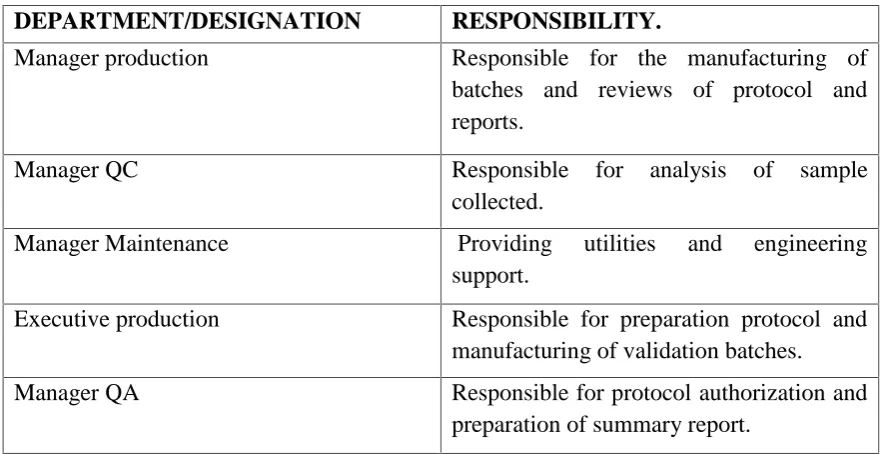
[image:25.595.65.509.488.715.2] Specialist validation discipline: all areas.
Table No 1: Authorities for Validation
DEPARTMENT/DESIGNATION RESPONSIBILITY.
Manager production Responsible for the manufacturing of batches and reviews of protocol and reports.
Manager QC Responsible for analysis of sample collected.
Manager Maintenance Providing utilities and engineering support.
Executive production Responsible for preparation protocol and manufacturing of validation batches.
ESSENTIALS OF PHAMACEUTICAL VALIDATION15,16,17:
Validation is the integral part of the quality assurance; it involves the systematic study of
systems, facilities and processes aimed at determining whether they perform their intended
functions adequately and consistently as specified. A validated process is one which has been
demonstrated to provide a high degree of assurance that uniform batches will be produced
that meet the required specifications and has therefore been formally approved. Validation in
itself does not improve processes but confirms that the processes have been properly
developed and are under control. Adequate validation is beneficial to the manufacturer in
many ways:
1. It deepens the understanding of processes; decreases the risk of preventing problems
and thus assures.
2. The smooth running of the process.
3. It decreases the risk of defect costs.
4. It decreases the risk of regulatory noncompliance.
5. A fully validated process may require less in- process controls and end product
testing.
VALIDATION MASTER PLAN18:
Validation master plan is a document that describes how and when the validation program
will be executed in a facility. Even though it is not mandatory, it is the document that outlines
the principles involved in the qualification of a facility, defines the areas and systems to be
validated and provides a written program for achieving and maintaining a qualified facility
with validated processes. It is the foundation for the validation program and should include
process validation, facility and utility qualification and validation, equipment qualification,
cleaning and computer validation. The validation scope, boundaries and responsibilities for
each process or groups of similar processes or similar equipment's must be documented and
approved in a validation plan. These documents, terms and references for the protocol authors
are for use in setting the scope of their protocols. It must be based on a Validation Risk
Assessment (VRA) to ensure that the scope of validation being authorised is appropriate for
the complexity and importance of the equipment or process under validation. Within the
equipment under qualification; that may affect the efficacy, quality and or records of the
product are properly qualified. Qualification includes the following steps:
DESIGN QUALIFICATION (DQ) - Demonstrates that the proposed design (or the
existing design for an off-the-shelf item) will satisfy all the requirements that are
defined and detailed in the User Requirements Specification (URS). Satisfactory
execution of the DQ is a mandatory requirement before construction (or procurement)
of the new design can be authorised.
INSTALLATION QUALIFICATION (IQ) – Demonstrates that the process or
equipment meets all specifications, is installed correctly, and all required components
and documentation needed for continued operation are installed and in place.
OPERATIONAL QUALIFICATION (OQ) – Demonstrates that all facets of the
process or equipment are operating correctly.
PERFORMANCE QUALIFICATION (PQ) – Demonstrates that the process or
equipment performs as intended in a consistent manner over time.
COMPONENT QUALIFICATION (CQ) – is a relatively new term developed in
2005. This term refers to the manufacturing of auxiliary components to ensure that they
are manufactured to the correct design criteria. This could include packaging
components such as folding cartons, shipping cases, labels or even phase change
material. All of these components must have some type of random inspection to ensure
that the third party manufacturer's process is consistently producing components that
are used in the world of GMP at drug or biologic manufacturer.
There are instances when it is more expedient and efficient to transfer some tests or
inspections from the IQ to the OQ or from the OQ to the PQ. This is allowed for in the
regulations, provided that a clear and approved justification is documented in the Validation
Plan (VP)
PHASES OF VALIDATION:
PHASE 1:This is the pre –validation qualification phase which covers all activities relating
to product research and development , formulation pilot batch studies, scale up studies,
transfer of technology to commercial scale batches, establishing stability conditions and
installation qualification , master production document, operational qualification and process
capacity.
PHASE 2: This is the process validation phase .It is designed to verify that all established
limits of the critical process parameters are valid and that satisfactory products can be
produced even under the worst conditions.
PHASE 3:This is known as the maintenance phase .It requires frequent review of all process
related documents, including validation of audit reports, to assure that there have been no
changes , deviations , failures and modifications to the production process and that all
standard operating procedures , have been followed, including the change control procedures.
At this stage, the validation team comprising of individual representing all major departments
also assures that there is no changes /deviations that should have resulted in requalification
and revalidation. A careful design and validation of systems and process controls can
establish a high degree of confidence that all lots or batches produced will meet their
intended specifications. It is assumed that throughout manufacturing and control, operations
are conducted in accordance with the principle of good manufacturing practice (GMP). Both
in general and in specific references to sterile product manufacture. The validation steps
recommended in GMP guidelines can be summarized as follows:
1. As a requisite, all studies should be conducted in accordance with a detailed
pre-established protocol or series of protocols, which in turn is subjected to
formal-change control procedures.
2. Both the personnel conducting the studies and those running the process being studied
should be appropriately trained and qualified and be suitable and competent to
perform the task assigned to them.
3. All data generated during the course of studies should be formally reviewed and
certified as evaluated against pre-determined criteria.
4. Suitable testing facilities, equipment instruments and methodology should be
available.
5. Suitable clean room facilities should be available in both the local and background
environment. There should be assurance that the clean room environment as specified
implemented of a program of re- testing –in process equipment should be properly
installed, qualified and maintained.
6. When appropriate attention has been paid to the above, the process, if aseptic, may be
validated by means of process stimulation studies.
7. The process should be revalidated at intervals
8. Comprehensive documentation should be available to define support and record the
overall validation process.
PROCESS SHOULD SPECIFY THE FOLLOWING IN DETAILS:
1. The objective and scope of study–there should already be a definition of purpose.
2. A clear and precise definition of process equipment system or subsystem, which is to
be the subject of study with details of performance characteristics.
3. Installation and qualification requirement for new equipment.
4. Any upgrading requirement for existing equipment with justification for change and
statement of qualification requirements.
5. Detailed stepwise statement of actions to be taken in performing the study.
6. Assignment of responsibility for performing the study.
7. Statement on all the tests methodology to be employed with a precise statement of the
test equipment and/or materials to be used.
8. Test equipment calibration requirements.
9. Requirements for the current format of the reports on the study.
10. References to any relevant standard operating procedures (SOP).
11. Acceptance criteria against which the success (or otherwise) of the study is to be
evaluated.
12. The personnel responsible for evaluating and certifying the acceptability of each stage
in the study and for the final evaluation and certification of the process as a whole as
measured against the pre-defined criteria.
13. All personnel involved in conducting the studies should be properly trained and
qualified because they can, and often, have a crucial effect on the quality of the end
product. All the information or data generated as a result of the study protocol should
be evaluated by qualified individuals against protocol criteria and judged as meeting
or failing the requirements written evidences supporting the evaluation and
documented. Any failure to follow the procedure as laid down in the protocol must be
considered as potentially compromising the validity of the study itself and requires
critical evaluation of all the impact on the study. The final certification of the
validation study should specify the pre-determined acceptance criteria against which
success or failure was evaluated.
COMPUTER SYSTEM VALIDATION19:
Validation (FDA 2002) defines verification as "Software verification provides objective
evidence that the design outputs of a particular phase of the software development life cycle
meet all of the specified requirements for that phase." It also defines Validation as
"Confirmation by examination and provision of objective evidence that software
specifications conform to user needs and intended uses, and that the particular requirements
implemented through software can be consistently fulfilled.
Weichel (2004) recently found that over twenty warning letters issued by the FDA to
pharmaceutical companies specifically cited problems in Computer System Validation
between 1997 and 2001.
SCOPE OF COMPUTER VALIDATION:
The main implications in this are that validation should cover all aspects of the process
including the application, any hardware that the application uses, any interfaces to other
systems, the users, training and documentation as well as the management of the system and
the validation itself after the system is put into use. The PIC/S guideline (PIC/S 2004) defines
this as a 'computer related system'. Much effort is expended within the industry upon
validation activities, and several journals are dedicated to both the process and methodology
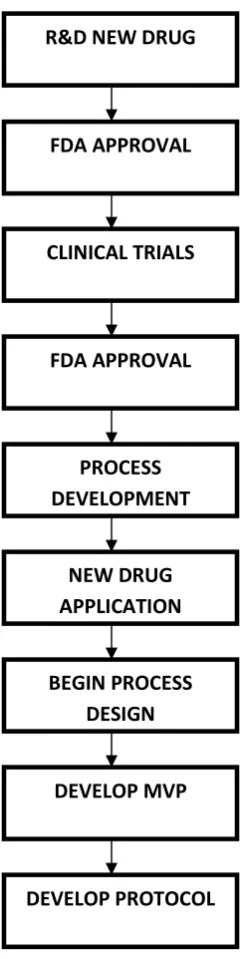
A SIMPLIFIED DRUG/VALIDATION PATH
Figure no: 1 Simplified validation path
R&D NEW DRUG
FDA APPROVAL
CLINICAL TRIALS
FDA APPROVAL
PROCESS DEVELOPMENT
NEW DRUG APPLICATION
BEGIN PROCESS DESIGN
DEVELOP MVP
PROCESS VALIDATION:
INTRODUCTION20,21: This guidance outlines the general principles and approaches that
FDA considers appropriate elements of process validation for the manufacture of human and
animal drug and biological products, including active pharmaceutical ingredients (APIs or
drug substances), collectively referred to in this guidance as drugs or products. This guidance
incorporates principles and approaches that all manufacturers can use to validate
manufacturing processes. This guidance aligns process validation activities with a product
lifecycle concept and with existing FDA guidance, including the FDA/International
Conference on Harmonization (ICH) guidance for industry, Q8(R2) Pharmaceutical
Development, Q9 Quality Risk Management, and Q10 Pharmaceutical Quality System.2
Although this guidance does not repeat the concepts and principles explained in those
guidance, FDA encourages the use of modern pharmaceutical development concepts, quality
risk management, and quality systems at all stages of the manufacturing process lifecycle20.
the lifecycle concept links product and process development, qualification of the commercial
manufacturing process.
BACKGROUND: In the Federal Register of May 11, 1987, FDA issued a notice announcing
the availability of a guidance entitled Guideline on General Principles of Process Validation
(the 1987 guidance). Since then, we have obtained additional experience through our
regulatory oversight that allows us to update our recommendations to industry on this topic.
This revised guidance conveys FDA’s current thinking on process validation and is consistent
with basic principles first introduced in the 1987 guidance. The revised guidance also
provides recommendations that reflect some of the goals of FDA’s initiative entitled
“Pharmaceutical CGMPs for the 21st Century. A Risk-Based Approach,” particularly with
regard to the use of technological advances in pharmaceutical manufacturing, as well as
implementation of modern risk management and quality system tools and concepts23. This
revised guidance replaces the 1987 guidance. FDA has the authority and responsibility to
inspect and evaluate process validation performed by manufacturers. The cGMP regulations
for validating pharmaceutical (drug) manufacturing require that drug products be produced
with a high degree of assurance of meeting all the attributes they are intended to possess.
DEFINITION: Process validation is the collection and evaluation of data, from the process
capable of consistently delivering quality products. Process validation involves a series of the
activities taking place over the lifecycle of the product and process.
United States Food & Drug Administration: Process validation is establishing documented
evidence which provide a high degree of assurance that a specific process consistently
produces a product meeting its predetermined specification and quality attribute.
TYPES OF PROCESS VALIDATION:
Prospective process validation- where an experimental plan called the validation protocol is
executed (following the completion of the qualification trials) before the process is put to
commercial use. Most validation efforts require some degree of prospective experimentation
in order to generate validation support data.
Concurrent Process validation- establishing documented evidence that the process is in a
state of control during the actual implementation of the process .this is normally performed
by the in-process testing and/ or monitoring of critical operations during the manufacture of
each production batch.
Retrospective process validation-where historic data taken from the records of the
completed production batches are used to provide documented evidence that the process has
been in a state of control prior to the request for such evidence.
GENERAL CONSIDERATIONS FOR PROCESS VALIDATION:
In all stages of the product lifecycle, good project management and good archiving that
capture scientific knowledge will make the process validation program more effective and
efficient. The following practices should ensure uniform collection and assessment of
information about the process and enhance the accessibility of such information later in the
product lifecycle.
Throughout the product lifecycle, various studies can be initiated to discover, observe,
correlate, or confirm information about the product and process. All studies should be
planned and conducted according to sound scientific principles, appropriately
documented, and approved in accordance with the established procedure appropriate
The terms attribute(s) (e.g., quality, product, component) and parameter(s) (e.g.,
process, operating, and equipment) are not categorized with respect to criticality in
this guidance. With a lifecycle approach to process validation that employs risk based
decision making throughout that lifecycle, the perception of criticality as a continuum
rather than a binary state is more useful. All attributes and parameters should be
evaluated in terms of their.
Roles in the process and impact on the product or in-process material and reevaluated
as new information become available. The degree of control over those attributes or
parameters should be commensurate with their risk to the process and process output.
In other words, a higher degree of control is appropriate for attributes or parameters
that pose a higher risk. The Agency recognizes that terminology usage can vary and
expects that each manufacturer will communicate the meaning and intent of its
terminology and categorization to the Agency.
Many products are single-source or involve complicated manufacturing processes.
Homogeneity within a batch and consistency between batches are goals of process
validation activities. Validation offers assurance that a process is reasonably protected
against sources of variability that could affect production output, cause supply
problems, and negatively affect public health.
Stage1. PROCESS DESIGN:
Process design is the activity of defining the commercial manufacturing process that will be
reflected in planned master production and control records. The goal of this stage is to design
a process suitable for routine commercial manufacturing that can consistently deliver a
product that meets its quality attributes.
Building and Capturing Process Knowledge and Understanding: Generally, early process
design experiments do not need to be performed under the cGMP conditions required for
drugs intended for commercial distribution that are manufactured during Stage 2 (process
qualification) and Stage 3 (continued process verification). They should, however, be
conducted in accordance with sound scientific methods and principles, including good
documentation practices. This recommendation is consistent with ICH Q10 Pharmaceutical
documented and internally reviewed to verify and preserve their value for use or adaptation
later in the lifecycle of the process and product.
Establishing a Strategy for Process Control:
Process knowledge and understanding is the basis for establishing an approach to process
control for each unit operation and the process overall. Strategies for process control can be
designed to reduce input variation, adjust for input variation during manufacturing (and so
reduce its impact on the output), or combine both approaches. Process controls address
variability to assure quality of the product. Controls can consist of material analysis and
equipment monitoring at significant processing points. Decisions regarding the type and
extent of process controls can be aided by earlier risk assessments, then enhanced and
improved as process experience is gained. FDA expects controls to include both examination
of material quality and equipment monitoring. Special attention to control the process
through operational limits and in-process monitoring is essential in two possible scenarios:
1. When the product attribute is not readily measurable due to limitations of sampling or
detectability (e.g., viral clearance or microbial contamination) or
2. When intermediates and products cannot be highly characterized and well-defined quality
attributes cannot be identified.
Stage2. PROCESS QUALIFICATION:
During the process qualification (PQ) stage of process validation, the process design is
evaluated to determine if it is capable of reproducible commercial manufacture. This stage
has two elements:
(1) Design of the facility and qualification of the equipment and utilities and
(2) Process performance qualification (PPQ). During Stage 2, cGMP-compliant procedures
must be followed. Successful completion of Stage 2 is necessary before commercial
distribution. Products manufactured during this stage, if acceptable, can be released for
Design of a Facility and Qualification of Utilities and Equipment: Proper design of a
manufacturing facility is required under part 211, subpart C, of the cGMP regulations on
Buildings and Facilities. It is essential that activities performed to assure proper facility
design and commissioning precede PPQ. Here, the term qualification refers to activities
undertaken to demonstrate that utilities and equipment are suitable for their intended use and
perform properly. These activities necessarily precede manufacturing products at the
commercial scale.
Process Performance Qualification: The process performance qualification (PPQ) is the
second element of Stage 2, process qualification. The PPQ combines the actual facility,
utilities, equipment (each now qualified), and the trained personnel with the commercial
manufacturing process, control procedures, and components to produce commercial batches.
A successful PPQ will confirm the process design and demonstrate that the commercial
manufacturing process performs as expected. Success at this stage signals an important
milestone in the product lifecycle. A manufacturer must successfully complete PPQ before
commencing commercial distribution of the drug product. The decision to begin commercial
distribution should be supported by data from commercial-scale batches. Data from
laboratory and pilot studies can provide additional assurance that the commercial
manufacturing process performs as expected.
PPQ Protocol: A written protocol that specifies the manufacturing conditions, controls,
testing, and expected outcomes is essential for this stage of process validation. We
recommend that the protocol discuss the following elements:
The manufacturing conditions, including operating parameters, processing limits, and component (raw material) inputs.
The data to be collected and when and how it will be evaluated.
Tests to be performed (in-process, release, characterization) and acceptance criteria for each significant processing step.
The sampling plan, including sampling points, number of samples, and the frequency of sampling for each unit operation and attribute. The number of samples should be
adequate to provide sufficient statistical confidence of quality both within a batch and
relates to the particular attribute under examination. Sampling during this stage
should be more extensive than is typical during routine production.
The criteria should include for process performance indicators,
A description of the statistical methods to be used in analyzing all collected data (e.g., statistical metrics defining both intra-batch and inter-batch variability).
Provision for addressing deviations from expected conditions and handling of nonconforming data. Data should not be excluded from further consideration in terms
of PPQ without a documented, science-based justification.
Design of facilities and the qualification of utilities and equipment, personnel training and
qualification, and verification of material sources (components and container/closures), if not
previously accomplished.
PPQ Protocol Execution and Report: Execution of the PPQ protocol should not begin
until the protocol has been reviewed and approved by all appropriate departments, including
the quality unit. Any departures from the protocol must be made according to established
procedure or provisions in the protocol. Such departures must be justified and approved by all
appropriate departments and the quality unit before implementation. The commercial
manufacturing process and routine procedures must be followed during PPQ protocol
execution. The PPQ lots should be manufactured under normal conditions by the personnel
routinely expected to perform each step of each unit operation in the process. Normal
operating conditions should include the utility systems (e.g., air handling and water
purification), material, personnel, environment, and manufacturing procedures.
A report documenting and assessing adherence to the written PPQ protocol should be
prepared in a timely manner after the completion of the protocol. This report should:
• Discuss and cross-reference all aspects of the protocol.
• Summarize data collected and analyze the data, as specified by the protocol.
• Summarize and discuss all manufacturing nonconformances such as deviations, aberrant
test results, or other information that has bearing on the validity of the process.
• Describe in sufficient detail any corrective actions or changes that should be made to
existing procedures and controls.
• State a clear conclusion as to whether the data indicates the process met the conditions
established in the protocol and whether the process is considered to be in a state of control. If
not, the report should state what should be accomplished before such a conclusion can be
reached. This conclusion should be based on a documented justification for the approval of
the process, and release of lots produced by it to the market in consideration of the entire
compilation of knowledge and information gained from the design stage through the process
qualification stage.
• Include all appropriate department and quality unit review and approvals.
Stage 3. CONTINUED PROCESS VERIFICATION:
The goal of the third validation stage is continual assurance that the process remains in a state
of control (the validated state) during commercial manufacture. A system or systems for
detecting unplanned departures from the process as designed is essential to accomplish this
goal. Adherence to the cGMP requirements, specifically, the collection and evaluation of
information and data about the performance of the process, will allow detection of undesired
process variability. Evaluating the performance of the process identifies problems and
determines whether action must be taken to correct, anticipate, and prevent problems so that
the process remains in control.
An ongoing program to collect and analyze product and process data that relate to product
quality must be established. The data collected should include relevant process trends and
quality of incoming materials or components, in-process material, and finished products. The
data should be statistically trended and reviewed by trained personnel. The information
collected should verify that the quality attributes are being appropriately controlled
throughout the process.
We recommend that a statistician or person with adequate training in statistical process
used in measuring and evaluating process stability and process capability. Procedures should
describe how trending and calculations are to be performed and should guard against
overreaction to individual events as well as against failure to detect unintended process
variability. Production data should be collected to evaluate process stability and capability.
The quality unit should review this information. If properly carried out, these efforts can
identify variability in the process and/or signal potential process improvements.
Good process design and development should anticipate significant sources of variability and
establish appropriate detection, control, and/or mitigation strategies, as well as appropriate
alert and action limits. However, a process is likely to encounter sources of variation that
were not previously detected or to which the process was not previously exposed. Many tools
and techniques, some statistical and others more qualitative, can be used to detect variation,
characterize it, and determine the root cause. We recommend that the manufacturer use
quantitative, statistical methods whenever appropriate and feasible. Scrutiny of intra-batch as
well as inter-batch variation is part of a comprehensive continued process verification
program under.
We recommend continued monitoring and sampling of process parameters and quality
attributes at the level established during the process qualification stage until sufficient data
are available to generate significant variability estimates. These estimates can provide the
basis for establishing levels and frequency of routine sampling and monitoring for the
particular product and process. Monitoring can then be adjusted to a statistically appropriate
and representative level. Process variability should be periodically assessed and monitoring
adjusted accordingly.
Variation can also be detected by the timely assessment of defect complaints,
out-of-specification findings, process deviation reports, process yield variations, batch records,
incoming raw material records, and adverse event reports. Production line operators and
quality unit staff should be encouraged to provide feedback on process performance. We
recommend that the quality unit meet periodically with production staff to evaluate data,
discuss possible trends or undesirable process variation, and coordinate any correction or
follow-up actions by production.
and set-points), process controls, component, or in-process material characteristics. A
description of the planned change, a well-justified rationale for the change, an
implementation plan, and quality unit approval before implementation must be documented.
Depending on how the proposed change might affect product quality, additional process
design and process qualification activities could be warranted.
Maintenance of the facility, utilities, and equipment is another important aspect of ensuring
that a process remains in control. Once established, qualification status must be maintained
through routine monitoring, maintenance, and calibration procedures and schedules.
CONCURRENT RELEASE OF PPQ BATCHES: In most cases, the PPQ study needs to
be completed successfully and a high degree of assurance in the process achieved before
commercial distribution of a product. In special situations, the PPQ protocol can be designed
to release a PPQ batch for distribution before complete execution of the protocol steps and
activities, i.e., concurrent release. FDA expects that concurrent release will be used rarely.
Concurrent release might be appropriate for processes used infrequently for various reasons,
such as to manufacture drugs for which there is limited demand (e.g., orphan drugs, minor
use and minor species veterinary drugs) or which have short half lives (e.g.,
radiopharmaceuticals, including positron emission tomography drugs). Concurrent release
might also be appropriate for drugs that are medically necessary and are being manufactured
in coordination with the Agency to alleviate a short supply.
A commercial manufacturing process can only be made after the PPQ protocol is fully
executed and the data are fully evaluated. If Stage 2 qualification is not successful (i.e., does
not demonstrate that the process as designed is capable of reproducible performance at
commercial scale), then additional design studies and qualification may be necessary. The
new product and process understanding obtained from the unsuccessful qualification study
(ies) can have negative implications if any lot was already distributed. Full execution of
Stages 1 and 2 of process validation is intended to preclude or minimize that outcome.
Circumstances and rationale for concurrent release should be fully described in the PPQ
protocol. Even when process performance assessment based on the PPQ protocol is still
requirements, and PPQ protocol lot release criteria. Lot release under a PPQ protocol is based
upon meeting confidence levels appropriate for each quality attribute of the drug.
When warranted and used, concurrent release should be accompanied by a system for careful
oversight of the distributed batch to facilitate rapid customer feedback. For example,
customer complaints and defect reports should be rapidly assessed to determine root cause
and whether the process should be improved or changed. Concurrently released lots must also
be assessed in light of any negative PPQ study finding or conclusions and appropriate
corrective action must be taken .We recommend that each batch in a concurrent release
program be evaluated for inclusion in the stability program. It is important that stability test
data be promptly evaluated to ensure rapid detection and correction of any problems
DOCUMENTATION: Documentation at each stage of the process validation lifecycle is
essential for effective communication in complex, lengthy, and multidisciplinary projects.
Documentation is important so that knowledge gained about a product and process is
accessible and comprehensible to others involved in each stage of the lifecycle. Information
transparency and accessibility are fundamental tenets of the scientific method. They are also
essential to enabling organizational units responsible and accountable for the process to make
informed, science-based decisions that ultimately support the release of a product to
commerce.
The degree and type of documentation required by cGMP vary during the validation
lifecycle. Documentation requirements are greatest during Stage 2, process qualification, and
Stage 3, continued process verification. Studies during these stages must conform to cGMPs
and must be approved by the quality unit in accordance with the. Viral and impurity
clearance studies, even when performed at small scale, also require quality unit oversight.
cGMP documents for commercial manufacturing (i.e., the initial commercial master batch
production and control record and supporting procedures are key outputs of Stage 1, process
design. We recommend that firms diagram the process flow for the full-scale process. Process
flow diagrams should describe each unit operation, its placement in the overall process,
monitoring and control points, and the component, as well as other processing material inputs
(e.g., processing aids) and expected outputs (i.e., in-process materials and finished product).
process design progresses to facilitate comparison and decision making about their
comparability.