An Examination of the Relationship
between Gait, Cognition and Risk
of Falling in an Older Population
Based Sample
by
Kara L. Martin, BSc (Mathematics) (Hons)
Submitted in fulfilment of the requirements for the degree of
Doctor of Philosophy
Menzies Research Institute
University of Tasmania
i
Declaration of originality
This thesis contains no material which has been accepted for a degree or diploma by the University or any other institution, except by way of background information duly acknowledged in the thesis, and to the best of my knowledge and belief no material previously published or written by any other person except where due acknowledgement is made in the text of the thesis, nor does the thesis contain any material that infringes copyright.
ii
Statement of authority of access
This thesis can be made available for loan. Copying of any part of this thesis is prohibited for two years from the date this statement was signed; after that time limited copying is permitted in accordance with the Copyright Act 1968.
iii
Statement of authorship
This thesis includes papers for which Kara Martin (KM) was not the sole author. KM was the lead in this research as she participated in data collection, analysed the data and wrote the manuscripts. However, she was assisted by the co-authors whose contributions are detailed below.
1. The paper reported in Chapter 4:
Martin K, Wood A, Blizzard L,Callisaya M, Thomson R , Sanders L, Srikanth V, Cognitive Function, Gait and Gait Variability in Older People: a Population-Based Study. Submitted to the Journal of Gerontology, July 2011.
The contribution of each author:
KM participated in data collection, data management and cleaning, and comprised the initial draft of the manuscript. With LB, she undertook all the analyses and interpretation of the data, and completed revisions.
AW helped with analyses and interpretation of the results and revised the manuscript.
LB with KM undertook all the analyses and interpretation of the data and revised the manuscript.
RT helped with analyses and interpretation of the results and revised the manuscript.
MC helped with analyses and interpretation of the results and revised the manuscript.
LS helped with analyses and interpretation of the results and revised the manuscript.
iv 2. The paper reported in Chapter 5:
Martin K, Blizzard L, Garry M, Thomson R,McGinley J, Srikanth V, Gait initiation in older people – time to first lateral movement may be the measure of choice, Gait and Posture, 2011, Article in press.
The contribution of each author:
KM participated in data collection, data management and cleaning, and comprised the initial draft of the manuscript. With LB, she undertook all the analyses and interpretation of the data, and completed revisions.
LB with KM undertook all the analyses and interpretation of the data and revised the manuscript.
MG helped with analyses and interpretation of the results and revised the manuscript.
RT helped with analyses and interpretation of the results and revised the manuscript.
JM helped with analyses and interpretation of the results and revised the manuscript.
VS was responsible for obtaining approvals, design and conduct of the study and helped with interpretation of the results and revised the manuscript.
3. The paper reported in Chapter 6:
Martin K, Thomson R, Blizzard L, Wood A, Garry M, Srikanth V, Visuospatial ability and memory are associated with falls risk in older people: a population-based study. Dementia and Geriatric Cognitive Disorders 2009;27:451-7.
The contribution of each author:
KM participated in data collection, data management and cleaning, and comprised the initial draft of the manuscript. With RT and LB, she undertook all the analyses and interpretation of the data, and completed revisions. RT with KM undertook all the analyses and interpretation of the results and revised the manuscript.
v
AW helped with analyses and interpretation of the results and revised the manuscript.
MG helped with analyses and interpretation of the results and revised the manuscript.
VS was responsible for obtaining approvals, design and conduct of the study and helped with interpretation of the results and revised the manuscript.
4. The paper reported in Chapter 7:
Martin K, Blizzard L, Thomson R,Callisaya M, Sanders L, Srikanth V, Cognitive function modifies the effect of sensorimotor function on the risk of multiple falls – a population based study. Submitted to Journal of Gerontology, July 2011.
The contribution of each author:
KM participated in data collection, data management and cleaning, and comprised the initial draft of the manuscript. With LB, she undertook all the analyses and interpretation of the data, and completed revisions.
LB with KM undertook all the analyses and interpretation of the data and revised the manuscript.
RT helped with analyses and interpretation of the results and revised the manuscript.
MC helped with analyses and interpretation of the results and revised the manuscript.
LS helped with analyses and interpretation of the results and revised the manuscript.
VS was responsible for obtaining approvals, design and conduct of the study and helped with interpretation of the results and revised the manuscript.
Signed by first named supervisor, A/Prof Leigh Blizzard:
vi
Abstract
Falls are a significant public health problem for older people. Their prevention is important to reduce hospital admissions, and related loss of independence, morbidity and mortality. They have multiple risk factors, including impaired cognitive function and gait deterioration. Inter-relationships between cognitive function and gait in contributing to falls are poorly understood, with few data from population-based studies.
This thesis aimed to examine the associations between cognitive function, gait and the risk of falling in a series of studies conducted in a population-based sample of older people aged 60-86 years.
Cognitive functions were assessed from a battery of tests. Gait was assessed using the GaitRite walkway and a force platform. Falls-risk was assessed using the Physiological Profile Assessment, and falls were recorded prospectively using a 12-month diary.
In the first study, measurements of GI using the GaitRite walkway were compared with those on the same 28 subjects measured using a 200Hz force platform,
considered to be the gold standard. The GaitRite walkway measurements had higher systematic error and inferior predictive validity for falls-risk.
In the second study, poorer processing speed and executive function/attention, but not deficits in memory or visuospatial ability, were independently associated with poorer gait. Deficits of processing speed, executive function and visuospatial ability were associated with increased intra-individual gait variability in double support phase, a measure of balance during gait.
In the third study, time to first lateral movement could be the best measure of gait initiation, given its consistent associations with surrogates of falls-risk and cognition, while also being most responsive to cognitive interference from dual-tasking.
vii
In the final study, poorer executive and visuospatial functions predicted the risk of multiple falls. The associations between all cognitive functions and the risk of multiple falls were magnified in those with poorer sensorimotor function, gait speed or ambulatory activity.
These studies add significantly to knowledge about the relationships between
viii
Acknowledgements
First and foremost, I would like to thank my supervisor and chief investigator on the Tasmanian Study of Cognition and Gait (TASCOG), Dr Velandai Srikanth. Thank you for taking a chance on me and teaching me the world of epidemiology. I have thoroughly enjoyed working on TASCOG. Thank you also for the financial support that allowed me to complete this work.
Thank you to my primary supervisor, Associate Professor Leigh Blizzard. Without your help I would never have started at the Menzies Research Institute. Thanks for your patience and support and your never ending passion for good statistics. I have learnt a lot about biostatistics in the last four years.
Thank you to my co-supervisors Dr Russell Thomson, Dr Mike Garry and Dr Amanda Wood, for helping me whenever I asked. Russ thanks for the stats advice, the coffees and chats about music. Thanks to Mike and Amanda for your
encouragement and always taking the time to answer my “silly questions”. Thank you to everyone involved in TASCOG – Shalee Richardson, Clare Munro and Kate Butorac as well as all the staff and volunteers. Thanks also to Tim Albion, Alistair Chilcott and Ben Duan for the big paperclip. Also thanks to the participants who kindly donated their time to participate in the TASCOG study.
Thank you to the great environment of Menzies Research Institute. I’ve really enjoyed working with such a close-knit bunch of people. Thanks also to the
University of Tasmania, the Emerging Researchers in Ageing group and the Victoria League for Commonwealth Friendship (Hobart) Medical Research Trust for their financial assistance.
ix
I would also like to thank my fellow students and Menzies staff notably Kylie, Petr, Peta, Ollie, Bek, Dawn, Fiona, Stella, Dave, Laura, Charlotte, Jana and Steve. Thanks for your support, encouragement and chats.
Thank you to my wonderful friends who have supported me through my PhD and to the swing dancers who always have a smile on their face. In particular, thank you Bryce, Relle, Cath, Helen, Tim, Siobhan, Bunch, Nat and Stu, Rhea, Troy and Michael. Thank you also to Spoon. I may never have had an interest in maths and statistics if it were not for you.
x
Table of contents
Declaration of originality ... i
Statement of authority of access ... ii
Statement of authorship ... iii
Abstract ... vi
Acknowledgements ... viii
Table of contents ... x
List of tables ... xv
List of figures ... xvi
List of abbreviations ... xvii
Publications ... xviii
Publications directly arising from the work described in this thesis ... xviii
Manuscripts submitted for peer-reviewed journals ... xviii
Other publications ... xviii
Conference presentations using the work described in this thesis ... xix
Awards received from the work described in this thesis ... xix
Chapter 1: Introduction ... 1
1.1 Background ... 1
1.2 Falls in older people ... 1
Measurement of falls ... 2
Incidence of falls in older people ... 2
Consequences of falls ... 3
1.3 Established risk factors for falls ... 3
1.4 Cognitive function as a risk factor for falls ... 5
Fundamental cognitive functions ... 6
Instrumental cognitive functions ... 8
1.5 Gait as a risk factor for falls ... 10
Definitions of gait, gait variability and gait initiation ... 10
Gait and gait variability ... 10
Gait initiation ... 12
1.6 Brain function and gait ... 14
xi
1.8 Summary ... 16
1.9 Research aims and objectives ... 17
General aim ... 17
Specific objectives ... 17
General hypotheses ... 17
Study population ... 18
1.10 Thesis outline ... 19
1.11 References ... 20
Chapter 2: Methods ... 36
2.1 Preface ... 36
2.2 The Tasmanian Study of Cognition and Gait (TASCOG) ... 36
2.3 Study sample ... 37
2.4 Study factors ... 38
Cognitive function: fundamental cognitive abilities ... 38
Cognitive function: instrumental cognitive abilities ... 40
Average measures of gait ... 41
Gait variability ... 42
Gait initiation ... 42
Sensorimotor measures of falls-risk ... 43
Incident falls ... 46
Other study factors ... 46
2.5 Data analysis ... 47
2.6 Ethics ... 47
2.7 Postscript... 47
2.8 References ... 47
Appendix 2A: Victoria Stroop test ... 50
Appendix 2B: WAIS-III digit symbol coding ... 51
Appendix 2C: WAIS-III symbol search ... 52
Appendix 2D: Rey Complex Figure ... 53
Chapter 3: Can we use the GaitRite walkway to accurately measure gait initiation? ... 54
3.1 Preface ... 54
3.2 Introduction ... 54
3.3 Methods ... 55
xii
Measurements ... 55
Data analysis ... 57
3.4 Results... 59
3.5 Discussion ... 63
3.1 Conclusions... 66
3.2 Postscript... 66
3.3 References ... 66
Chapter 4: Cognitive function, gait and gait variability in older people – a population-based study. ... 69
4.1 Preface ... 69
4.2 Introduction ... 69
4.3 Methods ... 70
Subjects ... 70
Measurements ... 71
Data analysis ... 72
4.4 Results... 73
4.5 Discussion ... 77
4.6 Conclusions... 79
4.7 Postscript... 79
4.8 References ... 79
Chapter 5: Gait initiation in older people – time to first lateral movement may be the measure of choice. ... 84
5.1 Preface ... 84
5.2 Introduction ... 84
5.3 Methods ... 85
Subjects ... 85
Measurements ... 86
Data analysis ... 86
5.4 Results... 88
Choice of summary measure ... 88
Learning effects ... 89
Associations between gait initiation components ... 90
Associations of gait initiation with other study factors ... 90
5.5 Discussion ... 95
xiii
5.7 Postscript... 97
5.8 References ... 98
Appendix 5A:The relationships between gait initiation and cognitive function in older people ... 101
A5A.1 Introduction ... 101
A5A.2 Methods ... 101
Sample ... 101
Measurements ... 101
Data analysis ... 102
A5A.3 Results ... 103
A5A.4 Discussion ... 104
A5A.5 References ... 105
Chapter 6: Visuospatial ability and memory are associated with falls-risk in older people – a population-based study. ... 107
6.1 Preface ... 107
6.2 Introduction ... 107
6.3 Methods ... 108
Subjects ... 108
Measurements ... 108
Data analysis ... 110
6.4 Results... 111
6.5 Discussion ... 116
6.6 Conclusions... 118
6.7 Postscript... 118
6.8 References ... 118
Chapter 7: Cognitive function modifies the effect of sensorimotor function on the risk of multiple falls – a population based study. ... 122
7.1 Preface ... 122
7.2 Introduction ... 122
7.3 Methods ... 123
Subjects ... 123
Measurements ... 124
Data analysis ... 125
7.4 Results... 126
xiv
7.6 Conclusions... 139
7.7 Postscript... 140
7.8 References ... 140
Chapter 8: Summary ... 146
8.1 Background and aims of the thesis ... 146
8.2 Methods ... 147
8.3 Major findings and implications ... 148
Can we use the GaitRite walkway to accurately measure gait initiation? (Chapter 3) ... 148
Cognitive function, gait and gait variability in older people – a population-based study. (Chapter 4) ... 149
Gait initiation in older people – time to first lateral movement may be the measure of choice. (Chapter 5) ... 150
Visuospatial ability and memory are associated with falls-risk in older people – a population-based study. (Chapter 6) ... 151
Poorer cognitive function modifies the effect of poorer physiological function on multiple falls. (Chapter 7) ... 151
8.4 Clinical implications ... 152
8.5 Recommendations for future research ... 153
8.6 Conclusions... 154
8.7 References ... 155
xv
List of tables
Table 3-1: Times to gait initiation on the force platform and
the GaitRite walkway. ... 60 Table 3-2: Correlations of time to gait initiation on two different devices
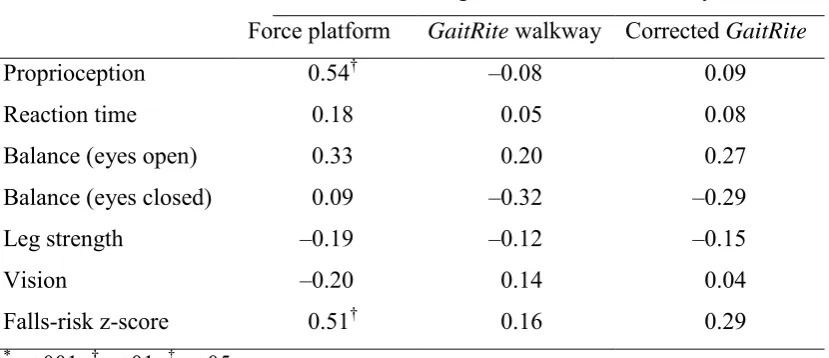
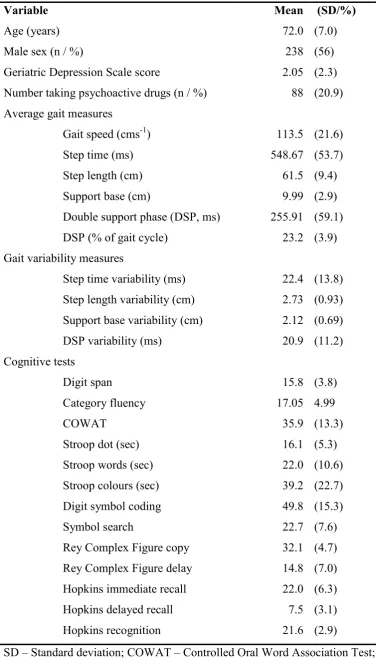
with sensorimotor measures. ... 63 Table 4-1: Participant characteristics (n = 422) ... 74 Table 4-2: Unadjusted correlations between cognitive components and
gait measures. ... 75 Table 4-3: Adjusted linear regression of gait variables with cognitive components . 76 Table 5-1: Participant characteristics. ... 89 Table 5-2: Summary statistics for gait initiation component measures. ... 91 Table 5-3: Rank correlations between gait initiation and other study factors. ... 94 Table 5-5: Correlations between cognitive function and gait initiation under
single and dual task conditions. ... 103 Table 6-1: Participant characteristics (n=300) ... 112 Table 6-2: Principal components analysis of cognitive tests. ... 113 Table 6-3: Correlations between cognitive components and measures of
the Physiological Profile Assessment (PPA) ... 114 Table 6-4: Linear regression of composite falls-risk score on
cognitive components ... 115 Table 7-1: Participant characteristics. ... 128 Table 7-2: Correlations between cognitive functions, age, mood, gait speed,
ambulatory activity and sensorimotor measures. ... 130 Table 7-3: Associations of cognitive function measures with the risk of single
and multiple falls. ... 131 Table 7-4: Risk of multiple falls for cognitive factors in combination with
xvi
List of figures
Figure 1-1: Time dimensions of the gait cycle. ... 11
Figure 1-2: Map of Australia and Tasmania. ... 18
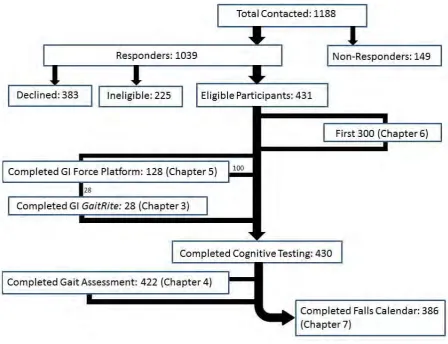
Figure 2-1: The study sample size for TASCOG ... 37
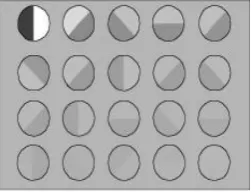
Figure 2-2: PPA - Edge Contrast Sensitivity ... 43
Figure 2-3: PPA - Proprioception ... 44
Figure 2-4: PPA - Knee extension strength ... 44
Figure 2-5: PPA - Reaction time ... 44
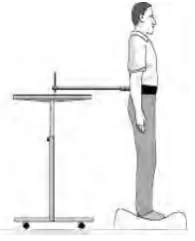
Figure 2-6: PPA - Postural sway ... 45
Figure 3-1: Gait initiation time measured by the GaitRite walkway plotted against gait initiation time measured by the force platform ... 61
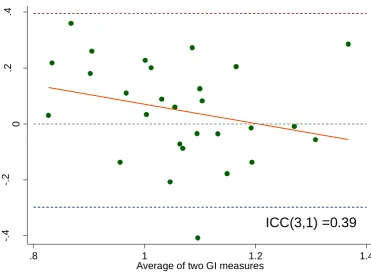
Figure 3-2: Difference of gait initiation time plotted against the average of the two gait initiation measures (line of best fit in red). ... 62
Figure 5-1: Distributions of the three gait initiation components under single and dual-task conditions. ... 92
Figure 5-2: Time to first lateral movement (FLM) by trial number under single and dual-task conditions. ... 93
xvii
List of abbreviations
AA Ambulatory activity (steps/day)
ABS Australian Bureau of Statistics
AD Alzheimer’s disease
AMTI Advanced Mechanical Technology Inc
CI Confidence interval
COWAT Controlled Oral Word Association Test
D Absolute difference
DSP Double support phase
F Force platform
FLM First lateral movement
G GaitRite walkway
GDS Geriatric Depression Scale
GI Gait initiation
HVLTR Hopkins Verbal Learning Test Revised.
ICC Intraclass correlation coefficient
IQR Inter-quartile range
MMSE Mini Mental State Examination
MRI Magnetic Resonance Imaging
PPA Physiological Profile Assessment
ProFaNE Prevention of Falls Network Europe
r Pearson’s product-moment correlation coefficient
RR Risk ratio
SD Standard deviation
SE Standard error
TASCOG The Tasmanian Study of Cognition and Gait
xviii
Publications
Publications directly arising from the work described in this
thesis
Chapter 5:
Martin K, Blizzard L, Garry M, Thomson R,McGinley J, Srikanth V, Gait initiation in older people – time to first lateral movement may be the measure of choice, Gait and Posture 2011. Article in Press.
Chapter 6:
Martin K, Thomson R, Blizzard L, Wood A, Garry M, Srikanth V.
Visuospatial ability and memory are associated with falls risk in older people: a population-based study. Dementia and Geriatric Cognitive Disorders
2009;27:451-7
Manuscripts submitted for peer-reviewed journals
Chapter 4:
Martin K, Wood A, Blizzard L,Callisaya M, Thomson R , Sanders L, Srikanth V, Cognitive Function, Gait and Gait Variability in Older People: a Population-Based Study. Submitted to the Journal of Gerontology, July 2011.
Chapter 7:
Martin K, Blizzard L, Thomson R,Callisaya M, Sanders L, Srikanth V, Cognitive function modifies the effect of sensorimotor function on the risk of multiple falls – a population based study. Submitted to Journal of
Gerontology, July 2011
Other publications
Srikanth V, Beare R, Blizzard L, Phan T, Stapleton J, Chen J, Callisaya M, Martin K, Reutens D. Cerebral white matter lesions, gait, and the risk of incident falls: a prospective population-based study. Stroke 2009; 40:1:175-180.
xix
Conference presentations using the work described in this
thesis
Martin K, Thomson R, Blizzard L, Wood A, Garry M, Srikanth V. The relationship between cognitive function and the risk of falling - the Tasmanian study of cognition and gait (TASCOG). Australian New Zealand Society for Geriatric Medicine,
September 2007, Adelaide, South Australia. Poster presentation.
Martin K,Blizzard L, Garry M, Thomson R,McGinley J, Srikanth V. Effects of age, sex and dual tasking on gait initiation – the Tasmanian study of cognition and gait (TASCOG). Australian New Zealand Society for Geriatric Medicine, September 2008, Melbourne, Victoria. Poster presentation.
Martin K, Wood A, Blizzard L, Callisaya M, Thomson R, Sanders L, Srikanth V. The relationships between cognitive function, gait and gait variability in older people: a population-based study. Gait and Mental Function, February 2010, Washington, DC, USA. Poster presentation.
Martin K, Blizzard L, Garry M, Thomson R,McGinley J, Srikanth V. Components of gait initiation in older adults: inter-relationships and predictive validity. Gait and Mental Function, February 2010, Washington, DC, USA. Poster presentation.
MartinK, Wood A, Blizzard L, Callisaya M, Thomson R, Sanders L, Srikanth V. The relationships between cognitive function, gait and gait variability in older people: a population-based study. Australian New Zealand Society for Geriatric Medicine, September 2010, Sunshine Coast, Queensland. Poster presentation.
Awards received from the work described in this thesis
2006 Awarded the Victoria League for Commonwealth Friendship (Hobart) Medical Research Trust Scholarship.
1
Chapter 1:
Introduction
1.1 Background
Falls by older people are a significant public health problem. Their prevention is important to reduce hospital admissions, and related loss of independence, morbidity and mortality [1, 2]. There are multiple risk factors for falls, including impaired cognitive function [3-6] and gait deterioration [7-9], both of which are common in older people [10-14]. The inter-relationships between cognitive function and gait in contributing to falls are poorly understood, with few data from population-based studies.
1.2 Falls in older people
The first attempt to define falls was made in 1987 by the Kellogg International Working Group on the Prevention of Falls in the Elderly [15]. They defined a fall as “unintentionally coming to the ground or some lower level and other than as a consequence of sustaining a violent blow, loss of consciousness, sudden onset of paralysis as in stroke or epileptic seizure”. This definition of a fall is only useful when addressing balance or sensorimotor impairments and not useful when addressing cardiovascular and neurological causes of falls (such as syncope and transient ischemic attacks). Many researchers have adapted the Kellogg definition of falls to enable the investigation of falls due to these other causes.
This has led to a proliferation of definitions. In a recent systematic review on
2
from that meeting was that a fall be defined as “an unexpected event in which the person comes to rest on the ground, floor, or lower level” [17].
Measurement of falls
It was also noted in the recent systematic review that there is a wide range of
methods for collecting falls data [16]. Falls can be, and have been, measured in three ways: observationally, retrospectively and prospectively. Observational methods include routine surveillance or inspection of health care records, which are limited by the quality of reporting. In community-based studies, health care records may miss over 80% of fall events compared to self-report methods [16, 18].
A retrospective account of falls involves asking a participant – by telephone call, face-to-face interview or postal questionnaire – if they have fallen during a previous time period (for example, the last 12 months). This method relies on accuracy of recall and can produce under- or over-estimates of falls. The limitations of retrospective falls ascertainment were highlighted in a study of 304 older adults, which showed that between 13 and 32% of people did not recall that they had had a fall over a 12 month period [19].
The prospective method, utilised in this thesis, involves recording of falls in a calendar, diary or postcard as they occur during a period of follow-up (for example, the next 12 months). The recordings are retrieved on a regular basis (weekly, monthly or every couple of months) during the follow-up period. Reminder telephone calls may be made to ensure ongoing maintenance of the falls diary [16, 17]. Whilst prospective methods are generally superior because there is less reliance on recall, the problems of over- or under-reporting are not eliminated [16]
.
In a study of 96 healthy, community-dwelling women, Hill et al. [20] reported that the use of falls diaries with follow up phone calls improved falls recall by 14.8%.Incidence of falls in older people
3
49% [3, 4, 25-29]. The percentage of people who fall more than once in a one year period is reported to range from 11% to 22% [26-29].
There have also been different fall rates reported for men and women. In a study of people over 70 years, Campbell et al. [3] found that 40% of women fell in a one year period, compared with only 28% in men. Fall rates are also reported to rise with increasing age [30], with up to 50% of people over 85 years reporting falls in a one year period [31].
Consequences of falls
The costs and consequences of falls are significant to the person, family and the community as a whole. Falls can lead to injury, hospitalization or institutionalization, loss of independence, morbidity and even mortality [1, 2]. Up to 60% of falls result in an injury [32] and whilst most of these injuries are minor – for example bruising [32] – around 25% will result in a more serious injury [4] including fracture [4, 32]. In addition, falls are the leading cause of injury-related hospitalisation [33] and increase the risk of admission to aged-care facilities [34] and mortality [35] in older people. Even a non-injurious fall can lead to fear of future falling, loss of
independence and confidence, and reduced activity levels in older people [36]. The financial costs of falls to the community are large, with an estimated total cost of US $19 billion [35, 37] in the United States of America in the year 2000 and AUD $287 million in Australia per annum in 1999 [22]. These costs are expected to
increase in the future. In 2006, 500 million people worldwide were over the age of 65 years and that figure is estimated to rise to one billion people by 2030 [23, 38], The costs of falls are estimated to double by 2020 [37] and, as a result, exceed AUD $1.3 billion in Australia by 2051 [39].
1.3 Established risk factors for falls
4
higher level cognitive processing abilities [40-42]. The presence of multiple risk factors increases the risk of falling [4, 43], with around a 10% risk of falling for older people with at most one risk factor, and up to a 70% risk of falling for those with 4 or more risk factors [43].
Impairments in sensory and motor systems, which increase with age, are implicated as causes of falls [44]. The abilities in question include vision, lower limb
proprioception and muscle strength, reaction time and balance [44, 45]. Vision encompasses contrast sensitivity, glare sensitivity, dark adaptation and depth perception [44]. Impairments in vision may lead to poorer balance, tripping over obstacles, difficulty with uneven surfaces and problems navigating through the environment [46]. Proprioception refers to the ability to sense the position of a limb (in this case lower limb) or joint in relation to the rest of the body. Impaired
proprioception may lead to inadequate foot clearing over obstacles and difficulty walking on uneven surfaces. Lower-limb muscle strength is generally weaker in fallers than non-fallers [46]. Knee extension weaknesses, in particular, are known to be associated with an increased risk of falls and fractures [44, 47]. Muscle weakness may also lead to inadequate foot clearance over obstacles, but also shorter endurance and poor balance and body control. Reaction time is the time elapsed from a stimulus to completion of a desired task and declines significantly with age, with a median slowing of around 26% in reaction time from the third decade of life to the seventh [44]. Slow reactions may decrease the ability to correct postural imbalances, and thus result in falls. All of these functions can impact on a person’s balance – the ability to maintain an upright stance or steadiness in spite of instability or external
perturbations – and balance itself is an important risk factor for falls [44].
It is widely known that older people have a higher risk of falls and that females have a greater risk than males [31, 44, 48-51]. Independently of age and sex, several other factors have been shown to increase the risk of falls. Medication use, and in
5
In a population-based study of 761 subjects aged 70 years and older, a higher risk of falls in men was associated with decreased levels of physical activity, history of stroke and arthritis of the knees. For women, increased risk was associated with medications, standing systolic blood pressure lower than 110mmHg, and muscle weakness [59]. In a population-based study of community-living older people in Germany, factors such as living alone, poor health status, use of varifocals and depression, in addition to older age and female sex, were shown to predict falls in univariable analysis [48].
In another prospective study of community-dwelling older adults with a three year follow-up [60], a history of falls, dizziness, functional limitations, weak grip strength, low body weight, a fear of falling, the presence of animals (particularly dogs or cats), a higher education level and alcohol consumption were identified as predictors of recurrent falls.
An increased risk of falls due to these individual factors has been reproduced in several other studies. Factors that increase falls that have been reproduced in more than one study are: depression [44, 48, 49, 54, 59], medical conditions (such as Parkinson’s disease [44, 48, 61, 62], arthritis [3, 24, 44, 49, 53], stroke [3, 44], dementia [44, 54, 55] and orthostatic hypotension [7, 9, 57]), incontinence [44, 48], low body mass index [49, 53], poor self-perceived health status [48, 50], poor performance on the instrumental activities of daily living [7, 44, 50] and living alone [44, 48].
In addition to these physiological measures, cognitive function and gait are key intrinsic abilities that may be associated with a risk of falling [3, 4, 8, 9].
1.4 Cognitive function as a risk factor for falls
Reduced cognitive function has been identified as an important risk factor for falling in specific patient groups [25, 63-72] and more generally in population-based studies [3-6]. Most research into cognitive function and falls has focused on general
6
and memory [5, 6, 72, 74], because it is thought that decline in cognitive function occurs non-uniformly across domains [75] and studying levels of and changes in specific cognitive abilities may better elucidate the pathways leading to falls. The most widely-researched cognitive functions with respect to falls are executive function, attention and processing speed [72, 74, 76]. There is little information on the effects of other cognitive functions including memory and visuospatial ability. It is thought that these instrumental functions (memory and visuospatial ability) rely on the more fundamental functions (executive function, attention and processing speed) to be intact in order to achieve full functionality [77]. The associations between specific cognitive functions and falls are investigated in Chapter 6 (falls-risk) and
Chapter 7 (incident falls).
Fundamental cognitive functions
Certain cognitive functions provide the fundamental framework necessary for other more specialised cognitive functions. These fundamental processes include attention and concentration, speed of information processing, and a range of functions that fall broadly under the term ‘executive function’ [77]. They underlie most behaviour [78]. They are dependent on the integrity of widespread neural networks involving frontal-subcortical structures, cerebral cortex, brain-stem, the basal ganglia, the cerebellum and the cortico-subcortical white matter tracts [79-81]. The networks involved may be more vulnerable to age-related declines because they are very susceptible to white matter lesions that occur in the frontal regions of the brain. Several types of structural brain changes such as periventricular white matter abnormalities, brain infarcts and generalised brain atrophy may disconnect these networks leading to impaired executive function, attention and processing speed [82, 83], and poorer motor control [84].
Executive function / attention
The executive functions are those capacities that enable people to undertake
7
Attention refers to many different capacities that together determine how receptive to stimuli a person is and how incoming or already attended-to information is processed [75].
Provided these executive functions are intact, a person can still function
independently, productively and in a self-directed manner even under substantial loss in other cognitive functions [75]. However, if these executive functions become impaired, a person may no longer be able to independently self-care or maintain normal social relationships. Impairments can lead to compromised strategies to approaching, organising, and solving tasks [75].
The frontal lobe, linked to executive function, is one of the most susceptible areas to neuronal loss – a common side effect of ageing [75]. The prefrontal areas sustain significant reduction in cerebral blood flow with ageing [75]. Executive function / attention has also been shown to predict falls independently of age and functional motor ability [69]. The effects of ageing on attentional capacities vary with the difficulty of the task or situation. Simple attention span is thought to remain relatively unchanged until the ninth decade of life whereas the capacity to divide attention between two tasks, and distractibility are markedly affected by the ageing process [75].
Processing speed
8
processing speed and variability between individuals markedly increases with advancing age [88].
Instrumental cognitive functions
Instrumental functions involve the storage and processing of content, and involve language, spatial abilities and memory. These functions are moderated by the
neocortex, with the temporal, parietal and occipital regions contributing significantly to full function [77], though language is also served by frontal neocortex. Language will not be discussed further because it is unlikely to be primarily involved in falling or gait disorders.
Memory
Memory involves a complex process of registration, retainment, and retrieval of information. The process of retrieving information relies on both explicit and implicit memory [85]. Explicit (or declarative) memory involves intentional recollection of information (for example recognition or recall of a memory) whereas implicit memory refers to skill learning, or habit formation as a result of skills acquired previously [85]. All of the memory tests used in the studies described in this thesis deal with explicit memories.
Explicit memory can be divided in to three stages: two stages of short-term memory, and a stage of long-term storage [75]. The first stage is a brief storage for large amounts of incoming information. This sensory stage is thought not to be a memory function strictly, but instead it is a perception function and is not included in
classifications of memory that prescribe a two stage system. The second stage is the immediate memory stage when information is temporarily held for registration. This stage may be equated with a simple immediate attention span. The third stage is long term memory when information is stored or consolidated [75].
9
to gait, with abnormal gait reported to be associated with risk of progression to dementia over a three year period [89, 90].
Simple retention of information is the most resistant to ageing [75]. Regardless of a person’s age, less information is recalled as the amount of information required to be remembered gets larger. Also, all memory systems become particularly vulnerable to ageing when a person is faced with remembering information whilst attempting to complete another non-related task [75].
Visuospatial ability
Visuospatial ability is the capacity of an individual to perceive their location in relation to their environment and the relative position of proximal objects.
Visuospatial skills are used in aiming at targets, reading maps and navigating through the environment. It is the cognitive function least studied with respect to falls.
Visuospatial ability is compromised by lesions in the parieto-occipital region or in some parts of the frontal lobe [75]. Frontal lobe damage disturbs an individual’s ability to program an approach to a task, whereas an individual with parieto-occipital lesions would have difficulty assessing the spatial organisation of the environment they are in [75]. Visuospatial disorders are the most common when there is
impairment in the right parietal lobe [75] and deficits have also been seen in patients with impaired cerebellar function, either after the removal of left cerebellar
hemisphere tumours or after left superior cerebellar artery territory infarction [91-93]. In monkeys, parieto-preoccipital lesions have been shown to produce a variety of visuospatial deficits [94].
Numerous tests of visuospatial abilities have been developed, aimed at detecting disorders of spatial recognition, orientation, visual neglect, many forms of agnosia as well as visual perception [85].
10
1.5 Gait as a risk factor for falls
Definitions of gait, gait variability and gait initiation
The following definitions are used throughout this thesis to describe an individual’s motion of walking:
Gait – the pattern of walking.
Gait variability – the variation between each step in the gait cycle. Gait initiation – the time taken to achieve a cyclical gait pattern from standstill.
Gait and gait variability
Gait impairments are frequent in older people as a result of ageing and disease [13, 14, 97, 98] and have been shown to predict falls [8, 9]. An individual’s gait can be described quantitatively or qualitatively. Qualitative assessments include descriptions such as slow or fast or shuffling. Quantitative assessments involve measurement of gait to enable the assessment of changes over time and the level of function. This thesis utilises quantitative measures of gait collected by a computerised walkway.
The gait cycle
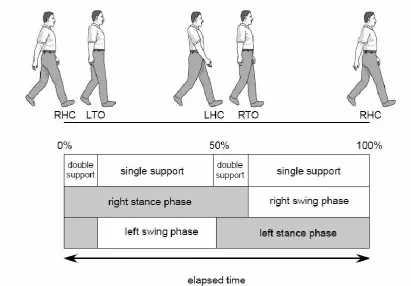
The most commonly assessed gait measure is gait speed, the distance walked divided by the time taken to walk that distance. Gait speed can be calculated using step time (the time from contact of one foot to contact of the other foot) and step length (the distance along the line of progression between the heel of one foot and the heel of the other foot). Other gait measures include support base (the perpendicular distance from the heel of one footfall to the line of progression of the other foot), swing phase, stance phase, and single and double support phase (the period when both feet are in contact with the ground). These measures are all related within the gait cycle.
11
when that foot is not in contact with the ground. Approximately 60% of the gait cycle is spent in stance phase and the other 40% is spent is swing phase. The combination of double support phase and single support phase make up the total stance phase. Double support phase is the period when both feet are simultaneously in contact with the ground. The gait cycle and its components are shown in
[image:31.595.128.540.256.542.2]Figure 1-1. A single step in the gait cycle, as measured by the first contact with the ground of one foot to the first contact with the ground of the other foot, can be described in terms of distance (length) or time or by the distance between the feet (support base).
Figure 1-1: Time dimensions of the gait cycle.
12
In a clinical setting, multiple gait cycles are measured in an individual’s recorded walk, and the gait measures are usually averaged across the multiple gait cycles for that individual. The average measures smooth the natural fluctuations between the individual steps. For example, the same average measure of step time could occur with large step-by-step variation in time to execute or with almost no variation at all. These fluctuations are known as gait variability. It is thought that gait variability may be a more sensitive indicator of falls-risk than the average measures of gait [99]. The variability measures detailed in this thesis are of step time, step length, support base and double support phase.
Gait initiation
One phase of gait during which falls happen frequently is the commencement of movement referred to as gait initiation (GI) [100]. GI time is the time taken to go from standing still to the establishment of a recurring pattern of walking. It is a part of everyday activity and its quick and correct execution is crucial. To do that requires modulation of ground reaction forces and joint movements to achieve the right angle and lift of the limb to clear the toe from the ground [101]. Older adults, and
especially people with Parkinson’s disease or frontal gait apraxia (where the feet stick to the ground), may not achieve that angle and lift, and thus initiate gait poorly. Poor initiation of gait may result in a fall [101].
13
Whilst gait initiation is commonly divided into these components [40, 100-107], the relationships between the components have not been investigated. Much of the research on gait initiation has actually measured step initiation [40, 102, 104] rather than GI. Initiation of the gait cycle is more analogous to the everyday performance of commencement of walking – the phase of the gait cycle during which falls are
relatively frequent – than is the initiation of the first step. The relationships between the components and other factors such as cognitive function, gait and sensorimotor measures has not been investigated either. Much of the research conducted to date has focused on comparisons between groups of people (for example younger versus older, or healthy versus diseased) [102].
A disadvantage of measuring GI using a force platform is that the platforms are expensive, and technologically somewhat complex to use. A potential alternative is the GaitRite walkway, which is increasingly used for clinical and research purposes. The GaitRite walkway can be placed on any flat surface and is easily portable. It cannot detect a shift in the centre of pressure as a force platform does, but it can be used to measure GI as the time from stimulus to contact of the leading foot. If the GaitRite walkway can be used as an alternative, it would mean that gait researchers would only need to acquire one piece of equipment to measure gait, gait variability and gait initiation. The appropriateness of the GaitRite walkway as an alternative to the force platform is investigated in Chapter 3.
An issue in GI research is choosing how many trials to conduct. Previous researchers [100-102, 108] have chosen to use up to five trials to obtain an overview of an individual’s GI. Melzer and Oddsson [102] report a learning trend across the 3 trials they conducted for each step direction. The relationships between the three
14
1.6 Brain function and gait
Until recently, most research into the brain regions controlling gait has been undertaken in primates [109]. However, with advances in technology, the issue of brain control in human gait has become an increasing field of study. It is now well recognised that specific regions of the brain play an important role in the initiation, planning, execution and maintenance of gait. These regions are the frontal motor, prefrontal and parietal cortices, the basal ganglia and the cerebellum [81].
Walking has been shown to rely on the interaction between the supplementary motor cortex and the basal ganglia [110] and gait speed is thought to be maintained by the supplementary motor and sensorimotor cortices as well as the left prefrontal cortex [111]. In addition, the lateral premotor, cingulate cortices and the dorsal brainstem have been shown to be important in the attentional control of gait [112]. These regions serve as a neural network that most likely work together to produce a “normal” gait cycle.
Allowing this neural network to function properly, the motor cortices are connected by the projection and association of white matter fibers in conjunction with the basal ganglia, parietal cortex and the cerebellum [113-115]. As such, not only is the integrity of the gray matter structures important, but also the connectivity of these white matter networks are crucial to central control of gait.
Gray matter loss, known to happen with age [116], has been shown to occur in the frontal lobe [117] and also perhaps in the basal ganglia, hippocampus and the cerebellum [118]. The loss of cerebral gray matter in these areas with age has
consequences for gait control. Further, lesions of the primary motor cortex have been shown to disrupt initiation and the rhythm of walking.
The quality and quantity of white matter is also known to decrease with age but at a later age, and in an accelerated fashion, compared to gray matter loss [116]. The corpus callosum is the primary white matter fiber bundle that connects the two hemispheres of the brain and has been shown to be involved in bimanual
15
1.7 Cognitive function and gait
It is well established that gait impairments, caused by ageing or disease, commonly arise in older people [13, 14, 97, 98] and predict falls [8, 9]. Decline in cognitive function, specifically executive function [121], attention [5, 6] and processing speed [5], may also be an important indicator of increased falls-risk in older people [5, 12] but data from population-based studies are scarce. The link between cognitive
function and gait in their associations with falls is an important one [55] but is poorly understood. Studying these relationships may provide further insights into the neural substrates of gait control in ageing. Previous research has focused on investigations of the relationships of cognitive function with gait speed [122-131], or gait
variability [132-135]. There are no population-based studies, to our knowledge, that have investigated the effects of cognitive function on gait speed, other average gait variables and gait variability together.
They have also mainly focused on the role of global cognitive function [136, 137], executive function and/or attention in gait [132, 135, 138-140], or that of divided attention in gait control [141-144]. Very few studies have examined the effects of other key cognitive domains such as memory or visuospatial ability, particularly in a population-based setting [128, 145]. Inconsistent associations have been described for memory, with one study reporting adverse effects on gait speed [145], while no associations were observed in another [128]. Furthermore, there is a paucity of studies examining cognitive associations with intra-individual gait variability which may be a better indicator of balance and the risk of falls [146]. The results for gait variability are varied, with some researchers finding no associations between
cognitive function and gait variability [122, 125, 132], and some reporting increased stance time variability [132], and stride time variability [126] to be associated with poorer cognitive function. Moreover, most studies in this field have been conducted in highly selected clinical samples or in small samples of volunteers, with limited data from the general population [128, 132, 140, 145, 147].
16
attention, planning and possibly memory [148, 149]. On the other hand, gait
disorders may also be associated with declines in cognitive functioning that increase the future risk of dementia [55, 89]. Even though the direction of association between cognitive function and gait has not been established, there are several studies
showing the impact on falls of each. One line of research has shown that walking and talking concurrently is associated with poorer balance and an increased risk of falls [142, 150-152].
The links between gait and cognitive function may be through their shared neuro-anatomical substrates. It is thought that white matter lesions may lead to the
disruption of axonal connections between subcortical structures and the cortex, and that this may lead to disorders of both cognitive function and mobility, including gait [77]. The relationships between these two important risk factors for falls are
investigated in Chapter 4.
1.8 Summary
Falls are a significant public health problem in older people. There are major costs and consequences of falls including injury, institutionalisation, morbidity and mortality. Because the number of surviving older adults is increasing over time, the costs and consequences of falls will have greater future impact on society. There is an increasing research imperative to identify risk factors for falls, and to use this information to design interventions to prevent falls.
17
1.9 Research aims and objectives
General aim
The general aim of this thesis was to investigate the relationships between gait, cognitive function and falls in an older population-based sample of residents of southern Tasmania.
Specific objectives
The specific aims of the investigations reported in this thesis were:
i. To study the associations between a range of cognitive functions, gait and gait variability;
ii. To study the associations between a range of cognitive functions and the risk of:
a. Falling using a surrogate measures of falls-risk, b. A single fall,
c. Multiple falls;
iii. To provide empirical evidence to support the rational choice of an appropriate measure of gait initiation.
General hypotheses
That cognitive function is associated with gait, gait variability and the risk of falling. More specifically, that the instrumental functions of memory and visuospatial ability are associated with gait and gait variability independently of the fundamental
cognitive function of executive function and processing speed.
18
Study population
The study population for this thesis is that of southern Tasmania in Australia (Figure 1-2). In 2004, Tasmania – an island state of Australia located at 42 - 43 degrees latitude south – had a population of 482,200 people, with 42% of those people residing in Hobart. Compared to the national average of 12.7%, 14.0% of
[image:38.595.126.536.326.587.2]Tasmanians were older than 65 years of age in 2004 (ABS 2005, Series B projection) [153]. That percentage is expected to rise over time, with about one third of the Tasmanian population projected to be aged 65 years or older in 2051, and making it the state with the oldest population in Australia. This makes southern Tasmania an ideal setting for this population-based study. The region, southern Tasmania, is that identified in Figure 1-2 as Hobart and Southern Tasmania – a geographical region defined by postcodes.
Figure 1-2: Map of Australia and Tasmania.
19
1.10 Thesis outline
In brief, the structure of the thesis is as follows:
Chapter 2: Methods. This chapter presents the study sample and methods of data collection for the subsequent analyses in this thesis.
Chapter 3: Can we use the GaitRite walkway to accurately measure gait initiation? This chapter presents results from an investigation of the suitability of the GaitRite walkway, as an alternative device to the gold standard force platform, to measure gait initiation in a sample of 28 participants aged 60-86 years.
Chapter 4: Cognitive function, gait and gait variability in older people: a population-based study. This chapter details the results from a cross-sectional analysis of the associations between gait, gait variability and cognitive function in a population-based sample of 416 community-dwelling older people aged 60-86 years. At the time of submission of this thesis, the contents of this chapter had been submitted as a manuscript to the Journal of Gerontology.
Chapter 5: Time to first lateral movement may be the most appropriate measure of gait initiation in older people. This chapter presents results from an investigation in to the statistical characteristics of the components of gait initiation, their
inter-relationships and associations with sensorimotor variables, and the effect of cognitive loading on these relationships. The investigation was conducted in a population-based sample of 128 community-dwelling older people aged 60-86 years. At the time of submission of this thesis, the contents of this chapter, other than the appendix, chapter have been published in a peer-reviewed journal [154].
20
Chapter 7: Cognitive function modifies the effect of sensorimotor function on the risk of multiple falls – a population based study. This chapter reports findings from a study of whether poorer cognitive function predicts the risk of single and multiple falls in a population-based sample of 416 older people aged 60-86 years. At the time of submission of this thesis, the contents of this chapter were under review by a peer-reviewed journal (Journal of Gerontology).
Chapter 8: Summary. This chapter draws together the major findings and conclusions, summarises the collective contribution of the thesis, and presents recommendations for future research.
1.11 References
1. Kang HG, Costa MD, Priplata AA, Starobinets OV, Goldberger AL, Peng CK, et al. Frailty and the degradation of complex balance dynamics during a dual-task protocol. J Gerontol A Biol Sci Med Sci. 2009 Dec;64(12):1304-11.
2. Kannus P, Sievanen H, Palvanen M, Jarvinen T, Parkkari J. Prevention of falls and consequent injuries in elderly people. Lancet. 2005 Nov
26;366(9500):1885-93.
3. Campbell AJ, Borrie MJ, Spears GF. Risk factors for falls in a community-based prospective study of people 70 years and older. J Gerontol. 1989
Jul;44(4):M112-7.
4. Tinetti M, Speechley M, Ginter S. Risk factors for falls among elderly
persons living in the community. New England Journal of Medicine1988. p. 1701-7. 5. Anstey KJ, von Sanden C, Luszcz MA. An 8-year prospective study of the relationship between cognitive performance and falling in very old adults. J Am Geriatr Soc. 2006 Aug;54(8):1169-76.
6. van Schoor NM, Smit JH, Pluijm SM, Jonker C, Lips P. Different cognitive functions in relation to falls among older persons. Immediate memory as an
21
7. Ganz DA, Bao Y, Shekelle PG, Rubenstein LZ. Will my patient fall? Jama. 2007 Jan 3;297(1):77-86.
8. Stel VS, Smit JH, Pluijm SM, Lips P. Balance and mobility performance as treatable risk factors for recurrent falling in older persons. J Clin Epidemiol. 2003 Jul;56(7):659-68.
9. Rubenstein LZ, Josephson KR. The epidemiology of falls and syncope. Clin Geriatr Med. 2002 May;18(2):141-58.
10. Centers for Disease Control and Prevention. National Center of Health Statistics. Health Data Interactive. [cited 28th September 2010];Available from: http://www.cdc.gov/nchs/hdi.htm.
11. Willems D, Vandervoort A. Balance as a contributing factor to gait speed in rehabilitation of the elderly. Physiotherapy Canada. 1996;48(3):179-84.
12. Winter D, Patla A, Frank J, Walt S. Biomechanical walking pattern changes in the fit and healthy elderly. Physical Therapy. 1990;70(6):340.
13. Dobbs RJ, Charlett A, Bowes SG, O'Neill CJ, Weller C, Hughes J, et al. Is this walk normal? Age Ageing. 1993 Jan;22(1):27-30.
14. Imms FJ, Edholm OG. Studies of gait and mobility in the elderly. Age Ageing. 1981 Aug;10(3):147-56.
15. Gibson M, Andres R, Kennedy T, Coppard L. The Prevention of Falls in Later Life: A Report of the Kellogg International Work Group on the Prevention of Falls by the Elderly: Published for the Medical Faculties of the Universities of Copenhagen and Aarhus, and the Danish National Board of Health by Ugeskrift for Læger in cooperation with the University of Michigan and the University of
Copenhagen; 1987.
22
17. Lamb SE, Jorstad-Stein EC, Hauer K, Becker C. Development of a common outcome data set for fall injury prevention trials: the Prevention of Falls Network Europe consensus. J Am Geriatr Soc. 2005 Sep;53(9):1618-22.
18. Haga H, Yasumura S, Niino N, Ueno H, Oshima M, Higuchi Y. [An examination of two reporting methods of falls among the elderly living in the community]. Nippon Koshu Eisei Zasshi. 1996 Nov;43(11):983-8.
19. Cummings SR, Nevitt MC, Kidd S. Forgetting falls: The limited accuracy of recall of falls in the elderly. Journal of the American Geriatrics Society. 1988. 20. Hill K, Schwarz J, Flicker L, Carroll S. Falls among healthy, community dwelling, older women: a prospective study of frequency, circumstances,
consequences and prediction accuracy. Australian and New Zealand Journal of Public Health. 1999;23(1):41-8.
21. Campbell AJ, Spears GF, Borrie MJ. Examination by logistic regression modelling of the variables which increase the relative risk of elderly women falling compared to elderly men. J Clin Epidemiol. 1990;43(12):1415-20.
22. Hall SE, Hendrie DV. A prospective study of the costs of falls in older adults living in the community. Aust N Z J Public Health. 2003;27(3):343-51.
23. McMichael KA, Vander Bilt J, Lavery L, Rodriguez E, Ganguli M. Simple balance and mobility tests can assess falls risk when cognition is impaired. Geriatr Nurs. 2008 Sep-Oct;29(5):311-23.
24. Tinetti ME. Clinical practice. Preventing falls in elderly persons. N Engl J Med. 2003 Jan 2;348(1):42-9.
25. Clark RD, Lord SR, Webster IW. Clinical parameters associated with falls in an elderly population. Gerontology. 1993;39(2):117-23.
26. Verghese J, Holtzer R, Lipton RB, Wang C. Quantitative gait markers and incident fall risk in older adults. J Gerontol A Biol Sci Med Sci. 2009
23
27. Tromp AM, Pluijm SM, Smit JH, Deeg DJ, Bouter LM, Lips P. Fall-risk screening test: a prospective study on predictors for falls in community-dwelling elderly. J Clin Epidemiol. 2001 Aug;54(8):837-44.
28. Lord S, Ward J, Williams P, Anstey K. Physiological factors associated with falls in older community-dwelling women. J Am Geriatr Soc. 1994;42(10):1110-7. 29. Tiedemann A, Shimada H, Sherrington C, Murray S, Lord S. The
comparative ability of eight functional mobility tests for predicting falls in community-dwelling older people. Age Ageing. 2008 Jul;37(4):430-5.
30. Lord SR, Ward JA, Williams P, Anstey KJ. An epidemiological study of falls in older community-dwelling women: the Randwick falls and fractures study. Aust J Public Health. 1993 Sep;17(3):240-5.
31. Exton-Smith A, editor. Functional consequences of ageing: clinical manifestations1977.
32. Campbell AJ, Borrie MJ, Spears GF, Jackson SL, Brown JS, Fitzgerald JL. Circumstances and consequences of falls experienced by a community population 70 years and over during a prospective study. Age Ageing. 1990 Mar;19(2):136-41. 33. Injury Prevention Research Unit, Injury Causes by Age. IPRU Fact Sheet 29 Injury Prevention Research Unit, University of Otago, Dunedin, 2003.
34. Tinetti ME, Williams CS. Falls, injuries due to falls, and the risk of admission to a nursing home. N Engl J Med. 1997 Oct 30;337(18):1279-84.
35. Stevens JA, Corso PS, Finkelstein EA, Miller TR. The costs of fatal and non-fatal falls among older adults. Inj Prev. 2006 Oct;12(5):290-5.
36. Fletcher PC, Hirdes JP. Restriction in activity associated with fear of falling among community-based seniors using home care services. Age Ageing. 2004 May;33(3):273-9.
24
38. Aging NIo. Why Population Aging Matters: A Global Perspective. Washington DC National Institute on Aging, National Institutes of Health, Department of State, Department of Health and Human Services. 2007;NIH Publication No. 07-6134.
39. Moller J. Projected Costs of Fall Related Injury to Older Persons Due to Demographic Change in Australia: Report to the Commonwealth Department of Health and Ageing Under the National Falls Prevention for Older People Initiative: Dept. of Health and Ageing; 2003.
40. St George RJ, Fitzpatrick RC, Rogers MW, Lord SR. Choice stepping response and transfer times: effects of age, fall risk, and secondary tasks. J Gerontol A Biol Sci Med Sci. 2007 May;62(5):537-42.
41. Grabiner MD, Jahnigen DW. Modeling recovery from stumbles: preliminary data on variable selection and classification efficacy. J Am Geriatr Soc. 1992
Sep;40(9):910-3.
42. Rogers MW, Hedman LD, Johnson ME, Martinez KM, Mille ML. Triggering of protective stepping for the control of human balance: age and contextual
dependence. Brain Res Cogn Brain Res. 2003 Apr;16(2):192-8.
43. Nevitt MC, Cummings SR, Kidd S, Black D. Risk factors for recurrent nonsyncopal falls. A prospective study. Jama. 1989 May 12;261(18):2663-8.
44. Lord S, Sherrington C, Menz H, Close J. Falls in Older People: Risk Factors and Strategies for Prevention: Cambridge University Press; 2007.
45. Lord S, Menz H, Tiedemann A. A Physiological Profile Approach to Falls Risk Assessment and Prevention. Physical Therapy. 2003;83(3):237.
46. Lord S, Dayhew J. Visual Risk Factors for Falls in Older People. Journal of the American Geriatrics Society. 2001;49(5):508-15.
25
48. Gassmann KG, Rupprecht R, Freiberger E. Predictors for occasional and recurrent falls in community-dwelling older people. Z Gerontol Geriatr. 2009 Feb;42(1):3-10.
49. Komara FA. The slippery slope: reducing fall risk in older adults. Prim Care. 2005 Sep;32(3):683-97.
50. Assantachai P, Praditsuwan R, Chatthanawaree W, Pisalsarakij D,
Thamlikitkul V. Risk factors for falls in the Thai elderly in an urban community. J Med Assoc Thai. 2003 Feb;86(2):124-30.
51. Liu-Ambrose TY, Ashe MC, Graf P, Beattie BL, Khan KM. Increased risk of falling in older community-dwelling women with mild cognitive impairment. Phys Ther. 2008 Dec;88(12):1482-91.
52. Leipzig RM, Cumming RG, Tinetti ME. Drugs and falls in older people: a systematic review and meta-analysis: I. Psychotropic drugs. J Am Geriatr Soc. 1999 Jan;47(1):30-9.
53. Tinetti ME, Doucette J, Claus E, Marottoli R. Risk factors for serious injury during falls by older persons in the community. J Am Geriatr Soc. 1995
Nov;43(11):1214-21.
54. Kelly A, Dowling M. Reducing the likelihood of falls in older people. Nurs Stand. 2004 Aug 18-24;18(49):33-40.
55. Axer H, Axer M, Sauer H, Witte OW, Hagemann G. Falls and gait disorders in geriatric neurology. Clin Neurol Neurosurg. May;112(4):265-74.
56. Fuller GF. Falls in the elderly. Am Fam Physician. 2000 Apr 1;61(7):2159-68, 73-4.
57. Chang JT, Ganz DA. Quality indicators for falls and mobility problems in vulnerable elders. J Am Geriatr Soc. 2007 Oct;55 Suppl 2:S327-34.
26
59. Campbell AJ, Reinken J, Allan BC, Martinez GS. Falls in old age: a study of frequency and related clinical factors. Age Ageing. 1981 Nov;10(4):264-70.
60. Pluijm SM, Smit JH, Tromp EA, Stel VS, Deeg DJ, Bouter LM, et al. A risk profile for identifying community-dwelling elderly with a high risk of recurrent falling: results of a 3-year prospective study. Osteoporos Int. 2006;17(3):417-25. 61. Kudo Y, Imamura T, Sato A, Endo N. Risk factors for falls in community-dwelling patients with Alzheimer's disease and dementia with Lewy bodies: walking with visuocognitive impairment may cause a fall. Dement Geriatr Cogn Disord. 2009;27(2):139-46.
62. Chu LW, Chi I, Chiu AY. Incidence and predictors of falls in the chinese elderly. Ann Acad Med Singapore. 2005 Jan;34(1):60-72.
63. Graafmans WC, Ooms ME, Hofstee HM, Bezemer PD, Bouter LM, Lips P. Falls in the elderly: a prospective study of risk factors and risk profiles. Am J Epidemiol. 1996 Jun 1;143(11):1129-36.
64. Horikawa E, Matsui T, Arai H, Seki T, Iwasaki K, Sasaki H. Risk of falls in Alzheimer's disease: a prospective study. Intern Med. 2005 Jul;44(7):717-21. 65. Bassiony MM, Rosenblatt A, Baker A, Steinberg M, Steele CD, Sheppard JM, et al. Falls and age in patients with Alzheimer's disease. J Nerv Ment Dis. 2004 Aug;192(8):570-2.
66. Mossey JM. Social and psychologic factors related to falls among the elderly. Clin Geriatr Med. 1985 Aug;1(3):541-53.
67. Imamura T, Hirono N, Hashimoto M, Kazui H, Tanimukai S, Hanihara T, et al. Fall-related injuries in dementia with Lewy bodies (DLB) and Alzheimer's disease. Eur J Neurol. 2000 Jan;7(1):77-9.
27
69. Rapport L, Hanks R, Millis S, Deshpande S. Executive functioning and predictors of falls in the rehabilitation setting. Arch Phys Med Rehabil.
1998;79(6):629-33.
70. Buchner DM, Larson EB. Transfer bias and the association of cognitive impairment with falls. J Gen Intern Med. 1988 May-Jun;3(3):254-9.
71. Jantti PO, Pyykko VI, Hervonen AL. Falls among elderly nursing home residents. Public Health. 1993 Mar;107(2):89-96.
72. Hausdorff J, Doniger G, Springer S, Yogev G, Giladi N, Simon E. A Common Cognitive Profile in Elderly Fallers and in Patients with Parkinson's Disease: The Prominence of Impaired Executive Function and Attention. Experimental Aging Research. 2006;32(4):411-29.
73. Folstein M, Folstein S, McHugh P. Mini-Mental State: a practical method for grading the cognitive state of patients for the clinician. J Psychiatr Res.
1975;12(3):189-98.
74. Vance DE, Ross LA, Crowe MG, Wadley VG, Edwards JD, Ball KK. The Relationship of Memory, Reasoning, and Speed of Processing on Falling among Older Adults. Phys Occup Ther Geriatr. 2008;27(3):212-28.
75. Lezak MD. Neuropsychological Assessment. Third ed. New York: Oxford University Press; 1995.
76. Verghese J, Buschke H, Viola L, Katz M, Hall C, Kuslansky G, et al. Validity of divided attention tasks in predicting falls in older individuals: a preliminary study. J Am Geriatr Soc. 2002 Sep;50(9):1572-6.
77. Srikanth V, Saling M, Thrift A. Vascular cognitive impairment. Neurobiology of disease. 2007:223.
78. Bogousslavsky J, Cummings JL. Behavior and mood disorders in focal brain lesions: Cambridge Univ Pr; 2000.
28
80. Tullberg M, Fletcher E, DeCarli C, Mungas D, Reed BR, Harvey DJ, et al. White matter lesions impair frontal lobe function regardless of their location. Neurology. 2004 Jul 27;63(2):246-53.
81. Srikanth V, Sanders L, Callisaya M, Martin K, Phan T. Brain aging and gait. Aging Health. 2010;6(1):123-31.
82. Prins N, van Dijk E, den Heijer T, Vermeer S, Jolles J, Koudstaal P, et al. Cerebral small-vessel disease and decline in information processing speed, executive function and memory. Brain. 2005;128(9):2034-41.
83. Prins N, Van Dijk E, Den Heijer T, Vermeer S, Jolles J, Koudstaal P, et al. Cerebral small-vessel disease and decline in information processing speed, executive function and memory. Brain. 2005;128(9):2034.
84. Guttmann C, Benson R, Warfield S, Wei X, Anderson M, Hall C, et al. White matter abnormalities in mobility-impaired older persons. Neurology.
2000;54(6):1277-83.
85. Spreen O, Strauss E. A Compendium of Neuropsychological Tests:
Administration, Norms, and Commentary. Second ed. New York: Oxford University Press; 1998.
86. Tranel D, Anderson S, Benton A. Development of the concept of ‘executive function’and its relationship to the frontal lobes. Handbook of neuropsychology. 1994;9:125–48.
87. Baddeley A. Working memory. Science. 1992;255(5044):556. 88. Salthouse T. Aging and measures of processing speed. Biological Psychology. 2000;54(1-3):35-54.
89. Verghese J, Lipton RB, Hall CB, Kuslansky G, Katz MJ, Buschke H.
29
90. Waite LM, Broe GA, Grayson DA, Creasey H. Preclinical syndromes predict dementia: the Sydney older persons study. J Neurol Neurosurg Psychiatry. 2001 Sep;71(3):296-302.
91. Schmahmann JD, Sherman JC. The cerebellar cognitive affective syndrome. Brain. 1998;121(4):561.
92. Wallesch CW, Horn A. Long-term effects of cerebellar pathology on cognitive functions* 1. Brain and cognition. 1990;14(1):19-25.
93. Botez-Marquard T, Léveillé J, Botez M. Neuropsychological functioning in unilateral cerebellar damage. The Canadian journal of neurological sciences Le journal canadien des sciences neurologiques. 1994;21(4):353.
94. Mishkin M, Lewis ME, Ungerleider LG. Equivalence of parieto-preoccipital subareas for visuospatial ability in monkeys* 1. Behavioural brain research.
1982;6(1):41-55.
95. Kerr B, Condon SM, McDonald LA. Cognitive spatial processing and the regulation of posture. J Exp Psychol Hum Percept Perform. 1985 Oct;11(5):617-22. 96. Maylor EA, Wing AM. Age differences in postural stability are increased by additional cognitive demands. J Gerontol B Psychol Sci Soc Sci. 1996
May;51(3):P143-54.
97. Willems D, Vandervoort A. Balance as a contributing factor to gait speed in rehabilitation of the elderly. Physiotherapy Canada. 1996;48:179–84.
98. Winter DA, Patla AE, Frank JS, Walt SE. Biomechanical walking pattern changes in the fit and healthy elderly. Phys Ther. 1990 Jun;70(6):340-7.
99. Hausdorff JM. Gait variability: methods, modeling and meaning. J Neuroengineering Rehabil. 2005 Jul 20;2:19.