©Dôfû
bulletin of the european atomic energy community
june 1966 vol. V no 2
«λ:*. É
1
" " Λ
I
|
.
i*"* 5*5·' '
*)■* * t • » t - - -,A'î * t * · ; - * * · * ? *
» * « s
vi
■
■*!% -«» .„ -4 ^ ^ ^ ^ ^
"J Λ 4 "> ■"* "» t ' "» «¡ "1 < "»:
■-»•«il 4 % « «..«•^'«"•.■»«t'iN
» * 1
■A·«
TUE
1
¡ δ*
Quarterly Information Bulletin of the
European Atomic Energy Community
(Euratom)
1966-2
Contents:
32 Editorial
36 Nuclear energy in Belgium
44 Nuclear codes - What are they used
for? What future do they have?
49 Business pattern of the nuclear fuel
industry
55 A solution to the problem of brittle
fracture?
56 Prestressed concrete in reactor tech
nology
Published and edited by
Euratom, Dissemination of information
Directorate, 51-53 rue Belliard, Brussels 4.
Telephone: 13 40 90
For subscription rates please see overleaf.
The Euratom Commission or any persons
acting on its behalf disclaim all liability with
respect t o the completeness of the in
formation contained in this periodical as
well as t o any damage which might result
from the use of information disclosed or of
equipment, methods or processes described
therein.
Any article published in this bulletin
may be reproduced in whole or in part
without restriction, provided that the
source is mentioned.
Picture credits:
Cover: Vandamme-Minnen,
Mol (Belgium); p. 2 of cover: J. Biaugeaud,
Arcueil (France); p. 37: C.E.N. (Belgium);
p. 5 1 : Vandamme-Minnen, Mol; p. 55:
T.N.O., Delft (Netherlands); p. 56 and
p. 60: J. Biaugeaud, Arcueil; p. 63: Euratom
JRC Ispra/U. Zimmermann.
Quarterly
Five editions:
English, German, French, Italian and Dutch
Yearly subscription rates:
United Kingdom 18/-; United States $ 3.50;
Basic rate:
Europe: 125 Belgian Francs
Other countries: 175 Belgian Francs
Single copies:
United Kingdom 6/-; United States $ 1.
Quarterly Information Bulletin of the Euro-pean Atomic Energy Community (Euratom)
1966
The Community's mission is to create the conditions necessary for the speedy estab-lishment and growth of nuclear industries in the member States and thereby contrib-ute to the raising of living standards and the development of exchanges with other countries (Article 1 of the Treaty instituting the European Atomic Energy Community).
On 8 April 1965, the Six signed the Treaty establishing a single
council of Ministers and a single executive Commission for all three
European Communities—the European Coal and Steel Community,
the European Economic Community and the European Atomic Energy
Community. This treaty can be expected to enter into force in the near future.
The Euratom Commission has always been in favour of this merger,
being convinced that it would constitute a further move towards the
construction of a united Europe as well as providing a considerable
stimulus to Euratom's own activities. However, this is merely the
prelude to an amalgamation of the Communities themselves and to
the preparation of a single treaty which will supersede the three
existing ones.
Developments must hence already be regarded from the viewpoint
of a progression towards a uniform and unified structure. This does
not mean, of course, that certain features of the three present treaties
will not survive, but a suitable juridical framework will have to be
devised to accommodate them. What is necessary, however, is to take
a fresh look at the provisions of each treaty and, particularly, to decide, in the light of the experience gained in the course of their
implementation, the extent to which a given clause or provision, at
present applicable to a single field, could be adapted to Community
objectives on a wider canvas. These are habits of thought which will
inevitably make for the evolution of a whole which, constituting more
than the sum of its parts, will represent the veritable synthesis of
three units.
What contribution can the European Atomic Energy Community
make to this development, by virtue of the provision of its own treaty
and the experience which it has acquired over the past few years? The first point to be made here is that, like its elder sister, the
Euro-pean Coal and Steel Community, it was devoted to the development
of a specific branch of the economy. Not all the problems to which
Euratom has been obliged to seek solutions, however, can be said
to come exclusively within the nuclear ambit. The Treaty of Rome
itself sites Euratom's activities within an extremely wide framework.
To quote Article 1 :"lt shall be the task of the Community to contribute
to the raising of the standard of living in the Member States and to the development of interchange with other countries by creating the
conditions necessary for the speedy establishment and growth of
devolving upon the Community in the attainment of these objectives.
This list has the merit of providing concrete instances of precisely
what Euratom is required to do. We shall in this editorial single out
the first of them, i.e. "The Community shall . . . develop research and ensure the dissemination of technical information", and then
formulate, on this basis, a reply to the question posed.
The dissemination by Euratom of the knowledge acquired at the
establishments of its Joint Nuclear Research Centre, which it finances
and manages directly, has not given rise to any particular difficulty.
In fact, since this knowledge is the fruit of the work carried out by
its own researchers and other employees, it was only natural that
Euratom should appropriate it entirely and be at liberty to
communi-cate it in accordance with the spirit of the Treaty, i.e. without
dis-crimination.
On the other hand, intractable problems arose at first as regards
the work entrusted to public and private bodies under research
contracts. By claiming as full an ownership of the results of such
work as in the case of the research projects conducted at the joint
Centre, Euratom would have been in danger of acting inconsistently
with its terms of reference, namely the task of "creating the
con-ditions necessary for the speedy establishment and growth of nuclear
industries". Indeed, the effect of such a harsh policy would have been
to encourage a passive attitude on the part of firms which were
still venturing very timidly into the nuclear sector. As regards the
opposite policy—that of allowing research contracts to be transformed
into subsidy agreements—this would have been a flagrant breach of
the Treaty.
In order to solve this dilemma, Euratom sought compromises which it was gradually able to define in the light of subsequent experience,
reconciling the industrial and commercial interests of the
contract-holders with the exigencies of the Community. Without going into
the details of these solutions, we can say that they enable the
contract-holder to enjoy, under certain conditions, some measure of preference
in the application of the knowledge accruing from the contract,
and that they recognise the value of the experience he contributes.
Consequently, Euratom's research contracts are no longer merely
instruments for the supply of know-how but are also a medium of
industrial promotion.
By bringing up the problem of the dissemination of technical
know-how before considering the actual research, we are in a sense putting
the cart before the horse. There is, however, a logical reason for this
reversal of the natural order: since research is not an end in itself
but merely a means of acquiring knowledge, it is after all natural to be concerned about the goal before considering the means of attaining
it. And the fundamental goal is in fact industrial promotion.
What is true of the research carried out under contract is also true
of research conducted within other frameworks, e.g. that of the
Joint Centre or that of "associations", under which the Community
participates in a research project. In this context the Joint Centre
is a tool which is not without originality, since it represents the
pooling of material and human resources for the execution, on the basis of fairly long-term programmes, of work whose importance is
acknowledged by all the Member States.
In short—and this is the point we wish to make—Euratom has not
only supplied a mass of scientific data in return for the funds allocated to it, but has also tested and developed on a European scale a whole
series of devices and methods designed to stimulate the emergence
of a powerful nuclear industry.
Thus what Euratom had to do was to fashion for itself, so to speak,
a set of tools, whilst taking account of certain specifically nuclear
requirements and, above all, of numerous exigencies dictated by the
industrial structure of the Member States. It follows, in the light of the
foregoing, that these tools could be adapted for purposes of research
and industrial promotion in spheres other than that of nuclear energy,
e.g. space, electronics and aeronautics.
Hitherto we have been dealing with the Community's own nuclear
research programme and the dissemination of the data issuing from it. However, no programme, whether it be on a Community or
on a national level, can thrive in intellectual isolation; on the contrary, it must be able to benefit from the results of research previously
or still being conducted under other programmes with similar objec-tives.
This requirement is so obvious as to require no underlining. On the
other hand, the information and documentation activity that it
involves is deserving of emphasis, because this is becoming more
difficult every day.
The difficulties do not stem from any reluctance to publish scientific
results; on the contrary, it is the very abundance of published
mation that necessitates thespending of more and more time on locating
the data which are relevant to a given scientific or technical problem.
What in fact frequently happens is that the researcher, discouraged
by the tedious nature of the work that awaits him if he wishes to
collect adequate documentation himself, or—should there be an
information centre at his disposal—by the inevitable lapse of time
in the provision of such material, decides to do without it.
But sound administration requires that the researcher should have
at his disposal all published information relating directly or indirectly
to the field he is exploring. This will enable him to save himself
unnecessary work, to avoid following a false trail, or even to discover
that the problem concerned has already been solved and that he
could more profitably turn his attention to the next one.
It would be both laughable and tragic if we were to allow the advance
of nuclear science and technology in Europe to be held up merely
because we would not deign to pick up information which is public
property. In order to combat this danger, Euratom has taken various
measures, two of which deserve special mention.
One of the potential barriers to the transmission of information
is the language in which it is conveyed, especially, as far as the
Western world is concerned, when this is a language such as Russian
or Japanese. Euratom has therefore created a reference journal, entitled "Transatom Bulletin", in which are listed all documents of
nuclear interest which were originally published in a "difficult"
language but have been or are being translated into a Western
language.
But Euratom's most ambitious undertaking in the information field
is undoubtedly its automatic documentation project—the biggest of
its kind in Europe—which is now in the final development stage and
will shortly be taken into service. This project is based on a
combina-tion of man's analytical and critical faculty with an electronic com-puter's ability to store a virtually unlimited number of data and to
perform even highly complex operations in fractions of a second.
The user will merely have to ask a question; the machine, or rather
the team of experts who operate it, will be able to give him a rapid
answer in the form of a list of books, articles and reports containing
the information he is seeking.
Euratom's automatic documentation system is certainly one of the
least specifically nuclear aspects of its activities. Although it was
designed to provide efficient retrieval of information in a
well-defined sector, it is nonetheless fundamentally versatile. If its
use-fulness is confirmed, there would be no great difficulty about extending its application to the numerous other fields in which a rising flood
of information is creating similar problems.
We have already spoken of industrial promotion as a basic objective
of Euratom's activities. In this field there is one facet of Euratom's
experience which is bound to be useful, and this is the procedure for
setting up target programmes on nuclear power production goals and the investments called for.
This principle is already well-known in the other Communities,
as in the case of the High Authority ofthe E. CS. C., which sets out overall
programmes, objectives and forecasts, and when, within the framework
extended to cover the three Communities, the preparation is
under-taken of a general medium-term economic policy programme.
How-ever, the studies which the Euratom Commission has had to carry out,
particularly in connection with the recently published target
pro-gramme, relate to the period 1970-2000, i.e. a period extending beyond
the limits of the estimates arrived at in the other two cases.
There are plenty of other sectors in which Euratom can make a
contribution to the common interest. Mention can be made of the
ex-perience gained as regards patents. The notion of a "European
patent" is not new, but there is still a great deal of ground to be
covered before it becomes a reality. What Euratom can contribute
here is its solid every-day experience acquired through the filing of
several hundred patent applications within the framework of a
six-nation industrial community.
The list of examples could be extended by reference to such widely
differing activities as the supplying of nuclear fuels on a Community scale and the compilation of a multilingual scientific and technical
glossary.
From this, albeit brief, survey of some of its activities it can be seen that the European Atomic Energy Community is not such a
highly specialised organisation as it appears to be. Its gradual
integra-tion into a single, wider, Community is bound to facilitate the
ac-complishment of the task assigned to it by the Treaty of Rome. There
can be no doubt, however, that although Euratom will benefit by
entering a much broader-based alliance, it will not come in
Lillo
Gent O
' ' EUROCHEMIC
f j Q
C.E.N/S.C.K Mol
Ό
EURATOM G e e l
O Leuven
O p. Bruxelles -: *»,-·;'>
Brussel ¿.¿i ° L i e*e
Um» Huy O Mons
å
SENA.Moi — conventional and nuclear energy side ^ by s/de.
Here we see part of the Belgian Nuclear Studies Centre (CEN) and, in the back-ground, two coal-fired electricity generators.
- a van de Graaff 0.4 MeV accelerator, employed as neutron generator (Polytech-nical Faculty, Mons),
- a van de Graaff A N 400 accelerator for all charged particles up t o 0.4 MeV (Universi-ty of Liège),
- a van de Graaff 2 MeV proton and deute-ron generator, w i t h energy-stabilized and analysed beam (University of Liège),
- an 80 MeV linear electron accelerator
(University of Ghent),
- a specialized installation for interpreting bubble-chamber films (High Energies Labor-atory, Brussels).
In 1965, the sums made available t o the
NUCLEAR ENERGY IN BELGIUM
As far back as the pre-1940 period, Belgian industrialists had acquired wide experience in the mining and processing of radioactive substances, for there is a major deposit of uranium-bearing ore at Shinkolobwe, In Katanga. A t that t i m e , Belgium was the world's leading producer of uranium. Even so, i t was not until 1947 that nuclear research was given an official send-off in Belgium, w i t h the launching of the
Inter-University Institute for Nuclear Physics, which in 1951 became the Inter-University Institute
for Nuclear Sciences. This body is respon
sible for initiating, promoting and coordi nating fundamental studies relating t o the nuclear sciences in the higher education and research establishments of Belgium.
In 1950, the Atomic Energy Commission was
set up w i t h the object of encouraging and coordinating all Belgian nuclear activities. In 1952, the Commission launched the
Study Centre for the Applications of Nuclear
Energy, which was in 1957 renamed the
Nuclear Studies Centre (CEN), and given the
specific task of undertaking all technological research connected w i t h the use of nuclear energy.
Resources
The laboratories whose w o r k is coordinat ed by the Inter-University Institute for Nuclear
Science employed 150 research scientists in
1965. The equipment at their disposal is considerable, and includes:
- a pool reactor, rated power 15 k W
(University of Ghent),
- a 12 MeV deuteron and 24 MeV alpha
cyclotron (University of Louvain),
- a van de Graaff 4 MeV electron accelerator
(University of Louvain),
- a Cockcroft-Walton 1.4 MeV deuteron
or proton accelerator (Polytechnical Faculty, Mons),
Institute by the public authorities totalled 2.15 million dollars.
Founded in 1952, the Nuclear Studies Centre
(CEN) occupies a site of 1420 acres at Mol,
in northern Belgium. Investments t o date amount to nearly 70 million dollars. The installations comprise three reactors and t w o critical assemblies; chemistry, metallurgy, physics, electronics, radio-biolo gy and medical laboratories; and the requi site ancillary services.
The BR-1 reactor, which started operating
in 1956, is an air-cooled natural uranium and graphite research reactor, w i t h a 4 M W thermal capacity. For many years, it was used for experimental purposes, for training personnel and for producing radioisotopes. Since the end of 1964, its operating power has been reduced t o a few hundred kilo watts, as most experimental w o r k is now carried out in the 6R-2 reactor.
E U B U 55
R E G I N A L D L A M A R C H E A N D A I M É V A E S ,
Belgian Atomic Energy Commission
The BR2 is a very high n e u t r o n f l u x reactor f o r studying the behaviour of materials under intense i r r a d i a t i o n and f o r producing radioisotopes of high specific activity. The BR2 has a rated capacity of 50 M W ( t h ) and produces a f a s t n e u t r o n flux, w i t h a power exceeding 100 keV, of 5 χ 1014 n/cm2 sec and a t h e r m a l n e u t r o n flux of 9 : 10'4 n/cm2 sec. Since 1960, the CEN has been associated w i t h Euratom in the o p e r a t i o n of this reactor and its ancillary installa tions—dismantling cell, mediumactivity laboratory, and t h e c r i t i c a l r e a c t o r model called BR02. This model is a v i t a l factor in t h e o p e r a t i o n of BR 2, as experiments can be prepared in it and t h e n carried o u t in t h e r e a c t o r w i t h o u t necessitating a p r o longed s h u t d o w n . A l t h o u g h it has a much l o w e r n e u t r o n f l u x , t h e model can be used, f o r instance, t o predict exactly t h e flux d i s t r i b u t i o n in BR2 d u r i n g a given e x p e r i m e n t ; thus i t neatly rounds off a g r o u p of
installations in which irradiations can be effected on behalf of t h e CEN, and more especially of foreign scientists engaged on e x p e r i m e n t s .
The BR3 ia a 10.5 M W e p o w e r reactor, of the pressurised w a t e r t y p e , which was finally earmarked f o r t r a i n i n g the staff o f nuclear p o w e r plants of the f u t u r e . Since its commissioning in 1962, it has c o n t r i b u t e d nearly 100 m i l l i o n k W h t o the g r i d . A f t e r August 1964, i t u n d e r w e n t conversions w i t h a view t o carrying o u t experiments w i t h a Vulcain core.
The CEN also possesses, j o i n t l y w i t h the
S.A. BelgoNucléaire, an i m p o r t a n t laboratory f o r studies and w o r k on plutonium.
The CEN employs a staff of about 1,000, roughly a t h i r d of w h o m are university graduates and engineers.
Mention must also be made of the i m p o r t a n t function which has been and is s t i l l being fulfilled by t h e CEN in t r a i n i n g per
sonnel of all levels in nuclear science and technology.
A t present, the CEN's annual expenditure amounts t o 14 m i l l i o n dollars. Its income consists mainly of subsidies f r o m the state and f r o m industry, also f r o m contracts which f o r t h e most part are w i t h inter national organisations.
Belgium has a very wide gamut of produc t i o n capacities which could f o r m a major nuclear industry, capable not merely of sharing in domestic achievements but also of e x p o r t i n g a part of its o u t p u t . N i n e t y industrial enterprises concerned w i t h nuclear energy are affiliated t o the Groupement professionnel de l'industrie nu cléaire (nuclear industry association), the object of which is t o protect its members' interests.
As regards the preparation of materials used in the manufacture of fuels. Métallurgie Hoboken, of O l e n , w i t h long experience in the processing of uraniferous ores, is today engaged in producing uranium in the f o r m of salts, oxide and metal of high nuclear p u r i t y .
Nuclear energy in Belgium
supplies for Belgian and certain foreign reactors, has successfully developed the manufacture of the three established types of fuel—natural uranium metal, slightly enriched uranium oxides, and highly en riched uranium-alloy plates. The cladding materials used are aluminium, magnesium, stainless steel, nickel and Zircaloy. As t o the reprocessing of irradiated fuels
and the processing of radioactive effluents
and waste, the S.A. BelgoNucléaire has acted
as industrial architect on behalf of Euro-chemic and other Belgian and foreign con cerns.
Belgium possesses a highly-developed
con-struction industry, particularly in the field
of mechanical engineering, boiler-making, shipbuilding, and electrical and electronic engineering. There are also major research offices skilled in the design of industrial installations, which have been able t o build up useful experience through t h e i r parti cipation in the design and construction of Belgian reactors and of certain foreign plants.
Some t h i r t y firms have formed a syndicate to develop the Vulcain reactor already mentioned.
In the field of electricity generation, it should be pointed out that conventional fuel is rel atively dear in Belgium, so that nuclear pow er reactors offer very attractive prospects.
An i m p o r t a n t project now under way is the Ardennes nuclear power plant, which is equipped w i t h a pressurised water reactor. This 266 MWe unit is being built at Chooz in the French Ardennes and is scheduled t o come into operation at the end of 1966. For the design, construction and oper ation of this power plant the SENA (Société d'énergie nucléaire franco-belge des Ardennes)
was incorporated, its capital being held on a fifty-fifty basis by Electricité de France and
the Centre et Sud group of Belgian firms.
In consideration of the value to the Com munity of the Ardennes nuclear power plant, which is being built under the Euratom/United States Agreement f o r Co operation, Euratom has conferred upon SENA " j o i n t - e n t e r p r i s e " status w i t h i n the meaning of the Rome Treaty.
D r a w i n g up a p r o g r a m m e
In o r d e r t o be effective, a scientific policy must extend over a number of years, time-limits must be set for the various targets and the requisite funds must be allocated at the outset of the w o r k , as otherwise the research workers d r i f t off into a multiplicity of projects which are rarely carried t h r o u g h t o a finish.
Hence the first requirement for a nuclear
General view of the BR-2 materials-testing reactor (left) and the BR-3 power reactor (right)
policy is a programme which unites the best possible choices.
As early as 1958, therefore, the A t o m i c Energy Commission formed a c o m m i t t e e composed of representatives of the State, the universities and industry, for the pur pose of drawing up a programme. The document which emerged from this com mittee's labours was the first attempt t o channel new undertakings towards national objectives.
The first three-year plan covered the period 1959-1962. A f t e r a transitional period, a second three-year plan was laid d o w n for 1965-1967. It is based on a schedule of the research proposals financed, at least in part, by direct State subsidy, and takes into consideration, inter alia:
- Belgium's membership of Euratom and
of CERN, which affects the choice of a
national or international framework for certain research w o r k ;
Introduction of a sodium loop into the central
channel of the BR-2 reactor
Fuel-element fabrication in the plutonium laboratory at Mol
qualified staff and very comprehensive equipment;
- the fact that nuclear technology is enter ing the industrial stage.
F u n d a m e n t a l research
The results of fundamental research are far less predictable and still less easy t o programme than those of applied research. Standards of p r i o r i t y are consequently hard t o lay down in this field, and often it is the competence of the researcher, rather than the subject, which forms the focal point of the decisions.
The programme of fundamental studies is based largely on the proposals of the inter-university Institute for Nuclear Sciences (IISN).
The research relates in particular t o exper imental nuclear physics, theoretical nuclear physics, radiochemistry, radiogeology, radio-biology and high energies.
In the last-mentioned field, the Belgian
activities are coordinated by the High
Energies Laboratory, which works in close
collaboration w i t h the universities and w i t h the European Organisation for Nuclear
Research (CERN). This laboratory, which
specialises in the interpretation of photo graphs taken in the bubble chamber at the CERN, will be equipped w i t h new apparatus in o r d e r t o enable it t o intensify its collab oration w i t h this organisation.
As far as other fundamental research activities are concerned, the task of the
IISN is t o subsidise various university laboratories and t o set up teams of highly specialised researchers.
W i t h regard t o the CEN, in view of the necessity of solving certain basic scientific problems raised by the programme of applied research and of the usefulness of certain exploratory research projects, this body likewise carries out various fundamen tal studies in cooperation w i t h the uni versities. These are for the most part theoretical and experimental studies in
low-energy nuclear physics relating essentially t o nuclear spectroscopy, the measurement of effective cross-sections and studies on the fission phenomenon; studies in solid-state physics concerning the physical prop erties of fissile nuclear materials, claddings and lattice defects, especially defects caused by irradiation; and, finally, studies on matter conducted w i t h the aid of neutron beams.
A p p l i e d research
The applied research calls for the greatest financial efforts; these must therefore be concentrated on a small number of pro jects carefully chosen w i t h a view t o u l t i mate industrial application, so that suffi cient funds can be allocated t o them t o ensure t h e i r success.
Nuclear energy ¡n Belgium
Diagrammatic section of the present reference design for a Vulcain reactor.
Compactness is the salient feature of the
Vulcain, α pressurised water reactor using a mixture of heavy and light water as moderator and coolant. The core, the heatexchanger, the pressuriser and even the pumps are all incorporated in the pressure vessel.
basis of economic c r i t e r i a , that is t o say in accordance w i t h the profitability of the products developed and w i t h the potential market t o which Belgian industry can reasonably hope t o have access;
the commercial yield of research is greatest during the period immediately f o l l o w i n g the industrial development of the products. Shortterm research can there fore only be justified if it can be w r i t t e n off against definite orders;
preference was thus given at the national level t o mediumterm research. As regards longterm research, t h e most desirable policy is one of participation w i t h o u t finan cial c o m m i t m e n t ;
the selection was also influenced by the present position of certain Belgian indus tries. In Belgium, research and development w o r k involving precision techniques, light engineering and nonferrous metallurgy rests on extremely solid foundations; the present specialisation of Belgium's nuclear industry w i l l not be modified but accentuated. The programme is therefore confined p r i m a r i l y t o reactors which are based on the technology of water as coolant and on uranium and p l u t o n i u m ceramics as fuel.
As a result of the application of these c r i teria, the bulk of the effort is being devoted t o m e d i u m t e r m programmes, namely development of the Vulcain reactor and of plutoniumbased fuels.
In the short t e r m , the projects selected relate t o the improvement of proventype reactors and fuels, the study of corrosion problems and the operation of the BR2
reactor.
In a d d i t i o n , funds are being allocated t o longerterm studies such as those on fast reactors and the halogenation t r e a t m e n t of irradiation fuels.
Shortterm programme
Belgian activity in the field of proventype
1 Control mechanism
reactors has been directed mainly towards pressurised water reactors—construction of the BR3 p r o t o t y p e power plant, p a r t i cipation in the SENA power plant, develop ment of equipment f o r pressurised water reactors and of fuel elements based on uranium oxide and clad w i t h stainless steel. The programme stipulates that the accent must be not on the development of com plete power plants but on that of specialised components. Among those selected are the core instrumentation, the primary pumps, the c o n t r o l r o d drives, the fuelhandling appliances and equipment f o r the manufac t u r e of piping by centrifugal casting. The w o r k c u r r e n t l y in progress on fuels is a necessary prelude t o the fabrication of fuelelement assemblies for large pres surised w a t e r reactors and f o r the Vulcain
reactors.
F u r t h e r m o r e , a project of limited scope aims at t h e improvement of BR2 type
2 Secondary-water collector
3 Primary pump
4 Spray
5 "Upstream" exchanger
6 Master valve
■j Pressuriser cap
8 Pressuriser feed
9 "Downstream" exchanger
10 Neutron-absorbing rod
11 Fuel assembly 12 Moderator tube
fuel elements (rodlets in an alloy of alu m i n i u m and 90%enriched uranium, w i t h aluminium cladding).
The BR2 materialstesting reactor is being used for the production of radioisotopes and above all for the execution of irradia t i o n programmes. Moreover, the e x p e r i ments performed in BR2 have enabled the CEN t o tackle problems associated w i t h o t h e r reactor types, notably hightempera t u r e gas reactors (Dragon type), and w i t h techniques f o r the handling of liquid metals
(Rapsodie) and organic coolants (ORGEL).
W i t h a view t o ensuring o p t i m u m c o o r d i nation of the existing irradiation facilities in the C o m m u n i t y , the Belgian G o v e r n ment has s u b m i t t e d a proposal t o the Euratom Commission for t h e settingup of a single C o m m u n i t y materialstesting centre which w o u l d combine the BR2 reactor and t h e HFR at Petten.
Medium-term programme
The principal aim of this programme is the development of Vulcain, a Belgian-designed reactor w i t h a variable neutron spectrum. Studies are currently in hand at the CEN, in collaboration w i t h the Syndicat
Vulcain and the UKAEA, in the light of
which it w i l l be possible t o decide whether the construction of a prototype is justified. This is a very compact type of reactor designed for a relatively low power of some 20-30 MWe but for a high fuel burn-up (see figure on page 40).
An initial phase of the w o r k covered the construction and operation at the CEN of a zero-power reactor known as Venus
(Vulcain Experimental Nuclear Study), which
was taken into service in A p r i l 1964. A second major phase, being carried out at Mol, is the in-pile insertion and power-testing of a Vulcain core in the BR-3 reactor, which has been modified for this purpose. A n o t h e r important medium-term activity consists in fuel-cycle studies, which are con cerned chiefly w i t h the development of plutonium-based fuel elements. For exam ple, mixed uranium oxide/plutonium oxide ceramics have been developed which can replace enriched uranium oxide in thermaj reactors. Fuel pins thus enriched w i t h plu tonium were inserted in the BR-3 reactor and produced energy for several thousand hours. This w o r k is being carried out
Aerial view of the BR-3 nuclear power plant
Bird's-eye view of the Venus reactor
jointly by the CEN and BelgoNucléaire under a Euratom contract.
Long-term programme
Fast reactors enjoy pride of place in the long-term programme. Indeed, this type of reactor, by means of which the potential energy contained in uranium can be util ised much more fully, undoubtedly con stitutes the solution of the future. Belgium's position in this field is determined by the existence in the country of a nucleus of qualified specialists and by Belgian industry's participation in the programme of the European Community, especially in the form of contracts for the provision of industrial-architect services for the
Masurca critical model and for the Harmonie
source reactor being built under the CEA/
Euratom Association.
Nuclear energy in Belgium
Very recently, an association agreement was concluded w i t h Euratom for the inte gration of the Belgian programme into that of the Community. The w o r k being done in Belgium supplements that carried out by the GfK (Germany)/Euratom Asso ciation and relates essentially t o the follow ing points: study of sodium-cooled reactors, a more limited study on steam-cooled reac tors and the development of fuels in collab oration w i t h the Enrico Fermi group in the United States.
Among the long-term projects, mention must also be made of the w o r k undertaken by the CEN, in cooperation w i t h Euratom, on the reprocessing of irradiated fuel ele ments. The CEN is engaged on the study
promote the use of radioisotopes in indus t r y o r improve methods of protection against radiation hazards. The production of radioisotopes in Belgium is in the hands of the CEN and will continue t o be until the country's industry is economically ca pable of taking over. Thanks t o the BR-2 reactor, it has been possible to expand the range of products, notably by the pro duction of cobalt and iridium w i t h very high specific activities. Radioelement pro duction and the relevant research are car ried out under the terms of an association w i t h the French Atomic Energy Commis sion (CEA) and the Italian company SORIN,
this collaboration having been undertaken in the interests of rationalisation. Such
pro-w o r k has been directed t o the develop ment, in conjunction w i t h Euratom, of t w o processes. By means of the first of these, it is possible t o separate highly active elements w i t h long half-lives, such as stron t i u m and caesium, in mineral exchangers. The second process consists in coating the waste w i t h bitumen in a solid and insoluble f o r m .
I n t e r n a t i o n a l cooperation
Belgium is cooperating in the activities of numerous international bodies and in par ticular is a member state of Euratom, the
European Nuclear Energy Agency (established
Plutonium
Uranium
Fission products
Ceramic fuel processing by means of fluorine 1. Irradiated fuel feed-in (uranium + pluto
nium + fission products) 2. Drawing-off of solid fission products 3. Production of UF6 and PuF6
4. Condensation of UFb and PuFt 5. Reduction of PuF& to PuF¿ and U/Pu separation
6. Conversion of PuFt to Pu02 7. Distillation of UF6 8. Conversion of UF6 to U02
of non-aqueous techniques eminently suit able for ceramic fuels, w i t h the object of developing a method which, as compared w i t h the aqueous treatment, w i l l lead t o a considerable reduction of the reproces sing costs and t o a retrenchment of capital investments. The CEN w i l l shortly have at its disposal a " h o t " semi-pilot plant for reprocessing by halogenation (see figure on this page).
Research in the public interest
Under this heading are included all activi ties the main object of which is either t o
duction currently has a value of some 400,000 dollars a year.
In order t o expand the use of radioisotopes in industry, a Belgian Radioisotopes Bureau
has been set up, whose task it is, in coopera tion w i t h the CEN, t o provide Belgian industrialists w i t h information and assist ance on the subject.
As regards radiological protection, w o r k on radiophysical control and medical re search on contamination are carried out in accordance w i t h the exigencies of public health.
A related problem which has had t o be resolved is that of radioactive-effluent and -waste treatment. The bulk of the CEN's
under the auspices of the OECD), the
Inter-national Atomic Energy Agency and the
Europe-an OrgEurope-anisation for Nuclear Research (CERN).
O u r collaboration w i t h Euratom is partic ularly close and absorbs an appreciable proportion of the resources devoted by our country t o nuclear research (10.8 million dollars out of a total of 25.5 million in 1963). In r e t u r n , the CEN and Belgian industry have been awarded a large number of research contracts, and Euratom operates the BR-2 and its ancillary installations jointly w i t h the CEN. Furthermore, the Community has set up on Belgian t e r r i t o r y
the Central Nuclear Measurements Bureau
(BCMN), which is one of the Joint Research
Centre establishments. Belgium is also the country in which the first OECD joint enterprise was established, namely the
Eurochemic plant, which is t o be commis
sioned very shortly and is capable of re processing annually about a hundred tonnes of natural or slightly enriched uranium as well as a certain quantity of highly enriched fuel.
Mention should also be made of the agree ments signed, on the initiative of the Atomic Energy Commission, w i t h India, Pakistan, Poland and the USSR. A further agreement is being negotiated w i t h the United King dom, which is already participating in the development of the Vulcain reactor.
N u c l e a r power plants
As has already been stated, Belgium is a country in which fossil fuel is relatively expensive and in which the construction of competitive nuclear power plants offers considerable benefits for the national economy.
In the field of nuclear power plants, a first 10.5 MWe unit, called BR-3, was taken into service in 1962 and has been employed mainly for manpower training. Also note w o r t h y is the fact that Belgian enterprises are participating in the construction and operation of a second nuclear power plant, the 266 MWe SENA unit, together w i t h
Electricité de France.
It is now the intention of Belgian electricity companies t o have t w o large 600 MWe nuclear power plants constructed, one on the Scheldt t o the north of A n t w e r p and the other on the Meuse upstream of Liège. These units are scheduled for commiss ioning duringthe 1970-75 period and will be constructed for the most part by Belgian industry.
Such vast-scale projects involve a whole range of technical, economic and social problems, which are now being studied by numerous working groups sponsored by both the responsible public authorities and the private sector.
Among all these problems are three which assume an acute and what for Belgium is an entirely new f o r m , t o w i t :
- what should be the share of nuclear energy in our overall power supply scheme? - what are the problems raised by the
introduction of 600 MWe basic units into our electricity grid ?
- what part should be played by Belgian enterprises in the construction of the planned generating plants?
The constant increase in electricity con sumption in Belgium and throughout the European Community, coming as it does at a time when nearly all "privileged" sour ces of energy are being utilised, makes it necessary t o map out a concerted supply policy aimed at ensuring, in the best con ditions, dependability of supply at the lowest prices in the short and the long t e r m . As regards the problem of reliable and regular supply, there is now general agree ment that a wide variety of sources affords the best guarantees. From this standpoint,
in the price of imported coal.
Lastly, the commissioning of the planned generators will in no way affect the regular sale of indigenous refuse coal or of other privileged energy sources which may be come available.
It may therefore be concluded that as far as Belgium is concerned production of elec trical energy from large-scale nuclear power plants offers worthwhile advantages and that this sector is marked out for expansion. In 1964, net electricity output in Belgium totalled 19,500 million k W h , calling for a net maximum capacity of 4,383 MWe. For the past ten years, the annual growth rate has been 6.5%, which means that a pro duction level of 27,300 million kWh could be reached in 1970. The consumption
in-Eurochemic fuel-reprocessing plant
nuclear fuel adds t o the diversity in question. Furthermore, storage of the uranium neces sary for fuel element fabrication entails capital expenditure which is about half that required for the storage of fossil fuels. Such stocks also occupy far less space. On the score of prices, nuclear fuel used in large 600 MWe power plants costs approximately 1.2 dollars per large calorie, whereas the corresponding cost for indig enous fuel is 1.7 dollars and for indigenous washed fines 2.5 dollars per large calorie. By reason of the fact that most of the phases in nuclear fuel fabrication are carried out in Belgium, the Belgian added value in the final price is comparable t o that in the price of imported liquid fuel and appreciably higher than the corresponding proportion
crease between 1970 and 1975 would neces sitate a stepping-up of the maximum capa city by about 2,400 MW, i.e. double that of the t w o planned nuclear power plants.
E U B U 5-6
It is no more than fifteen years since the the instructions, codified in a language protracted affair. But it is clear that once Americans started using computers as a which the computer can digest, required it is finally ready a code can be used for tool for solving problems encountered in for the solution of a set of equations the solution of an unlimited number of nuclear reactor design. The complex of describing a problem in physics, is called problems of the same type, but of varying
the nuclear " p r o g r a m m e " or " c o d e " . input data.
The setting up of a nuclear code is obviously In this as in other fields, automation may » Scientific Data Processing Centre a highly complicated and usually a fairly give rise t o certain hazards, and the initial
for? What future do they have?
C A R L A M O N G I N I T A M A G N I N I , CET/S*, Ispra Establishment of Euratom's Joint Research Centre
introduction of codes was accompanied by a little head-shaking.
Two of the "fathers" of reactor physics, A. M. Weinberg and E. P. Wigner, in the preface to their authoritative w o r k "The Physical Theory of Neutron Chain Reactors" wrote, in justification of their lack of interest in computer techniques for the solution of reactor problems:
"However, this omission also represents an attempt on our part t o resist what is surely a deplorable trend in reactor design—the tendency t o substitute a " c o d e " for a theory. Yet we believe strongly that only when there is a t r u e understanding of the physical and analytical basis of reactor calculation can the machine be used t o full effect. In this we may be regarded as old-fashioned; if so, let the new generation remember that the first full-scale reactors, in Hanford, were designed with desk calcu lators and slide rules!".
Since 1958, when this book came out, the use of codes for reactor computations has become far more widespread than the authors would probably have foreseen or wished. The causes of the spread of nuclear codes through the world are many. Among them we may mention the fast-reactor trend—for this type of reactor the prelim inary experimentation is very sophisticated, and advanced computer techniques can be of assistance—; the increasing practice, even in conventional plants, of optimising costs,
long-term performance or design dimen sions, in which case the mass of calculations t o be effected calls for the use of electronic computers; lastly, the growing availability of ever-faster computers at ever lower prices, which has often made it cheaper t o carry out a long series of calculations than to construct experimental proto types. In fact the majority of nuclear centres are now either equipped with an electronic computer and a library of nuclear
codes, or else make use of facilities be longing to nearby centres.
While being convinced of the enormous and still growing usefulness and importance of nuclear codes, I wish t o reiterate the words of Weinberg and Wigner, which I wholeheartedly endorse: " . . . only when there is a true understanding of the physical and analytical basis of reactor calculation can the machine be used to full effect".
A n outline of the computations involved in reactor design
When a nucleus is split by the impact of a neutron, t w o phenomena occur which are basic to the whole conception of nuclear reactors. The first, the liberation of energy, enables heat and then electrical energy to be produced; the second, the formation of new neutrons, once the process has been triggered off, causes the neutron chain
reaction which permits the reactor t o operate continuously.
The emergent neutrons, having energies of several million electron volts, collide with the nuclei of the surrounding materials, in which process they may be " c a p t u r e d " by the nucleus, or deflected, generally w i t h loss of velocity, or give rise t o further fissions.
The reactor generally consists of a " c o r e " of fissile material, usually in the form of compact rods, a reflector designed to return part of the escaped neutrons t o the core, and lastly a shield preventing radiation leakage t o the outside.
A given reactor is said t o be "supercritical", " c r i t i c a l " or "subcriticai" according to whether the number of neutrons generated is greater than, equal to or less than the number of neutrons which are captured or escape.
The state of criticality (or reactivity) of the reactor varies during operation: in fact the phenomena of capture and fission alter the state of the nucleus affected, leading in turn to a change in the composition of the core. A problem basic t o reactor neutronics resides in the need t o ensure continuous criticality and at the same time to preclude either dangerous excursions, resulting from excess of neutrons, or unscheduled shut downs caused by shortage of neutrons. Bearing all these points in mind, now let us see how we can split up the reactor design calculations into the various headings. The input data of a reactor computation, apart from the reactor's physical and geo metrical configuration, are the values (gen erally experimental) which describe the probability of nucleus/neutron interaction at the various energies and for all the iso topes concerned. The entire set of these values is contained in the so-called "nuclear libraries".
It is a common practice t o suppose the variable energy of the neutrons to be sub divided into groups. For each of the energy groups, on the basis of the nuclear libraries, calculations are made of the average inter action probabilities by weighting them over appropriate neutron energy distributions (the so-called spectra). Since the energy range concerned isgenerally subdivided into a thermal and a fast range in view of the different phenomena involved, it is usual to make t w o computations, one to deter mine average nuclear spectra and constants in the thermal range, and the other to determine them in the fast range.
The average group constants can be used to calculate, for each group and each reactor region, neutron density distributions from which the reactor's criticality state can be determined.
Nuclear codes—What are they used for?—What future do they have?
Figure 1 : Diffusion theory and transport theory. Over a path of one centimetre, a neutron has a probability A of being absorbed, S of being scattered (i.e. deflected) and L of escaping from the region under consideration. If S is very great in relation to A and L, then the actual direction of the neutron at a given point of time is not important with regard to
the neutron distribution over the region, whereas it is if S is small in relation to A and L. In the first case, which obtains for fairly exten-sive low-absorption regions, and for neutrons distant from the delimitation surfaces, the diffusion theory applies (drawing on left). In the second case it is the transport theory which is applicable (drawing on right).
called "nuclear codes" are usually classified both in Europe and in America in categories which reflect the various above-mentioned problems, namely:
a. Thermal spectra and data, b. Fast spectra and data,
c. Solution of the diffusion equation, d. Solution of the transport equation, e. Burnup,
f. Kinetics, g. C o n t r o l , h. Shielding, i. Heat exchangers.
different theoretical models are customarily used, designated the theory of transport and theory of diffusion (cf. fig. 1).
As has been pointed out, the determination of the reactor's criticality state is repeated at various stages in the life of the core owing t o the progressive changes which occur in the isotopie concentrations during operation. The investigation of the change versus time in the isotopes initially present is called the " b u r n u p " or " d e p l e t i o n " study.
The reactivity of a reactor generally diminishes as operation proceeds, as a result of the formation of nuclei with a high capture capacity and as the initial fuel charge becomes depleted. This means that the reactor must have an initial excess of reactivity, controlled by means of ab sorbent rods (control rods) which will be w i t h d r a w n little by little as time goes on. The control problem relates t o the study of the reactivity absorbed by a given set of control rods and the techniques of moving
the rods in such a pattern as to ensure a constant state of criticality during reactor operation.
During the reactor lifetime there may oc cur incidents which suddenly alter the state of the reactor and result in an un expected rise in the neutron population. The department of reactor physics which studies the reactor's response t o an in sertion of reactivity and thence evaluates its operational safety, is called "reactor kinetics".
Apart from the above questions of a strictly neutronic nature, there are other problems of major importance in reactor design, such as the study of the efficiency of the shield as a radiation barrier and the design of the cooling plant (heat exchangers).
Classification of codes—their distribution
The reactor computation codes, commonly
The volume of nuclear codes available for the various categories of problems is con siderable.
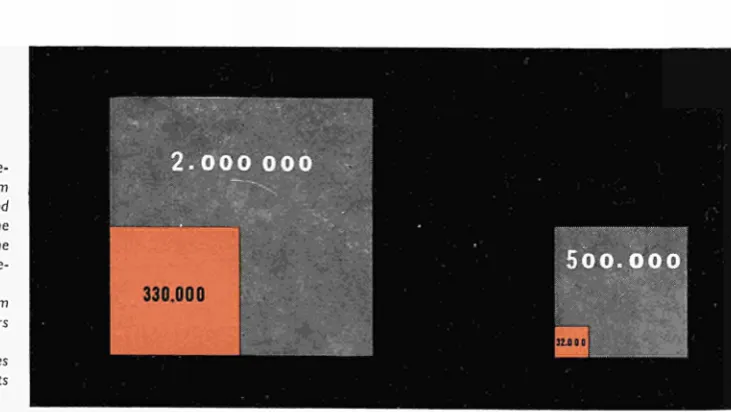
As an indication we give t w o tables showing the state at the CET/S programme library at the beginning of the present year. The relatively small number of American codes may cause surprise, when it is recalled that nuclear plants and electronic process ing facilities are vastly more numerous in the USA than in Europe. Various factors, however, must betaken into consideration: first the policy of several of the best-known American nuclear firms—General
Electric, General Atomic, Westinghouse—of
not making their codes available t o Europe except on a limited basis, and sometimes only on the basis of a sale; in the second place it is easier for codes t o be exchanged between neighbouring countries, since the research staff have often established per sonal contacts; finally the understandable tendency on the part of the user t o prefer, given equal performance, a code developed by the organisation to which he belongs, or by organisations w i t h which there is active
collaboration, t o codes from other, less familiar organisations.
An easier and cheaper dissemination of American codes in Europe is at present taking place through the offices of the programme library created by the European
Nuclear Energy Agency of the OECD. The
ENEA library, which has been functioning for about t w o years at Ispra beside CET/S and which collaborates closely w i t h CET/S, has the particular task of collecting and distributing existing nuclear codes, either Américain or European, a task facilitated by the intimate ties between ENEA and the t w o similar American centres—the Argonne
Code Center and the RS/C (Radiation Shielding
Information Center) at Oak Ridge.
The p r o b l e m of testing the codes
Unlike an ordinary library, a programme library is not, however, confined t o the collection and distribution of codes; it also tests them, an operation which is more delicate and complex than may appear at first sight, and calls for a parallel effort on the part of computer programmers and mathematicians specialising in reactor phy sics.
It is customary t o distinguish t w o test stages—a first stage of routine testing, and a second stage of full testing.
Routine testing consists in ensuring that the sample problem is accepted by the code and carried through t o the end. It is clear that whenever the computer for which the code has been evolved does not cor respond exactly in its central and peripheral units t o that on which it is desired t o perform the testing, grave problems may arise in the routine testing stage.
Even when the t w o computers are exactly identical, the routine testing may still not be particularly simple, since in many cases the operating instructions for the code received are not sufficiently clear. In all such instances a detailed study of the organisation of the programme is indispen sable; a sample case can then receive a com plete run through and the code can be said t o be routine-tested.
The second stage, i.e. full testing, consists in arriving at a statement of the mathemati cal and physical hypotheses on which the programme is based and canvassing the whole range of possibilities which it offers. The solution of fairly complex problems, such as those which arise in reactor design,
often entails the use of simplified models for the description of certain physical phenomena. N o w the full testing of a code calls for the knowledge of any such models, although it will be the task of the reactor designer to ascertain whether, and to what extent, these models are valid for the type of reactor in question.
Once the problem to be tackled is defined, the next step is to choose the numerical methods to solve it, methods which are examined w i t h the object of demarcating their validity limits.
In this connection it should be noted that various methods of computation are usually provided in a code, corresponding t o various options t o be specified in the input data. Very often the descriptive report is not at all explicit as t o which are the computa tions which are t o be carried out in connec tion with a given choice on the part of the user. In order t o gain a thorough grasp of the various possibilities contemplated, and thus t o exploit to the full the flexibility of the code, it will therefore be necessary to study the organisation of the programme and to set up other problems than the sam ple problem.
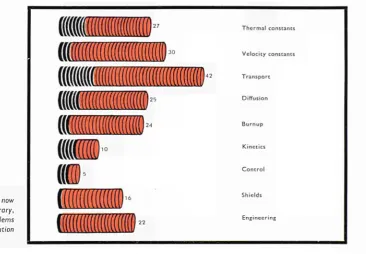
[image:19.595.183.550.459.713.2]From the above it will be clear that both
Table 1: The range of nuclear codes now
available in the CETIS programme library,
split up according to the category of problems to which they apply. Euratom's contribution is in black.
Thermal constants
Velocity constants
Transport
Diffusion
Burnup
Nuclear codes—What are they used for?—What future do they have?
Table II: Nuclear codes available in the CETIS
programme library at Ispra, split up according to their origin.
in routine testing and in full testing of a nuclear code, but undoubtedly more in the second than in the first, mathematicians and reactor physics experts play a decisive part alongside the programmers.
In order t o schematise the characteristics which distinguish one code from others relating to the same problem, and t o facili tate its use, CET/S prepares and distributes t o users manuals in English called " H o w to Use" for each code examined. T w o bulletins will be sent out per year describing the status of the nuclear code library.
W h a t f u t u r e have t h e codes?
In my opinion—an opinion confirmed in the course of visits to numerous nuclear and computation centres in Europe and the United States—nuclear codes will develop along t w o relatively new lines which are at one and the same time distinct and complementary. These t w o trends are partly dictated by the advent of a new gener ation of electronic computers, operating much faster, equipped with more fast mem ories than their predecessors, and possessed of new capacities for solving different types of problem in parallel.
The first line concerns the development of new and ever more advanced techniques
of numerical computation for the various types of reactor design calculation sketched out above. The mathematical problems which arise in reactor studies now consti tute an extensive and well-defined mathe matical field concerned with the solution of a fairly limited number of equations. All over the w o r l d now, mathematics is bringing heavy guns t o bear on the solution of transport, diffusion and kinetic equations, while international congresses such as the recent conference on "Applications of Com puting Methods t o Reactor Problems" are being held, entirely dedicated t o reactor computation methods.
An interesting report published by W . Sangren on the above symposium indicates the lines of study now being pursued by mathematicians of various countries—the application of variational methods t o the solution of transportand diffusion problems, the use of Monte Carlo techniques for criticality problems, the improvement of iterative techniques for the solution of problems of multidimensional diffusion and the numerical solution of problems of spatial kinetics.
The second line of development concerns the possibility of carrying out series of nuclear codes in sequence, linked together by the fact that the output data of one code,
suitably arranged, may (in part) constitute the input data of one or more subsequent codes. The tendency is thus t o link nuclear codes in a system rather than t o carry them out individually, thus eliminating human intervention between the successive exe cutions of the individual codes.
There is a whole range of possibilities, from the automatic sequential linking of a given series of codes t o the highly-complicated sequential linking of a series of codes, each of which may be chosen by the user in an assigned " s e t " .
Systems of the first type, for example, are now under study in various centres. CET/S some time ago initiated the study of a system of the second type. This system, known as Charon, should make it possible to carry out any sort of code-series in sequence, provided the codes are chosen among those relating to the determination of thermal or fast data and t o the solution of diffusion and transport equations. In both directions, a great deal of ground still remains t o be covered by those en gaged in these studies in various countries. However, we are confident that reactor designers will be able, on an increasing scale, t o make use of computer techniques, even for the solution of problems which have up till now been dealt w i t h experimentally.
E U B U 5-7
Figure 1: Estimated annual uranium require-ments in the European Community for the period 1970-1999.
Both enriched and natural uranium require-ments are token into account in the graph, but they are expressed in tonnes of uranium metal. No account is taken of any plutonium recycling. The Western world's total requirements, which can be estimated at approximately six times those of the Community, will have to be met from production capacities which at
present amount to only about 13,000 tonnes of
uranium metal per annum.
Business pattern of the
nuclear fuel industry
R O L A N D T U R K , Deputy Head of the Economy Directorate, Euratom
As early as 1963, the Euratom Commission brought the problem of long-term uranium supplies in the Community t o the notice of the general public when it issued the report drawn up by the Supply Agency's Consultative Committee.
The Commission has since reverted t o the question in each of its annual reports, while there has been a growing number of long-term studies and forecasts, both offi cial and private, and Euratom's first target programme for nuclear development w i t h i n the Community has just been published. This document raises the problem of fuel supplies in direct relation t o the attainment of the targets set in the nuclear electricity generation programme, the final date of which is 1980 and the " h o r i z o n " 2000. A t a time when in the C o m m u n i t y , and indeed throughout the w o r l d , the nuclear industry is starting out w i t h prospects of swift and large-scale development, and when industrial policies are being mapped out, it is w o r t h w h i l e taking a look at the various aspects of the problem of long-term supply in this major energy sector. It may be split up into three heads — require ments, industrial resources for satisfying them and commercial relationships between producer and consumer.
H o w big exactly is t h e C o m m u n i t y ' s l o n g - t e r m supply problem?
Is it necessary t o consider the needs of the nuclear power plants up t o 2,000? It is true that many official forecasts take 2000 as their final date. There is increasing agree ment that a nuclear plant's prospective lifetime is t h i r t y years, so that a plant commissioned in 1970 would be maintained in operation until 2000.
Furthermore t h i r t y years is the period in terms of which many nuclear energy pro ducers will no doubt assess their fuel-supply problem. They are accustomed t o taking a very long view in this field. Some figures may be quoted t o give an idea of the foreseeable trend of Community nuclear industry requirements in metric tons of natural uranium metal:
Cumulative requirements Annual requirements
(1970-1980 »1970-2000 Í1970 ¿1980 '2000
54,000 332,000 2,300 8,200 15,600