Title:
Values Alignment in Voluntary and Community Sector Organizations
Thesis submitted in accordance with the requirements of Liverpool Hope University for the degree of Doctor of Philosophy
Steven John Harding
Declaration
“This work is original and has not been submitted previously in support of any degree qualification or course.”
Acknowledgements
The whole experience would not have been possible without the support of Dr David Bamber whose input and guidance throughout my research has certainly added to the whole learning experience. I will sincerely miss the constructive discussions around topics and theory. I would like to thank my fellow research students at Liverpool Hope Business School who have supported me throughout my research, their time and input has been greatly valued.
Abstract
Introduction: - The study investigates values alignment process of leaders and employees and how alignment may support organizational development initiatives. The research has been carried out in two Voluntary and Community Sector (VCS) organizations in the North-West of the England.
Literature: - The study identified an opportunity to research several domains within business management. Although, there have been informal associations between the various fields of leadership, organizational development and values, little research has specifically worked across the three domains, within the community and voluntary sector.
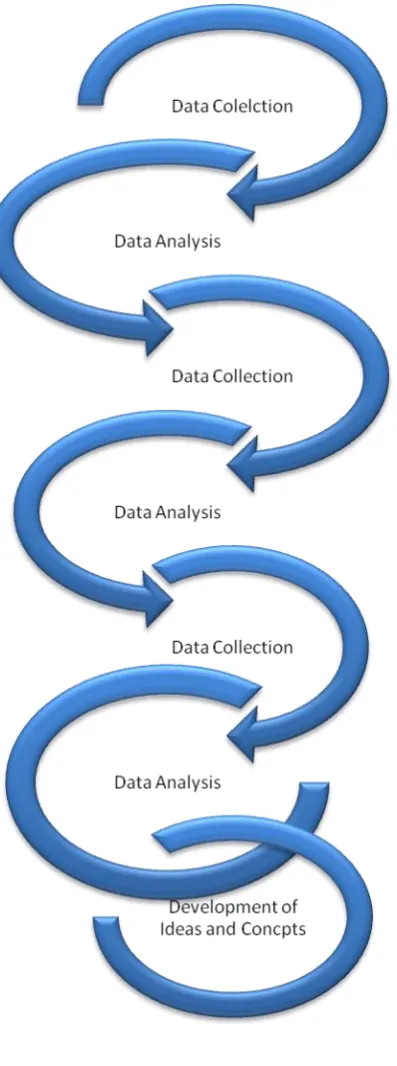
Methodology: - The research took a Social Constructivism, philosophical perspective, which resulted in a Grounded Theory methodology being proposed. In order to meet the challenges of working with a Grounded Theory methodology, the research implemented a spiral approach as recommended by Berg (2007). This ensured a reflective approach to the research ideas and concepts, revisiting theory as it emerges from the data.
Emerging Ideas and Concepts: - The study identified several organizational values processes, which supported operational values delivery and service development. This included Person Centred Organization, Organizational Alignment Model, which collectively merged into a Values Alignment Voluntary and Community Sector Service Model. The service model provided some theoretical ideas around alignment of values and organizational development. The collective ideas of the modelresulted in the study proposing the Organizational Values Matrix, which incorporates values based themes and organizational areas which underpin or support values ideas within an organizational context.
Discussion: - The discussion recognised the need for more humanistic perspectives in organizational development initiatives, which the current research indicates the models proposed do take into consideration. Furthermore, the research identified the human element missing from the previous values concepts proposed by literature which appear to take a ‘hard’ values approach, focused on the systems rather than one which recognise the staff and leader interrelationships on organizational values.
Conclusion: - The study has proposed the Organizational Values Matrix as a
framework which enables leaders to take a planned approach, appreciating the internal capacity of understanding values, linking various components within the organization whilst recognising the impact on actions and experiences. The study recognised the need for further research around the values interrelationships which take place within the models and framework proposed through the research.
Key Words - Grounded Theory; Leadership; Organizational Development;
Contents
1.0 Introduction ...1
1.0.1 Research Contribution...3
1.1 Research Aim and Questions ...3
2.0 Sector Background ...6
2.1 Voluntary and Community Sector ...7
2.1.1 Organizational Overview...10
2.2 Voluntary and Community Sector Leadership and Management Themes .16 2.3 Moving Forward...18
3.0 Literature Review...19
3.1 Leadership and Values ...19
3.2Values in Practice ...21
3.3 Values Alignment ...26
3.4Values and Organizational Development...29
3.5Valuing Values ...34
3.5.1 Value Definitions ...37
3.6 Values Theory ...40
3.6.1 What Values ...44
3.7 Values Summary ...53
3.8 Literature Review Emerging Ideas and Issues ...55
4.0 Research Process ...58
4.1 Research Philosophical Perspectives ...60
4.2 Research Approaches...64
5.0 Research Methodology...70
5.1 Critical Review of Methodologies ...71
5.2 Grounded Theory ...74
5.2.1 Critical Consideration ...78
5.2.2 Clarity on Grounded Approach ...79
5.3 Research Method Considerations ...80
5.4.1 Research Structure...88
5.4.2 Approaching the Data Collection Challenge ...93
5.4.3 Data Collection Consideration ...97
5.5 Systematic Data Analysis ...100
5.5.1 Systematic Analysis Phase 1 ...104
5.5.2 Continued Systematic Analysis ...109
5.5.3 Systematically Connecting the Data ...113
6.0 Emerging Concepts and Ideas...115
6.1 Phase 1 Emerging Ideas ...116
6.1.1 Person Centred ...116
6.1.2 Community ...119
6.1.3 Employee Engagement...123
6.2 Phase One Collective Themes ...124
6.4 Organizational Enablers ...126
6.4.1 Inhibitors ...131
6.5 Initial Phase Summary ...135
7.0 Phase Two: Developing Concepts ...138
7.1 Phase Two Developing Themes ...139
7.1.1 Purpose ...139
7.1.2 End Product ...142
7.1.3 Compact ...144
7.2 Phase Two: Collective Themes ...147
7.3 Organizational Values Drivers...149
7.3.1 Compact Values Driver ...150
7.3.2 Organizational Value Drivers ...153
7.4 Phase Two Summary ...157
8.1 Phase Three Emergent Values Theme ...160
8.1.1 Non-alignment ...161
8.1.2 Values Recognition ...164
8.1.3 Interpretation ...166
8.1.4 Self Direction ...168
8.2 Phase Three Collective Theme ...171
8.3.1 Organizational Alignment Process ...173
8.3.2 Organizational Alignment Model ...176
8.3.3 Values Alignment Voluntary and Community Sector Service Model.177 8.4 Phase Three Summary ...182
9.1 Collective Themes...185
9.1.1 Organizational Values Connectors ...186
9.1.2 Organizational Value Controllers ...188
9.1.3 Auxiliary Values Collective Themes ...190
9.1.4 Altruistic...192
9.1.5 Collective Themes Summary ...193
9.2 Organizational Values Matrix ...195
9.2.1 Organizational Matrix Concept. ...197
9.2.2 Organizational Values Matrix Interrelationships ...198
9.3 Phase 4 Summary ...201
10.0 Emerging Ideas and Concepts Summary ...203
11.0 Discussion ...205
11.1 Person Centred Organization ...207
11.1.1 Organizational Inspiration and Stability ...209
11.1.2 Organizational Commitment ...211
11.1.3 Collective Working...214
11.1.4 Overarching Themes ...219
11.2 Leadership in Field ...221
11.3 Organizational Values Drivers...225
11.3.1 Model Drivers ...226
11.3.2 Compact Impact ...230
11.3.3 Organizational Behaviours ...236
11.3.4 Leadership in Field ...238
11.4 Values Alignment Processes ...241
11.4.1 Leadership in Field ...247
11.5 Values Alignment Voluntary and Community Sector Service Model...251
11.5.1 Values Drivers ...252
11.5.2 Concept Theme ...256
11.5.4 Values Alignment Community and Voluntary Sector Service Model
Practical Contribution ...260
11.5.5 Leadership in Field ...262
11.6 Theoretical Organizational Values Matrix ...265
11.6.1 Value Connectors ...266
11.6.2 Value Controllers ...269
11.6.3 Auxiliary Drivers ...272
11.6.4 Altruistic Focus...274
11.6.5 Organizational Values Matrix Practical Contribution ...277
11.6.5.1 Value Connectors Workshops 278 11.6.5.2 Value Controller Workshops 279 11.6.5.3 Auxiliary Driver Workshops 281 11.6.5.4 Altruistic Focus Workshops 282 11.6.6 Organizational Values Matrix Leadership in Field ...284
12.0 Limitations of Study ...289
13.0 Conclusion ...290
13.1Achievement of Aim ...292
13.2 Achievement of Research Objectives ...293
13.3Achievement of Research Questions...294
13.4 New Models Developed ...295
13.5 How the Research Shows Leadership in the Field ...295
13.6 Recommendations for Future Research...297
13.7 Concluding Remarks ...299
List of Figures
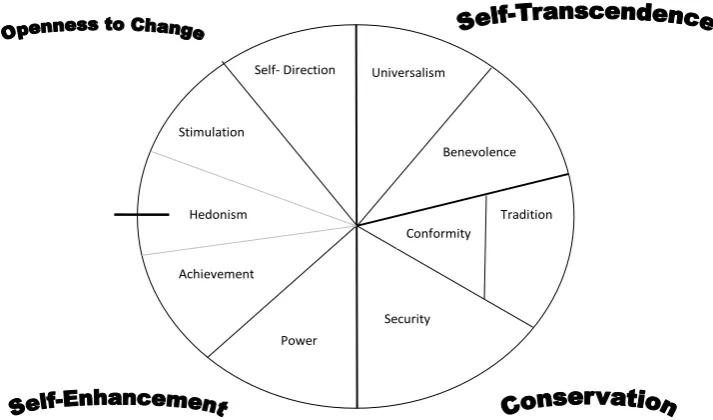
Figure 3.1 Values Structure Relationship ...51
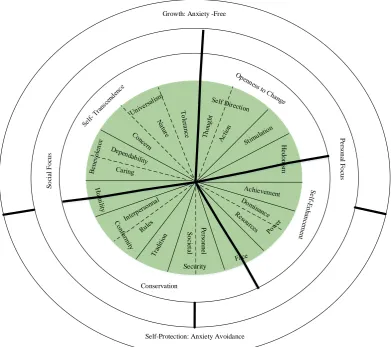
Figure 3.2 Proposed Circular Values Motivational Continuum ...53
Figure 4.1 Research Process ...59
Figure 4.2 Deductive Process ...67
Figure 4.3 Inductive Process ...67
Figure 4.4 Spiral Process ...68
Figure 5.1 Grounded Methodology ...76
Figure 5.2 Data Collection Process ...96
Figure 5.3 Systematic Data Analysis ...101
Figure 5.4 Phase 1 Coding Interviews on N-Vivo 9.0 ...105
Figure 5.5 Analysis Phase 1 Modelling ...108
Figure 6.1 Phase 1 Interviews Word Tree Map ...120
Figure 6.2 Systematic Data Analysis Process ...120
Figure 7.1 Phase 2 Interviews Word Tree Map ...145
Figure 9.1 Theoretical Collective Concepts ...194
Charts
Diagrams
Diagram 6.1 Emerging Model 128
Diagram 6.2 Person Centred Organization 130
Diagram 6.3 Identified Organizational Inhibitors 134
Diagram 6.4 Inhibiting Factors 135
Diagram 7.1 Compact Values Drivers 153
Diagram 7.2 Organizational Values Drivers 156
Diagram 8.1 Organizational Alignment Process 175
Diagram 8.2 Organizational Alignment Model 177
Diagram 8.3 Values Alignment Service Model 181
Graphs
Graph 5.1 Data Source Nodes 107
Graph 5.2 Data Source Nodes 112
Graph 6.1 Interviewee 1 Central Emerging Themes 125
Graph 6.2 Interviewee 2 Central Emerging Themes 126
Graph 6.3 Interviewee 1 Inhibiting Nodes 132
Graph 6.4 Interviewee 2 Inhibiting Nodes 132
Graph 7.1 Purpose Coverage 142
Graph 7.2 End Product Coverage 144
Graph 7.3 Compact Coverage 147
Graph 7.4 Coverage of Re-Emerging Themes 149
Graph 8.1 Non-alignment Coverage 163
Graph 8.2 Values Recognition Coverage Across
Phases 1-3 of Field Research 166
Graph 8.3 Interpretation Coverage Across
Phases 1-3 of Field Research 168
Graph 8.4 Self Direction Coverage Across Phases
Tables
Table 2.1 Organizational Characteristics ...12
Table 2.2 Gender Characteristics ...12
Table 2.3 Age Characteristics ...12
Table 2.4 Service Characteristics...12
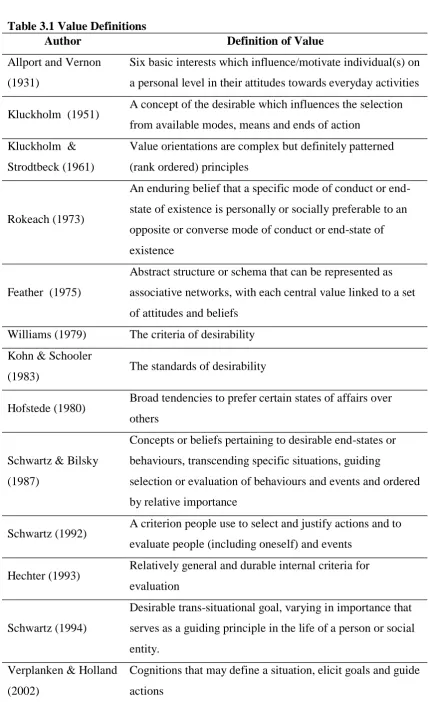
Table 3.1 Value Definitions ...39
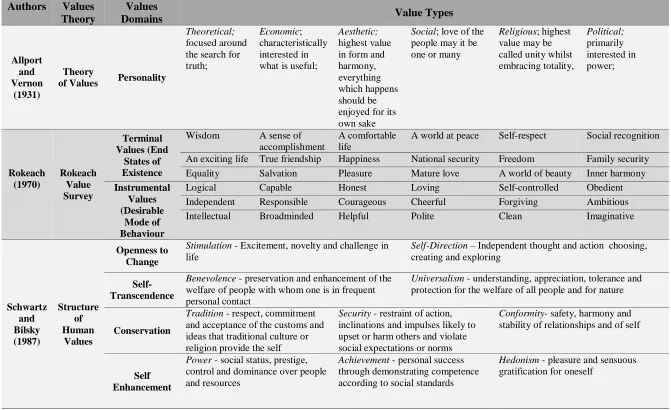
Table 3.2 Theories of Values ...50
Table 5.1 Research Structure ...90
Table 5.2 Research Design Table ...91
Table 5.3 Sampling Parameters ...93
Table 5.4 Node Descriptions ...106
Table 5.5 Source Summary Phase 1 ...108
Table 5.6 Interviewee 3 Unchanged Nodes ...110
Table 5.7 Interviewee 3 Developed Nodes ...111
Table 5.8 Interviewee 3 New Nodes ...111
Table 5.9 Source Summary Phase 2 ...113
Table 6.1 Person Centred Theme Description ...116
Table 6.2 Community Theme Description ...121
Table 6.3 Employee Engagement Theme Description ...124
Table 6.4 Prominent Emergent Themes...125
Table 6.5 Identified Inhibitor Nodes ...131
Table 7.1 Purpose Theme Description ...140
Table 7.2 End Product Theme Description...143
Table 7.3 Compact Theme Description ...145
Table 7.4 Re-emerging Themes Description ...148
Table 7.5 Re-emerging Themes Coverage ...148
Table 8.1 Non-alignment Theme Description ...161
Table 8.2 Values Recognition Theme Description ...164
Table 8.3 Interpretation Theme Description ...167
Table 8.4 Self-Direction Theme Description ...169
Table 8.5 Re-emerging Themes Coverage ...171
Table 9.1 Organizational Values Connectors Collective Theme Description ...186
Table 9.2 Organizational Values Connectors Collective Themes Description ....186
Table 9.3 Organizational Values Controllers Collective Theme Description ...188
Table 9.4 Organizational Values Controllers Collective Themes Description ....189
Table 9.5 Auxiliary Collective Themes Description ...190
Table 9.6 Auxiliary Collective Theme Description ...191
Table 9.7 Altruistic Collective Themes Description ...192
Table 9.8 Altruistic Collective Theme Description ...193
Appendices
Appendix I Introductory Letters 311
Appendix II Project Flyer 314
Appendix III Consent Form 316
Appendix IV Pilot Questions 319
1.0 Introduction
The study investigates values alignment process of leaders and employees and how alignment may support organizational development initiatives. The research has been carried out in two Voluntary and Community Sector (VCS) organizations in the North-West of the England.
Leadership theory has a broad theoretical school of thought in the development and implementation of leadership practice. Nevertheless, in reviewing leadership literature ‘values’ is a concept which has flippantly been discussed and outlined within
leadership models and concepts. For instance, during the initial scoping of research Emotional Intelligence (Goleman et al, 2002) had been the theoretical field in which the research aimed to investigate. However, in further reading and critically reviewing literature values continue to be a theme which emerged across domains, but with little consideration around defining values and how values interactions occurred.
Transformational leadership concept (Bass, 1985) has been identified as one of the leading leadership concepts of the 20th Century (Allio, 2005; Gillespie and Mann, 2004). Transformational leadership touches upon values as an intellectual stimulus within one of the four factors within the transformational leadership paradigm. However, even though values has been discussed in the context of leadership, such models and discussions have not appeared to define or even outline the
There are several developments within the leadership domain when considering the values, in building on the established models of leadership which may add to the debate of leadership and values. Literature has been suggested that successful leaders have one common element, in different ways exceeded all reasonable expectations and succeed in getting followers or groups to fall in with their ideas (Larsson and
Ronnmark, 1996). Yet, it could be argued that it is not about getting the follower to fall in line with the leader. Rather that leadership is inducing followers/subordinates to pursue common or at least joint purposes that represent the values and motivations of both leader and follower. Furthermore, it has been suggested that employees in today’s ever competitive and turbulent environment are looking to experience an increased desire for more meaningful and fulfilling work outcomes (Kinjerski and Skrypnek, 2006). In a leadership view point this is of particular interest when examining the motives of staff in following leaders and/or organizational values within the VCS specifically when delivering services. This provides the unique aspects of the theoretic elements of the research, since there has been little research which has been carried out investigating values alignment, which incorporates leadership in driving
organizational development.
The attraction in the leadership and organizational development of the Voluntary and Community Sector (VCS) is particularly interesting when considering the traditional nature of the sector. The sectors overall purpose aims to make a difference to people’s lives, therefore, the driving factors for staff within the sector may be quite different than those of other sectors. Particularly, the values aspects associated with the individuals and organizations delivering services which have a wider social benefit. Furthermore, the drive by British Central Government over the last decade to
outsource public services to the VCS involvement has required the sector to diversify service provision. The demand of such diversification has required the sector to consider wide organizational development needs in order to meet the demands of meeting local and central government contracts.
sector which is facing considerable challenges in order to meet the outsourcing
requirements in delivering local and central government contracts in the coming years.
1.0.1 Research Contribution
The study is providing original contribution to the wider body of knowledge within several areas, firstly, by importing established constructs from the fields of leadership theory and social psychology the study intends to bring a new perspective to these important topics. The research is bringing together two quite independent theoretical domains, which have often been critiqued in literature, but not in the context of the current research. Secondly, the research is approaching the study from a qualitative perspective and traditional values research has been very much quantitative (Rokeach, 1973; Schwartz and Bilsky, 1987; Schwartz, 1992), adding to the body of knowledge but from a different research perspective. Thirdly, the broader critique and
clarification of values definitions in leadership theory provides opportunity to build on the current leadership paradigms with the additional aspects of values more thoroughly integrated.
The final area which provides the research with original contribution to the theoretic aspects as highlighted is based around the values alignment in supporting
organizational development. The study intends to develop a potential values framework, to support the development and implementation of organizational development, which acknowledge organizational, leader and staff values. Although, this may initially support the development within the VCS, the values framework may be developed across other sectors; adding further to the body of knowledge around the development of values leadership framework in supporting organizational
development.
1.1 Research Aim and Questions
Literature has suggested that research propositions restrict the development of research, since it potentially suggests premature closure on the issues being
highlighting the benefits of outlining and revisiting theory. Therefore, in moving forward with the research the study shall take a continuous development approach reviewing the questions at each stage of the research process. Nonetheless, the current research aim and questions can assist in the development of the research design at this stage of the study. This will allow the study to review and propose the methods that will support the collection of the most appropriate data to respond to the research aim and questions. Whilst providing the study with a rich supply of developing data sources.
The study has identified overarching aim with two supporting objectives;
1. To provide new perspectives on values alignment as part of organizational development;
o To gain greater understanding of values alignment process in leadership and organizational development and
o To develop a values framework within the leadership domain to support organizational development.
Although, the study has identified a clear aim, the research design needs to consider several questions, which may be associated with the aim outlined. The purpose of the aim and objectives are to provide a basis to develop a greater understanding of the application of values alignment. The questions posed provide the study with an element of guidance around areas of interest and opportunity for the research.
However, the aim, supporting objectives and questions are not definitive; analysis of the data through a spiral approach of revisiting earlier aspects of the research process may provide further areas of development, which have emerged through the research. This supports the philosophical perspective of building theory through voices, actions and experiences of the study.
Research Questions;
1. Could there by links with aligned values and increase organization commitment within the teams?
4. Would there appear aligned organizational values within teams or across the organization?
5. Are the values of others formally identified within teams or across the organization?
6. Is values alignment recognised within the organization?
7. Are leader’s values influenced by the values structures within the organization? 8. Do team leaders promote values alignment within teams?
9. How would the organizations internal value system support the engagement of staff in achieving their organizational goals?
The study has completed a thorough review of literature within the fields of values, organizational development and leadership, whilst critically analysing the
methodologies available when carrying out social research. This will be discussed and reviewed later on in the paper. Nevertheless, in completing this process the study proposes a structure which will provide the research with relevant methodology, method and research design which will support the study in achieving its overall aim and objectives.
2.0 Sector Background
Over a decade ago, the British Government carried out a ‘Cross Cutting Review’ of the Voluntary and Community Sectors (VCS) role in delivering public sector services. The review identified the opportunity for the VCS, often referred to as the Third Sector, as key partner in developing and delivering services which are flexible enough to meet the needs of local communities. The review recommended the need for more discretion at a local level and the need for more community involvement in helping shape services, against a back drop of national standards (Home Office, 2004).
Following the initial review a series of Government papers where produced examining and recommending processes and infrastructure requirements which the sector needed to focused on in order to build the capacity of the VCS in becoming a more active partner in delivering local public sector services (Home Office, 2012;HM Treasury, 2002; Home Office, 2004; Compass Partnership, 2004).
The British Government brought the contents of the various VCS specific
recommendations together into one overarching infrastructure framework. ‘ChangeUp – Capacity Building and Infrastructure Framework for the Voluntary Community Sector’ (Home Office, 2004), proposed the need to support frontline organizations. The support needed to be flexible and ‘fit for purpose’ for all of the organizations participating, which mirrors the needs against the stages of development those
organizations find themselves working within. In essence, the recommendations stated there can be no ‘one size fits all’ approach, since the sector had a wide spectrum of developing organizations, from multinational charities such as Oxfam to localised charities which may consist of fewer than 5 staff. Nevertheless, the framework did outline several common support needs shared by most organizations. The key themes identified within the ChangeUp framework were based around the following;
Performance Improvement.
Workforce Development and Leadership.
ICT.
Financing Voluntary and Community Sector Activity.
(Home Office, 2004; pp.8) In proposing the framework the Government recommended there should be an active strategy working across the themes by 2014. Since the ChangeUp (Home Office, 2004) paper, the British Government have implemented several initiatives to support the infrastructure development strategy. This has included Capacitybuilders,
Modernisation Fund and Futurebuilders (Research by Design, 2010). However, Grint (2010) indicates all this infrastructure development and change programme are of little benefit within the VCS, if the sector leaders are not able to gain the ‘buy in’ of the staff and teams working within the sector. The infrastructure framework being implemented within the VCS across Britain provides several opportunities to support the choice of utilising the VCS as the sector specific focus for the current study.
There are three key aspects within the ChangeUp framework, which are of particular interest for the current research. Two of which focus on specific leadership and management subject areas, these being Workforce Development and Leadership, along with Performance Improvement streams. The third recommendation states that the framework should be implemented by 2014. This would possibly suggest a keenness within the VCS to participate in activities which supports them in working towards the recommendations outlined by UK Central Government.
The following section shall review current and previous VCS research, along with the leadership and management themes within ChangeUp (Home Office, 2004) and implications on the VCS.
2.1 Voluntary and Community Sector
Before embarking on the review of the VCS within Britain, it may be applicable to outline and define what the VCS looks like in the United Kingdom. Kendall and Knapp (1995) described the VCS as a ‘loose baggy monster’. The sector is made up of
which are often contested. In the UK, this can include not-for-profit organizations, non-government organizations, charity sector, third sector, non-profit organizations, small medium voluntary enterprises, social enterprises, voluntary community and faith sector and voluntary and community sector (VCS). For the purposes of the current study, rather than switch from the various labels linked to the sector, the research will referrer to the sector as the VCS. However, they all have a common thread; VCS organizations are independent of local and central government control. In fact, it has been suggested the sector is there, to not only deliver services, but to take up and act upon unpopular issues and criticize government bodies when necessary (Courtney, 1994). Although, they do have to work within the guidelines and criteria of the Charities Commission the regulatory body established to regulate and administer the affairs of charities within the United Kingdom.
The research has stated the initial rational for the choice of the VCS as the sector specific focus for the research. However, the recent interest from Central Government to increase the capacity of the VCS is not necessarily a surprise. The sector has a tradition of innovation and a capacity of successfully working in a complex and turbulent environments. Although, various government papers have recognised the opportunity to improve and develop the sector in broadening the service provision delivered through the VCS (HM Treasury, 2002; Home Office, 2004; Compass
Partnership, 2004). Nevertheless, the ‘voluntary’ aspect of the sectors name should not confuse the type of organizations being established and ran by volunteers. Though volunteers do have a key part in many of these types of organizations; what is essentially voluntary is that they have committees and boards, which are voluntary. This is structurally their distinguishing characteristics; however, they are professional and committed in running quality services. Although, Darlington (1996) suggests the nature of the sector does at time suggest an unprofessional approach to delivering services.
The sector may argue that Darlington’s’ (1996) suggestion the sector is unprofessional is unfounded, with the scope and depth of the services delivered through the sectors services. Popple and Redmond (2000) indicate the independence and variety of
scale. Myer and Sacks (2001) build on this view point by indicating the size, scope, financing and purpose of the VCS suggest a major economic contributor and service provider. Cabinet Office (2009) provides an insight into the size and scope of provision in the United Kingdom:
137,000 general charities in the UK,
61,800 social enterprises,
540,000 employed by the sector in England,
Total income of £33 billion in 2006-07,
85% have income over £100,000 and
Total Government funding to VCS in 2006/07 across UK equates to £27 billion, which includes £7.8 billion contracts and £4.2 billions grants.
(Office of the Third Sector, 2009; pp. 1-3)
In delivering local services to the scales identified it has been necessary for the VCS to develop partnerships with public and private sector agencies. This ability to build and hone inter-sector partnership has increased the interest in how the VCS can add value to current and future public sector service provision. This has been recognised within literature, who have indicated the sector is a leader in building broad sector
partnerships in adding value to statutory provision through ancillary and additional service provision (Baxter, 2002; Myers and Sacks, 2001; Popple and Redmond, 2000). When examining the activity of the VCS in delivering current services to their beneficiaries and client groups. The study would suggest the sector should have confidence in delivering local public sector services. Furthermore, the VCS may not acknowledge the key themes identified within ChangeUp (Home Office, 2004) as a priority since they have been delivering services successfully for many years. However, a shift in central government’s approach to procurement and delivery of services will impact on the VCS and how the sector is best placed to respond to this could raise many challenges if not examined and reviewed (Baxter, 2002; Myers and Sacks, 2001; Darlington 1996).
organizational domains. There is an element of ‘bias’ with regards to focusing the study around the VCS from the researcher, who has worked professionally in the sector for over 20 years. Nevertheless, the VCS does have a tradition of responding effectively to opportunities and actively participating in development programmes which support the growth of the sector (Baxter, 2002). The study would state the VCS is not only diverse, and economically productive, the sector is positioned well to respond to the ideas and recommendations proposed through the research.
2.1.1 Organizational Overview
The study has identified the diversity and size of the sector in the last section.
Although, this information is useful in appreciating the scope of the sector this did in itself identify another challenge the study needed to overcome. The current study did not have the resources and scope to study the whole sector and would need to make a decision on how to move forward in identifying and working with organizations in the VCS. When examining the finer details of the sector, 87.8% of all VCS organizations have an income under £500,000. The majority of these VCS organizations have an annual income of £10,000 - £500,000 (Charities Commission, 2014). This provided the study with an initial rational on the size of VCS organizations the research would aim to work with. Since, organizations that fit within the annual income bracket
provided a representative body of the highest proportion of organizations in the sector.
The rational to work with such organizations was twofold; access to all parts of the organization would be easier than much larger organizations. VCS organizations with income of £10,000 - £500,000 have a workforce of no more than 15, full time
Therefore, although organizational objectives may differ the core characteristics of the organizations would be similar. In that the annual income, governance and
organizational structure would not be drastically dissimilar. This would allow the study to look for emerging patterns and themes, conceptual ideas which can be
developed by comparing divers or similar which indicates same conceptual categories. This will be covered in greater detail during the systematic data collection chapter later in the thesis.
Chart 2.1 Organizational Structure
2.1.1.1 Participating Voluntary Community Sector Organizations
Two organizations were identified as possible participants in the research which met the outlined rational for potential VCS organizations who could participate in the study. Tables 1.1 to 1.4 outline the variety of characteristics of the organizations and the individuals who participated in the interviews from each of the participating VCS organizations. Both organizations were based in the North West of England; Knowsley Disability Concern (KDC) is a Knowsley based disability charity, limited by
guarantee, which has been established since 2000. KDC has a board of trustees consisting of 13 members and is led by a Chief Executive Officer. KDC’s
limited by guarantee, the charity has been established since 1998. Both organizations employ mainly women with 87% of participants being female and 13 % being male, which was a representative group of the workforce. HRVCVS has a board of 8
members and is led by a Chief Executive Officer. HRVCVS’s organizational structure is outlined in Chart 1.3; this too indicates a flat organizational structure which is very much a project defined delivery structure.
Table 2.1 Organizational Characteristics
Organization Annual Turnover £ Number of Staff Number of Trustees Number of Service Users Number of Years Organization Established
KDC 250,000 –
500,000 8-15 13 200+ 10 years
HRVCVS 250,000 –
500,000 8-15 8 200+ 14 years
Table 2.2 Gender Characteristics
Gender Females Males
KDC 6 2
HRVCVS 7 0
Total 13 2
Table 2.3 Age Characteristics
Age 18-25 26-35 36-50 51-65 65+
KDC 0 0 4 4 0
HRVCVS 0 0 2 5 0
Total 0 0 6 9 0
Table 2.4 Service Characteristics Years’
Service Less 2 2-3 3-4 5-6 6-7 7-8 8-9 10+
KDC 1 1 0 0 1 1 0 4
HRVCVS 0 0 0 1 2 0 0 4
Total 1 1 0 1 3 1 0 8
working to ensure charity stakeholders have confidence in the activities run by such organizations. The study would state the characteristic details outlined for each of the participating VCS organizations, general assumptions around there governance processes as being similar. Particularly, when acknowledging each organization has been established for over 10 years and throughout this period have met the legislative requirements outlined by the Charities Commission (2014). The study would like to note, at the time the field research was carried out with the specified organizations; neither organization had any clearly stated values. Neither organization discussed or mentioned values in any internal or external documentation or materials. This is not to say values were not present in the organizations but they had not defined what values the organizations aspired to achieve. This in itself did initiate some careful thought and consideration in working within such organizations in a values based research project. However, in the end this was seen as a potential opportunity rather than hindrance in the current researcher’s perspective.
The initial review of characteristics, structure and governance would suggest
similarities in these two VCS organizations, which the study would propose provides an opportunity for the research to utilise a constant comparative method, which allows the research to look for emerging patterns and themes. Conceptual ideas can be
developed by comparing divers or similar which indicates same conceptual categories. However, this will be discussed in more detail in Chapter 5.4.3 “The Data Collection Considerations”. The sector has been identified as an appropriate sector to research, whilst the organizations have been identified as ones which will provide a sound basis for the study. Nevertheless, at this point the details around the specifics of the
2.2 Voluntary and Community Sector Leadership and Management
Themes
Although, it may be stated the VCS is well positioned to deliver public services, as with most organizations there are opportunities to develop and enhance the
infrastructure and working practices. Prior to the ChangeUp (Home Office, 2004) being published, literature has indicated there was several cross cutting themes within the organizational development needs of the VCS. Myers and Sacks (2001) discuss the need to build capacity of VCS organizations through leadership, which in turn
supports those organizations achieve defined milestone in delivering services. Whilst over two decades ago, Courtney (1994) and Milne and Gibson (1994) discuss the need for new performance skills and leadership to tackle the challenges the sector faces in the growth opportunities ahead. This would suggest the recommendation outlined through the central governments ‘Cross Cutting Review’ was not necessarily a new phenomenon for the sector, but rather reinforcing the sectors belief/desire to be seen more professional. Furthermore, since the publication of the ChangeUp framework, it has been suggested the leaders within the VCS need to be able to look beyond the boundaries of their organizations in engaging and shaping staff and communities (HM Treasury, 2010).
The attraction in the leadership and organizational development of the VCS is
particularly interesting when considering the traditional nature of the sector. The study has discussed the independence from government the sector possesses. Although, it could be argued that when you review the funding to the sector from government agencies they may not appear as independent as first thought. Nevertheless, this independence in legal status and framework for ‘doing good’ rather than profit or in
accordance with politically dedicate regulations; provides a fascinating basis to examine the leaders and staff within the sector. Furthermore, leadership and
However, Larsson and Ronnmark (1996) indicate leadership in VCS organizations deserves special attention since the sectors overall purpose aims to make a difference to people’s lives. In a leadership view point this is of particular interest when
examining the motives of staff in following leaders and/or organizations specifically when delivering service. Jeong (2010) discusses the concept of voluntary engagement dedicated to a variety of purposes which is often linked to nurturing capacity for collective action. In a leadership perspective this provides an extremely interesting perspective to examine, leader follower interaction. Although, it has been suggested this is not all plain sailing, Dartington (1996) states leaders in the sector can be frustrated and held back due to organizational structures and perceived
non-professional working practices. Combining both perspectives, making a difference and possible frustrations within VCS organizations provides a basis within the domain of leadership which may have not traditionally been examined or reviewed. Milne and Gibson (1994) would appear to support this by suggesting the VCS offers a highly suitable target for research offering a rare insight into the nature and effectiveness of diverse forms of helping.
Furthermore, the domain of leadership in isolation of other parts of management practices may seem as a non-starter since it has been suggested leadership is associated with achieving objective above and beyond the anticipated expectations outlined by management. Therefore, the overall aim of developing organizations through the recommendation within the ‘Cross Cutting Review’ (Home Office, 2004) provides a second area for the research to investigate as an underpinning part of the whole organizational development domain. Baxter (2002) discusses creative
partnerships between public and voluntary sector services working together in adding value to current and future provision. The study would argue, adding value relates to many aspects of service provision. Nevertheless, it can be suggested in adding value organizational development approaches would be a prerequisite in developing VCS services. This would appear to support the recommendation of ChangeUp (Home Office, 2004), which indicates the need to improve organizational infrastructure, which commands the confidence of funders, being public sector service providers.
practices within VCS. Nevertheless, the two themes of leadership and organizational development remain extremely broad when thinking in terms of leadership and
management subject. Therefore, before embarking on any rash recommendations some further examination of the sector would provide contemporary aspects to study within domains of leadership and organizational development.
2.3 Moving Forward
3.0 Literature Review
The study has provided an introduction into the research, clarifying the academic domains, whilst acknowledging the practical sector focus and challenges. Before embarking on a review of potential methodologies and research design the study will carry out a more thorough literature review of the theoretical areas the study has identified. The literature review will carry this out in an interwoven manner examining values and values alignment with the management theory of leadership and
organizational development. This will be followed by more critical examination of values definitions and values theory. Providing the literature review with the
opportunity to hone and develop the key areas of theoretical relevance individually in sub sections and collectively throughout the literature review.
3.1 Leadership and Values
Literature has suggested leadership is ‘irrefutable’ in that leadership is leadership, no matter what you do or where you go. New technologies, differing cultures locally and globally the true principles of leadership are constant (Maxwell, 1998). However, if leadership was so ‘irrefutable’ the question begs to be asked, Why all the interest? The study would state leadership is a theory which generates much discussion and debate when examining the number of papers available. In typing ‘leadership’ into Emerald online journal resource just less than 25,000 reference papers are identified. The study would suggest that with this number of possible papers examining leadership, maybe this area of theory is not so ‘irrefutable’ and constant.
Leadership has many guises and interpretations of its meaning, at various levels within an organization it may be interpreted as a process in which people carry out tasks willingly for another individual. Horner (1997) on the other hand suggests the traits, qualities and behaviours of an individual typically define leadership. Cole (2002, p.51) recognises both processes and individual behaviours by defining leadership as:
Even through such a definition the manner in which an individual influences another has varying approaches and applications, as Shackleton (1995) indicates it may be through commands and controls or more guiding and facilitating. Goleman et al. (2002) clearly defines six leadership approaches focused on influencing followers through differing leadership behaviours and actions; these leadership behaviours being visionary, coaching, affiliative, democratic, pacesetting and commanding. It may be suggesting that outlining such clear behaviours broadens the possibilities in attempting to understand leadership theory. However, Burnes (2000) suggests leadership is not just about behaviours alone and discusses three main leadership theorist groups:
- Theory which focus on personal characteristics and the processes of leadership, - Theory which focus on the leader follower situations and
- Theory which relate leadership behaviour to the individual/organizational context and climate.
Nevertheless, whatever theoretical approach, may it be characteristics, leader follower situation or behaviour within an organizational context or a combination of all three. Literature has been suggested successful leaders have one common element, in different ways exceeded all reasonable expectations and succeed in getting followers or groups to fall in with their ideas (Larsson and Ronnmark, 1996). Although, the study has stated that it is not about getting the follower to fall in line with the leader. Rather, leadership is inducing followers/subordinates to pursue common or at least joint purposes that represent the values and motivations of both leader and follower. Furthermore, Hambrick and Mason (1984) discuss ‘upper echelon theory’ suggesting observable experiences affect leadership in a strategic sense. They discuss individual psychological factors impacting on leadership within organizations, which they indicate includes cognitive style, cognitive content and values. This association of leadership which raises possible association with values provides an opportunity for further investigation. Particularly when acknowledging the leadership aspects
values and behaviours have been linked in the past (Cantril and Allport, 1933 and Rokeach, 1969), all be it at the time outside of the leadership domain. Nevertheless, more contemporary leadership theory identifies how values can connect people and more importantly not connect people (Frost, 2014).
The research has identified the many elements of leadership indicating it is a multidisciplinary theory and despite this substantial amount of research into
leadership, literature would suggest there is still much uncertainty and mystic about what is and what makes an effective leader (Andrews and Field, 1998; Burnes, 2000). Nevertheless, it is this area of joint purpose that represents the values of both the follower and leader in order to influence behaviours and actions, which may provide the research an area for further opportunities within the context of leadership and management.
3.2
Values in Practice
The concept of leaders influencing followers is certainly no new idea both traditional and contemporary literature discusses the impact particular leadership approaches and behaviours have on influencing followers to achieve goals (Lennick and Kiel, 2008; Allio, 2005; Goleman, 2006; Shackleton, 1995; Bass, 1985; Burns, 1978).
One of the most popular leadership paradigms of the latter part of the 20th Century focused on transformational leadership. Transformational leadership relates to the ability of the leader to motivate followers in achieving beyond what was originally thought possible, rather than control through punishment or reward. Literature would suggest such transformation leaders possess ‘wisdom’ in their ability consider the whole picture and work with people to make sound decisions, in motivating followers (Rowley, 2006). Burns (1978) first came up with the suggestion of ‘transforming’, which he considered as emerging from and always returning to the fundamental wants, needs, aspirations and values of the followers.
This concept was developed further by Bass (1985) who termed the reference transformational leadership. He indicated transformational leadership was based around the ability of the leader in motivating their followers to perform beyond expectations by making them more aware of the importance and value of goals inducing them to transcend self-interest for the good of the group/organization appealing to the followers higher order needs (Bass, 1985). In achieving this motivation of followers Bass (1985) proposed 4 factors within the transformational leadership paradigm, which has been referred to as the ‘four I‘s’. One of the so called four ‘I’s’ referred to Intellectual stimulation whereby followers are encouraged to question their values beliefs and expectations (Bass, 1985). The earlier and later forms of transformational leadership acknowledge values as a recognised element of the leadership theory. Although, it may be suggested values within the transformational theory is not necessarily recognised as a driving force of the theory more a secondary contributor. Bringing the values aspect to the forefront of the leadership theory provides an area which can contribute further to the wider body of knowledge. Hambrick and Mason (1984) would support this perspective, who discussed the importance of values with leaders in an organization a year before Bass (1985)
proposed transformational leadership theory. Whereby, they acknowledged the impact of values on the strategic decision making of leaders.
Bass’s (1985) proposal discusses and highlights key elements within transformational theory, specifically intellectual stimulation which encouraged the questioning of values and beliefs, would indicate some of the earlier links with leadership and values. Furthermore, the ideas proposed by Hambrick and Mason (1984) around how values impact on leadership decisions when values directly influence choices made or discarded by leaders, would suggest such leadership paradigms have clear benefits to organizational development. This has since had support within literature, Gillespie and Mann (2004) found a positive correlation between team members and trust in their leader, which has been linked to successful organizational development. Masi and Cooke (2000) found a positive relationship between transformational leadership and subordinated motivation, in turn improving organizational performance.
latter part of the twentieth century. Transaction leadership is based on an exchange relationship with the follower. Whereby the follower gains something of personal value from the leader in order to motivate and enthuse the follower to work towards achieve a goal or task. Literature indicates individuals engage in behaviours that will maximise their expected return from their performance (Pearce et al. 2003).
Transactional focused on clarifying the effort-reward relationships, using reward to achieve maximal motivation. Whereby, the leader clarifies the role of the subordinates, shows consideration towards them, initiates structures, reward and punishment, whilst attempting to meet the social needs of the follower(s). In many ways it could be argued the motives promoted through transactional approach is the very opposite of transformational approach; transaction approach is very much focused on the self, may that be through reward or punishment.
Transformational and transactional leadership approaches acknowledge the needs of the followers, although the behaviours of the leader may be seen as quite different one being inspiring the other controlling/influencing. However, it could be argued the most obvious stated difference within the paradigms relates the recognition and questioning of values. Transactional leadership does not acknowledge human values, whereas transformational leadership does acknowledge personal values and beliefs. This aspect of a leaders influence on values provides an area of development within the leadership domain. Although, transformational and transactional leadership has had considerable interest, Pauchant (2005) has indicated research and practice in leadership has been judged as lacking grounding in human development. Horner (1997) supports this by indicating in order to develop greater understanding of leadership research needs to look at the person. However, Finkelstein and Hambrick (1996) took this person perspective another way by looking at the demographics of leaders, which some authors have suggested as naïve (Reger, 1997). The study would suggest in understanding leader and follower values and the impact on organizational development would certainly be taking a step towards looking at the person and
Lennick and Kiel (2008) may advocate this perspective, they have taken positive steps in looking at the person in developing leaders, with their concept of Moral Intelligence (MI). They define MI as;
“the mental capacity to determine how universal human principles should be applied to our values, goals and actions.” (Lennick and Kiel, 2008, p.7)
In promoting MI Lennick and Kiel (2008) clearly link MI and leadership.
Furthermore, when examining the definition of ‘MI’ some very recognisable aspects of leadership theories are promoted. Values, goals and actions appeared across transformational leadership paradigm discussed by Burns (1978) and Bass (1985). Furthermore, the ‘first steps into leadership’ identified how leadership requires leaders to induce followers through joint values and motivations, whilst ensuring group and organizational goals are achieved.
Similarities between the transformational leadership discussed by Burns (1978) and MI cannot be ignored. Although, Burns (1978) is very much focused on the follower, Lennick and Kiel (2008) have a much broader focus on their concept, which
incorporated the leader’s moral compass. This consists of the individual’s principles, values, belief and aligning this moral compass with their behaviours and goals.
with leadership paradigm, more specifically the interrelationships between leaders and followers in an organizational context.
Holian (2006) indicates that a better understanding of emotions, beliefs and values will assist in a better understanding of leader’s decision making, which Hambrick and Mason (1984) would certainly support with their proposal on values and strategic decision making. Holian (2006) discussed the move in business to focus around ‘head’ values, such as self-confidence, initiative and flexibility over ‘heart’ values, such as honesty, generosity and compassion. She indicates appreciating and understanding personal values is not necessarily ‘naïve’ but actually assists in the development of individuals and groups exercising integrity and questioning of currently accepted rules and norms. The study would argue this is a classic aspect of leadership with
individuals examining and promoting possible change and rather than accepting current practice looking to change to status quo. What can be suggested is MI is a development within the leadership theory of values concepts. However, MI takes a leap into the debate by outlining a framework to work within the areas of values across leadership domains, which may provide a better understanding of leaders’ ability to motivate and drive individuals to achieve agreed goals. Furthermore, MI (Lennick and Kiel, 2008) as a concept specifically relates to the alignment of values in order to not only improve organizational development, but to assist in building a more connected organization across all levels of employees. This particular area of connecting the organization as a means to support organizational development may provide a link between the leaders, followers and their values alignment. Langley (2000) would appear to support this proposal by indicating ‘business ideology’ as a possible key to sustainable business growth, whereby the organizations ideology provides a common core to bind the organization together.
initial review of values in practice has identified several areas of interest for the research specifically values in leadership, the impact of values alignment within organizations and how such alignment may influence organizational development, specifically through a more connected organization.
3.3 Values Alignment
Previous literature would argue that the traditional manner in which organizations had the buy in of its workforce was based around the psychological agreement that in exchange for hard work and loyalty organizations would provide their workforce with a job for life (Bunker, 1997). Schwartz (1992) may argue this psychological agreement is actually the organizations ability of acknowledging the workforces value of security, which is described as the basic individual and group requirement of having safe
surroundings; even if they did not knowingly recognise the values aspect in organizational traditions such as jobs for life. Nevertheless, in today’s ever
competitive and turbulent environment this approach in engaging with the workforce has become more and more unusual, if not impossible to implement. Although, it has been suggested this change in employee and organizational relationships has had an adverse effect on not only the social and emotional wellbeing of the people involved, but also the overall effectiveness of the organization (Branson, 2008). This provides further support for the contemporary view of organizations’ needs to understand and develop values.
The research has already touched upon how values may influence desirable states and behaviours, with the potential loss of loyalty through insecure job markets.
Furthermore, it has been indicated that in today’s workplace people are looking to experience an increased desire for more meaningful and fulfilling work outcomes (Kinjerski and Skrypnek, 2006). Combining this loss of security and need for meaningful fulfilment in the workplace the ability of organizations and leaders to harness employees to buy into the organizations objectives through greater
can be more effective means of achieving co-ordination and integration than an external control system that relies on explicit rules and regulations.
During the initial literature review MI identified the importance of aligning our ‘moral compass’; it is suggested the bases of the alignment is to ensure our actions are
consistent with our goals and our goals do not contradict our values (Lennick and Kiel, 2008). However, in an organizational context and for the purpose of the research what is meant by alignment of values. Rhoades and Eisenberger, (2002) discuss the
psychological relationship between the individual and the organization. Borg, et al. (2011) discuss the organizational psychology around how a person fits into the organization. These relationships could be developed through many mechanisms; it could be argued the traditional organizational approach of a job for life is one form of psychological relationship. However, psychological relationships do not necessarily mean there is alignment of values. Lennick and Kiel (2008) suggests the successful integration of moral, social and business values across an organisation. However, this does not make the alignment of values any clearer, in fact there is a case to suggest it adds to the confusion, as it is suggesting further elements of values in an
organisational context.
The study has touched upon earlier in the literature review how individuals and groups are looking for more meaningful and fulfilling work outcomes. This could provide a starting point to critically discuss values alignment concept. Bozionelos (p69, 2004) discusses the impact of ‘work involvement’ which is defined as;
‘the extent to which individuals are generally interested in, identifies with and is pre-occupied with one’s work in comparison to other aspects of one life.’
personality. Therefore, in taking the concept of work involvement further, the study would propose rather than identifying with one work in comparison to other aspects of one’s life. The concept is more about ones values in comparison to work values. Lyons et al. (2006) discuss organizational commitment which they suggest is the strength one’s identification with and involvement in a particular organization. Porter et al. (1974, pp 603) defines organizational commitment as;
“1/ strong belief in and acceptance of organizational goals and values; 2/ a willingness to exert a considerable amount of effort on behalf of the organization; 3/ a desire to remain in the organization.”
But rather than identifying work with other aspects of one’s life, they discuss how work commitment provides an important link between the values of an individual employee and those of his/her organization. Therefore, if the values one finds within the workplace is identified with the values one holds it could be proposed as values alignment.
However, Nikolaou (2003) may suggest that identifying one values in a work context is following a ‘needs-supplies’ standpoint within a person organizational fit
perspective. Whereby ‘needs’ are the employees desires, goals and values whilst ‘supplies’ is how the organization meets those needs. Hence, rather than alignment it is how the organization is meeting their desires, goals and values. Borg et al. (2011) discuss organizational fit, which is associated with the congruence of individual and organizational values. However, it may be suggested that in this context rather than meeting their values it is more matching up against their values. Since it would be difficult to indicate a value has been met, desires and goals are tangible and
measureable. One can desire a pay rise and one can set a goal to gain a qualification, both of which can be facilitated by an organization. However, values are invisible, rather than being met it may be more likely the ‘needs supplies’ standpoint with
personal values relates to the possible matching up against values
This would suggest a values match as being more in line with Branson (2008) who discusses the fit between personal values and the values of their team and
suggest that through this form of values alignment individuals, teams and
organizations are able to function as a whole in order to achieve a common goal. Nevertheless, Schein (1990) may argue individuals can reach a group consensus on their values, yet develop serious conflict later because there is no consensus on critical underlying assumptions of the values. Therefore, there needs to be attention paid to underlying assumption around the values, not just the values being aligned. This is an important factor which will need to be considered later on in the research.
Nevertheless, for the purposes of the research we can propound that values alignment relates to the alignment of individual, team and organizational values. This would link closely with the discussions around leadership whereby leaders are able to motivate followers/subordinates to pursue a common goal which acknowledges the values and motivations of both the leader and follower. However, within an organizational
context common goals may vary considerably from individual to individual from team to team. Nevertheless, what the earlier discussion highlighted was the ability of
organizational leaders to facilitate organizational development, whilst building a more connected organization. The next part of the research process is to review the possible research areas which may provide opportunities to incorporate values alignment on the organizations ability to function effectively.
3.4
Values and Organizational Development
The literature review has suggested the influence of leaders, employees and organizational values have on underpinning the development of the organizations (Branson, 2008). Furthermore, the literature preamble identified organizational ideology as a mechanism to grow the organization and assist in the optimising organizational development. This provides further basis to examine the possible impact of values across organizations from leaders and employees which have an impact on development enablers within an organisation. An important factor to consider here is the possible influence of leaders and their articulated values with employees within organizations, particularly around organizational development enablers (Schein, 1990). Castka, et al. (2003) indicates the goal of organizational development is to ensure the organization and all of its subsystems (processes,
Merchant (2006) may support this proposition of alignment within organizational development arena when indicating organizations are often limited by the lack of organizational alignment and cohesive action when aiming to improve performance. The research has touched upon the possible influence leader, employee and
organizational values have on personal behaviours, as stated by Schwartz (1992) and Schein (1990), which in turn may influence the subsystems identified above which are associated with organizational development. However, the challenge for the research lies in identifying appropriate and relevant aspects within the organizational
development realm to examine the relevance of values on the overall organizational.
Indeed when considering the options within the realms of organizational development which best fit, when researching in the context of values is not necessarily a simple process. One of the early definition of organizational development was proposed by Beckhard (1969, p. 24) who stated;
“Organizational development is a planned effort at the level of organization as a whole, supported by the high management in order to increase the effectiveness and well-being of the organization through planned interventions in the processes taking place in organizing, utilising in that the knowledge provided by behaviour science.”
The field of organizational development has progressed considerably since this early definition for this emerging field within business management. However, literature still indicates the broad nature of organizational development, which means that many interrelated topics could be included under this heading (Mullin, 2002; Hannagan, 2002). Mihaela et al. (2011) build on the suggestion of interrelated topics but indicate organizational development is a new and barely structured field. What can be deducted from such outlines is, as with values, organizational development is not a clear cut field of study with many facets and perspectives. Therefore, before embarking on any rash recommendations on organizational development approaches some thought and clarity around organizational development should be considered. Hannagan (2002) examines Management Concepts and Practices, within this context he indicates organizational development is the skilled application of behaviour science to bring about organizational change through people. Mullin (2002) builds on this perspective by indicating organizational development is a long term effort to improve an
Abu-Hamour (2012) on the other hand suggests organizational development supports and assists organizations overcome the challenges and problems they face, giving the organization the ability to survive and achieve its objectives efficiently and effectively. What can be interpreted from these slightly different perspectives are several core themes which appear within the organizational development outlines. These themes being organizational change, goals, problem solving whilst ensuring this is done in the most effective and efficient manner possible. In summarising the study would indicate literature would be suggesting organizational development is concerned with
improving the overall efficiency and effectiveness of an organization in achieving its goals and purpose.
To add further debate within the field of organizational development, Abu-Hamour (2012) indicates there are two schools of thought within the field of organizational development. Abu-Hamour (2012) refers to traditional and modern approaches to organizational development. Traditional approaches influenced by bureaucratic and classic theory, focused on structures, legal and official aspects of the administrative system. Whereas, modern approach highlights the behavioural and humanistic aspects since they concerned with the people, their motives and needs and give the importance for external environment, working conditions and work as it addresses the group working methods (Whitman, 2009; Forbes,1998). What this does suggest is that organizational development is a field of management which can be classified as broad. In fact, literature has suggested organizational development is one which is not only extremely broad but can be classed as misnomer (Mullin, 2002). Nevertheless, in order to keep this field of management focus, organizations are made up of people and when discussing organizational development. The study would suggest organizational development practices should acknowledge the development and performance of those individuals and groups of people who comprise the organization. This further
compliments the research area of study with leader, follower and organizational values areas, since this too, is very much people focused.
This provides some interesting aspects to review when moving forward with the research; firstly organizational development is appreciating the organization, as a whole in achieving its objectives. Secondly, this is about identifying the most