City, University of London Institutional Repository
Citation
:
Ashford, M., Olander, E. K. and Ayers, S. (2016). Computer- or web-based interventions for perinatal mental health: A systematic review. Journal of Affective Disorders, 197(June), pp. 134-146. doi: 10.1016/j.jad.2016.02.057This is the accepted version of the paper.
This version of the publication may differ from the final published
version.
Permanent repository link:
http://openaccess.city.ac.uk/13911/Link to published version
:
http://dx.doi.org/10.1016/j.jad.2016.02.057Copyright and reuse:
City Research Online aims to make research
outputs of City, University of London available to a wider audience.
Copyright and Moral Rights remain with the author(s) and/or copyright
holders. URLs from City Research Online may be freely distributed and
linked to.
City Research Online: http://openaccess.city.ac.uk/ [email protected]
Computer- or web-based interventions for perinatal
mental health: A systematic review
Miriam T. Ashford, Ellinor K. Olander, Susan
Ayers
PII:
S0165-0327(15)31472-5
DOI:
http://dx.doi.org/10.1016/j.jad.2016.02.057
Reference:
JAD8075
To appear in:
Journal of Affective Disorders
Received date: 24 December 2015
Revised date:
12 February 2016
Accepted date: 26 February 2016
Cite this article as: Miriam T. Ashford, Ellinor K. Olander and Susan Ayers,
Computer- or web-based interventions for perinatal mental health: A systematic
r e v i e w ,
Journal
of
Affective
Disorders,
http://dx.doi.org/10.1016/j.jad.2016.02.057
This is a PDF file of an unedited manuscript that has been accepted for
publication. As a service to our customers we are providing this early version of
the manuscript. The manuscript will undergo copyediting, typesetting, and
review of the resulting galley proof before it is published in its final citable form.
Please note that during the production process errors may be discovered which
could affect the content, and all legal disclaimers that apply to the journal pertain.
1
Title: Computer- or web-based interventions for perinatal mental health: A systematic review
Authors: Miriam T. Ashford1, Ellinor K. Olander, and Susan Ayers
Affiliation: Centre for Maternal and Child Health Research, City University London, UK
Abstract
Background: Treating prenatal mental health issues is of great importance, but access to
treatment is often poor. One way of accessing treatment is through computer- or web-based
interventions. Reviews have shown that these interventions can be effective for a variety of
mental health disorder across different populations. However, their effectiveness for women
in the perinatal period has not been reviewed. This review therefore aimed to provide a first
overview of computer- or web-based interventions for women’s perinatal mental health
issues by systematically identifying and reviewing their characteristics and efficacy.
Methods: Twelve electronic databases were searched for published and unpublished literature
using keywords, supplemented by hand searches. Data were extracted for characteristics of
the intervention and the study, study findings and the methodological quality was assessed.
Results: The majority of the eleven eligible studies were randomized controlled trials.
Interventions were targeted at depression, stress, and complicated grief during the antenatal
or postpartum period or the time after pregnancy loss. Findings suggest that computer- or
web-based interventions targeted at improving mental health, especially depression and
complicated grief, may be effective.
Limitations: Findings and their generalizability is limited by the heterogeneity of reviewed
interventions and study designs, as well as methodological limitations.
1
2
Conclusions: This systematic review constitutes the first synthesis of research on computer-
or web-based interventions for perinatal mental health issues and provides preliminary
support that this could be a promising form of treatment during this period. However, there
are significant gaps in the current evidence-base so further research is needed.
Keywords: Mental health; Perinatal; Online; Computer; Intervention; Systematic review
Introduction
The perinatal period from pregnancy to one year after birth is a time of social,
psychological, and biological changes for women (Barnes, 2014; Gavin et al., 2005; Redshaw
and Martin, 2011). Positive and negative emotions are common and likely to vary in intensity
and over time (Najman et al., 2010). During the perinatal period, some women develop
mental health conditions of differing levels of severity, ranging from mild to moderate
depression and anxiety disorders to more severe conditions such as psychosis, bipolar
disorder, and post-traumatic stress disorder (PTSD) (Howard et al., 2014; Jones et al., 2014).
Reported prevalence rates suggest that 10–15% of women suffer from depression during the
perinatal period (Bennett et al., 2004; Gavin et al., 2005), 5% -12% from anxiety disorders
(Reck et al., 2008; Ross and McLean, 2006; Yelland et al., 2010), 3% from PTSD after
childbirth (Grekin and O’Hara, 2014), and about 1–2 per 1000 suffer from psychosis
(Munk-Olsen et al., 2006; Vesga-López et al., 2008).
The availability of efficient and timely interventions is important (Misri and Kendrick,
2007), especially when considering the adverse effects on the somatic and psychological
health of mother, infant and family (Glasheen et al., 2010; Grigoriadis et al., 2013; Oates,
2003; Stein et al., 2014), as well as the potential cost to society (Bauer et al., 2014). Despite
3
adverse consequences (Dennis, 2005; Dennis and Hodnett, 2007; Leis et al., 2009; Poobalan
et al., 2007; Sockol et al., 2011), mental health conditions in the perinatal period often go
unrecognized or untreated (Bauer et al., 2014; Goodman and Tyer-Viola, 2010; Hendrick,
2003). This is due to factors such as low screening and diagnosis rates, as well as the
reluctance of women with emotional difficulties during this period to seek help and disclose
their difficulties (Gjerdingen and Yawn, 2007; O’Mahen and Flynn, 2008; Vesga-López et
al., 2008; Woolhouse et al., 2009). Instead of using formal treatment, women have reported
seeking help more frequently from informal sources, such as family and printed material
(O’Mahen and Flynn, 2008). “Being too busy to get around to seeking help” and “feeling too
embarrassed or having no-one they felt comfortable talking to” (Woolhouse et al., 2009, p.
80) have been identified as two reasons for not seeking help. Similarly, the “lack of time”,
“stigma”, and “childcare issues” were among the most reported treatment barriers by women
with postpartum depression (Goodman, 2009). In addition, the inability to disclose feelings
has been identified as a major barrier to seeking help for women with postpartum depression
(Dennis and Chung-Lee, 2006). Providing convenient and potentially anonymous access to
effective treatment is therefore critical.
One increasingly popular approach of enhancing access to treatment is through the use of
computer- or web-based intervention programs. These interventions are designed in a way
that allows people to work independently through therapy material with or without minimal
assistance from a therapist or other mental health professional. Computer- or web-based
interventions can be delivered offline or online via a computer, tablet, or smart phone. In this
format, treatment can be completed at anytime and anywhere and can be accessed by large
numbers of people across wide geographical regions in a cost-effective manner (Griffiths and
Christensen, 2007; Hayward et al., 2007; Kaltenthaler et al., 2006, 2002; Muñoz, 2010). The
4
experience difficulties with disclosing mental health disorders (Corrigan, 2004; Gega et al.,
2004; Rüsch et al., 2005).
Computer or web-based interventions may therefore be particularly useful during the
perinatal period. The anticipated advantages are that women are not required to attend time
consuming and potentially inconvenient face-to-face sessions. It also allows women to do as
little or as much as they want per day or session, which might make it easier to fit the
treatment within the variable and demanding schedule of coping with a new baby. Moreover,
web-based interventions offer anonymity which might help women overcome the stigma of
accessing help. These aspects of the perinatal period therefore suggest that web-based
interventions may be an appropriate alternative or supplement to regular treatment.
The efficacy of computer- and web-based interventions for various mental health
conditions in other populations is well established. Meta-analyses found that computer- and
web-based interventions can be as effective as face-to-face treatments and superior to control
groups with substantial effect sizes for a variety of mental health disorders, including major
depression, social phobia, panic disorder, generalized anxiety disorder and stress (Andrews et
al., 2010; Barak et al., 2008). Results from systematic reviews also suggest that computer-
and web-based interventions are acceptable and effective across different populations
including children and adolescents (Calear and Christensen, 2010; Richardson et al., 2010;
Siemer et al., 2011), students (Farrer et al., 2013), and older adults (Preschl et al., 2011).
Despite this substantial evidence showing the benefits of computer- and web-based
interventions for a variety of mental health disorders in other populations, the evidence of
computer- or web-based interventions for women’s mental health during the perinatal period
has not yet been established. A few programs have been developed for the use during the
perinatal period, but the results of these have not been systematically reviewed. This review
5
targeted at perinatal mental health issues by systematically identifying and synthesizing the
research findings, including the interventions’ effectiveness in preventing or reducing mental
health issues in this population.
Methods
Search Strategy
The following twelve electronic databases were systematically searched on December 9th
2014: Academic Search Complete, Medline, PsychINFO, PsychARTICLES, PubMed,
Cumulative Index to Nursing and Allied Health Literature (CINAHL), Gender Studies
Database, Embase, Cochrane Library, Web of Science, Scopus, and ProQuest. A combination
of mental health terms (e.g. depression, anxiety), population terms (e.g. pregnancy,
postpartum), computer terms (e.g. computer, internet, web) and treatment terms (e.g. therapy,
intervention, treatment) was used for searching titles, keywords and abstracts with no specific
search period time range being specified. The exact search terms can be found in Online
Supplement 1. Grey literature was included to limit the potential for publication bias. To find
unpublished studies, the Web of Science and ProQuest databases were searched for
conference proceedings and theses. The authors from conference presentations were
contacted to provide additional information so that these studies could be included. In
addition, reference lists of eligible and included papers were searched for relevant references
and new publication database alerts were set up for the specified search terms.
Selection Process and Criteria
After duplicates were removed, all titles and abstracts were screened for inclusion
eligibility. Inclusion criteria were that the program (a) targeted women in the perinatal period
6
issues; (c) was delivered via computer- or web-based; (d) the program included a self-help
component (access to therapy material without or with minimal assistance of a therapist or
mental health professional); and the study (e) reported mental health outcomes; (f) was
primary research; (g) had a pre-post and/or randomized controlled trial intervention study
design; (h) and was published in English. Studies were excluded if they investigated (a)
online support groups only, (b) e-counselling (therapeutic content not available on a website,
but through contact with a therapist via Skype, email or instant messaging), and (c) were
qualitative, case studies, systematic reviews or study protocols, (d) as well as studies for
which only insufficient information on the outcomes was available. All papers that appeared
eligible based on their title/abstract were retrieved for full-text screening. The first author
(MA) read all papers, assessed eligibility and noted the reasons for exclusion. Any questions
concerning eligibility were resolved through team discussions.
Data Extraction and Synthesis
A data extraction form was developed and the extracted information included: study
characteristics (authors, year, country of origin, research design, sample size, inclusion and
exclusion criteria, recruitment, comparator, mental health outcome measures, measurement
time points, length of follow-up, attrition), study results (main findings for mental health
outcome measures (including effect sizes) and intervention characteristics (language, name,
problem area, program/intervention format, structure of program/intervention, number of
modules, module content, therapeutic approaches, therapist contact, duration of intervention).
Due to the small number of studies and their heterogeneous methodological designs and
quality (e.g. small and diverse sample sizes, diversity of outcome measures and inclusion
criteria), data synthesis in the form of meta-analysis was inappropriate and information was
synthesized and reported narratively. If sufficient data were available, within-group, and
7 Quality Assessment
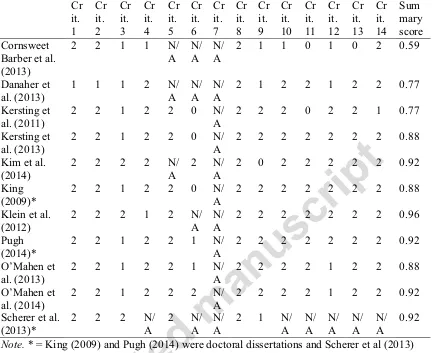
The methodological quality of included papers was evaluated using a 14-item checklist
for assessing the quality of quantitative studies by Kmet et al. (2004). 14 dimensions were
rated on a 4-point scale of 2 = yes, 1 = partial, 0 = no and N/A. A summary score was
calculated for each paper, which reflects its overall methodological quality. First the total
sum ((number of “yes” * 2) + (number of “partial” *1)) and the total possible sum (28 –
(number of “N/A” * 2)) were calculated and then the summary score was calculated (total
sum / total possible sum). Higher summary scores indicate higher methodological quality. To
ensure reliability, all papers were double-scored by an independent researcher. Between the
two assessors the percent agreement ranged between 92.9% and a 100% and Cohen’s Kappa
between 0.77 and 1. See Online Supplement 2 for more information about the inter-rater
agreement and reliability for each paper. Disagreements were discussed until 100%
agreement was reached.
Results
Study Selection
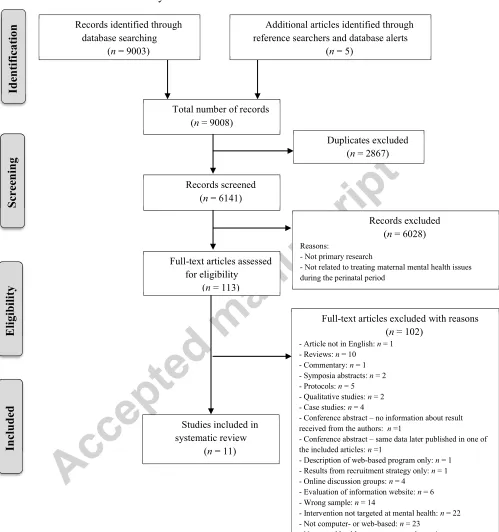
Using the specified search terms, the 12 searched databases produced a total of 9003
papers and four additional papers were identified from reference screening and database
alerts. Figure 1 shows the flow diagram of study selection from initial screening to final the
sample included in the review. A total of 11 papers met all eligibility criteria and were
included in the review.
FIGURE 1 ‘Flowchart of Study Selection’ HERE
Study Characteristics
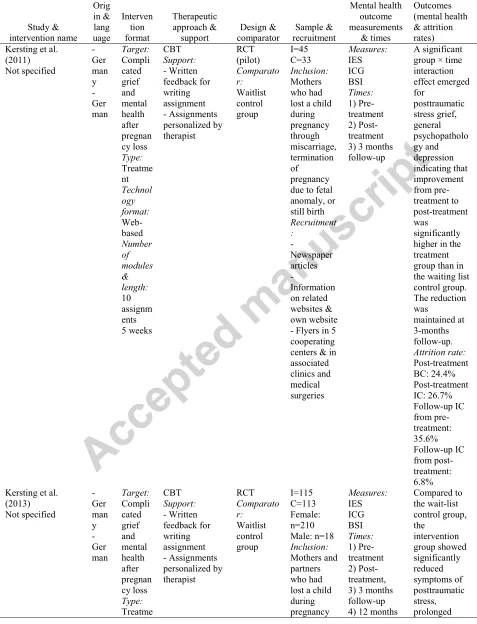
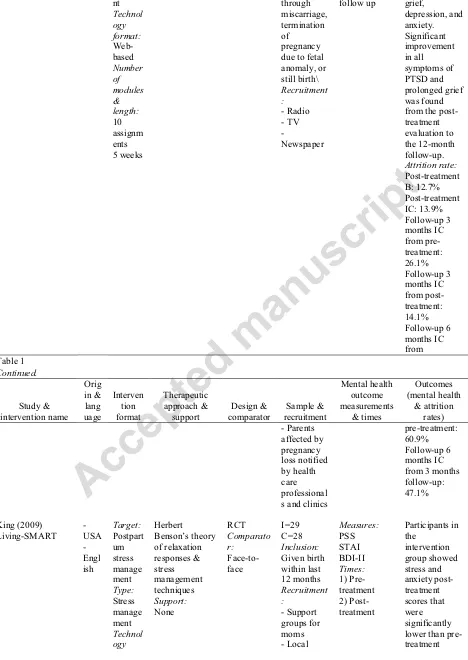
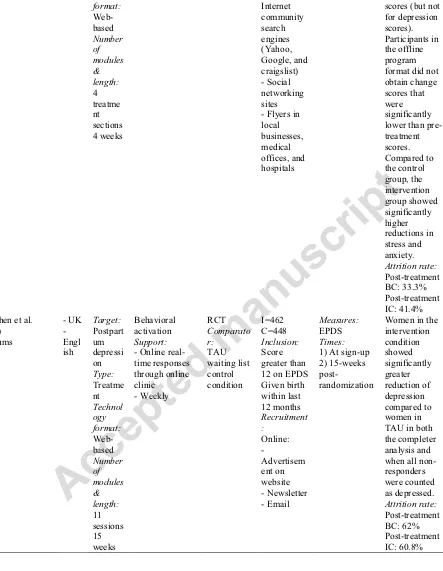
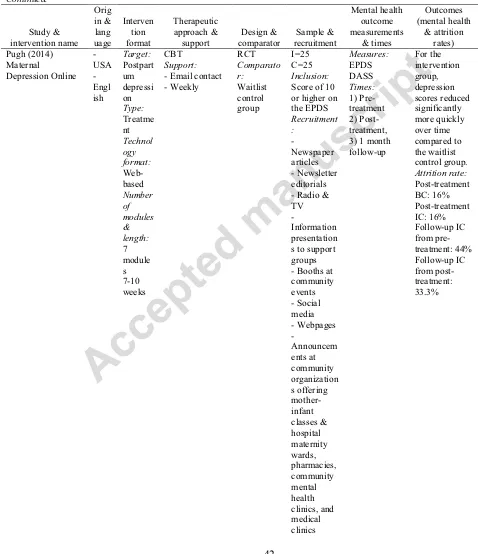
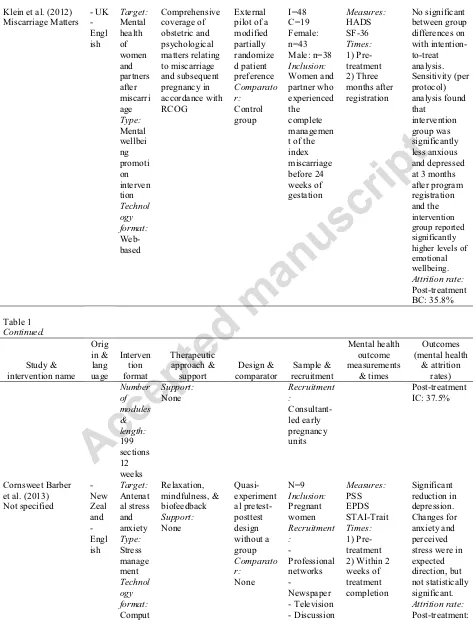
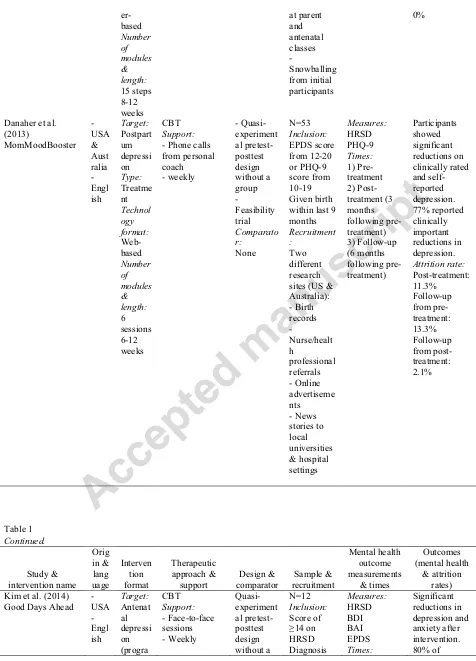
An overview of the study characteristics can be found in Table 1. The majority of studies
8
conference abstract (1/11). A variety of study designs were used, varying sample sizes and
attritions were found, and the majority of studies received an average to high methodological
rating.
Study Design. Study designs included randomized controlled trials (RCT) (7/11; Kersting
et al., 2013, 2011; King, 2009; O’Mahen et al., 2014, 2013; Pugh, 2014; Scherer et al., 2013),
a modified partially randomized patient preference trial (1/11; Klein et al., 2012) and
quasi-experimental pretest-posttest studies without a control group (3/11; Cornsweet Barber et al.,
2013; Danaher et al., 2013; Kim et al., 2014). All studies measured outcomes before and after
the intervention and six out of 11 studies also included follow-up measures ranging from 1
month to 12 months after the intervention.
Study Sample. Sample sizes ranged from 12 to 910 participants. Sample attrition between
pre- and post-intervention time points ranged from 0% (Cornsweet Barber et al., 2013) to
62% (O’Mahen et al., 2013a). Reported attrition rates for follow-up measurements taken at
various time points after the first post-intervention measurement ranged from 13.2% to 60.9
%. See Table 1 for more information on attrition of each study.
Referral of participants to studies varied. Referral methods included self-referral only
(6/11; Cornsweet Barber et al., 2013; Kersting et al., 2011; King, 2009; O’Mahen et al., 2014,
2013; Pugh, 2014), health professional referral only (1/11; Klein et al., 2012) and
combinations of self-referral and health professional referral (n=4/11; Danaher et al., 2013;
Kersting et al., 2013; Kim et al., 2014; Scherer et al., 2013). The majority of studies included
only women (9/11) and three out of 11 studies included women and their partners (Kersting
et al., 2013, 2011; Klein et al., 2012).
TABLE 1 ‘Characteristics of Included Studies’ HERE
Methodological Quality. Table 2 provides the ratings for each of the included studies on
9
received average to high methodological scores. The main limitation identified was the
possible sampling bias from the use of self-referral recruitment strategies.
TABLE 2 ‘Quality Assessment Scores and Percentages of Included Studies’ HERE
Intervention Characteristics
Within the 11 reviewed papers nine distinct intervention programs were identified and
Table 1 has more detailed information on intervention characteristics. For one intervention
targeting complicated grief and mental health after pregnancy loss, one study reported pilot
data (Kersting et al., 2013) and another data from a full RCT (Kersting et al., 2011). Two
studies evaluated an intervention called ‘NetMumsHWD’ (O’Mahen et al., 2014, 2013).
However, the design of the intervention changed considerably after the first evaluation and
therefore both interventions are reported separately in Table 3. The reviewed interventions
targeted a variety of mental health issues focusing on a specific time during the perinatal
period and varied in their employed technology, treatment focus, and approaches.
Origin and Languages. Interventions originate from several different countries. The
reviewed interventions were developed in the USA (3/9), the UK (2/9), USA & Australia
(1/9), New Zealand (1/9), Germany (1/9), and Switzerland (1/9) with the majority of
interventions being in English (7/9) and two out of nine in German.
Targeted Mental Health Issue. The nine intervention programs varied in the mental health
issue and time frame they were developed for. For pregnant women interventions were
developed for depression (1/9; Kim et al., 2014), stress and anxiety (1/9; Cornsweet Barber et
al., 2013) and mental health of women diagnosed with preterm labor (1/9; Scherer et al.,
2013). For the postpartum period interventions were developed for stress (King, 2009) and
depression. The majority of postpartum interventions targeted depression (3 out of 4;
10
were for couples after pregnancy loss and targeted complicated grief (Kersting et al., 2013,
2011) and one out of nine was for overall psychological health (Klein et al., 2012).
Intervention Format. The majority of interventions were web-based (7/9) and two out
of nine were computer-based. Four out of nine interventions were designed to prevent the
development of mental health issues through stress management (Cornsweet Barber et al.,
2013; King, 2009; Scherer et al., 2013) and by promoting mental well-being (Klein et al.,
2012). Five out of nine were developed to reduce existing antenatal depression (1/9; Kim et
al., 2014), postpartum depression (3/9; Danaher et al., 2013; O’Mahen et al., 2014, 2013;
Pugh, 2014), and complicated grief after pregnancy loss (1/9; Kersting et al., 2013, 2011).
Interventions employed a number of different therapeutic approaches including
cognitive behavioral therapy (5/9), behavioral activation (1/9; O’Mahen et al., 2014, 2013), a
combination of relaxation, biofeedback and mindfulness principles (1/9; Cornsweet Barber et
al., 2013) and a combination of relaxation methods with stress management techniques (n=1;
King, 2009). One intervention did not state a specific therapeutic approach (Klein et al.,
2012). Some sort of therapist contact was included in the majority of programs (6/9). Contact
was either face-to-face (1/9), on the phone (2/9), via email (3/9), or in real-time online (1/9)
and occurred mostly on a weekly basis. Content of support sessions included mood checks,
answering questions and written feedback. The duration of the interventions ranged from 4 to
17 weeks. Rather than a fixed number of weeks, four out of nine interventions specified
ranges from 6-8 weeks to 8-12 weeks and one out of nine interventions stated a minimum of
six weeks. The number of modules to be covered during those specified durations ranged
from four modules to 15 steps. One program (1/9) had a total of 199 sections.
Mental Health Outcomes
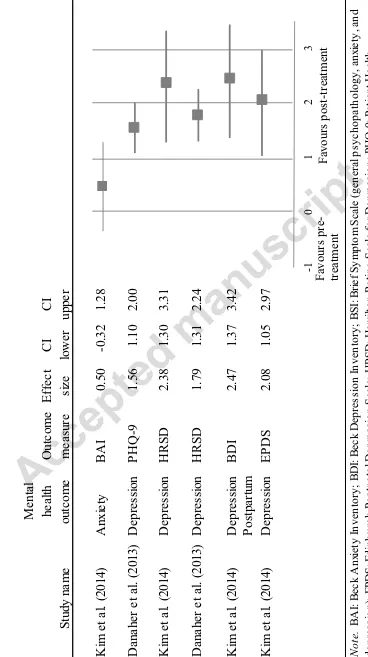
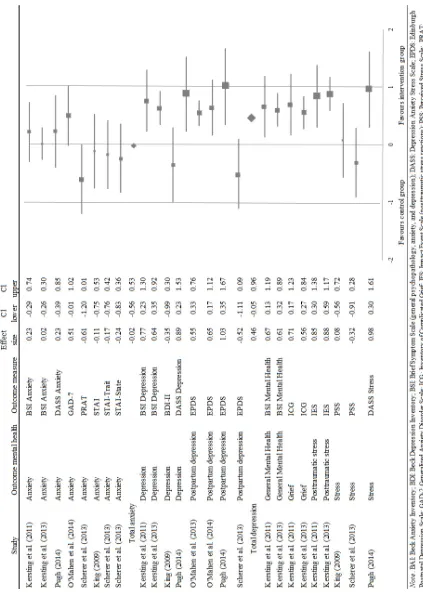
The effect of interventions on mental health outcomes are summarized in Table 1. Figure
11
effect sizes of RTCs studies and Figure 3 shows a forest plot for pre-post-test studies for
those with sufficient data to calculate within-group post-treatment effects. Cohen’s d effect
sizes were calculated and interpretation are based on Cohen’s guidelines (Cohen, 1988). For
within group effect sizes a positive value indicates that the post-treatment measurement is
favored and for between-group effect sizes a positive value indicates that the intervention
groups is favored over the control group.
Depression. All studies measured depression as an outcome, with three studies reporting
more than one depression outcome (Danaher et al., 2013; Kim et al., 2014; Pugh, 2014). For
seven (7/8) controlled studies, effect sizes for eight depression outcomes were calculated. For
those eight depression measures, a significantly greater depression symptom reduction in the
intervention groups was found for the majority of measures (6/8), which was supported by
positive effect sizes ranging from medium (d=0.55, 95%, CI 0.33 to 0.76) to large (d=1.03,
95%, CI 0.35 to 1.67) (Mdn=0.46). Two measures (2/8) (King, 2009; Scherer et al., 2013)
found greater depression symptom reduction in the control group, but the effect sizes were
non-significant. Klein et al. (2012) reported significantly greater symptoms reduction in the
control group when using per protocol analysis, but not when using an intention-to-treat
analysis. In the three (3/11) studies using an uncontrolled design, Cornsweet Barber et al.
(2013) reported statistically significant reduction in depression scores after the interventions
and in other two studies (Danaher et al., 2013; Kim et al., 2014) depression symptoms
reduced significantly from the pre to post intervention measurement supported by large
positive effect sizes.
Anxiety. Although only one out 11 interventions specifically targeted anxiety (Cornsweet
Barber et al., 2013), it was measured as an outcome in eight studies (8/11) of interventions
designed to reduce postpartum depression, postpartum stress, complicated grief after
12
labor. Results for anxiety were mixed, but predominately no significant outcomes were
found. For eight anxiety measures across six RCTs effect sizes were calculated. For those,
both positive (4/8) and negative effect sizes (4/8) were found (d=-0.61, 95%, CI -1.20 to 0.01
to d=0.51, 95%, CI -0.01 to 1.02; Mdn=-0.02), indicating that in half of the measures anxiety
symptom reduction was greater in the intervention group and in the other half symptom
reduction was greater in the control group. The effect sizes ranged from no effect to medium
effect sizes, but were all not significant. For the modified partially randomized patient
preference trial Klein et al. (2012) reported a significantly greater symptom reduction in the
control group when using a per protocol analysis compared to an intention-to-treat analysis.
For one out of two uncontrolled studies an effect size could be calculated (Kim et al., 2014).
For this study a medium positive effect size indicated that symptoms reduced after the
treatment, but the effect was non-significant (d=0.50, 95%, CI -0.32 to 1.28). Cornsweet
Barber et al. (2013) intervention was targeted at anxiety, but even though the reported anxiety
scores decreased after the intervention, the decrease was not significant.
Other Mental Health Outcomes. Other mental health outcomes such as general mental
health, grief, stress and posttraumatic stress were measured in five RCT studies with mixed
results. In two studies evaluating an intervention for complicated grief after pregnancy loss,
medium positive and significant effect sizes indicated that symptom reduction on an overall
mental health measure, a grief measure and a posttraumatic stress measure was greater in the
intervention group compared to the control group. Inconsistent effects were found for stress
with one study finding a large positive effect (d=0.98, 95%, CI 0.30 to 1.61; Pugh, 2014), one
finding no effect (King, 2009) and the other a small non-significant negative effect size
(Scherer et al., 2013).
FIGURE 2 “Forest Plot and Between-group Post-treatment Effect Sizes for Mental Health
13
Post-treatment Effect Sizes for Mental Health Outcomes of Pre-post Intervention Studies”
HERE
Discussion
This is the first systematic review to provide an overview of the nature and effectiveness
of computer- and web-based mental health interventions for women during the perinatal
period. The identified interventions were diverse and varied in terms of the targeted mental
health issues and time of use during the perinatal period. Despite this diversity, the results of
this review suggest that computer- and web-based mental health interventions may be
promising approach to the treatment and reduction of maternal mental health issues during
the perinatal period, particularly depression.
For depression, findings were predominately positive indicating that web-based
interventions may be effective in treating depression symptoms during the perinatal period.
Two studies did not find a positive effect, however this could be explained by the fact that the
these two interventions were targeted at stress (King, 2009) and stress and mental health in
general (Scherer et al., 2013) rather than depression. For anxiety, results were mixed, but
predominately no significant effects were found. However, as previously mentioned, only one
of the seven interventions measuring anxiety specifically targeted anxiety (Cornsweet Barber
et al., 2013). Results for other mental health issues were also mixed. An intervention targeted
at complicated grief was successful in improving the overall mental health, grief and
posttraumatic stress, but only one out of three studies measuring stress found a significant
reduction of stress symptoms. Negative outcomes found for anxiety, depression and stress
measures may be related to the fact that four interventions were of a preventative nature by
being designed to manage stress or promote mental health rather than being designed to
14
interventions may not be as effective as those targeted at reducing an existing mental health
issue. Even though it has been reported that preventative interventions can be successful in
the perinatal period, no evidence of long-term success was found (Boath et al., 2005). Other
reviews concluded that no specific preventive approach can be recommended for perinatal
mental health issues (Dennis, 2005, 2004). To improve the effectiveness of preventative
interventions during this period it has been suggested that it is important to identify women
“at risk” (Dennis, 2005). When considering the here presented mental health outcomes results
it is also important to be aware that in order to evaluate interventions intended to reduce
mental health issues, most studies relied on self-report screening questionnaires rather than
diagnostic assessment tools administered and assessed by a trained professional such as
Structured Clinical Interview for DSM Disorders (First et al., 1997) for eligibility screening.
It is unclear whether the interventions would have produced the same results for those with
diagnosed mental health issues and potentially more severe issues. Due to the small number
of trials and the diversity of the interventions in regards to the perinatal period, target mental
health issues, as well as therapeutic approach, it is difficult to draw definite conclusions about
the effect of computer- and web-based perinatal mental health interventions. However,
findings of this first review are encouraging and suggest that computer- or web-based
interventions targeted at reducing mental health issues, especially depression and complicated
grief, may be effective.
The majority of studies received average to high scores on the quality appraisal tool. Most
studies were limited by their recruitment strategy, introducing a possible sampling bias. In all
except for three studies (Kim et al., 2014; Klein et al., 2012; Scherer et al., 2013), participants
were recruited only through online or offline advertisements or promotional material
distributed in relevant centers or events. Sample sizes of four studies were rated as small or
15
al., 2013). Concerning allocation concealment, none of the studies were designed to allow for
participant blinding and the blinding of the investigators and/or outcome assessors was in
except for two cases (Kim et al., 2014; O’Mahen et al., 2014) not reported or is was unclear
who and how they were blinded. Two studies reported only limited baseline or demographic
information (Cornsweet Barber et al., 2013; Klein et al., 2012) and for one study the report of
results was deemed not sufficient (Cornsweet Barber et al., 2013). A limited report of
estimates of variance for main results/outcomes was identified in two studies (Cornsweet
Barber et al., 2013; Kersting et al., 2011). Report of baseline or demographic information
differences to control for confounding was often not reported or done (Cornsweet Barber et
al., 2013; Danaher et al., 2013; O’Mahen et al., 2013b, 2014). An overall lack of robust fully
powered RCTs has to be taken into consideration when interpreting the presented findings.
Despite an overall recommendation for more high quality RCTs, three crucial areas to
improve future development and research of computer- and web-based interventions for
maternal perinatal mental health issues were identified based on the findings from this review
and will be discussed.
Researchers should use recruitment strategies that target clinical samples and
hard-to-reach populations. Most studies used primarily media-recruitment where participants enter
the study through self-referral rather than being systematically identified through referral
from health care professionals. Hence, the recruitment relies on individual’s motivation
which may lead to a different recruited demographic which limits the generalizability of the
findings. However, self-selected samples are not necessarily a limitation, especially if
interventions are specifically designed around self-referral. Based on the reported participant
demographic details, the majority of participants were Caucasian and had a relatively high
level of education. Not self-selected participants including other ethnicities and other
hard-to-16
reach populations it has been argued that adapted and culturally sensitive recruitment
strategies are necessary (Sadler et al., 2010; Shaghaghi et al., 2011) and researchers should
incorporate extended recruitment timeframes, higher resourcing costs and community
partnerships (Bonevski et al., 2014). Also, most studies did not include clinical samples so it
remains unclear whether the interventions are also effective for those with diagnosed mental
health issues and potentially more severe issues.
The development and evaluation of interventions for all the prominent mental health
issues during the perinatal period is needed. Interventions targeted a variety of mental health
problems during the perinatal period, including depression, stress, anxiety and grief. The
majority of programs were designed for postpartum depression, with a few for antenatal
depression, stress management and grief. Interestingly, only one intervention was designed to
prevent anxiety together with stress during pregnancy. No intervention was available for
perinatal anxiety specifically, post-traumatic stress disorder (PTSD) after childbirth, or
postpartum psychosis. However, due to the severe nature of postpartum psychosis, drug
treatments are considered most appropriate and effective (Doucet et al., 2011; Sit et al.,
2006). Similarly, support for the effectiveness of computer- or web-based interventions for
PTSD is currently limited (Amstadter et al., 2009; Reger and Gahm, 2009) and evidence
supports high intensity interventions such as individual trauma-focused cognitive behavioral
therapy and eye movement desensitization and reprocessing (EMDR) in the treatment of
PTSD (Bisson et al., 2013). The findings that the majority of computer- and web-based
interventions targets depression reflects the popularity and focus on perinatal depression
interventions in the published literature compared to anxiety. For perinatal anxiety in
particular, similar prevalence rates to perinatal depression have been reported and it has even
been suggested that postpartum anxiety disorders may be more common than postpartum
17
a significant gap in the current state of knowledge concerning the treatment of perinatal
anxiety in general, as well as using technology to support perinatal anxiety treatment.
However, it should be noted that the systematic search identified several other perinatal
mental health related computer- or web-based interventions, which were excluded from the
review due to the study design. Several of the excluded studies qualitatively assessed
acceptability and feasibility. To enhance the knowledgebase it would be interesting for future
research to synthesis these findings. In addition, a look on recently published trial protocols
reveals that several trials are underway. This highlights the current interest and rapid
development in this field.
Developers and researchers should focus on designing interventions which target specific
perinatal issues and needs. All reviewed studies specified clearly whether the intervention
was targeted at the antenatal or postpartum period or pregnancy loss.However, two
interventions were not designed for the perinatal period specifically, meaning the intervention
content was not targeted at specific perinatal needs or issues. Thus it appears that so far there
are relatively few interventions specifically developed for mental health issues during this
period. This is striking considering that women during the perinatal period face changes,
difficulties, and mental health issues specific to this period. It has been suggested that
treatments targeted at perinatal-specific needs and issues, for example by including perinatal
specific themes, may help with treatment relevance and acceptability (O’Mahen et al., 2012).
In addition, the interventions were all developed and tested in Western and high income
countries and it remains unknown whether the interventions would be effective in other
countries, especially those with different cultures. It has been shown that interventions
targeted to a specific cultural group and in participants native language were more effective
compared to non-targeted interventions (Griner and Smith, 2006).
18
Several strengths and limitations of this review can be noted. A clear systematic search
and study eligibility strategy and review protocol was used and the PRISMA methodology
and guidelines were followed. The inclusion of theses and conference abstracts resulted in
different levels of details for the data extraction. However, authors were contacted if
information was missing and by including grey literature it was attempted to limit the
potential for publication bias. The search, study eligibility assessment, and data extraction
was only done by one reviewer, but any questions concerning eligibility were resolved
through team discussions. The methodological quality of studies was assessed by two
independent assessors to limit the subjective bias in the methodological analysis. The
independent assessment resulted in high inter-rater reliability scores. The restriction of the
inclusion criteria to English papers may have caused this review to be biased and limit its
generalizability. However, including papers written in English only is in line with similar
reviews (Calear and Christensen, 2010). The heterogeneous nature of included study designs
and intervention designs made it difficult to compare and synthesize findings and for that
reason a meta-analysis was not possible. The strength of evidence was limited by small
recruitment strategies, small sample sizes, high attrition rates, and some studies using
no-control group designs.
Conclusions
This systematic review addresses an important gap in the knowledge by providing an
overview of currently existing computer- and web-based maternal mental health interventions
during the perinatal period and their effectiveness. The review suggests that computer- or
web-based interventions for perinatal maternal health issues may be promising, but are part of
a still developing field. There is a need for systematic reviews evaluating the evidence for
more specific populations within this period, as well as further well designed and large RCT
19
perinatal period, as well as interventions designed for perinatal mental health needs and a
variety of prominent mental health issues during this period.
Acknowledgments
The authors thank Nicola Newhouse for assisting with the methodological review of the included studies.
References
Amstadter, A.B., Broman-Fulks, J., Zinzow, H., Ruggiero, K.J., Cercone, J., 2009.
Internet-based interventions for traumatic stress-related mental health problems: A review and
suggestion for future research. Clin. Psychol. Rev. 29, 410–420.
doi:10.1016/j.cpr.2009.04.001
Andrews, G., Cuijpers, P., Craske, M.G., McEvoy, P., Titov, N., 2010. Computer therapy for
the anxiety and depressive disorders is effective, acceptable and practical health care: A
meta-analysis. PLoS One 5, e13196. doi:10.1371/journal.pone.0013196
Barak, A., Hen, L., Boniel-Nissim, M., Shapira, N., 2008. A comprehensive review and a
meta-analysis of the effectiveness of internet-based psychotherapeutic interventions. J.
Technol. Hum. Serv. 26, 109–160. doi:10.1080/15228830802094429
Barnes, D.L., 2014. The psychological gestation of motherhood, in: Barnes, D.L. (Ed.),
Women’s Reproductive Mental Health across the Lifespan. Springer International
Publishing, Cham, pp. 75–90. doi:10.1007/978-3-319-05116-1
Bauer, A., Parsonage, M., Knapp, M., Iemmi, V., Bayo, A., 2014. The costs of perinatal
mental health problems. London.
Bennett, H.A., Einarson, A., Taddio, A., Koren, G., Einarson, T.R., 2004. Prevalence of
20 doi:10.1097/01.AOG.0000116689.75396.5f
Bisson, J.I., Roberts, N.P., Andrew, M., Cooper, R., Lewis, C., 2013. Psychological therapies
for chronic post-traumatic stress disorder (PTSD) in adults. Cochrane Database Syst.
Rev. 12, CD003388. doi:10.1002/14651858.CD003388.pub4
Boath, E., Bradley, E., Henshaw, C., 2005. The prevention of postnatal depression: A
narrative systematic review. J. Psychosom. Obstet. Gynecol. 26, 185–192.
doi:10.1080/01674820400028431
Bonevski, B., Randell, M., Paul, C., Chapman, K., Twyman, L., Bryant, J., Brozek, I.,
Hughes, C., 2014. Reaching the hard-to-reach: A systematic review of strategies for
improving health and medical research with socially disadvantaged groups. BMC Med.
Res. Methodol. 14, 42. doi:10.1186/1471-2288-14-42
Calear, A.L., Christensen, H., 2010. Review of internet-based prevention and treatment
programs for anxiety and depression in children and adolescents. Med. J. Aust. 192,
S12–14.
Cohen, J., 1988. Statistical power analysis for the behavioral sciences., 2nd ed. Erlbaum,
Hillsdale, NJ.
Cornsweet Barber, C., Clark, M., Williams, S., Isler, R.B., 2013. Relaxation and mindfulness
to manage stress in pregnancy: Initial studies of a computerized self-help programme.
MIDRIS Midwifery Dig. 23, 449–453.
Corrigan, P., 2004. How stigma interferes with mental health care. Am. Psychol. 59, 614–
625. doi:10.1037/0003-066X.59.7.614
Danaher, B.G., Milgrom, J., Seeley, J.R., Stuart, S., Schembri, C., Tyler, M.S., Ericksen, J.,
Lester, W., Gemmill, A.W., Kosty, D.B., Lewinsohn, P., 2013. MomMoodBooster
web-based intervention for postpartum depression: Feasibility trial results. J. Med. Internet
21
Dennis, C.-L., 2005. Psychosocial and psychological interventions for prevention of postnatal
depression: systematic review. BMJ 331, 15. doi:10.1136/bmj.331.7507.15
Dennis, C.-L., Chung-Lee, L., 2006. Postpartum depression help-seeking barriers and
maternal treatment preferences: A qualitative systematic review. Birth 33, 323–331.
doi:10.1111/j.1523-536X.2006.00130.x
Dennis, C.-L.E., 2004. Treatment of postpartum depression, part 2: A critical review of
nonbiological interventions. J. Clin. Psychiatry 65, 1252–1265.
Dennis, C.-L.E., Hodnett, E., 2007. Psychosocial and psychological interventions for treating
postpartum depression. Cochrane Database Syst. Rev. CD006116.
doi:10.1002/14651858.CD006116.pub2
Doucet, S., Jones, I., Letourneau, N., Dennis, C.-L., Blackmore, E.R., 2011. Interventions for
the prevention and treatment of postpartum psychosis: A systematic review. Arch.
Womens. Ment. Health 14, 89–98. doi:10.1007/s00737-010-0199-6
Farrer, L., Gulliver, A., Chan, J.K.Y., Batterham, P.J., Reynolds, J., Calear, A., Tait, R.,
Bennett, K., Griffiths, K.M., 2013. Technology-based interventions for mental health in
tertiary students: Systematic review. J. Med. Internet Res. 15, e101.
doi:10.2196/jmir.2639
First, M.B., Spitzer, R.L., Gibbon, M., Williams, J.B.W., 1997. User’s Guide for the
Structured Clinical Interview for DSM-IV Axis I Disorders - Clinical Version (SCID-I).
American Psychiatric Press, Washington, DC.
Gavin, N.I., Gaynes, B.N., Lohr, K.N., Meltzer-Brody, S., Gartlehner, G., Swinson, T., 2005.
Perinatal depression: A systematic review of prevalence and incidence. Obstet. Gynecol.
106, 1071–1083. doi:10.1097/01.AOG.0000183597.31630.db
Gega, L., Marks, I., Mataix-Cols, D., 2004. Computer-aided CBT self-help for anxiety and
22 Psychol. 60, 147–157. doi:10.1002/jclp.10241
Gjerdingen, D.K., Yawn, B.P., 2007. Postpartum depression screening: importance, methods,
barriers, and recommendations for practice. J. Am. Board Fam. Med. 20, 280–8.
doi:10.3122/jabfm.2007.03.060171
Glasheen, C., Richardson, G., Fabio, A., 2010. A systematic review of the effects of postnatal
maternal anxiety on children. Arch. Womens. Ment. Health 13, 61–74.
doi:10.1007/s00737-009-0109-y.A
Goodman, J.H., 2009. Women’s attitudes, preferences, and perceived barriers to treatment for
perinatal depression. Birth 36, 60–69. doi:10.1111/j.1523-536X.2008.00296.x
Goodman, J.H., Tyer-Viola, L., 2010. Detection, Treatment, and Referral of Perinatal
Depression and Anxiety by Obstetrical Providers. J. Women’s Heal. 19, 477–490.
doi:10.1089/jwh.2008.1352
Grekin, R., O’Hara, M.W., 2014. Prevalence and risk factors of postpartum posttraumatic
stress disorder: a meta-analysis. Clin. Psychol. Rev. 34, 389–401.
doi:10.1016/j.cpr.2014.05.003
Griffiths, K.M., Christensen, H., 2007. Internet-based mental health programs: A powerful
tool in the rural medical kit. Aust. J. Rural Health 15, 81–87.
doi:10.1111/j.1440-1584.2007.00859.x
Grigoriadis, S., VonderPorten, E.H., Mamisashvili, L., Tomlinson, G., Dennis, C.-L., Koren,
G., Steiner, M., Mousmanis, P., Cheung, A., Radford, K., Martinovic, J., Ross, L.E.,
2013. The impact of maternal depression during pregnancy on perinatal outcomes: a
systematic review and meta-analysis. J. Clin. Psychiatry 74, e321–41.
doi:10.4088/JCP.12r07968
Griner, D., Smith, T.B., 2006. Culturally adapted mental health intervention: A meta-analytic
doi:10.1037/0033-23 3204.43.4.531
Hayward, L., MacGregor, A.D., Peck, D.F., Wilkes, P., 2007. The feasibility and
effectiveness of computer-guided CBT (FearFighter) in a rural area. Behav. Cogn.
Psychother. 35, 409–419. doi:10.1017/S1352465807003670
Hendrick, V., 2003. Treatment of postnatal depression. BMJ 327, 1003–10044.
doi:10.1136/bmj.327.7422.1003
Howard, L.M., Piot, P., Stein, A., 2014. No health without perinatal mental health. Lancet
384, 1723–1724. doi:10.1016/S0140-6736(14)62040-7
Jones, I., Chandra, P.S., Dazzan, P., Howard, L.M., 2014. Bipolar disorder, affective
psychosis, and schizophrenia in pregnancy and the post-partum period. Lancet 384,
1789–1799. doi:10.1016/S0140-6736(14)61278-2
Kaltenthaler, E., Brazier, J., Nigris, E. De, Tumur, I., Ferriter, M., Beverley, C., Parry, G.,
Rooney, G., 2006. Computerised cognitive behaviour therapy for depression and anxiety
update: A systematic review and economic evaluation. Health Technol. Assess. (Rockv).
10, 1–186. doi:10.3310/hta10330
Kaltenthaler, E., Shackley, P., Stevens, K., Beverley, C., Parry, G., Chilcott, J., 2002. A
systematic review and economic evaluation of computerised cognitive behaviour
therapy for depression and anxiety. Health Technol. Assess. (Rockv). 6, 1–89.
Kersting, A., Dölemeyer, R., Steinig, J., Walter, F., Kroker, K., Baust, K., Wagner, B., 2013.
Brief Internet-based intervention reduces posttraumatic stress and prolonged grief in
parents after the loss of a child during pregnancy: A randomized controlled trial.
Psychother. Psychosom. 82, 372–381. doi:10.1159/000348713
Kersting, A., Kroker, K., Schlicht, S., Baust, K., Wagner, B., 2011. Efficacy of cognitive
behavioral internet-based therapy in parents after the loss of a child during pregnancy:
24 477. doi:10.1007/s00737-011-0240-4
Kim, D.R., Hantsoo, L., Thase, M.E., Sammel, M., Epperson, C.N., 2014. Computer-assisted
cognitive behavioral therapy for pregnant women with major depressive disorder. J.
Women’s Heal. 23, 842–848. doi:10.1089/jwh.2014.4867
King, E., 2009. The effectiveness of an Internet-based stress management program in the
prevention of postpartum stress, anxiety and depression for new mothers. Walden
University.
Klein, S., Cumming, G.P., Lee, A.J., Alexander, D.A., Bolsover, D., 2012. Evaluating the
effectiveness of a web-based intervention to promote mental wellbeing in women and
partners following miscarriage, using a modified patient preference trial design: An
external pilot. BJOG An Int. J. Obstet. Gynaecol. 119, 762–767.
doi:10.1111/j.1471-0528.2012.03302.x
Kmet, L.M., Lee, R.C., Cook, L.S., 2004. Standard quality assessment criteria for evaluating
primary research papers from a variety of fields.
Leis, J.A., Mendelson, T., Tandon, S.D., Perry, D.F., 2009. A systematic review of
home-based interventions to prevent and treat postpartum depression. Arch. Womens. Ment.
Health 12, 3–13. doi:10.1007/s00737-008-0039-0
Misri, S., Kendrick, K., 2007. Treatment of perinatal mood and anxiety disorders: a review.
Can. J. Psychiatry. 52, 489–98.
Munk-Olsen, T., Laursen, T.M., Pedersen, C.B., Mors, O., Mortensen, P.B., 2006. New
parents and mental disorders: a population-based register study. JAMA 296, 2582–9.
doi:10.1001/jama.296.21.2582
Muñoz, R.F., 2010. Using evidence-based internet interventions to reduce health disparities
worldwide. J. Med. Internet Res. 12, e60. doi:10.2196/jmir.1463
25
depression - myth and reality: Maternal depression before and after the birth of a child.
Soc. Psychiatry Psychiatr. Epidemiol. 35, 19–27. doi:10.1007/s001270050004
O’Mahen, H.A., Fedock, G., Henshaw, E., Himle, J.A., Forman, J., Flynn, H.A., 2012.
Modifying CBT for perinatal depression: What do women want? Cogn. Behav. Pract.
19, 359–371. doi:10.1016/j.cbpra.2011.05.005
O’Mahen, H.A., Flynn, H.A., 2008. Preferences and perceived barriers to treatment for
depression during the perinatal period. J. Women’s Heal. 17, 1301–1309.
doi:10.1089/jwh.2007.0631
O’Mahen, H.A., Richards, D.A., Woodford, J., Wilkinson, E., McGinley, J., Taylor, R.S.,
Warren, F.C., 2014. Netmums: A phase II randomized controlled trial of a guided
internet behavioural activation treatment for postpartum depression. Psychol. Med. 44,
1–15. doi:10.1017/S0033291713002092
O’Mahen, H.A., Woodford, J., McGinley, J., Warren, F.C., Richards, D.A., Lynch, T.R.,
Taylor, R.S., 2013. Internet-based behavioral activation-treatment for postnatal
depression (Netmums): A randomized controlled trial. J. Affect. Disord. 150, 814–822.
doi:10.1016/j.jad.2013.03.005
Oates, M., 2003. Perinatal psychiatric disorders: a leading cause of maternal morbidity and
mortality. Br. Med. Bull. 67, 219–229. doi:10.1093/bmb/ldg011
Paul, I.M., Downs, D.S., Schaefer, E.W., Beiler, J.S., Weisman, C.S., 2013. Postpartum
anxiety and maternal-infant health outcomes. Pediatrics 131, e1218–1224.
doi:10.1542/peds.2012-2147
Poobalan, A.S., Aucott, L.S., Ross, L., Smith, W.C.S., Helms, P.J., Williams, J.H.G., 2007.
Effects of treating postnatal depression on mother-infant interaction and child
development: systematic review. Br. J. Psychiatry 191, 378–86.
26
Preschl, B., Wagner, B., Forstmeier, S., Maercker, A., 2011. E-health interventions for
depression, anxiety disorders, dementia and other disorders in older adults: A review. J.
Cyber Ther. Rehabil. 4, 371–385.
Pugh, N.E., 2014. A Randomized Controlled Trial of a Therapist- Assisted Internet Cognitive
Behaviour Therapy Program for Women with Postpartum Depression. Faculty of
Graduate Studies and Research, University of Regina.
Reck, C., Struben, K., Backenstrass, M., Stefenelli, U., Reinig, K., Fuchs, T., Sohn, C.,
Mundt, C., 2008. Prevalence, onset and comorbidity of postpartum anxiety and
depressive disorders. Acta Psychiatr. Scand. 118, 4.
doi:10.1111/j.1600-0447.2008.01264.x
Redshaw, M., Martin, C., 2011. Motherhood: A natural progression and a major transition. J.
Reprod. Infant Psychol. 29, 305–307. doi:10.1080/02646838.2011.639510
Reger, M.A., Gahm, G.A., 2009. A meta-analysis of the effects of internet- and
computer-based cognitive-behavioral treatments for anxiety. J. Clin. Psychol. 65, 53–75.
doi:10.1002/jclp
Richardson, T., Stallard, P., Velleman, S., 2010. Computerised cognitive behavioural therapy
for the prevention and treatment of depression and anxiety in children and adolescents:
A systematic review. Clin. Child Fam. Psychol. Rev. 13, 275–290.
doi:10.1007/s10567-010-0069-9
Ross, L.E., McLean, L.M., 2006. Anxiety disorders during pregnancy and the postpartum
period: A systematic review. J. Clin. Psychiatry 67, 1285–1298.
Rüsch, N., Angermeyer, M.C., Corrigan, P.W., 2005. Mental illness stigma: Concepts,
consequences, and initiatives to reduce stigma. Eur. Psychiatry J. Assoc. Eur. Psychiatr.
20, 529–539. doi:10.1016/j.eurpsy.2005.04.004
27
population subgroups via adaptations of the snowball sampling strategy. Nurs. Health
Sci. 12, 369–374. doi:10.1111/j.1442-2018.2010.00541.x
Scherer, S., Urech, C., Hoesli, I., Tschudin, S., Huang, D., Berger, T., Alder, J., 2013.
Internet-based stress management for anxious women with preterm labor - a promising
approach? First results of a randomized controlled intervention study, in: The Marcé
International Society International Biennial General Scientific Meeting. Archives of
Women’s Mental Health, p. S100. doi:10.1007/s00737-013-0355-x
Shaghaghi, A., Bhopal, R.S., Sheikh, A., 2011. Approaches to recruiting “hard-to-reach”
populations into research: A review of the literature. Heal. Promot. Perspect. 1, 86–94.
doi:10.5681/hpp.2011.009
Siemer, C.P., Fogel, J., Van Voorhees, B.W., 2011. Telemental health and web-based
applications in children and adolescents. Child Adolesc. Psychiatr. Clin. North Am. 20,
135–153. doi:10.1016/j.chc.2010.08.012.Telemental
Sit, D., Rothschild, A.J., Wisner, K.L., 2006. A review of postpartum psychosis. J. Womens.
Health (Larchmt). 15, 352–68. doi:10.1089/jwh.2006.15.352
Sockol, L.E., Epperson, C.N., Barber, J.P., 2011. A meta-analysis of treatments for perinatal
depression. Clin. Psychol. Rev. 31, 839–49. doi:10.1016/j.cpr.2011.03.009
Stein, A., Pearson, R.M., Goodman, S.H., Rapa, E., Rahman, A., McCallum, M., Howard,
L.M., Pariante, C.M., 2014. Effects of perinatal mental disorders on the fetus and child.
Lancet 384, 1800–1819. doi:10.1016/S0140-6736(14)61277-0
Vesga-López, O., Blanco, C., Keyes, K., Olfson, M., Grant, B.F., Hasin, D.S., 2008.
Psychiatric disorders in pregnant and postpartum women in the United States. Arch.
Gen. Psychiatry 65, 805–815. doi:10.1001/archpsyc.65.7.805
Wenzel, A., Haugen, E.N., Jackson, L.C., Brendle, J.R., 2005. Anxiety symptoms and
28 doi:10.1016/j.janxdis.2004.04.001
Woolhouse, H., Brown, S., Krastev, A., Perlen, S., Gunn, J., 2009. Seeking help for anxiety
and depression after childbirth: Results of the maternal health study. Arch. Womens.
Ment. Health 12, 75–83. doi:10.1007/s00737-009-0049-6
Yelland, J., Sutherland, G., Brown, S.J., 2010. Postpartum anxiety, depression and social
health: Findings from a population-based survey of Australian women. BMC Public
Health 10, 771. doi:10.1186/1471-2458-10-771
Amstadter, A.B., Broman-Fulks, J., Zinzow, H., Ruggiero, K.J., Cercone, J., 2009.
Internet-based interventions for traumatic stress-related mental health problems: A review and
suggestion for future research. Clin. Psychol. Rev. 29, 410–420.
doi:10.1016/j.cpr.2009.04.001
Andrews, G., Cuijpers, P., Craske, M.G., McEvoy, P., Titov, N., 2010. Computer therapy for
the anxiety and depressive disorders is effective, acceptable and practical health care: A
meta-analysis. PLoS One 5, e13196. doi:10.1371/journal.pone.0013196
Barak, A., Hen, L., Boniel-Nissim, M., Shapira, N., 2008. A comprehensive review and a
meta-analysis of the effectiveness of internet-based psychotherapeutic interventions. J.
Technol. Hum. Serv. 26, 109–160. doi:10.1080/15228830802094429
Barnes, D.L., 2014. The psychological gestation of motherhood, in: Barnes, D.L. (Ed.),
Women’s Reproductive Mental Health across the Lifespan. Springer International
Publishing, Cham, pp. 75–90. doi:10.1007/978-3-319-05116-1
Bauer, A., Parsonage, M., Knapp, M., Iemmi, V., Bayo, A., 2014. The costs of perinatal
mental health problems. London.
Bennett, H.A., Einarson, A., Taddio, A., Koren, G., Einarson, T.R., 2004. Prevalence of
depression during pregnancy: systematic review. Obstet. Gynecol. 103, 698–709.
29
Bisson, J.I., Roberts, N.P., Andrew, M., Cooper, R., Lewis, C., 2013. Psychological therapies
for chronic post-traumatic stress disorder (PTSD) in adults. Cochrane Database Syst.
Rev. 12, CD003388. doi:10.1002/14651858.CD003388.pub4
Boath, E., Bradley, E., Henshaw, C., 2005. The prevention of postnatal depression: A
narrative systematic review. J. Psychosom. Obstet. Gynecol. 26, 185–192.
doi:10.1080/01674820400028431
Bonevski, B., Randell, M., Paul, C., Chapman, K., Twyman, L., Bryant, J., Brozek, I.,
Hughes, C., 2014. Reaching the hard-to-reach: A systematic review of strategies for
improving health and medical research with socially disadvantaged groups. BMC Med.
Res. Methodol. 14, 42. doi:10.1186/1471-2288-14-42
Calear, A.L., Christensen, H., 2010. Review of internet-based prevention and treatment
programs for anxiety and depression in children and adolescents. Med. J. Aust. 192,
S12–14.
Cohen, J., 1988. Statistical power analysis for the behavioral sciences., 2nd ed. Erlbaum,
Hillsdale, NJ.
Cornsweet Barber, C., Clark, M., Williams, S., Isler, R.B., 2013. Relaxation and mindfulness
to manage stress in pregnancy: Initial studies of a computerized self-help programme.
MIDRIS Midwifery Dig. 23, 449–453.
Corrigan, P., 2004. How stigma interferes with mental health care. Am. Psychol. 59, 614–
625. doi:10.1037/0003-066X.59.7.614
Danaher, B.G., Milgrom, J., Seeley, J.R., Stuart, S., Schembri, C., Tyler, M.S., Ericksen, J.,
Lester, W., Gemmill, A.W., Kosty, D.B., Lewinsohn, P., 2013. MomMoodBooster
web-based intervention for postpartum depression: Feasibility trial results. J. Med. Internet
Res. 15, e242. doi:10.2196/jmir.2876
30
depression: systematic review. BMJ 331, 15. doi:10.1136/bmj.331.7507.15
Dennis, C.-L., Chung-Lee, L., 2006. Postpartum depression help-seeking barriers and
maternal treatment preferences: A qualitative systematic review. Birth 33, 323–331.
doi:10.1111/j.1523-536X.2006.00130.x
Dennis, C.-L.E., 2004. Treatment of postpartum depression, part 2: A critical review of
nonbiological interventions. J. Clin. Psychiatry 65, 1252–1265.
Dennis, C.-L.E., Hodnett, E., 2007. Psychosocial and psychological interventions for treating
postpartum depression. Cochrane Database Syst. Rev. CD006116.
doi:10.1002/14651858.CD006116.pub2
Doucet, S., Jones, I., Letourneau, N., Dennis, C.-L., Blackmore, E.R., 2011. Interventions for
the prevention and treatment of postpartum psychosis: A systematic review. Arch.
Womens. Ment. Health 14, 89–98. doi:10.1007/s00737-010-0199-6
Farrer, L., Gulliver, A., Chan, J.K.Y., Batterham, P.J., Reynolds, J., Calear, A., Tait, R.,
Bennett, K., Griffiths, K.M., 2013. Technology-based interventions for mental health in
tertiary students: Systematic review. J. Med. Internet Res. 15, e101.
doi:10.2196/jmir.2639
First, M.B., Spitzer, R.L., Gibbon, M., Williams, J.B.W., 1997. User’s Guide for the
Structured Clinical Interview for DSM-IV Axis I Disorders - Clinical Version (SCID-I).
American Psychiatric Press, Washington, DC.
Gavin, N.I., Gaynes, B.N., Lohr, K.N., Meltzer-Brody, S., Gartlehner, G., Swinson, T., 2005.
Perinatal depression: A systematic review of prevalence and incidence. Obstet. Gynecol.
106, 1071–1083. doi:10.1097/01.AOG.0000183597.31630.db
Gega, L., Marks, I., Mataix-Cols, D., 2004. Computer-aided CBT self-help for anxiety and
depressive disorders: Experience of a London clinic and future directions. J. Cinical
31
Gjerdingen, D.K., Yawn, B.P., 2007. Postpartum depression screening: importance, methods,
barriers, and recommendations for practice. J. Am. Board Fam. Med. 20, 280–8.
doi:10.3122/jabfm.2007.03.060171
Glasheen, C., Richardson, G., Fabio, A., 2010. A systematic review of the effects of postnatal
maternal anxiety on children. Arch. Womens. Ment. Health 13, 61–74.
doi:10.1007/s00737-009-0109-y.A
Goodman, J.H., 2009. Women’s attitudes, preferences, and perceived barriers to treatment for
perinatal depression. Birth 36, 60–69. doi:10.1111/j.1523-536X.2008.00296.x
Goodman, J.H., Tyer-Viola, L., 2010. Detection, Treatment, and Referral of Perinatal
Depression and Anxiety by Obstetrical Providers. J. Women’s Heal. 19, 477–490.
doi:10.1089/jwh.2008.1352
Grekin, R., O’Hara, M.W., 2014. Prevalence and risk factors of postpartum posttraumatic
stress disorder: a meta-analysis. Clin. Psychol. Rev. 34, 389–401.
doi:10.1016/j.cpr.2014.05.003
Griffiths, K.M., Christensen, H., 2007. Internet-based mental health programs: A powerful
tool in the rural medical kit. Aust. J. Rural Health 15, 81–87.
doi:10.1111/j.1440-1584.2007.00859.x
Grigoriadis, S., VonderPorten, E.H., Mamisashvili, L., Tomlinson, G., Dennis, C.-L., Koren,
G., Steiner, M., Mousmanis, P., Cheung, A., Radford, K., Martinovic, J., Ross, L.E.,
2013. The impact of maternal depression during pregnancy on perinatal outcomes: a
systematic review and meta-analysis. J. Clin. Psychiatry 74, e321–41.
doi:10.4088/JCP.12r07968
Griner, D., Smith, T.B., 2006. Culturally adapted mental health intervention: A meta-analytic
review. Psychother. Theory, Res. Pract. Train. 43, 531–548.
32
Hayward, L., MacGregor, A.D., Peck, D.F., Wilkes, P., 2007. The feasibility and
effectiveness of computer-guided CBT (FearFighter) in a rural area. Behav. Cogn.
Psychother. 35, 409–419. doi:10.1017/S1352465807003670
Hendrick, V., 2003. Treatment of postnatal depression. BMJ 327, 1003–10044.
doi:10.1136/bmj.327.7422.1003
Howard, L.M., Piot, P., Stein, A., 2014. No health without perinatal mental health. Lancet
384, 1723–1724. doi:10.1016/S0140-6736(14)62040-7
Jones, I., Chandra, P.S., Dazzan, P., Howard, L.M., 2014. Bipolar disorder, affective
psychosis, and schizophrenia in pregnancy and the post-partum period. Lancet 384,
1789–1799. doi:10.1016/S0140-6736(14)61278-2
Kaltenthaler, E., Brazier, J., Nigris, E. De, Tumur, I., Ferriter, M., Beverley, C., Parry, G.,
Rooney, G., 2006. Computerised cognitive behaviour therapy for depression and anxiety
update: A systematic review and economic evaluation. Health Technol. Assess. (Rockv).
10, 1–186. doi:10.3310/hta10330
Kaltenthaler, E., Shackley, P., Stevens, K., Beverley, C., Parry, G., Chilcott, J., 2002. A
systematic review and economic evaluation of computerised cognitive behaviour
therapy for depression and anxiety. Health Technol. Assess. (Rockv). 6, 1–89.
Kersting, A., Dölemeyer, R., Steinig, J., Walter, F., Kroker, K., Baust, K., Wagner, B., 2013.
Brief Internet-based intervention reduces posttraumatic stress and prolonged grief in
parents after the loss of a child during pregnancy: A randomized controlled trial.
Psychother. Psychosom. 82, 372–381. doi:10.1159/000348713
Kersting, A., Kroker, K., Schlicht, S., Baust, K., Wagner, B., 2011. Efficacy of cognitive
behavioral internet-based therapy in parents after the loss of a child during pregnancy:
Pilot data from a randomized controlled trial. Arch. Womens. Ment. Health 14, 465–
33
Kim, D.R., Hantsoo, L., Thase, M.E., Sammel, M., Epperson, C.N., 2014. Computer-assisted
cognitive behavioral therapy for pregnant women with major depressive disorder. J.
Women’s Heal. 23, 842–848. doi:10.1089/jwh.2014.4867
King, E., 2009. The effectiveness of an Internet-based stress management program in the
prevention of postpartum stress, anxiety and depression for new mothers. Walden
University.
Klein, S., Cumming, G.P., Lee, A.J., Alexander, D.A., Bolsover, D., 2012. Evaluating the
effectiveness of a web-based intervention to promote mental wellbeing in women and
partners following miscarriage, using a modified patient preference trial design: An
external pilot. BJOG An Int. J. Obstet. Gynaecol. 119, 762–767.
doi:10.1111/j.1471-0528.2012.03302.x
Kmet, L.M., Lee, R.C., Cook, L.S., 2004. Standard quality assessment criteria for evaluating
primary research papers from a variety of fields.
Leis, J.A., Mendelson, T., Tandon, S.D., Perry, D.F., 2009. A systematic review of
home-based interventions to prevent and treat postpartum depression. Arch. Womens. Ment.
Health 12, 3–13. doi:10.1007/s00737-008-0039-0
Misri, S., Kendrick, K., 2007. Treatment of perinatal mood and anxiety disorders: a review.
Can. J. Psychiatry. 52, 489–98.
Munk-Olsen, T., Laursen, T.M., Pedersen, C.B., Mors, O., Mortensen, P.B., 2006. New
parents and mental disorders: a population-based register study. JAMA 296, 2582–9.
doi:10.1001/jama.296.21.2582
Muñoz, R.F., 2010. Using evidence-based internet interventions to reduce health disparities
worldwide. J. Med. Internet Res. 12, e60. doi:10.2196/jmir.1463
Najman, J.M., Andersen, M.J., Bor, W., O’Callaghan, M.J., Williams, G.M., 2010. Postnatal
34
Soc. Psychiatry Psychiatr. Epidemiol. 35, 19–27. doi:10.1007/s001270050004
O’Mahen, H.A., Fedock, G., Henshaw, E., Himle, J.A., Forman, J., Flynn, H.A., 2012.
Modifying CBT for perinatal depression: What do women want? Cogn. Behav. Pract.
19, 359–371. doi:10.1016/j.cbpra.2011.05.005
O’Mahen, H.A., Flynn, H.A., 2008. Preferences and perceived barriers to treatment for
depression during the perinatal period. J. Women’s Heal. 17, 1301–1309.
doi:10.1089/jwh.2007.0631
O’Mahen, H.A., Richards, D.A., Woodford, J., Wilkinson, E., McGinley, J., Taylor, R.S.,
Warren, F.C., 2014. Netmums: A phase II randomized controlled trial of a guided
internet behavioural activation treatment for postpartum depression. Psychol. Med. 44,
1–15. doi:10.1017/S0033291713002092
O’Mahen, H.A., Woodford, J., McGinley, J., Warren, F.C., Richards, D.A., Lynch, T.R.,
Taylor, R.S., 2013. Internet-based behavioral activation-treatment for postnatal
depression (Netmums): A randomized controlled trial. J. Affect. Disord. 150, 814–822.
doi:10.1016/j.jad.2013.03.005
Oates, M., 2003. Perinatal psychiatric disorders: a leading cause of maternal morbidity and
mortality. Br. Med. Bull. 67, 219–229. doi:10.1093/bmb/ldg011
Paul, I.M., Downs, D.S., Schaefer, E.W., Beiler, J.S., Weisman, C.S., 2013. Postpartum
anxiety and maternal-infant health outcomes. Pediatrics 131, e1218–1224.
doi:10.1542/peds.2012-2147
Poobalan, A.S., Aucott, L.S., Ross, L., Smith, W.C.S., Helms, P.J., Williams, J.H.G., 2007.
Effects of treating postnatal depression on mother-infant interaction and child
development: systematic review. Br. J. Psychiatry 191, 378–86.
doi:10.1192/bjp.bp.106.032789
35
depression, anxiety disorders, dementia and other disorders in older adults: A review. J.
Cyber Ther. Rehabil. 4, 371–385.
Pugh, N.E., 2014. A Randomized Controlled Trial of a Therapist- Assisted Internet Cognitive
Behaviour Therapy Program for Women with Postpartum Depression. Faculty of
Graduate Studies and Research, University of Regina.
Reck, C., Struben, K., Backenstrass, M., Stefenelli, U., Reinig, K., Fuchs, T., Sohn, C.,
Mundt, C., 2008. Prevalence, onset and comorbidity of postpartum anxiety and
depressive disorders. Acta Psychiatr. Scand. 118, 4.
doi:10.1111/j.1600-0447.2008.01264.x
Redshaw, M., Martin, C., 2011. Motherhood: A natural progression and a major transition. J.
Reprod. Infant Psychol. 29, 305–307. doi:10.1080/02646838.2011.639510
Reger, M.A., Gahm, G.A., 2009. A meta-analysis of the effects of internet- and
computer-based cognitive-behavioral treatments for anxiety. J. Clin. Psychol. 65, 53–75.
doi:10.1002/jclp
Richardson, T., Stallard, P., Velleman, S., 2010. Computerised cognitive behavioural therapy
for the prevention and treatment of depression and anxiety in children and adolescents:
A systematic review. Clin. Child Fam. Psychol. Rev. 13, 275–290.
doi:10.1007/s10567-010-0069-9
Ross, L.E., McLean, L.M., 2006. Anxiety disorders during pregnancy and the postpartum
period: A systematic review. J. Clin. Psychiatry 67, 1285–1298.
Rüsch, N., Angermeyer, M.C., Corrigan, P.W., 2005. Mental illness stigma: Concepts,
consequences, and initiatives to reduce stigma. Eur. Psychiatry J. Assoc. Eur. Psychiatr.
20, 529–539. doi:10.1016/j.eurpsy.2005.04.004
Sadler, G.R., Lee, H.-C., Lim, R.S.-H., Fullerton, J., 2010. Recruitment of hard-to-reach