Algebraic Functions,
Computer Programming, and
the Challenge of Transfer
The Harvard community has made this
article openly available.
Please share
how
this access benefits you. Your story matters
Citation Schanzer, Emmanuel Tanenbaum. 2015. Algebraic Functions,
Computer Programming, and the Challenge of Transfer. Doctoral dissertation, Harvard Graduate School of Education.
Citable link http://nrs.harvard.edu/urn-3:HUL.InstRepos:16461037
Terms of Use This article was downloaded from Harvard University’s DASH
repository, and is made available under the terms and conditions applicable to Other Posted Material, as set forth at http://
!
!
!
Algebraic Functions, Computer Programming, and the Challenge of Transfer
Emmanuel Tanenbaum Schanzer
Jon Star Karen Brennan
Kathi Fisler
A Thesis Presented to the Faculty
of the Graduate School of Education of Harvard University in Partial Fulfillment of the Requirements
for the Degree of Doctor of Education
© 2015
Acknowledgements
This work would not have been possible without the tireless support of
Shriram Krishnamurthi, Kathi Fisler, and Matthias Felleisen. Thank you for
believing in me all these years, and for always making sure I was thinking three
steps ahead. Danny Yoo, thank you for pouring so much of your life into
WeScheme. Special thanks go to Emma Youndtsmith and Rosanna Sobota, who
took a chance after college to join me on this journey. It is a privilege to work with
all of you.
Many have contributed to the work that went into this thesis, and I want to
acknowledge the efforts of the teachers and students in this study, as well as the
hundreds who I have learned from over the years. I especially want to thank Mrs.
Bidwell, Wrenn Goodrum, Mrs. Maybray, Herbert Woodel and Gregory Morrisett
– the great teachers in my life, who taught me to see the world through the
exacting, playful, and piercing eyes of an educator.
I am grateful to David Perkins, Chris Dede, and Kurt Fischer each served
on various committees along the way. You have all shaped so much of my
thinking in this dissertation, and pointed me in the right direction. Above all else, I
want to thank Jon Star. Thank you for keeping my feet on the ground, for poking
holes in my thoughts until I truly understood them, and for your infinite patience
Table of Contents
ACKNOWLEDGEMENTS...II!
TABLE.OF.CONTENTS...III!
ABSTRACT...V!
CHAPTER.1:.INTRODUCTION...1!
CHAPTER.2:.LITERATURE.REVIEW...5!
TRANSFER. 5!
THE.ALGEBRAIC.DOMAIN. 21!
RICH.TASKS.FOR.ALGEBRA. 26!
THE.PROMISE.OF.TECHNOLOGY. 32!
CHAPTER.3:.THE.BOOTSTRAP.CURRICULUM...55!
THE.SHOULDERS.OF.GIANTS. 56!
INTRODUCING.BOOTSTRAP. 59!
CHAPTER.4:.CONCEPTUAL.FRAMEWORK...80!
PROCEDURAL.KNOWLEDGE. 81!
CONCEPTUAL.KNOWLEDGE. 81!
ATTITUDINAL.FACTORS. 84!
RESEARCH.QUESTIONS. 85!
CHAPTER.5:.RESEARCH.METHODS...86!
DESIGN. 86!
DATA.SET. 86!
MEASURES. 88!
ANALYSIS. 91!
CHAPTER.6:.RESULTS...94!
FIDELITY. 94!
TEACHER.INTERVIEWS. 97!
CHAPTER.7:.DISCUSSION...143!
RESEARCH.QUESTIONS. 144!
LIMITATIONS. 156!
IMPLICATIONS. 157!
CONCLUSION. 166!
APPENDICES...168!
APPENDIX.A:.OBSERVATION.PROTOCOL. 168!
APPENDIX.B:.EXAMPLES.OF.FORMATIVE.PROGRAMMING.ASSESSMENTS. 169!
APPENDIX.C:.TRANSFER.OUTCOMES.(PRETEST). 170!
APPENDIX.D:.INTERVIEW.PROTOCOL. 175!
REFERENCES...178!
Abstract
Students' struggles with algebra are well documented. Prior to the
introduction of functions, mathematics is typically focused on applying a set of
arithmetic operations to compute an answer. The introduction of functions,
however, marks the point at which mathematics begins to focus on building up
abstractions as a way to solve complex problems. A common refrain about word
problems is that “the equations are easy to solve - the hard part is setting them
up!” A student of algebra is asked to identify functional relationships in the world
around them - to set up the equations that describe a system- and to reason about
these relationships. Functions, in essence, mark the shift from computing
answers to solving problems.
Researchers have called for this shift to accompany a change in pedagogy,
and have looked to computer programming and game design as a means to
combine mathematical rigor with creative inquiry. Many studies have explored the
impact of teaching students to program, with the goal of having them transfer what
they have learned back into traditional mathematics. While some of these studies
have shown positive outcomes for concepts like geometry and fractions, transfer
between programming and algebra has remained elusive. The literature identifies a
number of conditions that must be met to facilitate transfer, including careful
This dissertation is a feasibility study of Bootstrap, a curricular intervention
based on best practices from the transfer and math-education literature. Bootstrap
teaches students to build a video game by applying algebraic concepts and a
problem solving technique in the programming domain, with the goal of
transferring what they learn back into traditional algebra tasks. The study
employed a mixed-methods analysis of six Bootstrap classes taught by math and
computer science teachers, pairing pre- and post-tests with classroom observations
and teacher interviews. Despite the use of a CS-derived problem solving
technique, a programming language and a series of programming challenges,
students were able to transfer what they learned into traditional algebra tasks and
math teachers were found to be more successful at facilitating this transfer than
Chapter 1
Introduction
Many disciplines rely on functions as a foundational concept for thinking
about abstraction: a physicist uses functions to describe the movement of a
projectile, a chemist to model reactions, and a biologist to reason about population
growth. As a gateway concept for so many disciplines, it is no surprise that the
course where students are first introduced to functions – algebra – is a key
component of standardized tests across the United States. Algebra is a graduation
requirement for high schools in many school districts (Loveless, 2008), and
studies have found that student performance in algebra is the greatest predictor of
future income out of all high school classes (Rose & Betts, 2004). For years,
researchers have pointed to functions as an essential concept in math education
(Breslich, 1928; Schaaf, 1930), and modern reforms have called functions a
“unifying idea in mathematics” (National Council of Teachers of Mathematics,
1989, p. 154).
If algebra is thought of as a gateway class, it is a gate students often
struggle to pass through. Our collective fear of algebra is well known, with the
phrase “a train leaves Chicago, traveling east at 60mph…” teasing uneasy laughter
from most Americans. A recent study (Fong, Jaquet, & Finkelstein, 2014) of
California students found that 44% repeated Algebra 1, and that percentage is even
requirement, the students who finish high school are by definition more likely to
be higher performing math students than their peers. Even among this group,
however, a 2012 National Science Board report found that only 76% of graduating
seniors even completed Algebra 2, despite graduation requirements in 32 states
that mandate a third year of mathematics.
Many people see math and computer programming as closely related, and
researchers have long viewed programming as a promising domain in which to
learn mathematical concepts (Feurzeig, 1969; Khan, 1996; Papert, 1972; Resnick,
2009). The approach taken by many of these studies relies on the achievement of
transfer: a student’s understanding of a particular concept in one domain should
translate to better understanding of the same concept in another. Perhaps the
best-known example of this approach is found in “Turtle Geometry” (Abelson &
DiSessa, 1986), with students directing an on-screen “turtle” to draw shapes using
the Logo programming language. If transfer is successful, students should gain a
better understanding of geometric properties by experimenting with the routines
they have written and then apply that understanding to solve a conventional
geometry problem. While some studies have shown successful transfer of various
concepts from programming to mathematics (Milner, 1973), transfer has eluded
those who wish to teach algebra (Pea, 1984). After much excitement and activity
that programming can play a very positive role in mathematics education, but we
have not yet done a very good job of realizing that promise" (Fey, 1984, p.261).
Much has changed in the intervening years. Research on transfer has
identified specific factors that influence the likelihood of success, and has
highlighted the importance of drawing explicit connections between domains.
Researchers have examined the cognitive challenges that are specific to algebraic
functions and hypothesized precise conceptual barriers than might be prime targets
for transfer-based interventions. Programming languages have evolved as well,
offering refined tools for expressing concepts mathematically, and enabling
activities and interactions that were impossible when Logo began. Recent calls to
bring programming into middle and high schools have given the topic renewed
energy, funding and political clout. These changes warrant a second look at the
challenge of transfer from programming to algebra. However, the majority of
recent transfer studies involving algebra focus on software tools for analyzing and
manipulating functions (Confrey, 1991; Ellington, 2002; Hegedus & Kaput, 2003;
Schwarz & Dreyfus, 1995), rather than programming as a vehicle for building
them.
My dissertation is a feasibility study of a transfer-based intervention called
Bootstrap, which aims to teach students about algebra through programming. The
study uses established measures of algebra performance, as well as interviews, site
for Bootstrap students. By examining teaching experience alongside student
performance, I hope to provide a list of best practices, challenges and pitfalls
specifically tailored to Bootstrap but also applicable to other transfer-based
Chapter 2
Literature Review
Much has been done to understand the challenges students face when
learning algebra. The 1990s saw extensive work done around the concept of
function, both as an abstract idea and as a collection of representations. Work on
transfer has also evolved, as researchers uncovered specific conditions under
which transfer from one domain to another is more (or less likely) to occur. In a
review of the empirical work done around transfer, I will establish the origins of
the field, various types of transfer, and the conditions that are known to facilitate
or hinder that transfer. I will then examine the domain of algebra, and address the
specific reasons why transfer is especially difficult in this domain. Finally, I will
consider prior work done to address these challenges, using technology as a means
to facilitate transfer.
Transfer
The phenomenon in which skills are said to transfer from one task to
another has been observed for centuries. Stemming from a long-held belief that
humans possess a common set of general faculties such as “logic,” “language,” or
“creativity,” philosophers dating back to Aristotle have argued that a collection of
tasks are necessary to stimulate and develop these faculties (Boring, 1950). Those
who share this belief would expect that students who learn chess would develop a
them learn another language (Figure 1). The
association between task and concept was believed to
be direct, and it was thought that a well-rounded
education would come from studying a handful of tasks that belonged to each
general faculty. In what amounts to a “four food groups” theory of education, it
was believed that a smattering of logical, linguistic or creative tasks would
appropriately nourish all the basic faculties of the mind.
This way of thinking continued into the early 20th Century. Like Aristotle,
Thorndike viewed the mind as a collection of associations, with transfer possible
within these associations but not between them (Thorndike and Woodworth,
1901). However, he found the scope of association to be far narrower than what
the Greeks believed. There was no correlation, for example, between word recall
and number recall (Singley and Anderson, 1989). “The mind is so specialized,” he
concluded, “…that we alter human nature only in small spots, and any special
school training has a much narrower influence upon the mind as a whole than has
commonly been supported” (Thorndike, 1906, p.246). Thorndike viewed transfer
as a two-level problem, with rote tasks occupying one level and the discrete
association ranges in the mind occupying the other. For him, and other
“associationists” like him, transfer is defined as the presence (or lack) of
connection between related stimuli or specific tasks. Absent from the theory is any
mention of how knowledge is cognitively constructed, with Thorndike’s
Figure 1 - Direct association between closely related tasks
association ranges acting merely as conduits between tasks, rather than
repositories of general knowledge. Without considering how knowledge might be
stored or applied, the role of representation is conspicuously absent.
Mental Models
Thorndike’s critics pointed out the importance of instruction, citing
examples of successful training as a mediating factor for transfer between tasks
(Dorsey and Hopkins, 1930; Judd, 1908). In one
well-known example (Judd, 1908), two groups of students
were taught to throw darts at a target located one foot
under water, one of which was given instruction about
the phenomenon of refraction. When the target was raised eight inches, the group
that received the instruction outperformed the other. This phenomenon (and others
like it) suggests that another factor must be at work, which has to do with a
particular mental model on the part of the learner (Figure 2).
If transfer between two tasks is more likely to occur when the learner
develops a model that applies to both tasks, it becomes necessary to consider the
role of instruction in building that model. In 1945, Wertheimer criticized
Thorndike’s theory, pointing out that musical melodies are identified not by the
individual notes, but by functional relations between groups of notes (cited in
Singley, 1989, p.9). This grouping, he argues, is a form of musical representation
at work. Wertheimer also experimented with mathematical contexts for the
1+2
Figure 2 – Two concrete tasks associated with a mental model
5+6
importance of representation, using a parallelogram-area task that required
students to develop representations of parallelograms as simple rectangles that had
been transformed in a predictable way. After identifying those transformations,
students could provide the area of the parallelogram by instead calculating the area
of a simple rectangle. Students were then able to apply this “transformed”
representation of shapes to a variety of area-finding tasks, even those that did not
use parallelograms.
Having established the role of models as central to transfer, researchers
began to study the role of instruction in building those models. At its most basic
level, the desired outcome is called Analogical Transfer. We hope that Latin
students will see the need for conjugation in French as analogous to Latin, or that
the dart-throwers from Judd’s (1908) experiments will be just as able to adapt to
throwing stones. One of the main factors in analogical reasoning is the flexibility
of a model, allowing it to be applied in appropriate situations (Reed, Ernst and
Banerji, 1974). Judd’s students developed a mental model for refraction,
Wertheimer’s subjects developed a mental model for shape transformations, and
both groups were able to apply their models to a variety of related tasks. Transfer,
then, is more than a matter of noticing that Task A is similar to Task B. Given the
role of instruction as a mediating factor for performance, there must be an
intermediate step in which a learner first develops a mental model for “A-like”
becomes more abstract and flexible, we might expect performance on more and
more novel tasks to improve. But what makes for a good model?
David Perkins (2009) explored the notion of model flexibility,
distinguishing between Near Transfer and FarTransfer (p. 112-113). Near
Transfer takes place when a model is recognized as being applicable to a very
similar task (throwing darts, for example), while Far Transfer involves forming
connections between very different contexts, or even different domains altogether.
Perkins (2009) cites an example of a classroom where students study the effect of
gravity on objects dropped from towers of various heights. The professor hopes
that his students will master the underlying concepts of force and acceleration, but
the students fail to distinguish these concepts from supposedly unimportant
qualities of the sample problems. When the students fail a quiz involving objects
falling down holes, one student complains: “all semester, we didn’t have any hole
problems” (pg. 111). In this example, the students’ model for falling objects was
too rigid to be adapted to the new task, which Perkins categorizes as a failure to
achieve Near Transfer.
These examples illustrate a form of model
building that gives us clues into the way students
learn. Perkins’ physics class falsely integrated the
“tower” component into their mental model, which
made it inflexible and prohibited transfer to similar tasks (Figure 3). This
Figure 3 – A mental model for Falling Objects, incorporating irrelevant information (in bold) that prevents application to a similar task.
Tower Task
Hole Task
phenomenon is widely documented in literature that deals with novice vs. expert
learning. In situations where the deeper meaning of a representation is obscured,
novices will often fixate on less-relevant, surface-level components of a model
(Chi, Feltovich and Glaser, 1981; Silver 1979). This phenomenon can hinder
performance not only by preventing transfer, but also by facilitating transfer when
it is inappropriate. A student may wrongly attribute a rule or idea to some small
detail of a particular domain, and then apply that rule to other problems that share
the same detail. This phenomenon is described as negative transfer (Perkins,
1990). In a study reminiscent of Wertheimer’s transfer studies with parallelograms
(see above), Schwartz and Yerushalmy (1985) found that geometry teachers
typically draw right triangles with one side parallel to the horizon. During
assessment, their students failed to correctly identify right triangles that had been
rotated, having falsely associated the orientation with the concept and created an
inflexible mental model for right triangles. A flexible model is an important
condition for transfer, and there is a strong connection between model flexibility
and domain expertise.
Unfortunately, the existence of such models is purely theoretical – there is
no microscope that allows us to “see” a mental model for dart throwing, refraction,
or algebraic functions. What is observable, however, is how a learner performs on
various tasks. In the concrete realm, we deal with performance over
exist, which seek to explain the same phenomena while relying on purely
empirical data. With their potential to obviate the discussion of transfer altogether,
it is worthwhile to consider their position in this review before taking the transfer
literature as gospel. So for the moment, let us put aside the notion of mental
models and instead begin in the realm of empiricism, shifting our discussion to the
intersection of learning and task-accomplishment.
Skill Theories
Rather than guess as to what a learner might understand, skill acquisition
theories focus on what the learner can do. One might imagine a robot
programming itself by memorizing rules, associating them based on problem type
and forming higher-level rules for breaking down more complex problems. This
robot’s performance can be measured, and its success or failure on a battery of
tasks would allow us to reason about possible gaps in its rule system, without
making any statement about what the robot understands.
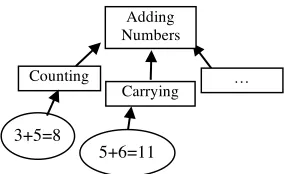
Gagné (1962, 1968) first theorized the notion of skill hierarchies, in which
the acquisition of a set of skills depended on the
successful mastery of subordinate sets. Solving an
equation, for example, requires a set of smaller skills
[image:20.612.400.542.540.627.2]that include Combining like Terms, Factoring, etc.
(Figure 4). Each of those skills can in turn be broken
down into sets of subordinate skills, such as factoring constants v. factoring
Figure 4 – A higher-level skill, broken up into subordinate skills (associated, concrete tasks shown as examples)
Counting
Carrying … Adding
Numbers
3+5=8
binomials. Gagné suggested that once each skill in a subordinate set was mastered,
the larger skill was likely to be mastered as well. In this way, students would build
skills that are more general by gradually building up smaller ones. He called
transfer within sets Lateral Transfer, and the merging of skills into a larger skill
Vertical Transfer, but note that his use of the term ‘Transfer’ is much closer in
meaning to the Associationists’ use of the term: Gagné does not employ mental
models to explain the phenomenon. Several educational psychologists and
cognitive scientists (Bruner, 1996; Fischer, 1980) have supported the notion of
skill building through careful identification of related and subordinate skills.
Gagné’s skill-based definition of Lateral Transfer can be used to explain the
dart-throwing example (Judd, 1908) without resorting to mental models: students
developed a skill at compensating for refraction at, and were able to apply it to a
different depth. This differs from Vertical Transfer, in which Gagné would expect
to see the children improve at a wider array of refraction tasks (perhaps one in
which the target image was inverted). Skill theory would suggest that sufficient
exposure to inversion tasks would increase the likelihood of students acquiring a
generalized skill for dealing with refraction, without making any claims about the
formation of a mental model for the phenomenon.
In Mind Bugs (1990), Kurt VanLehn explores the origins of incorrect and
unexpected behavior in the context of a rule-building system. The use of the term
between random mistakes and encoded, reproducible errors. Indeed, VanLehn
finds empirical evidence to support his theory, noting that accidental “slips” are
not enough to account for the number or type of mistakes students make. Dynamic
Skill Theory (Fischer, 1980; Fischer & Granott, 1995; Yan & Fischer, 2002),
developed by Kurt Fischer, seeks to bridge theories of skill development to
existing literature on cognitive development, genetics and neuroscience. Fischer
broadens the types of association that are possible between skills, incorporating
theories from other fields to explain the formation of other connections as a
learner matures.
However, there are limits to what can be explained through a skill
hierarchy. When a child learns to tie her shoes, she first repeats the steps
consciously, one at a time. As her skill improves, the process can be executed
faster or with greater flexibility, but there is a side-effect not purely explained by
skill hierarchies. The amount of conscious attention she needs to tie her shoe
decreases, until the process becomes nearly automatic. A strict, observation-only
reading of Skill Theory would explain how this skill might feed into a greater
understanding of knots, or how its acquisition would eventually lead to greater
flexibility with lacing other footwear, but would fail to explain the reduction in
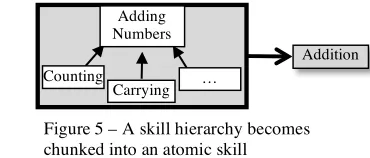
cognitive load.Related phenomena can be found in memorization tasks, in which
subjects are able to group items in such a way as to maximize recall (Gagné &
theorists refrain from postulating about the mechanism by which this “chunking”
phenomenon occurs (Figure 5). However, even acknowledging the phenomenon
suggests the operation of an internal,
unobserved mechanism. While the locus of
Skill Theory remains firmly rooted in the
development of skills as they pertain to task completion, it is clear that there are
compelling reasons to shift this focus inward, and to consider where and how these
skills might be stored in the mind.
Cognitive Architectures
Theories of cognitive architecture seek to map the observed process of skill
acquisition to a brain-based theory for program storage, retrieval, and execution
(Anderson, 1976; Newell & Simon, 1972). Because these theories can be modeled
as computer programs that “learn,” many of the theories in the field have produced
software whose behavior can be compared to human learners. Examples include
the collection of ACT-derived systems (Anderson, 1976, 1983; 1992; Anderson,
Corbett et al, 1995) and the Soar architecture (Rosenbloom, Laird, et al, 1985),
both of which have been employed as cognitive tutors and learning tools across a
variety of domains. As with model-based theories of transfer, Cognitive
Architectures assume that some intermediate representation of knowledge exists in
[image:23.612.345.530.142.221.2]the mind of the learner, and that the representation grows and evolves through
Figure 5 – A skill hierarchy becomes chunked into an atomic skill
Counting
Carrying … Adding Numbers
experience. By making these models testable and concrete, these theories manage
to avoid some of the criticisms of purely theoretical, model-building frameworks.
A child who is learning to tie her shoes may
begin by memorizing a list of instance-specific steps,
storing them away and then repeating them the next
time she is asked to tie her shoes. She may be able to
recall this list whenever she is asked to tie her shoes,
but be completely flummoxed when presented with two pieces of rope that must
be joined together. According to the cognitive architecture literature, this child has
stored the steps and context for shoe-typing in what is called declarative memory
(figure 6). This memory may include information that is irrelevant to the task, as
we saw in the Tower v. Hole confusion posed by students in Perkins’ example
(2009). She may, for example, assume that the first step is to put her shoes on, and
to sit comfortably on the floor. Declarative knowledge is brittle, and can only be
applied only if the new task is identical to one that has been seen before.
Procedural memory, on the other hand, parameterizes these steps as being
associated with a goal (e.g., “knot tying”). Anderson (1983) describes declarative
memory as stored facts or information (the “what”) and procedural memory as
goal-oriented statements (the “how”). To solve a problem, a learner may call upon
declarative knowledge of similar problems or facts, or procedural knowledge of
strategies. Procedures are characterized by their flexibility and speed, reminiscent
Figure 6 – Two summation-by-counting tasks are stored in declarative memory (procedural memory – on the right – is shown as empty).
of “skills” or “models” discussed above. Procedures can be adapted to a variety of
tasks, and procedures can be combined to form higher-level procedures. A learner
may execute a procedure without ever being consciously aware of the steps he or
she takes, which explains the chunking phenomenon described earlier. However,
where Skill Theory merely acknowledges this experience, the Cognitive Architects
go to great lengths to analyze the process.
Anderson et al. (1995), describe the process
of shifting knowledge from the declarative to
procedural store as “knowledge compilation” (p.
169), in which the learner generalizes over
examples stored in declarative memory, creating a procedure to achieve a task
(Figure 7). The exact steps of the procedure are also stored in declarative memory,
but the goal is stored in procedural memory. When confronted with a similar task
in the future, the learner need only match the goal at hand with goals stored in
memory, then access and execute the appropriate procedure. Procedures can also
be compiled together, to create a more general procedure with a more widely
applicable goal. For our purposes, knowledge compilation serves as the
mechanism by which skills are generalized and mental models are developed. Counting
Figure 7 – The tasks are compiled into a procedure, which is stored in Declarative Memory, with the “counting” goal stored in Procedural Memory.
In their study of algorithmic problem
solving, Newell and Simon (1972) observed a
similar trajectory to Anderson’s: learners would
first blindly repeat a list of steps, then memorize
those same steps, and finally internalize them in a
more compact representation. However, they also point out that the compilation
process results not only in efficiency and flexibility gains, but also in an increased
understanding of the algorithm itself (p. 822). It is interesting to note that the term
has the same meaning in computer science as it does in cognitive science:
compilation is a process through which a verbose structure is boiled down to a
simpler one, and along the way something is learned about the meaning of the
original structure. This compilation occurs constantly, as new subroutines are
added, trimmed, or optimized, and the goals become more flexible and more
adaptable.
Synthesizing Transfer
Model-building theories focus on the way knowledge is represented in the
mind, highlighting the importance of a model that accurately represents a concept
and can flexibly be applied to relevant tasks. Skill Theories, on the other hand, use
task performance to identify the hierarchical connections between related skills,
emphasizing an empirical approach that tracks the development of rules through
experience. These theories are orthogonal, rather than mutually exclusive. If skill Counting
Carrying
Figure 8 – Carrying is compiled as a procedure too, and the goal stored in procedural memory has been generalized to include both counting and carrying subroutines
acquisition is constructed as a form of programming, what is the nature of the
computer on which these programs run? In what machine might mental models be
stored, modified and retrieved? Drawing from a number of diverse,
learning-related fields, the study of Cognitive Architectures offer a possible bridge between
these two frameworks.
Cognitive Architectures propose a mechanism by which learners gradually
integrate information they have seen into concepts they understand. A learner may
begin by memorizing the steps and information involved in a task, allowing them
to carry out the task through brittle, rote repetition. Through experience, they
compile the list of steps into a procedure, replacing the memorized list with a
flexible goal. It is Compilation and Goals that form the bridge between skills and
models. When closely related tasks are stored as a compiled procedure, this
phenomenon may be considered “near” or “lateral” transfer. When individual
procedures are compiled into a more general one, we find links to Gagné’s
description of “vertical transfer”. As suggested by Skill Theory, this compilation
results in accelerated execution, and subordinate procedures that are used often are
more likely to be compiled into a more general, higher-level procedure. Mistakes
in compilation may occur as well, resulting in negative transfer and reproducible
slips, à la Van Lehn’s Mind Bugs.
Like the model-builders, Cognitive Architects assume that these procedures
a procedure for falling-body problems is shaped by the experience of watching an
objects fall from towers or down holes, from learning about gravity in physics
class, etc. When we talk about the fitness of these procedures, we consider the
degree to which they accurately describe the structural properties of particular
concept. Does a students’ “falling-body procedure” include general parameters for
distance and acceleration, or has irrelevant information about towers been
compiled in by mistake, as a form of Perkins’ “negative transfer”? Is the goal
flexible enough to be applied to problems that deal with holes?
My use of the term “transfer” is closest to the concept of knowledge
compilation. It is both a singular occurrence (the immediate recognition of one
task’s similarity to another) and a permanent change (the compilation of that new
information into a new procedure). When I refer to a student’s “model” for
functions, I describe the structure of goals and procedurals that is constantly being
revised, rebuilt and refactored, and the associated goal that signals to the student
that this structure should be applied to a given task.
This compilation is influenced by experience: rich models are more likely
to be formed by completing rich tasks. But what defines a “rich task”? A rich task
may have many valid solutions, but only a handful of optimal ones. The game of
chess is easy to learn, but difficult to master (Singley, 1989, p. 29). Singley points
out that chess is about picking an optimalmove out of many valid ones – and the
opponents. Perkins (2009) draws a similar conclusion when he advises learners to
“play out of town,” emphasizing the importance of applying a concept in diverse
settings in order to deeply understand it. Like a Grand Master’s understanding of
chess, a rich model is built through vast experience in a variety of settings.
However, merely completing a rich task does not guarantee that
compilation will result in a rich model. Cognitive Architectures include limits on
working memory, and there is evidence that compilation imposes its own memory
overhead. Reed, Ernst and Banerji (1974) studied the relationship between
memory and compilation by having students complete the closely related
“Missionary-Cannibal” and “Jealous Husband” puzzles (p.438), both of which are
known to strain working memory. The solutions to both puzzles are similar, and
the authors expected their subjects to transfer what they had learned when solving
one puzzle to the next. What they found instead was that few subjects recognized
the structural similarities between the problems, even after completing them. The
first puzzle was sufficiently complicated as to prevent compilation, and even after
solving it successfully students were no better off when solving the second one.
Educators must strike a balance between task richness and working
memory. Simple tasks are unlikely to result in complex models, but complex,
monolithic tasks may be too large to be compiled at all. To consider the challenge
of formulating a rich task in algebra, it is necessary to understand the wealth of
various representations of algebraic functions, and how their interaction forms a
rich model for algebra.
The Algebraic Domain
From an early age, children are presented with mathematical notation like
“2+3” or “5+x=10”. The implication is that math is a process, and that
mathematical expressions are essentially questions for which the student must find
an answer (“5” and “x=5”, respectively). When they enter an algebra class,
however, math is constructed quite differently. The notation “f(x)=x+10” will be
confusing to a student who is looking to find an answer, because there is no
question. Instead, the notation defines a mathematical object: the function f. Rather
than asking for students to calculate an answer, an algebra teacher asks their
students to reason about their properties (Breidenbach et al., 1992; Sfard, 2000). A
student might be asked to identify the y-intercept of a function, how many roots it
has, or whether or not it has an asymptote.
An Object Model for Functions
At the very least, a model of functions requires that students develop an
ontological understanding of processes as objects. This shift requires a level of
abstract thinking beyond what is required for arithmetic (Piaget, Grize, Szeminska
et al., 1977). Unfortunately, this switch is decidedly nontrivial. Sfard and
processes, which they call “Reification”. They define reification as “our mind’s
eye’s ability to envision the result of processes as permanent entities in their own
right" (p.194), the ability to name a process and to recognize that an arithmetic
relationship can be viewed as an entity by itself. This shift requires that students
cross a “cognitive gap” (Herscovics & Linchevski, 1994, p. 63), in which named
objects (“f(x)”) are also thought of as processes acting upon unknowns (“2x+4”).
A related construction is found in Slavit’s (1997) “Property-Oriented View” of
functions, in which the objects are made concrete by considering various
properties that are preserved across transformations. This also mirrors the
approach taken by Schwarz and Dreyfus (1995), who focus on the transformations
rather than the properties they preserve. Despite these differences in focus, these
characterizations are not mutually exclusive (O’Callaghan, 1998). All of them
require the formation of an object model for abstract arithmetic processes, as
opposed to the strict application of those processes to find an answer. For students
who still think about “doing math” as “getting the answer”, questions about
properties of a function are not just difficult – they are beyond the limits of the
students’ conceptual model.
Once this gap has been crossed, the objects must be fleshed out to gain
properties (e.g., linearity, number of roots, etc.), and students are asked to reason
about these properties. This closely parallels the notion of goals being associated
procedure to be flexibly applied. Asking a student to identify the roots of a
function, for example, assumes that they understand functions as objects and that
“root-having” is a property of those objects.
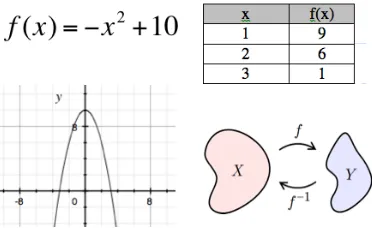
Moreover, these properties may be
discussed in a variety of representations, with
students thinking of functions as lines on a
graph, tables of inputs and outputs, symbolic
formulas, or a mapping between domain and
range. In this construction, it is necessary for
a student to understand the representation in order to decipher that which it
represents. This definition is closely hewn from that of Kaput (1991), who writes
about notational systems that are “materially realizable cultural or linguistic
artifacts shared by a cultural or language community” (p. 55). It is because we
agree on conventions for graphing, for example, that we are able to discern the
meaning of a graph. Slavit, in his argument for a property-oriented view of
functions (1997), addresses the problems of notational settings, again referring to
the mix of terms and symbols that define a representation.
Algebra textbooks vary somewhat in the number, type and order of
representations they use (Dreyfus & Eisenberg, 1982; Fey, 1984), but there exists
a core set of representations that I will draw from in this study. This set finds
[image:32.612.359.545.194.308.2]common ground in the literature, but is also endorsed by modern standards
(Common Core Standards, 2010; Mayer et al., 1995 NCTM, 2000): Tables and
Function Machines, Graphs, Sets and Symbolic Equations. It should be noted that
this corresponds exactly to Kaput’s “Big Three” (1998, p. 272), with the addition
of the Set-Mapping representation. Each representation has its own properties,
vocabulary and operations – all of which must be incorporated into a complete
model for algebraic functions.
Tables and Machines
The idea of the “function machine” as an entity is recommended as an ideal
way to introduce students to functions (McGowen et al, 2000; NCTM, 2009). The
machine itself is the Object, while the inner workings symbolize the Process
(Slavit, 1997). Wilson (1994) shares a student’s explanation of functions, which
mirrors this representation: “What I mean ... is with the f, the f(x), you have to put,
it's like a grinder. You put a number in right here and this f is going to change this
x in some way” (p. 354).This representation is analogous to lists or tables of
ordered pairs (p. 261), by emphasizing the discrete inputs and outputs of a
function.
Graphs
In contrast to a table’s emphasis on input-output pairs, a graphical
representation highlights the behavior of a function over a rangeinputs. Graphical
before the underlying mathematical concepts can be explored (Curcio, 1987,
p.383; Mevarech & Kramarsky, 1997). Students must understand what the axes,
origin and coordinates represent, and be familiar with the visual concepts of
points, scale, and magnitude in order to reason about a graph, plot a point, or
locate a root. Once they have mastered the skills, however, students can use this
representation as a powerful tool for analyzing the behavior of a function over
groups of inputs, identifying properties such as roots, maxima and minima, etc.
Set Mappings
Functions may also be represented a mapping between input and output sets
(Slavit, 1997). In this representation, the set of all possible inputs is transformed to
the set of all possible outputs by the behavior of the function. When describing
this transformation, students must determine if the mapping is “one to one” and
“onto” as they consider the properties of the function. The representation of a
function as a mapping from one set to another is familiar to many, as the concept
of related quantities is rooted in everyday experience (gallons of milk per dollar,
miles per gallon, etc.). Ponce (2007) suggests that a ‘mapping’ representation is
relatively intuitive, and forms the “first core idea” in his survey of functional
Symbolic Equations
When represented as series of symbols, a function can be construed as a
sentence waiting to be filled in, with variables being replaced by values in order to
provide an answer. These “math sentences” can be composed with one another to
generate new sentences, and can be manipulated by many of the rules students
have learned from arithmetic. For students who are new to algebra, this
representation allows them to focus more on the familiar process, and largely
ignore the object notion (Usiskin, 1998).
Rich Tasks for Algebra
The two problems for model building outlined above involve (1) building
an object-based model for mathematics that includes all relevant properties, and
(2) making that model flexible enough to span multiple representations. A rich
model should include multiple properties or representations of a function object.
As we have seen from the transfer literature, abstract rules such as light refraction
or chess strategy may be easy to memorize and recall, but can be difficult to apply
in novel situations. Singley (1989) and Perkins (2009) emphasize the importance
of concrete experience in overcoming this obstacle, suggesting that an instructor
should use tasks in which students are able to apply their understanding of
functions in a concrete way. Teachers often seek out real-world tasks to provide
of a car as it changes speed. This allows students to refer to a concrete base of
knowledge, and use that as a check against functions they have built or
manipulated.
Word problems are a complex application of function models, in which an
informal description of processes must be formalized or solved for a given
constraint. Despite having arithmetic solutions, the challenge of word problems is
about identifying the functional relationships embedded in a narrative, and
potentially bringing to bear a number of properties and representations to arrive at
a solution. Consider this well-known word problem:
A train leaves Chicago for New York, traveling at 75 mph. At the exact
same time, another train departs New York for Chicago, traveling at 60 mph. If
New York and Chicago are 700 miles apart, how long will it take the trains to pass
each other?
The goal of this puzzle is clear, yet there are no instructions for which path
will take us there. A student can use simple arithmetic to determine the location of
each train every hour, as they seek the time when both trains have the same
location; they could formalize the relationship between train-distance and time
using a formula, or by drawing a line on a graph. Each approach has its own
strengths and weaknesses, and the freedom to select an appropriate representation
chess games or logic puzzles, word problems like this one allow students to
choose an optimal solution from several valid ones. The ability to derive the
functional relationships at work in unstructured word problems can be seen as a
perfect rich task: to solve the problem, a student’s goal must be flexible enough to
apply the appropriate model, and the model itself must be rich enough to
encompass the conceptual depth of the task at hand. However, we know from our
synthesis of the transfer literature that this richness comes at a price.
Obstacles to Compilation
In order to be compiled, a rich task must fit within working memory,
leaving enough space for compilation overhead. Unfortunately, this is a
particularly difficult challenge for algebraic functions. Each representation
includes a large collection of specific vocabulary, mechanical skills, and concepts.
For example, students must learn how to draw and label their axes, plot points and
understand words like “scale,” “origin,” “slope,” and “root” just to work
comfortably with graphs. How much “graph knowledge” are they able to employ
when solving symbolic equations? Additionally, the amount of raw computation
necessary to convert one representation to another makes the task prohibitively
time consuming for students, forcing them to focus on the rote computation rather
than the higher level task at hand. Schwarz and Dreyfus (1995) found that
“beginning students cannot be expected to simultaneously think at the higher level
263). Given the wealth of knowledge students must engage in rich algebra tasks, it
is no surprise that these tasks are difficult to complete, and unlikely to result in
compilation.
This forces teachers to focus on tasks that deal with a single representation,
resulting in predictable learning outcomes. Students may be given activities that
stress their knowledge of tables, graphs, or formulas, but never more than one at a
time. While these tasks may be challenging by themselves (Kieran & Sfard, 1999;
Kirshner, 1989), we would expect the focus on individual representations to result
in the compilation of separate, disconnected models. Indeed, a wealth of studies
shows that students struggle to see the connections between representations
(Bloch, 2003; Campbell, 1992; Charles & Silver, 1988; Resnick & Ford, 1981;
Wagner & Kieran, 1989). Schwarz & Dreyfus (1995) found that students who are
highly proficient when working with one representation of functions might be
completely unable to reason about another. Likewise, the large number of
prerequisite skills involved in graphing may explain why a student’s
understanding of graphs translates so poorly into other representations (Carreira,
2002; Cunningham, 2005; Dreyfus, 1999). Wilson (1994) found that even teachers
themselves are often unable to explain what a graphical property (such as the
vertical line test) means outside of the graphical context. For many students and
teachers, the symbolic notation is felt to be the “real” function (Carriera and Evan,
representation. Because of the bias towards symbolic representations, “persistent
algebra errors may reflect disengagement from declarative content rather than
inability to deal with it” (Kirshner, 2004).
In each of these situations, students have developed representation-specific
models for functions and are unable to compile them into a unified model. Like
the physics students struggling with “hole problems,” these students have falsely
identified the representation as a necessary condition for applying each model.
Perkins (2009) calls this process “conceptual welding,” in which the various
representations become inseparable from the mathematical concepts they
represent. This aligns closely with Van Lehn’s compilation errors, in which an
erroneous facet is compiled into a procedure, preventing it from being flexibly
applied. To address these challenges, teachers must find ways to optimize rich
algebraic tasks, reducing demands on working memory and making compilation
possible.
Optimizing Rich Tasks
Teachers employ a number of strategies to optimize these tasks for clarity.
One of the most common is the use of real-world situations for rich tasks, which
allow students to link the behavior of a function object to a concrete experience.
For example, asking students to consider the trajectory of a baseball can easily
describe a quadratic relationship, allowing students to rely on a familiar
often walk through the application of a function on a number of inputs, to
demonstrate exactly how the object behaves. Likewise, it would be helpful to
explicitly connect representations, allowing students to manipulate a function in
one representation and see their changes reflected in another. Teachers may offset
the computation load of converting between representations by doing the work
themselves, or by providing students with a formula, a table and a graph as part of
an assignment. This echoes the recommendations for explicit connections
(Bransford, 1999, Bransford, 2005; Singley, 1989; Van Eck, 2001), as is it now
frequently suggested that representations should be taught in parallel or explicitly
connected by the instructor (Bazzini, 2001; NCTM, 2000; Resnick & Omanson,
1987).
Unfortunately, these techniques only go so far. It is prohibitively labor
intensive for a teacher to check the behavior of multiple functions at once, or to
quickly translate a single function across multiple representations. Asking students
to incorporate these calculations into their own practice might be helpful, but it
only increases the number of steps necessary to complete the task and makes
compilation less likely. Word problems help relate functional relationships to a
concrete domain, but students are confined to the abstract when trying to solve
them. Finally, there remains the ontological problem of functions as objects:
students who calculate an answer using rules and conventions of the algebraic
division, correctly calculating an answer does not necessarily give students a sense
for the underlying concepts at work. Having established the specific challenges
faced by teachers and students around rich algebraic tasks, we can now turn our
attention to the ways technology has historically been used to address them.
The Promise of Technology
Technology aims to reduce the cognitive load of rich algebraic tasks,
improving the chances of compilation. While the scope of algebra-focused
technologies is broad, all of these tools offer a mix of four specific advantages,
which address the challenges outlined in the previous section:
1.! Rapid Computation – students are free to spend more of their time on analysis rather than calculation, which may reduce cognitive overhead by shrinking the amount of time and effort needed to generate a graph, complete a table, etc.
2.! Rich Visualization – programs can be used to display functions in multiple representations simultaneously, or to switch back and forth rapidly between them. Comparing these representations side-by-side may reduce memory overhead.
3.! Concrete Examples – software can be used to demonstrate functional relationships through multimedia, which may preserve real-world connections (e.g., actually seeing two trains move towards one another, modeling a situation described in a word problem).
4.! Conceptual Similarities – the act of computer programming can employ concepts such as abstraction, variables and functions. If a programming language is sufficiently similar to algebra, rich
programming tasks might serve as a viable surrogate for rich algebra tasks.
These propositions have made so-called “cognitive technologies” (Pea,
(Mayer, 2005; Marzano, 1998). Graphing calculators, for example, have become a
staple of the modern-day algebra classroom (Berger, 1998), allowing students to
see a function translated across representations without any computational
overhead. Programs like Mathematica and Maple offer sophisticated tools for
building and exploring functions, with instant computation designed to free up
cognitive load and facilitate compilation.
While these tools may reduce the transfer barriers between functional
representations, they introduce barriers of their own. Each tool brings its own
conventions, vocabulary and skills, which creates familiar the risks of conceptual
siloing and welding: can students connect operations in a computer program to the
algebraic ones they represent? If they build a rich model by solving word
problems with a calculator, can they apply that model when the calculator is taken
away? As we consider the various technologies in this section, we must bear in
mind the added cost of teaching students to use each tool, as well as the potential
for the tool to become a problem solving crutch.
The previous section defined the constraints of a rich model for functions in
algebra: a concrete understanding of functions as objects, and the ability to view
these objects in multiple representations. All of the technologies designed to
address these constraints allow students to both create functions and then view
them in multiple representations, but each one makes tradeoffs that it better suited
restrictions on how students define functions (e.g., enforcing specific names for
variables or functions, rejecting mathematically-valid equations that fail to match
a specific format, limiting functions exclusively to the domain of numbers, etc.),
but allow them to explore those functions flexibly in multiple representations.
Tools like Logo, on the other hand, have far fewer restrictions on how functions
are defined, but require a great deal of extra work to view these functions across
traditional representations. While each tool attempts to straddle the line in a
different way, it is useful for our discussion to group these
technologies into two categories, following the dual challenges
of representing and reifying functions: those whose primary
focus is the visualization of functions, and those whose focus is
on programming them.
Visualizing Functions
Perhaps the best-known example of technology as a
means of visualizing functions is the graphing calculator. On a
graphing calculator, students define a function in one
representation (symbolic), and then see the corresponding
graphical representation instantaneously. Other visualization
tools offer variations on this theme, allowing students to define
functions in one way and instantly them using a variety of
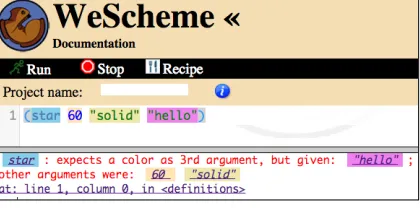
[image:43.612.454.544.294.665.2]representations utilizing the rapid computation afforded by computers. In the
CARAPACE software program (Kieran, Boileau and Garançon, 1996), students
define functions in a language-like interface (for example, “price of pen × 3 gives priceof watch” (p. 266)) rather than using pre-defined symbols,
and can then explore various representations of those functions. The Triple
Representation Model (TRM) tool also focuses on displaying multiple
representations, allowing students to see changes translated across each
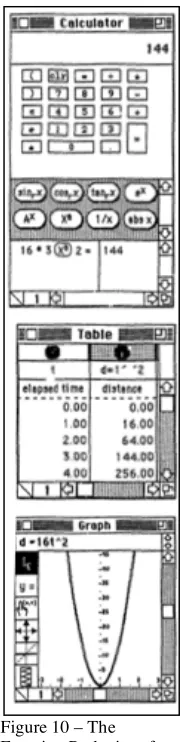
representation in parallel (Baruch & Dreyfus, 1995). Jere Confrey’s Function
Probe (1991, 1996) adds a unique feature that allows students to define a function
by recording sequences of calculator operations, and then store them as a single
button on a simulated calculator, essentially chunking a process into a single
object. Like the other tools in this category, these objects can then be explored
across multiple representations.
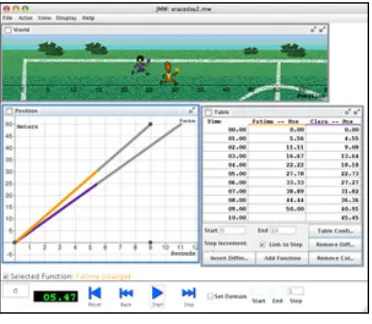
SimCalc (Kaput, 1998; Hegedus and
Kaput, 2003) adds concreteness to the
computation and visualization benefits of
technology. As with programs like TRM and
the Function Probe, SimCalc allows students
to view multiple representations of a function
at the same time. However, SimCalc is unique in that it also allows students to
model behaviors using the functions they have defined, and see these behaviors
[image:44.612.364.550.437.599.2]animated on-screen. A student who models the position of a train over time can
import an image of the train, and then watch it move across the screen in
accordance with their function.
This modeling functionality makes SimCalc unique among visualization
tools, allowing it to address some of the ontological challenges of function objects.
Functions become the blocking instructions for “actors” on a “stage,” putting
students in the role of a director who decides how their actors should move. This
provides not only an engaging visual experience, but also a connection to real life
events. The modeling activity forces students to consider behaviors in their own
right, and to abstract individual calculations into rules and patterns. SimCalc also
provides rich tools for sampling these simulations, displaying a graph or table of
position of the train’s position with respect to time. This puts the concrete nature
of physical phenomena first, and shifts the focus from “multiple linked
representations to multiple linked descriptions of real situations” (Kaput, 1998, p.
275).
Research on the learning impacts of these tools is mixed. Graphing
calculators, by far the most widely adopted technology, have surprisingly little
data to support their use. A meta-analysis of graphing calculator evaluations
(Berger, 1998) found many problems in experimental design, with studies lacking
a control group or a proper form of assessment. Other studies are more promising:
a single-classroom study of the Function Probe (Confrey, 1996) found marked
flexible mental model for functions, while two classroom studies of TRM (Baruch
and Dreyfus, 1990 and 1995) also found strong gains on transfer tasks. While both
of these studies used control groups, the individual assessments were carefully
tailored to the tools themselves, making it difficult to gauge transfer into
conventional tasks. Moreover, the small sample sizes and reliance on a single
teacher make it difficult to generalize the conclusions made in these studies.
Studies of SimCalc, by contrast, have consistently utilized rigorous
experimental design, traditional math assessments and large sample sizes. In a
study conducted with grade school students in Texas (Roschelle, Tatar &
Shechtman, 2007), SimCalc was used to replace a multi-week unit in a traditional
mathematics curriculum for more than 800 students. Those in the treatment group
made much larger gains than the control group when dealing with questions that
required them to reason about the behavior of a function across multiple
representations. These gains were shown to be significant across teachers,
strengthening claims about the tool’s effectiveness. A multi-year study in
Massachusetts high schools (Hegedus, Dalton, Kaput et al., 2007) demonstrated
similar gains.
Unsurprisingly, these studies provide evidence of both siloing and welding.
Because of their focus on exploring functions rather than defining them, these
tools require students to define functions in an inflexible format. A student who
function on their own before entering it into their graphing calculator or software
program, and must do so using the conventions or syntax of that program. The risk
of siloing lies in the requirement that students translate their understanding of a
task into a specific representation before entering it into the tool. As a result, it
may be difficult for novices to distinguish between the limits of the tool and the
limits of the math it is designed to explore. If a calculator is unable to solve a
specific expression, is that because the expression is entered incorrectly or because
there is no solution? Indeed, several studies have found that the restrictions of the
calculator interface constrain the ability of students to directly access the material
(Berger, 1998; Drivjers, 2000; Zheng, 1998). The authors of CARAPACE’s
natural-language interface for defining functions found that students were unable
to connect the underlying mathematics to the English-like statements they had
defined in the software (Kieran, Boileau and Garançon, p. 267). Meanwhile, a
meta-analysis of impact studies found that any positive effect from graphing
calculators disappears when students are assessed without them (Ellington, 2003).
If students are able to build a better model with these tools, they are unable to
apply it without them. In their concluding remarks, Kieran, Boileau and Garançon
conceded, “not all technology supported roads that are intended to be algebraic
reach developing meaning for traditional algebraic representations and
Intermezzo
The gains demonstrated by users of SimCalc are encouraging, and deserve
further discussion. What distinguishes SimCalc from other exploration-focused
tools is its use of modeling, which forces students to think concretely about
functional relationships within real-world phenomena. In this way, SimCalc may
be considered a limited programming language, tailored exclusively to animation
of objects using a narrow class of functions. SimCalc is the only tool in this
category that seeks to make functions concrete, and its emphasis on
representations as linked descriptions of program behavior is directly in line with
best practices involving transfer and compilation. However, SimCalc’s modeling
environment imposes a constraint on the content being modeled. While
phenomena involving position, velocity and acceleration are easy to model, a
teacher would struggle to model other relationships, such as those between price
and profit, heat and pressure, or radius and circumference.
The limitations each of these tools impose on the definition of functions or
the ways they are represented should give us pause. TRM, the Function Probe, and
Graphing Calculators force students to translate from real-world phenomena to
pure mathematical forms before they can be explored. SimCalc attempts to bridge
this divide by allowing the tool to visualize the phenomenon itself, but places deep
restrictions on what can be visualized. When viewed as a programming tool, the
programs and the visualization of their output. These limitations are
understandable, as the goal of SimCalc is to explore algebraic concepts from a
familiar mathematical domain, while minimizing the overhead necessary to use
the tool. But at this point, it is fair to consider whether the domain of algebra may
simply be too complex to be explored in this way. Analogies are often used to
explain difficult concepts, by embedding them in a more accessible or familiar
domain. For algebra, the most commonly explored domain is computer
programming, which has been used as a source domain in transfer experiments
going back nearly half a century.
Programming Functions
At first blush, programming and algebra have a great deal in common. A
programmer identifies sequences of instructions and combines them into a
function, just as a mathematician combines a sequence of calculations into a
function object. Given their similarities, it is no surprise that researchers have long
considered programming as a possible “surrogate domain” for algebra. Teaching
algebra was one of the original design goals of the Logo programming language
(Milner, 1973), and many researchers have
studied it as a vehicle for algebra
(Clements, 1985; Feurzig, Papert, Bloom et
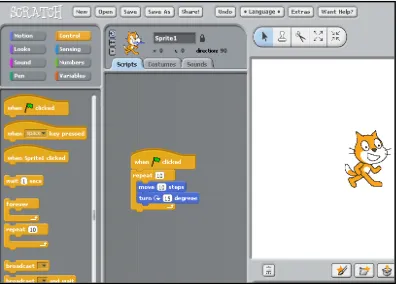
[image:49.612.347.546.579.721.2]al., 1970; McCoy & Burton, 1988; Milner,
1973; Noss, 1987). As Logo waned in popularity, other introductory-programming
tools rose to take its place, such as BASIC (Hatfield and Kieran, 1972), Interactive
SET Language (ISETL) (Breidenbach, Dubinsky et al., 1992), ToonTalk (Kahn,
1996), Boxer (diSessa, 2000), ALICE (Cooper et al., 2000), Scratch (Resnick,
Maloney et al., 2009) and others. Some of these tools were, like Logo, explicitly
designed to teach mathematical concepts. Other tools were focused elsewhere, but
teachers and parents maintained the expectation that all programming is deeply
connected to mathematics: if a student learns to program, the thinking goes, surely
they will get better at math in the process.
In contrast to visualization tools, the value proposition of programming is
that it shifts the learning of mathematics from the task of analysis to that of
experience (diSessa, 2000). A particular strength of programming is its use as a
modeling tool, in which students are able to model complex mathematical
relationships to explore concepts such as statistical distributions, the movement of
gas molecules, etc. (Wilensky, 1997). As with SimCalc, students engage in the act
of creating worlds governed by functional relationships, defining the rules that
control a simulation they observe and modify.
Ultimately, the hope is that students will be able to transfer the rich model
they compile while building and manipulating these worlds back into the domain
of algebra. Papert (1972) famously argued that children would develop a