
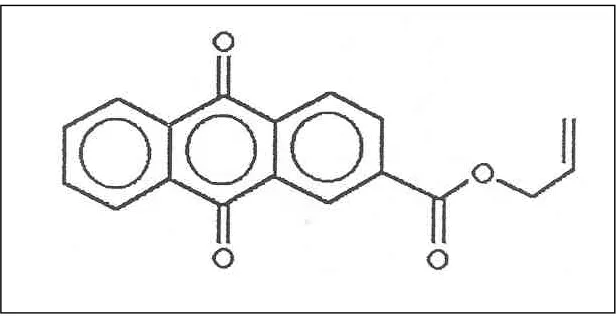
Anthraquinone-3-Carboxylic-Allyl Ester as a New Electrocatalyst for Dioxygen Reduction to Produce H2O2
Full text
Figure

Related documents
140,141 The effects on cell proliferation and expres- sion of apoptotic genes in breast cancer cells (MCF7) showed that extracts of the plant through the induction of apoptosis
FSWs indi- vidual and sex work level predictors included her age, literacy status (non-literate, literate), current marital status (never married, ever married), number of
82% of respondents agreed or strongly agreed that the development of agro- tourism in the study area has created more opportunities for local residents to
Once the mapping of FITS keywords onto the ObsCore data model has been successfully performed, the associated data is ingested into a dedicated database which can then be queried..
Yet, Bethlehem continues to be blessed, and our members bless us in their gifts of time, talents and treasures. That is a testament to the faithful giving of all
Turning from the topological branes to D-branes in type II string theory, the well-known conditions for D-branes on Calabi-Yau manifolds to preserve a certain amount of
Four fungal diseases (septoria leaf blotch (SLB), wheat leaf rust (WLR), wheat powdery mildew (WPM) and fusarium head blight (FHB)) were observed and a regional-based typology
management, including the ecosystem approach, has led to the recognition that the use of water quality objectives, the setting of emission limits on the basis of best available
