City, University of London Institutional Repository
Citation
:
El-Kordy, M.M. (2000). Understanding the utilisation of executive information systems using an integrated technology acceptance model: theoretical base and empirical validation. (Unpublished Doctoral thesis, City University London)This is the accepted version of the paper.
This version of the publication may differ from the final published
version.
Permanent repository link:
http://openaccess.city.ac.uk/8107/Link to published version
:
Copyright and reuse:
City Research Online aims to make research
outputs of City, University of London available to a wider audience.
Copyright and Moral Rights remain with the author(s) and/or copyright
holders. URLs from City Research Online may be freely distributed and
linked to.
Understanding the Utilisation of Executive Information
Systems Using an Integrated Technology Acceptance Model:
Theoretical Base and Empirical Validation
A Doctoral Thesis Presented by
Manal Mohammed El-Kordy
Submitted in Fulfilment of the Requirement for the Degree of
Doctor of Philosophy
Submitted to
City University London
City University Business School
Department of Management Systems and Information
Copyright ©Notice Manal M. El-Kordy
@The ownership of copyright of this thesis resides with the author.
"I grant power of discretion to the University Librarian to allow this thesis to be
Table of Contents
Contents Page
Table of content 3
List of tables 9
List of figures 12
Acknowledgement 13
Abstract 14
Chapter 1: Introduction to the Study 15
1.1 Introduction 15
1.2 The Underlying Research Philosophy 15
1.3 Research Background 16
1.4 Research Problem 19
1.5 Research Objectives 19
1.6 The Importance of the Research 20
1.7 The Study Bounds 21
1.8 The Research Plan 21
1.9 Conclusion 22
Chapter 2: Executive Information Systems and Executive Work 23
2.1 Introduction 23
2.2 Understanding the Executive Work 23
2.2.1 Managerial Work Characteristics and Roles: 23
2.2.2 Managerial Decision Making 26
2.2.3 Information the Executive Needs 29
2.2.4 Sources of Executive Information 31
2.2.5 Executives' Use of Computer Systems 33 2.3 What Constitutes an Executive Information System 34 2.3.1 The Difference between MIS, DSS, and EIS 34 2.3.2 Executive Information Systems Defined 35
2.2.3 EIS Functions and Capabilities 37
2.4 The Study's Definition of EIS 43
2.5 Conclusion 44
Chapter 3: Theoretical and Empirical Literature Review 45
3.1 Introduction: 45
Table of Content (Continued) Page
3.3.1 Theory of Reasoned Action (TRA) 51
3.3.2 Theory of Planned Behaviour (TPB): 53
3.3.3 Triandis Model of Behaviour and Attitudes 55 3.3.4 The Technology Acceptance Model TAM 57
3.3.5 Empirical Evidence: 58
3.3.6 Evaluation of the IS Usage Theories 64
3.4 Conclusion 68
Chapter 4: Research Model and Hypotheses 74
4.1 Introduction 74
4.2 The Rationale Behind the Research Model 74
4.3 The Research Model and Hypotheses 76
4.3.1 EIS Use 77
4.3.2 Perceived Usefulness (PU): 78
4.3.3 Perceived Ease of Use (PEOU): 79
4.3.4 Perceived Information Quality: 80
4.3.5 User Involvement 82
4.3.6 Subjective Norm 83
4.3.7 Facilitating Conditions 84
4.3.8 External Factors 85
4.3.8.1 User Participation 85
4.3.8.2 Information Systems Maturity 88
4.3.8.3 Computer Training 90
4.3.8.4 User Experience 91
4.4 Conclusion 92
Chapter 5: The Research Methodology 94
5.1 Introduction 94
5.2 Research Hypotheses 94
5.2.1 Research Hypotheses Related to EIS Use 95 5.2.2 Research Hypotheses Related to Perceived Usefulness 95 5.2.3 Research Hypotheses Related to Perceived Ease of Use 95 5.2.4 Research Hypotheses Related to Perceived Information quality 95 5.2.5 Research Hypotheses Related to User Involvement 96
5.3 Research Methodology 96
Table of Content (Continued) Page
5.3.1.1 Research Approaches in the Study of Information Systems 96 5.3.1.2 The Research Method Deployed in this Study 99
5.3.2 Pilot Study 100
5.3.3 Sampling Procedure 100
5.3.4 The Survey Response 102
5.3.5 Non-Response Bias Analysis 103 5.3.6 Characteristics of Respondents 105 5.3.7 Variables Definitions and Measures 107
5.3.7.1 EIS Usage 108
5.3.7.2 Perceived Usefulness 110
5.3.7.3 Perceived Ease of Use 110
5.3.7.4 Perceived Information Quality 110
5.3.7.5 User Involvement 112
5.3.7.6 Subjective Norm: 112
5.3.7.7 Facilitating Conditions 112
5.3.7.8 User Participation 113
5.3.7.9 Information Systems Maturity 113
5.3.7.10 Computer Training 114
5.3.7.11 User Experience 114
5.3.8 Statistical Analysis 115
5.4 Conclusion 116
Chapter 6: Evaluation of the Measurement Scales and Descriptive 117 Analyses
6.1 Introduction 117
6.2 Evaluation of the Quality of the Research Instrument 117 6.2.1 Testing for the Effect of Common Method Variance 117 6.2.2 Assessment of Internal Consistency Reliability and Construct 118
Validity
6.2.2.1 EIS use 119
6.2.2.2 Perceived usefulness 119
6.2.2.3 Perceived ease of use 120
6.2.2.4 Perceived information quality 121
6.2.2.5 User Involvement 122
Table of Content (Continued) Page
6.2.2.8 User Participation 124
6.2.2.9 Information Systems Maturity 125
6.3 Descriptive Analysis 126
6.3.1 EIS Usage 126
6.3.2 Perceived usefulness 128
6.3.3 Perceived ease of use 129
6.3.4 Perceived information quality 130
6.3.5 User involvement 130
6.3.6 Subjective Norm 131
6.3.7 Facilitating conditions 131
6.3.8 User Participation 132
6.3.9 Information systems maturity 133
6.3.10 Computer Training 134
6.3.11 User Experience 136
6.4 Conclusion 136
Chapter 7: Results of Hypotheses Testing 139
7.1 Introduction 139
7.2 Results of the Correlation Analysis 139 7.2.1 Results of Testing the Hypotheses related to EIS Use 139 7.2.1.1 The Relationship between Perceived Usefulness and EIS Use 139 7.2.1.2 The Relationship between Perceived Ease of Use and EIS Use 141 7.2.1.3 The Relationship between Perceived Information Quality and EIS 141
Use
7.2.1.4 The Relationship between User Involvement and EIS Use 142 7.2.1.5 The Relationship between Subjective Norm and EIS Use 142 7.2.1.6 The Relationship between Facilitating Conditions and EIS Use 143 7.2.2 Results of Testing the Hypotheses Related to Perceived Usefulness 143 7.2.2.1 The Relationship between Perceived Ease of Use and Perceived 143
Usefulness
7.2.2.2 The Relationship between Perceived Information Quality and 144 Perceived Usefulness
7.2.2.3 The Relationship between User Involvement and Perceived 144 Usefulness
Table of Content (Continued) Page
7.2.2.5 The Relationship between Facilitating Conditions and Perceived 145 Usefulness
7.2.3 Results of Testing the Hypotheses related to Perceived Ease of Use 145 7.2.3.1 The Relationship between Participation and Ease of Use 146 7.2.3.2 The Relationship between Information Systems Maturity and Ease 146
of Use
7.2.3.3 The Relationship between Computer Training and Ease of Use 147 7.2.3.4 The Relationship between User Experience and Ease of Use 147
7.2.3.4a Length of EIS Use 147
7.2.3.4b Computer-Use Skill 147
7.2.4 Results of Testing the Hypotheses related to Perceived Information 148 of Quality
7.2.4.1 The Relationship between Information Quality and Participation 148 7.2.4.2 The Relationship between IS Maturity and Perceived Information 148
Quality
7.2.4.3 The Relationship between Computer Training and Perceived 149 Information Quality
7.2.4.4 The Relationship between User Experience and Perceived 150 Information Quality
7.2.4.4a Length of EIS Use 150
7.2.4.4b Computer Use Skill 150
7.2.5 Results of Testing the Hypotheses Related to User Involvement 150 7.2.5.1 The Relationship between Participation and User Involvement 151 7.2.5.2 The Relationship between IS Maturity and Involvement 151 7.2.5.3 The Relationship between Computer Training and Involvement 152 7.2.5.4 The Relationship between User Experience and Involvement 152
7.2.5.4a Length of EIS Use 152
7.2.5.4b Computer-Use Skill 152
7.3 Results of Stepwise Regression Analysis 153
7.3.1 Prediction of EIS Use 153
7.3.2 Prediction of Perceived Usefulness 154
7.3.3 Prediction of Perceived Ease of Use 155 7.3.4 Prediction of Perceived Information Quality 156
7.3.5 Prediction of User Involvement 156
Table of Content (Continued) Page
Chapter 8: Discussion of Results and Implications for Theory and 161 Practice
8.1 Introduction: 161
8.2 Discussion of Results 161
8.2.1 Determinants of EIS Use 161
8.2.2 Determinants of Perceived Usefulness 165 8.2.3 Determinants of Perceived Ease of Use 166 8.2.4 Determinants of Perceived Information Quality 168
8.2.5 Determinants of User Involvement 169
8.2.6 Conclusion 170
8.3 Theoretical and Practical Implications of the Results 172 8.3.1 Contributions of the Study to IS/EIS Usage Research 173 8.3.2 Contributions of the Study to the Practice of IS/EIS 174
8.4 The Study Limitations 178
8.5 Recommendations for Future Research 179
Appendix 5-1 Cover Letter and Questionnaire 182
Cover Letter 183
Survey Questionnaire 184
Appendix 6-1 Factor Analysis of the Research Variables 188
Factor Analysis of the Research Variables 189
List of Tables
Tables list Page
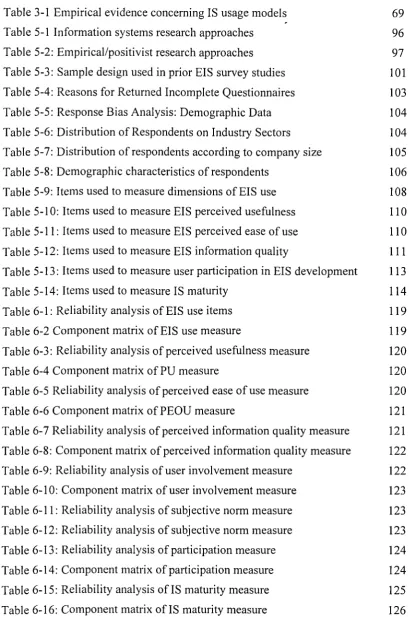
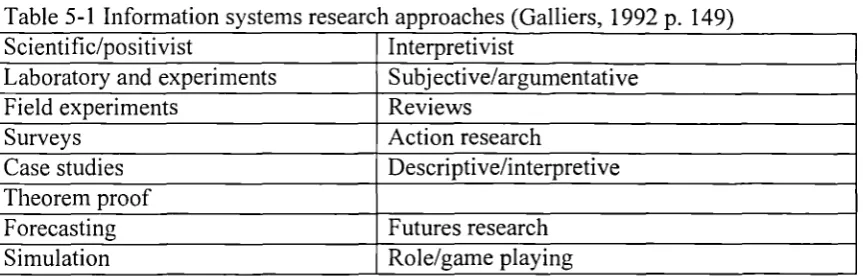
[image:10.595.95.505.118.736.2]Table 2-1 Information characteristics versus decision type 30 Table 3-1 Empirical evidence concerning IS usage models 69 Table 5-1 Information systems research approaches 96 Table 5-2: Empirical/positivist research approaches 97 Table 5-3: Sample design used in prior EIS survey studies 101 Table 5-4: Reasons for Returned Incomplete Questionnaires 103 Table 5-5: Response Bias Analysis: Demographic Data 104 Table 5-6: Distribution of Respondents on Industry Sectors 104 Table 5-7: Distribution of respondents according to company size 105 Table 5-8: Demographic characteristics of respondents 106 Table 5-9: Items used to measure dimensions of EIS use 108 Table 5-10: Items used to measure EIS perceived usefulness 110 Table 5-11: Items used to measure EIS perceived ease of use 110 Table 5-12: Items used to measure EIS information quality 111 Table 5-13: Items used to measure user participation in EIS development 113 Table 5-14: Items used to measure IS maturity 114 Table 6-1: Reliability analysis of EIS use items 119 Table 6-2 Component matrix of EIS use measure 119 Table 6-3: Reliability analysis of perceived usefulness measure 120
Table 6-4 Component matrix of PU measure 120
Tables list (Continued) Page
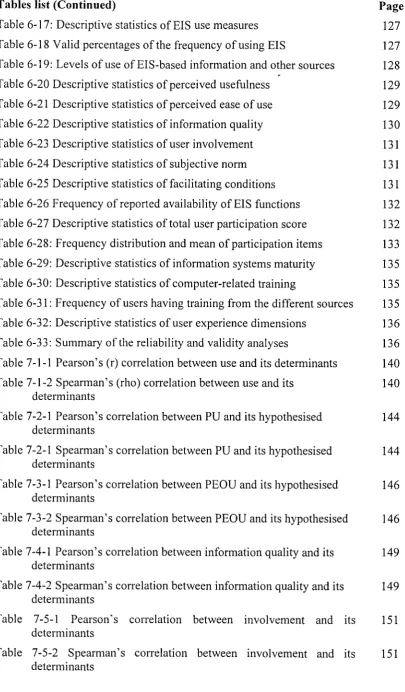
[image:11.595.102.508.66.759.2]Table 6-17: Descriptive statistics of EIS use measures 127 Table 6-18 Valid percentages of the frequency of using EIS 127 Table 6-19: Levels of use of EIS-based information and other sources 128 Table 6-20 Descriptive statistics of perceived usefulness 129 Table 6-21 Descriptive statistics of perceived ease of use 129 Table 6-22 Descriptive statistics of information quality 130 Table 6-23 Descriptive statistics of user involvement 131 Table 6-24 Descriptive statistics of subjective norm 131 Table 6-25 Descriptive statistics of facilitating conditions 131 Table 6-26 Frequency of reported availability of EIS functions 132 Table 6-27 Descriptive statistics of total user participation score 132 Table 6-28: Frequency distribution and mean of participation items 133 Table 6-29: Descriptive statistics of information systems maturity 135 Table 6-30: Descriptive statistics of computer-related training 135 Table 6-31: Frequency of users having training from the different sources 135 Table 6-32: Descriptive statistics of user experience dimensions 136 Table 6-33: Summary of the reliability and validity analyses 136 Table 7-1-1 Pearson's (r) correlation between use and its determinants 140 Table 7-1-2 Spearman's (rho) correlation between use and its 140
determinants
Table 7-2-1 Pearson's correlation between PU and its hypothesised 144 determinants
Table 7-2-1 Spearman's correlation between PU and its hypothesised 144 determinants
Table 7-3-1 Pearson's correlation between PEOU and its hypothesised 146 determinants
Table 7-3-2 Spearman's correlation between PEOU and its hypothesised 146 determinants
Table 7-4-1 Pearson's correlation between information quality and its 149 determinants
Table 7-4-2 Spearman's correlation between information quality and its 149 determinants
Table 7-5-1 Pearson's correlation between involvement and its 151 determinants
Tables list (Continued) Page
Table 7-6 Stepwise Regression Results: EIS Use Equation 154 Table 7-7 Stepwise Regression Results: Perceived Usefulness Equation 154 Table 7-8 Stepwise Regression Results: Perceived Ease of Use Equation 155 Table 7-9 Stepwise Regression Results: Perceived Information Quality 156
Equation
List of Figures
Figures list Page
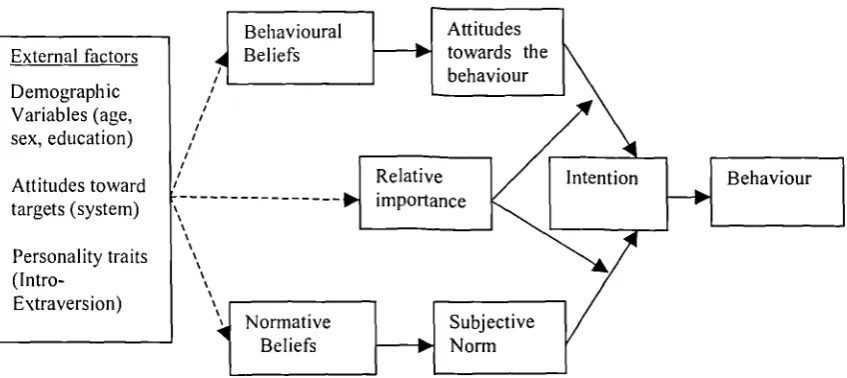
Figure 3-1 Theory of Reasoned Action 52
Figure 3-2 Theory of planned behaviour 54
Figure 3-3 A Subset of Triandis' Model of Behaviour and Attitude 55 Figure 3-4 The Technology Acceptance Model 57 Figure 4-1 The Integrated Model of EIS Use 77
Acknovv led gement
First of all, I praise God the most gracious, most merciful for helping me till ough the completion of this thesis.
I would like to express my thanks and appreciation to my super isor, Mis Anne Leeming, for her guidance, assurance, and much needed psychological support &ling the entire research project. I benefited a great deal from her exper ence to deal with the frequent obstacles that faced me during the preparation of this tiles s.
My thanks and appreciation are also due to Professor Omar Khalil for he "IN a uable
feedback I gained from him during the earlier stages of this thes s a id also for Ins review and helpful comments on the late ‘ersion of this thesis.
I also appreciate the in aluable advice of Dr. Dorth3 Leidner, dur ng t le European Conference of Information S) stems ECIS"98 P1 D consortium, which helped me to focus my thinking on the research model. I also appreciate the helpful comments of Professor Reza Torkzadeh on the thesis summar) submitted to tie IRM A.2000 conference.
More over, I'd like to express m3 appreciation to Mr. Ni gel Youe 1 Maiketing Director at Comshare Ltd., for pro\ iding me access to tie database of Corns iare's customer list and for allowing the use of the compan3 's premises during the preparation for the sun ey. Also I am grateful to all the anonymous respon&nts v, took from their valuable time to fill the research questonnaire. 1 a so ke to express
my thanks to Professor Cln e Holtham for his support to tie sur1/4 e's stud' and to
Professor George Selim for his help during the early attempts of data co ecton
I am also grateful to all members of the support staff at C t3 I liners t3 Business School who provided me with such a good Vs ork envin i nent. Spec a thanks go to
Mrs. Margaret Busgith for her efficient assistance along the period of vt stud-3 and to Mrs Deborah Durston for her encouragement and help during the data collection. Most importantly, I am most grateful to my husband Mamdouh and dau ghter Nada for their love, support and patience oxer the past fie 3 ears, without which I could haN e
Understanding the Utilisation of Executive Information Systems Using an
Integrated Technology Acceptance Model: Theoretical Base and Empirical
Validation
Abstract:
Over the past decade, a growing number of organisations have been developing executive information systems (EIS) to enhance the performance of their executive managers and facilitate their work. Such systems cannot improve individual and organisational performance if they aren't used. Thus, understanding the key determinants of EIS utilisation is an essential step toward enhancing their impact on individual users and organisational performance. Numerous case studies and explorative surveys of EIS development and implementation have been conducted, but an extensive literature review has shown that theory-based systematic investigations of post implementation use of EIS are rare, especially in the UK.
Chapter 1
Introduction to the Study
1.1 Introduction
Over the past decade, a growing number of organisations have been developing executive information systems to enhance the performance of their executive managers and facilitate their work. Simply acquiring the technology is not sufficient; for it to realise the expected benefits its intended users must first use it. Empirical evidence shows that EIS use has a positive impact on executives' decision performance (Leidner and Elam, 1994; Leidner, 1996) and that wider usage of EIS leads to greater impact on the organisation's performance (Watson et al, 1997). Thus, understanding the key determinants of EIS utilisation is an essential step toward enhancing their impact on individual users and organisational performance.
This study defines EIS as "a computerised system that provides executives with information that is relevant to their work" (Walstrom and Wilson, 1997, p. 77). Numerous case studies and explorative surveys of EIS development and implementation have been conducted, but an extensive literature review has shown that theory-based empirical investigations of the determinants of EIS use are rare. Thus, this study attempts to cover this gap in the EIS research by developing and testing a behavioural model of EIS usage. The research model integrates the technology acceptance model and theories from social psychology with important IS success factors. The validity of the model is tested against data from 216 EIS users in the UK. Implications of the study findings for practitioners and researchers are outlined.
1.2 The Underlying Research Philosophy:
area of inquiry in which investigators reinvent theory and learn lessons through their own mistakes rather than through the experience of others (Robey, 1979). Additionally, IS researchers have been criticised by being preoccupied with distinguishing their work from related work rather than emphasising continuity (Adam et al, 1998). Thus the present study builds on and extends the existing body of research on the acceptance of information technology and personal computing to the study of executive information systems usage.
1.3 Research Background:
The EIS is relatively a new member in the family of computer-based information systems. The notion that computer-based information systems could serve the needs of the senior managers started to materialise by Rockart and Treacy's 1982 article, "The CEO Goes On-Line". It presented significant cases where top managers were actually involved in direct access of computer based information systems on regular bases. The appearance of vendor-supplied EIS software by the mid-eighties made it much easier for companies to develop EIS.
EIS was identified as the fastest growing software in corporate America (Watson et al, 1997). Survey figures reflect the growing number of organisations developing EIS to support the work of their executives. The EIS market was expected to climb to $1 billion by 1997 (Hoven, 1996). Trends indicate that approximately 70% of all large firms either have already installed an EIS or are considering one (Bajwa et al, 1998). EIS are also expensive to build and to maintain. Watson, Rainer, and Koh (1991) found that on average the initial cost of developing an EIS in terms of hardware, software, training and personnel is $365, 000, while the annual EIS operating costs were found to average $208,000.
technical issues that need to be investigated to ensure successful implementation of EIS.
Initial research of EIS has consisted of descriptions of current implementations in organisations, e.g., Rockart and Delong (1988); Elam and Leidner (1995); and Bussen and Myers (1997), and empirical examinations of important EIS characteristics and success factors, e.g., Bergeron et al (1991), and Rainer and Watson (1995). There were in addition exploratory surveys of EIS practices, e.g., Watson, Rainer, and Koh (1991) Fitzgerald (1992), Watson, Rainer and Frolic (1992), and Allison (1996), and consultant reports, e.g., Business Intelligence (1990), and Courtney (1992). Yet research has not extended far beyond the descriptive phase to theoretically based inquiries into the adoption and use of such systems.
Only recently, several studies proposed and tested models of EIS adoption (e.g., Rai and Bajwa, 1997; Bajwa, Rai, and Ramaprasad, 1998) and EIS adoption levels/acceptance in terms of number of actual users as a percentage of potential users (e.g., Rai and Bajwa, 1997; Young and Watson, 1995). Another study proposed a model of the antecedents of EIS success defined in terms of development, maintenance, and enhancement (Bajwa, Rai, and Brennan, 1998). While such models suggest strategies to facilitate the adoption of EIS on the organisational level, very little empirical work aimed at understanding the factors that contribute to the individual use of such systems after being adopted.
While IS literature presents several theoretical models that might explain the individual usage of IT, very few studies (e.g., Bergeron et al, 1995) have attempted to use those theories to establish which factors are important for determining the individual usage of EIS, especially in the UK. Such lack of cumulative results makes it difficult to develop and assess strong theoretical models so that prescriptive actions can confidently be suggested for practice (Benbasat and Zmud, 1999). Therefore, developing a behavioural model to explain the individual use of EIS based on existing theories of IS usage is appropriate.
individual, organisational, technological and environmental variables and usage (e.g., Swanson, 1974; Lucas, 1978; Robey, 1979; Baroudi, et al., 1986; Culnan, 1983; Raymond, 1990). However, most of their findings were mixed and inconclusive, which was attributed to not basing the relations explored on a sound theoretical foundation (Weill and Olson, 1989).
More recently, IS researchers applied theories from social psychology to explain IS usage (e.g., Davis et al, 1989; Harwick and Barki, 1994; Thompson, et al, 1991; Igbaria, et al, 1997). Fishbein and Ajzen' (1975) Theory of Reasoned Actions (TRA) and its refined version; Theory of Planned Behaviour (TPB) (Ajzen, 1991) have gained widespread acceptance in the research of IT usage. Also, Triandis' model of attitudes and behaviour (1980) attracted the interest of IS researchers because of its inclusion of wider ranges of variables in explaining behaviour.
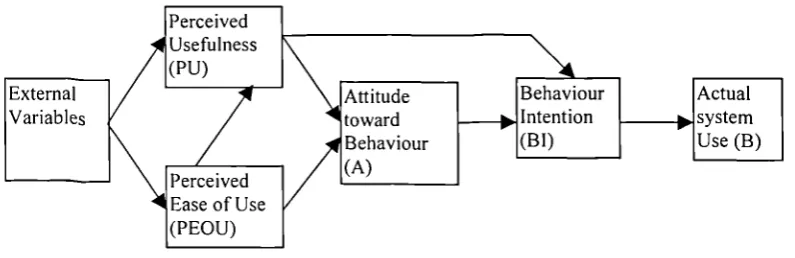
Among the different models that have been proposed, the Technology Acceptance Model (TAM) (Davis et, al 1989) offers a powerful and parsimonious' explanation of individual user behaviour (Taylor and Todd a, b, 1995). According to TAM, usage is determined by two key beliefs, namely perceived usefulness and perceived ease of use. The empirical validity of TAM was demonstrated through several replications and applications in different IT contexts (e.g., Mathieson, 1991; Talylor and Todd, 1995a; Gefen and Straub, 1997; Sjazna, 1996; Venkatesh and Morris, 2000). However, no previous studies applied TAM in the context of executive information systems (EIS). Additionally, prior studies suggested that TAM's ability to explain
usage could be enhanced by extending it to include other important constructs from the IS literature (e.g., Igbaria, et al, 1997).
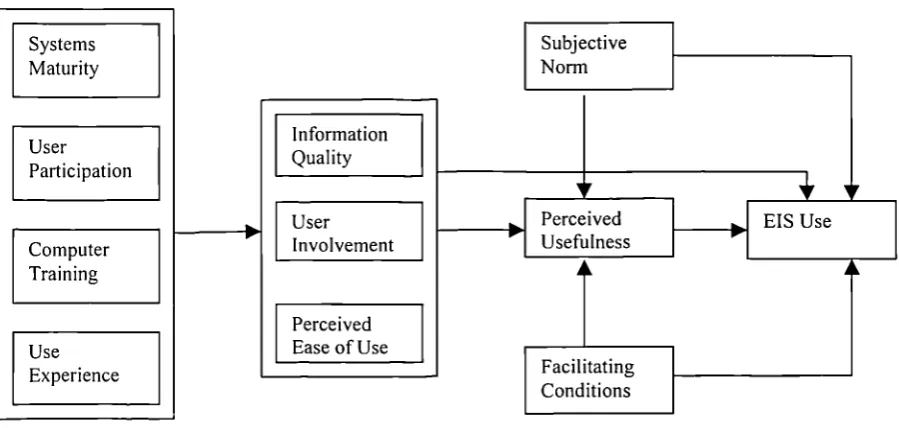
Based on the models described above and an extensive review of the literature relevant to IT/EIS success factors, this study develops and empirically tests a model
of the determinants of EIS usage. The model integrates the technology acceptance
model with key constructs found consistently significant in explaining the success of
IS/EIS. In accordance with TAM, the proposed model suggests that EIS usage is
The proposed model further extends TAM by suggesting that perceived usefulness, in addition to being influenced by perceived ease of use, will be influenced by perceived information quality, user involvement, facilitating conditions, and subjective norm. Finally the model proposes that perceptions of ease of use, information quality, and
,.
user involvement will be influenced by four external factors, namely, user participation in systems development, information systems function maturity, computer training, and user experience.
1.4 Research Problem:
EIS use has the potential for enhancing the performance of managers and the overall performance of the organisation. Like any other computer information systems, the availability of EIS does not necessarily mean that they are used. Even if they are used, they might not be to their full potential. Thus it is important to understand the factors that could contribute to the acceptance and use of such systems by managerial users. Apart from case studies and exploratory surveys, very few attempts to use well-established theories to explain the individual use of EIS are reported in the literature. More over the existing models do not go as far as to provide an explanation of how important beliefs related to EIS use are formed. Thus the research problem is "the lack of theory-based systematic investigations of EIS usage and its related factors". 1.5 Research Objectives:
This research intends to address the research problem by developing and testing a structural model of EIS use. The proposed model is based on the technology acceptance model, theories from social psychology, and relevant constructs from the research on information systems implemetaion success. The model is tested against data from 216 EIS managerial users from the UK. The results are expected to contribute to the literature on executive information systems and the technology acceptance model.
Thus to address the research problem, this study focuses on achieving the following two objectives:
1. To develop a model of the determinants of EIS usage, based on IS usage theories as a foundation.
1.6 The Importance of the Research:
EIS is considered a unique computer based information system that has the potential for enhancing the performance of the executive managers and is thus worthy of further research efforts (Leidner, 1996). A recent survey in the UK showed that the ranking of decision support systems have increased to be one of the most important ten IS management issues especially with the advent of executive information systems (Galliers, et al, 1994). EIS is also seen as an emerging technology that despite being introduced some time ago, decision-makers are just beginning to notice its inherent potential (Kendall, 1997). As the use of such systems is mainly voluntary, understanding the key determinants of their utilisation is an essential step toward increasing their value.
From the academic point of view, the study is important because it extends the existing theoretical and empirical research on EIS use and contributes to the research on the technology acceptance model and IT usage generally. Furthermore, the foundation of the research model on previous theoretical and empirical literature contributes to the development of an accumulated body of knowledge describing IT usage and its associated factors. Such a body will allow the comparison of results across different studies and helps the advancement of the MIS field towards the long awaited common tradition.
1.7 The Study Bounds:
This study does not claim that the proposed research model explains the entire process of EIS usage. Clearly there are alternative models of EIS use to the one proposed here. However, the development of causal models of systems use provides the means for testing hypotheses about the usage behaviour and the factors influencing it. The empirical validation of such models can be used to make predictions and suggest various strategies for successful systems implementation. Like other theory building studies, this study faces the general criticism of testing obvious relationships, which do not need to be analysed. However, counter-intuitive findings often result from research to test "obvious" relationships (Lucas, 1978). User participation in the system development is an example of general wisdom factors that have generated mixed empirical evidence (e.g., Ives and Olson, 1984; Lei, 1994).
1.8 The Research Plan:
Chapter two (executive information systems and executive work) discusses the managerial roles, executive decision-making, executives' information need, executives' information sources, and executives' use of computers. It then compares EIS with management information systems and decision support systems, defines EIS, and presents a review of EIS functions and capabilities. The chapter concludes by introducing the study's definition of EIS.
Chapter three (theoretical and empirical literature review) presents a review of some of the influential work in IS literature relevant to the explanation of individual use of information systems. Two main research streams are identified, the study of usage as a criterion of IS implementation success and the study of IS usage using theories from social psychology. A review of the empirical studies concerned with testing the validity of prior theories is then presented followed by an evaluative discussion of the models.
analysis, characteristics of the respondents, definitions and measures of the variables, and the statistical techniques used in the data analyses.
Chapter six (descriptive analyses and evaluation of measurement scales) is divided into two main parts, the first reports on the descriptive statistics of the research variables, and the second reports on the results of the validity and reliability tests of the research variables' measures. Chapter seven (results of hypotheses testing) reports on the results of the correlation and regression analyses used to test the research hypotheses. Finally, chapter eight (discussion of results and implications for theory and practice) presents an evaluative discussion and interpretation of research results. It also discusses the theoretical and practical implications of the results for IS/EIS usage research and practice, identifies limitations in the study, and presents suggestions for future research.
1.9 Conclusion:
Chapter 2
Executive Information Systems and Executive Work
2.1 Introduction
The executive information system itself and the managerial work that constitutes the context of its usage must be key issues for understanding the utilisation of such systems. The objective of this chapter is to examine what executive information systems are and the nature of the managerial work they support. It consists of two parts, the first is concerned with the nature of the executive work and the second is concerned with understanding what constitutes an EIS. The first part discusses the executive roles, executive decision making, executives' information needs, information sources, and use of computer systems. The second part presents the difference between EIS and other management support systems, namely, MIS and DSS, some definitions of EIS, and EIS functions and main capabilities. Finally the study's definition of EIS is presented.
2.2 Understanding the Executive Work:
It is important to consider the existing literature on executive work behaviour because managerial work characteristics and roles determine the extent of impact that computer based information systems can have on the performance of executive work. This study defines the executive as that person in charge of a formal organisation or one of its sub-units (Mintzberg, 1980 p. 166). The following section discusses the characteristics of managerial work and roles, executive decision making, and executive information needs and sources of information including the use of computers.
2.2.1 Managerial Work Characteristics and Roles:
perception (Mintzberg, 1980). Executives have a strong desire to get the most current information. They visit company sites, talk with employees and customers, scan the business environment, and test the validity of the information they receive. They also tend to make little use of the routine reports provided to them.
Performing the myriad tasks necessary to manage complex organisations in today's turbulent environment requires that executives play many different roles. Mintzberg (1980) identified ten roles played by all managers, which he grouped into: three interpersonal roles, three informational roles, and four decisional roles. Different emphases are placed on each role according to the characteristics of the manager's environmental (e.g., industry type and organisation size), job (e.g., level and function), and personality (e.g., demographics and cognitive style).
The first interpersonal role is the "figurehead" acting as the symbol of the organisation representing it to outsiders and employees. The second is the "leader" providing motivation, guidance, and probing into subordinates' activities, looking for information about operations that are going wrong and problems that need attention in addition to staffing, training, and promoting. The third role is the "liaison", developing and maintaining a network of external contacts that provide information and favours.
The first of the informational roles is the "monitor", receiving and collecting a wide variety of information that is interpreted by the manager to develop a thorough understanding of his/her organisation. As monitors, executives scan the environment for information, and receive solicited or unsolicited information from subordinates and other contact. The information that managers receive falls into five categories: internal operations, external events, analyses, ideas and trends, and pressures.
The first decisional role, "entrepreneur", initiating and designing controlled change in the organisation, which involves searching the organisation and environment for opportunities. As entrepreneurs, executives are intentional initiators of change, which alter the organisation to meet rapidly changing environment. In the second role "disturbance handler," the manager is responsible for taking corrective actions when the organisation is faced with important, unexpected threats. Hence in this role executives are forced to deal with conditions beyond their control, such as impending strikes. Thirdly, the "resource allocator" role includes the allocation of the organisation's resources such as labour and capital for which the demand always exceeds the available supply. In this role the manager decides where his organisation will expand its efforts. Finally, in the "negotiator" role, the manager enters negotiations on behalf of his organisation. In the automobile industry, for example, a dispute between the design and engineering departments will be negotiated by the vice president of manufacturing who manages both departments (Watson et al, 1997). The managerial roles were defined before the rise of the end-user computing. Thus Mintzberg (1980) argued that traditional information systems which provided internal, precise information of an aggregate and reference nature were not adequate for the manager who largely needs external, current, speculative information of a trigger nature. However, careful consideration of many of the managerial roles uncovers the strong impact of information over their performance. This provides reasons why information technology could be used to support many of the managerial roles.
Many of the suggestions made by Mintzberg for the potential of science in programming the manager's job (Mintzberg, 1980) is becoming reality through the introduction of office automation systems, decision support systems, and executive information systems (Rockart and DeLong, 1988). For example, electronic and voice mail provide managers with direct feedback and real time communication and information dissemination media unlike traditional paper mail. Capabilities such as the electronic calendar and tickler files could be useful in scheduling the activities of mangers and thus enable executives to spend more time on the more important tasks of their job. DSS provide managers with data analyses and modelling capabilities that could be used in supporting semi-structured and unstructured decisions.
environment by providing scanning capabilities of internal and external databases. Moreover, the availability of soft information in the EIS provides managers with an important information source that was previously only accessible through informal verbal media. (Watson et al, 1997).
Despite the potential of EIS to increase executive effectiveness and efficiency, it still does not affect many of the executives' work activities, for example, the role of the executive as a spokesman for the organisation or as a negotiator (Holtham, 1992). A recent survey, (Valhos and Ferratt, 1995) asked a sample of 55 managers to evaluate the value of IT support for Mintzberg's decision roles. For the whole sample the manager's role as "resource allocator" received the highest rating, while the "negotiator" role received the lowest rating. Therefore, an executive information system is best seen as a supporting tool to only some aspects of the executive work. The decisional roles warrant special attention because they are "probably the most crucial part of the manager's work - the part that justifies his great authority and his powerful access to information" (Mintzberg, 1980, p.77). The next section describes the decision making process and the role of EIS in supporting it.
2.2.2 Managerial Decision Making
Decision-making is considered the simplest paradigm for managerial activities (Watson et al. 1997). The executive work does not only include making decisions personally, but also seeing that his subordinates are taking the right decisions as well. To create a framework within which decisions could be related to the use of computer based information systems, two aspects of the decision need to be examined: decision types and the process of making the decision. Decisions can be categorised on a scale ranging from programmed or structured (concentrated at the top-level management) to non-programmed or unstructured (concentrated at the lower level management). (Simon, 1977).
decisions are neither known nor understood. They usually have long time horizons and a high degree of discontinuity, involve abstract data and causal relationships, high uncertainty, ambiguities in preferences, and no assumptions. Determining the amount of money to spend in a new research and development project, is one example of such decisions.
Different types of computer-based information systems are suitable for supporting each decision type. Transaction processing systems and management information systems deal with the well-structured, short term, and small impact decisions. Decision support systems and executive information systems are more suitable for the more complex, less repetitive, high impact and long term decisions. Additionally, the goals and design techniques for developing information systems to support structured decisions differ from those of the unstructured decisions. In the first case, the main goal of an information system is to improve the processing of information. While for unstructured decision the main goal of an information system is to improve the decision-maker's and the organisation's performance through better access to quality information (Gorry and Morton, 1971).
Anthony (1965) presents another widely accepted model of decision types. His model suggests that there are three main categories of decisions made in the organisation corresponding to the three levels of managerial activities i.e. strategic planning, management control, and operational control. Strategic planning involves making decisions on objectives of the organisation, on changes in these objectives, on the resources needed to attain them, and on the policies that are to govern the acquisition, use, disposition of these resources. Decisions in this category involve predicting the future of the organisation and its environment and are typically taken by a small number of high-level people who operate in a non-repetitive and often creative way. The development and introduction of a new product is an example of strategic decisions.
with the day to day problems that affect the operation of the firm. Inventory control and production scheduling are examples of the operational control decisions.
Considering the nature of the problems in the three levels of managerial activities, it is more likely that strategic decisions constitute most of the decisions handled by top management while operation control decisions constitute most of the decisions faced by supervisors. A recent study reported that managers rated the value of IT support highest for the short-term operational control decisions and lowest for strategic long-term decisions (Valhos and Ferratt, 1995).
A number of decision models exist in the literature that could be used to understand how are decisions made. Simon's (Simon, 1977) popular model of decision making process consists of three stages: the intelligence stage, the design stage, and the choice stage. The intelligence stage is concerned with searching the environment for conditions calling for decisions. This includes gathering information to identify and describe the decision problem i.e., the difference between some existing situation and some desired situation. The desired situation is the mental model that the executive has for the business and its environment. The EIS provide managers with early warning signals to help detect existing and potential problems or opportunities through improved access to internal and external databases, exception reports, unscheduled queries, and drill down to data to look for the causes of the problem (Hoven, 1996).
The design stage refers to the identification and evaluation of the alternative solutions for the decision problem. Although the generation of alternative solutions mainly depends on the human creativity and judgement, the EIS can significantly assist in identifying a greater number of quality alternatives, exploring more alternatives in less time, and testing these solutions for feasibility (Hoven, 1996). Ad-hoc querying of internal and external databases facilitates the process of alternatives generation, while what-if analyses and decision modelling capabilities can provide quick and accurate evaluation of the generated alternatives.
which the executive insures that the decision is carried out (Lucas, 1994). At this stage the EIS provides the manager with performance control reports and exception reports to help monitor the progress of the decision. This provides the executive with current feedback on the implementation of the decision. A recent survey of managers reported that they rated the value of IT support highest for the evaluation step in decision making and least for generating alternatives (Valhos and Ferratt, 1995).
In structured decisions the three phases of decision making are completely structured. On the other hand, all decision stages of the unstructured decisions are fully unstructured. Decisions that fall between those two extremes are semi-structured (Lucas, 1994). In making decisions, executives use both intuition and the rational approach to define the problem, develop and evaluate alternative solutions, and select the appropriate one. They identify problems quickly using their intuition, and they respond without thinking to make programmed decisions, they synthesise isolated bits of data and experience, and check on the accuracy of quantitative analyses (Watson et al, 1997). Hence computer based information systems cannot replace the executive in decision making rather they are only tools which effectiveness depend on the way they are used by the executive.
2.2.3 Information the Executive Needs:
One important input to decision making is information, it is also the output of computer based information systems (Hough and Duffy, 1987). Information is defined as "some tangible or intangible entity that reduces uncertainty about some state or event" (Lucas, 1994 p. 30). The nature of the decision problem, personal and situational factors, cognitive style of the decision-maker, and the organisational setting affect how managers interpret the information they receive. Executives use information for many purposes: to find out where their attention should be focused, to identify organisational problems, and to establish alternatives and select courses of action. Information helps stimulate creativity, generate scenarios, determine trends in the environment, monitor performance status, and control various activities (Gorry and Scott Morton, 1971).
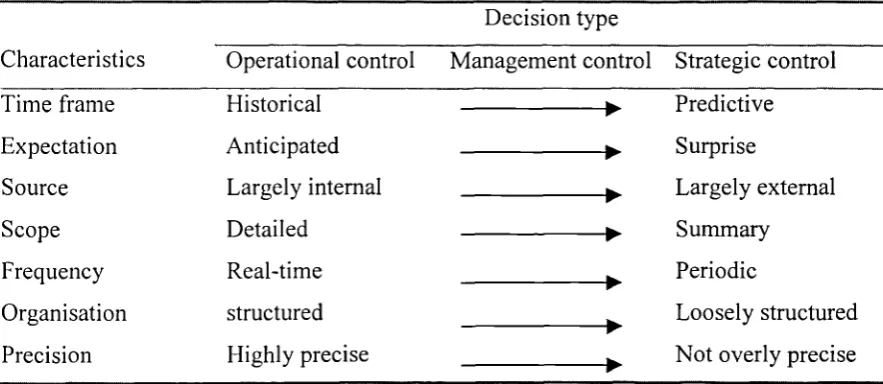
control decisions, executives need historical information. Usually the results are expected and the source of information is internal. The information must be detailed, and because operational control decisions involve day to day operations of the firm, the information must correspond closely to real time. The information also tends to be highly structured and precise.
[image:31.595.94.536.321.513.2]On the other hand, information for strategic decisions tends to be more predictive and long-range in nature. Strategic planning may uncover many surprises and often requires external data on the economy, the competition, and so forth. There is usually no need for highly detailed or extremely precise information. The requirements for management control decisions fall between those of operational control and strategic planning.
Table 2-1 Information Characteristics versus Decision type (Lucas, 1994, p. 41)
Characteristics
Decision type
Operational control Management control Strategic control
Time frame Historical n Predictive
Expectation Anticipated Surprise
Source Largely internal
n
Largely external
Scope Detailed
n
Summary l•
Frequency Real-time n Periodic
Organisation structured n Loosely structured
Precision Highly precise n Not overly precise
Executives need both internal and external information (Watson et al, 1997). Internal operation information is needed regularly by the executive. They consist of key indicators of the status of the operations within the organisation. This information comes from the standard operating reports, ad hoc information from subordinates, or from the organisation tours. Examples of this type of information include: actual performance versus expectation, percentage of product return, customer delivery cycle, customer satisfaction, trends in employee attitude, employee turnover rate. It may come in the form of analyses, pressures, problem presentation, and highlight charts.
information may come from personal contacts, trade magazines, and periodicals. Information about new ideas and environmental trends may come from attending conferences, unsolicited letters from customers and clients, suggestions from suppliers, or the print or broadcast media. External information also includes general surveillance data that enable the executive to better identify the threats and opportunities.
Executives also need soft information such as opinions, predictions, news and even rumours in addition to hard information that focuses on internal operations and relies heavily on financial data. While hard information provides the facts, soft information enhances the facts and helps executives spot trends and raise questions thus enriching the decision-making process. Holtham (1992) reports on a survey, which asked senior mangers to describe the information they use. The responses show that 85% use sales information, 83% use budget/forecasts, 37% use market trends, 35% use external information, 35% use economic data, 30% use competitors activity data, and 30% use other. He concludes that the present financial and hard data orientation of most UK executive information systems fit them well for the planning and control purpose, but less well for supporting the mental model of the executive.
Executives acquire information by various means ranging from scanning, i.e., browsing through information without a particular problem to solve or problem to answer, to focused searches; i.e. seeking information for solving well defined problems. Focused searches lead to improvements in efficiency. On the other hand, browsing or scanning may lead to more consequential breakthroughs involving fundamental changes in the managers' assumptions. Scanning is particularly important to senior managers because they usually face unstructured problems (Watson et al, 1997).
2.2.4 Sources of Executive Information:
of five Canadian chief executives found that they spend 78% of their time in verbal activities. He also reported on prior studies, (Stewart, 1967; Burns, 1954) which found that British managers spend from 66% to 80% of their time in verbal communications. Mintzberg was thus critical of computer-based systems as information producing mechanisms for senior managers.
In an in-depth interview Mcloed, Jones, and Poitevent (1984) asked five senior managers to rank ten information sources according to their value in supporting their work. The rankings were: (1) Memos and letters, (2) scheduled meetings, (3) telephone, (4) unscheduled meetings, (5) non-computer reports, (6) computer reports, (7) office visits, (8) periodicals, (9) conventions, (10) social/civic activities. The main findings of this study are that executives rely more heavily on informal sources of information than formal. Approximately three times as much as information comes from non-computer sources as from computer sources. Moreover, twice as much information comes from internal sources as from external. Finally, verbal media are the most preferred sources.
In a follow up research, Jones and McLoed (1986) examined five senior executives' use of information systems. They divided all information sources into written or oral. Written media include computer reports, letters, memos, periodicals and non-computer reports. Oral media included social activity, business meals, tours, telephone calls, and scheduled and unscheduled meetings. Written media were found to account for the majority of executive information sources (61%). Consistent with prior results, executives put more value on verbal media because of its greater information richness. Of the written media, memos and non-computer reports were considered more valuable than computer reports.
show an improvement in managers' ranking of computer sources and an emphasis on external sources compared to internal ones.
2.2.5 Executives' Use of Computer Systems:
During the last two decades, information technology has become increasingly available to support managers in making decisions, for planning, controlling and operating their corporations. Several studies have been directed to advance the understanding of managers' use of computers and the amount of time they spend using them. In a study of senior managers' use of computers, Mittman and Moore (1984) conducted a phone survey of 107 companies, 51% reported some direct use of computers by at least one senior manager. In the second phase of the study, 19 executives from 14 companies were personally interviewed about their direct computer use behaviour. Surprisingly, the results pointed to relatively high use of computer; for example executives averaged 4.5 hours per week use of computers and 84% of them wrote their own programs. The results also revealed that the use executives made of computers was related to communicating decisions or justifications much more often than to decision making or decision evaluation
activities.
It seems that the reported low rating of senior managers' use of computer-based information sources may reflect that previous systems originally thought to serve them (e.g., MIS, and DSS) have provided little support. This lack of support is rapidly changing as executive information systems are being developed in a growing number of firms (Bajwa et al, 1998). The next section focuses on the examination of executive information systems.
2.3 What Constitutes an Executive Information System:
To achieve a fuller understanding of what constitutes an EIS, this section starts with comparing EIS with other management support systems, namely, MIS and DSS. Some definitions of EIS are then introduced, followed by an examination of executive information systems functional types and capabilities. Finally, the definition of the EIS deployed in this study is presented.
2.3.1 The Difference between MIS, DSS, and EIS:
There have been many attempts to develop computer-based information systems to serve the management over the past thirty years. Such systems should be of considerable benefits to management to support their different work aspects and help them face the turbulent environment in which they work. However, attempts in 1960s to provide information systems to serve the needs of the management were not successful (Eason, 1992). This was contributed to the lack of appropriate technology and skilled IS staff. Decision support systems then emerged during the late 1970s, which was directed to support the decision-making aspect of the manager's work. However, such systems did not offer the executives the tools they needed, thus there still was lack of proper information systems support for executives (Partanen and Savolainen, 1995). Understanding the difference between MIS, DSS, and EIS may explain why the first two failed in serving the needs of the management users and why EIS may have better chances in fulfilling such difficult task.
According to these definitions, the common ground shared between EIS, MIS, and DSS is that they are all designed to provide relevant information to decision makers. EIS are similar to MIS in terms of the scope of the information provided. In practice, however, MIS mostly provided control information in the form of summary and exception reports. More sophisticated MIS may even allow ad-hoc query of organisation database. They were in effect a layer on top the transaction processing system, and thus the characteristics of the TPS limited the capabilities of the MIS (Millet et al, 1991). A TPS is often developed in an independent fashion to support a particular organisational function, which resulted in MIS that lacked integration across functional areas. This limitation becomes severe when attempting to satisfy the needs of top-management for comprehensive, organisation wide information.
EIS is also distinct from DSS although the former may include several functions of the latter. Where the purpose of EIS is monitoring and scanning of the environment to give executives rapid exposure to changes, the purpose of DSS is to support ad hoc decisions as well as some routine analyses. EIS also serves higher managerial tasks than DSS and while the core of DSS is extensive modelling and analyses capabilities, the core of EIS is status information about the organisation's performance (Leidner and Elam, 1994).
DSS are also narrow in scope providing information about specific ill-structured decision-making tasks often using mathematical modelling. They are usually used for a single or few decision-making instances as in ad hoc DSS or they may be employed on on-going bases as in the case of institutional DSS. Decision support systems could also be used to support problems with different levels of specificity and recurrence (Adam et al, 1998). They are typically used by staff professionals or middle management rather than by senior managers (Millet and Mawhirmey, 1992). Even when DSS are part of the EIS, most often executives employ staff people to operate the DSS (Watson et al, 1997).
2.3.2 Executive Information Systems Defined:
1991). It can also be defined as "a computer based information system which can organise and present data so as to provide information which support the analytical, communicative, and planning needs of executive users" (Carlisle and Alameddine,
1990). However, this definition presents a strict view that few systems that are widely recognised as EIS could satisfy.
While a definition is useful, a richer understanding is gained by describing the characteristics of EIS (Watson et al, 1997). EIS are generally characterised as information systems that are:
• tailored to the individual executive users,
• extracting, filtering, compressing, and tracking critical data,
• providing online status access, trend analyses, exception reporting, and drill-down,
• accessing and integrating a broad range of internal and external data, • presenting graphical, tabular, and textual information,
• user friendly and require minimal or no training,
• direct hands on use by executives without intermediaries,
• designed to support the decision making process by delivering usable and relevant information,
EIS can also help executives develop or enhance their mental model of the business and its relationship to the environment in which it operates.
Despite that executive information systems were originally designed for senior executives, they are now serving managers at all the organisation levels and knowledge workers as well. EIS has grown to become everybody's information system or enterprise intelligence systems (Stamen, 1992). In this study the letter "E" in the term "EIS" stands for executive. The "Executive Information Systems" (EIS) and "Executive Support System" (ESS) terms are often used interchangeably. However the term "Executive Support System" usually refers to a system with broader set of capabilities than EIS. While EIS is mostly concerned with providing information, ESS encompasses other support capabilities in addition to EIS capabilities. According to Watson et al (1991) those may include:
• Office automation tools e.g. word processing, electronic calendar, automated Rolodex, and tickler files.
The above definitions only provide a guiding framework to help focus on some of the important component that make a computer system seen as an EIS. However, in practice many executive are still using their EIS indirectly through intermediaries (Bartholomew, 1997) and will continue to do so as long they perceives that they can get what they need without putting the needed effort in making direct use of the system (Eason, 1992). Also the exclusion of data analyses capabilities from EIS would limit the ability of such systems to be used in supporting planning and decision making processes, which are considered one of the main purposes for which such system were used (Rai and Bajwa, 1997).
2.2.3 EIS Functions and Capabilities:
Investments in EIS have increased because of their potential benefits. They provide better logistics, efficient communications to more people, and increase visibility into the organisation and facilitate the understanding of the business (Rockart and Delong,
1988). Moreover, they provide improvements in the quantity and quality of information made available to executives from internal and external sources. This includes providing more timely, concise, and relevant information, faster access to information, new or additional information, and more external information. EIS also improve the executive's job performance through improved executive planning, organising and controlling, as well as enhanced communications, decision making, and mental models. It can also support organisational objectives such as greater response to customers, improved product or service quality, and downsizing the organisation (Watson et, al, 1997).
An organisation's ability to scan the external environment and incorporate anticipated changes into its strategic plan foster organisational adaptability and survival. Executive information systems that include external data address the challenges associated with effective environmental scanning by providing an efficient means of information acquisition, storage and retrieval. Frolick et al (1997) outlined how EIS can be used to streamline each step in the environmental scanning process. These steps are: aiding in the determination of relevant external issues, providing proactive scanning abilities to seek the status of these issues, aiding decision makers in analysing the impact of these issues, and provide communications channels to departments within the organisation.
According to Rockart and Delong (1988), EIS can be viewed along two dimensions, the function that the managers perform and the managerial purpose for which the executive uses the system. Along the first dimension, they suggest that executives use three types of functions: (1) Communications-based applications including electronic mail and computer conferencing. (2) Status access to predetermined reports, which are updated regularly. A hierarchy of menus allows the executive to move from one report to another and enables regular monitoring of the organisations' performance. (3) Query and analysis capabilities, which allows the manager to perform random and unstructured analysis of data or modelling, and can be created using forth generation tools or spreadsheet packages which may be linked to the corporate data base.
Along the second dimension, three managerial purposes underlie the use of EIS capabilities. (1) The support of particular office functions to enhance the executive's efficiency and effectiveness. (2) Improving the organisation's planning and control processes. The objective of this type of EIS can range from merely enhancing the existing control system to changing fundamental aspects of the way in which the organisation is managed. (3) Clarifying and enhancing the executive's mental model of the firm's business environment.
Current status screens supply internal operations information, comfort information, and top-level financials. Moreover, problem information, highlight charts, and exceptions are colour coded on these screens. While access to various external databases provides information on external events, external intelligence, and environmental trends.
Thirdly, EIS may provide access to electronic and voice mail. This function allows executives to communicate more efficiently inside and outside their organisation. Finally, EIS has the potential to help executives formulate, assess, and modify their mental models through its handling of the overabundance of information coming from the complex and turbulent internal and external environment of their organisation. However, the executive work remains difficult to support because it is so unpredictable and demanding no matter how advanced the EIS are.
Walstrom and Wilson (1997) reported on four functional types of EIS: (1) to improve information access; (2) improving communication; (3) solve problems; (4) monitor performance. Firstly, EIS systems to improve information access provide data focused on important indicators or dimensions to the executive. Much of this function is provided from a transaction information system and traditional management information system, but not in the meaningful, focused, and customised fashion desired by an executive. Secondly, EIS systems to improve communications provide terminal-based access to electronic mail and computer conferencing. The executive's terminal is usually networked to others in the company. Access to sources outside the organisation such as the Internet may be available.
Thirdly, EIS to solve problems provide classical DSS capabilities allowing the executive to perform random and unstructured analyses of data, or modelling. The sophistication of analyses differs from user to user. Finally, EIS to monitor performance, or control systems, provide access to pre-determined pre-formatted sets of electronic reports. The frequency of updating the data used to generate such reports depends on the nature of the data. Executives also need "read only" access to the latest data or reports on key organisational variables.
functions. The findings indicated three basic "types" of EIS users termed as converts, pacesetters, and analysers. The "converts" appear to have adopted EIS as a replacement of previously existing systems. Users indicated an emphasis on the use of EIS to access information previously provided in written reports or computer print outs. They showed comparatively lesser use of EIS for communication and/or data analyses functions. 21% of the respondents using EIS fell into this cluster.
The "pacesetters" reported more frequent use of most of the EIS functions. They appear to use EIS for communication and access of external information more frequently. 71% of the respondent fell into this cluster. The third type, analysers, used the EIS mainly to perform analyses of data and ad hoc querying of organisational databases. Users in this group constituted 7% of the respondents. Further investigation revealed three dimensions underlying these types: organisational monitoring, information access, and organisational understanding.
A recent survey of ESS usage in Fortune 500 companies (Nord and Nord, 1996) revealed that ESS is used for purposes of decision making and scheduling by 50% of the respondents, 43% used their ESS for E-mail, 37% used it for electronic briefing. Finally, tickler and follow up functions are used by 31.3%. The study showed that ESS allows senior executives to access critical information, which was not otherwise available to understanding and assessing situations quickly, electronically confront and communicate problems, report information as a combination of graphics, tables, and text, and make schedules, set agendas, and follow up on matters.
The increase in the number of users with access to EIS leads to corresponding increase in EIS capabilities and features. Based on a comprehensive survey of various EIS software in the U.S. market place, Carlisle and Alameddine (1990) developed a representative set of attributes that could be used to evaluate EIS software capabilities. Those include analytical capabilities, office support capabilities, and planning capabilities.
Analytical capabilities include:
1. Unstructured questions, which enables the executive to make ad-hoc querying. 2. Decision support features, such as what-if analyses, which enable the manager to
manipulate data.
3. Drill-down; gives the executive the ability to look into successive levels of details behind a summarised figure.
4. Exception reporting; provides the manager with indicators of deviations in variables that need to be regularly monitored from pre-set values.
5. Trend analyses; is usually in the form of time series data presented in a graphical format.
6. Tracks of key indicators; allow the executive to specify a variable such as a critical success factor and trace it over time.
7. Key word searches; allows the executive to search a database using a string of characters.
8. Textual explanation; explains to the executive in words the highlights and trends of a particular table or graph.
9. Pre-defined reports on critical success factors.
10. Traffic lights; use different colours to highlight significant increase or decrease in data to attract the attention of the user.
Office support capabilities include:
1. Electronic mail: allow executives to communicate across space and time via messages, memos, and reports.
2. Company news: allows executive to be informed about events happening within the company.
4. Word processing: enable the executive to prepare and review documents, letters, and speeches.
5. Electronic calendars: provide a system to manage the executive's calendar electronically. It can also facilitate group meeting scheduling among executives. 6. Automated Rolodex: provides automated access to a database of people.
7. Tickler files: electronically store an executive's things to do or monitor the completion of activities.
Planning capabilities include project management, which provides managers with tools to create charts, and/or other project management tools.
Partanen and Savolainen (1995) used data from 132 Finnish and English EIS users and eight technical staff members in eight organisations to describe the utilisation of the functional properties of EIS applications for office support analytical support, and project management across top, middle, and operational management levels. The results show that analytical support capabilities are essential EIS characteristics. Users of such applications can be found throughout the managerial levels, though more applications are installed in top management systems. Drill down, trend analyses and exceptional reporting were built in every EIS surveyed. A possibility to add textual explanation to graphic pages was included in nearly all EIS systems. However, what if analysis and key word search were less frequently integrated in the surveyed EIS applications.
Watson, O'Hara, Harp, and Kelly (1996) studied the use of soft data in executive information systems. Data collected from 32 EIS developers showed that speculations, forecasts, estimates, and predictions were used in 78% of the respondents' EIS. Explanations, justifications, assessments, and interpretations were included in 66% of the systems. In third place came news reports, industry trends, and external survey data in 63% of the systems. The least included information were opinions feelings, and ideas at 15.6% and rumors, gossip, hearsay at 9.4% of the systems. The study results indicated that the inclusion of soft information in EIS is positively related to its perceived value.
Little attention is directed to the use of multimedia in executive support systems. An experiment was conducted to assess the use of multimedia in EIS and its potential impact on the effectiveness of information analysis (Huang and Windsor, 1998). Data were collected from 40 managers and/or professional employees in three business organisations. The primary task was to analyse information stored in an ESS prototype in order to identify some possible threats and opportunities. The results show that managers and professional employees who used a multimedia ESS identified fewer threats and opportunities than did those who used a text-based system. Additionally, the use of multimedia did not improve information retention. During the post-experiment interview, subjects indicated that the use of sound annotations had adversely affected their ability to analyse information. Those results suggest that multimedia may not be an appropriate presentation format for analytical tasks.
2.4 The Study's Definition of EIS:
This study defines EIS as "a computerised system that provides executives with information that is relevant to their work" (Walstrom and Wilson, 1997, p. 77). In the following chapters, EIS will refer to the narrower term executive information systems, rather than the wider term executive support system. The study focuses on the EIS functions of information access for the purpose of problems solving, and performance monitoring. It thus excludes the EIS office support functions such as e-m and word processing from the application domain of the empirical study.