1 TITLE PAGE
Support for community pharmacy-based alcohol interventions: A Scottish general public survey.
Niamh Fitzgerald, Institute for Social Marketing, UK Centre for Tobacco and Alcohol
Studies, School of Health Sciences, University of Stirling
Elaine Youngson, School of Pharmacy and Life Sciences, Robert Gordon University
Scott Cunningham, School of Pharmacy and Life Sciences, Robert Gordon University
Margaret Watson, Health Services Research Unit, University of Aberdeen
Derek Stewart, School of Pharmacy and Life Sciences, Robert Gordon University
Corresponding Author
Derek Stewart, Professor of Pharmacy Practice, School of Pharmacy and Life Sciences,
Robert Gordon University, Riverside East, Garthdee Road, Aberdeen, UK. AB10 7GJ.
[email protected] +44(0)1224 262432
The authors have no conflicts to declare.
2 ABSTRACT
Background
Community pharmacy teams are recognised by health agencies as vital to increasing capacity
in the provision of public health services. Public awareness and support of these services in
general, and relating to safe alcohol consumption in particular, have yet to be established.
This study aimed to determine the Scottish general public’s views regarding the role and
involvement of community pharmacists in reducing alcohol consumption amongst customers
and alcohol-related harm.
Methods
A cross-sectional survey of 6,000 adults in Scotland randomly sampled from the electoral
register. The piloted questionnaire contained items on: those health professions which could
potentially advise on safer alcohol consumption; areas of safer alcohol consumption on which
pharmacists could advise; attitudes towards pharmacist involvement; and demographics.
Results
Of the 1573 respondents (a 26.6% response rate), more than half (56.4%, 888) agreed that
pharmacists could advise on safer alcohol consumption. Those agreeing expressed high levels
of support (≥70% agreement) for all activities, particularly referring people to other
individuals or organisations, discussing recommended alcohol consumption limits and how
consumption may affect health. There was a high level of agreement of trust that pharmacists
would discuss issues confidentially (68.7%, 1080), with a similar proportion (64.3%, 1011)
agreeing that they would be concerned over privacy in a community pharmacy.
Conclusion
Public support exists for pharmacist involvement in reducing alcohol consumption amongst
customers and alcohol-related harm, with some concern over privacy. These findings warrant
3
availability of pharmacies and the ease of access to professional advice, there is potential for
pharmacists to impact safer alcohol consumption although the efficacy of alcohol brief
interventions remains to be demonstrated.
KEYWORDS
4 INTRODUCTION
Alcohol consumption causes around 3.3 million deaths annually and is responsible for 5.1%
of the global burden of disease.1 Consumption of alcohol, in particular at higher levels, is
associated with liver and cardiovascular disease, many cancers, mental health problems and
with an increased risk of accidents, violence and injuries.2 Hazardous, harmful and dependent
alcohol consumption harms families, relationships, businesses and government.3One in 20
deaths in Scotland is attributable to alcohol4, with estimates of the total personal, social and
economic cost of alcohol in Scotland equating to £7.5 billion per year.5
The contribution of community pharmacy to public health has been recognised and valued for
many years by policy makers and the public6-9 with evidence of benefit in smoking
cessation,10 cardiovascular disease,11diabetes,12emergency hormonal contraception13 and
obesity.14Support for these roles has been expressed by the United Kingdom
Government15and professional bodies.16
Over the past decade, there has been growing interest in the potential role for pharmacists in
reducing alcohol consumption and related harm17yet, there is limited evidence of efficacy to
inform service development. Studies have demonstrated the feasibility and acceptability of
pharmacists delivering alcohol brief interventions (ABIs).18-25Studies with pharmacy
customers in England and New Zealand suggest broad support for pharmacists taking on this
role.26,27whilesmall studies of the general public’s views on the public health role of
5
This study aimed to determine the Scottish general public’s views regarding the role and
involvement of community pharmacists in reducing alcohol consumption amongst customers
and alcohol-related harm.
METHODS
Study design
A cross-sectional survey using a mailed questionnaire.
Questionnaire development
The questionnaire was developed then reviewed for face and content validity by an expert
panel of two academic pharmacists, one practitioner working in substance abuse and one
health policy maker in Scotland, all with expertise in alcohol related developments. The
questionnaire was piloted by mailing to a random sample of 500 members of the general
public in Scotland aged 18 years and over, along with a letter inviting participation stating the
research background and aims, and a reply paid envelope. Piloting resulted in minimal
changes to questionnaire wording and format. The questionnaire contained items on: health
professionals who could potentially advise on safer alcohol consumption (12 items); specific
areas of safer alcohol consumption on which pharmacists could advise (8 items); attitudes
towards pharmacist involvement in advising on safer alcohol consumption (10 items); the
Fast Alcohol Screening Test(FAST)30 (4 items); recommended alcohol consumption limits (5
items); health services utility (7 items); and demographics, with definitions and labels
informed by Scotland’s Census 2011(6 items).31Closed questions and 5-point Likert scale
attitudinal statements were used. Pictures of common alcohol beverages and their units were
provided for completion of FAST.
6
The final version of the questionnaire was mailed in November 2011 to a random sample of
6000 members of the general public (≥18 years) in Scotland, obtained from the electoral roll.
While the roll is updated annually by sending a canvass form to every house in Scotland, it
only includes those who return the form and agree to their information being in the public
domain.32A sample size of 6,000 was calculated to allow for a response rate of around 25%
and to permit sub-group analysis. One thousand responses would give a precision of 3% with
confidence of intervals of 95%. The following evidence based strategies adopted to maximise
the response rate included: an invitation letter from an academic institution; provision of a
reply paid envelope; up to two reminders sent to non-respondents at monthly intervals; and
entering respondents into a prize draw for £50 of shopping vouchers.33
Data were entered into SPSS version 21.0 and analysed using descriptive and inferential
statistics. Demographic data were compared to Scottish census 2011 data. Respondent
postcodes were used to determine their Scottish Index of Multiple Deprivation (SIMD)
quintiles34and compared to national data. FAST scores were calculated and those scoring
≥3/16 deemed to be hazardous/harmful drinkers.
Chi-square tests were used to determine any associations between categorical variables (e.g.
sex,hazardous/harmful drinking) and the outcomes of those agreeing or disagreeing/unsure
that pharmacists could advise on safer alcohol consumption. Independent sample t-test was
used for the continuous variable of age. P values ≤0.05 were considered statistically
significant.
7
This study was approved by the Ethics Panel of the School of Pharmacy & Life Sciences at
Robert Gordon University, UK; the North of Scotland Research Ethics Committee advised
that the study was exempt from NHS ethical review.
RESULTS
A total of 1573 completed questionnaires were returned (response rate of 26.6%, adjusted for
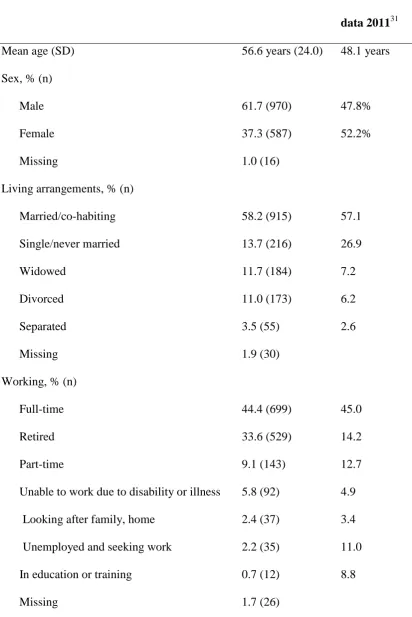
those returned undelivered). Demographic data are given in Table 1.
Insert Table 1 here
Mean respondent age was 56.6 years (standard deviation 24.0), 59% (970) were male and
almost all (98.4%, 1548) were white. While SIMD codes were generally similar to Scottish
population data, respondents were older, more likely to be retired and male, and less likely to
be single, in education and training or unemployed. Nearly one third of respondents (30.6%,
482) had a FAST score ≥3, indicative of harmful or hazardous drinking: although the figures
are not directly comparable, the Scottish Health Survey 2013 found that 25% of men and
12% of women had an AUDIT score of 8 or more indicating drinking at a hazardous or
harmful level.35
Respondents were generally unaware of recommended alcohol consumption levels, with
almost half answering ‘don’t know’ in response to questions on: recommended maximum
number of units of alcohol that a man should consume in one week (46.9%, 738);
recommended maximum number of units of alcohol that a man should consume in one day
(47.9%, 753); recommended maximum number of units of alcohol that a woman should
consume in one week (50.0%, 786); recommended maximum number of units of alcohol that
a woman should consume in one day (49.1%, 772); and recommended number of alcohol free
8
More than half (56.4%, 888) of respondents agreed that pharmacists could advise on safer
alcohol consumption. Responses for all professions are given in Figure 1.
Insert Figure 1 here
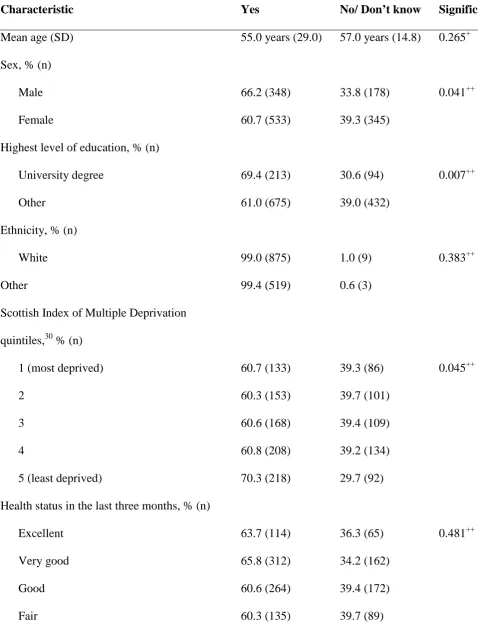
Table 2 gives associations of demographic and other variables and those agreeing or
disagreeing/unsure that pharmacists could advise on safer alcohol consumption.
Insert Table 2 here
There were significant differences in relation to deprivation category (least deprived more
likely to agree, p=0.045), sex (males more likely to agree,p=0.041) and highest level of
education (those possessing a university qualification more likely to agree, p=0.007). There
were no differences in terms of the other variables tested: age (p=0.265); ethnicity (p=0.383);
health status (p=0.481); harmful/hazardous drinkers (p=0.387); and those using a community
pharmacy in the last three months (p=0.108).
The number of respondents agreeing that pharmacists could advise on safer alcohol
consumption(56.4%, 888) was statistically significantly less than pharmacist involvement in
the management of drug misuse (74.4%, 1170, p<0.0001), smoking (68.3%, 1074, p<0.005);
and sexually transmitted disease (58.8%, 925, p<0.005). There were no statistically
significant differences when compared to views on pharmacy involvement in the
management of heart disease (65.0%, 1022, p=0.226) and obesity (64.2%, 1010, p=0.443).
Those respondents who were supportive of pharmacist involvement in promoting safer
drinking were also asked about their agreement on specific ways in which pharmacists could
9
“referring people to other individuals (such as doctors) or organisations (such as voluntary
services and self help groups) who could help with alcohol drinking” (88.5%, 786);
“recommended drinking limits” (86.8%, 771); “how drinking may affect or be affecting their
health” (86.3%, 766); “how to measure alcohol units in common drinks” (85.2% 757);
“options of reducing the risks from drinking alcohol” (84.9%, 754); “ideas and tips for
sticking to plans to change drinking” (81.5%, 724); “positives and negatives of drinking”
(78.4%, 696); and “how much alcohol they are drinking” (70.0%, 622).
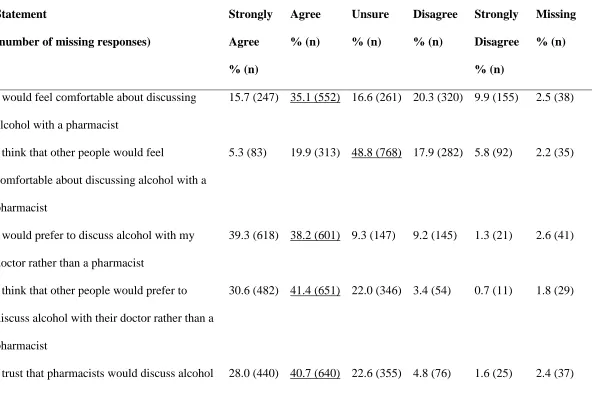
Responses to attitudinal statements are given in Table 3. The highest levels of agreement
wereconfidence in pharmacists discussing how alcohol impacts health (70.0%, 1101), and
trust that such issues would be discussed confidentially (68.7%, 1080). Respondents were
more comfortable discussing alcohol with a doctor than a pharmacist (77.5%, 1219) and were
concerned of the lack of privacy in a community pharmacy when discussing alcohol (64.3%,
1011).
Insert Table 3 here
DISCUSSION
This is the first published large-scale survey of the views of a general public population on
the involvement of community pharmacists in advising on safer alcohol consumption. Results
indicate that the Scottish general public is supportive, with more than half of respondents
agreeing that pharmacists could advise on safer alcohol consumption. Furthermore, more than
two-thirds expressed their confidence and trust in pharmacists discussing issues relating to
alcohol. This finding is in line with that of a recent small street-based survey of the general
public24and builds on findings of support from studies undertaken with customers recruited
10
in community pharmacy feasibility studies.18-25 It also builds on existing knowledge of public
trust in pharmacists more widely, as evidenced in narrative and systematic reviews of
pharmacy based public health activities.10-14.
The level of support for pharmacist involvement in alcohol was less than that for other public
health focused activities such as smoking cessation. This may reflect greater public
awareness, perhaps partly through media advertising of smoking-related community
pharmacy services and pharmacy based products. Interestingly, those with a university
education were statistically significantly much more likely to agree to pharmacist
involvement in advising on safer alcohol consumption. While the reason for this difference is
unknown, it may reflect a greater awareness of the level and depth of education and training
which pharmacists have undertaken. Male respondents and those residing in areas less
deprived were also more likely to agree, although the level of significance was much lower.
Qualitative phenomenological research is required to provide in depth data and understanding
of these issues.
Approximately three quarters of respondents stated a preference for discussing alcohol with
their doctor, rather than a pharmacist, and a majority noted concerns around privacy in
pharmacies. The expressed preference to discuss these issues with a doctor may reflect
existing relationships and/or a lack of awareness of the expertise of the pharmacist. Focus
groups with 26 members of the general public in Scotland on experiences of pharmacy
services also identified many preferred to see a doctor as pharmacy was seen to offer
incomplete services which did not co-ordinate well with other primary-care services.36
The issue of privacy is commonly raised in studies with the general public, particularly in
11
much less likely to raise concerns of privacy.37 It seems possible that the general public who
are not accessing clinical services through pharmacies may be unaware of recent contractual
developments such as the requirement for pharmacies to have consultation rooms.
Nonetheless, privacy in pharmacies warrants consideration as models of practice are
developed and evaluated, focusing on issues of how and in what point in their contact with
the pharmacy team will those in need of alcohol brief interventions be identified and offered
support without compromising privacy.
Almost one-third of respondents self-reported a FAST score indicative of harmful or
hazardous drinking: this is slightly higher than that found by the Scottish Health Survey using
the AUDIT,38 although the measures are not directly comparable.35 Those with scores
indicative of harmful or hazardous drinking were no more likely to be supportive of
pharmacist involvement in advising on safer alcohol consumption than the remainder. It may
be that those with FAST scores of 3 or above were unaware that they were consuming
alcohol to harmful or hazardous levels (as awareness was generally low). It would also be
surprising if some of those consuming at higher levels, who were aware of the risks but not
wishing to address them, would want their consumption to be explored and addressed when
they are accessing other services in a pharmacy.
Approximately half of the respondents were unable to answer questions relating to
recommended alcohol consumption limits. This is a much higher level of awareness than in a
previous study with supermarket customers in Scotland39 but as with other studies
internationally,40,41 illustrates that a large proportion of the population remain unaware of
what constitutes lower-risk alcohol consumption. These results highlight the need for
awareness-12
raising alone is considered a less effective strategy for tackling alcohol problems than
policies aimed at reducing affordability and availability.42,43 Nonetheless, many members of
the public may benefit if community pharmacy provision enables increased access to
effective alcohol brief interventions.
While the number of responses obtained exceeded the number required for a precision of 3%
with a confidence interval of 95%, we acknowledge that the study findings are limited by the
low response rate of 26.6% and hence the results should be interpreted with caution. There
is the potential for response bias: respondents were similar to the Scottish general population
in terms of deprivation, however more likely to be older and male, and so decreasing the
likelihood of generalisability to younger, more female populations. Differences in healthcare
systems and cultures between Scotland and elsewhere may limit generalisability to other
countries. There may also have been issues of social desirability bias and the validity of the
self reported data could not be established.
This study provides evidence about the acceptability to the general public of the provision of
alcohol interventions by community pharmacists. Studies have also shown that pharmacists
broadly welcome supporting safer alcohol consumption as an expanded role, albeit with some
concerns about having time to take it on and their likely training needs.19,44 The Scottish
Government has also demonstrated its support for pharmacist involvement in safer alcohol
consumption.45 While the national target for the delivery of ABIs introduced in 2008,
focused initially only on primary care (and did not include pharmacies), emergency and
antenatal settings (ref Scottish Government Health Department 2008), community
13
It has been argued that feasibility studies should lead to efficacy trials (to determine if a
model intervention can work under ideal circumstances), then effectiveness trials (to
determine if an efficacious intervention can work in real-world conditions), which should in
turn precede implementation studies (to determine how to achieve routine delivery of an
effective intervention).46,47 There has been both a pilot and full randomised controlled trial of
such interventions: the former was not powered to, and the latter failed to yield evidence of
effectiveness. 20,21,48Neither would have been considered efficacy studies, and there is as yet
therefore no good evidence supporting the efficacy or effectiveness of ABIs in the pharmacy
setting. Despite this, implementation has progressed in an increasing number of sites.49-51
The next phase of research should involve an efficacy (rather than effectiveness) trial, i.e.
using ideal conditions and informed by emerging evidence on alcohol brief intervention
design and content more generally52 as well as by the increasing body of evidence specific to
community pharmacy as cited above. Such a trial should also be constructed so as to
recognise emerging thinking on sources of bias in behavioural intervention trials, which is
one hypothesised reason for lack of effectiveness in previous trials.53
Given the widespread availability of community pharmacies and the ease of access to
professional advice, involving pharmacists in advising on safer alcohol consumption,
including the provision of ABIs, has the potential to impact on public health at relatively little
cost. This research has further demonstrated the acceptability of pharmacist involvement on
this topic, and further research on the efficacy of a model intervention is now needed prior to
14 ACKNOWLEDGEMENTS
The research team gratefully acknowledge the input of Andrew McAuley, Janie Sheridan,
Ranjita Dhital and Lucy Skea to questionnaire design and Aine Burke, Greg Headspeath,
Jacqueline Hay, Maeve Leahy, Matthew Hamilton, Fiona Leavy, Stacey Beats, Stephen
Hemingway, Craig McDonald and Linda Adams to data collection and input. Funding was
provided by Robert Gordon University. Summary findings were presented orally at the Royal
Pharmaceutical Society Conference, Birmingham, UK, 2013.
CONFLICTS OF INTEREST
The authors have no conflicts of interest to declare.
KEY-POINTS
• The Scottish general public is supportive of community pharmacist involvement in
the provision of alcohol interventions..
• Key areas of support are around pharmacists referring people to other individuals or
organisations, discussing recommended alcohol consumption limits and how
consumption may affect health.
• Given the widespread availability of pharmacies and the ease of access to professional
advice, there is potential for pharmacists to impact safer alcohol consumption, if
15 REFERENCES
1. World Health Organisation. Global Status Report on Alcohol and Health. Geneva: 2014.
2. Friedland D, Brunton I, Potts J. Falls and traumatic brain injury in adults under the age of
sixty. Journal Community Health 2014;39(1):148–50.
3. Room R, Ferris J, Laslett AM, Livingston M, Mugavin J, Wilkinson C. The drinker’s
effect on the social environment: a conceptual framework for studying alcohol's harm to
others. Int J Environ Res Public Health 2010;7(4):1855–71.
4. Grant I, Springbett A, Graham L. Alcohol attributable mortality and morbidity: alcohol
population attributable fractions for Scotland. National Services Scotland, Scottish
Government,Edinburgh: 2009.
5. Johnston MC, Ludbrook A, Jaffray MA. Inequalities in the distribution of the costs of
alcohol misuse in Scotland: a cost of illness study. Alcohol Alcohol 2012;47(6):725–31.
6. Anderson S. Community pharmacy and public health in Great Britain, 1936 to 2006: how a
phoenix rose from the ashes. J Epidemiol Community Health 2007;61:844–848.
7. Anderson C, Blenkinsopp A, Armstrong M. Feedback from community pharmacy users on
the contribution of community pharmacy to improving the public's health: a systematic
review of the peer reviewed and non-peer reviewed literature 1990-2002. Health Expect
2004;7:191–202
8. Eades CE, Ferguson JS, O'Carroll RE. Public health in community pharmacy: a systematic
review of community pharmacist and consumer views. BMC Public Health 2011;11:1–45.
9. Agomo CO. The role of community pharmacists in public health: a scoping review of the
literature. JPHSR 2012;3(1): 25-33.
10. Saba M, Diep J, Saini B, Dhippayom T. Meta‐analysis of the effectiveness of smoking
16
11. Santschi V, Chiolero A, Burnand B, Colosimo AL, Paradis G. Impact of pharmacist care
in the management of cardiovascular disease risk factors: a systematic review and
meta-analysis of randomized trials. Arch Internal Med 2011;171(16):1441-1145.
12. Evans SD, Watson E, Eurich DT, Taylor JG, Yakiwchuk EM, Shevchuk Y, et al et al.
Diabetes and cardiovascular disease interventions by community pharmacists: a systematic
review. Ann Pharmacother 2011;45(5):615-628.
13. Hametz I, Hodgkiss F, Sheehy C. Review of the Community Pharmacy Public Health
Service for Smoking Cessation and Emergency Hormonal Contraception. Scottish
Government: Edinburgh, 2011. ISBN 978 1 780455174.
14. Gordon J, Watson M, Avenell A. Lightening the load? A systematic review of community
pharmacy‐based weight management interventions. Obes Rev2011;12(11): 897-911.
15. Department of Health. Choosing Health Through Pharmacy: A Programme for
Pharmaceutical Public Health 2005–2015. Department of Health: London, 2005.
16. Royal Pharmaceutical Society. Professional Standards for Public Health Practice for
Pharmacy For pharmacists and pharmacy teams working in England and Wales. Royal
Pharmaceutical Society: London, 2014
17. McAuley A, Watson M, Stewart D et al. Increasing capacity in alcohol screening and
brief interventions: A role for community pharmacy? NHS Health Scotland: Edinburgh,
2012. Available at http://www.healthscotland.com/documents/5757.aspx [Accessed Jan
2015]
18. Dhital R, Greene R, Lovejoy A. Feasibility of an alcohol screening service in a
community pharmacy. Int J Pharm Pract 2005;13:R84.
19. Fitzgerald N, McCaig D, Watson H, Thomson D, Stewart D. Development,
implementation and evaluation of a pilot project to deliver interventions on alcohol issues in
17
20. Dhital R, Whittlesea C, Norman IJ, Murrells T, McCambridge J. Randomised trial of
brief alcohol interventions delivered by community pharmacists. Alcoholism and Drug
Addiction 2014;27(S1):35.
21. Watson M, Fitzgerald N, Jaffray M, et al. A pilot study of alcohol screening and brief
interventions in community pharmacies. Addic Sci ClinPract 2012; 7(S1):A22.
22. Krska JA, Stokes E, Mackridge A. Following up users of a pharmacy-based screening and
brief intervention service. Addic Sci Clin Pract2013;8(S1):A41.
23. Khan NS, Norman IJ, Dhital R, McCrone P, Milligan P, Whittlesea CM. Alcohol brief
intervention in community pharmacies: a feasibility study of outcomes and customer
experiences. Int J Clin Pharm 2013;35(6):1178–87.
24. Krska J, Mackridge AJ. 2014. Involving the public and other stakeholders in development
and evaluation of a community pharmacy alcohol screening and brief advice service. Public
Health 2014; 128(4):309–316.
25. Mackridge AJ, Krska J, Stokes EC, Heim D. Towards improving service delivery in
screening and intervention services in community pharmacies: a case study of an alcohol IBA
service. J Public Health 2015:p.fdv010–.
26. Sheridan J, Stewart J, Smart ROS, McCormick R. 2012. Risky drinking among
community pharmacy customers in New Zealand and their attitudes towards pharmacist
screening and brief interventions. Drug Alcohol Rev2012;31(1):56–63.
27. Dhital R, Whittlesea CM, Norman IJ, Milligan P. Community pharmacy service users’
views and perceptions of alcohol screening and brief intervention. Drug Alcohol Rev
2010;29(6):596–602.
28. Krska J, Morecroft CW. Views of the general public on the role of pharmacy in public
18
29. Saramunee K, Krska J, Mackridge A, Richards J, Suttajit S, Phillips-Howard P. How to
enhance public health service utilization in community pharmacy?: General public and health
providers’ perspectives. Res Soc Adm Pharm 2012;10(2):272-284.
30. Hodgson R. The Fast Alcohol Screening Test. Alcohol Alcohol 2002;37(1):61–66.
31. Scotland’s Census 2011. Available at: http://www.scotlandscensus.gov.uk/ [Accessed Jan
2015]
32. Electoral Commission Scotland. Available at
http://www.electoralcommission.org.uk/scotland[Accessed Jan 2015]
33. Edwards P, Roberts I, Clarke M, DiGuiseppi C, Wentz R, Kwan I, et al. Methods to
increase response rates to postal questionnaires. Cochrane Database Syst Rev 2007; 2(2).
34. The Scottish Government. Available at
http://www.scotland.gov.uk/Topics/Statistics/SIMD[Accessed Jan 2015]
35. Bradshaw P, Bromley C, Corbett J, Day J, Doig M, Dowling S, et al. The Scottish Health
Survey, Edinburgh: Scottish Government, 2013.
36. Gidman W, Cowley J.A qualitative exploration of opinions on the community
pharmacists' role amongst the general public in Scotland. Int J Pharm Pract 2013;21(5):
288-296.
37. Lowrie R, Johansson L, Forsyth P, Bryce SL, McKellar S, Fitzgerald N. Experiences of a
community pharmacy service to support adherence and self-management in chronic heart
failure. Int J Clin Pharm 2013;36(1):154-162.
38. Saunders JB, Aasland OG, Babor TF, De la Fuente JR, Grant M. Development of the
Alcohol Use Disorders Identification Test (AUDIT): WHO Collaborative Project on Early
Detection of Persons with Harmful Alcohol Consumption--II. Addiction 1993; 88(6):791–
19
39. Gill JS, O’May F. People seem confused about sensible drinking messages. BMJ
(Clinical research ed.) 2006; 332(7536):302–303.
40. Bendtsen P, Karlsson N, Dalal K, Nilsen P. Hazardous drinking concepts, limits and
methods: low levels of awareness, knowledge and use in the Swedish population. Alcohol
Alcohol 2011:46(5);638–645.
41. Ohtsu T, Kokaze A, Shimada N, Kaneita Y, Shirasawa T, Ochiai H, et al. General
consumer awareness of warnings regarding the consumption of alcoholic beverages. Acta
Medica Okayama, 2010;64(4):225–232.
42. Knai C, Petticrew M, Durand MA, Eastmure E, Mays N. Are the Public Health
Responsibility Deal alcohol pledges likely to improve public health? An evidence synthesis.
Addiction 2015.
43. Babor TF, Caetano R, Casswell S, Edwards G, Giesbrecht N, Graham K, et al. Alcohol:
No Ordinary Commodity: Research and Public Policy 2nd ed, Oxford University Press:
Oxford, 2010.
44. McCaig D, Fitzgerald N, Stewart D. Provision of advice on alcohol use in community
pharmacy: a cross-sectional survey of pharmacists’ practice, knowledge, views and
confidence. Int J Pharm Pract 2011;19:171-178.
45. Scottish Government Health Department, 2008. HEAT (H4) Alcohol Brief Interventions -
National Guidance on Data Reporting 2008-9.
46. Flay BR. Efficacy and effectiveness research in the development trials and other phases
of health promotion programs. Preventive Medicine 1986;15(5):451-474.
47. Craig P, Dieppe P, Macintyre S, Michie S, Nazareth I, and Petticrew M. Developing and
20
48. Dhital R, Norman I, Whittlesea C, Murrells T, McCambridge J. The effectiveness of brief
alcohol interventions delivered by community pharmacists: randomised controlled trial.
Addiction 2015.
49. Kaner EF, Beyer F, Dickinson HO, Campbell F, Schlesinger F, Heather N et al.
Effectiveness of brief alcohol interventions in primary care populations. Cochrane Database
Syst Rev2007;2.
50. O'Donnell A, Anderson P, Newbury-Birch D, Schulte B, Schmidt C, Reimer J et al. The
Impact of Brief Alcohol Interventions in Primary Healthcare: A Systematic Review of
Reviews. Alcohol Alcohol 2013;agt170.
51. Kaner EFS, Brown N, Jackson K. A systematic review of the impact of brief
interventions on substance use and co-morbid physical and mental health conditions. Mental
Health Substance Use 2011;4(1):38–61.
52. Gaume J, McCambridge J, Bertholet N, Daeppen JB. Mechanisms of action of brief
alcohol interventions remain largely unknown - a narrative review. Front Psychiatry 2014;5.
53. McCambridge J, Kypri K, Elbourne D. In randomization we trust? There are overlooked
problems in experimenting with people in behavioral intervention trials. JClinEpidemiol
21 TABLES AND FIGURES
Table 1Respondentdemographics, N=1573
Characteristic Scottish census
data 201131
Mean age (SD) 56.6 years (24.0) 48.1 years
Sex, % (n)
Male Female Missing 61.7 (970) 37.3 (587) 1.0 (16) 47.8% 52.2%
Living arrangements, % (n)
Married/co-habiting Single/never married Widowed Divorced Separated Missing 58.2 (915) 13.7 (216) 11.7 (184) 11.0 (173) 3.5 (55) 1.9 (30) 57.1 26.9 7.2 6.2 2.6
Working, % (n)
Full-time
Retired
Part-time
Unable to work due to disability or illness
Looking after family, home
Unemployed and seeking work
In education or training
22
Highest level of education, % (n)
No formal qualification
University degree
Higher or A levels
HND or HNC
Other Missing 28.3 (445) 20.7 (326) 16.2 (255) 15.6 (245) 15.9 (250) 3.3 (52) 26.8 26.1 14.3 9.7 23.1
Ethnicity, % (n)
White Black Mixed Asian Other Missing 98.4 (1548) 0.3 (5) 0.3 (5) 0.2 (3) 0.1 (2) 0.6 (10) 96.0 0.7 0.4 2.7 0.2
Scottish Index of Multiple Deprivation
quintiles,30 % (n)
1 (most deprived)
2
3
4
5 (least deprived)
Missing 16.1 (254) 17.3 (284) 18.5 (304) 22.5 (370) 21.1 (347) 0.9 (14) 19.0 19.5 20.1 20.8 20.8
Health status in the last three months, % (n)
Excellent
Very good
12.3 (193)
32.5 (511)
23
Good
Fair
Poor
Missing
30.2 (475)
16.4 (258)
6.2 (97)
2.5 (39)
FAST scores, % (n)
<3
≥3
missing
68.0 (1070)
30.6 (482)
1.3 (21)
N/A
Number of contacts with health services in the
last three months, median (IQR)
GP
Accident and emergency
Hospital admission
Accessing a pharmacy for medicines or
advice
1 (0-2)
0 (0)
0 (0)
1 (0-3)
24
0 20 40 60 80 100
Doctors Alcohol counsellors
Health visitors Dieticians
[image:24.595.72.435.71.289.2]Nurses Pharmacists Psychologists Social workers Midwives Occupational therapists Dentists Physiotherapists
25
Table 2 Comparison of those responding ‘yes’ that pharmacists could advise on safer alcohol
consumption to those responding ‘no’ or ‘don’t know’
Characteristic Yes No/ Don’t know Significance
Mean age (SD) 55.0 years (29.0) 57.0 years (14.8) 0.265+
Sex, % (n)
Male Female 66.2 (348) 60.7 (533) 33.8 (178) 39.3 (345) 0.041++
Highest level of education, % (n)
University degree Other 69.4 (213) 61.0 (675) 30.6 (94) 39.0 (432) 0.007++
Ethnicity, % (n)
White Other 99.0 (875) 99.4 (519) 1.0 (9) 0.6 (3) 0.383++
Scottish Index of Multiple Deprivation
quintiles,30 % (n)
1 (most deprived)
2
3
4
5 (least deprived)
60.7 (133) 60.3 (153) 60.6 (168) 60.8 (208) 70.3 (218) 39.3 (86) 39.7 (101) 39.4 (109) 39.2 (134) 29.7 (92) 0.045++
Health status in the last three months, % (n)
26
Poor 63.2 (55) 36.8 (32)
Hazardous/harmful drinker (FAST score ≥3)
yes
no
61.2 (271)
63.3 (609)
38.8 (172)
36.7 (353)
0.43++
Accessed a pharmacy for medicines or
advice in the last 3 months
Yes
No
64.2 (596)
59.8 (272)
35.8 (332)
40.2 (183)
0.108++
+
27
Table 3 Responses to attitudinal statements on aspects of pharmacists advising on safer alcohol consumption (N=1573) (median underlined)
Statement
(number of missing responses)
Strongly Agree % (n)
Agree % (n)
Unsure % (n)
Disagree % (n)
Strongly Disagree % (n)
Missing % (n)
I would feel comfortable about discussing
alcohol with a pharmacist
15.7 (247) 35.1 (552) 16.6 (261) 20.3 (320) 9.9 (155) 2.5 (38)
I think that other people would feel
comfortable about discussing alcohol with a
pharmacist
5.3 (83) 19.9 (313) 48.8 (768) 17.9 (282) 5.8 (92) 2.2 (35)
I would prefer to discuss alcohol with my
doctor rather than a pharmacist
39.3 (618) 38.2 (601) 9.3 (147) 9.2 (145) 1.3 (21) 2.6 (41)
I think that other people would prefer to
discuss alcohol with their doctor rather than a
pharmacist
30.6 (482) 41.4 (651) 22.0 (346) 3.4 (54) 0.7 (11) 1.8 (29)
28
confidentially
I think that other people trust that pharmacists
would discuss alcohol confidentially
14.4 (227) 33.9 (534) 42.1 (663) 6.0 (94) 1.5 (24) 2.0 (31)
I feel confident that pharmacists could discuss
how alcohol impacts health
22.8 (358) 47.2 (743) 18.4 (290) 7.4 (117) 2.1 (33) 2.1 (32)
I think that other people feel confident that
pharmacists could discuss how alcohol
impacts health
11.4 (179) 34.6 (545) 41.8 (658) 8.1 (127) 1.9 (30) 2.2 (34)
I would be concerned about my privacy in a
pharmacy when discussing alcohol
28.9 (454) 35.4 (557) 13.9 (219) 15.2 (239) 4.6 (72) 2.1 (32)
I think that other people would be concerned
about their privacy in a pharmacy when
discussing alcohol