Intersectoral collaboration for the prevention
and control of vector borne diseases to
support the implementation of a global
strategy: A systematic review
Herdiana HerdianaID1*, Jana Fitria Kartika Sari1, Maxine Whittaker2
1 Paritrana Asia Foundation, Jakarta, Indonesia, 2 College of Public Health, Medical and Veterinary Sciences, The Australian Institute of Tropical Health and Medicine (AITHM) at James Cook University, Jakarta, Australia
*[email protected],[email protected]
Abstract
Introduction
Vector Borne Diseases (VBDs) have a major impact on public health and socio-economic development. Inter-sectoral collaboration was recommended as one of the key elements of Integrated Vector Management (IVM), however limited evidence measures the effect and contribution of intersectoral approaches including but not only IVM. This systematic review aims to assess the existing evidence on all forms of inter-sectoral collaboration in VBD con-trol and prevention, identify any gaps and develop a framework from a global perspective.
Methods
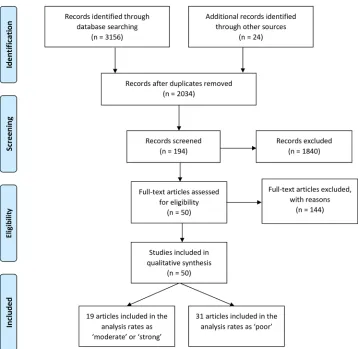
Articles were identified through a search of PUBMED, Science of Direct, Web of Knowledge, Google Scholar and WHO archives using key words and excluded duplications (n = 2,034). The exclusion of non-VBDs control and prevention interventions resulted in 194 eligible titles/abstract/keywords for full text assessment. Further exclusion of non-peer reviewed articles, non-declaration of ethical clearance, reviews and expert opinion articles resulted in 50 articles finally being included for analysis with the extraction of data on outcome, factor/s influencing the effectiveness, indicators of collaboration and sustainability.
Results
Of the 50 articles included in the analysis, 19 articles were categorized as of moderate-strong quality. All articles compared pre- and post-intervention outcomes against disease or vector variables. Three papers included outcome variables on intersectoral collaboration and participation indicator. However, no paper undertook component analysis by different sectors or different activities. Only one paper compared cost data for community-intersec-toral intervention for IRS and traditional “vertical” IRS. Six factors were identified as influenc-ing the effectiveness of inter-sectoral collaboration. Five of six factors are the main ones, namely the approach (37/47), resources (34/47), relationships (33/47), management
a1111111111 a1111111111 a1111111111 a1111111111 a1111111111
OPEN ACCESS
Citation: Herdiana H, Sari JFK, Whittaker M (2018)
Intersectoral collaboration for the prevention and control of vector borne diseases to support the implementation of a global strategy: A systematic review. PLoS ONE 13(10): e0204659.https://doi. org/10.1371/journal.pone.0204659
Editor: Basil Brooke, National Institute for
Communicable Diseases, SOUTH AFRICA
Received: March 2, 2018 Accepted: September 12, 2018 Published: October 10, 2018
Copyright:©2018 Herdiana et al. This is an open access article distributed under the terms of the
Creative Commons Attribution License, which permits unrestricted use, distribution, and reproduction in any medium, provided the original author and source are credited.
Data Availability Statement: All data are within the
paper and its Supporting Information files.
Funding: This review was supported by WHO-TDR
(29/47) and shared vision (20/47) factors. A conceptual framework has been developed based on this review.
Conclusion
This review shows the importance of inter-sectoral collaboration to reduce VBDs or vector densities. However, very few studies measured how much inter-sectoral collaboration con-tributes to the impact. Further high-quality studies using inter-sectoral collaboration indica-tors are recommended to be undertaken.
Introduction
Burden of VBDs worldwide
Vector-borne diseases (VBDs) contribute significantly to the global burden of diseases and have a major impact on public health and socio-economic development. In 2015, VBDs accounted for approximately 17% of the estimated communicable diseases cases worldwide [1]. VBDs are defined as illnesses caused by viruses, bacteria and parasites in human popula-tions carried by a vector. The vectors incriminated in carrying these infectious agents are mos-quitoes, ticks, sandflies, fleas, triatomine bugs, blackflies, tsetse flies, mites, lice and some freshwater aquatic snails. Every year there are more than 1 billion cases and over 1 million deaths from vector-borne diseases such as malaria, dengue, Zika, schistosomiasis, human Afri-can trypanosomiasis, leishmaniasis, Chagas disease, yellow fever, Japanese encephalitis and onchocerciasis, globally. The distribution of these diseases is mostly in tropical and sub-tropical countries and determined by a complex dynamic of environmental and social factors [2].
The burden of VBDs is highest in tropical and subtropical areas and usually affects the poorest populations. Currently, the increase in global population movement, unplanned urbanization, climate change and other environmental and social challenges determine the distribution of these diseases. Changes in agricultural practices due to factors such as variation in temperature and rainfall, forest clearing, growth of urban areas including slums, lacking reliable piped water or adequate solid waste management become factors that influence the range of vector populations and the transmission patterns of vector-borne diseases [3].
To control the VBDs, many countries continue to face technical and operational challenges [4–7]. In 2004, the World Health Organization (WHO) adopted the integrated vector manage-ment (IVM) global for all vector-borne diseases control program [8]. One key element of IVM is collaboration between an intra-health sector and non-health (inter-) sectors. IVM is defined as a “rational decision-making process for the optimal use of resources for vector control” [8]. IVM aims to plan, deliver, monitor and evaluate cost-effective intervention, as well as to use combinations of vector control measures. A measurable impact on the risks of transmission, inter-sectorality and partnership are also important factors of IVM [9]. Furthermore, accord-ing to the recent global mappaccord-ing of VBDs distribution, many countries suffer from more than one vector borne disease. Thus, integrated vector control interventions can be an effective and efficient solution to control several diseases at the same time alongside with the strength-ening intersectoral collaboration [10]. Prevention of vector borne diseases can also include treatment—not just management of vectors, and the experience of intersectoral approaches to this are also limited in assessment.
Competing interests: The authors have declared
that no competing interests exist.
Abbreviations: AFR, Africa Regional Office; CBA,
Controlled Before-After; CDC, Communicable Disease Control; CIB, Community-intersectoral based; CSOs, Civil Society Organizations; DHO, District Health Office; IAH, Intersectoral action for health; IRS, Indoor residual spray; ISA, Intersectoral action; ISC, Intersectoral
VBDs approaches
The importance of intersectoral collaboration has been acknowledged for a long time. Roles in VBDs control outside the health sector had been initiated since the sixth century when agricul-tural fields were drained resulting in a positive impact upon the health and wealth of popula-tion [11] (even if the mechanism for this outcome was not understood scientifically) and later examples like the draining of the Pontine marches in Italy [12]. The role of involvement of engineers in the design of mosquito control interventions in many countries was activated after the relationship between mosquito and human health had been discovered in 1897. The engineering involvement included drainage, land filling, constructed canal, irrigation net-works, removal vegetation, and managed stream water flow [13].
In some countries, intersectoral collaboration including public-private partnerships has proven itself to be a key intervention in reaching zero cases of VBDs [4,14–16]. At the ‘end game‘ of the VBDs control efforts, inter-sectoral collaboration becomes crucial for scaling up and ensuring sustainability of control and often prevention of re-introduction of disease efforts. Although inter-sectoral collaboration is recommended to reduce the burden of VBDs, the type of collaboration and segregation of duties, responsibilities, and resources seem unclear [16]. Many VBDs control programmes are organized under the Ministries of Health (MoH) [17], although exceptions, like the SingaporeanAedesprogram through the National Environ-mental agency exist [18], and are mostly vertical programs. Limited, or even no, institutional collaboration with other government bodies (e.g. environment, education, agriculture and tourism), municipal entities (e.g. engineering, sanitation and water resources) or links to stake-holders and community leaders (e.g. businesses, educators, community groups and NGO’s) are evident [16].
Some factors affecting the success of intersectoral collaboration include strengthened chan-nels of communication among policymakers, VBDs control programme managers and other IVM partners; effective dialogue between the health, settlement planning sectors, environmen-tal agencies (with concerns such as wetland conservation), academic institutions (for provid-ing research support) and local communities [19]. Intersectoral collaboration may also support case detection and diagnosis and treatment, vector control and surveillance/response activities, harnessing of political support, partnerships in research and development, and the development of innovative financing mechanisms and health systems initiatives [16].
Defining intersectoral collaboration
The definition of intersectoral collaboration (ISC) has evolved over the time, though some common elements can be identified. The concept of ISC was highlighted by WHO in the Dec-laration of Alma Ata 1978 as involving all related sectors and aspects of national and commu-nity development to undertake collective actions performing different roles, especially for Primary Health Centres (PHCs) [20]. In 1997, the concept of inter-sectoral action for health (IAH) promoted by WHO, was defined as “a recognised relationship between health sector and another sector to take action on an issue to achieve health outcome to be more effective,efficient or sustainable”[21]. The IAH concept further emphasized that the collaboration should be a managed process not only a conceptual one. The 1998 WHO Health Promotion Glossary defined ISC as “cooperation between different sectors of society such as the public sector,civil soci-ety and the private sector” [22].
[21]. The reason there is interest in the health sector working together with other sectors can be summarized as realizing that health is not only the responsibility of health sector; and a need to address the persistence of health inequalities and equity issues. More evidence is required on the enabling factors for effective intersectoral collaboration; and what are the posi-tive impacts of intersectoral action [21].
Historically, ISC was initiated for primary health care and health promotion. However, there are broader examples from health programs that have successful utilized ISC to benefit not only the health sector but also other sectors such as education with school health programs, and city planning with healthy city programs. The conference of intersectoral action for health (IAH) identified the key factors required to achieve common vision, values and goals with the availability of key resources such as human, technical and financial. The key factors of success-ful IAH are “1). Leadership, champion, catalyst; 2) Analysis or priority-setting; 3). Mutually beneficial relationships; 4). Integrated action either in macro and micro level; 5). Variation of institutional long-term policy; 6) Institutionalizing of health impact or gain assessment; 7). Training, tools, and capacity development; 8). Coordinating and integrating mechanism, part-nering; and 9). Social mobilization or community empowerment” [21]. It is interesting to note that ISC was an important founding principles for the development of the Roll Back Malaria Partnership [23].
A conceptual scheme of different forms of integration was suggested by Axelsson R. and Axelsson S.B. in 2006 [24]. It assessed integration based upon degrees of vertical and horizon-tal integration, across the variables of coordination (high degree of vertical integration with low degree of horizontal integration), cooperation (high degree both vertical and horizontal integration), contracting (low degree both vertical and horizontal integration), and collabora-tion (high degree horizontal integracollabora-tion with low degree of vertical integracollabora-tion). They elabo-rated upon collaboration by adding variables as to i) if the integration occurred through voluntary agreement; ii) if mutual adjustments between the sectors or organizations involved was undertaken, iii) evidence of a willingness to work together and iv) the levels of required intensive contacts and communications among the member of organizations [24]. Though many terms have been used around this theme such as collaboration, partnership,
cooperation, consolidation, this review used all the terms in the search strategy in order to obtain as much information as possible to understanding the ISC on VBDs control and prevention.
Intersectoral collaboration in VBDs
Therefore, this systematic review aims to assess the existing evidence on inter-sectoral col-laboration in VBDs control and prevention, identify any gaps in the evidence base and develop a framework for inter-sector collaboration in VBDs from a global perspective.
Methods
Search strategy
Overall this review process followed five steps:
1. Framing questions for a review;
2. Identifying relevant work;
3. Assessing the quality of studies;
4. Summarizing the evidence; and
5. Interpreting the findings [27].
This study was limited to inter-sectoral collaboration between health sectors and other sec-tors such as inter-government or inter-ministerial agencies, private secsec-tors, NGOs and CSOs, regional and international partners.
One reviewer searched peer-review published data sources including quantitative and qual-itative research, case studies, and case reports. The literature search used PubMed, ScienceDir-ect, Google scholar and WHO archives from period 1 January 1970 to 30 June 2017 and in English full text. The search terms used in this review were: (public-private OR inter-sectoral OR multi-sectoral) AND (partnerships OR collaboration OR consolidation OR cooperation OR planning) AND (“vector borne diseases” OR “vector control” OR ‘vector management” OR “disease control” OR malaria OR dengue OR Schistosomiasis OR Leishmaniasis OR “Chaga disease” OR”lymphatic filariasis” OR zika OR “yellow fever”).
Study selection
The study selection followed the PRISMA guidelines [28]. The total number of articles from the database developed through the search process, and then through review of these articles reference lists were 2,034 articles excluding duplicates. The screening of these identified first round articles used eligible keywords found in the title or abstract, and resulted in 194 eligible second round articles. Exclusion criteria used in this review if they: were non-peer reviewed article, had not declared the ethical clearance process, were either review papers or opinion articles. Articles that did not present the monitoring and evaluation results were also excluded. The search process is shown in theFig 1.
Quality assessment and analysis
Two reviewers read 194 full-text articles independently and assessed the articles using exclu-sion criteria and rated included articles based on the Cochrane Handbook. Discordant results between the two reviewers were discussed with the senior researcher in the team.
The rating was based on quality relating to study design, data analysis and reporting and categorized as ‘poor’, ‘moderate’, or ‘strong’ [29]. Based on this ranking 10 articles were rated as ‘strong’, nine articles as ‘moderate’ and 31 articles as ‘poor’. Assessment the risks of bias for quantitative studies were reported inS1 Table.
sample, data collection, analysis method, findings, reporting, discussion and ethics. A signifi-cant and non-signifisignifi-cant outcome was reported in narrative. The analysis of data of all studies included in this review used pre-determined coding that was developed after preliminary read-ing of the abstracts. The code was adjusted to accommodate emergent themes with the review-er’s concurrence. Type of intervention, sectors involved in collaboration, roles of each sectors, possible success or barrier factors related to the collaboration were identified from the studies and imported to the code list. Two reviewers conducted the coding independently, any discor-dance of coding results was then discussed with the senior researcher to reach a common agreement. Given the fact that only three studies measured indicators of intersectoral collabo-ration, the results cannot be directly compared and meta-analysis cannot be conducted across all identified articles. A conceptual framework for intersectoral collaboration was designed based on the evidence extracted from the reviewed articles.
Results
Characteristic of articles
[image:6.612.201.559.73.422.2]S2 Tableshows the characteristics of the studies included in the analysis by type of disease, study site, study design, study size and outcomes. A total of 50 studies have been included in
Fig 1. Selection process of articles from database and hand-searching following PRISMA guidelines.
the analysis: six articles from Region of the Americas (AMR), nine studies from Western Pacific Region (WPR), 18 studies from South East Asia Region (SEAR), 16 studies from Africa Region (AFR), and one study from AFR+AMR. Most studies discussed malaria (24 articles) and dengue (13 articles), followed by schistosomiasis (three articles), onchocerciasis (two arti-cles), and one study for each of the following diseases: zika, leishmaniasis, lymphatic filariasis, Chagas disease, and combinations of zika + dengue + chikungunya, dengue + Japanese encephalitis, schistosomiasis + soil transmitted helminths, malaria + dengue. Of the 50 studies in the review, there were included 21 interventional studies (13 randomised control trials [RCT]; three CBA; two time series; and two uncontrolled before-after), and 29 observational studies (25 case study, four cross sectional).
Eighteen studies were conducted in rural settings, fourteen were in urban, and eight studies were taken place both in rural and urban settings, four studies were conducted in province or nationwide and nine studies did not mention the location of the study. Almost of all studies on malaria, schistosomiasis, onchocerciasis, leishmaniasis were conducted in rural areas (20 arti-cles), while the studies on dengue, zika, chikungunya were conducted in an urban setting. The selection of the study location by the researchers was usually based on the burden of VBDs relating to suitable environment situation/s, geographic feature/s, climate condition/s and cul-tural landscape/s.
Exhaustive content analysis from 50 articles included in the review resulted in several themes. The themes are outcome of ISC, measuring ISC indicators, intervention in the collab-oration, type of agencies involved and roles in the collabcollab-oration, and success factors and iden-tified barriers in the collaboration.
Excluded studies
There were 194 full text studies assessed, and 144 studies were excluded due to one or more following reasons, as shown inS3 Table:
• Review or opinion articles (n = 55)
• Did not present nor mention intersectoral collaboration (n = 58)
• Did not present evaluation data or baseline data (n = 32)
• Did not discuss an intervention for VBDs control and prevention (n = 7)
• Presented solely health sector intervention (n = 3)
• Reported community participation without intersectoral collaboration (n = 15)
• Study protocol or no ethical clearance (n = 4)
Outcome intersectoral collaboration
Of the 25 studies measuring disease indicators, 22 studies reported positive effects of the intervention such as reduction of cases, and there were three studies that reported an increase in cases during the study. One case study in a post emergency situation in Philippines reported a 61% increased number of dengue cases in 2014 compared to 2013 (before a Typhoon disas-ter). Though an increased number of cases occurred, it did not exceed the epidemic threshold due to good collaboration between health authorities with military, NGOs, national and inter-national donors to contain further dengue transmission in affected areas [46]. One study in Taiwan also proved the benefit of collaboration among health quarantine, immigration, and tourism industry (travel agents and tourist guides) to provide health education on dengue and zika for tourists and passengers. As a result, this collaboration succeeding in finding five zika cases during the airport screening [50].
Another case study conducted in Purworejo District, Indonesia reviewed retrospective data from 2007 to 2011. Interesting findings were that when malaria was no longer seen as a bur-den, the local government deducted budget allocation for malaria program and support from community and other sectors and donation from international initiative also declined, result-ing in a resurgence of malaria cases from 0.56 in 2007 to 1.37 per 1000 population in 2011. Interestingly, this case study compared Purworejo District with Wonosobo. Wonosobo Dis-trict succeeded in reducing malaria incidence from 0,16 in 2007 to 0.01 in 2011, although the local government cut the funding for malaria program from USD 14,699 in 2007 to USD 977 in 2011. The district health office (DHO) of Wonosobo undertook continued advocacy and negotiation with executive and legislative authorities as well as other sectors to maintain the support from community and to leverage other sectors’ funds for malaria control [38].
Similar findings were shown in vector outcomes, with almost all studies reported declining vectorial indices after the intervention. Only one study of dengue in Sri Lanka found no signif-icant difference (p = 0.067) in pupae per 100-person index between the intervention and con-trol groups [54]. Another study of integrated vector management (IVM) activities conducted in Malindi and Nyabondo, Kenya showed an increase ofAn.Gambiaeand other vectors in Nyabondo, while in Malindi showed the opposite result. Beside the vector indicator, this case study also qualitatively evaluated the participation of community and intersectoral support. In Malindi that is in an urban and peri-urban area, a positive impact from IVM was found because the community who were involved in vector control succeeded in deploying to other jobs and could generate income from mosquito control such as making baskets and other household products from disposed plastic. In contrast what occurred in Nyabondo, a rural area, community participation to support malaria control program disappeared because the community did not see benefit from the project and asked for financial compensation when involved in the project activities. In this site, intersectoral collaboration was not strong as in Malindi, as the collaboration was only between MoH, Ministry of Fishery and Ministry of Edu-cation without consolidating with local authorities and NGOs to support the project [4].
Despite disease and vector outcomes, other studies also measured knowledge and behaviour change indicators, coverage of intervention, cost and policy adaptation. Nine studies that have measured an outcome of knowledge and behaviour change reflected improvement in these indicators in the intervention areas [53,56,59,61–65]. All of eight studies which measured coverage of the intervention reported positive results. Four studies indicated the increased ownership and utilization of bed nets [35,66–68]. Three studies showed improvement diagno-sis and treatment of malaria [69–71], and one study found an increased number of people treated by ivermectin for onchocerciasis [72].
protected. In CIB-IRS district reported lower cost per structure sprayed (USD 2.27 vs 2.47 in 2013 and USD 1.98 vs 2.47 in 2014) and cost per person protected (USD 0.87 vs 1 in 2013 and USD 0.86 vs 1.01 in 2014). One evaluation study of a national campaign distributing LLINs in Tanzania calculated the cost per LLIN delivered was about USD 5.30 including production, transport and campaign costs. This cost was overall cost contributed from all parties in the campaign, and no comparison was made with LLIN distribution schemes through other sector/s [68].
Measuring intersectoral collaboration indicators
Of 50 studies analysed in this review as shown inS4 Table, there were only three studies that measured the intersectoral collaboration in VBDs program [55,74,75]. No study undertook a component analysis (for different sectors or different activities). This type of study was specifi-cally looked for this as often funders and those involved in scaling up want to understand if they need the whole package that was trialled in the “pilot’ or intervention research or if they can leave out some parts as they did not add much value. They also want to understand what might be context specific and therefore needs adjustment in other locations, and what might be universal. Only through component analysis can this be identified.
One study in Ghana measured the level of intersectoral integration in malaria control and factors associated with differentials in the levels of intersectoral integration. By using scoring interview results from 32 different institutions to calculate the level of integration, the findings revealed that level of disparity among institutions, the type of institution, level of focus on malaria and source of funding, district effect (rural vs urban) were important predictors associ-ated with the level of intersectoral integration [74].
Another study reported on a design that compared interventions with and without intersec-toral collaboration and community participation for dengue control in Cuba. In the interven-tion area, the mean score of participainterven-tion increased and the Breteau index was lower in those communities. Furthermore, participation was also measured by indicators around participa-tion in execuparticipa-tion, decision making, and/or evaluaparticipa-tion in the program. For all these indicators it found that in areas where there was intersectoral collaboration plus community empower-ment the highest scores were obtained, compared to areas with only intersectoral collaboration and those without both approaches [55].
One study evaluated an international partnership that involved many countries from two regions (Africa and America), international agencies such as WHO, CDC, World Bank, and a private pharmacy company (Merck), joined together to support an onchocerciasis control pro-gram. This study measured governance and management characteristics of internal partner-ships, as well as benefits and problems with the partnership by conducting semi-structure interviews and use of a self-administered survey for all people and organizations involved in the partnership. The results indicated high ratings on governance and management (such as the partnership is able to clearly define roles and responsibilities for each institution and able to implement the program and accomplish the common objectives) [75] were positive for ISC and overall VBDs outcome.
Interventions and level of the collaboration. Of the 50 articles, intersectoral
collabora-tion with an intervencollabora-tion to mobilize community and health educacollabora-tion was the most common. The interventions implemented through the collaboration between the sectors varied from providing human or financial resources, designing to executing an intervention, developing policy and mobilizing communities (24 studies) [30,32,35,43–45,47–50,53–58,60–65,
surveillance, monitoring and evaluation (nine studies) [35,38–42,52,68,69], mass drug administration (four studies) [48,72,75,76], cross border collaboration (four studies) [35,40,
43,52], two studies for research [40,51] and one study for advocacy and legislation [31]. The level of collaboration also varied from local, province, national, regional and global level. The level of collaboration at local level was presented by 37 studies, province or sub-national level in four studies [34,39,42,51], national level in four studies [31,50,52,77], regional and global level in six studies [35,40,43,72,75,76].
Type of agencies involved and their roles in the collaboration
There was a broad range of sectors involved in VBDs prevention and control, and in total 26 sectors involved in VBDs, see inS6 Table. These sectors included: inter-ministerial bodies such as education, parliament, defence/military, housing, immigration, agriculture, child and women welfare, rural development, fishery, public security, civil registration, data and infor-mation department, and military. In addition to inter-ministerial bodies, private sectors, cen-tral and local authorities, community members (from leaders, volunteers, forum, farmers, religious leaders), NGOs, Red Cross, university, research institutions and international agen-cies had been also engaged in vector borne diseases control and prevention activities.
All 26 sectors have played important and specific roles. There were nine roles and responsi-bilities of sectors from providing access, technical support, financial support, social mobiliza-tion, policy development, planning, implementation of activities, providing logistic, and monitoring and evaluation. This review found that roles for health sector have been identified in all of these nine roles and responsibilities. The education sector also have important roles in providing access to use school-based health program to deliver VBDs program such as utiliz-ing teachers to provide diagnosis and treatment [48,49,70], teach educational material to the students [45,48,64,65], and involving teacher, student, and parent association for VDBs cam-paign [45,47,49,51,53,54,58,59,65]. The roles of the agricultural sector identified in the studies were providing technical assistance and materials for orchard and compost production [61], land reclamation e.g. draining and filling in [4], and technical support for environmental management through introducing new farming method of applying wet and dry crop rotation that can benefit for reducing population ofAnophelesmosquito [34].
The military also played roles in VBDs, particularly in emergency response to prevent out-break post disaster. The study in Philippines showed positive contribution of military in pre-venting dengue outbreak after Typhoon [46]. In addition to emergency response, the military has a contribution in routine diagnosis and treatment, through their hospital and clinics that can serve armies and communities [41]. The military also have research units that have played essential roles in research project of VBDs vaccine, diagnosis and medicines [51].
Outside the health sector, social mobilization’s role was predominantly supported by educa-tion sector (teachers and students) [36,45,47,49,53,54,56,62,64,65,77,78]; communities such as village leaders [41,44,57,61,78], religious leaders [54,62], volunteers and household-ers [32,36–38,40,41,47,49,54,56,57,59,60,63,68], farmers [34], and community forum [38,55,56,78]; community-based organization such as women group [53,59,76]; and media [4,32,62,68].
The contribution of NGOs, either national or international organization, were not only to provide technical [33,35,43,48,61,63,69], financial [33,41,67,72,75] or logistics support [31,33,35,43,48,68,72,75] but also to mobilize the community [31,33,35,43,48,68,72,
75], be involved in planning [31,33,35,43,48,67,69,72,75], implementation of activities [33,
35,41,43,46,48,59,67,69] and monitoring and evaluation [33,63,68,69,72].
Historically, a VBD program was managed vertically from central government, but in this review showed that the roles of local authorities cannot be neglected. A large range of roles can be undertaken by the local authorities such as providing access for intervention [4,35,41,44,
51,53,56,57,65,77], technical support [31,34,55,56], financial support [32,35,38,41,54–
57,77], social mobilization [31,32,56], policy development [4,34,35,38,41,54,56], planning [44,54,57,77], providing logistics [44,54,57,77], implementing the activities [36,56,77], and monitoring the activities [34,55,56,77], see in “S4 Table”.
Success factors and identified barriers in the collaboration
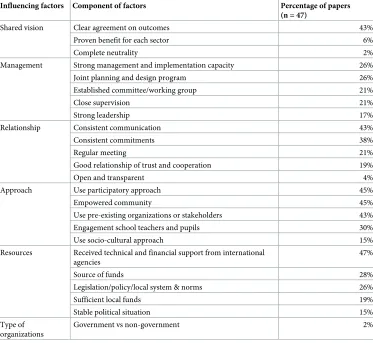
Tables1and2presents success factors and barriers identified from the evidence (detail inS7
andS8Tables). There were six factors found to influence the success of intersectoral collabora-tion extracted from 47 studies. The factors discussed in the most studies were the “approach to ISC factor” (37/47) that consisted of use of a participatory approach (45%), empowering the community (45%), use of pre-existing organizations or stakeholders (43%), engagement school teachers and pupils (30%), and use socio-cultural approach (15%). The next important factors were resources (34/47), relationship (33/47), management (29/47) and shared vision (20/47) factors. Interestingly although the “type of organization” was not major success factor identi-fied, in the one study (2%) that reported it as an important predictor for successful ISC, they found a significantly higher likelihood of non-governmental institutions integrating (Odds ratio of 11.4) than government institutions [71].
In the resources factor, having received technical and financial support from international agencies (47%) was the component that was the most highlighted in the studies. While in the relationship factor, consistent communication (43%) and commitments (38%) were the pre-dominant components influencing to the success of ISC. A clear agreement on outcomes com-ponent (43%) was the most discussed in the studies as part of shared vision factor, whereas two other components were limited found in the articles: proven benefit for each sector (6%) and complete neutrality (2%). The study that raised the issue of complete neutrality as an essential factor for achieving the objectives was conducted by NGOs in cross border China-Myanmar setting [35].
Table 2. Barrier to success of intersectoral collaboration.
Barrier identified Percentage of study (n = 21)
Political differences, Political will 57%
Poor communication and coordination 43%
Financial constraints 33%
Lack of local commitment 29%
Insufficient and irregular supplies 24%
Do not see tangible benefits 19%
Weak monitoring and evaluation 14%
Different geographic areas 10%
Professional attitudes and behaviours 10%
Inaccessible area 10%
Poor leadership 10%
The difficulties of shared decision making and power 5%
Organisational cultures 5%
Different organisational histories 5%
Organisational rigidities 5%
Contested planning priorities 5%
[image:12.612.199.573.483.698.2]https://doi.org/10.1371/journal.pone.0204659.t002
Table 1. Factors influencing success of intersectoral collaboration.
Influencing factors Component of factors Percentage of papers (n = 47)
Shared vision Clear agreement on outcomes 43%
Proven benefit for each sector 6%
Complete neutrality 2%
Management Strong management and implementation capacity 26%
Joint planning and design program 26% Established committee/working group 21%
Close supervision 21%
Strong leadership 17%
Relationship Consistent communication 43%
Consistent commitments 38%
Regular meeting 21%
Good relationship of trust and cooperation 19%
Open and transparent 4%
Approach Use participatory approach 45%
Empowered community 45%
Use pre-existing organizations or stakeholders 43% Engagement school teachers and pupils 30%
Use socio-cultural approach 15%
Resources Received technical and financial support from international agencies
47%
Source of funds 28%
Legislation/policy/local system & norms 26%
Sufficient local funds 19%
Stable political situation 15%
Type of organizations
Government vs non-government 2%
supervision from health staff, poor communication and coordination between different orga-nizational personnel and insufficient, irregular and delayed supplies for school were identified as the barrier to success for the project. Learning from the process and challenges, the project was able to reduce morbidity due to dengue among schoolchildren by 219.2/100 000 pop within a period of four years [45].
Discussion
Based on existing knowledge, this atypical systematic review of ISC in VBDs control and pre-vention is the first review conducted on this topic. Several systematic reviews were undertaken to measure ISC but for different issues such as health equity and primary health care.
In general, this review revealed that the benefits of and mechanisms for sectors to work together are very complex. There were many success stories of ISC on health issues in local, national and global level. In this review found consistent results that ISC on VBDs was also performed from local to global level, particularly collaboration in local level succeed when actively involving local authorities from beginning of the process. This is consistent with WHO initiative on ISC action to promote local government in health issues [79].
The range of sectors involved in VBDs intervention appears to depend on the needs in the ground. No fixed formula can suggest which sector is more effective than others and it is extremely contextual in societal, political, and geographic terms. In addition to the important roles that were played by government inter-ministerial departments, the roles of non-govern-ment organizations such as civil society, private sectors, community and religious leaders and international agencies have been found in the evidence. The issues of involving private sectors, civil society, non-government organizations and community have also been discussed in the ISC action conference at 1997 [21], where they noted the importance of improving partner-ships with private sectors, NGOs, volunteers, including CBOs. The rationale is that indepen-dent of the type of project, the ultimate success of the project will depend upon participation of and commitments from individuals and community. The increased evidence on the level of and success resultant from the significant contribution of private sectors such as the nutrition industry and NGOs was also acknowledged [21,80,81].
This review supports the needs to collect data on ISC in VBDs control and prevention tak-ing into account indicators of effectiveness of the ISC. This will then support an assessment of whether ISC is working or successful in achieving outcomes, and the level of contribution of ISC to that success. The review cannot comment on the level of contribution of various sectors specifically to outcome/s as no study reviewed specifically undertook a component analysis of each sector’s contribution. It is concerning that only three studies measured the indicators of ISC with a different method of analysis. Two studies [74,75] used qualitative methods, and one study [55] used quantitative methods with RCT design to compare areas with and without ISC involvement and/or ISC involvement plus community participation. So, based on the evi-dence from this review we cannot make recommendations on indicators of ISC that best fit these approaches although some examples of what have been used have been identified [74]. However, there is framework for the vector control aspect of monitoring and evaluation ISC in IVM that can be use incorporated into the evaluation of ISC in broader VBDs prevention and control [82].
reported that strong leadership as one of the management factors that has played a role in the achievement of effective collaboration [36,39,40,52,54,68,75,76], this review found that it less important as a factor compared with the approach factors such as use pre-existing organi-zation or stakeholders, use participatory approach as well as resources factors such as received technical and financial support from international agencies and consistent commitment and communication. Though, receiving technical and financial support from international agen-cies may be biased as the project have had to publish the findings as part of contract. Achieving a high level of integration requires sharing information, ideas, joint planning or modifying the delivery of services based on mutual consent from all partners [24]. Therefore, maintaining consistent levels of commitment and communication play an important role in achieving the success from ISC of IVM more so than only strong leadership factor. Use of participatory approach and empowered community were also identified as essential factors to achieve the target, it consistent with the fact that almost of VBDs control intervention requires community participation [23,85].
Moreover, some the barriers to success identified in this review were also similar to other studies such as political differences, financial constraints, poor communication and lack of commitment [83,84]. These factors can be used to support planning and monitoring/evalua-tion of ISC on VBDs in the future.
Furthermore, this review also found integrated interventions for more than one disease e.g. zika, dengue and chikungunya [60] or schistosomiasis with soil transmitted helminths [48], and integration of malaria with dengue [36]. The integrated intervention is consistent with the recent initiative to be more integrated across VBDs control and prevention [8,10], particularly all diseases required ISC to ensure the sustainability of interventions.
There are limitations in this review. Most of the studies did not specifically measure the contribution of ISC as a specific variable, neither as outcome nor input, making it difficult to measure the contribution to other VBD outcomes. This review also cannot define the level of sustainability of IVM that can be achieved by using ISC. The search strategy was restricted to English and published peer reviewed research literature therefore many project and technical reports, and reports from non-English literature especially Spanish and Chinese are missing— potentially creating selection bias. Although use of carefully defined themes and multiple reviewers were used for the content analysis of qualitative studies there may be some reviewer bias in the review.
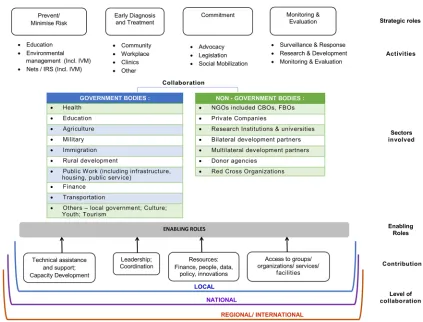
The framework identified two types of sectors that can work together to perform the activi-ties supporting VBDs control and prevention, namely government and non-governmental. These sectors can collaborate within inter-government bodies or between government and non-government bodies or among non-government bodies. Flexibility in ways of implement-ing collaboration among sectors is required to be more effective, efficient and adaptable with the requirement for the task at hand. Four major contributions can be provided by sectors to enable the collaboration condition namely 1) technical assistance and support including capac-ity building, 2) leadership and coordination, 3) providing resources e.g financial, people, data, policy, innovations, and 4) facilitating access to group or organizations or services or facilities. The contribution from sectors can be based upon the requirements or functions. Finally, in VBDs programmes collaboration can be undertaken in the local, national or regional/interna-tional level according to the level of burden and scope of interventions. This framework can be used to guide a country in response to the VBDs problem with ISC approach.
It can also support a program logic for designing program especially of prevention and con-trol of VBDs. In broader context, this framework can support the implementation the pillar of action reflected in the Global Vector Control Response [1].
Conclusions
[image:15.612.154.577.72.394.2]The recent global strategy of vector borne diseases control and prevention encourages inter-sectoral collaboration as an approach to achieve cost effective and efficient results from an
Fig 2. Conceptual framework of intersectoral collaboration at VBDs control and prevention based upon systematic review of peer review literature.
intervention. This review shows inter-sectoral collaboration has played important role in achieving the impact on reduction of VBDs or vector densities. However, very few studies measured how much inter-sectoral collaboration contributed to the impact, nor for how long the ISC is needed to achieve sustainable IVM. It is recommended that further high-quality studies are undertaken using measures of indicators for inter-sectoral collaboration to address this critical gap. A conceptual framework and findings resulted in the review can be used as guideline to establish ISC on VBDs control and prevention. This work can help implementa-tion of several recommended strategies in the Global Vector Control Response through pro-viding an evidence base for implementers, propro-viding some program logic to define outcomes of ISC and identifies a body of research to address gaps in robust evidence.
Supporting information
S1 Appendix. PRISMA checklist.
(PDF)
S1 Table. (a) Risk of bias assessment for studies included in the quantitative analysis inter-vention studies ((RCT and CBA), n = 17)/ (b) Risk of bias assessment for studies included in the quantitative analysis intervention studies (ITS, n = 2).
(PDF)
S2 Table. Characteristics of study included in the review.
(PDF)
S3 Table. Reasons of exclusion studies.
(PDF)
S4 Table. Intervention, type of sector involved and results of the study.
(PDF)
S5 Table. Pre and post intervention from intervention studies (n = 21).
(PDF)
S6 Table. Roles of multi-sectoral organization in VBDs control and prevention.
(PDF)
S7 Table. Factors influencing success of intersectoral collaboration.
(PDF)
S8 Table. Barrier to success of intersectoral collaboration.
(PDF)
Acknowledgments
Author Contributions
Conceptualization: Herdiana Herdiana, Jana Fitria Kartika Sari, Maxine Whittaker.
Formal analysis: Herdiana Herdiana, Jana Fitria Kartika Sari.
Methodology: Herdiana Herdiana, Maxine Whittaker.
Supervision: Maxine Whittaker.
Writing – original draft: Herdiana Herdiana.
Writing – review & editing: Jana Fitria Kartika Sari, Maxine Whittaker.
References
1. WHO. Global vector control response 2017-2030. Geneva: WHO; 2017.
2. WHO. A global brief on vector-borne diseases. Geneva: World Health Organization; 2014. 3. Verwoerd DW. Definition of a vector and a vector-borne disease. Rev Sci Tech. 2015; 34(1):29–39.
PMID:26470447.
4. Mutero CM, Mbogo C, Mwangangi J, Imbahale S, Kibe L, Orindi B, et al. An Assessment of Participatory Integrated Vector Management for Malaria Control in Kenya. Environ Health Perspect. 2015; 123(11): 1145–51.https://doi.org/10.1289/ehp.1408748PMID:25859686.
5. Chanda E, Ameneshewa B, Mihreteab S, Berhane A, Zehaie A, Ghebrat Y, et al. Consolidating strategic planning and operational frameworks for integrated vector management in Eritrea. Malar J. 2015; 14:488.https://doi.org/10.1186/s12936-015-1022-7PMID:26630934.
6. Chanda E, Ameneshewa B, Angula HA, Iitula I, Uusiku P, Trune D, et al. Strengthening tactical planning and operational frameworks for vector control: the roadmap for malaria elimination in Namibia. Malar J. 2015; 14.https://doi.org/10.1186/s12936-015-0785-1PMID:26242587
7. Chanda E, Govere JM, Macdonald MB, Lako RL, Haque U, Baba SP, et al. Integrated vector manage-ment: a critical strategy for combating vector-borne diseases in South Sudan. Malar J. 2013; 12:369.
https://doi.org/10.1186/1475-2875-12-369PMID:24156749.
8. WHO. Global strategic framework for integrated vector management. Geneva: World Health Organiza-tion; 2004.
9. WHO. Malaria control: the power of integrated action. Health and Environment Linkages Policy Series. In WHO and UNEP The Health and Environment Linkages Initiative [Internet].http://www.who.int/heli/ risks/vectors/malariacontrol/en/
10. Golding N, Wilson AL, Moyes CL, Cano J, Pigott DM, Velayudhan R, et al. Integrating vector control across diseases. BMC Med. 2015; 13:249.https://doi.org/10.1186/s12916-015-0491-4PMID:
26423147.
11. Gilles HM, Warrell DA, Bruce-Chwatt LJ. Bruce-Chwatt’s essential malariology. 3rd ed. London: E. Arnold; 1993.
12. O’Sullivan L, Jardine A, Cook A, Weinstein P. Deforestation, Mosquitoes, and Ancient Rome: Lessons for Today. BioScience. 2008; 58(8):756–60.https://doi.org/10.1641/B580812
13. Konradsen F, van der Hoek W, Amerasinghe FP, Mutero C, Boelee E. Engineering and malaria control: learning from the past 100 years. Acta Trop. 2004; 89.https://doi.org/10.1016/j.actatropica.2003.09. 013
14. Beier JC, Keating J, Githure JI, Macdonald MB, Impoinvil DE, Novak RJ. Integrated vector management for malaria control. Malar J. 2008; 7 Suppl 1:S4.https://doi.org/10.1186/1475-2875-7-s1-s4PMID:
19091038.
15. Sanders KC, Rundi C, Jelip J, Rashman Y, Smith Gueye C, Gosling RD. Eliminating malaria in Malay-sia: the role of partnerships between the public and commercial sectors in Sabah. Malar J. 2014; 13:24.
https://doi.org/10.1186/1475-2875-13-24PMID:24443824.
16. Okia M, Okui P, Lugemwa M, Govere JM, Katamba V, Rwakimari JB, et al. Consolidating tactical plan-ning and implementation frameworks for integrated vector management in Uganda. Malar J. 2016; 15:214.https://doi.org/10.1186/s12936-016-1269-7PMID:27074809.
17. van den Berg H, Mutero CM, Ichimori K. Guidance on policy-making for integrated vector management. Geneva: World Health Organization; 2012 2012.
19. Mutero CM, Schlodder D, Kabatereine N, Kramer R. Integrated vector management for malaria control in Uganda: knowledge, perceptions and policy development. Malar J. 2012; 11:21.https://doi.org/10. 1186/1475-2875-11-21PMID:22243516.
20. WHO. Declaration of Alma-Ata. International Conference on Primary Health Care. Geneva, Switzer-land; 1978.
21. WHO. Intersectoral action for health: a cornerstone for health-for-all in the twenty-first century. In Inter-national Conference on Intersectoral Action for Health; Halifax, Canada. World Health Organization; April 1997.
22. WHO. Health Promotion Glossary. WHO/HPR/HEP/98.1. Geneva: World Health Organization; 1998.
http://www.who.int/healthpromotion/about/HPR%20Glossary%201998.pdf.
23. Nabarro DN, Tayler EM. The "Roll Back Malaria" Campaign. Science. 1998; 280:2067–8. PMID:
9669961
24. Axelsson R, Axelsson SB. Integration and collaboration in public health—a conceptual framework. Int J Health Plann Manage. 2006; 21(1):75–88. PMID:16604850.
25. ROLL BACK MALARIA PARTNERSHIP/ UNDP: Multisectoral Action Framework for Malaria. UNDP and RBM; 2013.
26. STPHI. Concept Note: Leveraging the Sustainable Development Goals to intensify transdisciplinary & multisectoral collaboration in the global malaria response. Swiss Center for International Health at the Swiss Tropical and Public Health Institute. Berne, Switzerland: Swiss Development Cooperation; Feb-ruary 2016.
27. Khan KS, Kunz R, Kleijnen J, Antes G. Five steps to conducting a systematic review. J R Soc Med. 2003; 96(3):118–21. PMID:12612111.
28. Moher D, Liberati A, Tetzlaff J, Altman DG, The PG. Preferred Reporting Items for Systematic Reviews and Meta-Analyses: The PRISMA Statement. PLoS Med. 2009; 6(7):e1000097.https://doi.org/10. 1371/journal.pmed.1000097PMID:19621072
29. Cochrane Handbook for Systematic Reviews of Interventions. The Cochrane Collaboration; September 2006.
30. Deribew A, Birhanu Z, Sena L, Dejene T, Reda AA, Sudhakar M, et al. The effect of household heads training about the use of treated bed nets on the burden of malaria and anaemia in under-five children: a cluster randomized trial in Ethiopia. Malar J. 2012; 11:8.https://doi.org/10.1186/1475-2875-11-8PMID:
22225997.
31. Chanda E, Masaninga F, Coleman M, Sikaala C, Katebe C, Macdonald M, et al. Integrated vector man-agement: the Zambian experience. Malar J. 2008; 7:164.https://doi.org/10.1186/1475-2875-7-164
PMID:18752658.
32. Castro MC, Tsuruta A, Kanamori S, Kannady K, Mkude S. Community-based environmental manage-ment for malaria control: evidence from a small-scale intervention in Dar es Salaam, Tanzania. Malar J. 2009; 8:57.https://doi.org/10.1186/1475-2875-8-57PMID:19356246.
33. Martins JS, Zwi AB, Kelly PM. Did the first Global Fund grant (2003–2006) contribute to malaria control and health system strengthening in Timor-Leste? Malar J. 2012; 11:237. https://doi.org/10.1186/1475-2875-11-237PMID:22823965.
34. Qunhua L, Xin K, Changzhi C, Shengzheng F, Yan L, Rongzhi H, et al. New irrigation methods sustain malaria control in Sichuan Province, China. Acta Trop. 2004; 89(2):241–7. PMID:14732245.
35. Zhang J, Dong JQ, Li JY, Zhang Y, Tian YH, Sun XY, et al. Effectiveness and impact of the cross-border healthcare model as implemented by non-governmental organizations: case study of the malaria control programs by health poverty action on the China-Myanmar border. Infect Dis Poverty. 2016; 5(1):80.
https://doi.org/10.1186/s40249-016-0175-0PMID:27581190.
36. van den Berg H, Velayudhan R, Ebol A, Catbagan BH Jr., Turingan R, Tuso M, et al. Operational effi-ciency and sustainability of vector control of malaria and dengue: descriptive case studies from the Phil-ippines. Malar J. 2012; 11:269.https://doi.org/10.1186/1475-2875-11-269PMID:22873707.
37. Sharp B, van Wyk P, Sikasote JB, Banda P, Kleinschmidt I. Malaria control by residual insecticide spraying in Chingola and Chililabombwe, Copperbelt Province, Zambia. Trop Med Int Health. 2002; 7(9):732–6. PMID:12225502.
38. Murhandarwati EE, Fuad A, Sulistyawati, Wijayanti MA, Bia MB, Widartono BS, et al. Change of strat-egy is required for malaria elimination: a case study in Purworejo District, Central Java Province, Indo-nesia. Malar J. 2015; 14:318.https://doi.org/10.1186/s12936-015-0828-7PMID:26275822.
40. Krisher LK, Krisher J, Ambuludi M, Arichabala A, Beltran-Ayala E, Navarrete P, et al. Successful malaria elimination in the Ecuador-Peru border region: epidemiology and lessons learned. Malar J. 2016; 15(1):573.https://doi.org/10.1186/s12936-016-1630-xPMID:27894320.
41. Herdiana H, Fuad A, Asih PB, Zubaedah S, Arisanti RR, Syafruddin D, et al. Progress towards malaria elimination in Sabang Municipality, Aceh, Indonesia. Malar J. 2013; 12:42.https://doi.org/10.1186/ 1475-2875-12-42PMID:23363768.
42. Kong XL, Liu X, Tu H, Xu Y, Niu JB, Wang YB, et al. Malaria control and prevention towards elimination: data from an eleven-year surveillance in Shandong Province, China. Malar J. 2017; 16.https://doi.org/ 10.1186/s12936-017-1708-0PMID:28137270
43. Xu JW, Li Y, Yang HL, Zhang J, Zhang ZX, Yang YM, et al. Malaria control along China-Myanmar Bor-der during 2007–2013: an integrated impact evaluation. Infect Dis Poverty. 2016; 5(1):75.https://doi. org/10.1186/s40249-016-0171-4PMID:27507163.
44. Kittayapong P, Chansang U, Chansang C, Bhumiratana A. Community participation and appropriate technologies for dengue vector control at transmission foci in Thailand. J Am Mosq Control Assoc. 2006; 22(3):538–46.https://doi.org/10.2987/8756-971X(2006)22[538:CPAATF]2.0.CO;2PMID:
17067059.
45. Wangroongsarb Y. Dengue Control through Schoolchildren in Thailand. Dengue Bull. 1997; 21:52–62. 46. Aumentado C, Cerro BR, Olobia L, Suy LL, Reyes A, Kusumawathie PH, et al. The prevention and
con-trol of dengue after Typhoon Haiyan. Western Pac Surveill Response J. 2015; 6 Suppl 1:60–5.https:// doi.org/10.5365/wpsar.2015.6.3.hyn_018PMID:26767138.
47. Kittayapong P, Yoksan S, Chansang U, Chansang C, Bhumiratana A. Suppression of dengue transmis-sion by application of integrated vector control strategies at sero-positive GIS-based foci. Am J Trop Med Hyg. 2008; 78(1):70–6. PMID:18187787.
48. Kaatano GM, Siza JE, Mwanga JR, Min DY, Yong TS, Chai JY, et al. Integrated Schistosomiasis and Soil-Transmitted Helminthiasis Control over Five Years on Kome Island, Tanzania. Korean J Parasitol. 2015; 53(5):535–43.https://doi.org/10.3347/kjp.2015.53.5.535PMID:26537032.
49. Magnussen P, Ndawi B, Sheshe AK, Byskov J, Mbwana K, Christensen NØ. The impact of a school health programme on the prevalence and morbidity of urinary schistosomiasis in Mwera Division, Pan-gani District, Tanzania. Trans R Soc Trop Med Hyg. 2001; 95(1):58–64. https://doi.org/10.1016/S0035-9203(01)90333-5. PMID:11280068
50. Ho LL, Tsai YH, Lee WP, Liao ST, Wu LG, Wu YC. Taiwan’s Travel and Border Health Measures in Response to Zika. Health Secur. 2017; 15(2):185–91.https://doi.org/10.1089/hs.2016.0106PMID:
28418744.
51. Gibbons RV, Nisalak A, Yoon IK, Tannitisupawong D, Rungsimunpaiboon K, Vaughn DW, et al. A model international partnership for community-based research on vaccine-preventable diseases: the Kamphaeng Phet-AFRIMS Virology Research Unit (KAVRU). Vaccine. 2013; 31(41):4487–500.https:// doi.org/10.1016/j.vaccine.2013.07.082PMID:23933334.
52. Bhattacharya SK, Dash AP. Elimination of Kala-Azar from the Southeast Asia Region. Am J Trop Med Hyg. 2017.https://doi.org/10.4269/ajtmh.16-0279PMID:28115678.
53. Arunachalam N, Tyagi BK, Samuel M, Krishnamoorthi R, Manavalan R, Tewari SC, et al. Community-based control of Aedes aegypti by adoption of eco-health methods in Chennai City, India. Pathog Glob Health. 2012; 106(8):488–96.https://doi.org/10.1179/2047773212Y.0000000056PMID:23318241. 54. Abeyewickreme W, Wickremasinghe AR, Karunatilake K, Sommerfeld J, Axel K. Community
mobiliza-tion and household level waste management for dengue vector control in Gampaha district of Sri Lanka; an intervention study. Pathog Glob Health. 2012; 106(8):479–87.https://doi.org/10.1179/
2047773212Y.0000000060PMID:23318240.
55. Sanchez L, Perez D, Cruz G, Castro M, Kouri G, Shkedy Z, et al. Intersectoral coordination, community empowerment and dengue prevention: six years of controlled interventions in Playa Municipality, Havana, Cuba. Trop Med Int Health. 2009; 14(11):1356–64.https://doi.org/10.1111/j.1365-3156.2009. 02379.xPMID:19840350.
56. Sanchez L, Perez D, Perez T, Sosa T, Cruz G, Kouri G, et al. Intersectoral coordination in Aedes aegypti control. A pilot project in Havana City, Cuba. Trop Med Int Health. 2005; 10(1):82–91.https:// doi.org/10.1111/j.1365-3156.2004.01347.xPMID:15655017.
57. Kittayapong P, Thongyuan S, Olanratmanee P, Aumchareoun W, Koyadun S, Kittayapong R, et al. Application of eco-friendly tools and eco-bio-social strategies to control dengue vectors in urban and peri-urban settings in Thailand. Pathog Glob Health. 2012; 106(8):446–54.https://doi.org/10.1179/ 2047773212Y.0000000059PMID:23318236.
58. Wai KT, Htun PT, Oo T, Myint H, Lin Z, Kroeger A, et al. Community-centred eco-bio-social approach to control dengue vectors: an intervention study from Myanmar. Pathog Glob Health. 2012; 106(8):461–8.
59. Tana S, Umniyati S, Petzold M, Kroeger A, Sommerfeld J. Building and analyzing an innovative commu-nity-centered dengue-ecosystem management intervention in Yogyakarta, Indonesia. Pathog Glob Health. 2012; 106(8):469–78.https://doi.org/10.1179/2047773212Y.0000000062PMID:23318239. 60. Ulibarri G, Betanzos A, Betanzos M, Rojas JJ. Preliminary results on the control of Aedes spp. in a
remote Guatemalan community vulnerable to dengue, chikungunya and Zika virus: community partici-pation and use of low-cost ecological ovillantas for mosquito control. F1000Research. 2016; 5:598.
https://doi.org/10.12688/f1000research.8461.3PMID:28105304.
61. De Urioste-Stone SM, Pennington PM, Pellecer E, Aguilar TM, Samayoa G, Perdomo HD, et al. Devel-opment of a community-based intervention for the control of Chagas disease based on peridomestic animal management: an eco-bio-social perspective. Trans R Soc Trop Med Hyg. 2015; 109(2):159–67.
https://doi.org/10.1093/trstmh/tru202PMID:25604767.
62. Ghosh SK, Patil RR, Tiwari S, Dash AP. A community-based health education programme for bio-environmental control of malaria through folk theatre (Kalajatha) in rural India. Malar J. 2006; 5(1):123. 63. Kusuma YS, Burman D, Kumari R, Lamkang AS, Babu BV. Impact of health education based
interven-tion on community’s awareness of dengue and its preveninterven-tion in Delhi, India. Glob Health Promot. 2017:1757975916686912.https://doi.org/10.1177/1757975916686912PMID:28349734.
64. Okabayashi H, Thongthien P, Singhasvanon P, Waikagul J, Looareesuwan S, Jimba M, et al. Keys to success for a school-based malaria control program in primary schools in Thailand. Parasitol Int. 2006; 55(2):121–6.https://doi.org/10.1016/j.parint.2005.11.056PMID:16406685
65. Yuan LP, Manderson L, Ren MY, Li GP, Yu DB, Fang JC. School-based interventions to enhance knowledge and improve case management of schistosomiasis: a case study from Hunan, China. Acta Trop. 2005; 96(2–3):248–54.https://doi.org/10.1016/j.actatropica.2005.07.019PMID:16202594. 66. Sedlmayr R, Fink G, Miller JM, Earle D, Steketee RW. Health impact and cost-effectiveness of a private
sector bed net distribution: experimental evidence from Zambia. Malar J. 2013; 12:102.https://doi.org/ 10.1186/1475-2875-12-102PMID:23506170.
67. Njau RJ, de Savigny D, Gilson L, Mwageni E, Mosha FW. Implementation of an insecticide-treated net subsidy scheme under a public-private partnership for malaria control in Tanzania—challenges in imple-mentation. Malar J. 2009; 8:201.https://doi.org/10.1186/1475-2875-8-201PMID:19698109.
68. Renggli S, Mandike R, Kramer K, Patrick F, Brown NJ, McElroy PD, et al. Design, implementation and evaluation of a national campaign to deliver 18 million free long-lasting insecticidal nets to uncovered sleeping spaces in Tanzania. Malar J. 2013; 12:85.https://doi.org/10.1186/1475-2875-12-85PMID:
23496881.
69. Argaw MD, Woldegiorgis AG, Abate DT, Abebe ME. Improved malaria case management in formal pri-vate sector through public pripri-vate partnership in Ethiopia: retrospective descriptive study. Malar J. 2016; 15:352.https://doi.org/10.1186/s12936-016-1402-7PMID:27401095.
70. Afenyadu GY, Agyepong IA, Barnish G, Adjei S. Improving access to early treatment of malaria: a trial with primary school teachers as care providers. Trop Med Int Health. 2005; 10(10):1065–72.https://doi. org/10.1111/j.1365-3156.2005.01484.xPMID:16185242.
71. Oyediran AB, Ddumba EM, Ochola SA, Lucas AO, Koporc K, Dowdle WR. A public-private partnership for malaria control: lessons from the Malarone Donation Programme. Bull World Health Organ. 2002; 80(10):817–21. PMID:12471403.
72. Drameh PS, Richards FO Jr, Cross C, Etya’ale´ DE, Kassalow JS. Ten years of NGDO action against river blindness. Trends Parasitol. 2002; 18(9):378–80. https://doi.org/10.1016/S1471-4922(02)02362-0. PMID:12377246
73. Johns B, Yihdego YY, Kolyada L, Dengela D, Chibsa S, Dissanayake G, et al. Indoor Residual Spraying Delivery Models to Prevent Malaria: Comparison of Community- and District-Based Approaches in Ethi-opia. Glob Health Sci Pract. 2016; 4(4):529–41.https://doi.org/10.9745/GHSP-D-16-00165PMID:
27965266.
74. Owusu NO, Baffour-Awuah B, Johnson FA, Mohan J, Madise NJ. Examining intersectoral integration for malaria control programmes in an urban and a rural district in Ghana: a multinomial multilevel analy-sis. Int J Integr Care. 2013; 13:e029. PMID:24167457.
75. Peters DH, Phillips T. Mectizan Donation Program: evaluation of a public-private partnership. Trop Med Int Health. 2004; 9(4):A4–15.https://doi.org/10.1111/j.1365-3156.2004.01209.xPMID:15078275. 76. Ichimori K, Crump A. Pacific collaboration to eliminate lymphatic filariasis. Trends Parasitol. 2005;
21(10):441–4.https://doi.org/10.1016/j.pt.2005.08.010PMID:16099721.
78. Vanlerberghe V, Toledo ME, Rodriguez M, Gomez D, Baly A, Benitez JR, et al. Community involvement in dengue vector control: cluster randomised trial. BMJ (Clinical research ed). 2009; 338:b1959.https:// doi.org/10.1136/bmj.b1959PMID:19509031.
79. Rantala R, Bortz M, Armada F. Intersectoral action: local governments promoting health. Health Promot Int. 2014; 29 Suppl 1:i92–102.https://doi.org/10.1093/heapro/dau047PMID:25217361.
80. Macdonald MB, McGuire DJ. Commercial sector partnerships for malaria control. Trop Med Int Health. 1999; 4(5):319–21. PMID:10402966
81. Fernando D, Wijeyaratne P, Wickremasinghe R, Abeyasinghe RR, Galappaththy GNL, Wickrema-singhe R, et al. Use of a public-private partnership in malaria elimination efforts in Sri Lanka; a case study. BMC Health Serv Res. 2018; 18(1):202.https://doi.org/10.1186/s12913-018-3008-yPMID:
29566691
82. WHO. Handbook for integrated vector management. WHO/HTM/NTD/VEM/2012.3. Geneva: World Health Organization; 2012.
83. Anaf J, Baum F, Freeman T, Labonte R, Javanparast S, Jolley G, et al. Factors shaping intersectoral action in primary health care services. Aust N Z J Public Health. 2014; 38(6):553–9.https://doi.org/10. 1111/1753-6405.12284PMID:25376925
84. Taylor-Robinson DC, Lloyd-Williams F, Orton L, Moonan M, O’Flaherty M, Capewell S. Barriers to part-nership working in public health: a qualitative study. PLoS One. 2012; 7(1):e29536.https://doi.org/10. 1371/journal.pone.0029536PMID:22238619