1
CANparent Trial
Evaluation: Second
Interim Report
Research report
January 2014
Mairi Ann Cullen
1
, Steve Strand
2
, Stephen
Cullen
1
, Geoff Lindsay
1
1
CEDAR, University of Warwick
2
2
Contents
List of figures 7
List of tables 7
Research team 10
Acknowledgements 11
Executive Summary 12
Introduction 12
Key Findings 13
Findings 15
Surveys of participating parents 15
Supply side longitudinal case studies 18
Management information – ‘snapshot’ at end of April 2013 21
Conclusions 22
The concept of universally available parenting classes 22
Developing a competitive market 23
Next steps 26
Recommendations 26
References 27
1. Introduction 29
1.1 Background 29
1.2 Update on changes to the trial 29
1.3 About this report 30
2. Surveys of participating parents 32
Key Findings 32
3
2.2 Detailed findings 33
2.2.1 The first 29 interviews with participating parents 33
2.2.2 The 10% parenting class sample 39
2.2.3 Satisfaction survey of all participants 48
2.3 Chapter summary 50
3. Supply side longitudinal case studies 52
Key Findings 52
3.1 Introduction 53
3.2 Detailed findings 53
3.2.1 Views about the voucher trial areas 53
3.2.2 Views of Bristol providers 69
3.2.3 Chapter summary 72
4. Management information – update 74
Key Findings 74
4.1 Introduction 75
4.2 Detailed findings 75
4.2.1 Area 75
4.2.2 Provider 76
4.2.3 Class type 77
4.2.4 Parent gender 77
4.2.5 Parent age 78
4.2.6 Parent ethnic group 78
4.2.7 Family status 80
4.2.8 Parents’ highest educational qualifications 81
4
4.2.10 Age of youngest child 83
4.2.11 First time parents 84
4.2.12 Parents and children with disabilities 84
4.2.13 Course completion and duration 84
4.3 Chapter summary 86
5. Other strands of the evaluation 88
5.1 Introduction 88
5.2 Second penetration survey 88
5.3 Strand 3 – Cost effectiveness study 88
5.4 Chapter summary 89
6. Conclusions 90
6.1 Introduction 90
6.2 The concept of universally available parenting classes 90
6.3 The market model used in the trial 90
6.4 Sustainability 92
6.5 Next steps 93
7. Recommendations 94
8. References 96
Appendix 1 Key messages from the literature on engaging fathers in parenting and family work 97
A1.1 The literature 97
A1.2 Recruiting and engaging fathers 97
A1.2.1 General approach 97
A1.2.2 Marketing 98
A1.2.3 Building links and word of mouth 99
5
A1.2.5 Perseverance 100
A1.2.6 Workforce 101
A1.3 Conclusions 101
A1.4 Select bibliography and references 102
Appendix 2 Key messages from the literature on the rationale for/benefits of involving employers 105
A2.1 Why should employers be interested in providing access to workplace parenting
support? 105
A2.2 What evidence is there that access to workplace parenting support will make a
positive difference? 106
A2.3 Is there evidence that parents want this benefit? 106 A2.4 How would access to workplace parenting support fit our existing employee
support package? 106
A2.5 How much would it cost to offer this? 107
A2.6 References 107
Appendix 3 Agreed changes to the trial for Year 2 109
a) to further encourage increased take-up (demand-side changes) 109 b) to improve the financial return to providers (supply-side changes) 110 Appendix 4 Summary of evaluation aims, objectives and methods 112
A4.1 Aims and Objectives 112
A4.2 Research methods 112
Appendix 5 Parenting Daily Hassles (PDH) and Being a Parent (BAP) Scales:
Development of national (England) norms and creation of control (follow-up) group 115
A5.1 Introduction 115
A5.1.1 Sampling procedure 115
A5.1.2 The PDH and BAP sub-samples 116
6
A5.2.1 Introduction 116
A5.2.2 Results 117
A5.3 Being a Parent (BAP) Scale 126
A5.3.1 Introduction 126
A5.3.2 Results of standardisation 126
A5.3.3 Factor Structure 129
A5.3.4 Reliability (Cronbach's alpha) 132
A5.3.4 Correlation between scales 133
A5.3.6 BAP mean scores by demographic variables 133
A5.4 PDH and BAP: Establishing a control for change in the absence of intervention 136
A5.4.1 Introduction 136
A5.4.2 Results 137
A5.4.3 Expected or predicted scores 141
A5.5 References 143
A5 Annex Calculating Non Response (NR) weights 144
Appendix 6 Quick review of published international evidence of what works to support take-up of parenting support, especially of universal parenting support 146
Summary 146
A6.1 What is known: key messages 146
A6.2 What is still not known 154
A6.3 References 155
7
List of figures
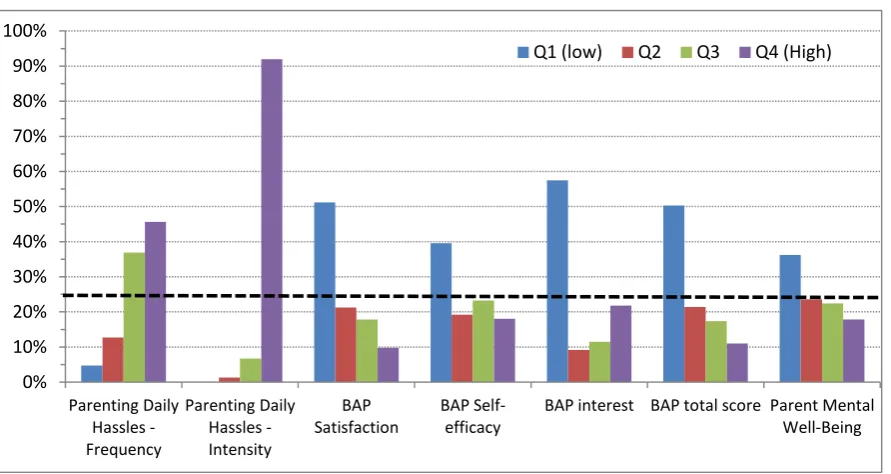
Figure 1 Quartile distributions for each of the seven measures: National expectation 25%
of parents in each quartile ... 41
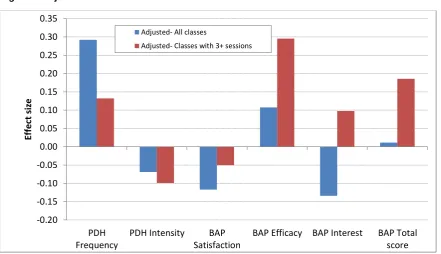
Figure 2 Adjusted effect sizes for all classes and for classes of 3 or more sessions ... 46
Figure 3 Histograms of (a) PDH Frequency and (b) PDH Intensity ... 121
Figure 4 Scree plot for PDH scales... 122
Figure 5 Relationship between single parent and working status with PDH Intensity score ... 125
Figure 6 Histograms of the three BAP Scales and BAP total score ... 132
Figure 7 Distribution of change score for PDH frequency and Intensity ... 140
Figure 8 Distribution of change score for the four BAP scales ... 141
Figure 9 Regression of BAP total score at follow up on BAP total score at initial interview showing RTM effect ... 142
Figure 10 McCurdy & Daro’s Conceptual Model of Parent Involvement ... 157
List of tables
Table 1 Pre-course and Post-course responses by course ... 39Table 2 Descriptive statistics for the CANparent sample against national norms for each scale ... 40
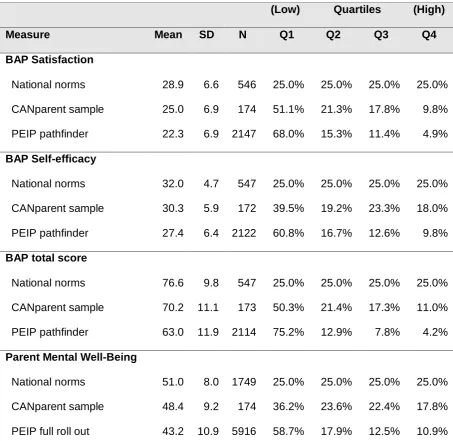
Table 3 Scores for National, CANparent and targeted interventions (PEIP)... 42
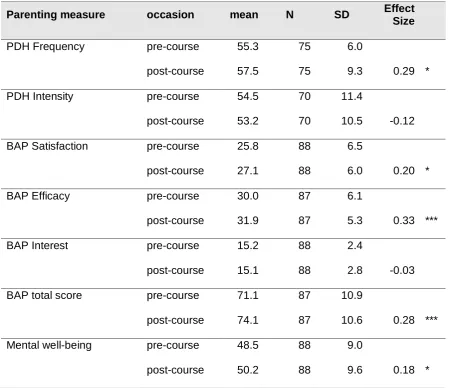
Table 4 Pre-course versus post course scores and Effect Size ... 43
Table 5 Simple change scores from pre-course to post-course by number of sessions in the course ... 44
Table 6 Difference between expected and actual post-course scores and adjusted effect sizes ... 46
Table 7 Satisfaction questions in the post-course questionnaire ... 47
Table 8 Satisfaction Survey: Overall results (rounded %) ... 49
8
Table 10 CANparent face-to-face group classes ... 59
Table 11 CANparent face-to-face individual classes ... 60
Table 12 CANparent blended classes (online and face-to-face) ... 60
Table 13 CANparent pure online classes... 61
Table 14 CANparent live online classes ... 61
Table 15 CANparent self-directed classes ... 61
Table 16 Parent registration by area ... 76
Table 17 Parent registrations by provider ... 76
Table 18 Parent registration by class type ... 77
Table 19 Parent registrations by gender ... 77
Table 20 Parent registrations by age ... 78
Table 21 Parent registrations by ethnic group ... 79
Table 22 Ethnic group by Area: CANparent registrants versus 2011 national census ... 80
Table 23 Parent registrations by family status ... 80
Table 24 Parent registrations by highest educational qualifications ... 81
Table 25 Highest educational qualifications by area: CANparent vs. national census ... 82
Table 26 Parent registrations by family size ... 83
Table 27 Parent registrations by age of youngest child... 83
Table 28 Parent registrations by first time parents ... 84
Table 29 Parent registrations by course completion ... 85
Table 30 Parent registrations by length of course ... 86
Table 31 Demographic characteristics of the PDH sample ... 118
Table 32 Parenting Daily Hassle - Frequency: Item by item responses (% of respondents) ... 119
9
Table 34 Characteristics of the sample ... 121
Table 35 Percentiles for the distribution of PDH frequency and intensity scores ... 122
Table 36 Mean Parenting Daily Hassles score by demographic variables ... 123
Table 37 Multiple regression analysis of parent and family characteristics against PDH scores ... 124
Table 38 Demographic characteristics of the BAP sample ... 127
Table 39 Item by item responses to BAP (prior to item reversal) ... 128
Table 40 BAP Factor Structure (pattern matrix) ... 129
Table 41 Number of questions answered by parents for each BAP scale ... 130
Table 42 Characteristics of the sample ... 131
Table 43 Reliability of the BAP scales ... 132
Table 44 Inter-correlations between BAP scales ... 133
Table 45 Mean PDH score by demographic variables ... 134
Table 46 Multiple regression analysis of parent and family characteristics against PDH scores ... 135
Table 47 Response rates for PDH and BAP follow-up and time interval between initial interview and follow-up ... 137
Table 48 Baseline PDH and BAP scores for those who responded / did not respond to the follow up ... 138
Table 49 Initial and follow-up scores for those responding to the follow up ... 139
Table 50 Change scores statistics and correlations over time ... 140
Table 51 Correlation and simple linear regression formulae for each PDH/BAP scale score ... 142
Table 52 Logistic regression for creating combined non-response weights - PDH ... 144
10
Research team
Centre for Educational Development Appraisal and Research (CEDAR), University of Warwick
Geoff Lindsay (Project Director) Mairi Ann Cullen (Project Manager) Stephen Cullen
Ioanna Bakopoulou Sue Band1
Centre for Education and Industry, University of Warwick Susan Goodlad
Warwick Medical School, University of Warwick Jane Barlow
TNS BMRB Mark Peters Richard Brind Emily Pickering BPRS
Caroline Bryson Susan Purdon
Department of Education, University of Oxford Steve Strand
London Economics Gavan Conlon
1 We are very grateful to Sue Band for conducting the interviews with parents during Ioanna Bakopoulou’s
11
Acknowledgements
12
Executive Summary
Introduction
The Government’s CANparent trial of universal parenting classes (2012-14) operates in four areas. It seeks to stimulate the development of a commercial market in high quality, stigma-free parenting classes to enhance the skills and confidence of mothers and fathers2.
In three of the areas, Camden, Middlesbrough and High Peak, the use of vouchers is being used to support this aim. Mothers and fathers of 0-5s3 who live in these areas are eligible for a free voucher entitling them to access a CANparent parenting course. These vouchers are redeemed by the class providers. Providers receive £75 for every parent starting a course, and a further £25 for every parent completing4 the course.
Voucher distribution and local support to providers is managed by the trial delivery
consortium: ECORYS, in partnership with Family Lives and Orion Security Print. Vouchers are widely available, including through the Foundation Years workforce and branches of Boots in the trial areas. Since November 2012, vouchers can be downloaded by parents from the CANparent website (http://www.canparent.org). Fourteen providers in all (up to 10 in an area) are offering CANparent parenting classes differing in length, focus and delivery mode.
In the fourth trial area, Bristol, there are no vouchers. Instead, some light touch support is available, such as use of the CANparent brand and website, support from corporate and other organisations, and low/no cost marketing support. Nine providers were approved to operate under the CANparent Bristol brand offering parenting classes differing in length, focus and delivery mode. The Bristol trial encourages providers to operate different funding models, such as third party subsidy, or parents paying for classes5.
Subsequent to the findings reported in the First Interim Report, the delivery of the
CANparent trial was reviewed and a number of important changes agreed. These were: Digital vouchers were created for online and face-to-face courses so that mothers and fathers could access a voucher without having to go to a voucher distributor. The CANparent website (www.canparent.org.uk) was reconfigured to enable
parents:
2 ‘Parents’ and ‘mothers and fathers’ includes carers. 3
From 15 May 2013, parents of all Year 1 children in the trial areas became eligible for a voucher.
4 The trigger point for the ‘completion’ payment is contractually defined for each CANparent course, as these
vary in length. It equates to at least 75% attendance.
13
to search to find a class by type of course, date, location, content , and other factors;
to use a ‘reserve your place now’ feature;
to see satisfaction ratings (up to 5 stars) for classes. DfE-funded marketing activity, including:
Voucher distribution stalls/road shows in e.g. libraries, shopping centres, with live booking support and Wi-Fi access;
Posters on public transport in the trial areas;
Posters and flyers for all voucher distribution outlets;
Facebook adverts targeted at adults aged 20-40 in the trial areas, refined by other characteristics suggesting the likelihood of being a parent or carer. These changes were based on early learning from the trial and all were designed to support increased take-up of the classes.
This 2nd Interim Report covers the first year of the two year CANparent trial. It is important to bear this in mind when interpreting these findings to date.
Key Findings
The trial has enabled DfE and providers to learn much about how to create a viable market in universal parenting courses.
The trial has stimulated the supply of a range of universal parenting classes, both in the three voucher areas and the non-voucher area.
Parents who have attended CANparent classes were very positive about them.
Almost all (99%) parents completing their course were satisfied with it and would recommend CANparent classes to other parents.
A lower, but still very high, percentage (85%) of all parents who started a CANparent class (regardless of whether they completed all sessions) was satisfied with it; and 86% would recommend CANparent classes to others. Estimated completion rates6
were 91% with 9% drop-out. The majority of participants have been women (92%).
6 ‘Completion’ means the parent attended enough of the course for the provider to claim the final £25 of the
14
The concept of universal parenting classes has been welcomed by parents, providers and other stakeholders.
Evidence from the evaluation supports universal access to parenting classes: in the general population, we found that socio-economic status had no significant
relationship to level of parenting need; CANparent classes attracted a
representative group of parents in terms of parents’ level of education; however, participants had higher than average levels of parenting stress.
Although it is too early to say which parenting class products will thrive in a
competitive market, our interim findings have implications for future course design. To date our findings indicate that:
Face-to-face group classes attracted the most participants. Online classes have proven less popular.
Length of course was emerging as an important variable affecting parent choice (where short courses of up to 3 sessions are more popular) and also course satisfaction and efficacy (where courses of 3 or more sessions do better).
Parents who attended classes of at least three sessions duration reported improved parent self-efficacy (their sense of being an effective parent), a key outcome. Shorter courses had no significant impact on measured parent outcomes, although parents still rated them highly.
Most parents interviewed accepted the concept of paying for universal parenting classes, although the inability of some to pay underlines the need for subsidy. Face-to-face and word of mouth marketing has proven most effective in achieving
take-up but this requires up-front investment which has been challenging for providers as they made the transition to a market model.
Provider marketing of their classes has benefited from a DfE-funded campaign to promote both the concept of universal classes and the ‘CANparent’ brand that encapsulates this concept.
Despite the challenges of learning to operate in a new market, 13 of the 14 original CANparent providers remained in the trial at the end of Year 1.
15
Findings
Surveys of participating parents
The first 29 interviews with participating parents
Findings reported are based on in-depth, semi-structured telephone interviews conducted during March and April 2013 with the first 29 parents in an eventual sample of about 100. The sample comprised 26 women and 3 men. Of these, 20 had completed their
CANparent classes and 9 had not. They came from all three voucher areas and had attended courses run by eight different providers.
Finding out about CANparent - These parents had received their vouchers and found out about CANparent from a diversity of voucher distribution ‘channels’ in the trial: nursery, children’s centre, health centre, community centre, Boots, online, health visitor, GP surgery, school. Their memories of the CANparent leaflet varied from not remembering it at all to having read it in detail to find out about CANparent. The voucher stimulated demand for the courses – most said that, without the voucher, they would not have done the course.
Choosing a course - The parents divided into those that did some research to choose a course from the range on offer and those that did not. Of those choosing, the most
common factors were:familiar location, content, and length. Of those who did not make an active choice of course, some wished that they had spent more time researching the options available.
Monetary worth of the course compared to the voucher face value of £100 - Views related in part to the length of the course – 1 or 2 session courses were less likely to be seen as worth £100. The subjective worth of the course also played a part – the more parents learned during their classes, the more they thought it was worth the voucher value (or more).
Willingness to pay - The idea of paying for universal parenting classes was accepted in principle by almost all. Parents pointed out that one would need to know in advance how good the course was to understand why it was worth paying for.
16
Reasons for attending – These 29 parents most frequently reported that their reasons for attending reflected general interest and low level needs. A small number reported greater levels of difficulty7.
‘Parent journey’ from voucher to class - Almost all were happy with the ‘parent journey’ from voucher to class e.g. using the time delay to organise childcare, or not experiencing any marked delay.
Experience of the course - The majority experience of the courses was positive – for
example, liking the style of the facilitator, enjoying the course content and learning from it, appreciating the views of others in the group. Criticisms were based on minority
experiences where the course content was not as expected; the length of course was too short (one or two sessions); the content and delivery were uninspiring.
Gender – To both male and female interviewees, in the context of parenting classes, being a dad was what was important, not being male. The three fathers interviewed felt
comfortable in the groups. The 26 women were happy for dads to be there too.
Interviewees who lived with partners almost all discussed with their partner the decision to attend the course and the relevance of course content to their family. This indicates that fathers and male carers are more engaged with the trial than it appears simply from looking at the number of men attending the courses.
Reasons for non-completion – Usually non-completion was due to factors unrelated to the class, such as family illness. A minority stopped attending because they disliked the delivery style (e.g. when discussion dominated at the expense of specific course content).
Learning from the classes - All but two of the 29 interviewees reported that the course had led to positive changes in their parenting. For example, they described improved
confidence as parents, increased knowledge about specific aspects of parenting, increased understanding of how to be a calm and loving parent, and new behaviours - such as giving more time to talk and listen to their child, reducing their use of shouting, and changed approaches to discipline and boundary setting.
7
17 The 10% parenting class sample
Our ‘10%’ sample comprised pre-course returns for 178 parents (17.6% of all parents) attending 30 parenting groups delivering six courses, and post-course returns for 90 parents (8.9% of all parents) from 22 parenting groups delivering five courses. Three standardised self-report measures were used before and after the course: Parenting Daily Hassles (PDH), Being a Parent (BAP) Scale, and Warwick-Edinburgh Mental Well-being Scale (WEMWBS)8.
The level of need - The parents participating in CANparent classes during the first year of the trial are skewed in their profile compared to national averages, experiencing greater frequency and perceived intensity of parenting daily hassles, and lower levels of parenting self-efficacy, satisfaction with parenting and mental well-being. Compared to parents attending previous targeted9 parenting programmes, specifically as part of the Parenting Early Intervention Programme10, the CANparent sample is closer to the national average.
Change in pre-to post-course scores - The greatest impact was on parenting skills, while there was a smaller impact on parent mental well-being and little or no impact on child behaviour. The decline in intensity of parenting daily hassles was not statistically significant, and reported frequency of such hassles increased. It is possible the latter reflects increased attention on child behaviour and/or greater awareness that child behaviour is malleable.
Change over and above ‘no intervention’ control group – Taking account of change that would happen anyway with no intervention, where the course was of sufficient duration (3 or more sessions), there was evidence of improvements from CANparent classes in a key outcome, parents’ sense of their self-efficacy in parenting. There was no evidence that very short courses composed of just two sessions had any significant impact on parent outcomes, although parents still rated these classes very positively.
Parent views of their course - These course-completing parents were extremely positive about their CANparent class: 99% were satisfied with the course and would recommend a CANparent class to other parents; 94% said the class met their expectations and that they would like to attend further classes in the future; 92% said they had learnt new parenting skills; 86% felt more confident as a parent; 73% thought they were a better parent; 73% reported their relationship with their child/children had improved. There was no evidence of significant variation in relation to the number of sessions in the course or in relation to the provider.
8
References are given at the end of this Executive Summary.
9 ‘Targeted’ in this context means programmes where professionals deliberately recruited parents where
there were known problems in the family. In some cases, parents could also self-refer to these programmes.
10
18 Satisfaction survey of all participants
This survey was sent to all parents who started a class, did not opt out, and provided a working e-mail address. It was sent when the class they started had finished. It therefore included both parents who began, but did not finish, their CANparent course and those who completed. This update is based on responses received by the end of May 2013 from parents included in the end of April Management Information data. There were 130
responses (i.e. 51% of those agreeing to participate and providing a working e-mail address).
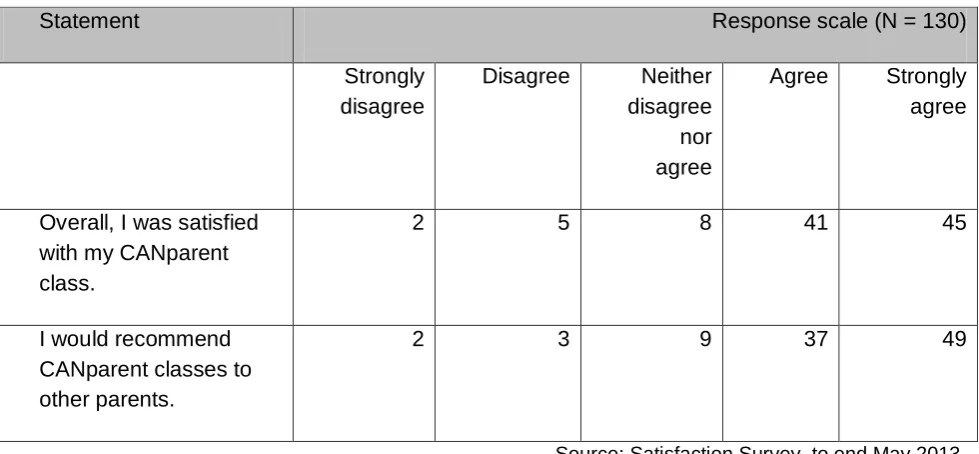
Overall results - satisfaction was high, with 85% who ‘agree/strongly agree’ that they were
satisfied and 86% who ‘agree/strongly agree’ that they would recommend CANparent classes to others.
Results by voucher trial area - satisfaction was high in each of the three areas: Camden (60/77; 80%); High Peak (23/25; 92%); Middlesbrough (15/16; 94%).
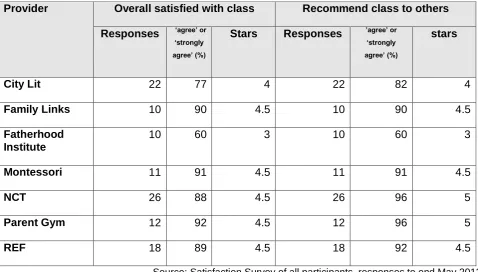
Results by provider – satisfaction scores ranged from 60% to 92%. The lowest score
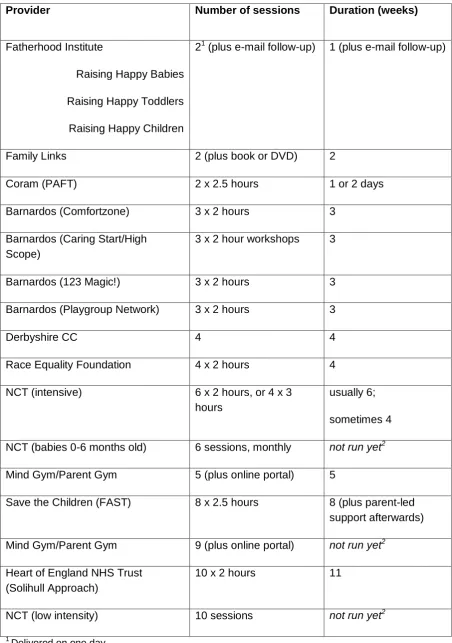
(60%) was for the provider offering the shortest course (one face-to-face session followed by e-mail exercises encouraging reflection).
Supply side longitudinal case studies
In the three voucher trial areas (Camden, Middlesbrough, High Peak) in-depth, qualitative interviews took place during February to April 2013. We spoke to the 14 lead providers, the 3 LA parenting leads, and 7 representatives of voucher distributors. From the
CANparent trial delivery consortium, we spoke to 2 representatives from ECORYS, 2 representatives from Parenting UK (part of Family Lives), and 6 representatives from the local support partners.
In June 2013, we interviewed 7 of the 9 providers approved to operate under the
CANparent brand in the non-voucher trial area (Bristol). The later timing of the interviews in Bristol was deliberate as the trial began there later than in the voucher areas.
Views about the voucher trial areas
19
clear that the vouchers alone did not have the power to drive high parental take-up of classes; this required investment in the marketing of each provider’s offer and of the concept and benefits of universal classes. Experience during the trial has shown that parents were more likely to take up the offer of universal parenting classes when it was made by people they trusted. The introduction of an e-voucher has relaxed the early ‘provider’ versus ‘distributor’ distinction; enabling parents to gain a voucher through a provider known to them should they choose to do so.
Views of trial design changes after the 6-month review -Changes to the trial design, based on learning from early experiences, were introduced after the 6-month review. The
changes included the introduction of e-vouchers, voucher distributor ambassadors, enhancements to the CANparent website, and a DfE-funded marketing campaign during November 2012to January 2013 using the CANparent brand to promote the benefits of universal parenting classes. Overall, these changes were viewed positively. Providers wanted further improvements to the website and a more sustained marketing campaign (these changes, and others, will happen for Year 2).
Stimulating supply of classes - CANparent had successfully stimulated the supply of
parenting classes in the voucher and non-voucher trial areas. A range of providers had put a range of parenting class ‘products’ on the market.No providers reported any difficulty in covering demand or in recruiting or training programme facilitators to deliver classes. Providers were responsive to supplying parenting classes when and where parents
wanted them. Classes running in a range of venues across each area at different times of day and evening, during the week and at the weekend, were testament to this. Voucher distributors and some other stakeholders spoke of parents being confused by the range of providers and types of courses on offer. Voucher distributors reported not having enough information about the providers and their courses to be able to explain the choices clearly to parents. They wanted providers to engage with them directly to explain more about provider organisations and course content.
Supply side local support - Local support for providers took many forms e.g. providing relevant local information to providers new to the area; support to find venues and crèches; contact details for local schools, early years settings and community groups; promotion of the local CANparent offer. In all three areas, local support stakeholders reported that providers varied in the extent to which they took up the support offered to them.
Stimulating demand for classes - With a small number of exceptions, providers reported continued difficulties in recruiting parents to their offers. The voucher distributors
interviewed were not aware of a demand for universal parenting courses prior to
20
engagement of parents was for providers to talk to parents directly, using the voucher distributors as a way in to access parents.
Local support for voucher distribution and distributors - Local support organisations initially focused on recruiting voucher distributors and did so successfully. Their focus then shifted to promoting the CANparent offer and encouraging greater take-up. Perhaps as a result of this and other factors, a number of distributors disengaged from the trial. The renewed focus on support for active voucher distributers was welcomed.
Marketing and promotion - Each provider retained the responsibility to market their own particular programme. The provider interviewees gave details of a wide range of initiatives that they had undertaken with the aim of boosting demand. Greater efforts had been made in terms of marketing; with fliers, newspaper advertisements, road shows, local media, social media, coffee mornings, and approaches to potential intermediaries such as schools and children’s centres all being utilised. However, interviewees stressed that their
organisations had had to bear the full cost of these marketing initiatives, and that they had not yet resulted in large-scale awareness of CANparent or desired levels of large-scale take-up of classes.
Impact of universal demand on LA provision - The LA interviewees in the voucher areas exhibited comparatively limited knowledge about the impact of the CANparent trial in their LAs. Overall, these interviewees argued that CANparent had had little impact on demand for the LAs’ targeted parenting services.
Views of take-up - In December 2012, the DfE set a target of take-up by 25% of the eligible population. This was based on one-to-one discussions with providers about their
capacity to providefor demand and on what might be realistically required to normalise participation. There was a widely shared view that concentred efforts to build take-up would be needed throughout the trial; no single element was viewed as the one key to ‘unlock’ demand.
The sustainability of the model beyond the trial period - Most providers reported that the CANparent trial had been a disappointment in terms of revenue generation. Those few providers who expect to be delivering universal classes after the trial were not sure whether they would be able to deliver outside of the trial area/s in which they were currently operating. LA stakeholders argued that, without grant funding, universal CANparent-type provision was unlikely to be sustainable. One sustainable scenario envisaged was that a small number of CANparent providers would come to dominate the market as the national providers of universal parenting classes, enabling them to cross-subsidise classes for parents who could not afford to pay.
Views of Bristol providers
21
of universal, stigma-free parenting courses; the intention of using the Bristol trial as a test bed for new, or adapted, courses prior to them being rolled out more widely across the country.
Range of classes offered - Three of the seven providers interviewed were offering online courses (one pure online, two ‘blended’ i.e. online plus face-to-face or telephone support). The remaining four providers were all offering face-to-face group parenting courses.
Take-up – Providers who had begun delivery in Bristol reported low take-up, in particular
for the online courses.
Funding models – Four models had been adopted: price per person, third party subsidy,
free at point of delivery and a franchise model. Prices charged varied from over £100 to under £50 to no charge. One provider advertised a discount for couples; another offered a free taster session online.
Learning from the trial - The seven providers all felt that there was a good deal to be learnt from involvement in this non-voucher area; for example, the need to develop up-to-date provider websites; the appreciation that the most effective method of recruiting
parents/carers into this market was through face-to-face interaction; the value of ‘word of mouth’ recommendations; and the importance of ensuring that the CANparent website appeared high up in search engine results generated by relevant web-searches.
Developing the market – suggestions included the need for a government campaign to
raise awareness of the general applicability of parenting classes; better use of existent, emergent and developing social network media; and avoiding the use of the term ‘parenting class’.
Management information – ‘snapshot’ at end of April 2013
The findings reported are based on the Management Information (MI) data, as at end of April 2013 (i.e. the first 12 months of the trial). This contained details about 1012 parents.
Overall picture - the MI data suggest that the universal nature of the offer was being communicated reasonably successfully, but, as outlined below, there were certain groups which remained under-represented.
Take-up by area - The relative level of take-up by CANparent voucher area was broadly in line with expectations based on the population of eligible parents in these areas.
Gender - Most parents registering for CANparent classes were female (92%). This was the single largest skew in terms of the representativeness of parents registering for CANparent classes.
22
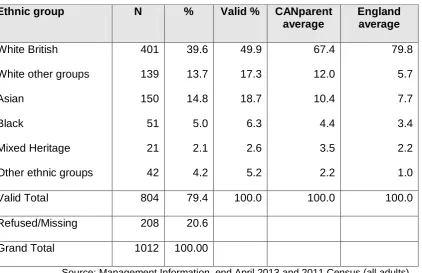
that the proportion of parents from ethnic minority groups registering for CANparent classes (50.1%) was higher than would be expected from the 2011 population estimates11 for the Local Authority (LA) areas (32.6%).
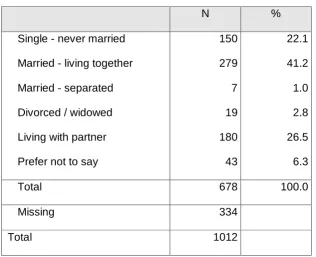
Family status - Approximate comparisons with estimates from the 2011 census, based only on households containing dependent children, suggest that the proportion of CANparent registrants from single parent households (22.1%) was below the census average for the three CANparent areas (29.3%).
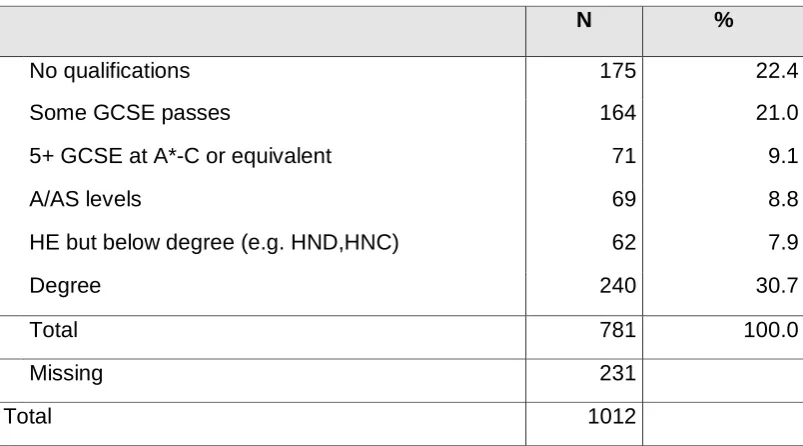
Level of education - There was no evidence of bias or selective take-up of CANparent classes with regard to parents’ level of education, with the profile of registrants broadly reflecting the 2011 census average for the three areas.
Providers - There were 14 providers of CANparent classes in the voucher trial areas. Those attracting the largest numbers of parents were run by Race Equality Foundation, Parent Gym, FAST and Family Links.
Take-up of modes of provision – The most popular classes were face-to-face groups (84%
of registrants), with shorter courses (up to three sessions) predominating (65%).
Completion rates - Estimated completion rates were 91%12. Non-completion was 9%.
Family size - CANparent was attracting parents with families of different sizes, and with youngest children aged across the target range of birth to 5 years.
Conclusions
The trial has two main aims: to trial a universal offer of high quality, stigma-free parenting classes to enhance parenting skills and confidence; and to test out the viability of
developing a competitive market in the provision of such classes. Here we offer interim conclusions in relation to these aims, bearing in mind that the trial will run until the end of March 2014.
The concept of universally available parenting classes
The picture emerging was that the concept and experience of universally available parenting support was welcomed by parents and would spread by word of mouth. Evidence from the evaluation supported making parenting support universally available. Analysis of national norms for two of our outcome measures showed that, in the general population, socio-economic status, whether defined as family income, working status or
11
All census references are to the 2011 census (ONS, 2012).
12
23
parent’s highest educational qualification, had no significant relationship to level of parenting need. Although the parents taking part during Year 1 were reasonably
representative of the population in terms of family size and level of parent education, they had markedly higher than average levels of parenting need. This may be an artefact of new provision, with ‘early adopters’ motivated by higher than average need. As time goes on, if universal access to parenting support becomes the norm, participants’ levels of need may average out. Equally, it may be that parents starting to experience stress become the main market demographic for this product with need driving demand for stigma-free
learning.
Developing a competitive market
Reflecting on the first year
Overall, trialling a market approach had proved challenging for the providers. The voucher subsidy stimulated supply of courses but, on its own, did not stimulate large-scale demand
– the trial experience suggests that requires both a long-running ‘macro’ level campaign to raise awareness of the benefits of parenting classes and of their new universal availability, and, at the ‘micro’ level, intensive face-to-face direct engagement with parents.
The precise role of the voucher in stimulating demand was not yet clear. This will become clearer when we have the evidence from the second penetration survey (taking place from August to November 2013). At this interim point, we know that among the 29 parents interviewed, most said they would not have done the course without the voucher. This showed that the voucher had stimulated demand to a degree; however, overall take-up figures did not indicate that the voucher had stimulated the scale of demand anticipated by most providers when preparing their business plans and creating their financial
projections.
At the time of data collection, the missing element for parents was sufficient information about the products and the reasons for ‘buying’ them. 13
Local voucher distributors wanted more information from each provider so that when parents asked them about the range of options locally they could explain in detail about each one. Some parents who did not actively choose from among the range on offer, but simply went to a course with a friend or to one running in a familiar location, regretted not taking the time to consider all the
available options to find one best suited to them. The information they most wanted to know was about the content, the underpinning theories and the delivery style.
It was too early to say which parenting class products would thrive in a competitive market. Taken together, our data sources suggested that there can be a tension between
‘popularity’ and ‘value’ of a product. Ideally, the product should be both popular and of
13
24
value to parents. At this interim point, there were indications that the most popular courses were face-to-face rather than online; and of shorter (3 sessions or less) rather than longer duration. Online parenting courses were relatively new products and so it was perhaps not surprising that they were not immediately popular. The popularity of the shorter courses was also understandable, given parents’ busy lives. However, we also know from
interviews that some parents who chose the shortest courses, with hindsight wished they had gone on longer courses so that they could have learned more. Some also questioned the ‘value for money’ of the short courses.
This tension between ‘popularity’ and ‘value’ fits with findings from the outcome
questionnaires (the 10% sample) which suggested there was a question mark over the value of the very short courses (2 sessions or less) in effecting measurable outcomes. It also fits with the finding that the lowest ratings for providers in the ‘all parent’ Satisfaction Survey were for the shortest class (delivered as one session with optional e-mail follow-up).
On the other hand, high parent satisfaction ratings in the 10% sample, and the ‘all parent’ Satisfaction Survey, were not affected by length of course, suggesting that the experience of attending the courses was positive. It may be that, as the market matures, very short courses will continue to be offered in their own right for those for whom that level of input is sufficient; and will also be used as easy-to-access ‘tasters’ to encourage attendance at longer courses for those who would benefit more from greater input.
We know that in making their choices, parents considered length of course; where the course was running; what the content was (and why); and what the delivery style would be like. We know they valued new learning, as well as being with other parents. As the trial continues, we can expect to find parents being increasingly influenced by the views of other parents (e.g. the star ratings and testimonials on the CANparent website, as well as local word of mouth). Providers’ own evaluation findings, as well as the results of the
national evaluation, may also influence choices, if these results are made easily accessible to parents.
The changes made to the trial design after the 6-month review and again after the Year 1 review are to be welcomed, as they reflected lessons learned from the trial to date.
Arguably, these changes could be tested out more fully if the trial period were to be extended beyond March 2014.
Sustainability beyond the trial
Although most providers (when interviewed in spring 2013) were not optimistic about the financial sustainability of their universal parenting class/es, this view was driven by levels of take-up that were much lower than those used by most providers in their original
projections of voucher-generated income. If take-up were to build substantially during Year 2 of the trial, we could expect provider views of sustainability to change. There was
25
concept of universal parenting classes. Providers who succeed in turning that latent demand into active take-up could well have a sustainable product to market both beyond the trial area/s and to parents of children of different ages.
Important lessons have been learned from the first year of the trial that will be useful for providers considering maintaining their offer, or expanding into other areas or to other age groups after the trial. Perhaps the most important lesson for the future is to support their product (the classes) with a marketing campaign from the start. Related to this is the importance of engaging with the professionals who interact with parents every day – for CANparent, this is the Foundation Years workforce and all the other voucher distributor channels. Once the voucher subsidy ends, these will still be the people talking to parents every day. Providers who succeed in building relationships with these channels, conveying to them the essence of their programme and its value will a) be more likely to increase take-up during the trial and b) be more likely to create sustainability beyond the trial. Sustainability after the trial will require planning and development of viable funding models in good time, prior to the end of the voucher subsidy. The funding models being tested out in Bristol suggest some possibilities for this. We will learn more about parental willingness to pay from that element of the second penetration survey. At this interim point, we can say that among the first 29 parents interviewed, the principle of paying was accepted by most. It is clear that future provision of universally accessible parenting classes will have to include an element of subsidy for those who cannot afford to pay; however this need not prevent providers from envisaging charging parents who can afford to pay. Differential prices and discounts for certain demographic groups (e.g. students, older people) are commonplace in other market sectors. People are used to sitting in trains and planes knowing that the prices paid for the tickets for the same journey may have been very different. In the same way it is possible to envisage parents attending classes or going online with some having paid the full price, others having received a discount and others a full subsidy.
The greatest hope for the sustainability of the market is the sheer size of the potential demand, if that potential can be realised over time. This may require large scale investment beyond the resources of individual providers – but if the trial succeeds in showing ‘proof of concept’, providers committed to universal access to parenting provision may be able to obtain investment funding from non-governmental sources, such as
philanthropists, employers, or the growing social investment sector.
For new providers entering the market and for existing providers wishing to extend to new areas, much has been learned from experience during Year 1 of the trial regarding how to develop a viable market in universal parenting courses. From this experience, it is clear that future business plans should include:
26
how to manage the financial risk inherent in a market model;
a range of timelines, pessimistic as well as optimistic, for how long it takes to have classes up and running (i.e. the products ready to market) in areas new to a provider;
a range of financial forecasts, pessimistic as well as optimistic, that recognise the unpredictability of take-up levels for a new market offer;
how to manage the flexibility required to allow for either a small or large take-up of the new offer;
a costed marketing plan that takes account of the need to invest in building direct contacts with the customers (parents), with the professionals who can provide access to parents, and, if subsidy or grants are part of the funding model, with organisations likely to invest in this.
Next steps
The evaluation of the trial continues. A Final Report will be published after the end of the trial in March 2013. This will include important information from the cost-effectiveness strand and from the second penetration survey, as well as updated findings from the continued work of the evaluation strands reported here.
Recommendations
Effort in Year 2 of the trial should continue to focus on increasing the numbers of parents engaging with CANparent, including fathers, White British, and single parents, as these groups are currently under-represented.
A continued focus on take-up should include both a ‘macro’ level campaign to raise awareness of the benefits of parenting classes and of their new universal
availability, and intensive face-to-face direct engagement with parents by providers, supported by voucher distributors and local support organisations.
Providers
27
To help parents understand why the classes are worth attending, providers should consider offering parents a no-obligation taster session.
Providers should take note of the emerging evidence about the importance of
course duration, perhaps using very short courses as ‘tasters’ to encourage take-up of longer, more effective classes.
Outside the voucher areas and after the voucher trial ends, providers should consider offering free taster sessions and money-back guarantees as proof to parents of the quality of the classes.
Providers should continue to engage directly with parents to share information about their offer and to learn from parents how, if at all, this needs to be adapted to become more compelling.
Providers should increase their engagement with voucher distributors, providing them with enough information about the content, delivery style, and underpinning theories of their classes so that they, in turn, can explain this to local parents. Regarding any future results-based contracts relating to new products and or new
markets, all providers should plan for how to manage the inherent financial risks. DfE
Learning from CANparent for future government pump priming of new markets in products with a societal benefit (social goods), DfE should note that a centralised marketing campaign may well be needed from the start to embed the overall brand, in addition to providers’ own promotion and marketing.
For any future results-based commissioning relating to a new market, DfE should note the importance of ensuring that providers understand the potential financial risks involved if desired results are not achieved to scale.
References
[Being a Parent Scale] Johnston, C. & Mash, E. J. (1989). A measure of parenting satisfaction and efficacy. Journal of Clinical Child Psychology, 18, 167–175.
Cabinet Office. (2013). Guidance on template contract for social impact bonds and payment by results. https://www.gov.uk/government/publications/guidance-on-the-template-contract-for-social-impact-bonds
Cullen, M.A., Cullen, S. M., Strand, S., Bakopoulou, I., Lindsay, G., Brind, R., Pickering, E., Bryson, C., Purdon, S. (2013). CANparent Trial Evaluation: First Interim Report. Research Report DFE-RR280. Department for Education: London.
28
Lindsay, G., Strand, S., Cullen, M.A., Cullen, S.M., Band, S., Davis, H., Conlon, G., Barlow, J., & Evans, R. (2011). Parenting early intervention programme evaluation. Research report DFE-RR121(a). Department for Education: London.
https://www.education.gov.uk/publications/eOrderingDownload/DFE-RR121A.pdf
Office for National Statistics, (2012). 2011 Census. http://www.ons.gov.uk/ons/guide-method/census/2011/census-data/index.html
[Parenting Daily Hassles Scale] Crnic, K. A. & Greenberg, M. T. (1990). Minor parenting stresses with young children. Child Development, 61, 1628-1637.
29
1. Introduction
1.1 Background
The Government’s CANparent trial of universal parenting classes operates in four areas. It seeks to stimulate the development of a commercial market in high quality, stigma-free parenting classes to enhance parenting skills and confidence.
In three of the areas, Camden, Middlesbrough and High Peak, the use of vouchers is being trialled to stimulate both the supply of, and demand for, universal parenting classes. Parents of 0-5s who live in these areas are eligible for a free voucher entitling them to access a CANparent parenting course. These vouchers, redeemed by the class providers, have a value of £75 for every parent starting, and of a further £25 for every parent
completing14 the course.
Voucher distribution and local support to providers is managed by the trial delivery
consortium of ECORYS in partnership with Parenting UK (part of Family Lives) and Orion Security Print. Vouchers are widely available through the Foundation Years workforce and branches of Boots in the trial areas. Since November 2012, they can be downloaded by parents from the CANparent website (http://www.canparent.org).
In the fourth trial area, Bristol, there are no vouchers. Instead, some light touch support is available, such as use of the CANparent brand and website, support from corporate and other organisations and low/no cost marketing support. The Bristol trial encourages the development of different funding models, such as employers funding classes, providers being sponsored to run classes and parents paying for classes.
1.2 Update on changes to the trial
Subsequent to the findings in the First Interim Report, the delivery of CANparent trial was reviewed and a number of important changes agreed. These were:
Digital vouchers were created for online and face-to-face courses – this meant parents could access a voucher without having to go through a voucher distributor channel.
The CANparent website (www.canparent.org.uk) was reconfigured to enable parents:
14 ‘Completion’ is contractually defined for each CANparent course, as these vary in length. It equates to at
30
to search to find a class by type of course, date, location, content , and other factors;
to use a ‘reserve your place now’ feature;
to see satisfaction ratings (up to 5 stars) for classes. DfE-funded marketing activity including:
Voucher distribution stalls/road shows in e.g. libraries, shopping centres, with live booking support and Wi-Fi access;
Posters on public transport in the trial areas;
Posters and flyers for all voucher distribution outlets;
Facebook adverts targeted at adults aged 20-40 in the trial areas refined by other characteristics suggesting the likelihood of being a parent or carer. These changes, made as a result of the 6-month delivery review, were all designed to support increased take-up of the classes.
Further changes to the trial were made as a result of the end of Year 1 review. These happened after the data collection for this report. These changes, which will affect Year 2 of the trial, are detailed in Appendix 3.
1.3 About this report
This is the second Interim Report of the evaluation of CANparent. A summary of the evaluation aims, objectives and methods is provided in Appendix 4. Key findings from the first Interim Report15 were that:
The trial had succeeded in offering parents in the trial areas a wide choice of types of parenting programme and modes of delivery.
In the first 7 months of the trial, CANparent classes attracted a representative sample of the population in the three voucher areas with regard to family status and parent education, including a substantial proportion with Higher Education
qualifications (34%). The majority were female (94%). Parents were drawn from a wide range of ethnic groups, reflective of the trial areas.
Attitudes towards parenting classes amongst parents in the voucher trial areas were already largely positive. For example, only 12% disagreed with the suggestion that all parents can benefit from going on a parenting class.
One in five eligible parents (20%) was aware of the CANparent vouchers/leaflets.
15
31
Lack of knowledge of the positive outcomes from parenting programmes and time constraints were the main inhibitors to participation - 38% could not see that they might benefit from more advice or support, while 16% said that they did not have the time to attend classes.
Potential willingness to pay for parenting classes was strongly linked to household income - 49% of high income households said they would definitely/probably be willing to pay, compared to 26% of low income households.
The majority of providers taking part in the trial were more motivated by the aim of increasing universal provision of parenting classes than that of stimulating a market. This report covers quantitative data up to the end of April 201316 and qualitative data up to the end of May (voucher areas) and June (Bristol). A Final Report will be published after the CANparent trial has ended in March 2014.
Chapter 2 presents the findings from three different surveys of participating parents: interviews with 29 parents (of a sample that will eventually be about 100); a survey of standardised measures of outcomes for a 10% sample; and a short two-item Satisfaction Survey of all participants.
In Chapter 3, findings from the second round of qualitative interviews with providers and other stakeholders are presented thematically, as part of the longitudinal case studies of the development of the market.
Chapter 4 gives a snapshot of the Management Information data as at the end of April 2013. This updates the snapshot presented in the first interim report. Updates on what is happening or planned to happen in other stands of the evaluation are presented in Chapter 5, before Conclusions (Chapter 6) and Recommendations (Chapter 7). There are six appendices. The first of these provides key messages from a literature review of how best to engage fathers in parenting and family support. The second summarises messages from the literature on the benefits to employers of supporting parenting classes. Appendix 3 sets out the changes to the trial that will affect Year 2. In Appendix 4, we provide a summary of the aims, objectives and research methods of the evaluation. Appendix 5 presents the data on the development of national (England) norms and the creation of a control group for two of the outcome measures used in the
evaluation, Parenting Daily Hassles (Crnic & Greenberg, 1990) and Being a Parent (Johnston & Mash, 1989). In Appendix 6, main themes, and their implications for
CANparent, are presented from a literature review of factors affecting take-up of parenting support.
16
32
2. Surveys of participating parents
Key Findings
The first 29 interviews with participating parents These parents gave an overall positive picture.
The concept of universal parenting classes was welcomed.
The principle of paying for parenting classes was accepted, and the need to subsidise those who could not afford to pay recognised.
For almost all, the experience of taking a face-to-face CANparent class was largely positive. Some disliked very short courses and very discursive courses.
The 10% parenting class sample
Compared to national averages, there was a marked skew in the profile of parents in respect of the higher frequency and subjective intensity of parenting daily hassles, and lower parental satisfaction, parenting self-efficacy and mental well-being. This finding supports the argument for making parenting classes universally available. Overall, the CANparent classes had a low impact on standardised outcomes when
compared to ‘no intervention’17
, with no statistically significant effects.
When the shortest classes (1 or 2 sessions) are removed from the analysis, there are positive outcomes, particularly on parenting self-efficacy i.e. parents feeling that they are better at parenting.
Irrespective of class length, these parents, all of whom had completed their classes, were very positive about them; with 99% being satisfied with their class and saying they would recommend CANparent classes to other parents.
Satisfaction survey of all participating parents
Overall satisfaction with the classes is high at 85%; slightly more (86%) would recommend CANparent to other parents.
These high percentages are lower than the 99% satisfaction rate reported for the 10% sample of parents who completed their course. This is to be expected as the ‘all participants’ satisfaction survey includes the views of those who did not complete a course.
The lowest satisfaction scores (60%) are for the provider offering the shortest course (one face-to-face session followed by e-mail exercises encouraging reflection). This17
33
adds weight to the emerging theme that very short courses are a factor in relative parental dissatisfaction and course ineffectiveness.
2.1 Introduction
This chapter presents interim findings from three different surveys of participating parents, involving:
The first 29 interviews with participating parents
Analysis of measured outcomes for a 10% sample of participating parents Satisfaction Survey of all participants.
2.2 Detailed findings
2.2.1 The first 29 interviews with participating parents
2.2.1.1 Introduction
All providers were contacted to inform them of our plans to interview a random sample of parents after the course on which they registered had ended. We asked them to alert us to any parents who had been interviewed as part of a provider’s own evaluation so that we could avoid contacting them.
We used the management information monthly returns to create a stratified random sample of parents to be contacted. We aim for completers and non-completers and to include men and women18. Parents were initially contacted by letter, with an information sheet, interview topic sheet, consent form and reply paid envelope for return of consent form. During March and April, we contacted 60 parents and got 29 interviews. Of these:
9 were deemed non-completers and 20 completers
3 were men and 26 were women
The group of 29 parents included some from each voucher area. Twenty-six of the interviews were recorded with permission; in three cases, parents did not agree to
recording. Structured notes were taken at the time and typed up later, using the recording as back up.
18 During Year 2, we will also interview some parents who indicate (during the Second Penetration Survey –
34
2.2.1.2 Finding out and choosing a course
The courses attended by our parent interviewees ranged in length from one evening (plus e-mail exercises encouraging reflection) to six weekly sessions. These parents attended courses by eight different providers.
The parents divided into those that did some research to choose a course from the range on offer and those that did not. The most common reason (given by 9 of 29) for ‘choosing’ a course was that it was offered at a place they already used, such as children’s centre, school, nursery, and leisure centre. In a sense, these parents did not actively ‘choose’ a course but simply went with the one on offer in a place with which they were familiar. In another seven cases, the parent did not make an active choice from among the range of provision but just went along with a friend (3 of 29), or to one suggested by a professional known to them (4 of 29).
The second most common reason for choosing a particular course was the content (7 of 29). This was sometimes linked to previous positive knowledge about that provider or about the reputation of that provider. Another reason given for choosing a particular course was that the length ‘seemed right’. Four searched the website and found a course at a time and place that worked for them – convenience was their main criterion.
With hindsight, some of those who did not make an active choice of course wished that they had spent more time researching the options because they ended up on a course that did not suit them.
2.2.1.3 View about the vouchers and leaflets
The range of sources of the vouchers used by these 29 parents reflects something of the diversity of voucher distribution ‘channels’: nursery, children’s centre, health centre, community centre, Boots, online, health visitor, GP surgery, school. Memories of the voucher and leaflet varied a lot and reflected not only the three different versions of the voucher and leaflet but also the way in which it was distributed – for some, it was purely the ‘ticket’ they needed to access a class they had seen advertised or been told about; for others, it was a source of information in its own right. Some didn’t remember it at all; others remembered only that it was ‘shiny’ for example, or ‘orange and gold’ or ‘had a number on it’, while others described the vouchers and leaflets as self-explanatory and as providing lots of information about the different programmes being offered. A minority mentioned the £100 as something they remembered. For example, one parent said:
35
The voucher did stimulate demand for the courses – most said that, without the voucher, they would not have done the course. A minority said that, even without the voucher, they would have done the course.
2.2.1.4 Views of monetary worth of the course and of willingness to pay19
Views of the value of the voucher versus the value of the course attended differed and seemed to relate at least in part to the length of the course. For example, those attending one evening or two session courses mainly, but not exclusively, thought £100 was too expensive for what they received (an exception was a parent who said it was definitely worth £100 because the information had been so valuable) and suggested cheaper prices ranging from £20 to £40 per session. Those attending longer courses thought £100 was ‘great value’, ‘good value’, ‘reasonable value’. In some cases, this view was given
alongside the fact that they also recognised that they would not have been able to afford to pay it. Length of course was not the only determinant of parents’ views of the £100
voucher value – the subjective worth of the course to them also played a part. For
example, one said that £100 was a fair evaluation but that ‘in hindsight, I wouldn’t say the course was worth £100 to me,’ whereas another said (of the same provider’s course), ‘It was definitely worth £100. I would pay that amount if I had the money to do so.’
Regarding willingness to pay for a course, the question of length and quality were important, as well as ability to pay. There was also recognition that one would need to know in advance how good the course was to understand why it was worth paying for – for example, one parent said,
‘I could pay more than the £100 but only if I knew in advance what I know now, that the course was really good and worth the money.’
In contrast, another parent who was disappointed with the content and delivery of the course she attended said, ‘Knowing what I know, would I pay to do it? No.’, but added that a parenting course that provided ‘lots of new and helpful information’ would be ‘invaluable’. Even among those who did not complete their course, only one was not willing to pay in principle; the other non-completers all agreed the course they attended was worth at least £100 and if they could afford it would have been willing to pay. Again the point was made that it was easier to know the course was worth paying for once one knew how good it was.
19 The evaluation includes a structured ‘willingness to pay’ element which will be part of the second
36
2.2.1.5 Views about universal parenting offer
All 29 parents interviewed thought the concept of universally available parenting classes was a good one, and all but one had already recommended CANparent to friends and or family. For example:
‘I think it is a great idea that taking a parenting course should be a natural thing to do; a natural step following antenatal classes.’
‘I definitely think that every parent should do a parenting course because
sometimes even though you know what you should be doing, you don’t actually do it unless prompted to do so by taking part in a course. It’s a wakeup call. It can change your whole outlook as a parent’.
2.2.1.6 Why people attended
The reasons the parents gave for wanting to attend a CANparent class varied but, most frequently, reflected general interest and low levels needs, although a small number reported greater levels of difficulty20. For example, reasons given included:
To learn about the Montessori approach (and for advice on sleeping)
To help me communicate better with my child and help me to set limits for him
To learn about parenting in a group rather than just reading from books
To learn helpful information about parenting – I’m a first time and single mother
To get out and talk to people
To get professional information rather than from my own parents – I’m from [another country] so there were cultural and generational differences in the way I was
parented
To get some practical help with my emotional issues (losing temper easily with my two children)
To help me manage my three children better while my husband is away from home
To help with behavioural issues – tantrums and problems at bedtime
To know what was on offer (I have a professional interest as a paediatrician)
To support a court case over access to my child.
20
37
2.2.1.7 The experience of doing the course
The majority reported positive experiences of getting on to the courses and of doing the courses. Two of the 29 were bothered by the length of delay between registering interest and getting on a course; others were fine about the ‘parent journey’ from voucher receipt to starting a course, either using the delay to organise childcare or not experiencing any marked delay.
Among the completers, the majority experience of the courses were positive – for
example, liking the style of the facilitator, enjoying the course content and learning from it, appreciating the views of others in the group:
‘The [facilitators] were lovely and helpful and explained things well. […] The content was great – related to me in lots of ways. It was good to talk to other parents and find that they have the same issues. Everything was useful – for example, looking at our children’s behaviour and our own behaviour towards them. There were plenty of people to contribute to discussion [15 attended] and everyone had the chance to speak.’
‘The [facilitators] were very helpful and supportive during the course. All questions were answered clearly. […] The most helpful elements were giving time to children and time management, especially as I am coping with a fulltime job as well.
Explaining how I can help them with their education was also helpful, especially when they come to do school assignments.’
There were six among the completer group who made criticisms – for example, the course content not being as expected; the two sessions not being enough; the content and
delivery being uninspiring.
‘It was interesting but there was a lot we already knew – the basics about how a baby’s brain develops. The most useful part was that we were able to talk to other parents and exchange experiences. Two sessions is too short for a course.’ Five of the non-completers also made criticisms that mirrored this range.
Gender
38
fathers and male carers are more engaged with the trial than it appears simply from looking at the number of men attending the courses.
2.2.1.8 Reasons for non-completion
We regarded a parent as ‘non-completer’ if they showed up on the management
information as not having completed enough of the course for the provider to claim the £25 completion element of the £100 voucher. Three parents did not complete the course
offered by one provider because they did not like that the delivery style was strongly discussion based. Because of this, for example, one couple attending decided that the effort to organise childcare did not seem worth it and so did not go back to further
sessions; another said she had not learned anything in the first session because it was so discussion-based– ‘it was more like group therapy’. (Other parents interviewed who
attended this provider’s courses valued the discussion-based approach.)
Four parents did not complete because of family illness (child; partner) but were uniformly positive about the four different courses they attended.
In another two