ADOPTED: 28 November 2018 doi: 10.2903/j.efsa.2019.5522
Assessment of genetically modi
fi
ed maize
MON 89034
3
1507
3
NK603
3
DAS-40278-9 and
subcombinations independently of their origin for food and
feed uses, import and processing, under Regulation (EC)
No 1829-2003 (application EFSA-GMO-NL-2013-112)
EFSA Panel on Genetically Modi
fi
ed Organisms (EFSA GMO Panel),
Hanspeter Naegeli, Jean-Louis Bresson, Tamas Dalmay, Ian Crawford Dewhurst,
Michelle M Epstein, Leslie George Firbank, Philippe Guerche, Jan Hejatko, Francisco Javier Moreno,
Ewen Mullins, Fabien Nogu
e, Nils Rostoks, Jose Juan S
anchez Serrano, Giovanni Savoini,
Eve Veromann, Fabio Veronesi, Fernando
Alvarez, Michele Ardizzone, Antonio Fernandez Dumont,
Andrea Gennaro, Jose
Angel G
omez Ruiz, Anna Lanzoni, Franco Maria Neri,
Nikoletta Papadopoulou and Matthew Ramon
Abstract
Maize MON 8903491507 9 NK6039DAS-40278-9 (four-event stack maize) was produced by conventional crossing to combine four single events: MON 89034, 1507, NK603 and DAS-40278-9. The GMO Panel previously assessed the four single events and four of their subcombinations and did not identify safety concerns. No new data on the maize single events or their four subcombinations that could lead to modification of the original conclusions on their safety have been identified. The molecular characterisation, comparative analysis (agronomic, phenotypic and compositional characteristics) and the outcome of the toxicological, allergenicity and nutritional assessment indicates that the combination of the single maize events and of the newly expressed proteins in the four-event stack maize does not give rise to food/feed safety and nutritional concerns. The GMO Panel concludes that the four-event stack maize, as described in this application, is as safe as and nutritionally equivalent to its non-GM comparator and the non-GM reference varieties tested. In the case of accidental release of viable grains of the four-event stack maize into the environment, this would not raise environmental safety concerns. The GMO Panel assessed the likelihood of interactions among the single events in the six maize subcombinations for which no experimental data were provided, and concludes that these are expected to be as safe as and nutritionally equivalent to the single events, the previously assessed subcombinations and the four-event stack maize. The post-market environmental monitoring plan and reporting intervals are in line with the intended uses of the four-event stack maize. No post-market monitoring for food/feed is necessary. The GMO Panel concludes that the four-event stack maize and its subcombinations are as safe as its non-GM comparator and the tested non-GM reference varieties with respect to potential effects on human and animal health and the environment.
©2019 European Food Safety Authority.EFSA Journalpublished by John Wiley and Sons Ltd on behalf of European Food Safety Authority.
Keywords: GMO, maize (Zea mays), MON 89034, 1507, NK603, DAS-40278-9, insect resistance, herbicide tolerance, Regulation (EC) No 1829/2003
Requestor:Competent Authority of the Netherlands
Question number:EFSA-Q-2013-00079
Panel members: Jean-Louis Bresson, Tamas Dalmay, Ian Crawford Dewhurst, Michelle M Epstein, Leslie George Firbank, Philippe Guerche, Jan Hejatko, Francisco Javier Moreno, Ewen Mullins, Hanspeter Naegeli, Fabien Nogue, Nils Rostoks, Jose Juan S anchez Serrano, Giovanni Savoini, Eve Veromann and Fabio Veronesi.
Acknowledgements: The Panel wishes to thank the members of its Working Groups for the preparatory work on this scientific opinion and EFSA staff members Sylvie Mestdagh, Irene Mu~noz Guajardo and Claudia Paoletti for the support provided to this scientific opinion.
Suggested citation: EFSA GMO Panel (EFSA Panel on Genetically Modified Organisms), Naegeli H, Bresson J-L, Dalmay T, Dewhurst IC, Epstein MM, Firbank LG, Guerche P, Hejatko J, Moreno FJ, Mullins E, Nogue F, Rostoks N, Sanchez Serrano JJ, Savoini G, Veromann E, Veronesi F, Alvarez F, Ardizzone M, Fernandez Dumont A, Gennaro A, Gomez Ruiz JA, Lanzoni A, Neri FM, Papadopoulou N and Ramon M, 2019. Scientific Opinion on the assessment of genetically modified maize MON 89034 91507 9NK6039 DAS-40278-9 and subcombinations independently of their origin for food and feed uses, import and processing, under Regulation (EC) No 1829-2003 (application EFSA-GMO-NL-2013-112). EFSA Journal 2019;17(1):5522, 30 pp.https://doi.org/10.2903/j.efsa.2019.5522
ISSN: 1831-4732
©2019 European Food Safety Authority.EFSA Journalpublished by John Wiley and Sons Ltd on behalf of European Food Safety Authority.
This is an open access article under the terms of the Creative Commons Attribution-NoDerivs License, which permits use and distribution in any medium, provided the original work is properly cited and no modifications or adaptations are made.
Summary
Following the submission of application EFSA-GMO-NL-2013-112 under Regulation (EC) No 1829/2003 from Dow AgroSciences, the Panel on Genetically Modified Organisms of the European Food Safety Authority (hereafter referred to as the‘GMO Panel’) was asked to deliver a scientific opinion on genetically modified (GM) maize MON 890349 1507 9NK6039 DAS-40278-9 and its subcombinations independently of their origin (referred to hereafter as the ‘subcombinations’). The scope of application EFSA-GMO-NL-2013-112 is for the placing on the market of maize MON 89034915079NK6039 DAS-40278-9 and all its subcombinations independently of their origin for food and feed uses, import and processing.
The term ‘subcombination’ refers to any combination of up to three of the events present in the four-event stack maize. The safety of subcombinations occurring as segregating progeny in the harvested grains of maize MON 890349 15079 NK6039DAS-40278-9 is evaluated in the context of the assessment of the four-event stack maize in Section 3.3 of the present GMO Panel scientific opinion. The safety of subcombinations that have either been, or could be produced by conventional crossing through targeted breeding approaches, and which can be bred, produced and marketed independently of the four-event stack, are risk assessed in Section 3.4of the present scientific opinion. In delivering its scientific opinion, the GMO Panel considered the data available on the single events, the four-event stack maize, three two-event stack and one three-event stack subcombinations, the scientific comments submitted by the Member States and the relevant scientific literature. The four-event stack maize was produced by conventional crossing to combine four single maize events: MON 89034 expressing the Cry1A.105 and Cry2Ab2 proteins which confer resistance to specific lepidopteran pests; 1507 expressing the Cry1F protein which confers protection against specific lepidopteran pests and phosphinothricin acetyltransferase protein for tolerance to glufosinate-containing herbicides; NK603 expressing the CP4 EPSPS protein for tolerance to glyphosate-glufosinate-containing herbicides; and DAS-40278-9 expressing the aryloxyalkanoate dioxygenase-1 protein for tolerance to 2,4-dichlorophenoxyacetic acid- and aryloxyphenoxypropionate-containing herbicides.
The GMO Panel evaluated the four-event stack maize and its subcombinations with reference to the scope and appropriate principles described in its guidelines for the risk assessment of GM plants and derived food and feed, the environmental risk assessment of GM plants and the post-market environmental monitoring (PMEM) of GM plants.
For application EFSA-GMO-NL-2013-112, previous assessments of the four single maize events MON 89034, 1507, NK603 and DAS-40278-9, the three-event stack maize MON 89034 9 1507 9 NK603 and the two-event stack maize MON 89034 9 NK603, MON 8903491507 and 15079 NK603 provided a basis to evaluate the four-event stack maize and all its subcombinations. No concerns on their safety were identified by the GMO Panel in the previous assessments. No safety issue concerning the four single maize events was identified by the updated bioinformatic analyses, nor reported by the applicant since the publication of the previous GMO Panel scientific opinions. Therefore, the GMO Panel considers that its previous conclusions on the safety of the single maize events remain valid.
For the four-event stack maize, the risk assessment included the molecular characterisation of the inserted DNA and analysis of protein expression. An evaluation of the comparative analyses of agronomic/phenotypic and compositional characteristics was undertaken, and the safety of the newly expressed proteins and the whole food and feed were evaluated with respect to potential toxicity, allergenicity and nutritional characteristics. An evaluation of environmental impacts and the PMEM plan was also undertaken.
The molecular characterisation data establish that the events stacked in maize MON 89034 9 1507 9NK603 9DAS-40278-9 have retained their integrity. Protein expression analyses show that the levels of the newly expressed proteins in the four-event stack maize are similar to those of either the single event DAS-40278-9 or the already assessed three-event stack maize MON 89034 9 1507 9NK603. No indications of interactions that may affect the integrity of the events and the levels of the newly expressed proteins in this four-event stack maize are identified.
The molecular characterisation, comparative analysis (agronomic, phenotypic and compositional characteristics) and the outcome of the toxicological, allergenicity and nutritional assessment indicates that the combination of the single maize events and of the newly expressed proteins in the four-event stack maize does not give rise to food and feed safety and nutritional concerns. The GMO Panel concludes that the maize MON 89034 91507 9NK603 9DAS-40278-9, as described in this application, is as safe as and nutritionally equivalent to its non-GM comparator and the non-GM reference varieties tested.
Considering the combined events and their potential interactions, the outcome of the comparative analysis, and the routes and levels of exposure, the GMO Panel concludes that maize MON 89034 91507 9NK6039 DAS-40278-9 would not raise safety concerns in the case of accidental release of viable GM maize grains into the environment.
Since no new safety concerns were identified for the previously assessed two-event stack maize MON 89034 91507, MON 89034 9NK603 and 15079NK603 as well as the three-event stack maize MON 89034 91507 9NK603, and no new data leading to the modification of the original conclusions on safety were identified, the GMO Panel considers that its previous conclusions on these maize subcombinations remain valid. For the remaining six subcombinations included in the scope of EFSA-GMO-NL-2013-112 for which no experimental data have been provided, the GMO Panel assessed the possibility of interactions between the events, and concluded that different combinations of the events MON 89034, 1507, NK603 and DAS-40278-9 would not raise safety concerns. These subcombinations are therefore expected to be as safe as and nutritionally equivalent to the single events, the previously assessed subcombinations and the four-stack maize MON 89034 91507 9NK603 9DAS-40278-9.
Table of contents
Abstract... 1
Summary... 3
1. Introduction... 6
1.1. Background... 6
1.2. Terms of Reference as provided by the requestor... 6
2. Data and methodologies... 6
2.1. Data... 6
2.2. Methodologies... 7
3. Assessment... 7
3.1. Introduction... 7
3.2. Updated information on the single events... 8
3.3. Risk assessment of the four–event stack maize MON 89034915079NK6039DAS-40278-9... 9
3.3.1. Molecular characterisation... 9
3.3.1.1.Genetic elements and their biological function... 9
3.3.1.2.Integrity of the events in the four-event stack... 9
3.3.1.3.Information on the expression of the inserts... 9
3.3.1.4.Conclusion on molecular characterisation... 11
3.3.2. Comparative analysis... 11
3.3.2.1.Choice of comparator and production of material for the comparative analysis... 11
3.3.2.2.Agronomic and phenotypic analysis... 12
3.3.2.3.Compositional analysis... 12
3.3.2.4.Conclusion on comparative analysis... 14
3.3.3. Food and feed safety assessment... 14
3.3.3.1.Effects of processing... 14
3.3.3.2.Influence of temperature and pH on newly expressed proteins... 15
3.3.3.3.Toxicology... 15
3.3.3.4.Allergenicity... 15
3.3.3.5.Nutritional assessment of GM food and feed... 16
3.3.3.6.Conclusion on food and feed safety assessment... 17
3.3.4. Environmental risk assessment... 18
3.3.4.1.Persistence and invasiveness of the GM plant... 18
3.3.4.2.Potential for gene transfer... 18
3.3.4.3.Interactions of the GM plant with target organisms... 19
3.3.4.4.Interactions of the GM plant with non–target organisms... 19
3.3.4.5.Interactions with the abiotic environment and biogeochemical cycles... 19
3.3.4.6.Conclusions on environmental risk assessment... 19
3.3.5. Conclusion on the four–event stack maize MON 89034915079NK6039DAS-40278-9... 20
3.4. Risk assessment of the subcombinations... 20
3.4.1. Subcombinations previously assessed... 20
3.4.2. Subcombinations not previously assessed... 20
3.4.2.1.Stability of the events... 21
3.4.2.2.Expression of the events... 21
3.4.2.3.Potential functional interactions between the events... 21
3.4.3. Conclusion... 21
3.5. Post-market monitoring... 22
3.5.1. Post-market monitoring of GM food and feed... 22
3.5.2. Post-market environmental monitoring... 22
3.5.3. Conclusion on post–market monitoring... 22
4. Overall conclusions and recommendations... 22
Documentation provided to EFSA... 23
References... 24
Abbreviations... 27
1.
Introduction
The scope of application EFSA-GMO-NL-2013-112 is for food and feed uses, import and processing in the European Union (EU) of the genetically modified (GM) herbicide-tolerant insect-resistant maize MON 89034 91507 9NK6039 DAS-40278-9 and all its subcombinations independently of their origin.
1.1.
Background
On 11 January 2013, the European Food Safety Authority (EFSA) received from the Competent Authority of the Netherlands application EFSA-GMO-NL-2013-112 for authorisation of maize MON 89034 91507 9NK6039 DAS-40278-9 (hereafter referred to as ‘the four-event stack maize’) (Unique Identifier MON-89Ø34-3 9 DAS-Ø15Ø7-1 9 MON-ØØ6Ø3-6 9 DAS-4Ø278-9), submitted by Dow AgroSciences (hereafter referred to as‘the applicant’) according to Regulation (EC) No 1829/2003.1
Following receipt of application EFSA-GMO-NL-2013-112, EFSA informed EU Member States and the European Commission, and made the application available to them. Simultaneously, EFSA published the summary of the application.2
EFSA checked the application for compliance with the relevant requirements of Regulation (EC) No 1829/2003 and, when needed, asked the applicant to supplement the initial application. On 29 August 2014, EFSA declared the application valid.
From the validity date, EFSA and its scientific Panel on Genetically Modified Organisms (hereafter referred to as ‘the GMO Panel’) endeavoured to respect a time limit of 6 months to issue a scientific opinion on application EFSA-GMO-NL-2013-112. Such time limit was extended whenever EFSA and/or its GMO Panel requested supplementary information to the applicant. According to Regulation (EC) No 1829/2003, any supplementary information provided by the applicant during the risk assessment was made available to the EU Member States and European Commission (for further details, see the Section ‘Documentation’, below).
In accordance with Regulation (EC) No 1829/2003, EFSA consulted the nominated risk assessment bodies of EU Member States, including national Competent Authorities within the meaning of Directive 2001/18/EC.3The EU Member States had 3 months to make their opinion known on application EFSA-GMO-NL-2013-112 as of date of validity.
1.2.
Terms of Reference as provided by the requestor
According to Articles 6 and 18 of Regulation (EC) No 1829/2003, EFSA and its GMO Panel were requested to carry out a scientific risk assessment of the four-event stack maize and all its subcombinations independently of their origin, for food and feed uses, import and processing.
According to Regulation (EC) No 1829/2003, this scientific opinion is to be seen as the report requested under Articles 6(6) and 18(6) of that Regulation and thus will be part of the EFSA overall opinion in accordance with Articles 6(5) and 18(5).
In addition to the present scientific opinion, EFSA was also asked to report on the particulars listed under Articles 6(5) and 18(5) of Regulation (EC) No 1829/2003, but not to give an opinion on them, because they pertain to risk management.4
2.
Data and methodologies
2.1.
Data
The GMO Panel based its scientific assessment of the four-event stack maize on the valid application EFSA-GMO-NL-2013-112, additional information provided by the applicant during the risk assessment, relevant scientific comments submitted by EU Member States and relevant peer-reviewed scientific publications.
1 Regulation (EC) No 1829/2003 of the European Parliament and of the Council of 22 September 2003 on genetically modified
food and feed. OJ L 268, 18.10.2003, p. 1–23.
2 Available online:http://registerofquestions.efsa.europa.eu/roqFrontend/questionLoader?question=EFSA-Q-2013-00079. 3 Directive 2001/18/EC of the European Parliament and of the Council of 12 March 2001 on the deliberate release into the
environment of genetically modified organisms and repealing Council Directive 90/220/EEC. OJ L 106, 12.3.2001, p. 1–38.
4 These particulars can be found in the technical report by EFSA on the application EFSA-GMO-NL-2013-112, made available in
2.2.
Methodologies
The GMO Panel conducted its assessment in line with the principles described in Regulation (EU) No 1829/2003, its applicable guidelines (i.e. EFSA GMO Panel, 2010a,b, 2011a,b) and explanatory notes (i.e. EFSA, 2017a,b) for the risk assessment of GM plants.
In the context of the contracts OC/EFSA/GMO/2013/01 and OC/EFSA/GMO/2014/01, contractors performed preparatory work and delivered reports on the methods applied by the applicant in performing bioinformatic and statistical analyses, respectively.
3.
Assessment
3.1.
Introduction
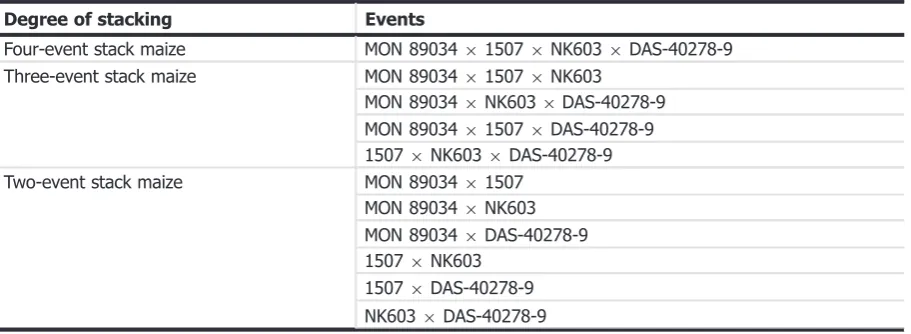
Application EFSA-GMO-NL-2013-112 covers the four-event stack maize MON 89034 9 1507 9 NK6039DAS-40278-9 and all its subcombinations independently of their origin (Table1).
The term ‘subcombination’ refers to any combination of up to three of the events present in the four-event stack maize.
The safety of subcombinations occurring as segregating progeny in harvested grains of the four– event stack maize is evaluated in the context of the assessment of the four-event stack maize in Section 3.3of the present GMO Panel scientific opinion.
‘Subcombination’ also covers combinations of up to three of the maize events MON 89034, 1507, NK603 or DAS-40278-9 that have either been or could be produced by conventional crossing through targeted breeding approaches (EFSA GMO Panel, 2011a). These are maize stacks that can be bred, produced and marketed independently of the four-event stack maize. These subcombinations are assessed in Section 3.4of this scientific opinion.
The four-event stack maize was produced by conventional crossing to combine four single maize events: MON 89034 (expressing the Cry1A.105 and Cry2Ab2 proteins); 1507 (expressing the Cry1F and phosphinothricin acetyl transferase (PAT) proteins); NK603 (expressing the 5-enolpyruvylshikimate-3-phosphate synthase (CP4 EPSPS) and its variant CP4 EPSPS L214P protein); and DAS-40278-9 (expressing the aryloxyalkanoate dioxygenase 1 (AAD-1) protein).
Herbicidal tolerance traits are achieved by the expression of AAD-1 protein from
Sphingobium herbicidovorans, CP4 EPSPS proteins fromAgrobacterium sp. strain CP4, and PAT protein from Streptomyces viridochromogenes. Insecticidal resistance traits are achieved by the expression of Cry1A.105, Cry2Ab2 and Cry1F proteins from Bacillus thuringiensis, which confer protection against specific lepidopteran pests.
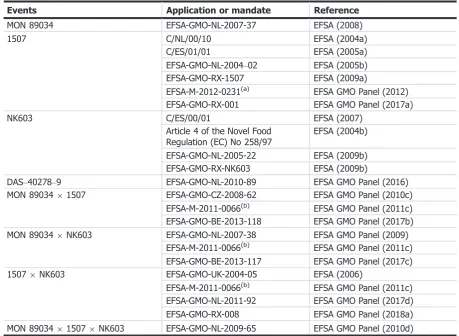
[image:7.595.72.528.507.674.2]All four single maize events and four of the subcombinations (three two-event stacks and one three-event stack) have been previously assessed (see Table2). No concerns for human and animal health, or environmental safety were identified.
Table 1: Stacked maize events covered by the scope of application EFSA-GMO-NL-2013-112
Degree of stacking Events
Four-event stack maize MON 89034915079NK6039DAS-40278-9 Three-event stack maize MON 89034915079NK603
MON 890349NK6039DAS-40278-9 MON 89034915079DAS-40278-9 15079NK6039DAS-40278-9 Two-event stack maize MON 8903491507
MON 890349NK603 MON 890349DAS-40278-9 15079NK603
3.2.
Updated information on the single events
5Since the publication of the GMO Panel scientific opinions on the four single maize events (Table2), no safety issue concerning the four single events has been reported by the applicant.
The applicant clarified that the 1507 maize sequence reported for the four-event stack maize contained one silent nucleotide change in the insert sequence compared to the corrected original 1507 maize sequence (EFSA GMO Panel, 2018a,b, 2019). Analysis of the new sequencing data and bioinformatic analyses performed on the new sequence does not identify any need for further safety assessment.
Updated bioinformatic analyses on the junction regions for maize events MON 89034, 1507, NK603 and DAS-40278-9, using the methodology specified in the 2011 GMO Panel Guidance Document (EFSA GMO Panel, 2011a) confirm that no known endogenous genes were disrupted by any of the inserts.
Updated bioinformatic analyses of the amino acid sequence of the newly expressed Cry1A.105, Cry2Ab2, Cry1F, PAT, CP4 EPSPS and AAD-1 proteins reveal no significant similarities to toxins and allergens. Updated bioinformatic analyses of the newly created open reading frames (ORFs) within the insert or spanning the junctions between the insert and genomic DNA indicate that the expression of an ORF showing significant similarities to toxins or allergens is highly unlikely.
In order to assess the possibility for horizontal gene transfer (HGT) by homologous recombination, the applicant performed a sequence identity analysis for maize events MON 89034, 1507, NK603 and DAS-40278-9 with microbial DNA. The likelihood and potential consequences of plant-to-bacteria gene transfer are described in Section 3.3.4.2.
[image:8.595.67.527.98.434.2]Based on the above information, the GMO Panel considers that its previous conclusions on the safety of the single maize events remain valid.
Table 2: Single maize events and subcombinations of maize MON 89034 91507 9 NK603 9 DAS-40278-9 previously assessed by the GMO Panel
Events Application or mandate Reference
MON 89034 EFSA-GMO-NL-2007-37 EFSA (2008)
1507 C/NL/00/10 EFSA (2004a)
C/ES/01/01 EFSA (2005a)
EFSA-GMO-NL-2004–02 EFSA (2005b) EFSA-GMO-RX-1507 EFSA (2009a)
EFSA-M-2012-0231(a) EFSA GMO Panel (2012) EFSA-GMO-RX-001 EFSA GMO Panel (2017a)
NK603 C/ES/00/01 EFSA (2007)
Article 4 of the Novel Food Regulation (EC) No 258/97
EFSA (2004b)
EFSA-GMO-NL-2005-22 EFSA (2009b) EFSA-GMO-RX-NK603 EFSA (2009b)
DAS–40278–9 EFSA-GMO-NL-2010-89 EFSA GMO Panel (2016) MON 8903491507 EFSA-GMO-CZ-2008-62 EFSA GMO Panel (2010c)
EFSA-M-2011-0066(b) EFSA GMO Panel (2011c) EFSA-GMO-BE-2013-118 EFSA GMO Panel (2017b) MON 890349NK603 EFSA-GMO-NL-2007-38 EFSA GMO Panel (2009)
EFSA-M-2011-0066(b) EFSA GMO Panel (2011c) EFSA-GMO-BE-2013-117 EFSA GMO Panel (2017c)
15079NK603 EFSA-GMO-UK-2004-05 EFSA (2006)
EFSA-M-2011-0066(b) EFSA GMO Panel (2011c) EFSA-GMO-NL-2011-92 EFSA GMO Panel (2017d) EFSA-GMO-RX-008 EFSA GMO Panel (2018a) MON 89034915079NK603 EFSA-GMO-NL-2009-65 EFSA GMO Panel (2010d)
(a): Available online:http://registerofquestions.efsa.europa.eu/roqFrontend/questionLoader?question=EFSA-Q-2012-00712
(b): Available online:http://registerofquestions.efsa.europa.eu/roqFrontend/questionLoader?question=EFSA-Q-2011-00169
5
3.3.
Risk assessment of the four-event stack maize
MON 89034
3
1507
3
NK603
3
DAS-40278-9
3.3.1.
Molecular characterisation
6Possible interactions that would affect the integrity of the events, newly expressed proteins levels or the biological function conferred by the individual inserts are considered below.
3.3.1.1. Genetic elements and their biological function
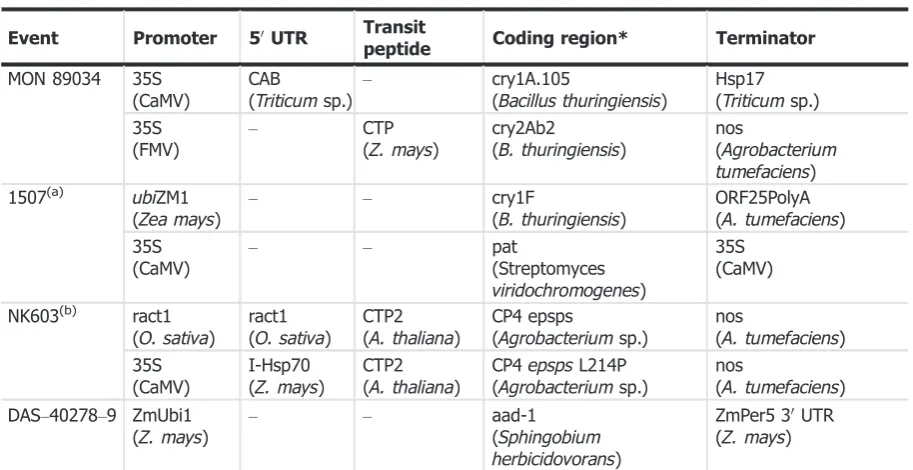
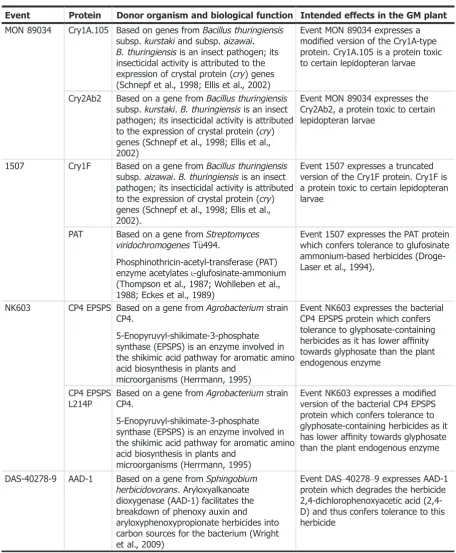
Maize events MON 89034, 1507, NK603 and DAS-40278-9 were combined by conventional crossing to produce the four-event stack maize. The structure of the inserts in the four-event stack maize are described in detail in the respective EFSA scientific opinions (Table2) and no new genetic modifications were involved. Genetic elements in the expression cassettes of the single events are summarised in Table3. Intended effects of the inserts in maize MON 8903491507 9NK603 9 DAS-40278-9 are summarised in Table 4.
[image:9.595.70.527.309.544.2]Based on the known biological function of the newly expressed proteins (Table4), the only foreseen interactions at the biological level are between the three Cry proteins in susceptible insects.
Table 3: Genetic elements in the expression cassettes of the events stacked in maize MON 89034 91507 9NK6039DAS-40278-9
Event Promoter 50UTR Transit
peptide Coding region* Terminator
MON 89034 35S (CaMV)
CAB
(Triticumsp.)
– cry1A.105
(Bacillus thuringiensis)
Hsp17 (Triticumsp.) 35S
(FMV)
– CTP
(Z. mays)
cry2Ab2
(B. thuringiensis)
nos
(Agrobacterium tumefaciens) 1507(a) ubiZM1
(Zea mays)
– – cry1F
(B. thuringiensis)
ORF25PolyA (A. tumefaciens) 35S
(CaMV)
– – pat
(Streptomyces
viridochromogenes)
35S (CaMV)
NK603(b) ract1 (O. sativa)
ract1 (O. sativa)
CTP2 (A. thaliana)
CP4 epsps
(Agrobacteriumsp.)
nos
(A. tumefaciens) 35S
(CaMV)
I-Hsp70 (Z. mays)
CTP2 (A. thaliana)
CP4epspsL214P (Agrobacteriumsp.)
nos
(A. tumefaciens) DAS–40278–9 ZmUbi1
(Z. mays)
– – aad-1
(Sphingobium herbicidovorans)
ZmPer5 30UTR (Z. mays)
CaMV: cauliflower mosaic virus; FMV:figwort mosaic virus. *: all gene sequences are codon-optimised for expression in plants.
–: when no element was specifically introduced to optimise expression.
(a): Maize 1507 also contains partial fragments of thecry1Fandpatgenes at a single locus in the nuclear genome.
(b): Maize NK603 also includes at the 30end an additional 217 bp DNA fragment of the rice actin promoter, lacking sequences needed for promoter activity.
6
3.3.1.2. Integrity of the events in the four-event stack
The genetic stability of the inserted DNA over multiple generations in the single maize events MON 89034, 1507, NK603 and DAS-402789 was previously demonstrated (see Table 2). Integrity of these events in the four-event stack maize was demonstrated by Southern analyses.
3.3.1.3. Information on the expression of the inserts
[image:10.595.69.526.93.647.2]Cry1A.105, Cry2Ab2, Cry1F, PAT, CP4-EPSPS and AAD-1 protein levels were analysed by enzyme-linked immunosorbent assay (ELISA) in material harvested from a field trial across 10 locations in the Table 4: Characteristics and intended effects of the events stacked in maize MON 89034 91507 9
NK6039DAS-40278-9
Event Protein Donor organism and biological function Intended effects in the GM plant
MON 89034 Cry1A.105 Based on genes fromBacillus thuringiensis
subsp.kurstakiand subsp.aizawai.
B. thuringiensisis an insect pathogen; its insecticidal activity is attributed to the expression of crystal protein (cry) genes (Schnepf et al., 1998; Ellis et al., 2002)
Event MON 89034 expresses a modified version of the Cry1A-type protein. Cry1A.105 is a protein toxic to certain lepidopteran larvae
Cry2Ab2 Based on a gene fromBacillus thuringiensis
subsp.kurstaki.B. thuringiensisis an insect pathogen; its insecticidal activity is attributed to the expression of crystal protein (cry) genes (Schnepf et al., 1998; Ellis et al., 2002)
Event MON 89034 expresses the Cry2Ab2, a protein toxic to certain lepidopteran larvae
1507 Cry1F Based on a gene fromBacillus thuringiensis
subsp.aizawai.B. thuringiensisis an insect pathogen; its insecticidal activity is attributed to the expression of crystal protein (cry) genes (Schnepf et al., 1998; Ellis et al., 2002).
Event 1507 expresses a truncated version of the Cry1F protein. Cry1F is a protein toxic to certain lepidopteran larvae
PAT Based on a gene fromStreptomyces viridochromogenesTu494.€
Phosphinothricin-acetyl-transferase (PAT) enzyme acetylatesL-glufosinate-ammonium (Thompson et al., 1987; Wohlleben et al., 1988; Eckes et al., 1989)
Event 1507 expresses the PAT protein which confers tolerance to glufosinate ammonium-based herbicides (Droge-Laser et al., 1994).
NK603 CP4 EPSPS Based on a gene fromAgrobacteriumstrain CP4.
5-Enopyruvyl-shikimate-3-phosphate synthase (EPSPS) is an enzyme involved in the shikimic acid pathway for aromatic amino acid biosynthesis in plants and
microorganisms (Herrmann, 1995)
Event NK603 expresses the bacterial CP4 EPSPS protein which confers tolerance to glyphosate-containing herbicides as it has lower affinity towards glyphosate than the plant endogenous enzyme
CP4 EPSPS L214P
Based on a gene fromAgrobacteriumstrain CP4.
5-Enopyruvyl-shikimate-3-phosphate synthase (EPSPS) is an enzyme involved in the shikimic acid pathway for aromatic amino acid biosynthesis in plants and
microorganisms (Herrmann, 1995)
Event NK603 expresses a modified version of the bacterial CP4 EPSPS protein which confers tolerance to glyphosate-containing herbicides as it has lower affinity towards glyphosate than the plant endogenous enzyme
DAS-40278-9 AAD-1 Based on a gene fromSphingobium herbicidovorans. Aryloxyalkanoate dioxygenase (AAD-1) facilitates the breakdown of phenoxy auxin and aryloxyphenoxypropionate herbicides into carbon sources for the bacterium (Wright et al., 2009)
US in 2010. Four-event stack maize samples analysed included leaf (V2–V4, V9, R1), pollen (R1), root (R1), forage (R4), whole plant (R6) and grain (R6) treated and not treated with the intended herbicides. The applicant indicated that a small percentage of the non-GM controls showed detectable levels of the proteins, possibly resulting from cross-contamination or sampling error. Additional information requested by the GMO Panel did not allow limiting this observation to particular locations. Considering that the proportion of contaminated controls was very low, and given the high number of samples analysed, the impact on the mean expression values presented in Appendix 1 is considered negligible.
In order to assess changes in protein expression levels which may result from potential interactions between the events, protein levels were determined for the four-event stack maize and one corresponding single event or the previously assessed three-event stack maize MON 89034 9 1507 9NK603 (see Table 2) in different parts of the plant grown without intended herbicide regimes.
The levels of the proteins in the four-event stack maize were comparable in all tissues to those of either the single event DAS-40278-9 or the previously assessed three-event stack MON 89034 91507 9 NK603 (EFSA GMO Panel, 2010d; Appendix 1). Therefore, there is no indication of interactions that may affect the integrity of the events and the levels of the newly expressed proteins in this stack.
3.3.1.4. Conclusion on molecular characterisation
The molecular data establish that the events stacked in the four-event stack maize have retained their integrity. Protein expression analyses show that the levels of the newly expressed proteins in the four-event stack maize are similar to those of either the single event DAS-40278-9 or the already assessed three-event stack maize MON 89034 91507 9NK603. Therefore, there is no indication of an interaction that may affect the integrity of the events and the levels of the newly expressed proteins in this stack.
Based on the known biological function of the newly expressed proteins (Table4), the only foreseen interactions at the biological level are between the Cry proteins in susceptible insects, which is dealt with in Section 3.3.4.4.
3.3.2.
Comparative analysis
73.3.2.1. Choice of comparator and production of material for the comparative analysis
Application EFSA-GMO-NL-2013-112 presents data on agronomic and phenotypic characteristics as well as on forage and grain composition of the four-event stack maize derived from field trials performed at 10 sites in the US during the 2010 growing season (Table 5).
The four-event stack maize was obtained by conventional crossing: events MON 89034, 1507 and NK603 were introgressed in the inbred maize line 7SH382, while event DAS-40278-9 was introgressed in maize XHH13. As documented by the pedigree, the four single events, after backcrossing, were combined in a hybrid maize with a genetic background (F1) of 7SH3829XHH13. The same two inbred maize lines (7SH382 and XHH13) were crossed to produce the non-GM hybrid maize used as comparator. On the basis of the provided pedigree, documenting the production of the four-event stack GM maize, the GMO Panel considers that hybrid maize 7SH3829XHH13 is a suitable comparator.
[image:11.595.68.528.502.556.2]Thefield trial sites were located in major maize growing areas of the US,8 representing regions of diverse agronomic practices and environmental conditions. At each site, the following materials were grown in a randomised complete block design with four replicates: the four-event stack maize treated, a non-GM comparator and three non-GM reference varieties9all treated (sprayed) with plant protection Table 5: Overview of comparative analysis studies with maize MON 89034 9 1507 9 NK603 9
DAS-40278-9
Study focus Study details Comparator Non-GM commercial reference varieties
Agronomic, phenotypic and compositional analysis
Field study, 2010, US, 10 sites 7SH3829XHH13 Six
7 Dossier: Part II–Section A.3; Additional information: 6/3/2017.
8 The field sites were located in Richland (IA), Lime Springs (IA), Atlantic (IA), Carlyle (IL), Wyoming (IL), Sheridan (IN),
Fisk (MO), Brunswick (NE), York (NE) and Germansville (PA).
9 The reference varieties used were: Dekalb 6170, Golden Harvest 8920, Middlekoop 5513, Middlekoop 6614, Middlekoop C110
products (PPP) according to local requirements, and the four-event stack maize treated with the intended herbicides (2,4-D-, glyphosate-, glufosinate-ammonium- and quizalofop-containing herbicides) in addition to the other PPP.
Statistical analysis offield trials data
The statistical analysis of the agronomic, phenotypic and compositional data from the 2010 field trial study followed the recommendations of the GMO Panel (EFSA GMO Panel, 2010b, 2011a). This included, for each of the two treatments of the four-event stack maize, the application of a difference test (between the GM maize and the non-GM comparator) and an equivalence test (between the GM maize and the set of non-GM maize reference varieties). The results of the equivalence test are categorised into four possible outcomes (I–IV, ranging from equivalence to non-equivalence).10
3.3.2.2. Agronomic and phenotypic analysis
A total of 26 agronomic and phenotypic endpoints, including observations on the biotic and abiotic interactions, were analysed.11
Data for 12 endpoints12 were considered not suitable for a parametric analysis; for these, a Wilcoxon signed-rank (WSR) test was used to check for differences between the GM maize and the non-GM comparator.
The remaining 14 endpoints were analysed as described in Section3.3.2.1, with the following outcomes:
•
For the four-event stack maize not treated with the intended herbicides, statistically significant differences were identified for time to silking, time to pollen shed, ear height, stay green, plant height and insect damage. All endpoints fell under equivalence category I or II, except for plant height (equivalence category III) and insect damage for which the test of equivalence was not applied because the variability among the non-GM reference varieties was estimated to be zero.13•
For the four-event stack maize treated with the intended herbicides, statistically significant differences were identified for time to silking, time to pollen shed, ear height, disease incidence, insect damage, stay green, final population, plant height and pollen shape at 30 min. All endpoints fell under category I or II except for insect damage and pollen shape at 30 min, for which the test of equivalence was not applied because the variability among the non-GM reference varieties was estimated to be zero.14Of the endpoints analysed with the WSR test, statistically significant differences were identified for days to maturity (for both GM maize treatments) and pollen shape at 120 min (for GM maize treated with the intended herbicides). However, in both cases, the average values for the GM maize were within the range of the non-GM reference varieties.
3.3.2.3. Compositional analysis
Forage and grain harvested from thefield trial study in the US in 2010 (Table5) were analysed for 82 constituents (9 in forage and 73 in grain), including the key constituents recommended by the OECD (OECD, 2002). For 17 grain constituents,15 more than 50% of the observations were below the
10 The results of the equivalence test are categorised into four possible outcomes: category I (indicating full equivalence to the
non-GM reference varieties); category II (equivalence is more likely than non-equivalence); category III (non-equivalence is more likely than equivalence); and category IV (indicating non-equivalence).
11
Early population,final population, time to silking, time to pollen shed, plant height, ear height, yield, pollen colour (measured at 0, 30, 60 and 120 minutes), pollen shape (measured at 0, 30, 60 and 120 minutes), stay green, herbicide injury (after each of the four herbicide applications), disease incidence, insect damage, days to maturity, root lodging, stalk lodging and seedling vigour.
12 Days to maturity, root lodging, stalk lodging, seedling vigour, pollen colour and shape (at 0 and 120 min) and herbicide injury
(at 4 time points).
13 Estimated mean values for plant height (cm) were 274.9 (non-GM comparator) and 284.6 (untreated GM maize); the
equivalence interval was (256.9–282.5). Estimated mean values for insect damage (% plant tissue/leaf area damaged) were 14.25 (non-GM comparator), 11.44 (untreated GM maize) and 13.95 (non-GM commercial reference varieties).
14 Estimated mean values for insect damage (% plant tissue/leaf area damaged) were as follows 14.25 (non-GM comparator),
11.78 (treated GM maize) and 13.95 (non-GM commercial reference varieties). Estimated mean values for pollen shape at 30 min were 58.88% (non-GM comparator), 63.5% (treated GM maize) and 59.76% (non-GM commercial reference varieties).
15
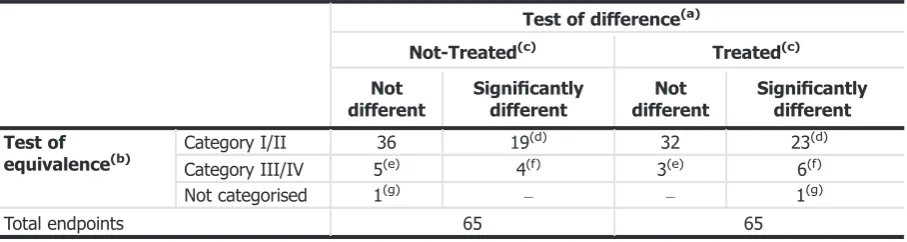
limit of quantification. The statistical analysis was applied to the remaining 65 constituents (9 in forage16 and 56 in grain17). A summary of the outcome of the test of difference and the test of equivalence is presented in Table 6:
•
For the four-event stack maize not treated with the intended herbicides, 23 grain endpoints showed statistically significant differences with the non-GM comparator. All these endpoints fell under equivalence category I or II, except for levels of isoleucine, raffinose, manganese andb -carotene which fell under equivalence category III or IV. Levels of cystine, phenylalanine, iron, pyridoxine and folic acid in grain fell under equivalence category III or IV, although no statistically significant differences were identified with the non-GM comparator. [image:13.595.72.526.339.460.2]•
For the four-event stack maize treated with the intended herbicides, 27 grain endpoints and three forage endpoints showed statistically significant differences with the non-GM comparator. All these endpoints fell under equivalence category I or II, except for levels of cystine, isoleucine, phenylalanine, raffinose, manganese and b-carotene in grain, which fell under equivalence category III or IV; and for total fat in forage, for which the test of equivalence was not applied (because the variability associated to the non-GM reference varieties was estimated to be zero). Levels of iron, pyridoxine and folic acid in grain fell under equivalence category III or IV, although no statistically significant differences were identified with the non-GM comparator.Table 6: Outcome of the comparative compositional analysis in grains and forage of maize MON 89034 91507 9NK6039DAS-40278-9. The table shows the number of endpoints in each category
Test of difference(a)
Not-Treated(c) Treated(c)
Not different
Significantly different
Not different
Significantly different
Test of equivalence(b)
Category I/II 36 19(d) 32 23(d)
Category III/IV 5(e) 4(f) 3(e) 6(f)
Not categorised 1(g) – – 1(g)
Total endpoints 65 65
(a): Comparison between maize MON 89034915079NK6039DAS-40278-9 and its non-GM comparator.
(b): Four different outcomes: category I (indicating full equivalence to the non-GM reference varieties); category II (equivalence is more likely than non-equivalence); category III (non-equivalence is more likely than equivalence); and category IV (indicating non-equivalence). Not categorised means that the test of equivalence was not applied because of the lack of variation among the non-GM reference varieties.
(c): Treated/not-treated with the intended herbicides (see Section3.3.2.1).
(d): Endpoints with significant differences between maize MON 89034915079NK6039DAS-40278-9 and its non-GM comparator falling in equivalence category I-II (treated and not treated).
For grain, both treated and not treated: glutamic acid, glycine, leucine, threonine, tryptophan, 18:1 oleic, 18:2 linoleic, 20:1 eicosenoic, protein, copper and zinc. For not treated only: aspartic acid, ferulic acid, phytic acid, 20:0 arachidic, ash, moisture, magnesium and riboflavin (B2). For treated only: arginine, histidine, inositol, 18:3 linolenic, ADF, carbohydrates, total fat, calcium, phosphorus and niacin (B3).
For forage: calcium and phosphorus (treated only).
(e): The following endpoints in grain fell under equivalence category III or IV, although no statistically significant differences were identified with respect to the conventional counterpart: iron, pyridoxine (B6) and folic acid (B9) (both treated and not treated), cystine and phenylalanine (non-treated only).
(f): Endpoints with significant differences between maize MON 89034915079NK6039DAS-40278-9 and its non-GM comparator and falling in equivalence category III-IV. Quantitative results for these endpoints are reported in Table7. (g): The endpoint total fat in forage was not categorised for equivalence. Quantitative results are reported in Table7.
16
Protein, fat, ash, moisture, carbohydrates, acid detergentfibre (ADF), neutral detergentfibre (NDF), calcium and phosphorus.
17 Proximates (protein, fat ash, moisture and carbohydrates by calculation),fibre fractions (acid detergentfibre (ADF), neutral
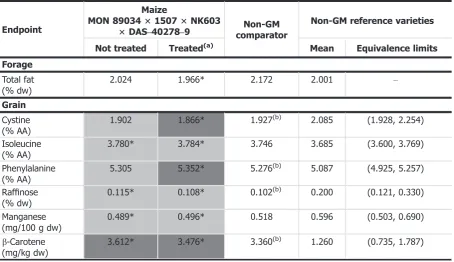
The GMO Panel assessed all significant differences between the four-event stack maize and the non-GM comparator, taking into account potential impact on plant metabolism and the natural variability observed for the set of non-GM commercial reference varieties. Quantitative results for the endpoints showing significant differences between the four-event stack maize and the non-GM comparator and not falling under category I/II are given in Table 7.
3.3.2.4. Conclusion on comparative analysis
The GMO Panel concludes that the differences in the agronomic and phenotypic characteristics identified between the four-event stack maize and its non-GM comparator do not require further assessment, except for plant height, insect damage and pollen shape at 30 min. These differences are further assessed for their environmental impact in Section3.3.4.1.
The GMO Panel concludes that none of the differences identified in forage and grain composition between the four-event stack maize, its non-GM comparator and the non-GM commercial reference varieties needs further assessment regarding food and feed safety, except for the changes in levels of cystine, isoleucine, phenylalanine, raffinose, manganese and b-carotene in grain and in levels of total fat in forage, which are further assessed in Section 3.3.3.
3.3.3.
Food and feed safety assessment
183.3.3.1. Effects of processing
[image:14.595.72.527.165.427.2]The four-event stack maize will undergo existing production processes used for conventional maize. Based on the outcome of the comparative assessment, processing of the four-event stack maize into food and feed products is not expected to result in products being different from those of non-GM maize varieties.
Table 7: Quantitative results (estimated means and equivalence limits) for compositional endpoints in grain and forage that are further assessed based on the results of the statistical analysis
Endpoint
Maize
MON 89034315073NK603
3DAS–40278–9 comparatorNon-GM
Non-GM reference varieties
Not treated Treated(a) Mean Equivalence limits
Forage
Total fat (% dw)
2.024 1.966* 2.172 2.001 –
Grain
Cystine (% AA)
1.902 1.866* 1.927(b) 2.085 (1.928, 2.254)
Isoleucine (% AA)
3.780* 3.784* 3.746 3.685 (3.600, 3.769)
Phenylalanine (% AA)
5.305 5.352* 5.276(b) 5.087 (4.925, 5.257)
Raffinose (% dw)
0.115* 0.108* 0.102(b) 0.200 (0.121, 0.330)
Manganese (mg/100 g dw)
0.489* 0.496* 0.518 0.596 (0.503, 0.690)
b-Carotene (mg/kg dw)
3.612* 3.476* 3.360(b) 1.260 (0.735, 1.787)
dw: dry weight; % AA: percentage total amino acid.
For the GM maize, significantly different entries are marked with an asterisk, while the outcomes of the test of equivalence are differentiated by the greyscale background: white (the test of equivalence was not performed), light grey (equivalence category III) and dark grey (equivalence category IV).
(a): Treated with the intended herbicides as described in Section3.3.2.1.
(b): Mean values for cystine, phenylalanine, raffinose andb-carotene in the non-GM comparator were out of the equivalence limits derived from the selected non-GM reference varieties.
18
3.3.3.2. Influence of temperature and pH on newly expressed proteins
Effects of temperature and pH on Cry1A.105, Cry2Ab2, Cry1F, PAT, CP4 EPSPS and AAD-1 proteins have been previously evaluated by the GMO Panel (Table 2). In the context of this application, no new studies addressing these aspects were provided by the applicant.
3.3.3.3. Toxicology
Testing of newly expressed proteins
Six proteins (Cry1A.105, Cry2Ab2, Cry1F, PAT, CP4 EPSPS19and AAD-1) are newly expressed in the four-event stack maize (see Section 3.1). The GMO Panel has previously assessed these proteins in the context of the single maize events (see Table 2), and no safety concerns were identified for humans and animals. The GMO Panel is not aware of any new information that would change these conclusions.
The potential for a functional interaction between the proteins newly expressed in the four-event stack maize has been assessed with regard to human and animal health. The CP4 EPSPS, PAT and AAD-1 proteins are enzymes that catalyse distinct biochemical reactions and act on unrelated substrates with high substrate specificity. The Cry1A.105, Cry2Ab2 and Cry1F proteins are delta endotoxins with high specific insecticidal properties acting through cellular receptors found in target insect species. It is reported that the gastrointestinal tract of mammals, including humans, lacks receptors with high specific affinity to Cry proteins (Hammond et al., 2013; Koch et al., 2015). On the basis of the known biological functions of the individual newly expressed proteins (see Table4), there is currently no expectation for possible interactions relevant for the food and feed safety of the four-event stack maize.
In vitro protein degradation studies on Cry1A.105, Cry2Ab2, Cry1F, PAT, CP4 EPSPS and AAD–1 proteins have been previously evaluated by the GMO Panel (see Table2). In the context of this application, no new studies addressing in vitro protein degradation of these newly expressed proteins were provided by the applicant.
The GMO Panel concludes that there are no safety concerns for human and animal health related to the newly expressed proteins Cry1A.105, Cry2Ab2, Cry1F, PAT, CP4 EPSPS and AAD-1 in the four-event stack maize.
Testing of new constituents other than newly expressed proteins
No new constituents other than newly expressed proteins have been identified in the four-event stack maize. Therefore, no further food and feed safety assessment of components other than the newly expressed proteins is required.
Information on altered levels of food and feed constituents
Cystine, isoleucine, phenylalanine, raffinose, manganese and b-carotene in grain and total fat in forage were significantly different in the four-event stack maize when compared to its comparator and showed lack of equivalence with the set of non-GM reference varieties (see Section 3.3.2.3). Taking into account the known biological role of these compounds, these differences are considered of no toxicological concern by the GMO Panel. Further information on the safety of these maize constituents is provided in Section 3.3.3.5.
Testing of the whole genetically modified food and feed
Based on the outcome of the studies considered in the molecular characterisation and comparative analysis, no substantial modifications of toxicological relevance in the composition of the four-event stack maize, and no indication of possible unintended effects relevant to food and feed safety have been identified (see Sections3.3.1. and 3.3.2.3). Therefore, animal studies on food and feed from the four-event stack maize are not necessary (EFSA GMO Panel, 2011a).
3.3.3.4. Allergenicity
For the allergenicity assessment, a weight-of-evidence approach was followed, taking into account all of the information obtained on the newly expressed proteins, as no single piece of information or experimental method yields sufficient evidence to predict allergenicity (Codex Alimentarius, 2009; EFSA GMO Panel, 2011a). In addition, when known functional aspects of the newly expressed protein or
19
structural similarity to known adjuvants may indicate an adjuvant activity, the possible role of these proteins as adjuvants is considered. When newly expressed proteins with a potential adjuvant activity are expressed together, possible interactions increasing adjuvanticity and impacting the allergenicity of the GM crop are assessed.
Assessment of allergenicity of the newly expressed protein
For allergenicity, the GMO Panel has previously evaluated the safety of Cry1A.105, Cry2Ab2, Cry1F, PAT, CP4 EPSPS and AAD-1 proteins individually, and no concerns on allergenicity were identified in the context of the applications assessed (see Table 2). No new information on allergenicity of these proteins that might change the previous conclusions of the GMO Panel has become available. Based on the current knowledge, and as none of the newly expressed proteins showed allergenicity, no reasons for concerns regarding the simultaneous presence of these newly expressed proteins in the four-event stack maize affecting their allergenicity are expected.
For adjuvanticity, Cry1Ac protein has been suggested to possess adjuvant activity based on animal studies when applied at relatively high doses (e.g. Vazquez et al., 1999). The Panel has previously evaluated the safety of Cry1A.105, Cry2Ab2 and Cry1F proteins, and no concerns on adjuvanticity were identified in the context of the applications assessed (see Table2). The levels of the individual Cry proteins in the four-event stack maize are similar to those of the three-event stack MON 89034 91507 9NK603 (see Appendix 1). From the limited evidence available, the GMO Panel does not find indications that the presence of the Cry proteins at the levels expressed in the four-event stack maize might act as adjuvants with the potential to enhance a specific immunoglobulin E (IgE) response and to favour the development of an allergic reaction.
Assessment of allergenicity of the whole GM plant
The GMO Panel regularly reviews the available publications on food allergy to maize. However, to date, maize has not been considered to be a common allergenic food20 (OECD, 2002). Therefore, the GMO Panel does not request experimental data to analyse the allergen repertoire of GM maize.
In the context of this application, and considering the data from the molecular characterisation, the compositional analysis and the assessment of the newly expressed proteins (see Sections 3.3.1,3.3.2 and 3.3.3), the GMO Panel identifies no indications of a potentially increased allergenicity of foods and feeds from the four-event stack maize with respect to those from its non-GM comparator.
3.3.3.5. Nutritional assessment of GM food and feed
The intended trait of the four-event stack maize is insect resistance and herbicide tolerance, with no intention to alter the nutritional parameters. However, levels of cystine, isoleucine, phenylalanine, raffinose, manganese and b-carotene in grain were significantly different from its non-GM comparator and showed a lack of equivalence with the set of non-GM reference varieties (see Section 3.3.2.3). In addition, for total fat in forage from the GM-maize the levels were significantly different from its non-GM comparator and the test of equivalence could not be applied because of the lack of variation among the non-GM reference varieties. The biological role of these compounds, the contribution of maize to their total intake and the magnitude and direction of the observed changes are considered in the nutritional assessment.
Human nutrition
Among the three amino acids showing significant differences as compared to the non-GM comparator, two of them are essential amino acids: isoleucine and phenylalanine. For these two amino acids an increase of approximately 1% (percentage of total amino acids) is observed in the GM maize as compared to the non-GM comparator. For cystine, the oxidised dimer form of the non-essential amino acid cysteine, a decrease of approximately 3% was observed as compared to the non-GM comparator. Overall, these changes are not considered relevant from a nutritional point of view.
Raffinose is a non-digestible trisaccharide composed of galactose, fructose and glucose, considered as an antinutrient since cannot be broken down by gastrointestinal enzymes; as a consequence,
20 Regulation (EU) No 1169/2011 of the European Parliament and of the Council of 25 October 2011 on the provision of food
raffinose passes into the large intestine where is fermented by the intestinal microflora causing flatulence (OECD, 2002). An increase of approximately 13% in the levels of raffinose in the GM-maize is observed as compared to the non-GM comparator. Maize contains very small amounts of raffinose as compared to other foods of plant origin such as soybean, garlic and onions among many others. Based on this, and considering that a daily dose of 15 g of raffinose is considered safe (Voragen, 1998), the increase observed in raffinose is not considered relevant from a nutritional point of view.
b-Carotene is a precursor of vitamin A and is found in plant derived foods; together with preformed vitamin A (mainly retinol and retinyl esters) present in foods of animal origin, it contributes to the total dietary intake of vitamin A. Milk, meat, vegetables and derived products are the main sources of vitamin A in the diet (EFSA NDA Panel, 2012). An increase up to approximately 8% is observed as compared to the non-GM comparator (from 560 lg RE21/kg dw to 602 lg RE/kg dw). Considering the magnitude of the change, the consumption of maize and the Tolerable Upper Intake Levels (UL) for vitamin A (800–3,000lg RE/day), the increase observed inb-carotene is not considered relevant from a nutritional point of view.
Manganese is an essential dietary mineral which is a component of a number of metalloenzymes involved in amino acid, lipid and carbohydrate metabolism. Nuts, dried fruits and chocolate are the main dietary sources of manganese; cereal-based products also contribute to its intake mainly due to the levels found in wheat grain (25 mg/kg, Bawiec et al., 2014). A decrease of up to approximately 6% is observed in the GM maize as compared to the non-GM comparator. Considering the relatively low levels in maize, the magnitude of the change and the relatively low contribution of maize to the dietary intake of manganese, the observed decrease is not considered relevant from a nutritional point of view.
Animal nutrition
Cystine is a conditionally essential amino acid. The magnitude of the decrease observed in the GM maize as compared to the non-GM comparator does not constitute an issue for animal nutrition. Isoleucine and phenylalanine are essential amino acids and the increase observed in the GM-maize as compared to the non-GM comparator is not an issue for animal nutrition.
Raffinose is fermented in the forestomachs (ruminants) and in the hind gut (rabbit, horse) and provides energy. High level of raffinose in monogastric diet is detrimental to digestion and production performance, but maize contains very low level of raffinose as compared to other common feed used in animal diets, such as soybean. Raffinose, in specific conditions, has been demonstrated to be a prebiotic compound that can improve intestinal health in poultry and fishes. Taking into account the magnitude and the biological role of these changes, these do not to pose an issue for animal nutrition.
Manganese is an important trace element in animal nutrition; the decreased level observed does not constitute an issue, since complete diets are balanced with mineral premixes. Moreover, maize grains are also considered a poor source of manganese (McDonald et al., 2011).
b-Carotene is converted in the liver into retinol and an increase does not represent an issue for animal health.
Forage is not provided to animals as source of fat; a decrease in total fat content of forage does not affect animal nutrition since complete diets are balanced to energy content.
Conclusion on human and animal nutrition
Based on the current knowledge on the biological role of the compounds assessed, the magnitude and direction of the changes identified, and the relevance of maize as contributor to the intake of these compounds, the GMO Panel concludes that the nutritional impact of foods and feeds from the four-event stack maize is expected to be the same as those from the comparator and non-GM reference varieties.
3.3.3.6. Conclusion on food and feed safety assessment
The individual proteins Cry1A.105, Cry2Ab2, Cry1F, PAT, CP4 EPSPS and AAD-1 newly expressed in the four-event stack maize do not raise safety concerns for human and animal health. Interactions between these newly expressed proteins raising food and feed safety concerns (toxicological, allergenicity and adjuvanticity) are not expected. The nutritional impact of the four-event stack maize foods and feeds is expected to be the same as those from the comparator and non-GM reference
21
varieties. The GMO Panel concludes that the four-event stack maize, as described in this application, is as safe as and nutritionally equivalent to the comparator and the non-GM reference varieties tested.
3.3.4.
Environmental risk assessment
22Considering the scope of application EFSA-GMO-NL-2013-112, which excludes cultivation, the environmental risk assessment (ERA) of the four-event stack maize mainly takes into account: (1) the exposure of microorganisms to recombinant DNA in the gastrointestinal tract of animals fed GM material and of microorganisms present in environments exposed to faecal material of these animals (manure and faeces); and (2) the accidental release into the environment of viable four-event stack maize grains during transportation and/or processing (EFSA GMO Panel, 2010a).
3.3.4.1. Persistence and invasiveness of the GM plant
Maize is highly domesticated, not winter hardy in colder regions of Europe, and generally unable to survive in the environment without appropriate management. Occasional feral GM maize plants may occur outside cultivation areas in the EU (e.g. Pascher, 2016), but survival is limited mainly by a combination of low competitiveness, the absence of a dormancy phase and susceptibility to plant pathogens, herbivores and cold climate conditions (OECD, 2003). Field observations indicate that maize grains may survive and overwinter in some EU regions, resulting in volunteers in subsequent crops (e.g. Gruber et al., 2008; Palaudelmas et al., 2009; Pascher, 2016). However, maize volunteers have been shown to grow weakly andflower asynchronously with the maize crop (Palaudelmas et al., 2009). Thus, the establishment and survival of feral and volunteer maize in the EU is currently limited and transient.
It is unlikely that the intended traits of the four-event stack maize and the observed differences in plant height, insect damage and pollen shape at 30 min (see Section 3.3.2.2) will provide a selective advantage to maize plants, except when they are exposed to glufosinate-ammonium-, glyphosate-, 2,4-D and/or AOPP-containing herbicides, or infested by insect pests that are susceptible to the Cry1A.105, Cry2Ab2 and/or Cry1F proteins. However, this fitness advantage will not allow the four-event stack maize to overcome other biological and abiotic factors (described above) limiting plant’s persistence and invasiveness. Therefore, the presence of the intended traits and the observed differences in plant height, insect damage and pollen shape at 30 min do not affect the persistence and invasiveness of the GM plant.
In conclusion, the GMO Panel considers it very unlikely that the four-event stack maize will differ from conventional maize hybrid varieties in its ability to survive until subsequent seasons, or to establish occasional feral plants under European environmental conditions in case of accidental release into the environment of viable four-event stack maize grains.
3.3.4.2. Potential for gene transfer
A prerequisite for any gene transfer is the availability of pathways for the transfer of genetic material, either through HGT of DNA, or through vertical gene flow via cross-pollination from feral plants originating from spilled grains.
Plant-to-microorganism gene transfer
The probability and potential adverse effects of HGT of the recombinant DNA have been assessed in previous GMO Panel scientific opinions for the single events (see Table 2). No concern as a result of an unlikely, but theoretically possible, HGT of the recombinant genes to bacteria in the gut of domesticated animals and humans fed GM material or other receiving environments was identified. The applicant submitted an updated bioinformatic analysis for each of the single events in order to assess the possibility for HGT by homologous recombination.
The updated bioinformatic analysis for maize event 1507 revealed sufficient length and sequence identity for homologous recombination for two copies of the ORF25 terminator with the same
A. tumefaciens genomic sequence. Because of its length (~700 bp) and the opposite orientation of the two ORF25 copies in maize event 1507, a potential for a facilitated HGT by double homologous recombination (DHR) is unlikely. The occurrence of a DHR would result in the insertion of thepatgene cassette which is expected to be less efficiently translated in potential bacterial recipients because of the plant-codon optimisation of the pat gene and because the pat gene is under the control of plant virus element.
22
The updated bioinformatic analysis for maize events MON 89034 and NK603 do not reveal any new DNA sequence that could provide sufficient length and identity which could facilitate HGT by DHR, confirming the previous conclusions (EFSA GMO Panel, 2017b,c,d).
Bioinformatic analysis for maize event DAS-40278-9 does not reveal sufficient length and sequence identity with known sequences from bacteria which would facilitate homologous recombination.
Synergistic effects of the recombinant genes, for instance due to combinations of recombinogenic sequences, which would cause an increase in the likelihood for horizontal gene transfer or a selective advantage are not identified.
Therefore, the GMO Panel concludes that the unlikely, but theoretically possible, horizontal transfer of recombinant genes from this four-event stack maize to bacteria does not raise any environmental safety concern.
Plant-to-plant gene transfer
The potential for occasional feral four-event stack maize plants originating from grain import spills to transfer recombinant DNA to sexually compatible plants and the environmental consequences of this transfer were considered.
For plant-to-plant gene transfer to occur, imported GM maize grains need to germinate and develop into plants in areas containing sympatric wild relatives and/or cultivated maize with synchronous flowering and environmental conditions favouring cross-pollination.
Maize is an annual predominantly cross-pollinating crop. Cross-fertilisation occurs mainly by wind (OECD, 2003). Vertical gene transfer from maize is limited to Zea species. Wild relatives of maize outside cultivation are not known/reported in Europe (Eastham and Sweet, 2002; OECD, 2003; EFSA, 2016; Trtikova et al., 2017). Therefore, potential vertical gene transfer is restricted to maize and weedy Zea species, such as teosintes, and/or maize-teosinte hybrids, occurring in cultivated areas (EFSA, 2016, Trtikova et al., 2017).
The potential of spilled maize grains to establish, grow and produce pollen is extremely low and transient (see Section 3.3.4.1). Therefore, the likelihood/frequency of cross-pollination between occasional feral GM maize plants resulting from grain spillage, and weedy or cultivated Zea plants is considered extremely low (EFSA, 2016). Even if cross-pollination would occur, the GMO Panel is of the opinion that environmental effects as a consequence of the spread of genes from occasional feral GM maize plants in Europe would not differ from that of conventional maize varieties for the reasons given in Section 3.3.4.1, even if exposed to the intended herbicides.
3.3.4.3. Interactions of the GM plant with target organisms
Taking the scope of application EFSA-GMO-NL-2013-112 into account (no cultivation), potential interactions of occasional feral four-event stack maize plants arising from grain import spills with target organisms are not considered a relevant issue.
3.3.4.4. Interactions of the GM plant with non-target organisms
Given that environmental exposure of non-target organisms to spilled GM grains or occasional feral GM maize plants arising from spilled four-event stack maize grains is limited, and because ingested proteins are degraded before entering the environment through faecal material of animals fed GM maize, potential interactions of the four-event stack maize with non-target organisms are not considered to raise any environmental safety concern. Interactions that may occur between the Cry proteins would not alter this conclusion.
3.3.4.5. Interactions with the abiotic environment and biogeochemical cycles
Given that environmental exposure to spilled grains or occasional feral four-event stack maize plants arising from grain import spills is limited, and because ingested proteins are degraded before entering the environment through faecal material of animals fed GM maize, potential interactions with the abiotic environment and biogeochemical cycles are not considered to raise any environmental safety concern.
3.3.4.6. Conclusions on environmental risk assessment
HGT from the four-event stack maize to bacteria does not indicate a safety concern. Therefore, considering the combined traits and their interactions, the outcome of the comparative analysis, and the routes and levels of exposure, the GMO Panel concludes that the four-event stack maize would not raise safety concerns in the event of accidental release of viable GM maize grains into the environment.
3.3.5.
Conclusion on the four-event stack maize MON 89034
3
1507
3
NK603
3
DAS
–
40278
–
9
No new data on the single maize events MON 89034, 1507, NK603 and DAS-40278-9 leading to a modification of the original conclusions on their safety are identified.
The molecular characterisation, comparative analysis (agronomic, phenotypic and compositional characteristics) and the outcome of the toxicological, allergenicity and nutritional assessment indicates that the combination of the single maize events and of the newly expressed proteins in the four-event stack maize does not give rise to food and feed safety and nutritional concerns. The GMO Panel concludes that the four-event stack, as described in this application, is as safe as and nutritionally equivalent to its non-GM comparator and the non-GM reference varieties tested.
Considering the combined traits and their interactions, the outcome of the comparative analysis, and the routes and levels of exposure, the GMO Panel concludes that the four-event stack maize would not raise safety concerns in the case of accidental release of viable GM maize grains into the environment.
No scientific information that could change the conclusions on this four-event stack was retrieved in a literature search covering the period since the time of validity of the application.23
In conclusion, the GMO Panel considers that the four-event stack maize is as safe as its non-GM comparator and the non-GM maize reference varieties tested with respect to potential effects on human and animal health and the environment.
3.4.
Risk assessment of the subcombinations
24Subcombinations previously assessed in the frame of other applications are discussed in Section 3.4.1.
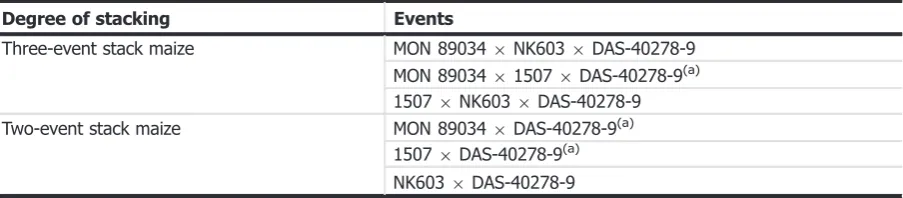
The strategy followed for the assessment of those subcombinations for which no specific data have been submitted and which have not been previously assessed by the GMO Panel (see Table 8), has been described by the GMO Panel.25 In this case, the risk assessment takes as its starting point the assessment of the single maize events, and uses the data generated for the four-event stack, as well as all the additional data available on subcombinations previously assessed by the GMO Panel (see Table 2).
3.4.1.
Subcombinations previously assessed
The GMO Panel has previously assessed the two-event maize stacks MON 8903491507, MON 89034 9NK603 and 15079NK603, and the three-event maize stack MON 89034 91507 9NK603 (see Table 2) and did not identify any safety concerns. No scientific information relevant to the risk assessment of these maize stacks became available since the validation of application EFSA-GMO-NL-2013-112. Consequently, the GMO Panel considers that its previous conclusions on these subcombinations remain valid.
3.4.2.
Subcombinations not previously assessed
Six out of the ten subcombinations included in the scope of this application have not been previously assessed by the GMO Panel, and no experimental data were provided for these maize stacks (see Table 8).
23
Additional information: 22/12/2017.
24 Additional information: 7/5/2018 and 27/7/2018. 25