Changing Ethics – Changing Perceptions
By
Zelda Doyle
BSc (Hons), MSc (Epidemiology), A.T.C.L.
Submitted to fulfil the requirements for the degree of
Doctorate of Philosophy
School of Medicine
University of Tasmania
i
Declaration of Originality
This thesis contains no material which has been accepted for a degree or diploma by the University or any other institution, except by way of background information and duly acknowledged in the thesis, and to the best of the my knowledge and belief no material previously published or written by another person except where due acknowledgement is made in the text of the thesis, nor does the thesis contain any material that infringes copyright.
Signed:... Date:...14th October 2011...
Authority of Access
This Thesis may be made available for loan and limited copying in accordance with the Copyright Act 1968
ii
Abstract
The concept of ethics is something that all researchers must come to terms with every time they consider a study involving humans or animals. Since the Nuremberg Trials, the changing needs of the research community with regards to research design and the recruitment of participants has seen requirements for participation in studies change dramatically with respect to ethical guidelines. The aim of this thesis is to investigate, through well-documented long-term public health cohort studies, how changing perceptions of ethics have impacted on research design and outcomes. The research has been undertaken particularly from an
epidemiological point of view as well as in terms of rates of participation.
In order to explore the evolution of ethical thinking and its potential effect on long-term longitudinal cohort studies with a public health bias, an iterative search process was
employed to determine eligible studies and to extract relevant papers for the literature review. Examination of response rates in the context of the recruitment processes and ethical
constructs in place at the time of recruitment was also undertaken. In addition to qualifying the nature of change in the ethical landscape, it is important to note that questions and changes resulting from ethics frameworks and committees may affect both the
implementation and interpretation of the proposed work. By establishing this framework of change, the thesis explores and examines the impact of what can be coined as the ―New Ethics Research Environment‖. A retrospective examination of landmark studies with respect to how they may be affected by contemporary guidelines was used to illustrate the influence of the New Ethics Research Environment on large scale cohort studies which impact on health research outcomes at both an international and local level.
iii
Dedication
This thesis is dedicated to the two people who wanted to see it finished but passed away before they could.
Associate Professor Christopher Newell
My original supervisor and mentor who helped me see the big picture from a small idea. It may not be exactly what we imagined but it‘s done.
Brian Leslie Doyle
iv
Acknowledgements
They say it takes a village to educate a child, so I wish to say a big thank you to my village. The Head People
Professor James Vickers, Professor Craig Zimitat and Dr. Kristen Hynes for their advice and direction, particularly Professor Vickers for coming in right at the end so that I had the right number of supervisors. Thanks to Dr. Anna Alomes for the bus analogy – it definitely helped. Associate Professor Christopher Newell who started this journey with me, but unfortunately did not see it end.
The Witch Doctors
Dr. Mike Welch for attempting to keep me healthy and sane over the last five years – essentially it worked. Arwen McCutcheson for reminding me that I had to breathe. The Council
Judy Seal, Dr. Roscoe Taylor and the Department of Health and Human Services for allowing me to use the Tasmanian iodine data. Judy Seal for providing hints, tips and advice with regards to data, references and iodine in general.
Ausvet Animal Health Services, specifically the late Dr. Chris Baldock and Dr. Angus Cameron, for taking a risk on an unknown entity and giving me the job which started this journey. The advice and encouragement of everyone at Ausvet over the years is really appreciated.
The members of the Medical Education Unit – your support, particularly after Christopher‘s death, will always be remembered. Thank you.
The Friends
v
Emil Kavic provided invaluable advice when my brain melted. His re-reading for grammar and spelling provided sanity and the ability for me to distance myself from the process again. Those friends who have put up with me for the last five years. Stephen Howard for knowing when I was about to lose it and removing me either mentally or physically from the situation and distracting me with good food, a movie or a drive in the countryside. Pete Smith, Allan Nicols and Karen Fahey for your tolerance of my moods, meltdowns and OMG moments. Annette and Michael Griffin for providing friendship, employment and that safe space to yell and scream. Eve De Silvia in the last couple of months talked me off more ledges than I care to remember, and it was really appreciated. Rob Lutman for realising that I needed ―normal‖ during 2008/2009 and including me on the mundane emails of his life. Not that your life could EVER be normal Rob.
The phorum gang particularly Mags, Erk, CamFi and Mikey. Your emails, conversations and observations on life, along with your friendship and encouragement have made this journey that little bit easier. Thanks to Erk especially for the emergency Spanish translations. Mags you are now the hold out to the grouping of PhDs – get to it. Badgers!
To everyone who has been there for me, either through emails, phone calls, random postcards, or just letting me know that I was needed. Thank you.
The Family
vi
Table of Contents
Declaration of Originality ... i
Authority of Access ... i
Abstract ... ii
Dedication ... iii
Acknowledgements ... iv
Table of Contents ... vi
Abbreviations ... xii
List of Tables ... xiv
List of Figures ... xv
Chapter One - Introduction ... 1
Chapter Two - Statement of Research ... 4
Evolution of Research ... 5
Chapter Three - Historical Background pre 1940 ... 7
Introduction – the Tree Concept ... 7
Limitations of the Tree Model ... 10
Continental School of Philosophy ... 10
Phenomenology ... 11
Hermeneutics ... 11
The Roots ... 12
Pre-Greek Perspectives ... 12
Greek Philosophy ... 13
Religious/Cultural perspectives ... 13
Indian Religious Perspectives ... 14
vii
Islamic and Middle Eastern Perspectives ... 15
Confucian/Buddhist Perspectives ... 16
Christian Perspective ... 17
Scientific Perspectives ... 20
The Trunk ... 22
Deontology ... 22
Virtue ethics ... 22
Teleological ethics ... 23
The Branches ... 23
Public Policy Ethics ... 24
Applied Ethics ... 24
Clinical Ethics ... 24
Overlapping Branches ... 25
Development of Ethical Codes in Medicine ... 25
Chapter Four - Methodology ... 31
Introduction ... 31
Definitions ... 31
Ethical Clearance ... 31
Longitudinal Study ... 31
Cohort ... 31
Ethical Issues ... 32
Non Interventional Study... 32
Well Documented ... 32
Defining the Scope of the Problem ... 32
Search strategy to Define Problem ... 32
Search Strategies for Historical and Background Information in Ethics and Epidemiology ... 33
Comparative Studies ... 37
Stage One ... 37
Inclusion / Exclusion Criteria for comparative studies ... 37
viii
Results ... 40
Iodine Surveys ... 41
Data Extraction of Response Rates ... 41
Combined Quantitative/Qualitative Analysis ... 42
Qualitative Analysis ... 43
Limitations ... 44
Chapter Five - International Ethical Code Development ... 46
The Line in the Sand ... 46
Post World War II ... 49
Nuremburg ... 49
Post Nuremburg ... 50
World Medical Association (WMA) ... 51
World Health Organisation (WHO) and Council for International Organisations of Medical Sciences (CIOMS) ... 52
New Ethics Research Environment ... 53
Chapter Six - Comparative Research Ethics of Countries from the Case Studies ... 55
Introduction ... 55
Duty of Care ... 57
Australia ... 58
Background to the Development of Ethics Committees ... 60
Processes in Australia ... 62
Current Procedures... 62
The Need for a National Ethics Application Form ... 66
United Kingdom ... 68
European Union Directives ... 73
Other Bodies in the United Kingdom ... 75
United States of America ... 76
Perceptions of Ethics Committees ... 78
ix
Benefits and Disadvantages ... 79
Tissue and Anatomy Acts ... 81
Chapter Seven - International Case Studies ... 83
Doll and Hill Smoking Studies ... 83
Background ... 83
Cohort Selection and Recruitment ... 85
Response Rates ... 85
Analysis and Discussion ... 88
Research Ethics Approvals ... 88
Recruitment ... 89
Consent ... 89
Response Rates ... 90
Conclusions ... 90
Framingham Heart Studies ... 91
Background ... 91
Cohort Selection and Recruitment ... 93
1st Generation Cohort ... 94
2nd Generation Cohort ... 94
3rd Generation Cohort ... 95
Omni Cohorts ... 96
Response Rates ... 96
1st Generation Cohort ... 96
2nd Generation Cohort ... 98
3rd Generation Cohort ... 99
Omni Cohorts ... 100
Analysis and Discussion ... 100
Research Ethics Approvals ... 100
Recruitment ... 101
Consent ... 102
Response Rates ... 103
x
Chapter Eight – Tasmanian Iodine Surveys ... 104
Introduction ... 104
Recommended Daily Intake – Past and Present ... 104
Terminology ... 107
Background ... 107
Historical ... 107
Thyroid Advisory Committee ... 109
Supplementation ... 109
Ethical Environment ... 113
Cohort Selection and Recruitment ... 113
Gibson Studies ... 114
Menzies Studies ... 115
Broadstreet Studies ... 116
Response Rates and Results ... 116
Gibson Studies ... 116
Menzies Studies ... 119
Broadstreet Studies ... 120
Analysis and Discussion ... 121
Research Ethics Approvals ... 121
Recruitment ... 121
Consent ... 122
Response Rates ... 123
Conclusions ... 124
Chapter Nine – Discussion, Conclusions ... 125
Introduction ... 125
Epidemiological perspectives ... 126
Australia... 126
United Kingdom ... 127
United States of America ... 128
xi
Recruitment ... 130
Consent ... 134
Response Rates and Follow-up ... 136
Other Influences ... 141
The Concept of Community ... 142
Conclusions ... 146
Have legal issues such as privacy impacted on epidemiological research with regards to recruitment and follow-up? ... 146
Has research governance has affected research ethics? ... 148
Do changing ethical environments in longitudinal cohort studies have long-term ethical considerations with regard to various factors within the study? ... 149
Has the New Ethics Research Environment had an Effect on Longitudinal Cohort Studies? ... 149
Further Work ... 152
References ... 153
Appendices ... 174
Appendix A: Sample of Data Extraction Document ... 175
Appendix B: Peer Reviewed Oral Conference Abstracts Resulting From This Work ... 176
Australian Bioethics Association Conference June 2006 ... 176
xii
Abbreviations
Abbreviation Full Name
AHEC Australian Health Ethics Committee
AMA American Medical Association
ARC Australian Research Committee
AVCC Australian Vice Chancellor Committee
CEC Clinical Ethics Committee
CHD Chronic Heart Disease
CIOMS Council for International Organisations of Medical Sciences COREC Central Office of Research Ethics Committees
CVD Cardio Vascular Disease
DHHS Department of Health and Human Services
EU European Union
HEC Healthcare Ethics Committee
HoMER Harmonisation of Medical Ethical Research
HREC Human Research Ethics Committee
ICHT-GGCP International Committee of Harmonisation Tripartite Guidelines of Good Clinical Practice
IEC Institutional Ethics Committees
xiii
Abbreviation Full Name
LREC Local Research Ethics Committee
MRC Medical Research Council
MREC Medical Research Ethics Committee
NEAF National Ethics Application Form
NERE New Ethics Research Environment
NHI National Heart Institute
NHMRC National Health and Medical Research Council
NHS National Health Service
NIH National Institute of Health NNHLI National Heart Lung Institute NRES National Research Ethics Service PRIVIREAL Privacy in Research Ethics and Law
REC Research Ethics Committee
UI Urinary Iodine
WHO World Health Organisation
xiv
List of Tables
Table 1: Initial Response Rate Based on Results as Published by Doll and Hill [167] ... 86 Table 2: Loss to Follow-up for Doll and Hill Studies – Male only. Modified from Doll and Peto [172] (first three columns), Doll, Peto et al [173, 174] (fourth and fifth columns). ... 87 Table 3: Initial Recruitment and Response to the Invitation to Participate in the Framingham Study [143, 149]... 97 Table 4: Loss to Follow-up Over the First Seven Biennial Examinations (approximately the first 14 years of the study) [155]. ... 97 Table 5: Make-up of the Offspring Cohort – Framingham Study – Higgins [151] and Kanel et al [157] ... 98 Table 6: Response Rates to Original Contact for Third Generation Cohort – based on
Splansky [163] ... 99 Table 7: Response Rates and Loss to Follow-up for Omni Cohorts. Based on Numbers supplied by Abel [320]... 100 Table 8: Iodine Nutrition Levels According to the WHO [327] ... 105 Table 9: Previous Goitre Palpation Categories as Defined by Perez et al [329] and as
xv
List of Figures
Figure 1: Evolution of Ethical Thinking Using a Tree Analogy as Described by Thomasma [52]. ... 9 Figure 2: Time line of Ethical Thinking, Influence and Events Up Until World War II and the Advent of the New Ethics Research Environment. Based on Baker and McCullough [89]. .. 21 Figure 3: Percentage of Papers by Year Matching Search Criteria of cohort, epidemiology, longitudinal and public health in Web of Knowledge Database... 33 Figure 4: Graph of Citations Using ethics and epidemiology as Key Words from Web of Knowledge (1960-2009) ... 34 Figure 5: Graph of Citations Using ethics, epidemiology and committee* with * as a Wild Card as Key Words from Web of Knowledge (1960 – 2009) ... 35 Figure 6: Output of Papers Utilising Framingham Data by Decade - Modified from
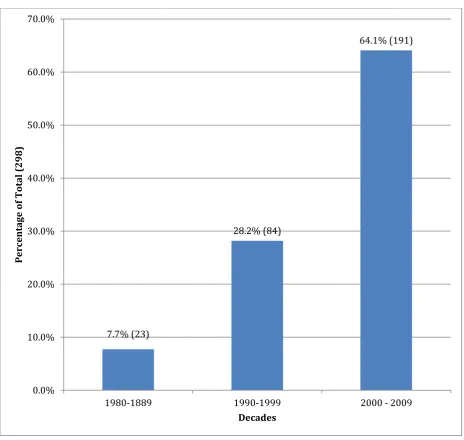
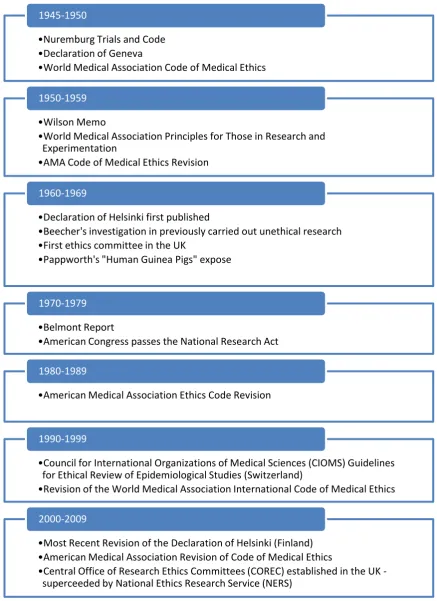
www.framinghamheartstudy.org [176] ... 40 Figure 7: The Development of Ethical Codes Relevant to Medical Practice and Related Health/Medical Experimentation Post World War II ... 48 Figure 8: Pre 2010 Process for Multi-Centre Review of Human Research Ethics Applications in Australia [246] ... 63 Figure 9: Post 2010 Process for Multi-Centre Review of Human Research Ethics
1
Chapter One - Introduction
Ethical constructs as a concept is something that researchers contemplate every time they consider a study requiring human participation or use of laboratory animals. Changing legislation, best practice and even changing perceptions within a community can all influence how a research study is designed, implemented and analysed. In smaller public health studies the number of participants can impact on the decisions made from analysing the results. Evolving and changing ethical constructs, as well the way in which we monitor and interact with the ethical process can be assumed to have changed research. This thesis aims to investigate the effect of changing ethical constructs on the methodology in long-term studies with a public health focus.
Certain aspects of the study of bioethics have a basis in regulatory law and scientific literature. These areas, especially of late in genetics, end of life and reproductive
technologies, have been legislated for and discussed due to the fact that they are areas which the general public has a perception that regulation and risk management is necessary [1-5]. While all experimentation has an ethical component that is generally enshrined in law, the areas mentioned above have specific legislation, which also needs to be considered in the context of ethical research. While university research may include the above areas, much of the research presented to university ethics committees can be considered under the relevant state or federal laws governing research. Epidemiological work , particularly that in public health, is not necessarily the type of research that raises concern within the scientific and lay community with regards to methodology and execution. However, questions and changes that result from ethics committee scrutiny may affect both the implementation and
2
system, while still also having university and research based ethics committees which are mandated by statutes and regulations [17, 18].
Many bodies and organisations supply research funding with the caveat that the research is approved by an ethics committee (i.e. National Health and Medical Research Council
(NHMRC), Australian Research Council (ARC), Medical Research Council (MRC), National Institute of Health (NIH)). There is no legal or statutory requirement for self-funded research to be presented and discussed. The United States of America has a more solid basis in law for the structure of its public health research as ethics committee are legislated and mandated for. This means that there is a legal requirement for research to be presented to an ethics committee before commencement. In Australia and the United Kingdom, ethics committees are an accepted, and in most cases an integral part of the academic research process, but there are no legal requirements for research to be presented to a committee for discussion.
Large scale background monitoring via reporting of incidents by practitioners, used successfully in some aspects of public health (such as communicable diseases and disease outbreaks), is not necessarily feasible or practical with monitoring for other areas such as nutrition or general health [19] . It also fails to consider that longitudinal perspective can help in seeing the effects of public health intervention. From a long-term public health perspective, and particularly an epidemiological view of public health, the present guidelines in both Australia and the United Kingdom, while adequate, could be improved to take into account current advances in both law and techniques. Surveys of health, while not always following the longitudinal cohort model, should be considered as an active process; methods should not vary but be repeatable over time to allow for comparative analysis to be
undertaken.
Previous studies have highlighted that there can be a bias towards certain types of groups in large scale studies due to previously perceived discrimination by minority groups. This is especially obvious in the United States of America, where long-term studies from many years ago (i.e. the Tuskegee Syphilis Study) still impact the participation rates of African
Americans in many studies [20-22]. A similar sentiment could potentially be portrayed within the Australian Aboriginal community with regards to participation [23].
3
always possible to know the outcome of the research; despite this, having prior knowledge of a hypothesised outcome is seen as imperative to obtaining free and informed consent. Both of these concepts can be applied to epidemiological studies, as it is assumed that the outcome of the studies would be hypothesised before being presented to ethics committee for
comment.
As is highlighted by Shuster [25], it is the combination of 3 different pieces of code which, when combined, gives us the dynamic ethical environment we are dealing with currently. These codes are the Nuremberg Code, the United Nations International Covenant on Civil and Political Rights and the International Ethical Guidelines for Biomedical Research Involving Human Subjects. These three codes are the ones which ingrain informed consent into the basis of many laws related to research. Part of the purpose of this thesis is to explore how the interpretation of these three codes have affected the way in which epidemiological studies have been designed and carried out over time. Furthermore, this thesis will show how, in certain types of studies, changes in the ethical environment are reflected in methodologies and perspectives.
Specifically, Chapter Three provides a background to current ethical constructs by examining in brief various ethical influences throughout history and thus the development of a ―line in the sand‖ with regards to ethical thinking and the new ethical research environment. This foundation is built upon in Chapter five, which examines the development of ethical codes and constructs from the ethical influences seen in Chapter three.
Chapter Four elaborates on the methodologies utilised to undertake these studies. Through a varying framework of literature searching and previous knowledge, data were obtained and analysed for the case studies.
Chapter Six provides a background to the ethical environments in which the case studies examined in Chapters six and seven have evolved. It assesses the historical and legislative context of ethics committees.
4
Chapter Two - Statement of Research
Is there an association or causal link between changes in the constructs of ethical research at an international and national level since the 1940‘s? This question is examined in the context of long-term longitudinal studies with particular reference to the Tasmanian Iodine Surveys as compared with two international cohort studies.
The primary concern of this thesis is to explore how the ethics approval processes undertaken by Research Ethics Committees (REC‘s) affect long-term research. The other commonly encountered committee is the clinical ethics committee (CEC) which Leeber defines as a predominately ad-hoc committee that evaluates treatment regimes in a clinical setting [26]. Other authors define CEC‘s differently, depending on their area of origin. While Leeber presents a European view of the CEC, Slowther, Johnson et al [27] defines a CEC as the ―provision of support and advice to health professionals and patients on ethical issues arising from clinical practice or patient care‖. McNeill found that in Australia CEC‘s had little influence in providing ethical advice to clinicians and primarily acted as a body for policy formation and to a lesser extent education [28]. In the United States of America the CEC is known as a Healthcare Ethics Committee (HEC). Its function is similar to both the United Kingdom and Australian equivalents with both policy making and ongoing clinical decision making being part of their remit [29].
5
Evolution of Research
The Tasmanian Iodine Surveys (comprising of three separate studies, including the
Tasmanian Iodine Monitoring Programme) were chosen as the initial series of studies. The interest in these studies came about due to the personal involvement of the author in the most recent series of surveys. While working on the iodine studies, questions regarding potential influences that had changed the methodology were raised. This highlighted the impact which ethics was having on the ability to use different methods for recruitment. As this was a state-wide survey, with results used to determine the effectiveness of a voluntary measure of iodine nutrition, the effects of ethical constructs on the iodine program historically and currently became of interest. It was hypothesised that changing methodologies could potentially be ethically influenced with regards to implementation and recruitment.
In this context, the author has taken ethics to mean the consideration of what is legitimate and useful research in a greater scientific context.
This can be broken down into three smaller questions: How has ethics changed research since the 1940‘s?
What impact have ethics committees had on research generally?
Does ethical conduct of epidemiological research have a different set of considerations compared to areas such as clinical and biomedical research?
In this context, epidemiological research is considered to be both potentially qualitative and quantitative. While quantitative analysis is the primary indicator in the studies under question, qualitative analysis also has an important role in epidemiological research. From these three statements, the following hypothesis/questions were generated.
Have legal issues such as privacy impacted epidemiological research with regards to recruitment and follow up?
Has research governance affected research ethics?
Do changing ethical environments in longitudinal cohort studies have long-term ethical considerations with regard to various factors within the study?
The environment that developed from these hypotheses has been coined by the author as ―the New Ethics Research Environment‖ (NERE). This concept will be introduced in the
6
evolution of this environment runs parallel with the evolution in ethical thinking and constructs. While it may be contested that the NERE is more an evolving regulatory
environment based on underlying principles such as dignity and respect, it is the articulation of those principles, and how they are interpreted in the current context that defines the
environment. The NERE can be considered to be a series of static moments, and the changes between those moments with their subsequent effect on research providing the basis for the development of the NERE environment.
7
Chapter Three - Historical Background
pre 1940
The purpose of this chapter is to orientate the thesis to the historical background and
development of ethical codes from several different perspectives. It intends to provide a brief overview of the development of ethical thinking and provide an introduction to the building blocks which will be utilised later on in this document. Central to these introductory
chapters is a consideration of the movement from an individualist moral concept with regards to ethics to one that is legislated and corporative. The evolution of this movement is traced from differing perspectives with regards to religious and cultural views to the more legislated construct with which most researchers are today familiar. This chapter aims to show how ethics evolved up until the ―line the sand‖ and how that ―line in the sand‖ shaped the New Ethics Research Environment (NERE). While the ―line in the sand‖ is a series of events that prompted outcry and reflection within the scientific community, the historical basis for those events could be seen to justify them. This paradigm shift is shown in the next chapter, with the advent of the NERE concept.
Introduction – the Tree Concept
To fully understand the current ethical environment with regards to research and public health, it is necessary to explore the history of ethics and philosophy as they relate to medicine and the patient. The philosophical basis of medical ethics can be approached in many different ways. For the purposes of this thesis the approach of Thomasma [52] has been used as the divisions he proposed interlink with the issues under consideration. This
approach will be used within the analytical context of ethical constraints as undertaken by examination of the case studies.
8
9 Figure 1.
From a historical viewpoint, the philosopher Hippocrates provided what most people consider to be the original set of guidance for physicians with the Hippocratic Oath. However there is evidence of earlier moral codes for physicians. These codes, along with the Hippocratic Oath underpins what is considered to be best practise for physicians today [53-71]. While these codes are primarily pertinent to the physician or the medical historian, having knowledge of the concept of medical codes, their history and how they affect and potentially encompass research ethics will highlight how the Thomasma tree concept differentiates the different branches of ethics. Medicine as a treatment for disease and research into a disease were originally interchangeable, but over time they have developed independently into two very different concepts.
The tree concept also allows us to see how the practice of ethics through time has been affected by what has been defined as research. The movement and interpretation of ethics can be seen to evolve from a philosophical basis to one that is shaped and interpreted by the actions of those in government, and on the front line of implementation of ethical conduct. From this tree concept, a time line will be developed to allow ethical changes in research to be potentially linked to changes in methodologies.
Nicomachean ethics as articulated by Aristotle outline a virtue based theory. This theory has influenced the principles encountered in ethics of veracity, benefice, non- maleficence, justice and autonomy [72]. These principles can be seen to underlie many of the medical codes, which both preceded and followed the Hippocratic Oath. Veracity is considered to be the ability of the practitioner to tell the truth to the patient; benefice is the ability of the
10
11
Limitations of the Tree Model
As this model is a generalised model developed by one author for a specific purpose there are bound to be limits to what is presented. This model was specifically designed by Thomasma to complement an examination of the moral foundations of the patient/physician relationship [52]. Due to this narrow focus the tree is by no means a generalised account of the influences on medical ethics and their development. The tree is also limited by Thomasma‘s
interpretation of what constitutes public policy, applied and clinical ethics. Particularly in the applied ethics branch the definition of applied ethics has been limited to the application of ethical principles to specific medical problems faced by practitioners [52]. Although a wider interpretation would be more advantageous, as the interpretations of both the public policy and clinical ethics branches are generalised enough to allow analysis without modification, the applied ethics definition will not be modified.
By its inherent nature, the model excludes other schools of philosophy and thought such as phenomenology, hermeneutics and the continental school. While these schools of thought are all valid and can potentially add to the understanding of medical ethics, this model was chosen due to its concentration on public policy, clinical and applied ethics which the author considered to be the three main areas of interest within the thesis. However a brief discussion of how these other school of thought could influence the assumptions of the thesis is
undertaken to explore the potential limitations of the model used.
Continental School of Philosophy
The continental school of philosophy as it is known today developed during the late 19th and early 20th centuries, but has been around since the 17th Century [73]. It developed as an alternative to the analytical movement of the time. The continental school can be considered to contain such philosophical movements as existentialism, phenomenology, hermeneutics and French feminism [73]. Until the early 1970‘s, it appeared that Phenomenology and Continental School were used interchangeably in the academic world [74]. There is debate as to what the Continental School actually stands for, but it is generally accepted to be a non- analytical school of thought, supported by those philosophers who were not based in the United Kingdom [74]. As Critchley notes:
12
Continental Europe that would not recognize the legitimacy of such an appellation -a little like asking for a Continental breakfast in Paris.‖[74]
This school of philosophy would not have added to the analysis of the case studies examined here due to it not having an analytical basis. The purpose of this thesis was to analyse the effect that changing ethical constructs have had on public health, and the continental school does not provide a solid basis for comparative studies. Two major areas of the continental school do, however, need to be considered separately.
Phenomenology
Phenomenology can be considered both a movement and a discipline within philosophy. It can broadly be defined as the study of structures of consciousness and generally approached from a subjective or first person point of view [75]. While this could potentially add a differing perspective to the analysis, it does not fit into the tree model, which takes an overview approach as opposed to a first person point of view. If time had allowed first person interviews both via telephone or email would have provided a first person point of view and thus allowed analysis using a phenomenological framework. This framework may have highlighted any unusual phenomena which may have influenced either the decision making process or the changing ethical constructs in the case studies.
Hermeneutics
This branch of philosophy evolved from a systematic, critical scientific method used
specifically for the interpretation of theological and philosophical exegesis [76]. Currently it is taken to be the analysis of how humans understand experience [76]. While the study of human experience from a participant point of view would add value to the analysis of this thesis, the ability to obtain the remembrances of those experiences of participation would prove difficult. Thus, though an analysis of the behaviour of why people participate in surveys would be advantageous, it does not fit into the tree analogy/model neatly. It could be considered as part of the applied ethical branch in the tree model in the alternatives to
13
The Roots
Pre-Greek Perspectives
The documentary evidence of moral codes for those that practice medicine extends back to the 3rd Dynasty in Egypt (approximately 2700 BCE) [58]. The Smith papyrus discusses cases based on body parts and follows the format of title, examination, diagnosis, treatment and glosses – which are a type of dictionary. However it is the format of both the diagnosis and treatment options, which show the major concepts that today would translate into
Aristotle‘s concepts of veracity and beneficence. The diagnosis and treatment option section is written in the form of a series of caveats which the physician is told to add after the
diagnosis depending on their assessment of the patient. These are:
―1. An ailment which I will treat, 2. An ailment with which I will contend, 3. An aliment not to be treated‖. These three concepts are limited by the physician giving a time period for treatment as either: ―1. Until he recovers, 2. Until the period of his injury passes by, 3. Until thou knowest that he has reached a decisive point‖ [58].
The combination of these two sets of caveats suggests that the concept of veracity and benefice are being considered within the diagnostic concept. These two caveats are still very much evidenced in contemporary medical practice.
14
individual can follow [77]. This juxtaposition between a code of laws and a moral code is a theme that will be explored throughout this chapter.
Greek Philosophy
The Hippocratic Oath that medical students generally recite when being admitted to the fraternity of doctors is the form of medical ethics with which the general community is familiar. The Oath outlines what is perceived to be acceptable medical behaviour as a series of statements or codes [78].
The Hippocratic Oath is perceived and understood to be a set of moral codes, which guide the physician in how they act. This is essentially the first oath that is targeted at the physician and outlines both what a physician ought to treat and his attitude towards treatment of patients. It introduces the concept of confidentiality and of a moral code of behaviour
towards patients as seen in ―Into whatever houses I enter, I will go into them for the benefit of the sick, and will abstain from every voluntary act of mischief and corruption‖ [79].
Hippocrates was also the one credited with the saying ―First, Do no Harm‖ in his treatise on epidemics [55].
As mentioned previously, this Greek perspective is a concept that is apparent in various religious and non religious perspectives through time as illustrated later on in this chapter. These alternative perspectives would appear to have developed independently from the Greeks, yet the concepts at a base level are very similar.
Religious/Cultural perspectives
15
religious and cultural ethical norms will not be considered in this thesis. Where this influence of religion on culture appears to occur, a combined religious/cultural summary is presented. Indian Religious Perspectives
One of the largest influences of Hindu tradition, and one which carries through all medical ethics whether based in religion or not, is the extortion to ―First, do no harm.‖ In this instance, it is expressed as the concept as ahimsa – ―thou shall not do no harm to any living being‖ [71, 80].
While Hinduism is the primary religion in India, the Ayurvedic code has taken its influence from both the Hindu and the Buddhist perspectives with regards to ethical conduct in
medicine. The pervading sense of morals can be seen in the practice of Ayurvedic medicine. The concept of ―moral behaviour‖ is seen in the Oath of Initiation (Caraka Samhita). This document is from first century CE. It instructs a physician to do all he can to save a life. ―No benefactor, moral or material, compares to the physician who by severing the noose of death in the form of fierce disease, brings back to life those being ragged towards death‘s abode, because there is no other gift greater than the gift of life.‖[80]
This extract from a more extensive Ayurvedic code shows that religious influences have affected medicine in India [71]. This tradition outlines the expectations of both students and teachers, reminding them that their ―primary goal was not fortune for self and family but care of the sick‖. The concept of confidentiality is also expressed in the two ideas of ―You should never give out to others the practices of the patient‘s home, and even if you be certain of it, you should not speak of the diminution of the period of the patients life when such speaking may shock the patient of anybody else‖ [71, 80]. This is similar to the concept today of patient confidentiality. The Caraka Samhita also encourages discussion between colleagues – though it does not say if cases should either be discussed for insight, or if it is more of a discourse to exchange information on diseases.
Jewish Perspectives
16
undertake continuous life-long learning in the statement: ―Never allow the thought to arise in me that I have attained to sufficient knowledge, but vouchsafe to me the strength, the leisure and the ambition ever to extend my knowledge‖ [54]. While this is presented as a prayer, it could be supposed that this prayer is also an attestation of beliefs and morals, by which this person lived. These beliefs and morals influence their behaviour, and thus how they behave as a physician towards their patients. While this prayer has been attributed to Moses
Maimonides, it is more likely to have been written by Marcus Herz in the late 1700‘s [81]. The Hebrew oath of Asaph (3rd century CE) may be seen as a statement that once again harks back to the moral concept of benefice and non-maleficence. It does this through the
statement ―ye shall not harden your hearts against the poor and needy, but heal them‖ [57]. This suggests that everyone is entitled to equality of care from the physician, regardless of standing in life.
Within the historical development of the Jewish perspective, the greatest influence has most probably been Moses Maimonides, a rabbi, physician and philosopher. Maimonides was responsible for the codification of Jewish law in the Mishmeh Torah [82]. He also applied Jewish rabbinical thinking to Aristotles concepts of nature [81]. Maimonides asserted that the development of medicine to heal was a matter of obligation and thus medical care could be pursued without violating ones religious obligations [81].
Islamic and Middle Eastern Perspectives
17
The Hippocratic Oath has been inferred to have influenced the Middle Eastern perspectives on medical ethics [83]. Weisser [83] noted that it is the exhortations with regards to doctor patient interactions which have endured as opposed that of the teacher student relationship. Weisser [83] also noted that ethical issues in early Islam are highly influenced by
deontological thinking. That is, the issues are judged as by what is a moral action with regard to a situation. This thinking links forward to the branches of the tree concept which
Thomasma has proposed [52].
Confucian/Buddhist Perspectives
These concepts of ethical conduct and moral influences are also seen in the Ming Dynasty (1368-1644) in China, where physicians were expected to keep to Confucian ideals of the highest standards [67]. A Chinese contemporary of Hippocrates, Bian Que, is considered to be the first to have formulated guidelines for medical practitioners in China – exhorting them to trust in medicine rather than witchcraft [84]. These standards are very similar to those espoused by Hippocrates in that they call for an appreciation of the value of life, to have sympathy with the patients, always strive to improve the skills and oppose others who work carelessly, equality of patients with regard to treatment, standing and ability as well as the reminder to ―respect other peoples‘ achievements and to abide by academic ethics.‖ Fan [67] noted that while Confucian philosophy and perspectives are still a part of everyday life for many in Asian countries, the concept of utilizing the physicians‘ virtues such as self cultivation, dedication and family care are not as prominent today. The trend towards a more business model highlighted the increase in patient autonomy and the decrease in the respect of the physician [67].
18 Christian Perspective
The Christian perspective has similarities to the Hebrew/Jewish perspectives in regards to the adoption of the concepts of Aristotle as a basis for ethical thinking. However, there are differences. Wear [86] noted that Christianity provides medicine with a differing set of ethical values. It is the first hint at doing something for the greater good as opposed to the individualistic care models, which were previously seen as the societal norm in the United Kingdom. As the care of the sick was one of the six works of charity of the early Christian church, the need to do right as a group as well as at an individual level was highlighted [86]. The Christian perspective can be divided into three similar, but distinct camps – the
Orthodox, the Roman Catholic and the Protestant perspectives. While all three of these perspectives have their basis in early Christian values, the deviations from early values are seen as the different types of Christianity evolve.
The early Christian perspective with regards to medical ethics can be seen in the
interpretation of the Golden rule: ―Do unto others as you would have them do to you‖ (Luke 6:31). The concept of agape (the love of God or Christ for mankind) is the defining concept in early Christian medical ethics [64]. This concept is carried through later Christian
19
―Never administer medicines about whose effects they are in doubt of or test substances on a patient if they expose the patient to grave death or injury,
Never seek to increase their ―reasonable‖ fee by aggravating or prolonging illnesses,
Be honest with the patient and advise if a priest is necessary,
Refrain from advising sinful means of recovery of health.‖
From Vatican I (1868-1870) to Vatican II (1962-1965), the major changes were articulated by Pope Pius XII to the World Medical Association in 1954. Using the concept that the basic principles of medical ethics are part of the divine law and that medical ethics should have three fundamental principles, he proposed that:
―1. - The medical morality should be based on the being and nature
This is because it must respond to the essence of human nature and its laws and relations immanent. All moral rules, including those of medicine, necessarily arise from the corresponding ontological principles. Hence the maxim: "You will be what you are." That is why a purely medical moral positivist denies itself.
2. - The medical morality must be in accordance with reason, purpose, and guided by values
Medical morality does not live on things, but in men, in people, including physicians, in their view, their personality, their design and realization of values. The morale in the medical care is the issues of personal conscience: "What is their justification?" (I.e. what purpose do they propose to use?). "What value it expresses itself in their personal relationships in their social structure?‖ Put another way: "What is it?" "Why?" For what purpose? What is this worth? ". Moral men cannot be superficial, and if so, cannot remain such.
3. - The medical morality must be rooted in the transcendent
20
contradicts the absolute and inalienable character of their essential requirements.‖ [87]
Walters [88] mentioned that Catholic medical ethics are not primarily a professional code but a more general ethical construct whose norms are relevant to the intentions and actions of both the physicians and patients. He also noted that most ethical philosophers in the 18th and 19th centuries were conditioned to think in terms of either Christian or Jewish ethics. Since then, there has been refinement and debate within the Catholic Church as to their standing on many issues on which medical science is today based. However, these debates have not changed the basis of the Catholic perspective on the biomedical ethical code, so thus will not be considered further.
The Protestant perspective on medical ethics does not come about until after Vatican I, which was convened to reflect on the Reformation. The Protestant influence had a large impact on scientific revolution within Europe and particularly within England. Within this context it was expected that the ideas of professionalism would be influenced by moral and religious values [68]. Ferngren [68] noted that as the medical profession became more secularized and less intertwined with religious constructs the influence of people such as ministers of religion – who previously would have also been doctors and healers – has diminished. This is due in part to the requirements of more rigorous qualification procedures but also to the separation of church and state, which took place around this time.
Pre -19th century Protestant literature does not contain any discussion on medical ethics [68]. No real attempt to deal systematically with medical ethics from the Protestant perspective is apparent until the late 1940‘s. At this time, Fletcher gave a series of lectures at Harvard based on the then radical concept that the patient had a right to choose what happened to them; this opposed the use of a distinct religious paradigm through which the physician could guide the thinking of the patient into choosing [68]. Unlike Catholicism, the varying
interpretations of Protestantism mean that there are many different views on any given ethical dilemma. However, all Christian religions stress it is the right of the patient to make a
21
Scientific Perspectives
The evolution of scientific thinking, especially with regards to medical advances, has naturally influenced the way medical ethics is perceived. As science has advanced, the separation of scientific thinking from religious influence has allowed for the development of ethical codes without the influence of religion. In Christian civilisations, the church
originally controlled much of the learning and dissemination of learning within a community. The Middle Ages were highly influenced by the church, but as the age of enlightenment developed (from the 1650‘s onwards) the scientific endeavours of medical research expanded from the universities and monasteries into a wider secular-based world. As the ability to learn evolved away from the church, it became more accessible to the higher classes. While many different influences were seen, breaking away from the Christian perspective and its restraints could be seen as one of the biggest single events in the development of
contemporary ethics. This breaking away is reflected in the tree concept as the growth from the roots of to the trunk, which supports the varying ethical principles being discussed. With the advent of a more secular influence to learning, and the accessibility of learning to a larger cohort, opinions with regards to what was and was not ethical became increasingly varied. These opinions helped form the trunk of the tree with regards to philosophical concepts, which, although expressed prior to the removal of the church‘s influence, became more pronounced as the medical field became increasingly secularised. The scientific perspective is still an evolving construct – as is seen later in this chapter, with discussion on early medical ethics codes.
22
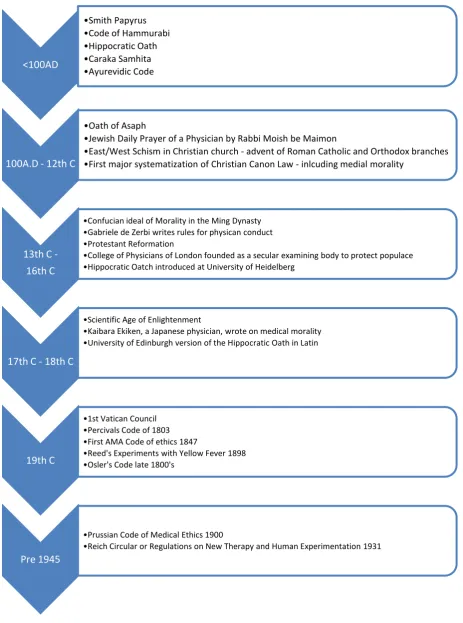
Figure 2: Time line of Ethical Thinking, Influence and Events Up Until World War II and the Advent of the New Ethics Research Environment. Based on Baker and McCullough [89].
<100AD
•Smith Papyrus •Code of Hammurabi •Hippocratic Oath •Caraka Samhita •Ayurevidic Code
100A.D - 12th C
•Oath of Asaph
•Jewish Daily Prayer of a Physician by Rabbi Moish be Maimon
•East/West Schism in Christian church - advent of Roman Catholic and Orthodox branches •First major systematization of Christian Canon Law - inlcuding medial morality
13th C - 16th C
•Confucian ideal of Morality in the Ming Dynasty •Gabriele de Zerbi writes rules for physican conduct •Protestant Reformation
•College of Physicians of London founded as a secular examining body to protect populace •Hippocratic Oatch introduced at University of Heidelberg
17th C - 18th C
•Scientific Age of Enlightenment
•Kaibara Ekiken, a Japanese physician, wrote on medical morality •University of Edinburgh version of the Hippocratic Oath in Latin
19th C
•1st Vatican Council •Percivals Code of 1803 •First AMA Code of ethics 1847
•Reed's Experiments with Yellow Fever 1898 •Osler's Code late 1800's
Pre 1945
•Prussian Code of Medical Ethics 1900
23
The Trunk
The three philosophical concepts which Thomasma [52] proposes as the trunk of the ethical tree are all considered part of the Normative ethical construct. This construct highlights how actions can be integrated into a moral framework and how the standards of right and wrong applied to any given action. All three of these normative constructs have influenced in some way the development of the three main branches of ethics that are being considered in this thesis. While only one of these concepts encompasses the virtues as conceived by Aristotle, all three present differing constructs and frameworks from which the branches of the ethics tree grow.
Deontology
It has been said that much of the Judeo-Christian tradition is based on deontological principles [52]. Deontological ethics is a form of ethics which can be seen as duty based [90]. In its simplest form, this refers to the checking of an action again a set of pre-ordained obligations and duties to see if the action is right or wrong. From this definition,
deontological ethics can be broken down into rights-based ethics, rules deontology and situation ethics [90]. While all of these ethical areas are valid, the way in which they are applied can influence the decision making process.
Rights-based ethics applies the principles of autonomy, beneficence, non-maleficence, justice and veracity to both the doctor and the patient. It is the doctors‘ obligation to adhere to these principles, while it is the patients right to expect and use them. Rule deontology is based on correct reasoning, not feelings, comparing a moral act to a set of rules or principles to determine if it is right or wrong as well as ethical or unethical. Situational ethics was coined by Fletcher in the 1960‘s, and suggests that while there are absolute moral laws, overall there is only love [90]. As can be seen from the discussion of the roots of the Thomasma concept, the concept of moral action is something that is found in many different religious
perspectives. How that moral action is interpreted, however, is something which becomes a very personal choice, based on many different factors [52]. This type of ethics is considered to be one of the more common types of thinking when considering medical ethics [91]. Virtue ethics
24
ethics, the virtue ethics highlights and emphasizes the character of what is known as a moral agent, as opposed to the rules and consequences which other types of ethics are bound by. Johnson and Johnson [90] note that rather than making binding rules and duties, virtue ethicists suggest we should concentrate on changing peoples‘ attitudes and character which will then inspire them to do the right thing. Through its consideration as part of the
normative grouping of philosophical constructs, virtue ethics places an emphasis on ―being‖ rather than ―doing‖. Virtue ethics still require a framework, and without that framework, virtue ethics, like other ethical principles becomes subjective [90].
Teleological ethics
Teleological ethics are also known as consequentialism. Consequentialists are known for rejecting the idea that universal moral laws can be distilled to a single decision [90]. They argue that the only way to discover if something is right or wrong is through examination of the consequences. However, the problem with this way of thinking is that it cannot anticipate long term results [90]. Within the school of consequentialism, the utilitarians show the purest form. They state that a moral act is one that allows the greatest balance of good over evil for the greatest number of people [90]. Teleological ethics differs from both virtue and deontological ethics in that it is based on potential consequences rather than the either the moral action of deontology or the moral agency of virtue ethics [50].
While all three of these constructs can be considered separately, it is the combination of moral action, moral agent and consideration of the consequences of the action by the agent that provides the basis for the trunk of the ethical tree.
The Branches
There are three branches of the tree concept which Thomasma [52] considers to be the main branches of medical ethics. All three of these branches take some of their basis from each of the normative constructs outlined above – however, these constructs only provide a basis for the thinking and development of the types of ethics being considered. Influence from outside sources such as advocacy groups, government, industry etc. also affect how the ethical
25
Of these three branches, applied ethics and public policy ethics can be considered to be the major areas with which this thesis is concerned. However, clinical ethics can be considered if we assume that they involve discussion of the implication of an intervention.
Public Policy Ethics
This ethical concept in the tree analogy is the most generalized. It allows for addressing issues that can be considered to have broader society based impact as opposed to issues at an individual level [52]. Public policy ethics refers to the stream of ethics that those such as Chadwick and Snow were using unconsciously in their decisions about Poor houses and cholera respectively. Public policy ethics can also be perceived to be the ethics most likely to be utilised with regards to government policy.
Applied Ethics
Applied ethics in this context refers to the application of ethical principles to specific medical problems faced by practitioners [52]. Applied ethics is the action branch of the tree. It is this branch that allows a researcher/practitioner to exercise their own decisions and judgment based on information from the other two branches. The use of applied ethics is apparent in the development of many of the codes of practice, either personal or those which have
developed through time; some of these codes have been championed by individuals, others by groups – and some even by countries.
Clinical Ethics
This genre of research concerns the focusing of the previous two branches into bedside care. While it is a branch of ethics of itself, clinical ethics also draws on the experiences of public policy and applied ethics in the decision making processes [52]. It is this branch of ethics which is most used in making decisions about the treatment of an individual as opposed to a larger group. Clinical ethics can be considered to be the closest to research ethics with regards to what is involved for the practitioner and the participant. While clinical ethics primarily examines the patient/practitioner relationship, in many cases the patient is
26
Overlapping Branches
While the branches within the tree concept are presented as separate entities, like any living tree, they will overlap and support each other. The application of public policy and clinical ethics is an applied action, and thus can be influenced by applied ethics. The overlapping of these three branches is particularly evident when recruitment into studies is considered. Dependent on the study in question, you may be recruiting a patient to become a participant – in which case both clinical and applied ethical branches may be relevant. Recruitment for a study such as Framingham would include all three branches in their consideration of ethical practice.
It can be considered that a patient can be a participant, but a participant does not necessarily have to be a patient. This is particularly true in public health studies, such as the ones that will be investigated here; patients currently being treated or investigated for the disease in question were not recruited. The patient is a more vulnerable participant and, as Woodward [95] points out, the line between patient management and patient autonomy is becoming more blurred due to increasing influences on the patient-physician relationship. The development of these ethical branches and their potential influences on the patient as a participant can be reflected in the development of the ethical constructs of medicine over time.
Development of Ethical Codes in Medicine
Differing ethical constructs have developed over time in medical fields; while there may have been various influences on the development of these, as discussed above, certain private figures have had a substantial influence on the ethical development of codes.
For example, the first mainstream code of importance from an English-speaking nation was the Percival code of 1803. Percival was a doctor who first published a pamphlet on
27
―New methods of chirurgical [sic] treatment should be devised but, in the accomplishment of the salutary purpose, the gentlemen of the faculty should be scrupulously and conscientiously governed by sound reason, just analogy or well-authenticated facts. And no such trials should be instituted without a previous consultation of the physicians or surgeons according to the nature of the cause.‖ [97]
There is, however, no notion of asking the patient if they wanted the experimental treatment carried out on them, something that Beaumont highlights in the United States of America in 1833. William Beaumont was an army physician who carried out experiments over a number of years on Alexis St. Martin, who possessed a gastric fistula [98]. Roland Numbers [99] however propose that Beaumont‘s code of ethics misinterprets another researcher‘s
hypothetical application of principles. He backs this assertion with reference to Beaumont‘s research notebooks and correspondence [99]. No other authors appear to share Numbers‘ reservations [99]. Even if Beaumont‘s code was not authored by him, the sentiments and interpretation are very similar to Percival. Beaumont acknowledged that experimental treatments are important for patients who are not responding to the conventional treatment. Beaumont justifies this in what is purported to be his code by:
―Some experimental studies in man are justifiable when the information cannot otherwise be obtained...
The investigator must be conscientious and responsible for a well considered, methodological approach is required so that as much information as possible will be obtained whenever a human subject is used. No random studies are to be made.
The voluntary consent of the subject is necessary and the experiment is to be discontinued when it causes distress to the subject, or abandoned when the subject becomes dissatisfied.‖ (emphasis mine) [97]. The first sentence in this quote is comparative to sentiments expressed in Percival‘s code earlier.
28
monitor. Finally, it could suggest that the randomisation of someone into a study was not to be done, and that all participants should be carefully selected.
It was not until 1898 that there is documented evidence of informed consent. Informed consent is taken to be the obtaining of permission from experimental subjects before the study was carried out. This informed consent was taken by Dr. Walter Reed on his
experiments with yellow fever transmission using US soldiers [100]. Each participant in the yellow fever trial signed a disclaimer acknowledging that they were aware of what they were participating in, and the risks associated with it. While prior to this participants would have generally had a choice as to if they participated or not, Reed, by obtaining written consent, documents the participants knowledge and willingness to participate in the research process. This act actively involves the participant in the research process and shows an evolution from just participating without acknowledging the risks that participation may entail, to informed participation.
The Prussian code itself was developed in response to the fact a Berlin based researcher named Albert Neiser had inoculated unknowing minors with syphilis serum to see what would happen. Grodin [97] hypothesised that this may actually be the first reported
regulatory action relating specifically to the field of medical experimentation. The Prussian code could be considered to be the first instance of an action/reaction code - one that is put into place as a reaction to an event or action as opposed to a progressive code, and one that spurs change by what it stands for.
The British Canadian Sir William Osler is a potential link between Reeds‘ consent forms and the advent of the Prussian code of medical ethics. This latter code is the first time we see a recommendation for excluding certain parties such as minors and those deemed not
competent, while arguing against medical intervention without clear consent given from properly supplied information [101]. Osler, while working with Reed in the United States Army, was also a member of the Berlin Institute. He was aware of the Neiser controversy and the reaction to it. Anderson [101] hypothesises that either Osler or his contemporary Welsch conveyed the fallout of the incident to Reed, which prompted his use of informed consent.
29
regulate experimentation on humans [102]. The changes between this circular and the occurrences which prompted the Nuremburg code to be written are striking. The circular acknowledges the fact that there is a need for human subjects for medical experimentation, but it sets down quite strict conditions as to how this may be carried out, concentrating primarily on the need for consent and the overall well being of the test subject [97]. These guidelines were apparently in force until 1945, but the disjunction between what is written and what was actually carried out is a stark example of how guidelines may not necessarily be the way forward. For example, legally enforceable legislation is the only sure way of being able to prosecute those who do not follow the law. Many of the doctors within the German system joined the Third Reich with the belief that they would be contributing towards a better Germany by being part of the system. By becoming part of the system they tacitly agreed to follow the recommendations of the Reich system as opposed to judging for themselves what was best for the patient [103]. This failure to follow ethical principles in the most fundamental sense (i.e. a loss of the belief of the tenets of Nicomachean ethical
principles) is one of the historical events – the ―line in the sand‖ – that led to the development of international codes of conduct developed after the war.
There is debate in the literature as to the legal standing of this circular. The International Office of Public Hygiene does not cite the 1931 regulations as part of their ongoing
monitoring of International and National Regulations on Health, nor is it mentioned in either the 1931 or 1932 bulletins from that office [102]. This would suggest that the greater
scientific community regarded the circular as a set of guidelines that were desirable to follow as opposed to legally binding regulations. Sass [104] however suggests that the guidelines were legally binding up until 1945 and the fall of the Reich. Whether the circular was mis-interpreted or ignored to further scientific research is something that will never be fully clear. The experiments with which the public is generally familiar such as Mengle‘s twin studies are very much of the latter situation (that is, the circular was ignored to further scientific research).
30
constitutes an urgent procedure to preserve life or prevent serious damage to health and prior consent could not be obtained under the circumstances.
6. The question of whether to use innovative therapy must be examined with particular care where the subject is a child or a person under 18 years of age.
7. Exploitation of social hardship in order to undertake innovative therapy is incompatible with the principles of medical ethics.‖
When we consider these points, along with the consideration that the Reichsgesundheitsrat (Reich Health Council) stated in the preamble to this circular that ―All physicians in open or closed health care institutions should sign a commitment to these guidelines when entering their employment.‖ The deviation from what could be considered to be an ethical and logical interpretation of the document is telling.
Even prior to Aristotle, the concepts of justice, beneficence, non-maleficence, veracity and confidentiality were considered by early medical practitioners. The continual referral to these principles through time, suggests that even today they would be within the considerations of an ethics committee when examining research. However, the first formal ethics committees were not necessarily constituted to uphold these virtues, but to act as guardians both of research and of those unable to guard themselves.
This chapter has highlighted that medical ethics throughout history has slowly evolved from a doctor-centred to a patient-centred approach. The rise of research ethics through the actions of key figures such as Reed and Osler reinforced a growing understanding that individuals potentially have a choice in participating in research studies. It is through choice that people take part in studies today, and the advent of choice can be seen to start with people such as Reed and Osler.
31
of the need for informed consent eventuates from the need to protect and safeguard the welfare of participants after the atrocities of World War II [105].
Lachman [106] notes that informed consent has to find the middle way between the hard line libertarians and the utilitarians. Libertarians would like us to believe that consent is not only necessary but also sufficient for almost all activities not actually forbidden by law.
Utilitarians state that actions should be guided by whatever produces the greatest good for the greatest number. While neither of these ideas provides a complete answer, they all influence the choice that a person makes to participate in a research project.
It is when research starts to stray from these developed ideals that problems begin. This is seen starkly in the German and Japanese experiments in the Second World War. The world became aware quite quickly of German experimentation and the Japanese programs were just as horrific [107]. While those who oversaw the experimentation were tried at the Japanese War Crimes Trial, many of those persons directly involved were never brought to trial. There was no Japanese equivalent to the Nuremburg doctors‘ trial [107]. Both countries had legal processes, but the disjunction between what was ethically correct and what was undertaken was more apparent in the German cases, as the Reich Circular did advocate the right of the patients to choose to take part in studies. These events, which caused ethicists to draw a hypothetical line in the sand, started a cascade of both action/reaction codes and progressive codes.
![Figure 1: Evolution of Ethical Thinking Using a Tree Analogy as Described by Thomasma [52]](https://thumb-us.123doks.com/thumbv2/123dok_us/8428014.331265/26.595.79.557.99.770/figure-evolution-ethical-thinking-using-analogy-described-thomasma.webp)
![Figure 6: Output of Papers Utilising Framingham Data by Decade - Modified from www.framinghamheartstudy.org [176]](https://thumb-us.123doks.com/thumbv2/123dok_us/8428014.331265/57.595.73.523.299.639/figure-output-papers-utilising-framingham-decade-modified-framinghamheartstudy.webp)
![Figure 8: Pre 2010 Process for Multi-Centre Review of Human Research Ethics Applications in Australia [246]](https://thumb-us.123doks.com/thumbv2/123dok_us/8428014.331265/80.595.83.536.264.723/figure-process-centre-review-research-ethics-applications-australia.webp)
![Figure 9: Post 2010 Process for Multi-Centre Review of Human Research Ethics Applications in Australia [225]](https://thumb-us.123doks.com/thumbv2/123dok_us/8428014.331265/81.595.74.510.327.804/figure-process-centre-review-research-ethics-applications-australia.webp)