Research Article
Preaching Conversion: The Organic Conversion
Information Scheme In Wales, 1996-2001
Paper presented at the European Society for Rural Sociology, 20
thBiennial Conference
Sligo, Ireland, 19-22 August 2003
David Frost
*1,21
ADAS Pwllpeiran, Cwmystwyth, Ceredigion, Wales, SY23 4AB, UK
2Organic Centre Wales, Institute of Rural Studies, University of Wales,
Aberystwyth, Wales, SY23 3AL
Abstract
Organic farming shares many characteristics with other new social
movements that emerged in the late twentieth century concerned with
environmental conservation and animal rights. In common with these,
organic farming has to confront the issues of incorporation and
integration that arise when seeking mainstream political support. In the
UK, the Organic Conversion Information Scheme (OCIS) and the Organic
Farming Scheme are examples of the incorporation and integration of the
organic farming movement into government policy. Delivery of the first
phase of the Organic Conversion Information Scheme in Wales between
1996 and 2001, involved the setting up and development of a database of
all farmers in Wales who requested advice and information under the
scheme. This paper, after a brief history and background, presents an
analysis of OCIS in Wales using information from the database and other
sources to examine trends in conversion to organic farming among the
Welsh farming community. It concludes with a consideration of the
implications of the scheme for the wider social movement.
1. Introduction
Supporters of organic farming see themselves as part of a movement, one that claims to be more than an alternative system of agricultural production and more than a niche sector in the food market. Stand-ards for organic agriculture extend beyond methods of agricultural production (which themselves are held to deliver high food quality and environmental benefits such as increased biodiversity) to embrace social and ethical considerations, such as employ-ment creation and fair trade [1,2]1. Analytically,
organic farming has many of the defining traits of a social movement. It comprises a significant group of people who are making an organised attempt to change a major aspect of society and - at least until recently - it operates outside the sphere of estab-lished institutions [3]. Furthermore, there are indications that in some Third World situations organic farming may be emerging as a political and nationalist movement [4].2
1 For a recent statement, see Wettasinha [5], “Organic
Agriculture is not simply ‘agriculture without chemicals’. It is … an ecologically-sound, socially just, economically viable, and therefore sustainable form of agriculture. [It]… strives to maintain the ecological balance in the farming system and utilise the resource base in a sustainable manner, whilst paying keen attention to socio-economic aspects of production. Nutrient recycling, optimal use of available resources, diversification, site specificity are important ecological aspects of Organic Agriculture. Socio-economic aspects such as food security, Fair Trade, capacity building etc. are no less important.”
2 For Latin America see for example van Elzakker [6]: “…in
Latin America there are quite a number of groups that actually convert to Organic Farming as a political move. It is a break-away from the established system: they break break-away from the middlemen, they break away from the dependence on agrochemicals, on credits etc. and they very much rally around the flag of Organic Farming”. For Africa, see Kabelele [7]: “Organic Farming is more or less like traditional African farming, and therefore it revives in a way the dying indigenous knowledge. The indigenous knowledge systems were eliminated during colonial time and replaced with the so-called modern technologies. It is now with the introduction of farming systems like Organic Agriculture and permaculture that farmers are realising the importance of using their indigenous knowledge.”
Keywords
Although organic farming conforms to basic defini-tions of a social movement it does not fit easily with standard attempts to classify social movements [8– 10]. This lack of fit stems primarily from the struc-ture of the organic movement which comprises an alliance of several distinct groups. Organic farming has developed as a coalition of efforts by many dif-ferent interest groups [11–14], and in the current situation five distinct groups within the organic farming movement can be identified,
1. Producers - farmers, growers and processors 2. Marketers - marketing agents, retailers and
wholesalers
3. Regulators – sector bodies, certifiers and inspec-tors
4. Strategists - researchers, advisors and consult-ants
5. Consumers – organic food buyers, but also gov-ernment in respect of consumption of such pub-lic goods as environmental benefit
Organic farming shares many characteristics with other new social movements that emerged in the late twentieth century concerned with citizens’ rights, environmental conservation, animal rights and national identity. In common with these, organic farming has to confront the issues of incorporation and integration that arise when seeking mainstream political support. These issues also arise in a unique way for the organic farming movement as producers and marketers seek access to markets controlled by oligarchic multiple retailers and global food traders. The potential negative consequences of incorporation have been noted in studies of the movement in Cali-fornia [15,16] and in Ireland [11], though Michelsen [10] cautions that the empirical evidence presented in such studies is too limited to allow general conclu-sions about organic farming to be drawn.
The success of the organic farming movement is usu-ally assessed in terms of increases in the number of producers and/or in the size of the market for organic produce. Although there has been a strong overall growth trend for more than a decade, organic farming follows a pattern of uneven development so that levels of production/supply and consumption/ demand are rarely in equilibrium. This is clearly illustrated by Lynggaard’s comparative study of the development of organic production and marketing in Denmark and Belgium [17], and particularly by his account of the expansion of the market for Danish organic milk produce. He describes this as a series of creative conflicts in a ‘stepwise process’ which saw a pattern of fluctuating supply and demand between 1987 and 2000 [17]. In recent years in the UK, level of demand for organic produce has outstripped home production to such an extent that imports currently account for 70% of organic foodstuffs sold, compared to a comparable figure of 35% for non-organic food-stuffs [18].
In the UK, the Organic Conversion Information Scheme (OCIS) is an example of the incorporation
and integration of the organic farming movement into government policy. While making Producers the target of the scheme - conversion of whom is deemed
to benefit Consumers - government has funded
organic Certifiers and Strategists to deliver it. Mar-keters however are not directly involved in the scheme.
The current author has been engaged in management and delivery of OCIS in Wales since 1999. One aspect of delivery has involved the setting up and develop-ment of a database of all farmers in Wales who have used OCIS. In this paper, after a brief history and background, an analysis of OCIS in Wales between 1996 and 2001 is presented using information from the database to examine trends in conversion to organic farming. (For a full exposition of the informa-tion on the OCIS database see, Collyer [19]).
2. The UK Organic Information Scheme (OCIS)
The origins of the Organic Conversion Information Scheme (OCIS) lie in the introduction, in 1992, of the agri-environment programme, EC Regulation 2078/ 92. This programme, the lynch pin of the McSharry reforms to the Common Agricultural Policy, was part of the move away from wholesale price support for agricultural production and provided funds to sup-port more environmentally benign farming systems. One of the options which could attract aid, along with the Environmentally Sensitive Area (ESA) scheme, the Nitrate Sensitive Area Scheme, Habitat Scheme and the Moorland Scheme, was an Organic Aid Scheme.
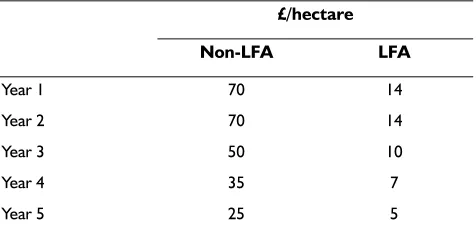
In the UK, the Organic Aid Scheme was introduced in 1994 to assist farmers wishing to convert land to organic production. The Organic Aid Scheme ran in England and Wales until it was replaced by the Organic Farming Scheme in 1999. The aid offered by the scheme comprised a series of payments over a five year period, with different rates for land in the Less Favoured Areas, as set out in Table 1.
[image:2.595.309.547.660.775.2]Although the demand for organic produce had grown in the UK from a market value of £40 million in 1987 to over £150 million in 1994 at an average annual growth rate of 25%, there had been no comparable
Table 1. Payments under the Organic Aid Scheme, 1994 - 1999
£/hectare
Non-LFA LFA
Year 1 70 14
Year 2 70 14
Year 3 50 10
Year 4 35 7
Year 5 25 5
increase in the area of organic farmed land in the UK.
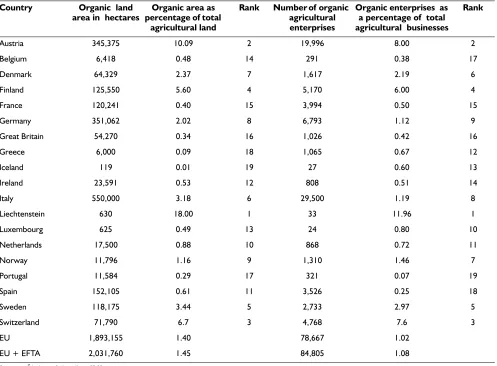
Following the introduction of the Organic Aid Scheme, the rate of conversion to organic farming in the UK failed to increase significantly. Only 225 pro-ducers, representing 22,567 ha of land, applied for the MAFF Organic Aid Scheme between September 1994 and June 1996, and there were only 9 appli-cants representing 529 ha of land in Wales applying for the Welsh Organic Aid scheme [21]. During this period Britain had one of the lowest rates of conver-sion to organic farming anywhere in the EU, or indeed in the wider European area. Figures pub-lished in Ökologie und Landbau in 1998 showed that when all the 19 states in the EU and EFTA were ranked by organic area as a percentage of total land area Great Britain occupied 16th position. When organic enterprises were calculated as a percentage of total agricultural businesses Great Britain again ranked 16th out of 19.
Payment rates under the Organic Aid Scheme varied widely between countries and UK rates were lower than for any other participating EU country. In Britain, the payment rate for all land during the first two years of conversion was 85 ECU/ha year,
com-pared with EU averages of 150 ECU/ha year for cereals, 210 ECU/ha year for grassland and 280 ECU/ha year for vegetables [22]. Although the low rate of conversion to organic farming in Britain was linked by some commentators directly to the low rate of grant aid, it was also suggested that the lack of information and advice was a major barrier to con-version since many farmers were particularly worried by technical problems like weed, pest and disease control in crops and issues of animal hus-bandry [22,23].
[image:3.595.51.548.83.449.2]EC Regulation 2078/92 provided for the provision of training and demonstration in organic production and by 1996 this had been taken up by more than half of the EU member states, but not initially by Britain. In response to the poor uptake of the Organic Aid Scheme however, and following suc-cessful lobbying of the Minister for Rural Affairs, the Ministry for Agriculture Fisheries and Food (MAFF) introduced OCIS in June 1996 in England and in October 1996 in Wales. The launch of OCIS was aimed directly to meet the lack of information and advice by providing a Helpline, an information pack and the option of free advisory visits. The Service was managed by the Organic Advisory Service in England and by ADAS in Wales. The scheme was
Table 2. Organic Agriculture in Europe (EU and EFTA), 1998
Country Organic land
area in hectares percentage of total Organic area as agricultural land
Rank Number of organic agricultural enterprises
Organic enterprises as a percentage of total agricultural businesses
Rank
Austria 345,375 10.09 2 19,996 8.00 2
Belgium 6,418 0.48 14 291 0.38 17
Denmark 64,329 2.37 7 1,617 2.19 6
Finland 125,550 5.60 4 5,170 6.00 4
France 120,241 0.40 15 3,994 0.50 15
Germany 351,062 2.02 8 6,793 1.12 9
Great Britain 54,270 0.34 16 1,026 0.42 16
Greece 6,000 0.09 18 1,065 0.67 12
Iceland 119 0.01 19 27 0.60 13
Ireland 23,591 0.53 12 808 0.51 14
Italy 550,000 3.18 6 29,500 1.19 8
Liechtenstein 630 18.00 1 33 11.96 1
Luxembourg 625 0.49 13 24 0.80 10
Netherlands 17,500 0.88 10 868 0.72 11
Norway 11,796 1.16 9 1,310 1.46 7
Portugal 11,584 0.29 17 321 0.07 19
Spain 152,105 0.61 11 3,526 0.25 18
Sweden 118,175 3.44 5 2,733 2.97 5
Switzerland 71,790 6.7 3 4,768 7.6 3
EU 1,893,155 1.40 78,667 1.02
EU + EFTA 2,031,760 1.45 84,805 1.08
Source: Ökologie & Landbau [20]
welcomed by the organic movement as, “the first time that MAFF have sent out a direct and positive message about organic production to a nation of farmers who are used to responding to leads from the government” [2].
In 1999 a new funding scheme, the Organic Farming Scheme, was introduced, first in England, and then in slightly revised form in Wales. Both the OCIS scheme and Organic Farming Scheme remain open. The new funding rates introduced in 1999, which are set out in Table 3, are the same in England and Wales though with some differences in definition of land category 1. Table 3 follows the Welsh categori-sation and the subsequent discussion below is concerned with the OCIS scheme in Wales.
2.1. OCIS and organic farming in Wales
In Wales, OCIS was originally the responsibility of the Welsh Office but with the establishment of the National Assembly in 1999, responsibility was devolved to the National Assembly’s Agriculture Department, NAWAD (subsequently renamed the Welsh Assembly Government’s Agriculture and Rural Affairs Division, ARAD).
When OCIS was set up in 1996, there were 28,090 registered agricultural holdings in Wales. The number of agricultural holdings in the Principality had been in long-term decline with a 12% fall over the previous 10 years. The decline was particularly marked in the dairy sector where numbers of hold-ings had fallen from 9,945 in 1977 to 4,752 in 1996. This 48% decline reflected the switching of dairy farms to other sectors as well as economies of scale. Overall the decline was held by the National Assembly to be due to the re-structuring of the industry in response to (a) the higher productivity associated with larger-scale production and (b) the
decline in the relative price of agricultural products [25]. The reduction in the number of holdings was mirrored by a long-term trend of decreasing employ-ment in agriculture which had fallen by 20% between 1977 and 1996.
Paradoxically, in rural Wales a reversal in the long trend to depopulation of rural areas had started to appear in the 1970s with population gains in every rural district [26]. This phenomenon was part of the wider process of counter-urbanisation which involved people making a clean break with the city: migrating beyond the commuter belt to live and work in the countryside [27–30]. The counter-urbanisation process was associated with many new organic farming enterprises being set up in rural Wales in the 1970s and1980s. This was particularly the case in West Wales, and a number of examples are detailed below in the discussion.
2.2. The OCIS procedure
The first phase of OCIS in Wales was completed in April 2002 and the Welsh Assembly Government issued a new contract from 1 May 2002 to be oper-ated by Organic Centre Wales and its partner organisations. The following description and anal-ysis covers the OCIS scheme from October 1996 to December 2001.
In phase 1, OCIS offered farmers one and a half days of free information. This typically comprised two on-farm visits. The 1st visit took half a day and included a written summary of the basic management changes required to convert to organic production. The 2nd visit took a full day of an adviser’s time, approximately half of which was spent on farm, the remainder taken up in the production of a detailed report.
At first, all 1st visits were carried out by ADAS advisers, and all 2nd visits were carried out by the Organic Advisory Service (OAS). As demand for the service increased more advisers were employed and trained by ADAS. By 2001, there were 10 trained ADAS consultants delivering OCIS. Six of these were employed directly by ADAS and 4 worked on a fee paid basis. Of the 10 advisers, 4 managed their own organic enterprises and the remainder had experi-ence of organic farming. One adviser was a fluent Welsh speaker.
[image:4.595.48.546.84.163.2]For farmers, the start of the OCIS procedure was to telephone the help-line. From October 1996 to December 2000 the Soil Association operated the Welsh OCIS help-line directly from their headquar-ters in Bristol. However, when the National
Table 3. Organic Farming Scheme, Aid Payments (£ per hectare)
Land category Year 1 Year 2 Year 3 Year 4 Year 5 Total
AAPS eligible land and land in permanent crops 225 135 50 20 20 450
Other enclosed land 175 105 40 15 15 350
Unenclosed land or Grazed Woodland 25 10 5 5 5 50
Bonus 300 200 100 600
1 Additional ‘stewardship’ payments have been announced in
2003 to provide on-going payment after conversion and extending the period of support to 10 years. Under amendments to the Organic Farming Scheme the duration of current agreements, and those applying to future entrants, will be extended from 5 to 10 years, but with the option to withdraw at the fifth anniversary. Farmers who have converted to organic production without assistance will be eligible to enter the scheme for a five-year period. In Wales, payment rates in years 4 and 5 will be increased from £20 per hectare to £35 on arable land, from £15 per hectare to £35 on enclosed land and from £5 per hectare to £10 on unenclosed land. These new rates will then be continued as organic stewardship payments for years 6 to 10. These rates are higher than those announced by DEFRA in England. The arable rate is higher by £5 per hectare; the enclosed land rate by £12 per hectare; and the unenclosed land rate by £5 per hectare. See,
Organic Wales Bulletin Special Issue, 13th February 2003 at
Assembly for Wales funded the setting up of an Organic Centre of Excellence – Organic Centre Wales (OCW) – at the University of Wales Aberyst-wyth it was agreed to transfer the help-line to the Centre from 1 January 2001. The transfer of the help-line to OCW also allowed OCIS to provide a Welsh language service. Wales has an official bilin-gual policy, and Welsh is the first language of 50% to 60% of the population in western and northern coun-ties. The proportion is higher in some rural and farming communities. A Welsh language OCIS hel-pline and the availability of a Welsh speaking adviser was very important for the Welsh speaking heartlands of Wales especially in the counties of Ceredigion, Gwynedd and Powys.
On first contact, the producer’s details including farm size, location and type of enterprises were entered into the OCIS database. If required, the pro-cedure moved to the second stage, the farm advisory visits. The first free advisory visit covered back-ground information on organic farming and organic standards. It also provided a basic evaluation of the farm’s potential for organic conversion by looking at such issues as the stocking rate on the farm, the his-toric levels of fertiliser use (especially Nitrogen), livestock feeding and livestock health. The visit also covered the availability of grant aid during conver-sion and the markets for organic products. In most cases the adviser recommended a second visit. If taken up, this included a more detailed look at the farm enterprise with advice on key elements of con-version such as weed, pest and disease control, rotations, marketing, and the inter-relation of Organic Farming Scheme funding and other Agri-Environment Schemes. Although not strictly part of the scheme , many of the farmers - 488 in total - who received OCIS visits also attended one of the monthly ‘Planning the Conversion’ courses. These courses were organised by the Cambrian Organic Group and delivered by OCIS advisers. They were funded under an EAGFF (European Agricultural Guidance and Guarantee Fund) Objective 5b pro-gramme and were designed to fit between the first and second OCIS visits and to provide for a greater understanding of the requirements of conversion planning before the second visit took place [31].
2.3. The OCIS Database
The OCIS Database evolved from an original paper file based record of visits set up in 1996. From 1999 onwards all the information was transferred to elec-tronic format. The database recorded the names, addresses and enterprise details of all producers who contacted OCIS during the project’s lifetime. It also recorded details collected during the farm visits on stock numbers, arable, horticultural and woodland areas. The database also recorded whether the holding was within a Less Favoured Area (LFA) or not and any participation by the farm in other agri-environment schemes, such as the Environmentally Sensitive Area (ESA) Scheme, Tir Cymen and Tir Gofal.
The database was extended to include information on holdings that subsequent to the OCIS procedure began conversion to organic status. The main certi-fication bodies (Soil Association Certicerti-fication Ltd and Organic Farmers and Growers Ltd) supplied much of the information on start dates of conversion. The National Assembly for Wales Agriculture Depart-ment also supplied data on enrolDepart-ment in the Organic Farming Scheme Wales. This additional data allowed any given holding to be tracked from initial enquiry through to full organic status. It also pro-vided data for a fuller analysis of the trends among Welsh farmers towards organic conversion [19].
For the following analysis, comparative figures for total area, holding size and enterprise type for the whole of Wales were taken from the Welsh Agricul-tural Statistics 2000, available from the National Assembly for Wales’s website - www.wales.gov.uk/ keypubstatisticsforwales/content/publication/agri-culture/2001/was2000/was2000-intro.htm
3. OCIS in Wales – an analysis
3.1. Enquiries
The rate of enquiries varied over the project lifetime, as can be seen from Table 4.
Between October 1996 and December 2001 there were some 2900 enquiries (see Figure 1). This repre-sents approximately 11% of all agricultural holdings in Wales. There was a steady increase in enquiries from the inception of OCIS through until 2000. In 1999 the number of enquiries peaked at 928. How-ever in 2000 there was a decline in number of enquiries with only 438 being received. This was less than 50% of the previous year. The largest number of enquiries (43% of the total number of enquiries) came from West Wales, comprising Carmarthen-shire, Pembrokeshire and Ceredigion (approximately 33% of the Welsh agricultural land area). By contrast North Wales (27% of the Welsh agricultural land area) had only one certified organic farmer before 2000. Overall, the percentage of hold-ings in the North making enquiries was lower than the Welsh National average (7% vs.11% respectively) whereas the East and West were slightly above average at 12%. The South reflected the national average.
[image:5.595.308.547.744.779.2]The number of enquiries in the north and east increased in 2001 compared with 2000, whereas there was a relative decline in the south and west over the same period. The reasons for the increased interest in the north and east were linked to the col-lapse of the market for beef and sheep. This sector dominates the agriculture of north and east Wales.
Table 4. Number of OCIS enquiries in each year, 1996 - 2001
1996* 1997 1998 1999 2000 2001
55 288 729 928 438 416
Overall, the majority of all enquiry requests came from beef and sheep producers (37%) followed by ‘sheep only’ and by dairy. There was a marked decline in the number of requests from dairy farms in 2001; this mirrors the relative decline in the number of requests from the West Wales region. The under-lying reason for this change was the difficulty of marketing organic milk at this time. By 2001, a large number of milk producers who had gone into conversion in 1999 became fully organic. The existing market structure for organic milk was unable adequately to place the resulting surge in supply, a situation reminiscent of the Danish experi-ence described by Lynggaard outlined above.
In the main the number of enquiries in each farming sector followed a similar pattern to the total number of enquiries with a peak in 1999, but with an increase in the number of enquiries coming from the beef & sheep sector in comparison to the overall trend in 2001.
More large farms and more smallholdings made an OCIS enquiry than average sized farms. 47% of hold-ings of 200 ha or greater in land area made an enquiry, compared to 18% of holdings between 100– 199 ha and 14% of those of 5 ha or less. The average size of Welsh agricultural holding falls into the 50– 99.9 ha category where 11% of holdings made enquiries - reflecting the average.
3.2. Farm Visits
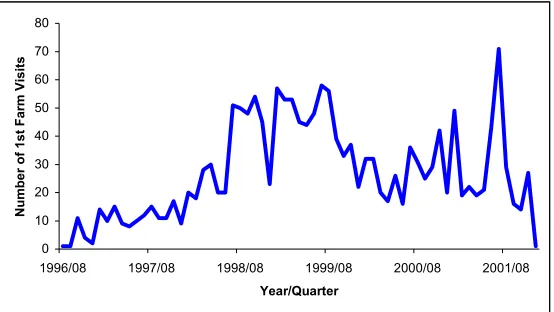
1st farm visits followed a similar pattern to that of enquiries (see Figure 2 and Table 5). 1769 1st farm visits were carried out between October 1996 and December 2001. This equates to approximately 62% of those who made an initial enquiry and represents
approximately 8% of all holdings in Wales. 827 2nd farm visits were also carried out over this period (see Figure 3). This represents 47% of those producers who received a 1st farm visit and approximately 3% of agricultural holdings in Wales. The greatest number of 2nd visits was carried out in the beef & sheep sector, however the dairy sector accounted for a greater proportion of 2nd farm visits than in the 1st farm visits.
As with enquiries, the highest percentage of holdings receiving a 1st farm visit was in the 200+ ha category (36%). This means that 77% of holdings in this cate-gory that made an enquiry went on to request a first farm visit, which was higher than the Welsh average (62%). For the average Welsh holding (50-99.9 ha) 74% of those making enquiries went on to request a first farm visit. However, the percentage for the smallest holdings was much lower at 30%. A similar pattern is found with 2nd farm visits, with the highest percentage of holdings requesting a 2nd farm visit in the 200+ ha category.
3.3. Farms in Conversion
The number of holdings going into organic conver-sion annually since the inception of OCIS are presented in Table 6. Since OCIS began 388 holdings have gone into conversion. This represents 47% of those holdings requesting a 2nd farm visit and repre-sents 1.5% of the total holdings in Wales. The peak number of holdings going into conversion was during April 1999 (43 holdings)(see Figure 4). 32% of all holdings going into conversion did so during April – July 1999. During 1999, 58% of holdings going into conversion did so in this April to July period.
The majority of farms going into conversion in 1999 were in West Wales. Overall from 1998 to 2001, West
Wales had the highest percentage (1.98%) of farms
[image:6.595.169.430.69.229.2]0 20 40 60 80 100 120 140 19 96 /0 2 19 96 /11 19 97/0 3 19 97/0 7 19 97 /1 1 19 98 /03 19 98/0 7 19 98/1 1 19 99 /0 3 19 99 /0 7 19 99 /11 20 00/0 3 20 00 /0 7 20 00 /1 1 20 01 /03 20 01/0 7 20 01 /1 1 Year/Month Number of Enquir ies 0 20 40 60 80 100 120 140 19 96/0 2 1996 /1 1 1997 /0 3 19 97 /07 19 97/1 1 19 98/0 3 1998 /0 7 19 98 /1 1 19 99 /03 19 99/0 7 19 99/1 1 2000 /0 3 20 00 /0 7 20 00 /11 20 01/0 3 20 01/0 7 2001 /1 1 Year/Month Number of E nquir ies
[image:6.595.49.286.725.777.2]Figure 1. OCIS enquiries per month, 1996–2001
Table 5. Number of 1st and 2nd farm visits carried out by year, 1996 – 2001
1996* 1997 1998 1999 2000 2001
1st visits 19 141 407 545 326 331
2nd visits 2 35 103 324 231 132
* Started October 1996
Table 6. Number of farms going into conversion in Wales, 1998 -2001
1998 1999 2000 2001
[image:6.595.308.547.725.757.2]going into conversion with North Wales having the lowest (0.79%). The Welsh average was 1.5%.
As with the previous stages of OCIS the greatest number of holdings in Wales going into organic con-version were in the beef & sheep sector. However, unlike the previous stages of OCIS, 21% of in-conver-sion farms were in the dairy sector. Also, a greater percentage of in-conversion farms were in the arable sector compared to previous stages.
The percentage of holdings on an area base going into organic conversion followed a similar pattern to that seen in the previous stages of OCIS, with the highest percentage of in-conversion farms being found in the 200+ ha category (7.7%). This is much higher than the Welsh average of 1.5% of holdings. It is interesting to note that of these farms, 25% were holdings where the main enterprise is only sheep and 55% are holdings where beef and sheep are the main enterprises. The majority of these holdings are in the North (39%) and West (25%) compared with the East (19%) and South (17%). The number of holdings in the 200+ ha category going into organic conversion represents 39% of those receiving a 2nd farm visit.
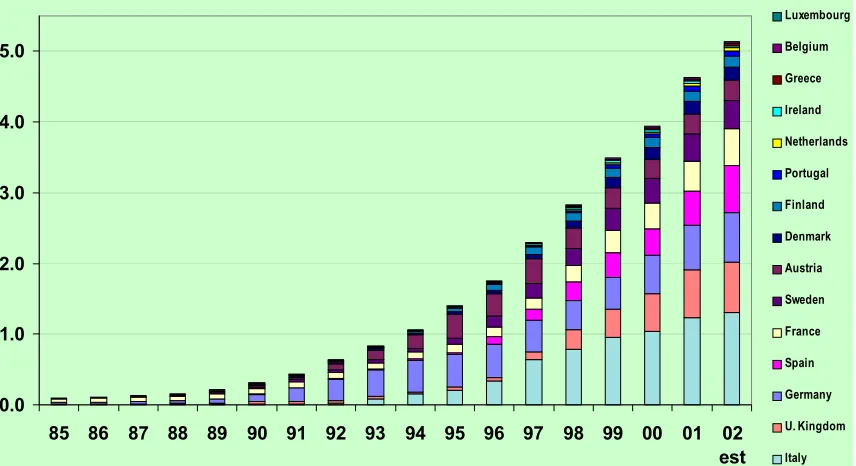
In terms of land area managed organically, by 2001 Wales had moved towards the European average from the low starting point in 1998 (see Figure 5).
4. Discussion and conclusions
4.1. OCIS advisers
Preaching conversion has a long tradition in Wales and the legacy of the great Methodist revivals that occurred at intervals between 1785 and 1904 when preachers travelled around Wales converting country people and teaching them to read is still felt in many rural parishes [32–35]. The organic move-ment in Wales has not been without its own evangelists and two of these have received official honours for their contribution to the development of organic food and farming 1 while others are now fully occupied in policy and strategy 2. In the period under study the delivery of technical information by OCIS advisers replaced the earlier fervour and enthusiasm of the organic pioneers.
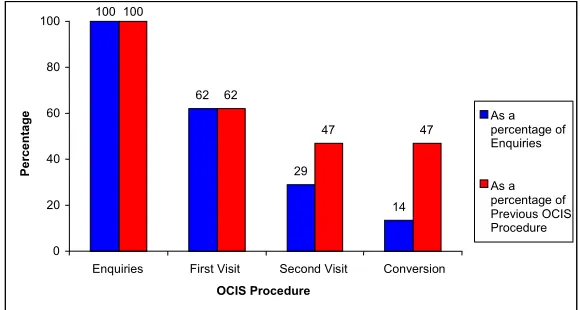
OCIS advisers have been the main source of informa-tion on organic conversion in Wales since the scheme was launched in 1996 and by the end of 2001 there had been 2900 enquiries. Of all the farmers who made an initial Help-line enquiry, 62% went on to
0 10 20 30 40 50 60 70 80
1996/08 1997/08 1998/08 1999/08 2000/08 2001/08
Year/Quarter
[image:7.595.158.435.71.227.2]Number of 1st Farm Visits
Figure 2. 1st farm visits per month, 1996–2001.
0 10 20 30 40 50 60
1996/ 11
1997/ 04
1997/ 08
1997 /12
1998/ 04
1998/ 08
1998/ 12
1999/ 04
1999/ 08
1999/ 12
2000/ 04
2000/ 08
2000/ 12
2001 /06
2001/ 10
Year/Quarter
N
u
[image:7.595.162.431.261.416.2]mber of 2nd Farm Visits
Figure 3. 2nd farm visits per month,1996–2001.
1 Rachel Rowlands, MBE (Rachel’s Dairy); Peter Segger, OBE
(Organic Farm Foods)
2 For example, Patrick Holden is Director of the Soil
have a first advisory visit, 29% went on to have a second visit and 14% entered into organic conver-sion. The character of advisers and how they are perceived is an important issue. Padel’s review of the evidence on conversion to organic farming indicated that organic farmers prefer to obtain information from other organic farmers and from dedicated organic advisory organisations, whereas converting farmers may find the existing organic network rela-tively closed and difficult to enter [13].
In England, the OCIS scheme was, and is, operated by the Soil Association. Reed has suggested that this makes it appear that the Soil Association has become increasingly drawn into the orbit of the state at the same time as its own campaigns (e.g. over GMOs) are becoming more strident, leaving it in a perpetual ambivalent situation. [36]. In Wales, although the personnel and organisations in OCIS delivery were subject to change during the 1996-2001 period, the basic mixture was of professionally trained organic consultants and organic farmers trained as advisers.
During the period, most of the OCIS advisers were either organic producers or had been in the past and were members of the Soil Association. The organic farmer-advisers were a particularly obvious aspect of a general process of incorporation, because their autonomy was limited to the provision of technical information. Impartiality was required at all times, including when outlining the choice of certifying bodies (of which there were then 11 in the UK). Most farmers felt this was an important area which would have implications both for production and mar-keting. Many asked for guidance on selection, but OCIS advice had to be limited solely to the provision of factual information.
As the number of certifying bodies grows (by 2003, it had increased to 17 in the UK), certification and inspection has developed as a commercial activity. With increasing regulation of the agri-food sector, companies providing audit and inspection services see organic production and processing as another commercial opportunity. Unlike ‘movement bodies’
0 5 10 15 20 25 30 35 40 45 50
1998 /01
1998 /07
199 8/12
1999 /04
1999 /08
199 9/12
2000 /04
2000 /08
2000 /12
200 1/04
2001 /08
Month/Year
Num
b
er of Farm
[image:8.595.159.437.71.230.2]s Converting
Figure 4. Farms going into conversion per month, 1996–2001.
0.0 1.0 2.0 3.0 4.0 5.0
85 86 87 88 89 90 91 92 93 94 95 96 97 98 99 00 01 02 est
Luxembourg
Belgium
Greece
Ireland
Netherlands
Portugal
Finland
Denmark
Austria
Sweden
France
Spain
Germany
U. Kingdom
Italy
[image:8.595.87.515.263.496.2]such as the Soil Association, commercial certifiers undertake inspections to the basic UKROFS stand-ards and are not concerned with issues such as the development of standards. For movement bodies, standards are not an end in themselves and certifica-tion and inspeccertifica-tion is seen only as part of their work towards wider strategic objectives.
4.2. OCIS enquiries and rates of conversion
The fluctuations in OCIS inquiries and rates of con-version support the general conclusion that in periods of general agricultural recession farmers may be more inclined to look for supportive arrange-ments, such as support for organic farming, than during periods of prosperity [9]. Between 1996 and 2001, 388 holdings in Wales entered into organic con-version with a peak in 1999 for both OCIS and for the Organic Farming Scheme Wales (OFSW). In this year interest in organic conversion was encouraged both by the introduction of the new grants in the Organic Farming Scheme and by the availability of high premiums for organic produce in the market place. In the livestock sector the organic premium began to look particularly attractive compared to the very low prices on the conventional market, which were depressed inter alia by the BSE crisis and the loss of European export markets. There was caution in the organic movement, however where it was stressed that convincing farmers to convert with the premium prices argument is narrow and inappro-priate, pointing out that organic farming developed over a period of more than 40 years without the driving force of premium prices.
The downturn in OCIS enquiries and rate of conver-sion in the period after 1999 demonstrates a continuing caution in the farming community and a lack of confidence in premium prices. In 2001-02, comments given by farmers when telephoning the OCIS Help-line confirmed that the main reason for the downturn in interest to convert to organic farming was the lower prices achieved in the market place. Some of this farmer pessimism proved to be correct at least in the short term. Although the level of consumer demand remained high, the surge of organic produce onto the market following the record number of farms achieving full organic status in 2001 meant bottlenecks with lowered premiums and
some produce not being sold through the existing organic marketplace. Overall the area of land fully converted to organic production in Wales rose from 8844 ha in December 2000 to 30287 ha in December 2001 [21].
Conversion to organic farming is a complex under-taking requiring a system change, one that is often perceived to be a high risk strategy [13]. Initially many farmers may have little understanding of the requirements of organic conversion. The most fre-quent first question starts, “what do I use instead of…(fertilisers/ weed killers/ wormers)?” Achieving the paradigm shift in thinking away from an input approach to a system approach is the main task facing the organic advisor. The fact that take up of conversion has been no higher than 14% of farmers making an enquiry to OCIS (see Figure 6) suggests however that provision of information per se may have little effect on conversion rates.
4.3. Size of holdings
Padel’s review concluded that across the EU the average size of organic holdings has been larger than for conventional farms since the late 1980s [13]. Interestingly in Wales between 1996 and 2001, pro-portionately more OCIS enquiries were received from large farms over 200 ha (47%), and from small-holdings under 5 ha (14%), than from average sized farms (11%) (see Figure 7). More large farms went on to have first and second visits than averaged sized farms, and furthermore, the highest percentage of in-conversion farms was the 200+ ha category. The number of small farms going on to have first and second visits and into conversion was, however, lower than the overall average (see Figure 8).
The higher rate of take up by large farms in Wales is consistent with the EU trend identified by Padel. These farms tend to be more extensive units and ben-efit from the area based OFS payments. For the very small farm or horticultural unit, by comparison, area based payments are correspondingly low. The fall-off in interest in OCIS after the initial high rate of enquiries by smallholders in Wales parallels the evi-dence from OCIS in England. Midmore et al. [37] found that farms that contact OCIS in England, but did not go on to enter the conversion scheme, tended
100
62
29
14 100
62
47 47
0 20 40 60 80 100
Enquiries First Visit Second Visit Conversion
OCIS Procedure
Per
cent
a
g
e As a
percentage of Enquiries
[image:9.595.151.441.72.227.2]As a percentage of Previous OCIS Procedure
to be small, with a high proportion engaged in horti-culture. The indications from Wales and England are therefore that size may be an absolute barrier to con-version due to the disproportionate cost of certification for those with smaller holdings. Small-scale farmers and growers often have high ethical motivation and in many ways have played a key role in the development of organic farming as a social movement, but without certification they are unable to sell into the organic food chain and are ineligible for Organic Farming Scheme payments.
4.4. Geographical distribution and farm enterprises
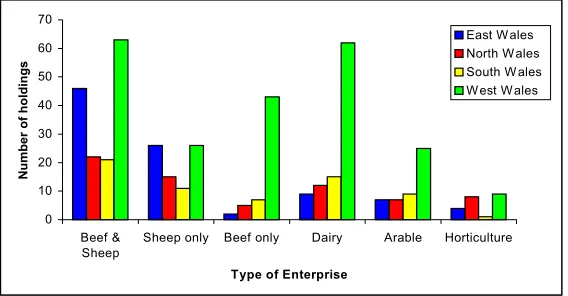
During the period studied, West Wales had the highest percentage of farms going into conversion
and North Wales had the lowest (see Figure 9). As with the number of OCIS enquiries generally, the greatest number of holdings going into conversion were in the beef & sheep sector, followed by the dairy sector, though a greater percentage of in-conversion farms were in the arable sector than for OCIS generally.
Horticulture ranks low as an overall percentage both for OCIS and for farms in conversion in Wales [21] but whereas there was a marked decline in the overall rate of conversion between 1999/2000 and 2001, conversion areas for the horticultural sector increased. The proportion of organic and converting 0
5 10 15 20 25 30 35 40 45 50
0-4. 9
5-9. 9
10-1 9.9
20-2 9.9
30-4 9.9
50-9 9.9
10 0-199.
9 200+
Holding land area (ha)
[image:10.595.158.442.71.229.2]% of holdings
Figure 7. % holdings making an OCIS enquiry, 1996–2001.
0 1 2 3 4 5 6 7 8 9
0-4. 9
5-9. 9
10-1 9.9
20-2 9.9
30-4 9.9
50-9 9.9
10 0-199.
9 200+
Holdings land area (ha)
[image:10.595.167.432.257.409.2]% of holdings
Figure 8. % holdings starting organic conversion, 1996–2001
0 10 20 30 40 50 60 70
Beef & Sheep
Sheep only Beef only Dairy Arable Horticulture
Type of Enterprise
N
u
mber of holdings
East Wales North Wales South W ales West Wales
[image:10.595.159.443.618.766.2]farmers involved in horticulture has more than dou-bled from 14% in 1999/2000 to 30% in 2001 [38].
It is also noticeable that despite a relative decline in OCIS requests from the area in 2001, the West Wales hot spot for organic conversion that existed prior to the start of OCIS in Wales continued throughout the period of study. The area has a predominance of dairy and mixed farms and has favoured agricultural conditions for cropping. These are the features tradi-tionally seen as being most suited to organic conversion. Furthermore, the West Wales region has also been the centre of much pioneering work in organic agriculture. The West Wales Soil Associa-tion, the Organic Growers AssociaAssocia-tion, British Organic Farmers, and some of the first UK mar-keting co-operatives for organic produce all had their roots in West Wales. Successful, well established processing and marketing companies like Organic Farm Foods and Rachel’s Organic Dairy were estab-lished in this region in the 1980s.
In the USA, the concept of hot spots with a high degree of ‘lifestyles of health and sustainability’ (LOHAS) has been investigated in a number of com-munities where a high degree of LOHAS business activity is associated with a tradition of progressive thought, liberal politics and cultural and lifestyle diversity. Lewis’ study of four communities in the
USA concluded, “wherever a LOHAS business is
located there are opportunities for synergy. All it takes is some out-of-the box thinking – and a sense of com-munity” [39]. Interestingly, one of the communities studied by Lewis was Boulder, Colorado, home of Horizon Organic Dairy the US company that bought into the UK organic market by its acquisition of West Wales’ Rachel’s Dairy in 1999.
4.5. Motivation to convert to organic farming
Studies of organic farming suggest that pioneers, or those Padel has labelled ‘early adopters’ do not have purely financial motives for conversion, although later converters may more frequently cite these [13]. In Michelsen’s study of Danish farmers’ motivations for conversion to organic farming carried out in 1991, 1995 and 1998, environmental concern was men-tioned by more than half of the respondents in all three surveys. Positive economic expectations were mentioned by only 10% in 1991, 7% in 1994 but by 26% in 1997. It is also noticeable that ‘professional challenge’ and expectations for organic farming as the future for all Danish agriculture increased from 10% in 1991, to 19% in 1994 and 26% in 1997 [10]. Midmore et al. [37] reviewed studies of motivation towards organic conversion and noted that recent studies suggest a shift towards environmental, polit-ical and economic concerns rather than the earlier religious or philosophical ideas or problems with hus-bandry. They proposed that the “new” organic farmers increasingly view organic farming as a pro-fessional challenge rather than a life-style choice [37]. Their own survey found that, overwhelmingly, the main motive for conversion among farmers who
had joined the Organic Farming Scheme, was to stop usage of agrochemicals.
Various motivations were expressed by the OCIS farmers who joined the ‘Planning the Conversion’ courses organised by the Cambrian Organic Group and delivered by OCIS advisors. During the opening session of these courses farmers were invited to explain their interest in organic methods. Their replies (noted by the author at the time) varied. In 1998, for example - the year that Tir Gofal the All-Wales Agri-environment scheme first opened - a large number of farmers saw a way of maximising their grant income by joining two (apparently) com-patible schemes. “I’m going into Tir Gofal and I’m interested to know about organic farming” was a typ-ical remark. From 1999 onwards however, when conventional market prices for milk, lamb and beef collapsed, and when modulation started to reduce the level of headage subsidy payments, many farmers on the courses saw organic farming as the only route ahead. This was expressed in comments such as,“It’s the way things are going”; “It’s the only way forward with prices at the moment”, “When I’m in the supermarket everyone seems to be buying organic food and meat”. Many also commented on the opportunity to provide ‘what the market really wants’ expressed in comments like, “ I want to grow fresh local vegetables rather than all that produce flown in from miles away”; “I hope to get into a market that wants our produce rather than push pro-duce people don’t want” and, “We’ve got to propro-duce healthier quality meat to restore confidence for the consumer”.
To conclude the analysis, OCIS has been an efficient method of delivering information directly to farmers on their own holdings. Between 1996 and 2001, 11% of all Welsh holdings contacted OCIS and the number continues to increase albeit at a slower rate. Many commentators have suggested that one of the main barriers to conversion in the past has been the lack of information and advice, but analysis of the OCIS database information suggests that many fac-tors affect the level of interest in organic farming and the rate of conversion. Looking at the overall OCIS data, it is apparent that the peak level of interest occurred when conventional farm incomes were threatened by the collapse in prices. There are also suggestions in the quotations above that this also provoked some farmers to re-assess the nature of their industry.
REFERENCES
1 International Federation of Organic Agriculture Movements (2000) IFOAM Basic Standards IFOAM; Tholey-Theley, Germany
2 Soil Association (2002) Soil Association Standards for organic farming and production. 1. Principles and general standards. Revision 14 / 2002/2003. Bristol 3 Giddens, A. (1997) Sociology. 3rd Edition. Polity Press;
Cambridge
4 Kotschi, J.; Bayer, W.; Becker, T.; Schrimpf, B. (Eds.) (2003) AlterOrganic - Local Agendas for Organic Agriculture in Rural Development. Proceedings of an International Workshop at Bonn-Königswinter, Germany, October 21-24, 2002
5 Wettasinha, C. (2003)Keynote: Developing technology in organic agriculture. In: Kotschi, J.; Bayer, W.; Becker, T.; Schrimpf, B. (Eds.) AlterOrganic - Local Agendas for Organic Agriculture in Rural Development. Proceedings of an International Workshop at Bonn-Königswinter, Germany, October 21-24, 2002
6 van Elzakker, B (2003) Keynote: Standards
Development. In: Kotschi, J.; Bayer, W.; Becker, T.; Schrimpf, B. (Eds.) AlterOrganic - Local Agendas for Organic Agriculture in Rural Development. Proceedings of an International Workshop at Bonn-Königswinter, Germany, October 21-24, 2002
7 Kabelele, M. (2003) Success Stories from Zimbabwe. In: Kotschi, J.; Bayer, W.; Becker, T.; Schrimpf, B. (Eds.) AlterOrganic - Local Agendas for Organic Agriculture in Rural Development. Proceedings of an International Workshop at Bonn-Königswinter, Germany, October 21-24, 2002
8 Aberle, D.F. (1966) The Peyote Religion among the Navaho. Aldine Press; Chicago.
9 Michelsen, J. (2001) Recent development and political acceptance of organic farming in Europe. Sociologia Ruralis41(1) 3-20.
10 Michelsen, J. (2001) Organic Farming in a regulatory perspective. The Danish case. Sociologia Ruralis 41(1) 62- 84
11 Tovey, H. (1997) Food, environmentalism and rural sociology: On the organic farming movement in Ireland. Sociologia Ruralis37(1) 21-37
12 Campbell, H.; Liepins, R. (2001) Naming organics: understanding organic standards in New Zealand as a discursive field. Sociologia Ruralis 41(1) 21-39 13 Padel, S. (2001) Conversion to organic farming: a
typical example of the diffusion of an innovation? Sociologia Ruralis 41(1) 40-61
14 Frost, D. (2002) Deconstructing the Organic Movement. In: Powell, J. (ed.) Proceedings of the UK Organic Research 2002 Conference 26-28th March 2002
Aberystwyth, Organic Centre Wales, Institute of Rural Studies, University of Wales, Aberystwyth. pp. 113-114 15 Buck, D.; Getz, C.; Guthman, J. (1997) From farm to table: the organic vegetable commodity chain of Northern California. Sociologia Ruralis37(1) 3-20 16 Goodman, D.; Goodman, M. (2001) Sustaining Foods:
Consumption and the Socio-Ecological Imaginary. In: Cohen, M.J.; Murphy, J. (Eds.) Exploring Sustainable consumption – Environmental policy and the Social Sciences. Elsevier Science; Oxford
17 Lynggaard, K.S.C. (2001) The farmer within an institutional environmental. Comparing Danish and Belgian organic farming. Sociologia Ruralis 41(1) 85-111
18 Department for Environment, Food and Rural Affairs (DEFRA) (2002) Action Plan to develop organic food and farming in England. DEFRA; London. Crown Copyright
19 Collyer, R.; Oswald, J.; McLean, B.M.L.; Frost, D. (2002) OCIS Report. A summary of the information held on the OCIS database. ADAS Pwllpeiran
20 Okologie & Landbau (1998)
21 Foster, C.; Powell, J.; Lampkin, N. (2002) Organic Farming Statistics for Wales 2000/01. Organic Centre Wales, Institute of Rural Studies, University of Wales, Aberystwyth.
22 Lampkin, N. (1996) Sceptical about Europe? New Farmer and Grower. Issue 52, pp. 22-23, November 23 Midmore, P.; Padel, S. (2002) Attitudes towards
conversion to organic production of farmers in England. In: Powell, J. (ed.) Proceedings of the UK Organic Research 2002 Conference 26-28th March 2002, Aberystwyth. Organic Centre Wales, Institute of Rural Studies, University of Wales, Aberystwyth. 24 New Farmer and Grower, 1996 p. 5.
25 National Assembly for Wales (2001) Farming for the Future. A Consultation Document from the National Assembly for Wales. Cardiff
26 Day, G. (1989) ′A Million on the Move′? Population Change and Rural Wales. Contemporary Wales3, 137-159
27 Beale, C. (1976) A further look at non-metropolitan population growth since 1970. American Journal of Agricultural Economics58(5) 953-958
28 Beale, C. (1977) The recent shift of US population to non-metropolitan areas. International Regional Science Review2(2) 113-122
29 Berry, B.J.L. (1978) The counter urbanisation process: how general? In: Hansen, N.M. (ed.) Human Settlement Systems. Bellinger Publishers Co.; Cambridge
30 Robinson, G.M. (1990) Conflict and Change in the Countryside. John Wiley and Sons; New York
31 Lampard, J.; Porter, C. (2002) Developing the Infrastructure for Organic Farming in Wales – project evaluation Jan 2000 – December 2001. ADAS Pwllpeiran
32 Williams, C.R. (1952) The Welsh Religious Revival 1904-5. British Journal of Sociology vol. iii
33 Jenkins, D. (1971) The Agricultural Community of South West Wales at the Turn of the Century. University of Wales Press; Cardiff
34 Williams, D.G. (1977) The Land Remembers - a view of Wales. Faber and Faber; London
35 Jones, N. (1993) Living in Rural Wales. Gomer Press; Llandysul
36 Reed, M. (2001) Fight the Future! How the contemporary campaigns of the UK organic movement have arisen from their composting of the past. Sociologia Ruralis41(1) 131-145
37 Midmore, P.; Padel, S.; McCalman, H.; Isherwood, J.; Fowler, S.; Lampkin, N. (2001) Attitudes towards conversion to organic production systems: A study of farmers in England. Institute of Rural Studies, University of Wales, Aberystwyth
38 Haward, R.; Little, T. (2002) Conversion Statistics for Organic Horticulture in Wales. Unpublished paper prepared for the Organic Horticulture Sub Group of the Welsh Agri-Food Partnership Organic Strategy Group.