
GENERATOR POWERED BY BIODIESEL
REBECCA CROSTHWAIT
B.
ENG (HONS) MECH
Submitted in fulfilment of the requirements for the degree of
Masters of Engineering Science
University of Tasmania
UTAS
This thesis contains no material which has been accepted for a degree or diploma by the University of Tasmania, or any other institution, except by way of background information and has been duly acknowledged in this thesis. To the best of the author's knowledge and belief no material has previously been published, or written, by another person except where due acknowledgement is made in the text of this thesis.
Signed:
Rebecca Crosthwait Date: g457e967(0"---
Authority of Access
This thesis contains confidential information and is not to be disclosed or made available for loan or copy without the expressed permission of the University of Tasmania. Once released, the thesis may be made available for loan and limited copying in accordance with the
Copyright Act 1968.
Signed:
Acknowledgements
First, thanks go out to my supervisor Vishy Karri whose enthusiasm got this project
started and whose guidance was instrumental in its completion. Thanks also to my
co-supervisor, Alan Henderson; your critiques and comments along the way were greatly
appreciated.
To all those who helped out in the workshop and at the university, thanks; particularly
to Nathan Smith, John McCulloch and Steve Avery, your assistance in setting up the test
rig was indispensable.
At South Australia Farmer's Fuel I would like to thank Mike Jureidni and Mark Connole
for providing the biodiesel and consultation.
Abstract
This project conducts a performance appraisal of a new Tasmanian grown biodiesel as compared with a commercially available Australian biodiesel. The innovation patent recipe for the Tasmanian blend is a fuel that is derived from canola oil and poppy seed oil, both of which grow plentifully in Tasmania; the oils are transformed into a fuel through a transesterification reaction. The second biodiesel, commercially produced by South Australian Farmers Fuel, will be tested in conjunction with the Tasmanian biodiesel. The tests planned are to assess the commercial competitiveness of the Tasmanian fuel against a leading Australian biodiesel. As part of this work, both biodiesels will be analysed against a baseline of petroleum diesel to compare the relative advantages and disadvantages of implementing biodiesel as a diesel substitute.
The performance appraisal involves the study of emissions of carbon monoxide, hydrocarbons, carbon dioxide and nitrous oxide, as well as the opacity and fuel consumption of a generator. To conduct the tests a generator unit is proposed that will be fitted with instrumentation including: emissions analyser, smokemeter, temperatures probes, load bank, power meter, rpm sensor and flow board. The load applied to the generator is varied at levels of 10%, 25%, 50%, 75% and 100% of the rated power.
Table of Contents
DECLARATION II
AUTHORITY OF ACCESS II
ACKNOWLEDGEMENTS Ill
ABSTRACT IV
TABLE OF CONTENTS V
CHAPTER 1: INTRODUCTION 1
CHAPTER 2: LITERATURE SURVEY 5
2.1 INTERNAL COMBUSTION ENGINE 5
2.1.1 Diesel Engine 6
2.1.2 Diesel Fuel 9
2.2 BIOFUEL AND BIODIESEL 10
2.2.1 Straight Vegetable Oils 11
2.2.2 Ethanol & Methanol 13
2.2.3 Biodiesel 14
2.2.3.1 Production Process 15
2.2.3.2 Diesel and Biodiesel Properties 17
2.2.3.3 Pros & Cons of Biodiesel 21
2.2.3.4 Biodiesel Standards 23
2.3 ENGINE PERFORMANCE WITH BIODIESEL 25
2.3.1 Emissions 25
2.3.1.1 Carbon Monoxide 25
2.3.1.2 Hydrocarbons 27
2.3.1.3 Carbon Dioxide 29
2.3.1.4 Nitrous Oxides 30
2.5.1.5 Sulphur and Sulphur Oxides 33
2.3.2 Opacity 33
2.3.3 Fuel Consumption 35
2.4 CONCLUDING REMARKS 37
CHAPTER 3: EXPERIMENTAL TEST RIG AND INSTRUMENTATION 38
3.1 GENERATOR SET & INSTRUMENTATION 38
3.1.1 Generator Description 39
3.1.2 Load Bank 40
3.1.3 Fuel Flow Rate Measurement 41
3.1.4 Temperature Measurement and Acquisition 42
3.1.5 Engine Speed 43
3.1.6 Emissions Measurement 44
3.1.7 Opacity Measurement 45
3.2.1 Blends Tested 46
3.2.2 Tasmanian Biodiesel 47
3.2.3 South Australian Farmers Fuel 48
3.3 EXPERIMENTAL PROCEDURE 48
3.3.1 Testing Standards 49
3.3.1.1 Test Cycle 49
3.3.2 Test Conditions 49
3.3.3 Testing Procedure 50
3.4 CONCLUDING REMARKS 51
CHAPTER 4: RESULTS AND ANALYSIS 52
4.1 EMISSIONS 52
4.1.1 Carbon Monoxide 53
4.1.2 Hydrocarbon Emissions 56
4.1.3 Carbon Dioxide Emissions 59
4.1.4 Nitrous Oxide Emissions 61
4.2 OPACITY 63
4.3 FUEL CONSUMPTION 66
4.4 QUALITATIVE ANALYSIS 69
4.4.1 Recommendation 69
4.4.2 Tasmanian Biodiesel Appraisal 70
4.5 CONCLUDING REMARKS 72
CHAPTER 5: FINAL CONCLUDING REMARKS & PROPOSED FUTURE WORK 74
REFERENCES 77
600
— new fit actual cAd fit 500
400
a
7_ 300 C3 200 100
Chapter 1: Introduction
Fossil fuels are at the forefront of current politics because, not only are they a finite resource, which is being quickly depleted, but are also responsible for releasing harmful compounds into the atmosphere when burned. One the most important fossil fuels is petroleum because many products that are integral to the world today are derived from crude petroleum; such products include tar, asphalt, plastics, synthetic rubbers and numerous fuels including petrol, kerosene and diesel fuel. The problem is that the world's economies are intricately bound with petroleum and its derivatives; worldwide demand of oil is approximately 84 million barrels per day [1]. This high level of demand is compounded with the issue that nearly all of the world's oil has been discovered and that if the current rate of consumption of oil continues, than estimates state the supplies will run out as soon as the year 2040 [2]. Approximately 50% of the world's demand of oil is consumed by the transportation sector and about 75% of that is consumed by passenger cars and trucks [1, 3]. In developed countries such as Australia and the United States the rate of car ownership is high, approximately 500 and 780 vehicles per 1000 persons respectively in 2004 [3, 4]. Figure 1.1 shows the past and projected car ownership rates for Australia; most developed countries follow a similar trend.
0
1945 1960 1975 1990 2005 2020 Year
Figure 1.1: Past and Projected Car Ownership in Australia [3]
35000 Ail CVs 30000
25000
5
20000 ;15000 10000 5000--- Articulated crud Rigid trucks LCVs
.1..1..1
0
1990 1993 1996 1999 2002 2005 2008 2011 2014 2017 2.020
Figure 1.2: Commercial Vehicle Base CO2 Equivalent Emissions 1990-2020 from [3]
2
economies are undergoing an intense growth period and the demand for items such as cars are growing at astronomical rates. Along with this increased demand for cars comes an increase in the demand for fuel and, consequently, an increase in emissions related to transportation; this demand for fuel and cars is not likely to decrease.
Vehicles powered by diesel fuel are particularly problematic in terms of their emissions as these vehicles are typically large trucks with older engines, which burn dirtier than small petrol powered cars; these diesel trucks make up approximately 28% of the transportation fuel demand in Australia [3]. The emissions due to transportation consist of carbon dioxide, carbon monoxide, hydrocarbons, nitrous oxides,
sulphur
and particulate matter. These emissions are harmful not only to the environment but they are harmful to humans as well. The United States Environmental Protection Agency published a report in 2002 which stated that long term inhalation exposure to diesel exhaust emissions was likely to pose a lung cancer hazard; short term exposure caused irritation and inflammation of the respiratory system and any exposure can aggravate pre-existing allergies and asthma symptoms [5].Carbon dioxide is one of the most important greenhouse gases and is partially responsible
for
keeping the earth's atmosphere at a liveable temperature; however, as humans burn fossil fuels and release carbon trapped in the earth back into the atmosphere, the concentration of carbon dioxide is increasing unnaturally. Figure 1.2 shows the CO2 emissions for commercial vehicles in Australia from 1990 and projected to 2020.experiencing in its climate; pressure is being mounted world wide to reduce carbon
dioxide emissions before irreversible damage to the environment is caused.
Another transportation emission, carbon monoxide or CO, is an extremely toxic gas
which can rapidly kill at concentrations as low as 1% [6]. Haemoglobin is the
component of blood which carries oxygen from the lungs to the vital organs; however,
haemoglobin has an affinity for carbon monoxide which is over 200 times stronger than
its affinity for oxygen. Consequently, if CO is present in the lungs, the haemoglobin will
attach to it and not the oxygen, thus depleting the blood of its oxygen carrying capability
and causing a large decrease, or complete block of oxygen that is transported to the vital
organs [6]. This is known as carbon monoxide poisoning and can be fatal in minutes.
Hydrocarbons emissions are a generic term for the hydrogen and carbon compounds
released during combustion of diesel fuel. The health effects on humans vary with
concentration, length of exposure and type of hydrocarbon. At low levels symptoms can
include fatigue, headaches, nausea and drowsiness which will dissipate once the person
has been removed from the source of the pollutant; however more extreme cases have
been seen to affect the immune system, liver, kidneys and lungs.
Nitrous oxides are extremely toxic; symptoms of acute NO2 poisoning can include
coughing chest pain, pulmonary oedema, irritation of the eye, nose and throat. The
lungs may become inflamed causing slight pain; however the resulting oedema may be
fatal several days later. Nitrous oxides may also cause respiratory distress particularly
in elderly or children or those with asthma or other respiratory illnesses [6].
Finally, the particulate matter causes both health and environmental issues; health issues
are mainly respiratory problems as the particulates can be small enough to penetrate far
into the lungs and prevent full transfer of the oxygen to the blood. Additionally, the
particulate matter can be made up of various toxic components, including hydrocarbon,
sulphur particulates, soot etc. each of which pose additional health risks [7].
Environmentally, particulate matter is a major component of smog, particularly in urban
areas.
Due to the finite nature of fossil fuels, as well as their environmental and health risks
there is an obvious benefit to finding a substitute fuel. Ideally, this fuel would be
derived from a renewable source that is not damaging to the earth; additionally this fuel
should reduce the level of emissions released that are harmful to both humans and the
environment. As a result, much effort needs to be placed in developing alternative, and
particularly renewable, energies that can reduce the world's dependence on fossil fuels.
This work concerns the alternative fuel commonly referred to as biodiesel and its
application in a diesel generating set. Chapter 2 provides a brief introduction into the
workings and applications of internal combustion engines with a focus on diesel
engines. Typical biofuels used for transportation applications are discussed while
comparing their relative advantages and disadvantages. Additional detail has been
provided relating to biodiesel in terms of its production, properties compared to diesel
fuel and the relevant standards. A review of current literature is also presented with a
specific focus on the emissions, opacity and fuel consumption of engines powered by
biodiesel or a biodiesel blend.
Chapter 2: Literature Survey
This work focuses on a transportation fuel that is both renewable and which promises to
reduce some of the harmful emissions. This fuel, biodiesel, can also be substituted
directly into a diesel engine, and other existing diesel infrastructure, without requiring
major modifications. This chapter introduces the diesel engine and petroleum based
diesel fuel as well as three types of biofuels: straight vegetable oils, ethanol and
methanol, and biodiesel. Full background on biodiesel will be provided since this is the
fuel tested; as well current research will be analysed and expected outcomes of the
experimentation conducted will be discussed.
2.1 Internal Combustion Engine
An Internal Combustion Engine (ICE) is a type of heat engine that is characterised by the
ignition of the fuel within the engine in a combustion chamber. The useful work of the
engine is produced by the conversion of the energy released during combustion into
mechanical work using pistons, rotors etc. There are many variations of the basic ICE
one differences is the method in which the fuel is ignited; two methods are Spark
Ignition (SI) and Compression Ignition (CI). The difference is that the SI engine requires
a spark to ignite the air-fuel mixture while in the CI engine the mixture is compressed
such that its temperature rises to the point of combustion [9].
Figure 2.1: Four Stoke Cycle of a Compression Ignition Engine [9]
During the intake stroke the inlet valves are opened while the exhaust valves are closed when the piston is near top dead centre (TDC). As the piston travels down the cylinder air is drawn in. During the compression stroke both intake and exhaust valves are closed and as the piston travels upwards in the cylinder, the air is compressed causing it to heat to between 500°C and 650°C. As the piston approaches top dead centre, fuel is injected into the combustion chamber by an atomizer. In a CI engine, when the atomized fuel comes into contact with the heated air ignition takes place [10]; this combustion forces the piston down during its power stroke; in an SI engine the fuel air mixture is ignited by a spark. This combustion stroke is the drive of the engine as the power developed though forcing the piston downwards is transferred to the crankshaft through the connecting rod. The exhaust stroke is the final step in the process. In this step the exhaust valve opens and the piston begins to move upwards pushing the exhaust out of the cylinder [9].
2.1.1 Diesel Engine
for combustion, compress it to raise a temperature which is higher than required for combustion then inject a small amount of fuel which would burn instantaneously. The theory was that less heat would be produced which would result in a more efficient engine. After a series of prototypes and working models, the first diesel engine for practical use was developed in 1897 and produced 20 horsepower at 175 rpm [11] and is shown in Figure 2.2. At the time of development there was no specific fuel used to feed the engine and at the 1900 World Fair in Paris, Diesel showcased the
Figure 2.2: Diesel's First Engine [13]
engine by fuelling it with peanut oil [12]. When a petroleum derivative emerged as an inexpensive and accessible fuel the diesel engine was able to be used in many applications; however, the inherent operation of the compression ignition engine has changed little from Diesel's prototype and as a result there is no need to make modifications to the engine or the combustion chamber to allow the engine to run on vegetable oils again [9].
Turbine
B
Compressor
Filtered Air Exhaust
A
Exhaust
/ Mechanical Drive
However, modern diesel engines are competitive with petrol engines through technology related to emissions reduction, improvements in performance of the power output and by installing turbochargers or superchargers.
The purpose of superchargers or turbochargers is to increase the amount of combustion air supplied to the engine and thus to increase the engine power output. Additional air is supplied by compressing the air to a higher density than ambient prior to injection
[image:14.545.63.461.375.495.2]into the engine, along with more air more fuel can be injected resulting in higher levels of more complete combustion and thus more power [14]. Turbochargers have become common in modern diesel engines as they utilize some of the previously wasted exhaust gas energy. As shown in Figure 2.3, a turbocharger consists of a compressor that is driven by a turbine via a common rod; the turbine is powered by the exhaust exiting the engine. The supercharger is mechanically driven and utilises a series of gears as a connection between the compressor and the engine.
Figure 2.3: A - Supercharger driven mechanically by the engine
B - Turbocharger where a turbine drives a compressor through a common shaft [14]
Gas and Gasane 2 Cable Oil Kerosene Dtese
2.1.2 Diesel Fuel
The commonly used fuel in a diesel engine is derived from crude oil or petroleum which has been named 'diesel' fuel after the inventor of the engine Rudolf Diesel. Petroleum is consists of hydrocarbons, or molecules of hydrogen and carbon joined in chains of varying lengths and structures; the physical properties of the substance depend on the length of the chain [15]. The shortest chains: methane, ethane, propane and butane (CH4, C2H6, C3H8 and C4H10 respectively) are the lightest petroleum derivatives and are gases at room temperature. As the length of the chain increases, the density of the product and its boiling point increases as well. Chains in the range of C7f116 through CliH24 are used to produce petrol while heavier chains ranging from C15H32 to C201442 are used to produce diesel fuel [15]. The different weights of petroleum products are separated in an oil refinery with the use of the varying boiling points through distillation Figure 2.4 shows a schematic of a modern oil refinery.
U. Him- LPG Butanes Ends i
Plant ; Light Straight Run Gasoline 1:
I
or,
Isuriencat cal IsomentePlant
7.---"—. ... Gasonne
01.
,,,oritie, i Reformats ir
Alylattort
Plant
11 Jet
Hydro- cracker Vacuu- DisIatio Resid,Lyn V Asphalt Catalytic Cracker Coker Coke
Light Cycle Oil
NIP, Diesel
Fuel
Oil
11,
[image:15.545.112.413.369.600.2]HCO GO
Figure 2.4: Schematic of Oil Refinery; Diesel Streams Highlighted in Blue DO
the combustion characteristics of a specific fuel relative to two fuels which have defined octane numbers; n-heptane and iso-octane have defined octane numbers of 0 and 100 respectively. Autoignition is not a desirable property in spark ignition engines as it may cause the fuel to ignite before the piston is in the correct position and will result in knocking and damage to the engine [17]; high octane numbers correspond to high levels of autoignition inhibition. Conversely, Diesel fuels are heavier and are designed to ignite due to high temperatures without assistance from a spark or other flame source and as a result autoignition is a desired property; diesel fuels are classified on a separate scale, called the cetane number, where high numbers indicate a propensity to autoignite [18]. These differences will cause potentially serious problems if the wrong type of fuel is used in the wrong engine.
Diesel engines are surprisingly versatile when it comes to their fuel; they are designed to run on a fuel with similar physical properties to petroleum diesel, such as the density and viscosity, which are important for the fuel injection systems. In addition to the physical properties, diesel engines also require a fuel that has a tendency to autoignite under high temperature and high pressure situations; however, petroleum based diesel is not the only substance with these properties. Various oils are a possible substitution due to their similar combustion characteristics and physical properties, as previously stated Rudolph Diesel first showcased his engine by running it on peanut oil. Due to the current state of crude oil resources today as well as the rising fuel costs, these oils, known as biofuels or biodiesels, are being explored as a viable substitute for petroleum based products. Biofuels are derived from biological sources and may be implemented directly into compression ignition engines or may undergo a chemical process called transesterification prior to their use as a fuel. These differences and their associated advantages and disadvantages are discussed in the following section.
2.2 Biofuel and Biodiesel
dioxide in the atmosphere. With this consideration, examples of biofuels are: various plant oils (corn, soy, palm etc), animal tallow, cow manure or wood. The focus of this paper is biofuels used in transportation and generation applications and as such three types of biofuels, Straight Vegetable Oil (SVO), ethanol and methanol, and biodiesel which are applicable to transportation will be discussed in the following subsections.
2.2.1 Straight Vegetable Oils
Pure vegetable oils, such as canola, corn, or palm oils can be used as a fuel in diesel engines; these fuels, in their neat form are referred to as Straight Vegetable Oils (SVO). SVOs have similar properties to diesel fuel except that they have a higher viscosity and lower oxidative stability [19]; however, these differences can be overcome and as a result vegetable oil can be used as a substitute fuel for diesel in home heaters or engines.
While it is possible for vegetable or used cooking oils to be used as a fuel, engine modifications are required to overcome the issues relating to the viscosity and oxidative stability. Unless altered, these issues will result in poor atomisation of the fuel which leads to incomplete combustion. Other problems that can occur in the engine with the use of straight vegetable oils are substantial carbon deposits in the combustion chamber and pistons, injector coking and piston ring sticking [20]. All of these issues lead to long term engine damage and must be prevented if the fuel is to be used.
rvv
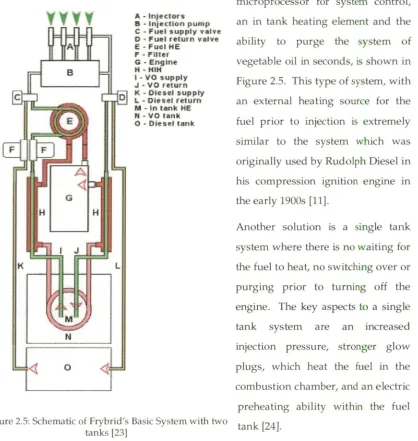
A - injectors= Injection pump
C - Fuel supply valve ▪ - Fuel return valve E - Fuel HE
F - Filter G - Engine H - HIH
I - VO supply J - VO return
K - Diesel supply L - Diesel return
- in tank HE N VO tank 0 - Diesel tank
0
Figure 2.5: Schematic of Frybrid's Basic System with two tanks [23]
[image:18.545.62.480.103.544.2]microprocessor for system control,
an in tank heating element and the
ability to purge the system of
vegetable oil in seconds, is shown in
Figure 2.5. This type of system, with
an external heating source for the
fuel prior to injection is extremely
similar to the system which was
originally used by Rudolph Diesel in
his compression ignition engine in
the early 1900s [11].
Another solution is a single tank
system where there is no waiting for
the fuel to heat, no switching over or
purging prior to turning off the
engine. The key aspects to a single
tank system are an increased
injection pressure, stronger glow
plugs, which heat the fuel in the
combustion chamber, and an electric
preheating ability within the fuel
tank [241.
Conversion kits are available from
a wide variety of companies such as Frybrid, Greasecar and VegPower to name a few;
these kits provide the means of converting a regular diesel car or truck to run on straight
vegetable oils. Many of these kits have been developed with the
useof computers or
In general, when vegetable oils are used as a fuel they are referred to as Straight Vegetable Oil (SVO), derived from vegetable oils, or Waste Vegetable Oil (\MVO), derived from used cooking oils, to distinguish them from biodiesel which is distinctly different. Vegetable oils are not the only source of biologically available fuels; some alcohols may also be used. The two alcohols which are currently undergoing extensive research are ethanol and methanol; these two alcohols and their advantages and disadvantages will be discussed further in the following section.
2.2.2
Ethanol & Methanol
Ethanol is a type of alcohol that can be used as a transportation fuel that can be blended with gasoline and used in an unmodified engine at low percentage blends, 10-30% or at higher blends with some modifications [25]. Ethanol is created by the fermentation of starches and sugars; because of breakthroughs in biotechnology ethanol can now be derived not only from the traditional corn or sugar cane but also from switchgrass, wood chips, corn husks or other agricultural waste. The production of ethanol involves grinding the feedstock in to a powder then mixing the powder with water and alpha-amylase and heating it to turn the starch into a liquid mash. The mash is cooled and another enzyme is added to transform the starch into sugars; the sugars are fermented using yeast, and then distilled creating ethanol and carbon dioxide. The ethanol is then separated and the water removed from it leaving a pure ethanol of around 200 proof. The main by-products of this process are distillers grain and carbon dioxide. Distillers grain is a highly nutritious livestock feed and carbon dioxide can be collected and sold for industrial use [26].
Methanol is also considered an alternative fuel which is generally used in conjunction
with gasoline; however, it has generally received less attention than ethanol as it has a
few inherent problems. Methanol is more corrosive to engine components than ethanol
and its calorific energy per litre is 55% lower than that of petrol, while ethanol's energy
per litre is only 75% that of petrol. However, the use of higher compression ratios and
corrosion resistant materials can overcome these issues, albeit significant engine
modifications are required. Another issue with the use of methanol is the higher levels
of toxicity; extensive exposure can cause serious and lasting health damage [27].
Methanol also has its advantages; it can easily be produced from abundant sources such
as methane. Methane is a large component of natural gas, but is also available from
renewable resources such as the decomposition of organic materials. Another
advantage is demonstrated through race car organisations such as Indy Car is that
methanol does not burn as hot as gasoline and consequently it is safer during a collision
than petrol; as a result methanol is the fuel used during races despite the lower energy
content [27].
Alcohols are typically used in spark ignition engines as they have higher autoignition
inhibition; however, there is still a large sector of transportation which does not operate
using a spark ignition engine. Compression ignition engines require a fuel that has a
high tendency to autoignite; for this application, the focus of research has been on a fuel
called biodiesel. This fuel is derived from straight vegetable oils and is discussed further
in the following section.
2.2.3 Biodiesel
2.2.3.1 Production Process
At a molecular level, vegetable oil consists of three esters attached to one molecule of
glycerine; this is known as a triglyceride. Transesterification involves removing the
glycerine component from the vegetable oil to reduce the viscosity and replacing it with
a molecule of alcohol; ethanol or methanol are the typical alcohols used. Methanol is
typically the alcohol of choice for use in biodiesel production; the reason is that the
reaction to produce methyl esters is a faster and more reliable reaction. If ethanol is
used, the resulting ethyl esters are much more likely to create emulsifiers in the fuel as a
result of water present in the oil; this causes the secondary issue of separating the
emulsifiers from the biodiesel [2].
The triglycerides are broken by the addition of a catalyst to the vegetable oil; typical
catalysts are sodium hydroxide or potassium hydroxide. Once the triglyceride is broken
up each of the esters attaches itself to an alcohol resulting in three alkyl ester molecules
(molecules made from alcohol and vegetable oil) and one glycerine molecule. An
example of a transesterification reaction can be seen in Figure 2.6.
0 0
II
II
CH) - 0 - C - R1
CH3 - 0 - C - R1
i
i 0
0 CH2 - OH
1
i
II
II I
CH - 0 - C - R2 4- 3 CH3OH —;. CH3 - 0 - C - R) ± CH-OH
i (Catalyst) i
0 0 CH) - OH
CHz - 0 - C - R3 CH3 - 0 - C - R3
[image:21.548.64.453.412.584.2]triglyceride methanol mixture of fatty esters glycerol
Figure 2.6: Transesterification Reaction [28]
In Figure 2.6
R1, R2and
R3refer to long chains of carbons and hydrogen atoms called
Measure the
amount of methanol and lye
\
Measure the amount of vegetable oil inliters
Allow the mixture to settle for 8 hrs.
Drain the glycerin
1\‘,
per liter of vegetable oil— ls Use 3.5 grams of lye per liter of
vegetable oil
Perform a titration to determine the
value of()
Mix the lye into the methanol
((x+35 -.,- number of grams of lye to use per liter of vegetable oil
Mix the sodium metboxide into the vegetable oil
•
Let sit for a week, use as soap
[image:22.548.102.431.211.671.2]Use in Diesel engine
Figure 2.7: Biodiesel Production Flowchart from [2]
Filter the biodiesel to 5 microns
100 kg oil + 10 kg methanol -> 100 kg biodiesel + 10 kg glycerol
The actual process of biodiesel production can be summarised in a flow chart as created by Joshua Tickell in his book, From the Fryer to the Fuel Tank. This flow chart is shown below in Figure 2.7
2.2.3.2 Diesel and Biodiesel Properties
There are a number of properties of diesel fuel which are essential to its effective operation in an engine; these properties are governed by standards dictated by a local authority. These properties can be divided into physical (density, viscosity or sulphur content) and non physical properties (cetane number, flash point or lubricity); physical properties can be measured whereas non physical properties are determined through the interaction of a fuel with a standardised measurement device. The following is a discussion of the key properties of a diesel fuel and how biodiesel compares.
One of the primary properties of a diesel fuel is its ignition quality; this is usually quantified as the cetane number. The cetane number is an important quality in a diesel fuel as it is a measure of the fuels combustive quality; it measures how quickly a fuel starts to burn under CI engine conditions. High cetane numbers relate to superior ignition quality and result in the fuel igniting quickly after being injected into the cylinder while a fuel with a low cetane number will result in an ignition delay. A high cetane number is desirable as the improved combustion will provide better cold starts and reduce the associated white smoke as well as decrease the noise [16]. A minimum level for the cetane number is defined in local standards and range from 40 in the USA and Canada to 51 in the European Union. It can be noted that standards typically require biodiesel to possess a higher cetane number than petroleum based diesels with the USA requiring biodiesel to have a cetane number of 47 [20] while Australia and the EU require a minimum cetane number of 51. However, biodiesels tend to have inherently higher cetane numbers ranging near 55 [29].
The density is the mass per unit volume and for a fuel it is a regulated property; this is because the density is related to the calorific value of the fuel and thus plays a role in the
rate of fuel consumption and power output. Heavier fuels have higher levels of associated risk in terms of operational problems that can arise such as knocking, afterburning, variation in ignition delay; these factors lead to increased engine fatigue, excessive thermal loading and higher levels of exhaust emissions [18]. Biodiesels tend to have higher densities; diesel fuel tends to have densities ranging from 820 - 860 kg/m 3
The heating value of a fuel is a measure of the energy content and is quantified by the
heat released during combustion when a unit of the fuel is burned. The heating value is
also called the calorific value and is related to the density of the fuel; higher density fuels
have lower calorific values, while less dense fuels have higher calorific values.
Consequently, it can be expected that biodiesel will have a lower calorific value to that
of diesel fuel. Diesel fuel typically has a (lower) calorific value of 42.6 MI/ kg [16] while
biodiesel has a value of approximately 39.4 MJ/ kg [29]. As the calorific value is
correlated with the fuel consumption it is expected that biodiesel will have higher rates
of fuel consumption since less energy is released during combustion thus more fuel
must be burned to meet the demand.
Viscosity is a measure of the resistance of the fuel to flow. The viscosity of a fuel is
important in the operation of the fuel injection apparatus as this equipment must
accurately measure and disperse small quantities of the fuel. A fuel with a high
viscosity may distort the fuel pump through the high shear stresses and associated heat
generated [16]; in this way, very viscous fuels can lead to poor combustion and cause
deposits to form within the cylinder. A fuel with a low viscosity has potential to cause
power loss due to leakage of the injection pump and injectors [31]. As a result, upper
and lower limits have been set for the viscosity of a fuel. Since the requirements for
viscosity are determined by the ability of the engine to run on the fuel, the limits defined
for the viscosity of biodiesel and diesel fuel are the same.
The cold flow properties of a fuel are an important consideration as diesel fuels contain a
paraffin component including waxes which can crystallise at low temperatures resulting
in clogged fuel filters that will stall the engine. This issue is apparent with both diesel
and biodiesel fuels; however, it is more pronounced with the biodiesels. There are three
standard points where are used to define the cold flow properties of a fuel:
• Cold Filter Plug Point (CFPP): The CFPP is the temperature at which the fuel has
crystallised sufficiently such that the crystals have joined into groups large
enough to plug the fuel filter. This point is indicative of the cold flow properties
of a fuel as it is the point at which engine operation becomes an issue [32].
• Pour Point: The pour point is the temperature at which the crystals have joined
such that the fuel is essentially a gel and cannot flow. This measure is not
generally applicable to practical circumstances as once the fuel has reached the
pour point the engine has long stopped running [32].
Accordingly, precautions must be taken in colder climates, particularly in the winter; for
diesel fuel it may be sufficient to select the fuel that has been refined or treated for cold
conditions as there are a variety of diesel fuels available. The biodiesels have inherently
worse cold flow properties which are highly dependent on the type of fuel they were
derived from; in particularly cold climates neat biodiesel is not an ideal fuel due to these
poor cold flow properties and as a result many biodiesel users convert to a
diesel-biodiesel blend such as B20 during the colder months of the year.
The flash point is the lowest temperature at which a liquid produces a concentration of
vapour above the liquid in adequate quantities such that it can mix with the air and be
capable of ignition; flash points are regulated to ensure safe handling of the fuel. A
minimum flashpoint, between 60°C and 80°C, has been defined for petroleum diesel as a
safety precaution. The flashpoints of biodiesels are much higher, minimum of 120°C.
The reason for the higher flash points is to ensure that the manufacturer has removed
any excess alcohol which was used in the manufacturing process; excess alcohol in the
biodiesel will cause additional safety issues. Even small quantities of alcohol will
significantly reduce the flashpoint and thus increase the risk of fires. Within the engine,
the alcohol will affect fuel pumps, seals or other rubber components and will result in
poorer combustion characteristics [31]. Since biodiesel has a high flash point, it is
considered non flammable and thus is far simpler to transport and store as it is not
classified as a hazardous substance.
result, should the fuel not posses the necessary lubricative properties or contain
contaminates it will cause wear and ultimately failure of the injection devices. Prior to
regulations on sulphur content this was not an issue; however sulphur is removed from
the fuel through hydrotreating. The process of hydrotreating not only removes the
sulphur from the fuel but it also removes the poly aromatics and polar impurities of the
diesel fuel which influence the lubricity of the fuel. The hydrotreating process also
removes the organic acids which contribute to the fuels acidity [16]. Maintaining a
minimum lubrication level of the fuel will significantly aid in the prevention of engine
wear of the fuel injection systems such as oxidation, adhesive wear, scuffing, fatigue,
corrosion and erosion. The cleanliness and acidity of the fuel also affect the wear
through abrasive wear and corrosive wear respectively. Biodiesel has natural
lubricative properties as well as low natural sulphur content; consequently, it is a fuel
that is low in sulphur and requires no additives to prevent damage to the fuel injection
systems or engine.
Petroleum diesel fuels contain sulphur elements within their chemical structure and as
previously discussed high sulphur fuels tend to have high lubricative properties.
However, the sulphur in diesel fuels has multiple negative impacts on the emissions,
corrosion and exhaust aftertreatment systems. Most of the sulphur in the fuel is
converted during combustion into sulphur dioxide which is a major constituent of acid
rain. Sulphur condensates corrode the exhaust systems and are particularly an issue
when exhaust gas recirculation systems are in place. Additionally, in catalytic
converters more sulphate particles can be generated than the carbon based particulates
which are being destroyed thus increasing overall particulate emissions; as well, sulphur
will deactivate NOx absorbers in exhaust aftertreatment systems [16]. As previously
stated the biodiesels inherently have near zero sulphur content and as a result have
lower levels of sulphur oxide emissions and will not cause sulphate particulate
problems in exhaust systems.
fuel. The stability of the fuel is important to know as poor stability (low number of C=C bonds) can lead to high acid number, increased viscosity and the formation of sediments which will clog engine filters [32]. The iodine number also correlates to the level of NOx emissions. Iodine numbers around 38 will produce a fuel that is NOx neutral when compared with conventional diesel fuel while biodiesel with an iodine number lower than 38 will produce significantly less NOx emissions than diesel fuel; however, the trade-off is that these fuels with low numbers of C=C bonds also produce fuels that have very poor cold flow properties [33].
It can be seen that biodiesel and diesel fuel possess similar physical and combustive characteristics. Because of these similarities of viscosity, density and autoignition tendencies it is possible for biodiesel to be an unobtrusive substitute for petroleum derived diesel fuel.
2.2.3.3
Pros & Cons of Biodiesel
Biodiesel offers a renewable source of fuel with similar properties to diesel fuel which also has the potential to decrease harmful emissions associated with burning diesel fuel. In addition to this, biodiesel possesses an abundance of other advantages including:
• Biodiesel is biodegradable and non hazardous (with a flash point above 120°C) [34]
• The methyl esters (biodiesel) produced by transesterification contains virtually no sulphur (less than 0.001%) which is a primary cause of acid rain [2,35]
• The production of biodiesel can assist in the revitalisation of depleted agricultural sectors in developing countries by giving value to a crop that has traditionally been uneconomical to produce.
• Biodiesel can be used as a neat fuel or blended with regular petroleum based diesel.
• Biodiesel can be used with the current diesel infrastructure.
While the fact that biodiesel is a mild solvent which will clean out the fuel tank and fuel lines of the engine may be considered an advantage, it also poses a few problems. One issue is that the fuel filter may become clogged when the engine is running on the first few tanks of biodiesel and as a result need to be changed at least once; however, once the diesel deposits have been removed this is no longer an issue. Another issue is that experience has shown biodiesel has a tendency to deteriorate parts of the fuel system that are made from natural rubber [36]. When running an engine on neat biodiesel it is recommended that all rubber hoses and seals be replaced with a synthetic material. Another issue surrounding biodiesel is that in warm weather biodiesel is more susceptible to the growth of bacteria in the fuel tank than petroleum based diesel [37]; however, this can be corrected with antibacterial additives if necessary.
One of the main concerns with the use of biodiesel is its performance at low temperatures. As with petroleum based diesel fuels, freezing or gelling occurs as the temperature decreases. When the fuel gels, it can clog the filters and will eventually become too thick to pump from the fuel tank to the engine. Consequently, the cloud point of biodiesel must be reported so the user can take precautions should the ambient temperature drop too low [9].
For any particular fuel the three cold flow temperatures the cloud point, cold filter plug point and the pour point, will lie within a close range of approximately 3°C or 4°C; thus once the fuel begins to cloud, it can gel with a slight drop in temperature.
it is common to use combinations of various oils in the production of biodiesel to obtain a fuel with desirable combustion and cold flow properties [31].
Studies, such as the study conducted by Wyatt et al, have investigated the effect of blending biodiesel with petrol diesel on the cold flow properties of the fuel. This work has shown that the blending with petroleum diesel resulted in the improvement of the cold flow properties of biodiesel such that they are comparable to neat conventional diesel fuel up to a biodiesel content of 20% [38].
2.2.3.4 Biodiesel Standards
All Biodiesel that is produced and is to be used in diesel engines by the public must adhere to standards set out by the local authority. Standards may vary from country to country but their purpose is to ensure that quality is maintained regardless of manufacturer. As biodiesel is a growing industry, not all standards organisations have defined specific standards relating to neat biodiesel and its use; however, for some regions these standards do exist.
The American Society of Testing and Materials (ASTM) have approved a standard which was developed through the involvement of companies which manufacture the vehicles, engines and fuel injection equipment. It is to be noted that this standard, ASTM D6751 titled: Standard Specification for Biodiesel Fuel (B100) Blend Stock for Distillate Fuels specifies that it is for neat biodiesel which will be used in blends of up to 20% by volume [7]. The table summarising the specifications outlined in ASTM D6751 can be found in Appendix A.
Table 2.1 Australian Biodiesel Standards [39]
Parameter Standard
Sulphur 100 ppm (effective February 1 2006)
Density 860-890 kg/m3
Distillation T90 max 360° C
Sulphated Ash max 0.020% mass
Viscosity @ 40°C 3.5-5.0 mm2/s
Flashpoint min 120°C
Water and Sediment max 0.050% vol
Ester Content min 96.5%
Phosphorus max 10 mg/kg
Acid Value max 0.80 mg KOH/g
Total Contamination max 24 mg/kg
Free Glycerol max 0.020 % mass
Total Glycerol max 0.250 % mass
Oxidation Stability min 6 Hrs @ 110°C
M ethls _.C.5mg/kg Group I (Na, K) 5_5mg/kg Group II (CA, Mg)
Methanol Content <0.20% (m/m)
Copper Strip Corrosion Class 1
Cetane Number min 51.0
2.3 Engine Performance with Biodiesel
This work evaluates the benefits and detriments of substitution of biodiesel for
petroleum based diesel fuel in a generator unit. The focus is on several aspects of engine
performance: the exhaust emissions, the opacity, the fuel consumption as the applied
load is varied. The following sections provides details on the investigated emissions,
opacity and fuel consumption and outlines previous research in each of the areas
studied as related to biodiesel and its impact on diesel engines.
2.3.1 Emissions
Apart from the reduction in fossil fuel consumption, one of the major benefits of
switching to a renewable fuel such as biodiesel is the reduction in harmful exhaust
emissions. This is particularly significant in urban areas in both the developed and
developing world as well as in regions that have sensitive ecosystems. In urban areas a
reduction in exhaust emissions could significantly improve the quality of air and reduce
related health issues. The following section introduce the main exhaust emissions
providing details on their mechanisms of formation and discusses the recent work
conducted on the five main components of diesel exhaust emissions: carbon dioxide,
carbon monoxide, hydrocarbons, nitrous oxides and sulphur oxides.
2.3.1.1 Carbon Monoxide
Carbon monoxide, CO, is a poisonous gas which contributes to the formation of ozone
and smog at low levels. Carbon monoxide is generally a result of incomplete
combustion when carbon is burned in oxygen with an excess of carbon present [40] CO
is also considered a greenhouse gas. Carbon monoxide is capable of reacting
photochemically with aldehydes; aldehydes are common in urban areas where the
concentration of exhaust emissions from automobiles and industrial actions are high.
ON.. zux * I Ihriel We% MIL Mt.
CS
will be left un-reacted in its current form to be emitted as CO. As the applied load increases, the temperature of the exhaust gases increase as well, this promotes the oxidation reaction that shifts CO to CO2 by increasing the speed at which the reaction occurs resulting in lower emissions of CO and higher emissions of CO2 at high loads [41]. At light loads more air, and hence oxygen, is available for reaction; however, the temperatures are too low to drive the reaction of CO to CO2 resulting in high levels of CO at low loads. As the load is increased, the temperature increases as well resulting in larger amounts of CO eliminated. At high loads there is little air available for the elimination reaction to take place; as a result, despite the high temperatures, less CO is eliminated. Consequently, there is an optimal load at which to operate the engine, which varies for different engines, that produces a minimum amount of carbon monoxide emissions [41].
Existing research tends to concur that the use of biodiesel reduces carbon monoxide emissions. Ulusoy et al. [42] performed tests comparing the performance of ko biodiesel derived from used frying oil to standard diesel fuel and reported a reduction of 8.59%. However, other
Biodiesel blends reduce CO emissions since biodiesel has higher oxygen content than
petroleum diesel. Higher oxygen content assists in achieving a more complete
combustion and causes more oxygen to be available for carbon monoxide elimination
reactions.
2.3.1.2 Hydrocarbons
In general terms, hydrocarbons, HC, are any chemical compound that consist
exclusively of carbon and hydrogen. When hydrocarbons are extracted from a
geological source in a liquid form they are labelled as petroleum; in gaseous form, they
are called natural gas. In relation to exhaust emissions, the presence of hydrocarbons
generally indicates incomplete combustion as some of the fuel is simply being exhausted
without being burned [45]. This release of hydrocarbons by vehicle exhaust results in
pollution which, along with NO emissions and sunlight will form low level ozone and
smog [7].
Ozone forms at low levels through a variety of complex chemical reactions between
nitrous oxides, carbon monoxide and hydrocarbons. The main issues with the low level
formation of ozone are health related. Ozone is known to cause many types of health
problems including irritation of the respiratory system, reduced lung capacity,
aggravation of asthma, increased susceptibility to respiratory infections and the
inflammation of and damage to the lining of the lungs [45].
The level of unburned hydrocarbons are a result of factors relating to the operating
conditions of the engine such as the fuel spray characteristics, and the interaction
between the fuel spray and the air in the combustion chamber as well as the properties
of the fuel [20]. The cetane number is one property which can predict the amount of HC
in the exhaust. A high cetane number promotes superior combustion characteristics and
as a result the combustion that takes place is more complete and thus hydrocarbon
emissions decrease [44]. Since biodiesel is required to have a higher cetane number than
petroleum based diesel, it is not surprising that biodiesel produces lower hydrocarbon
emissions.
28
however, some may be due to recombined intermediary compounds. The appearance of
hydrocarbons in the exhaust generally indicates that the fuel was not ignited
successfully; however, the physical properties and chemical composition of the fuel play
also play an important role in the concentration of HC in the exhaust as well as the
engine operating parameters such as the engine speed, load and AFR [46].
The reasons why hydrocarbons may be emitted in the exhaust are related to the air-fuel
mixture in the cylinder. The engine speed, load and air-fuel ratio all influence the
combustion and swirl patterns within the cylinder; it is possible that the local mixture in
a particular region of the cylinder is so rich, or so lean, that the oxidation reactions
(which occur prior to full combustion) are extremely slow and as a result the ignition
cannot occur since too much heat has been lost [41]. Another possible situation is that
within elements of the air fuel mixture the surface to volume ratio may be too large and
cause high levels of heat loss thus preventing ignition. Finally, heat losses can also occur
if the air fuel mixture is adjacent to a comparatively cool surface, such as that of the
piston or cylinder wall, which would cause heat loss within the mixture and inhibit
combustion [46].
Studies have shown that the use of biodiesel will reduce the level of hydrocarbon
emissions. One study, performed by Ulusoy et al, that was conducted on biodiesel
derived from used fryer oil determined that the emissions of HC decreased by 30.66%
[42]. When testing B20, studies generally show a reduction of 20-30% [7, 43]; however,
one study performed by Canakci et al reported a decrease of as small as 2.9% for a 20%
volumetric blend of biodiesel
bio30Y0 bio20Yo L diesel
derived from soybeans [20].
90
The same study reported a
decrease of hydrocarbon
emissions by 42.5% with the
use of B100; the results may
have more to do with the type
of diesel fuel that was used in
the blend, as well factors such
as load and engine speed
70
ct.
cc,
30
10
14W
2000 26W 3200 3800
[image:34.546.217.464.544.684.2]rpm
which play a significant role in hydrocarbon emissions. A study performed by Lue et al [44] determined that at low rpm, 1400-2600, there was a small decrease in HC emissions, however when the speed was increased to between 2600 and 3000 rpm there was a significant benefit in the use of biodiesel in terms of reducing the emissions of hydrocarbons; this relationship is shown on the previous page in Figure 2.9.
In general the level of hydrocarbons is expected to decrease with an increase in biodiesel concentration due to the superior combustion characteristics of biodiesel fuel over diesel fuel.
2.3.1.3
Carbon Dioxide
Carbon Dioxide, CO2, is classified as a green house gas and as such measures are being taken to reduce its emissions. While it is generally accepted that the levels of CO2 are rising and that the overall temperature of the earth is increasing as well, it is yet unclear how much human activities have affected this. Regardless, the disruption to the carbon cycle by burning tonnes of fossil fuels which took millions of years to store cannot have anything but a negative impact; thus there is a necessity to restore balance to the environment [25].
The emissions of carbon dioxide are related to those of carbon monoxide since the reaction that eliminates CO produces CO2. Thus, it can be expected that there will be an inverse relationship between the two emissions as a result of the mechanisms discussed in Section 2.3.1.1.
from the production of biodiesel which involves growing massive amounts of crops; these crops require carbon dioxide during their growth period. This means that biodiesel is CO2 neutral whereas petroleum
700.00
based diesel fuels simply adds to the net emissions [49].
a.
a
The use of B100 reduces net CO2 emissions by 78.45% compared to petroleum diesel; for B20, net CO2 emissions dropped by 15.66%. The chart for which is shown in Figure 2.10. This figure does not have a 100% reduction rate for B100 because it includes the fossil fuels burned during the harvesting of the crops and the production of biodiesel.
Figure 2.10: Comparison of
Net
CO2 Life Cycle Emissions for Petroleum Diesel andBiodiesel Blends
[47]
2.3.1.4 Nitrous Oxides
In many instances, when implemented in CI engines, the use of biodiesel results in an increase in NOx emissions; however if used in a boilers or for home heating applications the NOx emissions tend to decrease [31]. This change in emissions is a result of the varying ways in which the fuel is burnt in these applications. In boilers it is burned with an open flame, where as in an engine it is ignited under a high pressure spray; it is this burning at high temperatures and pressures that promotes the formation of NOx.
mechanism by which nitrous oxides are formed within a diesel engine. This type of
formation occurs when the high temperatures during combustion cause oxygen in the
air to dissociate into atoms. These atoms dissociate nitrogen molecules from the air to
form NO; the degree of conversion is dependant on the concentration of atomic oxygen
within the air [50].
The amount of nitrous oxides formed will be determined by the rate of formation and
the time available for reaction. One factor that affects the rate of formation is the peak
temperature reached during combustion which depends on a number of factors such as
the equivalence ratio, fuel composition and the initial temperature of fuel-air mixture
[50]. Additionally, the rate of formation is dependant on the concentration of oxygen
present during combustion [41].
Since the rate of formation speeds up at higher temperatures it is expected that the
amount of NO emitted will increase with an increased load because of the associated
temperature increase.. Additionally, as the amount of NO formed is impacted by the
amount of oxygen in the fuel it is not surprising that biodiesels tend to produce higher
levels of NOx emissions since they inherently contain higher levels of oxygen. This
effect is amplified at low loads since the maximum NO formation occurs in a fuel and air
mixture which is slightly lean as there is more oxygen available for reaction [41].
V.
4
i
'
p
'p
K, 1
V. I
- . r_ -
16
14 12 10 8 6 4
0
[image:38.545.133.395.94.224.2]S
Figure 2.11: Increase in NOx emissions from a CI engine using various B100 fuels [31]
The use of B20 is common as it balances the positive aspects of the emissions with minor issues regarding the engine as well as causing only minor increases of NOx emissions. For B20, the typical levels of NOx emissions are between two and three percent greater than petroleum diesel [38, 43].
As an illustration of the impact of the source oil on the NOx emissions, a study conducted by Whyatt et al, tested emissions for soy methyl esters, animal fats, and tallow. NOx emissions from B20 soy methyl ester increased by 6.2% while the emissions from B20 derived from animal fat (chicken fat, lard) increased by 3.0% and B20 from tallow was, within error, the same as petroleum based diesel [38].
In general, studies have shown that the use of biodiesel increases the emissions of nitrous oxide; the higher the level of biodiesel in the blend, the higher the nitrous oxide emissions. This is because of the shorter delay in the ignition time of the biodiesel blends which result in peak pressures and temperatures that enhance NOx formation [44]. Another reason for the increase in nitrous oxide emissions is the higher levels of oxygen in biodiesel which leads to better oxidation of the available nitrogen [51].
33
2.5.1.5 Sulphur and Sulphur Oxides
Sulphur is one of the main contributing factors to acid rain. New restrictions on petroleum diesel fuels are limiting the allowable sulphur content of fuel. However, this causes problems related to lubrication in the engine as ultra low sulphur fuels have much lower lubricity than regular diesel [7]. In this instance biodiesel can be beneficial in more than one way; firstly, biodiesel has much higher lubricity than diesel fuel and when mixed, even in small quantities, with petroleum diesel it can increase the lubricity. Secondly, it is sulphur free and as a result can be added to ultra low sulphur fuels to increase the lubricity without breaking sulphur limitations.
Biodiesel typically contains less than 15 ppm sulphur, as a result nearly all sulphur oxides in exhaust emissions are eliminated. In this work it was not possible to monitor the emissions of sulphur and sulphur
oxides. However, this is not necessary as 140
the level of sulphur emitted is directly s 120 100
related to the level of sulphur in the fuel Fuel
,
80 sulfur[54]; consequently, it is known that since content
• 60 045%
biodiesel contain very low levels of sulphur it can be deduced that the sulphur oxide
20 .05% (1./8•4
emissions will decrease as a function of 0 1
2 3 4 5 6 7 8 0
biodiesel content. Figure 2.12 illustrates the Air-to-Fuel Ratio,
relationship between the sulphur content of Figure 2.12: SO2 Emissions for fuels with the fuel and the resulting SO2 emissions. varying sulphur contents from [54]
2.3.2 Opacity
Opacity is a measure of the particulate matter, or soot, contained within the exhaust of the engine. Particulate matter (PM) is classified in terms of its size; PMio refers to a particle that is smaller than 10 micrometers. Particles larger than PK° are not considered a human health risk as these particles may be filtered by hairs in the nose and throat; however, PK() is small enough to enter the bronchi and lungs and settle there causing health problems. The next level down is PM2.5, particulate matter smaller than 2.5 micrometers in diameter; this size of particle can penetrate deep into the lungs
[55]. Studies have shown that the presence of PM2.5 can lead to heart attacks and other cardiovascular problems as well as respiratory disease [7].
Opacity is a result of the amount of soot formed during combustion of diesel fuels. During complete combustion, the fuel is sprayed into the cylinder where it diffuses, evaporates and mixes with the air before combusting due to the high temperatures. However, due to the high cycle temperatures within the cylinder, there is insufficient time for the evaporation and mixing to fully complete; consequently, pyrolysis occurs and soot is formed during this period. Additionally, if some of the spray begins to combust in a locally fuel rich area, due to the lack of oxygen, pyrolysis of the hydrocarbons occurs, creating soot. In the post combustion period some of the soot formed may be burned, and eliminated, as it is exposed to oxygen present thus reducing the net soot output [46]. Once the soot particles have formed, they grow through agglomeration and coagulation resulting in black smoke made up of particles of varying sizes. More soot is produced at higher loads as there is less oxygen available to burn the soot particles in the post combustion period resulting in an increase in the net soot emitted [41]. Lower levels of soot are produced when the size of the fuel particle injected is minimised; this is because it allows quicker diffusion, evaporation and mixing and reduces the amount of fuel burned in a fuel rich region.
• Cal. Ref.
RI Synthetic
080/20 blend
0100% BioD_,
Mtn 1110'7
35
decrease in opacity. This graph also illustrates the advancement in emission reduction technology since the newer engines produce significantly lower emissions overall.
E 1000
E 900
• 800
o
700 in- - 600
E 500
2 400 300
t" 200
0- 100
[image:41.547.157.370.146.277.2]88 Ford 90 Dodge 95 Ford 96 Dodge
Figure 2.13: Particulate Emissions for four types of fuels in four different engines [56] In general, smoke emissions may decrease with biodiesel use; but it is possible they will increase as well since the most significant engine factors that contribute to the formation of particulate matter are the engine load and its speed [44].
2.3.3
Fuel Consumption
Fuel consumption is an important factor to consider when studying the performance of an engine. The fuel consumption can be considered in two ways; the first is the basic fuel consumption as measured in volume per time. The second method is to consider the specific fuel consumption which provides and indication of the efficiency of the engine to burn the fuel; the specific fuel consumption (SFC) is reported in g/kW-hr. When considering the fuel consumption of biodiesel as related to petroleum based diesel, it is generally considered that biodiesel will result in a higher rate of fuel consumption [57].
number promotes superior combustion when biodiesel is used but the lower calorific value indicates that less energy is release during combustion of an equal volume of biodiesel than diesel fuel; as a result, more biodiesel is required to be burned to produce an equal amount of energy resulting in higher fuel consumption for biodiesels [31]. In a study conducted by Krahl et al. the effect of rapeseed oil methyl ester as compared with low sulphur diesels was investigated in terms of emissions and specific fuel consumption. The result, as related to the specific fuel consumption was that there was an increase of 12% when biodiesel was used as compared to the low sulphur diesel fuels [58]. A study by Labeckas et al looked at biodiesel in concentration up to B35; it was found that at maximum torque the SFC had increased by 18.7% and at the maximum rated power, the SFC had increased by 23.3% over the specific fuel consumption of petrol-diesel at the same conditions [59].
A study conducted in 2005 by Cetinkaya and Karaosmanoglu at Istanbul Technical University investigated the performance of a diesel generator run on biodiesel derived from used cooking oil. Regarding the fuel consumption, Cetinkaya and Karaosmanoglu found a 4% increase when using B20 and a 10% increase when the generator was operating on B100. A graph illustrating their results can be found in Figure 2.14.
310
300
290
280
270
2
260
250
1809 2000 2200 2400 2600 2800 3000
[image:42.545.142.385.453.574.2]Speed, rpm
Figure 2.14: Brake specific fuel consumption of B20, B100 and Diesel Fuel [60]
In general it can be determined that the fuel consumption for biodiesel, or blend, is higher than that of petroleum based diesel; this is a result of the lower calorific value.
2.4 Concluding Remarks
This chapter has presented a brief introduction to internal combustion engines and investigated the background of biodiesel as well as the need for it in the world today. The benefits and detriments of the use of biodiesel as a fuel have been discussed and concluded that with a few minor precautions there is very little that needs to be done for biodiesel to be used as a fuel by the general population.
To Gas Analyser
Chapter
3: Experimental
Test Rig and
Instrumentation
This chapter describes the instrumentation, test engine and the methods of data acquisition. The chapter also details the specific biodiesels that were tested as well as the particular blends used. Further, this chapter also outlines the testing procedure used during experimentation.
31 Generator Set & Instrumentation
The following section provides a description of the testing equipment used in this work
as well as the instrumentation and data acquisition systems required to obtain the necessary information to conduct the performance appraisal. Below, Figure 3.8 shows a schematic of the generating unit used during testing.
I Board
Fuel Tank
Generating Unit
1:411 It (lenerator
Air intake —10.1 I
Intake I
Ambient Temp
Temp
rrC-1
-08
SU mr/Trm p
To Smoke Meter
RPM Sensor
Power Load
Meter Bank
[image:44.545.111.415.377.615.2]Exhaust
Figure 3.8 Generating Unit Schematic
![Figure 2.1: Four Stoke Cycle of a Compression Ignition Engine [9]](https://thumb-us.123doks.com/thumbv2/123dok_us/8440291.334203/12.547.151.375.93.259/figure-stoke-cycle-compression-ignition-engine.webp)
![Figure 2.2: Diesel's First Engine [13]](https://thumb-us.123doks.com/thumbv2/123dok_us/8440291.334203/13.547.53.461.98.356/figure-diesel-s-first-engine.webp)
![Figure 2.3: A - Supercharger driven mechanically by the engine Turbocharger where a turbine drives a compressor through a common shaft [14]](https://thumb-us.123doks.com/thumbv2/123dok_us/8440291.334203/14.545.63.461.375.495/figure-supercharger-driven-mechanically-engine-turbocharger-turbine-compressor.webp)

![Figure 2.6: Transesterification Reaction [28]](https://thumb-us.123doks.com/thumbv2/123dok_us/8440291.334203/21.548.64.453.412.584/figure-transesterification-reaction.webp)
![Figure 2.7: Biodiesel Production Flowchart from [2]](https://thumb-us.123doks.com/thumbv2/123dok_us/8440291.334203/22.548.102.431.211.671/figure-biodiesel-production-flowchart-from.webp)
![Table 2.1 Australian Biodiesel Standards [39]](https://thumb-us.123doks.com/thumbv2/123dok_us/8440291.334203/30.545.57.384.110.372/table-australian-biodiesel-standards.webp)
![Figure 2.9: Hydrocarbon emissions for B20 and B30 blends with respect to engine speed [44]](https://thumb-us.123doks.com/thumbv2/123dok_us/8440291.334203/34.546.217.464.544.684/figure-hydrocarbon-emissions-b-blends-respect-engine-speed.webp)
![Figure 2.11: Increase in NOx emissions from a CI engine using various B100 fuels [31]](https://thumb-us.123doks.com/thumbv2/123dok_us/8440291.334203/38.545.133.395.94.224/figure-increase-nox-emissions-engine-using-various-fuels.webp)
