International Journal of Innovative Technology and Exploring Engineering (IJITEE) ISSN: 2278-3075, Volume-8 Issue-9, July 2019
Abstract: The rapid development of social relations is currently leading to the transformation of many traditional legal tenets. Thus, public relations appear in the virtual space, cities can play a more significant role than the nation-state itself, and the design of the construction is often more expensive than the process of construction. These and many other things bring about the circumstances when the state, having its sovereignty, does not primarily take into account its territory to protect its own interests, as well as the emergence of new legal relations occurs without the usual binding to the territory. The purpose of this study is to assess the viability of the territory as one of the key characteristics of the state, taking into account the transformation of social relations under the modern conditions. The research attempts to understand the territory as a feature of the state with the latest trends in the development of social relations. To achieve this goal, modern scientific literature on the issue was analyzed to provide the assessment of the experience of new territory formation establishing new public relations and virtual space. It also provides an analysis of cross-border relations, carried out by both individuals and large commercial organizations. In order to develop an adequate legal doctrine, the methods of implementing the organizational and commercial activities of some organizations were investigated.
Index Terms: creating new space, mega-region, migration, project activities, public relations, signs of the state,state sovereignty, territory, the creation of a new territory, transnational companies, virtual space,
I. INTRODUCTION
In the theory of law, territory is traditionally considered as a key feature of the state [1]. From the moment of its establishment as a public institution, land was supposed to be the basis for building any relations. However, nowadays in our rapidly changing world this paradigm is being modified due to the transformation of relations, although, of course, the physical territorial space remains significant for any legal relations. There will be considered some aspects that help define the territory as a key feature of the state[2]. It’s obvious that any country seeks to preserve the space of its existence. The unity of territorial integrity personifies the sovereignty of the state, thus, disputes over the territorial affiliation of certain localities continue to be the subject of litigation. However, certain areas may not be of any interest for some states, since not every land can be useful and applicable for people's lives. At the same time, constitutional and legal relations can develop without being tied to a
Revised Manuscript Received on July 06, 2019.
Vladimir NikolaevichKoval, Sevastopol State University, Sevastopol, Russia.
Stanislav AleksandrovichVasilev, Sevastopol State University, Sevastopol, Russia.
Sergei SergeevichZenin, Kutafin Moscow State Law University (MSAL), Moscow, Russia; South Ural State University (national research university), Chelyabinsk,Russia.
particular territory. This is due to specific features of their implementation, the strategic importance of the objects located in certain areas, as well as current globalization processes. As a result, the territory as a feature of the state gradually fades and doesn’t crucially determine its sovereignty, which will be further discussed in the paper.
II. LITERATURE REVIEW
Castells, M. [3] consider growth of the Network Society; Charlesworth, H. researched the Public/Private Distinction and the Right to Development in International Law; Gerber, J.-D., Bandi, Tanner, M. [4] studied the Role of Alpine Development Regimes in the Development of Second Homes: Preliminary Lessons from Switzerland; Gille, F., Scalvinoni, B. [5] examined local Territorial Issues of Cross-Border Workers: The Different Examples of Thionville and Forbach; Jones, T, Newburn, T [6] analyzed comparative Criminal Justice Policy-Making in the United States and the United Kingdom: The Case of Private Prisons; Nelles, J., Durand, F. [7] examined political Rescaling and Metropolitan Governance in Cross-Border Regions: Comparing the Cross-Border Metropolitan Areas of Lille and Luxembourg, Rezeanu; C.-I., Briciu, A., Briciu, V., Repanovici, A., Coman, C. [8] researched the Influence of Urbanism and Information Consumption on Political Dimensions of Social Capital: Exploratory Study of the Localities Adjacent to the Core City from Brașov Metropolitan Area, Romania. However, the topic ‘Territory as a feature of state in terms of modern public relations development’ has not yet been studied.
III. PROPOSED METHODOLOGY
A. General description
The study provides the analysis of the experience of large commercial organizations, which carry out their work in isolation from the state territoriality, due to the scale of their activities, large capital and influence on the world economy. To confirm the possibility of creating new territories, the experience of the state of Sealand was analyzed together with the formation of a new province of the Netherlands – Flevoland, and a new district of the city of St. Petersburg. In order to confirm the author’s opinion and justify the increase of the significance of these projects, some emerging trends in the relevant field are considered, and some possible situations are modelled and analized. To confirm the increase in the volume of implemented legal relations in virtual spaces, the current numerical data are
studied. The paper also observes the causes of
growing quantity of
Territory as a Feature of the State in Terms of
Modern Public Relations Development
agglomerations and erasing settlements, which lead to the erosion of states borders and the formation of economically viable mega-regions, devolving power from the dysfunctional nation-state to cities and neighborhoods.
B. Algorithm
The following methods were used in current study: - single facts collection and study methods; - generalization methods;
- methods of scientific abstraction; - methods of cognition of regularities.
The methods of interpretation of the law were used at the stage of collection and study of isolated facts. Importance in the course of the study was given to the scientific validity, consistency and logical analysis of the problems under consideration. The deduction method, i.e. moving from general to specific, was the basis of this work. First, we studied general provisions and patterns of a particular
question, and later – the specific forms of its manifestation. The method of induction, "from specific to general", was also actively used, which allowed drawing general conclusions on the peculiarities of the development of a modern system of relations between public and private owners on the basis of an analysis of individual problems of property rights restriction. In addition, such research methods as sociological, Aristotelian and structural were actively used. The method of legal analysis was also applied during the research. The method of legal modeling was used when writing the article.
C. Flow Chart
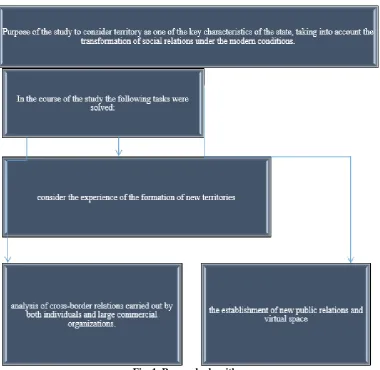
[image:2.595.108.489.278.648.2]The study was carried out using certain algorithms of the study, through which the results were obtained, the algorithm of the study is presented in Fig. 1:
Fig. 1. Research algorithm
IV. RESULTS
3.1. The nature of modern social relations makes the territory gradually cease to be a full-fledged feature of the modern nation-state.
3.2. The activities of modern large commercial organizations appear to be the same as the functions of nation-states, which leads to the fact that some firms gradually acquire the characteristics of a subject of public law.
3.3. It is currently possible to form new territories, which,
as a rule, belong to the territories of existing nation-states, but in the future it will be possible to virtually form the territory in which a new sovereign state may exist.
3.4. Modern public relations are highly influenced not only by the territory itself, but by the activity of those model objects the construction of which is only planned on this territory.
International Journal of Innovative Technology and Exploring Engineering (IJITEE) ISSN: 2278-3075, Volume-8 Issue-9, July 2019
space where a large number of public relations appear and may arise in the future. In this case, binding to the territory of a sovereign state has an insignificant legal meaning.
3.6. Modern urbanization has led to the formation of “mega-regions” that concentrate relations on their territory, becoming more autonomous and devolving power from the nation-state.
V. DISCUSSION
A. Territorial membership of large commercial
organizations
With the development of globalization the transnational nature of legal relations in many areas of public life brings to the forefront individual legal entities that play a much more significant role in the world community than nation-states and even international organizations. In case of such entities, it does not matter what state they function in, or where the main office or headquarters are located. In terms of its income, such companies as British Petroleum or Apple, for example, dramatically exceed the budgets of many countries [9]. Various organizations, operating in countries with the developing economy, are currently rushing into the transnational space to make their business grow. Being established on the territory of one state, many companies do not earn anything within it [10], but seek development in other countries, influencing their economy, becoming residents of the respective countries. Thus, the legal state territorial linkage is more likely to get lost for state-of-the-art business. Modern communication technologies [11] allow a variety of organizations to carry out effective management almost anywhere in the world [12]. Entrepreneurship can now go far beyond physical boundaries due to globally integrated markets and rapidly expanding networks that do not interfere with time zones [3]. Based on this, international companies can have a very different impact on the lives of citizens of their country of residence. They can provide jobs, influence the market, engage in charity, etc. And the nation-state will not have any tangible impact if such a corporation does not violate current legislation. Moreover, at the present time some of the prosperous individuals can actually support the whole developing states organizing their activity on their territory and owning the land on all legal grounds. Thus, we can conclude that the sovereignty of a territory greatly depends on private capital, as well as management, and disposal of land. Due to the concentration of a large amount of financial resources in some private hands, there is a transformation of public law relations under the private law influence. In any case, no one can deny the actual impact of large international commercial organizations on the national economy at the moment[13]. The relationships of international organizations and legal entities are of a great interest nowadays. For example, the UN with its primary function to interact with public legal entities, and in some exceptional cases - with non-profit organizations, is evaluated by many scientists in terms of correlation with commercial companies operating within the state, and at the same time influencing advancement of the state. There has been an obligation to fulfill the requirements of the UN by a commercial organization [14]. Thus, there is no question of state influence on the commercial organizations, but the latter
become subjects of public international law to some extent. Many scholars noted the confusion in the aspect of public and private law [15]. As a result, the vector of influence on social relations is shifted from the state power to the sector of business activity. Some international commercial firms in certain areas gradually acquire the features of nation-states. In addition to the lands where they carry out their business and where no other state and municipal structures have access to, there have been created special armed groups to protect the interests of these organizations [16].
B. The emergence of new territories
The establishment of new territories is not accessible for every state, but is considered a distinctive feature of a painless expansion of its territory. For example, over the past few decades the Netherlands have drained water supplies and gained an additional, full-fledged province of Flevoland, as well as the city of St. Petersburg has added to its territory an area with a highly developed infrastructure in the form of an alluvial area [17]. It is also necessary to take into account the emergence of new state-owned spaces arising as a result of the establishment of oil platforms and other stations installed at sea for mining. Such objects occupy quite significant areas and are recognized as sovereign territories of various countries, but in fact they depend on and are regulated by those transnational resource companies. If you do not take into account the provisions of the 1982 Convention on the Law of the Sea, then it is possible to admit that a new state can be formed in the new “physically” created territories, artificially constructed or drained, as was the case with Sealand in 1966. The development of technologies made it possible not only to conquest land from the sea. It may soon be achievable to create a spacecraft, go far into space and form a state there. In other words, if you have an intention and good idea for establishing a territory or a state, there are many prerequisites and opportunities for doing it by now[18]. However, of course, it is necessary to reckon with the existing legal norms and regulations[19].
C. Territory development modeling
In its physical terms, the territory serves as a means of gaining benefits for people [20] - to cultivate agricultural products, construct residential dwellings [4] and recreational areas, protect healthy environment [21] and ecology to provide proper living conditions for the nation [22], etc. And in this regard, it is necessary to carry out the project work, which should precede the development of the territory in a particular area, taking into account some factors influencing the process. Firstly, in most countries there is Land Law that prescribes the gradation of territories according to their functional purpose [23]. Secondly, different states have different areas to use their resources and potential effectively depending on the amount of land. Thus, in northern Canada, for example, there are vast territories, which are uncharted [24] and not used, while in a relatively small area of Luxembourg there’s a necessity to take into account every square meter of land to develop the state [7]. Therefore, different states use their lands with different degrees of rationality. However, any
territory is preceded by serious project work starting from territorial zoning [25], based on the natural suitability of the land for any kind of human activity, to a specific layout or 3-D model of what can be really created in a certain area. Thus, people first virtually transform a real picture and only then bring it to life, experimenting with its different purposes. For example, instead of agricultural fields, you can model a state military missile system on a piece of area. Such a territory will acquire a special significant status not only for the owner country, but for the neighboring countries, too. Such area will attract attention of interstate humanitarian organizations, which will indirectly affect its sovereignty [26]. As a result, not the territory will influence the process of generating new social relations, but the objects that will be first designed and modeled, then built on this territory. Thus, the territory itself doesn’t determine the behavior of certain subjects; it is the actual condition of the territorial entity [27] within which social relations develop.
D. Relationships in the virtual space
Quite a large amount of legal relations is concentrated around the virtual space, which absolutely does not require any physical marking. The growing mobility of people and the use of technologies affect the relations that are connected with it. Electronic devices and software, on the one hand, make it possible to identify the location of a person, but at the same time it eliminates the necessity for direct contact with that person [28]. There is no need for direct interaction to commit legal actions, and the territory on which some legal relations occur does not matter at all and, thus, isn’t taken into consideration within the current system of regulation. Modern technologies foster the creation of some parallel world in which people will be able not only to have fun playing games, but also interact with each other establishing some new social relations under the conditions, which are far beyond the limits of traditional understanding of social processes. It depends on the intentions of IT program developers who determine the space within which relationships develop, establish rules of conduct, invent state currency, provide sanction measures for participants, etc. In fact, virtual states are created with no need in having a physical territory, and quite a great number of people can become “citizens” at their will from all over the world. For example, according to the statistics, the number of players in the World of Tanks has exceeded 60 million people [18]. Until recently we could observe this situation only in the world of games. But in fact, it can be assumed that the sphere of virtual activities may soon be extended and people will participate in virtually created legal relationships that can change physical existence of an individual. In fact, the nature of the area where a person, detached from a physical territory, lives and acts is changing. In this regard, the question of territory in the process of regulating social relations is not at all significant for individuals being involved. Cyberspace is currently filled with a large number of relationships similar to legal ones that can arise in different spheres of life - from business development, regardless of the territorial affiliation of an entrepreneur, to criminal offenses. In the western scientific literature there is much evidence of cyberattacks by Russian hackers at government facilities in nation-states [29].
E. "Mega-regions" and the territory of a sovereign state At present, so-called “mega-regions”, which also have no tangible connection to the territory of the nation-state, are becoming more and more popular and important. Large cities with the advanced economy “live their lives” very often different from the life of the rest of the state. At the same time, such mega-regions are rapidly expanding, absorbing adjacent territories [30]. It is quite likely to be a scenario in which the expansion of a large city could rest on the border of a neighboring state or spread far beyond its borders[27]. Regardless of these points, today it is quite possible to live in Belgium and go to work to Luxembourg [31], then return home in the evening. Migration is now becoming a common feature, and in some cases - a factor of the dynamic development of some territories [32]. It causes a kind of separation of a certain part of the population from their place of residence [33] when a certain person becomes a benefit for two states, paying income and real estate taxes [5]. At the same time, the person can apply for the state support including the use of housing and communal services, a parking lot, etc. For such a person the fact of the nationality of his place of residence and employment is unimportant. He tends to most value comfortable settings for living and work. According to the opinion of a number of researches, such tendencies cause the appearance of polycentric spatial structures [8], which are not cities, but on which life is constantly evolving due to the fact that they absorb adjacent territories to form large agglomerations that drive economic growth of the whole region.
VI. CONCLUSION
International Journal of Innovative Technology and Exploring Engineering (IJITEE) ISSN: 2278-3075, Volume-8 Issue-9, July 2019
REFERENCES
1. G.Yellinek, “General Doctrine of the State”. Saint Petersburg: Legal Center Press, 2004, pp. 383-384.
2. G.Navratil, and Andrew U. “Frank’s Impact on Research in Land
Administration”.International Journal of Geographical Information Science, vol. 32(12), 2018, pp. 2501-2513.
3. M.Castells, Growth of the Network Society. The Information Age:
Economy, Society and Culture, v.1. Hoboken, New Jersey: John Wiley and Sons, 2011.
4. J.-D.Gerber, and T.M. Bandi, The Role of Alpine Development Regimes
in the Development of Second Homes: Preliminary Lessons from Switzerland. Land Use Policy, vol. 77, 2018, pp 859-870.
5. F.Gille, and B. Scalvinoni, Local Territorial Issues of Cross-Border Workers: The Different Examples of Thionville and Forbach | [L'impact
territorial des pratiques des travailleursfrontaliers: Les
exemplescontrastés des CA de thionville et de forbach].
Espace-Populations-Societes, vol. 2017(3), 2018.
6. T. Jones, and T. Newburn, Comparative Criminal Justice Policy-Making
in the United States and the United Kingdom: The Case of Private Prisons. Br J Criminol, vol. 45, 2005, pp. 58–80.
7. J.Nelles, and F.Durand, Political Rescaling and Metropolitan
Governance in Cross-Border Regions: Comparing the Cross-Border
Metropolitan Areas of Lille and Luxembourg. European Urban and
Regional Studies, vol. 21(1), 2014, pp. 104-122.
8. C.-I.Rezeanu, A.Briciu, V.Briciu, A.Repanovici, and C.Coman, The
Influence of Urbanism and Information Consumption on Political Dimensions of Social Capital: Exploratory Study of the Localities Adjacent to the Core City from Brașov Metropolitan Area, Romania. PloS one, vol. 11(1), 2016.
9. T.L.-P.Tang, T.Sutarso, and M.A. Ansari, Monetary Intelligence and
Behavioral Economics Across 32 Cultures: Good Apples Enjoy Good Quality of Life in Good Barrels. Journal of Business Ethics, vol. 4(148), 2018, pp. 893-917.
10. R.Fathallah, O.Branzei, and J.-L. Schaan, No Place Like Home? How
EMNCs from Hyper Turbulent Contexts Internationalize by
Sequentially Arbitraging Rents, Values, and Scales Abroad. Journal of
World Business, vol. 5(53), 2018, pp. 620-631.
11. C.A.Oettl, K.Beck, F.M.Raufer, A.T.Priglmeir, M.Böhm, and
H.Krcmar, Zero Email Initiative: A Critical Review of Change Management during the Introduction of Enterprise Social Networks. Journal of Information Technology Teaching Cases, vol. 8(2), 2018, pp 172–183.
12. R.Szanto, The Online Communication of Corporate Social
Responsibility in Subsidiaries of Multinational Companies in Hungary. Organizacija, vol. 3(51), 2018, pp. 160-168.
13. A.Stanger, One Nation under Contract: The Outsourcing of American
Power and the Future of Foreign Policy. Yale University Press, New Haven, 2009.
14. S.Ali, T.Hussain, G.Zhang, M.Nurunnabi, and B.Li, “The
Implementation of Sustainable Development Goals in «BRICS» Countries”. Sustainability (Switzerland), vol. 7(10), № 251.
15. H.Charlesworth, The Public/Private Distinction and the Right to
Development in International Law. Aust Yearb Int Law, vol. 12, 1988, pp. 190–204.
16. N.D.White, M.E.Footer, K.Senior, M.van Dorp, V.Kiezebrink,
Y.W.G.Puraka, A.F. Anzas, Netherlands International Law Review, vol. 2(65), 2018, pp. 217-252.
17. S.V. Narutto, Territory in Public Law. Moscow: Norma, 2013.
18. Number of Players in the World of Tanks. 2018. Information portal Wot-info.ru.
Available:https://wot-info.ru/kolichestvo-igrokov-v-world-of-tanks/
19. J.Bovet, M.Reese, and W.Köck, Taming Expansive Land Use Dynamics
– Sustainable Land Use Regulation and Urban Sprawl in a Comparative Perspective. Land Use Policy, vol. 77, 2018, pp. 837-845.
20. F.Thiel, Regulatory or Expropriatory? On the Implications of the
Transatlantic Trade and Investment Partnership for the German Land Policy. Land Use Policy, vol. 77, 2018, pp. 778-789.
21. S.Schetke, H.Lee, W.Graf, and S.Lautenbach, Application of the
Ecosystem Service Concept for Climate Protection in Germany. Ecosystem Services, vol. 29, 2018, pp. 294-305.
22. C.Loran, F.Kienast, and M.Bürgi, Change and Persistence: Exploring
the Driving Forces of Long-Term Forest Cover Dynamics in the Swiss Lowlands. European Journal of Forest Research, vol. 137(5), 2018, pp. 693-706.
23. S.Möckel, The European Ecological Network «Natura 2000» and the
Appropriate Assessment for Projects and Plans under Article 6(3) of the Habitats Directive. Nature Conservation, vol. 23, 2017, pp. 1-29.
24. C.Spence, and N.Hedstrom, Hydrometeorological Data from Baker
Creek Research Watershed, Northwest Territories, Canada. Earth
System Science Data, vol. 10(4),2018, pp. 1753-1767.
25. A.A.Aloyan, and A.Y. Safaryan, Peculiarities of Urban Strategy
Formation of the Republic of Armenia. Advanced Materials Research, vol. 1020, 2014, pp. 875-878.
26. L.Cao, J.Navare, Z.Jin, Business Model Innovation: How the
International Retailers Rebuild Their Core Business Logic in a New Host Country. International Business Review, vol. 3(27), 2018, pp. 543-562.
27. I.V. Leksin, The Territorial Structure of Russia: Constitutional and Legal Problems. Moscow: Lenand, 2014.
28. A.P.Riascos, and J.L. Mateos, Emergence of Encounter Networks due to
Human Mobility. PLoS ONE, vol. 12(10), 2017.
29. B.J. Knox, The Effect of Cyberpower on Institutional Development in
Norway. Frontiers in Psychology, vol. 9, 2018.
30. G.D.Nelson, and A.Rae, An Economic Geography of the United States:
From Commutes to Mega-regions. PLoS ONE, vol. 11(11), 2016.
31. J.Chen, P.Gerber, and T.Ramadier, Social-Spatial Dynamics of Workers
in the Lorraine Region (France) in View of Luxembourg Cross-Border Metropolization [Dynamiques socio-spatiales des actifslorrains au
regard de la métropolisationtransfrontalièreLuxembourgeoise].
Espace-Populations-Societes, vol. 2017(3), 2018.
32. J.Novotny, and J. Hasman, The Emergence of Regional Immigrant
Concentrations in USA and Australia: A Spatial Relatedness Approach. PLoS ONE, vol. 10(5), 2015.
33. G.Radu, The European Customs Union: Balance and Perspectives for