Abstract: Theaimsofthisresearchweretoexamineandstudy DoiBo Highland Agricultural Development Station under the Royal Initiative Project of Her Majesty QueenSirikit of Thailand. The project was located on highland in Chiangrai province, northern Thailand. Doi Bo where “Lahu ethnic hill-tribe” has been living for a long time. The area in the past faced slash and burnt farming, drug trafficking and poverty. Therefore, toachievethe objectives of the study, acasestudywasutilized. Qualitative study was employed anddescriptiveanalysiswasusedto describe the result ofthestudy. Sufficiencyeconomy theorycreatedby the late KingRamaIXof Thailand and SWOT were used to analyze the study.Primary and secondary data werecollectedbased onsite observations,and extensive literaturereviews. In-depthinterviews, combinedwithquestionnaires,werealsoconductedtoobtain
opinions. ThefindingsrevealedthatDoi Bo communityhadbetter socio-economic communityduetobodies of knowledgeandskill enhancementfrom the support of the agricultural development station. Strong communityengagement and related government agencieswerekeydrivershelpingaccomplish the Royalproject.However, disruptive technology such as augmented reality and virtual reality were recommended to further promote the area as an agricultural demonstration plant and ecotourism.
Keywords: the Royal project, augmented reality, virtual reality, sufficiency economy, disruptive technology
I. INTRODUCTION
The Royal projects were initiated by the late King Rama IX (King BhumibolAdulyadej) and Her Majesty Queen Sirikit of Thailand. The Royal projects are purported to have assisted poor and underprivileged people throughout the country for more than 60 years. Both the King and the Queen were devoted to the development of the Kingdom and to the improvement of the quality of life for Thai people. Since 1952, more than 4,000 innovative programs in agriculture, irrigation, environment, health, forestry, agronomy, handicrafts and education have been implemented to raise the standard of living of the local people (Thailand Sustainable Development Foundation, 2016). Their commitment to finding solutions to rather complex problems has led to them being regarded as the devoted father and mother of the Thai nation (Thai Embassy, 2010).
Revised Manuscript Received on May 23, 2019.
NiracharapaTongdhamachart, SuanSunandhaRajabhat University,
Thailand, niracharapa
Loni Berry, SuanSunandhaRajabhat University, Thailand, niracharapa
Marketing strategies were also developed to establish viable commercial entities (Vipada, 2017).
The Royal Projects discussed here were directed to the northern regions Thailand, specifically the Chiangrai and Chiangmai provinces. The projects were classified into various categories including agriculture, water resources, animal husbandry, environment, occupation, education, public health and welfare, handicrafts, technology, and marketing. Each royal project was adapted to the issues and problems which needed to be solved or improved.
II.LITERATURE REVIEW
His Majesty funded and launched his initial project in 1969 at DoiPui, Chiangmai province to assist the livelihood of the Hmong tribal village (the Royal Project Foundation, 2012). The objectives were to eradicate the cultivation of the opium poppy plant and to restore the forests and water resources.
Soon thereafter, several agencies (both government and private sector), joined the King and invested support for The Royal Projects. Research and development in agricultural products and marketing were keys to strengthening the area. Ultimately, DoiPui was transformed into a national park and is now one of Thailand’s most popular tourist attractions.
More than 39,277 families, 288 villages, and 168,445 people living in the upland were supported through its 38 development centers located in five Northern provinces: Chiangmai, Lamphun, Chiangrai, Phayao, and Mae Hong Son (Thailand Sustainable Development Foundation, 2016). The approximate 39,277 households generate an average annual income of around 4,500 USD per household, which is more than a 10-fold increase over the income from opium plantations. In 2012, the King established a formal foundation dedicated to strengthening the highland communities, crop replacement and reforestation.
The Royal Projects in Northern Provinces
The Initial Royal Projects were started principally in the northern regions due to their topography. The high mountains with dense evergreen forests were ideal for opium cultivation, which became the primary income for the hill-tribes.
The King and the Queen of Thailand directed their attention to establishing numerous royal projects to address this multi-faceted problem, directly linked to opium production in Thailand. The Royal projects were developed as follows:
The Royal Agricultural Station Angkhang, Chiangmai
Established in 1969, this project began by replacing the opium poppy plant with other agricultural crops. Located in Chiang Mai, approximately
1,400 meters above sea level, numerous research centers were created where
An Experimental Analysis of the Royal Project
on Highland
winter fruits, flowers and oil-producing plants became the mainstay for these farm plant demonstration centers.
The Extension and Development Section, operated under the Angkhang Royal Project Development Center, and promoted agricultural work for the tribesmen in five primary villages and four secondary villages. Their crops included organic vegetables, temperate fruits, ornamental flowers,
organic teas, herbs, and husbandry – all certified in various standards as GAP or GMP (the Royal Agricultural Station Angkhang, 2016).
The reforestation and environmental preservation efforts included the planting of vetiver grass, the production of liquid organic fertilizer, and the development of multi-purpose community forests.In addition, the Angkhang Royal Project Development Center trained the tribespeople in food safety, handicraft work, and as local tour guides.
The Royal Agricultural Inthanon, Chiangmai
The Royal Agricultural Station Inthanon, DoiInthanon National Park, also in Chiangmai, covers 513 rai and is 1,200 meters above sea level. These eight villages are the homes of the Hmong and the Karen tribes. Currently, Inthanon is a major tourist destination for both domestic and international travelers.
The aims of this project were not only to improve the quality of life, and to cultivate winter plants and animals, but also to establish and maintain soil and water preservation systems to prevent deforestation.(The Royal Agricultural Station Inthanon, 2015). It also served as a center to disseminate its findings and new innovations to other regions.
Nong Hoi Development Center, Chiang Mai
Mon Cham was located on MongNong Hoi village, Chiang Mai. Previously a desolate forest village, this development center was transformed to be completely surrounded by a vegetable bed.
This village yielded a range of fruits and vegetables, including high-income crops such as strawberries, herbs, and lavender.In addition to providing the tribespeople with jobs and recreational sports, the center has become an agro-tourism and eco-agro-tourism site, earning additional income from tourist visits (the Nong Hoi Station, 2012).
In the meantime, Her Majesty Queen Sirikit shared King BhumibolAdulyadej’s concerns over the welfare of the local people and initiated several projects through the Foundation for the Promotion of Supplementary Occupations and Related Technique under the Royal Patronage (SUPPORT) of Her Majesty the Queen in 1976 (Sunat, 2017). It aimed to help rural families earn additional income by providing financial assistance and expert guidance to craftsmen all over Thailand. Such projects included the weaving of YaLipao basketry in the far South, hill-tribe silver work in the North, and the weaving of Mudmee silk fabric in old patterns in the Northeast.
Mae Hong Song Support Center
Mae Hong Son was in an area of high mountain ranges with little arable land. Tribesmen had problems earning a livelihood. In 1983, the center was launched by Her Majesty
the Queen to develop occupations for the people in this region. Generating income for folk handicraft and its conservation became the focus. The support center handled marketing and distribution of the products such as silk fabric and embroidery.
The area was developed for agricultural and the creation of handicrafts. Locals cultivated mulberry trees, rearing of silk worms, and reeling of silk threads.Her Majesty’s commitment to the preservation and revival of traditional Thai handicrafts has led her to become the strongest advocate. Although she has established many projects, she remains committed to the promotion of Thai handicrafts.
The Sufficiency Economy Philosophy
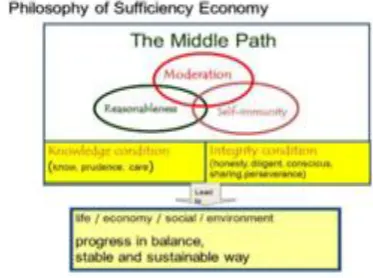
[image:2.595.334.521.386.525.2]The Sufficiency Economy Philosophy (SEP) was developed by King BhumibolAdulyadej, highlighting the middle path as a principle for proper conduct, and a way of thought of careful life (Niracharapa, 2017). It encouraged people to live in a way where they consume only what they really need, choose products prudently, and consider their impact on others. Considered to be a practical tool for sustainable living, this philosophy became prominent during Thailand’s 1997 economic crisis. It was believed that this approach would foster accountability and empower people and their communities. The main goal was to measure economic development not just for GDP, but also for the reduction of poverty and social inequity. (Thanawut, 2014).
Fig. 1 Philosophy of Sufficiency EconomySource: Suwanee, 2016
Sufficiency suggests moderation, reasonableness, and the need for self-immunity stemming from internal and external alterations. An application of knowledge with consideration and carefulness is essential. In particular, practice is needed in the application of theories and methodologies at every step(Suvit, 2015).
At the same time, it is essential to strengthen the morality of the nation with honesty and integrity. A way of life based on patience, perseverance, diligence, and wisdom. Prudence is indispensable for creating balance and coping appropriately with critical challenges on rapid socioeconomic, environmental, and cultural changes in the world(Pengpinit, 2011).
Doi Bo Highland Agricultural Development Station under Her Royal Initiative
Project
located upland in Chiangrai province at 1,345 meters above sea level, with 128 households, and a population of 629. Part of Doi Bo’s unique history includes the fact that there is a hole in the top of the mountain, due to a bomb dropped during World War II. (Department of National Parks, Wildlife and Plant Conservation., 2017). However, the hole was later filled with water, which was a tremendous benefit to the hill tribe inhabitants.
Historically, this area was claimed by the Arkha Yao, and Lahu tribes. The mountaintop lake supported a range of wild animals, including elephants, bulls, tigers, barking deer, which were hunted to the point of species endangerment. Today, only wild boars, birds, and jungle fowls can be found.
Before the initiation of this Royal Project, the area was covered by opium fields. The Bureau of the Royal Household and Protected Area Regional Office 15, operating under the Department of National Parks, Wildlife and Plant Conservation, faced considerable challenges with the opium plantations. These included poverty, sanitation problems and poor education. In addition, there was a forest degradation issue, as the tribespeople utilized slash and burn farming practices. (Department of National Parks, Wildlife and Plant Conservation, 2017).
In 2004, Queen Sirikit observed the area of Doi Bo and later established a project for reforestation. The projects had new agriculture demonstration plots for research, and also for restoring the degraded forest.
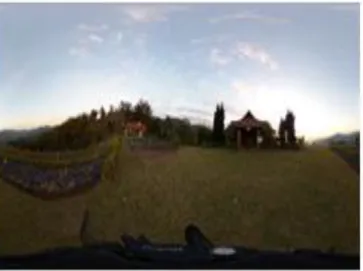
[image:3.595.355.501.404.496.2]Today, Doi Bo Highland Agricultural Development Station has established a research center for irrigation, land development, highland development, agricultural career development, non-formal education, occupational retraining center, and vocational training. Working in tandem with various agencies, such as the Livestock Development Office, Personnel Administration for Royal Service, and academic institutions, this Royal Project was able to not only eliminate the opium poppy fields, but also to conserve the forest, introduce a better quality of life, and strengthen the community’s economy.
Fig. 2 Royal Doi Bo Project with 360 degree technology
III. RESEARCH METHODOLOGY
The purpose of the study was to answer how the DoiBo Highland Agricultural Development Station under the Royal Initiative Project of Her Majesty Queen Sirikit of Thailand
has impacted on the well-being of Doi Bo community. A qualitative research method was employed based on primary and secondary data. Primary data were collected from the in-depth Interviews of such stakeholders as the head of the station, Local Administrative Unit executives, the community leader, hill-tribes, and related government officers. Questions were developed to each group for assuming the right answerson economy of the community, the well-being of hill tribes, and the obstacles ofthe station. Future aids for its strategicdevelopment and adaptation were highlighted.
Moreover, focus groups were conducted twice to reconfirm the study, and received additional information and details. Questionnaireswith 1 to 5 rating scale based on sufficiency economy theory of his Majesty the King including middle path, moderation, due consideration and sufficient protectionfactors were developedin order to analyze the way of lifeof hill-tribes under the support of the royal project. SWOT wasfinally used to analyze the study.
IV. FINDINGS
[image:3.595.81.263.558.693.2]It was undeniable that the success of the Royal projects elevated local economy by creating employment opportunities, quality handicraft products, and agricultural crops. The project continues to generate revenues for indigenous people and the community per se.
Table. 1 Analysis of Doi Bo Royal Project based on Sufficiency Economy
Sufficiency economy Analysis
middle path 5
moderation 5
due consideration 3
sufficient protection 5
knowledge 5
moral fiber 4
Furthermore, there are notable benefits and results for the development of natural resources, social equity, education enhancement, community economy, wild life, agricultural development and finally, the eradication of poverty and opium.The study found that The Royal Doi Bo Project has brought the hill-tribes higher incomes. The average income per family was around 6,000 USD per year, whereas typical incomes at the time of inception of the Royal Project were around 700 USD.
The self-sufficiency philosophy of the late King BhumibolAdulyadej was a key driver to community development (see table 1). Hill-tribes totally have changed their way of life following middle path. They live with moderate life for sufficient protection when facing their crises. Several bodies of knowledge particularly mixed farming, handicrafts and product development yieldedhigher incomes and better their lives. However, embarking on a strategy to develop rural areas was a substantial endeavor, and required integrated supports from several departments both public and private ones, and the community leader. Some ethnical beliefs and
attitudes have affected their
commitments and due
people. The leader of the community was one of the key mechanisms.
In addition, the study showed some findings and implications on key success factors to sustaining the Royal Agricultural Station on High Land.
Academic institutions
Academic institutionscan play a significant role for community sustainability and development as well as knowledge-driven growth based on innovation. Academic research has contributed enormously to finding solutions to numerous community issues. The need for sharing knowledge between research institutions and Doi Bo has become increasingly evident. Suffice it to say that academic research played an integral role in every aspect of this project’s development, most notably with alternative crops as such as winter flowers, vegetables and fruits, animal husbandry and handicrafts in order to meet a great demand of consumption in Chiangrai province.
Social equity and education enhancement
Hill tribes at Doi Bo community were traditionally illiterate, and unable to attend schools due to lack of facilities and money. It was found that children in the Project received primary and secondary schooling. The project provided extensive non-formal education to the community on hygiene, farming, husbandry, environmental protection awareness, marketing, and career development.
Additional body of knowledge is essential for the villagers so as to develop and sustain community growth since Doi Bo area has distinctive identities of nature, tradition and conservational ways of life. Understanding of their culture impact upon social equity.
Strategic Alliances
The geography of Doi Bo area was a major obstacle for public access such as infrastructure including a proper road, and public utilities. The needs for cooperation from various government agencies, foundations, associations and academic institutions and even other nearby communities was the main solution for these highland villages. The Doi Bo Royal Project has worked with many sectors including agricultural, forestry, educational departments and the Local Administrative Units. Still the Department of National Parks, Wildlife and Plant Conservation needs strategic alliances in attaining its goals.
Disruptive Technology
In recent decades, the world has witnessed the rapid development of technology. As technology has shaped many aspects, it creates both challenges and opportunities (Niracharapa, 2016). The combination of mobile devices and applications is set to revolutionize the education, business, tourism and industry (Niracharapa, 2017).
Regarding the Doi Bo area, it was found that Doi Bo has environmental advantages, winter crops cultivation, sheep farming and strong cultural preservation. Innovation of technology could be a dynamic tool to enhance knowledge of local people and even general public. Technology could demonstrate the area in many aspects including ecotourism, cultural preservation and agricultural cultivation studies.
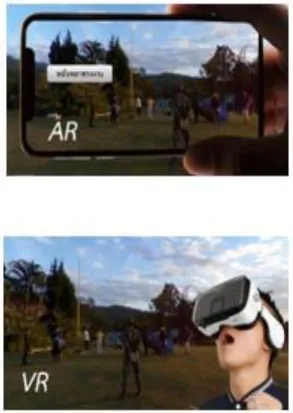
[image:4.595.353.500.83.290.2]Therefore, augmented reality and virtual reality tools were developed aligned with the study to promote the project.
Fig. 3 AR and VR development of the Royal Doi Bo Project
V. CONCLUSION
The Royal Projects have been considered as a key mechanism for community development. “sustainable development” is the key word to strengthen the community on socio-economic and environmental development, as the Doi Bo Royal Project has resulted in a quality livelihood, better economy, better education of individuals and community as well as and environmental conservation.
It was believed that Doi Bo Highland Agricultural Development Station under the Royal Initiative Project could be used as a demonstration agricultural plot for other highland areas. One interesting aspect to enhance community economy was community based tourism and ecotourism due to its cultural preservation and green environments. Disruptive technology including augmented reality or virtual reality can be an innovation tool in promoting the royal project in terms of education, tourism and culture. However, Doi Bo Highland Agricultural Development Station under Her Majesty initiative could not be accomplished without strategic partners including related agencies, and stakeholders for creating long termvalues.Finally the community itself needs to learn how to self-sustain in the long run.
REFERENCES
1. Ales I. and Isabella R.(2016). E Toursim for Socio-Economic Development. Symphonya Emerging Issues in Management, (1)75. 2. Department of National Parks, Wildlife and Plant conservation.(2017).
Annual report. Chiangrai, Thailand.
3. Samira H. &Alireza E.(2011). Digital economy and tourism impacts, influences and challenges. Elsevier, Procedia, Social & Behavioral Sciences, 19)2011), pp.308-316.
4. NiracharapaT.(2016). Challenges of Indonesian animation at the global market. Actual Problems of Economics Journal, 7(181), pp 53-58. 5. NiracharapaT.(2017).Identity of Yafu community. Bangkok:National
Research Council of Thailand. 6. The Nong Hoi Station.(2012).
https://www.theblondtravels.com/mon-cham-nong-hoi-project-chiang-mai.
7. Pengpinit, T et al.(2011). Success indicators of sufficient framing of local philosophers and multilateral in the Northeast. SDU research Journal of Humanities and Social Sciences, 7(2), 91-102.
8. Piboonsarawut, P.(2006). Sufficiency economy philosophy according to His Majesty’s initiative. Ramkhamhaeng University, Thailand. 9. The Royal Agricultural Station Inthanon.(2015). Retrieved August
8,2018 from
10. http://www.royal-inthanon.com.
11. Royal Agricultural station Angkhang.(2016). Retrieved August 25,2018 fromhttp://www.angkhangstation.com.
12. SripenDabphet.(2016). The Key stakeholders in the Implementation of sustainable Royal projects in two rural towns of Thailand.
13. SunatChutinitaranond(2017).The foundation for the promotion of supplementary occupation and related techniques of her Majesty Queen Sirikit and the enhancement of human security in Northeast Thailand during the 1970s-1980s. Thailand, Chulalongkorn University Press. 14. SupathanishT.(2015). OTOP product champion marketing strategy
model which are selected the best OPC 5 start product approach of Chaing Mai Province: The fabric and apparel community, Thailand.
Review of Integrative Business & Economics Research, 4)4), pp. 259-276.
15. Suwanee Khamman.(2016).Overviews of Social Protection: Lesson Learned from Thailand. Bangkok, Thailand:NESDB
16. SuvitMaesincee. (2016), Thailand 4.0”. Thriving in the 21st Century through security, prosperity and sustainability conference, 20 August 2016
17. Thailand Sustainable Development Foundation(2016). The Royal Projects. Retrieved August 5, 2018 from www.tsdf.or.th)
18. ThanawutPimki.(2014). The Practical use of the royal sufficiency economy with community enterprise in Chanthaburi Province. SDU researchJournal of Humanitiesand Social Sciences, 10(11), pp. 1-21. 19. Thai Embassy (2010). The Queen and Some Examples of Her Royal
Projects. Retrieved August 10, 2018 from https://www.thaiembassy.sg 20. Thailand Sustainable Development Foundation.(2016). Royal
Projects of the King. Newsletter, Bangkok.