This is a repository copy of Exploiting correlogram structure for robust speech recognition with multiple speech sources .
White Rose Research Online URL for this paper: http://eprints.whiterose.ac.uk/3531/
Article:
Ma, N., Green, P., Barker, J. et al. (1 more author) (2007) Exploiting correlogram structure for robust speech recognition with multiple speech sources. Speech Communication, 49 (12). pp. 874-891. ISSN 0167-6393
https://doi.org/10.1016/j.specom.2007.05.003
[email protected] https://eprints.whiterose.ac.uk/
Reuse
Unless indicated otherwise, fulltext items are protected by copyright with all rights reserved. The copyright exception in section 29 of the Copyright, Designs and Patents Act 1988 allows the making of a single copy solely for the purpose of non-commercial research or private study within the limits of fair dealing. The publisher or other rights-holder may allow further reproduction and re-use of this version - refer to the White Rose Research Online record for this item. Where records identify the publisher as the copyright holder, users can verify any specific terms of use on the publisher’s website.
Takedown
If you consider content in White Rose Research Online to be in breach of UK law, please notify us by
promoting access to White Rose research papers
White Rose Research Online
Universities of Leeds, Sheffield and York
http://eprints.whiterose.ac.uk/
This is an author produced version of a paper published in Speech
Communication.
White Rose Research Online URL for this paper: http://eprints.whiterose.ac.uk/3531/
Published paper
Ma, N., Green, P., Barker, J. and Coy, A. (2007) Exploiting correlogram structure for robust speech recognition with multiple speech sources, Speech
Exploiting correlogram structure for robust
speech recognition with multiple speech
sources
Ning Ma
∗
, Phil Green, Jon Barker, Andr´
e Coy
Department of Computer Science, University of Sheffield, Regent Court, 211
Portobello Street, Sheffield, S1 4DP, UK
Abstract
se-quences. The paper presents evaluations based on artificially mixed simultaneous speech utterances. A coherence-measuring experiment is first reported which quan-tifies the consistency of the identified fragments with a single source. The system is then evaluated in a speech recognition task and compared to a conventional frag-ment generation approach. Results show that the proposed system produces more coherent fragments over different conditions, which results in significantly better recognition accuracy.
Key words: Speech separation, Robust speech recognition, Multiple pitch tracking,
Computational auditory scene analysis, Correlogram, Speech fragment decoding
1 Introduction
In realistic listening conditions, speech is often corrupted by competing sound
sources. The presence of acoustic interference can cause the quality or the
in-telligibility of speech to degrade; the performance in automatic speech
recog-nition (ASR) often drops dramatically. Many systems have been proposed to
separate noise from speech using cues from multiple sensors, e.g. blind source
separation by independent component analysis (Parra and Spence, 2000), but
separating and recognising speech in single-channel signals, the problem
con-sidered in this article, still remains a challenging problem. Human listeners,
however, are adept at recognising target speech in such noisy conditions,
mak-ing use of cues such as pitch continuity, spacial location, and speakmak-ing rate
∗ Corresponding author. Tel.: +44 114 222 1878, fax: +44 114 222 1810.
Email addresses: [email protected] (Ning Ma),[email protected]
(Phil Green),[email protected] (Jon Barker), [email protected]
(Cooke and Ellis, 2001). They are able to effectively extract target audio
streams from monaural acoustic mixtures with little effort, e.g. listening to
speech/music mixtures on a mono radio program. It is believed that there
are processes in the auditory system that segregate the acoustic evidence into
perceptual streams based on their characteristics, allowing listeners to
selec-tively attend to whatever stream is of interest at the time (Bregman, 1990;
Cooke and Ellis, 2001). This offers an alternative to techniques which require
the noise to be effectively removed from the speech, e.g. spectral subtraction
based methods (Lim and Oppenheim, 1979), and allows the noise to be treated
as streams that can be ignored while the target speech is attended to.
This ability of listeners has motivated extensive research into the perceptual
segregation of sound sources and has resulted in much theoretical and
ex-perimental work inauditory scene analysis(ASA) (Bregman, 1990). Auditory
scene analysis addresses the problem of how the auditory system segregates the
mixture of sound reaching the ears into packages of acoustic evidence in which
each package is likely to have been produced from a single source of sound.
The analysis process, described by Bregman (1990), is interactively governed
by ‘primitive’ bottom-up grouping rules, which are innate constraints driven
by the incoming acoustic data and the physics of sound, and ‘schema-based’
top-down constraints, which employ the knowledge of familiar patterns that
have been learnt from complex acoustic environments. Computational
audi-tory scene analysis (CASA) aims to develop computational models of ASA.
Many researchers have proposed automatic sound separation systems based
on the known principles of human hearing and have achieved some success
(Brown and Cooke, 1994; Wang and Brown, 1999; Ellis, 1999). A good review
1.1 Correlogram-based CASA models
One important representation of auditory temporal activity that combine both
spectral and temporal information is the autocorrelogram (ACG). The
auto-correlogram, or simplycorrelogram, is a three-dimensional volumetric function,
mapping a frequency channel of an auditory periphery model, temporal
auto-correlation delay (or lag), and time to the amount of periodic energy in that
channel at that delay and time. Correlograms are normally sampled across
time to produce a series of two-dimensional graphs, in which frequency and
autocorrelation delay are displayed on orthogonal axes. Fig. 1 shows three
correlograms of a clean speech signal uttered by a female speaker, taken at
time frames of 300 ms, 700 ms and 2100 ms. Each correlogram has been
nor-malised and plotted as an image for illustration. The periodicity of sound is
well represented in the correlogram. If the original sound contains a signal that
is approximately periodic, such as voiced speech, then each frequency channel
excited by that signal will have a high similarity to itself delayed by the period
of repetition. The ACG frequency channels also all respond to the
fundamen-tal frequency (F0) and this can be emphasised by summing the ACG over
all frequency channels, producing a ‘summary ACG’ (see the bottom panel in
Fig. 1). The position of the largest peak in the summary ACG corresponds to
the pitch of the periodic sound source. Primarily because it is well-suited to
detecting signal periodicity, the correlogram is widely considered as the
pre-ferred computational representation of early sound processing in the auditory
system.
The correlogram was first suggested as a model for pitch perception by
sub-T = 2100 ms
0.0 2.5 5.0 7.5 10.0 12.5 15 0.5
1
Autocorrelation Delay (ms) T = 700 ms
0.0 2.5 5.0 7.5 10.0 12.5 15 0.5
1
Autocorrelation Delay (ms)
C e n tr eF re q u e n c y( H z )
T = 300 ms
50 395 1246 3255 8000
0.0 2.5 5.0 7.5 10.0 12.5 15 0.5
1
[image:7.612.130.446.72.260.2]Autocorrelation Delay (ms)
Fig. 1. Three correlograms of a clean speech signal uttered by a female speaker, taken at time frame 300, 700 and 2100 ms, respectively. Each correlogram has been
normalised and plotted as an image. A corresponding summary ACG is shown at
the bottom of each correlogram.
band periodicity detection was discussed. The model was then reintroduced
by Slaney and Lyon (1990), among others (e.g. (Meddis and Hewitt, 1991)),
as a computational approach to pitch detection. Slaney and Lyon employed
the correlogram computed from the output of a cochlear model to model how
humans perceive pitch. The pitch was estimated based on locating the peaks in
the summary correlogram. The ACG model has subsequently been extended
as a popular mechanism for segregating concurrent periodic sounds and the
primary methods have been based on inspection of the summary correlogram.
Assmann and Summerfield (1990) reported a place-time model on a
concur-rent vowel segregation task. The model estimated the pitch of each vowel as
corresponding to the autocorrelation delays with the two largest peaks in the
summary correlogram. Meddis and Hewitt (1992) proposed a residual-driven
approach. They first selected the largest peak in the summary ACG, the
channels that respond to this F0 were grouped and removed from the
cor-relogram. The rest of the channels were integrated together and the largest
peak in the residue corresponds to the F0 of a second (and weaker) source.
Recently, neural oscillator models have been successful at providing accounts
of the interaction of cue combinations, such as common onset and proximity
(Brown and Cooke, 1994; Wang and Brown, 1999), in which the summary
correlogram model was also employed as a front end.
One limitation of the methods which are based on the summary correlogram
is that when speech is corrupted by competing sounds, locating peaks in the
summary is often difficult. The position of the largest peak in the summary
would not always correspond to the pitch of the target speech and peaks
indi-cating pitches of different sound sources may be correlated. Another limitation
is that these models cannot account for the effect of harmonic components of
the weaker source being dominated by the stronger source, where all
correlo-gram channels will be assigned to the stronger source (de Cheveign´e, 1993).
To address these limitations, Coy and Barker (2005) proposed to keep the
four largest peaks in the summary ACG as pitch candidates for each time
frame and then employed a multi-pitch tracker to form smooth pitch tracks
from these candidates. Frequency channels that respond to pitch values in the
same pitch track are grouped together. By keeping multiple pitch candidates
they show that better sound segregation can be achieved. However, their
sys-tem relies on a robust multipitch tracker and keeping an arbitrary number of
pitch candidates is not effective when dealing with different competing sources.
The summary ACG is not the only way to reveal pitch information. The
methods based on the summary ACG discard the rich representation of the
Visually there are clear pitch-related ‘dendritic structures’ in the correlogram.
The ‘dendrites’ are tree-like structures whose stems are centred on the delay
of multiple pitch periods across frequency channels. Slaney and Lyon (1990)
discussed this dendritic structure in their perceptual pitch detector. They
con-volved the correlogram with an operator to emphasise the structure before
in-tegrating all ACG channels together. Summerfield et al. (1990) also proposed a
convolution-based strategy for the separation of concurrent synthesised vowels
with F0 not harmonically related in the correlogram. By locating the dendritic
structure in the correlogram they demonstrated that multiple fundamentals
can be recognised.
1.2 Linking CASA with speech recognition systems
The success of CASA has inspired research into developing a new
genera-tion of automatic speech recognigenera-tion systems for natural listening condigenera-tions
where competing sounds are often present. In these adverse conditions not all
the acoustic evidence from the target source will be recovered. One successful
approach to this problem is ‘missing data ASR’ (Cooke et al., 2001), which
adapts the conventional probabilistic formalism of ASR to deal with the
‘miss-ing data’. The miss‘miss-ing data approach assumes that some acoustic data in the
mixture will remain uncorrupted and can be identified as reliable evidence for
recognition. Cooke et al. (1997) demonstrated that recognition can indeed be
based on a small amount (10% or less) of the original time-frequency ‘pixels’
if they can be correctly identified.
The limitation of the missing data approach is that accurate identification of
Speech Fragment Decoder
Speech Models Search Top Down
Word−sequence Hypothesis
frequency
time
Noisy Speech Segregation Hypothesis
Speech/Background
Processing Bottom Up
Coherent Fragments
[image:10.612.88.484.75.173.2]Speech and Background Fragments
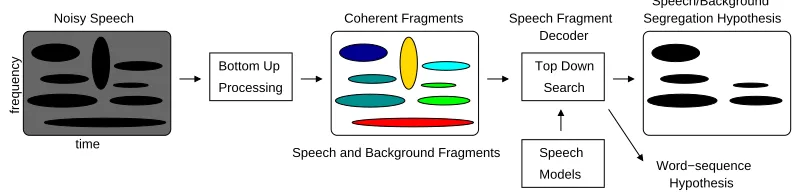
Fig. 2. An overview of the speech fragment decoding system (after Barker et al. (2005)). Bottom-up processes are employed to identify spectro-temporal regions
where each region is likely to have originated from a single source (coherent
frag-ments). A top-down search with access to speech models is then used to search for
the most likely combination of fragment labelling and speech model sequence.
is poor if the ‘missing data’ is not correctly identified. There is evidence that
listeners make use of both primitive and schema-based constraints when
per-ceiving speech signals (Bregman, 1990). Barker et al. (2005) proposed a Speech
Fragment Decoding (SFD) technique which treats segregation and recognition
as coupled problems. Primitive grouping processes exploit common
character-istics to identify sound evidence arising from a single source. Top-down search
utilises acoustic models of target speech to find the best acoustic combinations
which jointly explain the observation sequence without deciding the identity
of different sources. The SFD technique therefore provides a bridge that links
auditory scene analysis models with conventional speech recognition systems.
An overview of the SFD system is provided in Fig. 2.
1.3 Summary of the paper
In this article we are concerned with the use of primitive CASA models to
address the problem of separating and recognising speech in monaural acoustic
correlogram structure is exploited to separate a spectrogram representation
of the acoustic mixture into spectro-temporal regions such that the acoustic
evidence in each region is likely to have originated from a single source of
sound. These regions are referred to as ‘coherent fragments’ in this study.
Some of these fragments will arise from the target speech source while others
may arise from noise sources. These coherent fragments are passed to the
speech fragment decoder to identify the best subset of fragments as well as
the word sequence that best matches the target speech models. We evaluate
the system using a challenging simultaneous speech recognition task1.
The remainder of this article is organised as follows: in the next section, the
overall structure of our system is briefly reviewed. Section 3 describes the
tech-niques used to integrate spectral components in each frame based on the ACG.
Section 4 presents methods which produce coherent fragments. Section 5
in-troduces a confidence map to soften the discrete decision of assigning a pixel to
a fragment. In Section 6 we evaluate the system and discuss the experimental
results. Section 7 concludes and presents future research directions.
2 System Overview
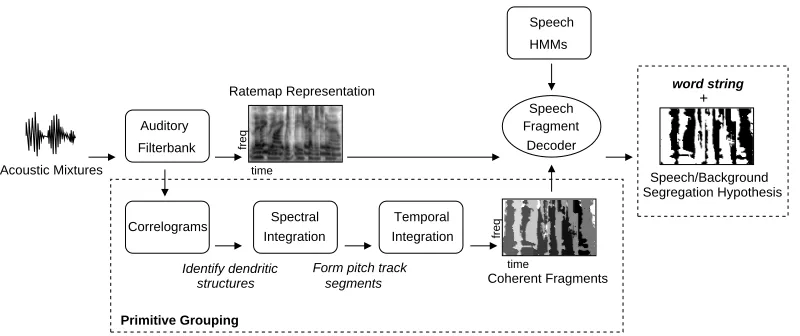
Fig. 3 shows the schematic diagram of our system. The input to the system is a
mixture of target speech and interfering sounds, sampled at a rate of 25 kHz. In
the first stage of the system, cochlear frequency analysis is simulated by a bank
of 64 overlapping bandpass Gammatone filters, with centre frequencies spaced
uniformly on the equivalent rectangular bandwidth (ERB) scale (Glasberg
Decoder Speech Fragment
Primitive Grouping
Auditory Filterbank
Integration Spectral
Integration
Speech/Background Segregation Hypothesis
+
Correlograms
structures segments Form pitch track
Speech HMMs
word string
Coherent Fragments Acoustic Mixtures time
freq
freq
time
Temporal
Identify dendritic
[image:12.612.92.492.69.237.2]Ratemap Representation
Fig. 3.Schematic diagram of the proposed system.
and Moore, 1990) between 50 Hz and 8000 Hz. Gammatone filter modelling
is a physiologically motivated strategy to mimic the structure of peripheral
auditory processing stage (Cooke, 1991). The gains of the filters are chosen to
reflect the transfer function of the outer and middle ears. Having more filters
(e.g. 128) can offer a higher frequency resolution but bring more computational
cost. The output of each filter is then half-wave rectified.
The digital implementation of the Gammatone filter employed here was based
on the implementation of Cooke (1991) using the impulse invariant
transfor-mation. The sound is first multiplied by a complex exponential e−jωt at the
desired centre frequency ω, then filtered with a baseband Gammatone filter,
and finally shifted back to the centre frequency region. The cost of computing
the complex exponential e−jωt for each sound sample t is a significant part of
the overall computation. In our implementation, the exponential computation
is transformed into simple multiplication to reduce the cost by rearranging
e−jωt to
The terme−jω can be pre-computed ande−jω(t−1) is the result of the previous
samplet−1. Therefore only one complex exponential calculation is needed for
the first sample and for the rest of samples the exponentials can be computed
by simple multiplication. Experiments showed that using this implementation
the Gammatone computation speed can be increased by a factor of 4.
Spectral features are then computed in order to employ the ‘speech fragment
decoder’ (Barker et al., 2005). The instantaneous Hilbert envelope is computed
at the output of each Gammatone filter. This is smoothed by a first-order
low-pass filter with an 8 ms time constant, sampled at 10 ms intervals, and finally
log-compressed to give an approximation to the auditory nerve firing rate –
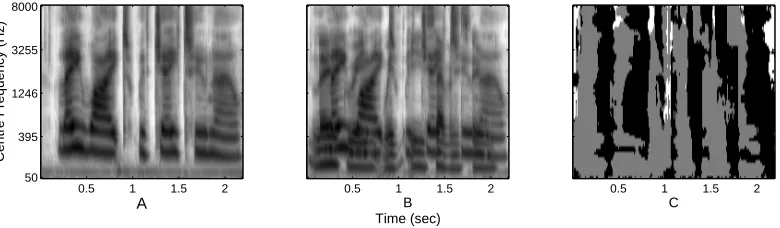
a ‘ratemap’ (Brown and Cooke, 1994). Fig. 4 gives an example of a ratemap
representation2, for (A) a female utterance ‘lay white with j 2 now’, and (B)
the same utterance artificially mixed with a male utterance ‘lay green with e
7 soon’, with a target-to-masker ratio (TMR) of 0 dB. Panel (C) shows the
‘oracle’ segmentation, obtained by making use of the pre-mix clean signals.
Dark grey represents pixels where the value in the mixture is closer to that in
the target female speech; light grey represents pixels where the mixture value
is closer to that in the male speech; white pixels represent low energy regions.
These representations are called ‘missing data masks’.
The output of the auditory filterbank is also used to generate the
correlo-grams. A running short-time autocorrelation is computed on the output of
each cochlear filter, using a 30 ms Hann window. At a given time step t, the
2 All examples used in this study are utterances from the GRID corpus (Cooke
A
Centre Frequency (Hz)
0.5 1 1.5 2 50
395 1246 3255 8000
B Time (sec)
0.5 1 1.5 2
C
[image:14.612.97.487.74.188.2]0.5 1 1.5 2
Fig. 4. (A) A ‘ratemap’ representation for the utterance ‘lay white with j 2 now’ (target, female) without added masker. (B) Ratemap for the same utterance plus
‘lay green with e 7 soon’ (masker, male) with a TMR of 0 dB. (C) The ‘oracle’
segmentation: dark grey - the value in the mixture is close to that in the target
female speech; light grey - the mixture value is close to that in the male speech;
white pixels - low energy regions.
autocorrelation A(i, t, τ) for channeli with a time lag τ is given by
A(i, τ, t) =
KX−1
k=0
g(i, t+k)w(k)g(i, t+k−τ)w(k−τ) (2)
where g is the output of the Gammatone filterbank and w is a local Hann
window of width K time steps. Here K = 750 corresponding to a window
width of 30 ms. The autocorrelation can be implemented using the efficient fast
Fourier transform (FFT), but has the disadvantage that longer autocorrelation
delays have attenuated correlation owing to the narrowing of the effective
window. We therefore use a scaled form of Eq. (2) with a normalisation factor
to compensate for the effect:
A(i, τ, t) = 1
K−τ
KX−1
k=0
g(i, t+k)w(k)g(i, t+k−τ)w(k−τ) (3)
The autocorrelation delay τ is computed from 0 to L −1 samples, where
L = 375 corresponding a maximum delay of 15 ms. This is appropriate for
below 66.7 Hz. We compute the correlograms with the same frame shift as
when computing the ratemap features (10 ms), hence each one-dimensional
(frequency) ratemap frame has a corresponding two-dimensional (frequency
and autocorrelation delay) correlogram frame.
In the stage of spectral integration the dendritic structure is exploited in
the correlogram domain to segregate each frame of the mixture into spectral
groups, such that the partial spectra in each group is entirely due to a single
sound source in that frame. In the next stage local pitch estimates are
com-puted for each group and a multipitch tracker links these pitch estimates to
produce smooth pitch tracks. Spectral groups are integrated temporally based
on these pitch tracks. The processes separate the spectro-temporal
represen-tation of the acoustic mixture into a set of coherent fragments, which are then
employed in the ‘speech fragment decoder’, together with clean speech models,
to perform automatic speech recognition.
3 Spectral integration based on the ACG
3.1 The dendritic ACG structure
For a periodic sound source all autocorrelation channels respond to F0 (i.e.
the energy reaches a peak at the same frequency), forming vertical stems in
the correlogram centred on the delays corresponding to multiple pitch periods.
Meanwhile, because each filter channel also actively responds to the harmonic
component that is closest to its centre frequency (CF), the filtered signal in
each channel tends to repeat itself at an interval of approximately 1/CF, giving
Centre Frequency (Hz)
Clean female speech
50 395 1246 3255 8000
0.0 2.5 5.0 7.5 10.0 12.5 15 0.5
1
Autocorrelation Delay (ms)
Centre Frequency (Hz)
Female speech mixed with male speech
50 395 1246 3255 8000
0.0 2.5 5.0 7.5 10.0 12.5 15 0.5
1
[image:16.612.133.445.73.242.2]Autocorrelation Delay (ms)
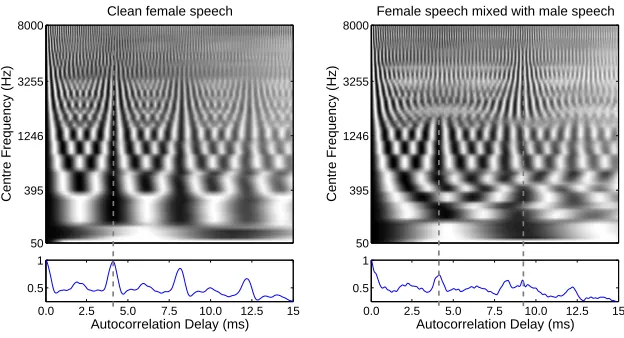
Fig. 5. A comparison of correlograms in clean and noisy conditions. Left – a cor-relogram and its summary of clean female speech, taken at time frame 60; right –
taken at the same frame when the female speech is mixed with male speech at a
TMR of 0 dB. The dendritic structures that correspond to theF0of different speech
sources are marked using vertical dashed lines. It can be clearly seen that in the
noisy condition the dendrites do not extend across the entire frequency range.
in the correlogram. This produces symmetric tree-like structures appearing at
intervals of the pitch period in the correlogram (dendritic structures). When
only one harmonic source is present, the stem of each dendritic structure
extends across the entire frequency range (see the left panel in Fig. 5). The one
with the shortest autocorrelation delay is located at the position of the pitch
period of the sound source. When a competing sound source is also present,
some ACG channels may be dominated by the energy that has arisen from
the competing source, causing a gap in the stem of the dendritic structure
corresponding to the target source’s pitch. If the competing source is also
periodic, channels dominated by its energy may also form part of a dendritic
structure on the delay of its pitch period.
Fig. 5 compares two correlograms taken at the same time frame of a female
male speech at a target-to-masker ratio of 0 dB (right panel). The summary
ACGs are also shown correspondingly. The dendritic structures which
corre-spond to theF0 of sound sources are marked using dashed lines. In the clean
condition it is visually clear that the dendritic structure extends across the
entire frequency range except those ACG channels whose centre frequency is
much below the female speaker’sF0 (the bottom 5 channels). In the ACG on
the right, the dendritic structures corresponding to the two competing speech
sources both fail to dominate the whole frequency range. The one extending
from 400 Hz to 1300 Hz on the delay of 3.9 ms indicates that there exists a
harmonic source with an F0 of 256 Hz and the energy of the channels within
this range has originated from the female speaker source. The rest of channels
form part of another dendritic structure on the delay of 9.0 ms which
indi-cates a second harmonic source with anF0 of 111 Hz (the male speaker). This
information can be used to separate the two sound sources but is lost in the
summary ACG.
3.2 Pre-grouping
ACG channels are pre-grouped before the dendritic structures are extracted in
the correlogram. Gammatone filters have overlapping bandwidth and respond
to the harmonic with the highest energy. Therefore, ACG channels which are
dominated by the same harmonic share a very similar pattern of periodicity
(Shamma, 1985). Fig. 5 illustrates this phenomenon. For example, in the left
panel channels with a CF between 100 Hz and 395 Hz demonstrate a very
similar pattern of periodicity. This redundancy can be exploited to effectively
and Brown, 1999) where each ACG channel is correlated with its adjacent
channel as follows:
C(i, t) = 1
L
LX−1
τ=0
ˆ
A(i, τ, t) ˆA(i+ 1, τ, t) (4)
whereLis the maximum autocorrelation delay and ˆA(i, τ, t) is the
autocorre-lation function of Eq. (3) after normalisation to zero mean and unit variance.
The normalisation ensures that the cross-channel correlation is sensitive only
to the pattern of periodicity of ACG channels, and not to their energy.
Chan-nel i and i+ 1 are grouped if C(i, t) > θ. We choose θ = 0.95 to ensure that
only ACG channels with a highly similar pattern are grouped together.
A ‘reduced ACG’ is obtained by summing pre-grouped channels across
fre-quency. Each set of grouped channels is referred to as a ‘subband’ in the
reduced ACG. The pre-grouping significantly reduces computational cost as
the average number of ACG subbands is 39 compared to 64 ACG channels
originally. Preliminary experiments also show that the process can effectively
reduce grouping errors in the later stages.
3.3 Extracting the dendritic structure
The essential idea in this study is to make use of the dendritic structure in the
full correlogram for the separation of sound sources. The technique of
extract-ing the pitch-related structure used here is derived from work by Summerfield
et al. (1990). For each subband in the reduced ACG, a two-dimensional cosine
operator is constructed, which approximates the local shape of the dendritic
structure around the subband. The operator consists of five Gabor functions
func-tion is aligned with the subband it operates on (see Fig. 6(C)). The Gabor
function is a sinusoid weighted by a Gaussian. If the sinusoid is a cosine, the
Gabor function is defined as:
gaborc(x;T, σ) = e−x 2/2σ2
cos(2πx/T) (5)
where T is the period of the sinusoid and σ is the standard deviation of
the Gaussian. The frequency of each sinusoid used by Summerfield et al. is
the centre frequency of the channel with which it is aligned, and the standard
deviation of the Gaussian is 1/CF. This works well with the synthesised vowels
in their study. However, speech signals are only quasi-periodic and a filter
channel responds to a frequency component that is only an approximation to
its CF. Therefore the repeating frequency of the filtered signal in each ACG
channel is often off its CF depending on how close the nearest harmonic is
to the CF, and sometimes the shift is significant. Therefore in our study we
compute the actual repeating periodpi in each ACG subbandiby locating the
first valley (vi) and the first and second peaks (p′iandp′′i) of the autocorrelation
function. The repeating period pi of subband i is approximated as:
pi =
2vi+p′i+p′′i/2
3 (6)
To further enhance the dendrite stem pi/2 is used as the standard deviation
in the Gabor function, a value roughly half that used by Summerfield et al..
These changes have been very effective with realistic speech signals.
The autocorrelation function A(i, τ, t) for each subband i, with support of
its four adjacent subbands (two above and two below), is convolved with its
an initial enhanced autocorrelation function Ac(i, τ, t):
Ac(i, τ, t) =
2 X
m=−2 L
X
n=1
A(i+m, τ +n, t)gaborc(n;pi+m, pi+m/2) (7)
whereLis the maximum autocorrelation delay. The central part of the
convo-lution is saved for each subband3. When the operator is aligned with the stem
of a dendrite, the convolution gives a large product, and the product is smaller
if misaligned. Unfortunately, ripples will occur as the cosine operator will also
align with peaks other than the stem. Following Summerfield et al. (1990),
these ripples are removed using a sine operator constructed by substituting
the cosine function in Eq. (5) for a sine function:
gabors(x;T, σ) =e−x 2/2σ2
sin(2πx/T) (8)
The original correlogram is convolved with the sine operators to generate
a function As(i, τ, t) in the same manner as in Eq. (7). At each point the
results of the two convolutions are squared and summed, producing a final
autocorrelation function Ae(i, τ, t) with the peak in each subband located on
the stem of the dendritic structure:
Ae(i, τ, t) = Ac(i, τ, t)2+As(i, τ, t)2 (9)
In the enhanced correlogram,Ae, the stems of dendritic structures are greatly
emphasised, as illustrated in Fig. 6 (B). The correlogram is computed for a
frame in which a female speaker source is present simultaneously with a male
speaker source. The two black vertical lines in the enhanced correlogram (one
3 In practice the two-dimensional convolution is computed using the MATLAB
around 3.9 ms and the other around 9.0 ms) are the stems of two dendritic
structures which correspond to the two speaker sources. To reduce
computa-tional cost, regions with autocorrelation delays less than 2.5 ms (corresponding
to regions with F0 higher than 400 Hz outside the speech F0 range) are not
computed.
Gabor cosine operator
i−2 i−1 i i+1 i+2
0 2.5 5 7.5 10 12.5 15 0.5
1
Summary correlogram
0 2.5 5 7.5 10 12.5 15 0.5
1
Summary − male source only
0 2.5 5 7.5 10 12.5 15 0.5
1
Autocorrelation Delay (ms) Summary − female source only
Centre Frequency (Hz)
Correlogram − male/female speech mixture
0 2.5 5 7.5 10 12.5 15 50
395 1246 3255 8000
Autocorrelation Delay (ms)
Centre Frequency (Hz)
Enhanced correlogram
[image:21.612.118.465.203.465.2]0 2.5 5 7.5 10 12.5 15 50 395 1246 3255 8000 a b c d e f
Fig. 6. (A) A correlogram of a mixture of male and female speech. (B) Enhanced correlogram after the 2-D convolution. The region with delays less than 2.5 ms
(cor-responding to regions withF0shigher than 400 Hz) is not computed. (C) An
exam-ple of a Gabor cosine operator. (D) Summary correlogram. (E – F) Summaries of
spectral components in the correlogram dominated by energy from respective speaker
sources (male or female). Dotted line represents the high F0 region which is not
computed.
The largest peak in each subband in the enhanced correlogram is selected and
a histogram with a bin width equivalent to 3 Hz is computed over these peak
dendrites corresponding to two harmonic sources. A bin is ignored if its count
is less than an empirically determined threshold (5 in this study), therefore in
each frame 2, 1 or 0 dendritic structures are found4.
3.4 Spectral grouping
Once the dendritic structures are extracted from the correlogram, the
fre-quency bands can be divided into partial spectra: the ACG subbands with
their highest peak at the same position in the enhanced ACG are grouped
together. Each group of subbands therefore form an extracted dendritic
struc-ture. The number of simultaneous spectral groups depends on the number of
dendrites identified. If no such structures appear in the correlogram (e.g. for
an unvoiced speech frame), the system skips the frame and no spectral group
is generated.
After this grouping it is still possible that some ACG subbands remain isolated.
Although this is rare, it could happen because a subband may respond to a
different dendrite from the one formed by its adjacent subbands. Therefore
the subband will not be emphasised in the enhanced ACG. When only one
spectral group is formed, an isolated subband is assigned to the group only if it
matches the periodicity of the subband within a threshold of 5% in the original
ACG. When two spectral groups are formed, an isolated subband is assigned
to the group which better matches its periodicity within the threshold of 5%.
This spectral integration technique has the ability to deal with the situation
4 This technique can be extended to handle more sources provided the maximum
Autocorrelation Delay (ms)
Centre Frequency (Hz)
Correlogram − male/female speech mixture
Female speech
Male speech
0 2.5 5 7.5 10 12.5 15 50
395 1246 3255 8000
0 2.5 5 7.5 10 12.5 15 0.5
1
Summary correlogram
0 2.5 5 7.5 10 12.5 15 0.5
1
Summary − female source only
0 2.5 5 7.5 10 12.5 15 0.5
1
[image:23.612.114.466.76.233.2]Autocorrelation Delay (ms) Summary − male source only
Fig. 7. A correlogram of a mixture of male and female speech. The F0 of the male
speaker is half of that of the female speaker. Subbands dominated by the energy from
different speaker sources are indicated using different shades of grey. The dendritic
structure with the shortest delay caused by the female source is marked using a
dashed vertical line. Summary of all ACG subbands and those dominated by energy
from the female and the male speaker source are shown respectively on the right.
where the fundamentals of two competing speakers are correlated. Fig. 7 shows
a correlogram computed for a frame in which a male speaker source with a
pitch period of 7.8 ms is present simultaneously with a female speaker source
with a pitch period approximately half of that (3.9 ms). Since the subbands
dominated by the energy from the female source have peaks at an interval
of 3.9 ms in the ACG, all the subbands have peaks at the delay of 7.8 ms,
causing the largest peak in the summary ACG to occur at that delay. When
the summary ACG is inspected, it is difficult to group subbands as they all
respond to the largest peak. However, the female speech subbands will form
a partial dendritic structure (marked using a dashed vertical line). The white
gaps in its stem clearly indicate that subbands within these gaps do not belong
to the female source as otherwise the dendrite would extend across the entire
frequency range. Those subbands are actually dominated by the energy from
separation of sources with correlated fundamentals can be performed. Fig. 7
also shows the summary of ACG subbands dominated by female and male
speaker sources, respectively. The position of the largest peak in each summary
clearly indicates the pitch period of each source.
4 Coherent Fragment Generation
4.1 Generating harmonic fragments
After the spectral integration in the correlogram domain, spectral groups that
are likely to have been produced by the same source need to be linked together
across time to form coherent spectro-temporal fragments. In each frame we
refer to the source that dominates more frequency channels as the ‘stronger’
source. If the stronger source were constant from frame to frame, the
prob-lem of temporal integration would be solved by simply combining the spectral
groups associated with the greater number of channels in each frame. However,
due to the dynamic aspects of speech, the dominating source will change as
the relative energy of the two sources changes over time. Although a speaker’s
pitch varies over a considerable range, and pitches from simultaneous
speak-ers may overlap in time, within a short period (e.g. 100 ms) the pitch track
produced by each speaker tends to be smooth and continuous. We therefore
4.1.1 Multiple pitch tracking
The original ACG channels grouped in the spectral integration stage are
summed and the largest peak in each summary is selected as its local pitch
estimate. As shown in Fig. 6 (E – F), it is easier to locate the largest peak after
spectral integration. The peak that corresponds to the pitch period of each
source is very clear in each summary, while locating them in the summary of
all ACG channels (panel (D)) is a more challenging problem. For the stronger
source the largest peak is selected as its pitch estimate. For the weaker source
(if one exists) up to three peaks are selected as its pitch candidates. Although
this is rare, there are situations where the position of the largest peak in the
summary of the weaker source does not correspond to its pitch period, due to
lack of harmonic energy or errors made in the spectral integration stage. In
this case the second and third largest peaks may be just slightly lower than
the largest peak and it is very likely that the position of one of them
repre-sents the pitch period. Keeping three pitch estimates for the weaker source
has proved beneficial to reducing this type of error. The pitch estimates are
then passed to a multipitch tracker to form smooth pitch track segments. The
problem is to find a frame-to-frame match for each pitch estimate. Here we
compare two different methods.
A. Model-based multipitch tracker
Coy and Barker (2006) proposed a model-based pitch tracker which models
the pitch of each source as a hidden Markov model (HMM) with one voiced
state and one unvoiced state. When in the voiced state the models output
observations that are dependent on the pitch of the previous observation.
analysing the pitch of the utterances in the Aurora 2 training set (Hirsch and
Pearce, 2000). In order to track two sources in a pitch space which contains
several candidates, two models are run in parallel along with a noise model to
account for the observations not generated by the pitch models. The Viterbi
algorithm is employed to return the pitch track segments that both models are
most likely to generate concurrently. In this study, the model-based tracker is
employed in a manner that does not make assumptions about the genders of
the speech sources that were made in Ma et al. (2006) and Barker et al. (2006).
In those papers the two simultaneous speakers were always assumed to be
dif-ferent genders and therefore two HMMs for difdif-ferent genders were used. This
manner of application is inappropriate as the genders of concurrent speakers
are not known. Therefore in this study three different model combinations
(male/male, female/female and male/female) are compared and the
hypoth-esis with the highest overall score (obtained using the Viterbi algorithm) is
selected.
B. Rule-based multipitch tracker
McAulay and Quatieri (1986) proposed a simple ‘birth-death’ process to track
rapid movements in spectral peaks. This method can be adapted to link pitch
estimates over time to produce smooth pitch track segments. A match is
at-tempted for a pitch estimate pt in frame t. If a pitch estimate pt+1 in frame
t+ 1 is the closest match to pt within a ‘matching-interval’ ∆ and has no
better match to the remaining unmatched pitch estimates in frame t, then it
is adjoined to the pitch track associated with pt. A new pitch track is ‘born’
if no pitch track is associated with pt and both pt and pt+1 are added into
the new track. Analysis of F0 trajectories using clean speech signals show
changes do not exceed 5% of the pitch of the preceding frame. Therefore, the
matching-interval ∆ used here is 5% of the pitch estimate the track is trying
to match. This rule-based process is repeated until the last frame.
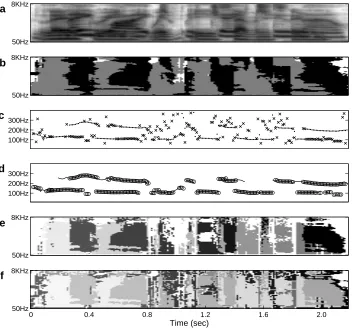
An example of the output of the rule-based multipitch tracker is shown in
Fig. 10. Panel (C) shows the pitch estimates for a female(target)/male(masker)
speech mixture. Dots represent pitch estimates of the stronger source in each
frame and crosses represent those of the weaker source. The smooth pitch track
segments are displayed as circles in panel (D), with ground-truth pitch tracks5
of the pre-mix clean signals displayed as solid lines in the background. The
concurrent pitch track segments produced show a close match to the
ground-truth pitch estimates. The model-based tracker gives very similar output.
time
time
F0
F0
freq
time
time
freq
Spectral integration
Local pitch estimates Pitch track segments
[image:27.612.191.393.368.514.2]Temporal integration
Fig. 8. In anticlockwise sequence, upper-left panel: Regions with different shades of grey represent different spectral groups in each frame. Lower-left panel: dots are
local pitch estimates for the spectral groups. Lower-right panel: two pitch track
seg-ments are produced by linking the local pitch estimates. Upper-right panel: two
spec-tro-temporal fragments are formed corresponding to the two pitch track segments.
5 The pitch analysis is based on the autocorrelation method in the ‘Praat’ program
4.1.2 Temporal integration
Spectral groups produced in the spectral integration stage are combined across
time if their pitch estimates are linked together in the same pitch track
seg-ment, producing spectro-temporal fragments. Each fragment corresponds to
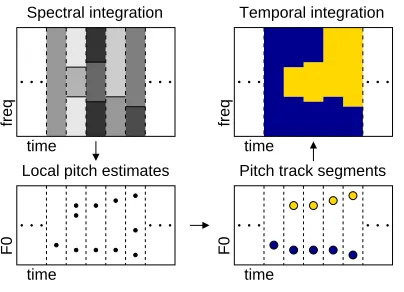
one pitch track segment. This process is illustrated in Fig. 8. The upper-left
panel shows integrated spectral groups for five frames. Regions with
differ-ent shades of grey represdiffer-ent differdiffer-ent spectral groups in each frame. Pitch
estimates for each group in each frame are shown in the lower-left panel. The
lower-right panel shows two smooth pitch track segments that are formed. The
two corresponding spectro-temporal fragments are shown in the upper-right
panel.
Fig. 10 panel (E) shows the fragments produced corresponding to the pitch
tracks (Fig. 10 panel (D)) in the example of the female(target)/male(masker)
speech mixture. Each fragment is represented using a different shade of grey. It
demonstrates a close match between the generated fragments and the ‘oracle’
segmentation (panel (B)).
This temporal integration step also has the potential to deal with ambiguous
pitch tracks caused by a similar pitch range from different sound sources.
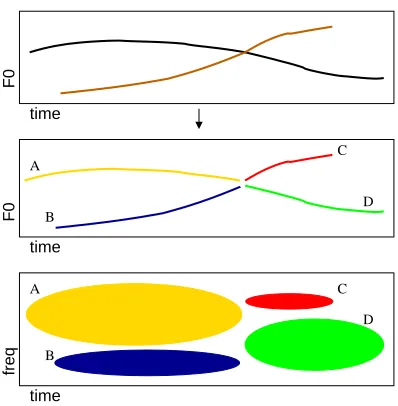
Consider the situation where two pitch tracks intersect, as illustrated at the
top panel in Fig. 9. The ambiguous pitch tracks will be represented as four
pitch track segments by the system and hence four corresponding
spectro-temporal fragments can be formed (the middle and bottom panel in Fig. 9).
This allows the decision on combining fragments (e.g. {AD, BC} or {AC,
D A
D A
B
B
C
C
freq
F0
F0
[image:29.612.190.389.67.270.2]time time time
Fig. 9. Top panel: two intersecting pitch tracks. Middle panel: the ambiguous pitch tracks can be represented as four pitch track segments. Bottom panel: four
cor-responding spectro-temporal fragments can be formed allowing a later decision on
fragment combination (e.g. {AD, BC} or {AC, BD}) during the recognition
pro-cess.
4.2 Adding inharmonic fragments
Unvoiced speech lacks periodicity and thus does not produce dendritic
struc-tures in the correlogram domain. The proposed technique which exploits the
periodicity cue skips unvoiced regions and as a result spectro-temporal pixels
corresponding to these regions are missing (e.g. the white region at about 1.1
second in Fig. 10 (e)). The unvoiced regions of the speech signal are
impor-tant in distinguishing words which differ only with respect to their unvoiced
consonants (e.g. /pi:/ and /ti:/). Therefore it is necessary to include some
mechanism that can form coherent fragments for these unvoiced regions.
Hu (2006) gives a systematic study of unvoiced speech segregation. In the
current work, as the focus is on separation of periodic sounds, we employ a
a
50Hz 8KHz
b
50Hz 8KHz
100Hz 200Hz 300Hz
c
100Hz 200Hz 300Hz
d
e
50Hz 8KHz
Time (sec)
f
0 0.4 0.8 1.2 1.6 2.0
[image:30.612.114.466.74.403.2]50Hz 8KHz
Fig. 10. (a) A ‘ratemap’ representation of the mixture of ‘lay white with j 2 now’ (target, female) plus ‘lay green with e 7 soon’ (masker, male) TMR = 0dB. (b) The
‘oracle’ segmentation. Dark grey: pixels where the value in the mixture is close to
that in the female speech; light grey: the mixture value is close to that in the male
speech; white: low energy regions. (c) Pitch estimates for each source segmentation.
Dots represent the pitch of the stronger source in each frame and crosses
repre-sent the weaker source at that frame. (d) Circles are pitch tracks produced by the
multipitch tracking algorithm; solid lines are the ground-truth pitch tracks. (e)
Frag-ments after temporal integration based on the smooth pitch tracks. (f ) Combining
inharmonic fragments.
(2005). Harmonic regions are first identified in the ‘ratemap’ representation
of the mixture using the techniques described in Section 4.1. The ‘ratemap’
pro-cessed by the ‘watershed algorithm’ (Gonzales et al., 2004). The watershed
algorithm is a standard region-based image segmentation approach. Imagine
the process of falling rain flooding a bounded landscape. The landscape will
fill up with water starting at local minima, forming several water domains.
As the water level rises, water from different domains meets along boundaries
(‘watersheds’). As a result the landscape is divided into regions separated
by these watersheds. The technique can be applied to segregate inharmonic
sources under the assumption that inharmonic sources generally concentrate
their energy in local spectro-temporal regions, and that these concentrations
of energy form resolvable maxima in the spectro-temporal domain. The
inhar-monic fragments produced using this technique are pooled together with the
harmonic fragment as illustrated, for example, in Fig. 10 (F).
5 Fragment-driven Speech Recognition
Given the set of source fragments produced by the processes described in
Section 4, speech recognition can be performed using the Speech Fragment
Decoding (SFD) technique. In brief, the technique works by considering all
possible fragment labellings and all possible word sequences. Each fragment
may be variously labelled as either being a fragment of the target (foreground)
or of the masker (background). A hypothesised set of fragment labels defines
a unique target/masker segmentation that can be represented by a ‘missing
data mask’, mtf – a spectro-temporal map of binary values indicating which
spectro-temporal elements are considered to be dominated by the target, and
which are considered to be masked by the competing sources. Given such a
evaluate the likelihood of each hypothesised word sequence. A Viterbi-like
algorithm is then used to find the most likely combination of labelling and
word-sequence. A full account of SFD theory is provided in Barker et al.
(2005), and for a detailed description of the application of the technique to
simultaneous speech see Coy and Barker (2007).
One weakness of the SFD technique, in the form described above, is that
it produces ‘hard’ segmentations, i.e. segmentation in which each
spectro-temporal element is marked categorically as either foreground or background.
If the early processing has incorrectly grouped elements of the foreground and
background into a single fragment, then there will be incorrect assignments
in the missing data mask that cannot be recovered in later processing. These
problems can be mitigated by using missing data techniques that use ‘soft
masks’ containing a value between 0 and 1 to express a degree of belief that the
element is either foreground or background (Barker et al., 2000). Such masks
can be used in the SFD framework by introducing a spectro-temporal map
to express the confidence that the spectro-temporal element belongs to the
fragment to which it has been assigned. This confidence map, ctf, uses value
in the range 0.5 (low confidence) to 1.0 (high confidence). Given a confidence
map, ctf, each hypothesised fragment labelling can be converted into a soft
missing data mask,mtf, by settingmtf to bectf for time-frequency points that
lie within foreground fragments, and to be 1−ctf for time-frequency points
within missing fragments. A fuller explanation of the soft SFD technique can
be found in Coy and Barker (2007).
In harmonic regions, the confidence map is based on a measure of the similarity
between a local periodicity computed at each spectro-temporal point, and a
fragment as a whole. For each spectro-temporal point the difference between
its periodicity and the global periodicity of the fragment measured at that time
is computed in Hertz, referred to as x. A sigmoid function is then employed
to derive a score between 0.5 and 1:
f(x) = 1
1 + exp(−α(x−β)) (10)
whereα is the sigmoid slope, andβ is the sigmoid centre. Appropriate values
for these parameters were determined via a series of tuning experiments using
a small development data set available in the GRID corpus (see Section 6). It
was found that the values of these parameters are not critical to the overall
performance andα = 0.6 and β =−10 were used in this study.
Confidence scores for the inharmonic fragments in our study are all set to 1.
These confidence scores were used in our coherence evaluation experiment and
also employed (as ‘soft’ masks) along with generated fragments in the SFD
system.
6 Experiments and Discussion
Experiments were performed in the context of the Interspeech 2006 ‘Speech
Separation Challenge’ using simultaneous speech data constructed from the
GRID corpus (Cooke et al., 2006). The GRID corpus consists of utterances
spoken by 34 native English speakers, including 18 male speakers and 16
fe-male speakers. The utterances are short sentences of the form<command:4>
<colour:4> <preposition:4> <letter:25> <number:10> <adverb:4>, as
pairs of end-pointed utterances which have been artificially added at a range
of target-to-masker ratios. All the mixtures are single-channel signals. In the
test set there are 200 pairs in which target and masker are the same speaker;
200 pairs of the same gender (but different speakers); and 200 pairs of
differ-ent genders. The ‘colour’ for the target utterance is always ‘white’, while the
[image:34.612.149.431.259.434.2]‘colour’ of the masking utterance is never ‘white’. Table 1
Structures of the sentences in the GRID corpus
Verb Colour Prep. Letter Digit Adverb bin blue at a-z 1-9 again lay green by (no ‘w’) and zero now
place red on please
set white with soon
Three sets of coherent fragments were evaluated and compared on the same
task: ‘Fragments - Coy’ are fragments generated by the system reported in Coy
and Barker (2005); ‘Fragments - model’ and ‘Fragments - rule’ are coherent
fragments generated by the proposed system employing the model-based pitch
tracker and the rule-based pitch tracker, respectively.
6.1 Experiment I: Coherence measuring
The fragments are ultimately employed by the speech fragment decoding ASR
system and can be evaluated in terms of the recognition performance achieved.
the quality of fragments is to measure how closely they correspond to the
‘oracle’ segmentation, obtained with the access to the pre-mix clean signals
(see Fig. 10(B) for an example). To do this we derive the ‘coherence’ of a
fragment as follows. If each pixel in a fragment is associated with a weight,
the coherence of the fragment is,
100× max(
P
w1,Pw2) P
w1+Pw2
(11)
wherew1 are a set of weights for pixels in the fragment overlapping one source
and w2 are a set of weights for those which overlap the other source. The
fragments were compared with the ‘oracle’ segmentation to identify the
pix-els overlapping each source. When the decision of each pixel being present or
missing in the fragment is discrete (1 or 0), these weights are all simply ‘1’. In
this study we use the confidence scores described in Section 5 as the weights.
This choice of weight has the desirable effect that incorrect pixel assignments
in regions of low confidence cause less reduction in coherence than incorrect
assignments in regions of high confidence. Note that regardless of the
confi-dence score, some spectro-temporal pixels may be more important for speech
recognition than others. For instance, pixels with high energy representing
vowel regions may be of greater value than low energy pixels. It is less critical
that the latter pixels are correctly assigned, and ideally, the coherence score
should reflect this. In the current measurement, in the absence of a detailed
model of spectro-temporal pixel importance, we make the simple assumption
that each pixel has equal importance.
A histogram with a bin width of 10% coherence (hence 5 bins from
coher-ence 50% to 100%) is computed over the set of fragment cohercoher-ence values.
The fragments are different in size. As smaller fragments are less likely to
overlap different sources, their coherence is inherently higher. For example, at
one extreme, a single-pixel fragment must always have a coherence of 100%.
Although we can get higher coherence scores by generating more small
frag-ments, this would be at the expense of reducing the degree of constraint that
the primitive grouping processes are providing, i.e. a large number of small
fragments produces a much greater set of possible foreground/background
segmentation hypotheses. Furthermore, the increased hypothesis space leads
to an increase in decoding time. This increase can be quite dramatic,
espe-cially if fragments are over-segmented across the frequency axis (see Barker
et al. (2005)). Therefore the aim here is to producelarge and highly-coherent
fragments. With these considerations, in the coherence analysis, we reduce the
effect of the high coherence contributed by small fragments, by weighting each
fragment’s coherence value by its size when computing the histogram, i.e., a
fragment is countedS times if its size isS pixels. The histograms for the three
sets of fragments in all mixture conditions at a TMR of -9 dB are shown and
compared in the top three panels of Fig. 11. They have been normalised by
dividing the count in each bin by the total number of pixels.
The proposed system with either the model-based pitch tracker or the
rule-based pitch tracker produces fragments with very similar quality in terms of
coherence. When compared with the fragments generated by Coy and Barker’s
system, proportionally more fragments with high coherence are produced by
the proposed system. This is probably because pitch estimates of each source
are computed after the sources are separated. The pitch estimates are thus
more reliable and multipitch tracking becomes a much less challenging
50 60 70 80 90 100 0.1
0.2 0.3
Same Talker (ST)
Coherence Bin (%)
Normalised Bin Counts
50 60 70 80 90 100 0.1
0.2 0.3
Same Gender (SG)
Coherence Bin (%)
50 60 70 80 90 100 0.1
0.2 0.3
Different Gender (DG)
Coherence Bin (%)
50 60 70 80 90 100 100
150 200
ST
Coherence Bin (%)
Average Size (# of pixels)
50 60 70 80 90 100 100
150 200
SG
Coherence Bin (%)
50 60 70 80 90 100 100
150 200
DG
Coherence Bin (%)
Fragments − Coy Fragments − model Fragments − rule
[image:37.612.113.466.74.299.2]Fragments − Coy Fragments − model Fragments − rule
Fig. 11.Coherence measuring results for the three sets of fragments. Top three pan-els: histograms of fragment coherence after normalisation (TMR = -9 dB). Each
fragment’s contribution is weighted by its size when computing the histogram. See
text for details. Bottom three panels: average size of fragments in each corresponding
histogram bin.
the summary of all ACG channels. The multipitch tracker possibly finds more
incorrect tracks through the noisier pitch data. Furthermore, unlike the
pro-posed system where spectral integration is performed before temporal
integra-tion, in Coy and Barker’s system spectral integration relies on the less reliable
pitch tracks. Therefore it is more likely to produce fragments with low
co-herence. Within each system, the best results were achieved in the ‘different
gender’ condition, presumably due to the larger difference in the average F0s
of the sources.
To examine the impact of fragment sizes on the fragment coherence, we also
measured the average size of fragments for each coherence histogram bin,
generated by the proposed system give a very similar pattern. In the coherence
bins higher than 80% their average fragment size is larger than that of Coy
and Barker’s system, although in the low coherence bins it is smaller. This
is, however, acceptable as there are proportionally less fragments with low
coherence in the proposed system.
6.2 Experiment II: Automatic speech recognition
The technique proposed here was also employing within the speech fragment
decoding system reported in Coy and Barker (2007), and using the
experimen-tal set-up developed in Barker et al. (2006) for the Interspeech 2006 Speech
Separation Challenge. The task is to recognise the letter and digit spoken by
the target speaker who says ‘white’. The recognition accuracy of these two
keywords were averaged for each target utterance. The recogniser employed
a grammar representing all allowable target utterances in which the colour
spoken is ‘white’.
In the SFD system a 64-channel log-compressed ‘ratemap’ representation was
employed (see Section 2). The 128-dimensional feature vector consisted of
64-dimension ratemap features plus their delta features. Each word was modelled
using a speaker dependent word-level HMM in a simple left-to-right model
topology, with 7 diagonal-covariance Gaussian mixture components per state.
The number of HMM states for each word was decided based on 2 states per
phoneme. They were trained using 500 utterances from each of the 34 speakers.
The SFD system employs the ‘soft’ speech fragment decoding technique (Coy
The baseline system was a conventional ASR system employing 39-dimensional
MFCC features. A single set of speaker independent HMMs with an
identi-cal model topology employed 32 mixtures per state. They were trained on
standard 13 MFCC features along with their deltas and accelerations.
Following Barker et al. (2006), in all experiments, it is assumed that the target
speaker is one of the speakers encountered in the training set, but two different
configurations were employed: i) ‘known speaker’ - the utterance is decoded
using the set of HMMs corresponding to the target speaker, ii) ‘unknown
speaker’ - the utterance is decoded using HMMs corresponding to each of the
34 speakers and the overall best scoring hypothesis is selected.
We first examine the effect of using soft masks and inharmonic fragments on
the recognition performance. The SFD systems with soft masks and
inhar-monic fragments are then compared to the baseline system and a SFD system
using ‘Fragments - Coy’ with an identical recognition setup.
6.2.1 Effects of soft masks and inharmonic fragments
As discussed in Section 5, an incorrect decision for a spectro-temporal pixel
being present in a fragment cannot be recovered when using discrete masks.
This also affects the decoding process in automatic speech recognition as the
recogniser will try to match speech models with unreliable acoustic evidence.
Therefore we compared the recognition performance using the same set of
fragments with discrete masks and soft masks. The soft masks described in
Section 5 were employed. The discrete masks were produced by simply
re-placing all the pixels in the soft masks with ‘1’ if their values are greater
(Section 4.2) on the recognition performance was also examined. Fig. 12 shows
recognition results of the SFD system using the set of ‘Fragments - rule’ in the
‘known speaker’ configuration. ‘All frags + soft masks’ represents that both
harmonic and inharmonic fragments were used, combined with soft masks. ‘All
frags + discrete masks’ represents results using all fragments but with discrete
masks. ‘Harm frags + soft masks’ is the result with harmonic fragments only
using soft masks.
−9 −6 −3 0 3 6 0 20 40 60 80 100 Overall
Target Masker Ratio (dB)
Percentage Correct (%)
−90 −6 −3 0 3 6 20
40 60 80 100
Same Talker (ST)
Target Masker Ratio (dB)
Percentage Correct (%)
−9 −6 −3 0 3 6 0 20 40 60 80 100
Same Gender (SG)
Target Masker Ratio (dB)
Percentage Correct (%)
−90 −6 −3 0 3 6
20 40 60 80 100
Different Gender (DG)
Target Masker Ratio (dB)
Percentage Correct (%)
[image:40.612.131.446.249.528.2]All frags + soft masks All frags + discrete masks Harm frags + soft masks
Fig. 12. Recognition accuracy performance of the SFD system using ‘Fragments - rule’ in ‘known speaker’ configuration. ‘All frags + soft masks’: all fragments
(both harmonic and inharmonic fragments) with soft masks, ‘All frags + discrete
masks’: all fragments with discrete masks, and ‘Harm frags + soft masks’: harmonic
fragments only with soft masks.
Results show that the soft masks had a considerable effect on the recognition
discrete masks across all conditions. As shown in the coherence measuring
experiment many fragments have low coherence. Some pixels are unreliable
and by assigning a confidence score to each pixel the speech fragment decoder
is able to weight the pixel’s contribution to the decision. Fig. 12 also shows
that in the ‘same talker’ condition the SFD system using soft masks did not
give any recognition accuracy improvement. One possible reason is that in this
condition, as shown in Fig. 11, there are more fragments with low coherence
and even with soft masks the system could not recover from the errors. Another
reason could be that more ‘important’ pixels were incorrectly assigned in this
condition.
Inharmonic fragments also have some impact on the performance in this
‘let-ter + digit’ recognition task as many let‘let-ters are only distinguished by the
presence/absence of unvoiced consonants, e.g. letter ‘p’, ‘t’ and ‘e’.
6.2.2 Comparison of different fragment sets
All the recognition results in this section were obtained with the ‘soft’ SFD
system using both harmonic and inharmonic fragments. Fig. 13 shows keyword
recognition results of the system using the three sets of coherent fragments
discussed before: ‘Fragments Coy’, ‘Fragments model’ and ‘Fragments
-rule’, in both ‘known speaker’ and ‘unknown speaker’ configurations. The
‘unknown speaker’ results are repeated in Table 2 (model-based pitch tracker)
and Table 3 (rule-based pitch tracker). Note the ‘known - model’ and ‘unknown
- model’ results are essentially the same as those published in Barker et al.
(2006), with minor differences owing to a correction made in the application
−90 −6 −3 0 3 6 20 40 60 80 100 Overall
Target Masker Ratio (dB)
Percentage Correct (%)
−90 −6 −3 0 3 6 20
40 60 80 100
Same Talker (ST)
Target Masker Ratio (dB)
Percentage Correct (%)
−9 −6 −3 0 3 6
0 20 40 60 80 100
Same Gender (SG)
Target Masker Ratio (dB)
Percentage Correct (%)
−90 −6 −3 0 3 6
20 40 60 80 100
Different Gender (DG)
Target Masker Ratio (dB)
Percentage Correct (%)
Known − Coy Known − model Known − rule Unknown − Coy Unknown − model Unknown − rule Baseline
Fig. 13. Keyword recognition results of the proposed system with the
model-based/rule-based pitch tracker compared against the system reported in Coy
and Barker (2005), in both ‘known speaker’ and ‘unknown speaker’ configurations.
The baseline results are taken from Barker et al. (2006).
The SFD systems clearly outperform the baseline across all TMRs and across
all mixture conditions. They are also able to exploit knowledge of the
tar-get speaker identity. The recognition accuracy is significantly higher when
the speaker identity is available. Prior knowledge of the speaker identity only
fails to confer an advantage in the ‘same talker’ condition as one would
ex-pect. Recognition accuracy results using fragments generated by the proposed
system with different pitch trackers are quite similar. This is consistent with
the results in the coherence measuring experiment that with different tracks
the system produced fragments with similar coherence. The results are
Table 2
Keyword recognition correct percentage (%) in unknown speaker configuration using
the model-based pitch tracker.
TMR (dB)
Condition -9 -6 -3 0 3 6
Overall 56.08 57.08 45.92 45.42 69.75 80.42 ST 46.61 44.57 34.62 35.07 55.43 74.43 SG 57.82 62.85 53.63 51.96 76.82 84.08 DG 65.00 65.75 51.50 51.00 79.25 83.75 Table 3
Keyword recognition correct percentage (%) in unknown speaker configuration using
the rule-based pitch tracker.
TMR (dB)
Condition -9 -6 -3 0 3 6
Overall 57.58 57.17 45.17 44.75 69.00 80.67 ST 46.61 45.02 37.10 34.62 54.98 74.43 SG 61.73 63.13 49.16 53.07 77.65 83.52 DG 66.00 65.25 50.50 48.50 76.75 85.00 at low TMRs. The biggest performance gain was achieved in the ‘different
gender’ condition. This occurs because in this condition the two sources are
more likely to have correlated fundamentals, which is difficult to solve purely
[image:43.612.102.479.417.626.2]