Chapter 2. Work placement for International Student Programs (WISP):
A model of effective practice
Georgina Barton1, Kay Hartwig2, Dawn Bennett3, Melissa Cain4, Marilyn Campbell5, Sonia Ferns6, Liz Jones7, Dawn Joseph8, Marie Kavanagh9, Ann Kelly10, Ingrid Larkin11, Erin O’Connor12, Anna Podorova13, Donna Tangen14, and Marleen Westerveld15
Abstract
With a marked increase in the number of international students enrolling in university programs across the globe it is important that personal and professional experiences are positive. Of interest is the workplace component of international students’ study programs, as these experiences provide opportunities for students to socialise into new workplaces and cultural contexts. This chapter presents a theoretical model that takes into account the relationship between the concepts of internationalisation, professional socialisation, reflection and cultural development. It explores Knight’s (1999) work on internationalisation; research on personal and professional socialisation; effective reflective practice; and the notion of cultural development (Wells, 2000). We argue that an enhanced ethos
approach, together with strong personal and professional student and staff agency and reflective practice, enhances the work placement experience. If all these elements are taken into account and the interrelationship between them is understood, we contend that it is more likely for workplace experiences to be positive and meaningful for all stakeholders.
Introduction
This chapter presents a theoretical model, explored throughout this book, that was developed during a two-year, empirical Australian study that aimed to improve practices related to international students’ experience during work placements as part of their overseas study. The Work placement for International Student Programs or WISP model of effective practice takes into account the relationship between the concepts of internationalisation and interculturalisation, socialisation, and reflection. The purpose of the model was to provide a framework for all stakeholders, including international students, university staff and workplace staff, to refer to when interacting together for the purpose of professional learning.
Knight’s (1999, 2004) work on internationalisation shares four key dimensions. These are: activity, process, competency and ethos. Her work also incorporates intercultural perspectives
1Griffith University, Australia, [email protected] 2Griffith University, Australia
3Curtin University, Australia 4Griffith University, Australia
5Queensland University of Technology, Australia 6Curtin University, Australia
7Griffith University, Australia 8Deakin University, Australia
9University of Southern Queensland, Australia 10Griffith University, Australia
11Queensland University of Technology, Australia 12Queensland University of Technology, Australia 13Monash University, Australia
on personal and professional interactions. In seeking to ground the new model we also refer to research on both personal and professional socialisation or what we term multi-socialisation. We pay particular attention to students’ personal agencies and dispositions and the affordances and opportunities provided by workplace mentors and supervisors (Barton, Hartwig, & Cain, 2015; Billett, 2004, 2009). Finally, we investigate the concept of reflection, including effective reflective practice, and position this as an important process for all stakeholders involved in work placements for international students. (Ryan & Ryan, 2013).
We begin this chapter by establishing the context, with a description of the study and an overview of the key themes. We then present the approach before describing the model. Two student case studies enable us to illustrate the model in action, and we draw on the case studies to consider the implications for future practice.
The contextual background
The Work placement for International Student Programs or WISP project explored ways in which the workplace experience for international students could be enhanced to ensure a positive and successful outcome for all stakeholders. The WISP team members were all academic staff across six universities who had direct contact with international students in their programs and who undertook work placements as part of their study.
The WISP project gathered large amounts of data including interviews with international students, academic and university support staff as well as workplace staff; large scale survey data from international students about their working lives and workplace experiences and a large range of artefacts including course profiles, students reports and other documents related to international students and work placements.
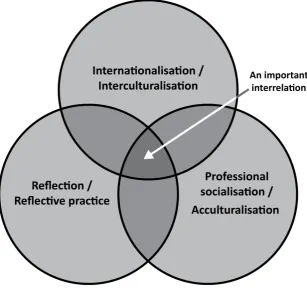
Figure 2.1 Theoretical frameworks informing model of effective practice
The study’s focus was international students, whose numbers within higher education are increasing every year across the globe. As this domain is a competitive market, it is important that international students undertaking study in Australia have positive, personal and professional experiences. Of interest is the workplace component of international students’ study programs as these encounters provide opportunities for students to gain workplace experience in another country. This chapter therefore explores current issues (both concerns and successes) related to international students undertaking work placements in a range of programs.
Many international students indicate their desire to participate in the workforce in their new country (Garrett, 2014) as this provides unique and transferable experiences and skills. Further, the distinct perspectives of international students often contribute positively to the workforce. The results from the International Student Barometer (Garrett, 2014) indicate the need for more focus on the issues of work experience, employability and career advice for international students. It is therefore imperative that more work is done within higher education to enhance international students’ workplace experiences.
is more likely that an intercultural approach to the workplace experience is possible and therefore positive and successful outcomes will result for all stakeholders.
The following sections explore each of the conceptual frameworks that have informed the development of our model of effective practice for international students undertaking work placements throughout their international study. It will then explore how these concepts intersect allowing for international students to experience success before, during and after their work placement.
Internationalisation and interculturalisation
Internationalisation and interculturalisation are concepts that have received much attention in the higher education sector over the last few? decades. Drawing initially on Jane Knight’s (1999, 2004) work we acknowledge that internationalisation encompasses a number of dimensions including at the institutional, national and global levels. Generally, internationalisation acknowledges an inclusion of international, intercultural approaches in curriculum, learning and teaching and through other related activities in various sectors. Knight’s (1999) original model outlines four approaches at the institutional level. These include the activity, process, competency and ethos levels. An activity approach includes endeavours such as study abroad programs, curriculum, academic programs, international students, institutional linkages and networks, development projects, and branch campuses. Processes refer to when an international dimension is integrated in a sustainable way into the three primary functions of an institution: teaching/learning, research, and service to society. Competencies are the desired results such as student competencies, increased profile, and more international agreements, partners, or projects. Finally, ethos concerns the creation of a culture or climate on campus that promotes and supports international/intercultural understanding and focuses on campus-based or at-home activities. Knight’s later work in 2004 remodelled this initial work and added outcomes, rationales, on campus and cross-border/abroad approaches in higher education.
Another theory related to internationalisation is interculturalisation. A Griffith University policy identified this concept as “a process that aims for staff and graduates to gain appropriate competencies and proficiencies to fulfil and take their role as global citizens”. Other universities have similar policies. Similarly, Hunter, Pearson, and Gutiérrez’s (2015) research sees interculturalisation as an approach that “understands others first, yourself second, and in a truly reflective nature, the introspective analysis of teaching and learning” (p. i). The authors further extrapolate that interculturalisation is an approach that exercises tolerance and openness which can be understood through a process of transcending one cultural system for another. This means that individuals are able to consider a critical event from a different perspective to what they would normally be used to. Hunter et al., (2015) acknowledges that people would therefore act as cultural agents as they learn about others’ “shared knowledge, values, and behaviours that connect us” (p. 1), ultimately, positive engagement between all parties is needed for intercultural exchanges to be successful amongst international students, their mentors and others participating in the provision of workplace experiences.
the concepts of cultural awareness, cultural proficiency and cultural competence, whereby an embedded approach takes us beyond these particular competencies. The six stages of the Wells’ (2000, p. 191) model are as follows:
1. cultural incompetence: a lack of knowledge of the cultural implications of health behaviour;
2. cultural knowledge: learning the elements of culture and their role in shaping and defining health behaviour;
3. cultural awareness: recognising and understanding the cultural implications of health behaviour;
4. cultural sensitivity: the integration of cultural knowledge and awareness into individual and institutional behaviour;
5. cultural competence: the routine application of culturally appropriate healthcare interventions and practices; and
6. cultural proficiency: the integration of cultural competence into the culture of the organisation and into professional practice, teaching and research mastery of the cognitive and affective phases of cultural development.
Progression through the last three stages of this model requires practical experience working with culturally and linguistically diverse populations (Wells, 2000).
The process of interculturalisation ensures that all stakeholders approach learning and teaching and personal interaction via an intercultural approach. This means that an understanding and acceptance of the fact that people may consider certain phenomena or situations differently is possible, and can therefore work together positively and productively across these differences. While we appreciated Wells’ (2000) model, it seems that perhaps interaction with others has moved forward from being culturally incompetent but rather, if one can continue to consider others first and themselves second (Hunter et al., 2015) then a continuum such as this can be null and void.
Multi-socialisation
Socialisation is a process throughout life where people adopt and adapt to certain traditions, attitudes and values of a social group. The process of socialisation can occur across multiple contexts and amongst a range of populaces. When considering work placements for international students there is potential for socialisation practices to occur not only in the workplace environment but also within the cultural boundaries of that environment. In addition, international students are likely to continue their socialisation amongst their peers, families and communities at the same time. Combined, this creates a complex and multi-dimensionalised process of socialisation for international students—or what we term multi-socialisation. It can therefore be difficult for some to negotiate within these spaces; for others it is exciting and rewarding.
adopt the values, skills, attitudes, norms and knowledge needed for membership in a given society, group or organisation” (Gardner & Barnes, 2007, p. 3).
Such immersion requires students to socialise or acculturate into the professional environment. Lai and Lim (2012) therefore see professional socialisation as both a process and an outcome. For any under- or post-graduate student, negotiating and understanding the workplace, its expectations and organisational structure (including relationships) can be extremely complex, difficult and time consuming. For international students these aspects can be magnified given their prior life experiences. There is evidence that international students often find it difficult to understand a new cultural context as well as certain work practices, particularly if they have not experienced them before. Not only do international students need to socialise into the higher education institution and the disciplinary area in which they embark upon their studies, but they also need to negotiate within the work placement component of their course. Our research suggests that for some students this can occur within a few weeks of arriving in Australia.
Ways in which students can successfully negotiate these spaces concerns their personal agencies and dispositions or how an individual, with strong capacities, can direct the ways in which they socialise into the workforce or professional practice rather than having the workplace impose upon them. Another consideration in this process is how people interact emphasising the mutuality between understanding of social and cultural circumstances. Billett (2009) refers to how an individual refers to earlier experiences to shape engagement within a disciplinary work context as the development of a personal epistemology. We therefore contend that a multi-socialisation process occurs as this allows students to reflect on the experience, take on board feedback about what is going well and what needs improvement and then reconstruct their practice accordingly.
Reflection
The final theory we have included in the model is the process of reflection and reflective practice. Reflection, according to Rodgers (2002) is a meaning making process resulting from rigorous and conscious thinking that involves community and a certain set of attitudes. In professional contexts reflection is important for learning and growth, particularly for those socialising into the profession. For international students undertaking work placement reflection is critical, but it may be carried out in different ways so it is important that those involved can understand the reflective cycle.
Utilising Ryan and Ryan’s (2013) adaptation of Bain, Ballantyne, Mills and Lister’s (2002) model of the 5Rs to 4Rs, we have explored how international students, their mentors and university staff discuss experiences related to work placements. Working through and around four levels of reflection—reporting, relating, reasoning and reconstructing—transformative practice is possible. When we begin to reflect on an experience we often tend to report on
what has happened, although this may not be the case for everyone. Some cultures for example may begin with reasoning as to why something happened the way it did, or relate
how it reminded them of a previous experience. All this critical thinking leads to change or reconstruction of practice via an iterative and ongoing process throughout working life.
understanding of the phenomenon. When people reason about why the incident occurred by highlighting the significant factors in detail and seeing how these are relevant to the issue they can refer to the research literature in determining these reasons. This level involves an exploration of ethical considerations. Finally, reconstructing practice is critical for change and therefore requires international students and also their mentors to reframe or reconstruct their practice in light of greater understanding through reflection. While these variations in reflection impact on positive outcomes this type of thinking needs to be explicitly taught otherwise students may find themselves only recounting or reporting on relevant phenomena.
Making reflection overt means international students are able to consider how their experience during work placement relates to previous experiences; thinking of reasons why occurrences play out the way they do by referring to the literature and research; and contemplating ways in which they can improve their practice through reconstruction. We accept Sengers, Boehner, David and Kaye’s (2005) definition of reflection as referring to:
critical reflection, or bringing unconscious aspects of experience to conscious awareness, thereby making them available for conscious choice. This critical reflection is crucial to both individual freedom and our quality of life in society as a whole, since without it, we unthinkingly adopt attitudes, practices, values, and identities we might not consciously espouse. Additionally, reflection is not a purely cognitive activity, but is folded into all our ways of seeing and experiencing the world. Similarly, critical reflection does not just provide new facts; it opens opportunities to experience the world and oneself in a fundamentally different way. (p. 50)
A model of effective practice
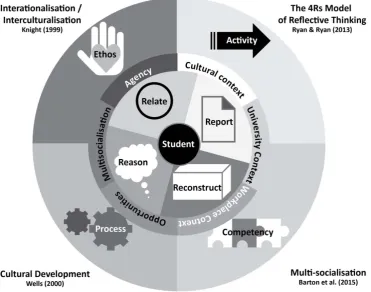
Figure 2.2 The WISP model of effective practice: an interactive representation
While we note that the process is cyclic and interactive we can also represent this as a more simplistic and linear view as in Figure 2.3.
Figure 2.3 A simplistic, linear view of the model of effective practice
[image:8.595.81.441.471.616.2]supervisor to provide critical and helpful feedback and for them to also carry out an effective reflective cycle to ensure improvement for the international student.
Relating allows both the international student and mentor to try to understand an incident by thinking back on previous experiences of themselves or others. The model of effective practice aims for an intercultural perspective, in that, when people relate they also try to think about others’ experiences and prior knowledge and understand how these might impact on the ways in which they perceive the situation. This is also important when reasoning. An ethos approach will encompass an awareness and attempted understanding of how the other person may feel in this situation and how they might first attempt to reconstruct their practice. Questions such as: how do you think you could begin to improve for next time? Rather than—
I want you to do this—ensures an acknowledgement of different ways to consider change also giving agency to the student.
Below is further information regarding each part of the model in relation to work placements and international students, including prompting questions or statements that can assist all stakeholders involved.
Applying the model to context: Case studies
Education international student William
There were a number of university sites involved in the WISP project that explored the experience of international students in education programs. One such program was a Graduate Diploma in Education for students aiming to be teachers in secondary schools. Students come into this program having already completed an undergraduate degree which has focused on the two teaching areas selected in the post-graduate program. The Graduate Diploma is currently a one-year program entailing two semesters of study; each semester having a six-week professional experience in schools. At the end of two 15-week semesters students are expected to be work ready. William, an international student from Hong Kong and whose primary language was Cantonese with second languages of Mandarin and English, completed the Graduate Diploma across three semesters, having had some difficulty during his first professional experience in semester one of his program. The WISP team interviewed William at the completion of his first professional experience as well as after his third, and subsequently more successful, experience in a different school.
William’s first professional experience was in a large secondary school in a low socio-economic area. The school had a diverse range of students attending with approximately 72% of students having a language background other than English, around 65% of the school’s population in the bottom quartile, and an Index of Community Socio-Educational Advantage (ICSEA) at approximately 900 (ACARA, n.d.). In his first interview William commented on the fact that this professional experience did not go well and as a result he was labeled at-risk
just let them get away with it. Students would say to each other and the teacher, “Shut up c***” and then the teacher would say, “Okay, I don’t care.”
For William this was distressing and he related and reasoned that:
Maybe that is [the school’s] culture, but you can’t expect us [pre-service teachers] to control and respect guys like that…I grew up in a culture where this would not be allowed or tolerated.
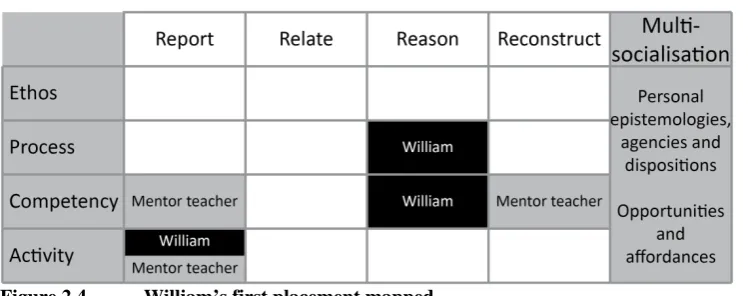
When mapping William’s transcript onto the WISP model of effective practice, there is evidence to show that the majority of his discourse lay in the reporting on activities phase; none of the conversation focused on the reconstruct level except when the interviewer asked what he would do differently next time to which William replied, “Have a different mentor teacher.” The second area most dominant in William’s first interview was within the
reasoning level of the 4Rs however, this usually focused on how the situation could have been better for him and lay blame on his mentor teacher rather than consider ways in which he could have improved his practice. He spoke about how the mentor teacher needed to improve his competencies and the process that was taken in relation to supporting pre-service teachers in the school.
[image:10.595.72.447.384.532.2]For William’s mentor teacher, the issue they felt needed improvement were the competencies required for teaching, particularly in relation to classroom a behaviour management.
Figure 2.4 William’s first placement mapped
Note: MT = Mentor Teacher, W = William
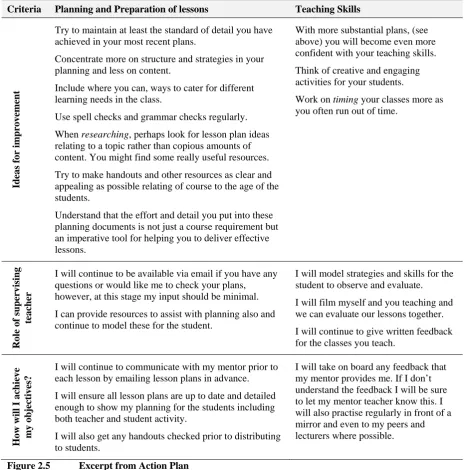
At the commencement of this next professional experience William’s mentor teacher felt there were a number of areas that he needed to improve. Therefore, at the interim report period (at the half way point) William was labeled at-risk and an Action Plan was put in place. This plan outlined areas needing improvement but also what both the mentor teacher and international student needed to do to address these issues. Below is an excerpt from the Action Plan:
Criteria Planning and Preparation of lessons Teaching Skills
Ideas
for improve
ment
Try to maintain at least the standard of detail you have achieved in your most recent plans.
Concentrate more on structure and strategies in your planning and less on content.
Include where you can, ways to cater for different learning needs in the class.
Use spell checks and grammar checks regularly. When researching, perhaps look for lesson plan ideas relating to a topic rather than copious amounts of content. You might find some really useful resources. Try to make handouts and other resources as clear and appealing as possible relating of course to the age of the students.
Understand that the effort and detail you put into these planning documents is not just a course requirement but an imperative tool for helping you to deliver effective lessons.
With more substantial plans, (see above) you will become even more confident with your teaching skills. Think of creative and engaging activities for your students.
Work on timing your classes more as you often run out of time.
Ro le of superv ising teac her
I will continue to be available via email if you have any questions or would like me to check your plans, however, at this stage my input should be minimal. I can provide resources to assist with planning also and continue to model these for the student.
I will model strategies and skills for the student to observe and evaluate. I will film myself and you teaching and we can evaluate our lessons together. I will continue to give written feedback for the classes you teach.
How
will I a
chiev e my objecti v es ?
I will continue to communicate with my mentor prior to each lesson by emailing lesson plans in advance. I will ensure all lesson plans are up to date and detailed enough to show my planning for the students including both teacher and student activity.
I will also get any handouts checked prior to distributing to students.
[image:11.595.65.532.193.664.2]I will take on board any feedback that my mentor provides me. If I don’t understand the feedback I will be sure to let my mentor teacher know this. I will also practise regularly in front of a mirror and even to my peers and lecturers where possible.
Figure 2.5 Excerpt from Action Plan
Figure 2.6 William’s final placement mapped
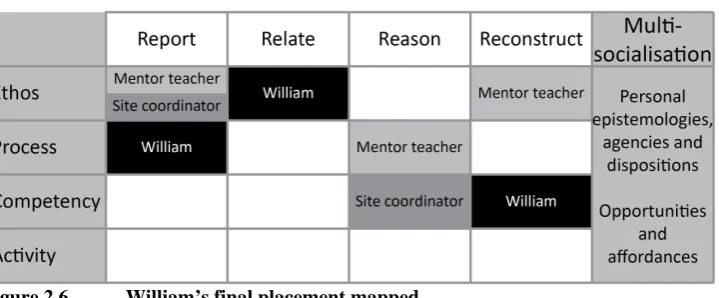
William was able to report on why he required deeper understanding and reflection about the learning and teaching process; due to the need for these students to be challenged. He was also able to relate this professional experience to his first one reflecting that the support provided suited his learning style. He also stated that: “My mentor teacher really understands me and helps me a lot… she doesn’t judge me in terms of my English language but helps me to get my grammar and spelling right” and “For me it is difficult to think of the terms, say for Renaissance music, in English—sometimes these words don’t exist in Chinese… I have to work hard at this and my teacher and my university lecturer really helps me.” With the right amount of support William was also able to consider effectively, how to reconstruct his practice so it was more beneficial for the students’ learning.
William’s mentor teacher recognised his high level musical skills and mentioned he had no issues with teaching instrumental music to smaller groups of students as “he was able to use his [instrument] as his voice.” She did however, believe that William needed to improve his competencies with classroom lessons as a whole process—that is including the transitions needed for a preservice teacher to move towards being a beginning teacher. The mentor teacher therefore would demonstrate and model best practice for William—even during playground duty. This supported William through an ethos approach to reconstructed practice. The site coordinator also provided William feedback and workshops on how to prepare and teach. At the end of the professional experience all recognised the reciprocal learning that occurred with the mentor teacher saying it was a “Happy ending—no, a happy beginning” and William acknowledging that “I learn a lot of things from this prac, but I also learnt something from the last prac.”
Psychology international student Danielle
Case study two involves a Masters of Organisational Psychology international student from Indonesia, Danielle who is bilingual. This program is a two-year fulltime post-graduate degree that aims to: “develop skills and knowledge in workplace counselling, psychological assessment, facilitation and consultancy, human resource management, program evaluation and training” (from program description). Throughout the two-year program there are four practicums, totalling 250 hours. Danielle was interviewed after completing two of her placements.
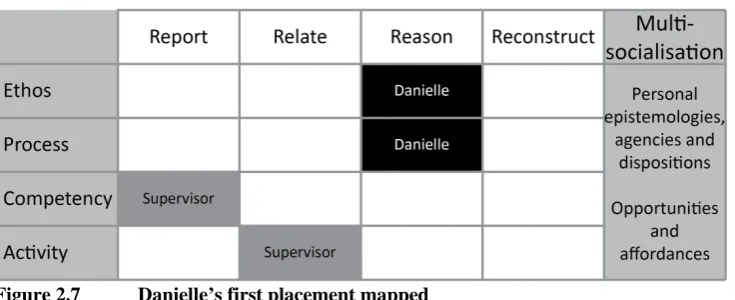
[M]y written skill is according to him is not up to the standard of what he expected, so when he actually read my report he was furious to find like grammar typos… he was just like “[Danielle], this is not my job to actually correct your grammar you have to deal with that”. He made a huge deal about it, and then it’s not even like it’s not even the content of the report itself it’s just the fact that he kind of found typo here and there.
It seemed that the supervisor was only able to report on this competency rather than see the other skills that Danielle possessed. The supervisor also only related this particular activity to what was deemed important whereas Danielle was able to reason that her skills in working with clients was at a high standard and that despite her supervisor having this concern, she was a competent practitioner. She also noted that the supervisor only provided this feedback later in her placement.
[image:13.595.75.443.299.449.2][H]e just brought it up at the last at the end of the placement because that’s the evaluation right you know yeah, so he didn’t tell me beforehand throughout the whole semester, he only brought it up at the end of placement.
Figure 2.7 Danielle’s first placement mapped
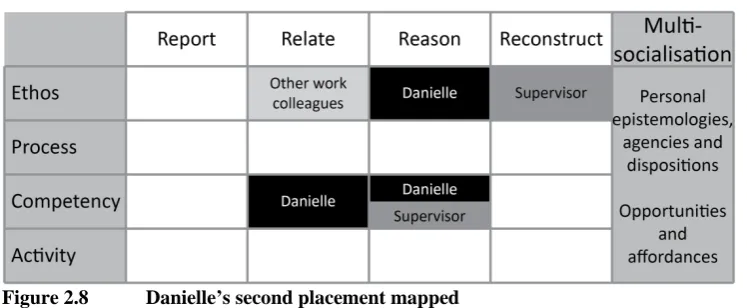
In her second placement Danielle could both relate and reason about her competencies as she was able to compare this experience to her first placement. She noted that this time both her supervisor and other colleagues at the workplace site were able to see her skills in other areas.
[T]he one thing that actually find really helpful is to give me autonomy but also offer some support as well when I need, so I think I feel I think I learn more when I feel challenge but supported at the same time.
Danielle was able to reflect on her experience as an international student undertaking work placement; both the challenges and the benefits.
of life skill that otherwise you won’t learn in your country, like you’re more independent I guess.
[image:14.595.71.445.258.412.2]For Danielle, her second placement was a much more positive experience as the team she worked with in the workplace treated her more like a colleague rather than an international student who had language difficulties; as displayed in her first work placement. The second context essentially utilised an intercultural approach that valued her strengths such as her ability to work with culturally-diverse clients more effectively than other staff. They also acknowledged the need for her to improve her report writing but suggested she just find colleagues to proofread her work. This approach showed high levels of ethos and embraced a collaborative partnership in making the work placement a successful experience, which in turn created a positive workplace context for all involved.
Figure 2.8 Danielle’s second placement mapped
Implications for future practice
It is apparent that a positive intercultural exchange between all stakeholders involved in work placements for international students is necessary for success. Understanding and accepting differences, and particularly drawing upon these through a strengths-based approach, ensures both parties learn from workplace exchanges. Resulting from the WISP project are a number of recommendations for the international student, for university staff involved in work placement components of study programs, and workplace staff.
Recommendations for international students
We recommend that international students know and use the range of support services available at university. At the start of their university study, we suggest that international students are proactive in becoming familiar with the range of support materials and services available at their institution, for example, academic writing, language, and placement services. If students made good use of these services it would in turn support their own learning and placement experiences and encourage other international students to do the same.
This may include role playing critical incidences, providing examples of document writing, or supplementing theoretical knowledge.
Recommendations for university staff
University staff, including academic staff, teaching staff and support staff (such as English language support) play a critical role in supporting international students prior to, during and after work placement. An initial meeting held between the international student and their mentor or supervisor is highly recommended. This may include a tour of the working environment and designation of a workspace for the student. In this meeting the team could review expectations and workplace norms and introduce the international student to staff that they are most likely to engage with. At this time, any unique requirements, learning styles, or concerns are discussed and solutions put in place. Meetings are focused on mediating the transition from academic to workplace learning.
University staff are also invited to encourage international students to gain experience in new cultural and professional contexts through volunteering. To better understand and negotiate cultural norms and colloquialisms specific to working in Australia, university staff encourage and facilitate international students to identify and undertake volunteer placements. This can include providing a database of industry partners who provide short term learning experiences, advice on initiating contact with these employers, examples of professional dress, and guidance for students to incorporate volunteer experiences on their resumes. Academic staff can also facilitate a range of ways for students to debrief after these volunteer placements. This may include a social media discussion site or collaborative learning circles at the university, with the intent of linking learning gained in volunteer contexts to the students’ upcoming placements.
University staff could include a range of teaching and learning activities such as role plays, videos and critical reflection to assist international students’ understanding of Australian workplace contexts. International students should be encouraged to be involved in any university learning activities that will assist in understanding Australian workplace contexts. University staff could be proactive in preparing a range of multimodal materials and participatory activities which highlight the cultural nuances of Australian workplace settings. This can include a series of role play activities where common circumstances are experienced by the students as both worker and audience member, or a series of short video clips which demonstrate a variety of likely workplace scenarios using colloquial and/or discipline specific language. For example, nurse-patient or student-teacher relationships. Students utilise a reflection tool—such as the 4Rs framework (Ryan & Ryan, 2013)—to provide a structured reflection on critical incidences in order to model meaningful responses for future assessment reflection tasks.
experienced students may develop a series of guiding points as general advice or facilitate the pairing of novice and mentor relationships for support.
Recommendations for workplace staff
In relation to workplace staff it is recommended that they create a welcoming workplace environment for the international student including a workspace, clear expectations and open lines of communication. Prior to placement, workplace staff introduce the student to the workplace community, explain the student’s role and specific needs. They provide a designated workstation (desk and computer if possible) and other resources such as stationery and access to the kitchen or lunch room. They include the international student in meetings, in casual conversation as appropriate, and take the initiative to get to know the student on professional and personal levels.
Workplace staff are encouraged to embrace and utilise international students’ unique cultural knowledge and experience in the workplace context. Workplace staff should also be proactive in becoming familiar with, and valuing the wide range of skills and knowledge international students bring to the workplace. This may include important cultural knowledge, a specific skillset related to the workplace, or industry connections in their home country. Workplace staff provide ways for students to share and utilise this knowledge including presenting to colleagues, and implementing this knowledge in their interactions with stakeholders. Workplace staff actively present these skills and knowledge as assets to the workplace and in a positive manner.
It is also recommended that workplace staff include a diverse range of communication techniques to explain key concepts about the workplace context for international students. Workplace staff acknowledge the variety of learning styles, preferences, and cultural nuances present in the workplace. They can devise applicable communication techniques that support the international student to fully understand the workplace environment. This may include the use of graphic representations, multimedia, and alternative technologies, as well as connecting students with staff from similar cultural backgrounds. This also includes focusing on critical incidences and unpacking these through modelling communication strategies.
Workplace staff can also encourage international students to become involved in the wider workplace community. This means that workplace staff actively involve international students by including them in meetings with stakeholders outside the workplace, introducing them to staff from other institutions or businesses, including them in correspondence where appropriate, and providing responsibilities where students are required to initiate connections for themselves. This may also involve support in making industry connections locally, nationally and internationally after placement.
Conclusion
The WISP model of effective practice is a functional way to improve the work placement for international students and their supervisors or mentors in the workplace context. Not only can the model provide an appropriate framework for the international student and mentor but it can also inform decision making within the higher education context. University staff should also be aware of the ways in which the work placement can be made more positive for international students.
students and their mentors face during work placement has a potentially huge impact on an international student’s experience in the new country in which they are undertaking their study. With many policies in place that aim to improve international students’ experience during their study it is crucial that the work placement component is also considered.
The WISP model of effective practice is a practical framework by which all stakeholders can understand and implement effective strategies making sure all involved have a positive experience.
References
ACARA (n.d.) Index of Community Socio-Educational Advantage (ICSEA). retrieved from http://www.myschool.edu.au/AboutUs/Glossary/glossaryLink#main
Bain, J. D., Ballantyne, R., Mills, C., & Lester, N. C. (2002). Reflecting on practice: Student teachers’ perspectives. Flaxton: Post Pressed.
Barton, G. M., Hartwig, K., & Cain, M. (2015). International students’ experience of practicum in teacher education: An exploration through internationalisation and professional socialisation. Australian Journal of Teacher Education, 40(8), 149–163.
Billett, S. (2004). Workplace participatory practices: Conceptualising work-places as learning environments.
Journal of Workplace Learning, 16(6), 312–324.
Billett, S. (2009). Developing agentic professional through practice-based pedagogies. Office of Learning and Teaching Report.
Coffey, M., Samuel, U., Collins, S., & Morris, L. (2012). A Comparative study of social work students in India and the UK: Stress, support and well-being. British Journal of Social Work, 1–18, doi:10.1093/bjsw/bcs112
Gardner, S. K., & Barnes, B. J. (2007). Graduate student involvement: Socialization for the professional role.
Journal of College Student Development, 48(4), 1–19. http://dx.doi.org/10.1353/csd.2007.0036 Garrett, R. (2014). Explaining International Student Satisfaction: Insights from the International Student
Barometer. Retrieved from https://www.i-graduate.org/assets/2014-Explaining-Satisfaction.pdf Hunter, C. A., Pearson, D., & Gutiérrez, A. R. (2015). Interculturalization and teacher education: Theory to
practice. London: Routledge Publishers.
Knight, J. (1999). Internationalization of higher education. In J. Knight, & H. de Wit (Eds.), Quality and Internationalization in Higher Education, (pp. 13–23). Paris: OECD.
Knight, J. (2004). Internationalization remodeled: Definition, approaches, and rationales. Journal of Studies in International Education, 8(1), 5–31.
Knoch, U., May, L., Macqueen, S., Pill, J., & Storch, N. (2016). Transitioning from university to the workplace: Lai, P. K., & Lim, P. H. (2012). Concept of professional socialization in nursing. Int EJ of Sci Med Edu, 6(1),
31–35.
Ryan, M., & Ryan, M. (2013). Theorising a model for teaching and assessing reflective learning in higher education. Higher Education Research & Development, 32(2), 244–257.
Scardamalia, M., & Bereiter, C. (2006). Knowledge building: Theory, pedagogy, and technology. In K. Sawyer (Ed.), Cambridge Handbook of the Learning Sciences, (pp. 97–118). New York: Cambridge University Press.
Sengers, P., Boehner, K., David, S., & Kaye, J. J. (2005, August). Reflective design. In Proceedings of the 4th decennial conference on Critical computing: between sense and sensibility (pp. 49–58). ACM. Wells, M. (2000). Beyond cultural competence: A model for individual and institutional cultural development.
Journal of Community Health Nursing, 17(4), 189–199.