1
building dynamic capabilities through operations
strategy: an empirical example
David Mackay1, Edwin D. terWijlen2, Kepa Mendibil1, Ronald J. Mantel2
1
Design, Manufacture and Engineering Management, University of Strathclyde, Glasgow, Scotland
2
Engineering Technology (CTW), Universiteit Twente , Enschede, Netherlands Corresponding author email:- [email protected]
Abstract
This paper suggests that the implementation of an effective operations strategy process is one of the necessary antecedents to the development of dynamic capabilities within an organisation and that once established, dynamic capabilities and operations strategy process settle into a symbiotic relationship. Key terms and a model of operations strategy process are proposed from literature as a framework for analysing data from a longitudinal case study with a UK based manufacturer of construction materials.
Keywords: Dynamic Capabilities, Operations Strategy Process, Longitudinal Case Study
Introduction
Manufacturing is a key provider of wealth and employment. In the United Kingdom, manufacturing accounts for approximately 15% of the Gross Domestic Product, 50-55% of exports and the employment of three million people - it is one of the primary mechanisms for realising wealth from new technologies (BERR website, 2009). It is also well documented that globalisation has made manufacturing highly competitive and over recent years, manufacturing organisations in high wage economies such as the UK have had to change radically to remain competitive.
In understanding how organisations compete, the resource based view (RBV) of firm strategy has emerged in recent decades as an influential perspective. According to the RBV, sustainable competitive advantage is created by a firm leveraging idiosyncratic bundles of its tangible, intangible and human resources to create valuable market offerings which are difficult to replicate/substitute (Wernerfelt, 1984; Rumelt, 1984; Barney, 1991; Peteraf, 1993). However, despite its roots in the concept of resource stocks and flows (Dierickx et al., 1989), the logic of the perspective has been shown to breakdown in high velocity strategic factor markets (Eisenhardt and Martin, 2000). Building on RBV logic to address the realities of competing in the 21st century, the dynamic capabilities perspective has emerged as a concept of interest.
Background Literature
2
changing environments through developing, deploying and protecting combinations of competences and resources”. It is a topic which, relative to strategy research in general, is still in its infancy and in need of much theoretical and empirical development (Wang and Ahmed, 2007; Furrer et al, 2008; Ambrosini et al, 2009). Indeed many definitions and characterisations of dynamic capabilitiess are mooted so it is necessary to clarify the terminology to be used in this paper.
Firstly, building on the definition of a capability as “the ability to perform a particular task or activity where ability refers to the power or capacity to act”,
a dynamic capability is defined as “the capacity of an organisation to purposefully create, extend or modify its resource base” (Helfat et al., 2007).
In this statement, the verbs “create, extend and modify” imply action over time, reflecting the “dynamic” nature of the capabilities. The adverb “purposefully” is intended to capture the intentionality of action – management of resources is consciously carried out with a particular reasoning in mind. However, what is not implied is any superior skill beyond a threshold level of ability and furthermore, the existence of a capability does not mean that it is used to its full potential. (Easterby-Smith and Prieto, 2008, Amit and Schoemaker, 1993).
As a construct to help us understand how organisations adapt to the changing environment, it is useful to describe aspects of the nature of dynamic capabilities:- Dynamic capabilities are realised through management and organisational processes
which indirectly or directly contribute to the reconfiguration of firm resources (Eisenhardt and Martin, 2000; Helfat et al, 2007)
Dynamic capabilities are a ‘subset’ of the capabilities which exist within an organisation (Helfat, 1997)
Dynamic capabilities act on lower order organisational routines (Zollo and Winter, 2002; Winter 2003, Helfat and Peteraf, 2003; Ambrosini et al 2009)
Dynamic capabilities are not demonstrated by one off/ ad hoc execution of a task– they are a stable pattern of collective activity which can be called on when needed(Zollo and Winter, 2002; Winter 2003)
Dynamic capabilities incorporate organisational learning over time (Easterby Smith and Prieto, 2008)
Assuming long term organisational goals of survival and growth, this characterisation suggests that dynamic capabilities are in fact a construct for helping us understand how an organisation builds and improves its operational capabilities over time (technical fitness) and equally, how it adapts/exploits its resource in its changing environmental context (evolutionary fitness). The terms technical fitness and evolutionary fitness where coined by Helfat et al (2007).
For manufacturing firms, operations strategy is concerned with the subset of organisational activities which deliver “the effective use of production capability and technology for achieving business and corporate goals” (Ahmed et al 1996). Acur et al (2003) argue that manufacturing organisation’s operations strategy “guides key decisions to be made at all levels of the organisation, combining practical experience, business, market and environmental requirements as well as considerations as to how to best exploit the company's manufacturing capabilities in the formulation and implementation of this strategy.”
3
Rytter et al (2007) comment that such disaggregation is commonplace in operations strategy research, further explaining that operations strategy content research deals with providing normative guidelines on what to include when formulating an operations strategy whereas operations strategy process deals with how to conduct strategy formulation and implementation. These authors also note that there is a surprising gulf between process theory and process practice, due perhaps to the non-empirical development of the field.
As dynamic capabilities are characterised as residing in managerial and organisational processes and operations strategy has an important process aspect, it is worth clarifying the meaning of the term process. Van de Ven (1992) identifies that “process” is used in literature to refer to one, some or all of:-
a logic that explains a causal relationship a category of concepts referring to actions a sequence of events describing change over time
Consistent with this taxonomy, this paper views a process as a set of logically related activities conducted over time to achieve a particular outcome. For operations strategy process, understanding the process in context and from various perspectives is anticipated to yield insight as to the nature of the outcomes achieved.
Related to dynamic capabilities, empirical process analysis is considered essential for advancing understanding of the topic (Helfat et al 2007, Easterby Smith et al, 2009). Similar to operations strategy process research, there is a dearth of practical understanding as to the nature and composition of dynamic capabilities. Taking the view that dynamic capabilities play a critical role in organisational life and are underpinned by “a complex configuration of organisational and managerial processes”, there is much espoused academic and practical value in better understanding these processes.
Investigating the impact of operations strategy on dynamic capabilities
Considering the call for empirical process research both in the operations strategy process and dynamic capabilities the notion that “the ability of the firm to purposefully integrate, reconfigure and extend its resource base is influenced, at least in part, by the efficacy of its operations strategy process” is now explored in this paper from practice.
Empirically, as both operations strategy process and dynamic capabilities are concerned with mechanisms, they invariable involve the examination of organisational practices and events over time. Therein exists a challenge for building theory- the idiosyncratic, complex and temporal aspects of these practices and their sequencing mean that longitudinal case study data or even action research is appropriate as a means by which to investigate the subject as it occurs in an organisation (Helfat et al, 2007; Rytter et al, 2007). Therefore, a limited ability to theorise from a single case study is accepted as a fair trade off to the value derived from developing an in-depth understanding of a relevant empirical example.
4
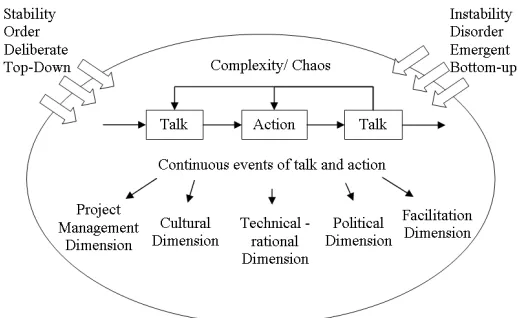
Figure 1 – Operations Strategy Process Framework (Rytter et al, 2007)
Based on Rytter et al’s (2007) arguments, the authors interpret the dimensions as presented in table 1 below:-
Table 1 – Definitions of Operations Strategy Process Dimensions Dimension Description
Project Management
Relating to the structure of management of individual aspects of the strategy
Cultural Relating to the sum of change of knowledge, abilities, perceptions, values, needs and interests
Technical rational
Relating to the decision criteria and tools associated with assessing and formulating strategic content
Political Reflecting organisational power relationships, alliances and social aspects
Facilitation The extent to which the process is managed/enabled by subject matter experts
Case Study
The empirical data presented in the following pages was gathered through 12 months engagement with Solway Structural Steel and Precast concrete in 2008-9. Based in South West Scotland, Solway is a £30M turnover manufacturing division of Barr Holdings, a construction firm. Barr Holdings is in turn part of Trench Holdings, known operationally as McLaughlin and Harvey. With operations spread over three sites and employing 200 people, Solway supplies engineered to order materials to a variety of multi-million pound commercial construction projects such as football stadia and supermarket stores throughout the United Kingdom. Solway supplies materials to both Barr and competitor construction projects and is run as a largely autonomous unit within the group (except for a few centralised support functions).
5
environmental context of the “credit crunch” and key strategic decisions such as investment in new plant and facilities). Thirdly, Solway has changed its operations strategy process significantly over the past 7 years as the organisation has moved from being a family-owned to a group-owned business. This change provides context and data in which we can investigate the relationship between dynamic capabilities and operations strategy.
The data is collected according to recognised case study practice (Yin, 2003, Voss et al., 2002). Multiple sources of data are deemed essential to ensure both research quality and validity. Indeed, when theorising based on a single case study, triangulation is important to minimize the risk of misinterpretation of data (Voss et al, 2002). The case data presented in this paper is therefore drawn from a mix of participant observations, interviews, documentation and secondary data. Process considerations aside, an emphasis is put on the researchers’ contact time with the organisation as an important enabling feature for phenomenological investigation (Miles and Huberman, 1994).
Observations – arising from regular site visits and attending production meetings, management meetings and strategic reviews as well as passive observation of the organisation’s day to day operations, processes and practices
Interviews - Semi-structured “interviews” were used to gather reflections from employees of Barr where the interviewee was asked several general, open questions about their perspective on organisational matters past, present and future. Interviews were triangulated across organisation level.
Documentation - Quantitative operational information such as records of production runs were used to support/challenge general performance observations obtained from interviews. Past and present strategic development documentation was reviewed as an insightful aid to understanding the process itself – for confidentiality reasons none of the content will be referenced in this paper.
Secondary Data Sources - Publications in newspapers and trade journals have been considered as useful historical artefacts, providing third party observations about the development of the organisation over time.
Case data – Findings
Table 2 summarises various perspectives of the operations strategy process. The “current situation” draws from all four data sources to illustrate the operations strategy process as it was deployed in the organisation April 08 – March 09. Furthermore, a supplementary column, constructed mainly from interview and secondary data sources, is used to describe the operations strategy process as it was perceived to occur prior to the family owners relinquishing control in 2002/3.
Table 2 – Operations Strategy Findings from Solway
Category Current Situation Perceived approach in 2002
Project Management
-Overall operations strategy disaggregated into projects
-Strategic projects given timelines, targets, owners and resources
-Lack of clarity of operations strategy (linked heavily to disparate business strategy) -No clear ownership, targets or resource allocations
Cultural -Operations strategy process integrated with management education programme to address skills barriers to participation -Significant investment in both bottom up and top down participant involvement
6
-Values of organisation incorporated into strategy process as part of guiding principles
-Participation in development and execution of OS rewarded and recognised
-Call to change vocalised by key individuals
-Senior managers drafted in from outside business (ie. Different ways of thinking introduced)
-High levels of resistance to change and lack of alternative opinions vocalised in organisation
-No incentives to participate in OS process
-No management education or outside influences to broaden cognitive frames/ add diversity
Technical-Rational
-Variety of structured data analysis tools and sub-processes deployed to understand and assess strategic options -Quantitative financial element still dominant in analysis
-Qualitative element emerging based on internal and external stakeholder perceptions / needs including ‘group’ considerations
-Long-term view taken on investments and capabilities
-Initiated in a structured planned way but constantly revised and updated in an emergent fashion
-Unclear if structured tools/analysis conducted -Short term, quantitative analysis employed
-Lack of formality of deployment/ sharing of rational
Political -Power divided amongst key functions and individuals
-Alliances arise and dissolve per project according to mutual interests
-Power resided with one key individual in the business -Highly political treatment of non-conformance
Facilitation -Operations strategy process facilitated by external consultancy group
-Strategic projects resourced/facilitated by external sources including academic partners
-No external facilitation… closed doors
Practices and Capabilities
The 2008 case information tends to suggest that Solway has “the capacity to purposefully create, extend or modify its resource base”. For example, based on an assessment of the projected output capability/capacity requirements for the long term, the organisation is actively considering strategic capital, equipment and infrastructure investment. Furthermore, in line with projected skills needs, long term training programs and progression management practices have been implemented at all levels of the business to develop the specific operational, technical and managerial human resources for when they will be required. Equally, in response to the current economic climate, the business is actively rationalising its human and tangible resource base to weather the storm. If the purpose of dynamic capabilities is to manage resources to adapt to the environment, then Solway appear capable of taking the steps necessary to do so in the near, middle and distant future.
7
it was taken over, the business has transformed from a disparate, loss making entity to one which is profitable and focused. Based on the perceptions gathered from interview and secondary data, it is surmised that the business in 2002 did not have the ability to adapt and survive to the changing environment.
The operations strategy process has radically since this time also. Clearly the discontinuity of ownership played a key role in revising the approach and mechanisms used – perhaps one of the most striking changes is the shift from an exclusive, discrete deployment approach to an inclusive, continuous and emergent process. Against each of the organising dimensions, it is perceived by the organisation that there has been a step change in approach for the better. And if operations strategy process is concerned with “reconciling market requirements with operational capabilities” (Slack & Lewis, 2001) then the summary evidence of the changing business performance suggests that the efficacy of the operations strategy process has experienced a discontinuous improvement.
Versus the internal and external yardsticks of dynamic capability, there has been a change in the organisation. Between 2002 and 2008, the technical fitness has improved, with a tighter control on the cost base of the organisation and a more focused deployment of resources coinciding with an improvement in the customer specific service provided. For example, in 2007 the business delivered a record year for profit whilst at the same time winning a prestigious “best supplier” award from a major supermarket client.
Equally, between 2002 and 2008, the evolutionary fitness of the organisation is perceived to have made a step change improvement. Non-core business resources have been divested or dispersed and new ones have been added in response to customer requirements, competitor maneuvers and changes in the technological and regulatory landscapes. The business offers very clear value propositions based on technology leadership and customisation of output which positions it strongly in the Scottish market. Compared to the organisation of 2002, it is in far better shape to successfully compete in a market with literally hundreds of competitors. Furthermore, the integration with the complementary resources of its current owners offers the potential for this evolutionary fitness to strengthen over the years to come.
Discussion
The discussion reviews the notion that “the ability of the firm to purposefully integrate, reconfigure and extend its resource base is influenced, at least in part, by the efficacy of its operations strategy process” in light of the Solway case information.
Firstly, the case data appears to support the general idea that dynamic capabilities are influenced by the operations strategy process. Solway’s operations strategy process has changed significantly in recent years and outcomes of strategic interventions generated by the process have directly impacted both the technical fitness and evolutionary fitness of the business. Effectively, this suggests that the increased efficacy of the operations strategy process resulted in both internal and external performance effects.
8
efficacy of the operations strategy process is certainly not the only influencer of an organisation’s dynamic capabilities.
It is argued though that the establishment of an effective operations strategy process was a critical antecedent to the emergence of an organisational capability to adapt and survive. In this instance, effective means appropriate to the needs of the organisational stakeholders and able to achieve the required outcomes. Indeed, it was not until a revised operations strategy had been embedded in the organisation that evidence of purposeful adaption of the firm’s resource to the changing environment emerged.
Focusing on the present organisation and its future plans suggests that once established, a symbiotic relationship develops between the operations strategy process and the organisation’s dynamic capabilities. For example, consider that flows of data in the organisation to assist the technical-rational dimension of the operations strategy process are being improved by the allocation of resources to establish low administration, high reliability IT infrastructure to support general management decision making. Partial completion of this task has improved the understanding of the action-performance links for management and further activities promise greater returns. This is because in addition to the provision of a wide range of project data, the codification of knowledge within the organisation will be supported by the IT infrastructure. This will in turn drive improvement of internal routines by written tools, decision support systems and management software.
According to Zollo and Winter (2002) knowledge articulation and codification are organizational learning processes critical to the development of dynamic capabilities. From a cultural perspective, if the operations strategy process increasingly enables the sharing of experiences and discussion of opinions (knowledge articulation) with colleagues, an improved level of understanding by all members can be achieved which in turn will formally reinforce the process (knowledge codification) over time, partially enabling the development of dynamic capabilities. Equally, the development of the operations strategy process is partially enabled by purposefully adapting the resources allocated towards management education (to meet skills gaps versus internal/external demands) and reward and recognition for participation (to meet member expectations and retain talent in the face of ‘market rates’ for human resource).
It is postulated that such changes will improve the efficacy and efficiency of the operations strategy process from cultural (low barriers to and rewards for participation, removal of information silos) and technical-rational (single comprehensive data set, calculations automated, contextual process codification) perspectives. Such improvements enhance the ability of the organisation to reconcile market requirements with organisational capabilities and therefore will, at least in part, enhance the ability of the organisation to survive and grow in the changing environmental context. Equally, the improvements to the process are enabled by the ability of the firm to flow resources around the process as required and thus a symbiotic relationship between the operations strategy process and an organisation’s dynamic capabilities is proposed.
9
when the capabilities do not have to be deployed to their full effect. Another point of view could be though that environmental conditions were constantly changing (just growing!) throughout the period of study.
Another frame to the discussion is that within Solway, the operations strategy process is itself comprised of sub-processes and as an entity, is complex, complicated and ambiguous. As it nests with other organisational and managerial processes (sharing resources and even activities) and as it is effectively a continuous process of dialogue and action, it is difficult to draw boundaries around aspects of the process such as the sequencing of events, the flow of information or even the causality of outcomes. This consideration adds further weight to the approach of analysing the whole process itself from dimensions or perspectives rather trying to disaggregate it to constituent steps which can be described precisely.
The authors have attempted to build an accurate representation of organisational phenomena based on time invested in and experiential learning gained through action research with Solway. Furthermore, the introduction of a further researcher conducting case study research over a period of six months and engaging in collection of alternate forms of data provides a level of triangulation which can only improve the validity and accuracy of this qualitative research. Clearly the authors’ understanding of the organisation under previous ownership will not be as comprehensive as the understanding of the more recent period of investigation. However, according to Pettigrew (2007), interviewees are capable of reflection to a degree that can be considered appropriate for use as a data source, particularly when triangulated with other data sources.
Finally, the authors wish to emphasise that the Solway organisation is not presented as a model of a firm for imitation. A (perceived) positive change in the life of the business has been focused on in this paper in which a major organisational process was overhauled and partly as a result of this new approach, over time, a significant, useful capability emerged. However, operating in the current climate, Solway faces many challenges which will test its resilience and adaptability to the changing environment – only time will tell if the observations in this paper are accurate or not.
Indeed, any ops management researchers pursuing the holy grail of decoding the secret of sustained competitive advantage from an operations strategy/dynamic capabilities perspective would do well to heed the wise words of Nelson (1991) who notes that “strategy and structure call forth and mould organisational capabilities, but what an organisation does well has something of a life of its own”.
Conclusion
This paper suggests that the implementation of an effective operations strategy process is one of the necessary antecedents to the development of dynamic capabilities within an organisation and that once established, dynamic capabilities and operations strategy process settle into a symbiotic relationship.
As with most single case studies, this work would benefit from further development across a wider range of cases. Exploring operations strategy process and dynamic capabilities in other firms where most factors are similar or analogous could yield comparative insights and potentially generalisable theory.
10
References
Acur, N., Gersen. F., Sun,H., Frick. J. (2003) The formalisation of manufacturing strategy and its influence on the relationship between competitive objectives, improvement goals, and action plans. International Journal of Operations & Production Management 23, no. 10 (January 1): 1114-1141
Ahmed, N.U., Montagno, R.V. & Firenze, R.J. (1996) Operations strategy and organizational performance: an empirical study. International Journal of Operations & Production Management 16, no. 5 (January 1): 41-53
Ambrosini, V., Bowman, C. & Collier, N. (2009) Dynamic Capabilities: An Exploration of How Firms Renew Their Resource Base. British Journal of Management, 20, S9-S24
Amit, R. & Schoemaker, P. J. H. (1993) Strategic assets and organizational rent. Strategic Management Journal, 14, 33.
Barney, J. (1991) Firm Resources and Sustained Competitive Advantage. Journal of Management, 17, 99. BERR website - http://www.berr.gov.uk/publications/economicsstatistics/stats-directorate/page24132. html, accessed March 31st 2009
Dierickx, I., Cool, K. & Barney, J. B. (1989) Asset Stock Accumulation And Sustainability Of Competitive. Management Science, 35, 1504.
Easterby-Smith, M, Lyles, M.A. & Peteraf, M.A. (2009) Dynamic Capabilities: Current Debates and Future Directions British Journal of Management, 20, S1-S8
Easterby-Smith, M. & Prieto, I., M. (2008) Dynamic Capabilities and Knowledge Management: an Integrative Role for Learning? British Journal of Management, 19, 235.
Eisenhardt, K. M. & Martin, J. A. (2000) Dynamic capabilities: What are they? Strategic Management Journal, 21, 1105.
Furrer, O., Thomas, H. & Goussevskaia, A. (2008) The structure and evolution of the strategic management field: A content analysis of 26 years of strategic management research.
International Journal of Management Reviews, 10, 1.
Helfat, C., E. (1997) Know-how and asset complementarity and dynamic capability accumulation: The case of R&D. Strategic Management Journal, 18, 339.
Helfat, C., E. & Peteraf, M., A. (2003) The dynamic resource-based view: Capability lifecycles. Strategic Management Journal, 24, 997.
Helfat, C. E., Finklestein, S., Mitchell W., Peteraf, M. A., Singh, H., Teece, D. J. & Winter, S., G. (2007)
Dynamic Capabilities: Understanding Strategic Change in Organisations, Oxford, Blackwell Publishing.
Miles, M.B. & Huberman, A.M. (1994) Qualitative Data Analysis 2nd Edition, Sage, London
Nelson, R. R. (1991) Why Do Firms Differ, and How Does It Matter? Strategic Management Journal, 12, 61.
Peteraf, M., A. (1993) THE CORNERSTONES OF COMPETITIVE ADVANTAGE: A RESOURCE-BASED VIEW. Strategic Management Journal (1986-1998), 14, 179.
Pettigrew, A., M. (1992) THE CHARACTER AND SIGNIFICANCE OF STRATEGY PROCESS RESEARCH. Strategic Management Journal (1986-1998), 13, 5.
Rumelt, R. P. (1984) "Towards a Strategic Theory of the Firm". IN LAMB, R. (Ed.) Competitive Strategic Management. Prentice Hall.
Rytter, N.G. , Boer, H. , Koch, C. 2007. Conceptualizing operations strategy processes. International Journal of Operations & Production Management 27, no. 10 (October 1): 1093-1114
Slack, N. & Lewis, M. (2001) Operations Strategy, London, Financial Times/ Prentice Hall.
Swink, M, Way, M. H. (1995) Manufacturing strategy: Propositions, current research, renewed directions.
International Journal of Operations & Production Management 15, no. 7 (January 1): 4
Teece, D. J., Pisano, G. & Shuen, A. (1997) Dynamic Capabilities and Strategic Management. Strategic Management Journal (1986-1998), 18, 509.
Van De Ven, A. H. (1992) Suggestions for Studying Strategy Process: A Research Note Strategic Management Journal,13, 169.
Voss, C., Tsikriktsis, N., Frohlich, M., (2002). Case research in operations management. International Journal of Operations & Production Management 22, no. 2 (January 1): 195-219.
Wang, C. L. & Ahmed, P. K. (2007) Dynamic capabilities: A review and research agenda. International Journal of Management Reviews, 9, 31.
Wernerfelt, B. (1984) A Resource-Based View of the Firm. Strategic Management Journal, 5, 171. Winter, S., G. (2003) Understanding dynamic capabilities. Strategic Management Journal, 24, 991. Yin, R.K. (2003) Case Study Research, 3rd Edition, Sage Publications, London
Zollo, M. & Winter, S., G. (2002) Deliberate learning and the evolution of dynamic capabilities.