R E S E A R C H
Open Access
Survey of programmatic experiences and
challenges in delivery of hepatitis B and C
testing in low- and middle-income
countries
Azumi Ishizaki
1, Julie Bouscaillou
2, Niklas Luhmann
2, Stephanie Liu
3, Raissa Chua
3, Nick Walsh
3, Sarah Hess
1,
Elena Ivanova
4, Teri Roberts
4and Philippa Easterbrook
1*Abstract
Background:
There have been few reports on programmatic experience of viral hepatitis testing and treatment in
resource-limited settings. To inform the development of the 2017 World Health Organization (WHO) viral hepatitis
testing guidance and in particular the feasibility of proposed recommendations, we undertook a survey across a
range of organisations engaged with hepatitis testing in low- and middle-income countries (LMICs). Our objective
was to describe current hepatitis B and C testing practices across a range of settings in different countries, as well
as key barriers or challenges encountered and proposed solutions to promote testing scale-up.
Methods:
Hepatitis testing programmes in predominantly LMICs were identified from the WHO Global Hepatitis Programme
contacts database and through WHO regional offices, and invited to participate. The survey comprised a six-part structured
questionnaire: general programme information, description of hepatitis testing, treatment and care services, budget and
funding, data on programme outcomes, and perceptions on key barriers encountered and strategies to address these.
Results:
We interviewed 22 viral hepatitis testing programmes from 19 different countries. Nine were from the African
region; 6 from the Western Pacific; 4 from South-East Asia; and 3 from Eastern Europe. All but four of the programmes
were based in LMICs, and 10 (45.5%) were supported by non-governmental or international organizations. All but two
programmes undertook targeted testing of specific affected populations such as people living with HIV, people who
inject drugs, sex workers, health care workers, and pregnant women. Only two programmes focussed on routine
testing in the general population. The majority of programmes were testing in hospital-based or other health facilities,
particularly HIV clinics, and community-based testing was limited. Nucleic acid testing (NAT) for confirmation of HCV
and HBV viraemia was available in only 30% and 18% of programmes, respectively. Around a third of programmes
required some patient co-payment for diagnosis. The most commonly identified challenges in scale-up of hepatitis
testing were: limited community awareness about viral hepatitis; lack of facilities or services for hepatitis testing; no
access to low cost treatment, particularly for HCV; absence of national guidance and policies; no dedicated budget for
hepatitis; and lack of trained health care and laboratory workers.
(Continued on next page)
* Correspondence:[email protected]
1Global Hepatitis Programme, World Health Organization, 20 Avenue Appia, 1211, 27 Geneva, Switzerland
Full list of author information is available at the end of the article
(Continued from previous page)
Conclusions:
At this early stage in the global scale-up of testing for viral hepatitis, there is a wide variation in testing
practices and approaches across different programmes. There remains limited access to NAT to confirm viraemia, and
patient self-payment for testing and treatment is common. There was consensus from implementing organizations
that scale-up of testing will require increased community awareness, health care worker training, development of
national strategies and guidelines, and improved access to low cost NAT virological testing.
Keywords:
Hepatitis testing, WHO guidelines on hepatitis B and C testing, Programme experience, Feasibility,
Low- and middle-income countries
Background
Hepatitis B virus (HBV) and C (HCV) infections are major
causes of chronic liver disease and associated morbidity
due to cirrhosis and hepatocellular carcinoma (HCC)
glo-bally and together accounted for an estimated 1.34 million
deaths in 2015 [1]. The disease burden of chronic HCV and
HBV infection is disproportionately high in low- and
middle-income countries (LMICs), especially in East and
South East Asia and in Sub-Saharan Africa for HBV
infec-tion [2]. However, despite the high prevalence of disease,
and the availability of effective curative treatment for HCV
infection using the new direct acting anti-viral (DAA)
drugs, as well as long-term suppressive antiviral treatment
for HBV, most people infected with HBV or HCV globally
have never been tested and so remain unaware of their
in-fection. Key reasons for this current very low rate of
hepa-titis testing in LMICs include: limited laboratory capacity
and access to reliable, low-cost, HCV diagnostics, and lack
of testing guidance specifically for LMICs [3].
WHO has recently developed guidelines on testing for
hepatitis B and C infection that are intended as the basis
for development of national guidelines for hepatitis
test-ing in resource-limited setttest-ings [4]. Formulation of the
recommendations was based on the GRADE approach
(Grading of Recommendations, Assessment,
Develop-ment and Evaluation) that include an assessDevelop-ment of the
quality of evidence, but also considerations of patient
and healthcare worker acceptability and preferences,
re-source use and feasibility [5, 6]. At present, although
there are more than 40 published reports of different
viral hepatitis testing programmes [7
–
55], the majority
of these (88%) were from high-income countries, mainly
the United States and Western Europe. In LMICs, there
have been only two reports from Sub-Saharan Africa
[27, 31], three from Asia [44, 49, 52] and one from Latin
America [46]. We therefore undertook a survey of
pro-grammatic experience with testing for hepatitis B and C
across a range of settings in LMICs, where access to
la-boratory infrastructure and specialised tests is limited.
Our objective was to inform feasibility of potential
rec-ommendations on testing approaches (who and where to
test) and how to test (selection of assays) in the WHO
viral hepatitis testing guidelines, and also to assess key
perceived barriers/challenges and strategies to address
these and so guide implementation of hepatitis testing
and treatment services.
Methods
Survey sites
Potential hepatitis testing and treatment programme
sites in LMICs were identified from the various contacts
databases of the WHO Global Hepatitis Programme
(GHP) and of key WHO implementing partners
[Méde-cins du Monde (MdM), Méde[Méde-cins sans Frontières (MsF)
and Forum for Collaborative Research]. Twenty-two
programmes from Asia, Sub-Saharan Africa and Eastern
Europe that were broadly representative of different
types of testing programmes ie. governmental or
non-governmental organisations; hospital or community
based testing; general or specific target populations; and
from different geographic regions, were invited to
participate in the survey.
Survey questionnaire
A 33 question semi-structured questionnaire was
devel-oped by WHO and MdM, which was organized into five
sections: PART A: Demographics of interviewees
(profes-sional profile, working experience); PART B: Programme
information (Who is tested and where; what
assays/algo-rithms are used; counselling and training; funding and
costs of testing and treatment); PART C: Existence of
protocol for viral hepatitis care and treatment; PART D:
Perceived barriers/challenges and solutions; PART E:
Provision of relevant epidemiological data. PARTS A to C
comprised multiple choice standardized questions, with
text fields to allow for additional comments, while PART
D involved open-ended questions (Additional file 1).
Interviews were conducted by telephone or in person by 7
persons (AI, NL, JB, SL, RC, NW, SH, PE) between June
to September 2015, and immediately transcribed and sent
to participants to ensure accuracy.
Survey analysis
thematic analysis approach [56]. A systematic reading
and coding of the transcripts allowed us to identify
major themes and categories of perceived barriers and
solutions for scale-up of testing, and six major categories
were identified through consensus discussion within the
study team.
Results
General characteristics
Overall, we evaluated 22 programmes from 19 countries
[9 from the African region: Chad, Côte d
’
Ivoire,
Demo-cratic Republic of the Congo, Gambia, Kenya, Niger,
Tanzania, Togo and Uganda]; 6 in Western Pacific: [Fiji,
Hong Kong SAR/China, Mongolia, Philippines and Viet
Nam (two programmes)]; 4 in South-East Asia: [India,
Myanmar (two programmes) and Thailand]; and 3 in
Eastern Europe: [Georgia and Ukraine (two
pro-grammes)]. All but four of the programmes were based
in LMICs according to World Bank classification in
2015 [57]. Seven countries (36.8%) were classified as
low-income countries (Chad, Democratic Republic of
the Congo, Gambia, Niger, Tanzania, Togo and Uganda);
eight (42.1%) as lower-middle income countries (Côte
d
’
Ivoire, India, Kenya, Mongolia, Myanmar, Philippines,
Ukraine and Viet Nam), and four (21.1%) as
upper-middle or high-income countries (Fiji, Georgia, Hong
Kong SAR/China and Thailand) (Table 1). The majority
of these countries (12, 54.5%) had a high HBsAg
preva-lence in the general population and the main route of
transmission was mother to child. In contrast, only four
countries had a high HCV prevalence in the general
population largely as a result of transmission through
poor injection practices in the past, with an additional 6
countries with high prevalence in specific key
popula-tions such as people who inject drugs (PWID). The
ma-jority of the nine African countries had low prevalence
(Table 2) [58
–
70]. Figure 1 shows the geographic
distri-bution of these programmes annotated with key features
(category of programme, level of coverage, number of
sites, duration of programme, target population for
test-ing, testing setttest-ing, type of test used, and availability of
funding for testing and treatment).
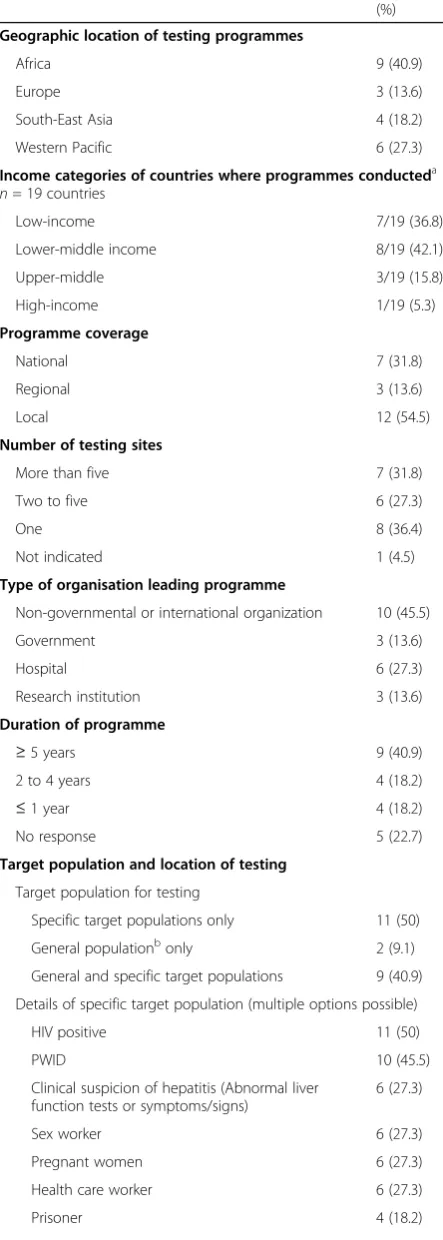
[image:3.595.305.527.110.731.2]Of the 22 programmes included in the analysis, 10
(45.5%) were implemented by non-governmental or
inter-national organizations (NGO/IO), namely MdM, MSF,
Alliance Ukraine, and Expertise France; 3 (13.6%) through
national governments; 6 (27.3%) by hospitals, and 3 by
in-dependent research institutions (13.6%). More than half of
the programmes had been implemented for more than 2
years, and in 40.9% for longer than 5 years. Twelve of the
programmes (54.5%) were implemented at just a single site,
while 3 (13.6%) had a regional coverage, and 7 (31.8%) were
being
implemented
nationally.
Twenty
programmes
(90.9%) offered both HCV and HBV testing and two
Table 1
Characteristics of 22 viral hepatitis testing programmes
Programme characteristics Total,n= 22
(%)
Geographic location of testing programmes
Africa 9 (40.9)
Europe 3 (13.6)
South-East Asia 4 (18.2)
Western Pacific 6 (27.3)
Income categories of countries where programmes conducteda
n= 19 countries
Low-income 7/19 (36.8)
Lower-middle income 8/19 (42.1)
Upper-middle 3/19 (15.8)
High-income 1/19 (5.3)
Programme coverage
National 7 (31.8)
Regional 3 (13.6)
Local 12 (54.5)
Number of testing sites
More than five 7 (31.8)
Two to five 6 (27.3)
One 8 (36.4)
Not indicated 1 (4.5)
Type of organisation leading programme
Non-governmental or international organization 10 (45.5)
Government 3 (13.6)
Hospital 6 (27.3)
Research institution 3 (13.6)
Duration of programme
≥5 years 9 (40.9)
2 to 4 years 4 (18.2)
≤1 year 4 (18.2)
No response 5 (22.7)
Target population and location of testing
Target population for testing
Specific target populations only 11 (50)
General populationbonly 2 (9.1)
General and specific target populations 9 (40.9)
Details of specific target population (multiple options possible)
HIV positive 11 (50)
PWID 10 (45.5)
Clinical suspicion of hepatitis (Abnormal liver function tests or symptoms/signs)
6 (27.3)
Sex worker 6 (27.3)
Pregnant women 6 (27.3)
Health care worker 6 (27.3)
programmes in Gambia and Togo (9.1%) only offered
test-ing services for HBV infection.
[image:4.595.309.539.108.460.2] [image:4.595.62.288.110.735.2]The majority (63.6%) of the 22 interviewees were medical
doctors. Five (22.7%) of medical doctors worked as
physi-cians within the programmes, 5 (22.7%) as programme
managers and 4 (18.2%) as policy makers and
implemen-ters. The remaining 8 were non-medical workers of which
7 worked as programme coordinators. All interviewees had
at least 3 years experience in the field and 5 (22.7%) had
more than 10 years experience.
Table 1
Characteristics of 22 viral hepatitis testing programmes
(Continued)
Programme characteristics Total,n= 22
(%)
Family of HBV/HCV/HIV positive 3 (13.6)
Children of positive mothers 3 (13.6)
MSM 3 (13.6)
Otherc 5 (22.7)
Testing setting(multiple options possible)
Hospital-based 12 (54.5)
HIV clinic 10 (45.5)
Harm reduction service 6 (27.3)
Primary health care facility 4 (18.2)
Outreach programme 4 (18.2)
Antenatal clinic 4 (18.2)
Private sector 2 (9.1)
Community 1 (4.5)
Otherd 4 (18.2)
Approaches to testing
Who initiates testing? (multiple options possible)
Provider 19 (86.4)
Client 8 (36.4)
Not indicated 2 (9.1)
Who delivers testing? (multiple options possible)
Physician 11 (50)
Laboratory technician 5 (22.7)
Counsellor 5 (22.7)
Nurse 4 (18.2)
Other health care worker 4 (18.2)
Othere 3 (13.6)
Testing approach for HCV (20 programmes)f
RDT standalone 12 (60,n= 20)
EIA standalone 4 (20,n= 20)
RDT/EIA + NAT 2 (30,n= 20)
NAT standalone 1 (5,n= 20)
Not indicated 1 (5,n= 20)
Testing approach for HBV (22 programmes)g
RDT standalone 11 (50)
EIA standalone 6 (27.3)
RDT/EIA + NAT 4 (18.2)
Not indicated 1 (4.5)
Integrated testing (multiple options possible)
With HIV 8 (36.4)
With HIV/HBV/HCV/Syphilis 6 (27.3)
With HBV/HCV 4 (18.2)
With HIV/HBV/HCV/TB 1 (4.5)
No integrated testing 5 (22.7)
Table 1
Characteristics of 22 viral hepatitis testing programmes
(Continued)
Programme characteristics Total,n= 22
(%)
Liver staging in those with positive test
Not routinely done 6 (27.3)
Yesh 16 (72.7)
Counseling
Pre−/post- counseling 15 (68.2)
No counseling/or unknown 7 (31.8)
Access to treatment and funding
Treatment availability
HBVi 18 (81.8)
HCV 14 (70,n= 20)
No treatment for either HBV and HCV 2 (10,n= 20)
Funding source for HCV testing (multiple options possible, 20 programmes)
Support from NGO/IO/Government/Other donor 15 (75)
Patient self-payment 7 (35)
Private insurance 4 (20)
Funding source for HBV testing (multiple options possible, 22 programmes)
Support from NGO/IO/Government/Other donor 19 (86.4)
Patient self-payment 8 (36.4)
Private insurance 4 (18.2)
Financial support for treatment
For HBV 6 (27.3)
For HCV 7 (35,n= 20)
PWIDpeople who inject drug,MSMmen who have sex with men,RDTrapid diagnosed testing,EIAenzyme immunoassay,NATnucleic acid testing,HIV
human immunodeficiency virus,HBVhepatitis B virus,HCVhepatitis C virus,
TBtuberculosis
a
Based on the World Bank classification in 2015 [57];b
General population included general population and blood donor;c
Other included non-injecting drug users, migrants, military and TB positive persons;d
Other included two prisons, one HIV/TB clinic and one sexually transmitted infection clinic;eOther included self-testing;f
RDT/EIA + NAT (n= 3) as an optional approach;g
RDT/ EIA + NAT (n = 2) as an optional approach to evaluate the treatment eligibility. One programme offered RDT standalone for blood donor screening;
h
Overall, 94.7% of programmes were based in LMICs of
which 7 countries (36.8%) were classified as low-income
countries according to World Bank classification in 2015
[57] (Chad, Democratic Republic of the Congo, Gambia,
Niger, Tanzania, Togo and Uganda). Eight countries
(42.1%) were lower-middle income countries (Côte
d
’
Ivoire, India, Kenya, Mongolia, Myanmar, Philippines,
Ukraine and Viet Nam), and 4 (21.1%) were
upper-middle and above income countries (Fiji, Georgia, Hong
Kong SAR/China and Thailand).
Setting and target population
The majority of programmes indicated that they offered
hepatitis testing in hospital-based settings (54.5% of
pro-grammes), but specifically also in human
immunodefi-ciency virus (HIV) clinics (45.5%), harm reduction
services (27.3%), primary health care facilities (18.2%),
and antenatal clinics (18.2%). Only four programmes
(18.2%) undertook outreach (Georgia, Kenya, Tanzania
and Ukraine) or only one (4.5%) undertook
community-based testing (Gambia). All but two of the programmes
included targeted testing of specific affected populations,
especially people living with HIV (11, 50%) and PWID
(10, 45.5%). There were only two programmes that were
exclusively dedicated to general population testing (9.1%)
(Côte d
’
Ivoire and Gambia). All NGO/IO supported
programmes focussed on testing of key and marginalised
populations and only one government programme (Chad)
supported a general population testing approach (4.5%).
The testing settings and target populations are described
in Table 1 and Fig. 1.
Diagnostic assays and testing algorithm
Most of the programmes (16, 77.3%) offered some form
of integrated testing
–
combining HBV and HCV testing
(11 of 17 programmes, 64.7%) or with HIV (15 of 17
programmes, 88.2%). The majority of hepatitis testing
was provider-initiated by doctors, but in 8 (36.4%)
pro-grammes testing was initiated by the client (Chad, Côte
d
’
Ivoire, Fiji, Georgia, Kenya, Myanmar, Togo and
Ukraine). Very few programmes made use of community
or peer workers.
Rapid diagnostic tests (RDT) alone were used
respect-ively in 10 (50%) of the 20 programmes offering HCV
test-ing, and 11 (50%) of 22 programmes offering HBV testtest-ing,
and enzyme immunoassay (EIA) by 4 (20%) of 20 and 6
(27.3%) of 22 programmes, respectively. Nucleic acid
test-ing (NAT) for confirmation of viraemia was available in
only 6 (30%) of 20 programmes for HCV RNA (Hong
Kong SAR/China, Mongolia, Thailand, Uganda and two
programmes in Vietnam), and 4 programmes (18.2%) of
22 for HBV DNA (Myanmar, Philippine, Uganda and one
programe in Vietnam). EIA and NAT were more likely to
be available in hospital-based programmes.
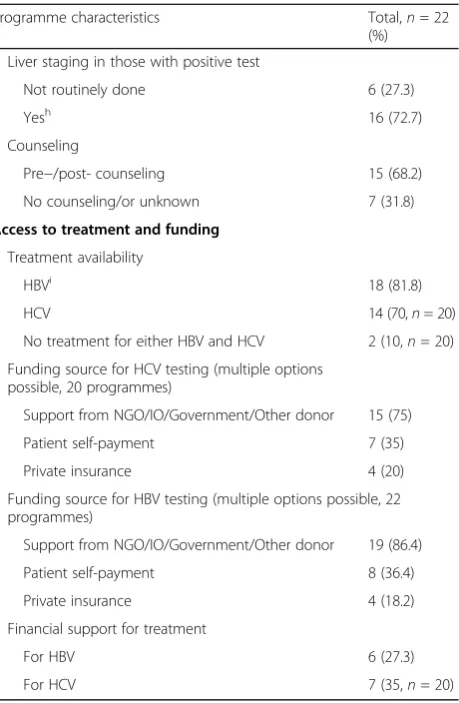
Although, the majority (19, 86.4% for HBV and 15, 75%
for HCV) of the programmes had a budget for testing,
around a third of programmes required some patient
self-payment for testing, and for 18.2% of programmes, this
was partly covered by private insurance. In the case of
treatment, around a third of programmes provided
fund-ing for HCV and HBV treatment, and two thirds required
patient self-payment.
Further investigations, care and treatment following
diagnosis
Fifteen (68.2%) of the programmes offered pre- and/or
post-counselling, and 16 (72.7%) offered some level of
fur-ther evaluation and staging of liver disease using Fibroscan
(9, 40.9%), or APRI or FIB-4 scoring based on readily
avail-able and cheap laboratory tests, such as liver transaminases
and platelet count and other measures (7, 31.8%). Among
the programmes providing HBV testing, only 12 (54.5%)
offered HBV vaccination in those who tested negative.
[image:5.595.56.292.109.383.2]Four and six programmes offered no access to treatment
for HBV and HCV, respectively, despite offering testing.
Although 18 programmes indicated that HBV treatment
was available in the country, in 9 programmes this was
only for HIV-HBV co-infected persons through use of
tenofovir-based antiretroviral regimens, or for those able
to self-pay. Among the programmes which conducted
Table 2
Epidemic profiles of hepatitis B and C infection in the
countries covered by the survey
HBV epidemiology Country number (%) and name
High seroprevalence (>5%) in general population
12 (54.5%)
Gambia, Thailand, Chad, Mongolia, Côte d’Ivoire, Vietnam, Niger, Uganda, Hong Kong SAR/China, Democratic Republic of the Congo, Tanzania, Kenya
Intermediate seroprevalence (3-5%) in general population
3 (13.6%)
Fiji, Philippines, Myanmar
Low seroprevalence (<3%) in general population
3 (13.6%)
Ukraine, India, Georgia
HCV epidemiology based on anti-HCV antibody
Country number (%) and name
High seroprevalence (>3%) in general population and concentrated epidemic among PWID
3 (13.6%)
Georgia, Mongolia, Ukraine
Intermediate/low seroprevalence (1-3%) in general population but concentrated epidemic among PWID
5 (22.7%)
India, Philippines, Thailand, Myanmar, Vietnam
Low seroprevalence (<1%) in general population
9 (40.9%)
Chad, Côte d’Ivoire, Democratic Republic of the Congo, Gambia, Hong Kong SAR/China, Kenya, Niger, Tanzania, Uganda
HCV testing, treatment was reported to be available in the
country in 14 (70%) of the 20 programmes, but only for
those able to self-pay, or as part of pilot programmes or
clinical trials. The exception was Georgia where HCV
treatment was available through the national programme
in those with advanced liver disease.
Qualitative evaluation of perceived barriers and strategies
to scale-up viral hepatitis testing
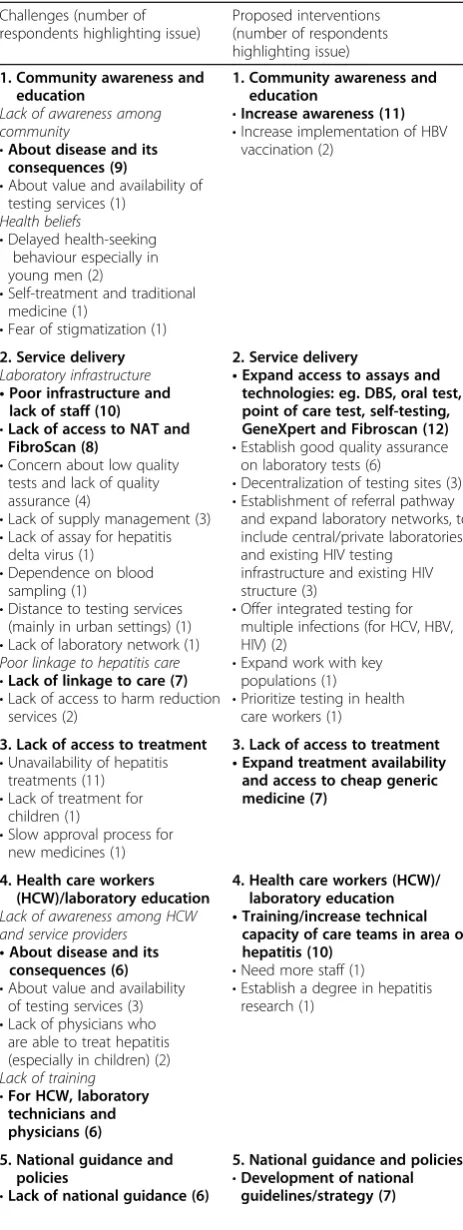
Interviewees identified multiple different issues as barriers
to testing, which were grouped into six key thematic
cat-egories: 1. Limited community awareness and education
[image:6.595.57.542.88.425.2]raising within the community; expanded access to assays,
including point-of-care tests; access to low cost generic
drugs; training and capacity building of laboratory staff
and healthcare workers; and development of national
guidelines.
We also sought perspectives from interviewees on
the ethics and rationale of testing by programmes
where treatment was not available, given that there is
still very limited access to HBV treatment for HBV
mono-infected persons, and self-payment is currently
required to access DAA HCV treatment for the
majority of programmes. Key reasons given by
re-spondents from 12 programmes for testing in the
ab-sence of treatment were to provide: (i) a platform for
health education and health promotion; (ii)
counsel-ling of high risk anti-HCV negative persons on how
to remain negative, or HBV vaccination of those who
are HBV non-immune; and counselling of HCV and
HBV positive persons and family members how to
prevent transmission, and reduce disease progression,
such as through alcohol cessation. Testing among
health care workers for viral hepatitis was also
identi-fied as another situation where testing would be
appropriate to enable vaccination of non-immune
HCW even in the absence of treatment and adoption
of measures to minimize risk of transmission from
in-fected HCW to patients. Finally, testing was seen as
an essential part of surveillance to gather national
epidemiological data on HCV and HBV infection to
inform advocacy for increasing treatment access and
to raise awareness among the community.
Discussion
[image:7.595.57.289.109.725.2] [image:7.595.306.539.109.258.2]There is still limited published experience of viral
hepa-titis testing and treatment in low- and middle-income
countries to inform development of future programmes.
Table 3
Key challenges in access to and scale-up of viral
hepatitis testing and proposed interventions
Challenges (number of respondents highlighting issue)
Proposed interventions (number of respondents highlighting issue)
1. Community awareness and education
Lack of awareness among community
•About disease and its consequences (9)
•About value and availability of testing services (1)
Health beliefs
•Delayed health-seeking behaviour especially in young men (2)
•Self-treatment and traditional medicine (1)
•Fear of stigmatization (1)
1. Community awareness and education
•Increase awareness (11)
•Increase implementation of HBV vaccination (2)
2. Service delivery
Laboratory infrastructure
•Poor infrastructure and lack of staff (10)
•Lack of access to NAT and FibroScan (8)
•Concern about low quality tests and lack of quality assurance (4)
•Lack of supply management (3)
•Lack of assay for hepatitis delta virus (1)
•Dependence on blood sampling (1)
•Distance to testing services (mainly in urban settings) (1)
•Lack of laboratory network (1)
Poor linkage to hepatitis care
•Lack of linkage to care (7)
•Lack of access to harm reduction services (2)
2. Service delivery
•Expand access to assays and technologies: eg. DBS, oral test, point of care test, self-testing, GeneXpert and Fibroscan (12)
•Establish good quality assurance on laboratory tests (6)
•Decentralization of testing sites (3)
•Establishment of referral pathway and expand laboratory networks, to include central/private laboratories and existing HIV testing
infrastructure and existing HIV structure (3)
•Offer integrated testing for multiple infections (for HCV, HBV, HIV) (2)
•Expand work with key populations (1)
•Prioritize testing in health care workers (1)
3. Lack of access to treatment
•Unavailability of hepatitis treatments (11)
•Lack of treatment for children (1)
•Slow approval process for new medicines (1)
3. Lack of access to treatment •Expand treatment availability
and access to cheap generic medicine (7)
4. Health care workers (HCW)/laboratory education
Lack of awareness among HCW and service providers
•About disease and its consequences (6)
•About value and availability of testing services (3)
•Lack of physicians who are able to treat hepatitis (especially in children) (2)
Lack of training
•For HCW, laboratory technicians and physicians (6)
4. Health care workers (HCW)/ laboratory education •Training/increase technical
capacity of care teams in area of hepatitis (10)
•Need more staff (1)
•Establish a degree in hepatitis research (1)
5. National guidance and policies
•Lack of national guidance (6)
5. National guidance and policies
•Development of national guidelines/strategy (7)
Table 3
Key challenges in access to and scale-up of viral
hepatitis testing and proposed interventions
(Continued)
Challenges (number ofrespondents highlighting issue)
Proposed interventions (number of respondents highlighting issue)
•Policies not implemented (2)
•No epidemiological data on viral hepatitis (2)
•Policies are discriminating/ stigmatizing (1)
•Advocacy with policy makers (4)
•Need surveillance data to identify settings and populations with high burden (3)
•Development of policy on PMTCT for viral hepatitis (1)
6. Funding
•Lack of sustained funding commitment (9)
•High costs of testing and additional assays to determine treatment eligibility (3)
6. Funding
•Development of funding strategy for testing and treatment (4)
•Costing assessment across cascade of care (1)
This survey of 22 different hepatitis testing programmes
in 19 predominantly low- and middle-income countries
in Africa, Asia and Eastern Europe (of which 4 were
from upper-middle income countries) representing a
wide range of different HBV and HCV prevalence and
epidemic patterns provides several valuable insights into
current practices and future priorities in the delivery of
hepatitis testing.
Overall, half of the programmes were being
imple-mented by NGOs or IOs, and about half of them
were only being implemented at a few sites, and so
are not representative of national testing policies and
approaches. The majority of testing programmes
in-volved targeted testing of high-risk populations such
as PWID, men who have sex with men (MSM), sex
workers and prisoners, but also pregnant women and
health care workers, alone or in combination with
some general population testing approaches. NGO/IO
supported programmes had a greater emphasis on
testing of key and marginalised populations with the
few government programmes supporting a general
population testing approach. The majority of testing
was undertaken in hospital-based settings, and in
HIV, Tuberculosis (TB) and sexually transmitted
in-fection (STI) clinics, and antenatal clinics. There was
limited community-based or outreach testing. Of note,
around half of the countries included in the survey
have existing national policies on routine HBV
screen-ing for all pregnant women, and were Fiji, Georgia,
Hong Kong SAR/China, India, Kenya, Myanmar,
Philippine, Thailand and Ukraine [71
–
88].
There were several other common features to these
testing programmes: First, two-thirds of the
pro-grammes were using a single RDT serological test for
HBV and HCV. Second, 70% of the testing
pro-grammes were integrating viral hepatitis testing with
existing clinics and services in HIV, TB and STI
clinics as well as harm reduction services
–
alongside
testing for HIV, TB and syphilis, as viral hepatitis is
also prevalent in these populations. Third, in the
pro-grammes surveyed viral hepatitis testing was still
provider-initiated by a physician in the majority of
testing programmes, although this largely reflects
practices in the predominantly facility-based
pro-grammes included in the survey. Fourth, staging of
liver disease to assess eligibility for treatment was
be-ing undertaken by 73% of programmes, about a half
of them with use of Fibroscan rather than the lower
cost and more available APRI score. NAT testing to
confirm the presence of viraemia and treatment
eligi-bility was only performed by 6 of the HCV
pro-grammes and 4 of the HBV propro-grammes. Fifth, it was
of concern that 18% of programmes were not able to
offer treatment for HBV mono-infection despite the
wide availability of low cost generic tenofovir, and
around a quarter were not providing HCV treatment.
In addition, around a third of programmes were not
routinely providing HBV vaccination, a low cost and
highly effective preventative measure. Finally, although
the testing costs were wholly or partly supported by
the programme in more than 80% of the programmes,
funding
was
covered
by
additional
patient
self-payment or private insurance in around a third.
Treatment cost were covered by programmes in a
third of cases.
The survey identified key barriers to testing services
across different aspects of the health system but also
some key strategies to address these challenges. Key
strategies to facilitate access to testing identified from
the survey were: awareness raising about viral hepatitis
among the general population; decentralization of
hepa-titis testing with quality assurance on laboratory tests,
and expanding access to technologies such as point of
care NAT such as GeneXpert, dried blood spots
sam-pling, use of oral RDT and self-testing; improving the
training and capacity of staff in management of hepatitis;
and incorporation of hepatitis testing and treatment into
national health reimbursement programmes. Other
diagnostic innovations to promote testing include
multi-analyte testing, multiplex analysis or multi platforms for
testing combined with syphilis [3, 89, 90]. Dried blood
spot sampling may enhance access to both serological
(using laboratory based EIA assays) and virological
(using nucleic acid tests) testing [91]. However, at
present, none of the manufacturers of commercial assays
have validated their use with DBS samples or developed
standard operating procedures, and nor is there any
regulatory approval for their use from stringent
regula-tory authorities, such as WHO. The limited availability
of low cost generic DAA treatments for HCV infection
and tenofovir therapy for HBV mono-infected persons
in many programmes was also identified as a key
im-pediment to testing. Of note, 11 programmes highlighted
the other benefits of testing in the absence of current
access to treatment. These include opportunities to
introduce measures and counselling to reduce
transmis-sion to family members and other close contacts
includ-ing hepatitis B vaccination, and to counsel infected
persons about measures to reduce disease progression of
liver disease.
LMICs. These reports described testing programmes in a
range of populations including: 13 of HCV birth-cohort
testing in the context of the United States national
recommendation to screen all adults living in the
United States born between 1945 and 1965 at least
once [8, 16, 19, 22
–
25, 38, 42, 45, 47, 51, 53]; 10 of
HCV and one of both HBV and HCV in people who use
drugs or harm reduction settings [10, 12, 20, 21, 32, 34,
35, 39
–
41, 51]; 4 of HCV in prisons [7, 15, 17, 54]; 3 of
HBV testing in pregnant women [29, 46, 52]; and one of
HBV and one of HCV in migrants [14, 43]. Of note, most
of the programmes described were also community based
or implemented in primary health care or prevention
ser-vices. Although, descriptions of testing models and an
evaluation of impact on cascade of care were provided in
most of the reports, there was limited critical evaluation
of programmatic lessons learnt.
In contrast, our survey was based on a broad range
of facility and community based testing programmes
from mainly LMICs with a focus on experiences with
current testing practices, and common barriers. There
were several key limitations to this survey. First, it
was based on an opportunistic sample of 22 testing
programmes that did not include any from Latin
America or the Caribbean. Second, included programmes
are not representative of national testing policies and
ap-proaches, as half of the programmes were being
imple-mented by NGOs or IOs, and about half of them were
only being implemented at a few sites. Third, the majority
of programmes were also based in health facilities and
there were few community based or outreach initiatives,
which are likely to have different lab and service delivery
approaches and unique challenges. There was also
consid-erable variability in the way programmes were organised,
especially between NGO/IO and governmental
pro-grammes, and so it was difficult to standardise reporting
and data collection of their experiences, and to draw any
inferences about programmatic effectiveness.
Conclusions
What were the implications of our findings for both
the formulation of recommendations in the WHO
testing guidelines [4] and for future strategies to
pro-mote scale-up of viral hepatitis testing globally? The
survey demonstrates that progress has been made in
scale-up of hepatitis testing under the auspices of
government and non-governmental initiatives,
build-ing on existbuild-ing opportunities for testbuild-ing through other
services and on laboratory infrastructure. In spite of
the many barriers highlighted, it also shows the
feasi-bility of implementing HBV and HCV testing
pro-grammes across a wide range of LMICs. In particular,
targeted
testing
is
being
effectively
implemented
among various higher risk groups, and RDTs have
been widely adopted. However, there remains limited
access to NAT for assessment of viraemia, and
re-quirement for patient co-payment for testing and
treatment remains a significant barrier.
These issues of feasibility and challenges
encoun-tered were considered in the formulation of
recom-mendations on who to test and how to test in the
2017 WHO guidelines on testing for hepatitis B and
C [4], with a promotion of the use of quality assured
RDTs to promote access, strategies to promote
link-age to care and treatment, use of simple low-cost
non-invasive tests (NITs) such as APRI score for
staging of liver disease, and universal adoption of
tar-geted or focussed testing of specific populations most
affected by HBV or HCV infection (i.e. who are either
part of a population with higher seroprevalence or
who have a history of exposure to or high-risk
behav-iours for HBV or HCV infection). These include HIV
infected persons, PWID, prisoners, sexual partners
and family members, including children of those
affected by hepatitis B, pregnant women and health
care workers. General population testing was
recom-mended in high prevalence countries (above 5%)
using existing testing infrastructure and approaches.
In terms of future policy, there is scope for
increas-ing community-based testincreas-ing and involvincreas-ing
non-health workers with task-shifting to promote testing
as achieved with HIV [92], and in access to point of
care NAT technologies as well as dried blood spots
sampling to improve access to virological testing. As
countries
progressively
embrace
universal
health
coverage, the current barrier to testing of costly
self-payment of diagnostics can also be addressed. Finally,
there is a need for more systematic reporting of
experience
with
hepatitis
testing
and
treatment
programmes in LMICs. This will be further informed
by a portfolio of important implementation science
and demonstration projects supported by UNITAID
and other organisations examining the impact of
sim-plified and decentralised hepatitis C testing and
treat-ment programmes.
Additional file
Additional file 1:Questionnaire sheets for feasibility survey. (PDF 176 kb)
Abbreviations
Acknowledgements
We would like to acknowledge to all experts kindly participated to this feasibility survey: Albert Minga (National Program Ivory Coast, Abidjan, Côte d’Ivoire), Ali Mahamat Moussa (Esther/Expertise France, Ndjamena, Chad), Boubakar Madougou (Esther/Expertise France, Niamey, Niger), George Macharia Wambugu (Médicins du Monde, Nairobi, Kenya), Henry Ly Chan (The Chinese University of Hong Kong, Hong Kong, China), Ina Inaridze (Médicins du Monde, Tbilisi, Georgia), Isabelle Andrieux-Meyer (Médecins Sans Frontières, Geneva, Switherland), Janus Ong (Philippine General Hospital, Manila, Philippines), Joseph Larmarange (Agence nationale de recherche sur le sida et les hépatites virales, Côte d’Ivoire), Kizys Herbocszek (Médecins Sans Frontières, Manipur, India), Mai Ling Perman (Colonial War Memorial Hospital, Suva, Fiji), Maud Lemoine (Imperial College, London, United Kingdom), Naranbaatar Dashdorj (Onom Foundation, Ulan Bator, Mongolia), Nguyen Vu Trung (National Hospital for Tropical Disease, Hanoi, Vietnam), Paata Sabelashvili (National Member of HCV elimination Comission, Georgia), Pham Van Anh (Haiphong medical and pharmaceutical university, Haiphong, Vietnam), Ponsiano Ocama (Makerere University, Kampla, Uganda), Nicolas Durier (Treat Asia/amfAR, Bangkok, Thailand), Tatiana Barnard (Alliance, Kiev, Ukraine), Than Min Htike (Médicins du Monde, Yangoon, Myanmar), Xavier Assamagan (Esther/Expertise France, Lome, Togo) and Zin Mar Han (Médicins du Monde, Dar es Salam, Tanzania).
We would like to extend our gratitude to the staff of the Global Hepatitis Programme, WHO for their excellent support: Hande Harmanci, Judith Van Holten, Yvan Hutin, and Stefan Wiktor.
Funding
Publication of this article was funded by the World Health Organization.
Availability of data and materials
The datasets used and/or analysed during the current study are available from the corresponding author on reasonable request.
About this supplement
This article has been published as part of BMC Infectious Diseases Volume 17 Supplement 1, 2017: Testing for chronic hepatitis B and C–a global perspective. The full contents of the supplement are available online at https://bmcinfectdis.biomedcentral.com/articles/supplements/volume-17-supplement-1.
Authors’contributions
PE and SH designed the study with input from EI and TR in developing questionnaire. AI, NL, JB, SL, RC, NW, SH and PE conducted interviews. AI was responsible for overall data synthesis with input from JB and drafted the manuscript. JB, NL and PE revised the manuscript critically. All authors read and approved the final manuscript.
Ethics approval and consent to participate Not applicable.
Consent for publication Not applicable.
Competing interests
The authors declare that they have no competing interests.
Publisher
’
s Note
Springer Nature remains neutral with regard to jurisdictional claims in published maps and institutional affiliations.
Author details
1Global Hepatitis Programme, World Health Organization, 20 Avenue Appia, 1211, 27 Geneva, Switzerland.2Médecins du Monde, 62 rue Marcadet, 75018 Paris, France.3World Health Organization, Regional Office of the Western Pacific, United Nations Avenue, 1000 Manila, Philippines.4Foundation for Innovative New Diagnostics, Campus Biotech, Building B2, Level 0, 9 Chemin des Mines, 1202 Geneva, Switzerland.
Published: 1 November 2017
References
1. World Health Organization. Global Hepatitis Report 2017. 2017: Geneva. http://apps.who.int/iris/bitstream/10665/255016/1/9789241565455-eng. pdf?ua=1. Accessed 25 Apr 2017.
2. Stanaway JD, Flaxman AD, Naghavi M, Fitzmaurice C, Vos T, Abubakar I, et al. The global burden of viral hepatitis from 1990 to 2013: findings from the global burden of disease study 2013. Lancet. 2016;388(10049):1081–8. 3. Easterbrook PJ, Roberts T, Sands A, Peeling R. Diagnosis of viral hepatitis.
Curr Opin HIV AIDS. 2017;12(3):302–14.
4. World Health Organization. Guidelines on hepatitis B and C testing. Geneva: 2017. http://apps.who.int/iris/bitstream/10665/254621/1/9789241549981-eng.pdf?ua=1. Accessed 25 Apr 2017.
5. Guyatt G, Oxman AD, Akl EA, Kunz R, Vist G, Brozek J, et al. GRADE guidelines: 1. Introduction–GRADE evidence profiles and summary of findings tables. J Clin Epidemiol. 2011;64(4):383–94.
6. World Health Organization. Handbook for guideline development. Geneva: 2014. http://apps.who.int/medicinedocs/documents/s22083en/s22083en.pdf. Accessed 25 Apr 2017.
7. Akiyama MJ, Kaba F, Rosner Z, Alper H, Kopolow A, Litwin AH, et al. Correlates of hepatitis C virus infection in the targeted testing program of the new York City jail system. Public Health Rep. 2017;132(1):41–7. 8. Allison WE, Chiang W, Rubin A, Oshva L, Carmody E. Knowledge about
hepatitis C virus infection and acceptability of testing in the 1945-1965 birth cohort (baby boomers) presenting to a large urban emergency department: a pilot study. J Emerg Med. 2016;50(6):825–31.e2.
9. Alswaidi FM, O'Brien SJ. Is there a need to include HIV, HBV and HCV viruses in the Saudi premarital screening program on the basis of their prevalence and transmission risk factors? J Epidemiol Community Health. 2010;64(11):989–97.
10. Anderson EM, Mandeville RP, Hutchinson SJ, Cameron SO, Mills PR, Fox R, et al. Evaluation of a general practice based hepatitis C virus screening intervention. Scott Med J. 2009;54(3):3–7.
11. Anderson ES, Pfeil SK, Alter HJ, White DA. Patient understanding of HIV and hepatitis C testing in an emergency department with an integrated program. J Int Assoc Provid AIDS Care. 2016;15(3):184–8.
12. Arain A, De Sousa J, Corten K, Verrando R, Thijs H, Mathei C, et al. Pilot study: combining formal and peer education with FibroScan to increase HCV screening and treatment in persons who use drugs. J Subst Abus Treat. 2016;67:44–9.
13. Barragan NC, Chang M, Felderman J, Readhead H, Kuo T. A case study of a hepatitis B screening and blood pressure assesment program in Los Angeles County, 2012-2013. Prev Chronic Dis. 2015;12:E19.
14. Batash S, Khaykis I, Raicht RF, Bini EJ. High prevalence of hepatitis C virus infection among immigrants from the former Soviet Union in the New York City metropolitan area: results of a community-based screening program. Am J Gastroenterol. 2008;103(4):922–7.
15. Beckwith CG, Kurth AE, Bazerman LB, Patry EJ, Cates A, Tran L, et al. A pilot study of rapid hepatitis C virus testing in the Rhode island department of corrections. J Public Health (Oxf). 2016;38(1):130–7.
16. Brady JE, Liffmann DK, Yartel A, Kil N, Federman AD, Kannry J, et al. Uptake of hepatitis C screening, characteristics of patients tested, and intervention costs in the BEST-C study. Hepatology. 2017;65(1):44–53.
17. Cocoros N, Nettle E, Church D, Bourassa L, Sherwin V, Cranston K, et al. Screening for hepatitis C as a prevention enhancement (SHAPE) for HIV: an integration pilot initiative in a Massachusetts County correctional facility. Public Health Rep. 2014;129(Suppl 1):5–11.
18. Defossez G, Verneau A, Ingrand I, Silvain C, Ingrand P, Beauchant M, et al. Evaluation of the French national plan to promote screening and early management of viral hepatitis C, between 1997 and 2003: a comparative cross-sectional study in Poitou-Charentes region. Eur J Gastroenterol Hepatol. 2008;20(5):367–72.
19. Federman AD, Kil N, Kannry J, Andreopolous E, Toribio W, Lyons J et al. An Electronic Health Record-based Intervention to Promote Hepatitis C Virus Testing Among Adults Born Between 1945 and 1965: A Cluster-randomized Trial. Med Care. 2017;55(6):590–7.
21. Frimpong JA, D'Aunno T. Hepatitis C testing in substance use disorder treatment: the role of program managers in adoption of testing services. Subst Abuse Treat Prev Policy. 2016;11:13.
22. García-Alonso FJ, Bonillo-Cambrodón D, Bermejo A, García-Martínez J, Hernández-Tejero M, Valer López Fando P, et al. Acceptance, yield and feasibility of attaching HCV birth cohort screening to colorectal cancer screening in Spain. Dig Liver Dis. 2016;48(10):1237–42.
23. Groom H, Dieperink E, Nelson DB, Garrard J, Johnson JR, Ewing SL, et al. Outcomes of a hepatitis C screening program at a large urban VA medical center. J Clin Gastroenterol. 2008;42(1):97–106.
24. Hirsch AA, Lawrence RH, Kern E, Falck-Ytter Y, Shumaker DT, Watts B. Implementation and evaluation of a multicomponent quality improvement intervention to improve efficiency of hepatitis C screening and diagnosis. Jt Comm J Qual Patient Saf. 2014;40(8):351–7.
25. Jorgensen C, Carnes CA, Downs A. "Know more hepatitis:" CDC's National Education Campaign to increase hepatitis C testing among people born between 1945 and 1965. Public Health Rep. 2016; 131(Suppl 2):29–34.
26. Juon HS, Lee S, Strong C, Rimal R, Kirk GD, Bowie J. Effect of a liver cancer education program on hepatitis B screening among Asian Americans in the Baltimore-Washington metropolitan area, 2009-2010. Prev Chronic Dis. 2014;11:130258.
27. Kania D, Sangaré L, Sakandé J, Koanda A, Nébié YK, Zerbo O, et al. A new strategy to improve the cost-effectiveness of human immunodeficiency virus, hepatitis B virus, hepatitis C virus, and syphilis testing of blood donations in sub-Saharan Africa: a pilot study in Burkina Faso. Transfusion. 2009;49(10):2237–40.
28. Kapeluto J, Kadatz M, Wormsbecker A, Sidhu K, Yoshida EM. Screening, detecting and enhancing the yield of previously undiagnosed hepatitis B and C in patients with acute medical admissions to hospital: a pilot project undertaken at the Vancouver general hospital. Can J Gastroenterol Hepatol. 2014;28(6):315–8.
29. Keel P, Edwards G, Flood J, Nixon G, Beebeejaun K, Shute J, et al. Assessing the impact of a nurse-delivered home dried blood spot service on uptake of testing for household contacts of hepatitis B-infected pregnant women across two London trusts. Epidemiol Infect. 2016;144(10):2087–97. 30. Kierzek G, Aslangul E, Le Guerroué G, Le Jeunne C, Pourriat JL. Feasibility of
a nontargeted active opt-in HIV, HBV, and HCV testing in an academic emergency department. Eur J Emerg Med. 2009;16(2):111–2.
31. Lemoine M, Shimakawa Y, Njie R, Taal M, Ndow G, Chemin I. Acceptability and feasibility of a screen-and-treat programme for hepatitis B virus infection in the Gambia: the prevention of liver fibrosis and cancer in Africa (PROLIFICA) study. Lancet Glob Health. 2016;4(8):e559–67.
32. McInnes DK, Hyun JK, Trafton JA, Asch SM, Gifford AL. Program characteristics associated with testing for HIV and hepatitis C in veterans substance use disorder clinics. Psychiatr Serv. 2010;61(1):90–4. 33. McIver R, Dyda A, Knight V, Guy R, McNulty A. Hepatitis B screening and
vaccination: how does a sexual health service measure up? Sex Health. 2015;12(5):458–9.
34. McLeod A, Weir A, Aitken C, Gunson R, Templeton K, Molyneaux P, et al. Rise in testing and diagnosis associated with Scotland's action plan on hepatitis C and introduction of dried blood spot testing. J Epidemiol Community Health. 2014;68(12):1182–8.
35. Merchant RC, Baird JR, Liu T, Taylor LE, Montague BT, Nirenberg TD. Brief intervention to increase emergency department uptake of combined rapid human immunodeficiency virus and hepatitis C screening among a drug misusing population. Acad Emerg Med. 2014;21(7):752–67.
36. Moss T, Martin CW, Klausner JD, Brown BJ. Integration of screening for syphilis, hepatitis C, and other sexually transmitted infections with HIV testing in a community-based HIV prevention program in Miami, Florida. LGBT Health. 2014;1(2):82–5.
37. O'Connell S, Lillis D, Cotter A, O'Dea S, Tuite H, Fleming C, et al. Opt-out panel testing for HIV, hepatitis B and hepatitis C in an urban emergency department: a pilot study. PLoS One. 2016;11(3):e0150546.
38. Reilley B, Leston J, Hariri S, Neel L, Rudd M, Galope M, et al. Birth cohort testing for hepatitis C virus - Indian Health Service 2012-2015. MMWR Morb Mortal Wkly Rep. 2016;65(18):467–9.
39. Reynolds GL, Fisher DG, Napper LE, Marsh KA, Willey C, Brooks R. Results from a multiple morbidities testing program offering rapid HIV testing bundled with hepatitis and sexually transmitted infection testing. Public Health Rep. 2008;123(Suppl 3):63–9.
40. Roux P, Rojas Castro D, Ndiaye K, Debrus M, Protopopescu C, Le Gall JM, et al. Increased uptake of HCV testing through a community-based educational intervention in difficult-to-reach people who inject drugs: results from the ANRS-AERLI study. PLoS One. 2016;11(6):e0157062. 41. Seña AC, Willis SJ, Hilton A, Anderson A, Wohl DA, Hurt CB, et al.
Efforts at the frontlines: implementing a hepatitis C testing and linkage-to-care program at the local public health level. Public Health Rep. 2016;131(Suppl 2):57–64.
42. Shahnazarian V, Karu E, Mehta P. Hepatitis C: improving the quality of screening in a community hospital by implementing an electronic medical record intervention. BMJ Qual Improv Rep. 2015;4(1). doi:10.1136/bmjquality. u208549.w3409. (eCollection 2015).
43. Shankar H, Blanas D, Bichoupan K, Ndiaye D, Carmody E, Martel-Laferriere V, et al. A novel collaborative community-based hepatitis B screening and linkage to care program for African immigrants. Clin Infect Dis. 2016; 62(Suppl 4):S289–97.
44. Sharifian A, Naderi N, Sanati A, Mohebi SR, Azimzadeh P, Golmohamadi A, et al. The early results of a new health care program implementation in HBV screening: an Iranian experience. Middle East J Dig Dis. 2015;7(4):226–32. 45. Sidlow R, Msaouel P. Improving hepatitis C virus screening rates in primary
care: a targeted intervention using the electronic health record. J Healthc Qual. 2015;37(5):319–23.
46. Smith A, Sabidó M, Camey E, Batres A, Casabona J. Lessons learned from integrating simultaneous triple point-of-care screening for syphilis, hepatitis B, and HIV in prenatal services through rural outreach teams in Guatemala. Int J Gynaecol Obstet. 2015;130(Suppl 1):S70–2.
47. Southern WN, Norton B, Steinman M, DeLuca J, Drainoni ML, Smith BD, et al. A birth-cohort testing intervention identified hepatitis c virus infection among patients with few identified risks: a cross-sectional study. BMC Infect Dis. 2015;15:553. 48. Southern WN, Drainoni ML, Smith BD, Koppelman E, McKee MD,
Christiansen CL, et al. Physician nonadherence with a hepatitis C screening program. Qual Manag Health Care. 2014;23(1):1–9.
49. Srisupanant M, Wiwanitkit V. Prevalence of hepatitis B seropositivity among Thai workers in screening program before going abroad. Ann Hepatol. 2008;7(4):389.
50. Trooskin SB, Poceta J, Towey CM, Yolken A, Rose JS, Luqman NL, et al. Results from a geographically focused, community-based HCV screening, linkage-to-care and patient navigation program. J Gen Intern Med. 2015;30(7):950–7. 51. White DA, Anderson ES, Pfeil SK, Trivedi TK, Alter HJ. Results of a rapid
hepatitis C virus screening and diagnostic testing program in an urban emergency department. Ann Emerg Med. 2016;67(1):119–28. 52. Xia J, Rutherford S, Ma Y, Wu L, Gao S, Chen T, et al. Obstacles to the
coordination of delivering integrated prenatal HIV, syphilis and hepatitis B testing services in Guangdong: using a needs assessment approach. BMC Health Serv Res. 2015;15:117.
53. Younossi ZM, LaLuna LL, Santoro JJ, Mendes F, Araya V, Ravendhran N, et al. Implementation of baby boomer hepatitis C screening and linking to care in gastroenterology practices: a multi-center pilot study. BMC Gastroenterol. 2016;16:45.
54. Zaller ND, Patry EJ, Bazerman LB, Noska A, Kuo I, Kurth A, et al. A pilot study of rapid hepatitis C testing in probation and parole populations in Rhode Island. J Health Care Poor Underserved. 2016;27(2A):214–23.
55. Zuure FR, Heijman T, Urbanus AT, Prins M, Kok G, Davidovich U. Reasons for compliance or noncompliance with advice to test for hepatitis C via an internet-mediated blood screening service: a qualitative study. BMC Public Health. 2011;11:293.
56. Braun V, Clarke V. Using thematic analysis in psychology. Qual Res Psychol. 2006;3(2):77–101.
57. The World Bank. World Bank Country and Lending Groups. 2017. https://datahelpdesk.worldbank.org/knowledgebase/articles/906519. Accessed 25 Apr 2017.
58. Schweitzer A, Horn J, Mikolajczyk RT, Krause G, Ott JJ. Estimations of worldwide prevalence of chronic hepatitis B virus infection: a systematic review of data published between 1965 and 2013. Lancet. 2015;386(10003):1546–55. 59. Suesstrunk J, Djongali FB. Hepatitis B virus prevalence in rural areas in
south-west Chad. Trop Dr. 2017;47(4):374–7.
60. Mboto CI, Fielder M, Davies-Russell A, Jewell AP. Hepatitis C virus prevalence and serotypes associated with HIV in the Gambia. Br J Biomed Sci. 2010;67(3):140–4.
Thailand in the past decade: evidence from the 2014 National Survey. PLoS One. 2016;11(2):e0149362.
62. Bessimbaye N, Moussa AM, Mbanga D, Tidjani A, Mahamat SO, Ngawara MN, et al. Seroprevalence of HBs Ag and of anti-HCV antibodies among HIV infected people in N'Djamena, Chad. Bull Soc Pathol Exot. 2014;107(5):327–31. 63. Ishizaki A, Tran VT, Nguyen CH, Tanimoto T, Hoang HTT, Pham HV, et al.
Discrepancies in prevalence trends for HIV, hepatitis B virus, and hepatitis C virus in Haiphong, Vietnam from 2007 to 2012. PLoS One. 2017;12(6):e0179616. 64. Harrison GL, Pryor J, Malani J, Supuri M, Masta A, Teriboriki B, et al. Infection
frequency of hepatitis C virus and IL28B haplotypes in Papua New Guinea, Fiji, and Kiribati. PLoS One. 2013;8(8):e66749.
65. Khin M, Oo S-S, Oo KM, Shimono K, Koide N, Okada S. Prevalence and factors associated with hepatitis C virus infection among Myanmar blood donors. Acta Med Okayama. 2010;64(5):317–21.
66. Hope VD, Eramova I, Capurro D, Donoghoe MC. Prevalence and estimation of hepatitis B and C infections in the WHO European region: a review of data focusing on the countries outside the European Union and the European free trade association. Epidemiol Infect. 2014;142(2):270–86. 67. Iles JC, Abby Harrison GL, Lyons S, Djoko CF, Tamoufe U, Lebreton M, et al.
Hepatitis C virus infections in the Democratic Republic of Congo exhibit a cohort effect. Infect Genet Evol. 2013;19:386–94.
68. Puri P, Anand AC, Saraswat VA, Acharya SK, Dhiman RK, Aggarwal R, et al. Consensus statement of HCV task force of the Indian National Association for study of the liver (INASL). Part I: status report of HCV infection in India. J Clin Exp Hepatol. 2014;4(2):106–16.
69. Mueller A, Stoetter L, Kalluvya S, Stich A, Majinge C, Weissbrich B, et al. Prevalence of hepatitis B virus infection among health care workers in a tertiary hospital in Tanzania. BMC Infect Dis. 2015;15:386.
70. Lule G, Nyawira B. Guidelines for the Treatment of Chronic Hepatitis B and C Viral Infections in Kenya. Gastroenterology Society of Kenya; 2014. http://apps.who.int/ medicinedocs/documents/s21972en/s21972en.pdf. Accessed 28 June 2017. 71. Ministry of Health & Social Welfare. The Gambia. Policy Guidelines for the
Prevention of mother-to-Child HIV Transmission in the Gambia. 2010. http:// www.moh.gov.gm/sites/default/files/National%20PMTCT%20Guidelines% 202010%5B1%5D.pdf. Accessed 28 June 2017.
72. Leroi C, Adam P, Khamduang W, Kawilapat S, Ngo-Giang-Huong N, Ongwandee S, et al. Prevalence of chronic hepatitis B virus infection in Thailand: a systematic review and meta-analysis. Int J Infect Dis. 2016;51:36–43. 73. Rouet F, Chaix ML, Inwoley A, Msellati P, Viho I, Combe P, et al. HBV and
HCV prevalence and viraemia in HIV-positive and HIV-negative pregnant women in Abidjan, Côte d'Ivoire: the ANRS 1236 study. J Med Virol. 2004;74(1):34–40.
74. Tuinakelo LR, Tayler-Smith K, Khogali M, Marks GB. Prevalence of anaemia, syphilis and hepatitis B in pregnant women in Nausori, Fiji. Public Health Action. 2013;3(1):72–5.
75. Bayo P, Ochola E, Oleo C, Mwaka AD. High prevalence of hepatitis B virus infection among pregnant women attending antenatal care: a cross-sectional study in two hospitals in northern Uganda. BMJ Open. 2014;4(11):e005889. 76. Manyahi J, Msigwa Y, Mhimbira F, Majigo M. High sero-prevalence of
hepatitis B virus and human immunodeficiency virus infections among pregnant women attending antenatal clinic at Temeke municipal health facilities, Dar es salaam, Tanzania: a cross sectional study. BMC Pregnancy Childbirth. 2017;17(1):109.
77. Sibia P, Mohi MK, Kumar A. Seroprevalence of hepatitis B infection among pregnant women in one of the institute of northern India. J Clin Diagn Res. 2016;10(8):QC08–9.
78. World Health Organization. Global policy report on the prevention and control of viral hepatitis in WHO Member States. 2013: Geneva. http://apps.who.int/iris/ bitstream/10665/85397/1/9789241564632_eng.pdf. Accessed 28 June 2017. 79. Kravchuk I, Chumak NF, Schade RR, Hepburn IS. Hepatitis B in pregnancy in
Ukraine: wasted chance. J Hepatol. 2015;62(suppl 2):S829–30.
80. Kabinda JM, Akilamalli TS, Miyanga AS, Donnen P, Michelle DW. Hepatitis-B, hepatitis-C and HIV in pregnant women in the Community in the Democratic Republic of Congo. World J AIDS. 2015;5(2):124–30. 81. IRIN. Focus on hepatitis. 2012. http://www.irinnews.org/news/2012/12/13/
focus-hepatitis. Accessed 28 June 2017.
82. Lavado R, Lagrada L, Ulep V, Tan L. Who provides good quality prenatal care in the Philippines? Philippine Institute for Development Studies; 2010. https://dirp4.pids.gov.ph/ris/dps/pidsdps1018.pdf. Accessed 28 June 2017. 83. Mamadou S, Ide M, Maazou A, Aoula B, Labo S, Bozari M. HIV infection and
hepatitis B seroprevalence among antenatal clinic attendees in Niger, West
Africa. HIV/AIDS - Research and Palliative Care. 2012;4:1–4. https://pdfs. semanticscholar.org/6d3d/5b4e3f2885f2c8ca6ca2224919320cc4e8b6.pdf. Accessed 28 June 2017.
84. Mina M. Hepatitis B in Vietnam–A Crisis Waiting to Happen. Univ Tor Med J. 2013;90(3):110–3.
85. National Committee on HIV/AIDS. Mongolia. Mongolian National Strategic Plan on HIV, AIDS and STIs. 2010-2015. 2010. http://www.
nationalplanningcycles.org/sites/default/files/planning_cycle_repository/ mongolia/hiv_plan_mongolia.pdf. Accessed 28 June 2017.
86. Ministry of Public Health and Sanitation and Ministry of Medical Services. Republic of Kenya. National guidelines for quality obstetrics and perinatal care. 2013. https://www.k4health.org/sites/default/files/National%20Guidelines %20for%20Quality%20Obstetrics%20and%20Perinatal%20Care.pdf. Accessed 28 June 2017.
87. United Nations General Assembly Special Session on HIV/AIDS. Monitoring the Declaration of Commitment on HIV/AIDS. Georgia. Country report. 2006. http://data.unaids.org/pub/report/2008/georgia_2008_country_progress_ report_en.pdf. Accessed 28 June 2017.
88. Hong Kong Special Administrative Region Government. Pregnancy. 2014. https://www.gov.hk/en/residents/health/sexedu/pregnancy.htm. Accessed 28 June 2017.
89. Pai NP, Dhurat R, Potter M, Behlim T, Landry G, Vadnais C, et al. Will a quadruple multiplexed point-of-care screening strategy for HIV-related co-infections be feasible and impact detection of new co-infections in at-risk populations? Results from cross-sectional studies. BMJ Open. 2014;4(12):e005040.
90. Engmann CM, Khan S, Moyer CA, Coffey PS, Bhutta ZA. Transformative innovations in reproductive, maternal, newborn, and child health over the next 20 years. PLoS Med. 2016;13(3):e1001969.
91. Lange B, Roberts T, Cohn J, Greenman J, Camp J, Ishizaki A, et al. Diagnostic accuracy of detection and quantification of HBV-DNA and HCV-RNA using dried blood spot (DBS) samples–a systematic review and meta-analysis. BMC Infect Dis. 2017;17(Suppl 1). doi:10.1186/s12879-017-2776-z. 92. World Health Organization. Consolidated guidelines on HIV testing services.
2015: Geneva. http://apps.who.int/iris/bitstream/10665/179870/1/ 9789241508926_eng.pdf?ua=1&ua=1. Accessed 28 June 2017.
• We accept pre-submission inquiries
• Our selector tool helps you to find the most relevant journal
• We provide round the clock customer support
• Convenient online submission
• Thorough peer review
• Inclusion in PubMed and all major indexing services • Maximum visibility for your research
Submit your manuscript at www.biomedcentral.com/submit