UNIVERSITY OF SOUTHERN QUEENSLAND
Enhancing Pre-service ESL Teachers’ Computer Competency in an
Online Learning Environment: A Web Portfolio Approach to
Learning and Assessment in Malaysia
A Dissertation submitted by
Farah Natchiar Mohd Khaja
B.Ed. (TESL), M.Ed. (Teacher Training in ELT)For the award of
Doctor of Philosophy
ii
ABSTRACT
iii
CERTIFICATION OF DISSERTATION
The work submitted in this dissertation is original, except as acknowledged in the text. The material herein has not been submitted, either in whole or in part, for any other award at this or any other university except where acknowledged.
_______________________________ _______________________
Signature of Candidate Date
________________________________ ________________________
Signature of Principal Supervisor Date
________________________________ ________________________
iv
ACKNOWLEDGEMENT
I thank my principal supervisor Associate Professor Jeong-Bae Son who provided advice and encouragement throughout the course of my study.
My sincere thanks to my associate supervisor Professor Peter Albion whose ideas and wisdom helped me through some of the most difficult phases of my study.
My heartfelt gratitude goes out to Professor Patrick Danaher and Associate Professor Robyn Henderson for offering me great assistance in my time of need as a PhD student.
A special thanks to Cristy Bartlett for helping me with all the tedious paperwork involved in getting me to the finishing line.
I am also thankful for the support and encouragement of my colleagues in USQ and also in UPSI who were always kind and supportive throughout the entire process.
v
TABLE OF CONTENTS
Abstract ii
Certification of dissertation iii
Acknowledgements iv
Table of contents v
List of tables viii
List of figures ix
CHAPTER 1 – INTRODUCTION 1
1.1 Background to the study 4
1.2 Statement of the problem 6
1.3 Research aims and questions 8
1.4 Significance of the study 10
1.5 Terms and definitions 12
1.6 Overview of the dissertation
CHAPTER 2 – LITERATURE REVIEW 14
2.1 Overview 14
2.2 Technology in teacher education 15
2.3 Setting the scene: Portfolios in education 20
2.4 E-portfolios in teacher education 29
2.5 E-portfolios and language learning 36
2.5.1 Improvement of language skills
2.5.2 Technological challenges and considerations 2.5.3 Pedagogical gains and constraints
2.5.4 Frameworks for e-portfolio development 2.5.5 Tools for professional development
37 38 39 40 42
2.6 Related studies in the Malaysian context 44
2.7 Constructivism as a theoretical framework 49
2.8 Summary 50
CHAPTER 3 – RESEARCH DESIGN 51
3.1 Overview 51
3.2 Design 51
3.3 Context 53
3.4 Participants 54
3.5 Data collection
3.5.1 Quantitative data 3.5.2. Qualitative data
57 58 61
3.6 Pilot study 70
3.7 Data analysis 71
3.8 Ethical considerations 74
3.9 Summary 76
CHAPTER 4 – RESULTS 77
vi
4.2 Results from questionnaires 77
4.2.1 Demographic information
4.2.2 Computer competency in an online environment 4.2.3 Attitude towards the use of computer technology in
learning and teaching 4.2.4 Attitude towards learning
4.2.5 Comparison of pre- and post-questionnaire results 4.2.6 Knowledge about portfolios
4.2.7 Experiences in using Web portfolios as a learning tool
4.2.8 Experiences in using Web portfolios as an assessment tool
4.2.9 Experiences in developing Web portfolios 4.2.10 Summary of questionnaire results
78 79 83 89 93 94 95 99 101 122 4.3 Results from interviews
4.3.1 Process
4.3.1.1 New learning experiences 4.3.1.2 Collaboration and feedback 4.3.1.3 Reflection
4.3.2 Product
4.3.2.1 Showcase personality
4.3.2.2 Online repository and shared resource 4.3.2.3 Document progress
4.3.3 Technology
4.3.3.1 Webpage design and presentation
4.3.3.2 Web content development and management 4.3.3.3 Multimedia
4.3.4 Assessment 4.3.4.1 Content 4.3.4.2 Marks
4.3.5 Summary of interview results
124 125 125 130 133 135 136 137 138 138 139 140 141 143 144 145 146 4.4 Results from students’ Web portfolios
4.4.1 Content
4.4.2 Task completion 4.4.2.1 Homepage 4.4.2.2 Personal profile 4.4.2.3 Academic profile 4.4.2.4 Assignments 4.4.2.5 Resources 4.4.2.6 Research
4.4.2.7 Teaching materials and work samples 4.4.2.8 Reflection
4.4.2.9 Future learning goals 4.4.2.10 Contact details 4.4.3 Presentation
4.4.4 Reflection 4.4.5 Language use
4.4.6 Summary of Web portfolio analysis
4.5 Summary
vii
CHAPTER 5 – DISCUSSION 174
5.1 Overview 174
5.2 Impact of the use of Web portfolios on students’ computer
competency 174
5.2.1 General computer competency in an online environment
5.2.2 Skills gained from using Google Sites
174 175 5.3 Effectiveness of Web portfolios for ESL teachers’
learning and development
178
5.3.1 Reflection 5.3.2 Collaboration 5.3.3 Sharing resources
5.3.4 Online professional profile
178 180 180 181 5.4 Factors facilitating and hindering Web portfolio
development in a CALL course
183
5.4.1 Time factor
5.4.2 Web portfolio assessment issues 5.4.3 Issues related to Web portfolio tasks
183 184 185
5.5 Other findings 187
5.6 Summary 188
CHAPTER 6 – CONCLUSIONS AND RECOMMENDATIONS 189
6.1 Overview 189
6.2 Research questions addressed 189
6.3 Conclusions 193
6.4 Limitations 196
6.5 Implications of findings 197
6.6 Recommendations 198
6.7 Further research 200
6.8 Personal reflections 201
REFERENCES 202
APPENDICES
Appendix A : Pre-questionnaire Appendix B : Post-questionnaire
Appendix C : Initial Interview Question: Focus Group Interview with Students
Appendix D : Initial Interview Questions: Semi-Structured Interview with the Course Lecturer
Appendix E : Web Portfolio Development Checklist Appendix F : Web Portfolio Task Sheet
Appendix G : Web Portfolio Assessment Rubric Appendix H : Web Portfolio Review Feedback Form Appendix I : Web Portfolio Review Report
Appendix J : Results of Paired Samples t-test
Appendix K : Students’ Web Portfolio Site Addresses Appendix L : Students’ Web Portfolio Assessment Results
viii
List of Tables
Table 2.1 Portfolio Development Process Table 2.2 Multimedia Development Process
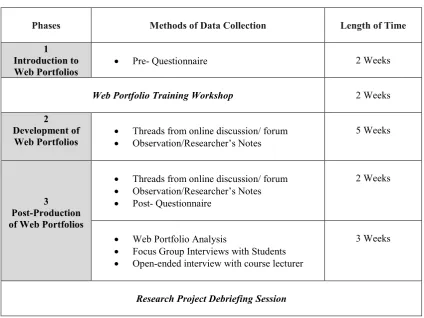
Table 2.3 Parallel Structure of Portfolios and the Web Table 3.1 Phases of Data Collection
Table 3.2 Distribution of Participants for the Focus Group Interview Table 3.3 Participants Recruited for Each Focus Group
Table 3.4 Research questions, data collection procedures, and data analysis
Table 4.1 Pre-questionnaire Results of Students’ Perceptions of Their Own Computer Competency in an Online Environment Table 4.2 Post-questionnaire Results of Students’ Perceptions of Their
Own Computer Competency in an Online Environment Table 4.3 Pre-questionnaire Results of Students’ Attitudes towards the
Use of Computer Technology in Learning and Teaching Table 4.4 Post-questionnaire Results of Students’ Attitudes towards
the Use of Computer Technology in Learning and Teaching Table 4.5 Pre-questionnaire Results of Students’ Attitudes towards
Learning
Table 4.6 Post-questionnaire Results of Student’s Attitudes towards Learning
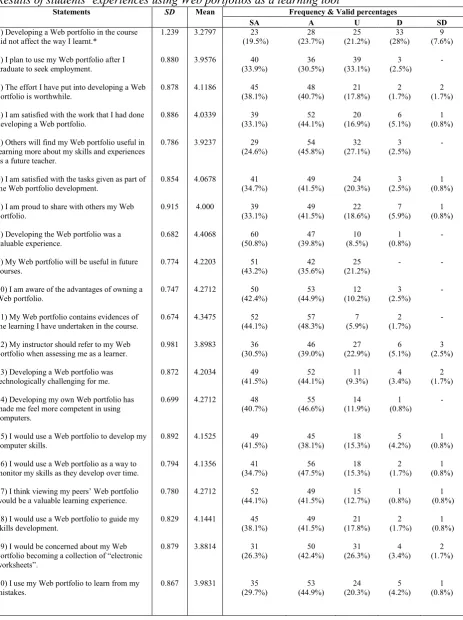
Table 4.7 Results of Students’ Experiences using Web portfolios as a Learning Tool
Table 4.8 Results of Students’ Experiences using Web portfolios as an Assessment Tool
Table 4.9 Sample Comments Given by Students on their First Impression of Google Sites
Table 4.10 Students’ Rating of their Own Competency in using Google Sites
Table 4.11 Students’ Responses on the Most Challenging and the Least Challenging Aspect of Using Google Sites
Table 4.12 Students’ Responses to the Level of Difficulty of Web Portfolio Tasks
Table 4.13 Time Students Spent Working on their Web Portfolios Table 4.14 Web Portfolio Activities Students Spent Most Time On Table 4.15 Students’ Perceptions of A ‘Good’ Web Portfolio Table 4.16 Students’ Suggestions on the Improvement of the Web
Portfolio Development Process
Table 4.17 Students’ Opinion on the Best Time for Web Portfolios to be Introduced
Table 4.18 Summary of Questionnaire Results
Table 4.19 Description of Major Categories from Interview Analysis Table 4.20 Summary of Interview Results
Table 4.21 Summary of Students’ Web Portfolio Analysis
ix
List of Figures
Figure 2.1 The TPACK Framework and its Knowledge Components Figure 2.2 The Technical and Pedagogical Knowledge and Skills for
CALL
Figure 2.3 The Learning Portfolio Model
Figure 2.4 The Different Portfolio Presentation Types
Figure 2.5 The CRADLE Framework for Portfolio Development Figure 2.6 The CRADLE-T Framework for E-portfolio Development Figure 3.1 Graphic Illustration of Sequential Explanatory Mixed
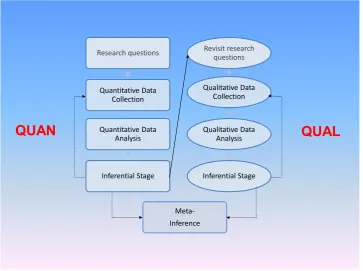
Methods Design
Figure 4.1 Sample of a Student’s Homepage
Figure 4.2 Sample 1 of a Student’s Personal Profile Page Figure 4.3 Sample 2 of a Student’s Profile Page
Figure 4.4 Sample of a Student’s Academic Profile Page Figure 4.5 Sample of a Student’s Assignment Page 1 Figure 4.6 Sample of a Student’s Assignment Page 2 Figure 4.7 Sample of a Student’s Assignment Page 3 Figure 4.8 Sample of a Student’s Assignment Page 4 Figure 4.9 Sample of a Student’s Resources page Figure 4.10 Sample of a Student’s Research page
Figure 4.11 Sample of Student’s Teaching Material and Work Samples Page
Figure 4.12 Sample 1 of Students’ Reflection Page Figure 4.13 Sample 2 of Students’ Reflection Page
Figure 4.14 Sample of a Student’s Future Learning Goals Page Figure 4.15 Sample of a Student’s Contact Details Page
18
19 23 24 41 41
52 152 153 153 154 156 156 157 157 158 159
1
CHAPTER ONE
INTRODUCTION
1.1 Background to the Study
Teachers have become increasingly familiar with the affordances of the Internet, resulting in a significant reassessment of their teaching repertoire. While technology-driven teachers welcome the Internet as a solution to many of their teaching and learning concerns, there exist those who are not very receptive to integrating the Internet into the classroom. The tone of these teachers’ voices reflects anxiety, apprehension and skepticism. Clearly, these teachers would require some degree of persuasion from various key players in the field of teaching and learning. In addition to pressures asserted by top-down government policies, there has been an increasing demand for technology-using teachers particularly by students who foresee their future significantly shaped by technologies associated with the Internet (Christina & Hazman, 2010). This has undoubtedly created a compelling need for those engaged in the training of teachers to include a new range of skills identified through the innovative use of Internet technologies in their preparation courses.
2
As the government continues to provide a firm platform for ICT development in the country, the education sector, in particular, has also experienced radical transformations. In 1996, under one of the nation’s key ICT initiatives, Multimedia Super Corridor Malaysia (MSC) was established with a vision to become a global ICT hub (NITC, 2011). The efforts of MSC are being realised through seven flagship applications - one of which was the Malaysian Smart School initiative. The technology-supported Smart Schools initiative was designed to prepare Malaysia’s future generation for the digital age in line with the nation’s aspiration to achieve the goals of Vision 2020. Prior to the piloting of Smart Schools, computer literacy was introduced in 60 secondary schools with computer facilities as early as 1992 (Ministry of Education Malaysia, 1992) and to another 322 schools in 1999 (Ministry of Education Malaysia, 2000). In addition to the government’s exceptional investment in the ICT infrastructure, the Malaysian Smart School Initiative can be regarded as the catalyst for further developments of ICT in education. For instance, the ICT curriculum was launched as a subject at secondary schools replacing the previously information technology curriculum introduced in 1999 (Ministry of Education Malaysia, 2005). The ICT Literacy (ICTL) Program was later introduced at the primary and secondary schools with existing computer access. By the end of 2007, there were 5631 primary schools and 1793 secondary schools offering ICTL (Ministry of Education Malaysia, 2008).
With ICT development as a backdrop, focus in recent years was in the training of teachers to use technology effectively (Ng, 2010). Accordingly, agencies, within the Ministry of Education, were made responsible for conducting training. For example, pre-service and in-service training of teachers is being handled by the Teacher Education Division. The Institut Aminuddin Baki focused on training for Heads of schools and other school administrators. The Educational Technology Division, the Curriculum Development Centre and the Examinations Syndicate were in charge of orientation courses. Additionally, specialised short-term courses were conducted by the State Education Departments, the state Educational Resource Centres and the Teacher Activity Centres (Chan, 2002). One of the many courses conducted was the
3
ICT continues to be the driving force following the recent education reformation in Malaysia. As reported in the nation’s Master Plan for Educational Development (2006 – 2010), a total number of 38760 teachers have undergone training in the use of ICT conducted by the teacher training division in 2006 (Ministry of Education Malaysia, 2006). Further ICT training has also been identified as a way to reinforce professionalism in the teaching field.
Caught in the middle of the ICT movement are English language teachers whose roles have been emphasised due to the overarching recognition of English as the language of the globalised world (Muhammad Kamarul, 2003). Additionally, the predicted advancements in ICT will have a significant impact on the context of English language teaching leading to an increasing concern regarding the additional pedagogical and technical skills required of the English language teacher (Warschauer, 2004). Drawing from this concern, studies have been undertaken to identify IT competencies specific to the needs of English language teachers in Malaysia “to assist teachers with different computing ability to achieve a common understanding of what constitute an IT competent teacher” (Norizan & Mohamed Amin, 2004, p. 8). Essentially, the identified IT competencies can be used to prepare those entering the teaching profession and to guide in the professional development of teachers (Norizan & Mohamed Amin, 2004). Along these lines, another approach specifically designed for English language teachers is a computer-assisted language learning (CALL) course that is being offered to future English as a second language (ESL) teachers undertaking the Bachelor of Education Teaching English as a Second Language (TESL) degree program.
4
learning management system, WebCT, in the year 2000 (Muhammad Rais & Yusup, 2004). In an effort to better sustain its online learning initiatives, UPSI later developed a customized learning management system named MyGuru (which means ‘my teacher’ in English) and more recently upgraded to MyGuru2. With an objective to implement online learning in its present practices, UPSI has made it compulsory for lecturers to upload their CVs, course outlines, learning materials and lecture notes onto MyGuru2. In addition, lecturers are encouraged to apply other features of
MyGuru2 such as online assignment and online discussion to their conventional face-to-face lectures. In 2011, MyGuru3 has been introduced as a platform specifically developed to cater to the needs for online distance education in UPSI. In one respect, along with a solid infrastructure to accommodate online learning, UPSI has the capacity to continue to encourage online learning particularly through the use of different educational tools that support online learning.
1.2 Statement of the problem
While there have been a number of studies in regards to online learning and the use of educational tools in Malaysia, those studies tended to focus on the perceptions of students and teachers on the use of certain applications available on the Internet. They were also inclined towards identifying factors that impede the use of online technologies among students and teachers. It is only recently that interest in teacher’s online professional development has emerged in Malaysia prompting teachers to fully utilize online technology to improve their own learning (Muhammad Kamarul, 2003; Muhammad Kamarul & Mohamed Amin, 2004).
5
the integration of summative and formative assessment processes (McLoughlin, 2003). Despite the broad use of portfolios in teacher education worldwide, their use in Malaysia has not been fully explored. Possibly, this is due to the nature of teacher training programs, which is still predominantly exam-oriented. However, with the introduction of school-based assessment in the Malaysian education system in the year 2011, the role of portfolio-based assessment has gained immediate importance. Charanjit and Arshad (2013) found that one of the concerns of teachers implementing school-based assessment in an ESL context was internalising the fundamental features inherent to assessment portfolios prior to being able to effectively use it in their classrooms. Considering that there will be many more teachers who are still not familiar with or have limited experience in the use of assessment portfolios, there is a strong reason for introducing portfolios as a learning tool during their pre-service training period.
With a background in training future ESL teachers in CALL, it is the researcher’s personal interest to explore this area further due to its relevance and timeliness. Drawing primarily from the literature on teacher training and development, the researcher was attracted to the wide adoption of portfolios, in particular, the use of technology in the development of electronic portfolios as a learning and assessment tool. With the support of online technology, Web-based electronic portfolios (hereafter Web portfolios) have been introduced. While studies on the use of Web portfolios in other contexts have reported positive outcomes resulting in a “knowledge base [that] is both wide and culturally complex” (Yancey, 2009, p. 32), the implementation of e-portfolios within the Malaysian context is still at its infancy and is also limited to individual efforts at course level rather than large scale institution-wide ones. To illustrate, several studies published in this context have indicated that portfolio use is still underexplored (Boon, 2004; Mohd. Rashid & Mohd. Asri, 2007; Siti Fatimah, Nor Sakinah & Hamidah, 2007). This has sparked the researcher’s motivation to further discover its worth and application in the training of pre-service ESL teachers in the Malaysian context.
6
2005; Meeus, Van Looy & Van Petergem, 2006); second, they are effective tools for the assessment of learning in higher education (Acker, 2005; Barrett, 2000; Barrett, 2004; Chang & Tseng, 2009; Evans & Powell, 2007; Hartland, 2005; Mullen, Bauer & Newbold, 2001; Son, 2009; Tisani, 2008); third, Web portfolios support features of learning online (Lopez-Fernandez & Rodriguez-Illera, 2009; Meeus, Questier & Derks, 2006).
1.3 Research Aims and Questions
This study investigates the use of Web portfolios as a learning and assessment tool for pre-service teachers in a CALL course offered at a Malaysian university. Web portfolios were introduced as part of this CALL course with two main aims: (1) as a learning tool to enhance future ESL teachers’ competency in integrating computer applications; and (2) as an assessment tool to evaluate future ESL teachers’ competency in integrating computer applications to achieve their course objectives.
As stated in the CALL course synopsis, the following are the CALL course objectives:
7
Further stipulated in the CALL course synopsis are the learning outcomes of the CALL course. It is expected that by the end of the CALL course the students should be able to:
1. Use educational technologies and ICT in teaching and learning ESL; 2. Think creatively and critically in using and designing computer-enhanced
ESL materials;
3. Critically select ESL teaching and learning resources from the internet; 4. Manage information through ICT effectively for lifelong learning; 5. Demonstrate ethical and professional values, attitude and behaviour when
using computer technology in teaching.
With a view to achieving the aims of the study, three research questions were formulated.
(1) What impact does the use of Web portfolios in the training of pre-service ESL teachers have in relation to trainees’ computer competency?
The first research question was formulated to allow the researcher to determine the effectiveness of Web portfolios when used as a tool in the CALL course. Given that one of the main objectives of the course is to enhance trainees’ computer competency, this question is answered by identifying the differences in the way trainees perceive their competency prior to and after being introduced to Web portfolios. For this purpose, data has been collected through two sets of questionnaires: a pre-questionnaire and a post-questionnaire. Data supporting this question was also captured through focus group interviews with students.
(2) How effective are Web portfolios in providing evidence of pre-service ESL teachers’ learning and development as future CALL practitioners?
8
projection of their skills and competency as a future CALL practitioner. This question is answered by analysing data collected from the two sets of questionnaires, focus group interviews with students and a semi-structured interview with the CALL course lecturer. The results from the analysis of Web portfolios also contribute to answering this question.
(3) What factors facilitate and hinder the development of Web portfolios as a learning and assessment tool in the CALL course?
The third research question is aimed at identifying various factors that contribute to, and hinder the development of Web portfolios as a learning and assessment tool. These factors will highlight areas that require improvements in the development of Web portfolios as a learning and assessment tool in future applications in similar settings. These factors are identified based on data collected from a post-questionnaire, interviews and Web portfolios.
1.4 Significance of the Study
This study is significant for its contributions to the following areas:
(a) Teacher training in Malaysia
9
of developing and maintaining a Web portfolio for the professional development of future teachers.
(b) Web portfolio development
Findings of the study will be used to suggest a framework that outlines factors, which are worth considering when Web portfolios are used as a tool to facilitate and consolidate learning experiences not only in future courses offered at UPSI, but also in other institutions that share similar characteristics. The findings on the students’ experiences on the use of Google Sites as a platform for Web portfolios may also be used to expand the current body of literature on Web portfolio development. Technical dimensions of Google Sites found supportive for Web portfolio development have been explored in this study along with its technical limitations and other related issues. The development of a Web portfolio Assessment Rubric presented as a product of this study is expected to be a valuable and practical future reference, particularly as a guide when introducing Web portfolios as part of the coursework assessment in a CALL course.
(c) Methodological knowledge
10
methods design was considered more useful in gaining information about specific processes affecting the students in this study when using Web portfolios.
1.5 Terms and Definitions
There are several terms included in this study that have been widely used and broadly defined. In order to facilitate the understanding of the use of the following terms within the context of this study, definitions of the terms are given below.
Artefacts are evidences of work that are collected over a period of time to display achievements, learning or skills. They can be in the form of assignments, certificates of past qualifications, lesson plans etc. Artefacts can also be in electronic format and presented in the form of CDs, DVDs, USB drives etc. When artefacts are compiled to be presented in Web portfolios, the artefacts need to be transformed or saved into a Web-enabled format before they can be uploaded to the Web. For example, an assignment needs to be saved into a Word or PDF format prior to being uploaded to the Web. Cambridge (2010) explained that artefacts that are included in electronic portfolios must suit the purpose of the portfolio and the link between the artefact and the purpose of the portfolio needs to be clear.
11
Computer applications refer to various computer programs that are available commercially or as an open source over the Internet. The broad definition of computer applications takes into account all different devices, hardware and software that are operated with the use of the computer both stand-alone and networked. However, for the purpose of this study, the term computer applications is also used to refer to online computer applications which are associated with the use of the Internet, computer-mediated communication (CMC), Web 2.0 tools and Web publishing, unless otherwise is specified.
The definition of the term ‘computer competency’ in teacher education is one that has evolved based on the changing needs and demands of teachers. The “changing trend in what constitutes a computer competent teacher” (Norizan & Mohamed Amin, 2004, p. 3) implies that there is also a requirement for computer competency to be clearly defined within the context of this study. Generally, the study uses computer competency to refer to an individual’s competency in using computers as a tool to perform tasks. It includes tasks performed using selected software and programs installed on the computer and also those that run online. Computer competency also relates to the individual’s competency in using the computer to perform online synchronous and asynchronous communications such as chatting and emailing, respectively. An individual computer competency may also be reflected in his or her use of the Internet as an information resource whereby skills such as browsing or surfing, downloading and uploading are employed. Online computer competency refers to an individual’s competency in managing computer applications that require Internet connectivity. In this study online computer competency or computer competency in an online environment involves using the computer to search and browse the Internet, managing CMC and using Web 2.0 tools. It also concerns retrieving saving, publishing and printing a range of resources available on the Internet. The use of Web authoring and publishing tools is also considered as a skill within an online environment in this study.
In Malaysia, English is considered as a second language. The Malay language or
12
use of English as a medium of instruction is strongly encouraged in the training of future teachers, particularly in the training of future ESL teachers in Malaysia.
In this study, pre-service ESL teachers are students enrolled in the Bachelor of Education (Teaching of English as a Second Language) program at a teacher training institution in Malaysia. Often, they have had no teaching experience or limited teaching experience in the teaching of English as a second language. They are trained to become future teachers at secondary schools in Malaysia upon graduation.
1.6 Overview of the Dissertation
Presented in this first chapter are the background of the study, statement of the problem, research aims and questions, significance of the study and terms used in the dissertation. Subsequent chapters in the dissertation have been organised as follows: Chapter Two describes the literature relevant to the research questions posed in the study. The chapter explores issues surrounding the use of technology in teacher education with a focus on preparing future teachers for technology integration. The chapter also provides an overview of portfolio use explaining their various types and purposes in education. It also briefly discusses the use of Web technology in relation to e-portfolio development. There is also a section that provides an overview of related studies on e-portfolio use within the language learning context. Literature supporting the use of e-portfolios in teacher education in international contexts and the context of the present study are also reviewed in this chapter. The final section of this chapter presents the constructivist view to learning as the underpinning framework theoretical framework for this study.
13
In Chapter Four, the results of the study are presented. The analysis of the pre-questionnaires and post-pre-questionnaires are presented followed by the thematic analysis of qualitative data from interviews. The analysis of Web portfolios is also presented highlighting the assessment of the panel of reviewers and the researcher. In addition, the chapter offers a summary of the results from the pre-and post-questionnaires, focus group interviews and semi-structured interviews, and Web portfolios.
Chapter Five focuses on the discussion of the results of the study and explores key findings that are evident in the study. The discussions were developed by relating them to the three research questions posed and by providing supporting evidence. Links to previous studies were also made to further strengthen the discussions presented. The chapter ends with some personal reflections of the researcher.
Chapter Six concludes the dissertation by addressing the research questions posed at the beginning of the study. It provides four conclusions by drawing upon the key findings and discusses several limitations to illuminate the challenges and constraints that were involved in the study. Implications of findings for future Web portfolio use as a learning and assessment tool in similar contexts are also presented. Finally, drawn from the key findings and the researcher’s experiences in carrying out the study, the chapter provides some recommendations for further study in the area of Web portfolios. The chapter concludes with some personal reflections of the researcher.
14 CHAPTER 2
LITERATURE REVIEW
2.1 Overview
Chapter Two presents a thematic review of the body of literature supporting the development of Web portfolios as a learning and assessment tool in the present study. It explores key concepts that underpin this study and which provide a frame for the investigation and design of the present study. The first body of literature included in this review provides an overview of the role of technology in the context of teacher education with a focus on the importance of preparing teachers for technology integration. The second body of literature reviewed presents the broad applications of portfolios in education and some major contributions that studies in this area have made in conceptualizing the major types and purposes of portfolios. It also briefly discusses the benefits of using the Web as a platform for the development of e-portfolios. The chapter then moves to focus its discussion on the different ways e-portfolios have been utilized in teacher education. Because the purpose of this study was to explore the perceptions of pre-service ESL teachers, a section on e-portfolio use within the language learning context was also included in this review. Though may be common in many international contexts, the portfolio concept is still new and relatively limited in use in the context of the study. To illustrate the extent of their use, key studies in the use of portfolios in Malaysia are also discussed. Presented in the final section of this chapter is the constructivist view on learning as the underpinning theoretical framework of the present study.
15
characteristics of the web-based format of electronic portfolios investigated in the study.
2.2 Technology in teacher education
Tim Berners-Lee said “Twenty years ago when I wanted to reframe the way we use information, the way we work together, I invented the World Wide Web” (March, 2009). As seen today, the Web has certainly become an indispensible technology that is fast transforming education. Close to a decade ago, a concept that was initiated by O’Reilly (2005) gave birth to the second generation of the WWW, popularly known as Web 2.0. Amidst all the hype and newly coined label attached to Web 2.0, also known as the read/write Web, the wave of excitement has to do with how the new Web has further broadened the Web’s former role as an information resource and communication tool. To illustrate its enhanced potential in education, it has also been argued that “the first decade of what most people have experienced as the WWW was not entirely true to the original vision and what is being described as Web 2.0 is not so much an extension of the WWW as a completion of that original vision” (Albion, 2008, p. 183).
In much the same way that the Web has impacted education in its earlier form, Web 2.0 has continued to significantly revolutionize teacher education (Greenhow, 2007). While teachers have been excited about “the more participative and potentially paradigm-changing environment for building and sharing knowledge” (Albion, 2008, p. 181), they are also reminded that with new technologies, there will exist new challenges. Two such challenges have been underlined by Albion (2008) that come hand in hand with the use of Web 2.0 in teacher education, namely, the use of Web 2.0 tools to enhance teacher preparation and the preparation of teachers for applying Web 2.0 tools as an authentic practice. In light of these challenges, the use of Web 2.0 caused implications for teacher education prompting teachers to “transform their pedagogy to leverage the affordances provided through the integration of Web 2.0 tools” (Archambault, Wetzel, Foulger & Williams, 2010, p. 4).
16
have been identified as the key players responsible for the integration of technologies for example, through their selection of tools, pedagogical designs and innovative approaches in the classroom. With the emergence of Web 2.0, CALL teachers have also been confronted with pressing issues concerning the use and integration of new technologies and the importance for teachers to develop specific knowledge and skills with regards to the use of technology in their classrooms (Hegelheimer, 2006; Hubbard, 2004; Levy & Stockwell, 2006). Generally, the prevalent discourse among CALL researchers concerning technology integration revolves around investigations into teacher’s level of computer competency, attitude towards the use of technology, perceived value of technology and knowledge of specific technologies (Atkins & Vasu, 2000; Milbraith & Kinzie, 2000; Son, Robb & Charismiadji, 2011; Wozney, Venkatesh & Abrami, 2006). Other researchers have also looked into perceived usefulness, self-efficacy and ease of use as some of the most significant determiners impacting teachers’ intentions for technology use (Anderson & Maniger, 2007; Chen, 2010; Ma, Anderson & Streith, 2005; Sadaf, Newby & Ertmer, 2012; Teo, Lee & Chai, 2008; Yuen & Ma, 2002).
17
language classroom” (p. 35). Even with the increasing pressure for teachers to use technology, Egbert, Paulus and Nakamichi (2002) addressed another challenge in technology integration by pointing out that “teachers are using technology in ways that fit their current practice, rather than transforming their practice through the use of technology” (p. 111). They further stressed that teachers are not learning what they need to know about integrating new and advanced technologies due to the possibility of being introduced to technology that is either outdated or not relevant to their current practices. Teacher preparation courses have been blamed for causing this disservice and have been urged to consider introducing teachers to technologies that are more relevant for their future practice.
18
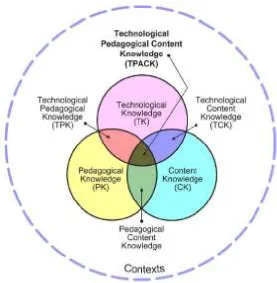
Figure 2.1. The TPACK framework and its knowledge components (www.tpack.org, 2012)
The TPACK framework illustrates the different types of knowledge bases that teachers tap into when they work with technology and when they seek to integrate technologies as part of their classroom practice. Abbit (2011, p. 282-283) has provided a summary of the seven knowledge domains described by Mishra & Koehler (2006) as the following:
• Pedagogical knowledge (PK): Knowledge of nature of teaching and
learning, including teaching methods, classroom management, instructional planning, assessment of student learning, etc.
• Content knowledge (CK): Knowledge of the subject matter to be taught (e.g., earth science, mathematics, language arts, etc.)
• Technology knowledge (TK): Continually changing and evolving knowledge
base that includes knowledge of technology for information processing, communications, and problem solving, and focuses on the productive applications of technology in both work and daily life
• Pedagogical content knowledge (PCK): Knowledge of the pedagogies,
teaching practices, and planning processes that are applicable and appropriate to teaching a given subject matter
• Technological content knowledge (TCK): Knowledge of the relationship
19
• Technological pedagogical knowledge (TPK): Knowledge of the influence
of technology on teaching and learning as well as the affordances and constraints of technology with regards to pedagogical designs and strategies
• Technological pedagogical content knowledge (TPCK): Knowledge of the
complex interaction among the principal knowledge domains (content, pedagogy, technology)
Mishra and Koehler (2009) postulated that the TPACK framework can potentially urge teachers “to move beyond over-simplified approaches that treat technology as an ‘add-on’ and instead to focus again, and in a more ecological way, upon the connections among technology, content, and pedagogy as they play out in classroom contexts” (p. 67). Clearly their ideas have been picked up by teacher training institutions today as they move away from learning about technology to learning
through and with technology. Looking back at CALL, researchers such as Hubbard and Levy (2006) have outlined the technical and pedagogical knowledge and skills for CALL that they claimed to be a framework “at its broadest level” as their goal was nowhere near being prescriptive but was intended to serve as a guide. They stated that the pedagogical dimension can be related to the pedagogical content knowledge dimension identified by Shulman’s (1986). The framework is presented in Figure 2.2 below.
Figure 2.2. Technical and pedagogical knowledge and skills for CALL (Hubbard & Levy, 2006)
20
the researcher’s motivation to explore e-portfolios as a tool that can potentially enhance the integration of technology among pre-service ESL teachers.
Despite the various reasons teachers provide for using or avoiding technology, studies have pointed out that teachers with experience with technology are more inclined toward integrating technology in their classrooms (Egbert, Paulus, & Nakamichi, 2002; Hernandez-Ramos, 2005). The literature also emphasized that for teachers to appreciate technology, its purpose has to be relevant to them. Teachers also need to be comfortable using the technology and for them to be so, they need to be properly introduced to the technology. Studies have also implied that there may be deficiency in training to use technology that has caused teachers to fall short from successfully integrating technology into their present practices. The present study acknowledges that Web 2.0 is potentially an ideal platform for teachers to learn about technology and to integrate it into their future practices. When specifically looking at the present study where e-portfolios were developed in a CALL course, teachers are able to learn about new technologies and implement them simultaneously as they develop their e-portfolios on the Web. Thus, the teachers get to experience technology in a “situated authentic context” that has been identified as an important consideration for changing teachers’ practices (Egbert, Paulus, & Nakamichi, 2002). At the same time, teachers will be able to experience for themselves the use and affordances of Web 2.0 tools when they develop their e-portfolios. Albion (2008) also suggested that “the development of learner communities around e-portfolios using Web 2.0 tools appears to offer a way forward to increase professional engagement of teachers while building the authentic experience required to support use of Web 2.0 in their practice” (p. 196).
2.3 Setting the scene: Portfolios in education
21
clearly come a long way from its original form. The word ‘portfolio’ originating from the Latin porta (to carry)and foglio (leaf, sheet) was known to be used as early as 1722 (www.merriam-webster.com, 2011). Following a long tradition from various fields of study such as arts, music, photography, engineering, and medicine, portfolios have become well-received in the field of education for a range of purposes such as employment, assessment, professional development, and life-long learning (Barrett, 2007; Klenowski, 2002; Zubizarreta, 2004, 2009).
One of the earliest publications on the use of portfolios in education was published by Paulson, Paulson and Meyer (1991). It defined a portfolio as:
a purposeful collection of student work that exhibits the student’s efforts, progress, and achievements in one or more areas. The collection must include student participation in selecting contents, the criteria for selection, the selection for judging merit, and evidence of student reflection. (p. 61)
In its simplest form, a portfolio resembles a container for storing and managing learning evidence making it a valuable tool for reflecting upon one’s work and growth over a period of time. It is a learning product that is used for the “meaningful documentation” of an individual’s abilities (Barnstable & Barker, 2008, p. 471). A portfolio provides “evidence of skills, experience, and learning” that is showcased in the form of artefacts such as assignments, project samples and reflective notes among other documents (DiMarco, 2006, p. 12).
22
are that dependent on the three types of e-portfolios identified. Stefani, Mason & Peglar (2007) have also identified at least four types of portfolios in education: showcase portfolios, reflective portfolios, development portfolios and assessment portfolios. Barrett (2007) further added that the multiple purposes of portfolios such as those for learning, assessment, employment, marketing and showcasing best work has complicated research and the literature on portfolio use but she asserted that “it becomes clear that the term portfolio should always have a modifier or adjective that describes its purpose” (p. 436). Whilst Barrett’s point is one logical way to explain the diversity in portfolio types, it can be argued quite often there are overlapping portfolio purposes. However, one clear distinction can be made between portfolios for learning, assessment and employment as they relatively include artefacts that explicitly fit their purpose.
When portfolios are used in teacher education for professional development they are further distinguished as teaching portfolios (Seldin, 1997; Zeichner & Wray, 2001) and learning portfolios (Mansvelder-Longayroux, Beijaard & Verloop, 2007; Zubizarreta, 2004). Teaching portfolios were an idea conceived by Lee Shulman in the 1970s based on his deep passion for research on teaching (Kinnard, 2007). Shulman defined a teacher’s portfolio as a “structured documentary history of a set of coached or mentored acts of teaching, substantiated by samples of student portfolios, and fully realized only through reflective writing, deliberation, and conversation” (1998, p. 37). He also mentioned one of the benefits of portfolios as being able to “institutionalize norms of collaboration, reflection, and discussion” (p. 36). The elements of collaboration, reflection, and documentation were also the three elements that were reiterated by Zubizaretta (2004) in his conceptualization of learning portfolios.
23
providing a structure for students to reflect systematically over time on the learning process and to develop the aptitudes, skills and habits that come from critical reflection” (p. 15). He proposed a learning portfolio framework that exhibits the “dynamic nature of engaged learning” consisting of three fundamental components: reflection, documentation, and collaboration (p. 19). Based on this model, learning is maximized when all the three components are activated potentially “transforming an incidental learning activity into a deeper enduring learning process” (p. 21). Figure 2.3 illustrates these three components.
Figure 2.3. The Learning Portfolio Model (Zubizaretta, 2004).
24
Figure 2.4. The different portfolio presentation types.
Irvine and Barlow (1998) have referred to digital portfolios as portfolios that are both CD-ROM based and web-based. However, other researchers such as Donaldson (2012) and Lopez-Fernandez & Rodriguez-Illera (2008) have linked virtual learning environments in their description of digital portfolios suggesting that they exist in a Web-based format. While terms referring to portfolios have been used interchangeably, Barrett (2000), for example, has tried to differentiate digital portfolios from electronic ones by the type of file formats used in the compilation of artefacts. She pointed out that electronic portfolios included both analog (e.g. videotapes, microfilms and printed photographs) and computer readable file formats (e.g. Microsoft Word documents, PDF files and MP3 files) while digital portfolios are assembled using only digital files or computer-readable files.
25
portfolios to emerge as “the most widely used new media format for electronic portfolios” (DiMarco, 2006, p. 13). As a result, the traditional paper-based portfolios are fast being replaced by Web portfolios due to their inefficiency in terms of capturing the “dynamic and complex processes of teaching and learning” (Avraamidou & Zembal-Saul, 2002, p. 6) and their limitations in addressing issues such as storage, cost, and portability (Tosh, Werdmuller, Chen, Light & Haywood, 2006; DiMarco, 2006). The ease of access to technology and the availability of innovative technologies have also been identified as reasons why Web portfolios are becoming more popular for the presentation format of portfolios (Zubizaretta, 2009).
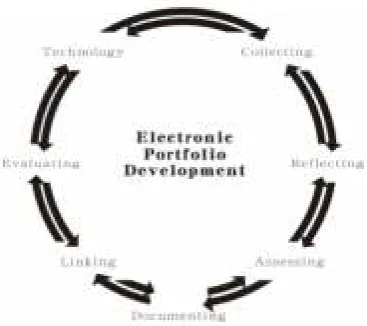
Another way of appreciating the worth of portfolios is by recognising the processes involved in constructing them, as emphasised by Smith and Tillema (2003), who note, that the “strength of portfolios is derived from the process” (p. 626). In terms of a process, portfolio practitioners are in agreement that portfolio development follows the consistent process of (1) collection, (2) selection, (3) reflection, (4) projection (Barrett, 2000; Danielson & Abrutyn, 1997). Barrett (2000) added presentation as the fifth and final stage of the development process. Each portfolio development process is presented and described in Table 2.1.
Table 2.1
Portfolio Development Process
Portfolio development process
Description
(1) Collection Save artefacts that represent the day-to-day results of teaching and learning.
(2) Selection Review and evaluate the artefacts saved and identify those that demonstrate achievement of specific standards or goals.
(3) Reflection Reflect on the significance of the artefacts chosen for the portfolio in relation to specific learning goals.
(4) Projection Compare the reflections to the standards or goals and performance indicators, and set learning goals for the future.
(5) Presentation Share the portfolio with peers and receive feedback. Note. Adapted from “Electronic portfolio=multimedia development+portfolio development,” by Barret, H., 2000, Retrieved from electronicportfolios.org/portfolios/EPDevProcess.html
26
complement each other. By the adoption of Ivers & Barron’s (1998) Decide-Design-Develop-Evaluate model, Barrett (2000) reintroduces a five stage multimedia development process; (1) decide, (2) design, (3) develop, (4) implement and (5) evaluate. Table 2.2 presents the multimedia development processes and the description of each process.
Table 2.2
Multimedia Development Process
Multimedia development process
Description
(1) Decide Determine needs, goals and audience for the presentation (2) Design Determine content and sequence of the presentation
(3) Develop Gather and organise multimedia materials to include in the presentation
(4) Implement Give the presentation
(5) Evaluate Evaluate the presentation’s effectiveness
Note. Adapted from “Electronic portfolio=multimedia development+portfolio development,” by Barret, H., 2000, Retrieved from electronicportfolios.org/portfolios/EPDevProcess.html
When e-portfolios are published on the Web, their construction processes are parallel to those of creating a website involving key processes such as information design, visual design, webpage design and Web authoring (DiMarco, 2006). At present, Web portfolios can be constructed using webpage creation software that utilises WYSIWYG editors such as Microsoft’s FrontPage and Adobe’s Dreamweaver making the key processes of constructing a website and webpages (i.e. creating pages, editing pages and linking Web content) much less demanding compared to creating a website using manual HTML coding. There are also various template-based website creation tools that are freely available on the Internet for education purposes (i.e., Jimdo, Google Sites, SnapPages, Webnode, and Weebly) that teachers and students with limited computer competency can use to develop their portfolios. Alongside these Web creation tools, Barrett (2010) has suggested various types of Web 2.0 tools such as blogs, wikis and online presentation builders, that can be used to construct portfolios. She has also listed a range of open source portfolio systems
and commercial portfolio systems such as Chalk & Wire
27
the construction of a Web portfolio will require the initial process of registering for a site. Following this, website developers will use drag and drop functions to execute a number of steps required to build webpages.
Gibson and Barrett (2003) explained that e-portfolios “is a new kind of container that can be developed along two paths” (p. 559) one of which uses generic tools (GT) such as word processing, HTML editor, multimedia authoring tools, portable document format (PDF) and other common productivity tool software whereas another uses customized systems approaches (CS) that involves servers, programming and databases. When GT are used, learners would construct their portfolios using any available storage space. In contrast, CS users operate within an online database environment where structure and storage stage are made available for students to store and organize their portfolios. While the debate revolving around the inherent strengths and weaknesses in both approaches to e-portfolio construction has led them to suggest a hybrid approach that integrates both GT and CS into one single platform, Gibson and Barrett (2003) stressed that “which tools and how deep they are developed varies with the context as well as the challenge facing the learner and their supporters” (p. 576).
28
Donaldson (2012) further added the use of Web 2.0 tools has potentially changed the dynamics of Web users from passive consumers of information into producers who are not only able to produce digital content but also publish them to other users. He pointed out that education built around e-portfolios creates huge pedagogical benefits as it “ties together various student-generated artefacts into a coherent whole [forming] an environment in which technology use has a clearly identified purpose” (November 1, 2012). E-portfolios developed on a Web 2.0 platform also increase opportunities for e-portfolio developers to participate in collaborative activities involving the sharing of information and exchanging of feedback that are facilitated and encouraged by the platform itself. They are also supportive of reflection and revaluation through storing multiple reiterations of students’ work over a period of time as well as providing a mechanism that allows students to easily edit and revise their work (Avraamidou & Zembal-Saul, 2003).
On a much broader perspective, Batson (2002) stated that the use of e-portfolios has become appealing due to the intersection of three trends in higher education that reflect the new ways students learn. Firstly, students are now mostly developing and saving their work in electronic form. Secondly, they also have ready access to the Web and finally, the students are able to manage large volumes of their work online using databases made available via websites. Kimball (2003) has moved on to highlight the similarities between the Web and portfolios in terms of their characteristics in an attempt to point out how the Web is useful in matching and expanding the rationales of portfolios. He emphasised three aspects of the Web, namely, connectedness, diversity and multimedia capabilities that may well support and increase the usefulness of portfolios. The following Table 2.3 summarizes the parallel structure of portfolios and the Web discussed by Kimball (2003).
Table 2.3
Parallel structure of portfolios and the Web
Matching aspects Portfolio rationale Web features
Connectedness • Recognizing and making connection between accomplishments and learning
29 • Making connections
between own learning to those of others
Diversity • Collecting a diverse range of artefacts that are evidences of one’s own accomplishments and learning that are brought together in one place.
• Capitalising on the Web’s standard interface to hold a vast variety of materials and viewpoints that can be accessible through a familiar and convenient framework-a Web browser.
Multimedia • Displaying a diverse
range of artefacts that exhibits one’s range of competencies.
• Including not only written documents, but a range of other media elements such as pictures, sound, and even video that expands the possibilities of what are counted as artefacts.
Similar views were also shared by Clark (2009) who further pointed out that one of the driving forces for the use of e-portfolios is the “dynamism of digital communication technologies” in the recent years where technology has provided the capacity for documenting and publishing student learning in diverse formats (p. 18). There is also an increasing interest in using multimedia self-authoring in the creation of self-portraits through social networking sites such as Twitter and Facebook
allowing e-portfolios to speak “the language of today’s student body” (p. 18). Nevertheless, even with clear advantages of using the interactive learning environments rendered by the Web for the development of e-portfolios, the same technology may also inhibit their use. In particular, studies have reported that among the most common technology related concern surrounding e-portfolios are technical skills, technical support, Internet access and selection of platforms (Barrett, 2007; Kocoglu, 2002; Lin, 2008; Saad Al Kahtani, 1999; Wetzel & Strudler, 2006).
2.4 E-portfolios in teacher education
30
Bird (1990) discussed the intricacies of teaching that may well be difficult to capture through simply documenting work in a “dignified container” (p. 243). Even after two decades, researchers have not lost sight of Bird’s concern regarding the content of portfolios in teacher education. Nevertheless, much recently, the role of portfolios within teacher education has evolved from being a concept to a common practice (Ritzhaupt, Ndoye & Parker, 2010).
Studies on the use of e-portfolios in teacher education have mainly centered on the students’ perceptions of e-portfolios (Lin, 2008; Ritzhaupt, Singh, Seyferth, & Dedrick, 2008; Wetzel & Strudler, 2006; Wright, Stallworth, & Ray, 2002) and anecdotal or self-reports concerning the way various institutions have implemented e-portfolios in their courses (Lamson, Thomas, Aldrich, & King, 2001; Love, McKean, & Gathercoal, 2004). There is also a growing research base that shows that e-portfolios support reflective thinking (Avraamidou & Zembal-Saul, 2002; Avraamidou & Zembal-Saul, 2003; Ayan & Seferoglu, 2011; Darling-Hammond & Snyder, 2000; Zeichner & Wray, 2001; Pitts & Ruggirello, 2012) and ways in which e-portfolios encourage students’ use of technologies (Barrett, 1999; Bartlett, 2002; Kilbane & Milman, 2005; Sherry & Bartlett, 2004; Wright, Stallworth, & Ray, 2002). The challenges and benefits associated with the use of e-portfolios have also been the focus of many studies (Gatlin & Jacob, 2002; Read & Cafolla, 1997; Wetzel & Strudler, 2006). Reported were also how e-portfolios can potentially be used to improve the quality of teacher practices during preparatory courses and to facilitate the professional development through their dual roles as a learning and an assessment tool (Bartlett, 2006; Evans, Daniel, Mikovich, Metze, Norman, 2006; Hung, 2012; Sherry & Bartlett, 2004; Peters, Chevrier, LeBlanc, Fortin, Malette, 2006).
31
technology in teaching and learning has captured the interest of the Australian Learning and Teaching Council (ALTC) to explore the diverse approaches to e-portfolio use by students in Australian universities with a view to ascertaining the scope, penetration and reasons for their use (Hallam & Creagh, 2010).
Similar concerns were also voiced by Joyes, Gray and Hartnel-Young (2010) in their review of twenty one recently funded e-portfolio projects in the UK in order to develop an understanding of effective practice. Aside from the many benefits that they found pertaining to e-portfolio use, they also highlighted several preconceptions regarding the value of e-portfolios. One of the many facets of e-portfolio practices they looked into was the transformative nature of e-portfolios that makes them difficult to fit exactly into existing pedagogical systems. This challenges some of the preconceptions such as e-portfolios can easily replace paper-based portfolios and their construction can save time.
Wetzel and Strudler (2006) also reported the costs and benefits of e-portfolios in teacher education based on their large-scale descriptive study of six university programs in the United States of America by studying the perspectives of students in programs thought to be mature in their implementation of e-portfolios. They identified three overarching categories concerning the costs and benefits of e-portfolios cited by the students that involved program implementation issues, access to and reliability of technology used, and time and effort expended. Strudler and Wetzel (2008) have also investigated the costs and benefits of e-portfolio use from the perspective of the faculty and identified several factors that impacted faculty time and effort expended. They also highlighted faculty perception of student engagement and learning, nature of student reflection, and alignment of faculty goals with e-portfolio initiatives, among others, as factors that impacted faculty satisfaction with e-portfolios.
32
consensus that e-portfolios have indeed established a significant role in teacher education. This has provided a strong ground for studying their worth in other contexts with a view to building an increased understanding of factors that contribute to the success in e-portfolio implementation such as the one undertaken in the present study.
One approach to viewing the merits of e-portfolios in teacher education is to study their use as a learning tool from the perspective of the students. Wetzel and Strudler (2006) emphasized that the voices of students are important when referring to e-portfolios as innovative tools that can potentially trigger educational changes. Lin (2008) further stated that student perceptions of their e-portfolio experiences will help practitioners improve their practices and policies but is an area that that is still underexplored compared to the perspectives of administrators and faculty. Tosh, Light, Fleming, and Haywood (2005) also added that it is crucial to understand students’ views on the use of e-portfolios particularly if e-portfolios are to play a key role in their educational experiences.
From the perspectives of students, one of the main benefits of developing e-portfolios is the way it fosters reflective skills. Montgomery (2003) stressed that reflective practice is an extremely valued attribute of effective teachers that has been a long-withstanding goal in teacher education. Through the seminal work of John Dewey (1933) and Donald Schon (1983) reflective practices are recognized as a skill that is fundamental for both beginning and experienced teachers (Montgomery, 2003). The reiterative process of constructing e-portfolios is also one that fosters critical thinking and self-assessment that are often evidenced through reflections that students include in their e-portfolios. Rhodes (2010) illustrated how reflection itself is considered a learning activity in the construction of e-portfolios:
33
The value of reflection has also been discussed in the study by Wetzel and Strudler (2006) who pointed out that reflection is an added benefit of e-portfolios despite the required time and effort it demands from students. But they cautioned that reflection could be an element that may be over-emphasised if not properly integrated within the e-portfolio development process. One way reflection can be integrated as part of an integral part of developing an e-portfolio has been reported by Oner and Adadan (2011) who examined the types of reflective thinking indicators among pre-service teachers by employing reflection-based tasks as a way to enrich the experiences during their teaching practices. Despite much emphasis being placed on fostering reflection, Zeichner and Wray (2001) suggested transitioning beyond the obvious conclusion that portfolios promote greater reflection, towards providing teacher educators with a clearer view of the specific quality of reflection that is required.
Doig, Illsley, McLuckie and Parsons (2006) pointed out that writing in the reflective mode is a task that may not be familiar to most students and that they would require to be introduced at an early stage so that they know what is expected of them. They go on to advocate the importance of reflection and reflective writing by pointing out that the skills in reflective writing are more challenging than the skills required for students to develop and manage their e-portfolios. Nevertheless, they stressed that the e-portfolio itself can encourage the reflective process. A similar point was also made by Oner and Adadan (2011) who found that the use of the e-portfolio system
Mahara was useful in facilitating reflection by providing flexibility in terms of posting and editing assignments, access and exchange feedback from peers on top of the anytime Internet access to the platform.
34
found that aside from the benefits of e-portfolios in developing reflective practice and effective learning strategies, the students in her study claimed to have gained technology skills as a result of developing e-portfolios. Technology skills, however, was also identified as the main area where students felt most challenged in particular, among students who had limited technological skills. Also reported were the problems faced by students in preparing their artefacts in digital formats and troubleshooting hardware and software.
Other technological challenges were also reported. For example, Tosh et al. (2006) illustrated that technical problems originate from students having to learn about the portfolio technology itself and to work within the limitations inherent to an e-portfolio system. Recognising the important role of technology skills in the development of e-portfolios, Lamson et al. (2001) argued that comprehensive training is a crucial consideration particularly because training can reduce the anxiety and frustration related to the compilation and evaluation of e-portfolios. Training has been proposed not only for students who are involved in the construction process of e-portfolios, but also for the faculty whose role is to provide support and evaluation of the students’ e-portfolios. Lab technicians should also be trained as they will participate in answering questions students may have when constructing e-portfolios. However, they have also concluded that the lack of information and understanding of the e-portfolio development process was another factor that inhibits the successful development of e-portfolios.
Positive outcomes in terms of learning new technology skills were reported by Wetzel & Strudler (2006) whose students built e-portfolios using templates requiring them to create their own webpages. As claimed by the students, developing e-portfolios was a way for them to acquire technological skills that they might need in their future classrooms. The students in the study conducted by Peters et al. (2006) have also exemplified how e-portfolios have been valued as a tool that augments their skills with technology indicating that they also perceived the technological gains valuable in their future careers.