VOLUME 19 ISSUE 66 AUGUST 2015 ISSN 1366-5278
Saline in Acute Bronchiolitis RCT and Economic
evaluation: hypertonic saline in acute
bronchiolitis – randomised controlled trial and
systematic review
Mark L Everard, Daniel Hind, Kelechi Ugonna, Jennifer Freeman,
Mike Bradburn, Simon Dixon, Chin Maguire, Hannah Cantrill,
John Alexander, Warren Lenney, Paul McNamara, Heather Elphick,
Philip AJ Chetcuti, Eduardo F Moya, Colin Powell, Jonathan P Garside,
Lavleen Kumar Chadha, Matthew Kurian, Ravinderjit S Lehal,
Economic evaluation: hypertonic saline in
acute bronchiolitis
–
randomised
controlled trial and systematic review
Mark L Everard,
1
Daniel Hind,
2
*
Kelechi Ugonna,
3
Jennifer Freeman,
4
Mike Bradburn,
2
Simon Dixon,
2
Chin Maguire,
2
Hannah Cantrill,
2
John Alexander,
5
Warren Lenney,
6
Paul McNamara,
7
Heather Elphick,
3
Philip AJ Chetcuti,
8
Eduardo F Moya,
9
Colin Powell,
10
Jonathan P Garside,
11
Lavleen Kumar Chadha,
12
Matthew Kurian,
12
Ravinderjit S Lehal,
13
Peter I MacFarlane,
14
Cindy L Cooper
2
and Elizabeth Cross
2
1
School of Paediatrics and Child Health (SPACH), University of Western Australia,
Perth, WA, Australia
2
School of Health and Related Research (ScHARR), University of Sheffield,
Sheffield, UK
3
Department of Respiratory Medicine, Sheffield Children
’
s NHS Foundation
Trust, Sheffield, UK
4
Division of Epidemiology & Biostatistics, Leeds Institute of Cardiovascular and
Metabolic Medicine, University of Leeds, Leeds, UK
5
Children
’
s Centre, Hospital of North Staffordshire NHS Trust, Stoke-on-Trent, UK
6Institute for Science & Technology in Medicine, Keele University,
Stoke-on-Trent, UK
7
Department of Women
’
s and Children
’
s Health, University of Liverpool,
Liverpool, UK
8
Children
’
s Respiratory Medicine, Leeds Teaching Hospitals NHS Trust, Leeds, UK
9Department of Paediatrics, Bradford Teaching Hospitals NHS Foundation Trust,
Bradford, UK
10
Department of Child Health, University Hospital of Wales, Cardiff, UK
11Children
’
s Outpatients, Calderdale and Huddersfield NHS Foundation Trust,
Huddersfield, UK
12
Paediatrics, Doncaster and Bassetlaw Hospitals NHS Foundation Trust, Doncaster, UK
13Paediatric Endocrinology, Oxford University Hospitals NHS Trust, Oxford, UK
14Child Health, Rotherham NHS Foundation Trust, Rotherham, UK
–
honorarium for advisory board attendance to discuss new respiratory syncytial virus antivirals and vaccines in February 2014 from Janssen Pharmaceuticals.
Published August 2015
DOI: 10.3310/hta19660
This report should be referenced as follows:
Everard ML, Hind D, Ugonna K, Freeman J, Bradburn M, Dixon S,et al. Saline in Acute
Bronchiolitis RCT and Economic evaluation: hypertonic saline in acute bronchiolitis–randomised controlled trial and systematic review.Health Technol Assess2015;19(66).
Health Technology Assessmentis indexed and abstracted inIndex Medicus/MEDLINE,Excerpta Medica/EMBASE,Science Citation Index Expanded(SciSearch®) andCurrent Contents®/
ISSN 1366-5278 (Print) ISSN 2046-4924 (Online) Impact factor: 5.116
Health Technology Assessmentis indexed in MEDLINE, CINAHL, EMBASE, The Cochrane Library and the ISI Science Citation Index. This journal is a member of and subscribes to the principles of the Committee on Publication Ethics (COPE) (www.publicationethics.org/). Editorial contact: [email protected]
The full HTA archive is freely available to view online at www.journalslibrary.nihr.ac.uk/hta. Print-on-demand copies can be purchased from the report pages of the NIHR Journals Library website: www.journalslibrary.nihr.ac.uk
Criteria for inclusion in theHealth Technology Assessmentjournal
Reports are published inHealth Technology Assessment(HTA) if (1) they have resulted from work for the HTA programme, and (2) they are of a sufficiently high scientific quality as assessed by the reviewers and editors.
Reviews inHealth Technology Assessmentare termed‘systematic’when the account of the search appraisal and synthesis methods (to minimise biases and random errors) would, in theory, permit the replication of the review by others.
HTA programme
The HTA programme, part of the National Institute for Health Research (NIHR), was set up in 1993. It produces high-quality research information on the effectiveness, costs and broader impact of health technologies for those who use, manage and provide care in the NHS.
‘Health technologies’are broadly defined as all interventions used to promote health, prevent and treat disease, and improve rehabilitation and long-term care.
The journal is indexed in NHS Evidence via its abstracts included in MEDLINE and its Technology Assessment Reports inform National Institute for Health and Care Excellence (NICE) guidance. HTA research is also an important source of evidence for National Screening Committee (NSC) policy decisions.
For more information about the HTA programme please visit the website: http://www.nets.nihr.ac.uk/programmes/hta
This report
The research reported in this issue of the journal was funded by the HTA programme as project number 09/91/22. The contractual start date was in October 2011. The draft report began editorial review in July 2014 and was accepted for publication in April 2015. The authors have been wholly responsible for all data collection, analysis and interpretation, and for writing up their work. The HTA editors and publisher have tried to ensure the accuracy of the authors’report and would like to thank the reviewers for their constructive comments on the draft document. However, they do not accept liability for damages or losses arising from material published in this report.
This report presents independent research funded by the National Institute for Health Research (NIHR). The views and opinions expressed by authors in this publication are those of the authors and do not necessarily reflect those of the NHS, the NIHR, NETSCC, the HTA programme or the Department of Health. If there are verbatim quotations included in this publication the views and opinions expressed by the
interviewees are those of the interviewees and do not necessarily reflect those of the authors, those of the NHS, the NIHR, NETSCC, the HTA programme or the Department of Health.
© Queen’s Printer and Controller of HMSO 2015. This work was produced by Everardet al.under the terms of a commissioning contract issued by the Secretary of State for Health. This issue may be freely reproduced for the purposes of private research and study and extracts (or indeed, the full report) may be included in professional journals provided that suitable acknowledgement is made and the reproduction is not associated with any form of advertising. Applications for commercial reproduction should be addressed to: NIHR Journals Library, National Institute for Health Research, Evaluation, Trials and Studies Coordinating Centre, Alpha House, University of Southampton Science Park, Southampton SO16 7NS, UK.
Professor Tom Walley Director, NIHR Evaluation, Trials and Studies and Director of the HTA Programme, UK
NIHR Journals Library Editors
Professor Ken Stein Chair of HTA Editorial Board and Professor of Public Health, University of Exeter Medical
School, UK
Professor Andree Le May Chair of NIHR Journals Library Editorial Group (EME, HS&DR, PGfAR, PHR journals)
Dr Martin Ashton-Key Consultant in Public Health Medicine/Consultant Advisor, NETSCC, UK
Professor Matthias Beck Chair in Public Sector Management and Subject Leader (Management Group),
Queen’s University Management School, Queen’s University Belfast, UK
Professor Aileen Clarke Professor of Public Health and Health Services Research, Warwick Medical School,
University of Warwick, UK
Dr Tessa Crilly Director, Crystal Blue Consulting Ltd, UK
Dr Peter Davidson Director of NETSCC, HTA, UK
Ms Tara Lamont Scientific Advisor, NETSCC, UK
Professor Elaine McColl Director, Newcastle Clinical Trials Unit, Institute of Health and Society,
Newcastle University, UK
Professor William McGuire Professor of Child Health, Hull York Medical School, University of York, UK
Professor Geoffrey Meads Professor of Health Sciences Research, Faculty of Education, University of Winchester, UK
Professor John Norrie Health Services Research Unit, University of Aberdeen, UK
Professor John Powell Consultant Clinical Adviser, National Institute for Health and Care Excellence (NICE), UK
Professor James Raftery Professor of Health Technology Assessment, Wessex Institute, Faculty of Medicine,
University of Southampton, UK
Dr Rob Riemsma Reviews Manager, Kleijnen Systematic Reviews Ltd, UK
Professor Helen Roberts Professor of Child Health Research, UCL Institute of Child Health, UK
Professor Helen Snooks Professor of Health Services Research, Institute of Life Science, College of Medicine,
Swansea University, UK
Professor Jim Thornton Professor of Obstetrics and Gynaecology, Faculty of Medicine and Health Sciences,
University of Nottingham, UK
Please visit the website for a list of members of the NIHR Journals Library Board: www.journalslibrary.nihr.ac.uk/about/editors
Abstract
Saline in Acute Bronchiolitis RCT and Economic evaluation:
hypertonic saline in acute bronchiolitis
–
randomised
controlled trial and systematic review
Mark L Everard,
1Daniel Hind,
2*Kelechi Ugonna,
3Jennifer Freeman,
4Mike Bradburn,
2Simon Dixon,
2Chin Maguire,
2Hannah Cantrill,
2John Alexander,
5Warren Lenney,
6Paul McNamara,
7Heather Elphick,
3Philip AJ Chetcuti,
8Eduardo F Moya,
9Colin Powell,
10Jonathan P Garside,
11Lavleen Kumar Chadha,
12Matthew Kurian,
12Ravinderjit S Lehal,
13Peter I MacFarlane,
14Cindy L Cooper
2and Elizabeth Cross
21School of Paediatrics and Child Health (SPACH), University of Western Australia, Perth,
WA, Australia
2School of Health and Related Research (ScHARR), University of Sheffield, Sheffield, UK
3Department of Respiratory Medicine, Sheffield Children’s NHS Foundation Trust, Sheffield, UK
4Division of Epidemiology & Biostatistics, Leeds Institute of Cardiovascular and Metabolic
Medicine, University of Leeds, Leeds, UK
5Children’s Centre, Hospital of North Staffordshire NHS Trust, Stoke-on-Trent, UK
6Institute for Science & Technology in Medicine, Keele University, Stoke-on-Trent, UK
6Institute for Science & Technology in Medicine, Keele University, Stoke-on-Trent, UK
7Department of Women’s and Children’s Health, University of Liverpool, Liverpool, UK
8Children’s Respiratory Medicine, Leeds Teaching Hospitals NHS Trust, Leeds, UK
9Department of Paediatrics, Bradford Teaching Hospitals NHS Foundation Trust, Bradford, UK
10Department of Child Health, University Hospital of Wales, Cardiff, UK
11Children’s Outpatients, Calderdale and Huddersfield NHS Foundation Trust, Huddersfield, UK
12Paediatrics, Doncaster and Bassetlaw Hospitals NHS Foundation Trust, Doncaster, UK
13Paediatric Endocrinology, Oxford University Hospitals NHS Trust, Oxford, UK
14Child Health, Rotherham NHS Foundation Trust, Rotherham, UK
*Corresponding author [email protected]
Background:Acute bronchiolitis is the most common cause of hospitalisation in infancy. Supportive care
and oxygen are the cornerstones of management. A Cochrane review concluded that the use of nebulised 3% hypertonic saline (HS) may significantly reduce the duration of hospitalisation.
Objective:To test the hypothesis that HS reduces the time to when infants were assessed as being fit for
discharge, defined as in air with saturations of>92% for 6 hours, by 25%.
Design:Parallel-group, pragmatic randomised controlled trial, cost–utility analysis and systematic review.
Setting:Ten UK hospitals.
Participants:Infants with acute bronchiolitis requiring oxygen therapy were allocated within 4 hours
Interventions:Supportive care with oxygen as required, minimal handling and fluid administration as appropriate to the severity of the disease, 3% nebulised HS every±6 hours.
Main outcome measures:The trial primary outcome was time until the infant met objective discharge
criteria. Secondary end points included time to discharge and adverse events. The costs analysed related to length of stay (LoS), readmissions, nebulised saline and other NHS resource use. Quality-adjusted life-years (QALYs) were estimated using an existing utility decrement derived for hospitalisation in children, together with the time spent in hospital in the trial.
Data sources:We searched MEDLINE, EMBASE, the Cochrane Central Register of Controlled Trials and
other databases from inception or from 2010 onwards, searched ClinicalTrials.gov and other registries and hand-searchedChest,PaediatricsandJournal of Paediatricsto January 2015.
Review methods:We included randomised/quasi-randomised trials which compared HS versus saline
(±adjunct treatment) or no treatment. We used a fixed-effects model to combine mean differences for LoS and assessed statistical heterogeneity using theI2statistic.
Results:The trial randomised 158 infants to HS (n=141 analysed) and 159 to standard care (n=149
analysed). There was no difference between the two arms in the time to being declared fit for discharge [median 76.6 vs. 75.9 hours, hazard ratio (HR) 0.95, 95% confidence interval (CI) 0.75 to 1.20] or to actual discharge (median 88.5 vs. 88.7 hours, HR 0.97, 95% CI 0.76 to 1.23). There was no difference in adverse events. One infant developed bradycardia with desaturation associated with HS. Mean hospital costs were £2595 and £2727 for the control and intervention groups, respectively (p=0.657). Incremental QALYs were 0.0000175 (p=0.757). An incremental cost-effectiveness ratio of £7.6M per QALY gained was not appreciably altered by sensitivity analyses. The systematic review comprised 15 trials (n=1922) including our own. HS reduced the mean LoS by–0.36 days (95% CI–0.50 to–0.22 days). High levels of heterogeneity (I2=78%) indicate that the result should be treated cautiously.
Conclusions:In this trial, HS had no clinical benefit on LoS or readiness for discharge and was not a
cost-effective treatment for acute bronchiolitis. Claims that HS achieves small reductions in LoS must be treated with scepticism.
Future work:Well-powered randomised controlled trials of high-flow oxygen are needed.
Study registration:This study is registered as NCT01469845 and CRD42014007569.
Funding details:This project was funded by the NIHR Health Technology Assessment (HTA) programme
Contents
List of tables xiii
List of figures xv
List of boxes xvii
List of abbreviations xix
Plain English summary xxi
Scientific summary xxiii
Chapter 1Introduction 1
Research objectives 3
Primary objective 3
Secondary objectives 3
Chapter 2Methods 5
The SABRE study methods 5
Trial design 5
Important changes to methods after trial commencement 5
Participants and eligibility criteria 6
Settings and locations where the data were collected 7
Interventions 7
Outcomes 8
Changes to trial outcomes after the trial commenced, with reasons 9
Sample size 10
Explanation of any interim analyses and stopping guidelines 10 Method used to generate the random allocation sequence 10 Type of randomisation; details of any restriction (such as blocking and block size) 10
Allocation concealment mechanism 10
Sequence generation, enrolment and assignation 10
Blinding 11
Statistical methods 11
Analysis populations 12
Patient and public involvement 12
Health economic methods 13
Background 13
Overview 13
Resource use 13
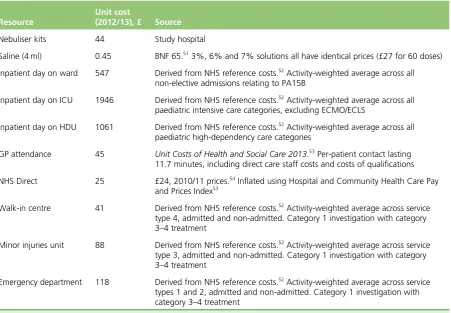
Unit costs 13
Outcomes 14
Analysis 15
Systematic review methods 15
Rationale 15
Objective 15
Protocol and registration 15
Information sources 16
Search 17
Study selection 17
Data collection process 17
Data items 17
Risk of bias in individual studies 28
Summary measures 28
Synthesis of results 28
Risk of bias across studies 29
Chapter 3Trial results 31
Recruitment and participant flow 31
Participants who were randomly assigned, received intended treatment and were
analysed for the primary outcome 31
Losses and exclusions after randomisation 31
Dates defining the periods of recruitment and follow-up 33
Why the trial ended or was stopped 33
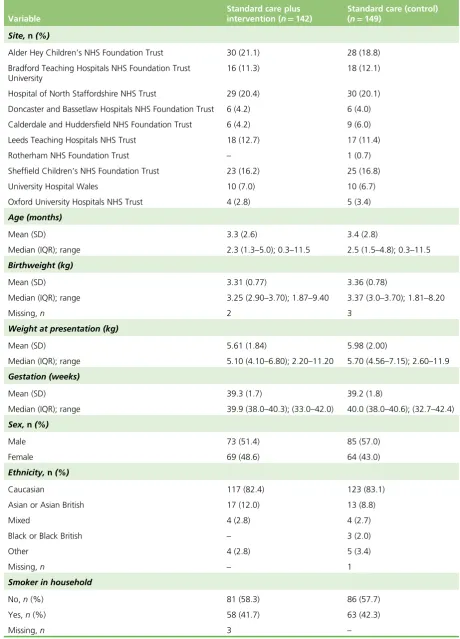
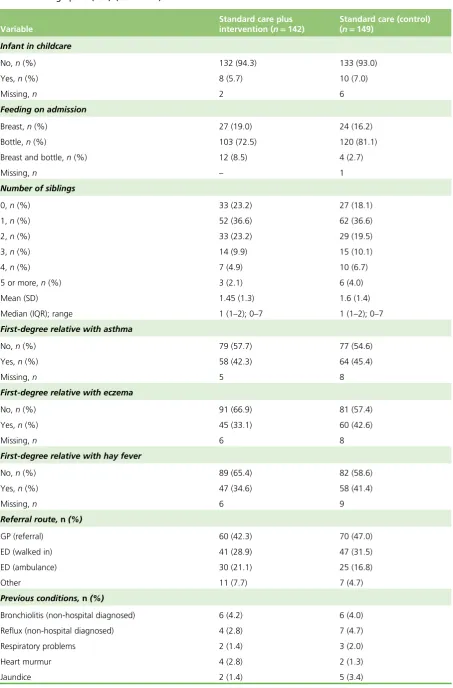
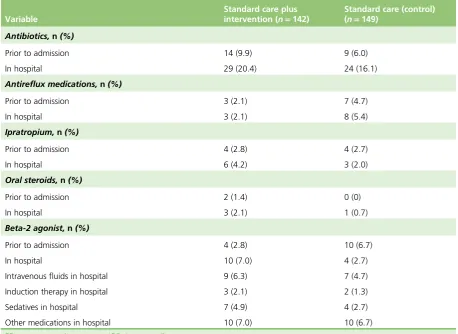
Baseline data 33
Numbers analysed 38
Outcomes and estimation 38
All important harms or unintended effects in each group 44
Impact of post-randomisation exclusions 47
Chapter 4Health economic results 49
Chapter 5Results of the systematic review 53
Study selection 53
Study characteristics 55
Risk of bias within studies 61
Results and meta-analyses 68
Primary outcome: results and synthesis 68
Secondary outcomes: results and synthesis 72
Risk of bias across studies 73
Publication bias 73
Outcome reporting bias 73
Chapter 6Discussion 77
Main findings 77
Strengths and weaknesses 77
Strengths and weaknesses of the trial 77
Strengths and weaknesses of the economic analysis 78
Strengths and weaknesses of the systematic review 79
The trial in context–other studies and differences in results 82
The SABRE study 82
Sources of heterogeneity 83
Strengths and weaknesses compared with earlier systematic reviews 85 Meaning of the study and implications for clinicians or policy-makers 86
Recommendations for future research 87
Chapter 7Conclusions 89
References 95
Appendix 1Changes to protocol 105
Appendix 2Symptom diary 109
Appendix 3Flow chart for consent and randomisation 113
Appendix 4Statistical analysis plan 115
Appendix 5PROSPERO registration 123
List of tables
TABLE 1 Data collection time points 8
TABLE 2 Unit costs 14
TABLE 3 Overview of study characteristics 18
TABLE 4 Post-randomisation exclusions 33
TABLE 5 Characteristics of recruited and non-recruited 34
TABLE 6 Demographics (FAS) 35
TABLE 7 Viral status by season 37
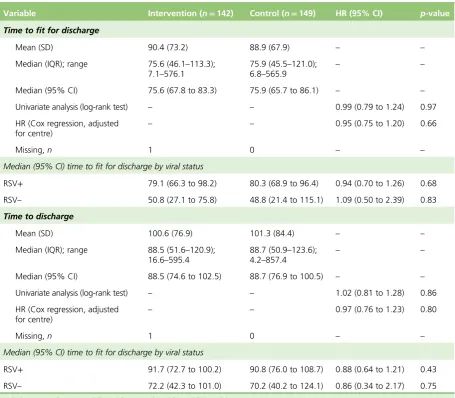
TABLE 8 Time to being declared fit for discharge and time to discharge (hours) 38
TABLE 9 Admission to HDU/ICU, readmission rates and symptoms to 28 days 41
TABLE 10 The ITQoL results 42
TABLE 11 Adverse events 44
TABLE 12 Adverse event details: saline group 44
TABLE 13 Adverse event details: standard treatment group 46
TABLE 14 Time (hours) to fit for discharge and actual discharge in the analysis
population and those excluded post-randomisation 47
TABLE 15 Resource use by group in hospital 49
TABLE 16 Resource use by group in primary care 50
TABLE 17 Total costs and QALDs 50
TABLE 18 Studies excluded at full paper review stage 54
TABLE 19 Simplified guide to interventions in studies included in meta-analysis
(n=13) 56
TABLE 20 Study characteristics; intervention and comparator–intervention group 57
TABLE 21 Study characteristics; intervention and comparator–control group 59
TABLE 22 Risk of bias assessment for included studies 62
TABLE 23 Length of hospital stay by study (primary outcome) 69
TABLE 25 The Outcome Reporting Bias In Trials (ORBIT) classification outcome matrix 76
TABLE 26 Summary of potential sources of heterogeneity as discussed in text 80
List of figures
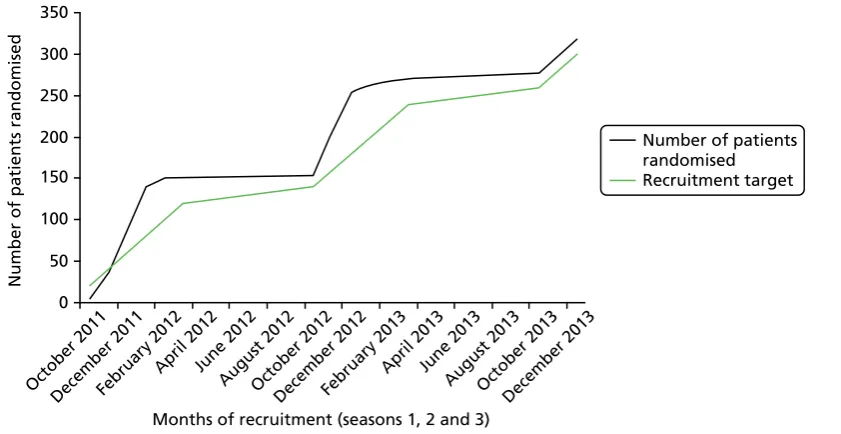
FIGURE 1 Participant recruitment curve 31
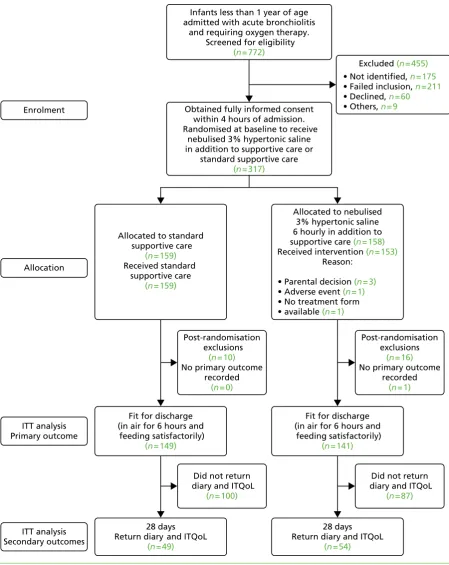
FIGURE 2 The CONSORT flow diagram 32
FIGURE 3 Cumulative survival plot for time to being declared fit for discharge 39
FIGURE 4 Cumulative survival plot for actual time to discharge 39
FIGURE 5 Cumulative survival plot for time to being declared fit for discharge by
study arm and viral status 40
FIGURE 6 Cumulative survival plot for time to being declared fit for discharge 41
FIGURE 7 The ITQoL dimensions by study group: FAS 43
FIGURE 8 Cost-effectiveness plane of nebulised saline 51
FIGURE 9 Cost-effectiveness acceptability curve for the use of nebulised saline 51
FIGURE 10 Study flow diagram 53
FIGURE 11 Risk of bias as a percentage across all studies 66
FIGURE 12 Risk of bias as a summary for all trials 67
FIGURE 13 Difference in length of hospital stay by intervention subgroup, 3% HS 70
FIGURE 14 Difference in LoS by intervention subgroup, all concentrations of HS 71
FIGURE 15 Mean final CSS scores 74
FIGURE 16 Funnel plot, difference in length of hospital stay (whole group) 75
List of boxes
List of abbreviations
AE adverse event
BNF British National Formulary
CCA cost–consequences analysis CI confidence interval
CONSORT Consolidated Standards of Reporting Trials
CSS clinical severity scale CTRU Clinical Trials Research Unit CUA cost–utility analysis
DMEC Data Monitoring and Ethics Committee
FAS full analysis set
FE fixed effect
GCP good clinical practice GP general practitioner HDU high-dependency unit
HR hazard ratio
HS hypertonic saline
HTA Health Technology Assessment ICER incremental cost-effectiveness ratio ICU intensive care unit
ITQoL Infant Toddler Quality of Life Questionnaire
ITT intention to treat LoS length of stay
MD mean difference
MeSH medical subject heading
NS normal saline
PP per protocol
QALD quality-adjusted life-day QALY quality-adjusted life-year RCT randomised controlled trial
RE random effect
RSV respiratory syncytial virus
RSV– respiratory syncytial virus negative RSV+ respiratory syncytial virus positive SABRE Saline in Acute Bronchiolitis RCT
and Economic evaluation SAE serious adverse event SD standard deviation
SIGN Scottish Intercollegiate Guidelines Network
Plain English summary
Scientific summary
Background
Acute bronchiolitis is the most common cause of hospitalisation in infancy, with 1–3% of all infants admitted in their first year. The disease is caused by a number of common respiratory viruses, especially respiratory syncytial virus (RSV), and is associated with peaks in admissions in the winter months. Infants develop signs of an upper respiratory tract infection with rhinitis followed by signs of lower respiratory tract involvement due to lower airway obstruction. More laboured breathing, hyperinflation, cough and widespread crackles on auscultation are all sometimes accompanied by wheeze. Babies are most commonly admitted to hospital with this condition between 1 and 6 months of age.
Management consists of supportive care, supplemental oxygen, minimal handling and the provision of fluids. Oxygen therapy was introduced over 60 years ago and reduced mortality rates from 20% in the 1940s to less than 1%, although acute bronchiolitis still is a major cause of infant death. Paediatric inpatient services and paediatric intensive care units (ICUs) face enormous pressure from increasing admissions for acute bronchiolitis, as admission increased from 21,330 in 2004/5 to 33,472 in 2010/11. In the UK, the median duration of admission for all acute paediatric admissions is around 1.5 days, while the mean duration of hospitalisation for acute bronchiolitis is around 3.3 days. Treatments, including oral and inhaled steroids, antiviral agents and a variety of bronchodilators, have not impacted on the course of the acute illness or decreased the duration of hospitalisation.
It has been suggested by some published studies that nebulised hypertonic saline (HS) could reduce the duration of hospitalisation and alter the course of the illness. A Cochrane review concluded that nebulised 3% HS may significantly reduce the duration of hospitalisation and may improve the clinical severity score in infants with acute viral bronchiolitis. Included studies were undertaken using a
range of therapies and comparators in a range of health-care settings. The majority of studies used 3% and 6% HS with and without a bronchodilator, with the control arm often involving nebulised normal saline (NS) with or without a bronchodilator. NS is sometimes thought to positively affect clinical outcomes and so could be considered an active comparator; older studies using distilled water as a comparator have been criticised because hypo-osmolar water could induce bronchospasm. When interpreting these studies it is important to consider that the term‘acute bronchiolitis’is used to describe phenotypically different patients in various areas of the world. The UK, Australia and a number of other countries use the definition in which widespread crackles are a characteristic, whereas in the USA and other countries it is defined by the first episode of wheezing with an apparent viral infection. Although all these patients have very similar underlying pathology, dominated by neutrophil influx into the airway, the second definition would include infants experiencing a first viral exacerbation of asthma.
Objectives
The SABRE study
The purpose of the SABRE study was to evaluate the clinical effectiveness of nebulised HS in the treatment of acute bronchiolitis. The primary objective of the study was to assess whether or not the addition of nebulised 3% HS to usual supportive care resulted in a reduction in time to being declared‘fit for
discharge’. Secondary objectives included an assessment of the impact of the intervention on other clinical outcomes and the quality of life of infants and carers at 28 days post randomisation and an investigation of the impact on outcomes between those infants with human RSV infection and those with acute bronchiolitis due to other causes, including other viruses (non-RSV).
Health economics
The objective of the health economics component was an assessment of the economic impact of the intervention on both the NHS and parents at 28 days post randomisation.
Systematic review
The objective of the systematic review was to put the SABRE study in context with other controlled trials of nebulised HS for infants hospitalised with primary acute bronchiolitis, including an assessment of heterogeneity.
Methods
The SABRE study
The trial was a parallel-group, pragmatic RCT in 10 UK hospitals. The hypothesis was that the intervention would result in a 25% reduction in the primary outcome expressed as a hazard ratio (HR), the time to when infants were assessed as being‘fit for discharge’, defined as in air with saturations of>92% for 6 hours. Secondary outcomes included actual time to discharge from randomisation [length of stay (LoS)], admission to ICU/high-dependency unit (HDU), readmissions within 28 days, duration of respiratory symptoms within 28 days, infant and parental quality of life using the Infant Toddler Quality of Life Questionnaire (ITQoL) at 28 days following randomisation and adverse events (AEs). Analysts were blind to allocation.
Health economics
The costs included in the analysis related to LoS by type of ward, readmissions, use of nebulised saline and, in primary care, general practitioner contacts, NHS Direct contacts, and attendances at NHS walk-in centres, minor injury units and emergency departments. Quality-adjusted life-years (QALYs) were estimated using an existing utility decrement derived for hospitalisation in children, together with the time spent in hospital derived from the data of the SABRE study. A cost–utility analysis was undertaken from the NHS perspective with a time frame of 36 days post randomisation. This was supplemented with a cost–consequences analysis (CCA), which considers the secondary clinical outcome measures alongside costs.
Systematic review
published trials. All searches were performed between January 2013 and January 2015. We included randomised or quasi-randomised trials which compared HS and either NS (with or without adjunct treatment) or no treatment. Two reviewers extracted data to calculate mean differences (MDs), length of hospital stay (primary outcome), clinical severity scale (CSS) score and AEs with 95% confidence intervals (CIs). Meta-analysis was undertaken in RevMan version 5.2 (The Cochrane Collaboration, The Nordic Cochrane Centre, Copenhagen, Denmark) and Stata version 12 (StataCorp LP, College Station, TX, USA) using both fixed- and random-effect models. We assessed statistical heterogeneity using theI2statistic. The
Cochrane risk of bias tool was used to assess the potential for systematic error within individual studies. Standard methods were used to assess the risk of outcome reporting bias and a funnel plot was generated to explore the possibility of publication bias.
Setting
Participants were recruited from paediatric wards and assessment units from the 10 participating centres between October 2011 and December 2013.
Participants
Randomised controlled trial and economic analysis
Previously healthy infants, aged less than 1 year, admitted to hospital with a clinical diagnosis of acute bronchiolitis and requiring supplemental oxygen therapy on admission were consented and randomised within 4 hours of admission. The following were excluded: wheezy bronchitis or asthma; gastro-oesophageal reflux; previous lower respiratory tract infections; risk factors for severe disease; carer who was not fluent in English where translation services were not available; and need for admission to HDU or ICU at the time of recruitment.
Systematic review
Controlled trials involving children up to the age of 2 years who had been hospitalised as the result of an episode of acute bronchiolitis.
Interventions
Randomised controlled trial and economic analysis
Randomisation was to standard supportive care with oxygen as required, minimal handling and fluid administration as appropriate to the severity of the disease, 3% nebulised HS approximately every 6 hours.
Systematic review
Studies evaluating nebulised HS with or without an adjunct bronchodilator treatment given versus NS or no intervention (control) with the following pre-specified subgroups:
1. nebulised HS alone versus NS
2. nebulised HS plus a bronchodilator (e.g. salbutamol) versus NS
Results
The randomised controlled trial
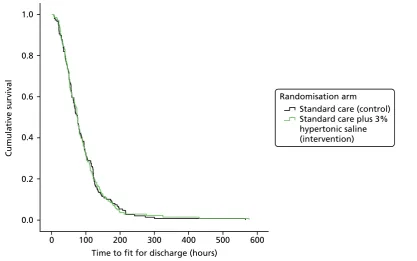
The trial recruited to target when 158 infants were randomised to HS (n=141 analysed) and 159 to standard care (n=149 analysed). There was no difference between the two arms in the time to being declared fit for discharge (HR 0.95, 95% CI 0.75 to 1.20) or to actual discharge (HR 0.97, 95% CI 0.76 to 1.23).
The median [interquartile range (IQR)] time until the infant was fit for discharge was 76.6 hours (IQR 46.1–113.3 hours) in the HS group and 75.9 hours (IQR 45.5–21.0 hours) in the standard care group. The median time until actual discharge was 88.5 hours (IQR 51.6–120.9 hours) in the HS group and 88.7 hours (IQR 50.9–123.6 hours) in the control group. Infants who were RSV positive (n=179, median 80.7 hours) took longer to be fit for discharge than RSV-negative children (n=27, median 50.8 hours, HR 1.94, 95% CI 1.24 to 3.02 hours;p=0.004), and somewhat longer to be actually discharged (median 91.1 hours vs. 72.2 hours, HR 1.47, 95% CI 0.95 to 2.28 hours;p=0.09), but we found no evidence of an interaction between viral status and treatment effect. Differences in routine practice between centres meant that viral testing was not undertaken in 79 patients.
There was no difference between treatment groups in the numbers admitted to HDU/ICU or readmitted within 28 days of randomisation. We observed no important differences in score on any of the ITQoL dimensions. There was no difference between groups in the number or severity of observed AEs. Six AEs were possibly related to saline treatment. These included one serious adverse event (SAE), bradycardia and desaturation during administration of the nebuliser, which had resolved by the following day. The remaining five non-SAEs, each of which were observed in separate subjects, were bradycardia (self-correcting), desaturation, coughing fit and increased respiratory rate (all of which were resolved within 1 day), and a chest infection which resolved after 6 days.
Health economics
When individual cost components are combined with their unit costs, the mean hospital costs were £2595 and £2727 for the control and the intervention groups, respectively. The 95% CI around the difference of £132 is–£520 to £785. QALYs were 0.0000175 greater in the intervention group but the difference was not statistically significant. Mean primary care costs for available patients were £19 and £11 in the control and the intervention groups, respectively. The difference in means was £8 (95% CI–£21 to £6;p=0.25). Given the large number of missing data, it was decided not to impute missing values or combine them with the hospital costs. With numerically higher costs (£132) and QALYs (0.0000175), the incremental cost-effectiveness ratio is approximately £7.6M per QALY gained. One-way sensitivity analyses examining different unit costs for time spent on a ward, ICU or HDU did not alter the probability that nebulised saline would be cost-effective. Across all the measures considered within the CCA, there is only one statistically significant difference between the study arms, relating to the family cohesion domain of the ITQoL. Given the uncertainties and biases associated with this result, the robustness of this difference is open to question.
Systematic review
In 15 trials (n=1922), HS reduced mean LoS by–0.36 days (95% CI–0.50 to–0.22 days). Risk of bias and high levels of heterogeneity (I2=78%) in the main analysis and one out of four intervention
subgroups suggest that the result should be treated cautiously. A reduction in CSS (five trials,n=516, MD–1.36, 95% CI–1.52 to–1.20) should also be treated cautiously. None of the trials reported intervention-related SAEs.
Conclusions
The SABRE study
The addition of nebulised HS to good supportive care when treating infants admitted to hospital with acute bronchiolitis does not appear to cause any harm but confers no benefit.
Health economics
The economic analysis used two forms of analysis to consider the cost-effectiveness of nebulised HS in this patient population. The cost–utility analysis suggests that the intervention cannot be considered cost-effective. Taking a broader view of benefits that includes any of the primary and secondary outcomes measures does not appreciably alter this conclusion.
Systematic review
The systematic review suggests that there is too much heterogeneity to make a pooled estimate of effect across thirteen studies of inpatient care a useful basis for decision-making, and it shows that large studies, and those from northern Europe, have negative results which support the findings of the SABRE study.
Future work
Potentially beneficial interventions such as high-flow oxygen therapy and others to be identified in the future should be subject to high-quality randomised trials before any recommendations regarding practice are made.
Study registration
This study is registered as ClinicalTrials.gov NCT01469845 and PROSPERO CRD42014007569.
Funding
Chapter 1
Introduction
A
cute bronchiolitis is the most common reason for hospitalisation in infancy and childhood, with 1–3% of all infants being admitted to hospital during their first winter.1–9Common respiratory virusesinfecting the lungs lead to severe difficulties in breathing by causing obstruction of the airways.1–8,10–13
The age of peak incidence of babies admitted with this condition is between 1 and 6 months.9The acute
illness is distressing for the infant and is associated with considerable stress for parents of an acutely unwell small infant.
The only intervention that has had a major impact on the survival of infants in the last 40 years of research is oxygen therapy, which has reduced mortality rates from around 20% to less than 1%.14Otherwise,
current treatment consists of providing good supportive care until the infant recovers.4,15,16Admissions for
bronchiolitis increased from 21,330 in 2004/5 to 33,472 in 2010/11,17placing enormous strains on
paediatric services and intensive care units (ICUs)4,8,18which sometimes have to close because of the
number of infants with acute bronchiolitis.18–20Despite many putative candidates, including antiviral
agents, inhaled steroids and bronchodilators, no treatment other than oxygen therapy has been shown to have an impact on the course of the acute illness and an effective vaccine still appears some way off. The median duration of hospitalisation in the UK is around 3 days, which compares with a median of 1 day for all acute paediatric admissions. This relatively long duration of hospital stay combined with the large number of such infants admitted to hospital between November and March accounts for the substantial burden on hospital services resulting from the yearly winter epidemics.
At the time we were preparing the grant application for this project, a number of relatively small studies had suggested that nebulised hypertonic saline (HS) may reduce the duration of hospital stay for infants admitted with acute bronchiolitis.21–24A Cochrane review, published in 2008,25undertook a systematic
review of the literature, focusing on four trials which involved a total of 254 infants with acute viral bronchiolitis ,of whom 189 were inpatients and 65 patients were treated in the emergency department. The review concluded that‘current evidence suggests nebulised 3% saline may significantly reduce the length of hospital stay and improve the clinical severity score in infants with acute viral bronchiolitis.’25
The conclusions do not go beyond suggesting that this intervention may have an impact because
of the methodological limitations of the included studies and the potential for publication bias. The review noted that the conclusions are further limited by the small number of subjects included in each study and consequent low power; the different settings since inpatients and outpatients were included; and the failure to show a difference in some outcomes such as the failure to reduce hospitalisation in the outpatient groups. Despite these limitations, some hospitals in the UK had already adopted this approach to treatment by the time we started the SABRE (Saline in Acute Bronchiolitis RCT and Economic evaluation) trial. The subsequent development of the evidence base is discussed inChapter 6,Strengths and weaknesses compared with earlier systematic reviews.
The suggested mode of action of HS is through an alteration in mucus rheology as a result of improved hydration and the breaking of ionic bonds within the mucus, leading to improvements in mucociliary clearance of secretions.26,27The observation that HS can increase ciliary beat frequency may further
enhance clearance.26It is also suggested that this intervention reduces mucosal wall oedema through
osmotic effects. There is good evidence that bronchoconstriction does not contribute significantly to the airways obstruction in infants with acute bronchiolitis, which explains why bronchodilators do not provide any benefit.28–31Instead, the obstruction appears to be in part because of oedema within the airway
In contrast to these positive studies, a recent Canadian study based in an emergency department found no benefit when nebulised 3% HS was added to‘usual care’,32while a second study from Turkey,33
again involving non-hospitalised children, found that 3% HS offered no advantage over nebulised normal saline (NS) in addition to‘usual’care. In both cases the intervention was in addition to the use of bronchodilators. Understanding the differences between terminology for bronchiolitis used in North America and that used in the UK is key to understanding why these studies might be predicted to have a negative outcome and are not directly relevant to UK practice.
In North America, and a number of other countries, the term‘acute bronchiolitis’is generally used to describe an apparent viral infection in an infant or young child who is experiencing their first episode of wheeze.2,5,34In the UK, Australia and some northern European countries, the key feature of acute
bronchiolitis is the presence of widespread crepitations on auscultations rather than wheeze, which may or may not be present.2,4,34In general, those patients with wheezing illnesses labelled as acute bronchiolitis
are somewhat older (mean 9–15 months)35–37than infants admitted in the UK with acute bronchiolitis,
among whom the peak age for admissions is around 4 months of age.35,38–41
The clinical phenotype of subjects included in a study has been shown to be important not just in the acute illness but in terms of subsequent morbidity, with those having the North American phenotype being much more likely to be subsequently shown to have asthma than those with acute bronchiolitis as defined in the UK, which is not associated with development of atopic asthma.35,42
These subtle but very important differences in inclusion criteria are likely to explain some previous apparently contradictory results in this area. For example, some,36,37but not all, studies assessing the
possible efficacy of nebulised adrenaline in treating young children with acute bronchiolitis in North America have had a positive outcome, but when trialled in the UK and Australia nebulised adrenaline was found to be ineffective and was associated with potential side effects.38,39In contrast to
experience with bronchodilators, it is possible that HS will be more effective in acute bronchiolitis as understood in the UK in that its putative modes of action would address the dominant mechanisms of airways obstruction in these patients, while it would be expected to have little or no effect in those with wheeze in whom there was significant bronchoconstriction. The studies from Canada and Turkey included children in an outpatient setting with an inclusion criterion of wheeze. Predictably, their mean age was significantly higher than that of the population admitted to UK units with‘acute
bronchiolitis’and they represent a different phenotype, often referred to in the UK as wheezy bronchitis or virus-associated wheezing.
The observation that the greatest benefit from the use of nebulised HS appears to be in hospitalised infants with a similar age distribution (peak 2–6 months)28–30to that seen in UK centres22–24would
support the potential of this approach in a well-defined UK population of infants admitted with acute bronchiolitis. Moreover, the mean duration of stay in the control group in all three studies was 3.5 days, again consistent with UK practice. The reduction in duration of inpatient stay in the three positive studies was 25–27%.28–30
In the light of the uncertainties surrounding this potential valuable therapy, it was essential to undertake an appropriately powered study in a clearly defined UK population to determine whether or not there is indeed reason for UK paediatric units to adopt this approach or if it should simply be added to the list of potential therapies known not to have a significant clinical impact. The importance of undertaking such a study had been recognised both by the Paediatric Respiratory Studies Group and by observers in countries with similar health-care systems and diagnostic criteria, such as Australia.43
Research objectives
The purpose of the trial was to evaluate the clinical effectiveness and cost-effectiveness of nebulised HS in the treatment of acute bronchiolitis. The trial had one main objective and three secondary objectives.
Primary objective
The primary objective of the study was to assess whether or not the addition of nebulised 3% HS to usual supportive care resulted in a reduction in time to being declared fit for discharge.
Secondary objectives
1. Assessment of the impact of the intervention on other clinical outcomes and the quality of life of infants and carers at 28 days post randomisation.
2. Investigation of the impact on outcomes between those infants with human respiratory syncytial virus (RSV) infection and those with acute bronchiolitis due to other causes, including other viruses
(non-RSV).
Chapter 2
Methods
T
here are three sections to this chapter:The SABRE study methods,Health economic methodsand Systematic review methods.This report is concordant with the 2010 Consolidated Standards of Reporting Trials (CONSORT) statement.44
The SABRE study methods
Trial design
The SABRE study was a multicentre, parallel-group randomised controlled trial (RCT), with a one-to-one allocation ratio and economic evaluation. It aimed to determine whether or not the addition of nebulised 3% HS to usual care resulted in significant (25%) reduction in the duration of hospitalisation of infants with acute bronchiolitis. Subjects were recruited from the paediatric wards and assessment units of the participating centres in England and Wales between October 2011 and December 2013. A table of changes made to the protocol over the course of the project is presented inAppendix 1.
Important changes to methods after trial commencement
Substantial amendment 1
The primary outcome definition for fit for discharge was amended from 12 hours to 6 hours. After discussion with participating centres it was felt that 12 hours did not reflect current practice. This was agreed by the trial management group (TMG) and the chairperson of the trial steering committee (TSC). The time allowed to obtain full informed consent was also amended from 60 minutes to 90 minutes after agreement at a TMG that 90 minutes would be more practical in the clinical setting.
Minor amendment 3
It was clarified that‘the saline will be discontinued once oxygen therapy has been discontinued’as this had not been explicitly stated in the protocol previously. Clarification of one of the inclusion criteria was also provided,‘Requiring supplemental oxygen therapy on admission’. Clarification of the wording for admissions to high-dependency unit (HDU)/ICU was provided,‘Admission per se of a study participant to the HDU and/or ICU as a result of normal clinical diagnosis of acute bronchiolitis will be reported as an expected event not as [a serious adverse event]’.
Minor amendment 5
We further clarified when saline should be discontinued after discussion at a TMG meeting–the wording was amended from‘the saline will be discontinued once oxygen therapy has been discontinued’to‘the saline will be discontinued once the“fit for discharge”criterion has been met–in air for 6 hours with oxygen saturations of at least 92% and feeding satisfactorily’.
Substantial amendment 6
The protocol was simplified to ensure that eligible babies who were admitted on oxygen were recruited within 90 minutes of admission. The web-based randomisation system was altered to request the time of admission in order to raise an alert if health professionals tried to randomise outside the 90-minute window.
Substantial amendment 7
Substantial amendment 8
The eligibility criteria for inclusion of patients in the trial were extended. Previously, in order for patients to be eligible for inclusion in the trial, they were required to be consented and randomised within 90 minutes of a decision to admit a patient to an inpatient ward. This amendment extended the time-based eligibility criteria to 4 hours. This change was proposed for two main reasons: first, a substantial number of included trial patients were retrospectively identified as protocol violations because of being randomised outside this 90-minute cut-off point (approximately 50 out of 172 patients randomised); and, second, there is no clinical rational basis for assuming that patients randomised in less than 90 minutes and patients randomised between 90 minutes and 4 hours are clinically different. Previous inpatient trials of saline in paediatric acute bronchiolitis have not included a strict time-based cut off for inclusion, as was operated in this study. This extension of eligibility was supported by the funder for the study [Health Technology Assessment (HTA) programme] and it also had the support of the study sponsor.
Participants and eligibility criteria
The target population was infants less than 12 months of age admitted to hospital with a clinical diagnosis of acute bronchiolitis and requiring supplemental oxygen as part of routine supportive care. Subjects were recruited from paediatric wards and assessment units from the 10 participating centres between October 2011 and December 2013.
Inclusion criteria
l Previously healthy infants less than 1 year of age.
l Admitted to hospital with a clinical diagnosis of acute bronchiolitis, following the UK definition of an infant with an apparent viral respiratory tract infection associated with airways obstruction manifest by hyperinflation, tachypnoea and subcostal recession with widespread crepitations on auscultation.4
Admission was defined as the point the paediatrician, or paediatric advanced nursing practitioner, made the decision to admit. (The perspective at the time was that advanced nursing practitioners were equivalent of specialty trainee 1–specialty trainee 3/senior house officer).
l Requiring supplemental oxygen therapy on admission (either the infant was already in oxygen or oxygen was recommended at the point of admission).
l Consented and randomised within 4 hours of admission.
Exclusion criteria
l Had wheezy bronchitis or asthma–children with an apparent viral respiratory infection and wheeze with no or only occasional crepitations.
l Had gastro-oesophageal reflux (if investigated and diagnosed in hospital).
l Had previous lower respiratory tract infections (which required assessment in hospital).
l Had risk factors for severe disease (gestation of<32 weeks, immunodeficiency, neurological and cardiac conditions, chronic lung disease).
l Subjects for whom the carer’s English was not fluent and translational services were not available. l Required admission to HDUs or ICUs at the time of recruitment.
The principal ethical consideration was that the subject group were unable to provide their own consent, but this is an issue for all paediatric studies involving infants and young children. For this study there were no known risks associated with the intervention and the participating units were very familiar with the ethical challenges in this population.
Every effort was made to avoid protocol non-compliances caused by the randomisation of participants outside the time window (seeImportant changes to methods after trial commencement). Participating centres were asked to note the following:
l In the case that the person consenting was called away in an emergency before randomising, the centre was not to then attempt to randomise the patient if this would take place outside 4 hours from admission.
l Patients were not to be randomised without written consent. The randomisation system requested that randomising clinicians confirm that the parent/carer has provided consent for participation in the study.
Settings and locations where the data were collected
The data used in this study came from the following sources:
l for patients who were eligible for randomisation into the study (including patients who were randomised):
¢ patient recruitment form, which contained the age, sex and details regarding entry criteria
l for patients who were randomised into the study:
¢ randomisation schedule, which contained randomisation codes and allocated intervention group ¢ case report form, which contained patient demographics, characteristics at presentation,
investigations and events during treatment, assessment of‘fit for discharge’, resource use and adverse events (AEs) over subsequent 28 days
¢ post-discharge data collection forms, comprised of the symptom and health service utilisation diary.
Interventions
Infants were randomly allocated to either standard supportive care (control) or standard supportive care plus nebulised 3% HS solution (intervention) using a remote access, computer-generated allocation algorithm.
Three per cent HS is licensed as a medical device in the UK under the brand name MucoClear®(PARI
GmbH, Starnberg, Germany) and is indicated for the mobilisation of secretions in the lower respiratory tract in patients with persistent mucus accumulation such as those with acute bronchiolitis or cystic fibrosis. It was presented as a 4-ml plastic ampoule for nebulisation and came in packs of 20 or 60. The product contained no preservatives and had an expiry date of 3 years from manufacture. The product was administered via the PARI Sprint nebuliser (PARI Medical Ltd, Surrey, UK). The dose was 4 ml every 6 hours, in accordance with previously published studies. It was administered by a nurse, with infants inhaling the aerosolised saline. The saline was discontinued once the fit for discharge criteria had been met–in air for 6 hours with oxygen saturations of at least 92% and feeding satisfactorily.
For the purpose of this trial, MucoClear®3% was sourced by and dispensed locally from each site’s
pharmacy department. Although this was not a clinical trial of a medicinal product and therefore not subject to the Medicines for Human Use (Clinical Trials) Regulations 2004,45the principal investigator in
conjunction with his or her local pharmacy department ensured that the principles of good clinical practice (GCP) were applied to ensure robust accountability of the supply and administration of 3% HS.
Other medications
There is no proven drug therapy for the treatment of bronchiolitis. Antipyretics (paracetamol and/or
ibuprofen) are recommended for pyrexia and pain management. Nappy rash cream, alginic acid, aluminium hydroxide, magnesium carbonate (Gaviscon®, Reckitt Benckiser), sodium chloride (Dioralyte, A Nattermann
& Cie GmbH Cologne, Germany) and lactulose (and related generic medications) were permitted. Saline was continued if bronchiolitis remained the primary diagnosis. Antibiotics were permissible for suspected secondary bacterial infections (e.g. based on radiographic changes). It is routine clinical practice to
discontinue antibiotics previously prescribed by general practitioners (GPs). Antibiotics are not recommended in any‘bronchiolitis’guideline, including the Scottish Intercollegiate Guidelines Network (SIGN) UK guideline,4
and published data have suggested their use has been associated with a significant level of AE with no discernible benefit.
Outcomes
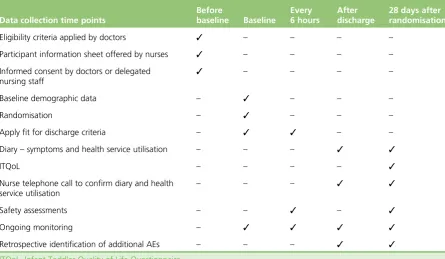
Table 1shows the timing of outcome assessments.
Primary end point
The primary outcome was time to‘fit for discharge’, and was taken as the period of time from randomisation to when the infant was judged to be feeding adequately (taking>75% of usual intake orally) and had been in air with oxygen saturations of at least 92% for 6 hours, to reflect clinical practice.4
An oxygen saturation level of less than 92% as the trigger for starting supplemental oxygen is conservative by US standards.5The reasons for choosing time to fit for discharge as the primary end point were
[image:38.595.84.530.414.673.2]twofold: first, its objectivity [actual length of stay (LoS) is influenced by policy, the timing of ward rounds and other features not directly related to bronchiolitis]; and, second, because of its direct relevance both to patients and to service providers.
TABLE 1 Data collection time points
Data collection time points
Before
baseline Baseline
Every 6 hours
After discharge
28 days after randomisation
Eligibility criteria applied by doctors ✓ – – – – Participant information sheet offered by nurses ✓ – – – – Informed consent by doctors or delegated
nursing staff
✓ – – – –
Baseline demographic data – ✓ – – –
Randomisation – ✓ – – –
Apply fit for discharge criteria – ✓ ✓ – – Diary–symptoms and health service utilisation – – – ✓ ✓
ITQoL – – – – ✓
Nurse telephone call to confirm diary and health service utilisation
– – – ✓ ✓
Safety assessments – – ✓ – ✓
Ongoing monitoring – ✓ ✓ ✓ ✓
Retrospective identification of additional AEs – – – ✓ ✓
Secondary end points
l Actual time to discharge, from randomisation. l Admission to ICU/HDU.
l The number of readmissions and the reasons for readmission within 28 days of randomisation. l Duration of respiratory symptoms post discharge and within 28 days of randomisation
(seeAppendix 2).
l Health-care utilisation, after discharge and within 28 days of randomisation (seeAppendix 2). l Infant and parental quality of life, using the Infant Toddler Quality of Life Questionnaire (ITQoL) at
28 days following randomisation.46
l AEs.
Fitness for discharge was assessed at baseline, then six times hourly until‘fit for discharge’criteria had been met. Research nurses recorded baseline demographic data, co-interventions and outcome data on the case report form. Research nurses also collected basic anonymised details (e.g. age, reason for admission) on all eligible patients to allow completion of a CONSORT flow chart. To assess worsening of condition since discharge and maximise completeness of data, research nurses telephoned parents/guardians approximately 14 days after randomisation. Non-responders after the 28 days were contacted by the research nurse and sent a further ITQoL if appropriate. The involvement of parents/guardians and infants ended at this point.
Readmission was defined as any readmission to hospital within 28 days of randomisation. These have been tabulated by study group and are further classified according to whether or not the readmission was related to the original bronchiolitis or was a new presenting complaint.
The ITQoL is a standardised quality-of-life questionnaire that has been validated for use in infants aged 2 months to 5 years.46The questionnaire was completed by a parent or guardian. It covered nine
domains–six for the child and three for the parent–each of which was scored from 0 (worst health) to 100 (best health). It had been used successfully in a respiratory illness sample similar to this study, with a response rate of 79.7%.46
Site trial staff and delegated NHS staff were responsible for recording all AEs that occurred during routine clinical care and making them known to the principal investigator. AEs were recorded on the case report form and database, but did not need to be reported by fax to the sponsor and Clinical Trials Research Unit (CTRU). AEs and serious adverse events (SAEs) were reported regularly in data reports to the oversight committees. Admission per se of a study participant to the HDU and/or ICU as a result of normal clinical diagnosis of acute bronchiolitis was reported as an expected event not as a SAE. The sponsor and CTRU were responsible for assessing the seriousness and reporting to relevant regulatory bodies, where appropriate.
Changes to trial outcomes after the trial commenced, with reasons
Substantial amendment 1
Sample size
Based on the current mean time to discharge of around 3 days, we felt that a 25% reduction would be the minimum clinically significant effect, and this was the magnitude of the effect observed in previous studies.47As LoS varies considerably across different settings, we used UK Hospital Episode Statistics data
as the basis of our sample size justification. Assuming a log-normal distribution, the standard deviation (SD) was estimated at 32 hours. While a similar, or smaller, SD was expected for our primary outcome measure, a slightly inflated SD of 46 hours was used because of uncertainties over its derivation here. In order to have 90% power to detect a 25% difference in time to meeting discharge criteria, the study needed 139 patients per group at a two-sidedα-level of 5%. The dropout rate was thought to be negligible for the analysis of the primary outcome measure and therefore a conservative estimate of sample size was 150 patients per group. Overall, 10 centres recruited patients to the study. Targets of 25 participants for district general hospitals and 40 participants for teaching hospitals were set.
Explanation of any interim analyses and stopping guidelines
The Data Monitoring and Ethics Committee (DMEC) charter allowed the study to be stopped prematurely on the grounds of safety or futility based on recommendations from the DMEC or the funder. No formal interim analyses were planned for efficacy and consequently no adjustment was initially made for
multiplicity. At the request of the DMEC, one interim analysis was subsequently undertaken in July 2012 to assess efficacy, in order to inform a funding extension decision necessitated by recruitment being slower than expected. An O’Brien–Fleming stopping rule was retrospectively employed in which superiority would be declared if statistical significance was demonstrated at the 1% level in the interim analysis or at the 4.5% level at the final analysis.48The DMEC had the authority to recommend that recruitment to the study
should be terminated if the primary outcome (time to fitness for discharge) was significantly shorter in the saline group at theα=1% level of statistical significance.
Method used to generate the random allocation sequence
A central web-based randomisation service delivered by the CTRU was used after patient eligibility and written consent were confirmed. Patients were randomly allocated via the online system to receive either (1) nebulised HS with usual care (n=150) or (2) usual care (n=150). The randomisation schedule was computer generated prior to the study by the CTRU Randomisation Service.
Type of randomisation; details of any restriction (such as blocking and block size)
Participants were individually randomised using centralised, web-based randomisation system. Randomisation was conducted in randomly ordered blocks of size 2, 4 or 6, stratified by hospital.
Allocation concealment mechanism
The allocation schedule was concealed through the use of the centralised web-based randomisation service, which also allowed unblinding in the case of emergency. The randomisation sequence was not revealed to any person involved in patient recruitment. The data analysts were blind to treatment allocation until after the statistical analysis plan was finalised, the database locked and the data review completed. All unblinding (emergency and end of trial) would have been automatically logged by the CTRU randomisation system, which would have included the date, time and user responsible.
Sequence generation, enrolment and assignation
The randomisation sequence was computer generated and was not revealed to any person involved in patient recruitment. Recruitment was undertaken by GCP-trained trainee paediatricians, consultants or staff with equivalent training (e.g. GCP-trained paediatric nursing staff responsible for acute admissions). They approached parents/guardians to discuss the study at the point of first contact as soon as the
A flow chart detailing the consent and randomisation procedure can be found inAppendix 3. Owing to the acute nature of the condition, it was not possible to follow a usual time frame of at least 24 hours between receiving information and giving written informed consent. However, every opportunity was taken to ensure that parents/guardians fully understood the implications of taking part in our study. They were invited to ask questions and reflect prior to signing the informed consent document. No payment was offered to participants. The recruiter entered the participant’s details onto an online system and was asked the following:
l to confirm written consent was received l to confirm the participant was in oxygen
l to enter the time a paediatrician or paediatric advanced nursing practitioner made the decision to admit.
Participants were then randomly allocated via the online system to receive either (1) nebulised HS with usual care (n=150) or (2) usual care (n=150). The allocation was explained to participants by the hospital staff member obtaining consent.
Blinding
The study compared the intervention plus usual care with usual care alone, with no placebo. The use of placebo in this setting is ethically problematic as it would result in infants in the placebo arm receiving an intervention that may have a significant effect on outcome. The extra handling involved in nebulised therapy may have a deleterious effect, as has been shown to be associated with the increased handling associated with physiotherapy.49Similarly, the placebo agent may cause harm, as has been suggested in
previous studies using nebulised distilled water, or may have an unexpected positive impact for an agent, such as NS.32
The randomisation codes were stored electronically on the CTRU randomisation system. All other electronic data were held separately on the CTRU database system. Access to any data that would unblind the study was limited to members of the CTRU who were independent of the trial. All summaries presented to the DMEC were by treatment group. In order to maintain the blinding of the trial statistician, it was the responsibility of the CTRU to provide this by-treatment group information to the DMEC. No member of the study team had access to unblinded data sets or the unblinded reports until the final analyses.
Statistical methods
The detailed statistical analysis plan can be found inAppendix 4. As time to being declared ready for discharge could be regarded as a survival time, initial differences between groups were assessed using the log-rank test. In order to adjust for centre, a Cox proportional hazards regression model was used with centre fitted as a fixed effect (FE). One centre, Rotherham NHS Foundation Trust, randomised one patient: for the purposes of adjusting for centre, this patient was combined with those recruited from Doncaster and Bassetlaw Hospitals NHS Foundation Trust, given the similarities that exist between these two geographically proximate populations in south Yorkshire. The proportionality of the hazards was assessed by examining the scatter of scaled Schoenfeld residuals against time.50This model was further extended by inclusion of
viral status (RSV vs. non-RSV) to allow an examination of whether or not viral status had an impact on the effectiveness of treatment. In order to answer this question, the coefficient for the interaction between infection group (RSV vs. non-RSV) and treatment group was calculated together with its 95% confidence interval (CI) andp-value. The collection of RSV test data was not a protocol requirement and such data were not collected at any particular centre except as part of routine practice.