InTrans Project Reports Institute for Transportation
1-2004
Developing an effective construction training
program for Hispanic supervisors and craft workers
Edward J. JaselskisIowa State University E. Thomas Cackler
Iowa State University, [email protected] Charles T. Jahren
Iowa State University, [email protected] Augusto Canales
Iowa State University Mauricio Arbelaez Iowa State University
Follow this and additional works at:http://lib.dr.iastate.edu/intrans_reports
Part of theCivil Engineering Commons
This Report is brought to you for free and open access by the Institute for Transportation at Iowa State University Digital Repository. It has been accepted for inclusion in InTrans Project Reports by an authorized administrator of Iowa State University Digital Repository. For more information, please [email protected].
Recommended Citation
Jaselskis, Edward J.; Cackler, E. Thomas; Jahren, Charles T.; Canales, Augusto; and Arbelaez, Mauricio, "Developing an effective construction training program for Hispanic supervisors and craft workers" (2004).InTrans Project Reports. 40.
Developing an effective construction training program for Hispanic
supervisors and craft workers
Abstract
Hispanics make up a growing percentage of the craft workers entering the construction industry, and this has created several challenges for American construction companies. This study addresses the situation by investigating training needs for Hispanic construction craft workers and developing a training program for them within the industry. In order to evaluate current craft workers' conditions within the construction industry, Iowa State University researchers conducted a survey, with 98 Hispanic craft workers as respondents from 10 construction companies, to determine current working conditions. The results confirm that the language barrier is an obstacle for both the Hispanic workers and the English-speaking employees involved in construction projects. As a part of this research, two training courses were designed to help both American construction companies and their Hispanic labor force to overcome the barriers that keep them from succeeding safely and productively. A training course titled, "English as a Second Language Survival Course", was developed to facilitate basic communication between Hispanic workers and their American supervisors using construction-focused terminology. This course was delivered once as a trial run for a two-hour duration and twice for a full-length duration of eight hours. Important feedback was obtained from participants as part of the evaluations of the course. "How much of the course contents will be useful in your working
environment" was asked; 40% of workers said "all of it" and 60% of workers said "most of it." Another question was "Was it worth taking the time to attend the course?" to which 94% answered "definitely" and 6% answered "yes." A second training course titled, "Stepping Up to Supervisor Course for Hispanic Construction
Workers", was also developed to provide an effective tool to help companies promote those Hispanic craft workers whose willingness and skills meet the requirements to advance to a supervisory position in an American construction company. This course will be offered in the spring of 2004.
Keywords
Communication, Construction and maintenance personnel, Employees, Hispanics, Labor force, Language, Road construction workers, Supervisors, Surveys, Training programs
Disciplines Civil Engineering
D
EVELOPING
AN
E
FFECTIVE
C
ONSTRUCTION
T
RAINING
P
ROGRAM
FOR
H
ISPANIC
S
UPERVISORS
AND
C
RAFT
W
ORKERS
Sponsored by
the Iowa Department of Transportation
Final Report January 2004
CTRE Project 03-132
The opinions, findings, and conclusions expressed in this publication are those of the authors and not necessarily those of the Iowa Department of Transportation.
Technical Report Documentation Page
1. Report No. 2. Government Accession No. 3. Recipient’s Catalog No.
CTRE Project 03-132
4. Title and Subtitle 5. Report Date
January 2004
6. Performing Organization Code
Developing an Effective Construction Training Program for Hispanic Supervisors and Craft Workers
7. Author(s) 8. Performing Organization Report No.
Edward Jaselskis, E. Thomas Cackler, Charles T. Jahren, Augusto Canales, and Mauricio Arbelaez
9. Performing Organization Name and Address 10. Work Unit No. (TRAIS)
11. Contract or Grant No.
Center for Transportation Research and Education Iowa State University
2901 South Loop Drive, Suite 3100 Ames, IA 50010-8634
12. Sponsoring Organization Name and Address 13. Type of Report and Period Covered
Final Report
14. Sponsoring Agency Code
Iowa Department of Transportation 800 Lincoln Way
Ames, IA 50010
15. Supplementary Notes
16. Abstract
Hispanics make up a growing percentage of the craft workers entering the construction industry, and this has created several challenges for American construction companies. This study addresses the situation by investigating training needs for Hispanic construction craft workers and developing a training program for them within the industry. In order to evaluate current craft workers’ conditions within the construction industry, Iowa State University researchers conducted a survey, with 98 Hispanic craft workers as respondents from 10 construction companies, to determine current working conditions. The results confirm that the language barrier is an obstacle for both the Hispanic workers and the English-speaking employees involved in construction projects.
As a part of this research, two training courses were designed to help both American construction companies and their Hispanic labor force to overcome the barriers that keep them from succeeding safely and productively. A training course titled English as a Second Language Survival Course was developed to facilitate basic communication between Hispanic workers and their American supervisors using construction-focused terminology. This course was delivered once as a trial run for a two-hour duration and twice for a full-length duration of eight hours. Important feedback was obtained from participants as part of the evaluations of the course. “How much of the course contents will be useful in your working environment” was asked; 40% of workers said “all of it” and 60% said “most of it.” Another question was “Was it worth taking the time to attend the course?” to which 94% answered “definitely” and 6% answered “yes.”
A second training course titled Stepping Up to Supervisor Course for Hispanic Construction Workers was also developed to provide an effective tool to help companies promote those Hispanic craft workers whose willingness and skills meet the requirements to advance to a supervisory position in an American construction company. This course will be offered in the spring of 2004.
17. Key Words 18. Distribution Statement
construction training program—Hispanic workforce—language barriers No restrictions.
19. Security Classification (of this report)
20. Security Classification (of this page)
21. No. of Pages 22. Price
D
EVELOPING AN
E
FFECTIVE
C
ONSTRUCTION
T
RAINING
P
ROGRAM FOR
H
ISPANIC
S
UPERVISORS AND
C
RAFT
W
ORKERS
CTRE Project 03-132
Principal Investigator Edward Jaselskis Associate Professor
Department of Civil, Construction and Environmental Engineering, Iowa State University
Co-Principal Investigators E. Thomas Cackler
Associate Director for Construction Research and Advanced Technology Center for Transportation Research and Education, Iowa State University
Charles T. Jahren Professor-in-Charge
Department of Civil, Construction and Environmental Engineering, Iowa State University
Research Assistants
Augusto Canales and Mauricio Arbelaez
Author Augusto Canales
Preparation of this report was financed in part
through funds provided by the Iowa Department of Transportation through its research management agreement with the
Center for Transportation Research and Education.
Center for Transportation Research and Education Iowa State University
2901 South Loop Drive, Suite 3100 Ames, IA 50010-8634
Phone: 515-294-8103 Fax: 515-294-0467 www.ctre.iastate.edu
iii
TABLE OF CONTENTS
ACKNOWLEDGMENTS ... VII
EXECUTIVE SUMMARY ... IX
1. INTRODUCTION ...1
1.1. Background ...1
1.2. Problem Statement ...2
1.3. Project Objectives ...2
1.4. Definition of Terms...3
1.5. Economic Justification...3
1.6. Report Organization...3
2. LITERATURE REVIEW ...4
2.1. Background ...4
2.2. Overview and Trends of the Hispanic Population in the United States...4
2.3. Hispanics and the U.S. Labor Force ...6
2.3.1. Foreign-born Workers in the United States ...6
2.3.2. The Construction Industry and the U.S. Economy ...8
2.3.3. Management Goals through Training ...8
2.4. Summary of Available Training Material for Hispanic Construction Workers ...9
2.4.1. Training Programs ...10
2.5. Description of Cultural Differences between American and Hispanic Cultures Embedded in the Course Contents...12
2.6. Concluding Remarks...15
3. RESEARCH METHODOLOGY...17
3.1. Introduction...17
3.2. Questionnaire Design, Data Collection, and Data Analysis, Evaluation, and Results19 3.3. Training Courses...29
3.3.1. English as a Second Language Survival Course...29
3.3.2. Stepping Up to Supervisor Course for Hispanic Construction Workers ...30
3.4. Concluding Remarks...31
4. TRAINING COURSE DEVELOPMENT ...32
4.1. Introduction...32
4.2. Systematic Approach for Training Course Development...32
5. TRAINING COURSE CONTENTS...36
5.1. English as a Second Language Survival Course...36
iv
5.3. Training Course Effectiveness...53
6. CONCLUSIONS AND RECOMMENDATIONS ...55
REFERENCES ...58
Appendix A: Questionnaire for Hispanic Construction Workers
Appendix B: Results of Questionnaire for Hispanic Construction Workers Appendix C: English as a Second Language Survival Course
Appendix D: Stepping Up to Supervisor Course for Hispanic Construction Workers
v
LIST OF FIGURES
Figure 2.1. Hispanic population growth from 1990 to 2000 by group ...5
Figure 2.2. Hispanic population in Iowa: 2000 actual vs. 1995–2025 projections ...6
Figure 2.3. Fatal injuries by event of exposure and ethnic group (2001 data) ...7
Figure 2.4. Comparison between Mexico and United States according to power distance...13
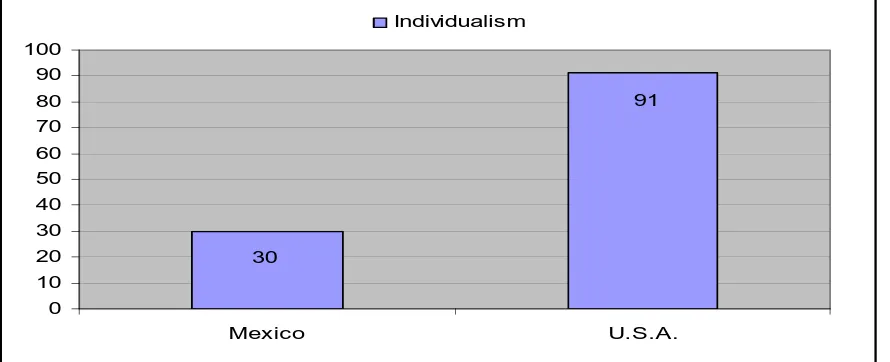
Figure 2.5. Comparison between Mexico and United States according to individualism...13
Figure 2.6. Comparison between Mexico and United States according to masculinity ...14
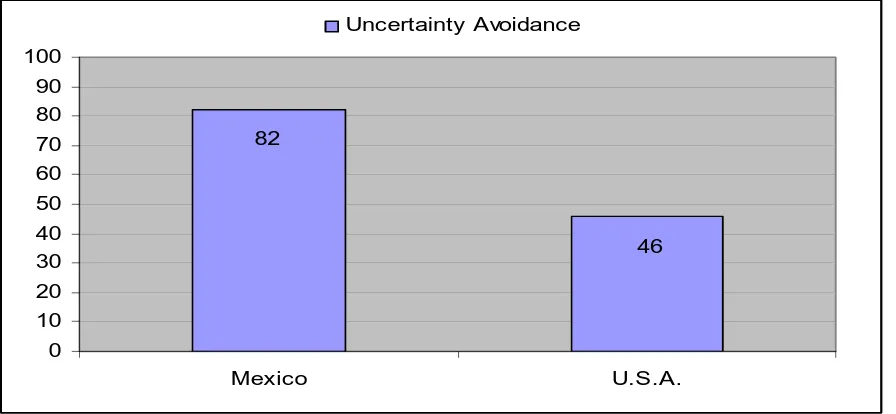
Figure 2.7. Comparison between Mexico and United States according to uncertainty avoidance14 Figure 3.1. Research methodology ...18
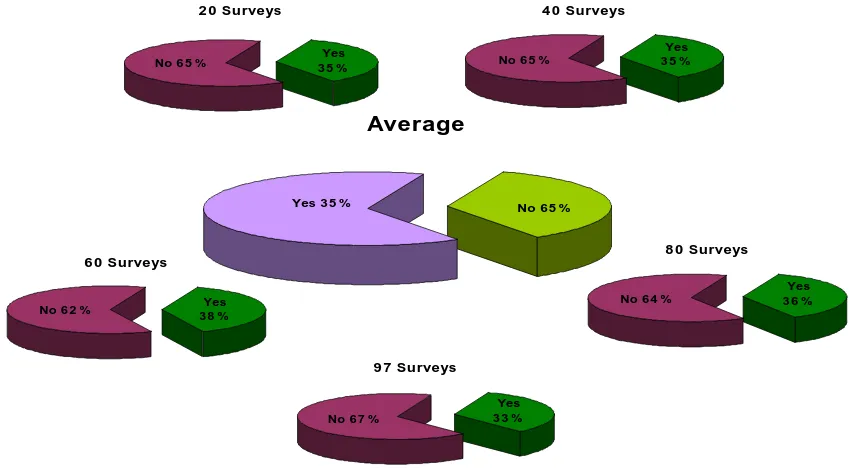
Figure 3.2. Comparison of results for question 1, “Have you ever taken a course to help you learn English?”...21
Figure 5.1. Examples from ESL Survival Course...37
Figure 5.2. Examples from Stepping Up to Supervisor Course for Hispanic Construction Workers...47
LIST OF TABLES Table 2.1. United States, top-three states, and Iowa by Hispanic population, 1990 and 2000...5
Table 2.2. Employment by the goods-producing industry, 1990–2000 and 2000–2010...8
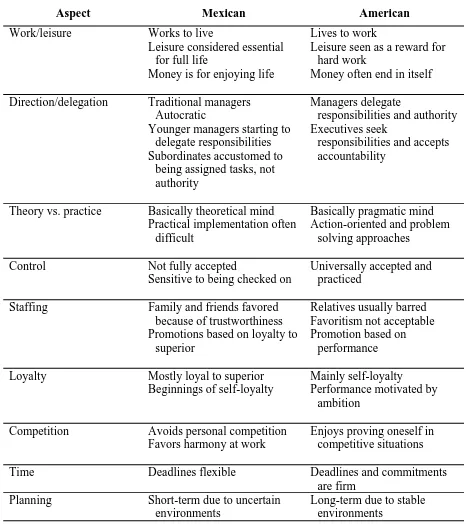
Table 2.3. Comparison of general aspects between Mexican and American cultures according to Hofstede ...16
vii ACKNOWLEDGMENTS
ix EXECUTIVE SUMMARY
Over the last decade, a growing percentage of the craft workers entering the construction industry have been Hispanic, which has created several challenges for American construction companies. By the end of 2001, the construction industry reached the highest rates ever of accidents and fatalities for Hispanic workers, according to the U.S. Bureau of Labor Statistics found.
Ineffective management has been identified as one of the major causes of low labor productivity and high accident rates on some construction jobs employing Hispanics. These kinds of failures lead to a loss of reputation, high unanticipated costs, and other problems for the construction companies. Statistics show that cultural differences, particularly language barriers, between the Hispanic construction workers and English-speaking management have been a decisive factor in the rise of accidents and fatalities for this population.
This study addresses the situation by investigating training needs for Hispanic construction craft workers and developing a training program for them within the industry.
In order to evaluate current craft workers’ conditions within the construction industry, Iowa State University researchers conducted a survey of 98 Hispanic craft workers from 10
construction companies to determine current working conditions. The survey results confirm that the language barrier has become an obstacle for both English-speaking employees and the
Hispanic workers involved in construction projects.
As a result of the survey findings, this research project offers two training courses designed to help both American construction companies and their Hispanic labor force to overcome the barriers that keep them from succeeding safely and productively. A training course titled English as a Second Language Survival Course was developed to facilitate basic communication
between Hispanic workers and their English-speaking supervisors using construction-focused terminology. This course was delivered once at a trial-run duration of two hours and twice at the full-length duration of eight hours. Important feedback was obtained from participants as part of the evaluations of the course. When workers were asked how much of the course contents would be useful in their work environment, 40% of workers said “all of it” and 60% said “most of it.” When workers were asked whether they thought it was worth taking the time to attend the course, 94% answered “definitely” and 6% answered “yes.”
1 1. INTRODUCTION
1.1. Background
Hispanics are a large and growing part of the United States workforce. The U.S. Census Bureau showed Hispanics as the nation’s largest ethnic or racial minority group in 2000. Hispanics are projected to make up 25% of the population of the United States by 2050.
Mexico has been the traditional the source of Hispanic immigrant labor in the United States. However, in the past decade, trends started to change with immigrants coming from Central America and, more recently, from countries such as Ecuador, Argentina, Colombia, and Peru due to the deterioration of South American economies.
The construction sector attracts a great number of Hispanic workers due to the ease of entry, relatively high wages, limited need for English literacy, and the availability of jobs. As the number of Hispanics working in construction increases, the fatality rate has risen
disproportionately. John Henshaw, the assistant secretary of labor for the Occupational Safety and Health Administration (OSHA), determined that in 2000 Hispanics accounted for an inconsistent number of workplace fatalities—13.8%, compared with their proportion of employment, 10.7% (Henshaw 2002). The construction industry accounts for about 7% of all employment and 20% of work site fatalities, and with Hispanics comprising 18.8% of
construction employment.
With increased numbers of Hispanic employees and rising Hispanic fatality rates, employers have aggressively sought bilingual safety tools for their employees, including training classes, trainers, and training materials. Demand has also grown for basic Spanish language instruction for construction supervisors. Both OSHA and the National Safety Council (NSC) have addressed how to take the message of safety to both English and Spanish speakers.
As a result of these organizations’ efforts, more support has been acquired from employers and associations. For instance, the Associated Builders and Contractors (ABC) and
Associated General Contractors of America (AGC) both implemented Spanish language instruction into their safety programs. These improvements have been implemented where the Hispanic concentration is the greatest, the southern United States. Because of the high presence of Hispanics in the southern states, Hispanics in those areas have lately found themselves with fewer job opportunities and more difficulties integrating and have therefore moved north toward the less Hispanic-populated states such as in the Midwest.
2 1.2. Problem Statement
Because of the increasing numbers of Hispanic construction workers, as well as
disproportionate number of fatalities among Hispanic construction workers, construction companies need to overcome new challenges. The Iowa Department of Transportation (Iowa DOT) has already started taking action, working with the Department of Civil, Construction and Environmental Engineering (CCEE) at Iowa State University to investigate training needs for Hispanics.
The Iowa State University research team performed a detailed assessment of the current conditions of the Hispanic population in the United States with emphasis on construction craft workers in Iowa. There are several reasons why Hispanics are experiencing greater accident rates. The risk inconsistency is generally blamed on language barriers, educational levels, and the preponderance of Hispanics working under unsafe conditions.
As part of this research, training tools were designed to overcome obstacles found on the jobsite due to language barriers and the resulting lack of adequate communication. These training tools include two easy-to-use training courses focused on Hispanic construction workers: English as a Second Language (ESL) SurvivalCourse and Stepping Up to Supervisorfor Hispanic Construction Workers. These courses will help construction companies create a more skilled and better-prepared Hispanic labor force. They will help to make sure that craft workers are aware of and understand risks involved in the workplace as well as help to establish effective communication between the company and its Hispanic workers.
This report presents the results of the Hispanic workforce project to provide American construction companies more information and tools to help decrease the increasing accident statistics and improve productivity and quality of work.
1.3. Project Objectives
The objective of this project is to provide effective tools for American construction companies interested in training and/or promoting those Hispanic employees whose skills meet their expectations for higher positions such as supervisor. This research also provides a tool to Hispanic craft workers who would like to learn to speak construction-related English.
In order for this project to provide successful solutions, it was necessary to assess the needs and interests of the Hispanic workers involved in construction in Iowa. Data collected through surveys represent the foundation for the development of valuable training courses.
3 1.4. Definition of Terms
The term “Hispanic” is used in this report to conform with standard labor and census terminology. It is used as another word for “Latino.” The word “Latino” didn’t appeared in the U.S. Census until 2000. People who identify their origin as Mexican, Puerto Rican, Cuban, or Central or South American are considered Hispanic (Guzman 2001). Hispanics may be immigrants or U.S. citizens.
This report is primarily concerned with Hispanics in the construction industry whose primary language is Spanish and who do not yet have a firm command of English.
1.5. Economic Justification
This research took into consideration the employment statistics for construction companies with payroll by state in 1997, the latest Economic Census in the United States (U.S. Census Bureau 1997). The number of construction companiesin the United States in 1997 was 656,448, with 4,395,365 construction workers. The payroll for all construction workers was $119.6 billion dollars. The payroll for Hispanic construction workers accounted for 18.8% of the total, or $22.5 billion dollars nationally. In Iowa, 7,941 companieswere reported with 50,391 construction workers. The payroll for all employees in Iowa was $1.7 trillion dollars; the payroll for construction workers in Iowa was $1.3 billion dollars.
It is clear that the percentage of payrolls dedicated to construction workers is significant with respect to other industries and that Hispanics make up a large percentage of people working in construction. Construction companies stand to benefit from giving serious consideration to the implications on worker conditions as well as company productivity.
1.6. Report Organization
Chapter 1 introduces the topic, exposes an existing problem, discusses the objectives of this project, and defines the goals of this research project. Chapter 2 presents the literature review, starting with a general overview on the Hispanic and U.S. population before
4
course have been attained by the trainees. Finally, conclusions and recommendations are discussed in Chapter 6.
2. LITERATURE REVIEW
2.1. Background
From 1990 to 2000, the populationof Hispanics in the United States grew by more than 50%, according to the U.S. Census Bureau. With such a drastic change, it is important to collect and analyze the most recent available data. This report collects, compiles, and analyzes the information necessary to study factors and trends of the Hispanic population involved in the U.S. construction industry. Several organizations’ websites have been reviewed in order to obtain current information. These organizations include the U.S. Census Bureau, the U.S. Department of Labor, the Bureau of Labor Statistics (BLS), the Occupational Safety and Health Administration (OSHA), and the National Institute for Occupation Safety and Health (NIOSH).
2.2. Overview and Trends of the Hispanic Population in the United States
As a consequence of their growing numbers, Hispanics are significantly influencing the construction sector in the United States. A look at the information available on trends within the Hispanic population is necessary to gain insight into what has been occurring and what will occur in the construction industry. A compilation of the Current Population Survey (CPS) shows that in 2000, 35.3 million (or 12.5%) of the 281.4 million residents in the United States considered themselves Hispanic or Latino.
5
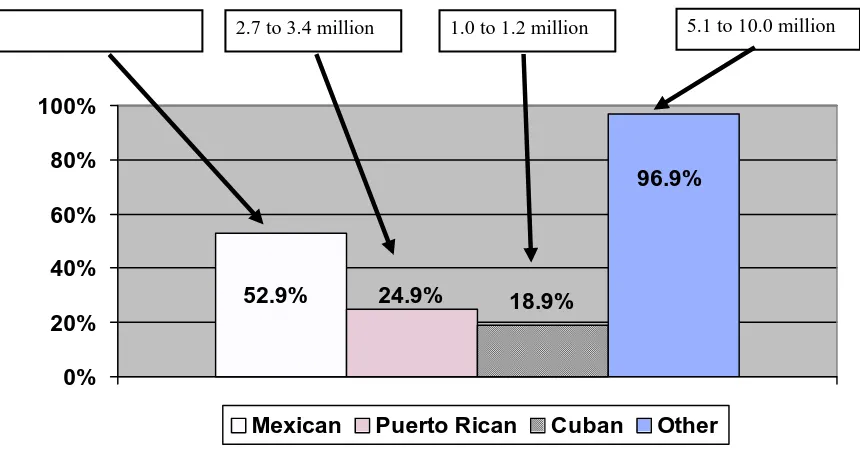
Figure 2.1. Hispanic population growth from 1990 to 2000 by group
[image:16.612.84.542.451.592.2]Table 2.1 shows where the majority of the Hispanic population is concentrated and how fast these population centers grew from 1990 to 2000. More than three quarters of Hispanics in the United States lived in the West or South (primarily California and Texas). In 2000, 43.5% of Hispanics lived in the West and 32.8% lived in the South. The Northeast and Midwest accounted for 14.9% and 8.9%, respectively (Guzman 2001).
Table 2.1. United States, top-three states, and Iowa by Hispanic population, 1990 and 2000
1990 2000 Hispanics Hispanics
Area Total
population Number Percent
Total
population Number Percent
United States 248,709,873 22,354059 9.0% 281,305,818 35,305,818 12.5%
California 29,760,021 7,687,938 25.8% 33,871,648 10,966,556 32.4%
Texas 16,986,510 4,339,905 25.5% 20,851,820 6,669,666 32.0%
New York 17,990,455 2,214,026 12.3% 18,976,457 2,867,583 15.1%
Iowa 2,776,755 32,647 1.2% 2,926,324 82,473 2.8%
According to the U.S. Census Bureau projections, by 2050 Hispanics are projected to make up 25% of the U.S. population. In Iowa, the Hispanic population in 2000 made up 2.8% (or 82,473) of the total population (2,926,324). Of the Hispanics, 74.2% were Mexicans, 3.3% were Puerto Ricans, 0.9% were Cubans, and 21.7% were other Hispanics (including Central and South Americans).
18.9%
52.9% 24.9%
96.9%
0% 20% 40% 60% 80% 100%
Mexican Puerto Rican Cuban Other
6
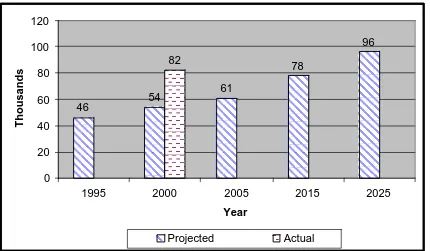
Figure 2.2 shows the difference between population projections and the actual population of Hispanics in Iowa. According to the population projections (U.S. Census Bureau 2000), there will be 96,000 Hispanics in Iowa by the end of 2025. This group has shown such a
significant growth rate that the U.S. Census Bureau had projected this number to be about 54,000 by the end of 2000, but in reality the 2000 Census reported 82,000 Hispanics (a 65% increase) in the state of Iowa.
46
54 61
78
96
82
0 20 40 60 80 100 120
1995 2000 2005 2015 2025
Year
Thousands
Projected Actual
Figure 2.2. Hispanic population in Iowa: 2000 actual vs. 1995–2025 projections
2.3. Hispanics and the U.S. Labor Force
2.3.1. Foreign-born Workers in the United States
Population changes, such as the aging of the baby boom generation (those born from 1946 to 1964) and increasing racial and ethnic diversity within the U.S. population, continue to transform the American labor force. The U.S. labor force has been drastically influenced by the large increase of foreign-born workers since 1990. This relates directly to the U.S. economy in recent years. Between 1996 and 2000, this increase has contributed to a U.S. labor expansion, becoming nearly half of the net labor force increase (Mosisa 2000).
The CPS reported that even though the foreign-born tend to be less educated than the native born, they are more likely to be labor force participants than their native-born counterparts. Among the foreign-born population, labor force participation rates for whites were lower than for any other race/ethnic group (Mosisa 2000).
Given the foreign-born population trends in the U.S. construction labor force, needs
7
companies must make strategic decisions to counteract past policies that did not incorporate the needs of a diverse workforce, one example of which would be implementing diversity training programs.
Hispanics living and working in the United States are the most exposed victims of
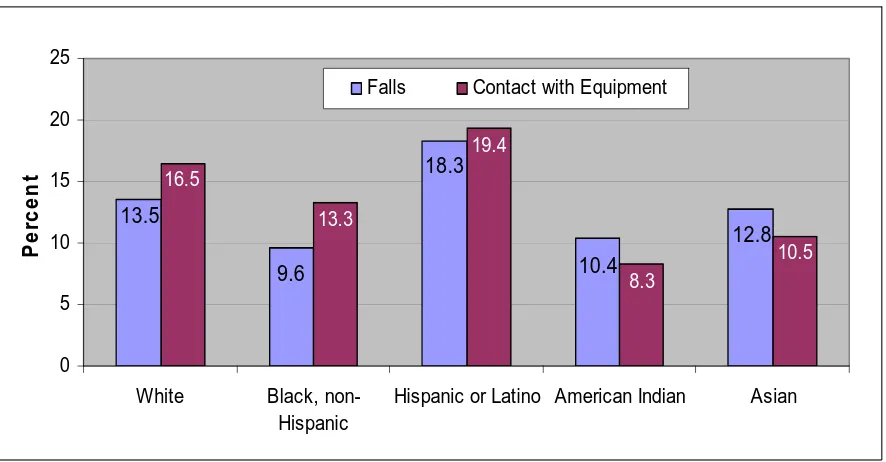
environmental and occupational health problems and reported a disproportionate number of workplace fatalities in 2000. The 2000 BLS report on fatalities shows that 815 Hispanic or Latino workers died as a result of job-related injuries. This appears to be largely due to the fact that Hispanics are employed in the more dangerous industries. For instance, the
construction industry accounts for only about 7% of all employment, but a disproportionately large percentage of workplace fatalities. As depicted in Figure 2.3, nearly 20% of Hispanic fatalities were due to falls and contact with equipment, events more common in construction work sites than other employment areas (Henshaw 2002).
13.5
12.8 18.3
9.6 10.4
10.5 8.3
19.4
13.3 16.5
0 5 10 15 20 25
White Black, non-Hispanic
Hispanic or Latino American Indian Asian
P
e
rcen
t
[image:18.612.94.537.262.493.2]Falls Contact with Equipment
Figure 2.3. Fatal injuries by event of exposure and ethnic group (2001 data)
Recently, organizations have begun to not only reach out to a broader group of job seekers, but also provide effective training for new employees who, for whatever reason, lack the necessary skills for the work site. The idea is to ensure that regardless of their racial or ethnic background, construction workers have the skills they need. Because they come from other cultures, and might not speak English proficiently, immigrants might require more extensive training than other workers.
8
2.3.2. The Construction Industry and the U.S. Economy
Berman et al. (2001) studied the employment growth influence in the U.S. economy during the past decade and showed employment reaching about 167.8 million by the end of 2000. The 2000–2010 projections show an expansion at approximately the same as that of the past decade with nearly 60% of total employment attributed to the service-producing industries.
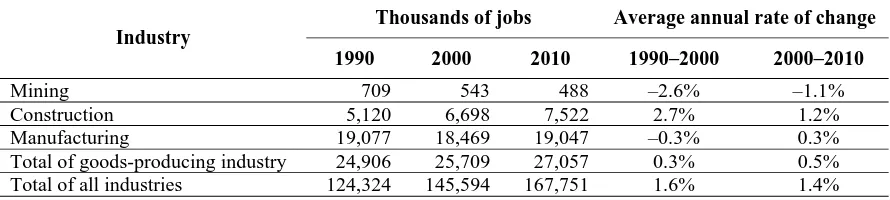
These projections indicate that the construction industry (part of the goods-production sector) will continue to add jobs at a relatively slow growth of 0.5% yearly. The Monthly Labor Review of the BLS projected the construction industry to add 825,000 jobs by 2010 at a 1.2% growth rate, and also to be the goods-producing sector’s largest and fastest source of
employment growth (Berman 2001).
[image:19.612.85.530.359.459.2]The BLS projects employment by industry and by occupation. Total employment in the United States is projected to increase by 22.2 million (or 1.4%) from 2000 to 2010. Table 2.2 displays the total number of jobs by goods-producing industry and the average annual rate of change for the 1990–2000 period and projected for the 2000–2010 period. Within this industry, the construction industry has the largest growth in both periods.
Table 2.2. Employment by the goods-producing industry, 1990–2000 and 2000–2010
Thousands of jobs Average annual rate of change
Industry
1990 2000 2010 1990–2000 2000–2010
Mining 709 543 488 –2.6% –1.1%
Construction 5,120 6,698 7,522 2.7% 1.2%
Manufacturing 19,077 18,469 19,047 –0.3% 0.3% Total of goods-producing industry 24,906 25,709 27,057 0.3% 0.5% Total of all industries 124,324 145,594 167,751 1.6% 1.4%
Between 1990 and 2000, there was an increase of 40% in the number of construction jobs in the state of Iowa, from 71,304 to 100,527. Polk County accounted for 16.1% of the total, followed by Linn with 8.1%, and Scott with 5.9%.
The employment statistics indicate that the Hispanic population in the United States in 2002 was 12.2% of the total number of employed persons 16 years and over (BLS 2003). More specifically, Hispanics involved in construction accounted for 18.8% (or 1.8 million) of the total employed population working in the U.S. construction industry (or 9.7 million).
2.3.3. Management Goals through Training
9
The construction industry is facing a combination of various factors that may affect their goal achievement. The presence of workers from different cultures on the jobsite has created a growing gap between workers’ skills and capabilities and the job requirements. This gap must be closed through training programs that lead to employment development.
Employers must prepare to meet the challenges represented by this knowledge gap. Providing a safe environment must be a primary goal, as it is critical to low employee turnover and high productivity.
The Construction Industry Digest 2002, provided by OSHA (1998) includes a chapter called “Safety and Health Management Systems” that contains four main sections: (1) Management Commitment and Employee Involvement, (2) Work Site Analysis, (3) Hazard Prevention and Control, and (4) Safety and Health Training. The fourth factor is an especially essential component of an effective safety program. Through such programs, companies are able to identify the safety and health responsibilities of both management and employees at the site. Training depends on the size and complexity of the work site, potential hazards, and worker characteristics.
One of the main objectives of a company’s management is to train supervisors to understand the key role they play in work site safety and to enable them to carry out their safety and health responsibilities effectively (OSHA 1998).
2.4. Summary of Available Training Material for Hispanic Construction Workers
It is clear that training programs must be developed and offered based on current and future needs. Available material focused on the Hispanic population of the United States is
becoming more and more popular and requested more often. More than 10 million Hispanic Americans speak little or no English. Organizations such as OSHA have special concerns for non-English speaking workers. In October 2001, this agency formed a task force to inspect the issue of rising Hispanic fatalities, and what employers should do to address the problem (OSHA 2001).
According to the OSHA Trade News Release (2003), more than $2.2 million in new funding is allocated for outreach to Spanish and other non-English-speaking workers in President Bush’s Fiscal Year 2004 budget for OSHA. This is the first time OSHA’s budget will include additional funding for Hispanic outreach (OSHA 2003).
The American Society for Training and Development (ASTD) is the world’s leading association for workplace learning and performance. Ongoing ASTD initiatives, such as its state of the industry report,show that training expenditures dropped from 2.0% of payroll in 2000 to 1.9% of payroll in 2001 (Thompson et al. 2002). Training expenditures per employee rose 8% to $761, with 78% receiving training and an average of 23.7 hours (Thompson et al. 2002).
10
will continue to expand ongoing Hispanic outreach projects such as the community-based effort to disseminate safety and health information among immigrants in New York and New Jersey, the Construction Accident Reduction Emphasis (CARE) program in Florida, an alliance with a Latino community group in Georgia to encourage workers to report hazards, safety and health courses and small business training taught in Spanish in the Southwest, and bilingual compliance assistance specialists and inspectors available to assist
Spanish-speaking workers and employers in several local offices (OSHA).
In addition, a new website written in Spanish is helping OSHA reach out to non-English speaking workers and employers. The web page initially is featuring basic documents such as worker and employer rights and responsibilities, resource materials and other information of special interest to Spanish-speaking audiences. In addition, OSHA’s new program, Alliances, enables organizations committed to workplace safety and health to collaborate with OSHA to prevent injuries and illnesses of Hispanics in the workplace.
The National Institute for Occupational Safety and Health mission is to prevent work-related illness, injury, and death. NIOSH conducts a wide range of research, training, and technical assistance programs to identify and reduce hazardous working conditions. Recognizing the vital importance of education in the occupational safety and health (OS&H) field, NIOSH supports academic programs that are designed to enhance the knowledge of the professional and paraprofessional workforce in this field.
NIOSH in Spanish, another source of available material, includes Spanish-language versions of several NIOSH workplace safety and health documents relevant to industries and
occupations in which large numbers of Spanish-speaking workers are employed. It also describes in Spanish how workers and employers can contact NIOSH and access basic services, such as health hazard evaluations.
2.4.1. Training Programs
a. English as a Second Language (ESL)
The levels of knowledge of English at the work site vary depending on the diversity of the workers and supervisors. In construction, speaking the language is not strictly required, which may be an advantage for those who do not speak English at the beginning. However, not knowing the language represents an adverse safety issue.
As a first search for ESL material, several journals were reviewed in order to understand to what extent of research this topic has been addressed in the past. The following keywords were used in searching the journals:
• Communication
• Language barriers
• Cross-cultural aspects
11
Journals published by the American Society of Civil Engineers (ASCE) contained little information on ESL topics. An article titled “Differences in nonverbal communication styles between cultures: The Latino-Anglo perspective” appeared in the Journal of Leadership and Management in Engineering in 2001 (Cruz 2001). This article focuses on the importance of studying one's own culture as a way of becoming awareof cultural differences and the awareness ofthese differences can be extremely important to anyone who wantsto be effective in a diverse work environment (Cruz 2001). The Journal of Management in Engineering published an article in 2002 titled “Perception of construction professionals concerning important skills of effective project leaders” (Odusami 2002).In this article, contractors ranked communication as the most importantskill required in construction.The
Journal of Professional Issues in Engineering Education and Practice published an article in 2002 titled “Developing cross-cultural communication skills.” This article discusses how engineershave traditionally focused on hard-skill knowledge acquisition, but the increasingly multicultural work practices of professional engineers now demand better soft-skill
proficiency, such as foreign language ability, communication confidence, and cross-cultural experience (Gilleard and Gilleard 2002).
The researchers’ second step of reviewing ESL material included a search of other
organizations on the internet. The search criteria included finding information about basic topics necessary for Hispanic construction workers whose communication skills are minimal, course durations, and availability of such courses in Iowa. Several websites contained
information on ESL courses, with different levels, and different topics. Some of these were construction related and others were focused on general topics.
b. Supervisory training program
The work expectations of the supervisor have been changing to meet the needs that
characterize most workplaces and practices with the new skills required to lead effectively in the rapidly changing workplace. The supervisor’s role has changed for several reasons. For instance, technological advancements and cultural diversity issues have become more important to construction companies.
The Associated General Contractors of America (AGC), through one of its subsidiaries, the Iowa Association for Construction Training (IACT), provides a Supervisory Training Program (STP) for construction foremen and superintendents. STP is published by Wil McKnight Associates (2001) and courses are offered by AGC chapters, other construction organizations, and companies nationwide. For example, the IACT offers training programs using the Stepping Up to Supervisor materials, which consists of three parts: a Spanish-version book, an English-Spanish-version book, and a Workshop Leader’s Guide in English.
Some of the topics taught in these programs include the following: meeting the challenge of stepping up to a supervisory position, fitting your basic fundamentals into your style, dealing with special situations, as well as sample forms, checklists, and reference information
(McKnight 2001).
12
have to be an effective manager of people, time, equipment and materials. AGC has also created a wide variety of innovative and effective programs to support training programs for craft workers. Information on AGC’s craft training programs and services is available through the AGC’s training and educational services and also through the National Center for Construction Education and Research.
2.5. Description of Cultural Differences between American and Hispanic Cultures Embedded in the Course Contents
In order for training course developers and trainers to achieve positive outcomes, they must pay more attention to the development, delivery, and evaluation of diversity training
initiatives. Developers of training courses for Hispanics must take into consideration cultural differences with respect to the mainstream American culture. In addition, as the U.S.
construction labor force becomes more diverse, successful leaders will owe some of their success to the experience of working in multicultural environments. The goal of this
description is to help trainers respond to possible challenges posed by training a more diverse workforce. Some of the skills for trainers to develop include the capability to demonstrate respect and understanding, to communicate effectively, and to work collaboratively with people from a Hispanic background. Special effort must be made to help all employees learn new skills to overcome the group differences. This will increase worker effectiveness and help avoid the risk of creating threatening stereotypes.
It is important to understand what is meant by “culture” for this model. According to Geert Hofstede, culture is the collective programming of the mind that distinguishes the members of one group or category of people from another (Hofstede 1983). More specifically, this author defines culture as the part of our conditioning that we share with other members of our nation, region, or ethnic group but not with members of other nations, regions, or groups. In Hofstede’s model, there are four main dimensions for describing cultural differences: (1) large or small power distance, (2)individualism versuscollectivism, (3) masculinity versus femininity, and (4) strong or weak uncertainty avoidance (Hofstede 1983). The fundamental issues identified by Hofstede are expressed here for each of the four dimensions and a graphical comparison between the U.S. and Mexican societies is shown in Figures 2.4–2.7. These numbers were extracted from a study done by Hofstede that compared aspects of national character across countries, assigning an index value from 1 to 100. For the development of this course, Mexico has been used as the country to be compared with the United States. Mexicans are the largest (58.5%) Hispanic group in the United States.
Power distance refers to how society deals with the fact that people are unequal. In
13
Power distance
40 81
0 10 20 30 40 50 60 70 80 90 100
Mexico U.S.A.
[image:24.612.95.536.68.239.2]Power distance
Figure 2.4. Comparison between Mexico and United States according to power distance
Individualism versus collectivism involves the relationship between an individual and his or her fellow individuals. There are two categories: (1) societies in which ties between
individuals are very loose, that is, everybody looks after his or her on self interests; and (2) societies in which the ties between individuals are very tight, that is, everybody looks after his or her group’s interests. Hispanic societies fall in the second category, where friendships prevail over tasks and loyalty is very valuable among group members and between bosses and subordinates.
Individualism
91
30
0 10 20 30 40 50 60 70 80 90 100
Mexico U.S.A.
Individualism
Figure 2.5. Comparison between Mexico and United States according to individualism
Masculinity versus femininity is related to the division of roles between the sexes in society. Hofstede (1983) affirmed that all human societies have to deal with the fact that one half of mankind is female and the other half is male. Human societies have associated certain roles to men only, or to women only. This is part of a socialization process, rather than biological sex role. Latin countries such as Venezuela and Mexico are considered to be quite masculine biased. Figure 2.6 shows how the masculinity of Mexican society compares to the
[image:24.612.94.539.397.578.2]14
Masculinity
69
62
0 10 20 30 40 50 60 70 80 90 100
Mexico U.S.A.
[image:25.612.92.534.69.272.2]Masculinity
Figure 2.6. Comparison between Mexico and United States according to masculinity
Uncertainty avoidance indicates to what extent a culture can program a member to sense different, unknown, or surprising situations. The two ends of this dimension are related to how strong or weak members accept or avoid uncertainties. Groups with weak uncertainty avoidance tend to accept the fact that future is unknown and therefore accept each day as it comes. On the other hand, other societies tend to reduce uncertainty in the future by creating security and avoiding risk. In this dimension, there exists a clear correlation between power distance and uncertainty avoidance. According to Hofstede, Hispanic societies show strong uncertainty avoidance with a large power distance, whereas in American society and other countries with large populations with Anglo-European roots, an opposite correlation was found, that is, small power distance and weak uncertainty avoidance. Figure 2.7 compares uncertainty avoidance scores between the United States and Mexico.
Uncertainty Avoidance
46 82
0 10 20 30 40 50 60 70 80 90 100
Mexico U.S.A.
Uncertainty Avoidance
[image:25.612.94.542.478.685.2]15
Table 2.3 describes some examples of national cultural values that will help trainers better understand the impact of cultural differences on the jobsite. According to the Hofstede’s findings on both the Mexican and American cultures (1983), it is concluded that in the workplace, Mexicans, as subordinates, expect to be told what to do, see hierarchy as an existential inequality, and consider their boss as a benevolent autocrat. Also, because of their collectivism, they see relationships more important than tasks.
Most of these cultural values and differences between the Mexican and American cultures are embedded throughout the course contents of the ESL Survival Course and Stepping Up to Supervisor Course for Hispanic Construction Workers training courses as presented in Chapter 5.
2.6. Concluding Remarks
It was found that extensive literature exists on topics related to improving construction safety and other areas such as productivity and quality through training programs. However, it appears that there is a gap related to achieving an appropriate safety culture among Hispanic craft workers, which in the long turn will reduce the risks this population faces in the
workplace. The AGC provides the majority of the information and material on training programs. Other organizations such as OSHA and ASTD also offer these types of education programs but there is still a need for material on supervisory training programs and
particularly, for Hispanic construction craft workers. This will be covered in Chapter 4.
Several organizations exist that offer ESL courses through the internet, with several levels of difficulty according to the contents of each level and with durations of several hours and costs that may be prohibitive to Hispanic construction workers. ESL courses containing basic instructional materials may help workers who do not speak English, particularly, Spanish-speaking construction workers, attain the knowledge necessary to work safely on the jobsite.
16
Table 2.3. Comparison of general aspects between Mexican and American cultures according to Hofstede
Aspect Mexican American
Work/leisure Works to live
Leisure considered essential for full life
Money is for enjoying life
Lives to work
Leisure seen as a reward for hard work
Money often end in itself
Direction/delegation Traditional managers
Autocratic
Younger managers starting to delegate responsibilities Subordinates accustomed to
being assigned tasks, not authority
Managers delegate
responsibilities and authority Executives seek
responsibilities and accepts accountability
Theory vs. practice Basically theoretical mind Practical implementation often
difficult
Basically pragmatic mind Action-oriented and problem
solving approaches
Control Not fully accepted
Sensitive to being checked on
Universally accepted and practiced
Staffing Family and friends favored
because of trustworthiness Promotions based on loyalty to
superior
Relatives usually barred Favoritism not acceptable Promotion based on
performance
Loyalty Mostly loyal to superior
Beginnings of self-loyalty
Mainly self-loyalty
Performance motivated by ambition
Competition Avoids personal competition
Favors harmony at work
Enjoys proving oneself in competitive situations
Time Deadlines flexible Deadlines and commitments
are firm
Planning Short-term due to uncertain
environments
17 3. RESEARCH METHODOLOGY
3.1. Introduction
Current data on Hispanics was required to fulfill the first objectives of this research project. Therefore, both the availability and the quality of such data must be addressed. Reliable data must be obtained in order to draft recommendations that will serve as a basis for targeted actions at different levels of training programs. Data were gathered in different ways. First, data were collected from several organizations such as OSHA and the BLS from their websites. Second, a questionnaire was designed and conducted in order to collect data from Hispanic construction workers in Iowa. Finally, the data were analyzed in order to select the most critical facts in developing an effective solution for both the construction companies and Hispanic craft workers. This research focuses on the Hispanic population in the United States, with a more detailed study on Hispanics working for American construction
companies in Iowa.
The methodology used for this research project on Hispanic construction workers is shown in Figure 3.1. It consists of four parts: (1) a literature review on the construction industry and Hispanics in the state of Iowa; (2) questionnaire design, data collection, and data analysis, evaluation, and results; (3) training courses: ESL Survival Course and Stepping Up to Supervisor for Hispanic Construction Workers; and (4) conclusions and recommendations.
Figure 3.1. Research methodology
PART! PART2 PART3 PART4
Literature Questionnaire
~
Data Data Analysis,~
Training~
Conclusions &Rel'iew DesiR?~ Collection Evaluation & &suits Courses &commendations
..
+
+
IIssue Objectives
1<11
Input Stepping Up to ESL !ltrvival
Identification Data Supervisor Course
I
..
Sample size Contact Code Objectives &
Definition Companies Answer Data Methodology
+
+
+
+
Questions & Conduct Generate Research
Answers Survey Charts Sources
+
+
+
+
Mapping Record Evaluation- Develop
Data .JNP 5.0.1 Course
•
•
•
Pretest &
I•
Results Pretest19 19
3.2. Questionnaire Design, Data Collection, and Data Analysis, Evaluation, and Results
A face-to-face survey was deemed the most efficient and reliable way to collect data from Hispanic construction craft workers. Thus, after the literature review, Part 1, was conducted on the construction industry and Hispanics in the state of Iowa, the research process
continued with Part 2. This part consisted of three stages: (1) questionnaire design, (2) data collection, and (3) data analysis, evaluation, and results.
The goal of the questionnaire was to provide data necessary to bridge the gap between
American supervisors and Hispanic construction workers by identifying the problems created by blending the two cultures into the workplace. After identifying the problems, suitable and effective training courses could be developed to encourage Hispanic construction workers to be active and productively engaged participants in the refinement and accomplishment of American construction companies’ goal of a safe environment.
The following fifteen objectives were defined for the design of the questionnaire:
1. Determine general and specific types of training programs currently offered by construction companies in the United States to Hispanic workers.
2. Determine the level of adequacy of Hispanic workforce training with regard to courses taken, course duration, and degree of difficulty.
3. Identify how Hispanics feel about the usefulness of the courses.
4. Identify Hispanic and American cultural differences and their implications for the workplace.
5. Determine patterns of needs, interests, and areas of training for Hispanic construction workers according to the current level of skills and working conditions.
6. Prioritize those areas of improvement for the implementation of ESL and technical training courses for Hispanic construction workers.
7. Determine the factors and problems (e.g. language barrier, experience) that adversely affect the performance, quality, and safety conditions of Hispanic construction workers.
8. Determine the level of interest as expressed by Hispanic workers in relation to improving and learning new skills such as construction equipment operation.
9. Prioritize the type of equipment they would prefer to learn to operate.
10. Determine the level of satisfaction of Hispanic workers as it relates to their
20 20
11. Verify the need to have key employees on the work site to overcome the language barrier.
12. Determine accident rates and types of accidents incurred by Hispanics in construction.
13. Gather background, personal, and demographic information on Hispanic construction workers.
14. Obtain mobility index (idea of how long they stay in a particular job) of Hispanic workers.
15. Identify personal expectations and goals towards the future of Hispanics.
Having defined the objectives of the questionnaire, the sample size was defined by using the literature review summarized in Chapter 2. It was determined that at least one hundred and fifty respondents were necessary to obtain enough data to draw and evaluate significant conclusions, and generate recommendations. Several factors influenced the sample size, such as how quickly the results were needed, what type of survey to do, and the availability of workers as well as the disposition of the project supervisors at the time of the interview. More specifically, the sample size was calculated according to the number of Hispanics involved in the construction industry in Iowa obtained from statistics provided by the BLS and U.S. Census Bureau.
Hence, a convenience sample was decided upon according to the literature review on how to conduct surveys (Fink 1998) due to respondents’ willingness and availability to complete the survey. Thus, in order to control sampling errors, a minimum of one hundred and fifty workers was chosen as the sample size.
Once these factors were taken into account, quantitative and qualitative measurements were determined as well as the order and survey length. This step was mainly based on the specific objectives of the survey. Initially, the questionnaire consisted of 20 questions arranged in four categories of information as follows: (1) ESL background, (2) management course information, (3) safety aspects, and (4) personal information.
This first questionnaire was pre-tested on three different work sites, with nine respondents. Corrections and modifications were made by several experts such as the survey director and associate of the Center for Survey Statistics and Methodology and other Iowa State
University faculty.
21 21
final format and with its main objective, which was used as introductory information before the surveys took place.
Data collection, as the second stage of Part 2, was carried out by using face-to-face
interviews with construction workers on the jobsites. Several construction companies in Iowa were willing to collaborate and ten of them were contacted prior to conducting the
interviews. Research team members, called project contacts, explained the nature of the survey, and occasionally requested permission in advance to enter the jobsite.
[image:32.612.101.529.346.580.2]A variety of project types were selected. Most of the construction projects chosen as data sources were located in the Des Moines area, Ames, Burlington, Council Bluffs, and cities in which the presence of Hispanic workers was sufficient to conduct the survey, all of them working on IDOT projects. Of the 150 surveys initially planned, 97 of them were actually conducted, thus obtaining a response rate of 65%. However, the decision to stop at 97 interviews was made on the fact that similar answers were being obtained as seen from the comparisons of the results at 60, 80, and 97 interviews as can be observed in Figure 3.2.
Figure 3.2. Comparison of results for question 1, “Have you ever taken a course to help you learn English?”
To conduct this survey, appropriate personnel with bilingual skills in Spanish and English and highly experienced with Hispanic construction labor force were used as surveyors.
20 Surveys
No 65% 35%Yes
40 Surveys
Yes 35% No 65%
97 Surveys
No 67%
Yes 33%
80 Surveys
No 64% 36%Yes
Average
No 65% Yes 35%
60 Surveys
22 22
As a last stage of the Part 2, data analysis, evaluation, and results were obtained and used for the selection and development of two effective and unique training courses. In this part, factors such as the length of the questionnaire, the number of completed surveys, and the data analysis software to be used had to be considered. Each objective in the questionnaire was achieved by asking the adequate question as it related to it. Appendix A contains a complete mapping of objectives as they relate to the corresponding questions.
Microsoft Excel was used to store respondents’ information. Thus, survey responses were input, coded, and kept confidential in a customized database. Totals and respective
percentages were calculated and charts were generated for each of the 35 questions.
Data analysis continued with the evaluation of the generated charts. Variability and
similarities were extracted from the bar charts obtained for each question. Establishment of relationships indicated patterns that, in turn, would lead to significant conclusions for research project recommendations.
Given the number of respondents, the data was exported to statistical software called Jump 5.0.1, which served as a means of evaluation. Making use of both bar charts and statistical results, questions were selected according to the research objectives.
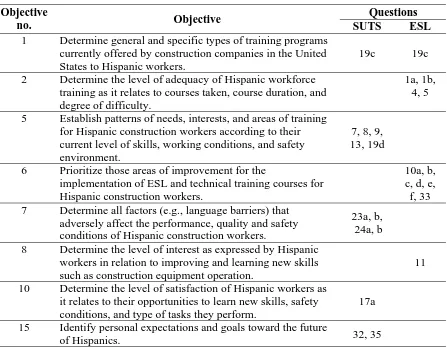
The graphs developed out of the questions are contained in Appendix B. Of the fifteen questionnaire objectives defined in Part 2, five objectives (1, 5, 7, 10, and 15) were used for developing the Stepping Up to Supervisor Course for Hispanic Construction Workers
(SUTS), and other three (2, 6, and 8) were used for the ESL Survival Course. Table 3.1 contains the corresponding questions for each course in order to narrow the answers down to the specific training needs of Hispanic workers and American construction companies on the jobsite.
23 23
Table 3.1. Objectives and questionnaire used for training course development
Questions Objective
no. Objective SUTS ESL
1 Determine general and specific types of training programs currently offered by construction companies in the United States to Hispanic workers.
19c 19c
2 Determine the level of adequacy of Hispanic workforce training as it relates to courses taken, course duration, and degree of difficulty.
1a, 1b, 4, 5
5 Establish patterns of needs, interests, and areas of training for Hispanic construction workers according to their current level of skills, working conditions, and safety environment.
7, 8, 9, 13, 19d
6 Prioritize those areas of improvement for the
implementation of ESL and technical training courses for Hispanic construction workers.
10a, b, c, d, e, f, 33 7 Determine all factors (e.g., language barriers) that
adversely affect the performance, quality and safety conditions of Hispanic construction workers.
23a, b, 24a, b 8 Determine the level of interest as expressed by Hispanic
workers in relation to improving and learning new skills such as construction equipment operation.
11
10 Determine the level of satisfaction of Hispanic workers as it relates to their opportunities to learn new skills, safety conditions, and type of tasks they perform.
17a
15 Identify personal expectations and goals toward the future
24 24
35% 65%
0% 10% 20% 30% 40% 50% 60% 70% 80% 90% 100%
Percentage
[image:35.612.110.526.100.343.2]Yes No
Figure 3.2 Percentage of workers who have taken ESL courses in the past
10%
33%
57%
0% 10% 20% 30% 40% 50% 60% 70% 80% 90% 100%
Less than Between 10 More than 10 hours and 40 hours 40 hours
Figure 3.3. Duration of ESL courses workers have taken in the past
[image:35.612.95.537.419.678.2]25 25
A construction craft worker or a supervisor is expected to be fluent in English, as this is one of the initial requirements for advancement opportunities within an American construction company. The analysis of these ESL and training related charts led to four influencing factors as follows: (1) a lack of adequate training, (2) the existence of the required
construction experience, (3) the desire for advancement opportunities, and (4) the desire for taking training courses such as the Stepping Up to Supervisor Coursefor Hispanic
Construction Workers.
[image:36.612.125.537.153.378.2]It is vital to note the importance that advancement opportunities hold for a Hispanic construction worker. Figure 3.5 shows that 77% of workers answered that it was very important and 10% said it was important to have advancement opportunities. If this is so, training to help Hispanic construction workers achieve advancement should become a priority.
Figure 3.4. Importance of being trained in construction-related terminology
1% 8%
55%
4%
28%
1% 2%
0% 10% 20% 30% 40% 50% 60% 70% 80% 90% 100%
Percentage
26 26
The format, the duration, and the contents of training courses are all important aspects of a well-designed training course, regardless of the target audience. In the case of Hispanic workers surveyed, 79% expressed the desire and need to be trained in both English and Spanish as seen in Figure 3.6. Those surveyed felt that if they are trained in English they have trouble learning, and if they are taught in Spanish, they do not learn English. Therefore, they prefer to be trained in both languages. Training in both languages forces the courses to be taught by a bilingual instructor with construction experience to explain relevant concepts not only related to the language itself but to the work as well.
0% 7%
77%
4% 10%
2% 0%
0%
10% 20% 30% 40% 50% 60% 70% 80% 90% 100%
Percenta
g
e
[image:37.612.93.522.91.320.2]Not important Important Very important
27 27
The role that experience plays is an important when managers decide to promote a
construction craft worker to a supervisory position. The construction experience Hispanic craft workers had prior to coming to the United States is seen in Figure 3.7. Of these workers, 40% had between one and three years of experience in their native countries, and only 15% had more than seven years of experience. Some of the areas these workers had experience in were carpentry, masonry, and concrete among others.
In terms of construction experience in the United States, Figure 3.8 shows that about 58% of Hispanics have already had more than four years of experience working for American companies. Carpentry was the most common trade found among Hispanics at 61%, followed by concrete work with 20% and construction labor with 15% of the total.
12%
79%
9% 0%
10% 20% 30% 40% 50% 60% 70% 80% 90% 100%
English Spanish English and
Spanish combined
[image:38.612.99.527.103.315.2]Percentage
28 28
[image:39.612.103.524.104.329.2]Finally, it was also necessary to measure the desire of these workers to grow and step up to a supervisory position. When workers were asked whether or not they would like to take a course to be promoted to supervisor, a significant 79% of them answered positively as depicted in Figure 3.9. Within the context of this research, a supervisory position is
Figure 3.7. Experience in construction prior to coming to the United States
9% 11% 13% 2%
25%
40%
0%
10% 20% 30% 40% 50% 60% 70% 80% 90% 100%
Percentage
None Less than Between one Between four Between seven More
than
one year three years and six years and 15 years 15 years
25% 30%
5%
17% 23%
0%
10% 20% 30% 40% 50% 60% 70% 80% 90% 100%
Percentage
Less than Between one Between four Between seven More
than
one year and three years and six years and 15
years
15 years
[image:39.612.113.528.390.621.2]29 29
understood as a leadership position such as foreman, crew leader, or supervisor, depending upon the company’s needs and the worker’s capabilities.
3.3. Training Courses
3.3.1. English as a Second Language Survival Course
The focus of this course is on its simplicity. It is not a college course, but instead a highly interactive, basic course on only what-you-need-to-know including construction-related vocabulary, tool names, equipment, and simple directive language phrases that will facilitate basic communication.
The development of the ESL Survival Course was based on basic vocabulary used in
construction. The level of this course, as its name indicates, is for construction workers with a low level of English. The survey findings related to ESL courses led developers to
structuring the course such that it contains two types of instructional materials: a booklet and a visual presentation. The booklet provided to trainees consists of a list of words that is sorted alphabetically and organized by categories. These categories include general
[image:40.612.98.530.137.387.2]vocabulary (e.g., alphabet, vowels, numbers, hand tools), inputs (e.g., materials, workforce, equipment), safety (e.g., safety equipment, safety signs), and various (e.g., productivity, quality, survival phrases). The visual presentation contains pictures of the word and its meanings in English and Spanish. Chapter 4 presents the table of contents of the course by category.
Figure 3.9. Would you like to take a course to be promoted to supervisor? 79%
21%
0%
10% 20% 30% 40% 50% 60% 70% 80% 90% 100%
Yes No
30 30
After several trial runs of the ESL Survival Course, a methodology was implemented. A word is supposed to be read by the trainees after they have visualized the picture symbolizing the word’s meaning. Once this word has been visualized and read, trainees should repeat the word after the instructor has clearly pronounced it to them. This process may be repeated several times until trainees feel comfortable with the pronunciation and meanings of the word. Flashcards are used to facilitate learning and retain knowledge and pronunciation of the word. This course is designed to be taught in 8-to-10 hour sessions.
Instructors are to implement a cultural dimension that gives workers a sense of comfortable confidence that goes beyond just pronouncing the word correctly. In addition to providing “survival” words, the course includes “survival phrases” which will facilitate communication between the Hispanic worker and the American supervisor.
3.3.2. Stepping Up to Supervisor Course for Hispanic Construction Workers
Becoming a supervisor or leader requires a different set of skills to move from actually doing the job to the role of delegating the work to others. The work expectations of the supervisor have been changing to meet the needs that characterize most workplaces. New skills are required to lead effectively in rapidly changing workplaces.
As a first stage of the training course development, an identification of job needs or problems is required. Therefore, survey findings were used in deciding what kind of material would be appropriate for Hispanic construction workers. As part of this identification, prospective supervisors must be alerted to the requirements of the position.
Strategic decisions were made when developing the action plan, methodology, and contents of the course. In addition to making use of existing references on this topic, the researcher adopted information on cultural differences between the American and Mexican cultures obtained from a research study in order to provide a more detailed idea of how the course contents were selectively oriented to both cultures. This will especially help those who will be delivering the course in the future. Findings showed that culture and, more specifically, lack of communication, are the major problems involved in construction projects.
31 31 3.4. Concluding Remarks