Adele Stevens
A thesis submitted for the degree o f Doctor o f Philosophy of The Australian National University
previously submitted for a degree or diploma in any university; and that to the best o f my knowledge and belief it does not contain any material previously published or written by another person where due reference is not made. Thus, unless otherwise indicated this thesis is my own work
I would first like to express my thanks for the assistance, support, time and the effort that the participants gave to this study. The participants in the study were the women who volunteered for interviews and also the staff o f the drug treatment agencies in the ACT who gave unstinting support to this study.
My thanks to each o f my supervisors and advisers for their unique contributions to the production o f this thesis - first and foremost, my principal supervisor, Dorothy Broom, for her encouragement, support, advice, inspiration and patience. As a teacher and a friend, she provided quiet leadership and exceptional skill in analysing my research and developing my writing skills. Alas, any awkward and confusing prose which remain are my own. My thanks to Stephen Mugford and Grant Wardlaw for their encouragement to take up PhD research and, in addition, my thanks to Grant for his advice on my written work during the course o f my PhD. Gabriele Bammer was always available for advice and support and was especially helpful in the last months before completion.
I wish to thank the staff o f the Department o f Sociology for their support and assistance, in particular, Owen Dent, Helen Felton and Rosemary Swan. This research was undertaken through the Centre for Women’s Studies at the Australian National University, where I obtained my introduction to feminist scholarship. My thanks to the staff and colleagues who supported me over the years, in particular, Jackie Woodland and Helen Keane.
The National Centre for Epidemiology and Population Health (NCEPH) has played a significant part in the production o f this thesis; not least, by providing a supportive student body and accommodation for over a year when I lost my home at W omen’s Studies. I would like to thank the staff at NCEPH for their acceptance o f me at the Centre, in particular, Professor Bob Douglas and Peggy Daroesman. My thanks for the specialist advice I received at NCEPH. Robyn Attewell provided statistical advice and Colin Mcullock gave computer support. My special thanks to Jeff Marck who put my chapters together into one final document. While based at NCEPH I was fortunate to make many friends who provided a supportive cohort over the years. My particular thanks to Cathy Banwell and Emily Mauldron. I owe a particular debt o f gratitude to Phyll Dance, for without her support and help from beginning to end, I would not have been able to complete this research.
The friendly and helpful staff o f the Alcohol and other Drugs Council o f Australia Library cheerfully provided assistance with my many requests and found little known literature when its locatation seemed impossible. My thanks to Di Piper, Peter McCormack, and Denny Watson Smith.
The gendered nature of the drug field has been a topic of increasing interest for the last two decades and is gradually becoming a subject for serious investigation. This thesis addresses the social construction of gender in drug theories, in the epidemiology of drug use, and by exploring a variety of ways that women who use illegal drugs acquiesce and resist gender domination and constitute themselves in the illegal drug worlds.
I begin by examining theories of drug use and dependency. I argue that the gender relations of the wider society are mirrored in the scientific discourses and in the social worlds of users of illegal drugs, and that a gendered analysis improves knowledge and treatment for women and “subordinated males”.
Second, I consider questions about the epidemiology of illegal drugs, that is, ways of monitoring the incidence, prevalence and character of illegal drug use over time. The hidden nature of illegal drug use creates obstacles to such monitoring. Researchers in North America and the United Kingdom addressed the measurement difficulties by using a number of indicators to estimate the incidence and prevalence of illegal drug use. In Australia, this method was first attempted in the late 1980s with a pilot project, ACT Drug Indicators Project. Drug indicator data sets (both overseas and Australia) identify predominantly male "subjects" and although the data are now generally broken down by sex, there has been no attempt to examine the best methods of monitoring women's illegal drug use. I examine the ACT Drug Indicators data and its adequacy as a means of monitoring both men's and women's illegal drug use. I argue that the social construction of the data sources, in this case the gendered nature of the criminal justice system, is a relevant factor in assessing the data sources that are used as measures of drug use in the wider community.
Chapter 1: Introduction
The social construction of gender...5
Origins and purpose of the study... 10
Overview of the study... 11
Organisation of the thesis... 11
Terminology... 13
Chapter 2: Theories of drug use and dependency: moving to a gendered perspective The disease model... 17
The moral model...21
An internal values model of addiction...22
The drug career model...22
The pleasure model...25
Taking gender into account...26
Summary and conclusion...28
Chapter 3: Methodology and samples The development of drug indicators as a measure of illegal drug use... 31
Measuring illegal drug use in Australia...33
The field study: interviewing women using illegal drugs...37
Summary...41
Chapter 4: Measuring women’s illegal drug use: gendering epidemiological drug studies Demographics...43
Drug reports as indicators of illegal drug use...48
Gendering of drug treatment services...57
Conclusions... 59
Chapter 5: Beginning to use alcohol and tobacco Beginning alcohol use - act drug indicators project...64
Field study...68
Comparing beginning alcohol and tobacco use...73
Cannabis... 79
Amphetamines and hallucinogens... 82
Heroin... 89
Cocaine... 93
Summary - comparing men and women in beginning drug use (act drug indicators project)... 95
The social context... 96
Conclusion... 98
Chapter 7: Sexuality and stigma Stigma and shame... 101
Sex and drugs... 105
Dealing with stereotypes of women’s drug use... 112
Shame in drug treatment recovery... 114
Chapter 8: Summary and conclusion: constructing theories about drug use and treatment Epidemiology... 119
Gender in beginning drug use... 119
Sexual identity and drug use... 121
Appendix A: Review of the rationale and literature on multiple indicators
of illegal drug use... 143
Appendix B: ACT Drug Indicator forms... 147
Appendix C: Interview guide... 149
Appendix D: The flyer advertising the survey... 167
Appendix E: Information Sheet...169
Appendix F: Tables...171
CHAPTER 1: INTRODUCTION
Prior to the 1970s, women were virtually invisible in the study of alcohol and illegal drug use. When women were the subject of drug research, it was often in relation to their abnormal sexuality (frigid or promiscuous) or to their role as mothers or potential mothers. That is, women were more interesting for their significance to others than they were in themselves. Factors which may have contributed to the neglect of women in the drug field were the higher rates of alcoholism1 among men, the under representation of women in the population attending treatment services, and possibly the lack of any special interest in women's problems on the part of most male researchers (Wilsnack and Beckman 1984). In the United States of America, during most of the 20th century, the ratio of male to female alcoholics has been estimated as 5-6 males for each female (Jellinek 1947; Fillmore 1984). The ratios for alcohol dependence symptoms in the latter half of the 20th century have been calculated to be approximately 3-4 males for each female (Vannicelli 1984).
In Australia, a similar situation has prevailed. Data on deaths from cirrhosis of the liver between 1911 and 1987 (a principal indication of alcoholism in a community (English, Holman et al. 1995:169)) show 2-3 males for every female alcoholic (calculated from Drew (1982)). Estimates on high risk alcohol consumption show that men are 3.2 to 3.7 times more likely than women to consume alcohol at levels of high risk (Copeland and Hall 1995).
Estimating the ratios of male to female illegal drug users is more difficult because of the lack of reliable and representative data sources. Levels of illegal drug use and the characteristics of illegal drug users are notoriously difficult to measure given the illegal and sensitive nature of the activity. A solution, used first in North America and the United Kingdom, has been to assemble multiple indicators (such as health and law enforcement data, drug surveys, key informant surveys) to provide the best estimate of trends in drug use. In Australia, attempts to measure the levels of illegal drug use began in the latter half of the 1980s (Mugford 1989), and were modelled on the multiple indicators methods used overseas (Wardlaw 1989; Hando, O'Brien et al. 1997). Information on sex ratios is patchy, but it is sufficient to note at this point that although the ratios vary with age group, ethnicity, time, place and type of drug, most data sources indicate that illegal drug use has been more common among men than women (Ferrence and Whitehead 1980; Ettorre 1992; Copeland, Hall et al. 1993; Jones 1993; Lex 1994;
1995: 16; Hughes, Day et al. 1997).
One reason for the gender difference seems to be related to the legal status of a drug rather than its pharmacological properties (Colten and Marsh 1984). The history of opioid use demonstrates the point. In the last century, in Australia and elsewhere, opioid based patent medications were commonly used and women appear to have been the main consumers (McCoy 1991:8; Kandall 1996). From the turn of the century there were a number of new laws restricting the use of opioids (Berridge 1989; Manderson 1993), and by the middle of this century, most consumers of opioids were men (Lennane 1987).
The small proportion of women with drug problems created difficulties for research. The number of women in a research sample, whether in treatment populations (Lennane 1987) or in general household surveys, was often too small to generate results that provided sufficient power for statistical analyses. For these reasons, in the second national US survey on alcoholism by the Social Research Group, the researchers confined their data collection to men only (Fillmore 1984). Jellinek's historic 1946 study of alcoholism excluded females from the analysis because the number of females was small and the ‘data differed so greatly for the two sexes that merging was inadvisable’ (1946:15). Thus, women were excluded from the analysis, and from the samples. In other cases the data for males and females were combined making it impossible to detect any distinctive patterns among the women in the sample. In studies of drnking problems among adolescents, most researchers did not differentiate between males and females in their data analysis (Thompson and Wilsnack 1984).
In the study of illicit drugs, the exclusion of women was not generally explicit. Ethnographic studies of illegal drug users began in a serious way in the 1960s. These studies, principally of lower class heroin users in the ghettos of the US cities, do not state that they are studying males exclusively, but this tends to be taken for granted. In a class:c early study in the slums o f New York City, Preble and Casey (1969) noted the ethni: groups represented among their 150 informants (Irish, Italian, Negro and Puerto Rican), but they make no mention of the sex distribution of the sample. From the text, however, it is clear that the drug users are overwhelmingly males. There is no mention of female activities, in crime or in ‘hustling’. The crimes alluded to include burglary, robbery and assaults but there is no mention of prostitution. The place of male street gangs and the tough con-man in the history and distribution of heroin networks is part of the story. In their conclusion, Preble and Casey compare the heroin user to a working man (my emphasis) coming home at the end of the day - ‘he's worked hard, but he knows he has done som ething’ (1969:21). In these early street studies, the word ‘he’ is unmistakably masculine and the female heroin user is invisible. Reviewing the ethnographies of heroin users in the US to the 1970s, Rosenbaum notes that women ‘are either omitted or seen as peripheral members of predominantly male worlds' (1981:13). By the 1970s, it was clear that these practices had resulted in a situation w'here little was known about women's drug use, and concern began to develop, partly as a result of the rise in the women's movement which focussed attention on women's issues in general (Kalant 1980; Wilsnack and Beckman 1984; Murphy and Rosenbaum 1987). In 1975, an interdisciplinary group o f researchers at the Addiction Research Foundation in Canada acknowledged that the area of alcohol and drug abuse among women was a ‘nonfield’, with few recognised experts and virtually no specialised literature (Kalant 1980). The move to redress the balance began at this period, and by 1982 the num ber of studies of alcoholic women or problem drinkers had more than doubled from the 12 studies reported between 1929 and 1970 (Wilsnack and Beckman 1984: x).
the path that researchers took in their quest for data in the 1970s and the early 1980s was actually a well-worn path defined in earlier times. A vast amount of information began to be published concerning women's drinking and drinking problems, but the research agendas had actually been set in the 1930s, 1940s and 1950s, and, therefore, they arose ‘from a social milieu in which gender relations of power went unquestioned’ (Johnson 1991:33).
Similarly, research on women’s use of illegal drugs began to burgeon in the 1980s. For example, the relationship between drug use history and crime became the subject of study for women as well as men (Inciardi, Pottieger et al. 1982; Pettiway 1987). However, this early research generally applied the theories and models used previously in describing the relationship between men’s drug history and criminal behaviour to explain women’s experiences in an illegal drug world dominated by men. Feminist research in other fields has shown that simply adding women into the analysis is but the first step in widening research to include women (Smith 1974; Harding 1987). The relationship between problematic illegal drug use and crime is reasonably strong for men but is much less important for women. And according to criminology statistics, the crimes women commit are, on the whole, quite different from those committed by men. Some notion of these differences is evident in the large differences in arrest and imprisonment rates2 for men and women, with women constituting about 5 per cent of the prison population in Australia and internationally (Biles 1984; Mukherjee and Dagger 1990; Hampton 1993). The causes for these differences are, however, not simple. They arise from a complex interaction of gender both within the criminal justice system and with the wider society.
Cultural values about the gender division of labour have also shaped drug research. As mentioned above, early research focused on men’s lives in the drug economy - as users and sellers (Sutter 1966; Preble and Casey 1969; Agar 1973; Waldorf 1973) - with comparisons being made between men in the licit and illicit work worlds. Women generally did not feature in this type of research until the 1990s when women’s place in the drug markets became a subject for investigation (Fagen 1994; Mieczkowski 1994; Maher and Daly 1996; Sommers. Baskin et al. 1996).
For women, early research on problematic drug use focused on the woman’s supposed poor adjustment to and acceptance of her femininity, with women’s problems being seen as more difficult to treat (due to greater psychiatric morbidity than men) and often related to ‘female disorders' (Lisansky 1957; Lindbeck 1972; Stevens 1991); such as to menopause and depression (Lolli 1949), sexual dysfunction; such as promiscuity and frigidity (Levine 1955; Karpman 1956; Wilsnack 1984) and personality disorders (Hewitt 1943). Early research drew attention to the greater stigma suffered by women for the same level of drug use as men, and some researchers suggested that the greater level of stigma could have been one cause for the higher level of psychopathology reported among chemically dependent women (Lisansky 1957; Colten and Marsh 1984). Another large body of drug research on women was concerned w'ith the public health threats arising from drug use during pregnancy and mothering. A theme underlyiag most of this work was that women’s dysfunctionality was measured principally in relation to their ability to serve as sexual partners and mothers.
2 Although, there has been a trend to greater female imprisonment over the last decade, women still constitute only
The late 1980s, however, saw the development of a woman-centred approach which added new perspectives to drug research (Reed 1985; Reed 1987). For example, abuse, particularly childhood sexual abuse began to be recognised as a common antecedent in the histories of women with drug problems and it became clear that such issues needed to be addressed for those recovering from chemical dependency, and were particularly important in lowering women's rate of relapse (Young 1990). Thus, the research agenda, previously dominated by male perspectives, began to change. There is some evidence, furthermore, that the changing agenda for research on women has since affected research on men. For example, when the issue of sexual abuse was applied to males, it became evident that some drug dependent men, particularly those who have been homeless, have been victims of physical and sexual abuse - an issue not previously identified (Rohsenow, Corbett et al. 1988; Howard 1992; Bammer 1993; Howard 1993; Sibthorpe, Drinkwater et al. 1995).
In Australia the story is very similar, although drug research in Australia began later than in the UK or North America. Research into drug use and treatment in Australia was quite limited until the late 1980s when the advent of HIV/AIDS funding and the National Campaign against Drug Abuse (NCADA) provided resources which have led to in a substantial change.3 Early Australian drug research drew on the framework of international studies of the period. Thus, research such as that conducted by Reynolds (1976) used treatment populations of both men and women but the topics and variables for analysis were shaped by previously developed international research agendas. Following the overseas trend, women became an explicit topic of research in Australia in the late 1980s. Most of the initial Australian research on women was conducted among populations accessed through institutions particularly prisons (Miner and Angela Gorta 1987) and drug treatment agencies. For example, Waldby (1988) studied mothering and addiction among women in methadone programs and Copeland and Hall (1992) compared women attending specialist women’s detoxification residential programs with women in mixed sex treatment services, providing findings generalisable for women in drug treatment programs.
In the late 1970s and early 1980s, researchers noted that there were some people who used illegal drugs only infrequently, for example, experimenters, recreational and situational users (Australian Royal Commission into Drugs 1980: Davies 1986) but there was little research documenting the experiences of these dabblers in illegal drugs. Studies of ‘recreational’ users, both men and women, funded by NCADA or AIDS funds followed in the late 1980s (Dance 1989; Pilkinton and Mugford 1989; Moore 1993) and drew attention to the pleasurable aspect of drug use (Mugford and Cohen 1989), a point generally ignored in studies of people accessed via institutional sources.
Thus by the 1990s, in Australia and elsewhere, drug research was moving to provide a more gender-balanced picture of drug use which included both male and female perspectives. The widening perspective did not lead automatically, however, to the loss of male bias in doing research. Alcohol treatment studies demonstrate some of the
complexities of the change. In a classic meta-analysis of alcohol treatment outcome studies between 1972 and 1980, Vannicelli (1984) had noted that the majority of the studies had been conducted with men, and that women comprised only 7.8 per cent of the 64,654 subjects. In a reassessment of the literature for ‘addiction journal articles’ published during 1990, Brett, Graham and Smythe (1995) found that although ‘the proportion of females represented in addictions research’ had increased compared with earlier periods, studies using only male subjects were still common, with female subjects comprising about a third of those studied. In addition, problems of representativeness and generalisability remained. While the research on females was
‘more likely to describe findings as being restricted to females’, that ‘conducted on male samples was often described as if male experience was generalizable to both males and females’ (Brett, Graham and Smythe 1995:32). Similarly, a review of gender issues in the treatment of nicotine, alcohol and illegal psychoactive drugs found that while women had now become the subject of research, the majority of studies (72%) between 1984 and 1989 failed to address gender differences in treatment outcomes (Toneatto, Sobell et al. 1992). Despite the gains made in gender-sensitive research on substance use, literature reviews reveal that many of the concerns articulated over the preceeding 20 years are similar to those identified in the 1990s (Hands, Banwell et al.
1995).
Thus, some publications continue to portray research that is principally an explanation of male use and appropriate treatment as an adequate explanation for the general human experience. It would be an oversimplifiction to see the changes to a more gender- sensitive pattem of research as a neat historical progression. Rather, the criticisms expressed in the 70s and 80s have lead to a smattering of changes which have increased the diversity of drug research and brought women much more into the picture. For example, during the 1990s in Australia there has been a steady growth in research which assesses women’s treatment services and analyses ways to improve services for women (Baily, Saunders et al. 1991; Copeland and Hall 1992; Copeland 1994; Swift and Copeland 1996).
THE SOCIAL CONSTRUCTION OF GENDER
Neither in Australia, nor elsewhere, has there been much theoretical focus on how gendered social institutions and cultural values interact with and shape non-medical drug use and misuse. Room (1996) notes that, even in ‘gender-focused discussions of alcohol and other drug use and problems, the emphasis has usually been on the individual male or female or on the genders as aggregates of individuals’. Even to the present, the comparative levels of heavy drinking and drug use among men and women, with subsequent debates on the convergence of male and female patterns, have been a major strand of research (Fillmore 1984; Hughes, Day et al. 1997).
Yet there is still little research which sets out explicitly to consider the interaction and the effect of social and gender norms in drug use (Room 1996).
A social constructionist analysis focuses on the links between individuals and social control based on socially constructed definitions and explanations (Morrissey 1986). As yet, social constructionism occupies a small place in drug research. Yet, together with historical analyses, such studies provide a wider picture of drug use which, like much human activity, is complex, historical and gendered. Using intoxicants is a practice as old as human culture - as part of daily living (Warner 1992), in ceremonial contexts, to expand the mind, and to relax (MacAndrew and Edgerton 1969). Drug use reflects and is shaped by the culture in which it occurs. Both the types of substances used and the written and unwritten social sanctions regarding their use vary across cultures and have varied over time within cultures. Drug use is socially controlled for most people in most societies. Proper and improper uses of a particular drugs is socially defined and transmitted in almost every society (Gusfield 1963). Given that legal and other cultural norms play an important part in the use of alcohol and illegal drugs, it is perhaps surprising that to date so little drug research has considered how gender and social institutions shape drug using activities.
There are two concepts within a social constructionist perspective which have been used to theorise gender in relation to drug using in modem capitalist society. The first, which I will label ‘dependency theory’, is concerned with the dependent position of women in society (Ettorre 1992; Hatty 1993). The second are ‘power theories’ which are concerned with differences in attitudes towards drug using among less and more socially powerful people (Sargent 1979; Room 1980; 1992).
The main dependency theorist. Ettorre, argues that women's drug use must be understood in relation to the subordination of women by men and women’s consequent dependence. She argues that as a social group, women are ‘culturally, politically, and economically subordinate to and dependent upon men for survival’ and that any women's issue, including substance abuse ‘is necessarily defined by women’s relationship to men' (Ettorre 1989:102). She notes, however, that women are not a homogeneous social grouping and criticises drug research pre-1990 for not paying attention to key social factors such as ethnic origins, age, social class, and sexual orientation. Thus, she argues that a full analysis of ‘women and substance abuse must include both a structural and individual explanation' (Ettorre 1989:103).
Similarly, Hatty (1993) argues that women’s dependence on men, the law and the state is socially constructed. Because much of the research and theorising about women's illegal drug use is based on the ‘existing male-biased models’, present knowledge about women’s drug use is ‘confined within the dominant discourses of gender and power, and fails to consider the broader questions about the concept of dependence and women’s relationships to it’ (Hatty 1993:28). In using dependency to theorise women’s drug use, Ettorre and Hatty note that it grows out of the social inequalities between men and women, and women’s relative lack of power in society. Thus, dependency theory is ultimately based on a theory of power relations.
see gender as just one factor in determining an individual’s power or lack of it. For Sargent, ‘theories, practices and policies towards drugs in society, in Australia and elsewhere, result from the historical development of power relations among social classes, racial divisions and gender groups’ (Sargent 1992:10). Sargent first discussed the impact of power on drug use in her research on Australian drinking patterns which, she found, varied with gender, occupation, education and income. She argued that men’s drinking patterns grew out of the historical image of the typical Australian male as a ‘virile, mate oriented but heterosexual, hard drinking bushman’. Males achieved acceptance as adults and became part of the dominant male groups ‘by exhibiting an assertive masculine stance’ which was expressed in part ‘through drinking without limiting one's intake in any apparent way’. Although there were ‘many social class variations in ‘location of drinking, type of drink and behaviour expected’, nevertheless, ‘pervading all classes’, there was an association ‘of manliness with drinking’. But there were different standards for subordinate groups such as women, Aborigines and young people who ‘are often punished for drunkenness’ (Sargent 1979:81-89).
In an examination of early colonial American drinking customs, Room (1980) noted that there were prohibitions on alcohol use for women and slaves which did not apply to white males. Similarly, Gusfield (1963:28-9) observed that ‘alcohol has had a special function as a symbol’ of the levels of social status, and the taboos against female drinking were ‘one way in which American men symbolised their higher status (relative to women)’. Both Room and Sargent argue that subordinate groups are denied the right to drink or drink heavily and are punished (either formally or informally) more severely than the dominant groups for alcohol-related indiscretions.
A social constructionist analysis reveals how the gendered nature of the wider society is reconstituted in the attitudes and behaviour relating to drug use, such that the gender- specific norms of the wider society are translated to the drug field. For example, women’s general social and economic dependence is translated into dependence patterns in drug use: women rely on male partners for introduction to illegal drugs, among other things (Ettorre 1992:81). There are a number of ways in which the gendered nature of the wider society appears in the drug using culture.
A male friend is most often the person to introduce both males and females to illegal drug use (Hser, Anglin et al. 1987), with boyfriends and spouses playing an important role in initiation for women. Early research indicated that most women began illegal drug use through their association with a male drug user (Suffet and Brotman 1976; Binion 1982; Reed 1985; Hser, Anglin et al. 1987), although Chein and associates (1964) found that this was true for a minority of women in their study. More careful analysis has shown that the predisposing factors vary for different groups of women and for different illegal drugs. In San Francisco, male partners were the most important source only for the women in the older cohorts - those over 25 years (Rosenbaum 1981) - and, in England only for those women who had entered drug treatment programs, but not for others (Parker, Bakx et al. 1988). Among Glasgow women, male drug using partners were instrumental in introducing the women to ‘hard’ drugs whereas first use of ‘soft’ illegal drugs generally took ‘place with and through other females’ (Taylor
Men also heavily dominate the drug distribution and dealing structures - the drug economy. Traditionally, drug selling has been a highly gendered activity (Preble and Casey 1969; Adler 1985; Anglin, Hser et al. 1987). Those women who are active in the drug market tend to be at the lower levels of the drug economy and are generally consumers as well as sellers (Erickson and Watson 1990). Men also frequently deal to support their use, but research in the Detroit Crack Ethnography Project found that almost twice as many men as women deal for profit (Mieczkowski 1994). The sexual division of labour prevails in both the licit and illicit markets, with the gender stratification in the labour market in the legal economy (Game and Pringle 1983) being accentuated in the drug economy (Sargent 1992; Maher and Daly 1996).
Thus, a gendered perspective indicates a number of ways that women's power to control their work and personal lives is limited to varying degrees by social structures and social relationships, both in the illegal drug worlds and in the wider society. A social constructionist approach, however, also recognises that individuals interact with and resist economic and social institutions in creating their own social worlds. In the drug field, there is evidence that some women resist the ‘sex/gender system’, to use Rubin's term, and have been able to make changes in their situation. Fagan has argued, for example, that the changing cocaine markets in the US provided new opportunities Tor women to escape their limited roles, statuses and incomes’ compared to previous eras (Fagan 1994:210). A number of scholars have noted that some women have found productive niches in the cocaine market (Bourgois 1989; Fagan 1994; Mieczkowski 1994), thus altering the gender disparities in the drug economy, although Maher (1996) has questioned the degree to which women can attain and maintain an improved position in a male-dominated drug market with the associated beliefs and practices (including violence) which maintain it. She argues that ‘assertions of women’s changing and improved position in the drug economy have not been well proved. Nor are they grounded in theories of how work, including illegal work, is conditioned by relations of gender, race-ethnicity, and sexuality’ (Maher and Daly 1996:485-6).
Maher’s (1997) account points to some of the complexities of power which arises from a range of social differentiations and suggests that it is not only exerted in a top down fashion. A much more complex account of power is presented by Foucault (1981) who argues that it does not simply work as a ‘binary system', repressing the ‘illicit’ and ignoring the ‘licit’ (1981:83) but primarly by a process of normalisation. Normalisation works equally on both sides of the binary division by, setting up a norm, as the central ideal position towards which people are ‘pushed’ (Bell 1993:30). In his analysis, Foucault warns
one should not assume a massive and primal condition of domination, a binary structure with ‘dominators’ on one side and ‘dominated’ on the other, but rather a multiform production of relations of domination (1980:142).
men are theorised as having power over women (Bell 1993). Foucault’s concept of power is much more complicated, mobile and unstable than that suggested by juridico- discursive models of power. While it is not pertinent here to explore in detail the complex and problematic nature of the Foucauldian notion of power (see Bell (1993:25- 28; 37-42) for a review in relation to feminism), it is relevant to mention the notion of resistance which is central to his concept of power. For Foucault, power does not exist without resistance. If there were no resistance, there would be no need for power to operate. Thus, resistance is not outside power, working against power from without, but in a relation with power. In this analysis, power is understood as a ‘a multiplicity of points of resistance’ that ‘are present everywhere in the power network’ (Foucault
1981:95), with a ‘multiplicity of force relations’( 1981:92).
Ettorre’s book on Women and Substance Use represents an example of some of the problems associated with the positioning of power in feminist accounts of gender and drug use. Ettorre sets out, among other things, to ‘highlight the social construction of gender’ in ‘substance use’ (1992:15), but in so doing, she concentrates on w om en’s dependency, their powerless position, and neglects to recognise examples in the drug literature of resistance by women drug users to the gender system. Ettorre’s account of the literature on women’s initiation into illegal drug use demonstrates the point. She states:
Research literature reveals that the majority of both male and female addicts are initiated into drug use by a man (Hser, Anglin and McGlothlin, 1987). ...women who begin daily use of heroin do so mainly because it is easily available - they are living with a male dealer or user who induces them to use ‘smack’ (Ettorre
1992:81).
In this picture, women heroin users are portrayed as dependent, passive victims induced into heroin use by males. But, while it is true that the ‘majority v ie w .... is that women are mainly introduced to drug use by males’ (Taylor 1993:32), the story of w om en’s beginning drug use, even in the 1970s and 80s, is much more complicated. Rosenbaum, for one, found that in her San Francisco sample only the women over 25 years of age had been initiated into heroin use by males. In a later publication in 1990, Rosenbaum argues that ‘[occasionally, women are introduced to heroin through a boyfriend or spouse, but this research found that this does not occur as often as the literature suggests’( 1990:122).
Recognition of the diversity of women’s beginning drug use experience, however, would not necessarily negate her argument. Rather, it can be used to demonstrate the variety of ways in which different categories of women deal with gendered social structures and to provide examples of the ‘multiplicity of force relations’. There are glimpses of resistance to the restrictive gender expectations imposed on women drug users in quotes from women drug users in a variety of drug literature, including Ettorre’s work. However, neither Ettorre nor earlier writers have addressed resistance to the traditional sex-specific gender norms in any coherent or theoretical manner. As a ‘resistance perspective’ has only recently begun to gain ground, much of the earlier interview data could be reinterpreted within this framework (Friedman and Alicea
1995).
A resistance framework has been used by Friedman and Alicea (1995) in explaining the accounts of 30 white middle and upper class female heroin/methadone users in the US. Their analysis shows that ‘these women maintain multiple interpretive frameworks for constructing their identities and resisting class and gender domination’ (p. 433) and that the main forces shaping their experiences are gender, the social world of heroin, and the dominant culture (p. 436)
In conclusion, I argue that in examining gender and illegal drug use, social construction provides a helpful tool in explaining women’s experiences when one recognises that the social hegemonies are a major but only one of the forces of power in play.
ORIGINS AND PURPOSE OF THE STUDY
The research for this thesis developed out of my experience working on a epidemiological pilot project studying illegal drug use at the Australian Institute of Criminology. This project, the ACT Drug Indicators Project, was established to develop and refine methodologies for estimating the incidence, prevalence and character of drug use (principally illegal drugs), and to construct and monitor indicators of changes in the drug use levels and patterns over time (Stevens 1991). The project was the first Australian effort to devise methods for monitoring changes in illegal drug use patterns using multiple indicators. At the time, I was struck by the fact that the study of illegal drug use has been closely tied in to the study of crime, and in this context, women were practically invisible and irrelevant.
Thus, this thesis sets out to provided a gendered analysis of the illegal drug field in two ways. First, I examine the data gathered by the agency study of ACT Drug Indicators Project in terms of the epidemiology of illegal drug use among women; that is, I analyse critically the data set and its adequacy as a means of monitoring the incidence, prevalence and character of illegal drug use among women. In doing this, I note the gendered social construction of the data sources and argue their relevance to developing indicators of illegal drug use.
this second task, I explore the women’s experience with the gendered social structures, providing examples of the variety of ways power is mediated, particularly in relation to sexuality and stigma issues.
OVERVIEW OF THE STUDY
The study uses a variety of methods to provide new perspectives on illegal drug use. Triangulation, that is examining a research topic by a number of different methods and from a number of different perspectives, is a well accepted technique for creating a more comprehensive picture of the phenomenon under study (McDermott 1991). The approach taken in this study accepts the poststructuralist notion that there is no single objective ‘truth’ to be discovered but that research provides a range of knowledges that can inform our understanding of the matter under study. Triangulation is both a recognition of the plurality of knowledges and an attempt to assemble a more detailed understanding than any single perspective can yield.
In this study, I use two different strategies to add to our knowledge of illegal drug use; one quantitative and the other qualitative. The quantitative study relies principally on data collected by the ACT Drug Indicators Project, an epidemiological project on illegal drug use in Australia. The project generated a large data set on illegal drug use from from agencies with whom illegal drug users come in contact. It is rare in Australia to have sufficient data to allow testing for significant statistical comparisons between men and women for a variety of illegal drugs; or to be able to take into account factors such as gender, age, type of drug, criminal and treatment history. The ACT Drug Indicators Project data set has these properties and thus I was able to conduct a quantitative analysis comparing men and women’s illegal drug use while controllong for other factors. In addition, I examine the data set as an appropriate vehicle for monitoring the levels and patterns of women's illegal drug use, thus addressing the question of gender in the study of the epidemiology of illegal drug use. That is, I do not assume that the epidemiological methods on which the ACT Drug Indicators Project are based are gender neutral, so I examine how appropriate the methodology is in monitoring women’s use of illegal drugs.
However, the Project data is not ideal for my purposes. The two most important limitations of the data set relate to the historical background of drug treatment and research. First, the project was confined to collection of data that was common to all the participating agencies. Second, the variables collected reflect the previous agendas in drug treatment and research.
The qualitative part of my study was an interactive process with women who were illegal drug users either in the past or when I interviewed them. This part of the study seeks to redress some of the constraints from the first part of the study .
ORGANISATION OF THE THESIS
patterned ‘system of language which cohere around common meanings and values’ that ‘are a product of social factors, powers and practices, rather than an individual’s set of ideas’ (Hollway 1983). In other words, the language in any discourse is characterised and unified by common assumptions. Social constructionist accounts have demonstrated the links between scientific discourse, the relations of power, and the exercise of social control (Gusfield 1981; 1991). They show that ‘cultural categories and stereotypes are reflected in and supported by scientific discourse and then applied in social responses to conditions and individuals defined as problematic’ (Morrissey 1986:157). I examine some of the drug theories, and the discourses imbedded in their application, which are gendered in particular ways and suggest implications for improved drug treatment practices and research. I argue that multiple models of drug use co-exist because they are applicable to and provide a discourse for different sections of the drug community.
Chapter 3 addresses questions of measuring illegal drug use and describes the study design for the quantitative and qualitative data sources used in this project. The chapter begins by drawing on the international literature describing the use of multiple indicators to estimate trends in illegal drug use, and places the ACT Drug Indicators Project in the development of epidemiological methods, such as the use of multiple indicators, for measuring the level and nature of illegal drug use in Australia. The second part of the chapter explains the rationale for the qualitative study and describes the study design.
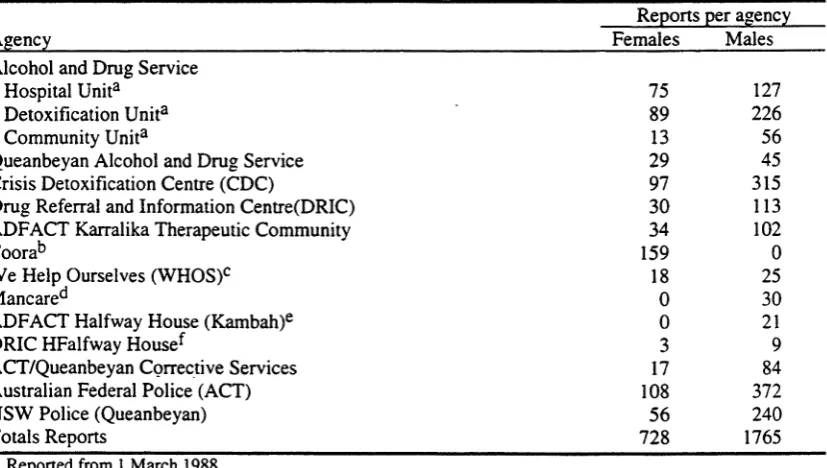
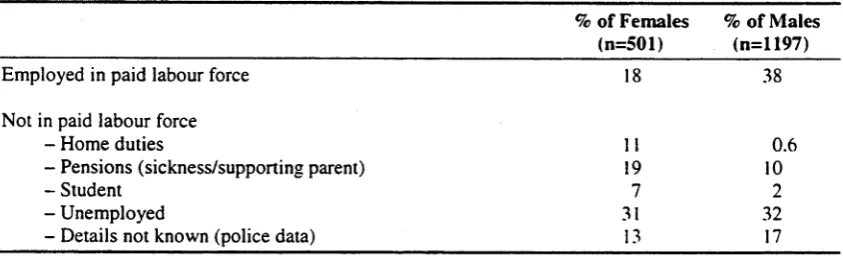
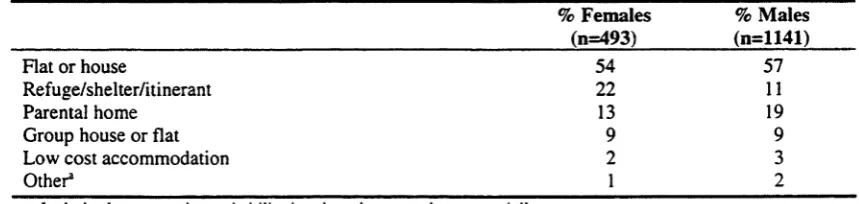
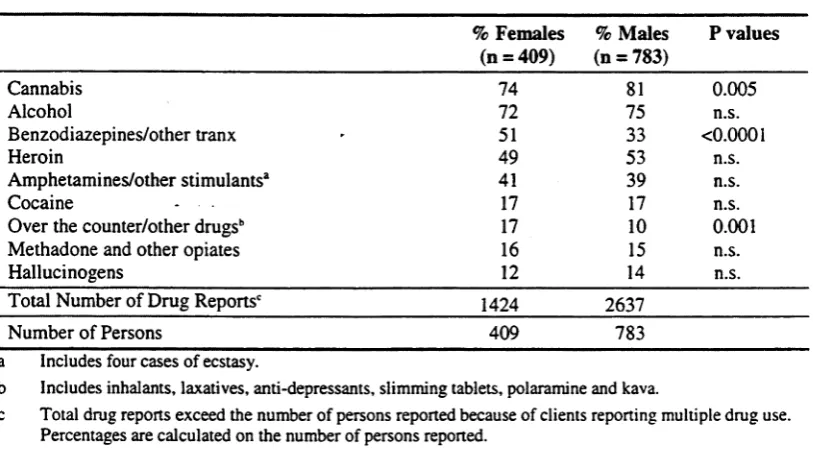
In Chapter 4, I examine drug indicators data from a gender perspective. I compare the data collected via the health and welfare system with the law enforcement data collected by the ACT Drug Indicators Project with the purpose of assessing appropriate methods for monitoring both men’s and women’s illegal drug use. I argue that drug indicators data could fail to measure adequately women’s drug use unless appropriate attention is paid to the gendered nature of the data sources. I suggest that the social construction of the data sources, in this case the gendered nature of the criminal justice system, influences the type of data available and therefore can bias the inferences on the epidemiology of drug use in the community.
Chapters 5 and 6 examine the process of beginning drug use. Chapter 5 considers the legal drugs - tobacco and alcohol, and Chapter 6 addresses the experience of moving on to illegal drugs. I use the quantitative data from the ACT Drug Indicators Project to compare males and females beginning drug use, and draw on the qualitative data from the interviews to explore gender and a range of other issues in beginning use. These chapters use a social construction approach to explore the dynamic process between the women and the overarching social constraints such as the construction of femininities as the women develop notions of what they see as acceptable drug use and acceptable femininity.
seen by many others as marking them as ‘sluts’ and sexually available, and how those attitudes were associated with various types of sexual assault ranging from sexual harassment to rape, and how the women deal with these attitudes and behaviours. In the third section, I explore the experiences and responses of the women to stereotypes about women who are drunk or using illegal drugs. Finally, I examine how the women deal with sexual stigma in drug treatment recovery
Chapter 8 concludes by drawing together the effects of social constructionism in drug discourses, theories, attitudes and behaviour of men and women who use illegal drugs and those who interact with them.
TERMINOLOGY
Drugs
As this thesis contains a review of past theories of drug use and drug dependence, I have chosen to retain the terminology of the period where appropriate. Therefore, as was suggested previously, at times I use the terms ‘alcoholic’, ‘alcoholism’, ‘addict’ and "addiction’ rather than the term which is presently accepted: ‘dependency’.
Dependence is defined as a ‘socio-psycho-biological syndrome manifested by a behavioural pattern in which the use of a given psychoactive drug (or class of drugs) is given a sharply higher priority over other behaviours which once had significantly greater value (i.e. drug use comes to have a greater relative value)’ (Edwards, Arif et al.
1982:19).
Recently, chemical dependency has come to replace the term addiction (Reed 1985:18; Bailey 1989). In this thesis, I use the term chemical dependency to indicate dependency on either or both alcohol and other drugs. Bailey notes that
there is a growing consensus in the field that all compulsive abuse of mind- altering substances is part of a single biopsychosocial disease called chemical
dependency. This generic term replaced the older more pejorative term
addiction and describes the compulsive use of chemicals and the inability to
resist the impulse to use them despite negative consequences in major areas of one’s life (1989:151) (emphasis in the original).
In this thesis, the principal emphasis is on illegal drugs but it is an artifical distinction created by the laws and culture. For people who use illegal drugs, the distinctions are not as important. There is an interchange between types of drugs. For adolescents, it may be alcohol, cannabis and/or amphetamines depending on the stage of experimentation. For dependent users, it may be the substitution of alcohol or benzodiazepines for heroin. In addition, multiple drug use of both legal and illegal drugs is common. Thus, while the study is principally about illegal drug use, I have not ignored the legal drugs which are intertwined in the use patterns of the people in this study.
There has been a time, and there are still some places, where the word ‘drugs’ implies illegal drugs. As may have been already noted, in this thesis, I use the term ‘drugs’ to include both legal drugs (such as alcohol and tobacco) and illegal drugs. In differentiating illegal drugs, I could have used the term ‘illicit drugs’ which is a legal, rather than a medical categorisation (Manderson 1993:11). I have chosen generally to use the term ‘illegal’ rather ‘illicit’ except where appropriate in discussing drugs and the legal system. In this discussion of the definition of drugs, I have attempted to demonstrate that the terminology is not simple, being overlayed with various and competing cultural meanings.
Gender
Nor is the definition of gender simple. There is considerable debate and some confusion over the meaning of the terms sex, gender, gender difference, sex roles and sexuality, and the theorisation of these terms is central to much recent feminist debate (Franklin 1996). I use both-the terms sex and gender but not in any strict sense. The distinction between sex (such as used in the categories male and female) as a signifier of biological difference and gender as a term to encompass the ways the social system organises and gives meaning to these biological differences has been questioned and shown to be problematic by Gatens (1983) and others (Edwards 1989; Thompson 1989; Grosz 1994). Grosz (1994) sees sex and gender as being inextricably interwoven from birth in the ongoing process of the creation of the self(s). But this does not mean that gender identity necessarily arises out of so called natural or biological difference. It is not appropriate here to discuss the extensive literature in feminist theory on this topic, but simply to note that gender is a complex construct which can not simply be explained by the supposedly dual categories of masculinity and femininity. As Connell argues, ‘the social relations of gender are not determined by biological difference but deal with it; there is a practical engagement rather than a reduction’ (Connell 1985:139-140). To elicit a clearer understanding of the meaning of gender as it pertains to this thesis, I address the critique of ‘sex roles’ theory and subsequent theories on the gender system.
The concept of ‘sex roles’, as defined by Parsons (1942; 1951), was used to describe what is now commonly referred to as gender difference (Franklin 1996). According to the Parsonian theory, men and women are socialised into sex-specific roles which govern their behaviour and identity. Thus girls become feminine by internalising the ‘female role’. This theory connects social structure (with socialising agents such as the family, school, films etc) with the formation of personality via the idea of role learning or internalisation (Connell 1985).
Feminist theorising has raised a number of concerns regarding the Parsonian theory of complementary male and female roles (Lopata and Thome 1978; Edwards 1983), one of which relates to the masking of male power. Sex role theory highlights differences between the sexes and their situations which are seen as being for the benefit of the overall social order, and ignores the relations of power between the sexes. As Carrigan, Connell and Lee note ‘the political effect is to highlight the attitudes and pressures that create artificially rigid distinction between men and women and to play down the power that men exercise over women’ (1985:580).
between men and women. It is ‘an initial social differentiation that permeates and underpins all other distinctions' (Matthews 1984:13). The dichotomy of men and women is an important part of gender order, but it does not simply consist of the dual categories, masculinity and femininity, for gender practice can be organised in any number of gender categories - ‘girls, old men, lesbians, husbands and so on’ (Connell
1987:140).
Connell identifies a number of different masculinities and femininities but, in the contemporary capitalist world, he notes, the interrelationship between masculinity and femininity ‘is centred on a single structural fact, the global dominance of men over women’ (Connell 1987:183). The dominant form of masculinity, which he defines as hegemonic masculinity, is constructed in a relation of dominance to the various subordinated masculinities and to women. The concept of hegemonic masculinity should not be seen ‘as ‘the male role’ but as a particular variety of masculinity to which others. - among them young and effeminate as well as homosexual men are subordinated' (Carrigan, Connell et al. 1985:586). Hegemonic masculinity provides a collective ideal, against which men live their actual lives.
Prevailing forms of femininity and masculinity provide standards and ideals against which men and women are constantly being scrutinised, by others and by themselves. According to Matthews
For women, the gender order of any particular society creates an ideology of femininity, which establishes both the imperative and the meaning of being a good or true woman. This ideology is a patterned set of ideas and beliefs about women that influence both the behaviour and the treatment of all women in the society (1984:15).
The gender order, then, is ‘a systematic process of power relations that, for the individual, begins at birth and turns barely differentiated babies into either women or men of the approved type, thereafter keeping them to the mark as the definitions change’ (Matthews 1984:13). For females, value constructs such as ‘lady’, ‘nice girl’ are learned ‘both a standard for and a goal of behaviour’ (Fox 1977). As Stephens (1988: 90) notes ‘appropriate behaviour for women has been both differentially defined and more narrowly circumscribed than for men’. Women who are drunk or using illicit drugs are regarded with greater moral concern than men similarly intoxicated (Erickson and Murray 1989; Ettorre 1992). The stereotypes of women in Australian society as either Dammed Whores or God's Police (Summers 1975) still prevail in the drug field (Sargent 1979:119-120). These societal views on acceptable and normative behaviour for the different sexes also indicate how definitions of sexuality are also implicit in the construction of gender.
Thus, types of femininity and masculininity are formed in particular milieux which are constituted out of a variety of gendered social structures. Class, race/ethnicity, the school and the work world are all gendered and the power relations in these social structures ‘cut across the gender order and deflect and modify it. Only within a specific group of men and women who are otherwise equal is it possible to see gender domination clearly’ (Matthews 1984:14).
also we resist and change them. There are a variety of possibilities in our gendered worlds and women, including those in the drug using worlds, make choices creating various versions of femininity.
In this thesis, I am not only concerned with gender as the property of a ‘socially produced individual character’ but also as a ‘property of collectives, institutions and historical processes’ (Connell 1987:139). In this approach, gender is not only used as a noun but also to describe a process, a practice - a particular way of organising life. Thus, I also address the gendering of social practices and institutions.
CHAPTER 2: THEORIES OF DRUG USE AND DEPENDENCY:
MOVING TO A GENDERED PERSPECTIVE
The history o f the development o f theories o f chemical dependency and illegal drug use is relevant to an understanding o f the present inadequate knowledge o f women's illegal drug use. In this chapter, 1 review the history o f drug research and the different theories which sought to explain drug use and treat chemical dependency. The models o f drug use which I w ill explore are (a) the disease model, (b) moral models, (c) the drug career model and (d) the pleasure model. This is by no means an exhaustive list o f the possible theories relating to drug treatment. For example, the disease model is one approach to a pathology perspective o f illegal drug use. My aim in reviewing theories about drug use is not to provide a comprehensive analysis o f drug theory and how it is applied in drug treatment setting but rather to highlight the gender aspects o f the historical background and explore the intellectual and discursive context to which women who use illegal drugs are exposed. I conclude this chapter with a re examination of the disease and pleasure models where gender is taken into consideration.
Research into alcohol and other drug use and treatment for problematic use began in a serious way in the United States in the 1930s and 1940s as part o f the rise o f medical dominance in a variety o f health and social welfare fields (W illis 1983; Edwards 1988: 160-1). The first modern journals devoted to reports o f treatment and research into drug problems were established in this period. The pioneer journal in the US drug field, The Quarterly Journal o f Studies on Alcohol, was established in 1940 and the pioneer British journal, the British Journal o f Addiction was first published in 1947.4 Medical practitioners were the most common treatment providers and researchers, patients were generally the treatment subjects, and alcoholism the most common drug problem. During this period, for the first time, psychiatrists and other medical practitioners came to identify the drug and alcohol field as a specialist medical area. Part o f the growing professionalism of this early period was the development o f theoretical explanations of drug use and addiction, beginning with the disease model o f addiction.5
THE DISEASE MODEL
A major theoretical development in the drug field occurred in the 1940s with Jellinek's presentation o f the disease model o f addiction (Jellinek 1946). Previously, alcoholism was regarded as immoral, and the alcoholic or drug user as a reprobate. This position was reflected in the latter period o f the Temperance Movement when alcohol was seen as evil, and among some Temperance groups, people were encouraged to take the “pledge’— to abstain from alcohol.6
4 The British Journal o f Addiction was preceded as (lie British Journal o f Inebriety from 1903-1946. In the US. a sim ila rty p e o f journal. The Journal of Inebriety, published irregularly from 1876 to 1914 (Jellinek 1960:2). 5 The fo llo w in g section on the various models o f drug use has been revised and expanded from a paper, tilled
Models and Explanations of Drug Use (Stevens, 1991) prepared as part o f the research into the Feasibility Research into the Controlled A vaila bility o f Opioids and published as Appendix 13 in the background papers o f Stage I o f the research (National Centre for Epidemiology and Population Health 1991).
By contrast, according to the disease model of addiction, addicts are sick, mentally, physically, or both (Riley and Maiden 1946). Thus they deserve help, not condemnation for their addiction. Jellinek (1946) is widely credited with developing the model of alcoholism as a disease. He described various phases in the drinking history that leads towards alcoholism. It was the two last stages of this process into ‘gamma alcoholism’ which he labelled as a disease (Jellinek 1946; Jellinek 1960:37). Jellinek adopted the newly accepted scientific methodology, an empirical study, to explain alcoholism, thus giving scientific legitimacy to the disease model. However, the concept of alcoholism as a disease began much earlier (McAllister, Moore et al. 1991:2). In 1890, for example William Booth, founder of the Salvation Army, supported the concept of the ‘disease’ of drunkenness and affirmed the need ‘to bear upon it every agency, hygienic or otherwise, calculated to effect a cure’ (Booth quoted in Drew 1986).
Levine argues that the notion that ‘alcoholism is a progressive disease ... whose only remedy is abstinence ... is about 175 or 200 years old, but no older’ (1978:143). In the 17th century and for most of the 18th century, ‘habitual drunkenness was regarded as natural and normal - as a choice made for pleasure’. Liquor was a normal part of living: a food, medicine and social lubricant (Warner 1992). People drank and got drunk because they wanted to and because they loved to drink, not because they ‘had’ to or could not stop themselves (Levine 1978:144). By the 19th century, the notion of drunkenness as due to an overwhelming and irresistible desire for liquor was beginning to develop and was a ‘major strand of 19th century thought - the ideology of the Temperance Movement' (Levine 1978). But the Temperance Movement located the source of the addiction in the drug (alcohol) whereas in the post-Prohibition era the source of the addiction was located in the individual body of the alcoholic. This new disease concept represented a shift in the concept of addiction but. Levine argues, it was
‘still well within the paradigm first established by the Temperance Movement'.
The notion that drunkenness and problematic alcohol use could be explained as a sickness, a disease to be treated, rather than a signifier of ‘a bad person' was one of the principal reasons for the acceptance of the disease theory by patients and clinicians. Drew, Senior Medical Adviser for the Drugs of Dependence Branch of the Commonwealth Department of Health in the 1980s. summarised the factors he saw as associated with the development of the disease model in this century:
The disease concept, as it applied to a self-destructive drinking pattern, was introduced as a reaction to overt moral condemnation or sheer neglect and indifference .... to inspire the hope of effective treatment .... to avoid guilt, shame and stigmatization, ... and to justify attempts at constructive intervention. It authenticated drug use as a medical problem, and stimulated scientific enquiry into the aetiology and treatment methods (including their evaluation) (Drew 1986).
responsibility to seek and eooperate in treatment but 'he or she does not have to get well' (Krivanek 1988: 204 - emphasis in the original).
This view, however, is contested by disease theory proponents such as members of Alcoholics Anonymous (AA) and Narcotics Anonymous (NA) who argue that the addict is not responsible for having the disease of addiction but they arc responsible for their recovery, for doing something about it (pers. comm. Toora Women's Addiction and Recovery Service). This two pronged approach is summed up in the philosophy of the Alcoholics Prayer which is:
God grant me the serenity to accept the things I cannot change, the courage to change things 1 can, and the wisdom to know the difference.
The first part of the prayer expresses acceptance of the disease of addiction and all that it has entailed - whether it means being drunk in the gutter, stealing to supply an addiction or simply selfishly putting oneself before family and loved ones and doing them harm. It can also entail accepting the reality of an abusive childhood (often growing up in an addicted family) and the subsequent need to blot out these realities with drugs of any type. Acceptance of the disease of addiction was one way of coining to terms with an unpleasant past - learning 'the serenity to accept the things 1 can not change’.
The second part of the prayer involves addressing the knowledge of addiction and having 'the courage to change the things I can’. Taking control of ones life and making changes is not easy - as the relapse rate back to destructive drug use testifies (Young 1990; Baily, Saunders et al. 1991; Saunders, Baily et al. 1993). Nevertheless, for many chemically dependent people, the disease theory presents an illuminating explanation for their past behaviour, and shows an opportunity for a new and better life without drugs. Addicts (a name they take for themselves) come to realise that they do not have to remain in what they now see as a self destructive lifestyle. But the new knowledge and motivation is only the first step in recovery. The responsibility to put the knowledge to use and change one’s life lies with each addict and the path to recovery can be rocky and difficult to negotiate. The ups and downs in the path to recovery require vigilance to avoid falling into old habits and support from new friends to avoid relapse. To argue that someone in recovery from addiction has handed over responsibility to treatment staff is a vast oversimplication.
Although responsibility lies with each addict for their recovery (Al-Anon teaches this to relatives and significant others), support is an important element in recovery. Thus, in AA and NA the twin elements of both knowledge (the disease theory) and support (from fellow members) provide a powerful incentive and tool for recovery and perhaps, in part, explain the success of the disease model. The popularity of AA, NA and the disease model attests to the relevance of the disease model to a substantial proportion of those with chemical dependency. In 1995, AA celebrated its 50th birthday in Australia and announced that ‘about 40,000 Australians attend some hundreds of meetings around the country with 400 meetings a week in Sydney alone. The first AA group in Canberra was set up in 1953. AA holds more than 50 meetings a week in Canberra.’ (The