City, University of London Institutional Repository
Citation
:
Bender, C., Hook, D. W., Meisinger, P. N. and Wang, Q-H. (2010). Complex correspondence principle. Physical Review Letters, 104(6), e061601. doi:10.1103/PhysRevLett.104.061601
This is the published version of the paper.
This version of the publication may differ from the final published
version.
Permanent repository link:
http://openaccess.city.ac.uk/13273/Link to published version
:
http://dx.doi.org/10.1103/PhysRevLett.104.061601Copyright and reuse:
City Research Online aims to make research
outputs of City, University of London available to a wider audience.
Copyright and Moral Rights remain with the author(s) and/or copyright
holders. URLs from City Research Online may be freely distributed and
linked to.
Complex Correspondence Principle
Carl M. Bender,1Daniel W. Hook,2Peter N. Meisinger,1and Qing-hai Wang3
1Department of Physics, Washington University, St. Louis, Missouri 63130, USA 2Theoretical Physics, Imperial College London, London SW7 2AZ, United Kingdom
3
Department of Physics, National University of Singapore, Singapore 117542 (Received 10 December 2009; published 12 February 2010)
Quantum mechanics and classical mechanics are distinctly different theories, but the correspondence principle states that quantum particles behave classically in the limit of high quantum number. In recent years much research has been done on extending both quantum and classical mechanics into the complex domain. These complex extensions continue to exhibit a correspondence, and this correspondence becomes more pronounced in the complex domain. The association between complex quantum mechanics and complex classical mechanics is subtle and demonstrating this relationship requires the use of asymptotics beyond all orders.
DOI:10.1103/PhysRevLett.104.061601 PACS numbers: 11.30.Er, 02.30.Fn, 03.65.w, 05.40.Fb
The correspondence principle states that at high energy
quantum mechanics resembles classical mechanics.
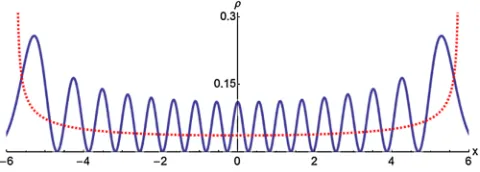
Figure 1 illustrates this resemblance for the harmonic-oscillator Hamiltonian H¼p2þx2 by comparing the quantum probability density quantumðxÞ ¼ jc16ðxÞj2 for
the 16th energy levelE16¼33with the classical
proba-bility densityclassicalðxÞ ¼1=s, wheresis the speed of the
particle. In the classically allowed region, which is bounded by the turning points atpffiffiffiffiffiffi33,quantumðxÞ
oscil-lates about classicalðxÞ. At the turning points classical is
singular becauses vanishes, but classical is normalizable
because this singularity is integrable. In the classically forbidden regionquantumdecays exponentially; in
conven-tional classical mechanics the particle cannot enter this region and thusclassical is thought to vanish.
This Letter generalizes quantum and classical probabil-ity into the complex domain. In complex classical mechan-ics we solve Hamilton’s equations x_ ¼@H
@p,p_ ¼ @H@x for
complex initial conditions and not just for initial conditions in the classically allowed region [1–7]. For the harmonic oscillator the classical orbits are nested ellipses with foci at the turning points. Usingquantumin Fig.1as a guide, we
require the probability of a classical particle being on more distant ellipses to decay exponentially, and we plot in Fig.2the relative probability density of finding the classi-cal particle at the pointz¼xþiy.
Figure2shows that, contrary to the traditional view, the classical particle density in the classically forbidden region is actually nonzero, and thatclassical resemblesquantumin
this region [8]. This figure emphasizes that the classical probability density extends beyond the real axis and into the complex plane, where classicalðx; yÞ falls off as the
reciprocal of the distance from the origin.
To establish the complex correspondence principle we must continue the quantum probability density into the complex plane to match the complex classical probability density in Fig. 2; to do this we must extend quantum
mechanics into the complex domain [9]. A Hermitian Hamiltonian (H¼Hy) has real energy levels and unitary time evolution. However, the class of physically allowable Hamiltonians may be extended to include non-Hermitian Hamiltonians that possess an unbroken P T (combined parity and time-reversal) symmetry [10–15]. These com-plex Hamiltonians also have real spectra and generate unitary time evolution, and such Hamiltonians have re-cently been observed in the laboratory [16–18].
The potential forP T-symmetric Hamiltonians satisfies
VðzÞ ¼VðzÞ. This allows us to use the time-dependent
Schro¨dinger equationictðz; tÞ ¼ czzðz; tÞ þVðzÞcðz; tÞ
to derive a local conservation law in the complex plane. The continuity equation istðz; tÞ þjzðz; tÞ ¼0, where the
local density and current are
ðz; tÞ cðz; tÞcðz; tÞ ¼ ½cðz; tÞ2; (1)
jðz; tÞ iczðz; tÞcðz; tÞ icðz; tÞczðz; tÞ: (2)
This Letter considers only wave functions cðz; tÞthat are eigenstates ofH; for such statesðzÞis time independent
FIG. 1 (color online). Correspondence principle for the har-monic oscillator. The probability densityðxÞ ¼ jc16ðxÞj2for a quantum particle (solid curve) and the corresponding probability density for a classical particle of the same energy (dotted curve) are shown. In the parabolic potential wellquantumðxÞis wavelike and oscillates closely aboutclassicalðxÞ. At the classical turning points, classicalðxÞdiverges. In the classically forbidden region the quantum particle density decays exponentially while the classical density is ordinarily assumed to vanish.
[image:2.612.318.558.526.612.2]andj0. Note thatðzÞis analytic in the complex-zplane because it is not the absolute square ofcðz; tÞ.
For a locally conserved probability density to be mea-surable it must be real and positive and its spatial integral must be normalized to unity; ðzÞ satisfies a continuity equation, butðzÞby itself cannot be a probability density because it is complex valued. Hence, we propose the novel approach of constructing a complex contourC on which
ðzÞdz is an infinitesimal probability measure. Thus, we require thatCsatisfy the three conditions
condition I : Im½ðzÞdz ¼0; (3)
condition II : Re½ðzÞdz>0; (4)
condition III : Z
CðzÞdz¼1:
(5)
For brevity, we discuss the harmonic-oscillator ground statec0ðzÞ ¼ez2=2 for whichðzÞ ¼ex2þy22ixy. Since
dz¼dxþidy, condition I gives
dy=dx¼sinð2xyÞ=cosð2xyÞ; (6)
which is a differential equation for the contourC. On the contour defined by this differential equation the local con-tributionðzÞdzto the probability is real.
Next, we turn to condition III. Inserting (6) into (5), we get two forms for the probability integral:
I¼Z Cdx
e½yðxÞ2x2
cos½2yðxÞx¼
Z
Cdy
ey2½xðyÞ2
sin½2yxðyÞ: (7)
These integrals converge if the contourCterminates in the two good Stokes’ wedges of opening angle=2centered
about the real axis, but they diverge ifCterminates in the bad Stokes’ wedges of opening angle=2centered about the imaginary axis.
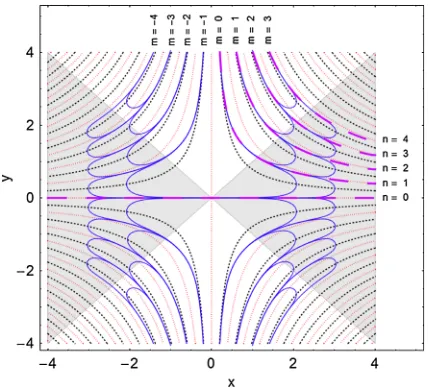
To determine whether the contourCterminates in good Stokes’ wedges we must solve (6). However, this simple-looking differential equation does not possess a closed-form solution, and we must rely on asymptotic techniques. For largexthe contourCapproaches the center of the good Stokes’ wedge and for largey,Capproaches the center of the bad Stokes’ wedge:
yðxÞ n=ð2xÞ ðx! þ1; n2ZÞ; (8)
xðyÞ ðmþ1=2Þ=ð2yÞ ðy! þ1; m2ZÞ: (9)
This asymptotic analysis shows that the integration paths occur in quantized bunches labeled by the integersmorn. Higher-order asymptotic analysis reveals that these bunches are stable in the bad Stokes’ wedges and unstable in the good Stokes’ wedges. This means that asjyj ! 1, a path in the bad Stokes’ wedge is drawn towards the quan-tized curves in (9), but that as jxj ! 1 paths veer away from the quantized curves in (8), which we call separatri-ces. Thus, only the isolated separatrices ever reach1in the good Stokes’ wedges; all other curves turn around and are drawn into the bad Stokes’ wedges. This remarkable be-havior is illustrated in Fig.3.
FIG. 2 (color online). Classical probability density atz¼xþ iyin the complex plane for a particle ofE¼2in a harmonic potential. The probability density resembles a pup tent with infinitely high tent poles at the turning points. Classical trajec-tories are nested ellipses, all having the same period T¼. These complex orbits are superposed on the tent canopy. The degenerate ellipse, whose foci are the turning points atpffiffiffiffiE, is the conventional real solution. Classical particles repeatedly cross the real axis in the classically forbidden regionsjxj>pffiffiffiffiE.
FIG. 3 (color online). Numerical solutions (solid curves) to the differential equation (6) in the complex-z¼xþiy plane. Solutions have vanishing slope on lightly dotted hyperbolas and infinite slope on heavily dotted hyperbolas. In the good Stokes’ wedges (dark shading)ðzÞdecays exponentially, and in the bad Stokes’ wedges (unshaded) ðzÞ grows exponentially. The only curves that reach1in the good wedges are separa-trices (heavy dashed curves labeled n¼0;. . .;4). A typical solution curve in a good Stokes’ wedge is unstable; as x! 1 the curve turns away from the separatrix, leaves the wedge, and is drawn into a bad Stokes’ wedge. In the bad wedge curves are stable and continue on toi1in quantized bunches labeled by m. The only continuous unbroken curve connecting the two good wedges is the special separatrix on the real axis.
[image:3.612.67.276.47.216.2] [image:3.612.331.546.373.567.2]Figure3shows that the only continuous path connecting the two good Stokes’ wedges follows the real axis. All other paths terminate in one good and one bad Stokes’ wedge, and thus the probability integral (7) along such paths diverges. This instability of contours in the good Stokes’ wedge in Fig. 3is a serious and generic problem that must be overcome if we wish to extend the quantum probability density into the complex plane.
To overcome this apparently insurmountable problem, we show that if a contour satisfying (6) in the complex-z
plane enters a bad Stokes’ wedge along one path and then returns along a second path in the same quantized bundle, then the integral along the combined paths is actually convergent. This result is surprising because the integral along each path separately is exponentially divergent. To prove convergence, we examine the integral
I¼Z1 Y dye
y2
e½uðyÞ2
sin½2yuðyÞ
e½vðyÞ2
sin½2yvðyÞ
; (10)
where uðyÞ andvðyÞare two solutions to (6) in the same bunch (that is, having the same value ofm). The leading asymptotic behaviors of these solutions are given in (9), and in fact the entire Poincare´ asymptotic expansions of
uðyÞandvðyÞare identical to all orders in powers of1=y. However, the difference DðyÞ uðyÞ vðyÞ is nonzero and is exponentially small
DðyÞ Key2½1þ ðnþ1=2Þ22y2=4þ. . . (11)
asjyj ! 1, whereK is an arbitrary constant. This result reflects the hyperasymptotic (asymptotics beyond all or-ders) content of (6) [19].
Using (11), we approximate the integral (10):
IKð1Þnðnþ1=2ÞZ1 Y dyy
3 ðY! 1Þ; (12)
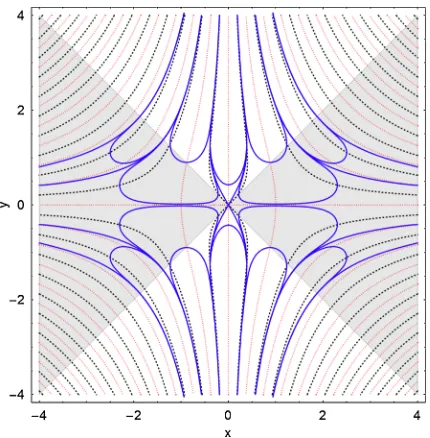
which is convergent. Thus, while there is no continuous path running between the two good Stokes’ wedges, there do exist paths connecting these wedges that repeatedly enter and reemerge from bad Stokes’ wedges. On these contours the probability integral I in (7) exists. Several such paths are shown in Fig.4.
Figure5is a generalization of Fig.4for the first excited state of the quantum harmonic oscillator. Note that con-tours that connect the two good Stokes’ wedges may or may not pass through the node at the origin.
We do not present the argument in this Letter, but along the contours shown in Figs. 4and5condition II in (4) is satisfied. That is, along the entire complex contour obeying the differential equation (6) the local contribution to the total probability integral is positive. Thus, the three con-ditions (3)–(5) are satisfied, and we have successfully extended the probabilistic interpretation of quantum me-chanics into the complex plane.
FIG. 4 (color online). Complex contours connecting good Stokes’ wedges. A contour (solid curve) begins at x¼ 1in the left good Stokes’ wedge (shaded), leaves the wedge along a separatrix, and runs up to i1 in the bad Stokes’ wedge (un-shaded). The contour continues downward along a path in the same bunch, crosses the imaginary axis at y¼ 0:003 324 973 872 707 912, and heads upwards into the same bad Stokes’ wedge. Finally, the contour reemerges from the bad Stokes’ wedge and continues towards x¼ þ1 along a separatrix in the right good Stokes’ wedge. Contours have zero slope on lightly dotted lines and infinite slope on heavily dotted lines. A second contour (dashed curve) connecting the two good Stokes’ wedges visits the bad Stokes’ wedge 4 times instead of twice.
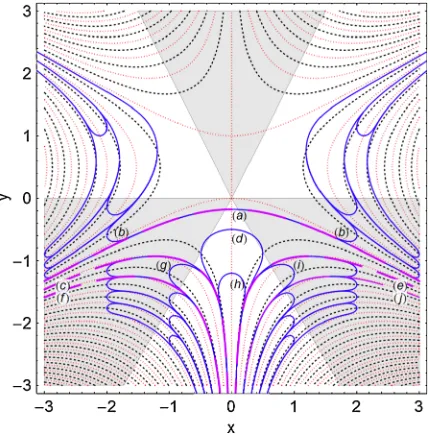
[image:4.612.331.546.348.567.2] [image:4.612.70.284.466.569.2]The analysis in this Letter is general and also extends to P T quantum theories, such as the quasiexactly solvable quartic anharmonic oscillator, whose Hamiltonian isH¼ p2x4þ2ix3þx2þ2iJx [20]. However, for quantum theories other than the harmonic oscillator, there are two kinds of bad Stokes’ wedges: (i) wedges for which there exist probability contoursCthat enter and reemerge from the wedge and for which the probability integral alongC
converges, and (ii) wedges for which no such contour exists. For the Hamiltonian above there are three good Stokes’ wedges and three bad Stokes’ wedges, one of type (i) and two of type (ii) (see Fig.6).
The quantum probability densities on the curves in Figs.4–6resemble pup tents with ripples in their canopies, in contrast to the smooth surface in the classical pup tent in Fig.2. These figures are the complex analog of Fig.1and they provide a first glimpse of the complex correspondence principle. This work suggests several directions for further research. For example, a detailed study should be made of the high quantum-number limit, time-dependent contours
C associated with noneigenstates (such as Gaussians) should be examined, and the complex correspondence principle for coherent states should be developed [21].
C. M. B. thanks the U.S. Department of Energy and D. W. H. thanks Symplectic Ltd. for financial support.
[1] C. M. Bender, S. Boettcher, and P. N. Meisinger, J. Math. Phys. (N.Y.)40, 2201 (1999).
[2] F. Calogeroet al., J. Phys. A38, 8873 (2005); Yu. Fedorov and D. Gomez-Ullate, Physica (Amsterdam) 227D, 120 (2007).
[3] C. M. Bender, J.-H. Chen, D. W. Darg, and K. A. Milton, J. Phys. A39, 4219 (2006); C. M. Bender and D. W. Darg, J. Math. Phys. (N.Y.)48, 042703 (2007).
[4] C. M. Bender, D. D. Holm, and D. W. Hook, J. Phys. A40, F81 (2007);40, F793 (2007).
[5] A. Fring, J. Phys. A40, 4215 (2007). [6] A. V. Smilga, J. Phys. A42, 095301 (2009).
[7] C. M. Benderet al., Pramana J. Phys.73, 453 (2009). [8] In the physical world the classically forbidden region is
accessible. In optics, when the angle of incidence at an interface is less than a critical angle, there is no trans-mitted wave. The electromagnetic field crosses the bound-ary but is attenuated exponentially beyond the interface. This field does not vanish in the classically forbidden region, but there is no flux of energy; that is, the Poynting vector vanishes in the classically forbidden region. In complex classical mechanics particles enter the classically forbidden region but there is no particle flow parallel to the real axis; like the vanishing of energy flux in total internal reflection, the particle flux is orthogo-nal to the real axis. See J. D. Jackson, Classical Electrodynamics(John Wiley & Sons, Hoboken, 1999). [9] C. M. Bender, D. C. Brody, and D. W. Hook, J. Phys. A41,
352003 (2008).
[10] C. M. Bender and S. Boettcher, Phys. Rev. Lett.80, 5243 (1998).
[11] P. Dorey, C. Dunning, and R. Tateo, J. Phys. A34, L391 (2001);34, 5679 (2001).
[12] A. Mostafazadeh, J. Math. Phys. (N.Y.)43, 205 (2002);
43, 2814 (2002).
[13] C. M. Bender, D. C. Brody, and H. F. Jones, Phys. Rev. Lett.89, 270401 (2002);92, 119902 (2004).
[14] C. M. Bender, Contemp. Phys.46, 277 (2005); Rep. Prog. Phys.70, 947 (2007).
[15] P. Dorey, C. Dunning, and R. Tateo, J. Phys. A40, R205 (2007).
[16] Z. H. Musslimani et al., Phys. Rev. Lett. 100, 030402 (2008); K. G. Makriset al.,ibid.100, 103904 (2008). [17] A. Guoet al., Phys. Rev. Lett.103, 093902 (2009). [18] C. E. Ru¨ter et al., Nature Phys., doi:10.1038/nphys1515
(2010).
[19] M. V. Berry and C. J. Howls, Proc. R. Soc. A 430, 653 (1990).
[20] C. M. Bender and S. Boettcher, J. Phys. A 31, L273 (1998).
[21] Coherent states for non-HermitianP T-symmetric poten-tials are discussed in E. M. Graefe, H. J. Korsch, and A. E. Niederle, Phys. Rev. Lett.101, 150408 (2008).
FIG. 6 (color online). Complex contours (heavy dashed lines) for the ground state (J¼1) of the quasi-exactly-solvableP T anharmonic oscillator. A separatrix (a) goes directly from the left good Stokes’ wedge to the right good Stokes’ wedge, crossing the imaginary axis at y¼ 0:176 651 795 619. Paths (b) that crossx¼0at higher points than the (a) path cannot reach1in the good wedge. Because they are unstable, such paths turn around, enter the upper bad Stokes’ wedges, and cannot ree-merge. A separatrix (c) leaves the left good wedge. It enters the lower bad wedge to the left ofx¼0, reemerges along paths (d) or (h), and reenters the bad wedge to the right ofx¼0. It then continues into the right good wedge along the separatrix (e). Another separatrix (f ) leaves the left good Stokes’ wedge, enters the lower bad Stokes’ wedge, leaves and returns along (g), leaves, reenters again along (d) or (h), leaves and reenters along ( j), and finally enters the right good wedge along the separatrix (f ). Solution paths are horizontal on lightly dotted lines and vertical on heavily dotted lines.
[image:5.612.68.283.46.263.2]