Abstract—The European Union has committed itself to sourcing 20% of its energy from renewables by 2020. Britain’s excellent wind resource is expected to make a significant contribution to this target, not least from Scotland and the north of England. However, exploitation of this resource requires appropriate and timely development of the GB electricity transmission system. This depends on appropriate market signals that communicate the need for transmission investment, something that many in the industry in Britain believe current arrangements do not adequately provide. This paper describes a number of proposals currently under discussion, outlines their interactions and highlights some of the key issues currently being debated.
Index Terms—transmission development, system access, wind generation.
I. INTRODUCTION
In Poznan in 2008, European Union leaders committed the EU to meeting 20% of its energy needs from renewable sources by 2020. Great Britain is recognised having one of the best wind energy resources in Europe. The UK and Scottish governments are committed to exploiting this resource in order to contribute towards meeting a target in Scotland of 50% of electricity and, in the UK, an aspiration of 20% of energy from renewables by 2020. To promote the development of renewable generation, a ‘renewables obligation’ (RO) has been established that requires electricity retailers to source a set percentage of the electricity they supply from renewables, demonstrated by obtaining the requisite number of ‘renewable obligation certificates’ (ROCs) in each year either from generators or bought in auctions [1]. Alternatively, they may enter into an end of year reconciliation in which those retailers not meeting their obligation pay a buy out price into a pot that is then redistributed among those parties that do.
The best wind load factors in Britain can generally be found in the north – Scotland and the north of England – or offshore (fig. 1). In view of the high costs and risks associated with offshore wind farm development, operation and maintenance, onshore wind farm development in the north has attracted most interest. Such interest was stated by the Office of Gas and Electricity Markets in Britain – Ofgem – to have been among the primary motivations for reform of the electricity market in Britain in 2005. Specifically, one of the cited benefits of the ‘British Electricity Trading and Transmission Arrangements’ (BETTA) was to enable
generators in Scotland to gain access to customers in England and Wales [3].
[image:1.612.323.512.260.487.2]The main effect of BETTA was to extend the ‘New Electricity Trading Arrangements’ (NETA) in England and Wales to Scotland and to open up access to transfers of power across the circuits interconnecting Scotland and England.
Fig. 1: annual average wind speeds in the UK [2]
Previously, access to a pre-determined nominal capacity on the circuits interconnecting Scotland and England had been auctioned by the joint owners – Scottish Power Transmission and National Grid. Now, by being deemed to be part of the single GB transmission system, access would be governed by the same arrangements as applied in England and Wales, which broadly meant that transmission system users would be permitted to connect to the system and to have firm rights to use it provided the system was developed in accordance with the design criteria of the ‘Security and Quality of Supply Standard’ (SQSS). The most pertinent implication of this is that where additional generation means transfers of power across any boundary that might be drawn on the ‘main interconnected transmission system’ (MITS) exceed the secure capability of that boundary, as determined in accordance with what is now the GB SQSS [4], that additional generation is not permitted to connect until appropriate reinforcements of the system have been carried out (“invest
System Development Issues Concerning
and connect”). However, under the terms of BETTA, existing generators in Scotland and those that applied for new connections before December 31 2004 were deemed to have firm rights (provided local connection works were completed) in spite of the boundary between Scotland and England being non-compliant with the GB SQSS. (Developers have since been offered the right to connect 13.5GW of wind generation to the GB transmission system by 2015. 2GW had connected by September 2008 in a system with a peak demand of around 62GW [5]).
At the same time as BETTA was being implemented, it was recognised that the SQSS criteria determining the minimum transfer capability on boundaries of the MITS had been developed for a system assumed to have only thermal generation. It was also recognised that such criteria were unlikely to be suitable for a system with a mix of generating plant including wind. Thus, a review of the MITS design criteria was initiated. (The issues that were due to be considered by that review were described in a paper to the main CIGRE Paris session in 2006 [6]).
In the meantime, while some doubt was being cast on the appropriateness of some aspects of the existing MITS criteria, the three GB transmission owners and the GB system operator – the GB ‘transmission licensees’ – set about articulating a cost-benefit argument for reinforcement of the system in the north of Britain, in particular within Scotland, across the boundary with England and in the north east and north west of England. This was based on the value of reinforcements in reducing the cost of constraint of exports of power out of Scotland [7]. A number of consultations were conducted by Ofgem to invite industry views on the appropriateness of the licensees’ proposals. Among the questions on which it was difficult to reach a consensus were:
• what should be assumed about the future ‘generation background’ in Scotland, namely what set of new generators would connect and which existing generators, some of which were quite old, would remain connected and operational; and
• what should be assumed about the total cost of constraints in each year of operation, in particular the net price of each MWh of re-despatch in the ‘balancing mechanism’?
Some responses to those consultations and to subsequent consultations by the UK government as part of its Energy Review in 2006 [8] voiced an opinion that uncertainties about the above questions would be resolved by reform of transmission access arrangements, in particular to oblige greater user commitment to paying future costs of transmission infrastructure and enabling a clearer ‘market-driven’ signal of the value of transfer capability across different parts of the system [9].
This paper outlines developments to date in review of the GB SQSS and in the ‘transmission access review’ (TAR) in Britain. The links between the two processes are discussed and, while developments are currently quite fast, suggests the
prospects apparent at time of writing, not least in respect of facilitating the connection and utilisation of renewable generation. It begins by describing the current access arrangements, electricity trading structure and main security criteria.
II. CURRENT ACCESS ARRANGEMENTS
The terms under which potential transmission users apply for and the transmission system operator grants rights to connect to and use the system are laid out in the ‘Connection and Use of System Code’ (CUSC) [10]. New users submit an application to the GB system operator (National Grid Electricity Transmission – NGET) and must be made an offer within 3 months of receipt of that application. The offer is for firm access rights (i.e. curtailment of access attracts some form of financial compensation) but, if the new connection would entail the system being non-compliant with the design criteria of the GB SQSS, it also outlines the reinforcements that should be completed before access will be granted. These are, broadly, ‘connection works’, user-specific infrastructure works and wider infrastructure works, the approach of first ensuring compliance with the SQSS being known colloquially as “invest and connect”. For the first two categories, the user is required to provide some financial securities against the costs of the works. This is so that, if the user subsequently withdraws from the agreement, neither the relevant transmission owner nor other transmission users are obliged to carry the cost of any of the new assets that are consequently stranded. If the user goes ahead and connects once the works are completed, the securities are not used and the user pays connection and use of system charges in the normal way1. However, while the connection offer quotes a
likely date of completion of the transmission works, neither the transmission owner (which provides the works) nor the system operator (with which the user has their agreement) is obliged to provide access on that date. This is defended by the transmission licensees on the grounds that the main risk to completion of the works is that of obtaining the necessary planning consents, which they argue is largely outside of their control. (Ofgem, on the other hand, has expressed its wish that, instead, access rights are granted within a certain period of the user’s acceptance of an offer [9]. This arrangement is yet to be implemented and is being considered as part of the TAR process that will be described presently).
Once a user has access rights – expressed for generators and owners of interconnectors that export power onto the GB transmission system as the ‘transmission entry capacity’ (TEC) that they hold – they may be held in perpetuity while connection and use of system charges continue to be paid. The user need only provide 5 days’ notice of an intention to relinquish their rights and no longer to pay the associated
1 Connection charges cover the cost of the connection assets – designated in
charges. In respect of new users holding offers to connect in some future year, any financial liability only begins once the reinforcement works for which they have been required to provide securities actually begin. Before that, they can change their connection date, the only cost being that of making the application for the modification of their connection agreement.
The above arrangement allows existing holders of rights – whether they are already connected or are due to connect at some future time – always to retain the option of exercising their rights at minimum risk. However, in cases where physical transmission capacity is limited, it can be seen as an obstacle to other users obtaining rights. Later applicants’ connections are likely to be made subject to more significant, costly and time-consuming system reinforcements than those specified in existing connection agreements. This can seem perverse in cases where the users holding those existing rights are not actually connected and are not paying anything for those rights. (It has been suggested that priority should be given to those users that have applied to connect first with the more extensive reinforcements made conditions of those connecting later, but Ofgem is understood to have expressed the wish that there is no discrimination between users on a basis of connection date).
The above situation, the interest in development of wind generation in Scotland, the limited capacity of the system to transfer power southwards across Scotland and onwards into England, the approach of “invest and connect” and various delays in achieving reinforcements of the MITS in Scotland and the north of England have led to a significant queue for access. (See, for example, [7] for a description of the reinforcements currently in train and [11] for further proposals). This, in turn, has led the UK government to see the current arrangements as a major threat to the achievement of its renewables targets [8]. Part of the debate about current arrangements has concerned the following question: if connection of renewable generation is being delayed for system reinforcements, how sure can we be that those reinforcements are really necessary? It is in this context that revision of the GB SQSS is receiving considerable attention.
III. THE DESIGN CRITERIA OF THE GBSECURITY AND QUALITY OF SUPPLY STANDARD
The GB SQSS contains four main sets of criteria [4]: for design of generation connections; for design of demand connections; for the design of the main interconnected transmission system (MITS); and for operation of the transmission system. (Further sections concern an introduction, voltage limits, terms and definitions and supporting appendices). The various design criteria are intended to ensure that sufficient assets are provided to allow the system to be operated in accordance with the operating criteria, including while maintenance and construction
zonal tariff administered by NGET and designed to be, broadly speaking, cost reflective. The total charge is split between generation and demand.
outages are taken. For example, generation connections should be such that single events do not lead to the need for more than a certain amount of frequency response and reserve to be held for the system to be kept within statutory frequency limits; and demand connections should be such that the largest demand groups continue to be supplied after the occurrence of single unplanned outage events while smaller groups might suffer some loss of supply for some limited period of time.
The GB SQSS evolved from a set of guidelines – ‘standards’ – used by the former state-owned transmission and generation utility, the Central Electricity Generating Board (CEGB). At the time of privatisation in 1990, these guidelines were set down as a licence condition of the new National Grid Company in England and Wales and the company made liable to a fine in the event of failure to comply. At the same time, a review of the standards was initiated. This led, in 1999, to incorporation of the NGC Security and Quality of Supply Standard into National Grid Company’s licence. For the introduction of BETTA in 2005, the NGC SQSS was further developed into the GB SQSS, a conformance of the NGC SQSS with two Scottish transmission licensees’ standards [12].
The original basis of the design criteria for the MITS predated even the CEGB standards. It was motivated by the specification of that transmission capacity which should be provided to interconnect different areas to provide access to ‘spare’ generation in a neighbouring area in the event of a shortage in the local area due either to generation unavailability or unusually high demand. The extent of the ‘interconnection allowance’ was based on flows observed across a 5 year period (at a time when areas were normally operated to be self-sufficient, i.e. the ‘planned’ transfers were zero), effectively the result of a statistical experiment conducted to characterise a stochastic problem. However, some time in the 1960s as central planning of generation determined that coal fields in the north of England and nuclear power around the coast should be used for electrical energy, bulk transfers of power became normal and the basic MITS design criterion changed to the accommodation of a ‘planned transfer’ consequential to these bulk flows with an additional margin – the ‘interconnection allowance’ – for demand uncertainty and variation in availability of generation.
common with the group export capabilities specified in the generation connection standard – was not designed to deliver a ‘constraint free’ system. In other words, it was assumed that generation capacity in an exporting area would, to some extent, ‘share’ the transmission capacity out of the area. In operational timescales, if the majority of generation in a particular exporting area is available and running, it leads to a need for the system operator to take action to reduce output in that area and replace it with increased output in the importing area.
Two main problems with the implementation of the current rule might be highlighted:
1. the ‘interconnection allowance’, used mainly to cater for unavailability of generation, was predicated on the characteristics of thermal generation; the frequency and extent of unavailability of wind generation is very different.
2. the extent to which wind generation – which has a maximum capacity factor generally significantly lower than that of thermal generation – on average ‘needs’ a certain amount of transmission capacity for export purposes and ‘shares’ it with other generation is very different from that of a similar capacity of thermal generation.
The net result in the view of some industry observers in Britain (see, for example, [13]) is that the minimum transmission capability specified by the ‘planned transfer + interconnection allowance’ rule in the SQSS is too high (thus contributing to excessive reinforcement and unnecessary delay to the connection of renewables) for an exporting area containing a significant volume of wind generation and should be discarded. Instead, it has been argued that the SQSS’s present facility for the justification of additional transmission capacity over and above the ‘deterministic’ minimum by reference to cost-benefit analysis should be the sole determinant of MITS capacity. This cost-benefit analysis is based on minimisation of the total cost of transmission, i.e. when the marginal cost of transmission facilities equals the marginal value of the sum of the cost of system operation (including response, reserve and losses) and the ‘cost’ of demand reduction or interruption. In this appraisal, much clearly depends on how the system is operated and what the system operator has to pay for actions. This, in turn, depends both on the operating criteria of the SQSS and the trading arrangements, which are briefly described in the next sections.
IV. TRADING ARRANGEMENTS IN BRITAIN
The trading arrangements in Great Britain, first introduced for England and Wales in 2000 and then extended to Scotland in 2005, are based around bilateral contracts between generators and retailers – ‘suppliers’ – leading to declaration to a ‘balancing mechanism’ (BM) by generation and supplier companies of ‘final physical notifications’ (FPNs) for each of their ‘balancing mechanism units’ (BMUs) at ‘gate closure’
an hour before the start of a given settlement period. (Each settlement period lasts half-an-hour). (See, for example, [14].) From that point on, the system operator – which operates the BM – has responsibility for balancing the system in terms of generation and demand and for ensuring its operation is secure in the context of the operating criteria of the SQSS. In order to achieve that, they take actions such as acceptance of ‘offers’ from generators to increase output or from demand to reduce consumption and acceptance of ‘bids’ from generators to reduce output or (rather unusually) demand to increase consumption. The cost of such actions contributes towards the total cost of ‘balancing services’. Other balancing services include the availability of frequency response, reserve, reactive power and black start capability.
The system operator is under an incentive – the ‘Balancing Services Incentive Scheme’ – to manage balancing costs in the overall interests of all users which, through the ‘Balancing Services Use of System’ (BSUoS) charge, meet the system operator’s costs.
V. SYSTEM SECURITY IN OPERATIONAL TIMESCALES
The need for balancing actions to secure the system clearly depends on what FPNs are submitted by both generators and suppliers (and whether they succeed in delivering them), on the physical transmission capacity that is available and on the level of security that should be provided. In Britain, notwithstanding that smaller demand groups do not need to be fully secured, since the vast majority of the 275kV and 400kV system is built as double circuit overhead lines, this is generally double circuit security against whatever pattern of planned outages is prevailing, a convention sometimes termed N’-D security.
exploited. The GB SQSS also implicitly recognises different levels of risk in terms of consequences of events.)
Fig. 2: Optimisation of system operation: balancing of costs of preventive and corrective actions
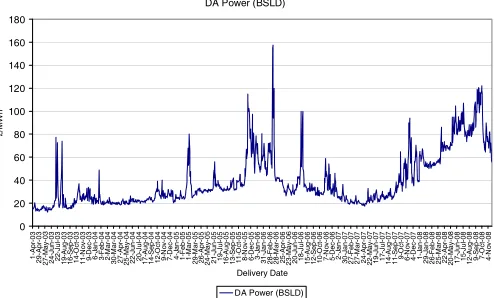
While the system operator has some control over the timing of planned transmission outages (though less over their frequency and duration), the FPNs and bid and offer prices are determined by others. In the medium term, while some contract might be struck with a generator to ensure availability at key times (in particular, when transmission outages are taken) or with large consumers for interruptible load, these must be viewed as uncertain (fig. 3).
In the long term when, in a cost-benefit analysis, balancing costs must be estimated to establish the value of potential system reinforcements, they must be regarded as highly uncertain, no matter that, in a perfect market, differences between generator bids and offers should – in theory – reflect the relative prices of fuel. Ofgem currently regards the cost of constraints as excessive having risen from £84m in 2005/6 to a forecast level of over £260m for 2009/10 [18]. That the cost of constraints is uncertain and high might be regarded as indicative of market power [19], failure to levy BSUoS charges on those parties that give rise to the greatest part of balancing service costs, or of failure to reflect the value of access rights in areas with limited transmission capacity so that – relative to that transmission capacity – excessive rights are applied for and granted.
The next section summarises proposals under consideration at time of writing to better manage access in the longer term.
Fig. 3: volatility of the day ahead power price in Britain (April 2003-November 2008) [17]
VI. TRANSMISSION ACCESS REFORM
Processes for the auction of rights of access to a transmission system have been implemented in various parts of the world and have long been discussed in Britain. In its Energy White Paper of 2007, the UK government initiated a major review of transmission access in Britain that included among its options auctioning of rights with the main cited purpose being the faster facilitation of connection of renewables and enduring arrangements permitting identification of new transmission infrastructure necessary to meet the UK’s share of the 2020 EU renewable energy targets [9].
The main measures considered have been “connect and manage”, the release of short-term rights, the facility for generators to ‘overrun’ their allocated rights, a mechanism by which generators might share rights, modifications to existing term access rights provision and radical reform of long-term access rights where they are acquired through an auction process.
Each of the aforementioned measures would require some change to the ‘Connection and Use of System Code’ (CUSC). This might be achieved by any CUSC signatory, including the system operator (National Grid), bringing forward a CUSC amendment proposal. A working group is then formed from among CUSC signatories to consider the proposal and to report on whether or not it meets the objectives of the CUSC better than current arrangements. The working group’s report is consulted on and the various responses considered by the CUSC Panel which makes a final recommendation to Ofgem. Ofgem then conducts its own consultation in which it expresses its own view on the proposed amendment and seeks comments. Finally, Ofgem has the power to approve – or decline to approve – proposed amendments.
The various access reform measures have been articulated as a set of different CUSC amendment proposals as summarised in Table 1. The Table also shows the CUSC Panel responses to them.
[image:5.612.46.293.561.710.2]The CUSC Panel responses to the proposals summarised in Table 1 show that the industry has a clear appetite for greater flexibility in short-term access. At present, while the transmission system is not designed to be constraint free against a given ‘background’ of generation capacity, there will be times during a year, particularly off-peak, when ‘spare’ transmission capacity will be available. This should be especially apparent when some power stations are on planned outage – the rights these stations hold might be made available to others although it is normal for the transmission owners to schedule transmission outages around exporting groups at times of generation outage so the amount of short-term access that can be provided might be limited. On the other hand, generating companies with a portfolio of plant utilising different technologies will seek to share access as straightforwardly as possible so as to use wind generation to satisfy bilateral energy contracts when wind speeds are high and thermal generation at other times.
DA Power (BSLD)
0 20 40 60 80 100 120 140 160 180 1-A pr -03 29-A pr -0 3 27 -M ay -0 3 24- Jun-03 22 -J ul -0 3 19-A ug-03 16-S ep-03 14-O ct -0 3 11-N ov -0 3 9-D ec -03 6-Ja n-04 3- Feb-04 2-M ar -04 30-M ar -04 27-A pr -0 4 25 -M ay -0 4 22- Jun-04 20 -J ul -0 4 17-A ug-04 14-S ep-04 12-O ct -0 4 9-N ov -04 7-D ec -04 4-Ja n-05 1- Feb-05 1-M ar -05 29-M ar -05 26-A pr -0 5 24 -M ay -0 5 21- Jun-05 19 -J ul -0 5 16-A ug-05 13-S ep-05 11-O ct -0 5 8-N ov -05 6-D ec -05 3-Ja n-06 31- Jan-06 28- Feb-06 28-M ar -06 25-A pr -0 6 23 -M ay -0 6 20- Jun-06 18 -J ul -0 6 15-A ug-06 12-S ep-06 10-O ct -0 6 7-N ov -06 5-D ec -06 2-Ja n-07 30- Jan-07 27- Feb-07 27-M ar -07 24-A pr -0 7 22 -M ay -0 7 19- Jun-07 17 -J ul -0 7 14-A ug-07 11-S ep-07 9-O ct -07 6-N ov -07 4-D ec -07 1-Ja n-08 29- Jan-08 26- Feb-08 25-M ar -08 22-A pr -0 8 20 -M ay -0 8 17- Jun-08 15 -J ul -0 8 12-A ug-08 9-S ep-08 7-O ct -08 4-N ov -08 Delivery Date £/ M W h
DA Power (BSLD)
Cost of preventive measures
Expected cost of corrective measures
Pre-fault constraint of generation curtail and replace constrain on and accept bids Arming of inter-trips Availability of response Availability of reserve
Post-fault generation Ōdrops Õ accepted bids and offers Triggering of inter-trips
deemed acceptance of bids Utilisation of response Utilisation of reserve Demand reduction Load interruption Also, in investment planning timescales
Investment in additional capacity
TABLE 1–CUSC AMENDMENT PROPOSALS RELATED TO TRANSMISSION ACCESS REFORM
Label Description CUSC Panel
response CAP161 Short-term access – auctions of available
transmission capacity n weeks ahead for 1 week of rights or m days ahead for 1 day of access
Approved
CAP162 Entry capacity overrun – after the event charging for generators having generated more than their held access rights entitle them to
Approved
CAP163 Entry capacity sharing – permits different generators to exchange access rights between them without need for central facilitation, only notification; initially intended to be entirely free within pre-defined zones, but latterly accepted to be dependent on quoted node-to-node ‘exchange rates’.
Approved
CAP164 “Connect and manage” – finite duration access rights granted to relieve the access ‘queue’ with ‘socialisation’ of additional system constraint costs while system reinforcements are undertaken
Amended proposal approved CAP165 Finite long-term rights. Two forms were
considered – rights for whatever period is applied for are granted upon commitment to pay use of system charges for that period; and a rolling commitment to paying charges in return for access rights, with a notice period long enough with respect to the current 5 days to give useful signals on need (or otherwise) for system reinforcement
Discussion continuing on which form
CAP166 Access auctions. Various forms have been suggested, centred around what terms are quoted in a bid – just the requested volume and a price; or volume, price and the duration for which the rights are sought; or volume, price, the duration and a price for which the party would be prepared to subsequently relinquish held rights (‘buyback’); or the last of these but with two rounds of auction giving the chance for revised bids; or the last form but with ‘use it or lose it’ provision
All forms rejected except the last which is still under consideration
The CUSC Panel, which is dominated by representatives of generation companies, has, however, been less welcoming of proposals for reform of longer-term access. One of the main subjects of concern to industry participants has been what rights might be inherited by existing parties. That is, under any particular reform, would existing generators that already have connection agreements or are already connected retain those rights? Different generating companies have then shown particular concerns about an auction process. For example, British Energy, which owns and operates the UK’s nuclear power stations, has queried the price it might have to pay to obtain sufficiently secure long-term rights to justify the high capital investment associated with new nuclear capacity. Renewables operators, on the other hand, might be expected to try to balance long-term and short-term rights but be concerned about exposure to high prices in the short-term markets [20].
A. Links between transmission access reform revision of the security standard
As outlined above, one of the aims of TAR has been to give clearer signals to the transmission owners on the need – or otherwise – for reinforcement of the system. Beyond
definition of how to distinguish ‘contributory’ from ‘non-contributory’ generation, the present GB SQSS is silent on how a transmission planner should determine the ‘background’ of generation capacity – how much, of what type and where it is located – against which the system is to be designed in accordance with the set criteria. The default approach would be to assume all those generators that have connection rights in a given future year are in the background and then to determine which are ‘contributory’, but, as noted above, generators can currently hold rights for future years without the associated commitment to pay for them in those years. This inevitably results in considerable uncertainty about which new generators will actually be connected in those years and which existing generators will still be operational [21]. In the 5-yearly ‘price reviews’ in which Ofgem determines the transmission owners’ income, based on assumptions about future operational and capital expenditure, this leads to difficulty for the transmission owners in justifying their plans.
In contrast to present access arrangements, many of the various proposals for long-term access, by obliging user commitment to paying access charges for a significant period, promise to give greater certainty on the future generation ‘background’ against which transmission should be planned. At time of writing, as well as final decisions being awaited from Ofgem (with the possibility of subsequent challenge by individual industry participants), the implementation details are yet to be worked out. Nevertheless, the greater certainty on generation background would seem to be something that can be usefully addressed in the present review of security standards. Whether or not there continues to be some set of straightforward ‘deterministic’ rules that stipulate required transfer capabilities based on a particular ‘background’, it is highly likely that recourse to explicit comparison of the economic benefits of additional system capacity in terms of avoided costs of system operation will still form at least part of a future standard. Proposed reform of short-term access may well also change the basis of such an evaluation significantly. Thus, it can be seen that there are quite close interactions between transmission access reform and review of the SQSS.
VII. DISCUSSION
The main implications of present access arrangements for generators in Britain might be summarised as follows:
• Once rights have been obtained, there is no risk associated with future denial of access; and future charges for access are highly predictable as a consequence of the present TNUoS charging methodology and the role played by Ofgem in regulating the transmission owners’ income.
This latter characteristic has been a key motivation for Ofgem and the UK government’s pursuit of reform of transmission access. However, all of the proposed reforms of long-term access must inevitably mean that generators’ risk in respect of connection in export constrained areas is increased, perhaps significantly. Generators might therefore be seen as having a choice between locating new facilities in areas of the system that are less constrained but perhaps less economically optimal from a production point of view, or simply bearing the increased risk of locating in the export constrained areas. Without adequate competition in generation, it seems inevitable that the increased costs associated with both of these would be passed on to the consumer although proponents of reform might argue that reform simply provides a much keener evaluation of the overall economics of production versus transmission2.
An area in which Ofgem presently regards there to be scope for market power and inadequate competition is in balancing services for resolution of network constraints. Reform of system access may be expected to reduce this scope, as might a transition to some kind of ‘cost-reflective’ BSUoS charging3. Both of these changes might be expected to
reduce the cost of constraints.
A. Generators’ responses to reform proposals
In any reform of market arrangements, there will be some winners and some losers. It seems to have been generally assumed by generators that auctions of long-term access rights will increase both uncertainty and their costs, some more than others. If competitive pressures prevent these costs being passed on to consumers in full, generators’ resistance to radical reform of long-term access seems inevitable. In spite of Ofgem and the government’s avowed aim of reform being to facilitate the earlier connection of renewables, representatives of renewables developers are also generally opposing the various ideas put forward under CAP166. (They have long favoured “connect and manage” with ‘socialisation’ of increased constraint costs, which can be expected to be passed through to consumers). With the globalisation of energy and the largest generation developers having access to investment opportunities in many different countries, if increased costs of access cannot, at least in part, be passed on to consumers, some aspects of reform might make investment in development of renewables in Britain less attractive.
A simple response to such concerns might be to argue that, if the consequence of a lack of transmission is reduced investment in renewables, then transmission should simply be built. (This might be justified, as noted in [11] and [21], on a
2 It might be noted that one of the conditions of the transmission owners’
licences in Britain is the facilitation of competition in generation.
3 Through use of locational marginal pricing (LMP) in short-run markets,
some other countries seem not to experience such difficulties. However, some industry players have long argued against adoption of such an arrangement in Britain, largely because of the difficulty of calculating LMP in an accurate manner that takes due account of the various corrective measures that the system operator takes to achieve system security at least cost, and of accurately representing voltage and stability constraints in a reliable software facility.
‘least regret’ basis. Moreover, some observers point out that, according to figures Ofgem released in 2005, the cost of transmission at that time represented only 3% of a consumer’s electricity bill [22]). An alternative response might be to question the definition of ‘lack of transmission’.
B. Implications for transmission planning and operation A transmission investment planner’s aim is to provide sufficient transmission capacity for the system to be operable in accordance with relevant operating standards. Moreover, such capacity should be provided as gives an overall economic balance between costs of system operation, the cost of transmission infrastructure and the consequences for consumers of loss of supply. The present ‘deterministic’ minimum transmission capacity on the main interconnected system in Britain is based on an implicit balance between those factors that some argue is no longer valid. An explicit evaluation of such a balance would, however, depend on a large of set variables and assumptions for the values of those variables that might be hard to justify in a planning enquiry when seeking consents for a new transmission line.
It was noted above that sufficient transmission capacity should be provide for the system to be operated in accordance with operating standards. It might be asked whether those standards are unduly restrictive on the power transfers that can be accommodated on the system. Some participants in industry workshops have been suggesting reform to the operational criteria to reduce the need for transmission capacity with, at one extreme, the proposal that conventional security rules such as ‘N-1’ are thrown away and reliance put on ‘real-time’ probabilistic assessments of risk. Such proposals might be supported by pointing towards ‘smart grids’ principles in which, in the not too distant future, ‘smart meters’ will enable active control of demand at low cost. In the short term, however, while increments to transmission unreliability might have minimal effects on the reliability of supply experienced by individual consumers (since most unreliability is experienced as a consequence of distribution outages), the political acceptability of greater numbers of ‘major unreliability events’ affecting very large numbers of consumers at a time is open to question. In addition, system operators might be concerned about their liabilities in the absence of clear rules against which, after a major system incident, it might be determined whether they took – or failed to take – appropriate action.
maintenance or construction work. The quote of a single ‘availability capacity’ depends on some assumptions about that range of power flows (though this would be helped by a two round auction such as suggested in one of the recent alternative amendment proposals for CAP166). With the transmission licensees still having a licence obligation towards the planning and operation of ‘economic and efficient’ transmission, and with the expectation that not all generators will buy all the access rights they require in long-term auctions, the transmission licensees might also need to make judgements on whether to build sufficient transmission to accommodate all the granted long-term rights without any network constraints (which is not done now) or some proportion of those rights on the grounds that they will not always be exploited (and could be sold in short-term access markets if ‘spare’ transmission capacity is available at different times of the year). It might be argued instead that the amount of transmission built should simply reflect revenues from the long-term auctions, though it may also be observed that revenues from such auctions are often maximised by limiting the available capacity.
VIII. CONCLUSIONS
This paper has outlined the current situation in Great Britain where the Scottish and UK governments’ ambitions to meet a significant proportion of future energy needs with reneweable energy has, with the incentive provided by the ‘renewables obligation’, attracted considerable interest from developers in building and connecting wind farms to the transmission system in the north. However, the northern part of the GB transmission system is already heavily constrained. This and the consequential delays to system access have led to proposals for reform of the GB ‘Security and Quality of Supply Standard’ that drives transmission development for a given ‘background’ of generation capacity and of the means by which generators gain and pay for access rights.
The main issues under discussion have been described. While there is consensus among industry participants, the regulator and the UK and Scottish governments that change is needed to better facilitate the exploitation of the renewable resource, it has been shown that there remain complex questions of implementation to be resolved. These include whether auctions for access should take place and how they might be organised alongside trading of short-term rights, whether security standards should be relaxed and how ‘market signals’ might be better used in future to drive investment in transmission.
IX. REFERENCES
[1] Ofgem, “What is the renewables obligation?”,
http://www.ofgem.gov.uk/sustainability/environment/RenewablObl/Pages/ RenewablObl.aspx accessed March 20, 2009.
[2] Department of Trade and Industry, UK Energy In Brief, July 2000.
[3] Ofgem, BETTA (GB Consultation),
http://www.ofgem.gov.uk/Networks/Trans/Betta/GBconsult/Pages/GBCon sultation.aspx accessed March 20 2009.
[4] National Grid Electricity Transmission, “GB Security and Quality of Supply Standard version 1”, September 2004. Available:
http://www.nationalgrid.com/uk/Electricity/Codes/gbsqsscode/
[5] National Grid Electricity Transmission, 2008 Seven Year Statement, available: http://www.nationalgrid.com/uk/Electricity/SYS/
[6] K.R.W. Bell, “The sufficiency of transmission capacity to accommodate wind farms and manage security of supply”, Paper C1-112, Proc CIGRE 2006, Paris.
[7] S.A. Wood, C.H. Bayfield, A.P. Hiorns and Chandra Trikha, “Planning for the Integration of On-shore Renewable Generation for the GB Transmission System”, Paper C1-114, Proc CIGRE 2006, Paris.
[8] Department for Trade and Industry, The Energy Challenge, London, July 2006, available: http://www.berr.gov.uk/files/file31890.pdf
[9] Ofgem/BERR, Transmission Access Review – Final Report, June 26, 2008.
[10] National Grid Electricity Transmission, The Connection and Use of
System Code, available:
http://www.nationalgrid.com/uk/Electricity/Codes/systemcode/contracts
[11] Electricity Networks Strategy Group, Our Electricity Transmission
Network: a vision for 2020, March 2009, available:
http://www.ensg.gov.uk/index.php?article=126
[12] K.R.W. Bell, N. Green, D. Nicol , Chandra Trikha, “Security criteria for planning and operation in the new GB market”, Paper C2-108, Proc
CIGRE 2006, Paris.
[13] D. Pudjianto, M. Castro, P. Djapic, B. Stojkovska, G. Strbac, R.N. Allan, “Transmission Investment and Pricing in Systems with Significant Penetration of Wind Generation”, IEEE Power Engineering Society
General Meeting, 24-28 June 2007.
[14] Elexon, “Market Principles”,
http://www.bmreports.com/bwx_help.htm#marketPrinciples accessed March 20 2009.
[15] Goran Strbac, presentation at ‘International Benchmarking Workshop’, Imperial College, London, March 9 2009.
[16] D.S. Kirschen, K.R.W. Bell, D.P. Nedic, D. Jayaweera, R.N. Allan, “Computing the value of security”, IEE Proceedings Generation,
Transmission and Distribution, Volume 150, Issue 6, pp. 673 – 678,
Nov. 2003.
[17] Sam Matthews, “UK Balancing Services”, National Grid Lecture at
University of Strathclyde, December 2008.
[18] Ofgem, “Managing Constraints on the GB Transmission System”, Open letter, Feb. 17, 2009.
[19] Ofgem, “Competition Act investigation into Scottish Power and Scottish and Southern Energy”, Open letter, Jan. 19, 2009.
[20] National Grid, CAP166: Transmission Access - Long-term Entry
Capacity Auctions,
http://www.nationalgrid.com/uk/Electricity/Codes/systemcode/amendments /currentamendmentproposals/
[21] K. Bell, J. Civil, A. Prangley, “Development of methods for long-term transmission system planning under uncertainty”, Proc. 6th International
Conference on Probabilistic Methods Applied to Power Systems,
Madeira, September 25-28, 2000.
[22] Energy Network Association http://2008.energynetworks.org/factsheets/ , accessed Nov. 2008.
X. BIOGRAPHIES
Keith Bell is a Senior Lecturer in the Department of Electronic and Electrical
![Fig. 1: annual average wind speeds in the UK [2]](https://thumb-us.123doks.com/thumbv2/123dok_us/1698883.123267/1.612.323.512.260.487/fig-annual-average-wind-speeds-uk.webp)