for students with disabilities
Report to HEFCE by
Matthew Williams, Emma Pollard, Jamal Langley (IES)
Ann-Marie Houghton, Joanna Zozimo (REAP)
IES is an independent, apolitical, international centre of research and consultancy in public employment policy and HR management. It works closely with employers in all sectors, government departments, agencies, professional bodies and associations. IES is a focus of knowledge and practical experience in employment and training policy, the operation of labour markets, and HR planning and development. IES is a not-for-profit organisation.
Researching Equity, Access and Participation
REAP is an externally funded research group based in Lancaster University’s Department of Educational Research, which explores the factors contributing to exclusion from
learning as well as looking at the ways in which barriers to participation can be removed. It works closely with the Centre for Social Justice and Wellbeing in Education, and
HERE@Lancaster (the Centre for Higher Education Research and Evaluation).
Acknowledgements
The authors are indebted to Grace Simpson and Sarah Howls at HEFCE for their support and project management, and Rebecca Finlayson at HEFCE for her support in providing relevant data analysis and statistics. We are also grateful to the representatives in the universities and colleges who provided information for the survey responses, and particularly to those who collated and coordinated the institution responses; and also to the staff in the case study institutions for their enthusiasm, frank feedback and detailed insights.
Institute for Employment Studies City Gate
185 Dyke Road Brighton BN3 1TL UK
Telephone: +44 (0)1273 763400
Email: [email protected] Website: www.employment-studies.co.uk
1 Introduction and Background ... 13
1.1 Introduction ... 13
1.2 Background and context ... 14
1.3 Disabled students in HE ... 17
1.4 Need to update the research ... 22
1.5 Methodology ... 23
1.6 Report structure ... 27
2 Governance, organisational structures and budgets ... 29
2.1 Governance and organisational structures... 29
2.2 Budget and expenditure... 35
3 Organisation of support services ... 41
3.1 Day-to-day responsibility for disability services ... 41
3.2 Central support for disabled students ... 45
3.3 External support ... 55
4 Inclusive provision ... 58
4.1 Characteristics of inclusive provision ... 58
4.2 Commitment to inclusive practice ... 61
4.3 Inclusive teaching, learning and assessment measures ... 63
4.4 Using technology to aid inclusion ... 66
4.5 Other inclusive practices ... 71
4.6 Physical accessibility ... 78
4.7 Staff training ... 82
4.8 Overall progress towards inclusive provision ... 90
5 Disclosure ... 97
6 Engagement... 100
6.1 Engaging with students... 100
6.2 Engaging with external providers ... 102
7 Monitoring and evaluation ... 105
7.1 Reviews of current disability services ... 105
7.2 Evaluation of current practices ... 106
7.3 Future monitoring and evaluation plans ... 109
8 Conclusions... 111
8.1 Overview of provision ... 111
8.2 Challenges ... 114
8.3 Recommendations ... 117
Case study institutions ... 123
Glossary ... 124
Bibliography ... 126
Appendix 1: Case study participant briefing ... 129
Executive summary
Introduction
This report presents findings from the first phase of a two-part study1 to review the levels
of support for disabled students across the higher education (HE) sector in 2016/17 and the progress made by providers towards an inclusive social model of support. It is set against a context in which:
a. the numbers of disabled students have dramatically increased with particular increases in the proportion of individuals with mental health conditions and specific learning difficulties;
b. the funding for institutions and for individual students has changed (shifting more responsibility on to providers); and
c. the prevailing model of disability is gradually moving from a medical model (a
problem belonging to the disabled individual) to a social model (where it is society that disables individuals).
The study involved an online survey of 137 providers in receipt of Higher Education Funding Council for England (HEFCE) additional funding2 to develop inclusive teaching
approaches to support disabled students; and in-depth case studies with 13 providers which gathered detailed insights and feedback from 59 individuals in various roles (including both staff and student representatives).
Governance, organisational structures and budgets
■
Strategic responsibility for supporting disabled students rarely sits with a single person or single location within the institution, rather the needs of disabled students are represented on the senior executive team and in a range of key/influential boards and committees. This is felt to reflect the commitment of institutions to supporting disabled students, and also illustrates the cross-cutting nature of this area of work. The
1 The second phase will revisit higher education providers (HEPs) at the end of the 2017/18 academic year to
assess the impact of the increased HEFCE funding to support disabled students.
2 Only providers receiving £20,000 or more were sampled for the survey. This includes further education
senior executive team also tends to have responsibility for deciding the disability services budget.
■
Key Indicator 1:90% of higher education providers (HEPs) have written policies describing the support and provision for disabled students, covering:
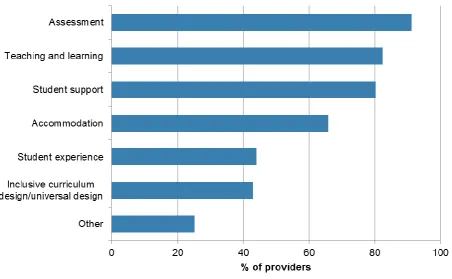
● Assessment (91%)
● Teaching and learning (82%)
● Student support (80%)
● Accommodation (66%)
● Student experience (44%)
● Inclusive curriculum design/universal design (43%).
Almost all institutions have written policies describing the support and provision for disabled students, but these tend not to be updated annually. Typically policies cover assessment, teaching and learning, and student support rather than the student experience and inclusive curriculum design. There are indications that inclusive curriculum design is associated with maintaining or reducing the numbers of self-declared disabled students, perhaps suggesting that with embedded inclusive
practices students may not feel the need to self-declare in order to access support. This is worthy of further exploration.
■
Approximately half of the institutions have policies relating to specific categories of disability or groups of students, most commonly for students with mental health problems and those with specific learning difficulties – and these represent the largest groups of disabled students in the sector. Other policies, strategies and action plans can include staff development plans and capability/fitness to study policies (to identify students at risk and to provide more intensive support).■
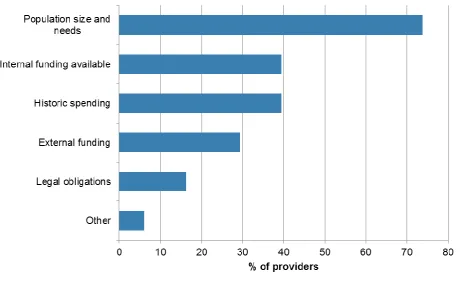
Budget levels are usually influenced by the number of disabled students, historic spending patterns, and availability of internal funding and external (DisabledStudents’ Allowance (DSA)) funding. The budget for disability services tends to form part of a larger budget incorporating a range of student support services. There are indications that institutions vire funding across student services and disability services; they can and do make ‘a business case’ for additional funds which are generally approved. Core disability services also seem to have autonomous control over their budget, making decisions about how this is best spent.
a. Institutions are looking to draw funding from a variety of sources but increasingly looking to their core institutional funds to resource activities. Core institutional funding is the main strand of income for supporting disabled students and the disability services infrastructure, but can also act as seed funding to support moves towards inclusive learning and to ‘make good’ the reduction in DSA support.
b. Institutions are finding it necessary to trial different approaches to support, and to be more proactive and anticipatory. Institutions hope that by working to improve accessibility, increase the use of and access to assistive technologies, and mainstream reasonable adjustments, it will over time reduce the need for additional funding of individual adjustments for disabled students.
■
There is some concern that external funding for supporting disabled students will decrease further in the future. The additional funds from HEFCE are therefore appreciated but there is some lack of detailed awareness of these additional funds and/or how they are used. This is, in the main, because funding from a range ofsources tends to be aggregated into one overall budget for student support so tracking HEFCE funding within this overall budget can be difficult. Those who could track the use made of the HEFCE funds were using them to move to a more inclusive approach in teaching and learning in six areas:
a. expanding disability services and providing additional staff (sometimes with a specific faculty perspective);
b. responding to the rapid rise in students with mental health problems with increased counselling staff and mental health practitioners;
c. providing training and/or resources;
d. expanding assistive technologies such as supporting the roll-out of lecture capture and increasing availability of online resources;
e. creating/extending dedicated learning support posts; and
f. improving inclusivity of teaching and learning.
Organisation of support
■
There is an interest among HEPs in operating – as far as possible – an entirely in-house model of support (directly employing their staff) and this is felt to allow: students to be fully integrated into the institution, greater flexibility to respond to students’ needs, innovative practice, better quality assurance, consistency of practice, and continuity of provision.■
Day-to-day responsibility for disability services tends to be held by a disability services manager, head of student services or head of wellbeing. These individuals manage their team (including support workers, disability advisers and officers, tutors, and admin staff) and internal non-medical helper (NMH) support workers and ensure understanding and compliance with legislation, but also tend to be practitioners, advising staff and students.■
In-house support for disabled students tends to be provided through a combination of central support (often via a number of discrete/targeted/specialised teams which focus on the student experience) and faculty (or even school or department) level services focusing on academic concerns. In some institutions, a third level of service isprovided by individuals with a more personalised pastoral role. However, institutions recognise that supporting disabled students is an organisation-wide responsibility, and staff at all levels and in all roles have an important part to play.
● Central support can include specialist disability advisers, often with specialisms in
mental health and specific learning difficulties (less commonly in visual or hearing impairments), and advisers specialising in academic/literacy/library support or use of technology. Centrally provided services cover the whole of the student life cycle from supporting their transition into HE (from one level of study to another), during their time in HE and, in some cases, to employment. Central services lead projects and targeted initiatives, record and monitor provision (delivery and take-up), and ensure promotion of the services available (through a variety of channels and media). Centrally provided services also work closely with academic
departments, providing consultancy about disability issues, advice on making reasonable adjustments, guidance on inclusive learning practices and providing training. This collaborative exchange of student service expertise increases the likelihood of academic colleagues being aware of the needs of specific students in relation to learning environments/delivery and in assessments (e.g. how to adapt teaching, learning and assessment), and that students access all relevant
information and learning materials in an accessible format.
● Faculty level support often (particularly with larger institutions and/or those
experiencing large increases in DSA recipients) involves identifying academic staff within faculties/departments with an explicit role – alongside other responsibilities – to support disabled students. A faculty focus helps to ensure subject/discipline issues are taken into account in supporting disabled students. Support at
faculty/department level acts to implement individual action plans and operationalise inclusivity practices.
■
Others also gain support from external statutory agencies such as NHS, health and social care services. These were most commonly used to help provide support for those with mental health conditions/issues (with links made via the institution’s counselling service) or personal care for those with complex needs; links with on-campus GP practices were used to help with individual students in cases of concern or more strategically to support student welfare.■
Institutions feel that reliance on these external agencies/services will remain the same or increase (rather than decrease) with changes in DSA requirement and a move to a more inclusive approach. As the numbers of disabled students are continuing to increase, there will always be students with complex or profound conditions requiring one-to-one specialist support which due to DSA requirements may move to external provision, and so it may make strategic sense to develop closer relationships with agencies particularly around mental health support. Institutions can also work with charities to provide additional support and advice on a wide range of issues.Inclusive support
■
Key Indicator 2:60% of HEPs rate themselves at 6 or higher (on a scale of 1-10) in terms of
inclusiveness3, but no providers consider themselves to be at 10 (fully inclusive), they
need:
● Greater staff engagement with training (44%)
● Adjustments to estates and technology (38%)
● Inclusive assessments (18%)
● Inclusive teaching and learning (11%).
All institutions report that they are moving forwards with the inclusive support agenda, and similarly all feel the move to inclusion is a positive one (although this is not to suggest that there is widespread commitment or awareness of inclusive support within institutions). Some institutions have had a commitment to adopting an
inclusive agenda for some time and have made significant progress, but others are new to this. Most commonly, institutions regard themselves as being slightly more than half-way to ‘fully inclusive’ (from ‘not inclusive’).
■
Generally, smaller institutions, FE colleges and specialist higher education institutions (HEIs), and those with a higher proportion of disabled students, feel further along their journey to inclusive provision. Institutions feel more needs to be done and feel
3 Scale from 1 ‘Not inclusive’ to 10 ‘Fully inclusive’. This is a self-assessed measure so comparison across
this can be achieved by increasing or improving staff engagement in training, more adjustments to their estate and the technologies used and offered, and by making assessments inclusive.
■
An inclusive model of disability support is most commonly understood to include accessibility of estates and online materials (thus physical and virtual environments), and covers accessible teaching, curriculum and assessment. It can also be understood as a whole-institution approach that will reduce (but not entirely remove) the need for individual adjustments. Typical inclusive support measures include:● Pedagogical changes including use of technology to ensure learning resources are inclusive, for example providing lecture notes in advance (although some
institutions only do it for some students), lecture capture, making course materials available online (often via virtual learning environments (VLEs)) and ensuring these materials are accessible and in a variety of formats, making specialist software available to all students, accessibility-testing software and technology, and offering alternative assessment methods.
● Changes to design, development and procurement processes to embed inclusive learning into module and programme development and evaluation (over 90% have reviewed or plan to review provision) and to consider inclusion during
procurement (e.g. the purchase of hardware, software or texts).
● Awareness-raising campaigns (and services) to promote well-being, the availability of services offered by the library, or learning developers offering general and more focused academic support.
● Changes to administrative processes, for instance monitoring attendance to identify potential well-being issues (generally with academic staff flagging low attendance to student services rather than having an automated system which notifies student services).
■
Most institutions reported high variability in their implementation of inclusiveteaching and learning approaches. This results in patchy and inconsistent practice and pockets of good but also poor practice. Institutions therefore highlight the importance of bringing about cultural change and getting staff buy-in as they move to greater inclusion. Shifting the culture is about helping/enabling all staff to:
a. think more broadly and to understand and embed inclusive practice;
b. overcome individual (often subject and course-related) fears and reluctance;
c. think beyond making reasonable adjustments for individual students and think about accessibility for all;
d. recognise that inclusive practice is not just a technical issue that is dealt with by someone else but can and should be supported by all; and
■
Key indicator 3:78% of HEPs use lecture capture (audio or video recording of lectures), but of these only 20% recorded more than half of all lectures.
Assistive technology (general digital) has a key role in moving towards greater
inclusivity and accessibility to help all students. Technology can increase accessibility, by which we mean providing material in a format the student can read or engage with using a screen reader. It can also aid inclusivity which may also involve thinking about the content and examples used, as well as providing content in different forms e.g. text, video, online quizzes, discussion fora.
● The most common form of assistive technology is lecture capture, and the majority of institutions use audio or video recording of lectures (likelihood increases with the size of the provider) for at least some of their lectures – either focusing on specific courses or subjects, with certain academic staff opting in (i.e. tutor
discretion), or with only certain buildings/rooms offering the facility. Most of those who do not currently have lecture capture plan to get it in the future (but this may require overcoming staff reluctance).
● Other common assistive technologies (available in at least two thirds of institutions) are: mind-mapping software and document reading software which tends to be offered to all students, and also speech recognition software which tends to be available to disabled students. Less commonly available software (used in less than one third of institutions) includes note-taking and recording (generally for disabled students only) and also document conversion for all students.
● Some institutions have staff dedicated to developing and promoting assistive technologies.
■
Another common step towards ensuring learning resources are inclusive includes staff training and induction. This is recognised as important for providing staff withinformation, guidance and support about making resources accessible (e.g. using heading style sheet, adding an alt text to images) or encouraging inclusive
pedagogical practices. Inclusive learning modules are also embedded into institutional and Higher Education Academy (HEA) academic programmes such as Postgraduate Certificates of Academic Practice.
■
The majority of institutions provide alternative assessment methods for disabled students. Generally alternatives are not offered as standard, or available for allstudents, rather they are considered on a case by case basis. Most commonly they offer written assignments instead of exams or presentations; or, the opposite, changing an essay or written assignment into a viva, presentation or oral assignment. Other alternatives include presenting to a smaller group or the tutor alone, video
meet requirements for reasonable adjustment there is a limited move towards more widespread inclusive assessment practice. Where this exists it often sits with an enthusiast or at departmental level. This is an area requiring further sector support including consideration of subject/disciplinary needs.
■
Institutions offer counselling services which are available to all students, and are in high demand (HEFCE, 2015a). A related inclusive agenda of wellbeing activities is also aimed at all students (although wellbeing is still strongly associated with central services rather than a feature of an inclusive curriculum). The majority of providers promote wellbeing activities with their students, often through regular events, workshops and courses focused on particular issues (e.g. stress management),wellbeing weeks and days, and presence on social media. These can tie in with wider national campaigns such as Time to Change. Less common is institutional
involvement of their students’ union or the use of drop-ins or telephone/online activities. Institutions also offer counselling services which are available to all students, which are in high demand.
■
Key Indicator 4:52% of HEPs have an accessibility plan, and:
● Have almost fully accessible social/recreational space4 (47%)
● Have almost fully accessible teaching and learning facilities (38%)
● Have almost fully accessible accommodation (19%).
In terms of estates, institutions are more likely to have fully accessible social and
recreational spaces than teaching and learning facilities or accommodation. Larger and high tariff institutions are less likely to have fully accessible campuses (perhaps
reflecting the size and also age of their buildings and planning restrictions). Institutions are working hard to make their campuses accessible and inclusive. Around half of institutions:
● have an accessibility plan and many others are working to assess accessibility;
● use an accessibility checklist when involved in new builds or redesigns; and
● have a named individual in estates with responsibility for providing advice on accessibility for disabled students.
■
Institutions offer a range of training to staff (to specialist disability staff and wider staff) that is regularly updated rather than provided only once. Training tends to be a mixture of face-to-face and virtual delivery, it is generally voluntary (not mandatory) and available to all individuals in a staff group. Training is most likely to be directed
at academic staff, library staff, those in teaching support roles and less commonly made available to research and research support staff. Training includes: general disability awareness often combined with training about specific conditions
(sometimes involving external providers, and most commonly provided to academic staff), safeguarding, assistive technologies, first aid, and suicide prevention.
Disclosure
■
Key indicator 5:88% of HEPs encourage disclosure at all (measured) stages of the student lifecycle:
● Pre-application (95%)
● During application (96%)
● Pre-entry (97%)
● At entry/induction (99%)
● On-course (95%).
■
The vast majority of providers take active steps to encourage disclosure at every stage of the student lifecycle: from pre-application, through entry/induction, to being on programme. They consider themselves open and encouraging.■
Providers have multiple ways of encouraging disclosure, from the very earliest interactions they have with students at initial open days etc. Services are promoted through various channels such as webpages and intranet, electronic notice-boards, stands, talks and presentations at institution-wide events (open days, induction week, freshers’ fair) and leaflets sent to all new students; also less widespread promotion such as word of mouth (which can turn into referrals), targeted direct email contact from the disability services, and opportunities for informal discussions with thesupport team and/or individual visits. Generally students who disclose a disability are asked to complete a questionnaire which can be used to develop an individual action plan, and design appropriate services.
■
Pre-enrolment disclosure is particularly appreciated but institutions recognise that disclosure is not always possible at this early stage and some students will need to disclose later in their course/student journey. It was felt that routes to HE study may play a part in when students can/feel the need to disclose a disability – perhaps with those coming from the workplace being reticent and needing additionalMonitoring and review
■
Key Indicator 6:67% of HEPs engage with their students’ union/guild on issues around disability services.
Institutions do engage with their student body on issues around disability services, generally through their students’ union or guild (who can act to represent the voice of students); and many of these, especially in the larger providers, have a nominated disability representative. The students’ unions and guilds often work directly with the head of disability services, and also sit on key working groups and committees. In contrast, a relatively small group of institutions gather feedback via surveys and/or focus groups of their students, and this is often focused on the experience of and satisfaction with the disability service (among users and non-users).
■
Key Indicator 7:85% of HEPs are currently or have recently taken steps to review their support for disabled students.
A majority of providers had either undertaken a review of their provision for disabled students in the last year or so, or were in the process of conducting a review at the time of the survey. While reviews covered a range of issues, common themes within reviews were dealing with the cuts to DSA funding, and inclusive teaching and learning. These two themes were often linked, with providers looking at how embedding inclusive practices can reduce the need for support that had previously been funded via DSA. Similarly, where reviews covered technology issues, there was often a link to the impact of the DSA changes. Reviews commonly resulted in an increase in disability services staff, an increase in technology expenditure, or changes to policies around disability provision.
■
Key Indicator 8:98% of HEPs sought to evaluate the effectiveness/impact of their support for disabled students:
● Surveyed disabled students (91%)
● Compared the academic results of disabled/non-disabled students (84%)
● Compared the satisfaction of disabled/non-disabled students (59%)
● Undertook qualitative research with disabled students (54%).
Providers reported using a range of methods to evaluate the effectiveness and impact of their disability services. Student surveys appeared the most widely used method, while analysis of attainment, retention and student satisfaction data was also
disabled students. The methods used were generally developed according to the needs of the institution, with some having regular evaluations while others did it on a more ad hoc basis, for example evaluating the implementation of a new service or a pilot project involving software or inclusive assessment. However, some providers
mentioned that it was often difficult to link outcomes for disabled students directly to the support provided, because of the wide range of potential confounding influences. Although none referred to directly addressing this issue, the recent audits, reviews and monitoring and evaluation of disability services are increasing understanding of students’ use and feedback. In addition, 70% of institutions anticipated trying new and/or different methods in the future to evaluate their support such as reviewing by specific disability group, increasing the use of focus groups, having larger sample sizes or wider distribution of surveys and creating a central dataset to aid analysis of institution data by disability.
Overall views on provision
■
There was a fairly widespread feeling among providers that how they organised and trained their staff in supporting disabled students was something that they were doing well. Staff organisation and training covered many aspects, such as linkages between disability services staff and academic staff, the quality of the supportprovided by specialist staff, the personalised nature of support available to individual students, and good awareness of disability issues among academic and other non-specialist staff. Relatively few providers felt that they needed help or support with staff issues in relation to supporting disabled students, and where providers did need more help or support it was around increasing staff training in understanding of inclusive teaching, and dealing with the increased needs from escalating numbers of disabled students alongside the withdrawal of DSA support.
■
Inclusive curriculum design and teaching and learning practices were areas where many providers felt they were currently doing well, although these were areas most commonly identified as a priority for the future, or for which providers felt they needed more support. Specific priority or support areas highlighted were:demonstrating the equivalency of alternative assessment methods, and greater buy-in from academic staff for inclusivity in curriculum design and delivery.
■
While some providers (one in five) felt there were doing well in using assistive technology to support disabled students, there were more (approx. 30%) whoSuggestions for institutions and sector bodies
A number of suggestions emerged from the findings and feedback for the sector and its institutions:
1. Consider the use of ‘champions’ to promote inclusive practice
2. Provide clear guidance on the rationale and impact of the funding changes 3. Identify alternative funding streams to resource longer term efforts for inclusion 4. Support effective use of specialist software
5. Improve accessibility of digital resources
6. Support further development and use of lecture capture
7. Promote greater understanding and use of alternative assessments
8. Raise awareness of inclusive approaches and change the institutional culture to gain true staff engagement
9. Ensure greater clarity of approach to staff training
10. Continue to encourage disclosure across the entirety of the student journey 11. Establish a clear programme of evaluation.
Areas to explore further in the next phase of the study include:
■ The relationship between disclosure, DSA funding changes and inclusive provision.
■ Understanding of, and terminology used for, in-house provision and for inclusive models of support.
■ Impact of DSA administrative requirements on in-house provision.
■ Tension between delivering focused disability services and inclusive support.
■ Progress in raising awareness and changes in culture to support inclusive support.
■ Perceptions of adequacy of provision for mental health support needs (in the face of increasing demands).
■ Perceptions of accessibility for staff (as well as students).
1
Introduction and Background
1.1
Introduction
The higher education (HE) system in England has undergone significant change over the last 10 years or so and during this time the number of disabled students accessing HE has increased from just over 16,700 new entrants in 2003/04 to over 51,000 in 2012/13, and the proportion of full-time undergraduate students in receipt of Disabled Students’
Allowance (DSA) has risen from 3.6% in 2004/05 to 7.2% in 2014/15. These changes have had an impact on institutional services and support structures. At the same time, changes have also been seen in funding for supporting disabled students such as recent reforms to the DSA which placed further responsibilities on higher education providers (HEPs) from 2016/17 for certain levels of non-medical help, specialist accommodation and computer accessories. However, the 2016 HEFCE grant letter prioritised funding towards
development of inclusive teaching approaches to support disabled students, and to this end HEFCE doubled the funding for disabled students to £40m in 2016/17 (and this is anticipated to remain at the same level during 2017/18) in order to support HEPs to move towards a more inclusive social model of support.
The Higher Education Funding Council for England (HEFCE) commissioned the Institute for Employment Studies (IES), in partnership with Researching Equity, Access and
This report outlines the findings from the first phase of the study, which involved a review of the current levels of support and progress towards an inclusive model. A follow-up (second phase) study would be advantageous and could involve a review at the end of the 2017/18 year to assess the impact of increased HEFCE funding to support disabled students.
1.2
Background and context
It is 20 years since HEFCE and the Department of Education in Northern Ireland (DENI) funded 30 projects to develop ‘high quality provision for students with disabilities, and to
increase participation in HE of students with all types of disability’ (HEFCE 2000: Foreword).
Since then there has been considerable change in participation rates, facilities, student and academic services across the sector. Some changes have been informed by legislation influencing the legal requirements HEPs are expected to meet, notably the Special
Educational Needs Disability Act (2001), the revised Disability Discrimination Act (2005), the more inclusive Single Equality Act (2010), and Public Sector Equality Duty with its commitment to eliminating discrimination, advancing equality of opportunity and fostering good relations.
During the last 20 years HEFCE has provided targeted funding or introduced metrics to support and influence institutions to:
■
Develop their buildings and estates to increase the accessibility of their learning environments and campuses (ECU, 2009);■
Address specific phases of the student life cycle, notably Aimhigher, to tackleaspiration, awareness and admission of disabled students and other identified groups (Aimhigher Greater Manchester (2009); Aimhigher Lancashire (2009));
■
Enhance their teaching and learning via Centres for Excellence in Teaching and Learning (HEFCE, 2011) and collaborative projects such as ‘What works?’ tackling induction and retention (Thomas, 2012; Thomas et al., 2017);■
Provide reasonable adjustments and take an anticipatory approach to address the differential participation and enhance the achievement of disabled students (Student Opportunity fund - HEFCE, 2015c); and■
Monitor progression and graduate destinations where differences in the experiences of different groups of disabled students are evident (AGCAS, 2016).To support this work, HEFCE has commissioned a number of influential disability-focused reports, including: the review of provision and support for disabled students (Harrison et al., 2009); a report exploring provision for students with mental health
for Higher Education Students with Specific Learning Difficulties (HEFCE, 2015b). These
studies have involved literature reviews, case studies and data analysis. In addition, the Equality Challenge Unit (ECU), the Higher Education Academy (HEA), and Universities UK (UUK) have each invested in and undertaken work across the four UK nations on the support of disabled students. This work has covered broad areas such as recruitment, retention and achievement and more focused topics such as disclosure (ECU, 2012), sensory access to campus (ECU, 2009), use of mental health services (ECU, 2014), and student engagement (May and Felsinger, 2010). This body of work has indicated several key issues of relevance, as follows.
1.2.1 Disclosure and terminology
The ECU has explored the issues associated with students (and staff) disclosing a
disability, and reported that this raises important implications for the way in which HEPs provide support. The DSA funding model has emphasised a medical/ individualised model of disability that requires individual disclosure to secure financial assistance. Such a model associates the problems and the solutions at the level of the individual rather than the institutional environment, and also social practices which may operate as
barriers that disable. Both the bodies responsible for the DSA and many recent initiatives refer to their commitment to the social model of disability which recognises that
environment, behaviours, attitudes, services, experiences and contexts can all interact to disable individuals. As Swain et al. (2003: p24) explain “disability is not something one has,
but is something that is done to the person … being excluded or confronted on a daily basis by barriers”.
Disclosure is also complicated by language and terminology, as these influence who identifies with the disability label and who is recognised as having a disability by the institution and individual members of staff. A European Social Fund (ESF) project, the Disability Effective Inclusive Policies project (DEIP), identified that many students with Specific Learning Difficulties (SpLD), mental health problems or who are deaf do not relate to the disability label (Coare et al., 2007). Definitions and terminology are relevant to all aspects of the student life experience including student services where institutions may offer targeted activities for specific groups of students, through to inclusive
curriculum design and teaching and learning.
1.2.2 Inclusion
Inclusion is often associated with disability, whereas diversity is more typically connected with differences relating to nationality, ethnicity, race, religion, culture, age, and sexual orientation. The HEA have undertaken a number of major initiatives to adopt a more comprehensive understanding of inclusion which encompasses the nine protected
characteristics, but rightly extends to the wider issues such as social class. A recent search of their website has over 1,000 results for ‘inclusion’ ranging from Chris Hocking’s
guides such as Craig and Zinckiewicz (2010) for Psychology, or through to inclusive principles of ‘inclusive curriculum design’ developed by Morgan and Houghton (2011) and applied in multiple disciplines. The HEA have collaboratively facilitated more strategic approaches working with Scottish colleges to embed equality and diversity in the curriculum and with ECU to consider disabled student engagement (May and Felsinger, 2010). For staff interested and expected to develop more inclusive provision there is a plethora of resources and tools designed to support institutions to review and enhance their provision. However, enabling staff to move from the current reactive response to taking a more proactive approach to inclusion is time consuming, and often staff are not aware that even small changes in their practice can make a considerable difference to individual students, as well as save themselves time and effort.
1.2.3 Technology and Continuing Professional Development (CPD)
There are many challenges and opportunities facing institutions related to the changing student profile, such as the increase in numbers of disabled students including numbers choosing to disclose and those who for reasons discussed may not disclose. Within the teaching and learning context there are other changes which may help or hinder attempts to be inclusive. One example is the transformation in the use and potential of technology to support inclusion. The sector has been supported by initiatives such as the JISC
TechDis (an important vehicle for ideas and CPD during the 2000s that continues today as a legacy project https://www.jisc.ac.uk/website/legacy/techdis). Technology is important because it offers HEPs possible ‘solutions’ for greater inclusion. However, this not only requires investment in infrastructure but like many aspects of inclusion requires a model of collaboration that facilitates the exchange of information and expertise between
learning technologists, academics and educational developers. Additionally there needs to be an institutional commitment to training and development of staff.
1.2.4 Training and development
Institutional approaches to training and development range from mandatory equality and diversity, unconscious bias, and disability awareness training, through to ad hoc
programmes designed to address specific issues identified by the in-house disability service or feedback from the student body. A major lever for inclusion is the UK Professional Standards Framework (HEA, 2011) which positions inclusion as a core consideration and so HEPs’ recognition programmes and accredited courses become a mechanism for change at the individual and, over time, the institutional level.
1.2.5 Institutional infrastructure
Other mechanisms within HEPs that can support or stifle the adoption and embedding of inclusive approaches relate to institutional governance, which can influence which
disabled students and inclusion. Mechanisms can include, for example, quality assurance and enhancement processes such as course validation, and peer observation of teaching as well as named champions. Although Higher Education Statistics Agency (HESA) data supports monitoring over time and against benchmarks, there are currently no standard monitoring and evaluation requirements for the effectiveness of retention and success – activities associated with more inclusive provision. As institutions respond to changes in levels of support funded by DSA and the call to adopt more inclusive approaches, there is likely to be a greater interest in assessing the effectiveness of the strategies they explore. There is potential to associate inclusive teaching with wider teaching quality debates connected with the Teaching Excellence Framework (TEF), and currently data relating to disabled students’ outcomes are included in the TEF
1.3
Disabled students in HE
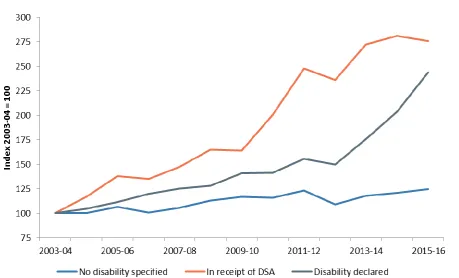
[image:21.595.69.529.498.776.2]The numbers of disabled student in HE, either those in receipt of DSA, or those self-declaring a disability, have risen rapidly in recent years. Figure 1 shows the trend in numbers of full-time UK-domiciled first degree entrants at HEFCE-funded higher education institutions (HEIs) by disability status, expressed as an index with 2003/04 being the baseline year with a value of 100. The figure shows that the number of students in receipt of DSA has nearly trebled between 2003/04 and 2015/16, with the number increasing by 175%, and the number of students with a declared disability has increased by around 140%, while the number of non-disabled students has increased by 25% over this period.
Source: HESA bespoke analysis, 2017
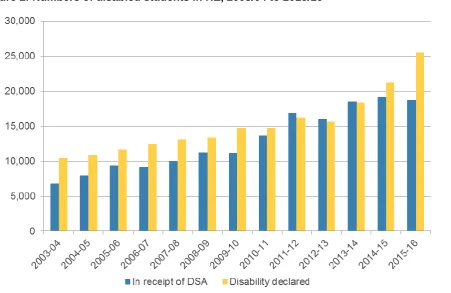
[image:22.595.74.526.249.542.2]Figure 2 shows the actual numbers of disabled students over this period, and shows that the number in receipt of DSA increased from just under 7,000 in 2003/04 to a peak of 19,000 in 2014/15 although the number has fallen slightly in the last year. The number of self-declared disabled students rose steadily between 2003/04 and 2011/12, but at a slower pace than those in receipt of DSA, although numbers have risen at a very fast pace in the last few years to over 25,000 in 2015/16.
Figure 2: Numbers of disabled students in HE, 2003/04 to 2015/16
Source: HESA bespoke analysis, 2017
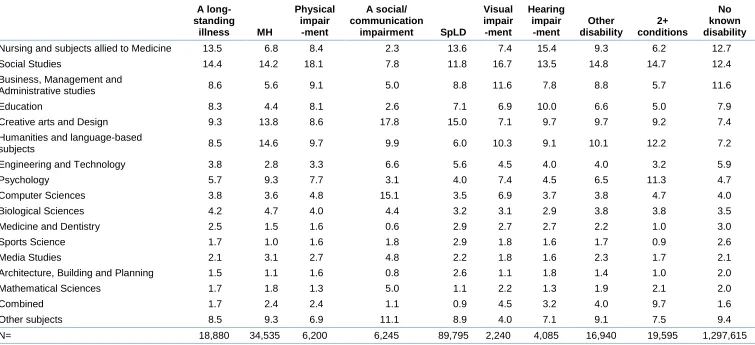
Table 1 shows the subjects studied by students with different types of disability, impairments and conditions, in 2015/16. Key points to note are:
■
Students with mental health problems, social and communication problems, and SpLD were much more likely than non-disabled students, and those with otherdisabilities or impairments, to study creative arts and design. This subject was studied by 14% of students with mental health problems, 18% of those with social and
communication problems, and 15% of those with a SpLD, compared with less than 10% of other students.
■
Students with mental health problems (9.3%), physical impairments (7.7%), visual impairments (7.4%), or with two or more conditions (11.3%), were much more likely than other students to study psychology.■
Students with social and communication impairments (15%) were nearly four times more likely than non-disabled students (4%) to study computer sciences, while those with visual impairments (7%) were also much more likely to study this subject than were non-disabled students.■
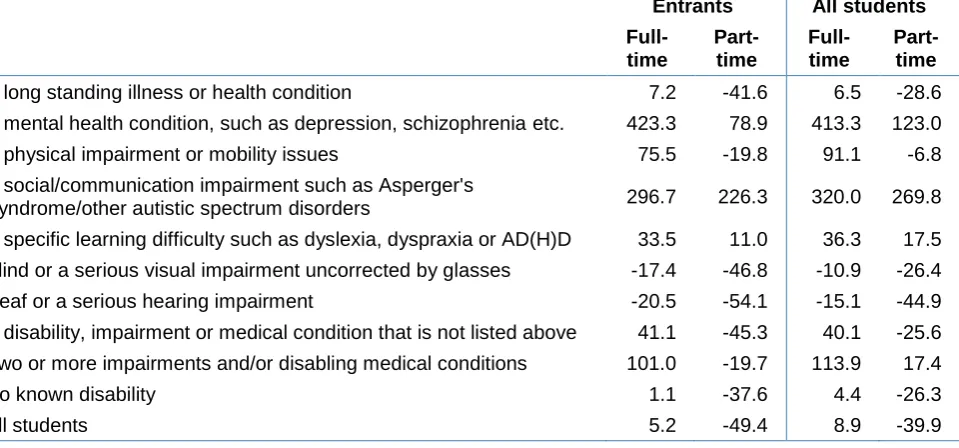
Students with social and communication impairments were much more likely than disabled students to study media studies (4.8% compared with 2.1% of non-disabled students), mathematical sciences (5.0% compared with 2.0% of non-non-disabled students), and also Physics and Astronomy (3.8% compared with 1.1% of non-disabled students; this is included in the ‘Other Subjects’ category in the table).Table 2 shows the trends in student numbers by disability and mode of study between 2008/09 and 2015/16. There has been a small increase in the overall number of full-time students during this period, although this hides a jump in numbers starting in 2011/12 before the increase in undergraduate tuition fees, and a large drop in 2012/13. In contrast, overall part-time student numbers have fallen substantially over this time. However, there has been a five-fold increase in full-time students with mental health problems, and a four-fold increase in full-time students with social and communication impairments, and there were also increases in numbers of part-time students with these impairments. The number of full-time students with two or more impairments doubled during this period, while numbers with a physical impairment studying full-time nearly doubled, and numbers with SpLD studying full-time increased by just over one third.
Figure 3 shows the proportion of disabled students (both undergraduate and
postgraduate) that were studying part-time, as opposed to full-time, by disability in 2015/16 (alongside a benchmark of all students and those with no known disability). The proportion of disabled students studying part-time was highest among students with two or more impairments, at nearly 50%, and was also above average among those with hearing impairments, visual impairments, physical impairments, and other disabilities. However, relatively few students with SpLD, or with social/communication impairments, were studying part-time, and so the vast majority (over 80%) were studying full-time.
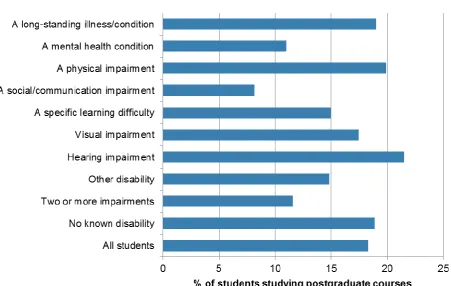
Figure 4 shows the proportion of disabled students (both full-time and part-time)
Table 1: Subject of study by disability, 2015/16 (column %)
A long- standing
illness MH
Physical impair
-ment
A social/ communication
impairment SpLD
Visual impair -ment
Hearing impair
-ment
Other disability
2+ conditions
No known disability
Nursing and subjects allied to Medicine 13.5 6.8 8.4 2.3 13.6 7.4 15.4 9.3 6.2 12.7
Social Studies 14.4 14.2 18.1 7.8 11.8 16.7 13.5 14.8 14.7 12.4
Business, Management and
Administrative studies 8.6 5.6 9.1 5.0 8.8 11.6 7.8 8.8 5.7 11.6
Education 8.3 4.4 8.1 2.6 7.1 6.9 10.0 6.6 5.0 7.9
Creative arts and Design 9.3 13.8 8.6 17.8 15.0 7.1 9.7 9.7 9.2 7.4
Humanities and language-based
subjects 8.5 14.6 9.7 9.9 6.0 10.3 9.1 10.1 12.2 7.2
Engineering and Technology 3.8 2.8 3.3 6.6 5.6 4.5 4.0 4.0 3.2 5.9
Psychology 5.7 9.3 7.7 3.1 4.0 7.4 4.5 6.5 11.3 4.7
Computer Sciences 3.8 3.6 4.8 15.1 3.5 6.9 3.7 3.8 4.7 4.0
Biological Sciences 4.2 4.7 4.0 4.4 3.2 3.1 2.9 3.8 3.8 3.5
Medicine and Dentistry 2.5 1.5 1.6 0.6 2.9 2.7 2.7 2.2 1.0 3.0
Sports Science 1.7 1.0 1.6 1.8 2.9 1.8 1.6 1.7 0.9 2.6
Media Studies 2.1 3.1 2.7 4.8 2.2 1.8 1.6 2.3 1.7 2.1
Architecture, Building and Planning 1.5 1.1 1.6 0.8 2.6 1.1 1.8 1.4 1.0 2.0
Mathematical Sciences 1.7 1.8 1.3 5.0 1.1 2.2 1.3 1.9 2.1 2.0
Combined 1.7 2.4 2.4 1.1 0.9 4.5 3.2 4.0 9.7 1.6
Other subjects 8.5 9.3 6.9 11.1 8.9 4.0 7.1 9.1 7.5 9.4
N= 18,880 34,535 6,200 6,245 89,795 2,240 4,085 16,940 19,595 1,297,615
Table 2: Change in student numbers by type of disability and mode of study, 2008/09 to 2015/16 (% change)
Entrants All students
Full-time
Part-time
Full-time
Part-time
A long standing illness or health condition 7.2 -41.6 6.5 -28.6
A mental health condition, such as depression, schizophrenia etc. 423.3 78.9 413.3 123.0
A physical impairment or mobility issues 75.5 -19.8 91.1 -6.8
A social/communication impairment such as Asperger's
Syndrome/other autistic spectrum disorders 296.7 226.3 320.0 269.8
A specific learning difficulty such as dyslexia, dyspraxia or AD(H)D 33.5 11.0 36.3 17.5 Blind or a serious visual impairment uncorrected by glasses -17.4 -46.8 -10.9 -26.4
Deaf or a serious hearing impairment -20.5 -54.1 -15.1 -44.9
A disability, impairment or medical condition that is not listed above 41.1 -45.3 40.1 -25.6 Two or more impairments and/or disabling medical conditions 101.0 -19.7 113.9 17.4
No known disability 1.1 -37.6 4.4 -26.3
All students 5.2 -49.4 8.9 -39.9
[image:25.595.80.531.408.715.2]Source: HESA bespoke analysis, 2017
Figure 3: Proportion of students studying part-time by disability, 2015/16
Figure 4: Proportion of postgraduate students by disability, 2015/16
Source: HESA bespoke analysis, 2017
1.4
Need to update the research
The HEFCE studies undertaken in 2014/15 found that HEPs were not only driven to support disabled students by responding to legislative changes, but also out of a moral responsibility and sense of duty of care for all students, and/or from a business case to attract and retain all students (regardless of background/need). Adopting an inclusive pedagogy contributes to the business case by potentially reducing the time required to make individualised ‘reasonable adjustments’. Policies and strategies in institutions were being developed against a backdrop of increasing demand for support, particularly from students with mental health problems, and institutions regarded their provision as work in progress which they desired to improve.
whole student journey and to allow for centralisation of support for ease of access and visibility.
The research also found concerns about the ability of HEPs to meet the rising demand (particularly for support with mental health problems) coupled with other challenges such as:
■
overcoming potential anxieties in declaring/disclosing a disability and encouraging early disclosure in order to plan (and budget for) effective provision;■
sharing practice to develop truly inclusive curricula and thus provide more support with fewer resources;■
deciding upon the most appropriate/effective proactive measures to reduce demand for support;■
thinking about how best to improve internal communication and collaborationbetween academics and support staff to provide a more holistic approach to support; and
■
developing effective and sustained external partnerships in an uncertain economic context.It is timely to revisit and take stock of how institutions are providing support for disabled students, how they have progressed in their policy and practice, and how new models are working or have required further change; and also to explore how institutions have
responded to the challenges they identified.
1.4.1 Aims and objectives
The objectives of the present study were therefore to understand the current models of support for disabled students in the sector at the start of the 2016/17 academic year. The review also sought to explore how much progress the sector has made towards
establishing inclusive models of support for disabled students and to establish how providers intend to monitor and evaluate their progress in further improving the
inclusiveness of their provision and support over the coming academic years. This review will therefore provide a baseline against which to measure the progress made in a follow-up review at the end of the 2017/18 academic year following two years of increased HEFCE funding.
1.5
Methodology
in-depth case studies with 13 institutions. This was supplemented with additional
quantitative analysis undertaken by HEFCE’s Analytical Services Directorate to provide the latest figures on disabled student numbers and student outcomes (presented above).
1.5.1 Online survey
All providers who received at least £20,000 in disability funding were notified of the study by HEFCE in November 2016 (in a letter from Madeleine Atkins, HEFCE Chief Executive, sent to all vice chancellors and principals). The letter informed institutions of the research, and asked them to identity a senior institutional contact to support the study, essentially to represent the institution and coordinate input of key staff. The named key contact was then sent an invitation to participate in an online survey (with their own link to the survey) and asked whether the institution would be prepared to provide further feedback and insights by nominating themselves as a case study.
The survey included factual questions about the nature of provision and also open questions to describe key aspects and characteristics of provision and capture views on progress. Respondents were able to complete the survey over several sessions, if required. The survey was launched in February 2017, and responses were gathered from 105 of the 137 institutions contacted (96 completed responses, and nine partial responses).
The survey covered:
■
Governance and organisational structures: Where does strategic responsibility forsupporting disabled students rest in the institution?
■
Budget and expenditure: Who in the institution has responsibility for deciding thebudget for disability services? What information feeds into decision-making about the size of the budget and how it is distributed?
■
Organisation of support: Where is day-to-day support for disabled studentsmanaged? How does the main support service work with other departments e.g. academic, learning support functions, estates, accommodation etc.?
■
Inclusive support: How do providers understand inclusivity and the ways in whichthis is manifested? Where do providers feel they are in providing an inclusive model of support? With further questions relating to technology (assistive learning
technologies), accessibility of estates, learning resources, staff training, and dissemination of (good) practice.
■
Disclosure: How is disclosure encouraged?■
Engaging with stakeholders including students, staff and external providers: How■
Monitoring and reviewing support: Are providers conducting a review of disabilityservices (in light of DSA and funding changes)? How are providers evaluating the effectiveness and impact of their support and monitoring student success?
The survey was designed after fieldwork had been conducted with three case study institutions, drawing on feedback from these institutions and earlier research findings. It was designed to capture current and benchmark practice and to allow for the majority of questions to be asked again in 12 to 18 months’ time in order to measure progress over time at an individual institution level (by linking individual responses) and at a wider sector level.
Provider-level data was added to the survey dataset to allow for an examination of responses by provider characteristics. The break variables used (see Table 3) were as follows:
■
Size of provider : three-way split based on the population of DSA-eligible students (UK-domiciled, studying at least 0.25 full-time equivalent and not in receipt of other public funding, e.g. NHS bursary) dividing respondents into three broadly equal groups;■
Type of institution: based on whether specialist institution, further education (FE) college or university with a wider portfolio (which is divided further according to average tariff scores);■
Proportion of disabled students: two measures: a) proportion of all DSA-eligible students who were in receipt of DSA, and b) proportion of all DSA-eligible students who had self-declared a disability. For both measures, a three-way split was used which divided respondents into three broadly equal groups;Table 3: Summary of institutions involved in the research by provider type
Survey responses
Case studies
Number % Number
Tariff group
High tariff 25 23 2
Medium tariff 24 22 2
Low tariff 24 22 2
Specialist 20 19 5
FE college 12 11 2
Not known 3 3
Total 108 100 13
Size
Under 5,000 35 33 4
5,000-11,000 32 31 2
11,000 plus 38 36 7
Total 105 100 13
% in receipt of DSA
Less than 6% 44 42 5
Between 6 and 8% 31 30 2
More than 8% 30 29 6
Total 105 100 13
% with self-declared disability
Less than 6% 41 39 0
Between 6 and 8% 35 33 0
More than 8% 29 28 13
Total 105 100 13
Trend in DSA numbers
Decline 27 28
Small increase 49 50
Large increase 20 22
Total 98 100
Source: IES Survey; base = all respondents (including partial responses)
1.5.2 Case studies of institutions
subjects/disciplines and modes of study (with different average entry tariffs), and institutions of different sizes (see Table 3). The case studies also included:
■
Institutions from different regions within England: one in the South West, one in the South East, two in Greater London, two in the East, one in the West Midlands, four in the North West, and one in Yorkshire and Humberside.■
Institutions belonging to different mission groups: one Russell Group institution, one belonging to Million+, two GuildHE members, and one University Alliance university.■
Those with differing relative proportions of disabled students, ranging from just over 2% to 20% in receipt of DSA in 2015/16; and from 4% to over 16% with a self-declared disability but not in receipt of DSA in 2015/16.The case studies involved a mix of face-to-face and virtual visits (involving telephone and/or video discussions) by the research team. Each case study involved discussions with several individuals (from three to 12) and included representatives from senior management, disability services, student support, academic departments, estates/ facilities, and student unions. Discussions took place individually and in groups
(depending on participants’ preferences and availability) and followed a semi-structured topic guide. All individuals were briefed before the discussions. Overall, the 13 case studies involved discussions with 59 individuals.
The topic guide included similar areas to the online survey, but allowed the researchers to probe for more depth of insight (See Case Study Participant Briefing for an outline of the question areas, Appendix 1).
1.6
Report structure
This report presents anonymised, and in some cases aggregated, findings from across the survey responses and case study feedback. No individuals have been identified and institutions have only been identified in order to share good practice (with the text agreed with the lead institutional contact). The report is structured as follows:
■
Chapter 1 sets out the background to the study, the aims and objectives and details of the methodological approach taken.■
Chapter 2 explores issues around governance, organisational structures and budgets to understand the strategic roles and responsibilities for supporting disabled students and the move to more inclusive approaches.■
Chapter 4 focuses on inclusive support, what this means to institutions and how it is manifested in terms of use of technologies, inclusive practices, physical accessibility and staff training.■
Chapter 5 examines the issue of disclosure of a disability and how institutions seek to encourage disclosure.■
Chapter 6 looks at how institutions engage with internal stakeholders such as staff and students, but also with wider stakeholders such as external agencies to design and deliver support.■
Chapter 7 focuses on reviewing and monitoring planned action and intentions and actual practices.2
Governance, organisational structures
and budgets
This chapter presents findings related to how the governance and organisational structures for support provision for disabled students are set up across the respondent providers, and issues to do with budget setting and determining priorities for
expenditure.
Before presenting the findings from the survey and the case studies, it is worth noting that the aim of many case study institutions in supporting their disabled students is to support their independence, enhance their student experience, and help them build strategies to access learning and teaching. It is also important to institutions that the services they provide will ultimately help with retention of disabled students and reduce attainment gaps that have been recognised between disabled and non-disabled students.
2.1
Governance and organisational structures
2.1.1 Responsibility for supporting disabled students
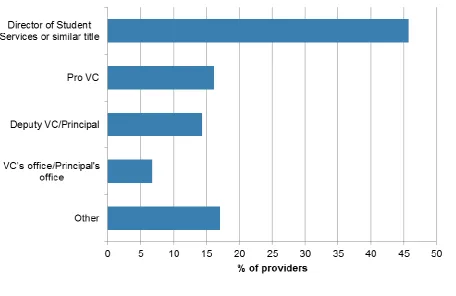
Figure 5: Where strategic responsibility for supporting disabled students rests in the institution
Source: IES Survey; base = all respondents
In the majority of case study institutions the senior management team has a clear remit for supporting disabled students, and this is felt to demonstrate the commitment of the institution. The core team with day-to-day responsibility for supporting disabled students tends to report to a member of the senior management team who then reports directly to the VC or a deputy VC, and the senior staff lead for the core team will sit on various committees and boards (including Senate, the body responsible for all academic matters) in order to promote disability and inclusion issues. In some case studies the main thrust towards inclusion, and repositioning of the disability agenda towards inclusive
approaches, comes from the VC’s office. Many of the case study institutions have undergone a period of change or restructuring that involved, for example, reducing the numbers of faculties (and/or schools and departments) and making changes to senior leadership. Although changes were anticipated to enhance communication and facilitate inclusive change processes, in the interim some felt they can create challenges for
institutions to sustain momentum.
Good practice example: University of Cambridge
the Autistic Spectrum is building on previous research and development work at the University for this group of learners (Hastwell et al., 2013). This research project not only generated valuable suggestions for good practice but also involved collaboration between academic researchers and members of the disability service. It is these working relationships that increase understanding about respective working contexts which shape discussions about disability services, and the code of practice that determines who and how colleagues work towards greater inclusion. .
In each institution there appears to be a plethora of working/task and finish groups, committees and boards with a direct or indirect responsibility for considering the issues and needs of disabled students. This indicates the cross-cutting nature of services and personnel required to embed an inclusive approach. Generally these groups report to the senior management team, or have senior management representation to ensure sign off on actions/resources and awareness of current issues at senior levels of the institution. The remit and focus of working groups varied as did their existence within each provider:
■
All have an equality and diversity working group, and some noted this included student representation.■
Other working groups are focused on particular aspects of university business such as teaching and learning committees, student experience committees, estates andfacilities, education or academic boards but these will also seek to consider the needs of disabled students.
■
Some of the working groups are concerned only with disabled students (for example a steering group to look at the financial implications for students of the changes to DSA).Institutions feel that this approach ensures disabled students are represented across the management and administration of the organisation, and that the issues pertaining to provision for disabled students can be raised and discussed across the organisation, covering all aspects of the business and at the highest level. One case study talked about this approach as being about ‘joining up all the dots’ by using existing structures and procedures to provide the best support possible.
Good practice example: University of Kent
requests from the Director of Student Services and the Student Support and Wellbeing team for additional resources and support to meet the continuing increase in student demand.
2.1.2 Written policies
Nine out of 10 institutions (90%) who responded have written policies describing the support and provision for disabled students. Larger providers with 11,000 or more
students in the DSA-eligible population were more likely than smaller providers to have a written policy, and there was also variation by type of provider (79% of providers with low average tariff scores and 75% of FE colleges had written policies, compared with 95% providers with medium or high tariff scores, and specialist HEIs).
Providers with written policies were asked to indicate which aspects of support for disabled students were covered by their policies. Figure 6 shows that policies most commonly covered assessment (91% of providers with written policies), teaching and learning (82%) and student support (80%). However, in less than half of the institutions with written policies did the policies cover student experience (44%) and inclusive
curriculum design/universal design (43%). Student support was covered in the policies of all of the specialist HEIs with a written policy, and in nearly all (96%) of providers with 8% or more of their students in receipt of DSA. A much lower than average proportion of providers that had experienced a large increase in numbers of self-declared disabled students reported that their policies covered inclusive curriculum design/universal design (23%, compared with 55% of those providers that had experienced a decline in
self-declared disabled students, and 60% of those that had experienced a small increase). This pattern may suggest that providers whose policies cover inclusivity, and who presumably have more inclusive practices, may have relatively fewer students self-declaring a
disability as the support is embedded rather than needing to be obtained via
Figure 6: Areas covered by the policies supporting provision for disabled students (Multiple response)
Source: IES Survey; base = all respondents with written policies
There was a broadly even split between providers that have specific policies for particular groups of students (49%), and those that do not. There were no statistically significant differences between different types of providers in their likelihood of having specific policies for particular groups of students. However, feedback from the case studies indicates that there may be other types of differences. For example, one institution reported that they prefer to train internal staff to become specialists rather than
outsourcing to external providers. This may have implications on how students perceive the support received.
Respondents who had specific policies for particular groups of students were given a multiple-response question to outline which groups of students are covered by specific policies. Figure 7 shows that the group of students most commonly covered by specific policies were students with mental health problems (80%), followed by students with SpLD (60%). Around a quarter of providers with a specific policy for particular groups had policies for students with autism spectrum disorder (27%), sensory impairments (27%) and physical impairments (22%). Large providers were less likely than smaller providers to have policies covering students with all types of conditions with the
Figure 7: Groups of students covered by specific policies (Multiple response)
Source: IES Survey; base = all respondents with specific policies for particular groups of students
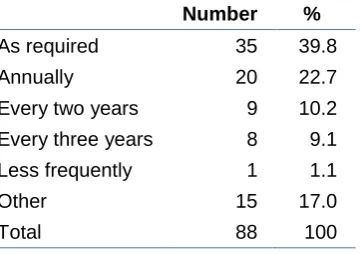
Institutions with a written policy supporting disabled students most commonly updated their policies ‘as required’ (40%), although around one in four updated their policy
annually (23%, Table 4). Specialist HEIs (44%) and HEIs with low average tariff scores (35%) were most likely to update their policies annually, as were those with a high proportion of students in receipt of DSA (31%).
Table 4: Time of policy/policies produced or last updated
Number %
As required 35 39.8
Annually 20 22.7
Every two years 9 10.2
Every three years 8 9.1
Less frequently 1 1.1
Other 15 17.0
Total 88 100
Source: IES Survey; base = all respondents with written policies
[image:38.595.212.393.568.695.2]